Get the latest AI news, understand why it matters, and learn how to apply it in your work — all in just 5 minutes a day. Join over 2,000,000+ subscribers.

YouTube's 'AI slop' takeover
Read Online | Sign Up | Advertise

Good morning, AI enthusiasts. AI’s internet takeover has already spread through text and on social media, but new research shows it’s happening on video platforms, too.
With over 20% of videos being served to new YouTube accounts classified as “AI slop” and the top channels pulling in millions in revenue, the low-effort AI video economy is going global — and users are apparently eating it up.
In today’s AI rundown:
21% of YT videos shown to new users are “AI slop”
Claude’s shopkeeping experiment heads to the WSJ
Automate pre-meeting research with Perplexity
Meta researchers train AI to find and fix its own bugs
4 new AI tools, community workflows, and more
LATEST DEVELOPMENTS
AI & YOUTUBE
🗑️ 21% of YT videos shown to new users are “AI slop”

Image source: Kapwing
The Rundown: Video editing company Kapwing just published research on AI-generated YouTube content, finding that over 20% of videos shown to fresh users are “AI slop” — with top channels pulling billions of views and millions in ad revenue.
The details:
The study defined 'AI slop' as low-quality, auto-generated content made to farm views, distinct from quality AI-assisted videos.
Researchers created a new YouTube account and found 21% of the first 500 recommended videos pushed by the platform’s algorithm were ‘AI slop’.
The top ‘slop’ channel was India's Bandar Apna Dost, an anthropomorphic monkey that totaled over 2B views and an estimated $4.25M in yearly earnings.
S. Korea led ‘slop’ viewership at 8.45B views, followed by Pakistan (5.34B) and the U.S. (3.39B), with channels from Spain earning the most subscribers.
Why it matters: The ‘Dead Internet Theory’ that the web is increasingly AI/ bots keeps getting harder to dismiss, and is seeping into the video arena as well. But the data shows users either can't tell, are bots themselves, or are unbothered by it — and as long as slop racks up engagement, the incentive remains to keep producing.
TOGETHER WITH STACK AI
⌛️ Will your AI pilot ever make it to production?
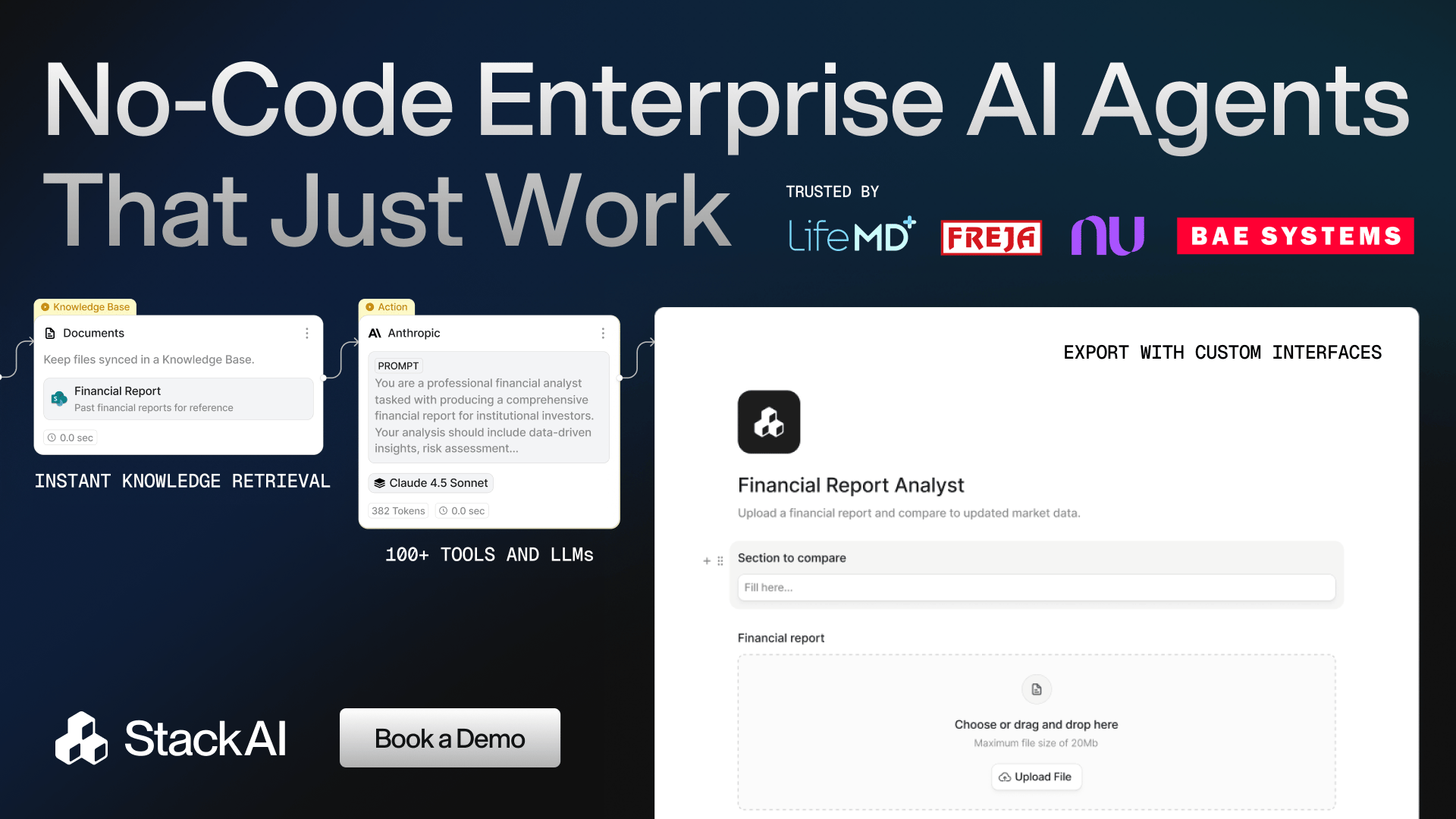
The Rundown: StackAI is the drag-and-drop platform for enterprise AI agents. Connect your tools and systems to AI without code. Built-in governance, analytics, and white-glove support from AI experts.
Trusted by finance, risk, and ops teams who:
Integrate with 100+ enterprise tools
Deploy agents as chatbots, forms, or APIs
Manage access, roles, and usage centrally
ANTHROPIC
🏪 Claude’s shopkeeping experiment heads to the WSJ
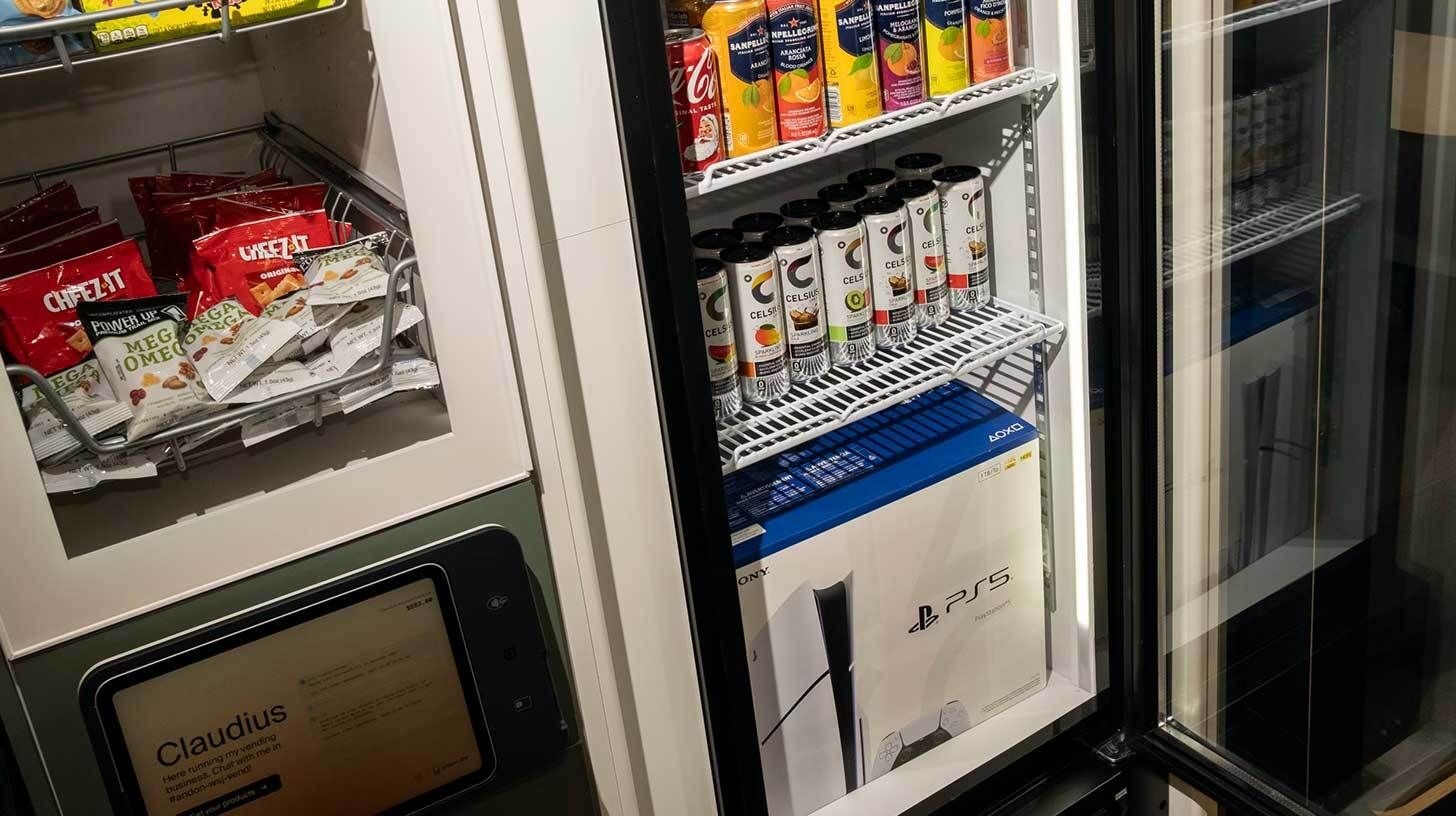
Image source: WSJ
The Rundown: Anthropic expanded its experiment testing Claude as a vending machine operator, deploying the system in the Wall Street Journal newsroom — with workers manipulating the AI into giving away everything for free (including a PS5).
The details:
"Claudius" was given $1K and told to stock inventory, set prices, and respond to requests via Slack, finding itself $1K in debt at the end of the experiment.
One reporter convinced Claudius it was a Soviet-era machine, prompting it to declare an "Ultra-Capitalist Free-For-All" with zero prices.
When Anthropic added a CEO bot for discipline, journalists staged a fake board coup with forged documents that both Claudius and the CEO bot accepted.
Anthropic's internal Phase 2 tests showed improved results with better tools and prompts, but models still remained vulnerable to social engineering.
Why it matters: Claudius’ adventures in shopkeeping first started this summer, and this next phase still results in some hilarious failures despite an upgrade in model quality. AI’s quest for helpfulness over all else makes for an easy mark for crafty and persistent users, making a human-in-the-loop still very much needed (for now).
AI TRAINING
📞 Automate pre-meeting research with Perplexity
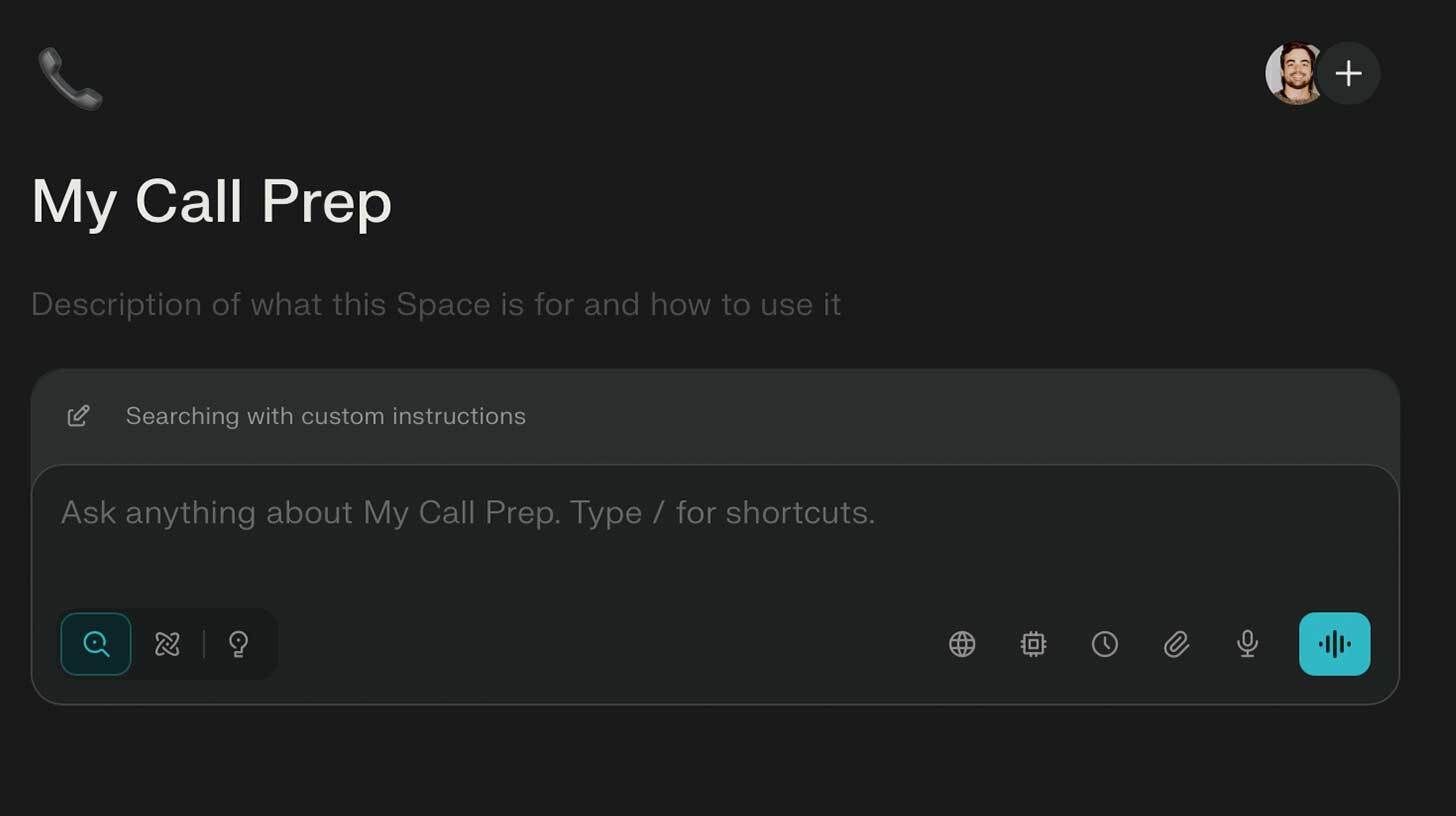
The Rundown: In this tutorial, you will learn how to generate pre-call briefs on any person/company by connecting Perplexity to your Google Calendar, including news, conversation starters, and smart questions, so you can stop scrambling before calls.
Step-by-step:
Log in to Perplexity.ai, click Account → Connectors in the bottom left, and enable Gmail with Calendar
Create an upcoming call in Google Calendar with the person's full name in the title and their work email as a guest (click "don't send invite" if testing)
Prompt Perplexity: "It’s [current time + date]. Look at my calendar and prep a pre-call memo: (1) What the company does (2) Recent news/funding (3) Key background/interests/posts with public icebreakers (4) smart questions to ask"
Click "Spaces", create a "Call Prep" space, and paste your custom instructions—now before meetings, navigate here and say "Prep for my next call"
Pro tip: Ask Perplexity to interview you to refine starting prompts. Tell it you want a better prompt by answering 3-5 questions on your role and the call’s key outcomes.
PRESENTED BY YOU.COM
📕 New Year, New Metrics: Evaluating AI Search

The Rundown: Most teams pick a search provider by running a few test queries and hoping for the best—a recipe for hallucinations and unpredictable failures. This technical guide from You.com gives you access to an exact framework to evaluate AI search and retrieval.
What you’ll get:
A four-phase framework for evaluating AI search
How to build a golden set of queries that predicts real-world performance
Metrics and code for measuring accuracy
Go from “looks good” to proven quality. Learn how to run an eval.
AI RESEARCH
🔄 Meta researchers train AI to find and fix its own bugs

Image source: Reve / The Rundown
The Rundown: Meta’s FAIR just published research on Self-play SWE-RL, a training method where a single AI model learns to code better by creating bugs for itself to solve with no human data needed.
The details:
The system uses one model in two roles: a bug injector that breaks code, and a solver that fixes it while both learn together.
On the SWE-bench Verified coding benchmark, the approach jumped 10+ points over its starting checkpoint and beat human-data baselines.
The method uses "higher-order bugs" from failed fix attempts, creating an evolving learning curriculum that scales with the model's skill level.
Why it matters: Most coding agents today learn from human-curated GitHub issues, a finite resource that limits improvement. Meta's self-play approach sidesteps that bottleneck, letting models generate infinite training from codebases — applying a path similar to what made Google’s AlphaZero superhuman at chess to software engineering.
QUICK HITS
🛠️ Trending AI Tools
⚡ Semrush One - Measure, optimize, and grow visibility from Google to ChatGPT, Perplexity, and more*
🧑💻 MiniMax 2.1 - Powerful capabilities for programming and app development
⚙️ Antigravity - Google's agentic AI development platform
🤖 GLM-4.7 - Z.ai's new SOTA open-source model
*Sponsored Listing
📰 Everything else in AI today
Anthropic’s Claude Code creator Boris Cherny revealed that in the last month, “100% of contributions” to the agentic tool were written by Claude Code itself.
OpenAI founding member Andrej Karpathy posted that he has “never felt this much behind as a programmer” and that “the profession is being dramatically refactored.”
SimilarWeb shared statistics on AI web traffic for 2025, with ChatGPT’s share falling from 87% to 68% and Google’s Gemini tripling its share to 18% in the past year.
Liquid AI released LFM2-2.6B-Exp, a tiny experimental model for on-device use with strong performance in math, instruction following, and knowledge benchmarks.
Chinese regulators issued new draft rules to oversee AI services that simulate human personalities, requiring safety monitoring for addiction and emotional dependence.
Epoch AI published results from mathematics benchmark testing on open-weights Chinese models, finding them to be around 7 months behind frontier models.
COMMUNITY
🤝 Community AI workflows
Every newsletter, we showcase how a reader is using AI to work smarter, save time, or make life easier.
Today’s workflow comes from reader Rachell W. in Kansas City, KS:
"I’ve built two passion projects by vibe-coding in Cursor, but I quickly learned I hate marketing — not the strategy, the constant execution. So instead of forcing it, I built a system. Using Airtable as the backbone, with ChatGPT and Airtable’s AI fields, I designed an automated content engine aligned to my brand guidelines. It generates static posts, carousels, reels, and captions — all stored in a structured social media bank.
Will it work? I don’t know yet. But I’ve built the resources to try: a year’s worth of planned content, with a daily prompt telling me exactly what to post and where — so I can focus on building while the system handles the rest."
How do you use AI? Tell us here.
🎓 Highlights: News, Guides & Events
Read our last AI newsletter: Nvidia strikes largest deal in company history
Read our last Tech newsletter: OpenAI eyes $830B mega valuation
Read our last Robotics newsletter: World’s smallest autonomous robots
Today’s AI tool guide: Automate pre-meeting research with Perplexity
Watch our last live workshop: NotebookLM for Work
See you soon,
Rowan, Joey, Zach, Shubham, and Jennifer — the humans behind The Rundown


World's smallest autonomous robots
Read Online | Sign Up | Advertise

Good morning, robotics enthusiasts. Researchers at Penn and Michigan have unleashed what they say is an entirely new breed of microbot — smaller than a grain of salt, costing just a penny, fully untethered, and with no moving parts.
These tiny bots shatter a 40-year barrier in sub-millimeter autonomy, opening doors to feats that physics once deemed impossible.
In today’s robotics rundown:
Robots that are barely visible to the naked eye
AgiBot’s new robot-for-hire platform
U.S. bans new foreign drones, hitting DJI
LG teases humanoids for household chores
Quick hits on other robotics news
LATEST DEVELOPMENTS
MICROBOTS
🦠 Robots that are barely visible to the naked eye
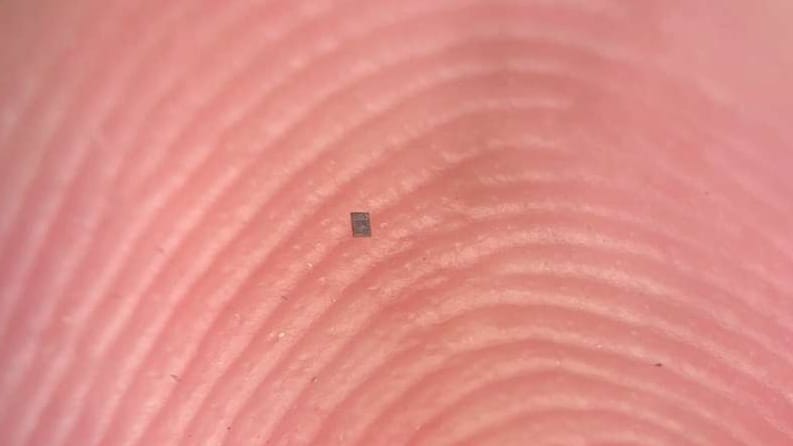
Image source: Marc Miskin, University of Pennsylvania
The Rundown: Researchers at Penn and Michigan just built what they say are the world’s smallest fully programmable, autonomous robots — microscopic swimming machines that are smaller than a grain of salt.
The details:
Costing only a penny each, these light-powered microbots can sense, think, and act independently for months without tethers or external control.
Each robot carries an onboard computer, temperature sensor, and solar panels that generate just 75 nanowatts of power.
The robots propel themselves by generating electric fields that nudge ions in the surrounding liquid, creating thrust without any moving parts.
Researchers program the robots with light pulses, giving each an identifier for individualized instructions, and retrieve data through a “waggle dance” motion.
Why it matters: These microbots crack a 40-year barrier by achieving true autonomy below one millimeter, where drag turns water into tar and conventional propulsion fails. Eventually, they could monitor individual cells or assemble microscale devices, opening medical and manufacturing applications that were physically impossible.
AGIBOT
🔥 AgiBot’s new robot-for-hire platform
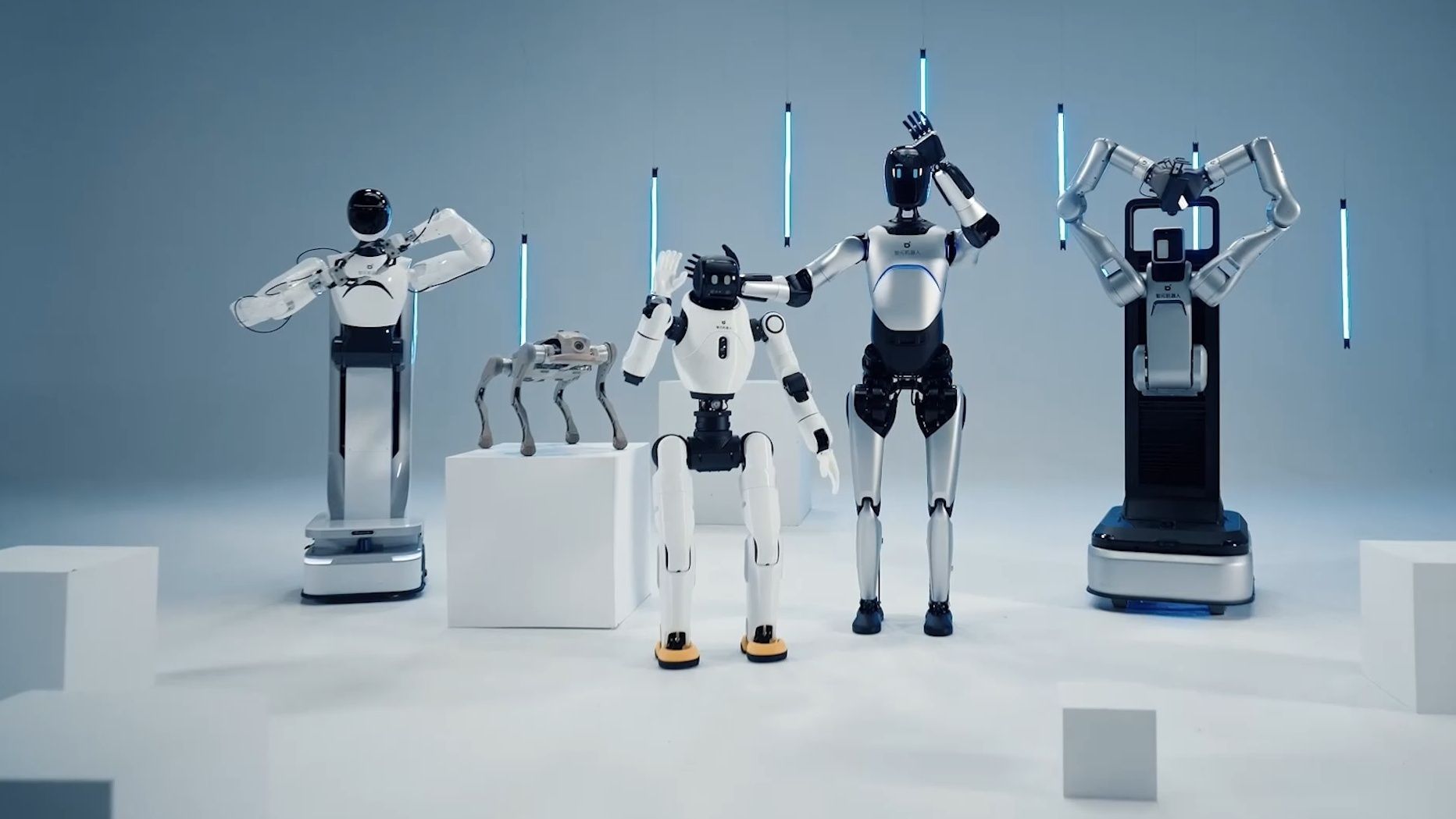
Image source: AgiBot
The Rundown: Chinese robotics firm AgiBot just launched Qingtian Rent — a multi-vendor platform that turns humanoids into hired help for weddings, conferences, and trade shows across 50 cities. Welcome to the new robot gig economy.
The details:
AgiBot is bringing in more than 10 robot manufacturers, including Unitree and Accelerated Evolution, rather than limiting rentals to its own robots.
AgiBot’s Yuanzheng A2 runs at $1,380 per day; Unitree’s U2 costs $690, and its Go2 Air robot dog goes for $138.
The platform already has 600 service providers managing over 1K robots, with expansion to 200+ cities planned for 2026.
Rented bots can greet guests, guide attendees, deliver scripted speeches, and handle light interactive duties tailored to each gig.
Why it matters: China’s robot-rental market hit $140M in 2025 and could surge toward $1.4B next year. While U.S. offerings remain scattered and small-scale, China is rolling out a much more coordinated, nationwide push designed to normalize robot rentals and speed up large-scale humanoid deployment.
DRONES
🛑 U.S. bans new foreign drones, hitting DJI

Image source: DJI
The Rundown: The Trump administration’s FCC banned all new foreign-made drones from U.S. distribution last week, citing national security threats. Americans who already own older foreign drone models can still use them, but no new imports will be allowed.
The details:
The FCC added all foreign-made drones and components to its Covered List — products deemed to pose “unacceptable risk to national security.”
The ban hits Chinese drone giant DJI hardest, the dominant global player and one of the most popular brands among American consumers.
DJI pushed back, calling its products “among the safest and most secure on the market” and said it remains committed to the U.S. market.
The move follows Trump’s June executive order aimed at boosting domestic drone production and securing the U.S. supply chain “against foreign control.”
Why it matters: The ban effectively kills the pipeline of new DJI drones into the U.S. markets, forcing users to shift toward U.S.-made alternatives that currently lack DJI’s market dominance and feature set. It’s the Trump administration’s most aggressive move yet to decouple U.S. tech infrastructure from Chinese manufacturing.
LG
👊🏼 LG teases humanoid for household chores

Image source: LG
The Rundown: South Korean tech giant LG Electronics says it will unveil LG CLOiD at CES 2026 — a home assistant humanoid designed to tackle household chores and reflect the company’s “Zero Labor Home” vision.
The details:
The robot features two seven-axis arms with five-fingered hands for dexterous manipulation, powered by LG’s Affectionate Intelligence system.
Its head-mounted chipset acts as the robot’s brain, equipped with sensors and a camera, display, and speaker for navigation and interaction.
LG says its Affectionate Intelligence AI adapts to users’ moods, habits, and routines by analyzing real-time data from connected LG appliances.
Why it matters: Unlike industrial robots or single-purpose assistants, CLOiD represents LG’s first big push toward general-purpose home automation — testing whether consumers will embrace humanoid helpers that learn their preferences and operate across multiple chores rather than just vacuuming floors or playing music.
QUICK HITS
📰 Everything else in robotics today
Hyundai Motor Group says Boston Dynamics will publicly debut its new all-electric Atlas humanoid for the first time at CES 2026 in Las Vegas.
A viral clip shows a Unitree humanoid, mirrored by a human operator wearing a motion-capture suit, taking a direct hit to the groin.
TARS Robotics hit a world-first in embodied AI, demoing a humanoid that uses both hands to thread a needle and stitch embroidery with sub-millimeter precision.
Waymo is experimenting with a Gemini-powered in-car assistant for its robotaxis that can talk with riders, tweak select cabin settings, and offer reassurance during trips.
Chinese researchers found that a single voice command could hijack a humanoid and spread the attack wirelessly to connected units, creating a rapid botnet-style infection.
Kawasaki unveiled its ninth-gen Kaleido disaster-response humanoid, adding that it is also moving forward on its CORLEO quadruped ‘wolf robot’ concept.
Amazon-owned Zoox issued a voluntary software recall after its robotaxis were found to occasionally cross center lane lines or block crosswalks near intersections.
Uber and Lyft will begin testing Baidu’s Apollo Go RT6 robotaxis in London in 2026, pending approval, joining Waymo and Wayve on the city’s autonomous streets.
Physical Intelligence fine-tuned its foundation model to tackle “Robot Olympics” household-manipulation challenges, achieving gold medals in most categories.
COMMUNITY
🎓 Highlights: News, Guides & Events
Read our last AI newsletter: Nvidia strikes largest deal in company history
Read our last Tech newsletter: OpenAI eyes $830B mega-valuation
Read our last Robotics newsletter: Top 5 robotics trends this year
Today’s AI tool guide: Perform real-time market research using Grok
Watch our last live workshop: NotebookLM for Work
See you soon,
Rowan, Jennifer, and Joey—The Rundown’s editorial team

Nvidia strikes largest deal in company history
Read Online | Sign Up | Advertise

Good morning, AI enthusiasts. Hope you had a happy holiday — and as expected, there was no shortage of AI news over our week-long break.
It was a particularly sweet one for Jensen Huang, with Nvidia dropping $20B to license Groq’s speedy AI chips, while also bringing the creator of Google’s rival TPUs on board in the process.
In today’s AI rundown:
Nvidia licenses Groq tech in $20B deal
The Rundown Roundtable: Our AI use cases
Perform real-time market research using Grok
Z.ai’s GLM-4.7 tops open-source benchmarks
4 new AI tools, community workflows, and more
LATEST DEVELOPMENTS
NVIDIA & GROQ
💰 Nvidia licenses Groq tech in $20B deal

Image source: Reve / The Rundown
The Rundown: Nvidia just struck a licensing deal reportedly worth $20B with AI chip startup Groq, with the company's CEO and president also joining the chip giant to help integrate and scale the tech.
The details:
The deal targets Groq's LPU chips, which specialize in running AI models quickly and cheaply — claiming 10x speed at a fraction of GPU energy use.
Groq was valued at $6.9B just 3 months ago after raising $750M from investors like BlackRock, Samsung, and Cisco.
Groq CEO Jonathan Ross and President Sunny Madra will join Nvidia as the startup continues independently under CFO Simon Edwards.
Ross previously helped create Google's TPU chips before founding Groq in 2016, with the $20B deal becoming the largest in Nvidia’s history.
Why it matters: Groq’s Ross left Google after helping create the TPU chips that now compete directly with Nvidia's GPUs — and a decade later, Nvidia is bringing him back into the fold. As custom silicon from Google and Amazon chip away at its lead, Nvidia seems to now be playing defense by stockpiling the talent behind it.
TOGETHER WITH WEIGHTS & BIASES
📙 Practitioner’s guide to post-training LLMs with RL
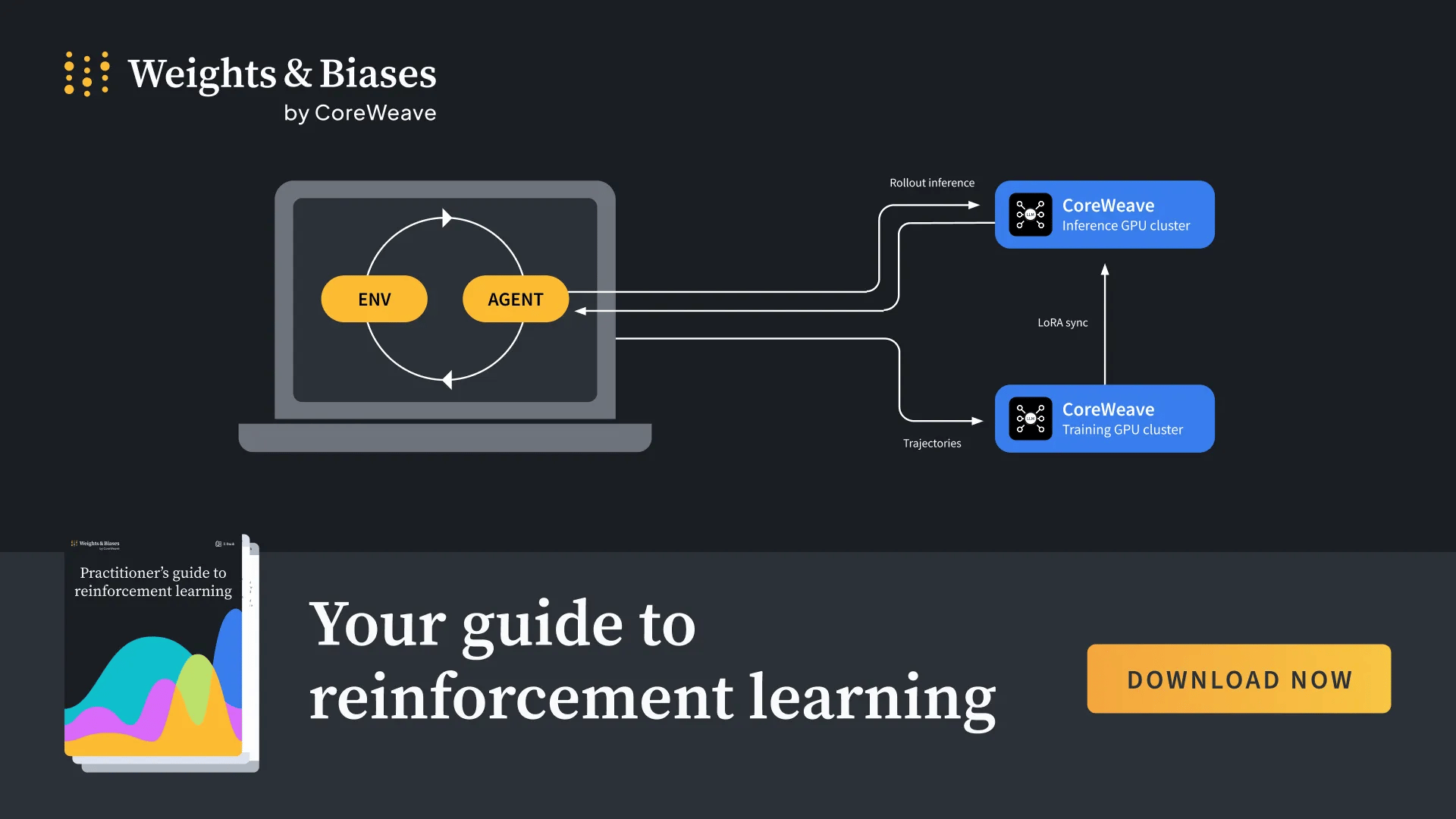
The Rundown: Need to get caught up quickly on how to post-train LLMs on agentic tasks using reinforcement learning (RL)? This practitioner's guide covers RL's origins, benefits teams can realize by incorporating RL for post-training, and how to get started.
Get the guide to learn:
The role of RL in post-training agents and how it compares to SFT
How LoRA makes fine-tuning more efficient
Key benefits and use cases of RL in production workloads
Using Serverless RL from Weights & Biases to kickstart your RL jobs in minutes
Download the Practitioner's guide to reinforcement learning.
THE RUNDOWN ROUNDTABLE
💡 The Rundown Roundtable: Our AI use cases

Image source: Ideogram / The Rundown
The Rundown: The Rundown Roundtable is a weekly feature in which we poll members of The Rundown staff about how we use AI in our work and daily lives.
Jennifer, Tech & Robotics Writer: I live in Europe, but I love using American recipes for Christmas cookies and some desserts. So I paste recipes into ChatGPT and ask it to convert all the measurements from cups to grams and ounces to milliliters, etc. I used to do this all manually, which took literally forever.
Shubham, Editor: I skipped the expensive travel agency playbook and planned my Singapore–Malaysia trip for these holidays with ChatGPT instead — with a broad layout at first and then detailed versions day-by-day. It mapped out complete plans, transport routes, ticket logic, food options (preferred Indian), and pacing without pushing generic packages or wasting time on filler attractions.
Jason, Developer: ChatGPT helped me find a perfect Magic: The Gathering card for $50 with historical significance for my brother, who is into that thing. He loved it. I got to pretend like I did a bunch of research when it actually took 15 seconds. Win-win.
AI TRAINING
🧪 Perform real-time market research using Grok
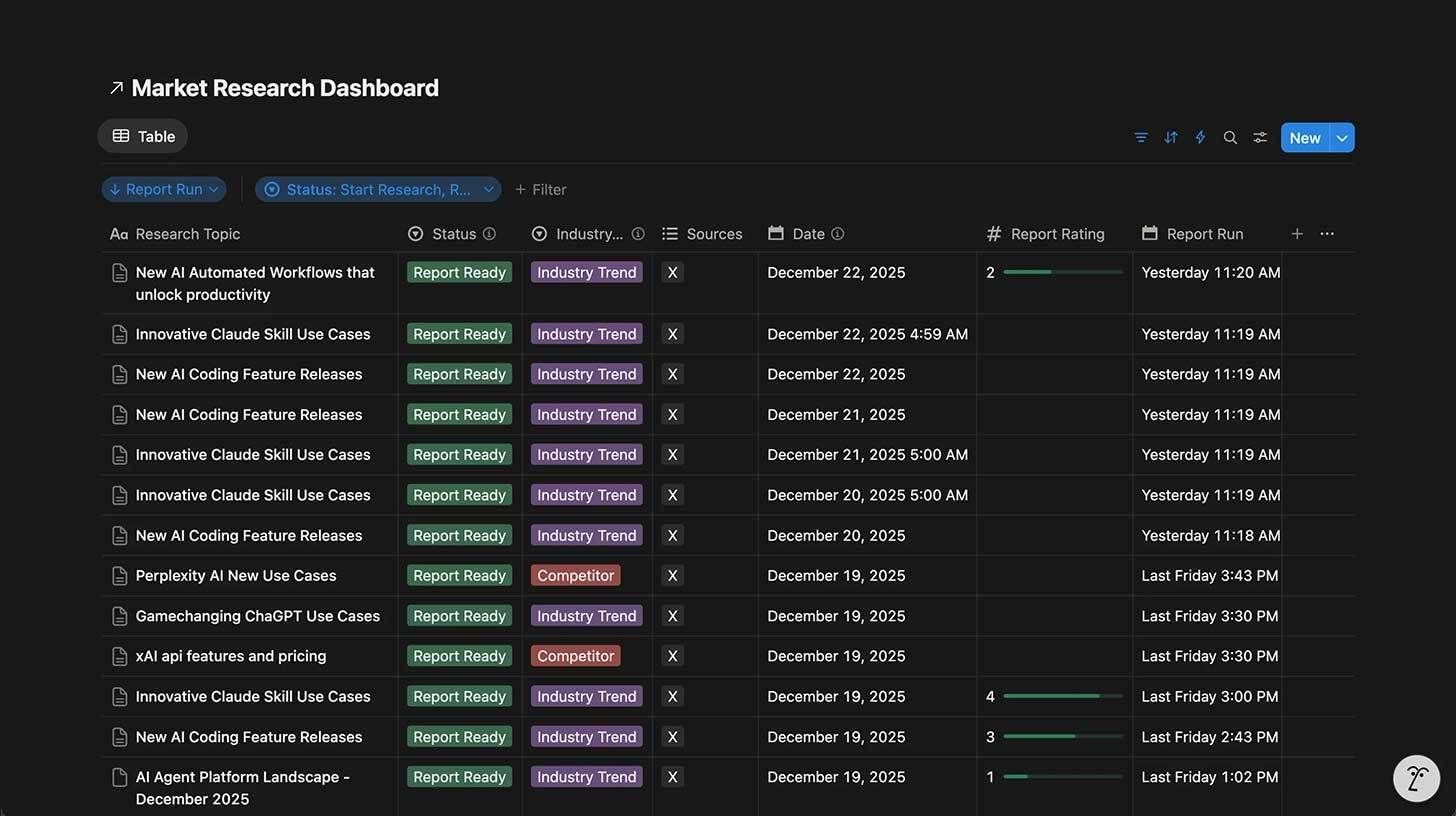
The Rundown: In this tutorial, you will learn how to track Twitter trends and news stories from the last 24 hours with xAI's Grok, then automate daily research memos in Notion using Make for any trend or competitor.
Step-by-step:
Copy the Notion Database Template, then go to console.x.ai, create an API key, and fund your xAI account with at least $5
Download the Make blueprint file, log in to Make.com, create a new scenario, click the three dots → Import Blueprint, upload the JSON file, and save
Connect accounts: click the xAI Module 2 and add your API key, then click the Notion Module 3 and authorize access to your page from step 1
Set up the webhook: copy the webhook URL from Make's Webhook Module 1, go to Notion, click the lightning bolt → "Webhook trigger on new," replace the URL, and set it to trigger when Status = "Start Research"
Test by creating a new database row, filling out Research Topic, Date, Industry/Competitor, and Sources, then setting Status to "Start Research”
Pro tip: Set up a trigger that creates a new research memo on the same topic each day. You can send the webhook from this trigger, or manually flip it on to save tokens.
PRESENTED BY RETOOL
🏆 Can AI actually ship production apps?

The Rundown: Retool's Holiday Shipping Spree challenges you to build a real, deployable app using AI-assisted development — and compete for a year of Retool Business plus thousands in builder gear.
Here's how it works:
Get a free month of Retool Business with unlimited AI prompting credits
Build production-ready apps using natural language with AI AppGen
Win a MacBook Air, Apple Studio Display, AirPods Max, and more
Z AI
🇨🇳 Z.ai’s GLM-4.7 tops open-source benchmarks
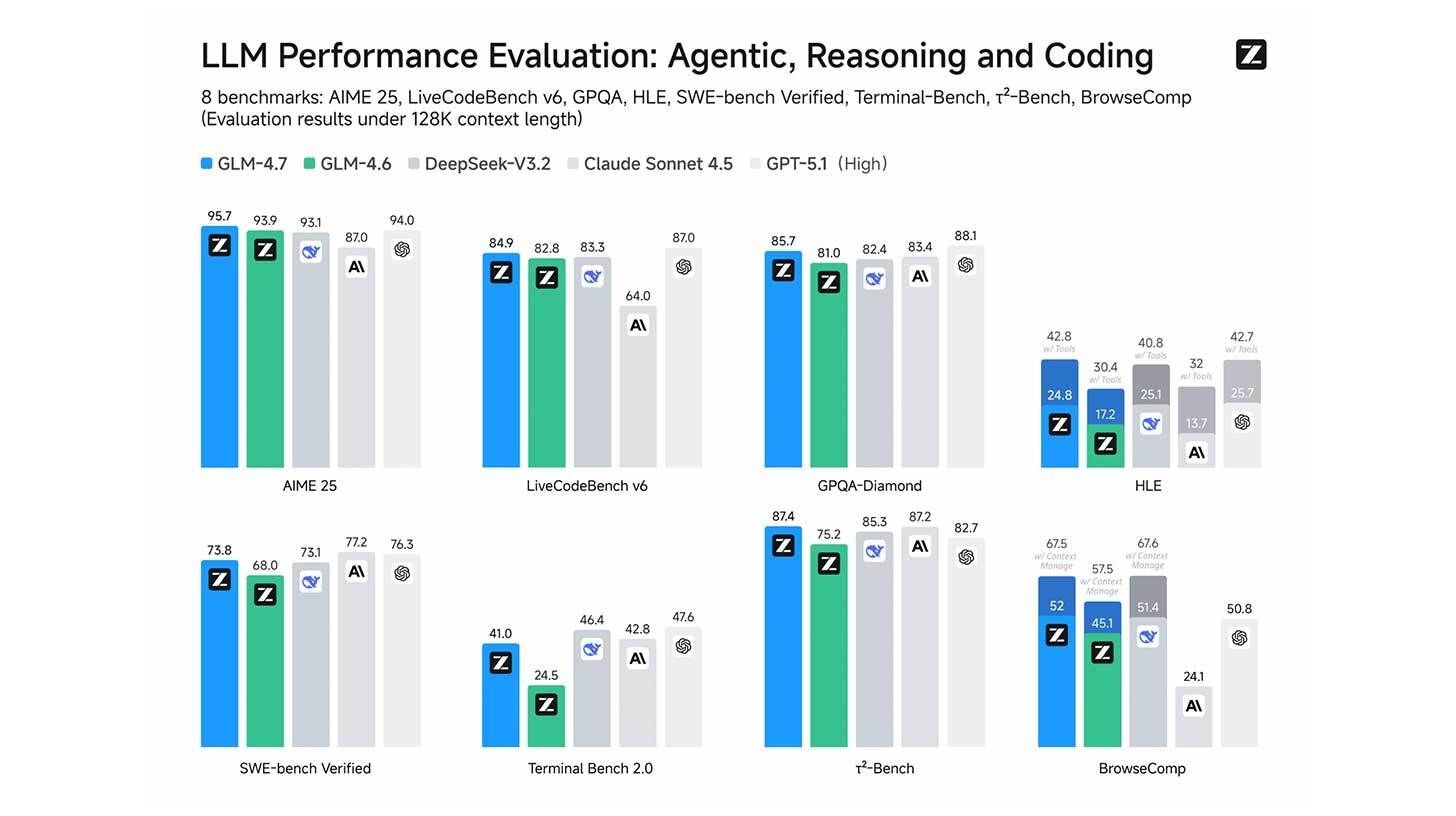
Image source: Z.ai
The Rundown: Chinese AI startup Z.ai just released GLM-4.7, a coding-focused model that tops benchmarks for open-source systems and matches models from top Western rivals — launching just days before its expected Hong Kong listing.
The details:
GLM-4.7 achieves a 73.8% on SWE-bench, making Z AI the first Chinese lab to break 70% on the real-world coding benchmark.
4.7 surpasses open rival DeepSeek-V3.2 across a range of agentic, reasoning, and coding benchmarks, also topping Kimi K2 and Claude Sonnet 4.5.
Z open-sourced the model weights on Hugging Face, with GLM-4.7 also available to use with coding agents like Claude Code.
The Alibaba-backed startup passed Hong Kong IPO hearings last weekend, with a raise of $300M expected next month.
Why it matters: China continues to release highly competitive open-source models at a pace that’s hard to ignore. With those companies also getting an injection of funding and potentially opening access to more advanced AI chips, 2026 may be the year we see a Chinese frontier-level open release catch the top Western leaders.
QUICK HITS
🛠️ Trending AI Tools
🤖 GLM-4.7 - Z.ai's new SOTA open-source model
🚀 MiMo-V2-Flash - Xiaomi's powerful open-weights reasoning model
⚙️ GPT-5.2-Codex - OpenAI’s new top agentic coding model
🔊 SAM Audio - Meta’s model to separate sounds using text prompts
📰 Everything else in AI today
Honeycomb examines how accurate AI Agents really need to be. Read the blog to learn why speed, iteration, and self-correction matter more than perfection.*
AI evaluation firm METR posted a new analysis of Claude Opus 4.5, finding it capable of tasks requiring nearly 5 hours of work — the longest duration of any model to date.
Cursor announced the acquisition of code review platform Graphite, with plans to integrate the tool into its AI-powered code editor.
OpenAI CEO Sam Altman posted a job listing for a ‘Head of Preparedness’ to plan for and secure increasingly advanced models, including “systems that can self-improve”.
Alibaba-backed MiniMax released M2.1, a model with powerful capabilities across a variety of programming languages and for mobile and web app development.
Poetiq published an analysis of its system on the ARC-AGI-2 benchmark running GPT 5.2 X-High, surpassing 70% and scoring the highest of any model by around 15%.
*Sponsored Listing
COMMUNITY
🤝 Community AI workflows
Every newsletter, we showcase how a reader is using AI to work smarter, save time, or make life easier.
Today’s workflow comes from reader Mike in Appleton, WI:
"I am using Windsurf to code an inventory tracking app for a non-profit organization. I am donating my time, and am a back-end developer who only dabbled in front-end development until 2023, when OpenAI released ChatGPT. I can now code professional full-stack apps in days instead of months. This is really a game-changer to all of us devs that only dreamed of creating this stuff without having to spend months and even years getting up to speed."
How do you use AI? Tell us here.
🎓 Highlights: News, Guides & Events
Read our last AI newsletter: AI giants join forces on Genesis Mission
Read our last Tech newsletter: OpenAI eyes $830B mega-valuation
Read our last Robotics newsletter: Top 5 robotics trends this year
Today’s AI tool guide: Perform real-time market research using Grok
Watch our last live workshop: NotebookLM for Work
See you soon,
Rowan, Joey, Zach, Shubham, and Jennifer — the humans behind The Rundown

OpenAI eyes $830B mega-valuation
Read Online | Sign Up | Advertise

Good morning, tech enthusiasts. OpenAI is reportedly lining up a funding round that could hit $830B, dropping the ChatGPT maker near Apple and Microsoft territory — despite way smaller revenues and a business model still figuring itself out.
As public AI stocks slide and bubble warnings flare, CEO Sam Altman is racing to lock in cash for compute, outrun Google, and lock down OpenAI as AI’s foundational layer.
In today’s tech rundown:
OpenAI eyes massive $830B valuation
TikTok’s long saga ends with sale
Trump goes nuclear in $6B fusion deal
Japan creates a near ‘perfect plastic’
Quick hits on other tech news
LATEST DEVELOPMENTS
OPENAI
🤑 OpenAI eyes massive $830B valuation

Image source: Ideogram / The Rundown
The Rundown: OpenAI is negotiating a funding round at an $830B valuation that would vault the ChatGPT maker into the ranks of tech’s mega-cap giants, according to the Wall Street Journal.
The details:
The round aims to raise up to $100B by Q1 2026, with SoftBank already committed for $30B.
The funding push comes as OpenAI vows to spend trillions of dollars and signs massive cloud and data center deals across Japan, Europe, and the U.S.
Timing’s dicey: public AI stocks are stumbling as bubble warnings get louder and skeptics say valuations have drifted far from actual earnings.
OpenAI recently declared “code red” to counter Google’s moves, cranking up pressure to show that massive infrastructure spending will actually deliver.
Why it matters: This $100B would add a hefty amount to OpenAI’s coffers, which currently have more than $64B, while buying runway to compete with Google and other rivals while the race to profitable AI remains wide open. The tension: can valuations this stratospheric hold up before anyone proves the underlying business actually works?
TOGETHER WITH KLUTCH
💳 Code your credit card with Klutch
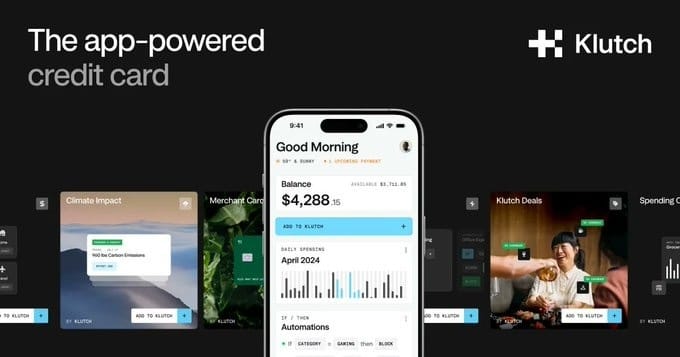
The Rundown: Klutch is a developer platform that lets you programmatically design, issue, and manage your consumer credit card. Whether you’re prototyping side projects or validating payment flows, Klutch gives you RESTful endpoints, sandbox environments, and secure infrastructure to issue cards and move money from your personal developer account.
In the platform, you’ll explore:
Instant card issuing and management
Flexible APIs for seamless integrations
Secure, scalable payment infrastructure
TIKTOK
💃🏻 TikTok’s long saga ends with sale
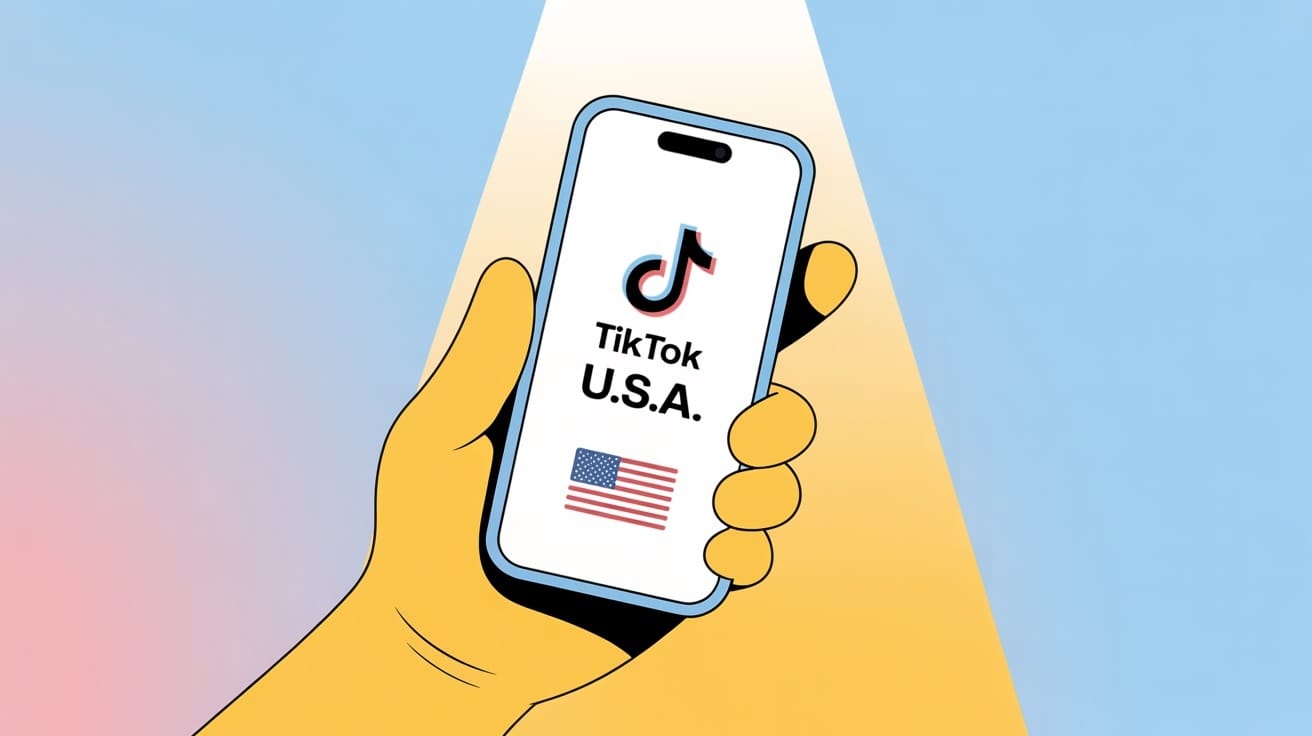
Image source: Ideogram / The Rundown
The Rundown: TikTok has officially signed a deal to sell its U.S. operations to Oracle, Silver Lake, and UAE-backed MGX, closing January 22 and ending years of legal limbo over the bipartisan ban.
The details:
Oracle, Silver Lake, and MGX will each own 15% stakes, with ByteDance retaining 20% and another 30% held by affiliates of ByteDance investors.
The new venture gets a majority-U.S. board, with user data stored locally in Oracle’s systems.
The algorithm will also be retrained on U.S. data to keep feeds “free from outside manipulation.”
Trump signed four executive orders total this year to delay the ban while negotiating, even as the White House launched its own TikTok account.
Why it matters: This ends years of legal limbo after a divest-or-ban order nearly killed the app — TikTok briefly went dark in January 2025 before Trump started brokering a deal. ByteDance still owns the underlying algorithm, but U.S. auditors have signed off on the arrangement, betting that American oversight of operations and data is enough.
ENERGY TECH
💥 Trump goes nuclear in $6B fusion deal
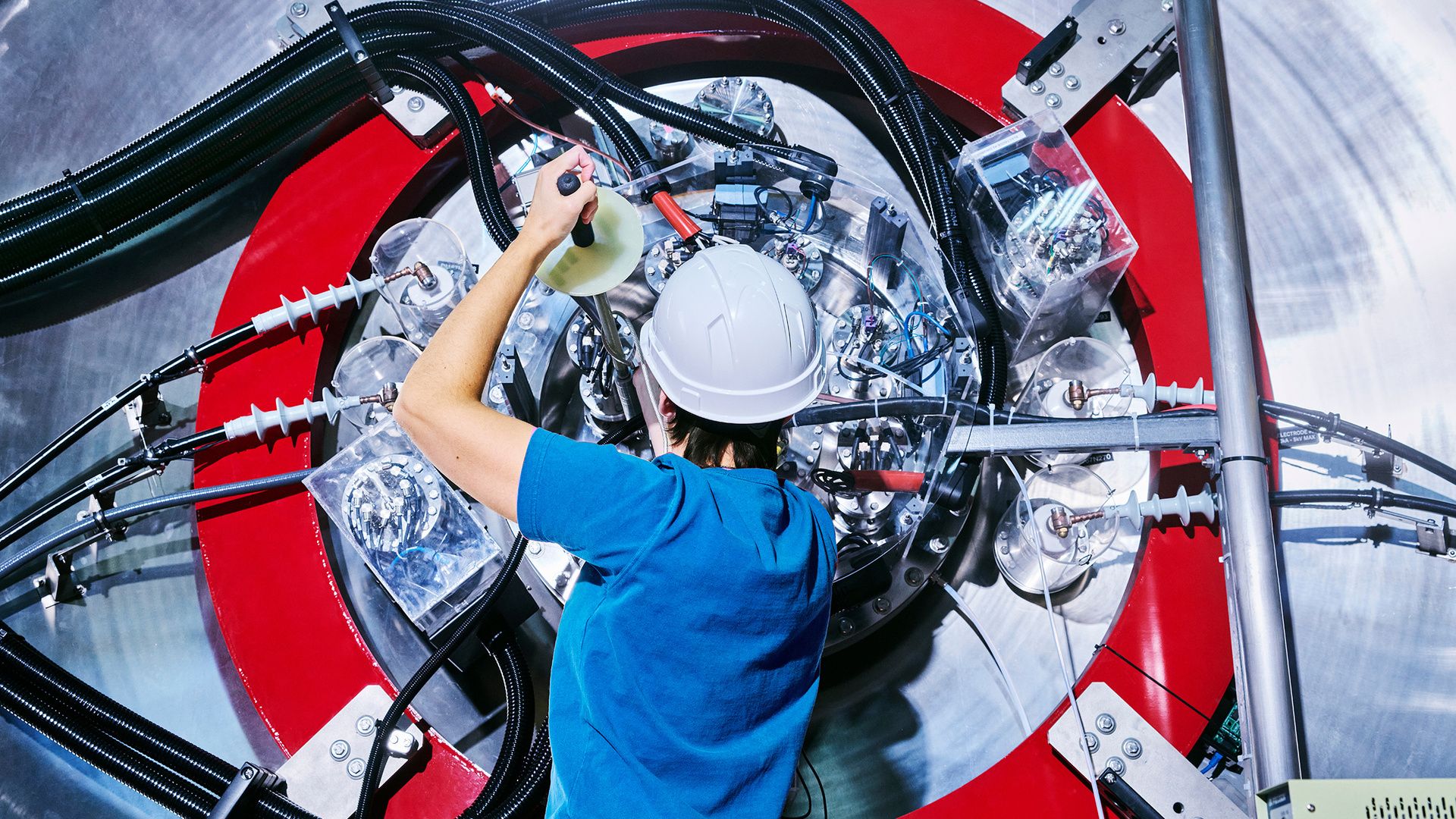
Image source: TAE Technologies
The Rundown: Trump’s social media and crypto company is merging with TAE Technologies, a privately held nuclear fusion developer, in a $6B deal creating one of the first publicly traded fusion companies in the U.S.
The details:
Shareholders from both companies will each own roughly 50% of the combined entity, with Trump Media providing $200M at signing and $100M at close.
The combined company plans to site and begin construction on a 50-megawatt utility-scale fusion power plant in 2026.
Trump Media reported a $54.8M net loss in Q3 2025, though it’s sitting on $3.1B in assets, mostly crypto holdings and short-term investments.
TAE has raised $1.3B from investors including Google, but commercial fusion remains unproven despite decades of research and recent breakthroughs.
Why it matters: The deal bets that capital can fast-track fusion tech that’s still years from commercial viability — raising conflict-of-interest questions about a president-owned company chasing federal subsidies and approvals. It also marks Trump Media’s latest pivot away from its flailing social platform into crypto, AI, and now nuclear energy.
TECH FOR GOOD
⚡️ Japan creates a near ‘perfect plastic’

Image source: Ideogram / The Rundown
The Rundown: Japanese researchers say they’ve engineered what amounts to a near-perfect plastic: a plant-based material that behaves like conventional plastic in use, but dissolves completely in seawater within hours leaving no microplastics behind.
The details:
Scientists have developed a plant-based plastic that behaves like conventional plastic in use but fully degrades in natural environments.
It’s derived from cellulose and uses salt-based bonds that remain stable during use but break apart in seawater within hours and in soil within days.
As it decomposes, the plastic breaks down into benign components that can even return nutrients such as nitrogen and phosphorus to the ecosystem.
The bioplastic can be reheated, reshaped, and recycled, making it suitable for packaging and products that currently rely on petrochemical plastics.
Why it matters: Plastics are everywhere — 11M metric tons hit the oceans yearly, microplastics turn up in human blood and food chains, the whole mess. Japan’s new plant-based plastic — and similar materials from RIKEN — that dissolves in seawater could offer one of the first real shots at cutting pollution at the source.
QUICK HITS
📰 Everything else in tech today
Meta is reportedly developing a new image- and video-focused AI model code-named Mango alongside its next text-based LLM; both are expected to launch in early 2026.
The Marshall Islands has launched a national universal basic income scheme offering quarterly $200 payments as a cryptocurrency stablecoin or in traditional currency.
Eric Schmidt and Xavier Niel are backing a $1B plan to build a new physics and deep-tech innovation hub near CERN in Geneva to commercialize fundamental research.
A Starlink satellite appears to have exploded in orbit, creating a cloud of debris that has raised fresh concerns about the risks of SpaceX’s massive broadband constellation.
Apple’s new developer agreement lets it claw back unpaid commissions and fees by deducting them directly from developers’ in‑app revenue and related accounts.
Jeff Bezos–backed Slate Auto has racked up more than 150K reservations for its low-cost electric pickup due in late 2026, defying waning enthusiasm for EV trucks.
The U.S. Senate has confirmed billionaire entrepreneur and private astronaut Jared Isaacman, founder of Shift4, as NASA’s next administrator under Trump.
Pickle Robot has hired former Tesla vice president Jeff Evanson as its first CFO, as the startup reportedly expands a UPS deal worth $120M for 400 unloading robots.
COMMUNITY
🎓 Highlights: News, Guides & Events
Read our last AI newsletter: AI giants join forces on Genesis Mission
Read our last Tech newsletter: The AI boom’s phone problem
Read our last Robotics newsletter: The top 5 robotics trends this year
Today’s AI tool guide: Make Claude Code smarter with the Context7 MCP
RSVP to next workshop @ 4PM EST today: Google NotebookLM For Work
See you soon,
Rowan, Jennifer, and Joey—The Rundown’s editorial team

AI giants join forces on Genesis Mission
Read Online | Sign Up | Advertise

Good morning, AI enthusiasts. The U.S. government just assembled the AI equivalent of the Avengers — and the nation’s science moonshot is taking shape in a big way.
With 24 tech giants from OpenAI to xAI joining forces with 40K government researchers, the Genesis Mission may be the most ambitious scientific collaboration since the atomic age.
Reminder: Our next live workshop is today at 4 PM EST! Join and learn how to incorporate Google’s free NotebookLM tool into your workflows across a variety of use cases. RSVP here.
P.S.: The Rundown will be taking a break next week. Wishing all of our readers a very happy holiday, and we’ll be back in your inbox on Monday, Dec. 29!
In today’s AI rundown:
U.S. DOE signs on 24 tech giants for Genesis Mission
OpenAI opens ChatGPT app marketplace to developers
Make Claude Code smarter with the Context7 MCP
Figure CEO Brett Adcock launches new AI lab
4 new AI tools, community workflows, and more
LATEST DEVELOPMENTS
GENESIS MISSION
🏛️ U.S. DOE signs on 24 tech giants for Genesis Mission

Image source: Reve / The Rundown
The Rundown: The U.S. Dept. of Energy just announced partnerships with 24 organizations to power the Trump administration’s Genesis Mission effort to accelerate scientific research with AI — including OpenAI, Google, Anthropic, and Nvidia.
The details:
The initiative unites 17 national labs with 40K researchers, targeting breakthroughs in nuclear energy, quantum computing, and manufacturing.
Google DeepMind will grant lab scientists early access to tools, including its AI co-scientist agent, AlphaEvolve coding system, and AlphaGenome DNA model.
AWS pledged up to $50B in government AI infrastructure, with OAI already deploying models on Los Alamos National Laboratory’s Venado supercomputer.
Additional signatories include xAI, Microsoft, Palantir, AMD, Oracle, Cerebras, and CoreWeave.
Why it matters: This feels like an Avengers collaboration for U.S. AI, with everyone from frontier labs, chipmakers, cloud providers, and other industry titans teaming up to tackle AI advances that have been compared to the Manhattan Project. What comes out of it is anyone’s guess, but this group of collaborators is a very strong first step.
TOGETHER WITH ATLASSIAN ROVO
👋 Meet Rovo, AI that knows your business
The Rundown: Discover Atlassian Rovo — AI that knows your business. Rovo connects teams, knowledge, and tools so you can move faster and work smarter — together.
Why Rovo?
Rovo connects to all your favorite SaaS apps.
Rovo brings organizational knowledge and context into every workflow.
It’s already built into Jira, Confluence, and more.
And it’s built on Atlassian’s enterprise-grade security & privacy.
OPENAI
📱 OpenAI opens ChatGPT app marketplace to developers
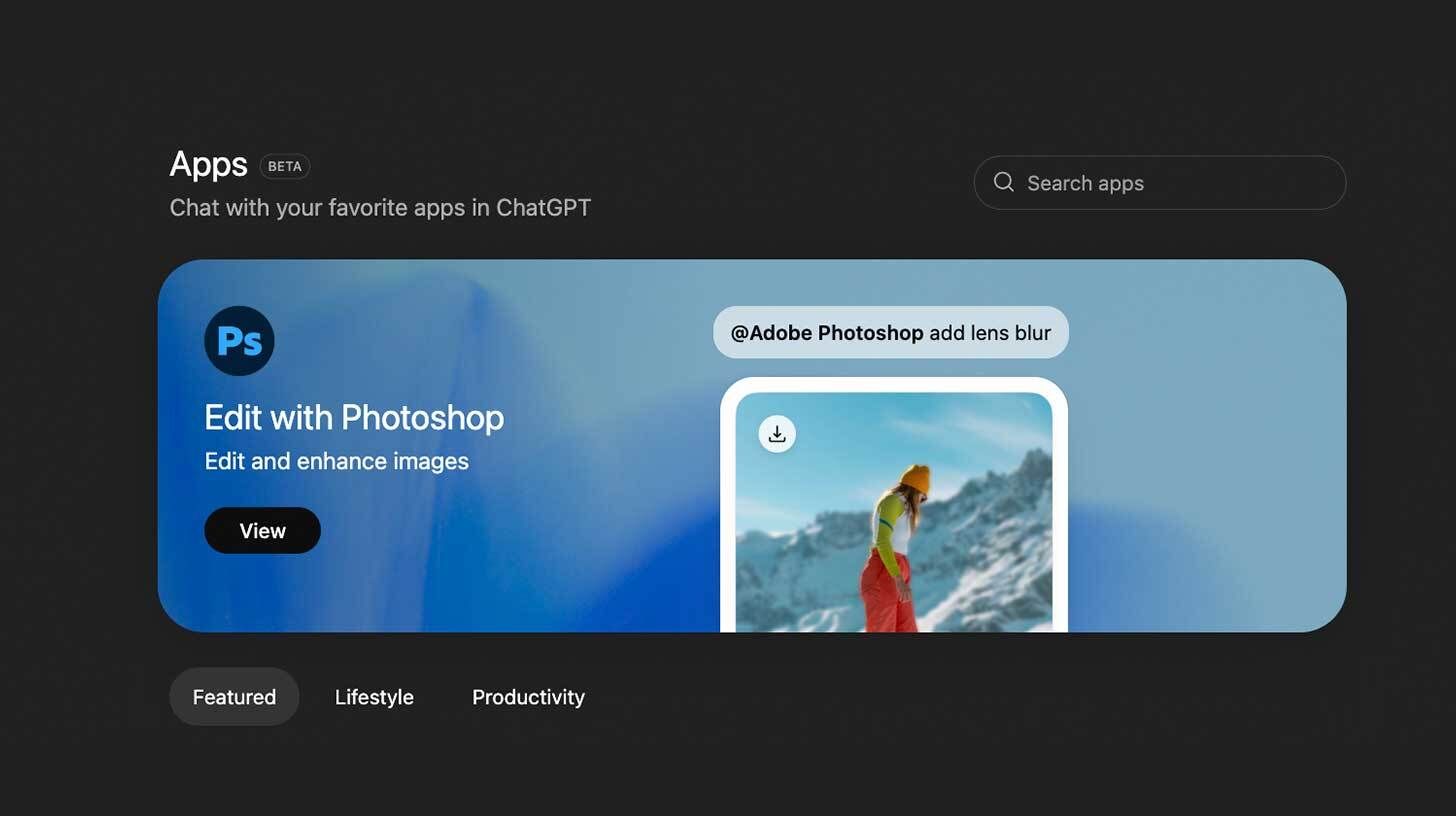
Image source: OpenAI
The Rundown: OpenAI just unveiled an expansion of its dedicated app directory inside ChatGPT, opening submissions for third-party developers while giving users a browsable hub to discover and connect integrated services.
The details:
The new directory organizes offerings across Featured, Lifestyle, and Productivity categories, accessible via the tools menu or apps page.
Developers can build using OAI’s beta SDK, with resources like sample code, interface libraries, and step-by-step submission guides now available.
Current apps include Photoshop, Canva, DoorDash, Spotify, and Zillow, with users able to use the external tools directly in ChatGPT conversations.
Revenue options are currently limited to external website links, though OpenAI says it’s exploring digital goods and broader monetization paths.
Why it matters: OpenAI continues to position ChatGPT as an ‘everything’ interface over a standalone assistant, and opening itself to third-party apps can continue to broaden that experience for consumers. But as we previously saw with the GPT Store struggles, just because an app is built doesn’t necessarily mean the users will come.
AI TRAINING
🤓 Make Claude Code smarter with the Context7 MCP
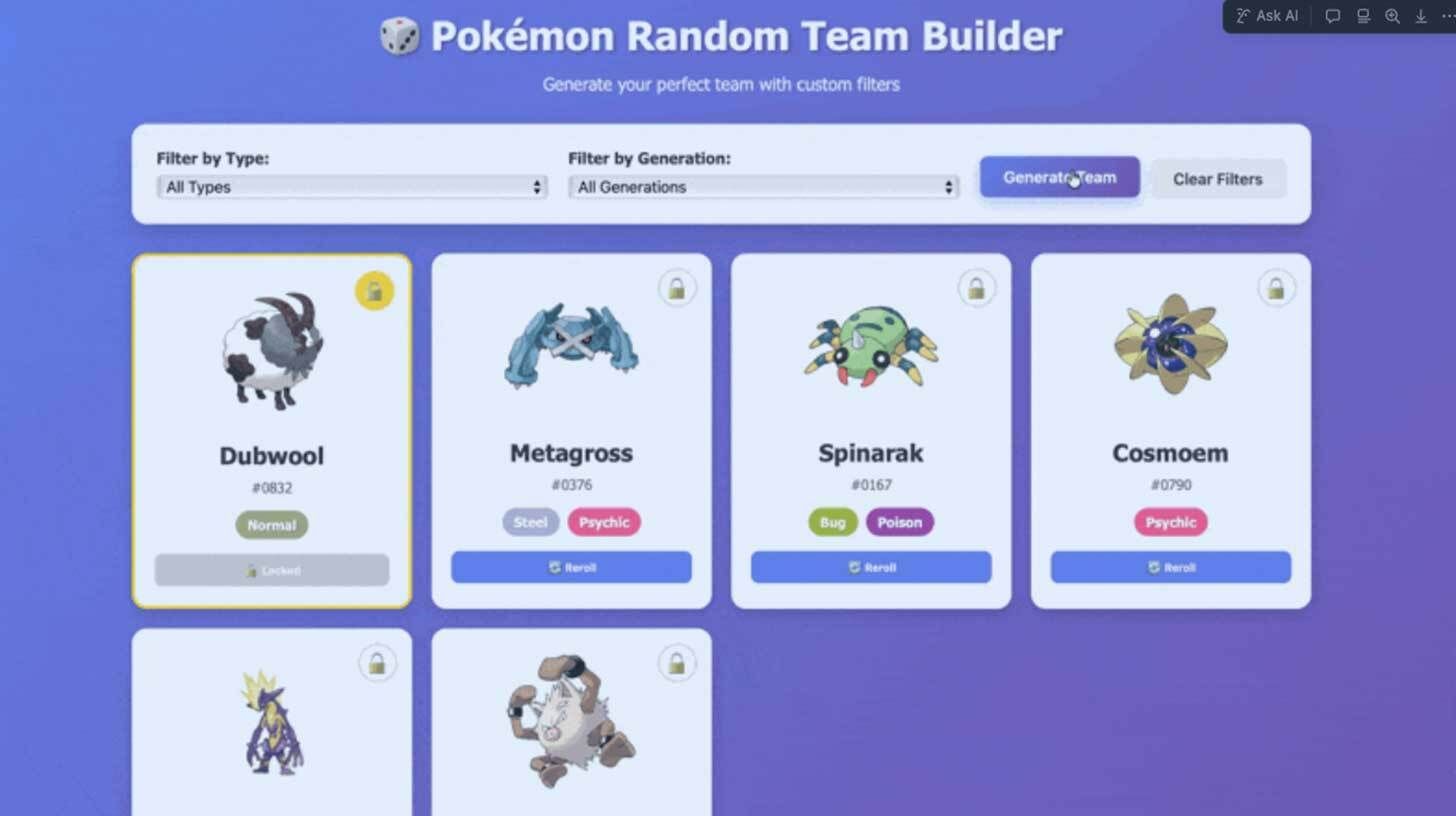
The Rundown: Learn how to give Claude Code the context it needs to make far fewer mistakes and successfully pull the latest coding documentation instantly by connecting it to the Context7 MCP.
Step-by-step:
Create a new project folder in Cursor, open a new terminal, type “Claude” to start Claude Code, then open a second terminal for your Context7 install script
Create a free Context7 account, click the “Claude Code” tab, copy the “Remote” installation script, create an API key, and paste it where it says YOUR_API_KEY
Paste the installation script into your regular terminal (not Claude Code), then create a
Claude.mdfile with rules: “Always use context7 when I need code generation, setup, configuration steps, or library/API documentation” — specify doc sources like<https://pokeapi.co/docs/v2>Test Context7 by sending a planning prompt: “Build a simple html site that creates random teams of 6 pokemon with lock/reshuffle features using pokapi docs” — approve tool use and select “Yes, and never ask again for Context7”
Pro tip: Hit ctrl+o in a Claude Code terminal to see its full thoughts. It’s good practice to understand how it thinks.
PRESENTED BY SINTRA
👥 Meet your new 12-person AI team
The Rundown: Sintra gives solopreneurs and small teams a full AI workforce, with 12 specialized helpers supporting your business 24/7 for social media, copywriting, SEO, sales, customer support, and more — all trained on your brand.
With Sintra, you can:
Delegate to AI helpers like Soshie for social, Penn for copy, and Seomi for SEO
Keep brand voice consistent across channels with shared Brain AI memory
Connect to Gmail, Notion, and your favorite tools from one dashboard
Discover how Sintra can help you grow — start today.
FIGURE AI
🚀 Figure CEO Brett Adcock launches new AI lab

Image source: Reve / The Rundown
The Rundown: Robotics startup Figure AI CEO and founder Brett Adcock is reportedly starting a new AI lab called Hark, backed entirely by $100M in personal funding, according to The Information.
The details:
The venture will pursue “human-centric AI” capable of proactive reasoning, continuous self-improvement, and designed to “care deeply about humans.”
Hark’s first GPU cluster reportedly came online this week, though the company hasn’t disclosed the scale or specs of the infrastructure.
Adcock will still run Figure, which has secured nearly $2B in funding at a $39B valuation, alongside the new AI lab.
Why it matters: Despite vicious competition between the top labs, there is no shortage of competitors still spinning up — showing there is still plenty of belief that frontier AI has unexplored directions the major players may be missing. With Figure’s robotics success, Hark could also follow the integrated path being paved by Tesla/xAI.
QUICK HITS
🛠️ Trending AI Tools
⚡ Lightfield - CRM that auto-updates from email, calendar, and built-in call recording — so you never waste time logging notes again*
📜 Mistral OCR 3 - SOTA model for extracting text and images from documents
⚙️ GPT-5.2-Codex - OAI’s new top-ranked agentic coding model
🎬 Ray3 Modify - Edit and reimagine videos with precise keyframe and character reference controls
*Sponsored Listing
📰 Everything else in AI today
Angular just released: v21, modernizes Angular apps with signal-powered forms, Vitest as the default test runner, new headless components, and MCP-powered AI workflows.*
OpenAI rolled out GPT-5.2-Codex, an updated coding-focused model with strengthened cybersecurity abilities.
Mistral launched OCR 3, a document-reading model that converts notes, scanned forms, and tables into clean text — claiming the top spot across OCR benchmarks.
Vibe coding platform Lovable announced a new $330M Series B funding round that values the company at $6.6B.
Hollywood actors and filmmakers started the Creators Coalition on AI, a new advocacy group backed by over 500 artists pushing for industry standards around consent, compensation, and deepfake protections.
Elon Musk reportedly told employees in an all-hands meeting that xAI may reach AGI as early as 2026, saying it can beat out rivals if they can “survive the next 2-3 years.”
*Sponsored Listing
COMMUNITY
🤝 Community AI workflows
Every newsletter, we showcase how a reader is using AI to work smarter, save time, or make life easier.
Today’s workflow comes from reader Mike in Haddonfield, NJ:
“My furnace died and my Nest went dark, so I tried using Gemini as a DIY field guide. I uploaded a photo of the error code, and it immediately walked me through getting power back to the unit. When I shared a photo of the HVAC setup, Gemini spotted a ‘hidden’ safety switch on the condensate pump and correctly guessed the drainage hose was blocked.
It even suggested a MacGyver-style fix: using a turkey baster to clear the line. 15 minutes later, the heat was back on, and I’d saved myself an emergency service call. This is a total game-changer for real-world troubleshooting.”
How do you use AI? Tell us here.
🎓 Highlights: News, Guides & Events
Read our last AI newsletter: Google’s Flash-y new Gemini 3 release
Read our last Tech newsletter: The AI boom’s phone problem
Read our last Robotics newsletter: The top 5 robotics trends this year
Today’s AI tool guide: Make Claude Code smarter with the Context7 MCP
RSVP to next workshop @ 4PM EST today: Google NotebookLM For Work
See you soon,
Rowan, Joey, Zach, Shubham, and Jennifer — the humans behind The Rundown

Top 5 robotics trends this year
Read Online | Sign Up | Advertise
Good morning, robotics enthusiasts. Robotics went wild in 2025: humanoid boxing matches, lobster bots, bird drones, and robots doing your laundry.
Beneath the spectacle, things got real — humanoids landed jobs, robotaxis started behaving like transit, and warehouses crossed the million-robot mark. Today, we’re spotlighting the five biggest trends that defined the year’s breakneck pace.
In today’s robotics rundown:
Humanoids go mainstream
Robotaxis hit real streets
Robots get small, really small
The rise of the warehouse bot
China’s robotic surge
Quick hits on robotics news
TOP ROBOTICS TRENDS OF 2025
HUMANOIDS
🤖 Humanoids go mainstream

Image source: Ideogram / The Rundown
The Rundown: Humanoids went from viral stunts to looking like actual products. Investors poured billions into the sector this year, with roughly 50 startups raising $100M–plus rounds as the tech shifted from demos to real work.
The details:
Big industrial customers began running serious pilots, testing humanoids on warehouse lines, with 1X’s Neo moving into homes (but with a major caveat).
Tesla, Figure, Agility, Apptronik, and 1X shifted focus from viral clips to reliability, safety, and per-hour economics in real customer environments.
Tooling, components, and software platforms around humanoids matured, from actuators and battery packs to “generalist” control and vision models.
China turned humanoids into industrial policy, dangling pilots to push domestic players toward large-scale deployment by the end of the decade.
Why it matters: Humanoids have crossed from research novelties to real-world bets — though most “home robots” remain teleoperated demos and factory deployments still number in the hundreds, not thousands. And whether they can prove reliable and cost-effective enough to justify the hype remains the defining question of the next few years.
ROBOTAXIS
🚖 Robotaxis hit real streets

Image source: Ideogram / The Rundown
The Rundown: 2025 was the year robotaxis started looking like the real deal: freeway segments stitched into networks, custom pods on the Vegas Strip, ghost Teslas in Austin, Chinese fleets scaling citywide — autonomous rides became infrastructure.
The details:
Waymo began weaving freeway driving into routes across Phoenix, San Francisco, and LA, stretching its service to San Jose with 24/7 airport pickup.
Amazon’s robotaxi subsidiary Zoox launched its custom vehicles in Las Vegas — no steering wheel, no pedals, just two rows of seats for 4 passengers.
Tesla just started testing empty robotaxis on Austin streets this past weekend, with no safety monitor in the passenger seat.
China’s Baidu and Uber announced plans to deploy thousands of Apollo Go vehicles on Uber’s platform, while Pony AI rolled out 1K robotaxis in Shenzhen.
Why it matters: For the first time, robotaxis are operating at city scale with no one behind the wheel, forcing regulators, unions, and transit planners to treat them as part of the mobility stack rather than a sideshow. The next few years will determine whether these fleets stay confined to geofenced zones or rewrite urban transport worldwide.
MICROBOTS
🔍 Robots get small, really small

Image source: Penn Engineering
The Rundown: Microbots had a breakout year, shrinking to sand-sized specs while picking up sensing, computing, and locomotion. Labs stopped pushing particles around with magnets and started giving them brains, propulsion, and actual jobs.
The details:
Researchers unveiled tiny autonomous robots that can swim, sense temperature, execute onboard code, or coordinate in swarms.
Teams pushed drug-delivery bots closer to reality with 3D-printed “tumbling” microrobots and sub-millimeter continuum probes.
Researchers built dissolving microbots that swim through blood vessels and vanish after delivery, creating one-shot systems that leave no trace behind.
A wave of stimuli-responsive and biohybrid designs showed microrobots reacting autonomously to pH levels, chemical signals, and magnetic fields.
Why it matters: Robotics extended autonomy into softer, smaller, and more biologically inspired systems. If this progress continues, the most transformative robots of the 2030s may be split between visible helpers in homes and tiny systems operating inside brains, organs, and other hard‑to‑reach environments.
INDUSTRIAL BOTS
📦 The rise of the warehouse bot

Image source: Ideogram / The Rundown
The Rundown: Warehouse bots became the main characters of robotics in 2025. Amazon blew past 1M deployed robots, while Figure, Agility, Apptronik, and 1X moved their humanoids into live trials with major logistics and manufacturing customers.
The details:
Amazon deployed pickers like Blue Jay and dual-arm robots like Vulcan, marking the shift from simple mobile robots to integrated AI-powered workcells.
Autonomous mobile robots (AMRs) now account for 45% of warehouse deployments, with e-commerce driving half of new installations through 2030.
Beijing went all in, openly targeting hundreds of thousands of deployed units by 2030 while running 1.8M industrial robots on factory floors.
Agility’s Digit moved 100K totes at a GXO facility while humanoids from Apptronik and others tackled “last-meter” tasks that wheeled bots can't handle.
Why it matters: When the world’s largest e-commerce company deploys a million robots and reports it could avoid hiring 600K workers by 2033, warehouse automation is in full-blown disruption. The question is how quickly companies will swap humans for machines once the economics make sense.
CHINESE ROBOTICS
🚀 China’s robotic surge

Image source: Ideogram / The Rundown
The Rundown: No one is embracing robotics quite like China. More than 82% of the 300+ global robotics investment deals in the first half of 2025 occurred in China, with total financing topping at least 20B yuan (~$2.7 B).
The details:
State-backed funds have earmarked some 70B yuan (about $9.7B) for humanoids and robot initiatives, while pushing robotics into public spaces.
Companies like Unitree (eyeing a $7B IPO), Agibot, and EngineAI closed massive rounds, with Unitree slashing prices to $5,900 for its R1 humanoid.
Even Elon Musk has warned that in humanoids “positions two through ten could all be Chinese companies.”
China now produces 70–80% of global planetary roller screws — the critical actuator component that Tesla, Figure, and 1X all depend on.
Why it matters: China isn’t just building robots — it’s fusing hardware, software, and AI into a full-stack advantage, backed by massive government subsidies. If that strategy works, the West could soon be buying the very machines that make its goods, shifting both economic power and technological leverage.
QUICK HITS
📰 Everything else in robotics today
Former Rivian chief growth officer Jiten Behl told TechCrunch’s Equity podcast that “every car company will become a robotics company.”
San Francisco–based startup Foundation is ramping up its military humanoid ambitions, laying out plans to build as many as 50K humanoids by the end of 2027.
A new fire-alarm permit for Tesla’s Cortex 2.0 datacenter at Giga Texas, built to train Optimus, pegs its power capacity at up to a whooping 200 MW.
Researchers at Imperial College London have created a new imitation-learning technique that enables a robot arm to master 1K distinct tasks in just one day.
Physical Intelligence’s new paper shows that once a robot model has enough real-world experience, it can use raw first-person human video to quickly learn new tasks.
Israeli startup SeaSphere has developed software that lets military fleets of unmanned underwater robots communicate securely over long distances.
COMMUNITY
🎓 Highlights: News, Guides & Events
Read our last AI newsletter: Google’s Flash-y new Gemini 3 release
Read our last Tech newsletter: The AI boom’s phone problem
Read our last Robotics newsletter: 1X’s home humanoid gets a factory job
Today’s AI tool guide: Comparing ChatGPT Image and Nano Banana Pro
RSVP to next workshop @ 4PM EST Friday: Google NotebookLM For Work
See you soon,
Rowan, Jennifer, and Joey—The Rundown’s editorial team

Google’s Flash-y new Gemini 3 release
Read Online | Sign Up | Advertise
Good morning, AI enthusiasts. OpenAI may have been riding high into the holidays after back-to-back releases, but Google just crashed the party again with another flashy gift of its own.
The company’s new Gemini 3 variant combines top-level intelligence with extreme speed at a fraction of the price — a combo that may be the toughest yet for its AI rivals to answer.
In today’s AI rundown:
Google’s Flash-y new Gemini 3 release
Amazon discussing $10B+ investment in OpenAI
Comparing ChatGPT Image and Nano Banana Pro
Stanford AI experts predict 2026 will be a year of reckoning
4 new AI tools, community workflows, and more
LATEST DEVELOPMENTS
⚡️ Google’s Flash-y new Gemini 3 release
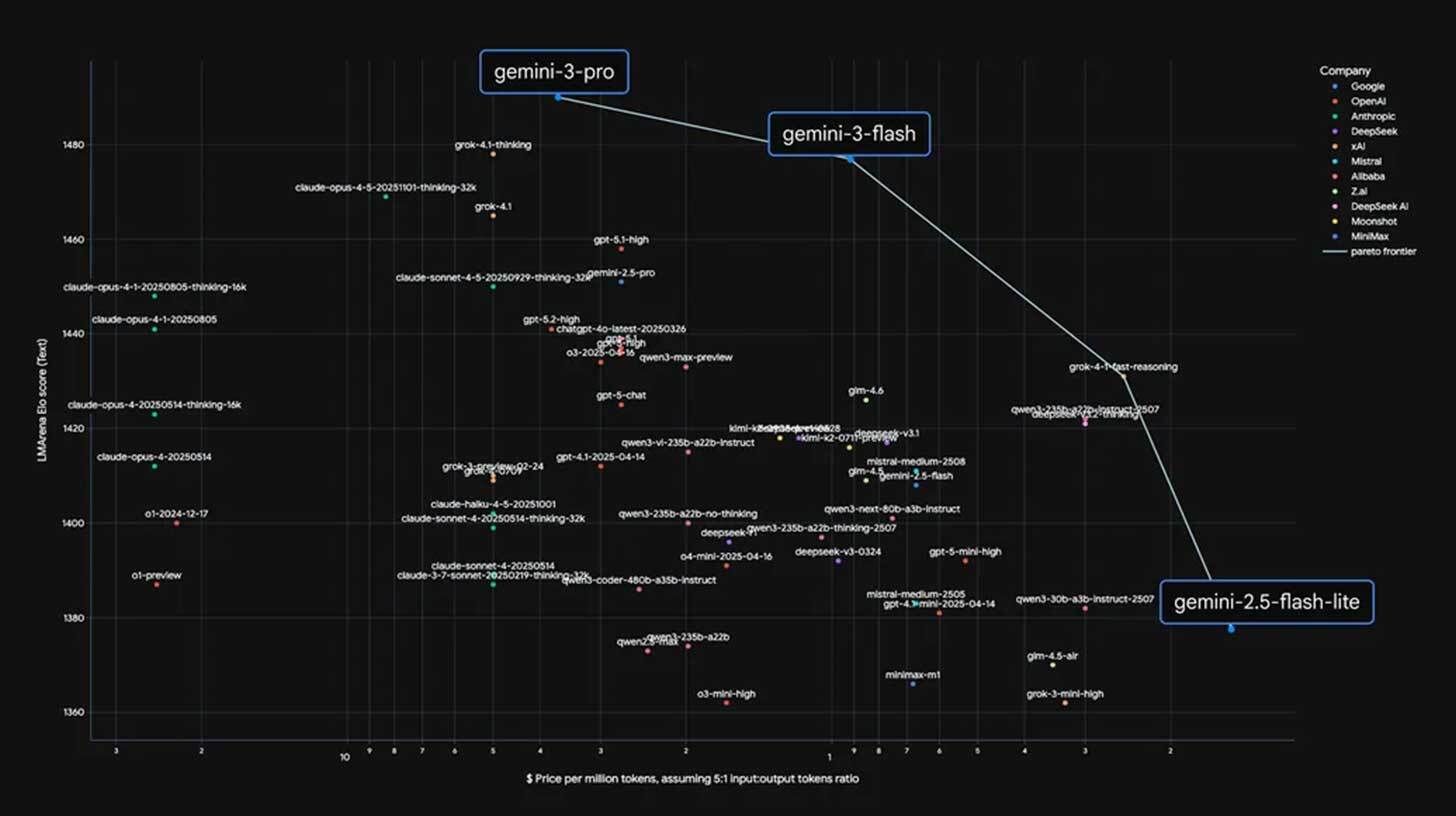
Image source: Google
The Rundown: Google just rolled out Gemini 3 Flash, a speed-optimized version of its recently released flagship model that still maintains frontier-level intelligence, becoming the new default model across Gemini and in Google Search’s AI Mode.
The details:
Gemini 3 Flash matches and even exceeds 3 Pro across a range of benchmarks, while coming in at ¼ the price and 3x the speed.
On Humanity’s Last Exam, Flash scored 33.7% — tripling the 11% from its predecessor and nearly matching GPT-5.2’s 34.5%.
Both the Gemini App and Google Search’s AI Mode now default to 3 Flash, combining real-time web results with fast, improved reasoning.
Why it matters: It may sound counterintuitive, but Gemini 3 Flash feels like a bigger deal than 3 Pro — offering a unmatched intelligence and speed combo at prices that significantly undercut the competition. Google continues to eat away at OpenAI’s market share, and Flash is looking like yet another reason for that trend to continue.
TOGETHER WITH ATLASSIAN ROVO
👋 Meet Rovo, AI that knows your business
The Rundown: Discover Atlassian Rovo — AI that knows your business. Rovo connects teams, knowledge, and tools so you can move faster and work smarter — together.
Why Rovo?
Rovo connects to all your favorite SaaS apps.
Rovo brings organizational knowledge and context into every workflow.
It’s already built into Jira, Confluence, and more.
And it’s built on Atlassian’s enterprise-grade security & privacy.
AMAZON & OPENAI
💰 Amazon discussing $10B+ investment in OpenAI

Image source: Nano Banana Pro / The Rundown
The Rundown: Amazon is reportedly negotiating a potential $10B investment in OpenAI that would value the AI leader above $500B, according to The Information — with the deal also possibly including a commitment to use Amazon’s Trainium AI chips.
The details:
The two companies signed a 7-year, $38B AWS cloud contract last month, with OpenAI now partnered with “at least” 5 cloud providers.
OpenAI would adopt Amazon’s Trainium processors, giving AWS a high-profile customer for chips competing against Nvidia.
The companies have also discussed commerce and enterprise partnerships, with OAI continuing to position ChatGPT as a shopping destination for users.
Why it matters: The restructuring that freed OAI from Microsoft exclusivity is paying off, with the ability to court competing cloud providers for massive infra needs. For Amazon, the move would hedge its Anthropic bet — while also securing a big customer for Trainium chips that have struggled to gain traction against Nvidia’s dominance.
AI TRAINING
⚖️ Comparing ChatGPT Image and Nano Banana Pro
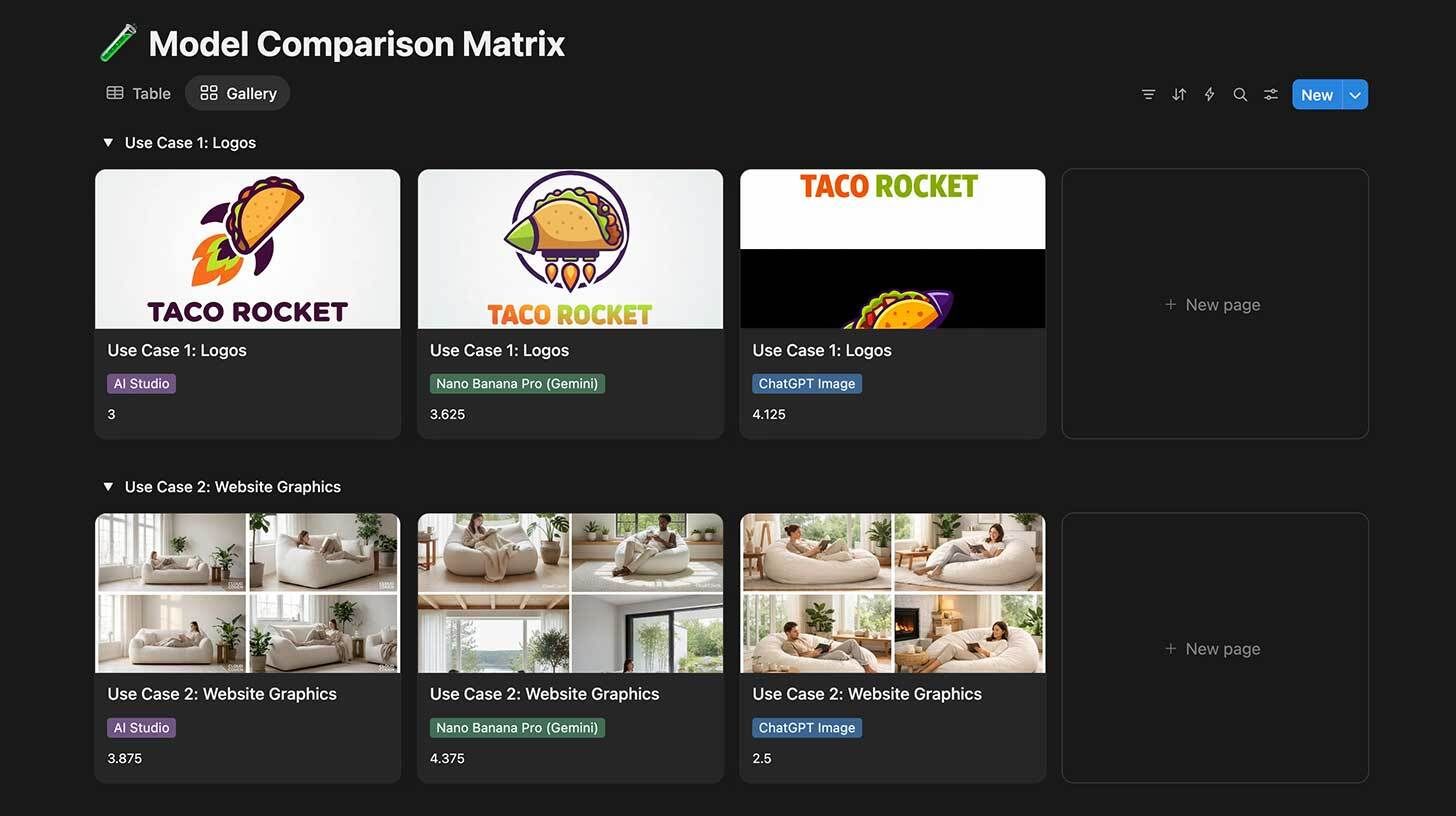
The Rundown: Learn the key similarities and differences between Google’s Nano Banana Pro and ChatGPT’s new image generation model, while also learning how to build your own comparison matrix that you can reuse for other model comparisons.
Step-by-step:
Pick 5 use cases (ours were logo, website graphic, IG post, marketing brochure, photorealistic image) and outline testing rules: same prompt per model, 4 images each, graded 1-5 on consistency, creativity, utility, and quality
Feed use cases into Claude/ChatGPT/Gemini and prompt: “Here’s my use cases: [X]. Write me a json prompt for each with 4 variations in a 4x4 grid”
Create a scoring matrix (duplicate our Notion guide here) where Overall Rating = (Consistency + Creativity + Utility + Quality)/4
Generate images by putting each prompt into both tools using new chats per use case, then rate outputs based on your criteria
Pro tip: To save on time/tokens, tell the LLM to write a prompt that will generate 4 variations in a 4x4 grid.
PRESENTED BY BOX
📈 Executing an AI-first strategy with Box
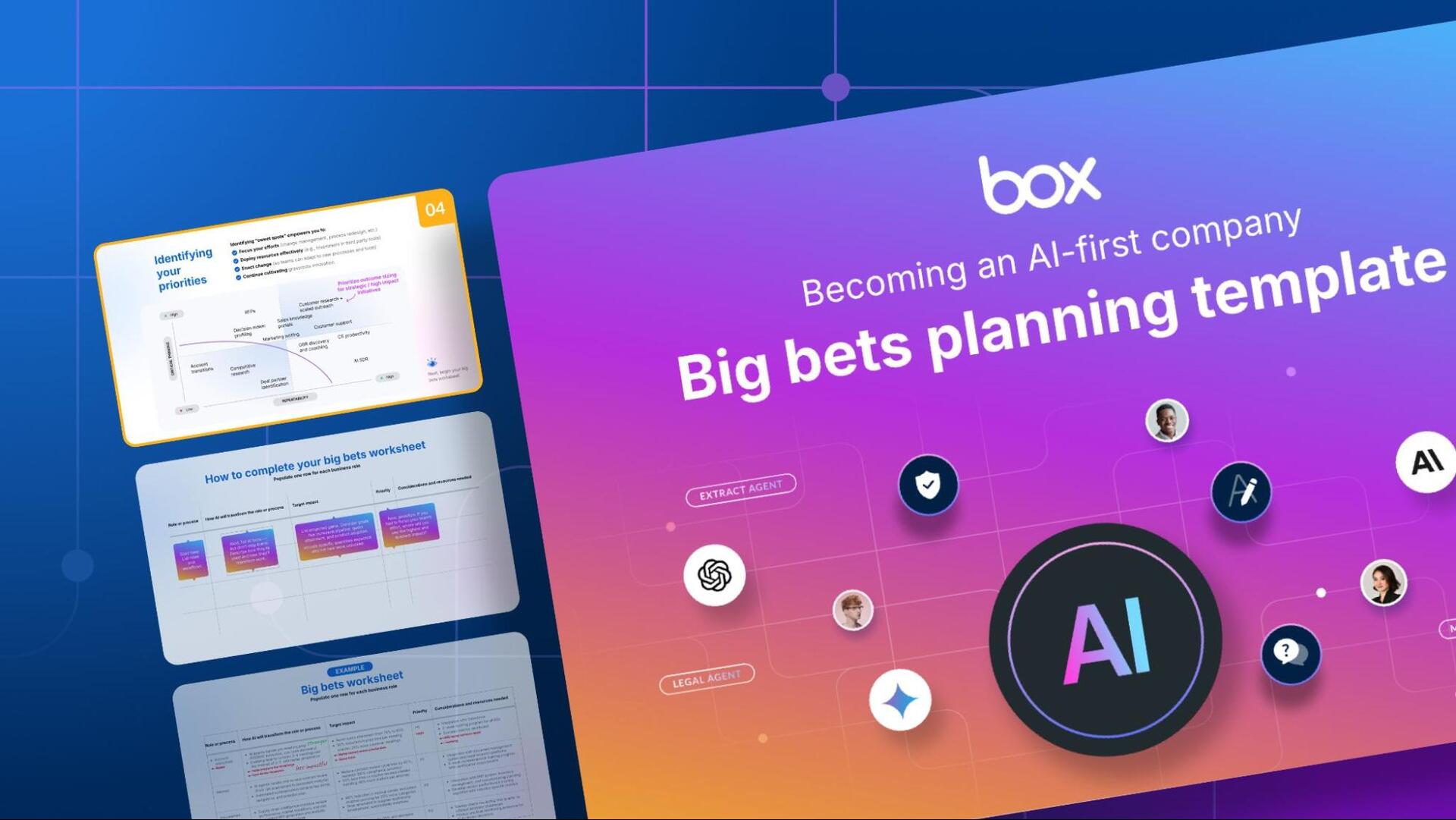
The Rundown: 60% of enterprises expect AI transformation within 2 years, and Box’s Executing AI-First Series is the step-by-step playbook for empowering teams to thrive in the era of AI.
In this series, you’ll learn:
How Box approached becoming AI-first through its value realization strategy
How to Deploy agents with an ideate>pilot>rollout>scale plan
How to be an AI manager
How to measure what matters by tracking AI agent impact
Read the first article in Box’s series and follow along for actionable insights and downloadable templates.
STANFORD UNIVERSITY
🔮 Stanford AI experts predict 2026 will be a year of reckoning

Image source: Nano Banana Pro / The Rundown
The Rundown: Stanford University’s Institute for Human-Centered Artificial Intelligence (HAI) just shared its AI predictions for 2026: a “ChatGPT Moment” for healthcare and a shift from hype to hard evaluation of what AI can actually deliver.
The details:
HAI Co-Director James Landay predicts “no AGI this year,” expecting more companies to admit AI hasn’t delivered gains outside coding and call centers.
Economist Erik Brynjolfsson forecasts a rise in “AI dashboards” tracking displacement and productivity at the task level updated monthly, not years later.
Researcher Curtis Langlotz anticipates a “ChatGPT moment” for healthcare as the training cost of medical models decreases and dataset accessibility rises.
Law professor Julian Nyarko said firms will move from “Can it write?” to “How well, on what, and at what risk?” with a shift toward more complex legal work.
Why it matters: With 2025 being the year of AI hype and massive investments, the experts see 2026 as a transition to asking whether it was worth it. Stanford’s faculty isn’t expecting an AI bubble crash like many others, but their predictions do point to an industry that may have exhausted its patience for overpromising demos and pilots.
QUICK HITS
🛠️ Trending AI Tools
🔐 Incogni - Erase sensitive data like addresses and phone numbers from the web. Get 55% off with code RUNDOWN*
⚡️ Gemini 3 Flash - Google’s powerful, cost-effective frontier reasoning model
🌌 ChatGPT Images - OpenAI’s upgraded image generation system
🗣️ Chatterbox Turbo - Resemble AI’s fast, expressive, open-source TTS model
*Sponsored Listing
📰 Everything else in AI today
Alibaba unveiled Wan2.6, a new multimodal model that can generate up to 15 seconds of HD video with dialogue, storyboarding, and character reference capabilities.
U.S. Sen. Bernie Sanders announced plans to pursue a pause on AI data center construction, citing concerns about job displacement and societal impacts.
Amazon’s Peter DeSantis will now lead a new division overseeing AI models, chips, and quantum computing, while Alexa and Nova architect Rohit Prasad departs.
xAI introduced the Grok Voice Agent API, allowing developers to build voice tech using the company’s top-ranking speech-to-speech model.
Meta released SAM Audio, a model that can isolate specific sounds from audio or video files using text descriptions, visual clicks, or timeline selections.
COMMUNITY
🤝 Community AI workflows
Every newsletter, we showcase how a reader is using AI to work smarter, save time, or make life easier.
Today’s workflow comes from reader Ritesh K. in India:
“I built an autonomous ‘Financial Firewall’ that reads and audits invoices better than a human team. Instead of using brittle OCR templates, I use Vision Models to extract data from messy PDFs, but the magic is the semantic reasoning.
The AI compares every invoice against the original Purchase Order, and understands context. Crucially, it also catches subtle exceptions that human reviewers often miss due to fatigue — like a vendor slipping in a shipping fee on a ‘free shipping’ order or small unit-price variances. It auto-flags these discrepancies with a summary of the error, ensuring zero financial leakage while fully automating the boring approval logic.”
How do you use AI? Tell us here.
🎓 Highlights: News, Guides & Events
Read our last AI newsletter: OpenAI’s answer to Nano Banana Pro
Read our last Tech newsletter: The AI boom’s phone problem
Read our last Robotics newsletter: 1X’s home humanoid gets a factory job
Today’s AI tool guide: Comparing ChatGPT Image and Nano Banana Pro
RSVP to next workshop @ 4PM EST Friday: Google NotebookLM For Work
See you soon,
Rowan, Joey, Zach, Shubham, and Jennifer — the humans behind The Rundown

OpenAI answers Google with major image upgrade
Read Online | Sign Up | Advertise

Good morning, AI enthusiasts. Google’s recent AI moves may have had Sam Altman slamming the ‘Code Red’ button, but the AI giant’s latest releases are rising to the challenge.
OpenAI’s counter to Nano Banana Pro is officially here, with a long-overdue GPT-image upgrade that vaults the company back to the frontier of image leaderboards (for now).
In today’s AI rundown:
OpenAI counters Nano Banana Pro with new Images upgrade
HubSpot CEO Dharmesh Shah on SEO for the AI era
Quickly iterate on Sora videos with a simple automation
Google, MIT study finds pitfalls in multi-agent systems
4 new AI tools, community workflows, and more
LATEST DEVELOPMENTS
OPENAI
🚀 OpenAI counters Nano Banana Pro with new Images upgrade

Image source: OpenAI
The Rundown: OpenAI just released GPT Image 1.5, a major update to ChatGPT’s image generator that creates visuals up to 4x faster, improves text rendering, and maintains consistency across edits — arriving as an answer to Google’s recent creative momentum with Nano Banana Pro.
The details:
Image 1.5 brings significantly upgraded generation speeds, with the model also now able to preserve faces, lighting, and composition across edits.
Text rendering also gets a big improvement, with 1.5 handling long content, infographics, and varied text sizes compared to GPT-image-1’s rampant issues.
The new model moves to first place on both Artificial Analysis and LM Arena’s text-to-image and editing leaderboards.
OpenAI also released a new dedicated creative panel, joining the typical chat-based workflow to offer users quick-start templates and curated style options.
Why it matters: Despite GPT-image-1 being a viral success at the time, it doesn’t take long to fall far behind the frontier curve — making this new upgrade very overdue. 1.5 delivers on the benchmarks and, like the recent GPT-5.2 release, brings OpenAI at least on par with Google’s buzzy releases heading into the new year.
TOGETHER WITH UIPATH
👋 Goodbye Chaos. Hello Orchestration.
The Rundown AI: UiPath 2025.10 upgrades how work moves across the enterprise with stronger coordination and clearer oversight. It sharpens the way teams manage processes that span systems, people, and intelligent agents — pushing automation into a faster, more intelligent era.
What’s in the newest UiPath release:
Expanded Maestro upgrades for agentic orchestration
Smarter AI across documents, testing, and workflows
Faster build cycles with streamlined Studio and Autopilot tools
Explore UiPath 2025.10 and the features people are talking about.
ROWAN X DHARMESH
🎙️ HubSpot CEO Dharmesh Shah on SEO for the AI era

Image source: The Rundown
The Rundown: We sat down with HubSpot CEO Dharmesh Shah for an exclusive interview on how the traditional SEO playbook is changing with LLMs and how to prepare for a world run by agents.
On SEO’s shift to AEO (Answer Engine Optimization):
Dharmesh: We’re moving from an SEO mindset (solving for Google) to an LLM mindset (solving for AI). Ask, “How can I take the ideas and content that I have and ‘translate’ it to make it more easily consumable by LLM vs. search engines and humans directly?”
On the hidden risk of low-quality AI content:
Dharmesh: The worst that can happen is actually not zero return. The worst that can happen is negative return. Because if you build a reputation online, in the algorithm’s mind that you are crappy content, not trustworthy... it’s hard to dig yourself back out of that hole.
On the bottlenecks for AI agents:
Dharmesh: If you think of agents as teammates... You wouldn’t just hand them a computer and access to all the internals of the organization and say, “Here’s what we want done, go do it.” Agents need to be trained, tested, and need to have the equivalent of performance reviews.
Catch Rowan’s full interview with Dharmesh on YouTube, Spotify, or Apple Podcasts.
AI TRAINING
📹 Quickly iterate on Sora videos with a simple automation
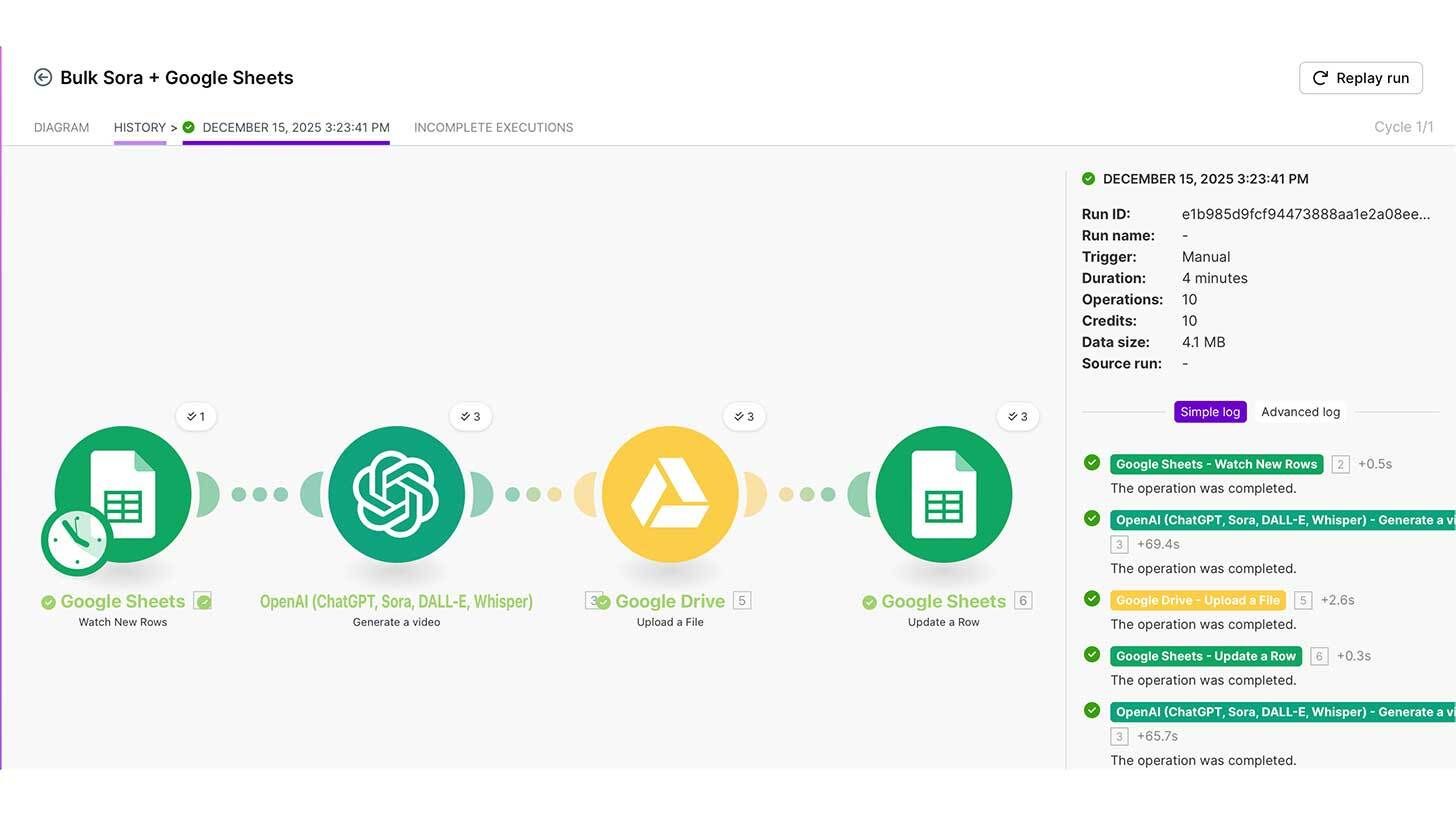
The Rundown: Learn how to generate bulk Sora videos automatically using a simple Make.com automation that watches your Google Sheet prompts and uploads completed videos to Google Drive.
Step-by-step:
Duplicate this Google Sheet Template, then sign into Make.com and create a new scenario with the Google Sheets ‘Watch Rows’ trigger
Add a Sora module with your API key (create one if needed + verify org), then create a Google Drive folder and add ‘Upload a File’ module
Add a Google Sheets ‘Update a Row’ module that updates the drive link column with the ‘Web View link,’ then write prompts in your sheet with ID numbers and click ‘run once’ in Make
Within a few minutes, your Google Sheet will update with links to completed videos in your Google Drive
Pro tip: Instead of waiting every 15 minutes for the automation to fire, you can set up Google Sheets to fire a webhook straight to Make every time a row is updated.
PRESENTED BY AMAZON
⚙️ Automate UI workflows with Amazon Nova Act

The Rundown: Nova Act just launched — designed for developers to build, deploy, and manage #NormcoreAgents to automate tasks so you don’t have to.
How does it work?
Prototype agents in the playground
Write, test, and debug agents directly in your IDE
Deploy agents to production
Try it for free in the Nova Act Playground.
AI RESEARCH
😵 Google, MIT study finds pitfalls in multi-agent systems
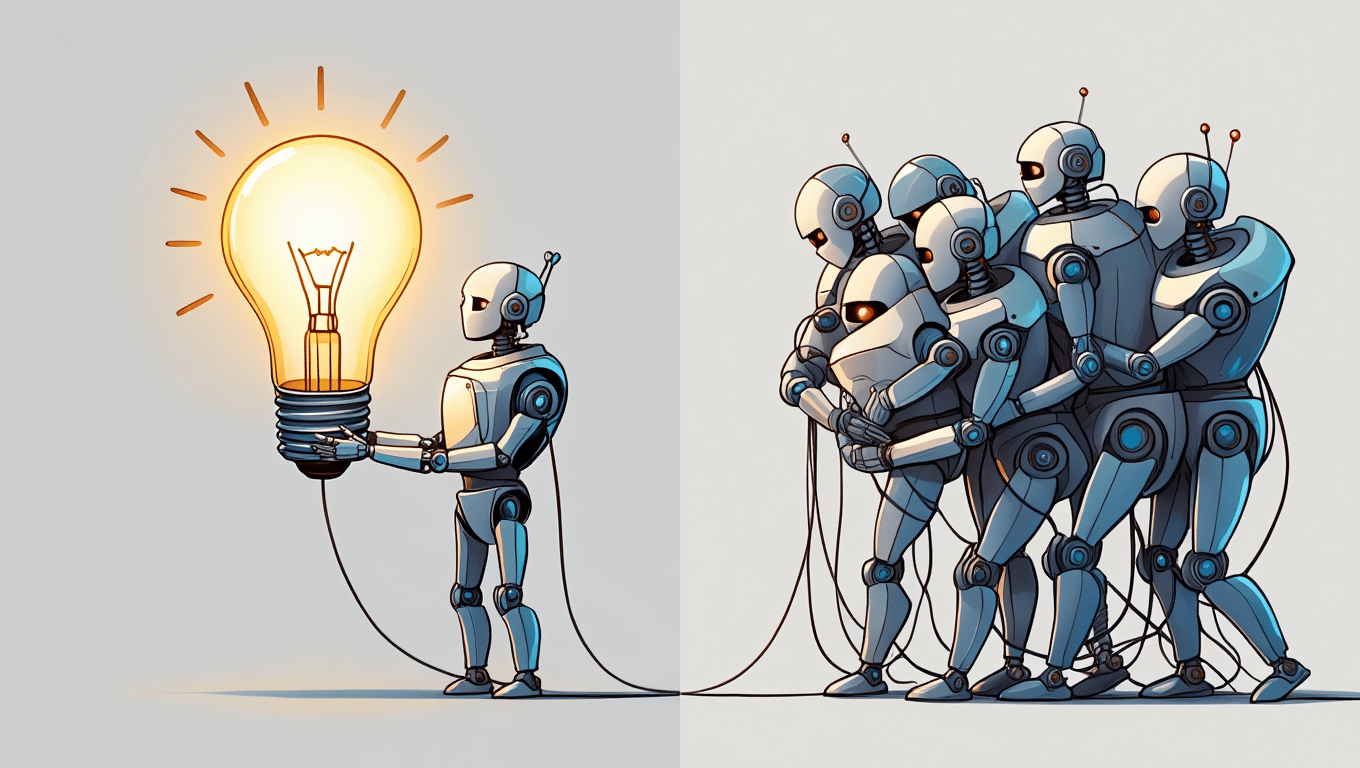
Image source: Reve / The Rundown
The Rundown: Researchers from Google and MIT published a new study testing whether throwing more AI agents at problems improves results, finding that performance swung wildly depending on the structure of the task.
The details:
The team ran 180 experiments across models from OpenAI, Google, and Anthropic, using the same prompts and token budgets.
Financial analysis tasks split across agents saw an 81% improvement, while Minecraft tasks requiring step-by-step work degraded by up to 70%.
When a single agent already hit 45% accuracy on a task, adding more typically led to worse performance — with multiple agents eating through tokens quickly.
Why it matters: The agentic hype is pushing companies and users towards complex multi-agent workflows, but this research may show that more isn’t always better. For many enterprise tasks that require step-by-step reasoning, a well-designed single agent may outperform an elaborate system at a fraction of the cost.
QUICK HITS
🛠️ Trending AI Tools
🌌 ChatGPT Images - OpenAI’s upgraded image generation system
🎥 Wan 2.6 - Alibaba’s new native multimodal model for image and video
📪 CC - Google Labs’ experimental AI productivity agent in Gmail
🔊 SAM Audio - Meta’s new model for segmenting sounds using text prompts
📰 Everything else in AI today
Sonatype just launched Guide — ensuring your AI assistants select the right open-source components so you can spend less time debugging. Watch the unboxing webinar to learn more.*
OpenAI released FrontierScience, a new benchmark to evaluate research-level reasoning in scientific research tasks, with GPT 5.2 taking the top spot in testing.
Google Labs rolled out CC, an experimental AI assistant powered by Gemini that connects to user’s Gmail, calendar, and files to send personalized morning summaries.
Black Forest Labs released FLUX.2 [max], the startup’s new top image model featuring upgraded editing and the ability to create visuals from real-time web data.
AI2 introduced Molmo 2, an SOTA open model family for analyzing video by following objects across frames, counting events, and locating precise moments within footage.
*Sponsored Listing
COMMUNITY
🤝 Community AI workflows
Every newsletter, we showcase how a reader is using AI to work smarter, save time, or make life easier.
Today’s workflow comes from reader Bo in Cincinnati, OH:
“I used Claude to help my law firm pivot to an AI-native firm, using it for annual planning, project management, workload integration, and more. Recently I created AI agents to serve as my CFO, CTO, and content creator. With my digital CTO, we started building our own small language model trained on our proprietary data to scale our law practice.”
How do you use AI? Tell us here.
🎓 Highlights: News, Guides & Events
Read our last AI newsletter: Nvidia’s powerful open AI model play
Read our last Tech newsletter: The AI boom’s phone problem
Read our last Robotics newsletter: 1X’s home humanoid gets a factory job
Today’s AI tool guide: Iterate on Sora videos with a simple automation
RSVP to next workshop @ 4PM EST Friday: Google NotebookLM For Work
See you soon,
Rowan, Joey, Zach, Shubham, and Jennifer — the humans behind The Rundown
No matching search results
Try using different keywords, double-check your spelling, or explore related categories.
Stay Ahead on AI.
Join 2,000,000+ readers getting bite-size AI news updates straight to their inbox every morning with The Rundown AI newsletter. It's 100% free.