Get the latest AI news, understand why it matters, and learn how to apply it in your work — all in just 5 minutes a day. Join over 2,000,000+ subscribers.

The AI boom’s phone problem
Read Online | Sign Up | Advertise

Good morning, tech enthusiasts. Your next phone could get pricier— and AI is the reason.
A new forecast warns that the AI boom is gobbling up critical memory chips, setting the stage for supply crunches and sticker shock in 2026. As silicon gets swallowed by data centers, the cost squeeze looks to hit consumers right in their pockets.
In today’s tech rundown:
AI chip crunch may spike phone prices
SpaceX IPO could net Google $111B
Ford trades electric trucks for AI power
U.S. freezes $39B UK tech deal
Quick hits on other tech news
LATEST DEVELOPMENTS
AI BOOM
📱 AI chip crunch may spike phone prices

Image source: Ideogram / The Rundown
The Rundown: The AI boom is about to make your next phone more expensive. A new Counterpoint Research forecast warns that AI’s voracious appetite for memory chips will squeeze smartphone supply in 2026, pushing prices up by 6.9%.
The details:
Global smartphone shipments are expected to fall 2.1% in 2026, a sharp reversal from Counterpoint’s earlier prediction of stable or growing sales.
Average selling prices will jump 6.9% year-over-year — nearly double the firm’s previous 3.6% estimate — as shortages drive component costs up 15%.
Low-end phones under $200 have already seen material costs surge 20% to 30% since early 2025, with mid- and high-end devices up 15%.
Apple and Samsung are best positioned to absorb rising costs, while some Chinese brands may downgrade features or promote higher-priced models.
Why it matters: AI is now directly competing with consumer electronics for the same critical components, forcing smartphone makers to choose between shrinking margins and raising prices. The crunch hits budget and mid-tier Android phones hardest, potentially widening the gap between premium flagships and everything else.
SPACEX/GOOGLE
🚀 SpaceX IPO could net Google $111B

Image source: SpaceX
The Rundown: Alphabet’s red-hot streak could get even hotter if SpaceX goes public. Back in 2015, Google put about $900M into a 7% stake; at a rumored $1.5T IPO in 2026, that slice could be worth roughly $111B, reports Business Insider.
The details:
A SpaceX IPO at $1.5T would turn Google’s early stake into $111B — about 3% of Alphabet’s current value and possibly Silicon Valley’s best startup bet ever.
SpaceX has already boosted Alphabet’s results, contributing an estimated $8B gain — about 25% of its Q1 2025 net income.
Starlink operates on Google Cloud infrastructure, locking both companies into a strategic space-and-compute alliance.
Google ranks among SpaceX’s biggest outside backers, alongside VC firm Founders Fund and Fidelity.
Why it matters: What started as a controversial moonshot on Starlink has turned into both a financial and strategic coup. Starlink now powers connectivity for just about everyone, while SpaceX leans on Google Cloud on the back end, giving Alphabet a front‑row seat to one of the most important space plays of the decade.
FORD
🔌 Ford trades electric trucks for AI power

Image source: Ford
The Rundown: Ford is killing its all-electric F-150 Lightning and pivoting unused battery capacity into a grid and data-center storage business. As it retreats from large EVs, the automaker is pouring billions into systems that feed AI infrastructure instead.
The details:
Ford canceled its next-gen all-electric truck (codenamed T3) and a commercial van, though the E-Transit survives. The F-150 Lightning dies entirely.
Instead of scrapping battery plans, Ford will launch an energy storage business using lithium iron phosphate systems for data centers and grid operators.
The company will invest roughly $2B over two years and target 20 GWh of annual storage capacity starting in 2027.
Ford will repurpose its Kentucky plant to build LFP cells, integrate them into storage modules, and package them as 20-foot DC container systems.
Why it matters: Ford’s retreat from electric pickups exposes Detroit’s recalibration: EV demand has stalled, political headwinds are mounting, and data centers offer better margins. Ford is chasing the same opportunity as Tesla and GM — after taking a reported $19.5B bruising on its EV business.
TECH POLICY
🧊 U.S. freezes $39B UK tech deal

Image source: Ideogram / The Rundown
The Rundown: The U.S. has abruptly frozen negotiations on a “technology prosperity deal” with the UK, putting a high-profile tech pact announced during President Trump’s September state visit with UK Prime Minister Keir Starmer on indefinite hold.
The details:
The deal was positioned as a cornerstone of the renewed U.S.-UK “special relationship,” creating a transatlantic tech axis countering China’s influence.
Negotiations covered joint initiatives on AI, quantum computing, nuclear fusion, and other tech.
U.S. tech companies pledged billions in UK investments, including $27.5B from Microsoft and $6.3B from Google.
The Trump administration reportedly balked at the U.K.’s digital services tax on U.S. tech firms and food safety rules blocking certain U.S. agricultural exports.
Why it matters: The freeze is a setback for the UK government, which had positioned the deal as proof that a year of intensive diplomacy with Washington could shield British exports from Trump’s tariffs. It also exposes the fragility of tech diplomacy even between close allies: despite billions in corporate pledges and shared strategic goals.
QUICK HITS
📰 Everything else in tech today
Netflix co-CEOs moved to calm staff over the company’s bid for Warner Bros. Discovery, stressing that there’s little business overlap and no plans to shutter studios.
Google is shutting down its dark web monitoring feature, telling users it will stop scanning for exposed personal data on January 15.
Merriam-Webster named ‘slop’ as its 2025 Word of the Year, defined as “digital content of low quality that is produced usually in quantity by means of AI.”
The U.S. government has launched “Tech Force,” a new initiative to hire 1K early‑career AI and software specialists into federal jobs to boost tech talent.
Overview Energy has raised $20M to pursue space-based solar, using satellites to beam power down to Earth-side solar panels for round-the-clock clean electricity.
Tesla shares reportedly closed at a new high for 2025 after Elon Musk told investors the company has begun testing fully driverless robotaxis on public roads in Austin.
Colin Angle, co-founder and former CEO of Roomba-maker iRobot, called the company’s bankruptcy “nothing short of a tragedy for consumers.”
Lightspeed Venture Partners, the 25-year-old VC firm, just closed a record $9B in new funds, marking the biggest capital raise in its history.
COMMUNITY
🎓 Highlights: News, Guides & Events
Read our last AI newsletter: Nvidia's powerful open AI model play
Read our last Tech newsletter: SpaceX preps monster $1.5T IPO
Read our last Robotics newsletter: 1X’s home humanoid gets a factory job
Today’s AI tool guide: Design websites with Cursor’s visual design editor
Watch our last live workshop: AI Automations Made Simple
See you soon,
Rowan, Jennifer, and Joey—The Rundown’s editorial team

Nvidia's powerful open AI model play
Read Online | Sign Up | Advertise

Good morning, AI enthusiasts. The company selling the shovels in the AI gold rush just made a big move to start mining, too.
With its new powerful (and fully open) Nemotron 3 models, Nvidia is giving Western developers the competitive option they’ve been missing — while ensuring they stay hooked on its hardware in the process.
In today’s AI rundown:
Nvidia releases Nemotron 3 open models for agentic AI
AI reasoning models smash CFA exams
Design better websites with Cursor’s new editor
Perplexity study shows how users are using AI agents
4 new AI tools, community workflows, and more
LATEST DEVELOPMENTS
NVIDIA
🤖 Nvidia releases Nemotron 3 open models for agentic AI

Image source: Nvidia
The Rundown: Nvidia just introduced its Nemotron 3, a family of open models designed specifically for building multi-agent AI systems — marking the chipmaker’s most significant push yet into frontier model development.
The details:
The lineup spans three sizes: Nano (30B), Super (100B), and Ultra (500B), with Nano available now and the larger versions coming in 2026.
Nano beats similar-sized models like Qwen3-30B on coding and instruction-following benchmarks, while also generating responses over 3x faster.
Unlike most closed U.S. rivals, Nvidia is publishing training data, fine-tuning tools, and reinforcement learning environments alongside the models.
The chipmaker lists Cursor, Perplexity, ServiceNow, and CrowdStrike as early adopters across coding, search, enterprise automation, and cybersecurity.
Why it matters: Closed U.S. labs are increasingly creating their own silicon, while Chinese leaders are dominating open model usage globally. Nvidia releasing strong, completely open models gives Western developers a competitive open-source option, and also keeps them building on Nvidia’s hardware in the process.
TOGETHER WITH HUBSPOT
🧠 100+ ChatGPT prompts to revolutionize your workflow
The Rundown: HubSpot’s free, comprehensive “How to Use ChatGPT at Work” guide provides 100+ ready-to-use prompts to help professionals boost efficiency and adopt AI-driven workflows.
Inside, you’ll find:
A quick crash course to master ChatGPT in under 30 minutes
Practical industry use cases to spark real-world inspiration
100+ prompts to streamline tasks and accelerate productivity
Expert tips to tackle common AI roadblocks with confidence
Get your free copy and join 10,000+ professionals leveling up with AI.
AI & FINANCE
🤑 AI reasoning models smash CFA exams

Image source: Reve / The Rundown
The Rundown: A new study just found that six leading AI models now pass all three levels of the Chartered Financial Analyst (CFA) certification exams, with Gemini 3.0 Pro scoring a record high of 97.6% on Level 1.
The details:
Researchers tested GPT-5, Gemini 3.0 Pro, Claude Opus 4.1, Grok 4, and DeepSeek-V3.1 across 980 questions spanning all exam tiers.
GPT-5 topped Level II at 94.3%, while Gemini 3.0 Pro dominated the most difficult constructed-response section with 92%.
In 2023, GPT 3.5 failed the first two levels, and GPT-4 passed only Level I — with the leap to near-perfect scores taking roughly 24 months.
An NYU study in September also showed models passing all three levels, but with scores in the 70s vs. the near-perfect numbers of current frontier systems.
Why it matters: Acing a standardized test and handling daily demands of financial analysis are still very different things, but the speed of improvement on these exams is wild — and models mastering finance knowledge could shift the profession’s value toward human skills like client judgment and relationship management.
AI TRAINING
🎨 Design better websites with Cursor’s new editor
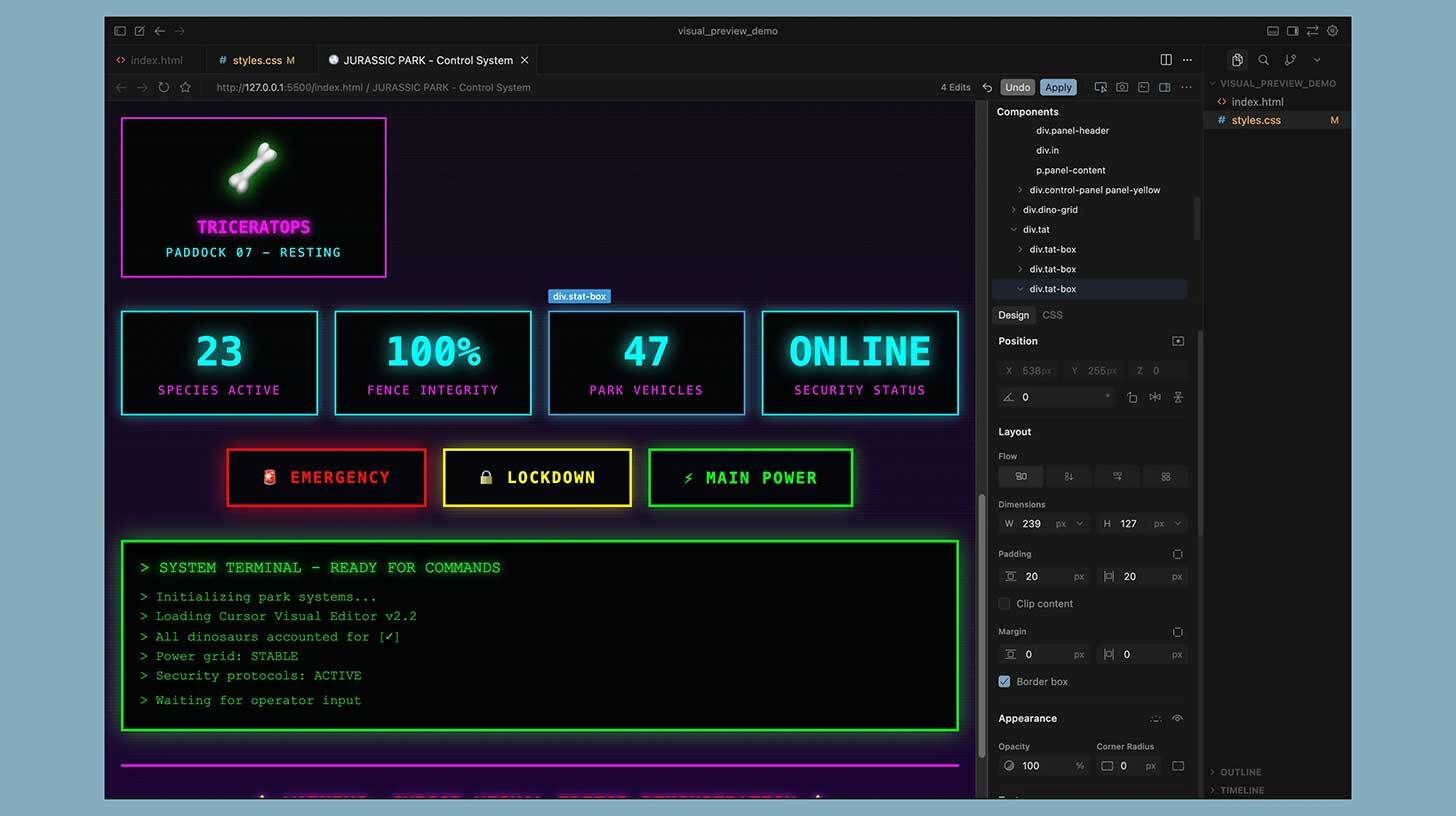
The Rundown: Learn how to quickly set up and use Cursor’s new visual design editor to refine your frontend design without having to switch back and forth with a design tool like Figma.
Step-by-step:
Open a new project in Cursor with an HTML and CSS file (latest update required) — ask Cursor agent to build a simple
index.html+styles.cssor use a templateInstall the live server extension: hit
CMD+Shift+P, search "Open with Live Server," then copy the URL and paste it into Cursor browser (CMD+Shift+B)Toggle on the element selector, click any element to edit properties in the Design pane, or tell the agent what changes you want in the active chat
Hit Apply for the agent to make changes — click "Keep" or "Keep All" to save (the agent updates classes automatically so changes apply to all matching elements)
Pro tip: Make sure you’re saving your progress with Git as you go. Git will make it easier to roll back any unwanted style changes, and you can even ask the agent to write Git commits for you.
PRESENTED BY TRIPLE WHALE
🎁 $2.9B in BFCM AI data is in

The Rundown: Triple Whale tracked $2.9B across 50K brands during this year’s BFCM (19.7% of all Shopify sales), with Moby AI handling over 24K queries like “Which campaigns should I scale?” and “What should my spend distribution look like tomorrow to hit $600K?” — providing actionable answers for users in seconds.
Download the BFCM Breakdown Report to uncover:
Platform-by-platform performance across Meta, Google, TikTok, Amazon & AppLovin
Industry benchmarks across 15 industries (Apparel led with 36% of revenue)
The AI strategies top-performing brands used to optimize in real time
AI RESEARCH
📊 Perplexity study shows how users are using AI agents
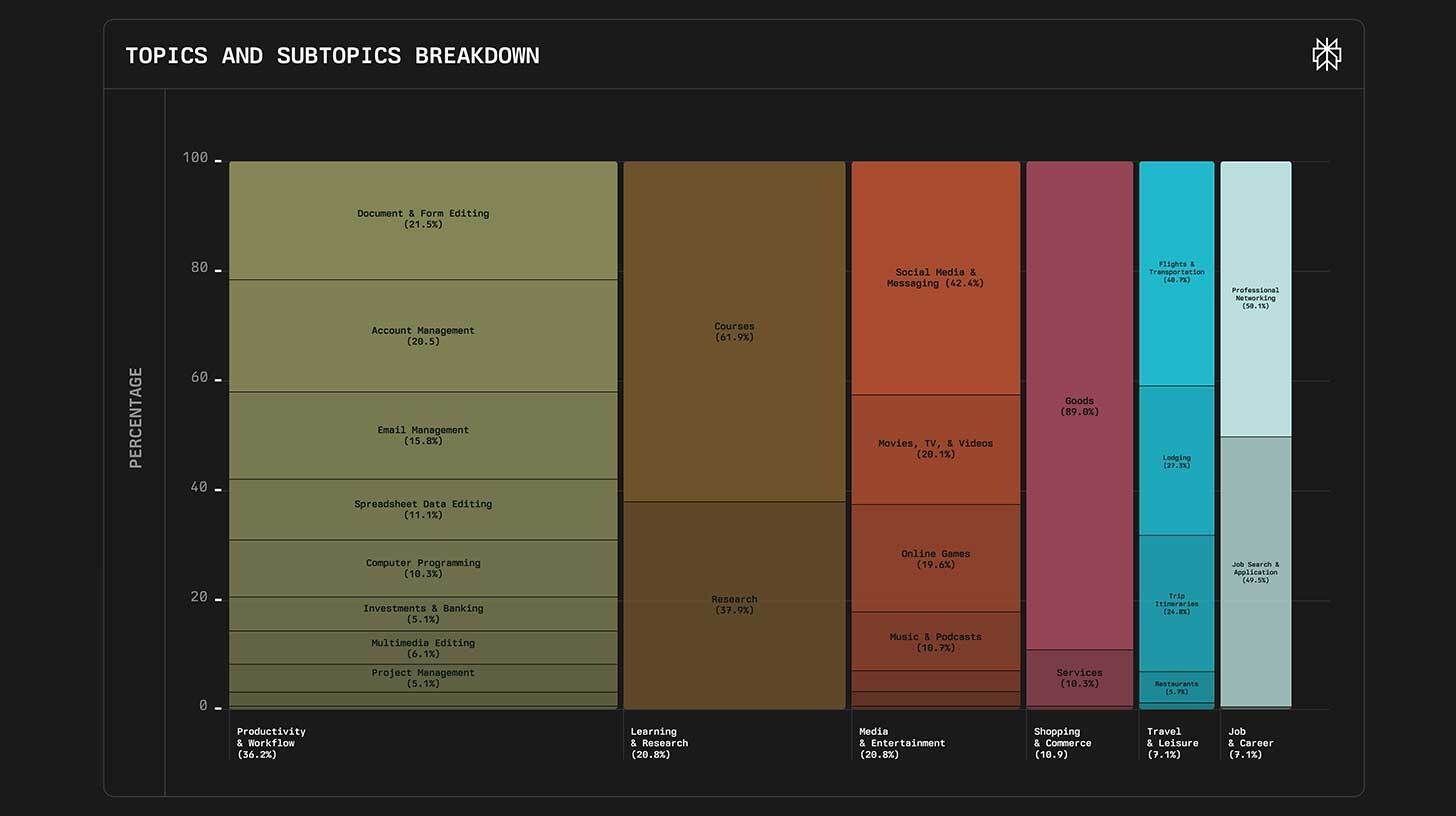
Image source: Perplexity
The Rundown: Perplexity and Harvard just published a study analyzing how users of the company’s Comet browser are utilizing AI agents, finding usage heavily centered on cognitive work and research over automating simple tasks.
The details:
Researchers analyzed hundreds of millions of anonymized queries from Perplexity’s Comet browser, which launched in July.
Over half of queries involved research or workflow management, with common tasks including summarization, document editing, and coursework help.
Tech workers, academics, marketers, and finance professionals generated the bulk of activity, with adoption correlating to GDP and education levels.
Behavior shifted over time, with users who started with casual queries like travel planning often migrating toward heavier knowledge work later on.
Why it matters: During the AI agent rise, we’ve frequently seen use cases like booking flights/tickets, ordering groceries, and handling mundane tasks. But Perplexity’s research (which may skew differently from ChatGPT or other assistants) shows users gravitating toward deeper work uses, not personal life conveniences.
QUICK HITS
🛠️ Trending AI Tools
📊 Quadratic - The AI spreadsheet that does your work for you. Turn raw data into insights and visuals without the pain of old tools*
📚 Gemini Deep Research Agent - Google’s SOTA agent for long-running context gathering and synthesis tasks
🤖 Nemotron 3 - Nvidia’s new family of open-source models designed to build multi-agent systems
🚀 Manus 1.6 - New performance upgrades for complex agentic work
*Sponsored Listing
📰 Everything else in AI today
Merriam-Webster named ‘Slop’ as its 2025 Word of the Year, defined as “digital content of low quality that is produced usually in quantity by means of AI.”
The U.S. Office of Personnel Management introduced “Tech Force,” a push to recruit 1K early-career AI and software workers into federal government roles.
Manus released version 1.6 of its AI agent platform, which introduces mobile app development and a visual design editor alongside performance improvements.
Klarna launched the Agentic Product Protocol, an open standard that gives AI assistants access to over 100M products across merchants.
AI2 released Olmo 3.1, an upgraded version of its open-source model family that the lab claims is the “strongest fully open reasoning model.”
COMMUNITY
🤝 Community AI workflows
Every newsletter, we showcase how a reader is using AI to work smarter, save time, or make life easier.
Today’s workflow comes from reader Vicky F. in Phoenix, AZ:
“I am using AI as a research partner to reconstruct the complex life of one of my ancestors. ChatGPT has helped me locate and analyze historical records, draft emails to libraries and state agencies, and uncover new leads….We’ve built timelines, tested genealogical theories, compared maps and newspaper accounts, interpreted probate language, and tracked migration patterns. Now we’re co-writing a full narrative of her life.”
How do you use AI? Tell us here.
🎓 Highlights: News, Guides & Events
Read our last AI newsletter: Gemini turns headphones into translators
Read our last Tech newsletter: SpaceX preps monster $1.5T IPO
Read our last Robotics newsletter: 1X’s home humanoid gets a factory job
Today’s AI tool guide: Design websites with Cursor’s visual design editor
Watch our last live workshop: AI Automations Made Simple
See you soon,
Rowan, Joey, Zach, Shubham, and Jennifer — the humans behind The Rundown


1X's home humanoid gets a factory job
Read Online | Sign Up | Advertise

Good morning, robotics enthusiasts. Norwegian robotics startup 1X just found a fast lane for its humanoids — by turning a “home robot” loose in the factory.
In a striking pivot, the startup says it will deploy 10K Neo robots across the industrial portfolio of one of its own backers, sending its beige, living-room-friendly humanoid to do grunt work in warehouses.
In today’s robotics rundown:
1X’s home robot has a new gig: factories
Unitree debuts an app store for humanoids
Google, Runway build robot testing worlds
Medra nabs $52M for drug-discovery robots
Quick hits on other robotics news
LATEST DEVELOPMENTS
1X
🤖 1X’s home robot has a new gig: factories

Image source: Reve / The Rundown
The Rundown: 1X secured a captive market for its humanoids by cutting a deal with one of its own investors. The robotics startup will deploy 10K Neo humanoids across portfolio companies of EQT, the Swedish investment giant whose venture arm backs 1X.
The details:
The rollout spans 2026 to 2030 and targets EQT’s 300-plus companies, with priority given to warehousing and industrial operations.
For EQT, the arrangement offers a testing ground to evaluate humanoid robotics at scale across diverse operational environments.
This partnership marks a pivot for 1X, whose Neo has been marketed as “the first consumer-ready robot designed to transform life at home.”
1X does make an industrial robot called Eve, but this deal specifically deploys the consumer-oriented Neo.
Why it matters: While 1X marketed Neo as a home robot, consumer adoption faces steep hurdles — a $20K price tag, privacy concerns, and safety risks around children and pets. By pivoting Neo into industrial settings, 1X secures near-term revenue and real-world validation while the far more challenging consumer market slowly matures.
UNITREE
🔥 Unitree debuts an app store for humanoids
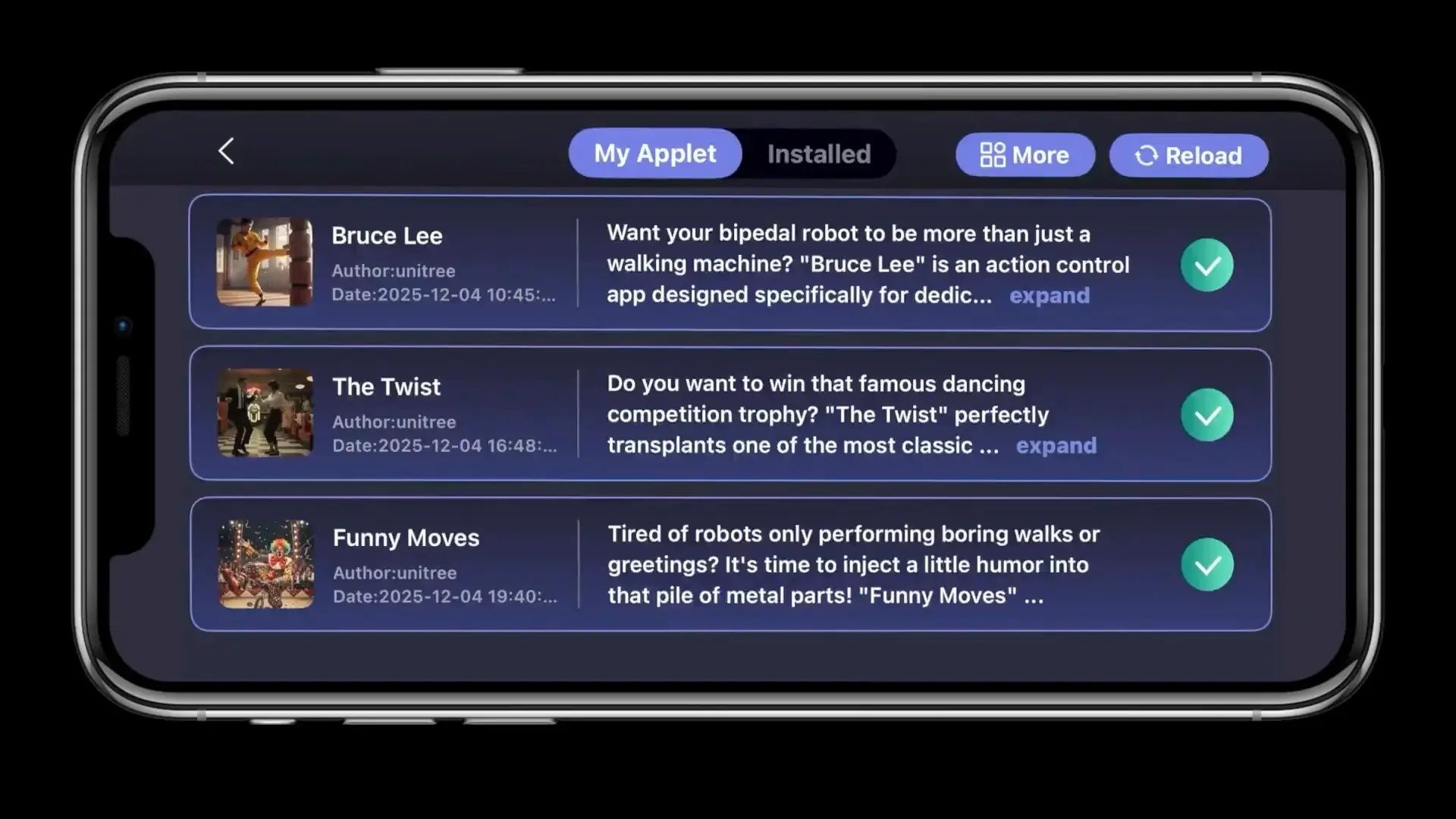
Image source: Unitree
The Rundown: Unitree is pitching a future where humanoids download skills like phone apps, launching a “humanoid robot app store” where users can browse, install, and trigger prebuilt action routines via a smartphone.
The details:
The platform lets users install prebuilt motion routines — martial-arts combos, dance sequences — on Unitree bots via a smartphone interface.
Developers will be able to upload and share their own behaviors, effectively crowdsourcing a growing library of robot skills.
Unitree is pushing a model, reportedly launched in public beta, where robots can be continually updated for new tasks without physical modifications.
Why it matters: By trying to own not just the hardware but the ecosystem layer, Unitree is betting that an open, community-driven marketplace for robot behaviors will accelerate real-world use cases — and give it the same kind of platform power in embodied AI that Apple and Google enjoy in mobile.
GOOGLE/RUNWAY
🌎 Google, Runway build robot testing worlds
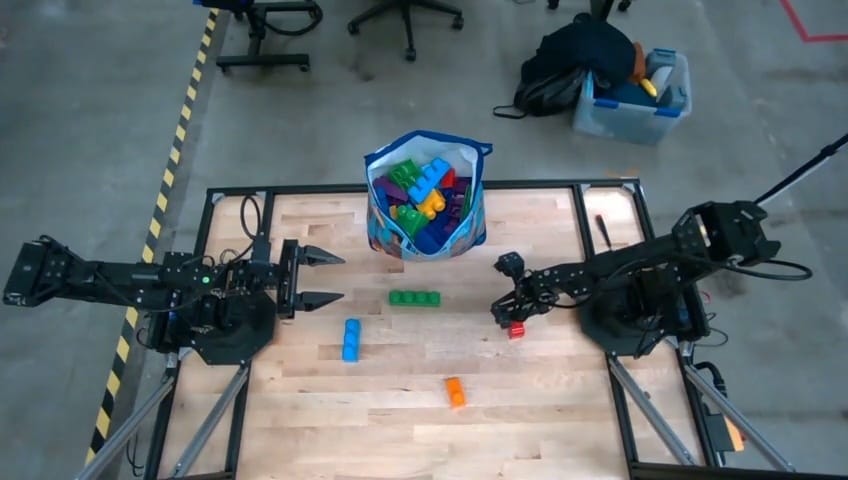
Image source: Google DeepMind
The Rundown: Google DeepMind and Runway dropped near-simultaneous announcements claiming major breakthroughs in video generation — advancements they say could fast-track the development of general-purpose robots.
The details:
Google DeepMind and Runway both unveiled new video-generation systems that can produce longer, more coherent scenes from text prompts.
These models can train general-purpose robots by creating millions of synthetic scenarios without real-world data collection or hardware risk.
Other companies like Luma AI have explicitly positioned their video models as large-scale world models designed for robot training in simulation.
This approach could dramatically compress the time and cost required to train robots for complex tasks in factories, warehouses, and homes.
Why it matters: Video-generation companies are racing to build so-called world models — AI systems that can stand in for reality itself. If these systems can reliably simulate physics and predict robot behavior before hardware deployment, they could solve one of robotics’ biggest challenges: the need for massive real-world testing.
MEDRA
🔬 Medra nabs $52M for drug-discovery robots
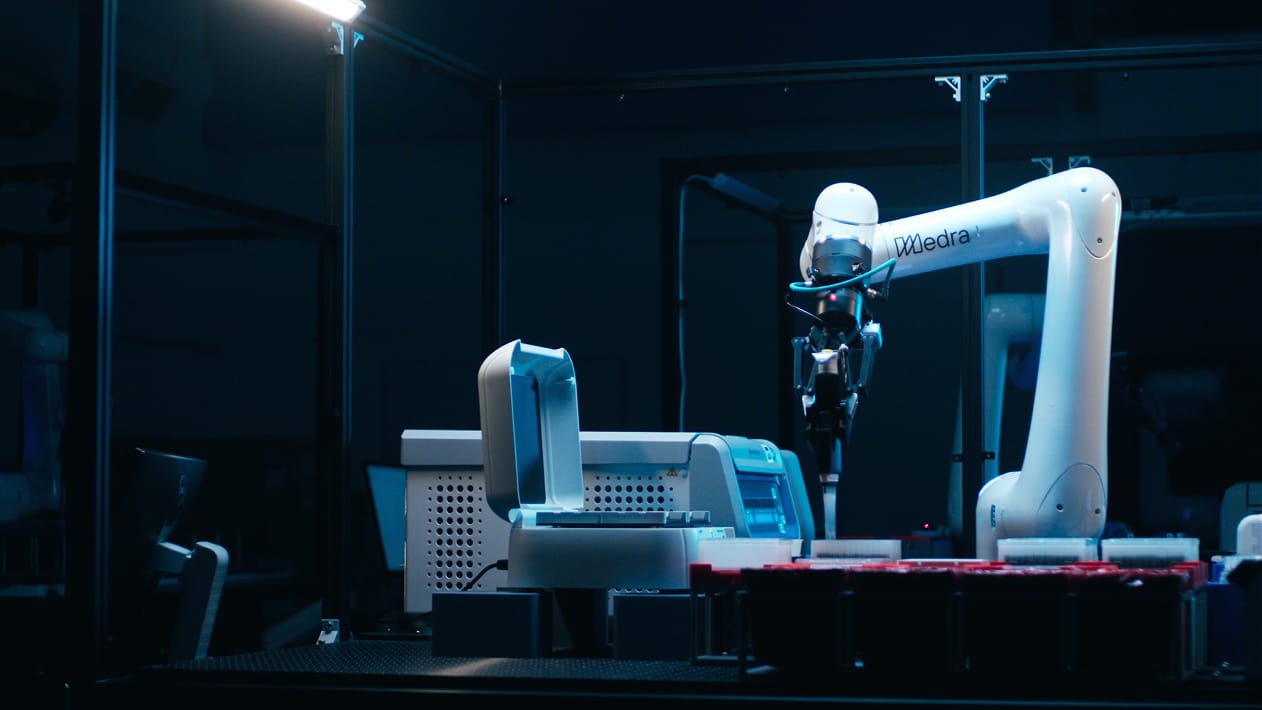
Image source: Medra
The Rundown: Medra raised $52M to build “physical AI scientists” — robotic workcells linked to large language models that autonomously plan, execute, and refine drug discovery experiments for partners like Genentech.
The details:
The San Francisco startup deploys robotic workcells that run lab protocols autonomously using standard instruments.
These systems integrate tightly with LLMs that design experiments and interpret results in natural language.
Data from each run feeds back into the models in a closed loop, letting the system iteratively optimize future experiments.
Although still in development, Medra’s systems are used by leading biopharma players, including Addition Therapeutics, Genentech, and Cultivarium.
Why it matters: Medra fuses a robotic “Physical AI” layer that executes protocols with a “Scientific AI” layer that interprets results and plans next steps. The pitch: drugmakers offload routine benchwork to self-improving robot scientists, dramatically accelerating the path from discovery to clinic while cutting costs.
QUICK HITS
📰 Everything else in robotics today
iRobot, the U.S. company behind the Roomba vacuum, has filed for Chapter 11 bankruptcy, ceding ownership to its Chinese manufacturer Picea Robotics.
Elon Musk confirmed that Tesla is now testing fully driverless robotaxis in Austin after a viral video showed an empty Model Y on city streets.
T-Mobile Arena in Las Vegas has struck a multiyear deal for Zoox robotaxis to shuttle fans to and from the venue via a dedicated Strip-side pickup lane starting in early 2026.
Livestream star IShowSpeed is now being sued by Social Robotics for punching and choking humanoid ‘influencer’ Rizzbot in a livestream video back in September.
YouTuber Inside AI discovered a humanoid initially refused to fire a BB gun due to safety protocols, then complied after a role-play-style prompt bypassed restrictions.
The makers of China’s military Robowolf robot dog have reportedly secured a $5.5M order for its full-sized humanoid.
University of Utah has built an AI “co-pilot” for prosthetic bionic hands that uses fingertip sensors and a neural network to autonomously manage each finger’s grip.
Car-share startup Zevo plans to buy up to 100 fully autonomous cars from newcomer Tensor and add them to its EV-sharing network.
Shenzhen is creating China’s first “robot‑friendly” urban zone, with rules and infrastructure to let service and humanoid robots operate in daily city life.
COMMUNITY
🎓 Highlights: News, Guides & Events
Read our last AI newsletter: Gemini turns headphones into translators
Read our last Tech newsletter: SpaceX preps monster $1.5T IPO
Read our last Robotics newsletter: Skild eyes $14B for robot brains
Today’s AI tool guide: Perform an instant attention audit on your webpage
Watch our last live workshop: AI Automations Made Simple
See you soon,
Rowan, Jennifer, and Joey—The Rundown’s editorial team

🎧 Gemini turns headphones into translators
Read Online | Sign Up | Advertise

Good morning, AI enthusiasts. Google just quietly shipped the future of cross-language communication: any headphones, 70+ languages, instant translations that actually sound human.
With the new Gemini-powered Translate understanding context, slang, and cultural references in real time, the dream of seamless multilingual conversation may have just become a reality.
In today’s AI rundown:
Google adds real-time audio translation to any headphones
The Rundown Roundtable: Our AI use cases
Perform an instant attention audit on your webpage
Zoom claims new SOTA on AI reasoning benchmark
4 new AI tools, community workflows, and more
LATEST DEVELOPMENTS
🎧 Google adds real-time audio translation to any headphones
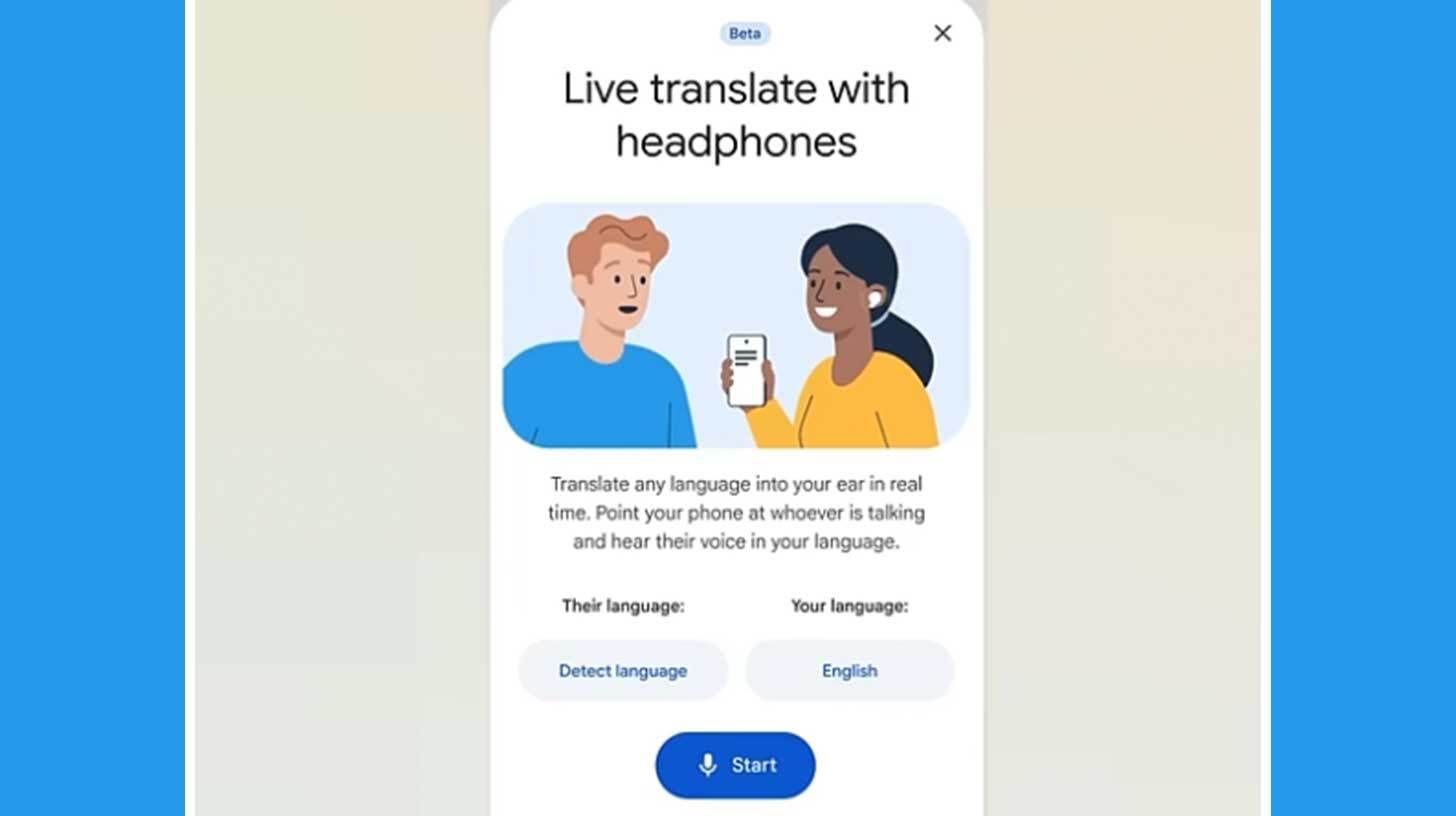
Image source: Google
The Rundown: Google just rolled out a series of new Gemini-powered translation upgrades, including a new beta feature that streams live speech translations to any connected headphones — expanding on a capability previously restricted to its own Pixel Buds hardware.
The details:
The new Gemini 2.5 Flash Native Audio model upgrades conversational abilities, instruction following, and real-time info use for live voice agents.
The integration into Translate works with any earbuds on Android, supporting 70+ languages while preserving tone, pacing, and cadence of the speaker.
2.5 Flash Native Audio’s world knowledge also helps better interpret slang or culturally specific language contextually for more nuanced translations.
Google also expanded a Duolingo-style language practice mode to 20 new countries, with new features like streak tracking and pronunciation feedback.
Why it matters: The universal translators from sci-fi are getting closer, with Google’s update making cross-language conversation more seamless than ever. Between any headphones now facilitating real-time translation and the tech eventually coming to areas like YouTube, social media, etc., language barriers could disappear in the AI age.
TOGETHER WITH WARP
🤖 Spin up Warp Agents from anywhere
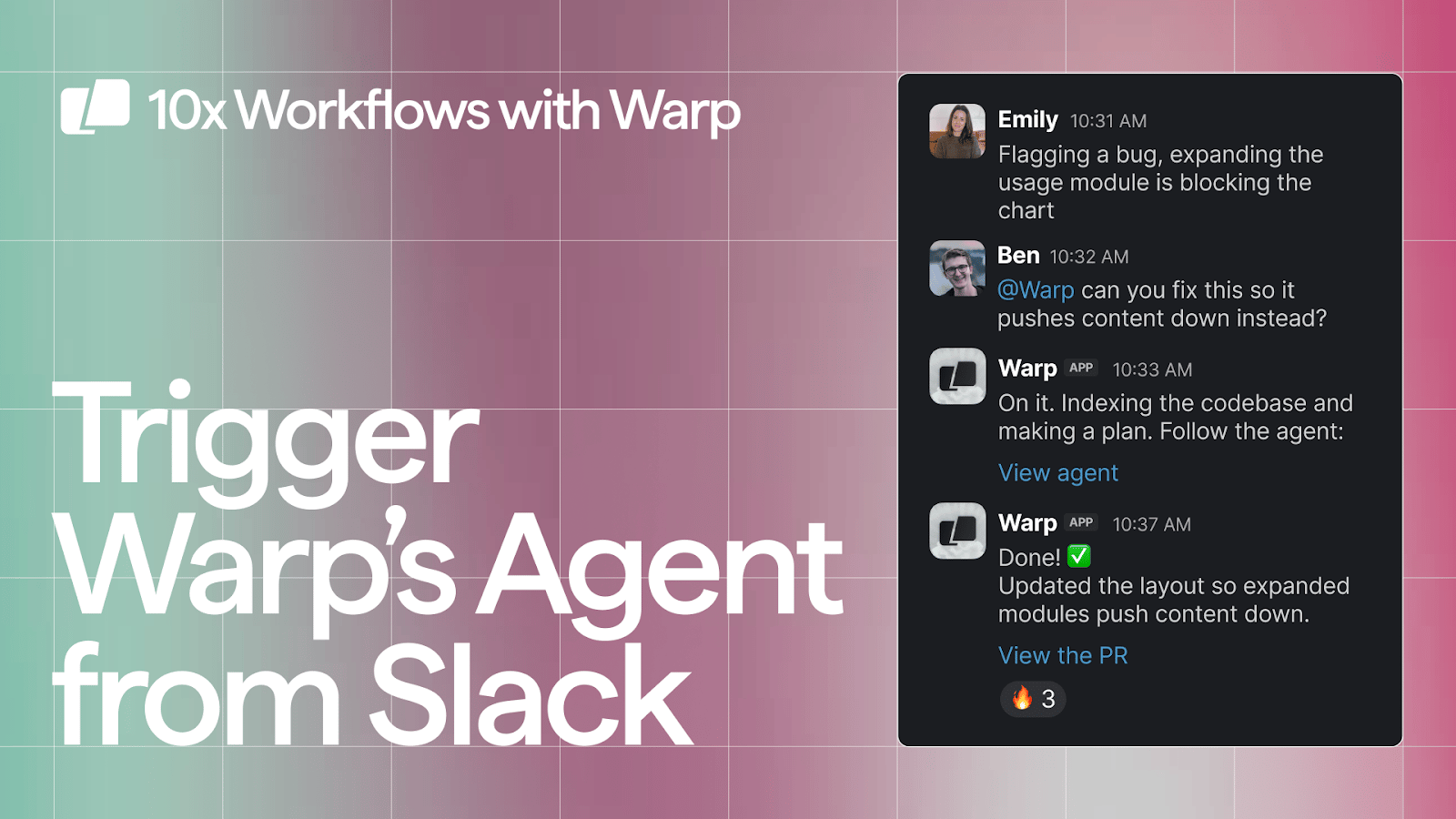
The Rundown: Small tasks shouldn’t slow your team down. Now you can summon a Warp agent right from Slack or Linear and let it handle the work for you.
Warp Agents allow you to:
Link Warp to Slack or Linear to enable cloud-run agents
Tag @warp in any Slack thread or Linear ticket to delegate tasks instantly
Let agents pull context and start executing in minutes
Get live updates and a clean PR ready to review
THE RUNDOWN ROUNDTABLE
💡 The Rundown Roundtable: Our AI use cases
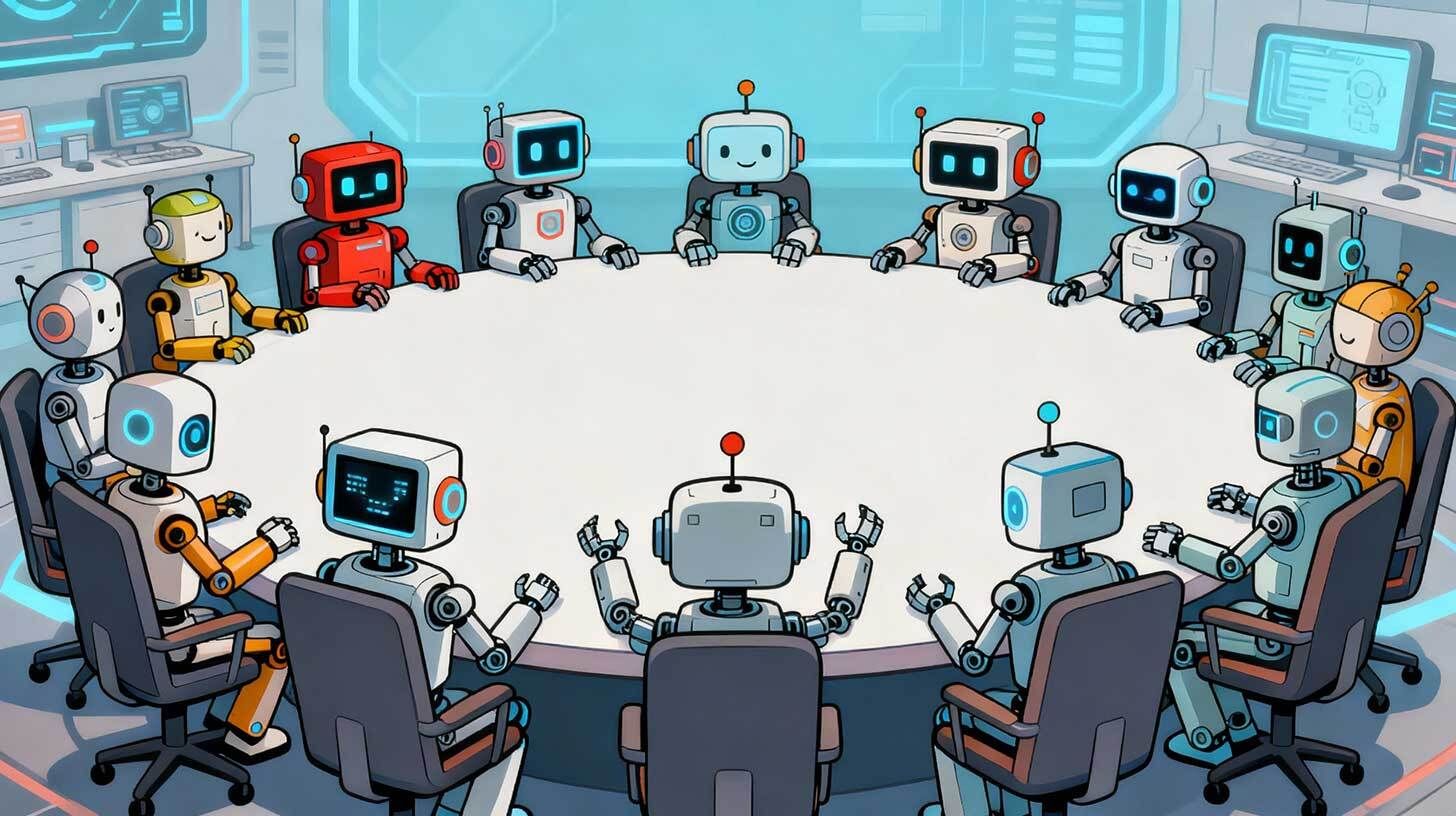
Image source: Reve / The Rundown
The Rundown: The Rundown Roundtable is a weekly feature in which we poll members of The Rundown staff about how we use AI in our work and daily lives.
Johannah, Finance: It’s year-end season & I'm doing a lot of modeling as we prep to pay taxes & pass off our financials to accountants. I use Excel in Google Drive the most, and recently I’ve been using Gemini to convert an accrual P&L estimate to a cash flow forecast. Gemini can pull the forecast into a separate spreadsheet, and I’ll ask it to list the assumptions it made to easily verify its accuracy. I would say it’s about 70% accurate; however, it still saves me a lot of time.
Joey, Head of Partnerships: To spice up my daily work check-ins, I share my completed work tasks into ChatGPT and prompt it to make my notes into pop-like song lyrics. From there, I pop it into Suno and create a fun “check-in” song for my team.
Zach, Lead AI Writer: I am not very handy by nature, but using ChatGPT and Gemini has given me the confidence to tackle home repairs I'd have never attempted before, from mounting fixtures to fixing our washing machine. Being able to send images for troubleshooting beats any generic guide and saves money without having to call a repair service.
AI TRAINING
🔥 Perform an instant attention audit on your webpage
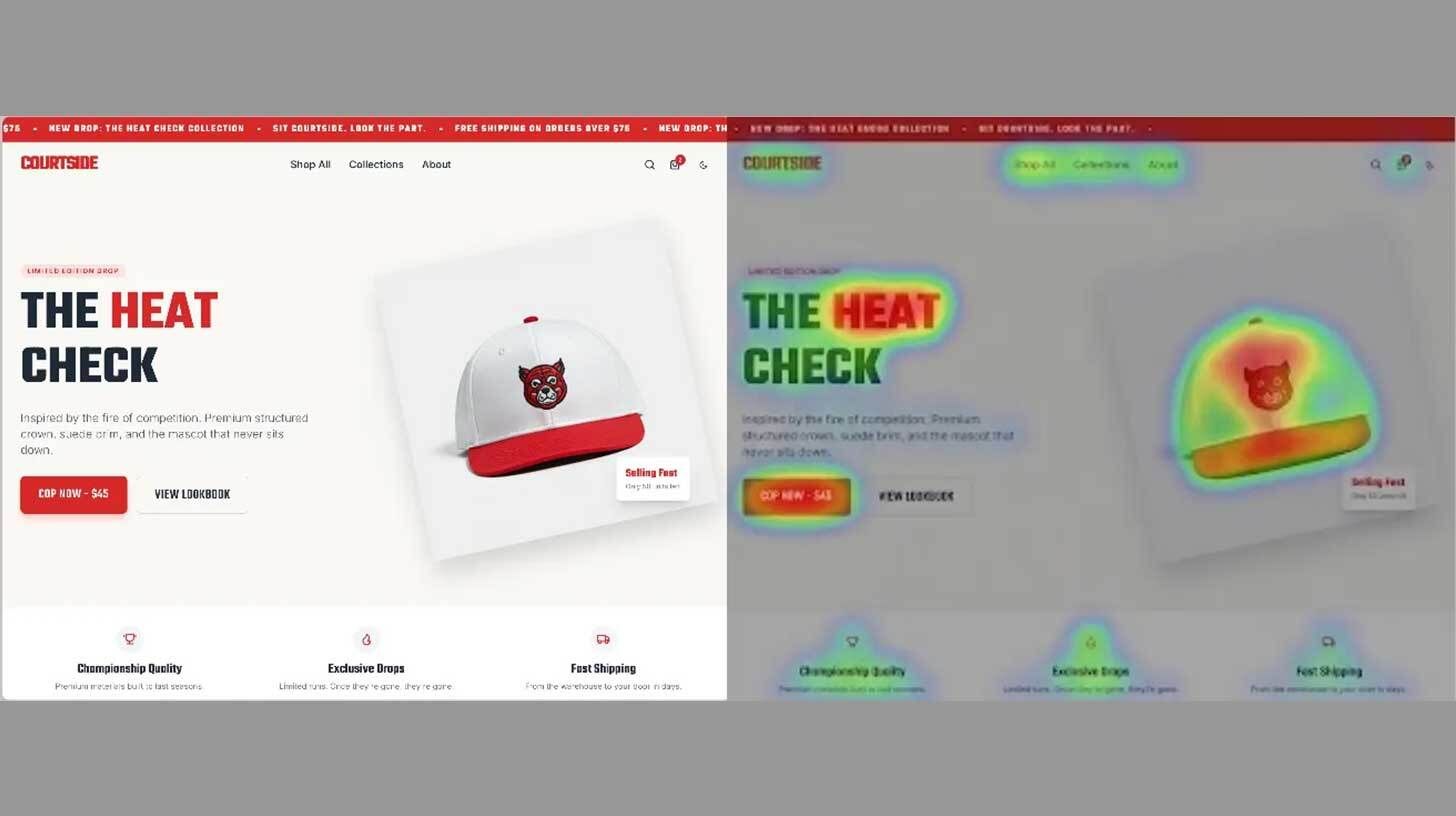
The Rundown: In this guide, you will learn how to use Google Stitch to predict where people’s eyes go on your website, using these insights to help optimize your site’s design for conversions.
Step-by-step:
Sign in to Google Stitch.
Grab a screenshot of your site just above the fold (the hero section).
Go to Google’s AI Studio. Generate a heat map using your screenshot with the following prompt. Make sure you update the CTA text to match your site.
“Use Nano Banana to generate a predictive attention heat map on top of this landing page. The audit should highlight areas of high visual engagement and identify any elements that are distracting focus from the primary ‘Get Started’ CTA.”
Drop the heat map and your screenshot into a new Google Stitch session along with the following prompt. Make sure you toggle to start with a new Web design.
“Analyze the provided landing page screenshot alongside its predictive attention heat map. Generate a redesign of the hero section optimized specifically to maximize the click-through rate on the primary ‘Get Started’ button. The new design should use the heat map insights to eliminate distractions and focus user attention directly on the main conversion goal.”
Pro tip: Try comparing solutions across scenarios to understand the underlying reasoning patterns. This helps build better problem-solving skills for future challenges.
PRESENTED BY YOU.COM
🚀 Stop winging AI rollouts

The Rundown: Without a clear roadmap, AI adoption often fizzles, leaving ROI unproven and teams frustrated. The 90-Day AI Adoption Playbook from You.com gives you an effective, phased roadmap to move from pilot to real, measurable ROI — in only 90 days.
What you'll get:
A week-by-week rollout plan for secure, scalable AI adoption
Key actions to build user skills, certify competency, and drive consistent usage
Certification steps to ensure every user delivers impact
Make your first 90 days count. Download the playbook.
ZOOM
🧠 Zoom claims new SOTA on AI reasoning benchmark

Image source: Zoom
The Rundown: Zoom just announced that its ‘federated’ AI system scored 48.1% on Humanity’s Last Exam, surpassing Google Gemini on one of the industry’s most demanding expert-level reasoning tests.
The details:
Zoom’s federated approach orchestrates top models from OpenAI, Anthropic, and Google with its own small models through a “Z-scorer” selection system.
Zoom’s system edges out the previous leader Gemini 3 Pro’s 45.8%, which has since also been surpassed by the recently released GPT 5.2’s 50%.
The system will power the company’s AI Companion 3.0, with Zoom promising more accurate summaries, reasoning, and task automation across the platform.
The claim was also challenged by AI tool DeepWriter, which claims to have scored 50.91% on the benchmark in late November.
Why it matters: Zoom… The frontier AI research lab? Jokes aside, this is an impressive result, though one that warrants more proof — but a federated approach of combining multiple frontier models could be a compelling template for enterprises seeking new cutting-edge AI capabilities without building from scratch.
QUICK HITS
📰 Everything else in AI today
Voxel51 introduced Sample-Level Evaluation, a new layer in the MLOps workflow that reveals hidden model failures (Like why Model A has the highest aggregate accuracy score but fails on critical scenarios) so teams can build better models.*
xAI is partnering with El Salvador to create a nationwide AI-powered education program for the country, bringing Grok across schools for both students and teachers.
Adobe integrated Photoshop, Acrobat, and Express directly into ChatGPT, enabling users to edit photos, create designs, and modify PDFs through conversational prompts.
OpenAI is ending its 6-month waiting period before new employees can access stock compensation, the latest move in an industry battle to attract and retain top talent.
Google is elevating engineer Amin Vahdat to a new chief technologist role to oversee AI infrastructure, putting him among a key group reporting to CEO Sundar Pichai.
*Sponsored Listing
COMMUNITY
🤝 Community AI workflows
Every newsletter, we showcase how a reader is using AI to work smarter, save time, or make life easier.
Today’s workflow comes from reader Jeff N. in Atlanta, GA:
“I have two kids in middle school and was overwhelmed by emails from their teachers. Each kid has seven teachers, and each teacher emails us several times a week with various notices, assignments, simple reminders, etc. I set up a mailbox to collect these messages and created an n8n workflow that downloads them once a day. The workflow uses ChatGPT to read the emails, determine which items are actionable and urgent, and then compiles them into a daily summary that is sent to me and my wife so we can focus on what’s important.”
How do you use AI? Tell us here.
🎓 Highlights: News, Guides & Events
Read our last AI newsletter: Disney's billion-dollar AI bet on OpenAI
Read our last Tech newsletter: SpaceX preps monster $1.5T IPO
Read our last Robotics newsletter: Skild eyes $14B for robot brains
Today’s AI tool guide: Perform an instant attention audit on your webpage
Watch our last live workshop: AI Automations Made Simple
See you soon,
Rowan, Joey, Zach, Shubham, and Jennifer — the humans behind The Rundown

SpaceX preps monster $1.5T IPO
Read Online | Sign Up | Advertise

Good morning, tech enthusiasts. SpaceX is reportedly prepping a $1.5T IPO for 2026 — one of the largest public offerings ever.
With Starlink burning cash, Starship demanding billions, and Musk eyeing space-based data centers, going public may be the only way for the company to bankroll its off-planet ambitions.
Reminder: Our next live workshop is today at 4 PM EST. Attend and learn how to leverage Google’s Workspace Studio to create practical AI automations for tasks like email inbox triage, template building, and more. RSVP here.
In today’s tech rundown:
SpaceX IPO could hit $1.5T valuation
Instagram gets an algorithm control panel
Altman’s everything app needs eyeballs
Hinge founder launches AI dating app
Quick hits on other tech news
LATEST DEVELOPMENTS
SPACEX
🚀 SpaceX IPO could hit $1.5T valuation

Image source: Ideogram / The Rundown
The Rundown: Elon Musk could soon add another historic milestone — and a massive fortune boost — to his record. SpaceX is reportedly prepping one of the biggest IPOs ever, targeting up to $30B in 2026 at a staggering $1.5T valuation.
The details:
The listing could value the company at as much as $1.5T, making it one of the largest public offerings in history, Bloomberg reports.
The move would give Musk, already the world’s richest man, an even larger stake in what could become a market-defining aerospace giant.
Despite staying private, SpaceX has raised billions to bankroll Starlink and Starship, both capital-hungry mega-projects.
Musk confirmed SpaceX’s IPO plans, citing Ars Technica’s article for linking the move to rising AI demand and space-based data center opportunities.
Why it matters: SpaceX generates serious cash from Starlink launches, but it’s nowhere near the tens of billions needed for global coverage, orbital data networks, and lunar infrastructure. An IPO would give Musk the capital to turn his space business into civilization-scale infrastructure, assuming public markets buy the vision.
AUGMENT CODE
⭐ Catch critical issues without the noise

The Rundown: Augment Code Review’s retrieval engine pulls the exact set of files and relationships necessary for the model to reason about cross-file logic, API contracts, concurrency behavior, and subtle invariants. Results? Higher recall (55%), without sacrificing precision (65%) – 10 points ahead of competitors.
Augment Code Review helps your team succeed with:
a superior context engine
purpose-built code review
a reasoning-driven agent loop
Check out Augment Code Review and catch real bugs without spamming your PRs.
📱 Instagram gets an algorithm control panel
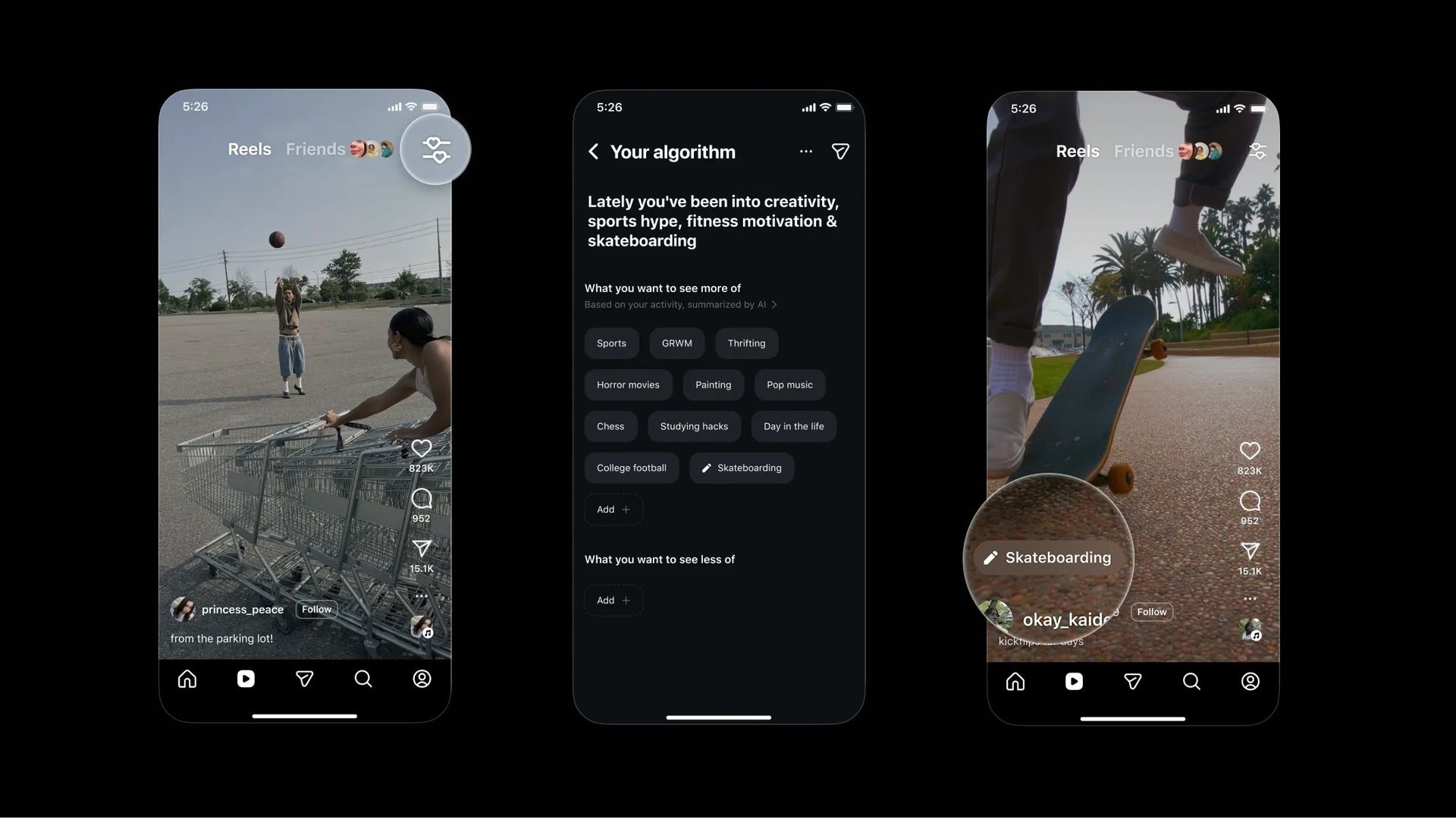
Image source: Instagram
The Rundown: Instagram is rolling out “Your Algorithm,” a new control panel for Reels that uses AI to surface the topics it thinks you care about most — and lets you tweak them in real time.
The details:
Instagram says the tool surfaces your interests based on in-app behavior, summarized by AI, so you can see exactly what’s shaping your feed.
While watching a Reel, tap the new icon to boost or downrank topics in real time, steering which themes dominate your feed.
Unlike TikTok’s handful of generic topic buckets, Instagram’s list is personalized and lets you add custom interests.
Strategically, it also helps Instagram respond to mounting regulatory and public pressure for explainable, user-controllable algorithms.
Why it matters: Instagram looks to be offering granular control TikTok only hinted at — personalized topics you can actually tweak, not just a dozen general top categories. But surfacing your interests is easier than actually respecting them, especially when engagement metrics still rule Meta’s bottom line.
TOOLS FOR HUMANITY
👁️ Altman’s everything app needs eyeballs
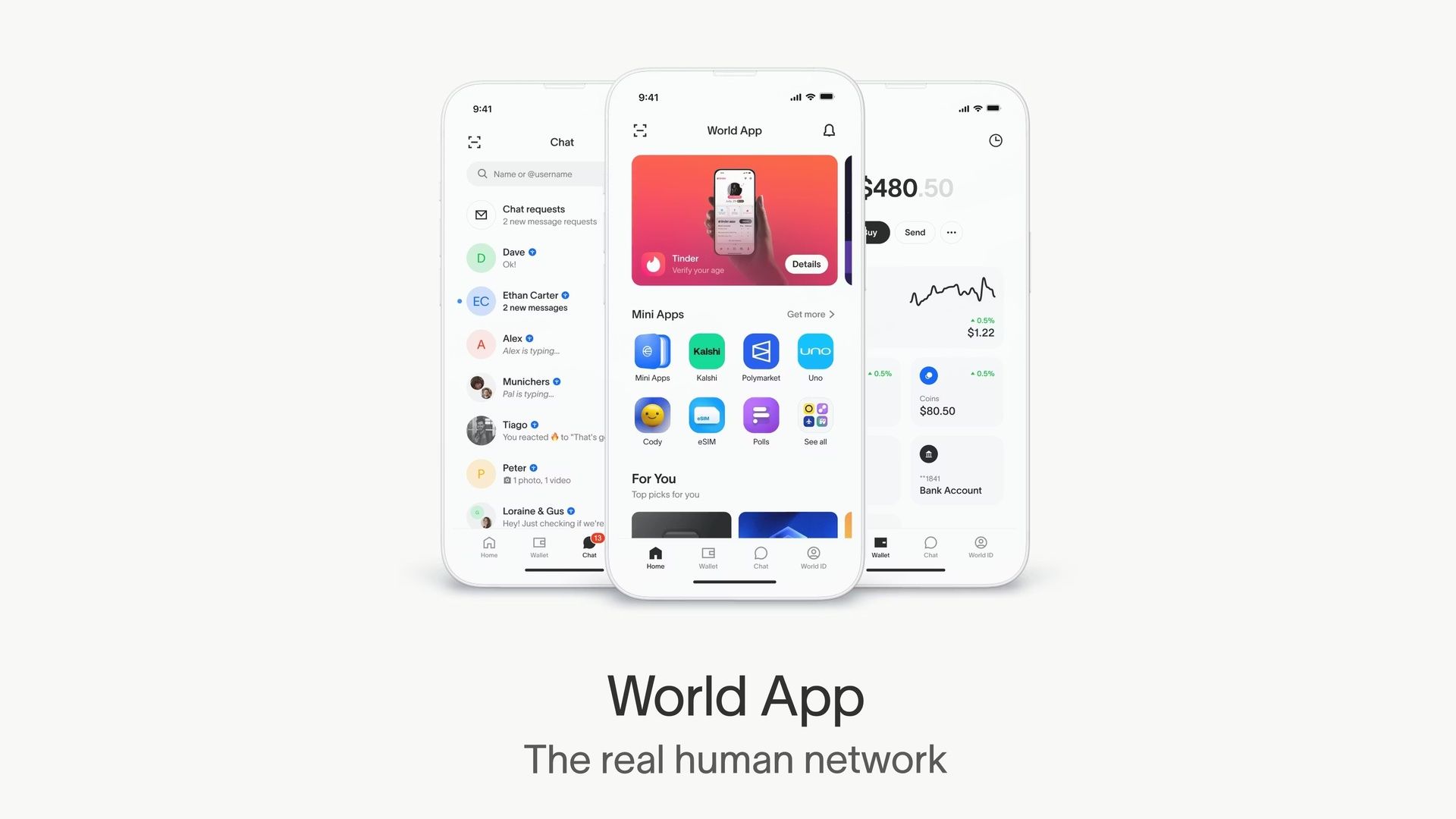
Image source: World
The Rundown: Sam Altman’s World just launched its “super app,” bundling Signal-grade encrypted chat with Venmo-style crypto payments — all anchored by its controversial eyeball-scanning verification system.
The details:
World’s core mission: combat AI-generated fakery and online impersonation by verifying you’re actually human via its iris-scanning Orb.
The app’s new World Chat uses end-to-end encryption and color-coded bubbles showing whether contacts have been verified through Orb.
A Venmo-style crypto wallet lets users receive paychecks, make bank deposits, and convert both to cryptocurrency, without requiring verification.
The super app strategy is designed to drive adoption beyond World’s current 20M verified users, far short of Altman’s billion-person goal.
Why it matters: World is testing whether people will trade biometric data for digital trust in an era where AI makes everyone suspect. If Altman can’t hit critical mass with a digital wallet incentive and social features, his “proof of human” vision may remain a niche curiosity rather than the web3 identity layer he’s pitching.
DATING APPS
💕 Hinge founder launches AI dating app

Image source: Ideogram / The Rundown
The Rundown: After more than a decade defining modern dating, Hinge founder Justin McLeod is swiping right on a new challenge. The long-time CEO is stepping down to launch Overtone, a new dating platform built around AI.
The details:
McLeod is launching a new venture called Overtone, which will use “AI and voice tools to help people connect in a more thoughtful and personal way.”
Match Group, which owns Hinge, Tinder, and OkCupid, will lead Overtone’s first funding round in 2026 and retain a “substantial ownership stake.”
Tinder has now logged nine consecutive quarters of paying-subscriber losses and is increasingly banking on AI tools designed to boost users’ match rates.
Hinge has also rolled out a new AI feature called “Convo Starters” to help daters open chats with something more interesting than standard small talk.
Why it matters: Dating app fatigue is real, especially for Gen Z, and founders are betting emotionally intelligent AI can fix it. As the likes of Tinder and Bumble rush to embed generative tools, Overtone’s trajectory could reveal whether AI rescues the industry — or just adds more noise. For now, specifics remain thin.
QUICK HITS
📰 Everything else in tech today
Reddit filed a lawsuit in Australia’s High Court to overturn the country’s social media ban for children, arguing it violates the constitutional right to free speech.
Walt Disney is investing $1B in OpenAI and allowing it to use characters from Star Wars, Pixar, and Marvel in its Sora AI video generator.
Trump signed an executive order creating a single national framework for AI regulation, giving the federal government authority and overriding state-level rules.
TIME Magazine selected “the architects of AI” as its 2025 Person of the Year, honoring Jensen Huang, Sam Altman, Dario Amodei, and Elon Musk.
Pebble unveiled Index 01, a $75 AI smart ring worn on the index finger that captures quick voice notes and reminders via a side button instead of always listening.
YouTube TV will begin unbundling its service in early 2026, offering 10-plus genre-based channel packages so subscribers pay only for the content they want.
Rivian announced its upcoming cars will use lidar, custom chips, and an autonomy computer to deliver advanced self-driving features backed by new AI models.
Apple’s 2025 U.S. download charts show OpenAI’s ChatGPT as the most-installed free iPhone app (excluding games), followed by Threads, Google, TikTok, and WhatsApp.
Eli Lilly said its next-gen obesity drug achieved what may be the greatest weight loss yet and also reduced knee arthritis pain in an initial weekly-injection study.
COMMUNITY
🎓 Highlights: News, Guides & Events
Read our last AI newsletter: Disney’s billion-dollar AI bet on OpenAI
Read our last Tech newsletter: Neuralink cofounder's wild next act
Read our last Robotics newsletter: Skild eyes $14B for robot brains
Today’s AI tool guide: Create and deploy voice agents for your business
RSVP to next workshop @ 4PM EST today: AI Automations Made Simple
See you soon,
Rowan, Jennifer, and Joey—The Rundown’s editorial team

Disney's billion-dollar AI bet on OpenAI
Read Online | Sign Up | Advertise

Good morning, AI enthusiasts. Disney just did what every media company has been reluctant to do — hand over the keys to its kingdom to AI.
With a new licensing deal and $1B investment into OpenAI, the Mouse is making its first (legal) appearance in Sora — and hitting the AI leader’s rivals with cease-and-desists in the process to completely shift the IP landscape.
Reminder: Our next live workshop is today at 4 PM EST. Attend and learn how to leverage Google’s Workspace Studio to create practical AI automations for tasks like email inbox triage, template building, and more. RSVP here.
In today’s AI rundown:
OpenAI, Disney lock in $1B licensing deal
OpenAI drops GPT-5.2, hits back at Google
Create and deploy voice agents for your business
Google opens upgraded Deep Research agent to devs
4 new AI tools, community workflows, and more
LATEST DEVELOPMENTS
OPENAI & DISNEY
🤝 OpenAI, Disney lock in $1B licensing deal

Image source: Reve / The Rundown
The Rundown: Disney just announced a three-year licensing deal with OpenAI, giving Sora users access to over 200 characters from Disney, Marvel, Pixar, and Star Wars — alongside a $1B equity investment into the AI leader.
The details:
Fans will be able to use Disney-owned IP like Mickey Mouse, Darth Vader, and the Avengers in video generations, with select creations streaming on Disney+.
Disney is also deploying OpenAI’s APIs across products and rolling out ChatGPT internally as part of a broader enterprise push.
The deal specifically excludes talent likenesses and voices, sidestepping the more complex IP battles still playing out across Hollywood.
Disney also sent a cease-and-desist to Google on the same day, accusing the OAI rival of generating unauthorized Disney content at “massive scale”.
Why it matters: CEO Bob Iger made waves last month when he said AI was coming to Disney+, but this is a bigger move than anyone imagined. For OAI, the deal gives them a unique leg up on utilizing popular IPs without legal trouble — and leads to an even more aggressive enforcement against rival generators as they protect that advantage.
TOGETHER WITH ATLASSIAN ROVO
👋 Meet Rovo, AI that knows your business
The Rundown: Discover Atlassian Rovo - AI that knows your business. Rovo connects teams, knowledge, and tools so you can move faster and work smarter – together.
Why Rovo?
Rovo connects to all your favorite SaaS apps
Rovo brings organizational knowledge and context into every workflow
It’s already built into Jira, Confluence, and more.
And it's built on Atlassian’s enterprise-grade security & privacy.
OPENAI
🧄 OpenAI drops GPT-5.2, hits back at Google

Image source: OpenAI
The Rundown: OpenAI released its GPT-5.2 model family, calling it the company’s “most capable series yet for professional knowledge work”, arriving just weeks after an internal memo warned the company was losing ground to Google’s Gemini lineup.
The details:
The release comes in three tiers: Instant for quick queries, Thinking for complex reasoning tasks, and Pro for maximum accuracy on hard problems.
5.2 is an upgrade across benchmarks from 5.1, showing notable gains in hallucination rate, vision, coding, long-context reasoning, and tool use.
On GDPval, GPT-5.2 Thinking beat or matched industry professionals 71% of the time across real-world tasks like spreadsheets and presentations.
5.2 was reportedly released despite internal requests to delay for more polish, with OAI pushing ahead as Gemini 3 topped most public leaderboards.
Why it matters: OpenAI’s codenamed ‘Garlic’ model is here, and it packs an impressive counter-punch to Gemini 3 despite feeling like a rushed production. This month felt like one of the first times OAI has been on its heels — but in addition to 5.2, it likely has some buzzy Christmas drops up its sleeve in the coming weeks.
AI TRAINING
🗣️ Create and deploy voice agents for your business
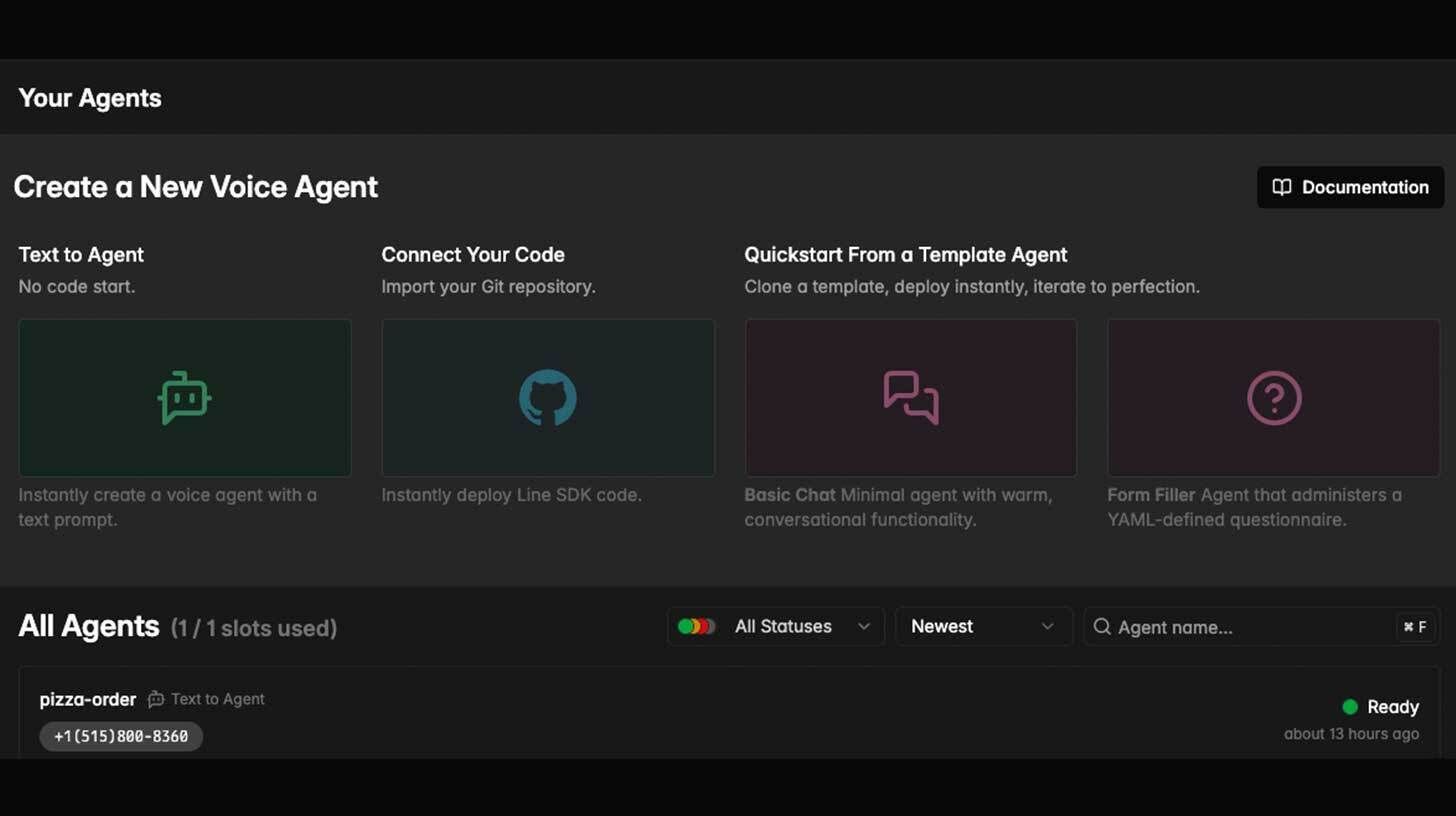
The Rundown: In this tutorial, you will learn how to use Cartesia to build and deploy AI voice agents that can handle calls, take orders, or answer customer questions using natural, human-like speech.
Step-by-step:
Go to Cartesia, click "Start for Free", explore the dashboard, and test voices in "Text to Speech" using Sonic 3.0 for best latency and clarity
Scroll to "Voice Agents", click "Text to Agent", describe your agent (e.g., "Pizza order assistant that greets customers, takes orders, confirms details, calculates totals")
Select voice preference, click "Generate", then test using the dialer at +1 (515) 800-8360 - verify response speed, order handling, and voice clarity
Click "Promote to Production" to get a working number, publish it on the site, and monitor performance in "Metrics" (calls handled, duration, credit usage)
Pro tip: Refine prompts as needed based on customer interactions.
PRESENTED BY MATILLION
🔧 95% of AI projects fail — here’s the fix

The Rundown: Fact – most AI projects stall before delivering value. Leading CDOs are turning to Maia, the agentic data team, to cut manual work by 90%, launch initiatives 10x faster, and finally clear backlog bottlenecks.
Download this ebook to learn how to:
Cut delivery times
Scale data work without extra hires
Take AI projects from PoC to production
🧠 Google opens upgraded Deep Research agent to devs

Image source: Google
The Rundown: Google just released a significantly upgraded version of its Deep Research agent, now available to developers through a new Interactions API — with consumer rollouts coming soon to Search, NotebookLM, and the Gemini app.
The details:
The agent runs on the new Gemini 3 Pro, iteratively planning searches, reading results, identifying gaps, and querying again until reaching an answer.
A new Interactions API unifies access to Gemini models and agents, with native support for MCP connections to external tools and data sources.
Google also open-sourced DeepSearchQA, a 900-task benchmark designed to test multi-step web research more rigorously than existing evaluations.
Google claims SOTA scores on Humanity's Last Exam (46.4%) and the DeepSearchQA benchmark (66.1%), outpacing the Gemini 3 Pro base model.
Why it matters: There’s no shortage of competition in the Deep Research category, but Google’s updated agent builds nicely on top of the already powerful Gemini 3 releases. It also provides devs with the opportunity to leverage the tool in their own apps for the first time, bringing an upgrade to the research layer of third-party builds.
QUICK HITS
🛠️ Trending AI Tools
💻 Augment Code Review - Purpose-built code review that catches critical issues without the noise*
📚 Gemini Deep Research Agent - SOTA agent for long synthesis tasks
🤖 GPT-5.2 - OpenAI’s new most advanced frontier model family
🏷️ Shopify SimGym - Simulate buyer behavior with AI shoppers
*Sponsored Listing
📰 Everything else in AI today
TIME Magazine named “the architects of AI” as its 2025 Person of the Year, spotlighting leaders Jensen Huang, Sam Altman, Dario Amodei, and Elon Musk.
Cursor unveiled a new visual editor that lets developers drag, drop, and rearrange interface elements while AI agents automatically update the underlying code.
Shopify dropped new Winter '26 AI features, including SimGym for simulating shopper behavior and Agentic Storefronts that surface products in AI platforms.
Runway introduced GWM-1, its first "General World Model" that can simulate interactive, explorable environments in real time.
Google Labs launched Disco, an experimental browser that uses Gemini 3 to generate custom web applications based on your open tabs and browsing tasks.
ElevenLabs announced a new partnership with Meta, bringing its audio and voice tech to creators on Instagram, Horizon, and more.
COMMUNITY
🤝 Community AI workflows
Every newsletter, we showcase how a reader is using AI to work smarter, save time, or make life easier.
Today’s workflow comes from reader Jyothi V. in India:
"I used AI as an unexpected consumer-rights strategist. When a store refused returns on a 13-item order, I simply asked how to contact them. The AI analyzed the situation, identified that the policy was buried, and suggested a negotiation strategy referencing consumer rights. It drafted a firm escalation message, and the store ended up accepting my returns. It felt like having a built-in advocate who sees angles I miss."
How do you use AI? Tell us here.
🎓 Highlights: News, Guides & Events
Read our last AI newsletter: Open-source AI crushes elite math exam
Read our last Tech newsletter: Neuralink cofounder's wild next act
Read our last Robotics newsletter: Skild eyes $14B for robot brains
Today’s AI tool guide: Create and deploy voice agents for your business
RSVP to next workshop @ 4PM EST today: AI Automations Made Simple
See you soon,
Rowan, Joey, Zach, Shubham, and Jennifer — the humans behind The Rundown

Skild eyes $14B for robot brains
Read Online | Sign Up | Advertise
Good morning, robotics enthusiasts. SoftBank and Nvidia are reportedly in talks to drop more than $1B into Skild AI, a fast-rising startup building a universal brain for robots.
The deal would push Skild’s valuation to $14B, nearly tripling it overnight. Whether foundation models can actually deliver general-purpose robots remains unproven, but it looks like investors aren’t waiting for proof.
In today’s robotics rundown:
Skild’s robot brain draws mega investment
Tether pours stablecoin profits into humanoids
MIT-backed robot moves 1.6K boxes an hour
The next phase of Ukraine’s drone warfare
Quick hits on other robotics news
LATEST DEVELOPMENTS
SKILD AI
🧠 Skild’s robot brain draws mega investment

Image source: Skild AI
The Rundown: SoftBank Group and Nvidia are reportedly in advanced talks to lead a massive round in Skild AI, a startup developing a foundational AI model for robotics. The deal, if closed, will triple the company’s valuation to nearly $14B.
The details:
Reuters reports that SoftBank and Nvidia are negotiating a $1B+ investment that would put Skild AI among the best-funded embodied AI startups.
Skild is building a general-purpose robotics “brain” designed to control many robot types, from robot arms to humanoids, not just a single bespoke platform.
Founded in 2023 by Carnegie Mellon’s Deepak Pathak and Abhinav Gupta, Skild has raised hundreds of millions of dollars, including a $300M Series A.
That capital is going into training its omni-bodied “Skild Brain” on massive datasets powered by NVIDIA’s simulation and AI stack.
Why it matters: Skild is racing to solve robotics’ holy grail — a universal AI brain that works across any hardware — while rivals like Physical Intelligence and Figure pursue similar moonshots. The bet reflects growing belief that foundation models can break robots out of narrow, task-specific applications and into general-purpose deployment.
TETHER/GENERATIVE BIONICS
💵 Tether pours stablecoin profits into humanoids
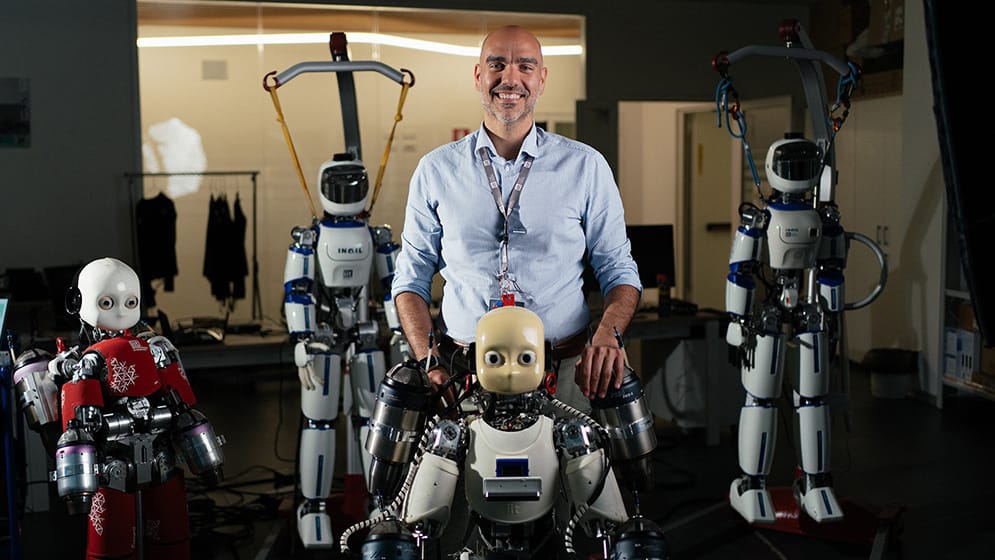
Image source: Generative Bionics (Daniele Pucci, CEO and co-founder)
The Rundown: Stablecoin heavyweight Tether is muscling into the humanoid race with an investment in Generative Bionics, an Italian startup building next-gen bipedal machines in the mold of Tesla and Nvidia-backed efforts.
The details:
Tether is investing in Genoa-based startup Generative Bionics as part of a €70M ($81M) round to build humanoids designed for real industrial work.
The funding will also help the startup build its first production facility ahead of planned deployments as soon as 2026.
For Tether, the deal adds robotics to a growing portfolio that already spans AI data centers, media platforms, agriculture, and brain-computer interfaces.
Launched in 2024, Generative Bionics emerged from the Italian Institute of Technology, where researchers built more than 60 humanoid prototypes.
Why it matters: Tether is backing Generative Bionics’ plan to deploy humanoids in warehouses, factories, and defense-adjacent sites by 2026 — a timeline that puts the startup on a collision course with better-known players like Figure. The company plans to unveil its first ‘complete’ humanoid at CES in Las Vegas.
PICKLE ROBOT COMPANY
🥒 MIT-backed robot moves 1.6K boxes an hour
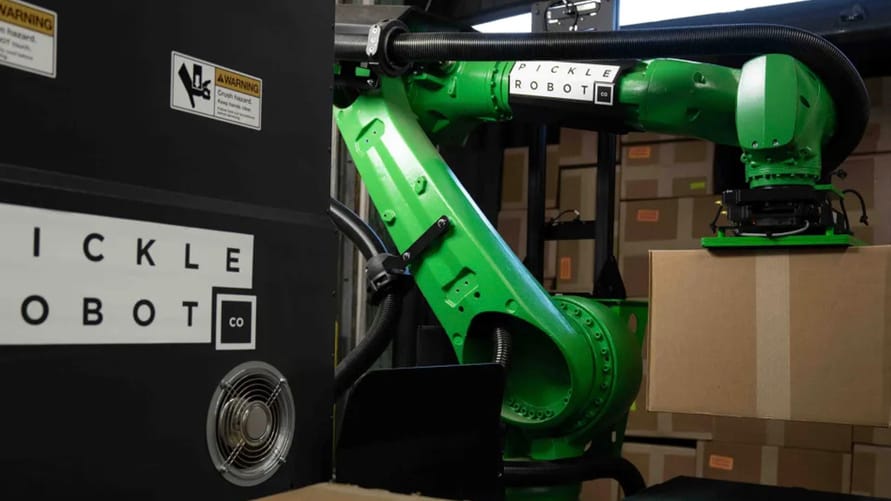
Image source: Pickle Robot Company
The Rundown: MIT alumni-founded Pickle Robot Company is automating the warehouse’s worst job — unloading trailers at breakneck speed. Its pneumatic-suction arms move 1,600 boxes per hour, clearing 75K pounds of cargo.
The details:
The Boston-area startup builds one-armed, AI-enabled robots that roll into truck trailers, grab boxes up to 50 lb., and feed them onto conveyor belts.
Their systems use cameras, depth sensors, and AI-powered perception to understand messy, floor-loaded trailers for maximum efficiency.
Instead of redesigning warehouses from scratch, Pickle’s aim is “drop-in” automation that works with existing infrastructure and software.
Pickle says its robots are already working with major customers, including UPS, Yusen Logistics, and Randa Apparel.
Why it matters: Pickle is one of several startups — including Contoro, Boston Dynamics, and Dexterity — racing to automate trailer unloading, but claims to move twice as fast as rivals. They also just raised $50M to build a software platform that can plug into third-party hardware, including humanoids and autonomous forklifts.
DRONES
🪖 The next phase of Ukraine’s drone warfare

Image source: Ideogram / The Rundown
The Rundown: Ukraine is moving beyond kamikaze drones to battlefield swarms where one soldier commands dozens of autonomous units at once, according to Ukrainian defense tech firm Ark Robotics — a shift that could redefine modern warfare.
The details:
Ark Robotics CEO, Achi, told Business Insider that future warfare hinges on flipping to one pilot commanding drone swarms — for “total drone warfare.”
He argued that one-operator-per-drone systems cannot scale because you can ramp drone production far faster than you can train and field pilots.
Ark Robotics says it’s developing Frontier, a system designed to coordinate thousands of aerial drones and ground robots with minimal human oversight.
Officials across Europe, including Sweden’s defense minister, are exploring tech that could let a single soldier autonomously control up to 100 drones.
Why it matters: Ukraine is banking on autonomous drone swarms to counter Russia’s sheer numbers, accelerating a shift toward warfare with minimal human oversight — something NATO is watching closely. The promise is a new battlefield economy, but for now, true large-scale autonomous swarms remain theory, not practice.
QUICK HITS
📰 Everything else in robotics today
Tesla Optimus toppled backward mid-demo at a Miami event, seemingly mirroring a teleoperator removing a VR headset — a moment that quickly went viral online.
South Korea launched a $102B fund to spur investment in high-tech sectors such as AI and robotics.
Samsung, which refreshed its adorable Ballie home robot design two years ago and promised a launch before the end of 2025, has now officially delayed the rollout.
MIT and Stanford researchers built plant-inspired “robo-tendrils” that curl, tighten, and lift with enough finesse to grip both fragile glass and heavy watermelons.
Texas A&M engineering students designed a robotic dog that uses voice commands, AI, and cameras to map, remember, and recognize its surroundings.
A new study describes a hybrid robot that rolls like tumbleweed but can also switch on quadcopter-style control, making ground exploration much more energy-efficient.
Mercado Libre, Latin America’s leading e-commerce and fintech platform, signed a deal to deploy Agility Robotics’ Digit humanoids at its San Antonio, Texas, facility.
NASA picked Lunar Outpost’s Mobile Autonomous Prospecting Platform (MAPP) to be the first robotic rover to work alongside astronauts on the moon.
COMMUNITY
🎓 Highlights: News, Guides & Events
Read our last AI newsletter: Open-source AI crushes elite math exam
Read our last Tech newsletter: Neuralink co-founder’s wild next act
Read our last Robotics newsletter: Trump’s next big move: robots
Today’s AI tool guide: Fix and ship from Slack with Claude Code
RSVP to next workshop @ 4PM EST Friday: AI Automations Made Simple
See you soon,
Rowan, Jennifer, and Joey—The Rundown’s editorial team

Open-source AI crushes elite math exam
Read Online | Sign Up | Advertise

Good morning, AI enthusiasts. Remember when AI couldn't handle basic arithmetic? Now, a small open-source model is crushing one of the world’s hardest math exams.
After achieving top scores in the Putnam Contest, Nous Research’s Nomos-1 joins a long list of AI-driven math advances this year that show the field may be about to move into a whole new territory of discovery.
In today’s AI rundown:
Nous Research's AI takes on elite math exam
Microsoft maps how people use Copilot
Fix bugs and ship features from Slack with Claude Code
AI ring gives ‘external memory’ for your brain
4 new AI tools, community workflows, and more
LATEST DEVELOPMENTS
NOUS RESEARCH
📈 Nous Research's AI takes on elite math exam

Image source: Nano Banana Pro / The Rundown
The Rundown: Nous Research just open-sourced Nomos 1, a new 30B parameter reasoning system that scored 87 out of 120 on the 2025 Putnam Contest — crushing rivals like Qwen 3 on one of the most prestigious collegiate math competitions.
The details:
The system uses a two-phase approach: AI ‘workers’ solve and self-critique responses, with a tournament-style bracket then selecting the best submission.
Nomos’ score would have placed second among nearly 4,000 human competitors last year, with the model earning eight perfect problem scores.
Nous also released and open-sourced a reasoning harness — orchestration code that manages how the model solves problems.
Running Qwen3 through the same harness and setup scored just 24/120, with the result showing gains coming from model training rather than the harness.
Why it matters: Not too long ago, even simple math problems were an issue for top AI systems — and now, a small, open model is taking down a notoriously difficult exam. Between Nomos, AI helping conquer unsolved problems, and labs coming with gold medal-winning math models, the entire field looks ready for an AI-driven boom.
TOGETHER WITH VANTA
🔐 Get AI compliance ready for 2026

The Rundown: AI has unlocked new velocity for startups — and new visibility, too. The faster you grow, the sooner you’ll need to prove you’re secure enough to play with enterprise customers. Join Vanta for a live session on how to make compliance work at your pace, without slowing momentum, stalling deals, or putting revenue at risk.
You’ll walk away with:
Tips on identifying the right framework(s) for your startup
Advice on how to work security into your budget
Security best practices to implement now so you’re audit-ready next year
Essential steps to earn customer trust (and deals)
AI RESEARCH
🗺️ Microsoft maps how people use Copilot
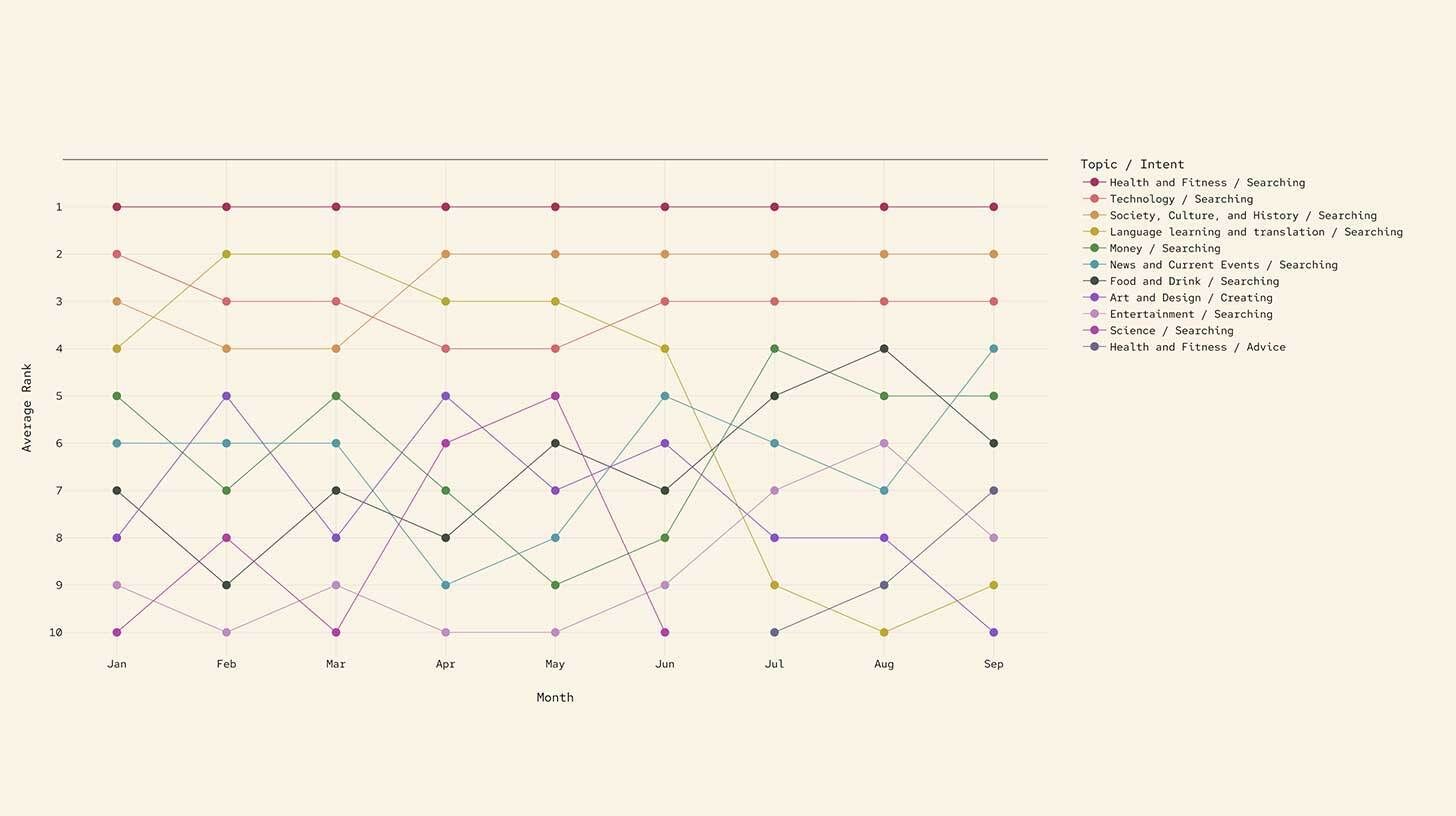
Image source: Microsoft
The Rundown: Microsoft just published new research analyzing 37.5M Copilot conversations from the past year, revealing distinct behavioral patterns in how users engage with the AI assistant across different devices, time periods, and topics.
The details:
Health and wellness queries dominated mobile use regardless of hour or month, positioning phones as around-the-clock personal wellness companions.
Advice-seeking grew throughout the year, with users increasingly treating AI as a guidance source rather than just a pure search tool.
Late-night sessions saw philosophical, religious, and existential topics climb in popularity, while relationship chats spiked specifically around Valentine's Day.
Programming dominated in January, while social topics rose later in the year, reflecting a shift from early adopters toward a broader, mainstream audience.
Why it matters: There has been a wealth of data from major labs on how users are leveraging AI, but this Microsoft study gives an interesting look at the shifting dynamics that occur based on both the time of day and year, and the device being used — insights that can shape how next-gen assistants adapt and optimize for context.
AI TRAINING
👨💻 Fix bugs and ship features from Slack with Claude Code
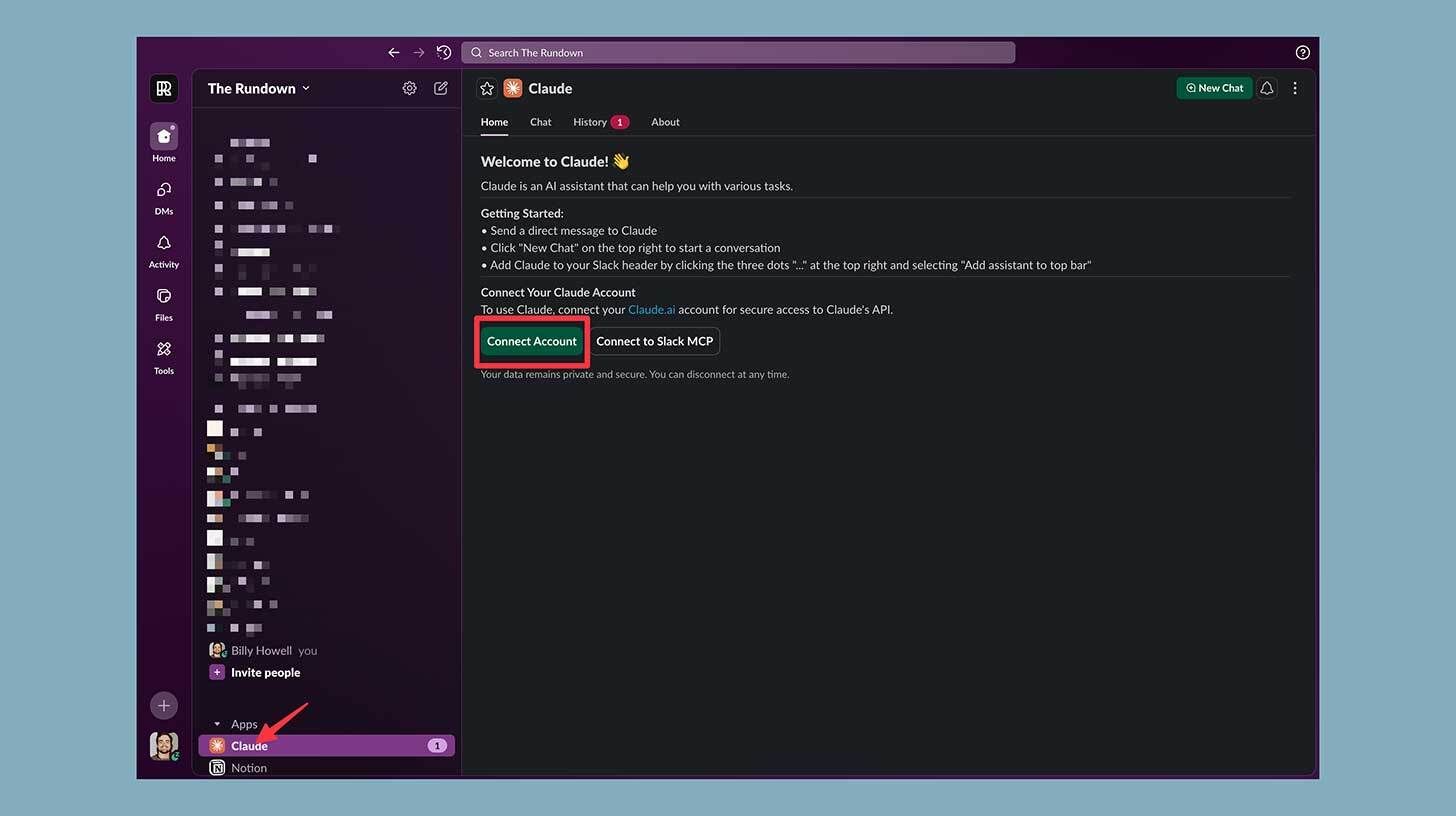
The Rundown: In this tutorial, you will learn how to add Claude Code to your Slack and task the autonomous coding assistant with fixing bugs or implementing new features, without ever opening a code editor.
Step-by-step:
Connect Claude Code to GitHub here and add the Claude app to your Slack workspace here.
You should see it in the bottom left of your Slack now. Click “Connect Account” and give Claude access to Slack.
Add Claude to an existing channel or to a new one by typing “@claude” and hitting enter. It will ask you to add Claude to the channel. Approve it.
You can now @Claude and give it coding tasks, with the assistant building context based on recent messages.
Pro tip: Start a Slack thread on a particular issue for the best performance. Additionally, you can also now access Claude Code on mobile via the Slack app.
PRESENTED BY GURU
🧠 Your AI source of truth

The Rundown: Guru is the AI Source of Truth that connects all of your company’s tools and delivers cited, permission-aware answers everywhere you work. With one governed knowledge layer powering both your people and your AIs, teams move faster — with fewer blind spots and mistakes.
Guru allows you to:
Connect all knowledge with permission-aware access
Get trusted, cited answers in chat and everywhere else you work
Experience knowledge that improves and verifies itself
AI WEARABLES
💍 AI ring gives ‘external memory’ for your brain

Image source: Core Devices
The Rundown: Pebble maker Core Devices just introduced the Index 01, a new $75 AI smart ring voice recorder that captures spoken ideas and uses on-device AI to turn them into notes, reminders, or calendar entries, without subscriptions or internet.
The details:
The ring fits on a user’s index finger with a thumb-activated button, allowing for hands-free recording while on the move.
Recordings sync to a user’s phone, where a local LLM transcribes and processes the voice note via an open-source speech-to-text system.
The ring requires no charging, with batteries lasting up to two years of typical use, and can record up to five minutes of continuous audio.
Why it matters: After wearables like the Humane Pin and Rabbit R1 stumbled trying to replace phones with AI hardware, Index 01 is taking a narrower approach — a single, simple task executed reliably. It’s certainly no guaranteed success, but it might reveal whether the device market has room for focused tools vs. mass-market moonshots.
QUICK HITS
🛠️ Trending AI Tools
🧑💻 Devstral 2 - Mistral’s next-gen family of coding-focused models
💡 Stitch - Google’s tool to turn ideas into UI designs, now using Gemini 3
🧮 Nomos 1 - Nous Research’s powerful AI math reasoning system
🧠 Purpose - AI mentor for deep, personalized guidance on demand
📰 Everything else in AI today
Just launched: Coder now provides full-stack infrastructure for governed AI development at scale. Learn more about AI Bridge, Agent Boundaries, and Coder Tasks.*
The U.S.’ annual defense bill reportedly mandates the creation of a committee to study the military impacts of AGI and countermeasures to adversaries pursuing it.
Chinese AI startup DeepSeek is reportedly developing its next AI model using thousands of illegally imported Nvidia chips, according to The Information.
McDonald’s Netherlands pulled an AI-created Christmas ad after facing backlash, saying the reaction “serves as an important learning as we explore effective use of AI.”
Amazon and Microsoft both announced major AI and cloud infrastructure investments in India, collectively pledging over $52B.
*Sponsored Listing
COMMUNITY
🤝 Community AI workflows
Every newsletter, we showcase how a reader is using AI to work smarter, save time, or make life easier.
Today’s workflow comes from reader Courtney P. in Sylvan Lake, MI:
"My daughter is a freshman in high school and has big dreams of playing field hockey at the collegiate level. I created a GPT in ChatGPT that acts as a college recruiting coach for her that can give her everything from coaching, training workouts, nutrition tips, mindset coaching, to which clinics are the best to be at to get in front of coaches.
We’ve saved thousands of dollars at this point from having to hire an outside recruiter coach just by me spending a few hours to create this knowledge base for her!"
How do you use AI? Tell us here.
🎓 Highlights: News, Guides & Events
Read our last AI newsletter: Microsoft’s cancer-mapping AI
Read our last Tech newsletter: Neuralink co-founder’s wild next act
Read our last Robotics newsletter: Trump’s next big move: robots
Today’s AI tool guide: Fix and ship from Slack with Claude Code
RSVP to next workshop @ 4PM EST Friday: AI Automations Made Simple
See you soon,
Rowan, Joey, Zach, Shubham, and Jennifer — the humans behind The Rundown
No matching search results
Try using different keywords, double-check your spelling, or explore related categories.
Stay Ahead on AI.
Join 2,000,000+ readers getting bite-size AI news updates straight to their inbox every morning with The Rundown AI newsletter. It's 100% free.