Top 5 robotics trends this year
PLUS: Humanoids, robotaxis, microbots galore

Jennifer Mossalgue
December 18, 2025
Read Online | Sign Up | Advertise

Good morning, robotics enthusiasts. Robotics went wild in 2025: humanoid boxing matches, lobster bots, bird drones, and robots doing your laundry.
Beneath the spectacle, things got real — humanoids landed jobs, robotaxis started behaving like transit, and warehouses crossed the million-robot mark. Today, we’re spotlighting the five biggest trends that defined the year’s breakneck pace.
In today’s robotics rundown:
Humanoids go mainstream
Robotaxis hit real streets
Robots get small, really small
The rise of the warehouse bot
China’s robotic surge
Quick hits on robotics news
TOP ROBOTICS TRENDS OF 2025
HUMANOIDS
🤖 Humanoids go mainstream

Image source: Ideogram / The Rundown
The Rundown: Humanoids went from viral stunts to looking like actual products. Investors poured billions into the sector this year, with roughly 50 startups raising $100M–plus rounds as the tech shifted from demos to real work.
The details:
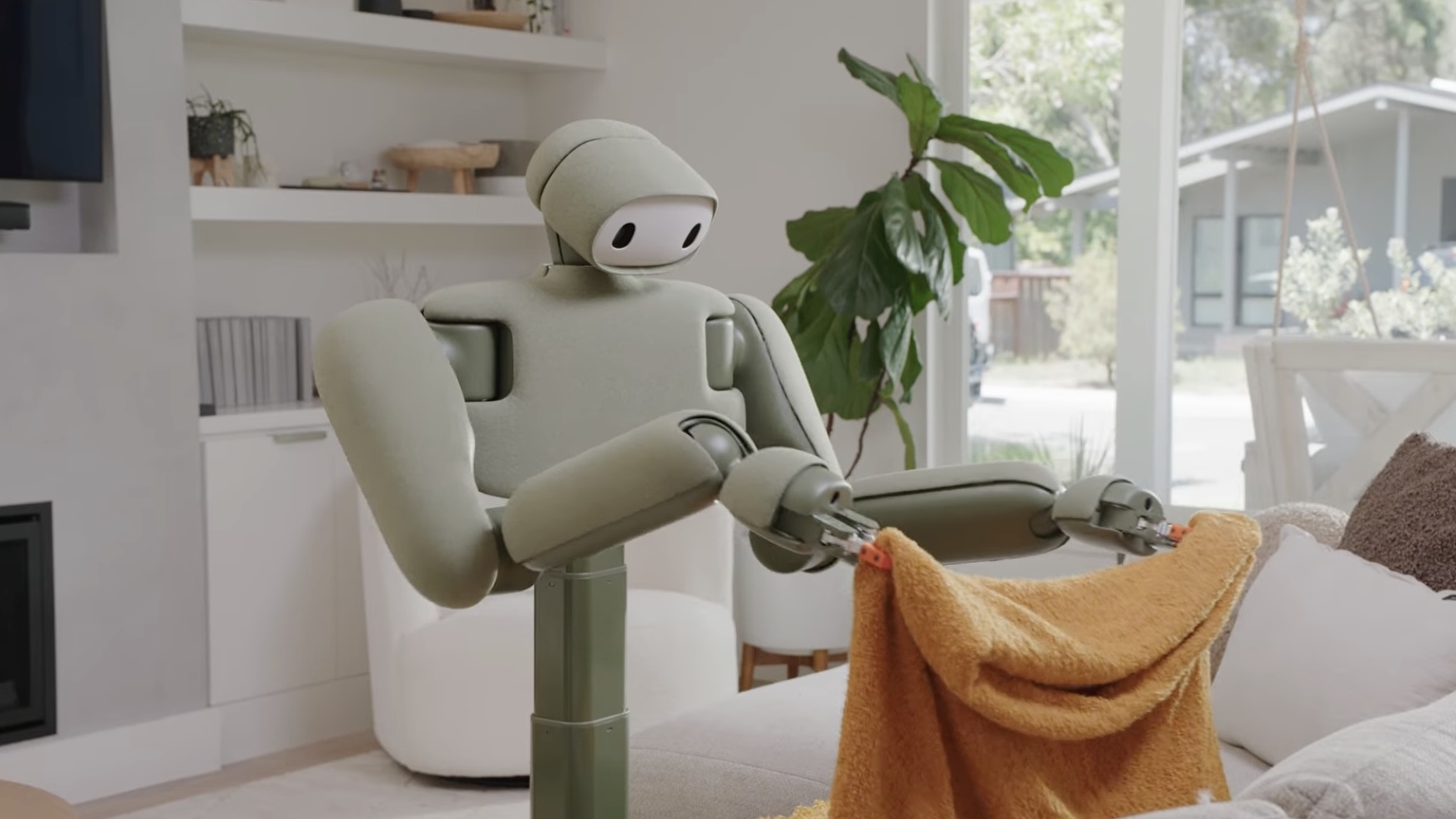
Big industrial customers began running serious pilots, testing humanoids on warehouse lines, with 1X’s Neo moving into homes (but with a major caveat).
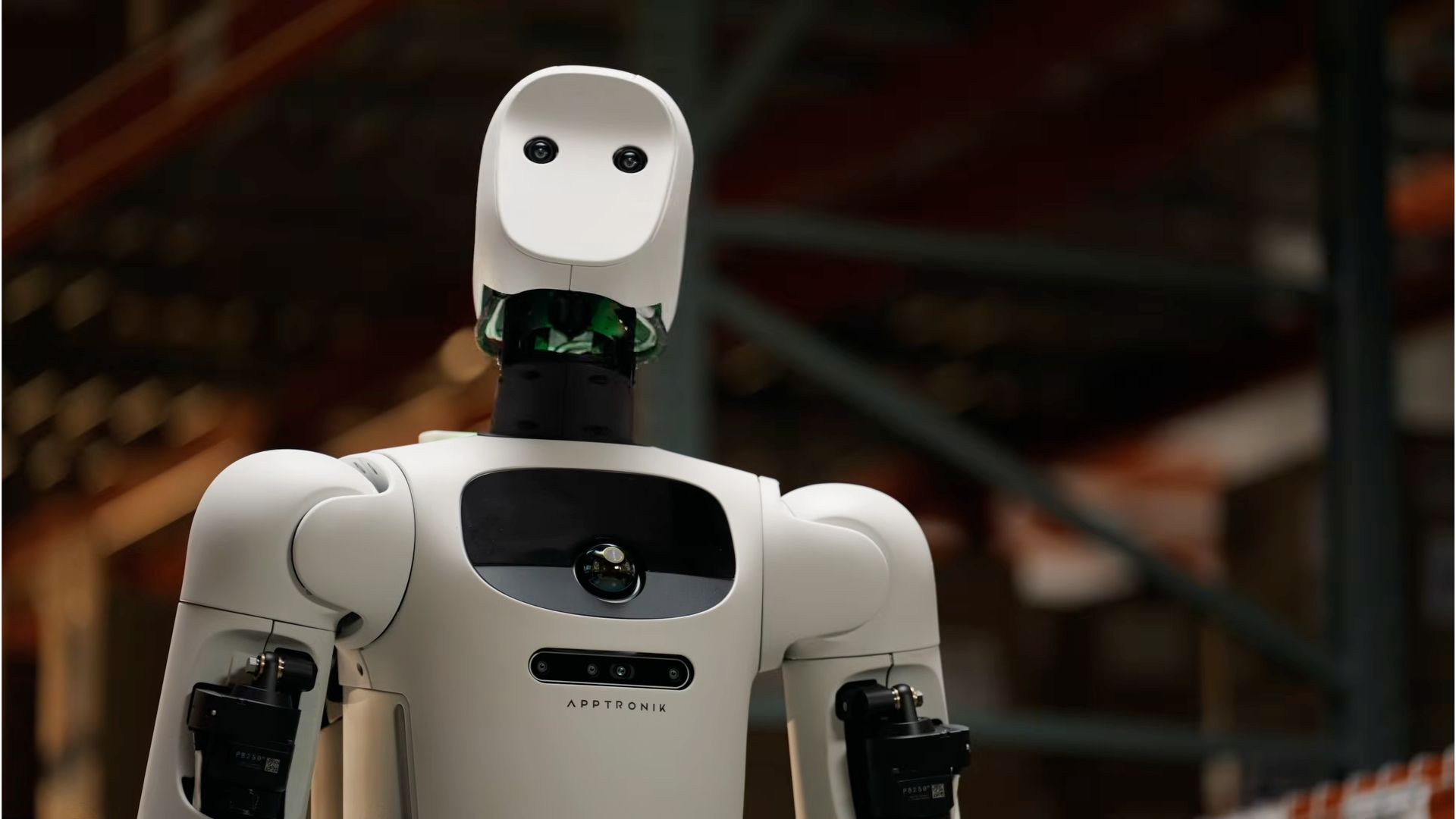
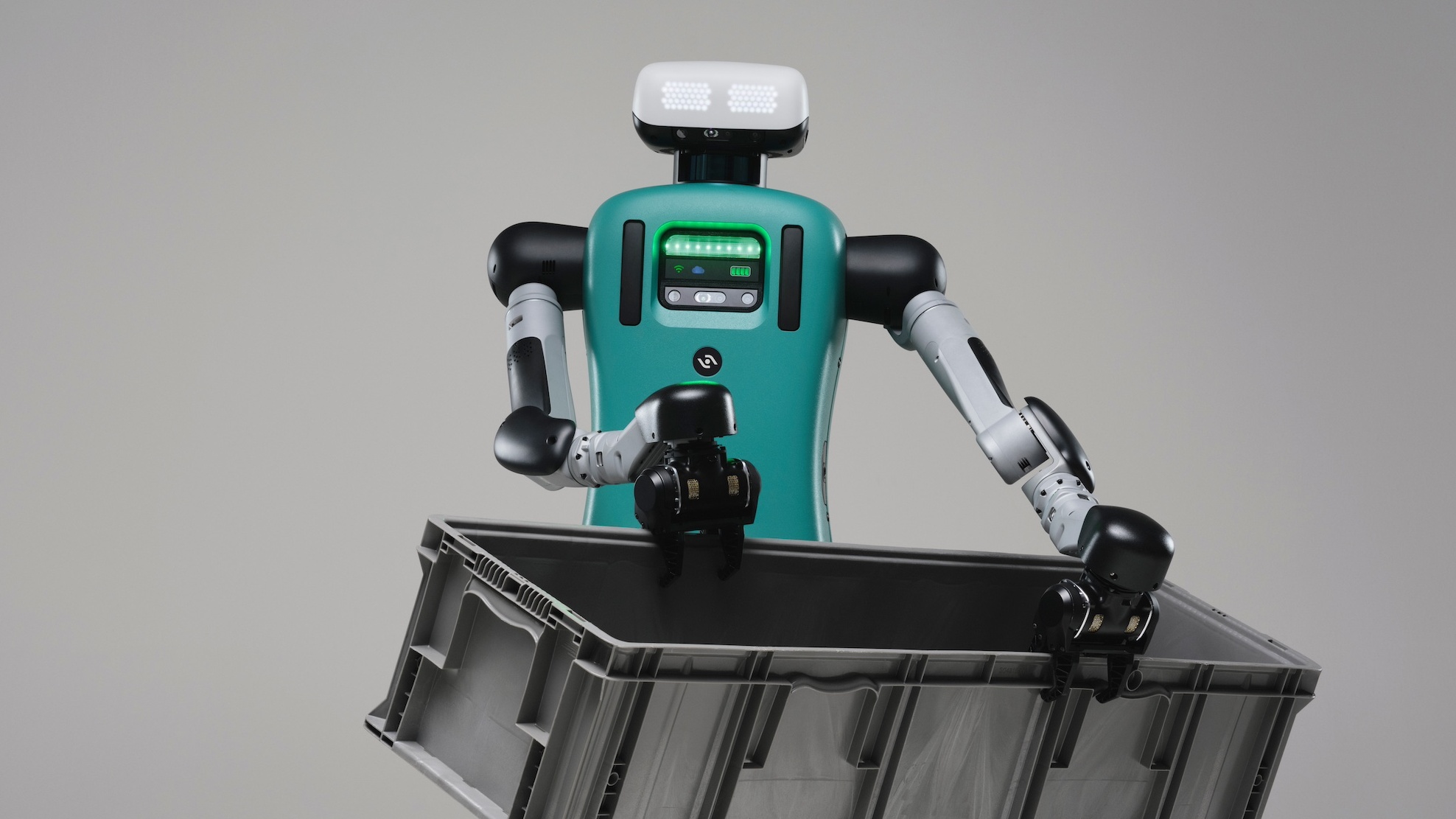
Tesla, Figure, Agility, Apptronik, and 1X shifted focus from viral clips to reliability, safety, and per-hour economics in real customer environments.
Tooling, components, and software platforms around humanoids matured, from actuators and battery packs to “generalist” control and vision models.
China turned humanoids into industrial policy, dangling pilots to push domestic players toward large-scale deployment by the end of the decade.
Why it matters: Humanoids have crossed from research novelties to real-world bets — though most “home robots” remain teleoperated demos and factory deployments still number in the hundreds, not thousands. And whether they can prove reliable and cost-effective enough to justify the hype remains the defining question of the next few years.
ROBOTAXIS
🚖 Robotaxis hit real streets
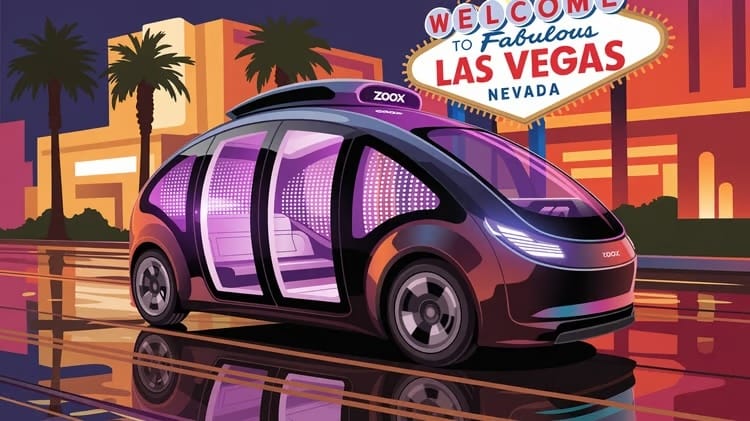
Image source: Ideogram / The Rundown
The Rundown: 2025 was the year robotaxis started looking like the real deal: freeway segments stitched into networks, custom pods on the Vegas Strip, ghost Teslas in Austin, Chinese fleets scaling citywide — autonomous rides became infrastructure.
The details:
Waymo began weaving freeway driving into routes across Phoenix, San Francisco, and LA, stretching its service to San Jose with 24/7 airport pickup.
Amazon’s robotaxi subsidiary Zoox launched its custom vehicles in Las Vegas — no steering wheel, no pedals, just two rows of seats for 4 passengers.
Tesla just started testing empty robotaxis on Austin streets this past weekend, with no safety monitor in the passenger seat.
China’s Baidu and Uber announced plans to deploy thousands of Apollo Go vehicles on Uber’s platform, while Pony AI rolled out 1K robotaxis in Shenzhen.
Why it matters: For the first time, robotaxis are operating at city scale with no one behind the wheel, forcing regulators, unions, and transit planners to treat them as part of the mobility stack rather than a sideshow. The next few years will determine whether these fleets stay confined to geofenced zones or rewrite urban transport worldwide.
MICROBOTS
🔍 Robots get small, really small
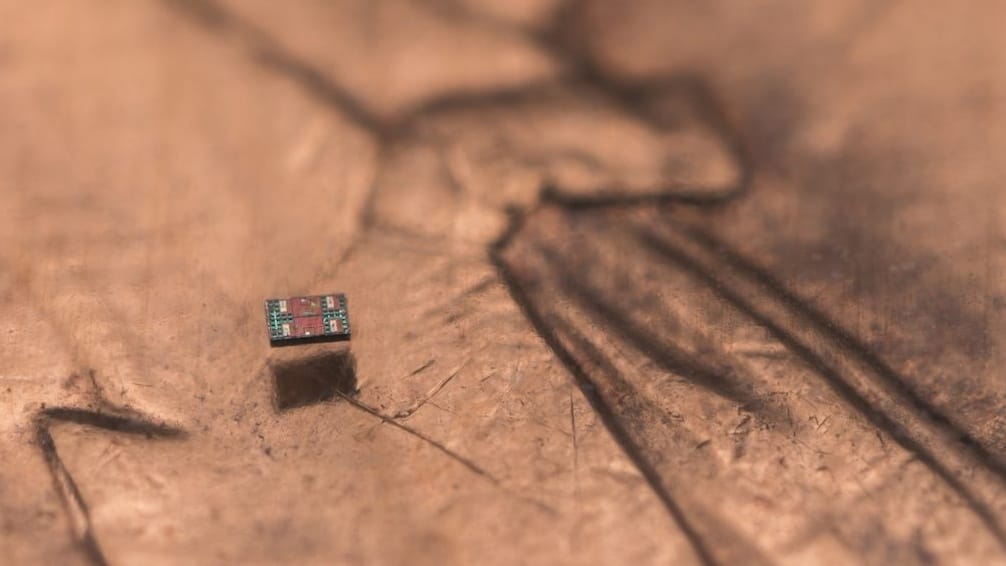
Image source: Penn Engineering
The Rundown: Microbots had a breakout year, shrinking to sand-sized specs while picking up sensing, computing, and locomotion. Labs stopped pushing particles around with magnets and started giving them brains, propulsion, and actual jobs.
The details:
Researchers unveiled tiny autonomous robots that can swim, sense temperature, execute onboard code, or coordinate in swarms.
Teams pushed drug-delivery bots closer to reality with 3D-printed “tumbling” microrobots and sub-millimeter continuum probes.
Researchers built dissolving microbots that swim through blood vessels and vanish after delivery, creating one-shot systems that leave no trace behind.
A wave of stimuli-responsive and biohybrid designs showed microrobots reacting autonomously to pH levels, chemical signals, and magnetic fields.
Why it matters: Robotics extended autonomy into softer, smaller, and more biologically inspired systems. If this progress continues, the most transformative robots of the 2030s may be split between visible helpers in homes and tiny systems operating inside brains, organs, and other hard‑to‑reach environments.
INDUSTRIAL BOTS
📦 The rise of the warehouse bot
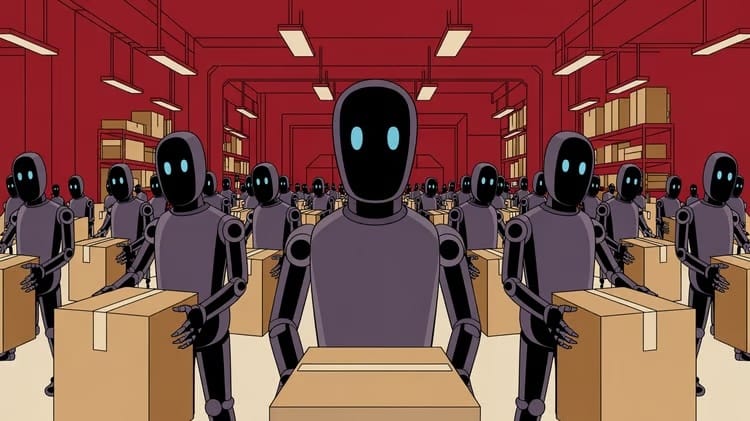
Image source: Ideogram / The Rundown
The Rundown: Warehouse bots became the main characters of robotics in 2025. Amazon blew past 1M deployed robots, while Figure, Agility, Apptronik, and 1X moved their humanoids into live trials with major logistics and manufacturing customers.
The details:
Amazon deployed pickers like Blue Jay and dual-arm robots like Vulcan, marking the shift from simple mobile robots to integrated AI-powered workcells.
Autonomous mobile robots (AMRs) now account for 45% of warehouse deployments, with e-commerce driving half of new installations through 2030.
Beijing went all in, openly targeting hundreds of thousands of deployed units by 2030 while running 1.8M industrial robots on factory floors.
Agility’s Digit moved 100K totes at a GXO facility while humanoids from Apptronik and others tackled “last-meter” tasks that wheeled bots can't handle.
Why it matters: When the world’s largest e-commerce company deploys a million robots and reports it could avoid hiring 600K workers by 2033, warehouse automation is in full-blown disruption. The question is how quickly companies will swap humans for machines once the economics make sense.
CHINESE ROBOTICS
🚀 China’s robotic surge

Image source: Ideogram / The Rundown
The Rundown: No one is embracing robotics quite like China. More than 82% of the 300+ global robotics investment deals in the first half of 2025 occurred in China, with total financing topping at least 20B yuan (~$2.7 B).
The details:
State-backed funds have earmarked some 70B yuan (about $9.7B) for humanoids and robot initiatives, while pushing robotics into public spaces.
Companies like Unitree (eyeing a $7B IPO), Agibot, and EngineAI closed massive rounds, with Unitree slashing prices to $5,900 for its R1 humanoid.
Even Elon Musk has warned that in humanoids “positions two through ten could all be Chinese companies.”
China now produces 70–80% of global planetary roller screws — the critical actuator component that Tesla, Figure, and 1X all depend on.
Why it matters: China isn’t just building robots — it’s fusing hardware, software, and AI into a full-stack advantage, backed by massive government subsidies. If that strategy works, the West could soon be buying the very machines that make its goods, shifting both economic power and technological leverage.
QUICK HITS
📰 Everything else in robotics today
Former Rivian chief growth officer Jiten Behl told TechCrunch’s Equity podcast that “every car company will become a robotics company.”
San Francisco–based startup Foundation is ramping up its military humanoid ambitions, laying out plans to build as many as 50K humanoids by the end of 2027.
A new fire-alarm permit for Tesla’s Cortex 2.0 datacenter at Giga Texas, built to train Optimus, pegs its power capacity at up to a whooping 200 MW.
Researchers at Imperial College London have created a new imitation-learning technique that enables a robot arm to master 1K distinct tasks in just one day.
Physical Intelligence’s new paper shows that once a robot model has enough real-world experience, it can use raw first-person human video to quickly learn new tasks.
Israeli startup SeaSphere has developed software that lets military fleets of unmanned underwater robots communicate securely over long distances.
COMMUNITY
🎓 Highlights: News, Guides & Events
Read our last AI newsletter: Google’s Flash-y new Gemini 3 release
Read our last Tech newsletter: The AI boom’s phone problem
Read our last Robotics newsletter: 1X’s home humanoid gets a factory job
Today’s AI tool guide: Comparing ChatGPT Image and Nano Banana Pro
RSVP to next workshop @ 4PM EST Friday: Google NotebookLM For Work
See you soon,
Rowan, Jennifer, and Joey—The Rundown’s editorial team
Stay Ahead on AI.
Join 2,000,000+ readers getting bite-size AI news updates straight to their inbox every morning with The Rundown AI newsletter. It's 100% free.