Figure's 24/7 humanoid staff
PLUS: Toyota officially hires humanoids

Jennifer Mossalgue
February 23, 2026
Read Online | Sign Up | Advertise

Good morning, robotics enthusiasts. Figure says its humanoids never clock out. Under its new Helix 02 system, the company’s bots now run 24/7 at its Sunnyvale HQ.
When a battery dips, a robot steps onto a wireless charger and auto-handoffs its task, keeping the fleet in perpetual motion. But there’s one question that hasn’t been answered: what are the robots actually doing all night?
In today’s robotics rundown:
Figure puts its 03 fleet on 24/7 duty
Toyota just hired 7 Digit humanoids
A robot swarm learns to fight fires
MIT’s soft robots just got a brain
Quick hits on other robotics news
LATEST DEVELOPMENTS
FIGURE
🤖 Figure puts its 03 fleet on 24/7 duty
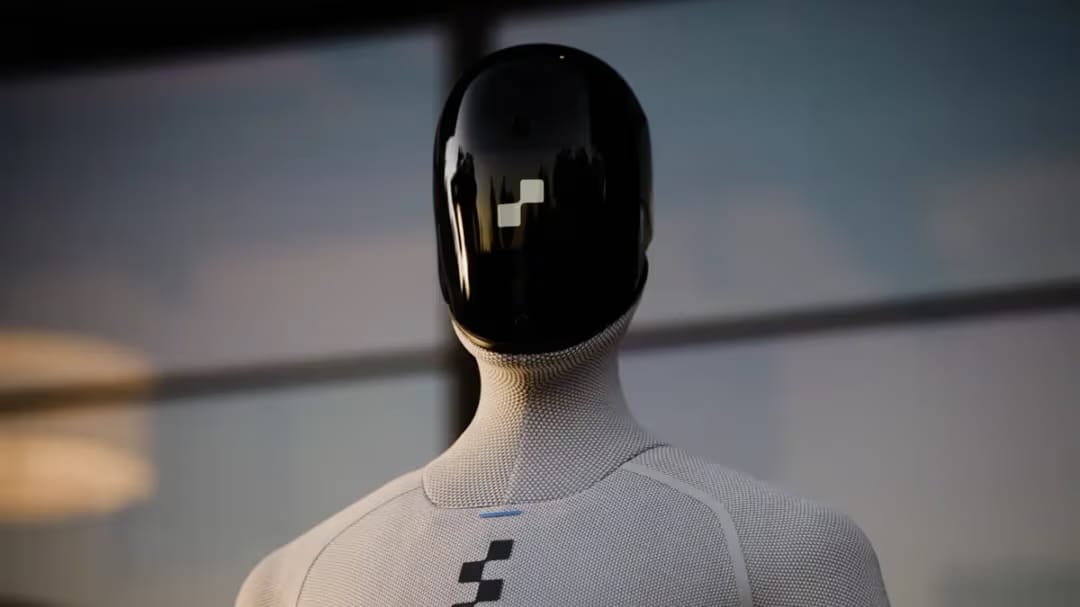
Image source: Figure
The Rundown: California-based humanoid startup Figure claims to have flipped its Sunnyvale headquarters into a 24/7 operation, deploying a seven-robot Figure 03 fleet to work day and night — under autonomous control from its Helix AI system.
The details:
The robots self-manage their own uptime, stepping onto 2 kW inductive charging docks and swapping tasks as battery telemetry triggers handoffs.
CEO Brett Adcock said on X that the goal is robots “operating at all times – even at 2 am, on weekends, or on Christmas Day.”
Videos show a seven‑strong Figure 03 fleet — six white bots and one dark‑gray outlier — idling, pivoting, and striding through the headquarters.
Fleet behavior is orchestrated by Figure’s Helix 02 architecture, which replaces 100K lines of code with a unified whole‑body neural network.
Why it matters: A fully autonomous swap-and-charge loop keeping humanoids operational 24/7 is a genuine technical milestone — even if Figure hasn’t disclosed what exactly the bots are actually doing. The clips also double as a flex on the company’s rapid build‑out, with the headquarters now spread across five buildings.
AGILITY
🚗 Toyota just hired 7 Digit humanoids
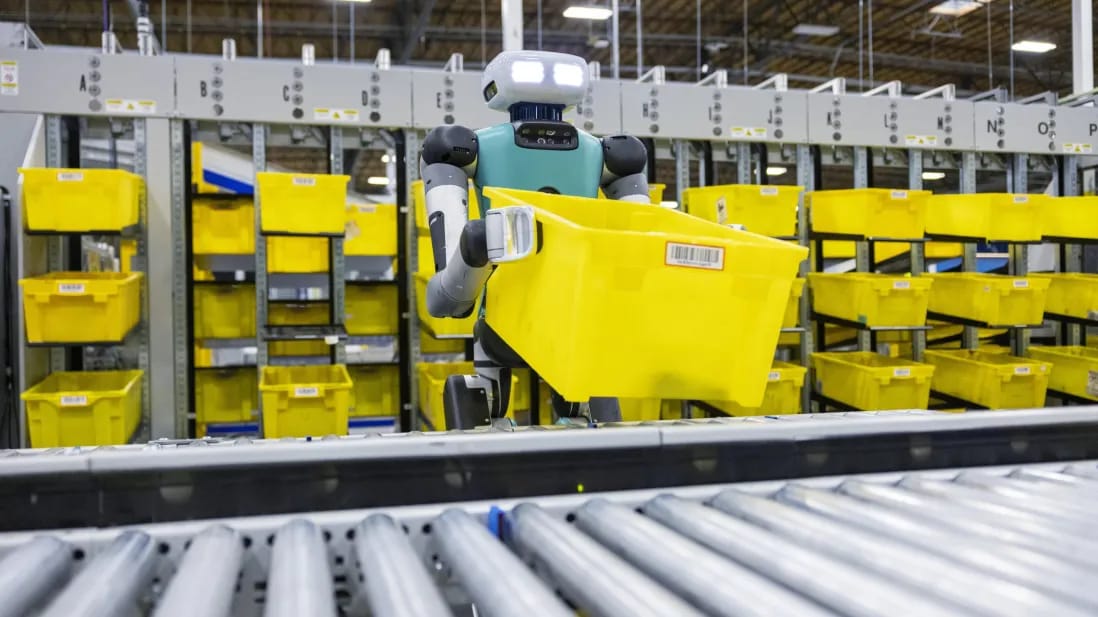
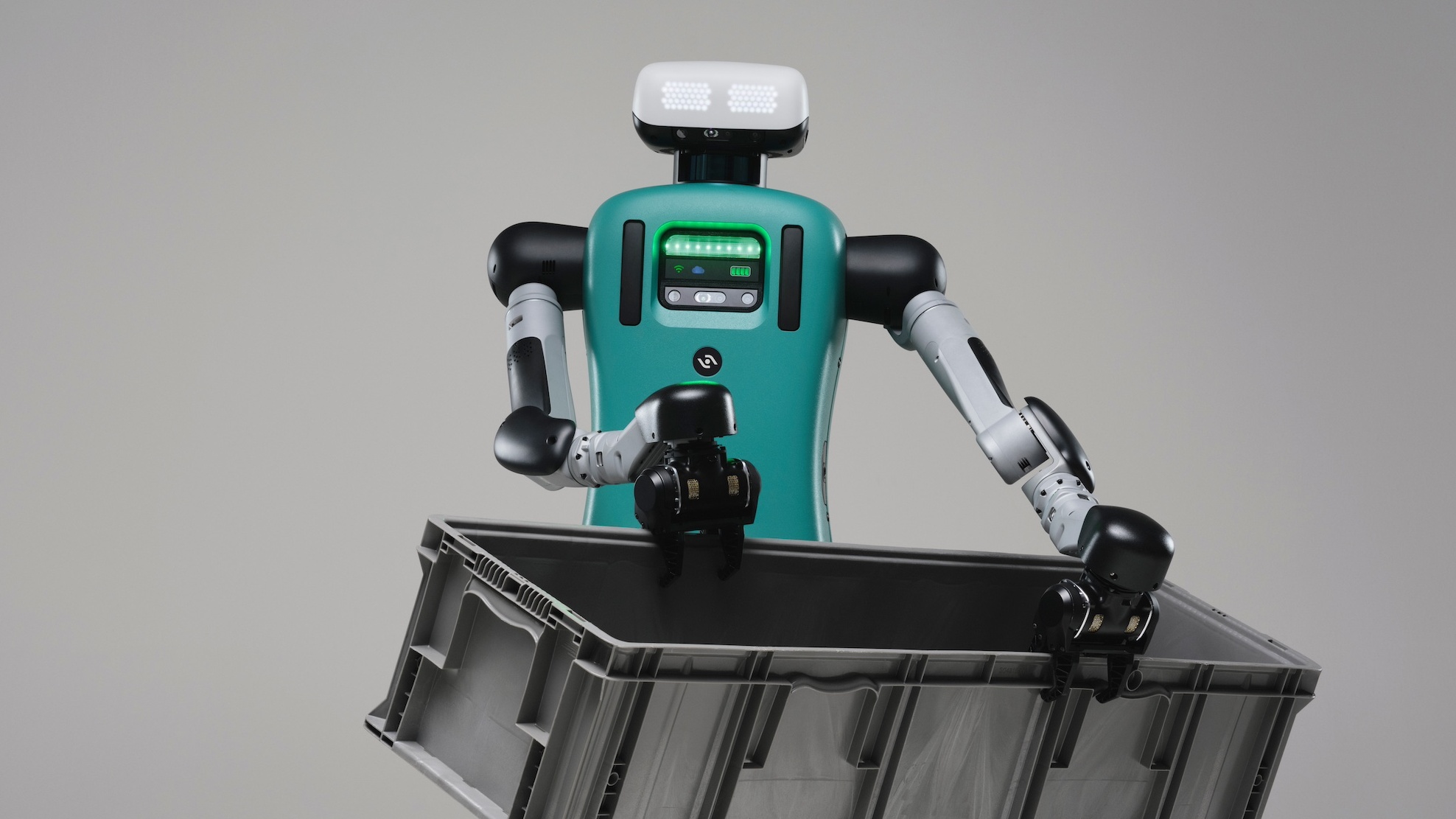
Image source: Agility Robotics
The Rundown: Toyota’s Canadian SUV plant is set to make history this spring as seven Digit humanoids from Agility Robotics will clock in alongside human workers, turning a closely watched pilot into one of the first real factory gigs for bipedal bots.
The details:
Toyota will deploy seven Digit humanoids at its Woodstock, Ontario, RAV4 plant under a robots‑as‑a‑service deal starting in April — after a year-long pilot.
GXO Logistics was the first company to deploy Digit commercially, running the robots at a Spanx fulfillment facility in Georgia under the same RaaS model.
The robots will unload and shuttle totes and parts from automated tuggers, taking over repetitive, high‑strain jobs.
Toyota says the goal is to improve “team member experience” by offloading monotonous, physically taxing tasks to the robots.
Why it matters: Seven robots shuffling totes doesn’t look like a revolution, but deploying humanoids inside a live production environment, complete with charging logistics and real workflow integration, is no small thing. Agility’s rival Figure AI has also tested its humanoids at a BMW plant, unloading some 90K parts over 10 months.
FIREFIGHTING BOTS
🧯 A robot swarm learns to fight fires
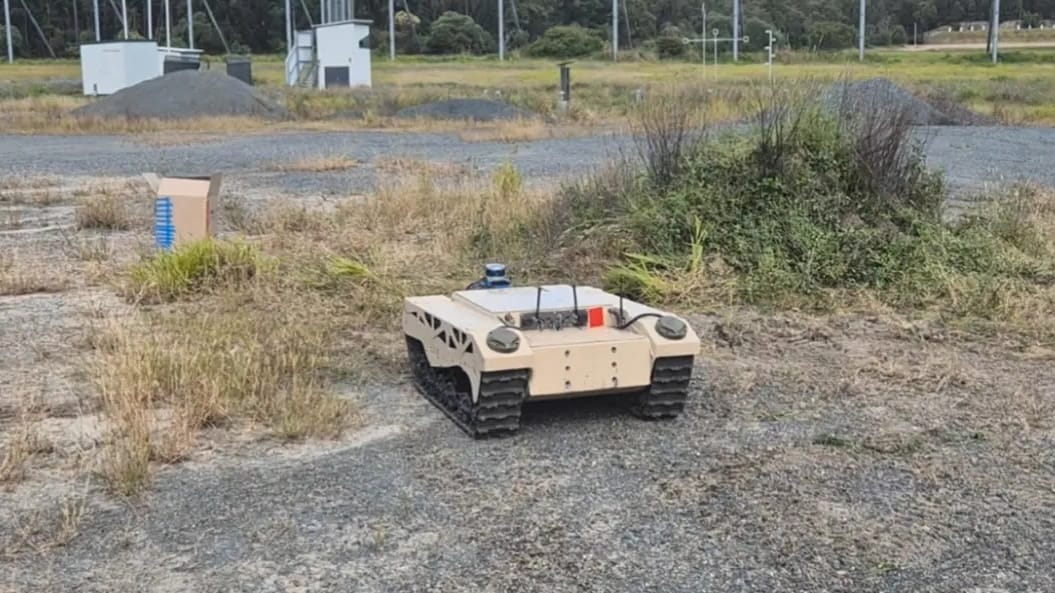
Image source: Griffith University
The Rundown: Australia’s Griffith University just demoed a firefighting robot that rolls into danger with a virtual squad, using swarm-style AI to dodge obstacles and snuff out multiple blazes with almost flawless precision.
The details:
The project uses a physical unmanned ground vehicle alongside up to four virtual robot teammates in simulated and hybrid real-world tests
The robots were trained via multi-agent reinforcement, which enabled them to learn solo navigation, obstacle avoidance, and coordinated firefighting.
In tests, this system achieved a 99.67% success rate in handling two fires simultaneously, with the robots splitting into teams to handle outbreaks.
Why it matters: Firefighting robots are already deployed on mine sites across Australia, but they still depend on human operators to function. This research marks an early but meaningful step toward swarms that can act autonomously — keeping human crews out of harm’s way when it matters most.
MIT
🧠 MIT’s soft robots just got a brain
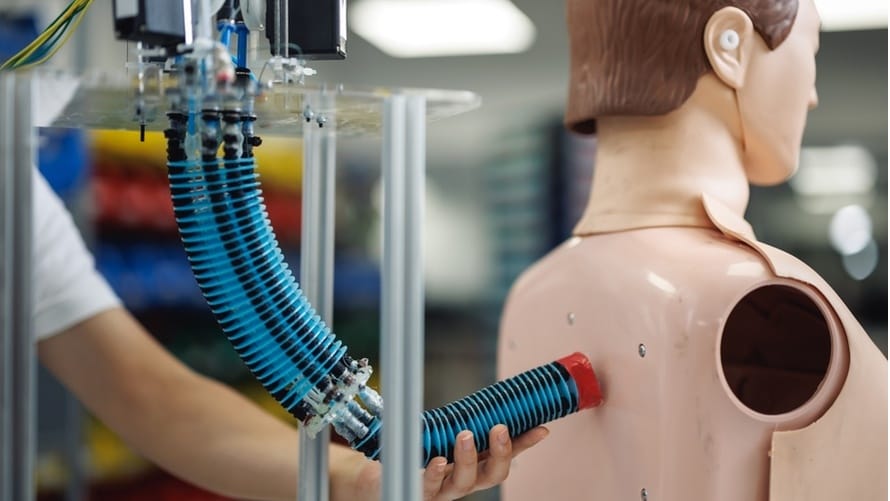
Image source: MIT / The National University of Singapore
The Rundown: MIT researchers just built an AI control system that lets soft robots learn a set of movements once, then adapt that knowledge to new tasks and unexpected disruptions in real time, with no retraining required.
The details:
The system lets a soft robotic arm learn a small library of basic movements once, then recombine and adapt them to new tasks without full retraining.
During operation, the plastic synapses update in real time, allowing the robot to respond to disturbances like unexpected pushes or shifting loads.
In tests, robots using this neural blueprint cut motion-tracking errors by up to about 50% and maintained stability even when actuators failed.
The framework generalizes across arm types and task categories — trajectory tracking, object placement, etc. — within a single unified system.
Why it matters: Soft robots that can learn a broad set of skills once and then adapt them to new situations make it far easier to deploy them outside tightly controlled lab or factory settings. That kind of human-like flexibility could unlock safer, more capable assistive, rehabilitation, and medical robots that work directly with people.
QUICK HITS
📰 Everything else in robotics today
New York Governor Kathy Hochul pulled a proposal that would have effectively legalized commercial robotaxi services in the state, stalling Waymo’s expansion there.
Unitree Robotics CEO Wang Xingxing said today’s humanoids are about as capable as a 10‑year‑old child, but large‑scale commercial deployment is still 3–5 years away.
An engineer trying to joystick-control his DJI Romo discovered a major security flaw that gave him access to live video and data from nearly 7K robot vacuums worldwide.
U.S.-based OpenMind is using its OM1 robot OS and marketing support to help Chinese robotics firms scale their hardware and expand sales into overseas markets.
Faraday Future co-CEO YT Jia told investors that FF’s EAI Robotics arm has cleared certifications and will start its first batch of deliveries next week.
Boston Dynamics’ Spot robot dog, upgraded with AI via the Orbit platform, now patrols factories to spot equipment issues early and prevent costly failure.
Uber still has a solid future in robotaxis, the Wall Street Journal argues, despite fears that autonomous vehicles will make its ride-hailing business obsolete.
U.S. researchers developed a real-time planning and control framework that lets bipedal robots quickly detect instability and adjust their steps, boosting fall recovery.
Infineon CEO Jochen Hanebeck said the German semiconductor giant is likely to profit from an expected boom in microchips for humanoids.
COMMUNITY
🎓 Highlights: News, Guides & Events
Read our last AI newsletter: What OpenAI and Jony Ive are building
Read our last Tech newsletter: Zuck vs. Instagram addiction
Read our last Robotics newsletter: Waymo faces heat over remote support
Today’s AI tool guide: How to self-host an n8n automation server
RSVP to our next workshop on Feb. 25: Agentic Workflows Bootcamp pt. 3
See you soon,
Rowan, Joey, Zach, Shubham, and Jennifer — The Rundown’s editorial team

Stay Ahead on AI.
Join 2,000,000+ readers getting bite-size AI news updates straight to their inbox every morning with The Rundown AI newsletter. It's 100% free.