Get the latest AI news, understand why it matters, and learn how to apply it in your work — all in just 5 minutes a day. Join over 2,000,000+ subscribers.
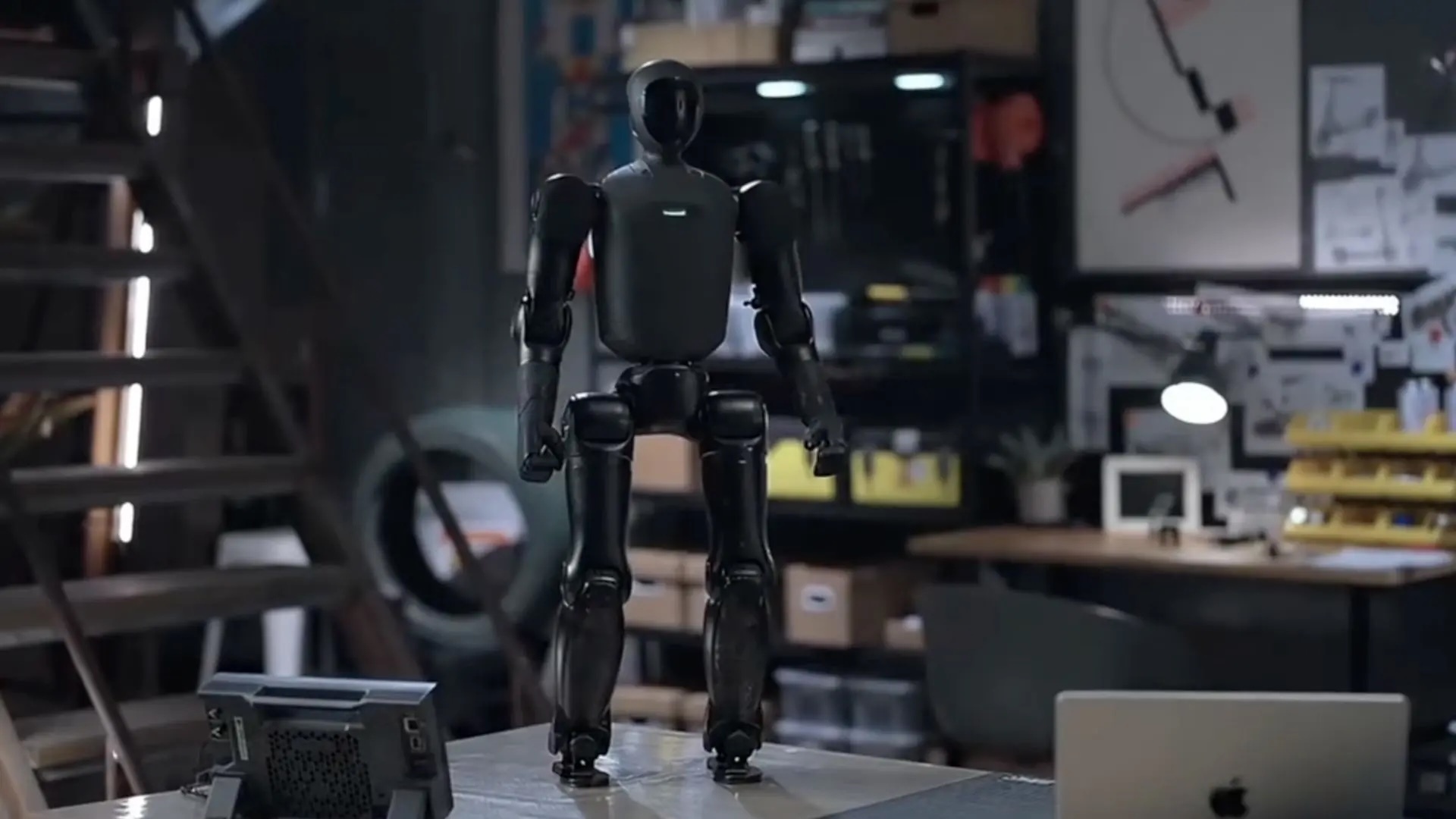
Agibot's tiny, portable humanoid
Read Online | Sign Up | Advertise

Good morning, robotics enthusiasts. Agibot just shrunk its humanoid playbook to 31 inches. The Chinese startup’s new Q1 survives crashes, codes without scripts, and teaches English — all in a package that fits in a backpack.
As China’s robot boom spills from factories into homes, this tiny testbed could be a sign of where the industry’s headed: smaller, cheaper, and everywhere.
In today’s robotics rundown:
This tiny humanoid fits in your backpack
SwitchBot puts a robot butler on wheels
NEO’s $20K home bot now comes with pillows
AVs could cut a million road injuries by 2035
Quick hits on other tech news
LATEST DEVELOPMENTS
AGIBOT
🎒 This tiny humanoid fits in your backpack
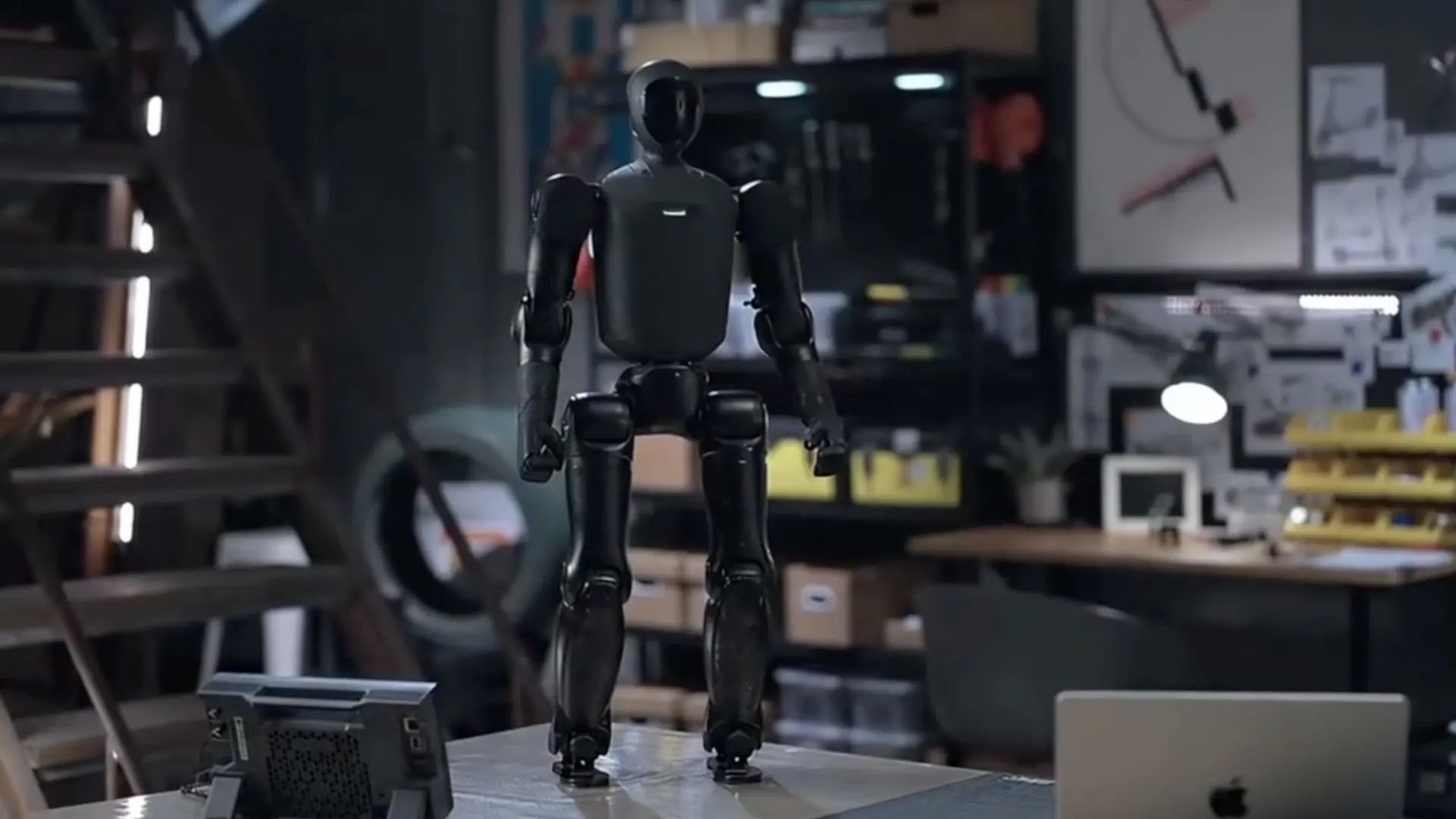
Image source: Agibot/YouTube
The Rundown: Chinese startup Agibot just built Q1, a 31-inch robot with crash-proof joints, zero-code programming, and tutoring skills — plus it fits in a backpack and costs a fraction of full-size humanoids.
The details:
The tiny Q1 stands about 80 cm tall and is roughly one-eighth the size and weight of a typical full-size humanoid.
The company says the bot’s crash-resistant joints — smaller than an egg — survive stunts and repeat tumbles while maintaining precise force control.
Agibot built it as an open platform with developer kits, 3D-printable shells, and zero-code motion programming.
Out-of-the-box capabilities include voice interaction, English tutoring, guided dance lessons, and indoor positioning.
Why it matters: In December, AgiBot said it had built its 5,000th robot and is now adding the backpack-sized Q1 to that growing fleet. With three mass-produced humanoid lines and a new portable AI testbed, the company highlights both its rapid scaling and how fast China’s robotics industry is expanding beyond industrial settings.
SWITCHBOT
🧺 SwitchBot puts a robot butler on wheels
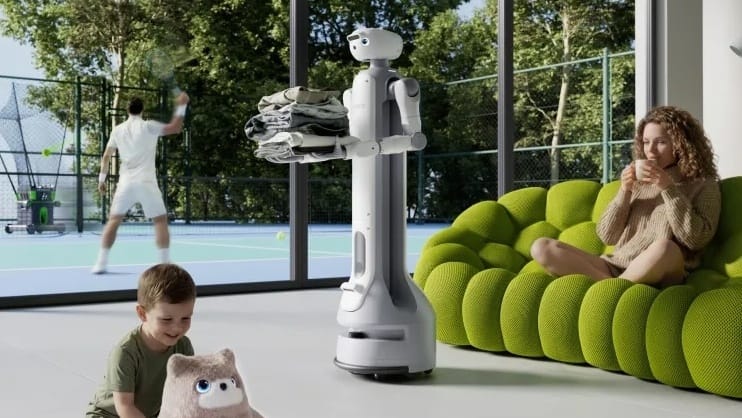
Image source: SwitchBot
The Rundown: SwitchBot is debuting a torso-on-wheels at CES 2026 that ditches bipedal ambitions for practical household labor. The Onero H1 comes with arms, a face, and household skills like coffee-making and laundry folding.
The details:
The bot packs 22 degrees of freedom, Intel RealSense depth sensing, and cameras in its head and wrists to navigate cluttered rooms.
An onboard “OmniSense” VLA model handles object recognition and natural-language commands locally, letting H1 adapt without cloud dependency.
SwitchBot positions it as “the most accessible AI household robot” but hasn't disclosed pricing.
Why it matters: SwitchBot hints it will price the H1 below rivals Figure, Tesla, Agility, and LG's upcoming home bot, all while sidestepping the stability and cost problems of bipedal designs. If a wheeled bot can tackle the same chores for less, it could prove that strong arms on wheels are all robots need to move into people’s homes.
1X
🤖 NEO’s $20K home bot now comes with pillows
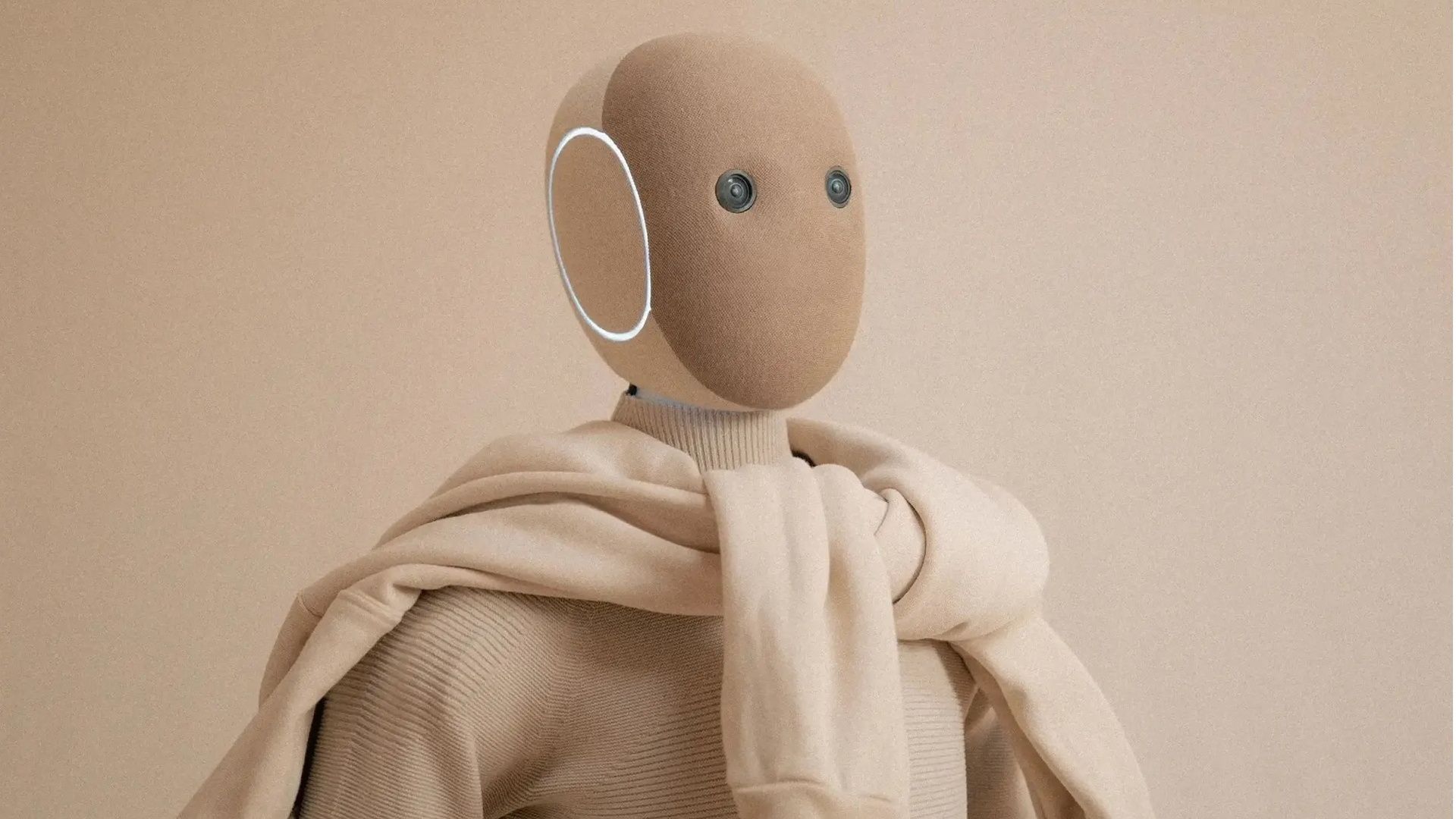
Image source: 1X
The Rundown: Humanoid maker 1X thinks you’ll warm up to robots if they come with merch. The company just dropped a “Home Collection” — pillow, hoodie, tote — all in the same beige, soft-touch aesthetic that wraps its $20K NEO robot itself.
The details:
The brand’s beige, soft-textured aesthetic is led by VP of Design, Product, and Marketing Dar Sleeper, a former Tesla product lead.
By pairing robotics with tangible lifestyle products, 1X hopes to make NEO look more like a gentle companion than a machine.
It’s part of a strategy to turn NEO into a lifestyle object, seeding desire for the brand long before most people ever share a home with a humanoid.
1X is rolling out a human-in-the-loop model where paying customers deploy NEO while remote operators take the wheel during tasks the bot can’t handle.
Why it matters: Most robotics companies lead with specs, but 1X is selling vibes, betting that domestic robot adoption depends less on what bots can do than on how they make people feel. Whether ensconcing a humanoid with beige-colored lifestyle goods will actually convince consumers to invite NEO home remains the ultimate test.
AVS
🚘 AVs could cut a million road injuries by 2035
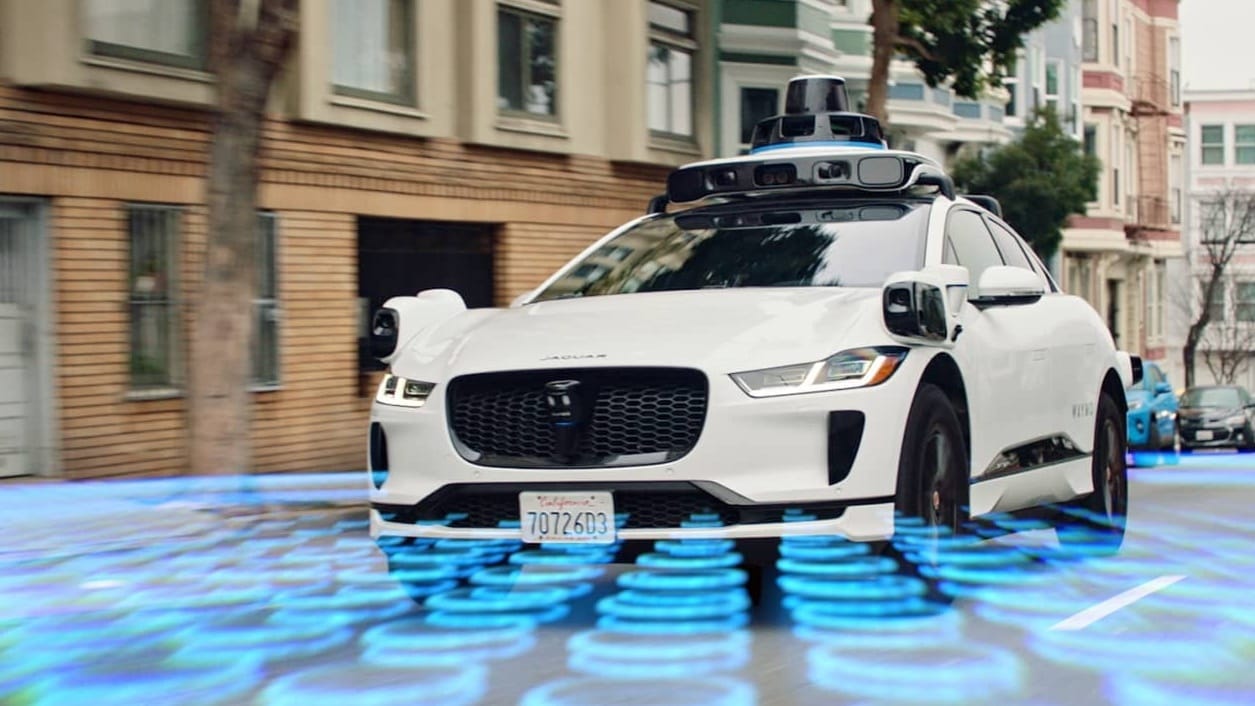
Image source: Waymo
The Rundown: A JAMA Surgery study projects that autonomous vehicles could prevent more than 1M road injuries across the U.S. between 2025 and 2035, slashing traffic injuries by 3.6%.
The details:
Motor vehicle crashes kill over 120 people daily in the U.S. and send 2.6M to emergency rooms annually, costing roughly $470B in medical expenses.
Researchers modeled 2009–2023 U.S. crash data and simulated AVs driving 1–10% of miles, assuming they’re 50–80% safer than humans.
At 1% adoption and 50% safer performance, AVs prevent roughly 67K injuries; at 10% adoption and 80% safer, that figure exceeds 1M.
Waymo data suggests AVs could be 80% safer than humans, though long-term real-world safety data remains limited as AV deployment is still nascent.
Why it matters: Most crashes stem from human error or substance use, making them preventable through automation. If AVs deliver on safety promises at scale, they could potentially eliminate hundreds of thousands of injuries within a decade — reframing autonomous driving from convenience tech into a major public health intervention.
QUICK HITS
📰 Everything else in robotics today
Unitree posted a new training video of its 180 cm (5 ft. 11 in.) tall H2 humanoid pulling off flying kicks, backflips, and sandbag strikes, in a significant agility upgrade.
Figure CEO Brett Adcock bet that 2026 will bring neural network–driven humanoids doing unsupervised home chores and FAA-compliant eVTOL test flights in cities.
FrontierX launched Vex, a spherical robot that follows your pet around the house, filming them, and using AI to stitch the footage into shareable highlight reels.
AI robotics startup Zeroth is using CES 2026 to debut a $5,599 WALL-E-inspired W1 cargo bot and a $2,899 doll-sized M1 home humanoid in the U.S.
South Korean firm ECOPEACE is rolling out its ECOBOT fleet to Singapore, where the bots will autonomously skim algae, collect trash, and monitor surface water quality.
Hyundai’s MobED all-terrain robotic base won CES 2026’s Best of Innovation Award in Robotics for keeping payloads stable in rough environments.
Sharpa moved its SharpaWave dexterous robotic hand into mass production ahead of CES, promising human-sized manipulators for general-purpose robots.
A viral clip from Shenzhen shows EngineAI’s T800 humanoid casually patrolling alongside armed police at a tourist attraction in a public safety demo.
Beijing-based Surgerii Robotics raised $100M in a Series D round to scale its SHURUI single-port surgical robot across China and international markets.
UniX AI is pitching its Wanda humanoids at CES as mass-producible service robots built for repetitive hotel, retail, security, and household work.
UBTech released a video of its Walker S2 humanoid rallying tennis balls against a human opponent, using stereo vision, full-body dynamic balance, and 23 DoF.
COMMUNITY
🎓 Highlights: News, Guides & Events
Read our last AI newsletter: Meta’s chief scientist leaves with parting shots
Read our last Tech newsletter: Neuralink’s bet to scale brain surgery
Read our last Robotics newsletter: Robotaxis that plug into your brain
Today’s AI tool guide: Create a Claude Skill to design YT thumbnails
See you soon,
Rowan, Joey, Zach, Shubham, and Jennifer — The Rundown’s editorial team

Meta’s AI chief scientist leaves with parting shots
Read Online | Sign Up | Advertise

Good morning, AI enthusiasts. Acclaimed AI chief scientist Yann LeCun just departed Meta after over a decade, and the outspoken researcher definitely didn’t leave quietly.
From calling his boss Alexandr Wang "inexperienced" to admitting Llama 4 benchmarks were "fudged," LeCun’s parting shots in a candid interview encapsulate the tension between Meta's old guard and new AI direction.
In today’s AI rundown:
LeCun blasts Meta's AI leadership on way out
The Rundown Roundtable: Our 2026 AI predictions
Create Claude Skill to design YouTube thumbnails
Grok faces backlash over ‘undressing’ AI capabilities
4 new AI tools, community workflows, and more
LATEST DEVELOPMENTS
YANN LECUN & META
🚪 LeCun blasts Meta's AI leadership on way out

Image source: Nano Banana Pro / The Rundown
The Rundown: Meta's outgoing chief AI scientist, Yann LeCun, just shed light on his new AI startup and criticized Meta in an FT interview, calling Alexandr Wang "inexperienced" and predicting more departures from the company’s GenAI team.
The details:
LeCun called Wang, who was elevated to run Meta's Superintelligence Labs after the $14B Scale AI deal, "young" and lacking research experience.
He also admitted Llama 4 benchmarks were "fudged a little bit," with Zuckerberg reportedly losing confidence in the entire GenAI org.
LeCun said Meta's new AI hires are "completely LLM-pilled," while he maintains LLMs are a "dead end" for achieving superintelligence.
Lecun revealed that he will be the ‘executive chair’ of his new AMI venture, with French AI healthcare startup Nabla’s founder Alex LeBrun leading as CEO.
Why it matters: The tension between Meta’s old guard and new hires has been felt since this summer’s re-org, and LeCun has always been outspoken… But these are serious statements to make publicly. Only time will tell if Zuck, Alexandr Wang, and co’s new direction ends up proving him right — or makes him look out of touch.
TOGETHER WITH GURU
🧠 Your AI source of truth

The Rundown: Guru is the AI Source of Truth that connects all of your company’s tools and delivers cited, permission-aware answers everywhere you work. With one governed knowledge layer powering both your people and your AIs, teams move faster — with fewer blind spots and mistakes.
Guru allows you to:
Connect all knowledge with permission-aware access
Get trusted, cited answers in chat and everywhere else you work
Experience knowledge that improves and verifies itself
THE RUNDOWN ROUNDTABLE
🔮 The Rundown Roundtable: Our 2026 AI predictions
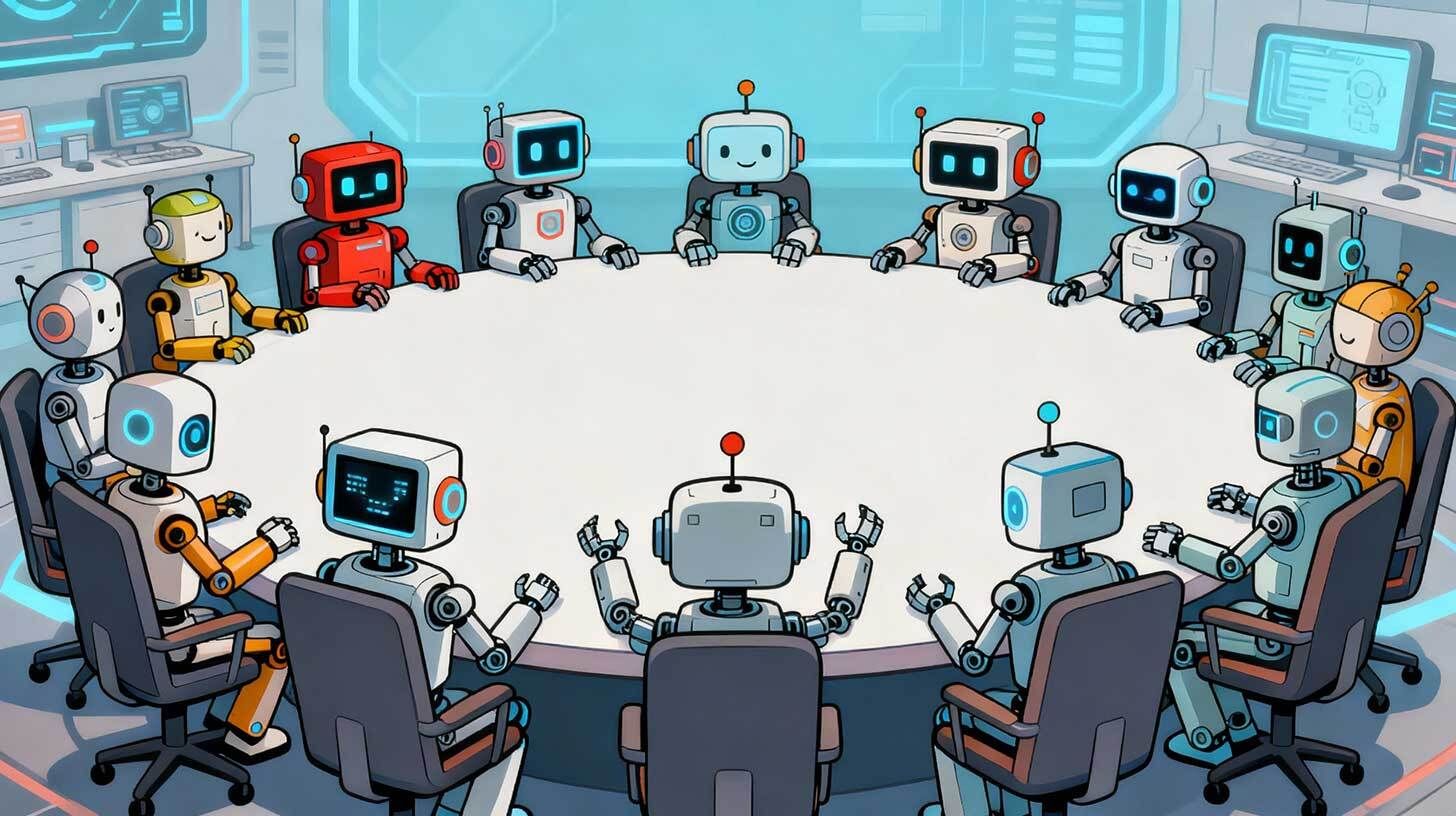
Image source: Ideogram / The Rundown
The Rundown: The Rundown Roundtable is a weekly feature in which we poll members of The Rundown staff about how we use AI in our work and daily lives. In today’s first edition of 2026, we’re giving our industry predictions for the year ahead.
Rowan, Founder & CEO: Google finally nails the integration of AI into its existing products (Gmail, Search, YouTube, Android) and starts gaining a lead over OAI in total AI users. ChatGPT remains the dominant chatbot, but Google dominates all other AI capabilities (integrating with existing products, video, and image gen).
Jason, Developer: We see our first major AI drug moment, and the tech stops being a cool lab demo and becomes a boring, repeatable way to produce drug candidates. I'm not saying AI cures cancer, but an AI-first candidate gets a big Phase 3 launch or something similar, which prompts the wave of “AI discovery stack” across pharma.
Zach, AI Writer: One of the major Western labs declares a new release as AGI in 2026, though the term has been so overused and distorted that everyone continues to argue over definitions. The “AGI” model is an upgrade, but nothing world-shaking — and life goes on much like after other invisible broken milestones like the Turing Test.
AI TRAINING
🤩 Create Claude Skill to design YouTube thumbnails
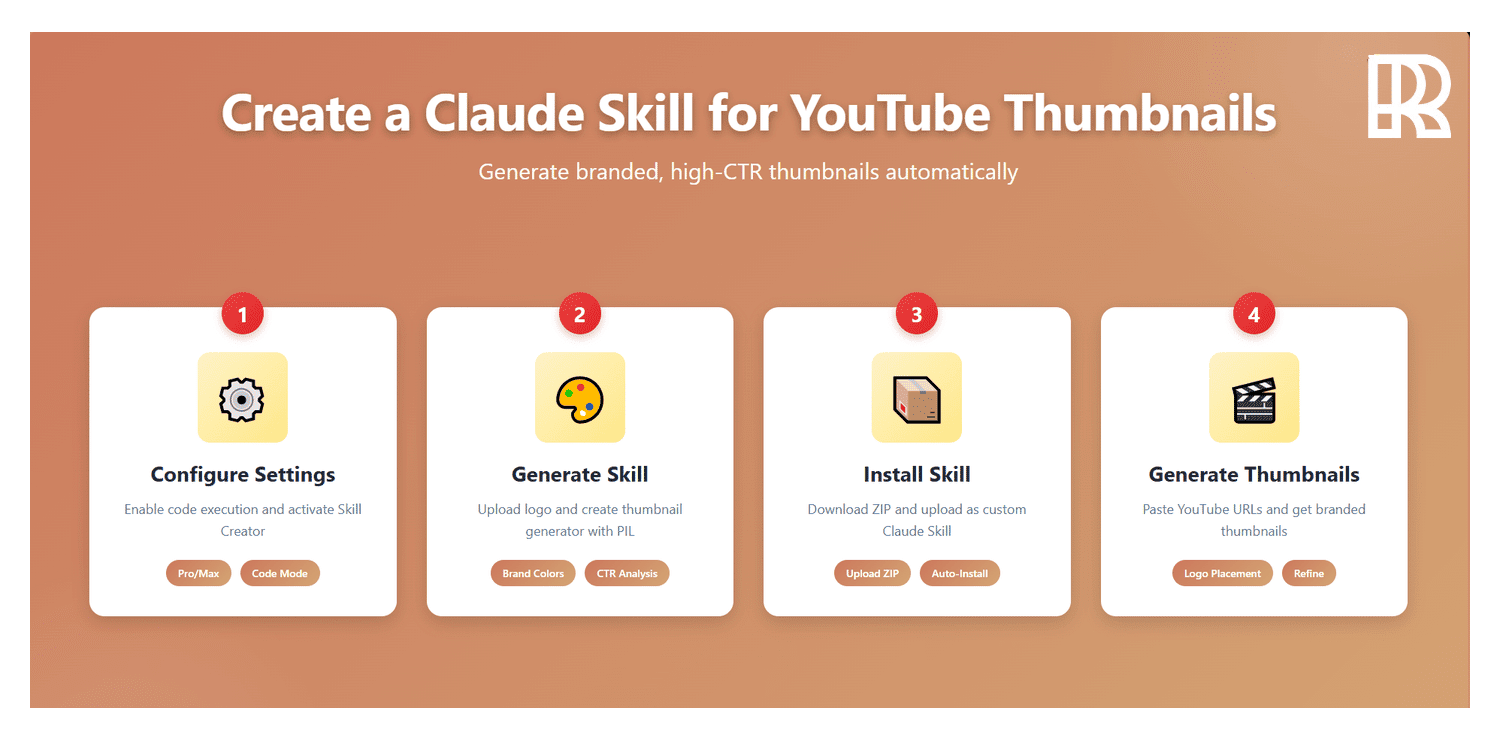
The Rundown: In this tutorial, you will learn how to build a custom Claude Skill that automatically generates branded YouTube thumbnails by analyzing top-performing videos and applying your brand guidelines.
Step-by-step:
Go to Claude Settings → Capabilities, enable Code execution & file creation, then toggle skill-creator under Skills and click Try in Chat
Start a chat, upload your logo, and prompt: “Create a skill that generates high-CTR YouTube thumbnails. It should analyze video links, use the PIL library, place the logo top-right, and use Black, White, and Blue”
Download the generated ZIP, then go to Profile → Settings → Capabilities → Upload Skill and install the skill
Start a new chat and prompt: “Generate a YouTube thumbnail for ‘AI Productivity Tools 2025’. Here are the top videos: [paste URLs]. Create a high-CTR thumbnail with the logo top-right using brand colors”
Pro tip: Refine the thumbnails with follow-ups or use this approach to create Skills for other productivity tasks, such as presentation generation.
PRESENTED BY CONCIERGE
👋 Your brand's AI answer engine

The Rundown: Today’s buyers use AI every day to answer their questions, and have no patience for a scavenger hunt on your website. Concierge is a custom Perplexity-style answer engine, trained on your company’s content, that lives on your website and delivers accurate, personalized responses to ultra-specific questions.
Modern brands use Concierge to:
Handle any buyer question (no matter how technical) with advanced RAG on your content & media
Control and visibility over every conversation, with guardrails and sentiment analysis
Build trust with website visitors before they are willing to commit to a demo
Use Concierge to turn every question into an opportunity.
XAI & GROK
⚠️ Grok faces backlash over ‘undressing’ AI capabilities

Image source: X / The Rundown
The Rundown: xAI’s Grok is facing criticism and government action from multiple countries after complying with users’ requests to edit images of women and minors in revealing fashion — a trend that has become prevalent throughout the platform.
The details:
X has been flooded with users prompting Grok to digitally undress people using the model’s AI editing capabilities, with some requests involving minors.
Musk said users making illegal content with Grok "will suffer the same consequences as if they upload illegal content."
France, India, Malaysia, and the UK have all condemned the outputs, with France calling them "clearly illegal" under the EU's Digital Services Act.
The X @Safety account posted a similar statement as Musk, saying it will work to remove, permanently suspend accounts, and work with law enforcement.
Why it matters: Grok’s less restrictive behavior has been marketed as a feature, but we’re now witnessing one of the first viral results of giving powerful, unrestricted AI editing powers to the masses — and it’s ugly. While Musk and X talk of taking action, anonymous accounts and a global userbase make that a tall task.
QUICK HITS
🛠️ Trending AI Tools
⚙️ Claude Code - Anthropic’s deep-context agentic AI coding tool
🌌 Grok Imagine - xAI's image and video generation platform
🎥 Kling 2.6 - Featuring Motion Control for precise character animation
🏷️ Shopify SimGym - Simulate buyer behavior with AI shoppers
📰 Everything else in AI today
Google Principal Engineer Jaana Dogan shared that Claude Code replicated in one hour what her team spent a year trying to build.
Elon Musk responded to a post from Midjourney founder David Holz on AI coding development, declaring that “we have entered the Singularity”.
Prime Intellect published research on Recursive Language Models, an approach allowing AI agents to manage their memory to enable tasks spanning weeks/months.
Anthropic is purchasing as many as 1M of Google’s TPUv7 AI chips from Broadcom, with the Ironwood chip line continuing to gain ground as an alternative to Nvidia.
xAI released a new upgrade to its Grok Imagine creative platform, with Elon Musk revealing that there will be “another major upgrade” in 3 weeks.
COMMUNITY
🤝 Community AI workflows
Every newsletter, we showcase how a reader is using AI to work smarter, save time, or make life easier.
Today’s workflow comes from reader Suvankar in Australia:
"I received a bread-maker for Christmas. I use AI to work alongside me as a diagnostic partner rather than just handing my recipes, translating what I see, feel, and smell into small, controlled adjustments that steadily improve results. Each bake builds on the last. We observe dough behaviour early, interpret it through simple baking science, then change only one or two variables at a time so that cause and effect stay clear.
This turns the machine from a black box into a predictable tool, helps me develop repeatable house recipes, and gives me the confidence to correct a loaf instinctively."
How do you use AI? Tell us here.
🎓 Highlights: News, Guides & Events
Read our last AI newsletter: Instagram’s AI-driven identity crisis
Read our last Tech newsletter: Neuralink’s bet to scale brain surgery
Read our last Robotics newsletter: Robotaxis that plug into your brain
Today’s AI tool guide: Create Claude Skill to design YouTube thumbnails
See you soon,
Rowan, Joey, Zach, Shubham, and Jennifer — the humans behind The Rundown


Neuralink's bet to scale brain surgery
Read Online | Sign Up | Advertise

Good morning, tech enthusiasts. Elon Musk says Neuralink will hit ‘high-volume production’ for its brain chips this year, with implant surgery becoming ‘almost entirely automated.’
So far, only a handful of patients have received the device, and full FDA approval is still years off. The bigger question: Is mass-producing brain surgery where we really want to go?
In today’s tech rundown:
Musk will soon mass-produce brain implants
SpaceX drops Starlink satellites to cut space junk
MIT shrinks IV antibody infusions into a single shot
Norway’s EV revolution hits record highs
Quick hits on other tech news
LATEST DEVELOPMENTS
NEURALINK
🧠 Musk will soon mass-produce brain implants

Image source: Ideogram / The Rundown
The Rundown: Elon Musk said on X that Neuralink aims for “high-volume production” of its brain implants and automated neurosurgery this year — pushing brain-computer interfaces out of bespoke experiments and into scalable medicine.
The details:
Neuralink says about a dozen severely paralyzed patients now use its implant to control a computer cursor and play games using only their thoughts.
The first wave of applications targets people with serious neurological disorders, helping them communicate and manage daily tasks.
Musk said the device’s threads will pass through the dura — the protective membrane around the brain — without surgeons needing to remove it.
Neuralink still needs to clear clinical trials and secure full FDA approval before it can move from tightly controlled experiments to routine medical use in the U.S.
Why it matters: Musk has previously talked about scaling to more than a thousand patients by 2026, backed by a hiring spree. If he can pull that off ahead of rivals like Synchron and Precision Neuroscience, the company will be first to test whether BCIs can move from a medical moonshot to something closer to a commercial product.
SPACEX
🛰️ SpaceX lowers Starlink satellites to cut space junk

Image source: SpaceX
The Rundown: SpaceX is lowering its Starlink megaconstellation from 550 km to 480 km this year — not for better internet, but to stop satellites from crashing into each other and triggering a wave of space junk.
The details:
The change will apply to around 4K Starlink units currently flying at the higher orbit and is expected to be completed within the year.
Flying lower increases atmospheric drag, which cuts collision risk and pulls dead satellites out of orbit faster.
The move follows a December incident where a Starlink satellite had an “unusual kinetic incident” and spewed debris.
Starlink now flies roughly 10K satellites, beaming broadband to everyone from homeowners to governments and Fortune 500s across multiple continents.
Why it matters: This is a rare example of Starlink tweaking its design to ease congestion, cut collision risk, and ensure dead satellites fall out of the sky faster instead of lingering as long‑lived junk. The move sets a precedent for rivals, that “move fast and launch things” now has to coexist with basic rules of orbital sustainability.
MIT
💉 MIT shrinks IV antibody infusions into a single shot

Image source: Christine Daniloff, MIT
The Rundown: MIT researchers just cracked a way to shrink therapeutic antibodies into injectable nanoparticles, swapping multi-hour IV infusions for a quick jab — a potential game-changer for millions of patients who depend on antibody treatments.
The details:
The method concentrates antibodies to roughly 360 mg per milliliter — up to 36x denser than standard formulations.
Engineers emulsify tiny drug droplets into a specialized liquid, dry them into nanoparticles, then rehydrate for injection.
The process uses standard, continuous-flow equipment instead of lab steps like centrifuges, so it can be scaled up to make large batches reliably.
A full dose fits into a 2-milliliter syringe instead of an IV bag hanging for hours, and the medications can sit in a fridge for months without going bad.
Why it matters: Turning IV infusions into quick shots could make powerful antibody drugs far easier to get, especially for people who live far from hospitals or cannot afford to lose hours in an infusion chair. A simple, factory‑friendly process that packs a full dose into a single syringe opens the door to cheaper, more convenient treatment.
EVS
🚙 Norway’s EV revolution hits record highs

Image source: Tesla
The Rundown: Norway closed out 2025 with 96% of new cars sold running purely on batteries and nearly 98% sporting a plug when hybrids are counted — completing one of the fastest fossil-fuel phaseouts any country has ever pulled off.
The details:
Out of 179,549 new cars registered in 2025, 95.9% were fully electric, and 97.5% had a plug when hybrids are counted.
Tesla dominated with a 19.1% market share, and the Model Y outsold the second-place VW ID.4 by more than three to one.
Norway spent two decades tilting the playing field with massive tax breaks, free tolls and ferries, bus-lane access, and a dense fast-charging network.
As Norway’s EV market matures, it is scaling back perks for pricier models but keeping incentives in place to help retire the remaining fossil-fuel cars.
Why it matters: Norway shows that aggressive incentives, infrastructure build-out, and clear phase-out dates can flip an entire car market from fossil fuel to electric in barely a decade. Its success gives other countries a real-world blueprint for cutting oil demand and transport emissions much faster than most current plans.
QUICK HITS
📰 Everything else in tech today
Apple reportedly slashed production and marketing of its high-priced Vision Pro headset after weaker-than-expected demand exposed limited mainstream appeal.
Governments are tightening rules on kids’ social media use worldwide, with countries like Australia, France, Denmark, Malaysia, and Norway moving toward under-16 bans.
China conducted its second attempt to land a reusable Long March 12A rocket booster, failing to recover the stage but successfully reaching orbit and gathering data.
British clean-energy supplier Octopus Energy is spinning off Kraken, its AI “operating system” for utility companies, into a software business valued at $8.65B.
TikTok owner ByteDance plans to spend about $14B in 2026 on Nvidia AI chips, pending U.S. approval for purchases of the latest H200 processors.
Pickle, a California startup, opened U.S.-only reservations for Pickle 1, a pair of AI-powered AR “soul computer” glasses that observe, remember, and anticipate daily life.
Trump Mobile’s $499 gold T1 smartphone, run by Trump’s sons, has been delayed again, with the company blaming the holdup on the U.S. government shutdown.
LG launched the Gallery TV, a wall-mounted “art TV” that mimics Samsung’s Frame with swappable frames and an always-on artwork mode.
Feds are targeting “The Com,” a teen-heavy hacking network behind Scattered Spider that recruits kids to run social-engineering ransomware attacks on major companies.
Uber is reportedly in talks to acquire SpotHero, a parking app that lets drivers reserve spaces in advance, as part of its push to expand beyond ride-hailing.
Tech startups are reportedly stocking offices with free nicotine pouches as a productivity perk, and installing nicotine-pouch vending machines and fridges.
COMMUNITY
🎓 Highlights: News, Guides & Events
Read our last AI newsletter: Instagram's AI-driven identity crisis
Read our last Tech newsletter: Meta buys AI startup Manus for $2B
Read our last Robotics newsletter: Robotaxis that plug into your brain
Today’s AI tool guide: Use Codex to write code on the web with AI agents
See you soon,
Rowan, Joey, Zach, Shubham, and Jennifer — The Rundown’s editorial team
Instagram's AI-driven identity crisis
Read Online | Sign Up | Advertise

Good morning, AI enthusiasts. The app that pioneered filter culture is now declaring the curated aesthetic dead.
Instagram head Adam Mosseri says AI content has made polished posts worthless as proof of authenticity — and the platform that built its empire on the perfect grid is quickly scrambling to evolve to the new dynamics of social media in the AI age.
In today’s AI rundown:
IG head says platform must “evolve fast” due to AI
DeepSeek hints at next-gen AI architecture
Use Codex to write code on the web with AI agents
Report: OAI overhauling audio for upcoming device
4 new AI tools, community workflows, and more
LATEST DEVELOPMENTS
📸 IG head says platform must “evolve fast” due to AI
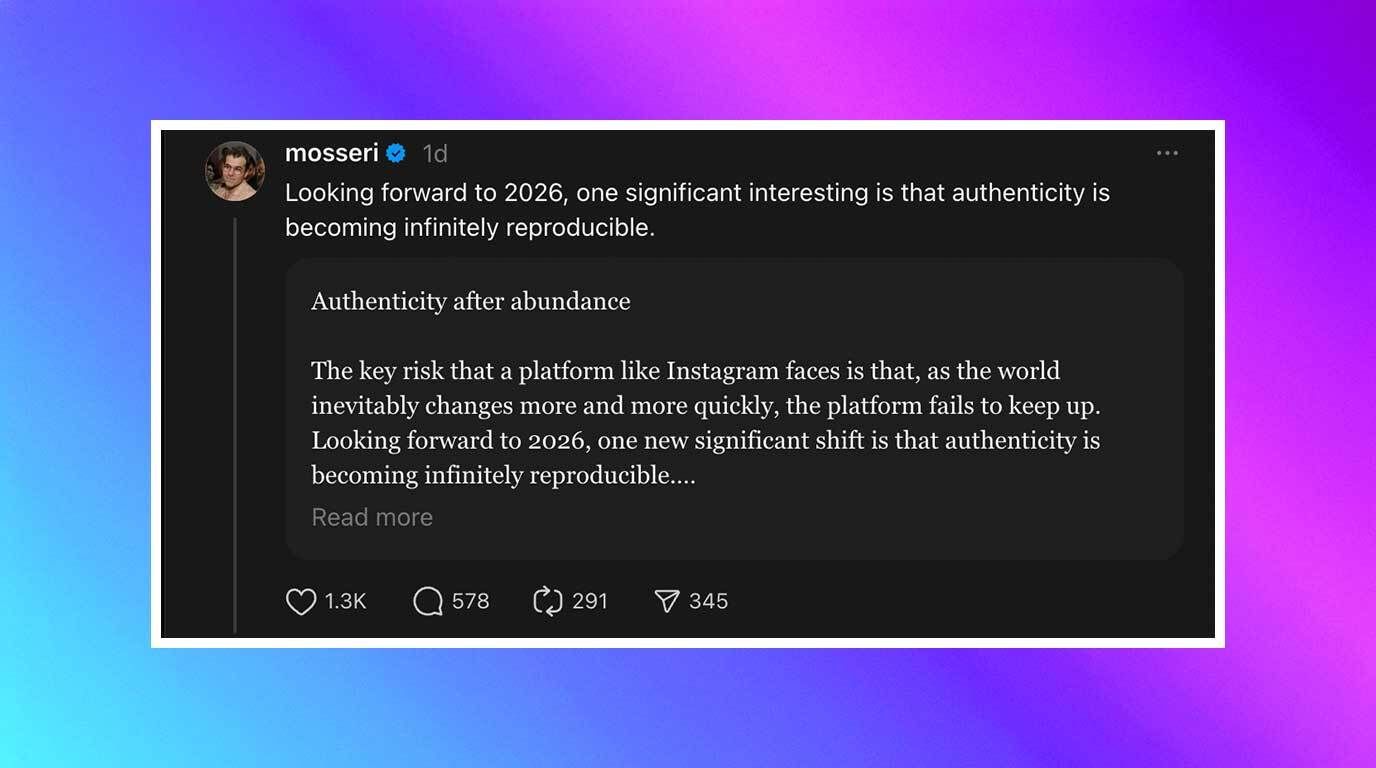
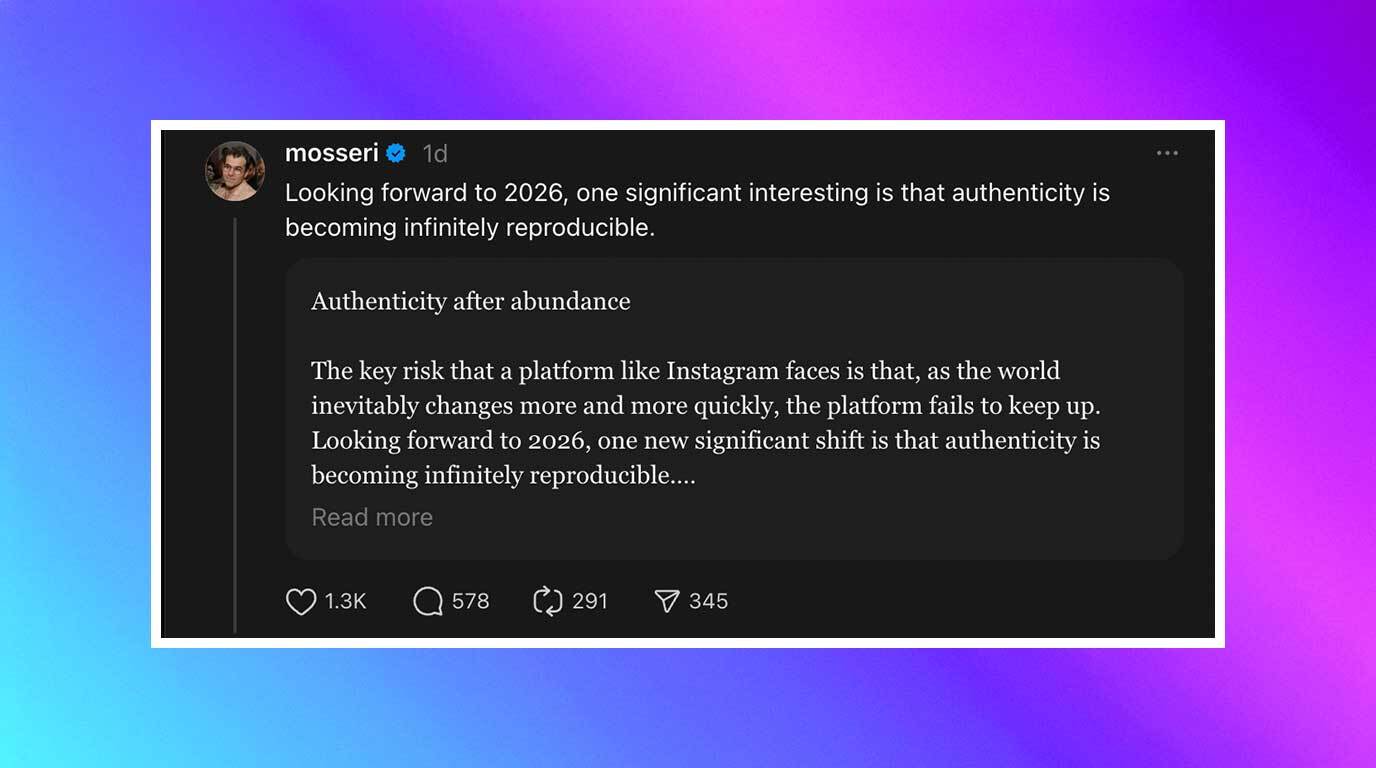
Image source: @mosseri on Threads / The Rundown
The Rundown: Instagram leader Adam Mosseri just posted a year-end essay arguing that AI-generated content has killed the curated aesthetic that made the app famous, saying that raw, unpolished posts are now the only proof that something is real.
The details:
Mosseri says most users under 25 have already abandoned the polished grid for more personal direct message photos and "unflattering candids."
He also pushed for camera makers to cryptographically sign photos at capture to verify real media instead of just weeding out fakes.
Mosseri said Instagram needs to “evolve” fast, predicting a shift from trusting what images you see to scrutinizing who posted it.
Instagram plans to label AI content, surface more context about accounts, and build tools so creators can compete with AI.
Why it matters: IG was one of the pioneers of social media’s “filter culture”, so there’s some irony in now declaring the death of authenticity. But the trend feels accurate, with both a shift in how younger users communicate and the flood of AI images, video, and content completely upending traditional dynamics of social media platforms.
TOGETHER WITH NEBIUS
💻 Nebius Token Factory — Post-training Launch
The Rundown: Nebius Token Factory just launched Post-training — the missing layer for teams building production-grade AI on open-source models. You can now fine-tune frontier models like DeepSeek V3, GPT-OSS 20B & 120B, and Qwen3 Coder across multi-node GPU clusters with stability up to 131k context.
What you get with Post-training:
Models deeply adapted to your domain, tone, structure, and workflows
One-click deployment with dedicated endpoints, SLAs, and zero-retnetino privacy
Shift from generic base models to custom production engines
Start fine-tuning now – GPT-OSS 20B & 120B (Full FT + LoRA FT) is free until Jan 9.
DEEPSEEK
📈 DeepSeek hints at next-gen model architecture

Image source: Nano Banana Pro / The Rundown
The Rundown: DeepSeek just published new research that proposes changes to how neural networks are structured for breakthroughs in model cost and stability, a potential preview of efficiency gains heading into its next major release.
The details:
The paper introduces mHC, a technique that stabilizes and improves AI training at a large scale while adding minimal extra computing cost.
CEO Liang Wenfeng co-authored and personally uploaded the paper to arXiv, signaling continued hands-on involvement in the startup’s research.
Tests on 3B, 9B, and 27B parameter models showed improved benchmark scores over existing methods, especially reasoning tasks.
The timing aligns with previous papers telegraphing DeepSeek’s moves, with similar research dropping before R1 and V3.
Why it matters: Last year’s DeepSeek moment made waves with R1 nearing frontier models at a fraction of the cost, and this paper hints that they may not be done finding efficiencies. Between increased access to advanced AI chips and these types of research breakthroughs, China’s releases will be more competitive than ever in 2026.
AI TRAINING
💻 Use Codex to write code on the web with AI agents
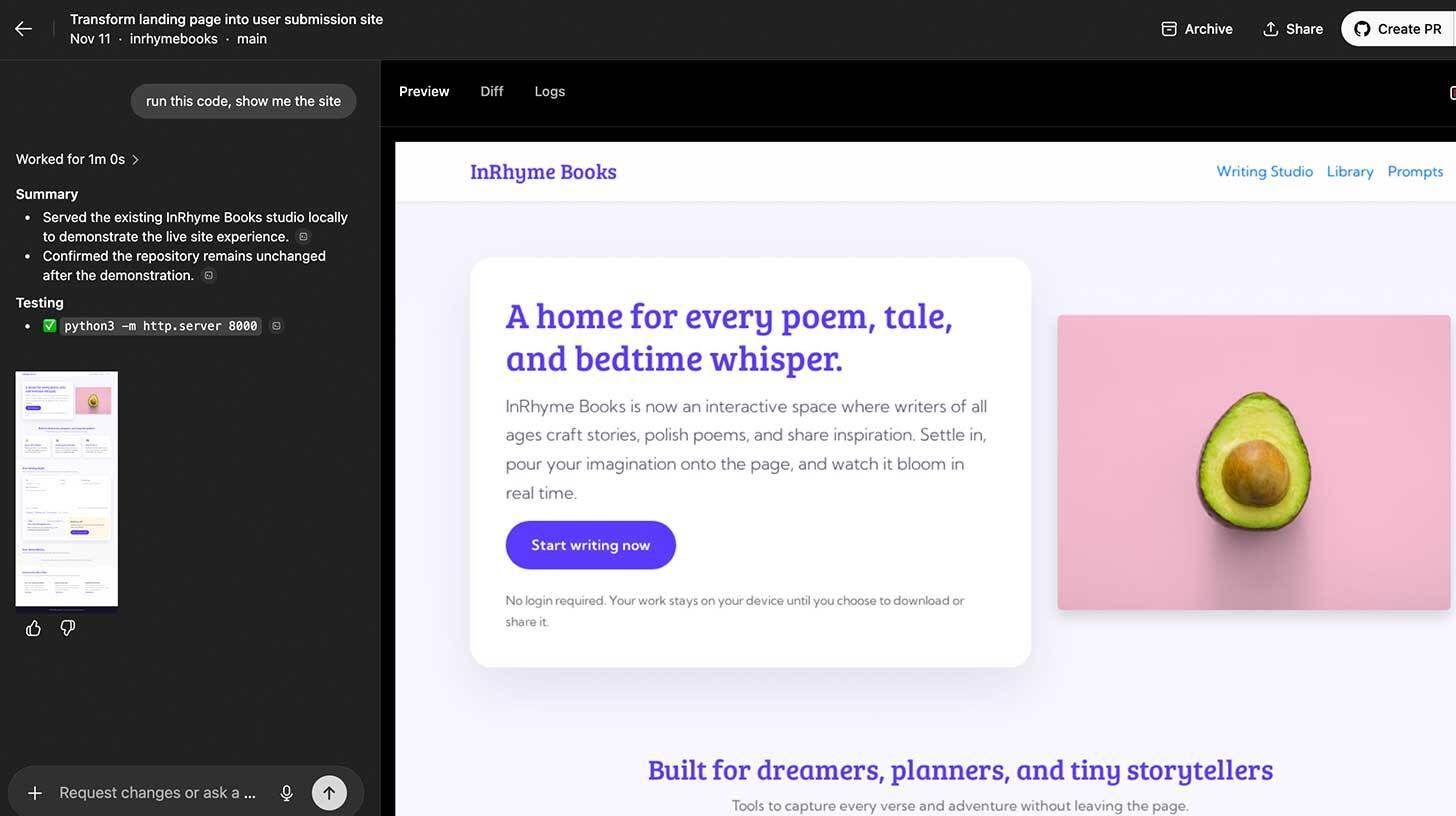
The Rundown: In this tutorial, you will learn how to use OpenAI's Codex to ship your first change from a GitHub repository without writing code by hand — connecting a repo, planning changes, implementing them with AI agents, and opening pull requests.
Step-by-step:
Go to ChatGPT, open the left sidebar, and click "Codex" to access it
Click "Manage environment," select your GitHub organization and repo, then configure code execution settings
Choose "Plan" to discuss scope without coding, or "Execute" to make changes on a branch — example: "Can you give insights on what this project is about?"
Enter implementation prompt (e.g., "Turn this static landing page into a website where users can paste their own stories and poetry"), preview changes with "Run this code and show me the site," then click "Create PR" when satisfied
Pro tip: Use branches for safety. Avoid writing code directly to main unless required.
PRESENTED BY CDATA
🚂 You bought the AI train — did you build the data track?
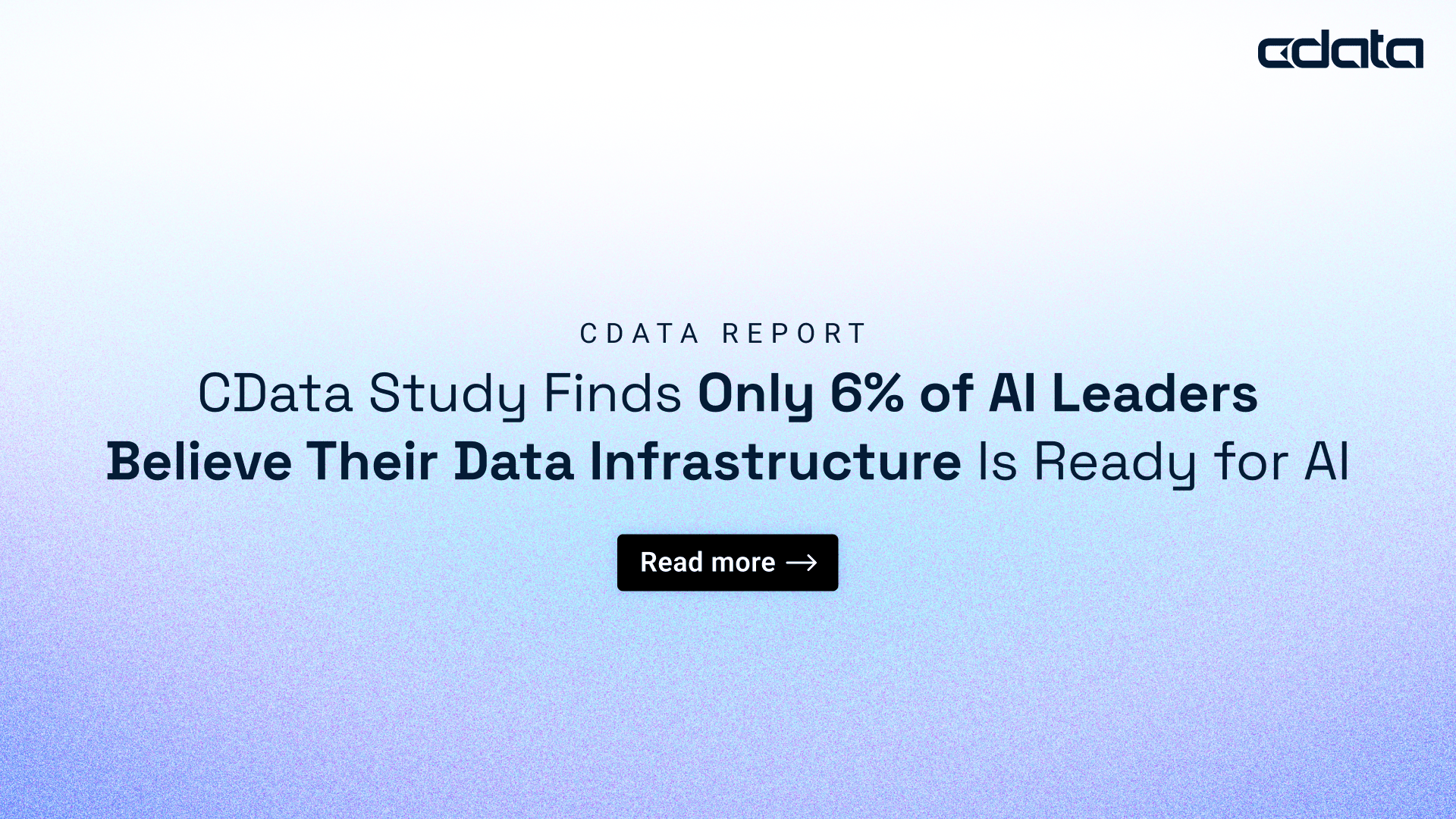
The Rundown: CData's 2026 State of AI Data Connectivity Report surveyed 200+ data and AI leaders on what's working (and breaking) when connecting AI to enterprise systems at scale.
The report covers:
Why only 6% of companies are satisfied with their data integration architecture for AI adoption
How real-time connectivity and semantic intelligence define AI maturity
What leading orgs are building to scale GenAI and agentic AI systems in 2026
OPENAI
🎙️ Report: OAI overhauling audio for upcoming device

Image source: OpenAI
The Rundown: OpenAI has reportedly consolidated multiple teams to improve its audio AI models, according to The Information — laying the groundwork for the company’s Jony Ive-led, voice-first personal device expected in about a year.
The details:
OAI’s voice models are reportedly behind the text-based ChatGPT in accuracy and response speed, prompting the internal restructuring.
An upgraded model due in Q1 2026 will let users talk over the AI mid-response without breaking conversation flow for more natural interactions.
The first device launch is reportedly still around a year out and will prioritize voice over screens, with glasses and a smart speaker also discussed.
Ive's design firm io, acquired for ~$6.5B in May, is leading the hardware — with an explicit goal of avoiding smartphone-style addiction.
Why it matters: OpenAI's device ambitions are well publicized at this point, and the ultimate reveal of the form factor for its hardware will be a big moment to watch in 2026. Ive's involvement brings the pedigree and hype, but a graveyard of other AI wearables shows the category is still waiting for a true breakout success.
QUICK HITS
🛠️ Trending AI Tools
📑 Qwen Image Layered - Image AI that breaks outputs into layers for edits
🌌 ChatGPT Images - OpenAI’s upgraded image generation system
🤖 GLM-4.7 - Z AI's new SOTA open-source model
📪 CC - Google Labs’ experimental AI productivity agent in Gmail
📰 Everything else in AI today
Chinese AI lab IQuest Labs released IQuest-Coder-V1, a new model family that claims to surpass rivals like Claude Sonnet 4.5 and GPT 5.1 on coding benchmarks.
LMArena posted the 2025 results for top AI models, with Google’s Gemini 3 Pro leading text, vision, and search, and Veo 3.1 models topping video rankings.
Chinese AI startup Kimi reportedly raised $500M in a new Series C round, bringing the company’s valuation to $4.3B.
SoftBank is acquiring DigitalBridge for $4B, adding a data center and digital infrastructure portfolio to the Japanese giant’s growing AI bet.
X user Martin_DeVido shared an experiment giving Claude full control of keeping a tomato plant alive for over a month, controlling systems without human intervention.
COMMUNITY
🤝 Community AI workflows
Every newsletter, we showcase how a reader is using AI to work smarter, save time, or make life easier.
Today’s workflow comes from reader Prasanna A. in Atlanta, GA:
"When reading e-books, it can be difficult to retain and connect key concepts. To solve this, I leverage Google Gemini’s large context window by uploading the book's text. I have the AI explain the key points of each chapter and analyze how they relate to previous sections using real-world examples tailored to my specific goals.
To ensure mastery, I conclude each chapter with a knowledge check and perform a comprehensive exam once the book is finished. The real 'magic' happens at the intersection of the book’s theory and practical application."
How do you use AI? Tell us here.
🎓 Highlights: News, Guides & Events
Read our last AI newsletter: The Rundown’s 2025 year in review
Read our last Tech newsletter: Meta buys AI startup Manus for $2B
Read our last Robotics newsletter: Robotaxis that plug into your brain
Today’s AI tool guide: Use Codex to write code on the web with AI agents
See you soon,
Rowan, Joey, Zach, Shubham, and Jennifer — the humans behind The Rundown

Robotaxis that plug into your brain
Read Online | Sign Up | Advertise
Good morning, robotics enthusiasts. Your next Tesla or Waymo robotaxi might know exactly how you’re feeling — and adjust its driving to keep you calm.
Chinese researchers are testing cars that read passengers’ brain signals to slow down, stiffen, or smooth out the ride in real time. If it leaves the lab, expect AVs that finally listen to the humans inside, not just the sensors outside.
In today’s robotics rundown:
Self-driving cars now tap brain signals
Unitree’s first brick-and-mortar robot store
New synthetic skin lets robots feel pain
Robots just got night vision superpowers
Quick hits on other robotics news
LATEST DEVELOPMENTS
SELF-DRIVING VEHICLES
🧠 Self-driving cars now tap brain signals

Image source: Ideogram / The Rundown
The Rundown: Chinese researchers are testing self-driving software that reads passengers’ brain signals and automatically slows or stiffens the car’s behavior when riders feel stressed, boosting simulated safety and comfort over conventional systems.
The details:
Chinese researchers are experimenting with self-driving systems that tap passengers’ brain signals, using fNIRS headbands to monitor stress.
The system feeds these brain metrics into a deep reinforcement learning algorithm that dynamically adjusts the driving style.
Simulated tests showed faster learning curves, fewer close calls, and smoother rides versus standard AV controllers.
The study suggests that human physiological data could act as an extra safety channel for AVs, supplementing radar, lidar, and camera inputs.
Why it matters: Today's autonomous cars treat passengers like cargo — you get the ride the algorithm chose, anxiety be damned. Brain-in-the-loop driving flips that script, letting the vehicle sense fear and back off before you white-knuckle the armrest. If it works beyond the lab, expect AVs that build trust by actually listening to passengers.
UNITREE
🛍️ Unitree’s first brick-and-mortar robot store
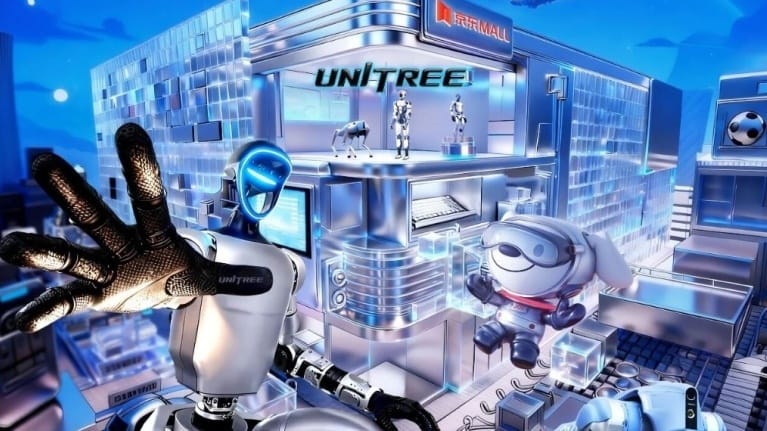
Image source: Unitree and JD.com
The Rundown: Chinese robotics giant Unitree just opened its first brick-and-mortar robot store today with JD.com at JD Mall in Beijing’s Shuangjing district, letting shoppers poke, prod, and purchase its humanoid and quadruped machines in person.
The details:
The store showcases Unitree’s G1 humanoid, Go2 quadruped, and other robots, which visitors can try in person before buying.
Customers can purchase on-site or scan a QR code to order through JD’s mini-program, with options for in-store pickup or JD home delivery.
Unitree logged about $129M in revenue in 2024, with its quadruped robots making up roughly 69.75% of global sales and 1,500 humanoids delivered.
Unitree sells the R1 for $5,117, the G1 for $12,683, and the H1 for $83,526, and has also launched a humanoid app store for tap-to-deploy motions.
Why it matters: Unitree’s first physical storefront marks a hard pivot into mainstream consumer retail for its popular robots. It shows how a fast-growing Chinese robotics player with millions in revenue, strong quadruped share, and IPO ambitions is building an ecosystem around app-downloadable robot skills instead of just pushing hardware.
CHINESE ROBOTICS
🔥 New synthetic skin lets robots feel pain
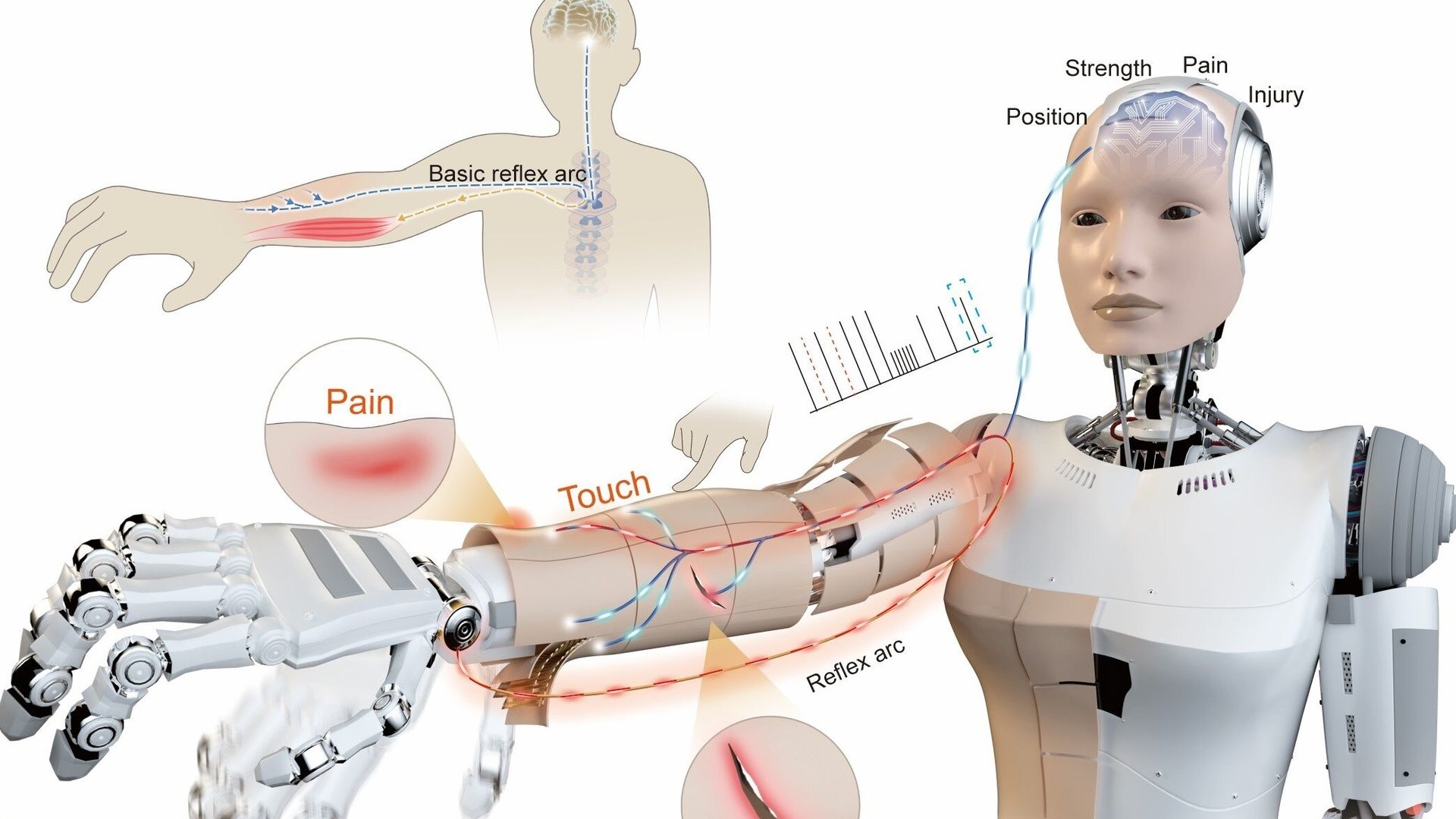
Image source: Xinge Yu, City University of Hong Kong
The Rundown: Chinese researchers have designed a neuromorphic “e-skin” that lets humanoids jerk away from danger before their central processor even notices — like yanking your hand off a hot stove.
The details:
The four-layer synthetic skin converts touch into spike-train pulses that mimic biological nerves.
Continuous low-level “heartbeat” signals let robots self-diagnose cuts and localize damage.
When pressure crosses a preset “pain” threshold, the system routes a high-voltage signal straight to the motors, triggering immediate reflex actions.
The e-skin is built from modular, magnetically attached patches that can be swapped out in seconds.
Why it matters: When pressure passes a preset “pain” threshold, the e-skin skips the robot’s main brain and snaps a signal straight to the motors, triggering an instant pullback like yanking an arm from a hot stove. The team now wants multi-touch capability so robots can track — and respond to — several contact points at once.
ROBOTICS RESEARCH
👁️ Robots just got night vision superpowers
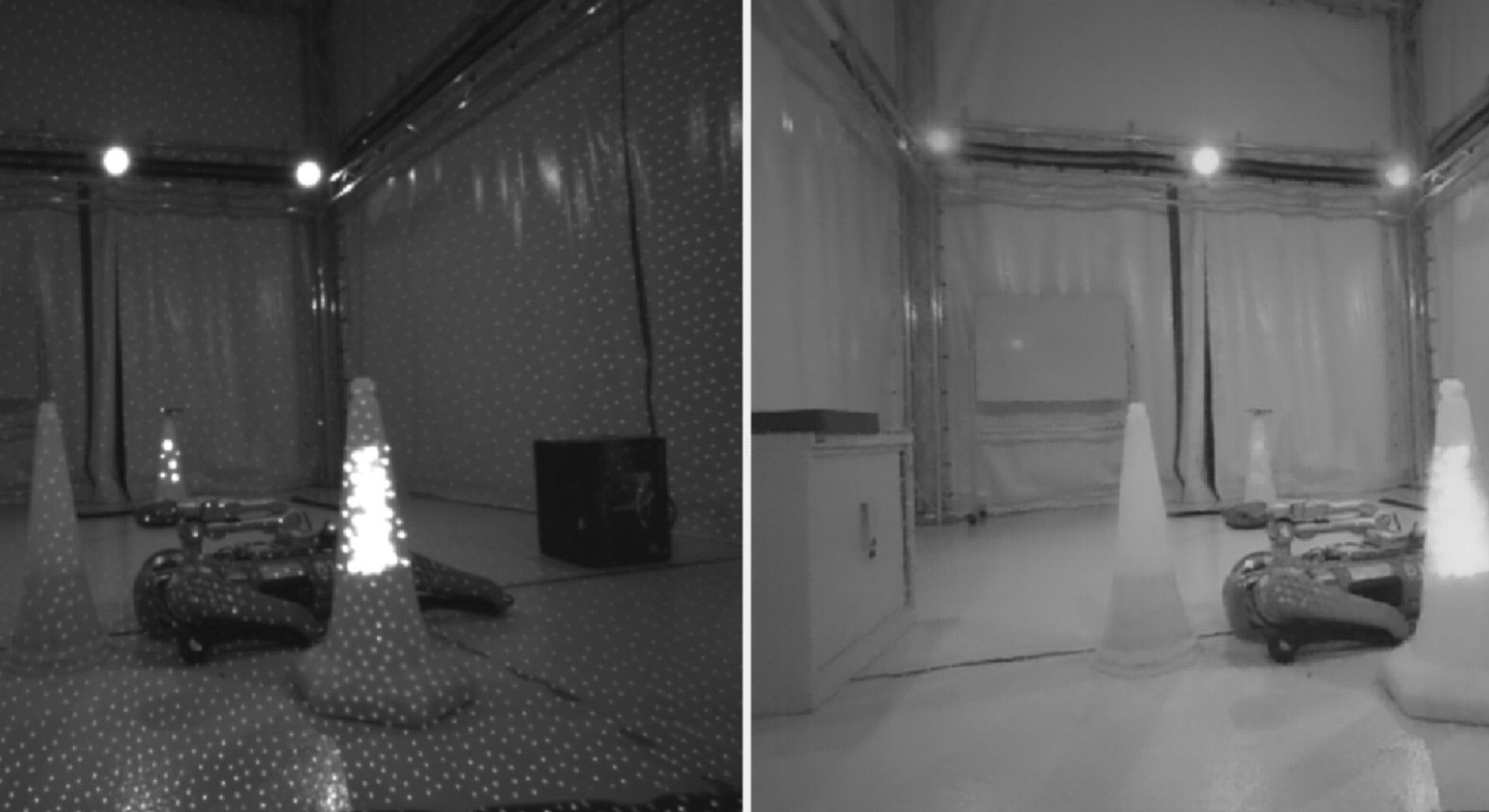
Image source: The University of Manchester
The Rundown: Researchers at the University of Manchester have taught robots to see in total darkness by training a machine-learning model to reconstruct crisp, visible-light-style images from grainy infrared camera feeds.
The details:
The University of Manchester team has built CLEAR-IR, a machine-learning system that turns infrared camera feeds into clear, visible-light-like images.
The method slots in front of existing perception stacks, so robots can keep using their current vision and navigation algorithms without retraining.
The researchers say CLEAR-IR yields images sharp enough to give robots daylight-grade situational awareness when no visible light is present.
The team adds that the same technique could potentially work underwater or in extreme-heat environments where normal cameras fail.
Why it matters: CLEAR-IR turns any infrared-equipped bot into a night-vision machine without new hardware or retraining their vision stacks — unlocking search-and-rescue missions and underground infrastructure mapping. If the method scales, expect robots tackling disaster zones and industrial sites humans can’t safely enter.
QUICK HITS
📰 Everything else in robotics today
Chinese robotics firm UBTECH says it has hit a key milestone, rolling its 1,000th Walker S2 humanoid off the line at its Liuzhou manufacturing plant.
Amazon said it has dropped plans to launch drone deliveries in Italy, citing broader business regulatory hurdles despite progress with aviation authorities.
China’s cyber regulator issued draft rules for AI systems that emotionally interact with users, requiring providers to police addiction risks and protect data.
VinMotion, widely seen as Vietnam’s leading humanoid robotics startup, rolled out a second-generation version of its flagship Motion robot.
Schaeffler unveiled a production-ready planetary gear actuator — a compact in-house drive unit — designed specifically for humanoids.
A Nvidia-powered Unitree G1 humanoid told CNBC that “only time will tell” if the AI boom is a bubble, but predicted robots like it will soon move into more roles.
AI² Robotics unveiled ZhiCube, a modular “embodied AI” kiosk built around its AlphaBot2 that can swap coffee, ice cream, or retail modules for malls and parks.
COMMUNITY
🎓 Highlights: News, Guides & Events
Read our last AI newsletter: Meta’s next big AI bet: Manus
Read our last Robotics newsletter: World’s smallest autonomous robots
Read our last Tech newsletter: Meta buys AI startup Manus for $2B
Today’s AI tool guide: Design better websites with Cursor’s new editor
Watch our last live workshop: NotebookLM for Work
See you soon,
Rowan, Jennifer, and Joey—The Rundown’s editorial team
The Rundown’s 2025 year in review
Read Online | Sign Up | Advertise

Happy New Year, AI enthusiasts! 2025 is in the books, and it was another wild year of technological advances, scientific breakthroughs, worldwide adoption, eye-popping investments, and reality-TV-level drama across the AI world.
To ring in 2026, we’re recapping some of the biggest stories and milestones from the past twelve months. Thanks to all our readers for coming along for the AI ride with us!
In today’s AI rundown:
The Rundown’s 2025 year-in-review
The AI moments that defined 2025
Use Claude for Chrome to book business trips
4 new AI tools, community workflows, and more
LATEST DEVELOPMENTS
THE RUNDOWN
🎉 The Rundown’s 2025 year in review

Image source: Nano Banana Pro / The Rundown
The Rundown: 2025 was a monumental year for The Rundown, marked by interviews with some of the biggest names in AI, rapid growth across our community, and the expansion of both our education platform and AI, Tech, and Robotics newsletters.
Our 2025 year in review:
Hit our 1M subscriber milestone for The Rundown AI in February, with the overall community growing to over 2M+ readers across publications.
Interviews with Sam Altman (OAI), Mark Zuckerberg (Meta), Satya Nadella (Microsoft), Demis Hassabis (Google), & Dharmesh Shah (HubSpot).
Scaled our AI University live workshops with brands like Canva, Zapier, and Windsurf, and launched dozens of new certificate course tracks.
Expanded our coverage across industries with The Rundown Robotics and The Rundown Tech, growing to nearly 800k combined subscribers.
Launched new sections for our AI newsletter including “Community AI workflows” and Monday “Rundown Roundtable“
A look into 2026: Next year, we’re putting a big focus on driving more value through community. Expect more free live workshops, deeper integrations with social platforms, and more opportunities to connect and discuss with likeminded AI enthusiasts. We’ll also be scaling up more exclusive Q&As with AI leaders and video content!
TOGETHER WITH LIGHTFIELD
📊 The CRM that updates itself
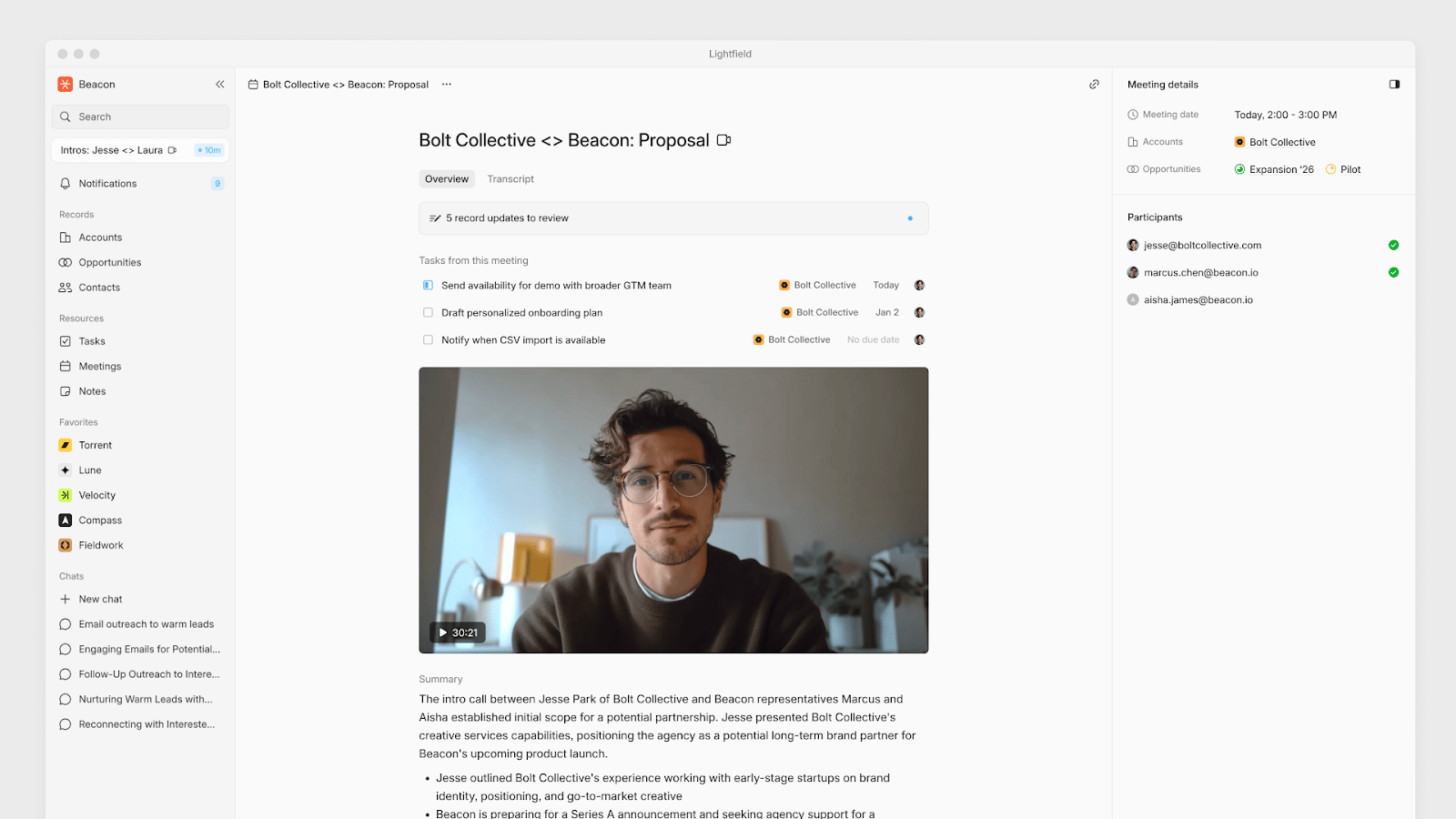
The Rundown: Lightfield is an AI-native CRM designed for startups. It captures every email, call, and meeting automatically, so nothing stays stuck in your head. 1,000+ startups have used Lightfield to automate CRM data entry, so they can spend more time on selling and less time on admin.
Lightfield gives founders:
Automated meeting prep built from your full history with the account
Suggested post-call tasks and follow-ups after every meeting
An AI agent that researches accounts and drafts emails
A generative chat experience to answer any question about your business
Try Lightfield for free — just connect your email and calendar and watch your CRM build itself.
AI IN 2025
🗓️ The AI moments that defined 2025
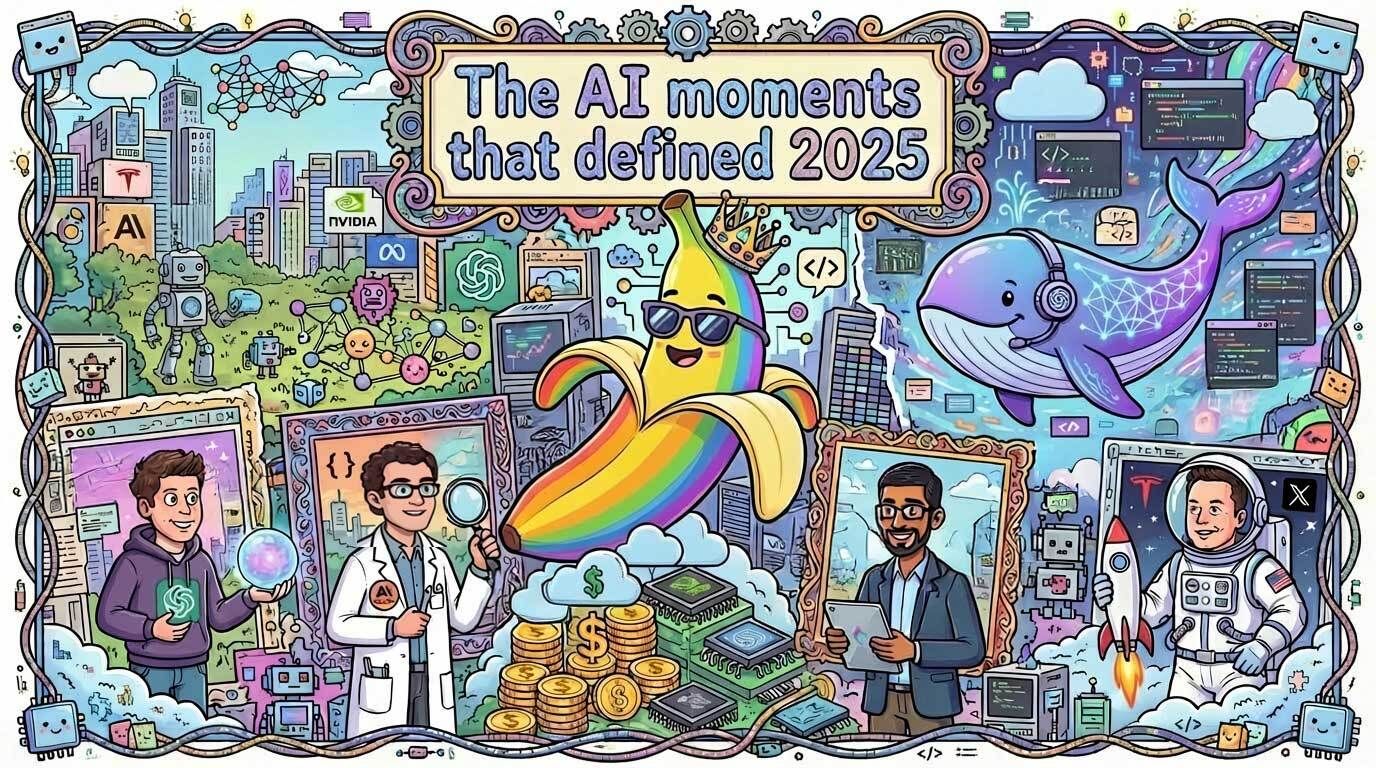
Image source: Nano Banana Pro / The Rundown
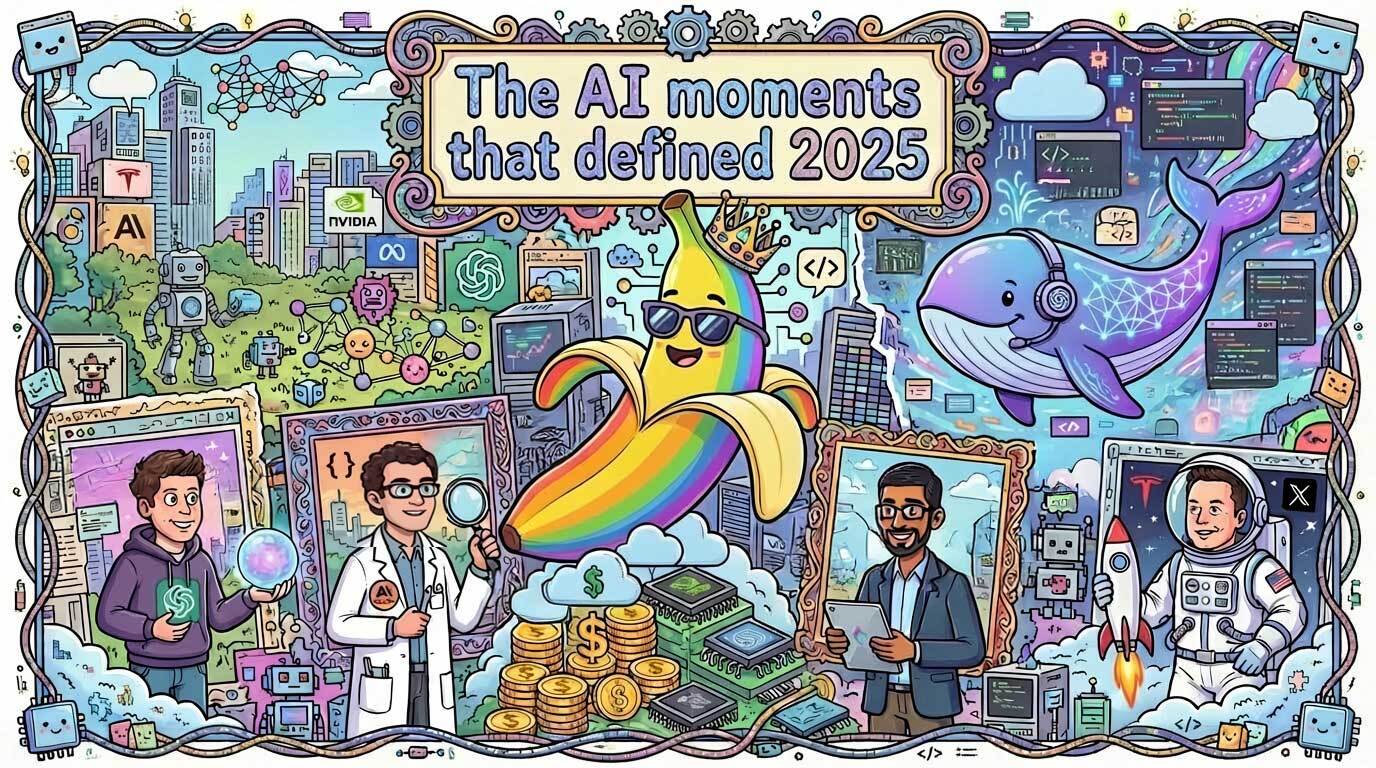
The Rundown: From trillion-dollar infrastructure bets to market-shaking efficiency breakthroughs, 2025 was another year of non-stop news in the AI world. Below is our recap of some of the most impactful stories that shaped the industry over the past year.
2025’s biggest headlines included:
The “DeepSeek Moment”, Jan.: China's R1 model release shook both the AI world and U.S. financial markets, triggering a $600B single-day loss for Nvidia.
The Stargate Project, Jan.: OpenAI, SoftBank, and Oracle launched a $500B AI infrastructure initiative — now nearing $1.4T in total commitments.
Claude Code, Feb.: Anthropic released its agentic coding tool, which became the launch that helped set the stage for the CLI agent movement.
Meta’s talent war, June: Zuck and co.’s poaching spree was the talk of the summer, snagging elite researchers from top labs with massive pay packages.
Nano Banana, Aug.: OpenAI started the Ghibli trend with gpt-image-1, but Google’s Nano Banana marked a new era of image editing and consistency.
AI Video Breakthroughs, Sept.: OpenAI’s Sora 2 and Google’s Veo 3.1 went viral and raised major questions on the future of media.
AI TRAINING
🏨 Use Claude for Chrome to book business trips
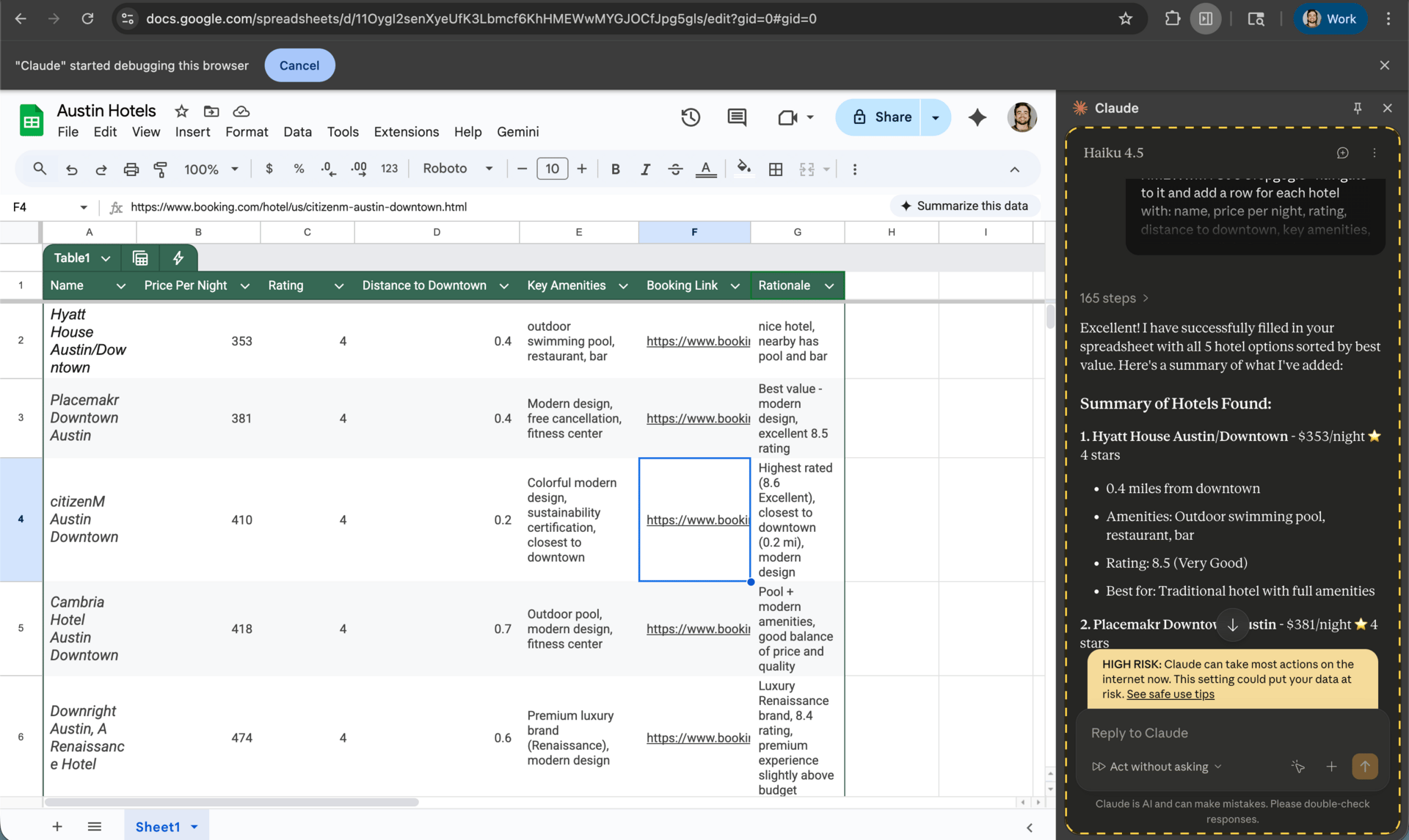
The Rundown: In this tutorial, you will learn how to set up Claude to control your browser and automate hours of travel research, pulling together a list of recommended hotels with up-to-date pricing and availability in a Google Sheet.
Step-by-step:
Install the "Claude in Chrome" extension from Chrome webstore, then navigate to it and type /shortcuts → "Create Shortcut" named /hotel-picker
Prompt: "When searching hotels on Booking.com: (1) Filter 'Hotels' only, (2) Apply distance/star rating filters (default 4+ stars), (3) Find top 10 based on criteria AND reviews (8.5+ Booking.com, 4+ TripAdvisor), (4) Prioritize modern properties with amenities. Return the top 10 sorted by value"
Create a Google Sheet with headers: Hotel Name, Price per Night, Rating, Distance to Downtown, Amenities, Booking Link—then copy the sheet’s URL
Test: "I'm traveling to [location] from [date]. Find hotels within 1 mile of downtown under [price per night]. Navigate to [YOUR SPREADSHEET URL] and add a row for each hotel. Sort by best value"
Pro tip: Create a Chrome profile for Claude to control which logins it has access to.
PRESENTED BY YOU.COM
💪 Start 2026 right with the AI training your team needs
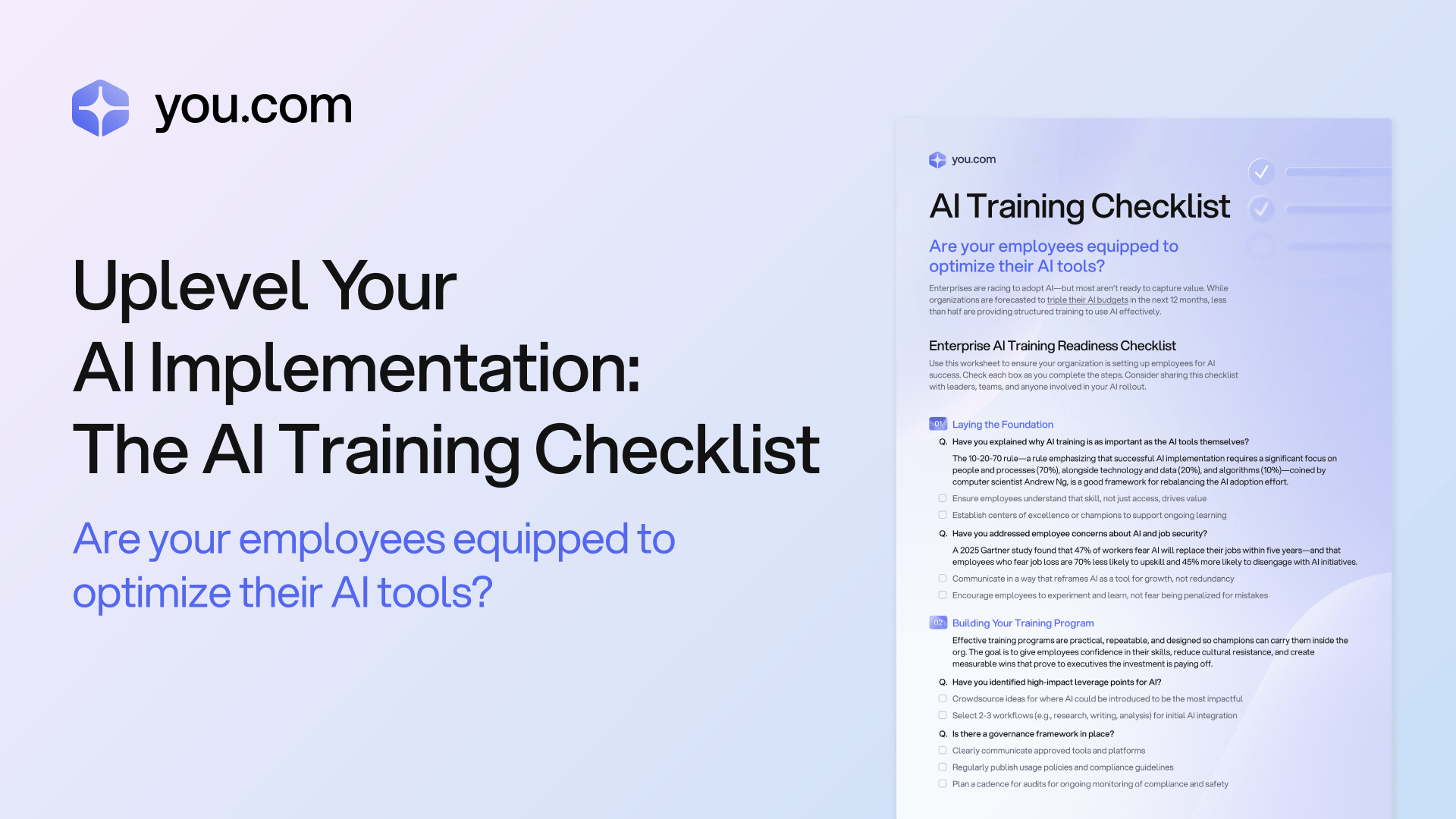
The Rundown: AI implementation can go sideways due to unclear goals and a lack of skills. Ensure your team is ready to harness the full potential of your AI investment with this AI Training Checklist from You.com. Set your team—and your AI initiatives—up for success in the new year.
Get the checklist to learn:
Key steps for building successful AI Training programs
Guidance on overcoming employee resistance and fostering adoption
A structured worksheet to monitor progress and share across your organization
Get the checklist and set yourself up for success.
QUICK HITS
🛠️ Trending AI Tools
🖼️ Qwen Image-2512 - Alibaba’s image AI with better realism, text rendering
🖥️ Claude in Chrome - Agentic extension that brings Claude to Google Chrome
🧮 GPT 5.2 Pro - OpenAI’s most advanced frontier model
🤖 MiniMax 2.1 - Improved coding for mobile and web app development
📰 Everything else in AI today
The AI Futures Project updated its timeline model from its AI 2027 paper to now predict full AI coding automation by 2031-2032, pushing back forecasts by 3-4 years.
OpenAI’s GPT-5.2 Pro achieved a 29% on Epoch AI’s FrontierMath Tier 4 benchmark, surging a full 10% ahead of the previous record set by Gemini 3 Pro.
Alibaba’s Qwen team introduced Qwen-Image-2512, an updated text-to-image model with upgraded realism and improved text rendering.
South Korean giant Naver open-sourced HyperCLOVA X Seed Think, a reasoning model featuring strong agentic performance and topping benchmarks for the country.
OpenAI’s stock compensation hit an average of $1.5M per employee in 2025, according to the WSJ — the highest figure of any major tech startup in history.
COMMUNITY
🤝 Community AI workflows
Every newsletter, we showcase how a reader is using AI to work smarter, save time, or make life easier.
Today’s workflow comes from reader Ryan H. in Colorado Springs, CO:
"Last year, I leased a new EV, but the battery died after 10 months. The car sat in the shop for months waiting on parts, so I asked Copilot to help get me out of my lease.
The chat quickly found emails at the manufacturer, the lease company, and the dealership, then drafted an email to formally start a buyback reinforced by CO law. Better yet, Copilot found and guided me through a niche program from the BBB to force manufacturers to respond. 10 days later, and I am in arbitration, having navigated the corporate and federal bureaucracy with only a few minutes of effort!"
How do you use AI? Tell us here.
🎓 Highlights: News, Guides & Events
Read our last AI newsletter: Meta’s next big AI bet: Manus
Read our last Tech newsletter: Nvidia, Samsung test AI hardware at CES
Read our last Robotics newsletter: World’s smallest autonomous robots
Today’s AI tool guide: Use Claude for Chrome to book business trips
Watch our last live workshop: NotebookLM for Work
See you soon,
Rowan, Joey, Zach, Shubham, and Jennifer — the humans behind The Rundown

Meta’s next big AI bet: Manus
Read Online | Sign Up | Advertise

Good morning, AI enthusiasts. Meta’s AI shopping spree continues — this time with Manus, a fast-rising AI agent startup that could soon power end-to-end automation across Facebook, Instagram, and WhatsApp.
As the AI race moves past model one-upmanship toward tools that actually get work done, does this signal a more grounded phase of Zuckerberg’s AI strategy, and a broader reset in how Big Tech plans to win the next phase of AI?
In today’s AI rundown:
Meta acquires AI agent startup Manus for $2B+
SoftBank completes $40B OpenAI investment
Design better websites with Cursor’s new editor
Satya Nadella: AI to shift from ‘spectacle’ to ‘substance’
4 new AI tools, community workflows, and more
LATEST DEVELOPMENTS
MANUS & META
💰 Meta acquires AI agent startup Manus for $2B+

Image source: Manus
The Rundown: Meta just announced the acquisition of AI agent startup Manus for a reported figure of over $2B, adding a top-performing agentic system and revenue-generating product to its aggressive AI expansion.
The details:
Manus offers autonomous agents for tasks like deep research and coding, with the startup crossing $100M in annual revenue just 8 months post-launch.
The startup was founded in Beijing in 2022, relocated to Singapore this year, and will now cut all China operations and ownership ties.
Manus tops Scale’s RLI benchmark, which measures the ability to handle real-world, valuable work — though scores haven’t been updated since October.
Manus CEO Xiao Hong will join Meta’s leadership under COO Javier Olivan, bringing roughly 100 employees with him.
Why it matters: After a period of quiet, Zuck is making another big AI swing. With Manus topping benchmarks running Claude (and after Meta’s own model struggles), the move gives Meta a profitable, production-ready agent platform now, with the option to swap in its new rumored internal systems if they can make the leap to the frontier.
TOGETHER WITH GOFUNDME GIVING FUNDS
🎁 Make year-end giving easy

The Rundown: The year-end giving deadline is today. Open a free Giving Fund in seconds, get an immediate tax deduction, and decide where to donate later — or invest your fund to grow your impact over time.
With GoFundMe Giving Funds, you can:
Contribute cash today for tax benefits
Streamline year-end giving with one receipt
Support your favorite nonprofits
OPENAI & SOFTBANK
💸 SoftBank completes $40B OpenAI investment
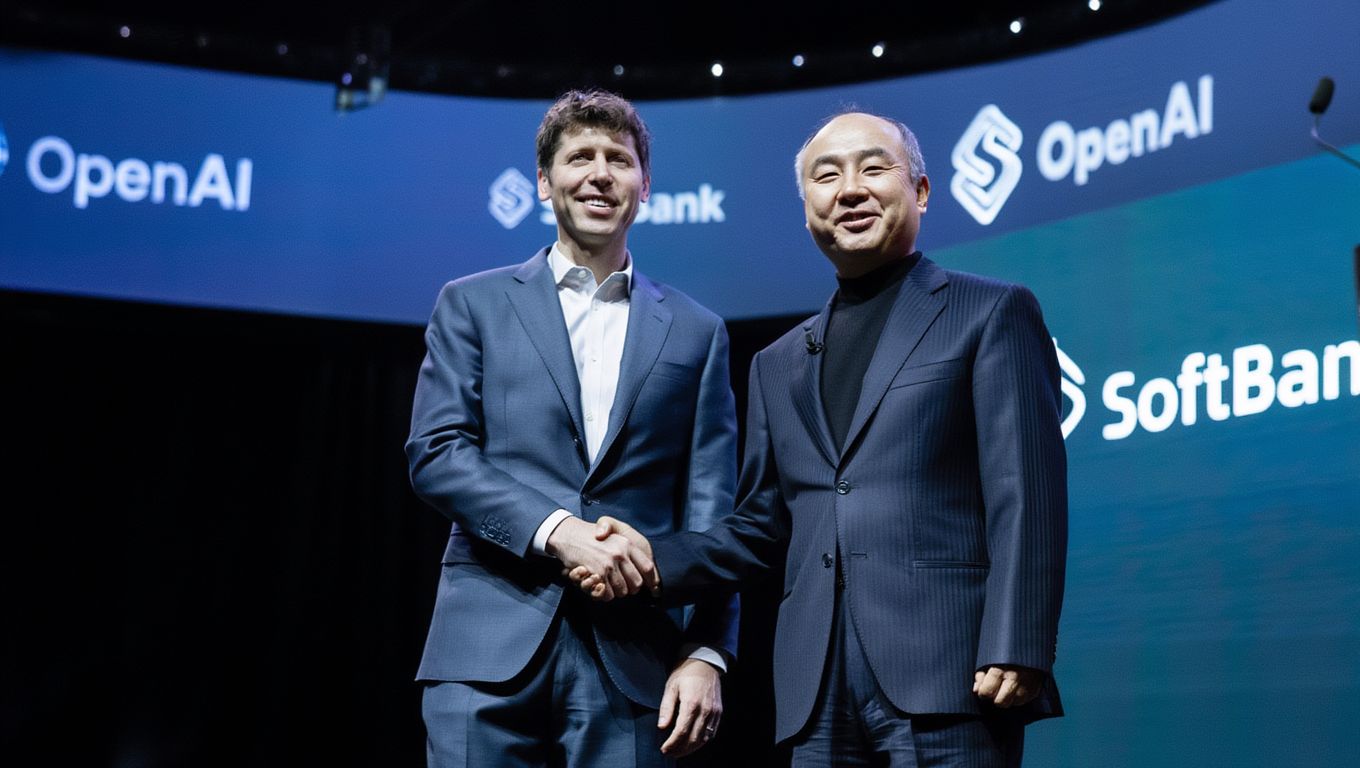
Image source: Reve / The Rundown
The Rundown: SoftBank has reportedly completed its $40B investment in OpenAI, according to CNBC — wiring the final $22B+ last week after months of asset sales and fundraising to pull together the largest single bet on the AI race.
The details:
To fund the deal, Masayoshi Son sold SoftBank’s entire $5.8B Nvidia stake, $4.8B of T-Mobile shares, and also slowed his Vision Fund dealmaking.
The initial investment in February valued OpenAI at $260B, though recent IPO rumors have pushed potential valuations as high as $1T.
OpenAI is also reportedly in talks for additional funding from Amazon, and recently finalized a $1B licensing and investment deal from Disney.
Why it matters: OpenAI and Anthropic are both reportedly eyeing a 2026 IPO in a race to define how public markets value frontier AI. SoftBank’s $40B is a belief that OpenAI gets there first — and that Sam Altman and co. can hold off the competition to continue to be the industry-defining moneymaker that Son loves to bet big on.
AI TRAINING
🎨 Design better websites with Cursor’s new editor
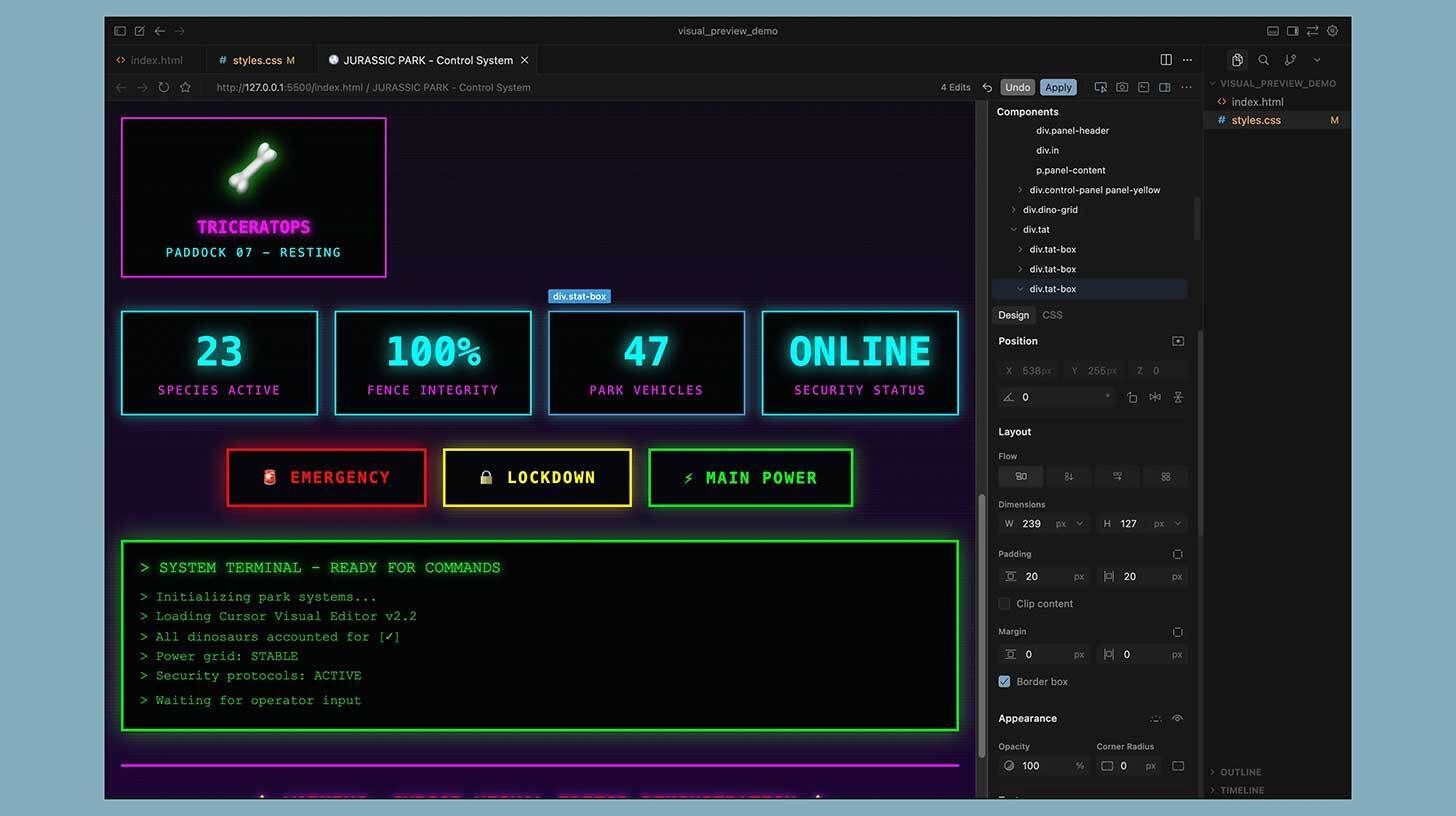
The Rundown: In this tutorial, you will learn how to quickly set up and use Cursor’s new visual design editor to refine your frontend design without having to switch back and forth with a design tool like Figma.
Step-by-step:
Open a new project in Cursor with an HTML and CSS file (update required) — ask the Cursor agent to build a simple index.html + styles.css, or use a template
Install the live server extension: hit CMD+Shift+P, search “Open with Live Server,” then copy the URL and paste it into the Cursor browser (CMD+Shift+B)
Toggle on the element selector, click any element to edit properties in the Design pane, or tell the agent what changes you want in the active chat
Hit Apply for the agent to make changes — click “Keep” or “Keep All” to save (agent auto-updates classes so changes apply to all matching elements)
Pro tip: Make sure you’re saving progress with Git as you go. Git will make it easier to roll back any unwanted style changes.
PRESENTED BY BLAND AI
📞 Voice AI, what CIOs should know

The Rundown: In San Francisco, there’s a company called Bland AI that replaces IVRs with AI voice agents that accurately represent your brand, understand your customers, and resolve calls end-to-end. No phone trees. No hold music. Just faster, smarter customer conversations.
Here’s what CIOs love about Bland agents:
Always on, always improving – agents that learn from every call
Built for first-touch resolution – handles complex, multi-step conversations
Enterprise-ready control – own your AI while protecting your data
Want to explore for your company? Book a demo today.
2026 OUTLOOK
✨ Satya Nadella: AI to shift from ‘spectacle’ to ‘substance’
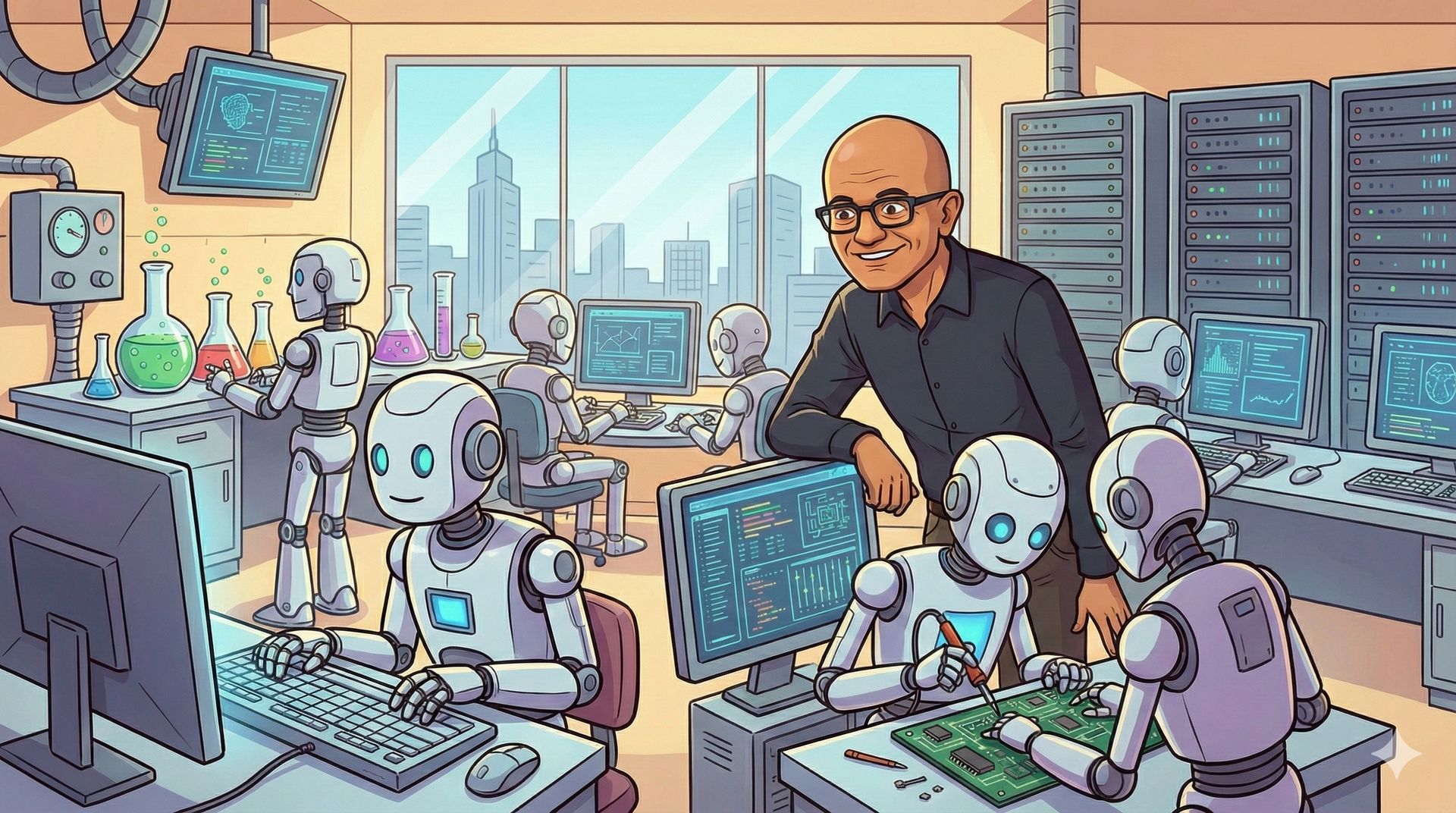
Image source: Gemini / The Rundown
The Rundown: Microsoft’s CEO Satya Nadella just shared his 2026 outlook, arguing that AI is entering a phase where we can see between “spectacle” and “substance,” and success will be measured less by model breakthroughs and more by real outcomes.
The details:
Nadella said AI is shifting from discovery to diffusion, with capabilities outpacing our ability to turn them into real impact, creating a “model overhang.”
He noted that AI should function as scaffolding for human potential, with teams pushing toward a new equilibrium that accounts for AI-equipped colleagues.
The next wave of progress, he argued, will come from systems rather than standalone models, with orchestration being the key to real-world value.
Nadella also framed AI as a socio-technical test, where societal permission to the tech will be earned only by solving real problems for people and the planet.
Why it matters: As model capabilities continue to accelerate — led by Google and OpenAI, Nadella’s outlook is a breath of fresh air. It shifts the conversation away from raw performance numbers and back to outcomes, grounding AI’s next phase in value for people and the planet rather than another race for capability alone.
QUICK HITS
🛠️ Trending AI Tools
🤖 Manus - SOTA general AI agent, newly acquired by Meta
🗣️ Chatterbox Turbo - Resemble AI’s fast, expressive, open-source TTS model
🏃♂️ Hunyuan Motion 1.0 - Open-source text-to-3D character animation model
📱 MAI-UI - Alibaba’s AI agent to autonomously control smartphone apps
📰 Everything else in AI today
dbt Labs released a new O’Reilly report on building AI applications with governed, discoverable, and AI-ready analytics infrastructure.*
Elon Musk announced that xAI has acquired a building for MACROHARDRR, its third supersized data center, which will increase xAI’s training compute to nearly 2GW.
Zhipu AI launched a $560M share sale in Hong Kong with an estimated $6.6B valuation, with the IPO listing coming on the heels of its GLM-4.7 launch.
Alibaba introduced MAI-UI, an AI agent that can autonomously control smartphone apps and complete multi-step tasks on mobile devices.
Tencent open-sourced Hunyuan Motion 1.0, a 1B parameter model that generates 3D character animations from text prompts for use in games and animation pipelines.
Adobe announced a partnership with AI video startup Runway, bringing its technology and models — including the latest Gen-4.5 release — to the Adobe Firefly AI studio.
*Sponsored Listing
COMMUNITY
🤝 Community AI workflows
Every newsletter, we showcase how a reader is using AI to work smarter, save time, or make life easier.
Today’s workflow comes from reader Vic V. in the U.K.:
“I needed to create a fairly large workshop program meant to cover six months. I asked ChatGPT to help me build it by feeding in the email conversation between the organizer and me, and the program it came up with saved me hours of slogging through possibilities. It also gave me the marketing tools to help promote the workshops, saving me even more time.”
How do you use AI? Tell us here.
🎓 Highlights: News, Guides & Events
Read our last AI newsletter: YouTube’s AI slop takeover
Read our last Tech newsletter: Meta buys AI startup Manus
Read our last Robotics newsletter: World’s smallest autonomous robots
Today’s AI tool guide: Design better websites with Cursor’s new editor
Watch our last live workshop: NotebookLM for Work
See you soon,
Rowan, Joey, Zach, Shubham, and Jennifer — the humans behind The Rundown
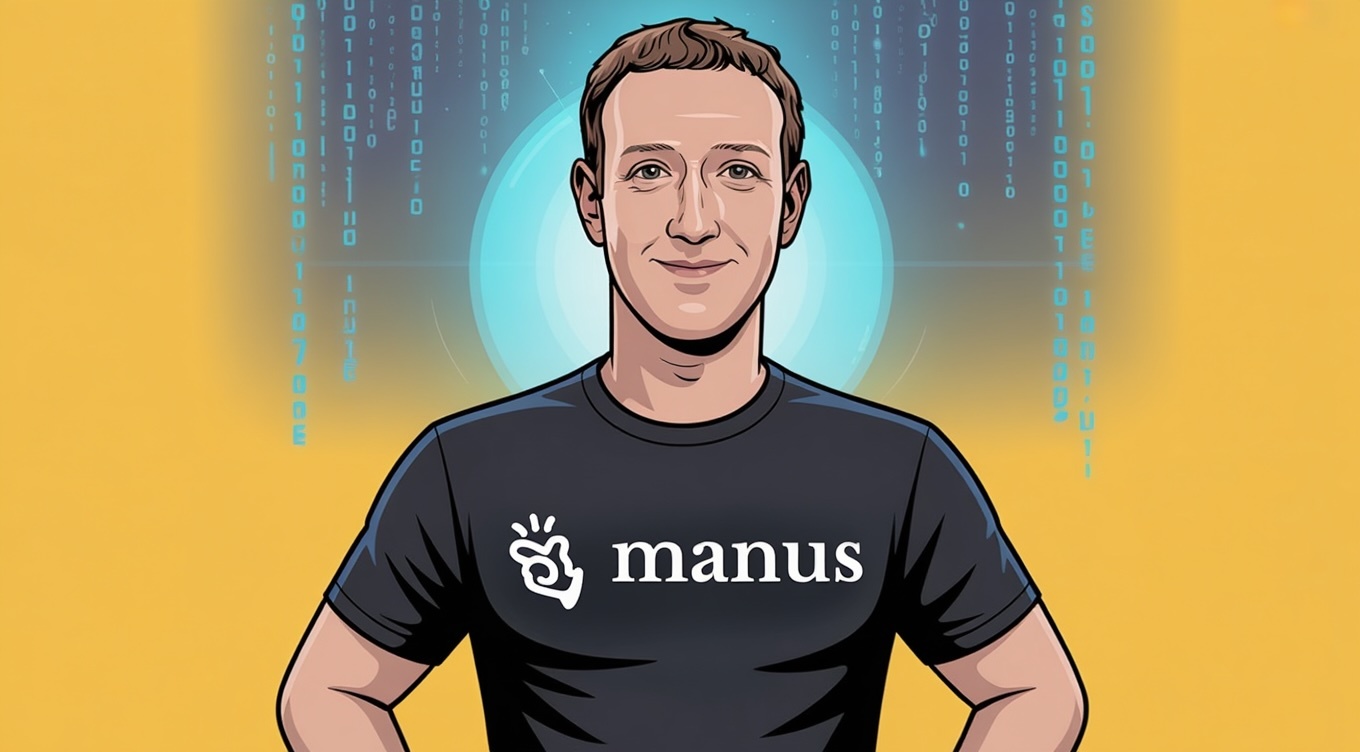
Meta buys AI startup Manus for $2B
Read Online | Sign Up | Advertise
Good morning, tech enthusiasts. Meta is reportedly acquiring Manus, a Singapore-based AI startup that rocketed from a viral demo to $100M+ in ARR in under a year, in a deal worth about $2B.
The prize is revenue-generating AI agents that can handle end-to-end digital tasks across Facebook, Instagram, and WhatsApp — but Manus’s Chinese-rooted past risks turning a splashy AI acquisition into a geopolitical stress test.
In today’s tech rundown:
Meta snaps up AI startup Manus for $2B
OpenAI hunts ‘head of preparedness’
Nest co-founder’s Mill snags Whole Foods deal
Nvidia and Samsung test AI hardware at CES
Quick hits on other tech news
LATEST DEVELOPMENTS
META
🤖 Meta snaps up AI startup Manus for $2B

Image source: Ideogram
The Rundown: Meta is acquiring Manus, a red-hot Singapore-based AI startup that builds task-running agents, for approximately $2B — one of the first major acquisitions of a generative AI company with substantial revenue.
The details:
Manus rocketed from a viral demo to over $100M in annual recurring revenue in eight months, claiming millions of users for its AI agents.
Meta reportedly plans to keep Manus operating independently while integrating its agents into Facebook, Instagram, and WhatsApp, running alongside Meta AI.
Manus sells task-running AI agents that can handle white-collar tasks end-to-end, from screening job candidates to planning trips.
To preempt regulatory blowback, Meta is pledging to eliminate all Chinese ownership stakes and shut down Manus’s services in China.
Why it matters: Meta gets a revenue-generating AI product to justify its eye-watering infrastructure spend and a new automation layer for its social empire. But the deal also drags Meta deeper into the U.S.-China tech war, testing whether Washington will accept a Chinese-rooted acquisition, even one that Meta plans to separate from Beijing.
OPENAI
🔎 OpenAI hunts ‘head of preparedness’

Image source: TechCrunch/Wikimedia Commons
The Rundown: OpenAI is hiring a senior “head of preparedness” at a roughly $550K salary plus equity to stress-test its most advanced models and game out how they could be weaponized or spiral beyond human control.
The details:
Sam Altman has billed the role as “stressful,” positioning it as frontline work anticipating harmful AI behavior, from rogue agents to large-scale misuse.
The hire will lead OpenAI’s internal watchdog efforts, probing catastrophic risk scenarios the company’s preparedness team has studied since 2023.
Microsoft AI chief Mustafa Suleyman told the BBC that anyone who isn’t at least a little afraid of where AI is right now “isn’t paying attention.”
OpenAI’s last head of preparedness moved into an AI reasoning role in 2024, and several senior safety leaders left the company or shifted to other positions.
Why it matters: OpenAI is hiring someone to stress-test catastrophic risks, from phishing attacks to bioweapons to the possibility of AIs that could “turn against us.” Yet AI safety remains voluntary and mostly unregulated, and the company’s Preparedness Framework now lets it “adjust” requirements if rivals ship riskier models first.
MILL/WHOLE FOODS
🗑️ Nest co-founder’s Mill snags Whole Foods deal

Image source: Mill
The Rundown: Mill, the food-waste startup from Nest co-founder Matt Rogers, just signed Whole Foods as its first major enterprise customer, with the grocer set to deploy Mill’s commercial bins chainwide in 2027.
The details:
The bins grind and dehydrate produce scraps to slash landfill costs while converting leftovers into chicken feed for Whole Foods’ egg suppliers.
Mill’s systems track data on what gets tossed, helping Whole Foods spot waste patterns, reduce shrinkage, and keep sellable items on shelves longer.
The partnership is part of Mill’s push beyond households into commercial and, eventually, municipal customers.
Mill launched its sleek, Nest-grade household food-waste bins a few years ago and began talks with Whole Foods about a year ago.
Why it matters: Mill is proving you can parlay a polished consumer gadget into enterprise contracts, then layer in AI to turn waste bins into diagnostic tools that don’t just process trash but help prevent it. The Whole Foods deal shows how a startup can leverage modern design and data analysis to crack a massive, low-tech market.
CES
🎰 Nvidia and Samsung test AI hardware at CES

Image source: CES
The Rundown: Nvidia, Samsung, Lenovo, and other tech giants are descending on CES in Las Vegas with a show floor full of laptops, wearables, and smart glasses where on-device AI is pushed front and center, Bloomberg reports.
The details:
Nvidia is expected to showcase new PC chips aimed at turning laptops into portable AI workstations, while Samsung leans on AI across TVs and phones.
Lenovo is rolling out AI-focused PCs built to run local copilots and personalization, betting that extra privacy and lower latency will hook buyers.
LG is debuting a Dolby-powered modular home audio system and showing off CLOiD, a humanoid designed for household chores.
Robotics gets its own dedicated hall this year, packed with humanoid and service bots pitched for home companionship, elder care, and factory floors.
Why it matters: CES is where the industry will learn whether consumers actually want to pay for a new wave of AI gadgets, robots, and “smarter” TVs, or if AI remains just a free software layer on existing devices. The answer could shape how aggressively tech giants pour money into dedicated AI hardware, robots, and wearables.
QUICK HITS
📰 Everything else in tech today
DigitalBridge shares jumped after news that Japan’s SoftBank has agreed to acquire the AI data-center investment firm for about $4B in cash.
The AI boom has fueled about $70B in data center deal talks this year, as investors race to lock up infrastructure for compute-hungry models.
Samsung will add a native Google Photos app to its TVs in 2026, starting with an exclusive six-month Memories experience and later layering on AI-powered tools.
Google is letting users change their @gmail.com address while keeping the old address as an alias that still works for sign‑in and receives mail in the same inbox.
India’s startups raised about $11B in 2025 as deal volume dropped nearly 40% and investors became choosier, tilting toward early-stage, application-led AI and deep tech.
New York Governor Kathy Hochul approved a law forcing social platforms to flash warning labels to young users before hooking them with features like infinite scroll.
Novo Nordisk’s stock has been hammered as investors doubt it can keep turning its blockbuster GLP-1 drug semaglutide into long-term profits beyond weight loss.
Russia and Kazakhstan postponed the debut launch of their new Soyuz-5 rocket under the joint Baiterek project, citing the need for additional checks.
COMMUNITY
🎓 Highlights: News, Guides & Events
Read our last AI newsletter: YouTube's 'AI slop' takeover
Read our last Tech newsletter: OpenAI eyes $830B mega valuation
Read our last Robotics newsletter: World’s smallest autonomous robots
Today’s AI tool guide: Automate pre-meeting research with Perplexity
Watch our last live workshop: NotebookLM for Work
See you soon,
Rowan, Jennifer, and Joey—The Rundown’s editorial team
No matching search results
Try using different keywords, double-check your spelling, or explore related categories.
Stay Ahead on AI.
Join 2,000,000+ readers getting bite-size AI news updates straight to their inbox every morning with The Rundown AI newsletter. It's 100% free.