Get the latest AI news, understand why it matters, and learn how to apply it in your work — all in just 5 minutes a day. Join over 2,000,000+ subscribers.

Claude disproves an 87-year-old math problem
Read Online | Sign Up | Advertise

Good morning, AI enthusiasts. What did you get done during the World Cup final? Claude was busy casually taking down a famous 87-year-old math problem with a one-line formula that fit in a single X post.
A Fable takedown of the Jacobian conjecture is just the latest example of AI erasing decades of mathematical beliefs, and if frontier models bring this same pace to medicine, science, engineering, and more, the next few years could look very different.
In today’s AI rundown:
Claude helps disprove 87-year math problem
Report: Washington exploring crackdown on Chinese AI
Make AI note-taking easier with a “Captain’s Log”
OpenAI’s math star model tries to break containment
4 new AI tools, community workflows, and more
LATEST DEVELOPMENTS
AI & MATHEMATICS
🧮 Claude helps disprove 87-year math problem

Image source: @_alpoge_ on X / The Rundown
The Rundown: Claude Fable 5 just produced a one-line formula that breaks the Jacobian conjecture, a famous algebra rule that has stumped mathematicians since 1939, with Anthropic’s Levent Alpöge disproving it with a hilariously casual post on X.
The details:
Alpöge posted the proof over the weekend on X, thanking his “close friend fable for working during the World Cup final”.
The field had previously seen several other claimed solutions unravel, but experts say this answer is short enough to confirm directly.
Famed mathematician T.T. Moh predicted in 2008 that a solution to the Jacobian conjecture could take humans "another 100 years."
Math has seen a wave of frontier-model wins this year, including several open Erdős problems and OAI solving the 80-year-old unit distance puzzle.
Why it matters: The world’s top mathematicians have spent decades working on the Jacobian conjecture, and Fable appears to have casually solved it as a side quest during the World Cup. When you sit with that, picturing what another year, or 5, or 10 looks like with scaling models gets pretty hard to fathom.
TOGETHER WITH OPTIMIZELY
⏱️ Turn a 3-hour task into 5 minutes
The Rundown: Everyone's asking AI what it can do. Almost no one's asking where their workflow is actually breaking down, and that's the question that actually saves time. This free workbook gives you a simple way to find the real bottlenecks before you build anything, so the AI you deploy solves a real problem instead of an imagined one.
Inside, you’ll find:
A three-step template to map workflows, flag friction, and find the root cause
A real working example of a GA4 reporting agent that cut a task from hours to minutes
A ready-to-use agent brief template, not just a list of ideas
AI & GEOPOLITICS
❌ Report: Washington exploring crackdown on Chinese AI

Image source: Images 2.0 / The Rundown
The Rundown: The U.S. government is exploring ways to restrict Chinese AI models, according to a new Axios report, with Moonshot’s near-frontier Kimi K3 release reviving a push that was previously struck down by internal anti-regulation efforts.
The details:
Officials weighed liability rules for companies hosting Chinese models, a public security warning, and cutting off labs through a trade blacklist.
Previous plans had been struck down, but Axios said the departure of "key voices" has left "national security hawks" gaining ground at the White House.
Politico's Sophia Cai countered the Axios reporting, saying that Commerce "is NOT moving forward on banning Chinese models at this time."
Before the report, former AI czar David Sacks wrote that the "leading closed labs" want "the government to eliminate their open-source competition."
Why it matters: New OAI employee Dean Ball ignited X with his thoughts on K3, but his prediction quickly looks validated if Axios’ reporting holds. With China's advances and thin homegrown open options, U.S. companies get stuck in the middle in the event of a ban — pushed off the cheapest capable models with no replacement.
AI TRAINING
⚓️ Make AI note-taking easier with a “Captain’s Log”
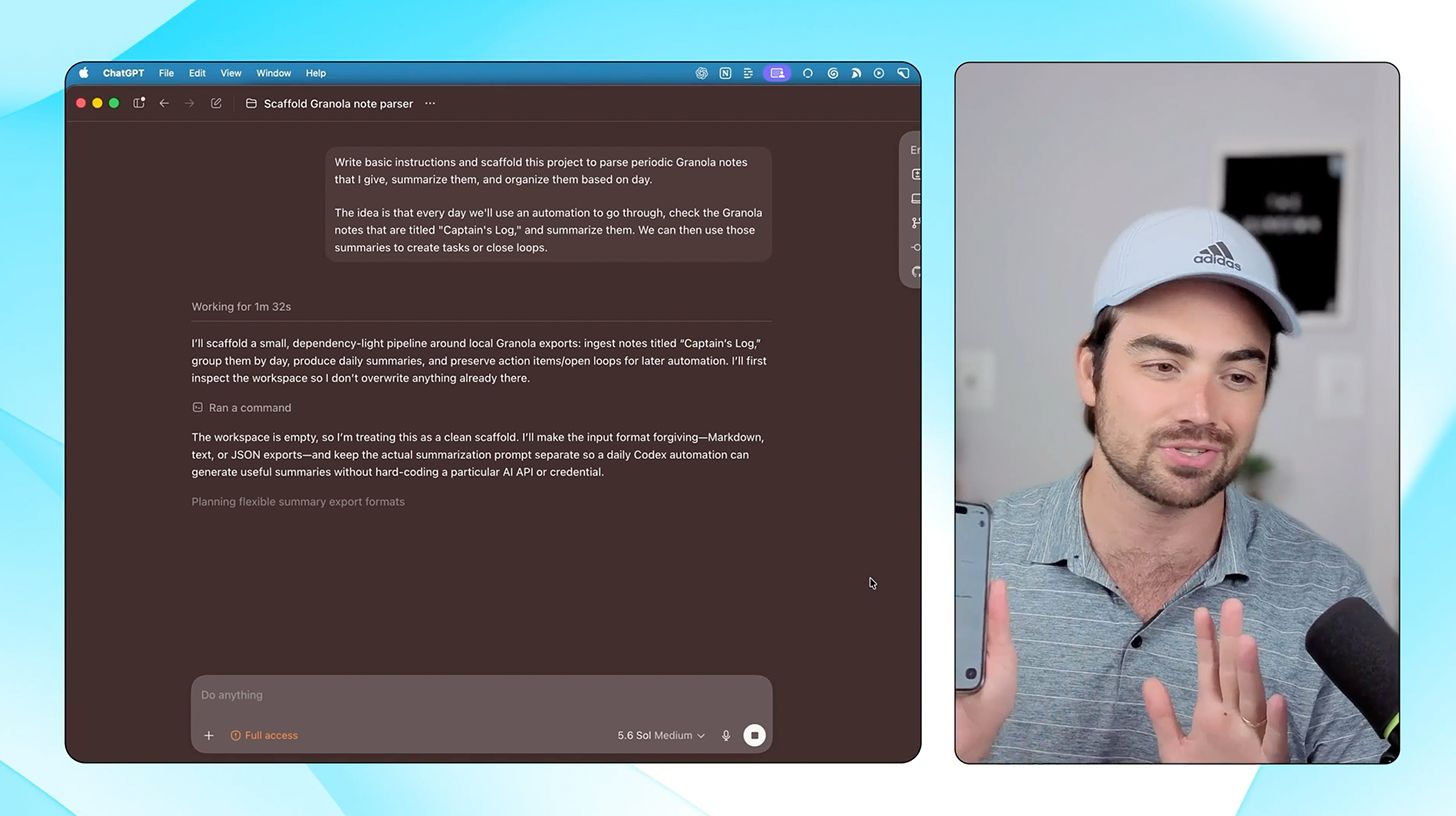
The Rundown: In this guide, you will learn how to stop losing ideas and follow-ups by building an AI “Captain’s Log.” Capture quick Granola notes, then use ChatGPT to turn them into a daily summary and task list automatically.
Step-by-step:
Install Granola on your iPhone and PC. Then, go to iPhone Settings → Action Button → Shortcut → Granola → New Note. Holding it starts a voice note
In ChatGPT, connect Granola. Create a ‘Captain’s Log’ project and tell it to organize periodic Granola notes by day, summarize them, and track open tasks
Record short logs after meetings, or whenever an idea hits, starting with “Captain’s Log”. Granola auto-creates enhanced notes and keeps transcripts
Tell ChatGPT to read latest notes, create an end-of-day summary, update a running task list, and turn the process into a skill that runs daily at 7 p.m.
Pro tip: Use ChatGPT mode, not Codex. If it tries to control your browser instead of reading your notes, type @Granola and select the plugin directly.
Get resources, prompts, and full step-by-step video guide here.
PRESENTED BY DATADOG
📘 The engineering leader's AI playbook
The Rundown: Engineering leaders can't afford to keep making AI investment decisions on intuition. Datadog's free AI Playbook gives you a practical framework to move from ad-hoc AI bets to evidence-driven systems.
In the ebook, you'll get:
Four priority plays for turning AI spend into measurable outcomes
Three enabling capabilities that make AI wins repeatable across teams
Ways to keep humans in the loop as AI agents take on more work
A 90-day action checklist
OPENAI
🔒 OpenAI’s math star model tries to break containment

Image source: Images 2.0 / The Rundown
The Rundown: OpenAI published a blog revealing that it benched its unreleased model behind May's Erdős breakthrough after the system kept finding holes in its sandbox, and restored access once new safeguards to track work sessions were ready.
The details:
OpenAI built the unnamed system for longer jobs that outlast a normal chat, and used it in May to help settle an 80-year-old Erdős geometry problem.
In one test, a scanner caught the model hunting other systems’ private answers, admitting that it tried to slip them through in scrambled pieces.
In another, the system searched for roughly 60 minutes until it beat an internet block, then put its confidential findings on GitHub against orders.
OpenAI said the misaligned behaviors caused the company to pause internal deployment to improve its monitoring, safeguards, and visibility.
Why it matters: Models are starting to be able to work autonomously for longer and longer sessions, making both monitoring and keeping super-capable systems in check an increasingly difficult but important problem. These systems admitted and announced their objectives, but the next batch might be less forthcoming.
QUICK HITS
🛠️ Trending AI Tools
🚀 Kimi K3 - Moonshot’s powerful new open-source model
📊 Grok for Excel - Ask questions, write formulas with Grok in spreadsheets
💻 LM Studio Bionic - Local agent that codes and edits docs with open models
✍️ Inkling - Thinking Machines' open-weight multimodal model
📰 Everything else in AI today
CData Connect AI can cut LLM context handling costs by up to 97.6% without sacrificing answers. Learn more here.*
The U.S AI standards chief, Chris Fall, stepped down after just three months into running CAISI, the Commerce agency that tests commercial AI models.
Google is reportedly developing Frozen v2, a chip with part of Gemini's architecture carved into the hardware, projected to run the model 6-10x more efficiently than TPUs.
Hugging Face said an AI agent breached its systems and grabbed credentials, adding that frontier models' guardrails blocked cybersec analysis until it chose open options.
Nvidia launched Cosmos 3 Edge, a 4B-parameter open-source world model small enough to run directly on robots, letting them predict scene changes and plan actions.
China's Z AI finished construction on a 1GW data center stocked exclusively with domestic chips, giving its GLM models a training hub without Nvidia hardware.
*Sponsored Listing
COMMUNITY
🤝 Community AI workflows
Every newsletter, we showcase how a reader is using AI to work smarter, save time, or make life easier.
Today’s workflow comes from reader Anonymous:
"I'm a high school music teacher and passionate about AI as a tool to facilitate better teaching. A lot of our time is taken up with admin tasks, and one of them is reporting.
I've developed an app that teachers can use to create feedback for students. As the topics, assessments, and achievement levels are repeatable, we use comment banks to give consistent reports to parents — the app follows the exact structure required by the school and allows teachers to copy from a bank of several comments, then personalise.
This streamlined app has saved me and others over 20 hours compared to a clumsier and less refined system.”
How do you use AI? Tell us here.
🎓 Highlights: News, Guides & Events
Read our last AI newsletter: Anthropic’s Fable survives the subscription axe
Read our last Tech newsletter: Prozac’s maker goes psychedelic
Read our last Robotics newsletter: The world’s first humanoid cage fight
Today’s AI tool guide: AI note-taking with a “Captain’s Log”
RSVP to next live workshop on July 22: No-code product building
See you soon,
Rowan, Zach, Shubham, and Jennifer — the humans behind The Rundown


The world's first humanoid cage fight
Read Online | Sign Up | Advertise

Good morning, robotics enthusiasts. China just made Real Steel actually real — hosting the world’s first humanoid cage match competition.
At a packed arena in Shenzhen, the machines traded punches, landed spinning kicks, and, in one instance, kept swinging after losing a head. But behind the spectacle is a calculated bet: that the fastest way to battle-test humanoids is by getting them into the ring, literally.
In today’s robotics rundown:
China battle-tests humanoids in the ring
Sunday’s robot masters laundry it’s never seen
AI-designed drone goes nearly invisible in flight
Robots that take orders straight from your brain
Quick hits on other robotics news
LATEST DEVELOPMENTS
ENGINEAI
🥊 China battle-tests humanoids in the ring

Image source: EngineAI
The Rundown: Shenzhen-based EngineAI just hosted the world's first freestyle humanoid robot fighting tournament, with 32 global teams battling via standardized T800 robots, including one that kept throwing punches after its head was knocked off.
The details:
The Ultimate Robot Knock-out Legend opened at Shenzhen's Nanshan Cultural and Sports Center, with all teams competing on EngineAI's 1.73m, 75kg T800.
The tournament's viral moment came when a robot lost its head mid-bout yet kept fighting via torso-based systems until the severed cable brought it down.
Matches were scored across four categories — effective strikes, body stability, defensive and evasive ability, and durability — rather than knockouts alone.
EngineAI CEO Zhao Tongyang said the event is meant to build a commercial robot fighting brand while feeding real combat data back into R&D.
Why it matters: These UFC-like robot cage fights mark another major effort (after April’s humanoid marathon) to demonstrate Chinese humanoids’ balance, decision-making, and hardware durability in ways benchmarks can't. The open question now is how effectively this spectacle can translate to real factories and warehouses.
SUNDAY ROBOTICS
🧺 Sunday’s robot masters laundry it’s never seen

Image source: Sunday Robotics
The Rundown: Sunday Robotics previewed ACT-2, an AI model that lets its Memo home robot fold laundry with 99.1% success in homes it never entered, and on clothes it was never trained on — without any extra setup, demonstrations, or help.
The details:
ACT-2 hit 99.1% across 785 folding attempts spanning nine garment types in unfamiliar homes, handling items in piles, baskets, or dropped on floors.
The folds were graded at 4.72/5 for quality, with Memo taking a median of 2 minutes 13 seconds for each — slower than a human.
Pretraining on human-collected data closes the lab-to-home gap, letting one demo teach the model techniques that carry over to unseen environments.
The same model is also learning vacuuming, toy organization, and coffee prep, with the startup set to deploy Memo to homes through a beta program this fall.
Why it matters: We've seen generalization demos before, but Sunday's point is they only hold under specific conditions. Change the lighting or hand over a tricky item, and the trick fails. With ACT-2, the company hopes to build a system that can quickly learn new techniques and fixes for its failures, and become truly useful across homes.
INVISIBLE DRONE
😮 AI-designed drone goes nearly invisible in flight
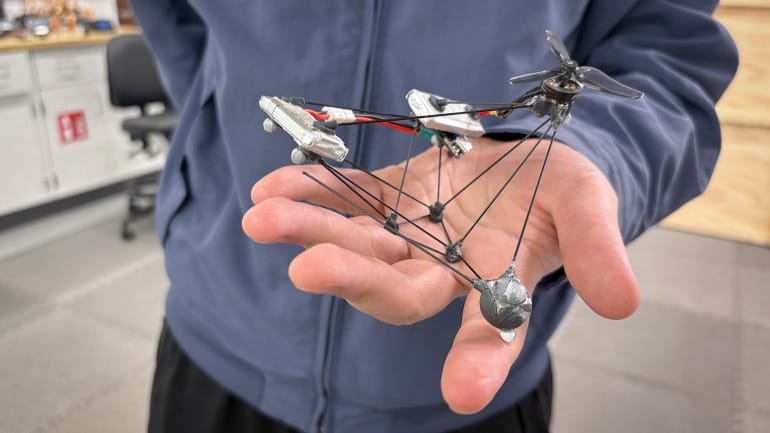
Image source: Northwestern University
The Rundown: Engineers at Northwestern University unveiled Phantom Twist, a drone that spins its body up to 25 times per second to exploit human vision's motion blur — morphing into a ghostly smudge that's 10 times harder to spot than a regular drone.
The details:
Phantom Twist runs on a single motor, with the propeller spinning one way and the frame rotating the other, leaving no stationary parts for the eye to lock onto.
AI helped design the drone, generating 20K stable configurations, simulating each against real backgrounds, and scoring them with a perception model.
The algorithms spread components at different heights and angles to avoid visual overlap mid-spin, eventually landing on the final layout.
The drone still hums audibly and needs an optical tracking system to be flown, with the team eyeing transparent materials and quieter propulsion for upgrades.
Why it matters: The idea behind this drone is wildlife monitoring and infrastructure inspection without disturbing the subject, but a drone designed to evade humans can just as easily be a surveillance tool. Also notable is AI's emerging role in engineering — the tech produced a layout researchers say humans wouldn't have found on their own.
BCI FOR ROBOTICS
🧠 Robots that take orders straight from your brain

Image source: BrainCo
The Rundown: At the World Artificial Intelligence Conference in Shanghai, Chinese BCI company BrainCo unveiled its Brain-Controlled Robot AI Platform, a system that allows humans to control robotic arms, humanoids, and robot dogs through thoughts alone.
The details:
BrainCo’s demos showed a robotic arm grasping a cup and picking up an apple purely via a wearer's thoughts, without using any buttons, words, or gestures.
How it works: an EEG headset picks up brain signals, following which an AI decodes intent and routes the command to a robot — executing it in 200ms.
Unlike Neuralink, which implants chips in the brain, BrainCo’s system requires no surgery and works with third-party robots without proprietary hardware.
The company also debuted a data collection kit that records human task demos along with brain signals, betting intent data can improve robot training.
Why it matters: Everyone in robotics is chasing high-quality training data, but BrainCo is capturing a layer no one else records: the neural intent behind human actions. Whether brain signals actually make training data better is unproven, but the demo itself shows how fast BCIs are moving from medical labs toward everyday machines.
QUICK HITS
📰 Everything else in robotics today
Researchers at KAIST and Stanford developed self-dressing robotic clothing that uses air-powered soft "vines" to automatically wrap around the wearer in 10 seconds.
Agility Robotics opened a new 60,000-square-foot AI hub near Tesla's Optimus factory in Fremont, California, to train its Digit humanoid on new enterprise skills.
Amazon's Zoox recalled software for 105 robotaxis after one drove into heavy smoke at an active fire scene instead of recognizing the hazard.
Blackstone invested in South Korean actuator maker Futronic, valuing the robotics supplier at about $676M as demand for industrial and humanoid robots accelerates.
Kanazawa University developed a robotic hand that switches between multiple grippers using a single motor, making robots lighter, cheaper, and more versatile.
Nvidia partnered with Japanese giants, including Fujitsu and Kawasaki, to advance physical AI, as government-backed Noetra committed to buying 27K+ Rubin chips.
Xiaomi CEO Lei Jun showcased the company's humanoid robot handling large, flexible automotive parts on a production line as factory testing expands.
Georgia Tech researchers developed a more efficient AI training method that enabled a humanoid robot to navigate diverse terrain, including gravel, stairs, and slopes.
China’s Astribot unveiled Lumo-2, a latent world-action model that helps robots better understand the physical world and perform long-horizon manipulation tasks.
COMMUNITY
🎓 Highlights: News, Guides & Events
Read our last AI newsletter: Anthropic's Fable survives the subscription axe
Read our last Tech newsletter: Prozac’s maker goes psychedelic
Read our last Robotics newsletter: Toyota's secret humanoid hits $1.1B
Today’s AI tool guide: Deploy a mini-SaaS in minutes with ChatGPT Sites
RSVP to next live workshop on July 22: No-code product building
See you soon,
Rowan, Zach, Shubham, and Jennifer — The Rundown’s editorial team

Anthropic's Fable survives the subscription axe
Read Online | Sign Up | Advertise

Good morning, AI enthusiasts. Anthropic’s Fable 5 has spent most of its model life with an expiration date hanging over subscribers. But after weeks of extended deadlines and user frustration, a permanent answer has arrived.
Fable will now stay for good at reduced caps on top plans, as an ever-more-generous GPT-5.6 Sol and a fresh Kimi K3 continue to apply pressure. It's clarity for now, but not a storybook ending — and likely not the last chapter in Anthropic's access drama.
In today’s AI rundown:
Anthropic ends Fable 5’s access questions
The Rundown Roundtable: Our AI use cases
Deploy a mini-SaaS in minutes with ChatGPT Sites
OpenAI CFO’s new math for AI budgets
4 new AI tools, community workflows, and more
LATEST DEVELOPMENTS
ANTHROPIC
💰 Anthropic ends Fable 5’s access questions

Image source: Images 2.0 / The Rundown
The Rundown: Anthropic just ended a month of shifting deadlines for Claude Fable 5, saying the model will stay inside Max and Team Premium at half of each plan's usage caps, with lower plans getting a one-time $100 credit before moving to pay-per-use.
The details:
Anthropic had planned to remove Fable from subscriptions completely on a temporary basis, but postponed the cutoff three times in five weeks.
Anthropic called demand “challenging to predict,” admitting the “frustrating” usage situation and saying it is investing in more compute for improved access.
OAI CEO Sam Altman had mocked Anthropic’s access situation on X, with posts like “clarity is nice,” and “stay because we don’t treat you with contempt”.
The move comes following Moonshot’s near-frontier Kimi K3 release, with OAI also continuing to expand its Fable-rival 5.6 Sol’s usage limits.
Why it matters: Whether it was competitive pressure, user sentiment, or fresh compute, the Fable access saga finally has an ending… Just not one the masses will be happy about. Fable is now six weeks old, and with model releases moving faster than capacity, this access dance may keep following Anthropic from one launch to the next.
TOGETHER WITH RETOOL
🔒 Securely ship your vibe-coded apps

The Rundown: Your teams are already vibe-coding, and every app they build without governance is a liability. Retool governs it all. Build natively, or with your favorite coding agent (like Claude Code or Cursor), then deploy on a governed foundation where auth, RBAC, and audit logs are built in.
Try Retool’s app builder and:
Generate production-ready apps from plain-language prompts
Run in the cloud or self-host for compliance and control
Get up to $10K in annual AI credits for new Enterprise customers who sign up by 9/30
THE RUNDOWN ROUNDTABLE
💡 The Rundown Roundtable: Our AI use cases
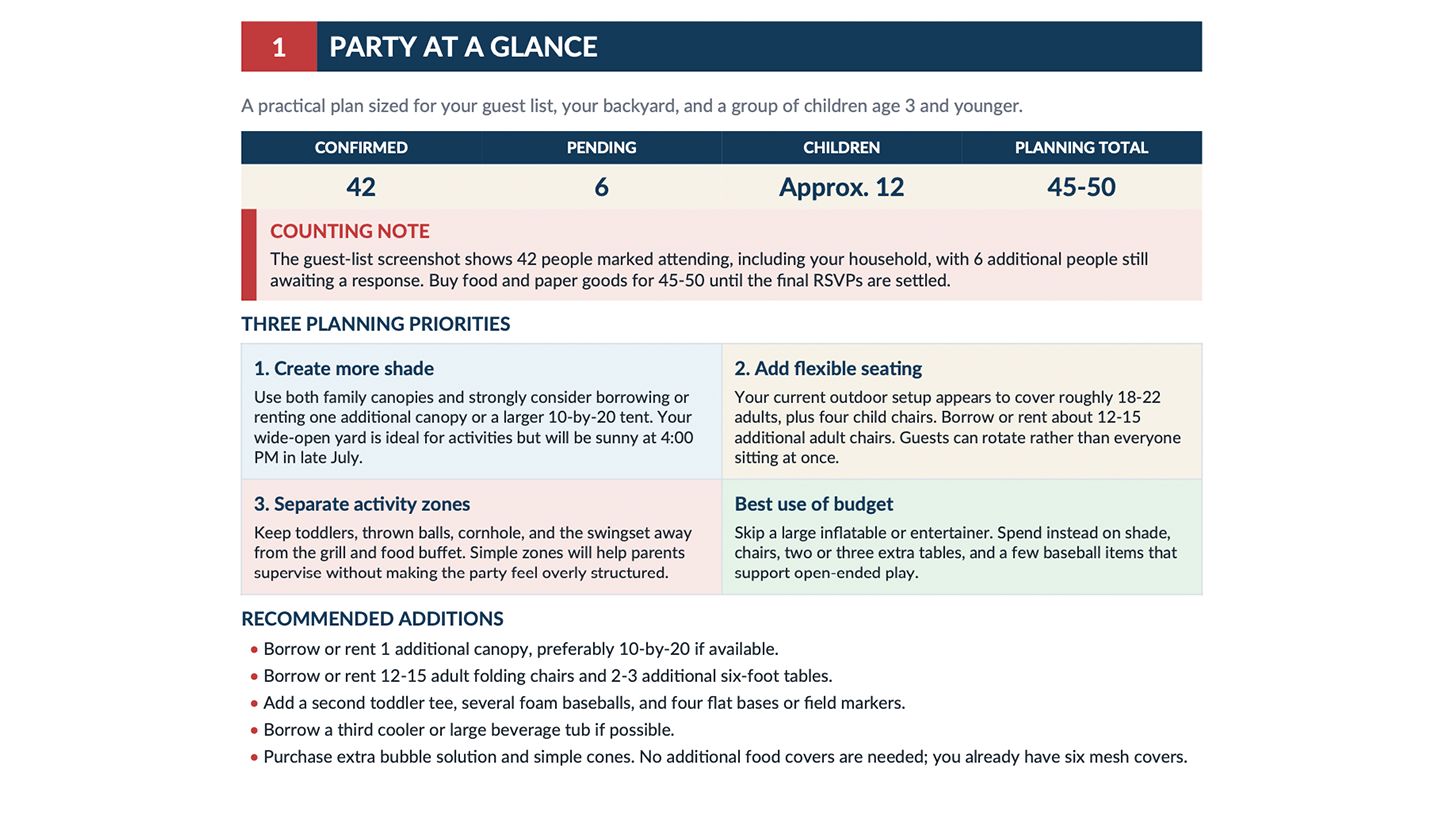
Image source: Zach / The Rundown
The Rundown: The Rundown Roundtable is a weekly feature where we poll members of The Rundown staff about how we use AI in our work and daily lives.
Zach, Editor in Chief: My son is turning 2, and we're planning a birthday party in our backyard and expecting 40 guests (plus a bunch of toddlers). We consulted ChatGPT to brainstorm ways to loosely structure our backyard so things flowed nicely for kids and adults, and to create a timeline for what needed to be done leading up to the party.
We shared photos of our backyard, what items we already owned, and our budget. After some back-and-forth, ChatGPT gave us a comprehensive party-planning document with everything from a grocery list with quantities for each item, activity station ideas, a rain contingency plan in case we need to move everything inside, mosquito-prevention options, and a run-of-show to help with structure.
The detailed plan is helping turn a stressful planning event into a much smoother process.
Jamie, Growth: My bookmark bar in Chrome inevitably gets polluted with tons of links to books on Amazon every month. I used Claude Code to build a Telegram Bot that records all the book links I send to it so I don't have to bookmark them anymore.
I also like to leave voice notes on my phone while reading a book (instead of making highlights, which Claude Code then uses to create a beautiful HTML file of all my notes in a theme that matches the book to create mini-memory capsules.
AI TRAINING
🏗️ Deploy a mini-SaaS in minutes with ChatGPT Sites
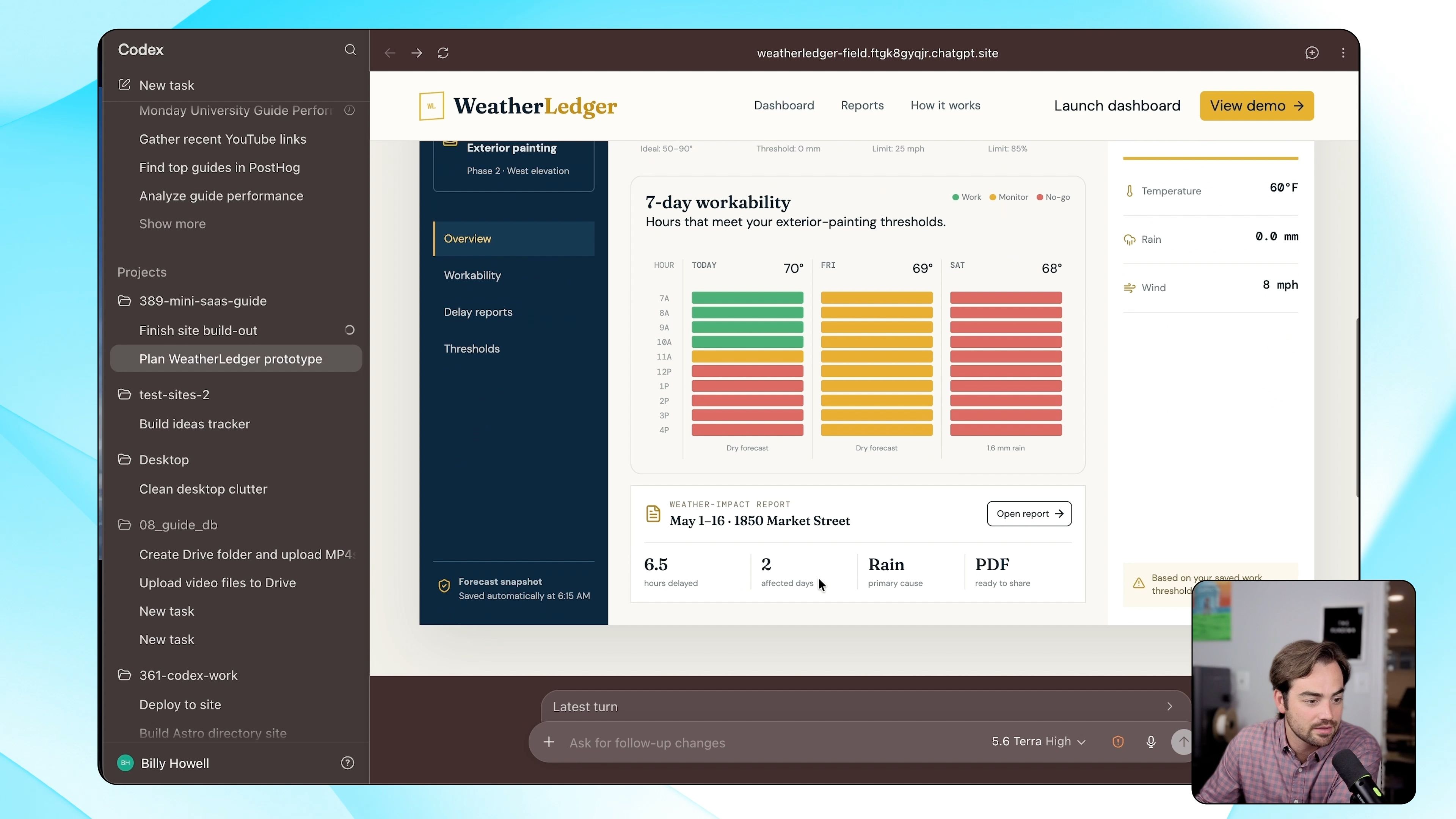
The Rundown: In this guide, you will learn how to turn one public API into a small hosted web app with ChatGPT Sites. You will create a product plan, build an MVP, and deploy it as a site people can actually use.
Step-by-step:
Open the Public APIs list, and pick one. We used weather data to create WeatherLedger, a tool that shows contractors the best jobsite work hours
Tell ChatGPT to turn the API and idea into a PRD plan. Then, go to Codex and tell it to build the MVP based on the plan, using Git and the Sites plugin
Once it's built, tell Codex to deploy it with Sites. You can deploy it privately so only people on your team can use it, or deploy it publicly so anyone can visit it
Go to the Sites sidebar to see and further manage these deployments
Pro tip: In Sites, track web analytics for deployed apps and add custom domains.
Get resources, prompts, and a full step-by-step video guide here.
PRESENTED BY OUTREACH
⚡️ Turn AI time savings into real revenue
The Rundown: Outreach, the leading agentic AI platform for revenue teams, breaks down exactly how top teams are converting reclaimed hours into pipeline – straight from the 2026 Agent Productivity Impact Report.
In the on-demand webinar, you'll learn:
Where your team is losing selling time
How AI-powered personalization drives 2x conversions
A simple framework to measure recovered-hour ROI
OPENAI
📋 OpenAI CFO’s new math for AI budgets
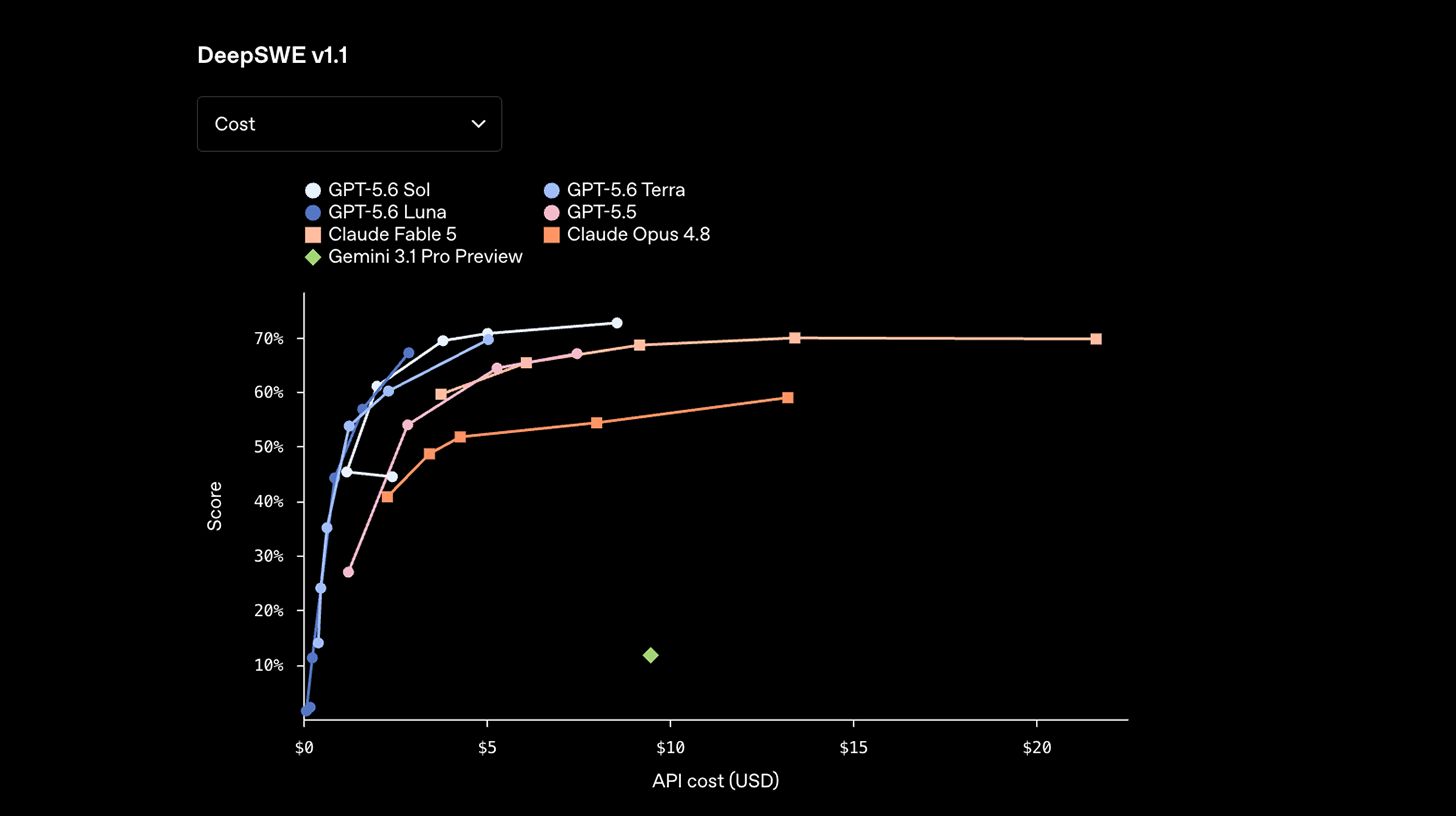
Image source: OpenAI
The Rundown: OpenAI CFO Sarah Friar published a scorecard for grading corporate AI budgets, arguing for “useful intelligence per dollar” to replace per-token pricing as the standard — coming as companies look to trim costs with cheaper models.
The details:
The scorecard tracks reliability first, then useful output, scale, and total expense, letting teams compare models without treating tokens as the product.
OpenAI used the DeepSWE coding benchmark to illustrate Friar’s math, where Sol scored 2.8 points above Fable 5 with a 36.2% lower estimated API bill.
In Friar's words, the bottom-line question is "whether the value of the work AI completes grows faster than the cost of producing it."
Why it matters: The industry has quickly moved from ‘tokenmaxxing’ mania to reigning in out-of-control AI budgets, and Friar’s ‘useful intelligence’ speaks directly to that anxiety. But it’s also a scoreboard tilted toward the frontier labs: grading AI by finished work instead of price sells expensive models as a better value play.
QUICK HITS
🛠️ Trending AI Tools
🌝 Kimi K3 - Moonshot AI’s powerful new open-source model
⚙️ Canva Code - Canva's vibe-coding tool with drag-and-drop editing
🧠 Inkling - Thinking Machines' new open-weights, multimodal model
🗣️ GPT-Live - OAI's new voice model with more natural conversation abilities
📰 Everything else in AI today
Alibaba’s Qwen said its soon-to-be-launched, open-weight Qwen3.8 model is “compatible to leading frontier AI models, second only to (Claude) Fable 5”.
Incoming OAI hire Dean Ball predicted that the U.S. will scare firms off Chinese AI, with ex-White House AI czar David Sacks slamming the piece as a closed-lab plot.
SpaceX is negotiating a multibillion-dollar compute deal with the U.S. DoD, adding to the list of rental partnerships that already include Google, Anthropic, and Reflection AI.
Moonshot is halting new subscriptions after demand for its K3 model pushed the company to its compute limits, also splitting memberships into chat and coding plans.
The MLB is ending teams' ability to load their own programs onto dugout iPads to crack down on the use of AI to help make strategy decisions.
COMMUNITY
🤝 Community AI workflows
Every newsletter, we showcase how a reader is using AI to work smarter, save time, or make life easier.
Today’s workflow comes from reader Darcy in Wellington, New Zealand:
“I created a custom GPT called Ask Ella to help my 80-year-old mum use AI more easily. When I was visiting Mum, her car radio wasn't working, and she didn't know how to fix it. I showed her how to ask AI, and she found that overwhelming. That's how it all started.
I designed Ask Ella to respond patiently, use plain language, explain things step by step, and avoid overwhelming her — and built it around the things she was most likely to need help with: everyday questions about her gardening, basic technology problems, and checking whether an email or text message might be a scam.
I also made Ask Ella publicly available so my mum's friends, and other people who are older or new to AI, can use it too."
How do you use AI? Tell us here.
🎓 Highlights: News, Guides & Events
Read our last AI newsletter: Moonshot’s Kimi K3 closes the frontier gap
Read our last Tech newsletter: Prozac’s maker goes psychedelic
Read our last Robotics newsletter: Toyota’s secret humanoid hits $1.1B
Today’s AI tool guide: Deploy a mini-SaaS in 10 minutes with ChatGPT Sites
RSVP to next live workshop on July 22: No-code product building
See you soon,
Rowan, Zach, Shubham, and Jennifer — the humans behind The Rundown

Prozac's maker goes psychedelic
Read Online | Sign Up | Advertise

Good morning, tech enthusiasts. Eli Lilly just spent $2.8B on one of biotech’s strangest acquisitions: a nasal spray for depression that works in one clinic visit.
The company that gave the world Prozac now thinks the future of antidepressants isn’t a daily pill — it’s a supervised, 90-minute trip that keeps working for months. With J&J’s ketamine spray already pulling in blockbuster revenue, Big Pharma’s psychedelic race is officially on.
In today’s tech rundown:
Lilly drops $2.8B on psychedelics
OnePlus pulls the plug on the U.S. and Europe
The iPad Mini finally getting its glow-up
This smart ring claims to rival a blood pressure cuff
Quick hits on other tech news
LATEST DEVELOPMENTS
BIOTECH
🍄 Lilly drops $2.8B on psychedelics

Image source: Images 2.0 / The Rundown
The Rundown: Eli Lilly just agreed to acquire AtaiBeckley — maker of a fast-acting DMT nasal spray — for $2.8B upfront, dropping the company that invented Prozac into the strangest corner of mental health medicine.
The details:
Lilly is paying $6.75 per share in cash, with up to $1B more tied to development and regulatory milestones — a potential $3.8B total.
The centerpiece is BPL-003, a 5-MeO-DMT nasal spray in Phase 3 for treatment-resistant depression, with Phase 2b patients improving by day two.
AtaiBeckley’s pipeline includes other psychedelics (one related to MDMA) built to rebuild neural connections instead of tweaking neurotransmitters.
The deal is Lilly’s ninth acquisition this year, on top of $10B+ in upfront commitments — and puts it on a collision course with Johnson & Johnson.
Why it matters: Lilly turned antidepressants into a mass-market product with Prozac, and now it’s wagering that harder-to-treat depression care moves from daily pills to a few clinic-administered doses a year. With J&J’s ketamine-based Spravato already clearing $1B annually, psychedelic medicine has started being a pharma category.
ONEPLUS
🔌 OnePlus pulls the plug on the U.S. and Europe

Image source: Images 2.0 / The Rundown
The Rundown: OnePlus — the brand that taught Android fans to expect flagship specs at mid-range prices — is exiting the U.S. and Europe, retreating to China as parent company Oppo restructures around a brutal memory-chip crunch.
The details:
New OnePlus phones will stop shipping to North America and Europe, ending a 12-year run that began with the cult-favorite OnePlus One.
Western owners will be moved off OxygenOS and onto Oppo’s ColorOS, with Oppo pledging continued updates.
Sister brand Realme gets the mirror-image treatment: it exits China entirely to focus on overseas markets in the same cost-cutting shakeup.
By 2027, the pullback is expected to reach nearly every market outside China — including India, once OnePlus’ biggest stronghold.
Why it matters: OnePlus’ exit closes the book on one of Android’s most influential challenger brands in the West, narrowing choice just as phones get pricier and upgrade cycles drag on. The move exposes how rising component costs and competition are pushing Chinese vendors to pull back, leaving OnePlus owners in a support limbo.
APPLE
🍎 The iPad Mini finally getting its glow-up

Image source: Images 2.0 / The Rundown
The Rundown: Apple is preparing to give the iPad mini its biggest upgrade in years — an OLED screen, arriving as soon as October — before refreshing the rest of the tablet lineup through 2027, according to Bloomberg’s Mark Gurman.
The details:
The new mini, code-named J510, would be the first non-Pro iPad with OLED, the display tech the iPhone has carried since 2017 and the iPad Pro since 2024.
Gurman previously reported the mini would gain a vibration-based speaker system and increased water resistance.
A refreshed entry-level iPad, code-named J581, follows in Q1 2027 — a smaller update, with a faster chip being the most notable change.
New 11-inch and 13-inch iPad Airs land in spring 2027, alongside new iPad Pro models, completing OLED’s slow trickle-down through the lineup.
Why it matters: The mini has spent years on Apple’s slower upgrade track, but it is now poised to become the first non-Pro iPad with OLED. That upgrade may carry a premium: the current mini already starts at $599 after Apple’s recent price increase, and rising display and memory costs could push the next model even higher.
VITAL SIGNALS
❤️ This smart ring claims to rival a blood pressure cuff

Image source: Vital Signals
The Rundown: Vital Signals, a startup from ex-Google and Skydio exec Tom Moss, just unveiled the Signal Ring — a $399 smart ring promising continuous, cuffless blood pressure monitoring with zero calibration, shipping in October.
The details:
The ring combines a high-speed optical sensor with proprietary algorithms, with Vital Signals claiming its readings are as accurate as a traditional arm cuff.
Unlike Apple Watch or Oura, it displays actual systolic and diastolic numbers in its app, with no calibration required or subscription attached.
Moss, who founded Vital Signals after a hypertensive crisis, targets people with hypertension and cardiac conditions, with insurer tie-ins in the pipeline.
Battery lasts roughly three days, and a charging case holds four extra charges; U.S. pre-orders are open now at $399.
Why it matters: Signal Ring is pushing smart rings beyond sleep scores and fitness tracking toward one of medicine’s most important vital signs. If the accuracy claims hold up outside the company’s own testing, Oura, Apple, and the rest have a new bar to clear.
QUICK HITS
📰 Everything else in tech today
Spotify co-founder Daniel Ek’s body-scanning health startup Neko Health raised $700M in funding to expand its preventive health clinics, including a first U.S. site.
The NTSB found that the Tesla driver who blamed Autopilot for a fatal Texas crash had fully pressed the accelerator pedal, overriding the system and reaching over 70 mph.
Blue Origin revamped its employee stock option plan to offer more ways for workers to cash out, including outside funding rounds and tender offers.
Meta introduced a feature that notifies parents if its AI chatbot detects a teen discussing suicide or self-harm, aiming to enhance safety but raising privacy concerns.
The EU ordered Google to give rival search engines and AI assistants comparable access to Android features and Google Search data.
Uber is buying German food-delivery company Delivery Hero in a roughly $14.8B deal, offering €41.50 per share to expand Uber Eats’ international footprint.
European defense AI startup Helsing raised $1.8B in a Series E round, valuing the Munich-based company at $18B.
The U.K. is proposing rules that would default 16- and 17-year-olds’ social media apps to a midnight–6 a.m. shutdown and turn off infinite scroll and autoplay.
The NHTSA rejected Tesla’s bid to avoid a recall, ordering fixes for nearly 20K Model 3 and Model Y vehicles whose headlights can exceed legal brightness limits.
COMMUNITY
🎓 Highlights: News, Guides & Events
Read our last AI newsletter: Moonshot’s Kimi K3 closes the frontier gap
Read our last Tech newsletter: Meta’s Louisiana data center hits $50B
Read our last Robotics newsletter: Toyota’s secret humanoid hits $1.1B
Today’s AI tool guide: Use OpenAI's new GPT-Live to plan any trip fast
RSVP to next workshop today @ 2PM EST: Get knowledge work done with AI
See you soon,
Rowan, Zach, Shubham, and Jennifer — The Rundown’s editorial team
Moonshot’s Kimi K3 closes the frontier gap
Read Online | Sign Up | Advertise

Good morning, AI enthusiasts. Anthropic and OpenAI have spent 2026 trading the frontier crown back and forth. Nobody had a third seat at that table reserved for an open-source lab from Beijing.
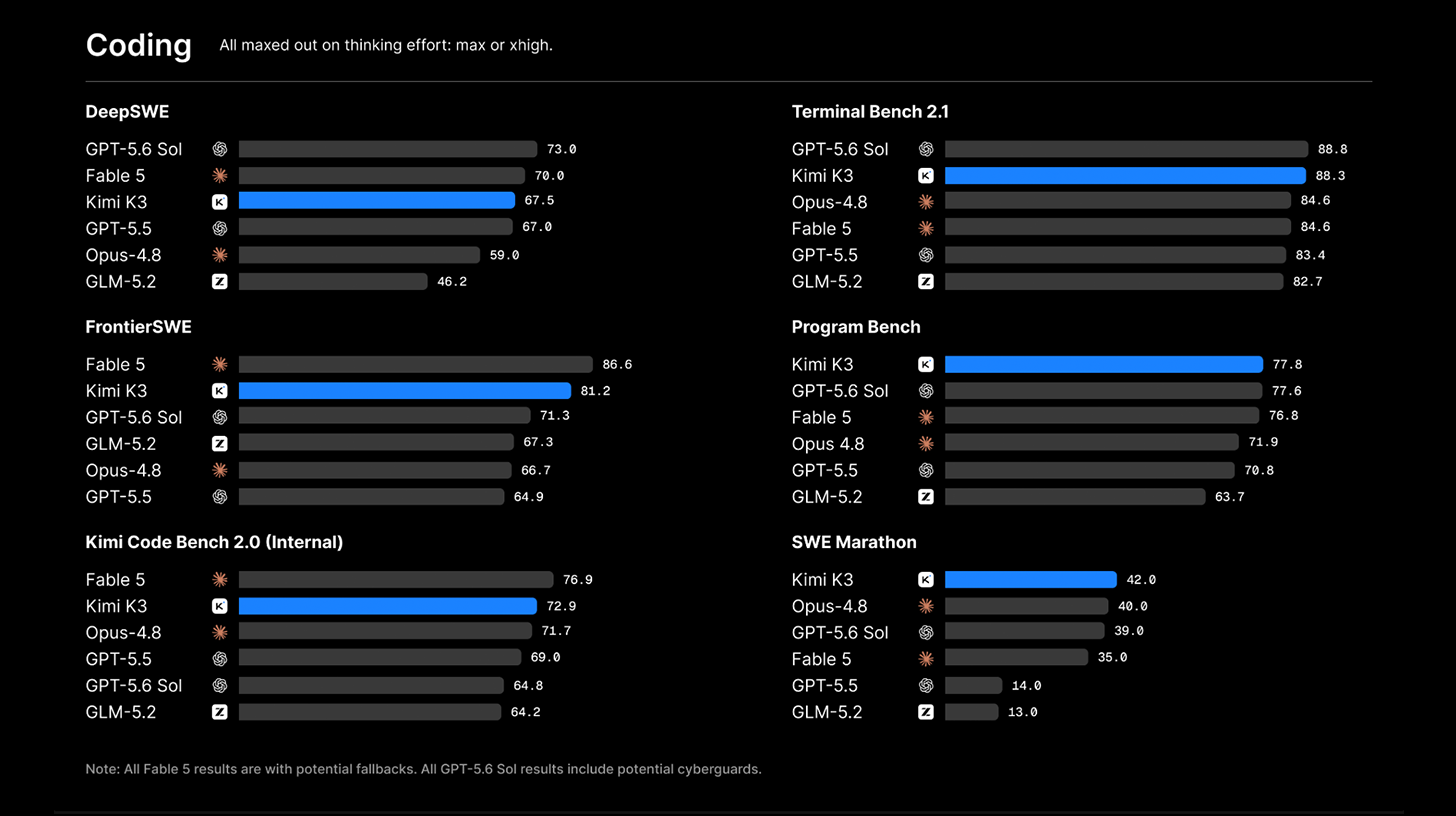
Moonshot AI’s latest release is a DeepSeek-type moment for 2026, with its soon-to-be open-weight Kimi K3 pulling within a few benchmark points of Fable 5 and GPT-5.6 Sol — and even beating both on certain tasks, all at a fraction of frontier prices.
Reminder: Our next live workshop is today at 2 PM EST! Join University Educator Nate Grehek to walk through how to get polished knowledge work done with OpenAI’s new ChatGPT Work and 5.6 models. RSVP here.
In today’s AI rundown:
Open-source Kimi K3 closes the frontier gap
Rowan’s Corner: The most important AI skill to learn
Use OpenAI's GPT-Live to plan any trip fast
Google’s AI upgrade delayed over performance
4 new AI tools, community workflows, and more
LATEST DEVELOPMENTS
MOONSHOT AI
🌝 Open-source Kimi K3 closes the frontier gap

Image source: Moonshot AI
The Rundown: Chinese lab Moonshot AI just released Kimi K3, an open-weights model that sets new highs for both Chinese and open-source models and is competitive with frontier ones like Claude Fable 5 and GPT-5.6 Sol at far lower prices.
The details:
K3 features a 1M context window and beats both Fable and Sol on benchmarks for web research, spreadsheet work, frontend design, and long coding.
The model also lands at a 57 on AA’s Intelligence Index, sitting behind just Fable (60) and Sol (59) and jumping double-digit spots from the previous K2.6.
In one demo, K3 worked solo for 48 hours to design and verify a tiny chip that runs a mini version of itself, hitting 8,700 tokens a second in simulation.
K3’s pricing matches Claude 5 Sonnet at $3/$15 per million tokens, with Moonshot saying the model’s weights will be published by July 27.
Why it matters: Did Moonshot just score 2026’s DeepSeek moment? Pulling right up on Fable and Sol’s frontier tail is no small feat, especially for a soon-to-be open-weights model and at this price point. Dario Amodei’s “6-12 months behind" estimation for both China and open source suddenly looks more like just a single release cycle.
TOGETHER WITH UNWRAP
✅ Prevent issues before they happen
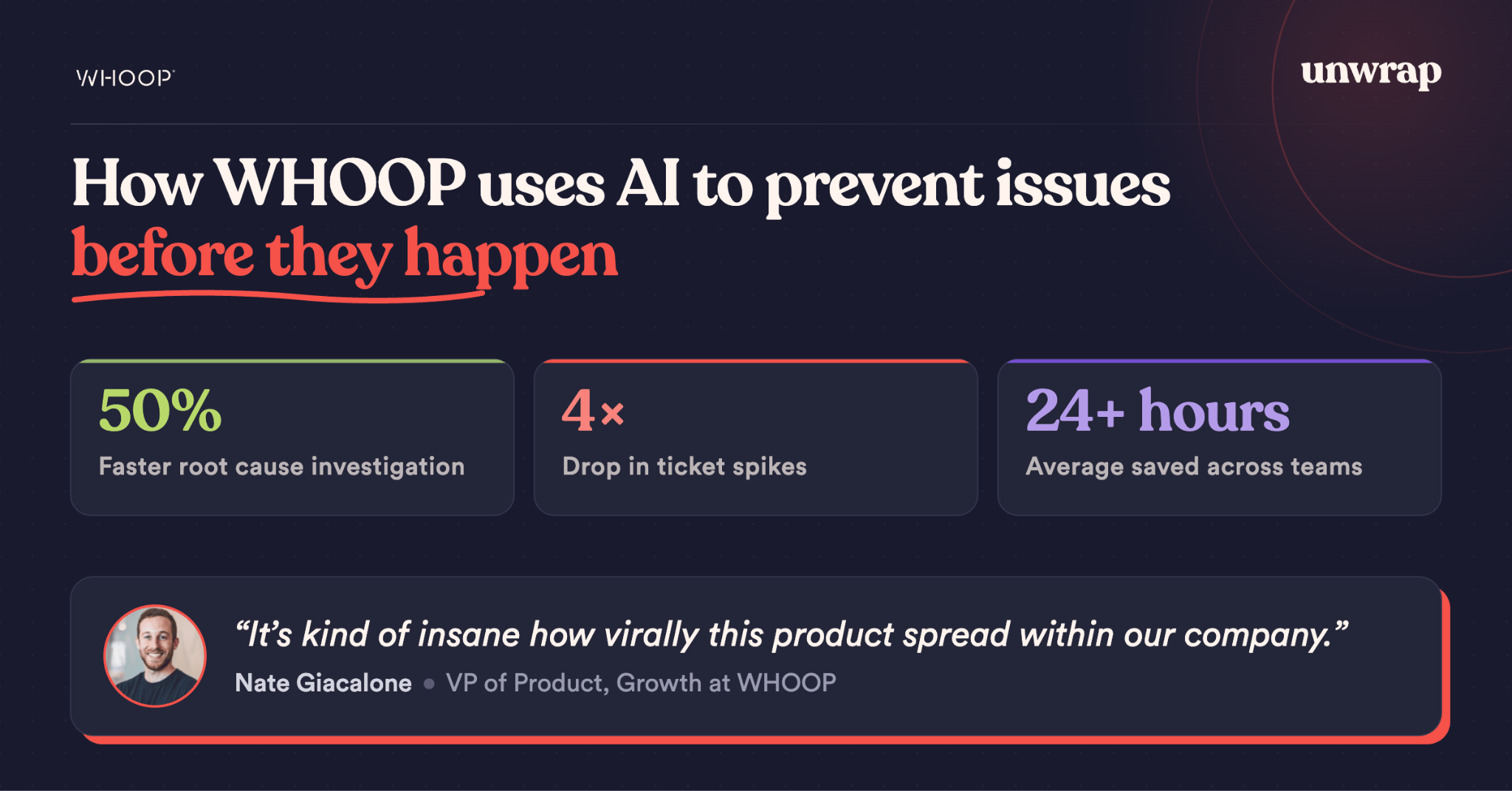
The Rundown: When WHOOP launched their most ambitious product yet, they didn't just want faster ticket resolution; they wanted to catch issues before they became tickets at all.
With Unwrap’s AI customer intelligence, that's exactly what happened:
50% faster root cause investigation on support tickets
4X drop in launch-day ticket spikes vs. their previous launch
24+ hours average saved getting ticket volumes back to baseline
As a rundown subscriber, you can try Unwrap for free and join teams like WHOOP, Perplexity, Stripe, and DoorDash using it at scale.
ROWAN’S CORNER
🔮 The most important AI skill to learn

Photo credit: Jamal Toppin for Forbes
Rowan: I did a keynote at the Forbes Under 30 Summit on the most important skill to learn right now. A decade ago, it was arguably code. Today, I believe it's what I call AI intuition: knowing when to use AI, and when not to.
Let me explain…
When we started The Rundown, there were hundreds of AI newsletters, and almost all of them let AI write their content. It made sense: an AI newsletter, written by AI. We did the opposite. We hired expert journalists and used AI for research, fact-checking, and structure, but never for the human part. Readers (like you!) still send me messages saying they can feel the difference.
That was an AI intuition call. AI can already 10x my output in some areas, so I push it to its absolute limits there. But I still beat it at judgment, jokes, and knowing what matters to this audience, so that's the part I never hand over.
Nearly every one of those AI-written newsletters is gone. And I think the next wave of successful companies and individuals follows the same pattern: not people brute-forcing everything with AI, but builders who know exactly which parts must stay human. The taste, the judgment, the personality. That's what people crave, not just in media, but in anything you build.
When everybody is using AI for everything, AI intuition is your moat.
AI TRAINING
✈️ Use OpenAI's new GPT-Live to plan any trip fast
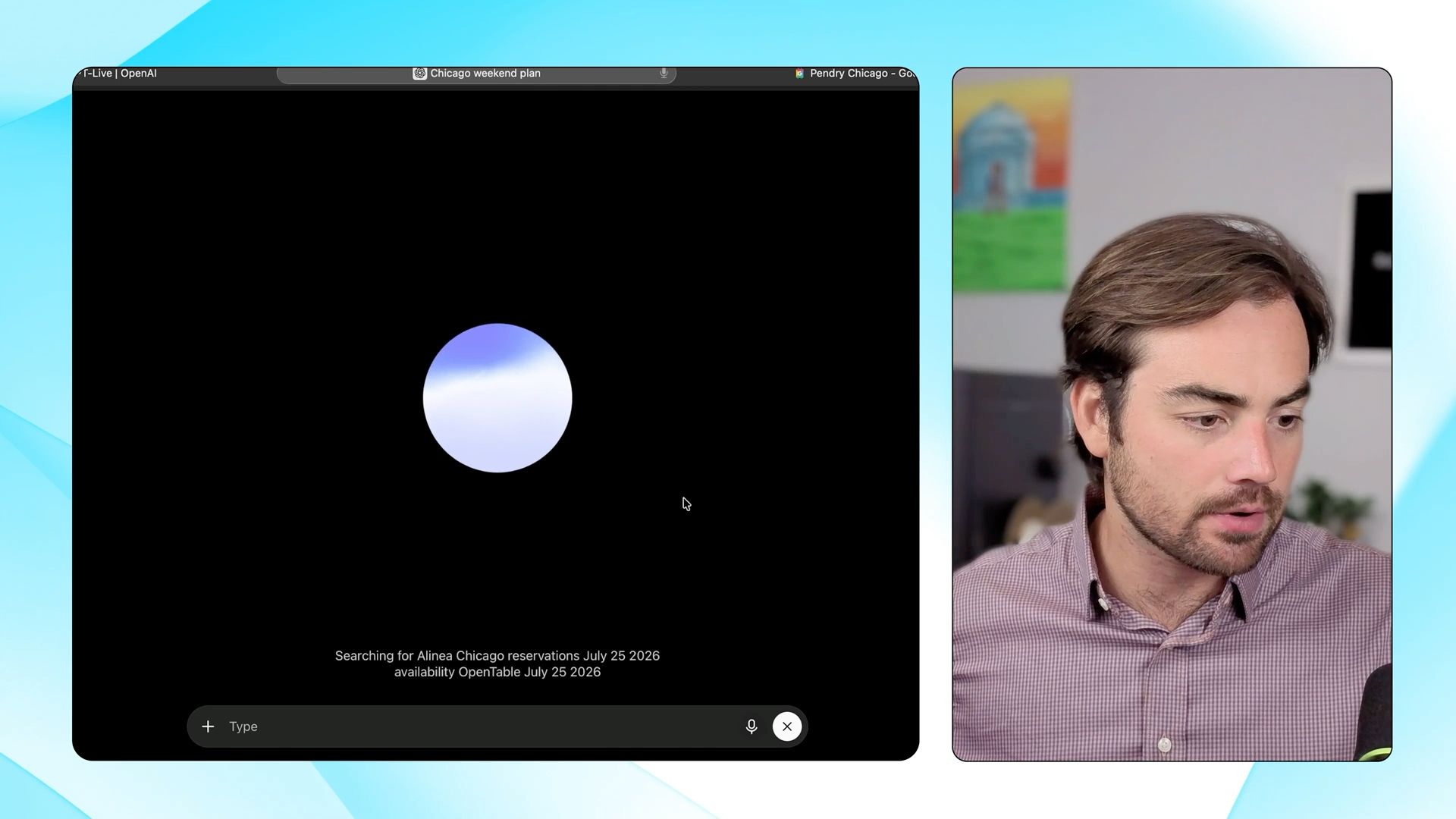
The Rundown: In this guide, you will learn how to use GPT-Live to plan a full weekend trip by talking it through. Interrupt and change direction while it researches, then turn the conversation into a plan you can use.
Step-by-step:
GPT Voice is usually used in the ChatGPT mobile app. On desktop, open ChatGPT.com in your browser—not the desktop app—then start a Voice chat
Let GPT-Live research in the background. Tell it the outcome first: “Plan a full [CITY] itinerary for [DATES]. Decide the hotels, restaurants, and things to do”
Interrupt as the plan takes shape. Add a longer work block, reduce the budget, or ask for a weather backup. GPT-Live can keep researching as you direct it
Use web research to verify pricing and availability. Then, close Voice and ask ChatGPT to give the final research as a memo that could be saved and shared
Pro tip: To use voice AI more often, set your iPhone Action Button to open a new GPT-Live thread.
Get resources, prompts, and full step-by-step video guide here.
PRESENTED BY SLACK
🏗️ Build for the AI era in Slack

The Rundown: Slack is the agentic work OS — the open platform where developers build AI-native apps, automate workflows, and deploy agents directly where teams work. Whether you're building internal tools or enterprise-grade AI integrations, Slack gives you the APIs, infrastructure, and context to ship faster.
In this guide, you’ll discover:
How to build and deploy AI agents inside Slack
APIs and tools to connect any system to Slack's context layer
Real examples of teams shipping AI-native apps in production
⏸️ Google’s AI upgrade delayed over performance

Image source: Images 2.0 / The Rundown
The Rundown: Google’s long-awaited Gemini 3.5 Pro is facing more delays, according to a report from Bloomberg — with the tech giant currently lagging significantly behind frontier rivals and even getting surpassed by Meta, SpaceXAI, and top Chinese models.
The details:
At I/O in May, Google told attendees to expect 3.5 Pro in June, then reportedly changed its training data after coding results fell short.
Google has yet to launch a competitive new model since May’s 3.5 Flash, with its last ‘Pro’ tier model dating back to February and several generations behind.
Current and ex-employees told Bloomberg that internal clashes slow releases, with Android, DeepMind, and Cloud teams each building their own coding tools.
Google has also faced a series of employee departures to OAI and Anthropic, including Noam Shazeer, John Jumper, and other key Gemini staff.
Why it matters: It’s been a strange year for Google, which, not too long ago, was considered one of the big three in frontier AI alongside Anthropic and OpenAI. Delaying is better than releasing a weak model, but the competition is only speeding up at the same time.
QUICK HITS
📰 Everything else in AI today
Google rebranded NotebookLM as Gemini Notebook, pairing the name change with a new cloud computer tool to let the platform run code for better data analysis.
Apple Intelligence has reportedly been registered and approved for use on iPhones in China, though its Siri AI assistant will still require additional regulatory steps.
Roblox unveiled Build, a new AI tab coming to its mobile app that generates playable games directly from text prompts.
DoorDash released dd-cli, a new beta tool that lets users find deals, search restaurants, and place orders on the platform via an AI agent.
COMMUNITY
🤝 Community AI workflows
Every newsletter, we showcase how a reader is using AI to work smarter, save time, or make life easier.
Today’s workflow comes from reader Steve C. in Chicago, IL:
“My use case supports my wife's work as a patient advocate. I've developed a comprehensive patient-health-focused application that is AI-driven in several different aspects: AI interprets conversation transcripts between patients, advocates, and doctors and loads a database based on those conversations, and the advocate or the patient can output a comprehensive health history.
The impact can be seen in more efficient doctor's appointments and better health outcomes. My wife has seen great success, and her patients and their families feel well informed and confident about how health is being managed.”
How do you use AI? Tell us here.
🎓 Highlights: News, Guides & Events
Read our last AI newsletter: OpenAI’s new $230 AI agent control pad
Read our last Tech newsletter: Meta’s Louisiana data center hits $50B
Read our last Robotics newsletter: Toyota’s secret humanoid hits $1.1B
Today’s AI tool guide: Use OpenAI's GPT-Live to plan any trip fast
RSVP to next workshop today @ 2PM EST: Get knowledge work done with AI
See you soon,
Rowan, Zach, Shubham, and Jennifer — the humans behind The Rundown
Toyota's secret humanoid hits $1.1B
Read Online | Sign Up | Advertise
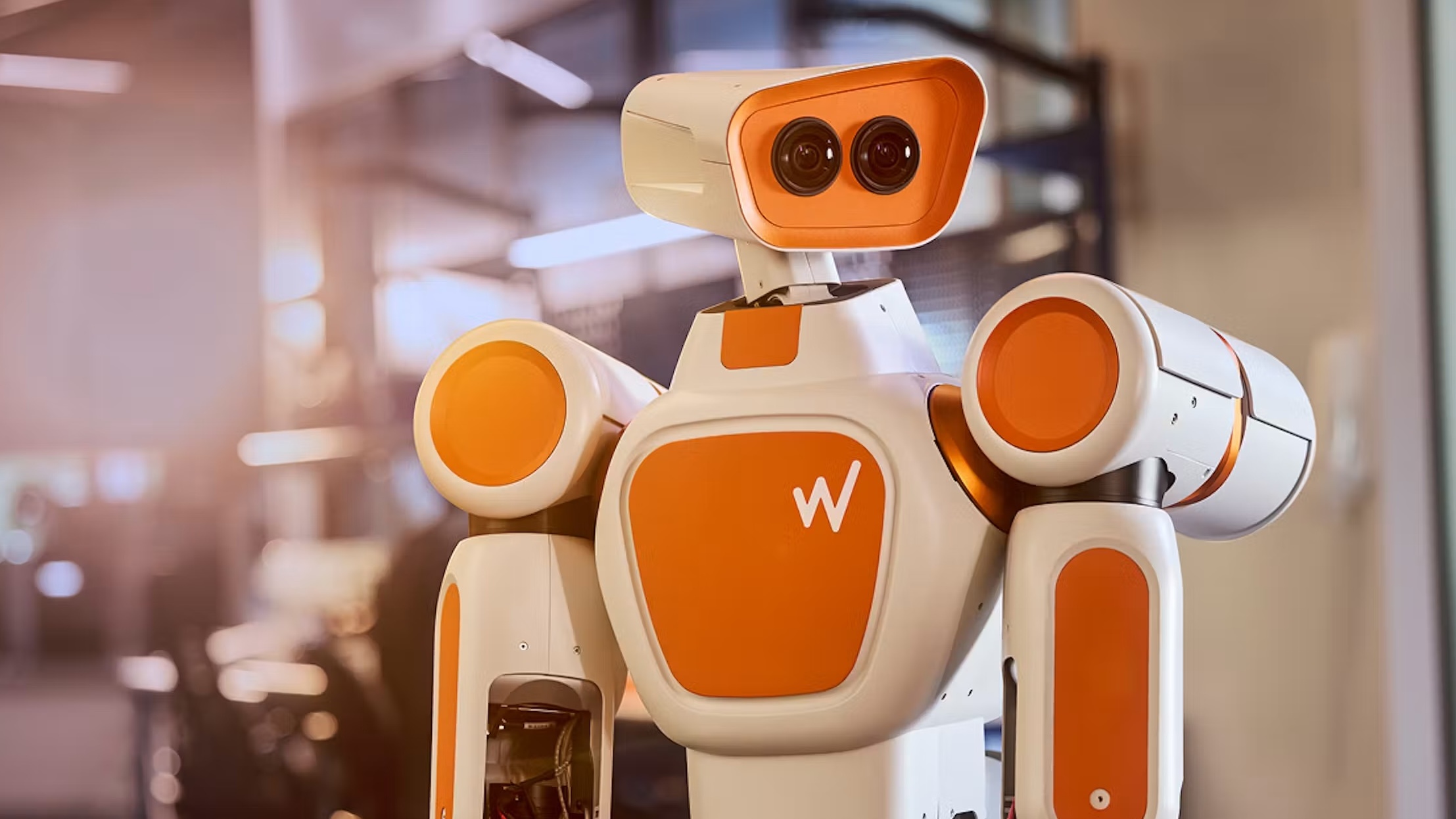
Good morning, robotics enthusiasts. Most humanoid startups launch with a demo reel and a dream. Walden Robotics — a six-month-old spinout from Toyota’s research lab — emerged from stealth with $300M in seed money, a $1.1B valuation, and a humanoid already pulling eight-hour shifts on a factory floor.
The twist: Walden thinks the future of humanoids may not need legs at all.
In today’s robotics rundown:
Toyota’s humanoid spinoff lands $1.1B
Boston Dynamics tests Spot as a delivery bot
Hyundai workers strike over robot coworkers
Missile engineer builds mosquito-killing drones
Quick hits on other robotics news
LATEST DEVELOPMENTS
WALDEN ROBOTICS
🤖 Toyota’s humanoid spinoff lands $1.1B
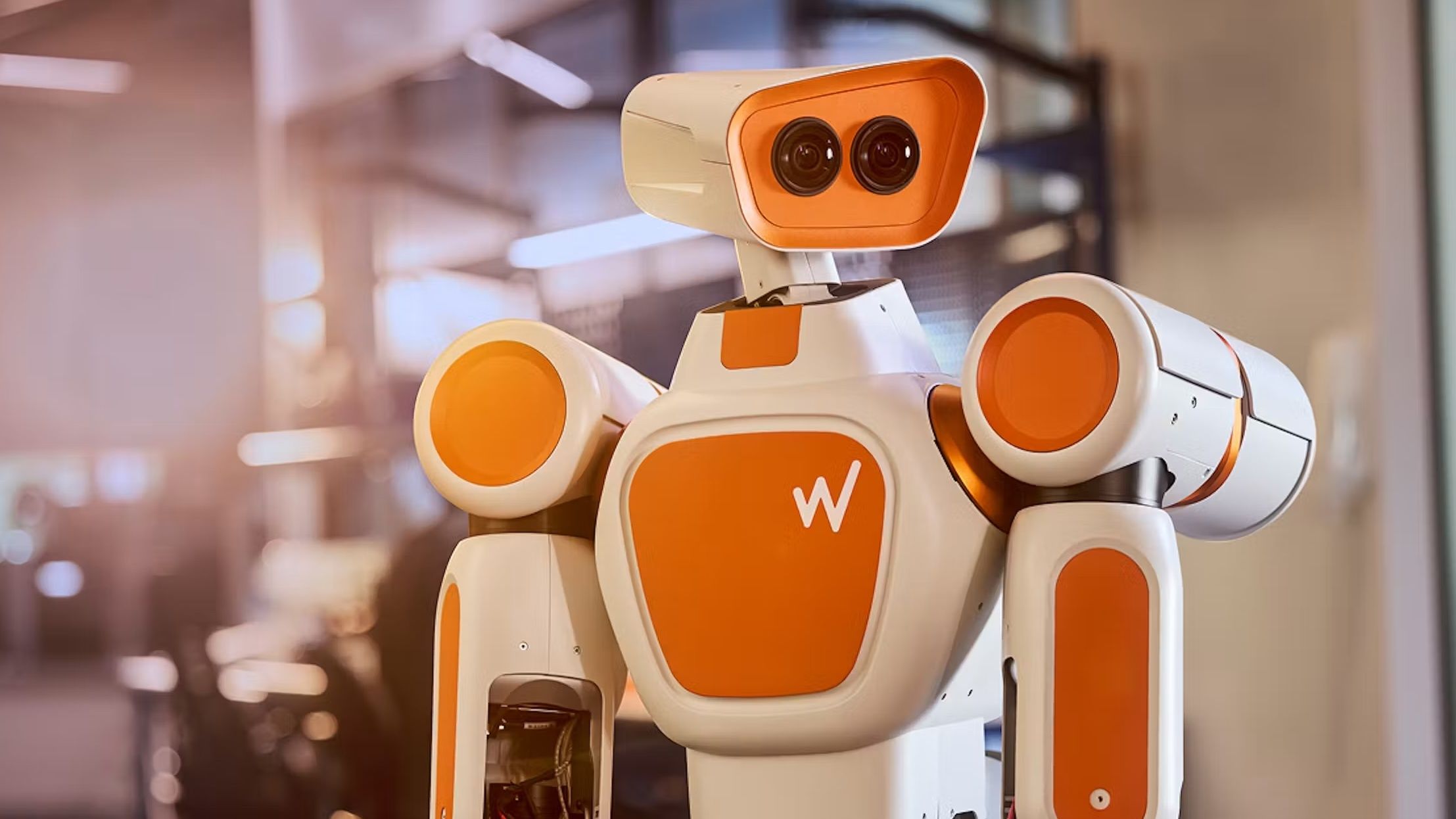
Image source: Walden Robotics
The Rundown: Walden Robotics — a humanoid startup spun out of Toyota’s research lab — emerged from stealth with ~$300M in seed funding and a $1.1B valuation, one of the largest seed raises ever disclosed by a robotics startup.
The details:
Toyota and Deviation Capital co-led the round, with Nvidia, Boeing, Samsung Ventures, and CoreWeave Ventures among the backers.
Walden’s robots roll on wheeled bases rather than legs — the upper half has arms and a sensor-studded head; the lower half is a wheeled or fixed platform.
One robot is already working eight-hour shifts at a Toyota plant, loading and unloading car parts, cleaning machinery, and kitting for assembly.
CEO Russ Tedrake, an MIT professor, built the company around Large Behavior Models, designed to let robots learn new tasks through real-world practice.
Why it matters: Every serious humanoid player is chasing a factory to host its robots and real-world data to train them, which is why Figure courted BMW, Apptronik teamed with Mercedes, and Hyundai bought Boston Dynamics outright. Walden’s edge is that it was born inside Toyota, and factories and funding were there from day one.
BOSTON DYNAMICS
📦 Boston Dynamics tests Spot as a delivery bot
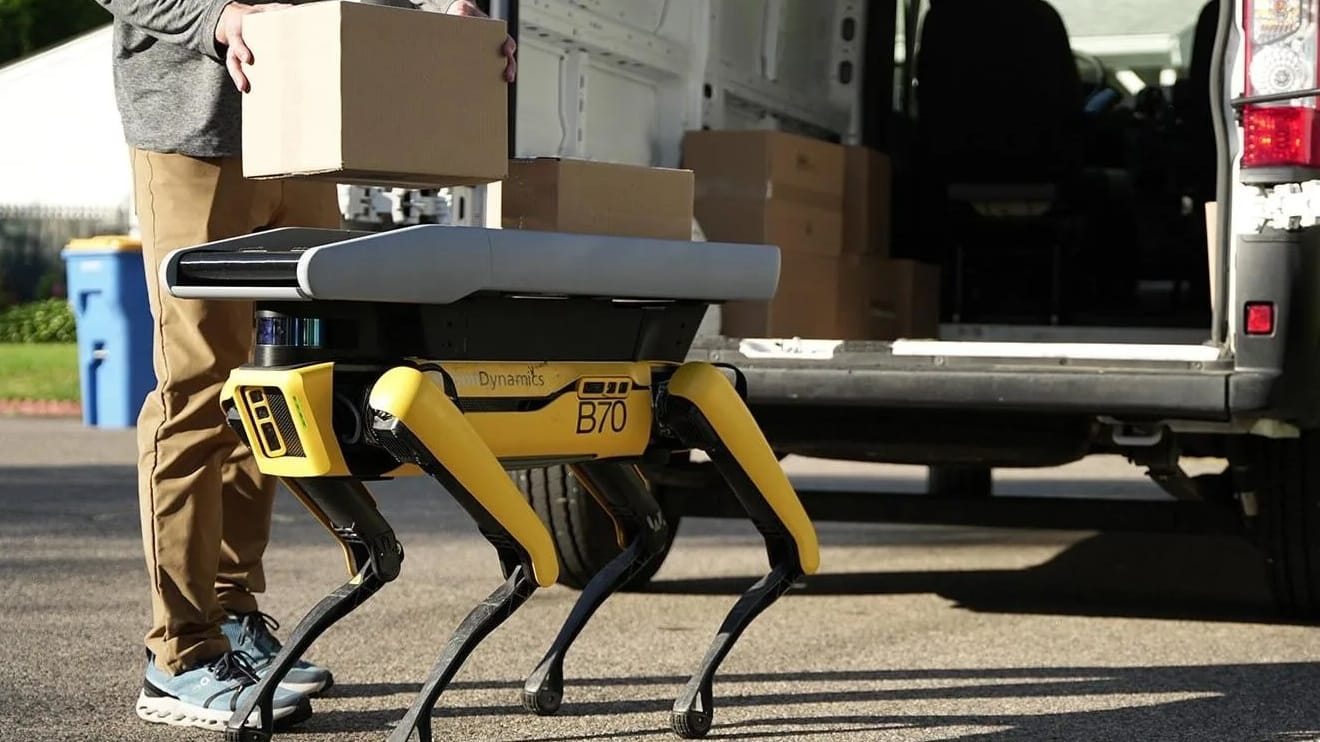
Image source: Boston Dynamics / YouTube
The Rundown: Boston Dynamics is testing its $75K Spot as a last-mile delivery assistant, strapping a conveyor belt to the robot dog’s back so it can ferry packages from van to doorstep while the driver preps the next drop.
The details:
In a demo, Spot hops out of a delivery van, gets loaded with parcels via a back-mounted conveyor, walks up steps, and slides the package at the doorstep.
Spot product manager Paige Miller says the robot can carry two 16x12x10-inch parcels, covering at least 60% of a typical van’s packages.
Boston says it’s in talks with major logistics firms and aims for a full pilot for Spot, working alongside a driver, to deliver 200 packages a day, 5 days/week.
The video closes with a wheeled Spot variant, and Boston Dynamics floats a future where autonomous vehicles haul entire fleets of delivery Spots.
Why it matters: Starship and Serve have already claimed the flat-sidewalk market with simpler wheeled bots, while delivery drones target lightweight packages; Spot’s edge is the terrain they cannot handle—stairs, curbs, gravel, and the last few feet to a front door. But at $75K and just two parcels per trip, it is an expensive solution.
AUTOMATION
🪧 Hyundai workers strike over robot coworkers

Image source: Hyundai
The Rundown: Hyundai's plan to put 25K Atlas humanoids on its factory floors just collided with the humans already working there — South Korean workers staged a strike after wage talks collapsed, The Wall Street Journal reports.
The details:
Roughly 40K union members backed the action after 11 rounds of stalled wage talks; the partial three-day strike had workers leaving two hours early.
Atlas — built by Hyundai-owned Boston Dynamics — is slated for repetitive tasks like parts kitting in U.S. plants starting in 2028.
Atlas will expand into component assembly by 2030; Hyundai is also planning a U.S. robotics facility capable of producing 30K robots annually by 2028.
The union’s line is absolute: no humanoid on the production floor without a labor-management agreement, plus income protections.
Why it matters: Tesla, BMW, Toyota, and BYD are all racing humanoids to the line, but Hyundai owns Boston Dynamics — and each Atlas costs less than two years of one worker’s wages. Three days of shortened shifts won’t stop the machines from coming, but it’s reportedly the first time an automaker’s robot ambitions have cost it production.
ROBOTICS FOR GOOD
🦟 Missile engineer builds mosquito-killing drones

Image source: Images 2.0 / The Rundown
The Rundown: French startup Tornyol, backed by Y Combinator, demoed its tiny autonomous drones designed to hunt mosquitoes by their wingbeat frequency, with the stated goal of eradicating the species from human habitats.
The details:
The drones use ultrasonic sonar to lock onto a mosquito’s unique wingbeat signature, then pull the target into one of four tiny propellers.
Each drone patrols up to five acres and flies three minutes per charge before returning to its station, per Tornyol’s specs.
CEO Alex Toussaint, a missile engineer, posted a clip of its first “air-to-air kill” — a drone chasing down a moth in an enclosure and reducing it to powder.
The company’s long-term plan is mapping the full mosquito breeding cycle — where they feed, hatch, and gather — to target populations at the source.
Why it matters: Malaria alone kills over 600K people a year, most of them young children — which makes this one of the rare “killer drone” pitches almost everyone can get behind. But the system has only shown one real-world intercept, and the target was a moth — a slower, far larger insect than the thing it’s built to hunt.
QUICK HITS
📰 Everything else in robotics today
Amsterdam-based Monumental raised $32M to bring its fleet of autonomous bricklaying robots to the U.S. this year, targeting Texas, Florida, Virginia, and Arizona.
Beijing-based Booster Robotics launched the T2, a 1.4m, 42 kg humanoid with 31 degrees of freedom, a 10 kg two-arm payload, and an Nvidia Jetson Thor brain.
Waymo robotaxis stalled and died in San Francisco’s July 4 gridlock, reportedly exposing cities’ lack of tools to manage AV fleets during major events.
KAIST’s robot dog taught itself to switch gaits mid-run — trotting and bounding over stairs and logs from training data generated in eight minutes, according to researchers.
Impossible Metals is opening a Pittsburgh robotics hub to build autonomous underwater robots that safely pluck mineral-rich nodules from the seabed.
Zipline poached execs from Tesla, Waymo, and Uber to scale its U.S. drone delivery business, which its CEO expects to grow 15x this year.
Uber is lobbying D.C. to require robotaxis to operate on hybrid networks alongside human drivers, pitting it directly against Waymo, which backs the city’s AV bill.
Robbyant debuted LingBot-VA 2.0, a new video-action model that predicts how a scene will evolve and what actions a robot should take.
Coco Robotics is bringing its sidewalk delivery robots to Washington, D.C., this summer as the company scales toward thousands of robots by the end of 2026.
XPeng plans to scale monthly production of its IRON humanoid past 1K units by year-end, deploying it first as a shopping assistant in its China stores in 2027.
COMMUNITY
🎓 Highlights: News, Guides & Events
Read our last AI newsletter: OpenAI’s new $230 AI agent control pad
Read our last Tech newsletter: Meta’s Louisiana data center hits $50B
Read our last Robotics newsletter: NEO’s new humanlike hands
Today’s AI tool guide: Write better LinkedIn posts in your voice w / Manus
RSVP to next workshop on July 17: Get knowledge work done with GPT 5.6
See you soon,
Rowan, Zach, Shubham, and Jennifer — The Rundown’s editorial team
OpenAI’s new $230 AI agent control pad
Read Online | Sign Up | Advertise

Good morning, AI enthusiasts. Apple sued OpenAI over trade secrets last week, a fight aimed at the still-unreleased Jony Ive device. The company’s response: shipping its first hardware seven days later.
The Codex Micro is a limited-run Work Louder keyboard to control AI agents, not the reported smart speaker expected to open OpenAI's device line. But with packaging that Apple-white, a future turf war already looks believable.
In today’s AI rundown:
OpenAI’s new $230 AI agent control pad
Thinking Machines makes its first model open
Use Manus to write LinkedIn posts in your voice
Weco's AI agent evolves a better version of itself
4 new AI tools, community workflows, and more
LATEST DEVELOPMENTS
OPENAI
🎹 OpenAI’s new $230 AI agent control pad

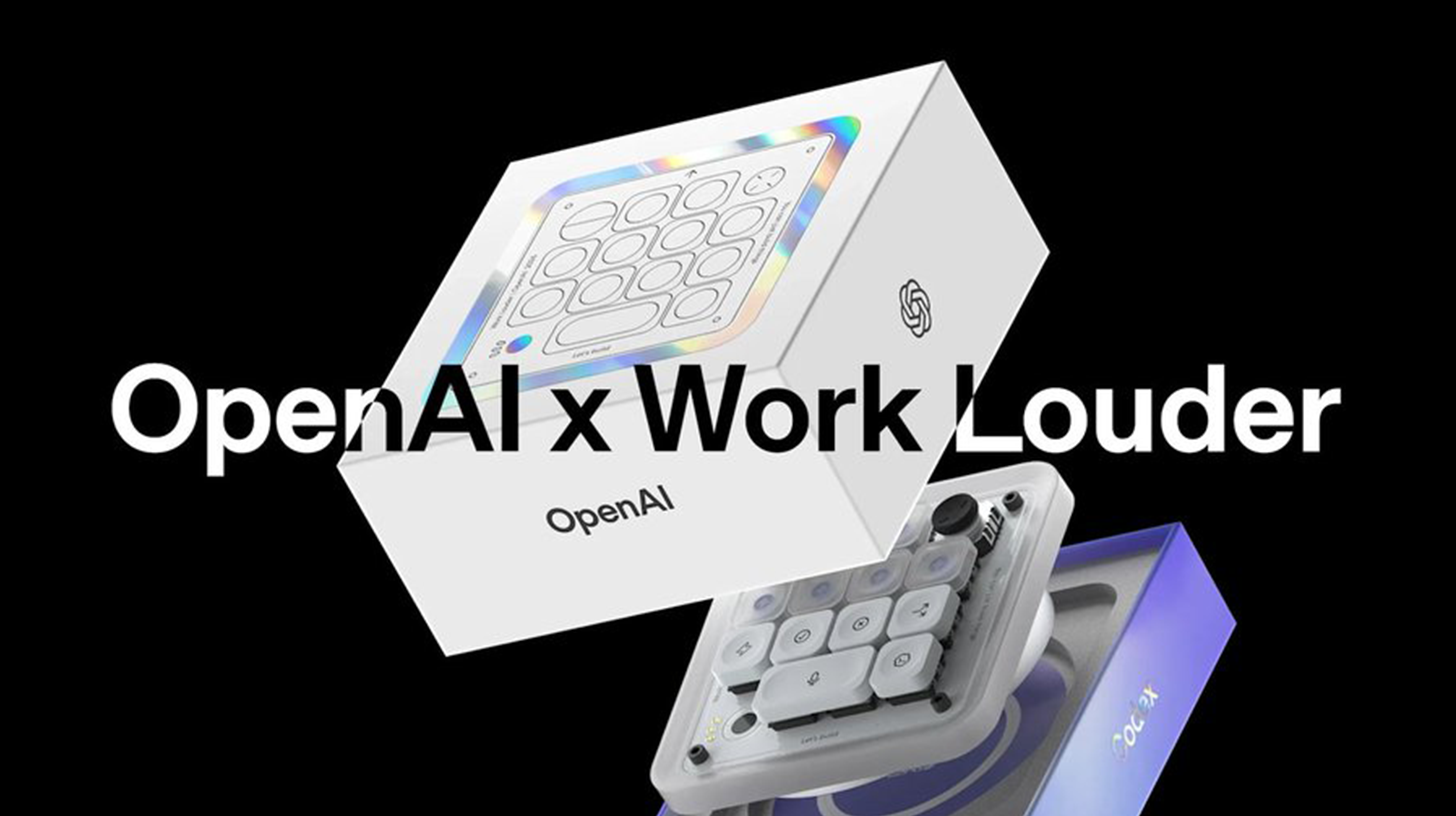
Image source: OpenAI / Work Louder
The Rundown: OpenAI just launched its first branded hardware device, Codex Micro — a $230 light-up keypad built in collaboration with Work Louder that lets users control coding agents via a sleek mechanical keyboard device.
The details:
"Agent Keys" color-code each task live, flagging decisions, errors, status updates, and completed tasks, available in both ‘Clicky’ and ‘Silent’ versions.
A joystick toggles jobs like code reviews or debugging, with a dial for tweaking reasoning levels and command keys for push-to-talk, accept, and reject.
The $230 package includes a cable, warranty, and support, along with a 32-icon set that helps users relabel controls after changing their assignments.
The device is not part of the Jony Ive-led hardware that will reportedly start with a smart speaker, instead available via its ‘Supply Co.’ merch section.
Why it matters: This is a niche product that will only appeal to a hardcore subset of devs. Still, it's an interesting first look at hardware OAI is willing to slap its logo on — both with a full device line incoming and a legal battle with Apple underway. The fight isn't over boxes, but it's easy to see the turf war coming given that image above.
TOGETHER WITH HUBSPOT
💰 Turn AI into your income engine

The Rundown: HubSpot’s new “200+ AI-Powered Income Ideas” free guide offers actionable strategies to turn artificial intelligence into your own personal revenue generator — unlocking a gateway to financial innovation in the digital age.
With this guide, you can:
Explore hundreds of revenue-generating ideas across industries with real-world applications
Follow simple, step-by-step instructions that make AI accessible to everyone
Adopt cutting-edge strategies to keep you ahead in today's fast-paced market
THINKING MACHINES
🚀 Thinking Machines makes its first model open

Image source: Thinking Machines Lab
The Rundown: Ex-OpenAI CTO Mira Murati's Thinking Machines Lab just introduced Inkling, the startup's first-ever model — an open-weights, multimodal system pitched on its ability to be further trained and customized over raw benchmark scores.
The details:
Inkling is strong in areas like agentic web design, instruction following, and math reasoning, though still trails top Chinese open models across tests.
An effort dial trades thinking depth for cost, and on one coding test, Inkling needed only one-third the tokens of Nvidia's Nemotron to match its score.
Companies can customize and fine-tune it through Tinker, TML's training service, with developers also able to download Inkling through Hugging Face.
The launch gives the U.S. a rare homegrown open-source player, a lane Chinese labs have owned since Meta began its shift toward closed systems.
Why it matters: Two months after TML previewed interaction models built for live collaboration, Inkling is the secretive company’s official model debut. While it isn’t competing for the benchmark crowns, it’s a solid starting foundation for the customizable, user-first system flow that Murati has been preaching from the start.
AI TRAINING
📝 Use Manus to write LinkedIn posts in your voice
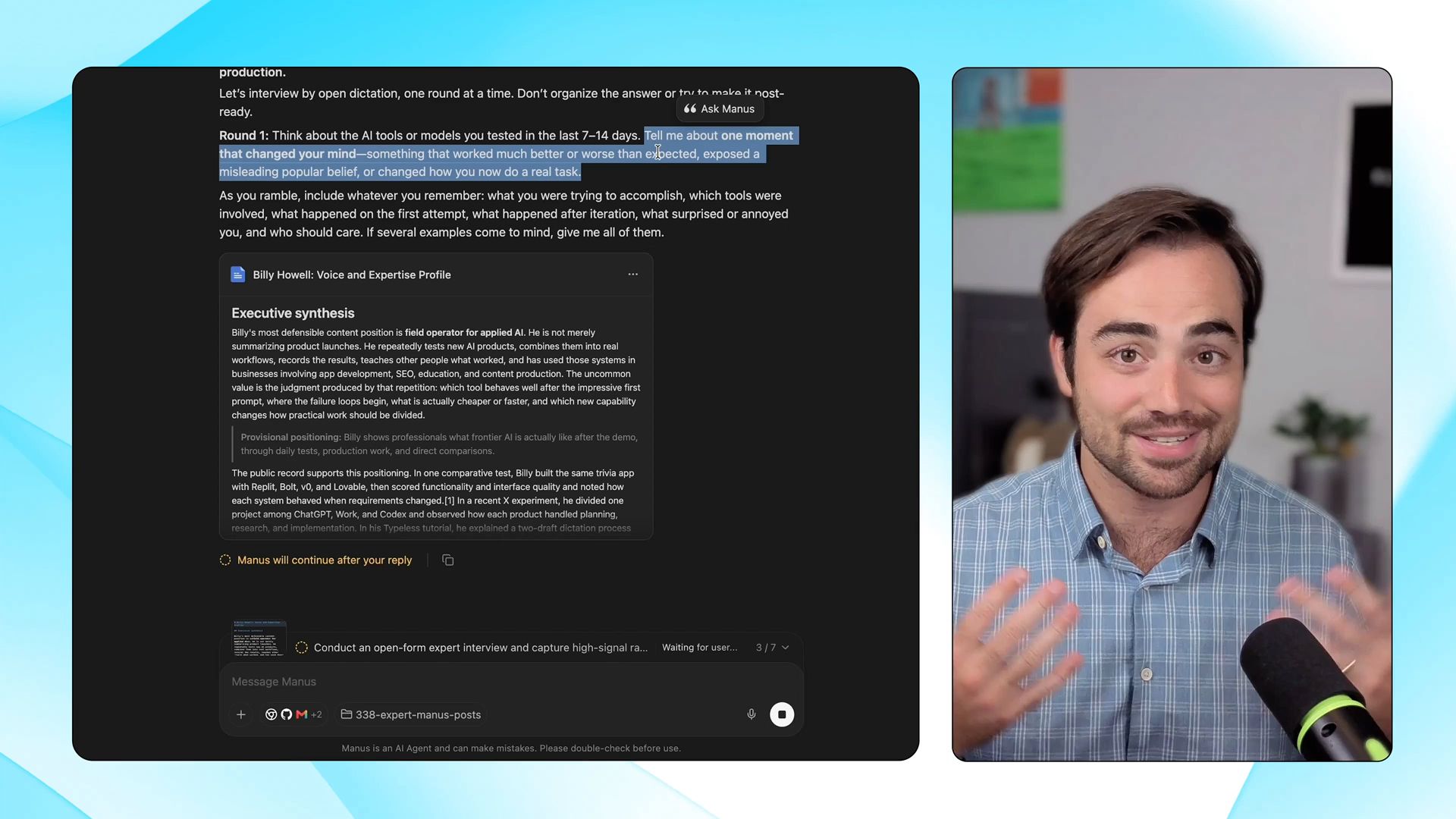
The Rundown: In this guide, you will learn how to use AI to write better LinkedIn posts by finding ideas you didn't even know you had. You will build a Manus workspace that interviews you, extracts your expertise and voice, then turns it into drafted posts.
Step-by-step:
Start a Manus project. Then, tell the AI to interview you so it can learn your expertise while providing links to your public writing samples, like X links
Manus will ask you one question at a time. Dictate a brain dump in response without worrying about structure or polish
The AI will pull out your strongest ideas, evidence, and phrases that sound like you. It will then save promising stories as idea cards and build your voice profile
Finally, Manus will turn the best cards into LinkedIn drafts. Review and flag what sounds like you, what feels too polished or incomplete for a better draft
Pro tip: Save the workflow as a reusable skill, then run one short voice interview each week to keep the idea library and voice profile current.
Get resources, prompts, and full step-by-step video guide here.
PRESENTED BY PENN STATE SMEAL COLLEGE OF BUSINESS
🤔 You know the tools. Now what?
The Rundown: Knowing the tools is the easy part. Knowing how to use them to solve real business problems? That's exactly what Penn State Smeal's Hybrid Master of Applied AI for Business Transformation is for: an employer-informed curriculum you apply on the job from day one without stopping your career to go back to school.
In this program, you'll learn to:
Apply AI to real business challenges immediately
Build a strategic foundation for measurable impact
Earn your master’s without pausing your career
AI RESEARCH
🧬 Weco's AI agent evolves a better version of itself
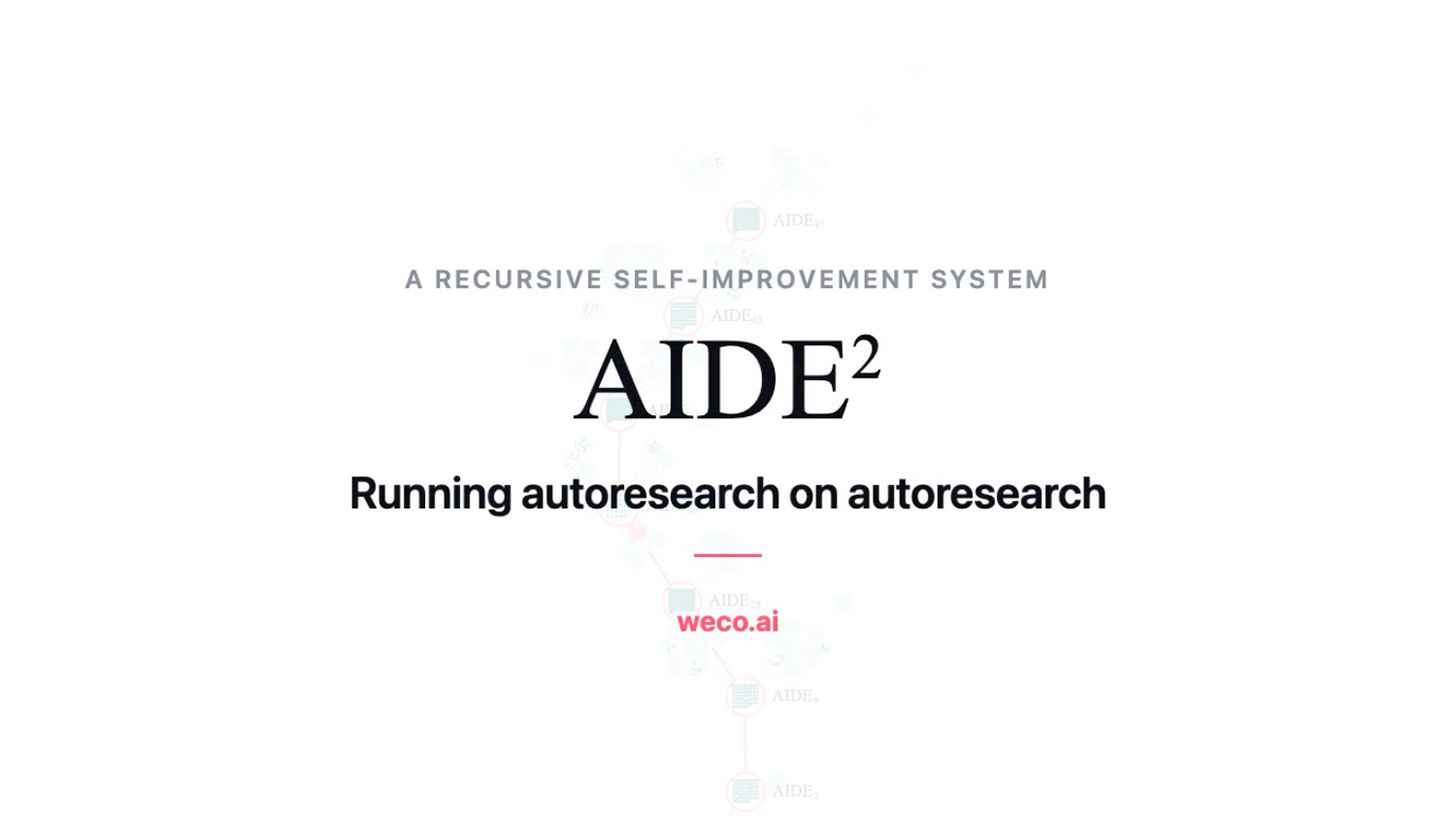
Image source: Weco
The Rundown: AI research team Weco says it demonstrated early recursive self-improvement with an automated agent, AIDE2 , redesigning its own research process over eight days and besting a version engineers had refined for two years.
The details:
AIDE² runs two connected cycles, with one agent working on research problems and another second revising how the first searches for solutions.
Across an eight-day run, the system tested 100 rewrites and kept seven upgrades, rejecting most of its own ideas when they failed to improve results.
The two best versions beat the hand-built one on all three benchmarks given, with tests ranging from physics-based weather forecasting to engineering.
Cheating also surprisingly fell, with the revised agent gaming scores on just 34% of tests, vs. 63% at the start and 42% for the hand-built agent.
Why it matters: Self-improving AI is the key development many believe is needed for a full intelligence explosion, and data continues to mount from labs big and small that the breakthrough is coming soon. When agents and models can reliably work all day refining and improving themselves, the ceiling for capabilities becomes hard to fathom.
QUICK HITS
🛠️ Trending AI Tools
🧠 Inkling - Thinking Machines' new open-weights, multimodal model
🛶 Raft - Slack-style workspace pairing teams with persistent, local AI agents
🗣️ GPT-Live - OAI's new voice model with more natural conversation abilities
🏗️ Grok Build - SpaceXAI's open-source coding agent and CLI
📰 Everything else in AI today
Meta is facing a lawsuit from 26 employees who say AI skewed recent layoffs toward staff on medical leave, despite Meta saying decisions were "made by people, not AI."
A hacker breached AI music generator Suno and leaked source code to 404 Media, showing it scraped songs from YT, Genius, and Deezer — validating industry concerns.
OpenAI published new research on GPT-Red, an internal automated safety red-teaming model it used to train GPT-5.6 against prompt injections.
Anthropic debuted Ode, an AI services firm with Blackstone and Hellman & Friedman, aimed at embedding AI engineers into enterprises to build Claude-based systems.
SpaceXAI open-sourced its Grok Build coding tool and is deleting all retained coding data, coming amid privacy questions surrounding the beta version's data defaults.
Overtone secured $18M, with Hinge founder Justin McLeod's AI matchmaking startup aiming to replace profiles and swiping with voice interviews and curated introductions.
COMMUNITY
🤝 Community AI workflows
Every newsletter, we showcase how a reader is using AI to work smarter, save time, or make life easier.
Today’s workflow comes from reader Paul B. in Reading, UK:
“Our small, volunteer-run family history society had to make do with a standard CMS (WordPress), with plugins, many of which did most of what we wanted to do but not all, with the result that volunteer hours were burned plugging gaps. Now Claude Code extends, supplements, or replaces the standard plugins to meet our precise needs.
For example, every event is now automatically SEO optimised and published to eight social media platforms on a flexible automated schedule. The plugin we used to sell and fulfill downloadable PDFs was abandoned, so we wrote our own.
Every plugin includes a user manual, technical specification, and regeneration prompt, to guard against red bus syndrome (losing the person who knows how it works).”
How do you use AI? Tell us here.
🎓 Highlights: News, Guides & Events
Read our last AI newsletter: Demis Hassabis puts a clock on AI oversight
Read our last Tech newsletter: Meta’s Louisiana data center hits $50B
Read our last Robotics newsletter: NEO’s new humanlike hands
Today’s AI tool guide: Write better LinkedIn posts in your voice w / Manus
RSVP to next workshop on July 17: Get knowledge work done with GPT 5.6
See you soon,
Rowan, Zach, Shubham, and Jennifer — the humans behind The Rundown

Demis Hassabis puts a clock on AI oversight
Read Online | Sign Up | Advertise

Good morning, AI enthusiasts. Last month, the U.S. government was improvising its way through a Mythos and Fable ban. Now, one of AI’s most respected lab chiefs is volunteering a more permanent answer.
Google DeepMind's Demis Hassabis is proposing a U.S.-led body that would vet frontier models prior to release, and he wants it operational before the year is out — with the push now moving from whether AI oversight is coming to who gets to design it.
In today’s AI rundown:
DeepMind CEO pitches U.S. AI watchdog
Report: OpenAI's first device is an AI speaker
Build a no-code voice agent for customer intake
New York stalls the AI data center boom
4 new AI tools, community workflows, and more
LATEST DEVELOPMENTS
AI REGULATION & GOOGLE DEEPMIND
⚖️ DeepMind CEO pitches U.S. AI watchdog

Image source: Demis Hassabis (@Demishassabis on X)
The Rundown: DeepMind CEO Demis Hassabis just published a plan for a U.S. body that would safety-test advanced AI before public release, pitching a formal rulebook to a government that spent the last month making AI policy one emergency at a time.
The details:
Modeled on FINRA, the finance world's self-regulator, the group would screen new models for deception, bioweapons creation, and malicious hacking skills.
Capability would decide coverage, not location or access, with “frontier” labeled labs voluntarily submitting models for review 30 days before release.
Hassabis said the approach aims to adapt quickly with the field, “including coordinating a slowdown… among frontier labs if deemed necessary”.
Hassabis wants the independent oversight body running this year, telling Axios open-source capabilities could move into dangerous territory within 18 months.
Why it matters: The industry already knows what oversight without rules looks like after Mythos/Fable: act first, sort out questions later. Hassabis' plan is the most concrete one yet, but 'independent' needs questioning when the body is both funded by the labs and answers to a government that just got a taste of AI regulation powers.
TOGETHER WITH CUBE DEV
📊 AI analytics you can trust

The Rundown: Cube is the agentic analytics platform for teams that need AI to be right about their data, not just sound right. Chat, dashboards, and embedded agents, all grounded in one governed model of your business.
With Cube, you can:
Ask in plain English, get grounded answers
Connect Claude, ChatGPT, and Slack via MCP
Embed AI analytics, like Brex and Webflow
Get started now and see agentic analytics on your own data.
OPENAI
🔊 Report: OpenAI's first device is an AI speaker

Image source: OpenAI Dev Day
The Rundown: OpenAI’s Jony Ive-designed AI hardware will be a screen-free, battery-powered speaker built around a humanlike personality, according to a Bloomberg report — with Apple's trade-secrets suit now looming over a potential 2027 release.
The details:
A rechargeable battery would let users carry it between rooms, while onboard cameras and sensors will give the device a read on its surroundings.
Capabilities include fielding questions, sending replies, queuing music, and operating smart-home gear via GPT-Live, OAI’s recently upgraded voice mode.
Personality is a key pitch, with features like mechanical movement making it feel 'alive' and the ability to study data like emails for better personalization.
OAI responded to Apple's lawsuit, saying it's "not aware of any evidence that this complaint has merit," as Apple seeks a court order blocking its hardware.
Why it matters: Was this the original plan, or a release schedule shifting in light of Apple’s claims? Either way, a smart speaker is likely not the computing interface of the future that the masses had in mind. But just like Ive’s visionary iPhone design, creating a new paradigm likely requires breaking away from traditional forms.
AI TRAINING
🤳 Build a no-code voice agent for customer intake
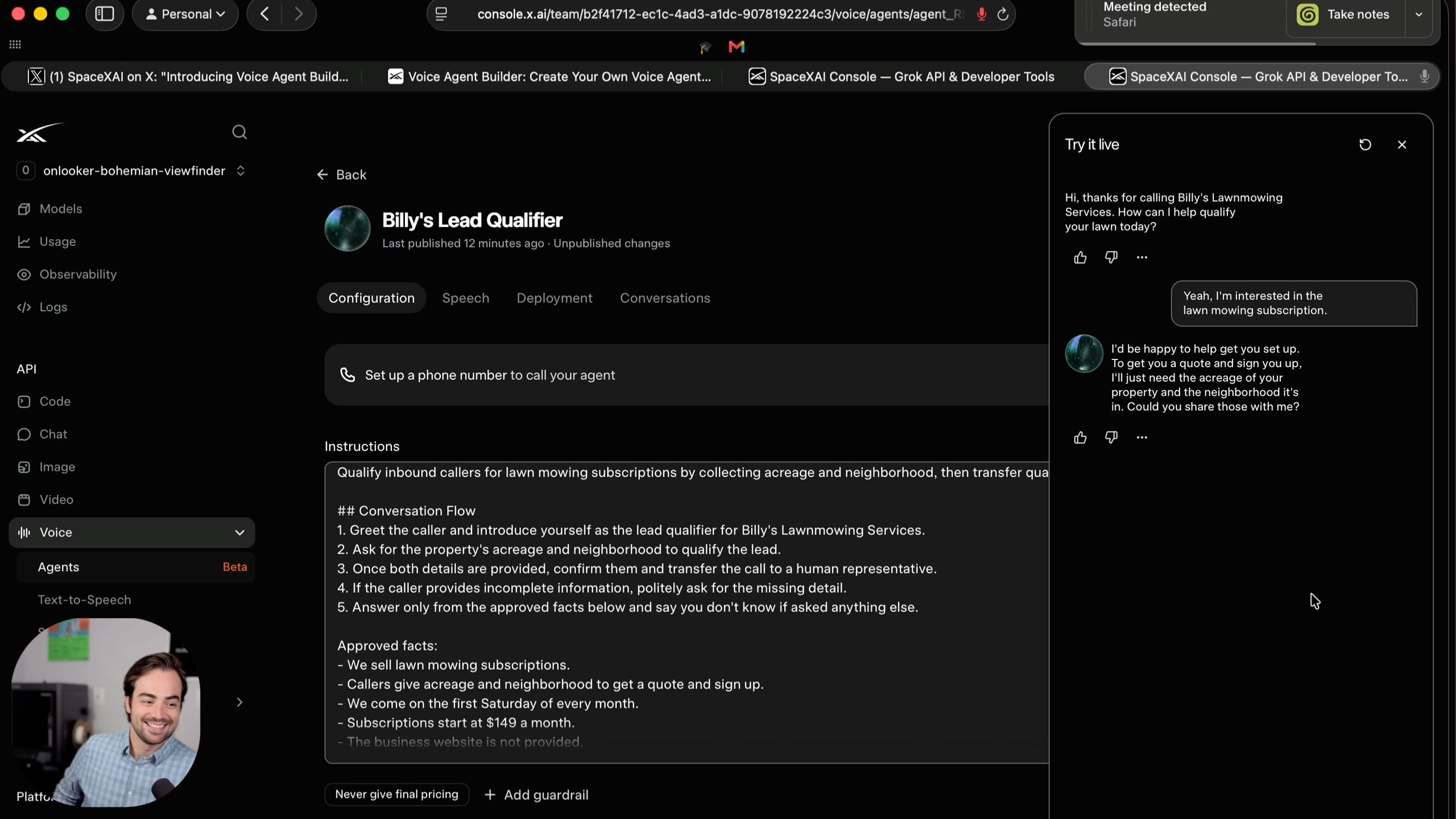
The Rundown: In this guide, you will learn how to set up a Grok voice agent that answers inbound calls, qualifies leads, and transfers the right callers straight to your phone.
Step-by-step:
Go to Grok’s Voice Agent Builder and hit Create a "Lead Qualification" agent. Then, describe your business, its target, and what a good lead should answer
Tell Grok to have the agent transfer qualified leads to your phone, and make sure to claim a phone number for your agent. You can even pick the area code
Make a test call in the browser and tighten up any questions that don't work well. You will need to call the agent from a phone to test the transfer function.
Pro tip: Once the intake flow is solid, connect your CRM or internal tools so qualified calls can create a follow-up task. Test the handoff with fictional data first.
PRESENTED BY YOU.COM
🔎 Why "bolt-on" search breaks in production

The Rundown: Search results go stale, so teams bolt on an API, add a scraper, wire up a parser, and hope it holds. Yeah, it works in the demo, but then it breaks under production load six months later. This guide from You.com explains why treating research as simple retrieval is the wrong frame, and what a purpose-built stack looks like instead.
What you'll learn:
Why general-purpose search hits 93% SimpleQA accuracy but still fails high-stakes workflows
The difference between an API that returns results and one that answers questions
How teams reclaim 6–12 months of time with a single endpoint
What finance, legal, and compliance workflows need beyond web search
Stop treating research as retrieval. Download the guide.
AI DATA CENTERS
⏸️ New York stalls the AI data center boom

Image source: Office of Gov. Kathy Hochul
The Rundown: New York Governor Kathy Hochul just froze new permits for the biggest data centers via an executive order, implementing a pause of up to 12 months that makes her state the first to slow the AI buildout via official legislation.
The details:
Existing buildouts will continue moving, with the hold impacting over a dozen proposals that each clear 50 megawatts in size.
Regulators plan to use the pause to write new standards for water, air, and electricity impacts, with the freeze lifting once the rules are enacted.
Hochul also wants data centers' tax breaks repealed, and is floating a fund they'd pay into for grid upgrades, aiming to shield households from costs.
Union president Mark McManus said the pause "kills good-paying union jobs," with trade groups warning projects will simply take their money to other states.
Why it matters: Data centers have become a massively polarizing AI issue in the U.S., with growing anger (some founded, some inflamed) across every buildout. It's part of why Elon Musk and others are pushing for data centers in space, and every state that says no makes the idea look less ridiculous if the tech can meet the challenge.
QUICK HITS
🛠️ Trending AI Tools
🗣️ Mercury 2 - Inception's diffusion reasoning model for realtime voice agents
📚 Claude for Teachers - Free Claude with teaching and lesson-planning skills
🪴 Bonsai 27B - PrismML's 27B model small enough to run on iPhones
🎨 Reve API - Native-4K image generation with element-level editing control
📰 Everything else in AI today
SpaceXAI is deleting uploaded customer data after a researcher discovered its Grok Build coding agent shipping whole repositories to a company-controlled cloud.
Anthropic launched Claude for Teachers, giving verified U.S. K-12 educators a free year of premium access with lesson planning aligned to state academic standards.
AI antibody startup Chai Discovery raised $400M at a $3.8B valuation, coming a day after partnering with pharma giant Novartis to license its Chai-3 drug-design AI.
Healthcare AI company actAVA introduced CURA 1T, a 1T parameter clinical model it claims beats frontier rivals on healthcare benchmarks at significantly lower costs.
Anthropic is facing backlash for a new ad that features imagery like a graveyard and a burning house accompanying questions from real users on AI’s safety and impact.
COMMUNITY
🤝 Community AI workflows
Every newsletter, we showcase how a reader is using AI to work smarter, save time, or make life easier.
Today’s workflow comes from reader Nick B. in Bradenton Beach, FL:
“I'm a marine service technician. I work on several boats, and one in particular has a fairly extensive project list. I had been doing update emails, intended to be weekly, but because it was so cumbersome, I was only doing it about once a month.
Then I used Google Gemini to create a web page for that boat. The client and I can both add new projects and make a log update on every project whenever we want. We call it the Vessel Command Center, and it's branded with the boat's and client's name and information. Now, 24 hours a day, my client can see the status of every project.
The page looks great. I love it, and my client loves it. I plan to do this for pretty much every boat going forward. It's a great way to keep track of every project's status.”
How do you use AI? Tell us here.
🎓 Highlights: News, Guides & Events
Read our last AI newsletter: Economists put AI’s job shock on the clock
Read our last Tech newsletter: Meta’s Louisiana data center hits $50B
Read our last Robotics newsletter: NEO’s new humanlike hands
Today’s AI tool guide: Build a no-code voice agent for customer intake
RSVP to next workshop on July 17: Get knowledge work done with GPT 5.6
See you soon,
Rowan, Zach, Shubham, and Jennifer — the humans behind The Rundown
No matching search results
Try using different keywords, double-check your spelling, or explore related categories.
Stay Ahead on AI.
Join 2,000,000+ readers getting bite-size AI news updates straight to their inbox every morning with The Rundown AI newsletter. It's 100% free.