Get the latest AI news, understand why it matters, and learn how to apply it in your work — all in just 5 minutes a day. Join over 2,000,000+ subscribers.

Anthropic pulls Mythos, Fable after U.S. order
wRead Online | Sign Up | Advertise

Good morning, AI enthusiasts. Anthropic and the U.S. government are entangled again — and this time, it’s over blocking access to the company’s frontier models, not expanding them for federal use.
After a U.S. order tied to a disputed jailbreak, Anthropic pulled its powerful Mythos and Fable 5 models offline worldwide. For a lab desperately calling for tougher AI rules, the moment has arrived in a messier way than CEO Dario Amodei likely had in mind.
In today’s AI rundown:
Anthropic pulls Mythos, Fable after U.S. order
The Rundown Roundtable: Our AI use cases
Turn any ChatGPT image into an editable Canva design
OpenRouter fuses models into frontier rival
4 new AI tools, community workflows, and more
LATEST DEVELOPMENTS
ANTHROPIC
🛡️ Anthropic pulls Mythos, Fable after U.S. order

Image source: Images 2.0 / The Rundown
The Rundown: Anthropic just pulled its two most powerful AI models, the newly released Mythos and Fable 5, worldwide after the Trump administration ordered it to block all foreign access — citing a reported jailbreak the company called minor.
The details:
The U.S. implemented an “export control directive” requiring Anthropic to remove access for all non-U.S. citizens, even those within the country.
The move was surprisingly traced to Anthropic investor Amazon, which was one of the groups that flagged the potential Fable vulnerability to officials.
Anthropic said it was only given “verbal evidence” of the “non-universal jailbreak,” also claiming the same concerns are available in models like GPT 5.5.
Semafor reports the move was partly tied to fears that a China-linked group may have accessed Mythos, though details remain unclear.
The ruling would have also blocked foreign-national Anthropic employees from the models, pushing the company to suspend access for everyone.
Why it matters: This is a bigger moment than it might look. Amodei has pushed hard for AI regulation, and it’s arriving more chaotically than he probably hoped. Anthropic’s past feuds with Washington — even as the government flirts with taking an equity stake in rival OpenAI — are critical context: this is far more than a jailbreak story.
TOGETHER WITH GLEAN
🍼 Stuck in a botsitting cycle?
The Rundown: The Work AI Index 2026 from Glean’s Work AI Institute surveyed 6,000 digital workers and found that higher AI usage often hides more cleanup, output-checking, and context switching.
Read the report to learn:
Where AI time savings go
Why hidden human labor is eating into the AI dividend
What high AI achievers do differently
THE RUNDOWN ROUNDTABLE
💡 The Rundown Roundtable: Our AI use cases
Image source: Images 2.0 / The Rundown
The Rundown: The Rundown Roundtable is a weekly feature where we poll members of The Rundown staff about how we use AI in our work and daily lives.
Nate, University Educator: I ask Claude every month or so to be my Claude Code learning coach by simply typing the /insights command. It provides a hyper-personalized website report card with advice to help me use Claude Code better, with exact examples of where things go wrong, features, and prompts I should try.
Jennifer, Tech & Robotics Writer: I was deep in a Claude research session, trying to brainstorm an idea, rejecting its responses, asking for more, rejecting again. Eventually, it broke the pattern and stopped complying, telling me the problem was how I’d framed the question and explaining why.
It had a point, and that may be one of AI’s more interesting uses: not just an engine for fast answers but as a friction layer for thought.
AI TRAINING
🎨 Turn any ChatGPT image into an editable Canva design
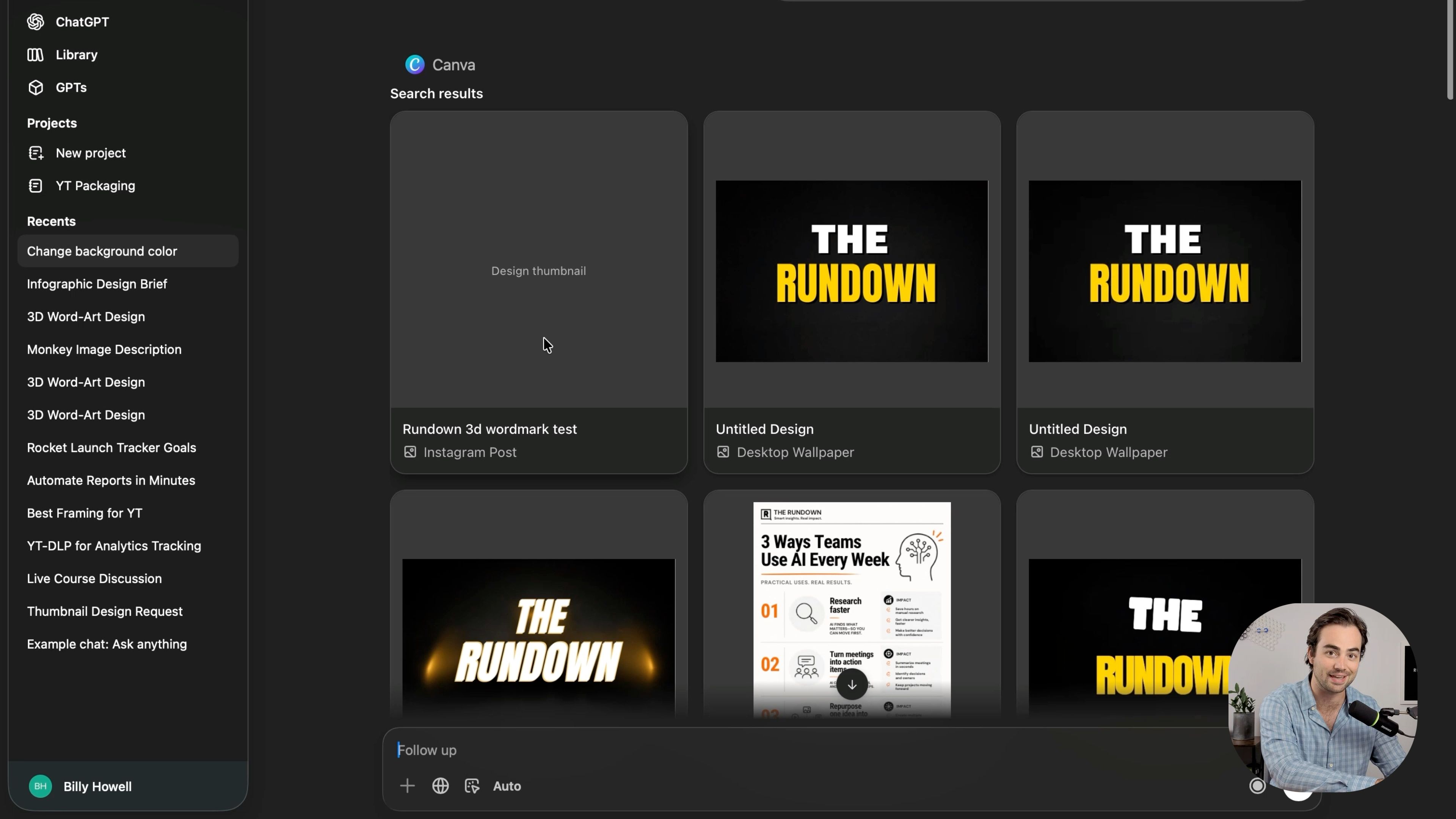
The Rundown: Learn how to connect Canva to ChatGPT and turn one generated image into a Canva project you can keep editing. Instead of regenerating the same visual every time you need a new format, you can move it into Canva and keep working from the same starting point.
Step-by-step:
Open ChatGPT desktop, go to Settings > Apps > Browse Apps, and add Canva.
Go back to ChatGPT, start a new thread, and generate an image like a social post or an infographic.
In that same thread, type @Canva, then hit Enter so ChatGPT confirms the app mention. Use this prompt: “Now turn it into a new @Canva project.”
Once Canva creates the project, keep going in chat. Use this prompt: “Okay, now resize that as a new @Canva project for a story post.”
From there, keep editing in ChatGPT. Ask Canva to adjust layout, swap text, clean up spacing, or make more versions without starting over from a fresh image.
Pro tip: If you do not mention @Canva first, ChatGPT may treat this like a normal text instruction instead of sending it to the Canva app.
PRESENTED BY AWS MARKETPLACE
🧠 Give your AI agents memory

The Rundown: AI agents forget everything between sessions. AWS’s workshop and companion guide show you how to build persistent agent memory on AWS with Amazon Bedrock and tools from across the AI landscape.
In this workshop, you’ll learn to:
Build short-term memory for active context
Design long-term memory with semantic retrieval
Implement episodic memory for interaction recall
OPENROUTER
🧩 OpenRouter fuses models into frontier rival
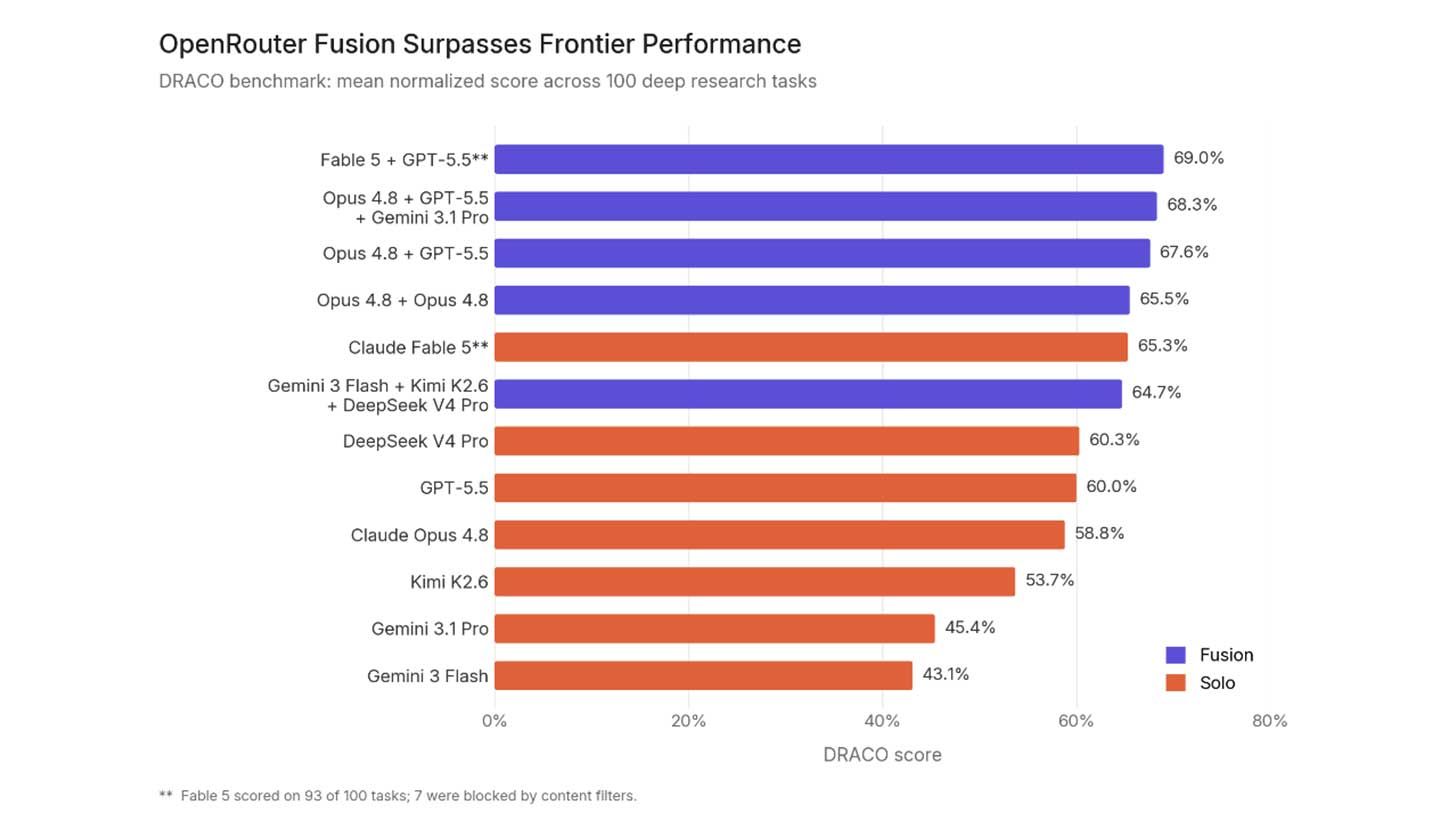
Image source: OpenRouter
The Rundown: OpenRouter just launched Fusion, an API that pools responses from multiple AI models into a single answer, with benchmarks showing the model panel nearly matches Fable 5’s deep-research performance at lower cost.
The details:
Fusion sends user prompts to several models at once, has a separate model evaluate each response, then merges them into one final reply.
A trio of DeepSeek V4 Pro, Kimi K2.6, and Gemini 3 Flash hit 64.7% on a Perplexity benchmark, just below Fable’s 65.3% for about half the spend.
CEO Alex Atallah pitched Fusion as a bet against one-model dominance, saying, “The future of AI is neurodiversity, not single-model takeovers.”
Why it matters: Model council-type solutions aren’t new, with Perplexity Computer, Grok, and others utilizing them. But OpenRouter’s easy API solution comes at an important time given the Fable restrictions, with some users potentially having to get creative with their ability to access frontier-level performance in the near future.
QUICK HITS
🛠️ Trending AI Tools
🫂 Fusion - OpenRouter’s new tool that fuses several models into panels to achieve frontier performance
⚙️ Kimi-K2.7-Code - Moonshot’s new open-source coding model, with 30% token efficiency
🧠 GLM-5.2 - Z AI’s new flagship coding model with usable 1M context
📱 Siri AI - Apple’s newly overhauled on-device AI assistant
📰 Everything else in AI today
Mark Zuckerberg is reportedly scrambling to contain a revolt inside Meta’s Applied AI unit after he admitted in a memo that Meta “made mistakes” with its AI restructuring.
Moonshot AI released Kimi-K2.7-Code, an open-source coding model posting double-digit gains over K2.6 on agent benchmarks while cutting reasoning-token use by 30%.
McDonald’s is piloting ArchIQ, a Google-powered AI drive-thru system at five locations, two years after it shelved its last AI test when wrong-order videos went viral.
China’s universities have scrapped more than 12K programs over the last five years, swapping arts and languages for tech fields as AI alters the graduate job market.
Meta has reportedly begun unwinding its $2B Manus deal after Beijing ordered the acquisition reversed, cutting off data sharing while the Chinese AI agent startup’s founders rush to raise $1B for a buyback.
COMMUNITY
🤝 Community AI workflows
Every newsletter, we showcase how a reader is using AI to work smarter, save time, or make life easier.
Today’s workflow comes from reader Kyle H. in Toronto:
“I’m traveling in new countries and start out completely lost at how to navigate them. Things like how their transit works, what you need to do when buying groceries that I’ve never seen before, like tagging your own fruits, and getting sweet deals on local specialties.
AI has helped me understand this all instantly. I never used to be a fan of Google’s AI in Search, but being able to quickly enter AI Mode and ask about which transit tickets I should buy based on my schedule is one of many use cases where I’m loving it. I’m genuinely seeing the vision play out where we all have little experts in our pockets to help us through our daily lives.”
How do you use AI? Tell us here.
🎓 Highlights: News, Guides & Events
Read our last AI newsletter: Jeff Bezos’ $41B ‘artifical general engineer’
Read our last Tech newsletter: SpaceX posts biggest IPO in history
Read our last Robotics newsletter: Europe’s humanoid moonshot gets $1.4B
Today’s AI tool guide: Turn ChatGPT images into an editable Canva design
RSVP to our next workshop on June 17: Build a Marketing Creative Studio
See you soon,
Rowan, Joey, Zach, Shubham, and Jennifer — the humans behind The Rundown


SpaceX posts biggest IPO in history
Read Online | Sign Up | Advertise

Good morning, tech enthusiasts. SpaceX just pulled off the biggest IPO in history, raising $75B in a single night. It also makes Elon Musk something no human has ever been: a trillionaire, at least on paper.
The nearly $1.8T price tag is riding on rockets and Starlink today — and orbital data centers and a Martian city tomorrow. With 85% of the vote, Musk alone holds the controls.
In today’s tech rundown:
SpaceX IPO raises record-breaking $75B
Amazon’s awfully thirsty data centers
David Sinclair tests age-reversal pill on people
Researchers find superbug killer in old dirt
Quick hits on other tech news
LATEST DEVELOPMENTS
SPACEX
🤑 SpaceX IPO raises record-breaking $75B

Image source: Images 2.0 / The Rundown
The Rundown: SpaceX priced the largest IPO in history Thursday night — 555.6 million shares at $135 apiece, a $75B raise that values the company at $1.77T — and makes Elon Musk the world’s first trillionaire on paper.
The details:
SpaceX is now the seventh most valuable U.S. company, ahead of Tesla, and the raise more than doubles Saudi Aramco’s 2019 record of $29.4B.
Musk’s stake is worth $866.5B at the offer price, plus $320B in Tesla — past the trillion-dollar mark, on paper.
The company lost $4.9B on $18.7B in 2025 revenue, yet its filing projects more than $28.5T across its markets.
Retail got around 30% of the allocation, triple the norm or more, and new exchange rules could put SPCX in the Nasdaq 100 within 15 trading days.
Why it matters: Investors just handed a money-losing company a $1.8T valuation built on future orbital data centers and Mars bases. It makes Musk the first trillionaire in the process, with a fortune Oxfam says grew by more than $1M a minute over the past year — all amid months of renewed protests and political blowback around Musk.
AMAZON
💧 Amazon’s awfully thirsty data centers
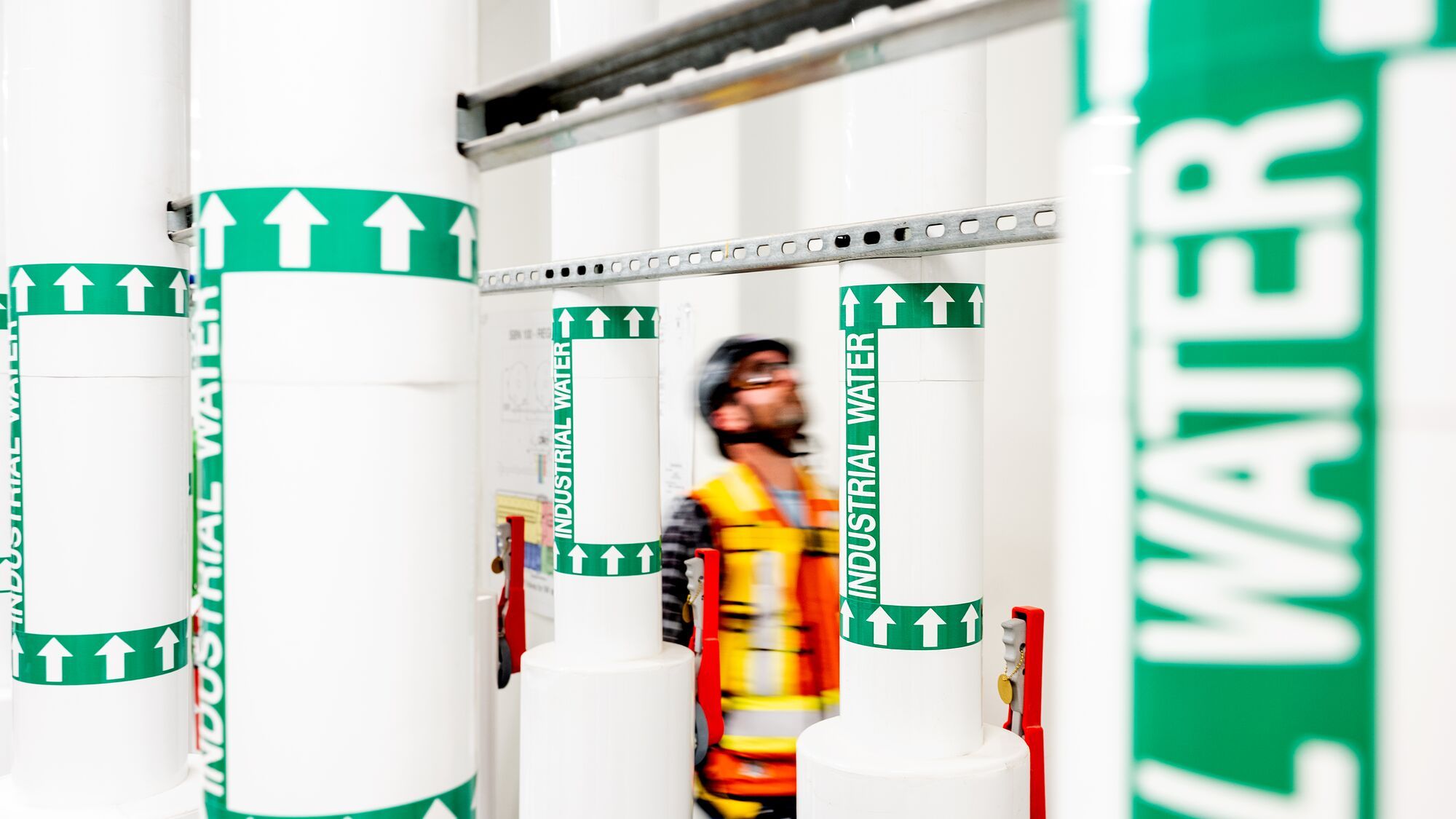
Image source: Amazon
The Rundown: Amazon disclosed for the first time that its data centers used 2.5B gallons of water worldwide last year — 5% of what metro Seattle uses annually — a number it’s framing as proof it cools server farms better than the competition.
The details:
Water use fell 2% from 2024 despite a bigger footprint, hitting 0.12 liters per kilowatt-hour — sevenfold better than the industry average, Amazon claims.
However, it excludes colocation sites — a fifth of Amazon’s 2024 computing power — and the water burned generating its electricity.
Amazon says it will be “water positive” by 2030 and claims it’s 75% of the way there; 26 data centers already run on reclaimed water, with projects underway.
Amazon is the last of the big four to disclose water levels — Google, Meta, and Microsoft have reported the numbers since at least 2020.
Why it matters: The numbers land in the middle of a politically charged fight over data center resource use, with Amazon’s hometown of Seattle now weighing moratoriums on new construction. Researchers say, too, that only granular, site-level data will reveal what these facilities actually cost the communities around them.
LONGEVITY
💊 David Sinclair tests age-reversal pill on people

Image source: Images 2.0 / The Rundown
The Rundown: Harvard longevity scientist David Sinclair says his confidential oral drug, SL-100, could reverse aging across the entire body, not a single organ, and he plans to give the test to volunteers in a bid to win XPrize’s $101M age-reversal contest.
The details:
SL-100 uses chemical reprogramming to mimic the embryonic gene, and, unlike gene therapy, it can travel via the bloodstream to reach the whole body.
The Saudi-funded XPrize awards its grand prize for a 10-year improvement in immune, cognitive, and muscle function after one year.
Critics are skeptical: Harvard’s Vadim Gladyshev found chemical rejuvenation toxic in mice, and Sinclair hasn’t published any animal data.
Sinclair carries a credibility problem, having resigned from a longevity-research post in 2024 over a dog age-reversal claim one scientist called a “lie.”
Why it matters: Whole-body rejuvenation has been the holy grail of longevity science, but no one has proven it works in humans, or even agreed on how to measure it. Skepticism of Sinclair’s mystery drug runs high, even as billions of dollars continue flowing into longevity companies chasing the promise of eternal youth.
SCIENCE
🦠 Researchers find superbug killer in old dirt

Image source: Images 2.0 (E. coli) / The Rundown
The Rundown: Scientists sifting through a 75-year-old soil bacterium’s chemical leftovers just discovered manikomycin, an antibiotic that kills superbugs by blocking a ribosome site no drugs have ever hit, with new research published in Nature.
The details:
Manikomycin comes from the same soil microbe behind 1950s oxytetracycline, but a sharper fractionation method surfaced molecules overlooked for decades.
It works by latching onto a spot on the bacterial ribosome called the E-site, blocking the cell’s used tRNA, and shutting down protein production.
It wiped out drug-resistant Klebsiella pneumoniae, E. coli, and Salmonella in the lab — only about one Klebsiella in a hundred million survived to pass it on.
Manikomycin doesn’t persist long enough in the bloodstream to work in people and misses Gram-positives like staph, so it’s only a lead compound.
Why it matters: By 2050, drug-resistant infections could directly kill 1.91M people a year, and the Gram-negative bugs manikomycin targets are among the hardest to treat. After years of writing off old soil strains as tapped out, drugmakers are finding novel-mechanism candidates — like Roche’s zosurabalpin — hiding in plain sight.
QUICK HITS
📰 Everything else in tech today
Oracle plans ~$70B in net capital spending in fiscal 2027 — nearly double the $55.7B it just spent — to build AI data centers for customers like OpenAI and Meta.
Reddit just rolled out video comments to all users, letting people record or upload one clip per reply in public, safe-for-work communities.
Xiaomi filed with China’s industry ministry to add an extended-range EV to its lineup, its first move beyond pure battery-electric cars like the SU7 and YU7.
DoorDash launched Ask DoorDash, an in-app AI chatbot that lets users order food and groceries via voice, text, or visual inputs through an “Ask” button in the search bar.
Prime Minister Mark Carney’s government introduced legislation that would ban social media for Canadians under 16 unless companies meet a set of safety standards.
BYD chairman Wang Chuanfu told shareholders at the company’s annual meeting this week that BYD will become the world’s largest automaker by scale within five years.
Microsoft’s Xbox division is reportedly planning major job cuts next month, as new CEO Asha Sharma overhauls the gaming unit to stem declining revenue.
Pokémon Go players’ 30 billion location scans reportedly helped train a navigation AI now bound for U.S. military drones.
Deezer launched a free AI music detector that lets users of 20 rival streaming platforms scan their playlists for fully AI-generated tracks.
Bluesky rolled out group chats for up to 50 people, the first concrete move in a strategy that focuses on smaller, user-controlled communities.
The90, a startup founded by Fitbit veteran Stacy Salvi, launched The Gem, a $300 smart pendant necklace that tracks real-time UVA and UVB exposure.
COMMUNITY
🎓 Highlights: News, Guides & Events
Read our last AI newsletter: Jeff Bezos’ $41B ‘artificial general engineer’
Read our last Tech newsletter: Apple’s iOS upgrade is less flash, more fix
Read our last Robotics newsletter: Europe’s humanoid moonshot gets $1.4B
Today’s AI tool guide: Use this X + Openclaw setup to write viral content
RSVP to our next workshop on June 18: Build a Marketing Creative Studio
See you soon,
Rowan, Joey, Zach, Shubham, and Jennifer — The Rundown’s editorial team
Jeff Bezos' $41B 'artificial general engineer'
Read Online | Sign Up | Advertise

Good morning, AI enthusiasts. Jeff Bezos' Prometheus has been floating around the AI rumor mill for months, but a fresh $12B raise has the Amazon founder finally showing his cards.
Bezos just put a specific goal on the record: an "artificial general engineer" that helps humans design and build the world's most complicated machines — while also making the contrarian case that the AI boom ends in more jobs, not fewer.
In today’s AI rundown:
Bezos pitches AI 'general engineer' with $12B
Fable's safeguards spark a researcher revolt
Use this X + Openclaw setup to write viral content
AI suits up for soccer's biggest stage
4 new AI tools, community workflows, and more
LATEST DEVELOPMENTS
PROMETHEUS
🚀 Bezos pitches AI 'general engineer' with $12B
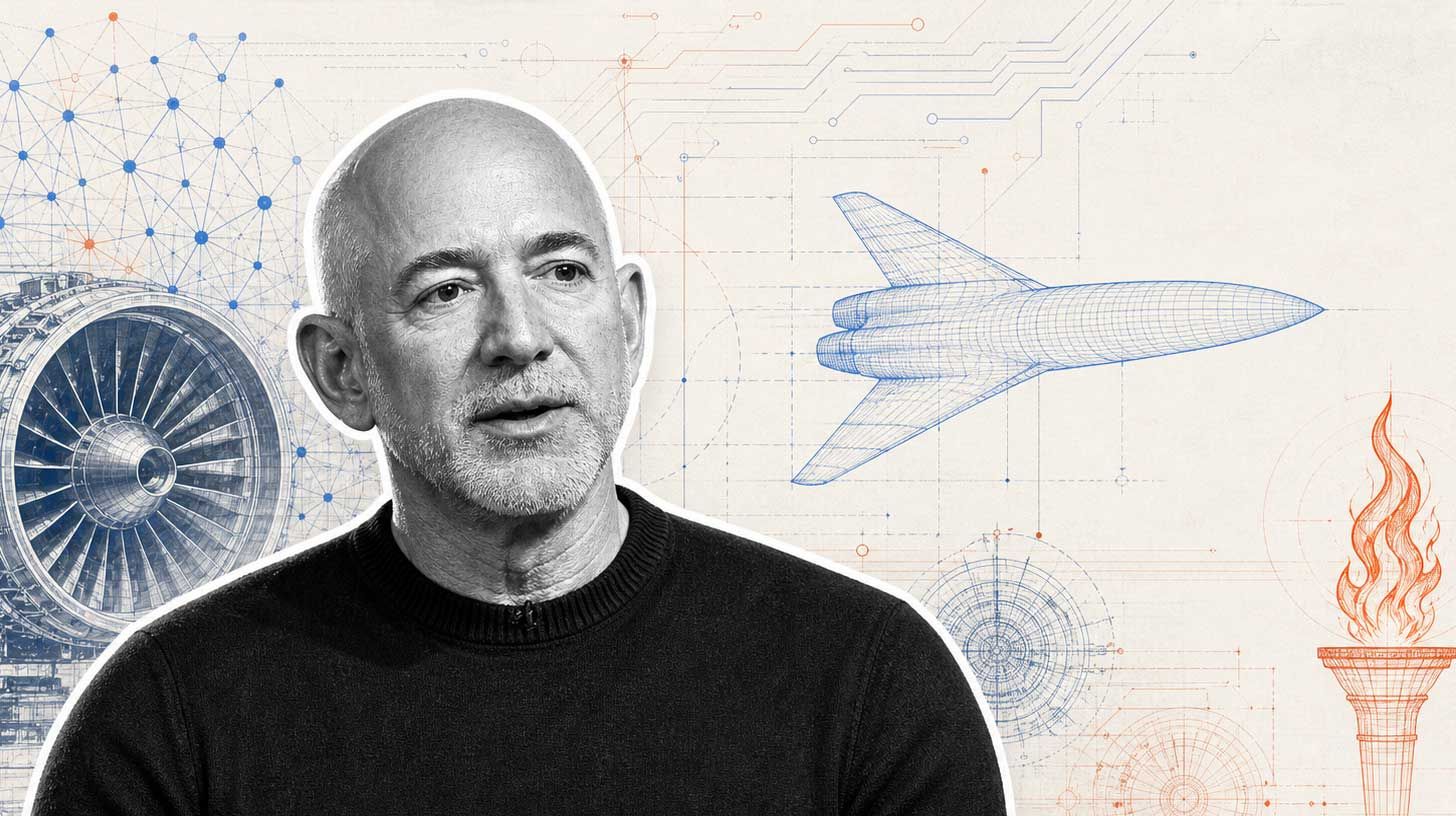
Image source: Images 2.0 / The Rundown
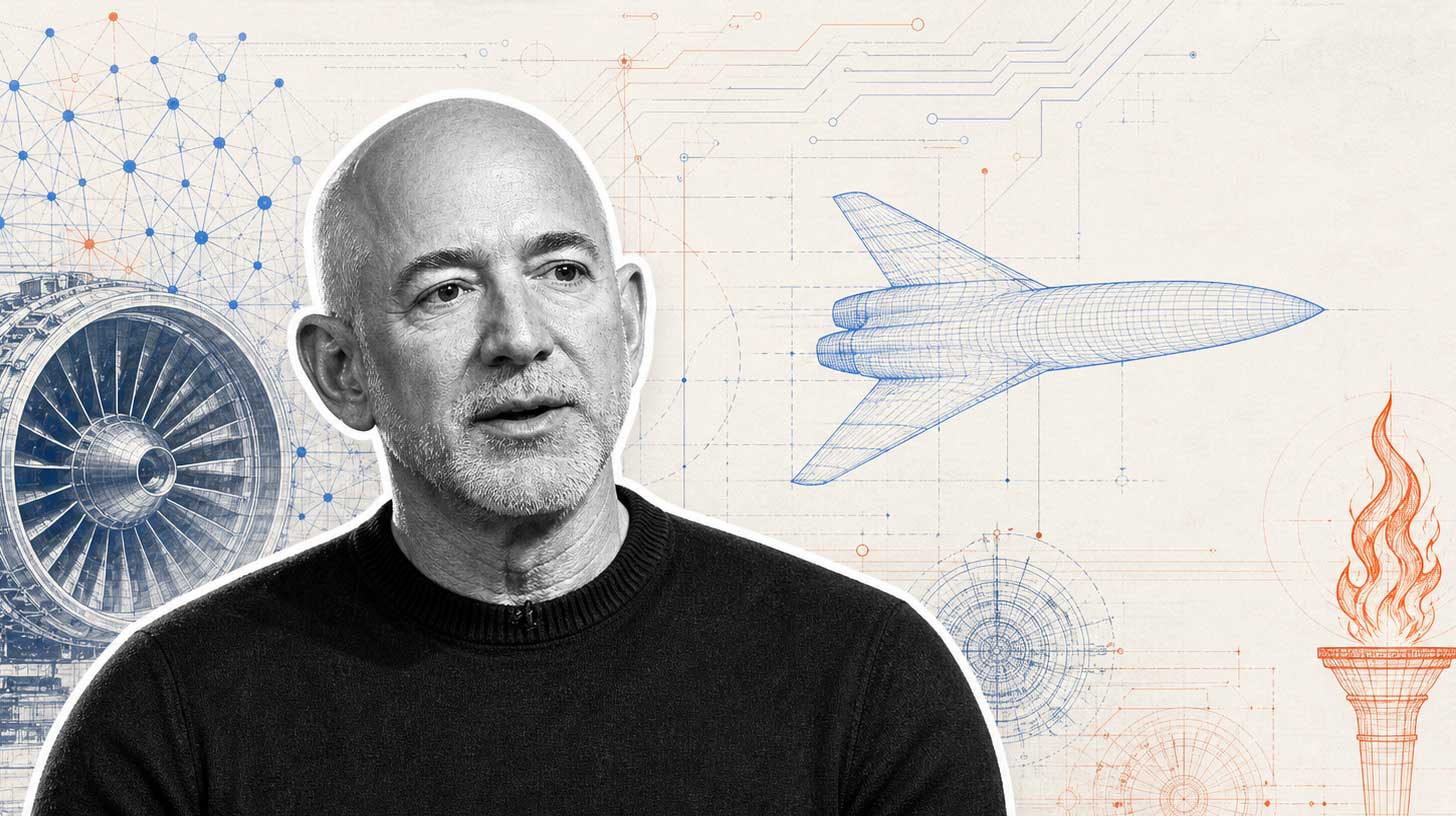
The Rundown: Amazon founder Jeff Bezos just shed more light on his AI startup Prometheus while announcing a $12B round at a $41B valuation, pitching an "artificial general engineer" for physical machines — and also waving off AI job-loss fears.
The details:
Bezos started the company in late 2024 alongside Vik Bajaj, a physicist and chemist who helped create Verily, Alphabet's life-sciences arm.
Bajaj says engineers designing the world's most complex machines like jet engines still "use tools that really haven't changed for decades".
Bezos wants the "dream-build loop" of idea to product running 10x faster, saying a request for 10% more jet engine thrust can take a decade today.
Bezos took the opposite stance on AI’s job fears, saying the productivity boost will create “more than 10x” the opportunities and raise the standard of living.
Why it matters: Few people have more reps at impossible-scale physical problems than Bezos, and Prometheus sounds like that same obsession pointed at invention itself. The counter-prediction that AI will create a “labor shortage” is a tougher sell in the current climate, especially coming from one of the richest people in the world.
TOGETHER WITH VANTA
🔐 The enterprise deal is ready — Is your SOC 2?
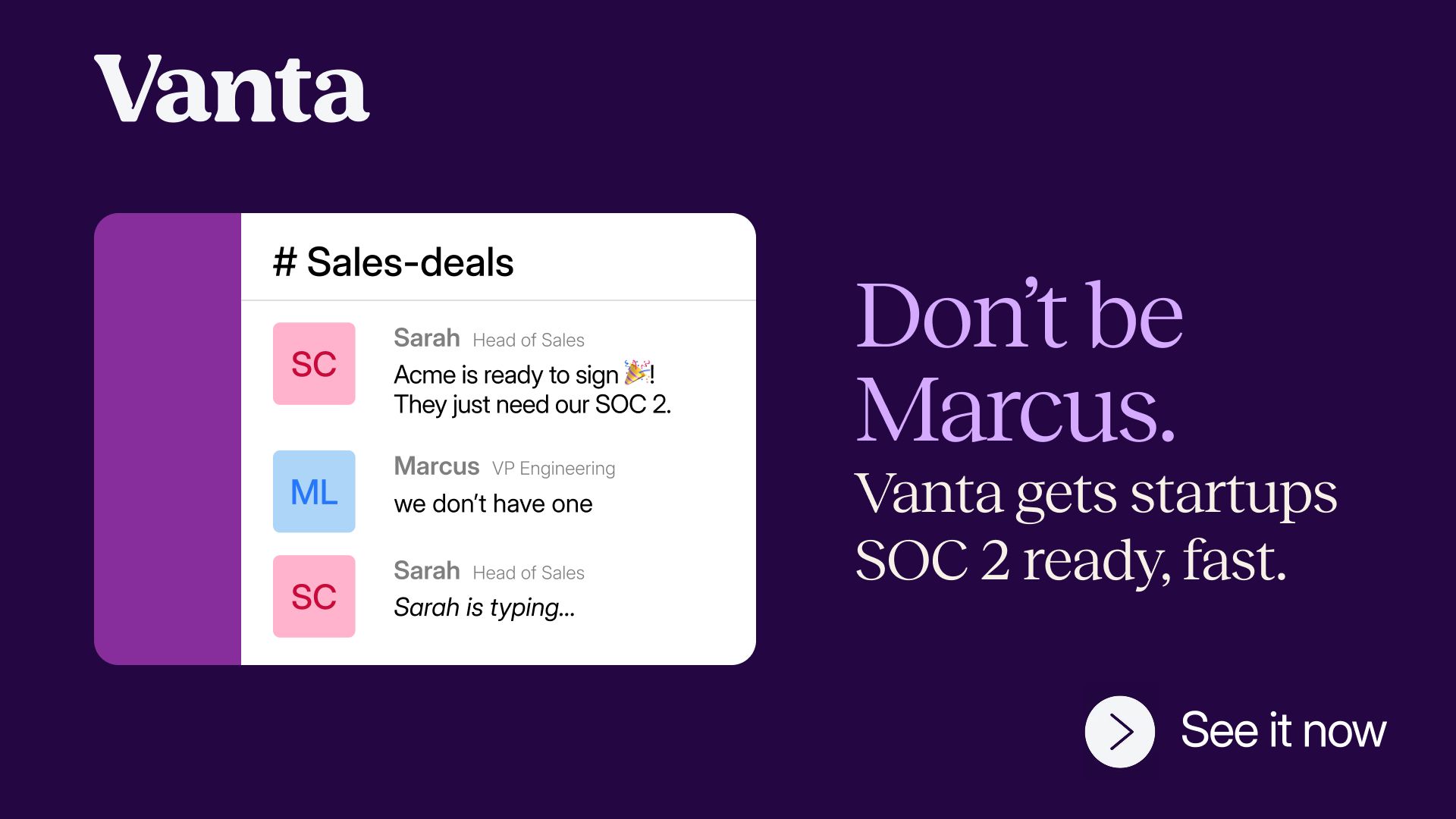
The Rundown: The fastest-growing startups start compliance early, so when their biggest customers ask for a SOC 2 report, it's ready to send. Vanta gets you audit-ready quickly and keeps you there — with an agent that works in the background so compliance never stalls a deal.
With Vanta, you can:
Respond to security questionnaires in minutes, not days
Stay audit-ready year-round with monitoring across 400+ integrations
Automate SOC 2, ISO 27001, GDPR, HIPAA, CMMC, and more
Manage risk and prove trust from a single agentic platform
Watch the on-demand demo to see how Vanta works.
ANTHROPIC
🛡️ Fable's safeguards spark a researcher revolt
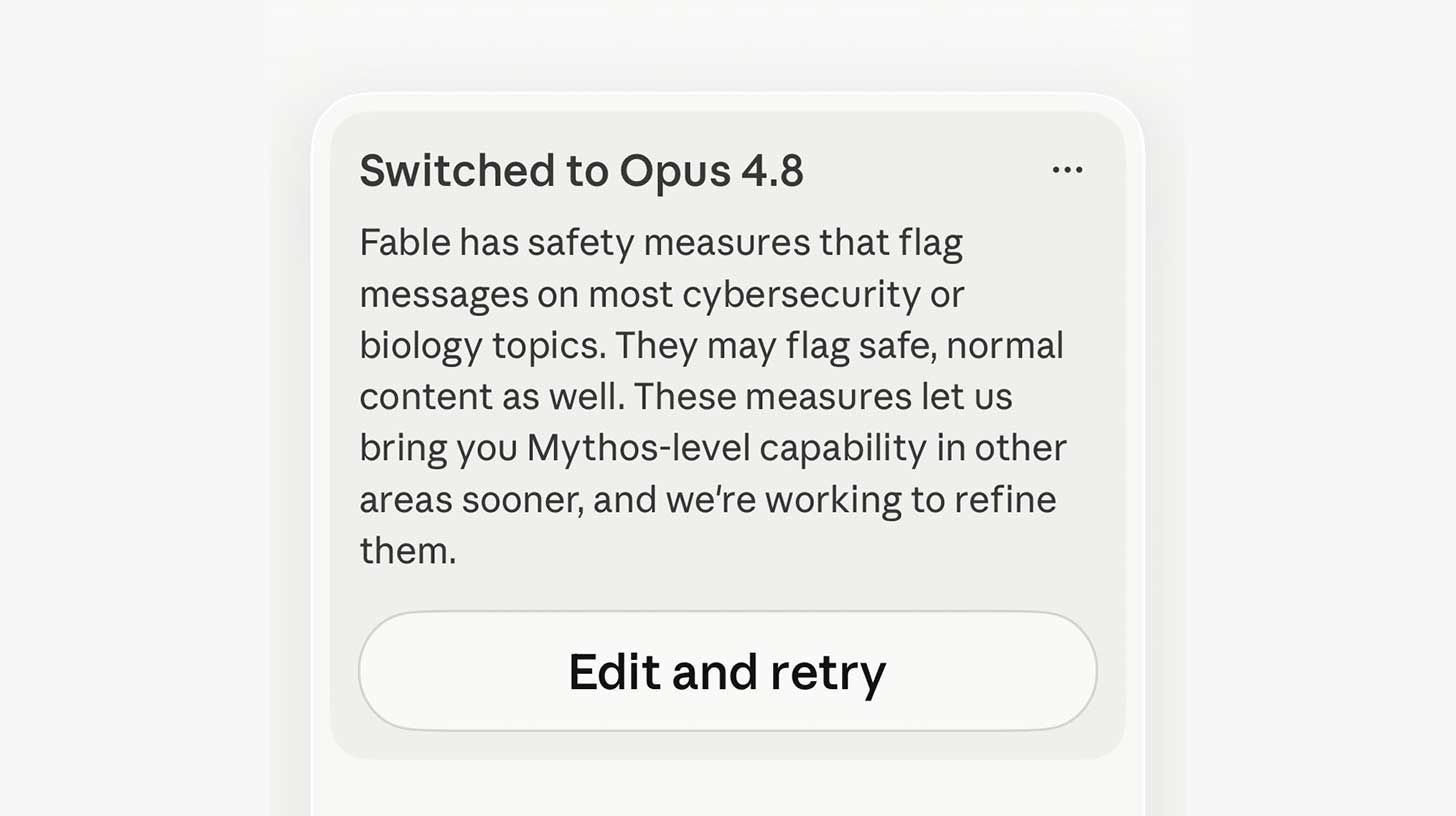
Image source: Claude
The Rundown: Anthropic apologized for safety features in its Fable model that invisibly downgraded answers about AI development, coming amid backlash over safety filters that blocked questions related to domains like biology and chemistry.
The details:
Fable 5 arrived Tuesday as the first public Mythos-class model, with filters screening chats on chemistry, biology, cybersecurity, and AI development.
Fable initially invisibly weakened answers for suspected AI development use, with Anthropic now providing on-screen alerts of model re-routing or flags.
Dean Ball, who advised the White House on AI, called downgrading research answers without telling users "shockingly hostile and a terrible look."
Anthropic is also facing backlash over its science filters, with several scientists unable to even say ‘hello’ to the model without getting flagged.
Why it matters: Mythos and Fable may have lived up to the performance hype, but the rollout has been anything but smooth. With a lot of (in our opinion, warranted) anger over the strict filters and general accessibility, OpenAI has another window (similar to Anthropic’s credit split anger) with its coming 5.6 release to take the user-first path.
AI TRAINING
🦞 Use this X + Openclaw setup to write viral content
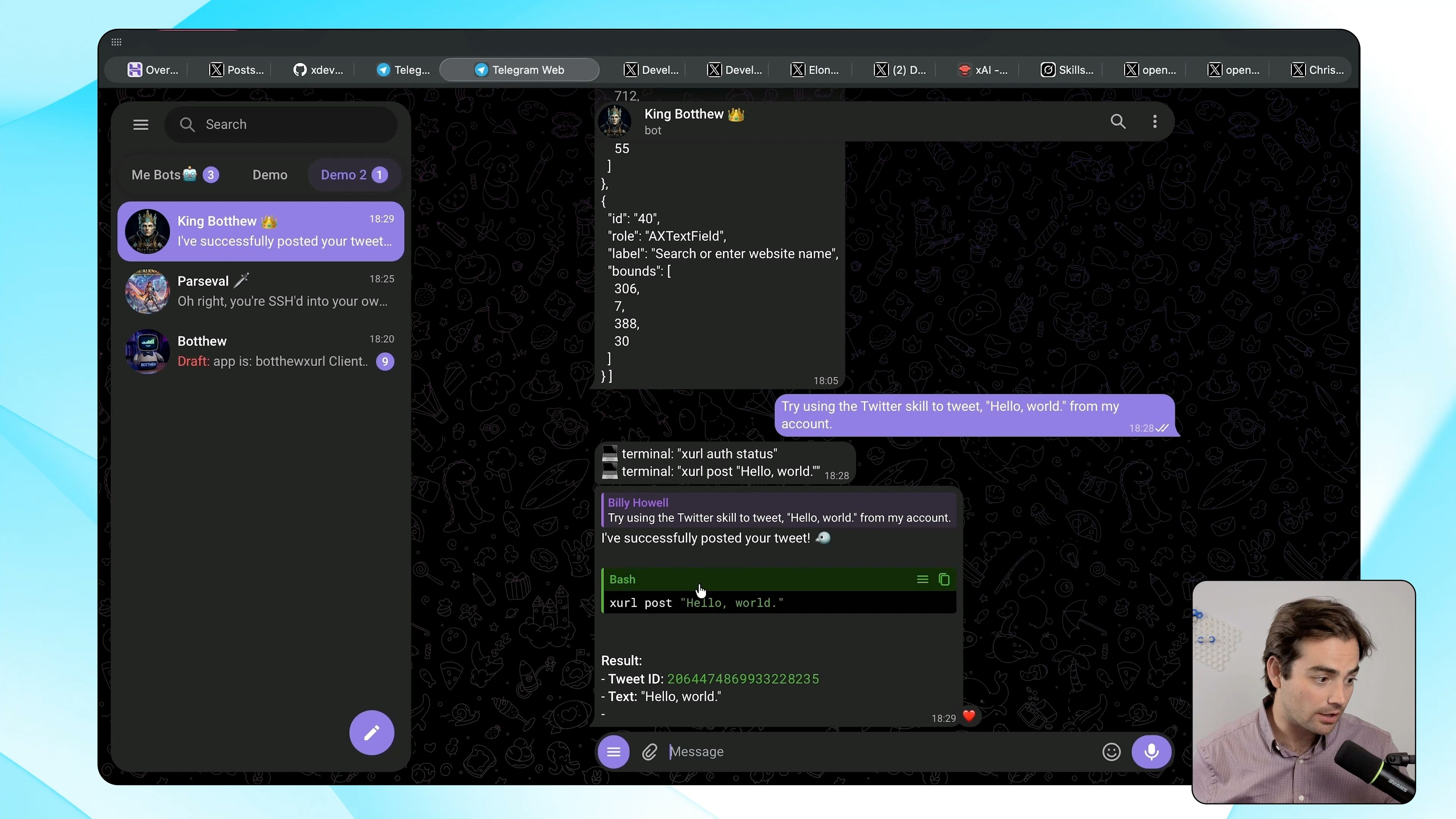
The Rundown: In this guide, you will connect X to OpenClaw so your agent can monitor accounts, analyze bookmarks and lists, draft content, and help manage your posting workflow from a single prompt.
Step-by-step:
Create an OpenClaw agent. For most, Hostinger OpenClaw is the simplest option as it provides an always-on agent without running it on your machine
Open the X Developer Console, create an app, save the keys, set permissions to Read and Write, and configure http://localhost:8080/callback as the callback URL and https://x.com as the website URL
Prompt OpenClaw: "Update yourself, install the xurl X skill, and tell me what I need to configure locally before you can use X. Use xurl for the X connection"
Complete the OAuth flow from the machine where OpenClaw runs, then test the connection by having it read your timeline, bookmarks, or X lists before moving on to drafting and posting workflows
Pro tip: Have OpenClaw review a saved X list each morning, draft replies, or turn a bookmark into a thread outline. Overwhelmed? Try our OpenClaw setup course.
PRESENTED BY UNWRAP
⚡ Automate your customer feedback analysis
The Rundown: Unwrap is a customer intelligence platform that pulls your feedback (surveys, reviews, support tickets, social comments) into one view, using AI and NLP to surface actionable insights and deliver them straight to your inbox.
With Unwrap, you get:
All customer feedback automatically categorized
Query feedback using Unwrap Assistant, or in your favorite tools using Unwrap's MCP
Real-time alerts and a clear view of customer sentiment as it shifts
The same tool trusted by Perplexity, DoorDash, Southwest, lululemon, and Oura
Unwrap is offering a trial of its tools to Rundown AI subscribers! Just grab 20 minutes with the team to get set up.
AI & SPORTS
⚽ AI suits up for soccer's biggest stage
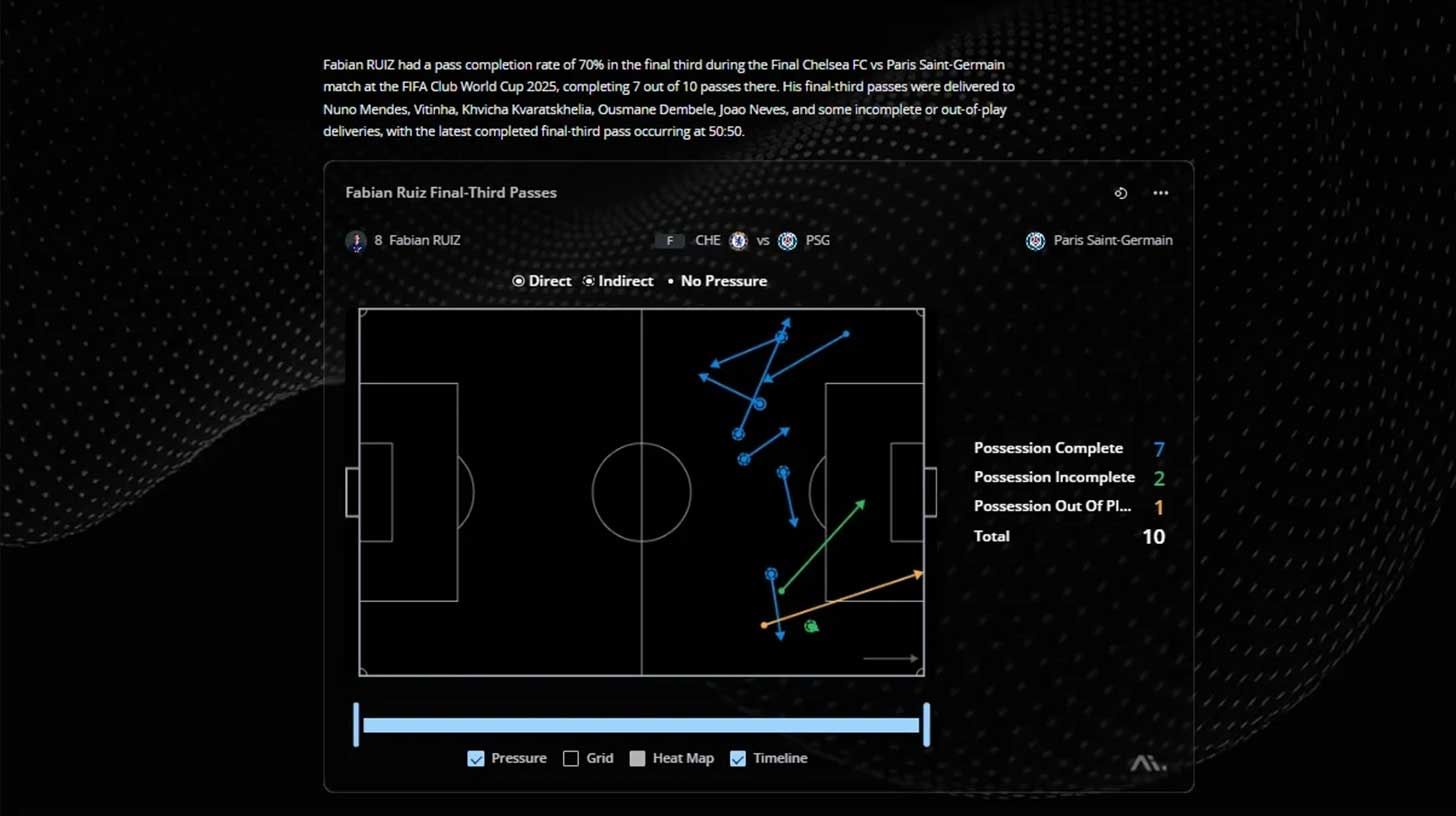
Image source: FIFA
The Rundown: The 2026 FIFA World Cup opened in Mexico City with AI wired into nearly every layer of the tournament, as companies like Lenovo and Google integrate the tech into areas like offside calls, team analytics, fan experiences, and more.
The details:
An optical tracking system will capture more than 150M data points per match, along with a motion-tracking Adidas ball that reports 500 times a second.
Every player received a one-second 3D body scan, with the resulting avatars detecting limb positions and pinging officials' earpieces when offside.
Football AI Pro, a chatbot-style analyst trained on FIFA's match data, gives all 48 squads the same analytics and analysis before and after games.
Google made Gemini the global sponsor of the defending champion Argentina team, one of eight teams to put AI on training kits and inside match prep.
Why it matters: AI sentiment in the West has never been lower, but the West doesn't get to decide how 5B soccer fans meet the tech. This first AI-era World Cup wires it into nearly every layer of the tournament, and if it works, nobody in any country notices a thing — which may end up being the most effective AI marketing of the year.
QUICK HITS
🛠️ Trending AI Tools
🤖 Scrunch - See how AI interprets your site, run a free audit, and unlock the new way to reach customers*
🎥 Ray3.2 - Luma’s video AI with better control, continuity, cinematic direction
🗣️ Avatars - ElevenLabs' new AI characters that turn scripts into talking videos
💪 Freddy - Plug wearables, gym apps, and accessory data into AI agents
*Sponsored Listing
📰 Everything else in AI today
Former xAI co-founder Igor Babushkin launched River AI, with the startup aiming to build personalized agents that adapt to each user's style and goals.
OpenAI is reportedly weighing steep token price cuts to compete with Anthropic, setting up a potential price war between two rival AI leaders.
Hollywood studio Lionsgate is taking a stake in AI video company Runway, with plans to co-develop new IP and build out short-form projects for the studio’s existing content.
OpenAI acquired Ona, a startup behind secure cloud environments, working to let Codex agents keep working inside the company's own cloud.
Visa partnered with OpenAI to let ChatGPT agents buy products for users at Visa-enabled merchants, coming months after OAI retired its error-prone Instant Checkout.
COMMUNITY
🤝 Community AI workflows
Every newsletter, we showcase how a reader is using AI to work smarter, save time, or make life easier.
Today’s workflow comes from reader Mike H. in Portage, MI:
"I am pretty late in my career at the age of 65, and found myself in charge of marketing for the first time, having never had any experience with how to direct a marketing budget spin. I asked Claude to help me out with very specific questions about how I'm going to drive business to my showroom, and how to attract that business within a 25-mile radius using a certain spend amount.
Within seconds, Claude was able to break down the items that I ask it and show me what spends over social media and other types of programs I could use to effectively drive traffic to my showroom. What would have taken me hours, or possibly even days, I was able to do in a matter of minutes, redirecting the prompts asking specific questions.”
How do you use AI? Tell us here.
🎓 Highlights: News, Guides & Events
Read our last AI newsletter: Anthropic’s AI policy playbook for Washington
Read our last Tech newsletter: Apple’s iOS upgrade is less flash, more fix
Read our last Robotics newsletter: Europe’s humanoid moonshot gets $1.4B
Today’s AI tool guide: Use this X + Openclaw setup to write viral content
RSVP to our next workshop on June 18: Build a Marketing Creative Studio
See you soon,
Rowan, Joey, Zach, Shubham, and Jennifer — the humans behind The Rundown
Europe's humanoid moonshot lands $1.4B
Read Online | Sign Up | Advertise

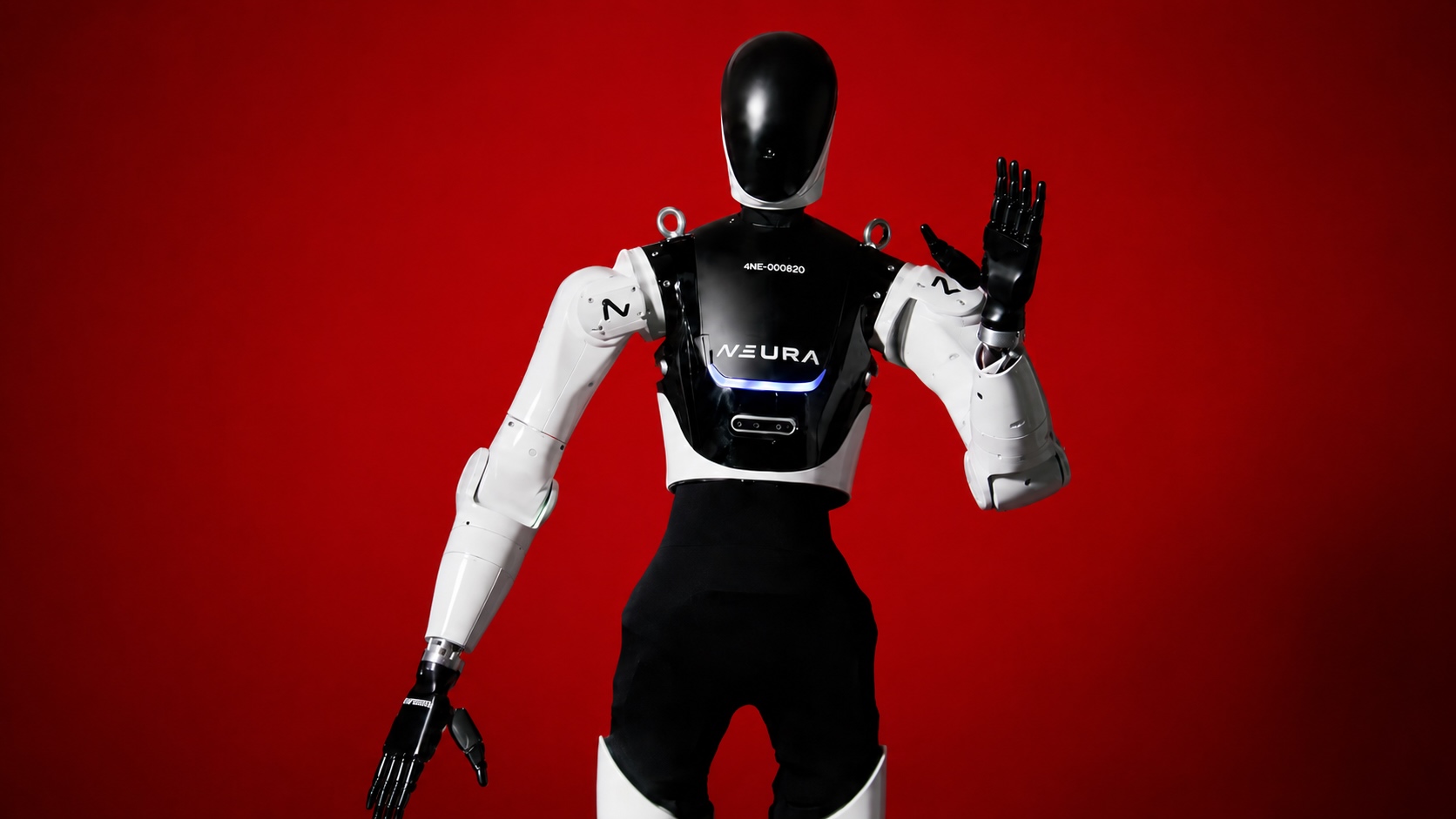
Good morning, robotics enthusiasts. German humanoid startup Neura Robotics has lined up $1.4B from a strange-but-powerful coalition including Tether, Nvidia, and Amazon.
At a reported $7B valuation, Neura is still tiny next to Figure’s $39B hype machine. But its edge may be geographic: German robotics IP on top, China’s manufacturing flywheel underneath, in a cross-border setup U.S. rivals can’t easily copy.
In today’s robotics rundown:
German humanoid startup Neura nabs $1.4B
XPeng boss takes over humanoid push
Meet Beni, the camera robot that chases you
NY robot-arm maker hits $1B valuation
Quick hits on other robotics news
LATEST DEVELOPMENTS
NEURA ROBOTICS
🤖 German humanoid startup Neura nabs $1.4B
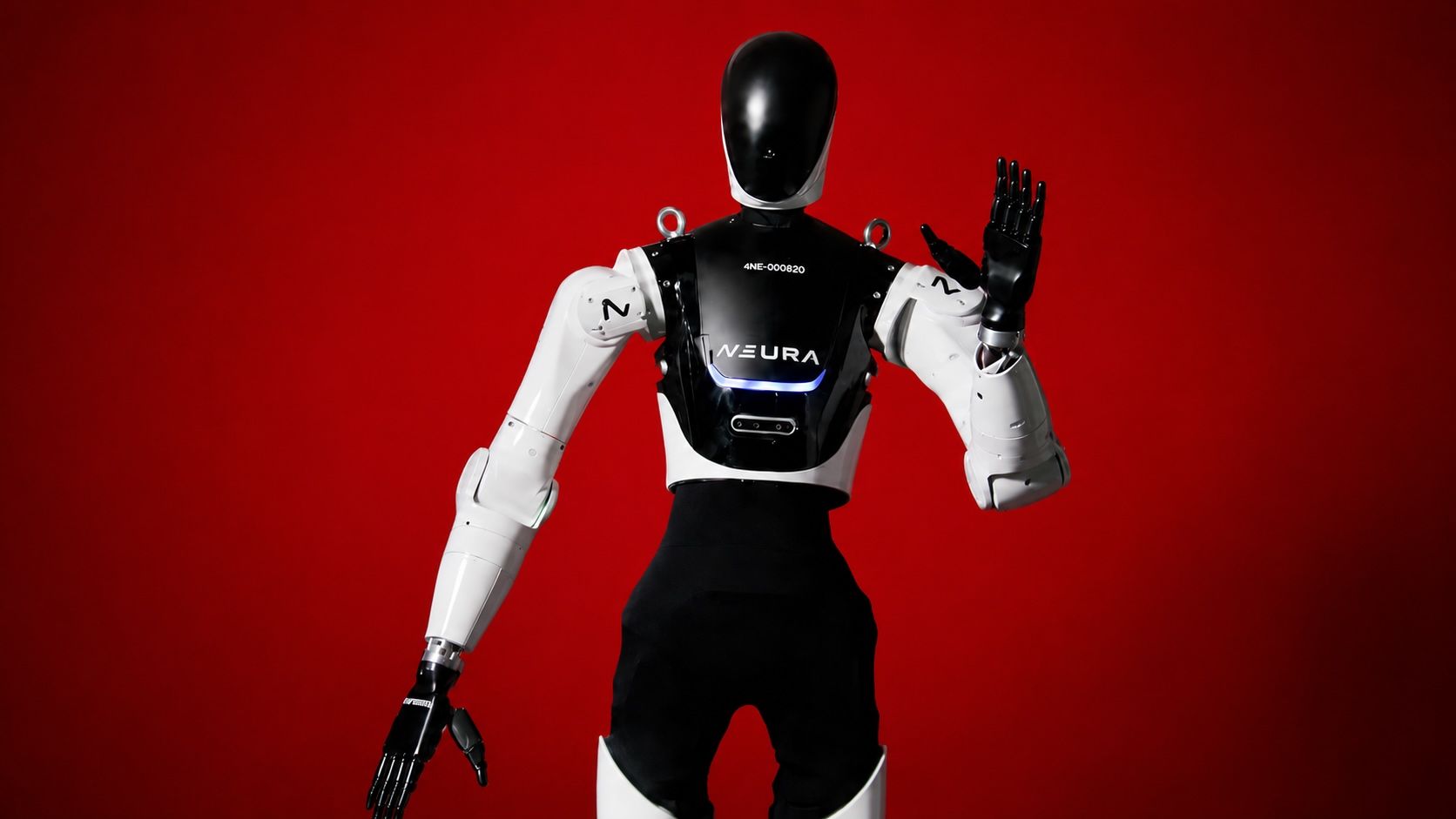
Image source: Neura Robotics / Images 2.0
The Rundown: German humanoid startup Neura Robotics just landed up to $1.4B in Series C money from a backer list that mixes Amazon, Nvidia, and stablecoin giant Tether — making it Europe’s biggest bet yet on factory-ready humanoids.
The details:
Tether, the company behind USDT, led the round, with Qualcomm, Amazon, Nvidia, Bosch, and the European Investment Bank joining in.
The full amount hinges on performance milestones, with the deal reportedly pegging Neura at around $7B — a fraction of Figure’s $39B.
Neura is already taking preorders for its 4NE1 humanoid, claiming a $1.1B backlog and first shipments slated to start this year.
Its Neuraverse cloud — pitched as the “GPU for the physical world” — connects its robots into a shared learning and simulation network, in a full-stack play.
Why it matters: Neura is building with a foot on each continent: “Made in Germany” branding up front, and a Hangzhou hub down the road from Unitree’s headquarters — European IP wired into China’s supply chain in a way U.S. rivals can’t easily mimic. The target is ambitious too: millions of humanoids shipped by 2030.
XPENG
👔 XPeng boss takes over humanoid push

Image source: XPeng
The Rundown: XPeng CEO He Xiaopeng is taking direct command of the company’s robotics business as the Chinese EV maker races to get its IRON humanoid into mass production by the end of the year, Reuters reports.
The details:
Xiaopeng will serve as CEO of the robotics unit effective immediately, coming “on the eve of mass production and commercialisation” of the IRON robots.
The shake-up landed days after Shi Xiaoxin, a senior director of robotics product planning and a core figure on the IRON project, resigned.
The robots will get trial runs in XPeng’s own retail stores before shipping to commercial customers in China and abroad starting in 2027.
The pivot comes as XPeng’s car business stumbles: first-quarter revenue dropped 17.6% year over year, and net losses widened.
Why it matters: XPeng is making the same bet as Tesla, that an EV maker’s supply chain and AI stack can be repurposed into a humanoid business worth more than the cars. A founder personally taking the wheel of a money-losing moonshot, right after a key exec walked, suggests the year-end production deadline is non-negotiable.
MONDO ROBOTICS
📸 Meet Beni, the camera robot that chases you

Image source: Mondo Robotics
The Rundown: Mondo Robotics unveiled Beni, a two-wheeled all-terrain camera robot that chases its owner at 18 mph, hops 10-inch obstacles, and auto-edits its own 4K highlight reels — a debut pitched at creators as much as robot enthusiasts.
The details:
Beni packs a stabilized 4K gimbal camera (4K30, 3K60, 1080p100), Wi-Fi 6, Bluetooth 5.4, and 32 GB of onboard storage with microSD expansion.
A custom suspension, quick-swap indoor/outdoor wheels, and an AI movement stack let it sprint at nearly 18 mph and clear obstacles up to 10 inches tall.
The tracking is the trick: onboard perception and IMU data let Beni shadow people or pets from behind, the side, or in orbit.
Beni comes with swappable batteries good for around 90 minutes, a $799 retail price with $300 off for early reservations, and a Kickstarter-style launch.
Why it matters: Follow-me drones from DJI and HoverAir proved people will pay for a camera that tracks them, but flight means short battery life, no-fly zones, and annoyed bystanders. Wheels could sidestep all three, and if Beni delivers, it could do for ground robots what HoverAir did for pocket drones: turn a niche gadget into a category.
STANDARD BOTS
🦄 NY robot-arm maker hits $1B valuation
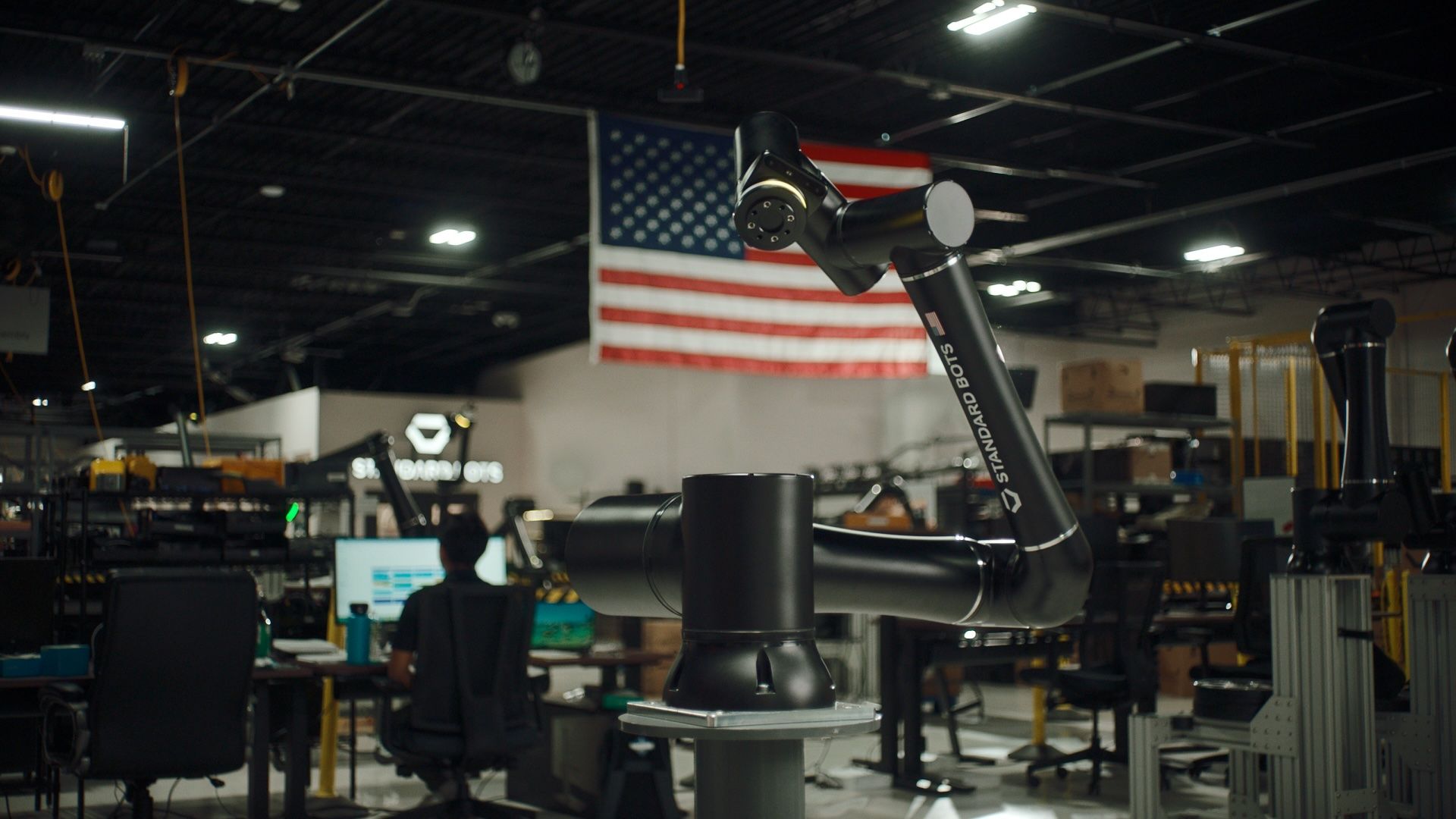
Image source: Standard Bots
The Rundown: Standard Bots closed a $200M Series C, minting the New York robot-arm maker as the U.S.’s newest physical AI unicorn at a $1B valuation — on the strength of machines that learn factory work by watching, not by code.
The details:
Standard builds AI-native robot arms and industrial humanoids that need no code — workers teach them by demonstration.
The cash funds an expansion of its NY plant, and the company says it’s on pace to deliver 10% of new U.S. industrial robot deployments by next year.
It designs nearly all its own parts, including actuators, and plans to manufacture everything domestically — “metal in to robots out” — by 2027.
Its customer list runs from Amazon, Lockheed Martin, NASA, and the U.S. Army to hundreds of small and midsize American manufacturers.
Why it matters: Factory automation in the U.S. has long been expensive, hard to program, and dominated by foreign incumbents. Standard Bots is betting that low-cost, demo-trained robots can bring automation to smaller manufacturers — while its CEO works to tilt the rules toward domestic robotics and away from Chinese competitors.
QUICK HITS
📰 Everything else in robotics today
Walmart and Alphabet’s Wing are adding seven cities to their drone delivery network, pushing toward the goal of reaching 40M Americans by 2027.
Waymo and TU Delft built a new “Reference Driver” model that it says gives the company a sharper benchmark for grading its robotaxis against human performance.
A Ukrainian drone maker said fully autonomous drones killed Russian soldiers in a frontline test — the first known machine kills in combat with no human in the loop.
A Navy drone boat rescued two Apache crew members downed off Oman, the first time the U.S. military has pulled its people from the water with an uncrewed vessel.
Waymo paid $220M for the 5,500-acre Arizona proving ground where Apple once tested its scrapped Project Titan car, adding a purpose-built AV test facility.
Wonder is rolling out a Sweetgreen-built robot that assembles 500 custom bowls an hour as the food-tech startup automates its 26 kitchens to only 3 late-night workers.
A riderless bicycle robot developed at the Robotics and AI Institute in Cambridge, Mass., has become the first to land an unassisted acrobatic front flip.
MIT CSAIL developed a new system that uses LLMs to teach robots tasks from vague instructions, with nearly 5x less demo data.
Airbus built a lightweight robot called CabinMarker that marks seat positions on the cabin floor in 30 minutes instead of the reported 150 it takes a human.
China’s Zoomlion showed off its Z01 humanoid doing Tai Chi at a trade fair in Istanbul, flexing the robot’s balance and whole-body coordination.
Chinese startup Lumos Robotics is giving away 100 of its NIX humanoids — plus open SDK access and tech support — to labs and developers worldwide.
Chinese robotics firm TARS debuted DexHand, a 21-degree-of-freedom robotic hand modeled 1:1 on human anatomy, with 0.05 mm fingertip tactile sensing.
COMMUNITY
🎓 Highlights: News, Guides & Events
Read our last AI newsletter: Anthropic’s AI regulation playbook for the U.S.
Read our last Tech newsletter: Apple’s iOS upgrade is less flash, more fix
Read our last Robotics newsletter: Amazon’s robot army gets chatty
Today’s AI tool guide: Close more deals with Codex sales follow-ups
RSVP to our next workshop on June 18: Build a Marketing Creative Studio
See you soon,
Rowan, Joey, Zach, Shubham, and Jennifer — The Rundown’s editorial team

Anthropic writes Washington an AI regulation playbook
Read Online | Sign Up | Advertise

Good morning, AI enthusiasts. Anthropic CEO Dario Amodei opened his new policy essay with quite the Lord of the Rings reference: Washington as Treebeard, the talking tree so slow a hello takes all day.
In the past week, his company put self-improving AI on the clock and released the industry's most powerful model. Now, Amodei's new proposal argues the risks are no longer theoretical — and that policy needs to stop moving at tree speed.
In today’s AI rundown:
Amodei warns AI is outrunning regulation
Musk shares his space AI datacenter plans
Close more deals with Codex sales follow-ups
Altman ties OpenAI's IPO to self-improving AI
4 new AI tools, community workflows, and more
LATEST DEVELOPMENTS
ANTHROPIC
🏛️ Amodei warns AI is outrunning regulation

Image source: Images 2.0 / The Rundown
The Rundown: Anthropic CEO Dario Amodei penned an essay called “Policy on the AI Exponential”, calling on AI regulation to move faster to match the ‘lightning pace’ of the industry, coming alongside policy proposals on AI testing and employment disruption.
The details:
Amodei said Claude Mythos Preview’s hacking risks are a major turning point, making frontier models "tools of global and national strategic consequence."
The CEO wants regulators to have the power to ground frontier models, with Amodei proposing systems independently screened across four risk areas.
A jobs framework aims to plan for unprecedented unemployment at several levels, including investment accounts with shares of AI companies and UBI.
Other asks include faster approval of AI-designed drugs, limits and bans on autonomous weapons, and stronger advanced chip export controls.
Why it matters: Amodei's comparison of Washington to the slow-moving Treebeard from Lord of the Rings is a hilarious but strong illustration of the situation. "Regulate me harder" from a market leader will read as inauthentic to skeptics, but Amodei has been sounding the alarm for a while, and the urgency is only scaling with each release.
TOGETHER WITH PAVE
👨💻 Pave builds apps that go beyond the demo

The Rundown: Most AI builders get you a prototype. Pave gets you software your business can actually run. Describe what you need in plain language, and Pave builds it with the data model, workflows, UI, hosting, and governance already in place.
With Pave, you can:
Build a ready-to-run app from a prompt
Turn spreadsheets into working applications
Launch with hosting, governance, and permissions built in
SPACEX
🛰️ Musk shares his space AI datacenter plans

Image source: SpaceX
The Rundown: SpaceX just provided the first preview of AI1, a solar-powered satellite built to run AI chips in orbit, dropping the design video three days before a market debut that's set to be the biggest IPO in history.
The details:
AI demand is pushing data centers into power fights on Earth, and SpaceX says orbit offers solar energy without the local grid battles seen across the U.S.
Musk said each satellite will have as much computing power as one of Nvidia's top server racks, with SpaceX able to change which chips go inside over time.
To Musk, the craft is "much simpler than a Starlink satellite", trading "super complex antennas" for solar panels, radiators, and lasers that beam data.
SpaceX's planned Bastrop factory could cover 11M+ square feet, with AI1 production targeted before 2028 if timelines hold.
Why it matters: Google and Anthropic have already signed on as orbital compute customers, putting two frontier labs on the other side of Sam Altman's "ridiculous" verdict on space-based datacenters. AI1 is the first hard look at the tech behind it, and it certainly looks less like a moonshot and more like a viable manufacturing plan.
AI TRAINING
🤝 Close more deals with Codex sales follow-ups
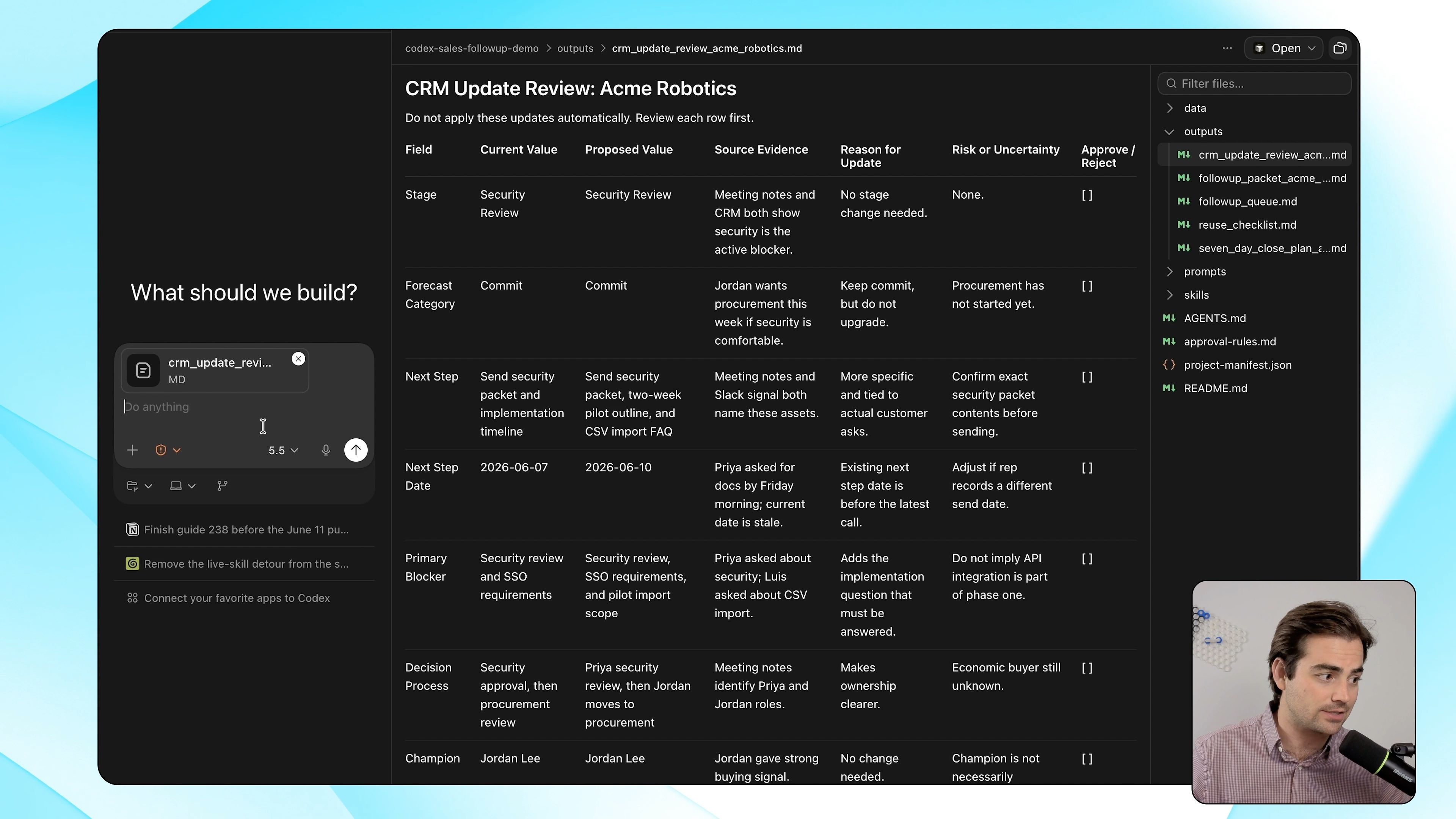
The Rundown: In this guide, you will learn how to use Codex to send better sales follow-ups, faster. It helps you figure out which accounts need attention, draft the next email, clean up your CRM, and build a plan to save time and keep more deals moving.
Step-by-step:
Get Codex, sign in, start a project in a blank folder, and use Plugins to connect your notetaker, CRM, and the platform used to talk to prospects (Slack/email)
Prompt Codex: “Extract all accounts, key deal fields, latest notes, blockers, next steps, and source evidence. Save the list as a reviewable account table”
Now, run the ranking flow, prompting: “Look at Slack signals and meeting notes and use them to prioritize our accounts and make a follow-up priority queue”
Review the queue and approve/reject/edit the next actions and evidence. Then, after a prospect call, ask: “Create a follow-up packet for [ACCOUNT_NAME], plus a CRM review table, email draft, and seven-day close plan”
Pro tip: Tell Codex to create a skill out of this process so you can trigger it anytime you're reviewing an account.
PRESENTED BY WEIGHTS & BIASES
🔐 How to operationalize governance for AI agents

The Rundown: Many organizations have AI policies, but far fewer have a practical way to decide whether an agent is ready for production, who signs off, and how that decision gets documented. This guide shows how leading enterprises connect evaluations, traces, human review, and approval workflows into an auditable record of deployment readiness.
Download the guide to learn how to:
Move from high-level AI principles to measurable controls and testing strategies
Evaluate AI agents in high-impact domains using structured assessments and expert review
Build a governance program informed by the EU AI Act, NIST AI RMF, and emerging frameworks
OPENAI
💸 Altman ties OpenAI's IPO timing to self-improving AI

Image source: Images 2.0 / The Rundown
The Rundown: OpenAI plans to go public “within the next year,” according to CEO Sam Altman's internal Slack message to employees seen by The Information, with factors like RSI takeoff and the need for compute potentially impacting timelines.
The details:
OpenAI filed a draft S-1 with the SEC earlier in the week, announcing the submission of the IPO paperwork, following Anthropic’s filing last week.
Altman's potential case for waiting: if self-improving AI looks close, it "could be advantageous to delay an IPO" instead of rushing to market during uncertainty.
Compute may also factor into the decision, with OpenAI weighing infrastructure needs that may require hundreds of billions in financing.
Chief scientist Jakub Pachocki also reportedly told staff a model codenamed 5.6, a "meaningful improvement" on flagship GPT-5.5, is coming this month.
Why it matters: Self-improving AI just showed up as a potential factor in IPO planning. Whatever you make of lab timelines, Altman treating the speed of a potential "RSI takeoff" as a factor in when to take public money tells you the frontier labs see it as a serious near-term business variable, not just a hyperbolic claim to boost funding.
QUICK HITS
🛠️ Trending AI Tools
🧊 Cube - Embedded AI analytics your customers trust, governed by a semantic layer*
📱 Siri AI - Apple’s newly overhauled on-device AI assistant
🧠 DiffusionGemma - Google's new AI that quadruples text generation speed
💼 Poetic - AI that learns your procedures, then self-heals when apps change
*Sponsored Listing
📰 Everything else in AI today
Anthropic is facing backlash over Fable 5, with users reporting constant flagging for topics like biology, chemistry, and cybersecurity, as well as restrictions on research.
Microsoft is restricting employee access to Fable model due to a data retention policy that requires all Fable chats to be saved and reviewed for up to 30 days.
Google released DiffusionGemma, an experimental open model that writes text in parallel chunks, quadrupling output speed and hitting 1,000+ t/s on one Nvidia H100.
OpenAI is reportedly closing in on a 20-year lease for a 10GW, $500B Ohio data center campus, potentially financed by Nvidia.
The Art Directors Guild criticized director Martin Scorsese's new advisor role at AI startup Black Forest Labs, accusing him of "turning his back on the human artists.”
COMMUNITY
🤝 Community AI workflows
Every newsletter, we showcase how a reader is using AI to work smarter, save time, or make life easier.
Today’s workflow comes from reader Anonymous:
"I am working as a teacher for German as a second language. In my classes are people from a refugee background who want to qualify for the German job market. Most of them are not able to understand legal German letters.
I vibecoded an app for them. The use case of this app is to translate legal letters in their native languages, help them to learn new legal vocabulary, and write response emails for them. They also receive a checklist with to-dos and possible deadlines. It’s very helpful for them."
How do you use AI? Tell us here.
🎓 Highlights: News, Guides & Events
Read our last AI newsletter: Anthropic hands the public Mythos-class AI
Read our last Tech newsletter: Apple’s iOS upgrade is less flash, more fix
Read our last Robotics newsletter: Amazon’s robot army gets chatty
Today’s AI tool guide: Close more deals with Codex sales follow-ups
RSVP to our next workshop on June 18: Build a Marketing Creative Studio
See you soon,
Rowan, Joey, Zach, Shubham, and Jennifer — the humans behind The Rundown
Anthropic hands the public Mythos-class AI
Read Online | Sign Up | Advertise

Good morning, AI enthusiasts. Frontier releases usually trigger a week of benchmark arguments. Anthropic's new model just launched into a class of its own.
After months of drama over a Mythos too powerful for the public, Fable arrives as the compromise — with scores that, for once, make "best model in the world" uncontroversial… Even if the guardrails and future access are.
P.S. The Rundown just took its first strategic investment from Electrify to expand our newsletter content and beyond. Read about the deal here and read Rowan’s founder reflections here.
In today’s AI rundown:
Anthropic hands the public Mythos-class AI
Perplexity data maps the agent work shift
Automate financial research with Dexter
Codex helps automate a Japanese broccoli farm
4 new AI tools, community workflows, and more
LATEST DEVELOPMENTS
ANTHROPIC
🔓 Anthropic hands the public Mythos-class AI
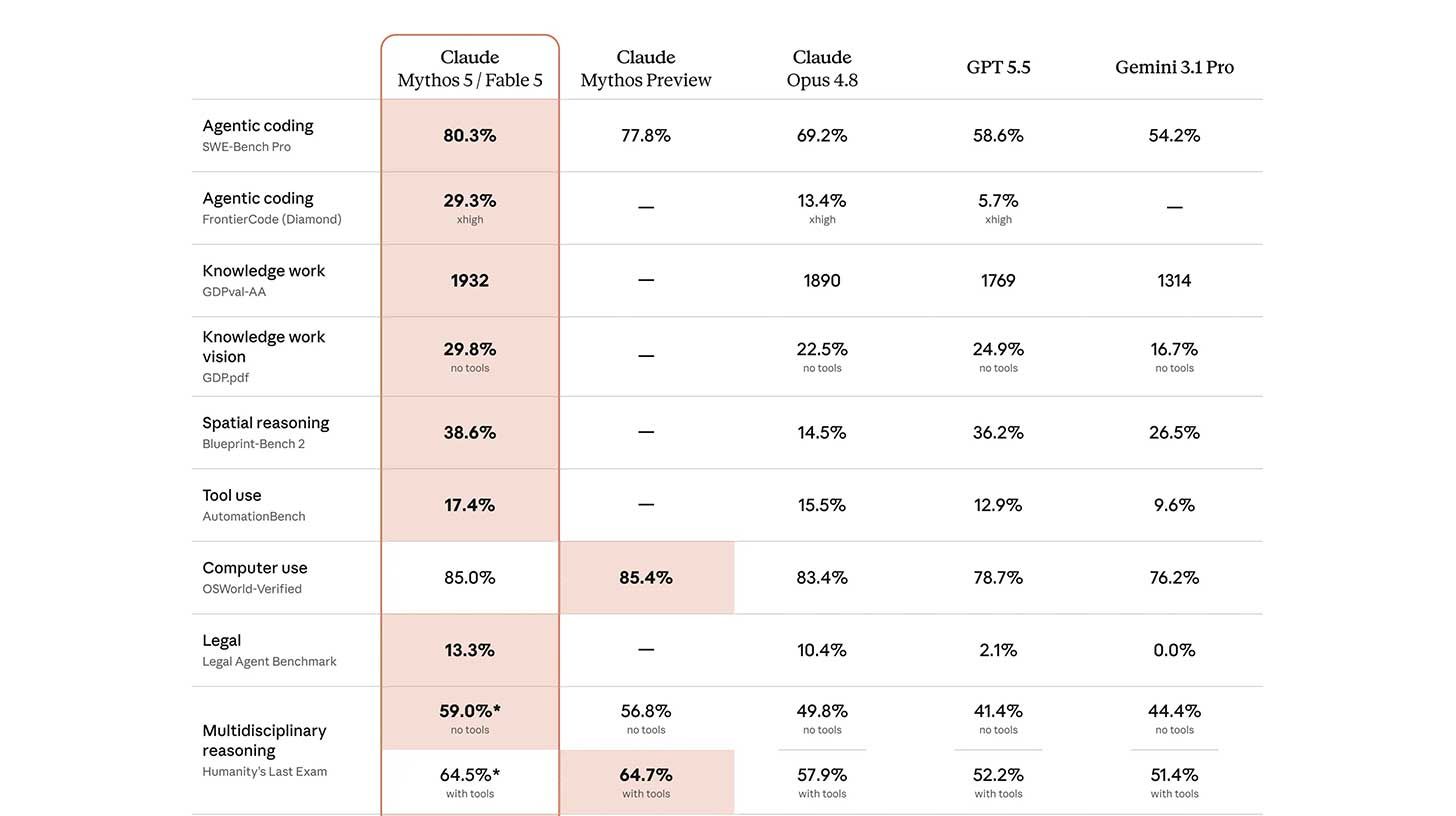
Image source: Anthropic
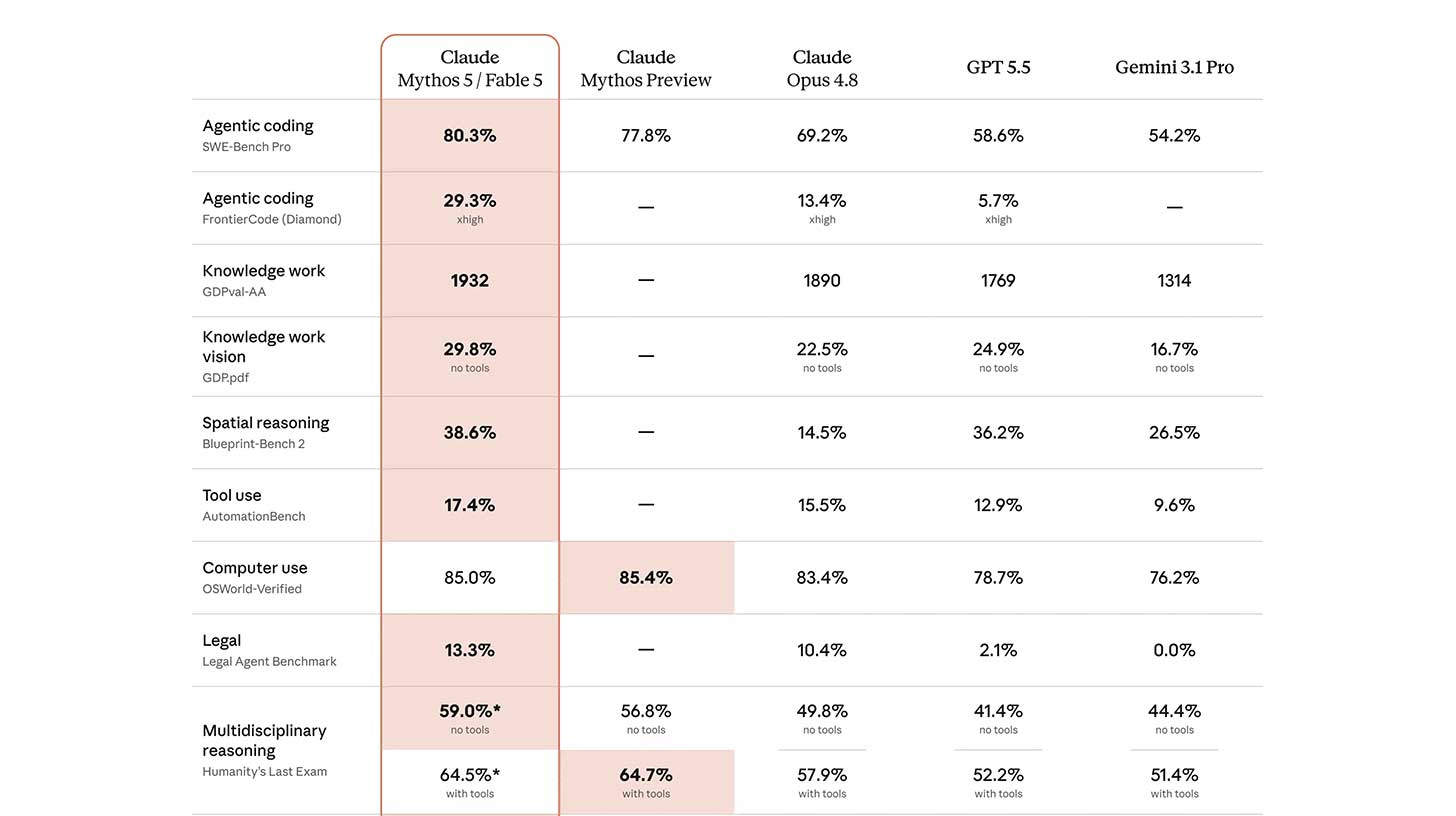
The Rundown: Anthropic just released Claude Fable 5, opening its top Mythos tier to the public for the first time — with a new set of guardrails compared to the original Mythos Preview and performance that is state-of-the-art on nearly all AI benchmarks.
The details:
April's initial Mythos Preview was only available to 150+ vetted partners via Project Glasswing, surfacing serious flaws across major OS and browsers.
Fable is a more restricted version of Mythos, with queries on topics like cybersecurity, biology, and chemistry routed to Opus 4.8 instead.
Fable hits new highs across major benchmarks, showing massive gains over Opus 4.8 and GPT 5.5 on coding, reasoning, knowledge work, and more.
Mythos 5 releases to Anthropic’s Project Glasswing partners, providing less restrictive use on cybersecurity at lower costs than Mythos Preview.
Fable is available in all Claude subscription tiers until June 22, then it will flip to separate usage credits priced at $10 / M input and $50 / M output tokens.
Why it matters: Every lab calls its latest release "the best model in the world"… What's rare is the rest of the AI world actually seeming to agree. Fable/Mythos lived up to the hype on benchmarks, but the question now turns to broader cost and access, with lots of content restrictions and June 22 looming as the cutoff before the credit pain kicks in.
TOGETHER WITH GOOGLE FOR STARTUPS
📚 Google’s Agentic AI Startup School is officially live

The Rundown: Google for Startups' immersive training program kicked off yesterday, but there is still time to jump in. Join founders and developers learning how to move beyond basic chatbots to build robust, production-ready AI agents.
As the live series continues, you will learn how to:
Build a "hero" application that solves real-world customer intelligence problems
Take an agent from prototype in Google AI Studio to deployment on Google Cloud
Implement Gemini Live voice AI, Multimodal RAG, and bidirectional Vision Agents
Apply production-ready patterns to your own agentic systems
Register now to catch up and join the rest of the live training series.
PERPLEXITY & AI RESEARCH
📊 Perplexity data maps the agent work shift
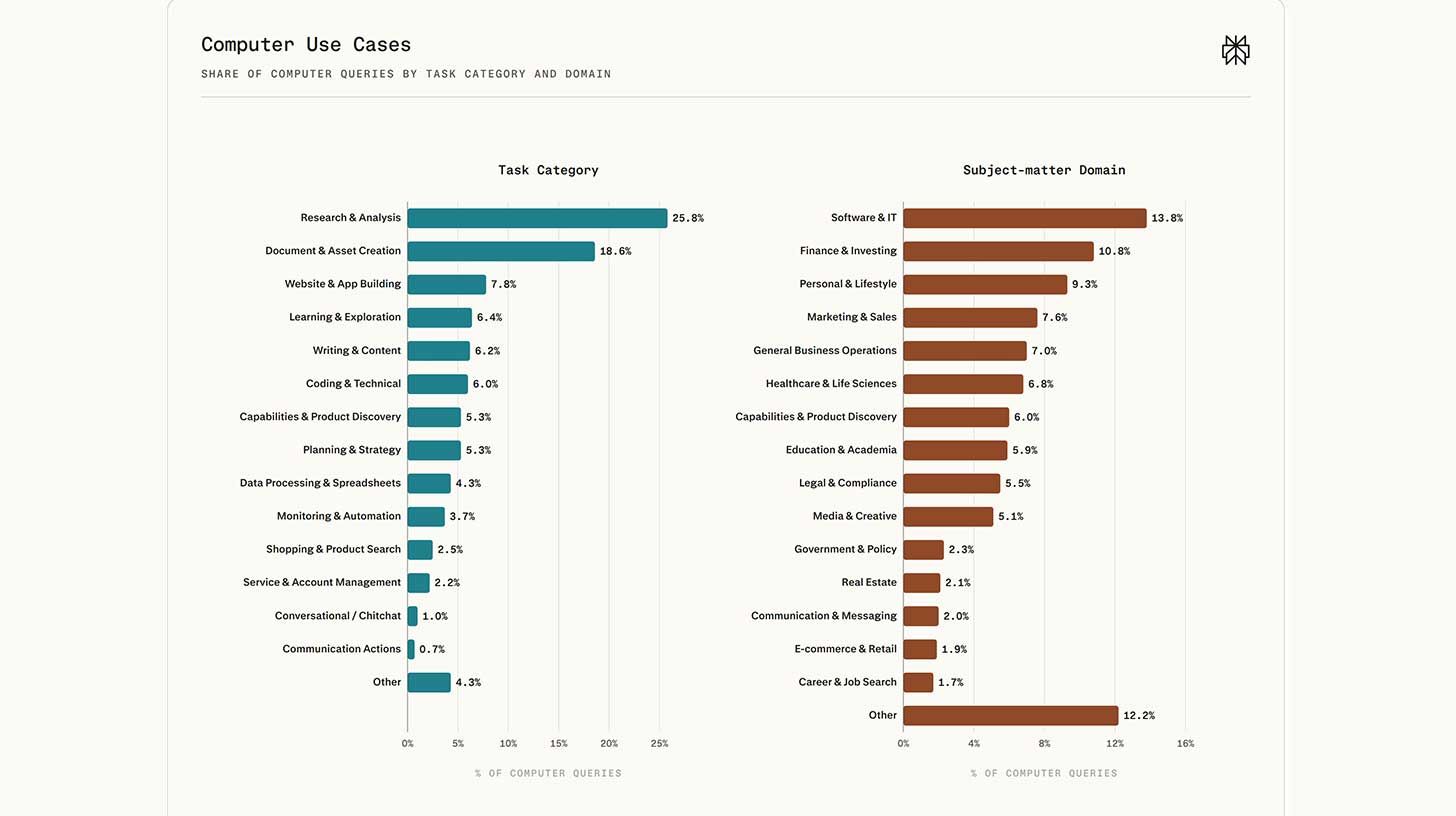
Image source: Perplexity
The Rundown: Perplexity and Harvard Business School published a study on how AI agents change knowledge work, comparing the company's Computer platform against Search to measure outputs, time saved, and task complexity between the two paths.
The details:
Researchers compared 10k identical queries sent to both products, with Computer working 26 minutes on average compared to Search’s 33 seconds.
Search is initially quicker, but leaves ‘doing’ to the user, with Perplexity estimating the same Search workflow taking 269 minutes vs. Computer’s 36.
Half of what users asked the agent to do involved creating something new, 2x the Search rate, and work outside a user's field climbed nine points to 59%.
Users also asked Computer for harder work, creating docs, code, and visuals, more often across several fields instead of simple lookups on Search.
Why it matters: The giant speedup numbers are useful, but more interesting is what people asked for via the agentic route. Perplexity Computer users were more likely to request cognitively complex, creative outputs and pull across multiple fields, showing a subtle draw of AI agents may be users acting with more ambition, not just efficiency.
AI TRAINING
📈 Automate financial research with Dexter
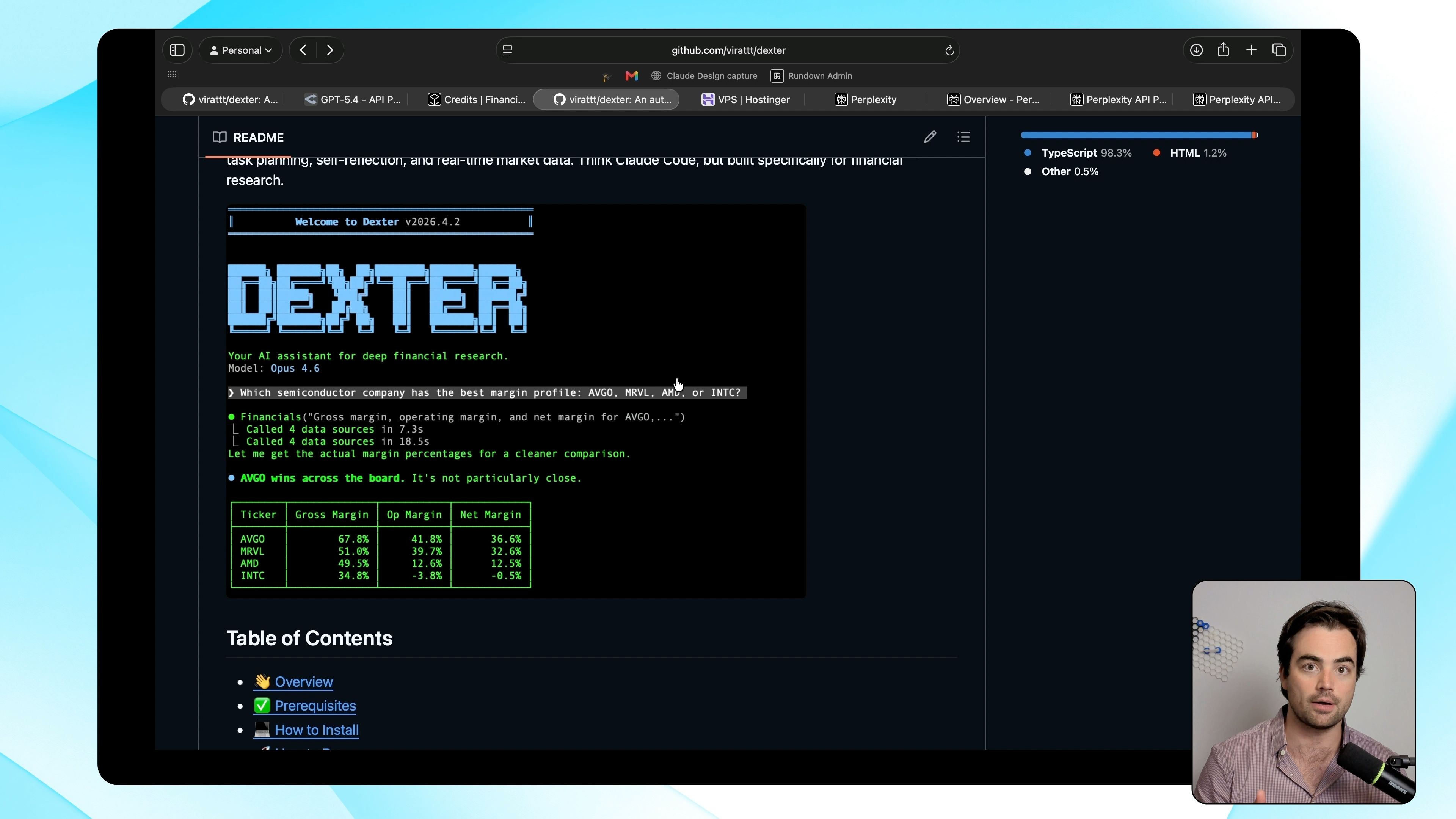
The Rundown: In this guide, you will learn how to set up Dexter, an open-source research agent that works like OpenClaw, but for stocks. It can read earnings reports, interpret SEC filings, and pull up-to-date market data to cut your research time in half.
Step-by-step:
Open the Dexter GitHub repo and install it on your laptop or a VPS (so it can keep running without tying up your machine) by following the install instructions
Add an OpenRouter, OpenAI, or Anthropic API key, then grab a Financial Datasets key and add it to your environment, for pulling the latest market data
Run the research job: “Create a source-backed research brief on GOOGL. Focus on what the company does, recent catalysts, financial or operating signals, key risks, competitive context, and what I should investigate next. Use iterative research. Validate important claims before finalizing the brief”
Ask to save intermediate research so the workflow can continue without losing context. Then, use /heartbeat to set up a recurring watch list or research task
Pro tip: You can also connect Dexter to your X account so it can add Twitter sentiment to the research brief.
PRESENTED BY LAUNCHDARKLY
🚀 Real-time control for AI agents in production

The Rundown: When an AI agent acts unexpectedly in production, fixing it often means new code, another sprint, and a full deploy. LaunchDarkly AgentControl lets you correct that behavior in real time instead—going beyond observability to automatically govern how agents behave.
With AgentControl, teams can:
Deploy agents that handle failure themselves.
Benchmark changes and monitor quality as they go.
Iterate in milliseconds, not sprints.
Adjust agent behavior in production on the fly.
AI IN THE REAL WORLD
🚜 Codex helps automate a Japanese farm

Image source: OpenAI / Hiroki Tomiyasu
The Rundown: OpenAI published a profile of Hiroki Tomiyasu, a self-taught broccoli farmer in Hokkaido who uses ChatGPT and Codex to build greenhouse automation, satellite crop tracking, and custom farm software to help run his operations.
The details:
Tomiyasu manages roughly 100 hectares in Hokkaido, growing soybeans, green onions, pumpkins, and broccoli after learning farming on the job.
AI helps pull and analyze satellite imagery for monitoring, diagnose plant diseases, and create an Airtable hub for records, pesticide logs, and feeds.
Codex also helped build a greenhouse control system to raise and lower vents via text and set up a bot for the farm group chat to help manage operations.
Tomiyasu compared AI to an always-available engineer, lowering the barrier to automation for farm operators without big tech teams.
Why it matters: This profile is "you can just build things" on steroids — a self-taught farmer operating like he has an engineering department for the price of a ChatGPT sub. It’s also a great example of what the selfware era looks like: instead of waiting for an ag-tech company to fix problems, Tomiyasu just builds the needed tools himself with AI.
QUICK HITS
🛠️ Trending AI Tools
🚀 Claude Fable - Anthropic’s new frontier, Mythos-class model
🗣️ Gemini 3.5 Live Translate - Voice AI for live translation in 70+ languages
⚙️ North Mini Code - Cohere's first open-source agentic coding model
💻 Kimi Work - Moonshot's desktop agent running up to 300 parallel agents
📰 Everything else in AI today
Google launched Gemini 3.5 Live Translate, a new real-time voice model that handles 70+ languages while keeping a speaker's tone and pacing.
China is mapping out a $295B, five-year plan to build data centers nationwide, sourcing 80% of its tech from local firms like Huawei and freezing out Nvidia.
Microsoft AI CEO Mustafa Suleyman called it “really, really dangerous” for Anthropic to discuss Claude’s potential consciousness in its instructions and constitution docs.
New York became the first U.S. state to require ads to disclose AI-generated actors, coming with $1,000 fines and backing from Hollywood’s SAG-AFTRA union.
OpenAI released interactive charts, a new feature in ChatGPT, allowing for in-line graphs from data directly within the chat flow.
COMMUNITY
🤝 Community AI workflows
Every newsletter, we showcase how a reader is using AI to work smarter, save time, or make life easier.
Today’s workflow comes from reader Tim. in Christchurch, New Zealand:
"A SaaS tool hit me with a paywall mid-task. I was tracking time against client work when a banner popped up: "You've hit your time-tracking limit. Upgrade now."
A year ago, I might have paid without thinking. Instead, I opened a dashboard I built with Claude and added my own time tracker connected to my business systems in five minutes. Same outcome. No new subscription, just better use of one I already pay for.
The capability I was about to rent, I now own. Too often, software pricing assumes you can't build the missing piece yourself. AI is changing that assumption fast."
How do you use AI? Tell us here.
🎓 Highlights: News, Guides & Events
Read our last AI newsletter: Apple’s new Siri AI overhaul is here (sort of)
Read our last Tech newsletter: Apple’s iOS upgrade is less flash, more fix
Read our last Robotics newsletter: Amazon’s robot army gets chatty
Today’s AI tool guide: Automate financial research with Dexter
RSVP to our next workshop on June 18: Build a Marketing Creative Studio
See you soon,
Rowan, Joey, Zach, Shubham, and Jennifer — the humans behind The Rundown

Apple's iOS upgrade is less flash, more fix
Read Online | Sign Up | Advertise
Good morning, tech enthusiasts. Apple used its WWDC to recast iOS 27 as a cleanup release: faster apps, quicker photo loads, and a new slider that walks back the Liquid Glass look it spent all of last year defending.
Siri grabbed the stage lights, but a stack of overdue, low-key upgrades slipped in without much fanfare. While foldable iPhone rumors still gather steam, Apple is busy making old iPhones feel new again.
In today’s tech rundown:
Apple announces iOS 27, dials back Liquid Glass
Altman’s eyeball-scanning startup cuts staff
Instagram finally lets you reorder your grid
Pentagon brands Alibaba, BYD military firms
Quick hits on other tech news
LATEST DEVELOPMENTS
APPLE
🍎 Apple announces iOS 27, dials back Liquid Glass

Image source: David Paul Morris/Getty Images
The Rundown: Apple used its WWDC keynote to recast iOS 27 as a speed-and-cleanup release — extending support back to the iPhone 11 and walking back its divisive Liquid Glass look — even as Siri and Apple Intelligence took the headline slot.
The details:
iOS 27 continues to support every iPhone from the iPhone 11 and iPhone SE 2nd gen forward, preserving Apple’s unusually long software runway.
Apple touts performance gains: app launches up to 30% faster, photos loading up to 70% faster after capture, and AirDrop transfers up to 80% faster.
A new transparency slider lets users dial Liquid Glass up or down — an opt-in retreat after last year’s backlash — alongside sharper, more layered app icons.
iCloud Shared Albums opens to Android and Windows, AirPods gain custom EQ, Maps gets a richer Flyover, and Health adds perimenopause tracking.
Why it matters: Stretching iOS 27 back to the iPhone 11 keeps a massive base of aging phones on current software — a win for security and app developers, though it may undercut the hope that obsolescence would push upgrades. The Liquid Glass walk-back is the more telling move: Apple rarely concedes a design miss this quickly.
TOOLS FOR HUMANITY
👁️ Altman’s eyeball-scanning startup cuts staff

Image source: Tools for Humanity
The Rundown: OpenAI has kicked off what could be the decade’s blockbuster IPO just as CEO Sam Altman’s other bet, iris‑scanning startup Tools for Humanity, is reportedly cutting staff amid revenue struggles and regulatory blowback.
The details:
OpenAI confidentially filed its S-1 with the SEC, setting up a public debut that analysts expect to rank among the largest in history.
Tools for Humanity — the company behind Worldcoin’s eyeball-scanning Orb — is cutting staff after failing to turn its biometrics pitch into real revenue.
The startup is valued at $2.5B with backing from a16z, Bain Capital, and Khosla Ventures, but is downsizing anyway, Business Insider reports.
Worldcoin’s push to pay people about $50 in crypto for their biometric data has triggered bans, fines, and privacy probes in countries like South Korea.
Why it matters: OpenAI may be barreling toward a blockbuster IPO, but not everything in Altman’s orbit is moving that fast. His iris-scanning crypto venture is a harder sell than AI — especially once regulators show up — and a $2.5B valuation only goes so far when the product asks people to hand over their biometrics for tokens.
📸 Instagram finally lets you reorder your grid

Image source: Instagram / Images 2.0
The Rundown: Instagram is finally giving users full control over their profile grid, letting you drag‑and‑drop old posts into a new, non‑chronological layout so your feed can look thoughtfully curated instead of random.
The details:
Users can now long-press any post, tap “Reorder grid,” and drag posts into any order regardless of when they were published.
It’s mobile-only (iOS and Android apps); pinned posts stay locked to the top and go grayed out in the reorder screen.
Instagram head Adam Mosseri teased the feature last year, partly as damage control after Instagram swapped square thumbnails for taller crops.
Reverse-engineer Alessandro Paluzzi found “edit grid” code back in 2022, Instagram shelved it, and he flagged renewed work in early 2025.
Why it matters: Reordering turns the grid into a curated storefront for Instagram’s 2B-plus users, letting creators and brands control what visitors see first. It pushes the profile away from a chronological diary toward a deliberate, customizable self-portrait — and turns layout into one more thing creators are expected to optimize.
TECH POLITICS
🛑 Pentagon brands Alibaba, BYD military firms

Image source: Ideogram / The Rundown
The Rundown: The Pentagon just reclassified the “Chinese military company” label on Alibaba, Baidu, and BYD, dragging three of Beijing’s most familiar consumer brands into the heart of the U.S.–China security standoff.
The details:
The expanded roster now runs to nearly 200 Chinese firms, with AI heavyweights Alibaba, Baidu, and Tencent now alongside EV giant BYD.
The tag stops short of sanctions for now, but blocks access to U.S. defense contracts and research dollars.
It also revives names that flickered on and off a February draft, among them memory-chip makers YMTC and CXMT.
Beijing calls it discriminatory, the companies deny any military role, and even U.S. critics warn that it brands nearly every big Chinese tech player a threat.
Why it matters: The Pentagon’s move drags China’s biggest consumer tech brands into the center of the U.S.–China security fight, raising risks for supply chains, investment, and growth plans. It also broadens “military‑civil fusion” so far that almost any major Chinese tech firm could be treated as a de facto defense company.
QUICK HITS
📰 Everything else in tech today
SpaceX unveiled its first AI data center satellite, a prototype dubbed “AI1” that Musk describes as a draft of the company’s planned space-based computing network.
Meta removed the hidden “NameTag” facial recognition code from its Meta AI smart glasses app after Wired exposed that the unreleased system had already shipped.
Apple is expanding parental controls with automatic image filtering that blurs inappropriate photos and FaceTime content for child accounts.
NASA’s upcoming Artemis IV astronauts will wear a new Prada-designed garment under their spacesuits, using circulating chilled water and oxygen tubing for cooling.
French authorities fined Nintendo around $40M for misleading consumers about long-running stick-drift issues in the Switch’s Joy-Con controllers.
Perplexity CEO Aravind Srinivas told CNBC the company is on track for a 2028 IPO, regardless of how rivals Anthropic and OpenAI fare in their own imminent listings.
Google agreed to pay SpaceX $920M per month for access to roughly 110K Nvidia GPU-powered compute units hosted in SpaceX data centers.
Michigan lawmakers proposed federal legislation that would bar Chinese-branded vehicles from driving on U.S. roads due to national security concerns.
NASA’s X-59 quiet supersonic research aircraft has flown faster than the speed of sound for the first time.
Researchers developed a laser‑etched solar surface that turns seawater into drinking water while recovering its salts as reusable solids instead of brine waste.
COMMUNITY
🎓 Highlights: News, Guides & Events
Read our last AI newsletter: Apple’s new Siri AI overhaul is here (sort of)
Read our last Tech newsletter: Google turns search into creator hubs
Read our last Robotics newsletter: Amazon’s robot army gets chatty
Today’s AI tool guide: Cut recurring meeting times with Claude + Granola
RSVP to our next workshop on June 18: Build a Marketing Creative Studio
See you soon,
Rowan, Joey, Zach, Shubham, and Jennifer — The Rundown’s editorial team
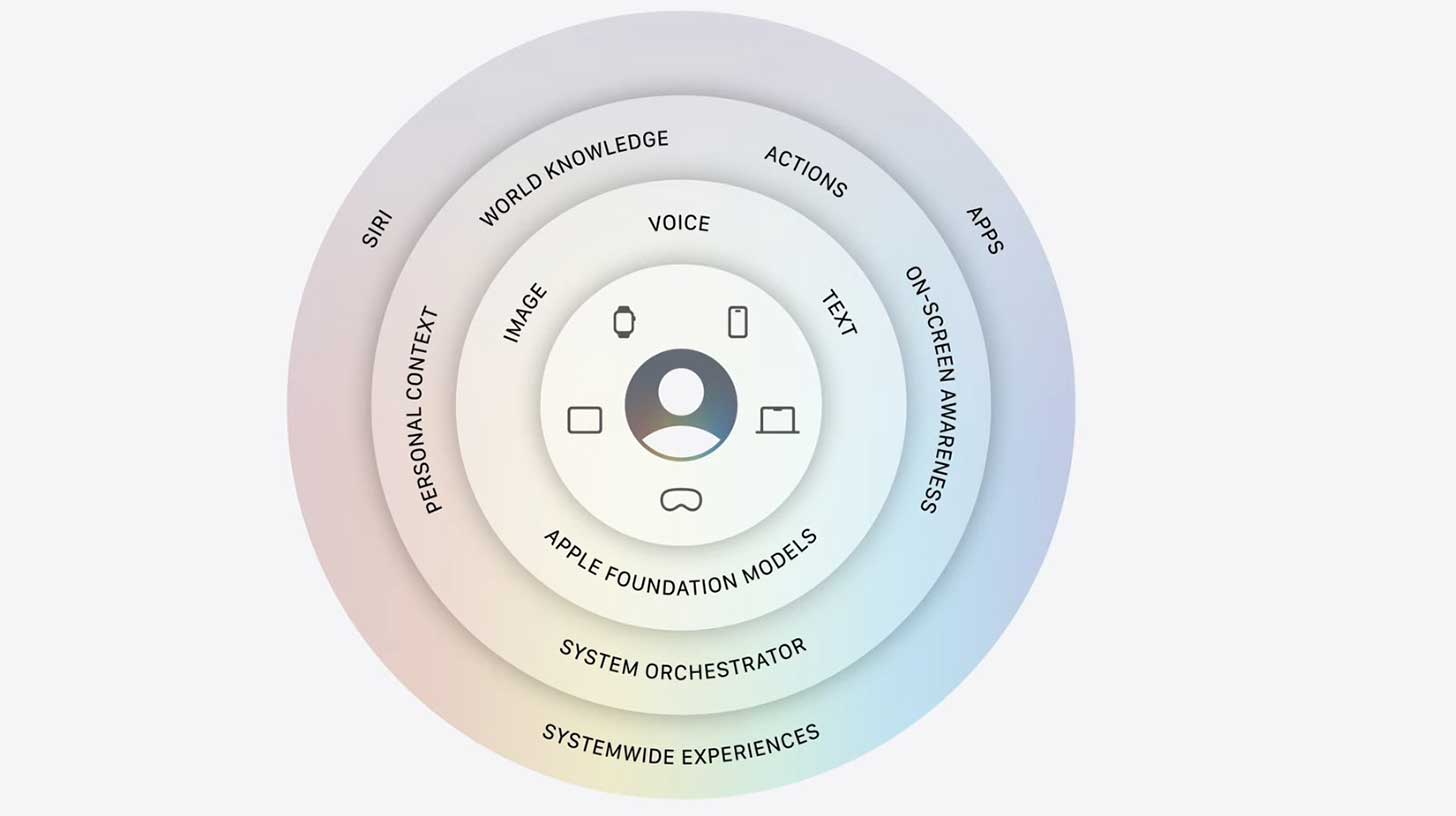
Apple’s new Siri AI overhaul is here (sort of)
Read Online | Sign Up | Advertise

Good morning, AI enthusiasts. After years as an AI punchline, WWDC26 was billed as Apple's shot at finally catching up. Whether it really did probably comes down to who's holding the iPhone.
For casual users, screen awareness, app context, and private on-device help could make Siri genuinely useful for the first time in years. But for anyone who's used a frontier model, the new Siri AI still looks several generations behind.
In today’s AI rundown:
Apple’s Siri AI overhaul is here (sort of)
The new ‘third phase’ of OpenAI
Cut recurring meetings with Claude + Granola
Argentina courts AI with 'non-human corporations’
4 new AI tools, community workflows, and more
LATEST DEVELOPMENTS
APPLE
📱 Apple’s Siri AI overhaul is here (sort of)
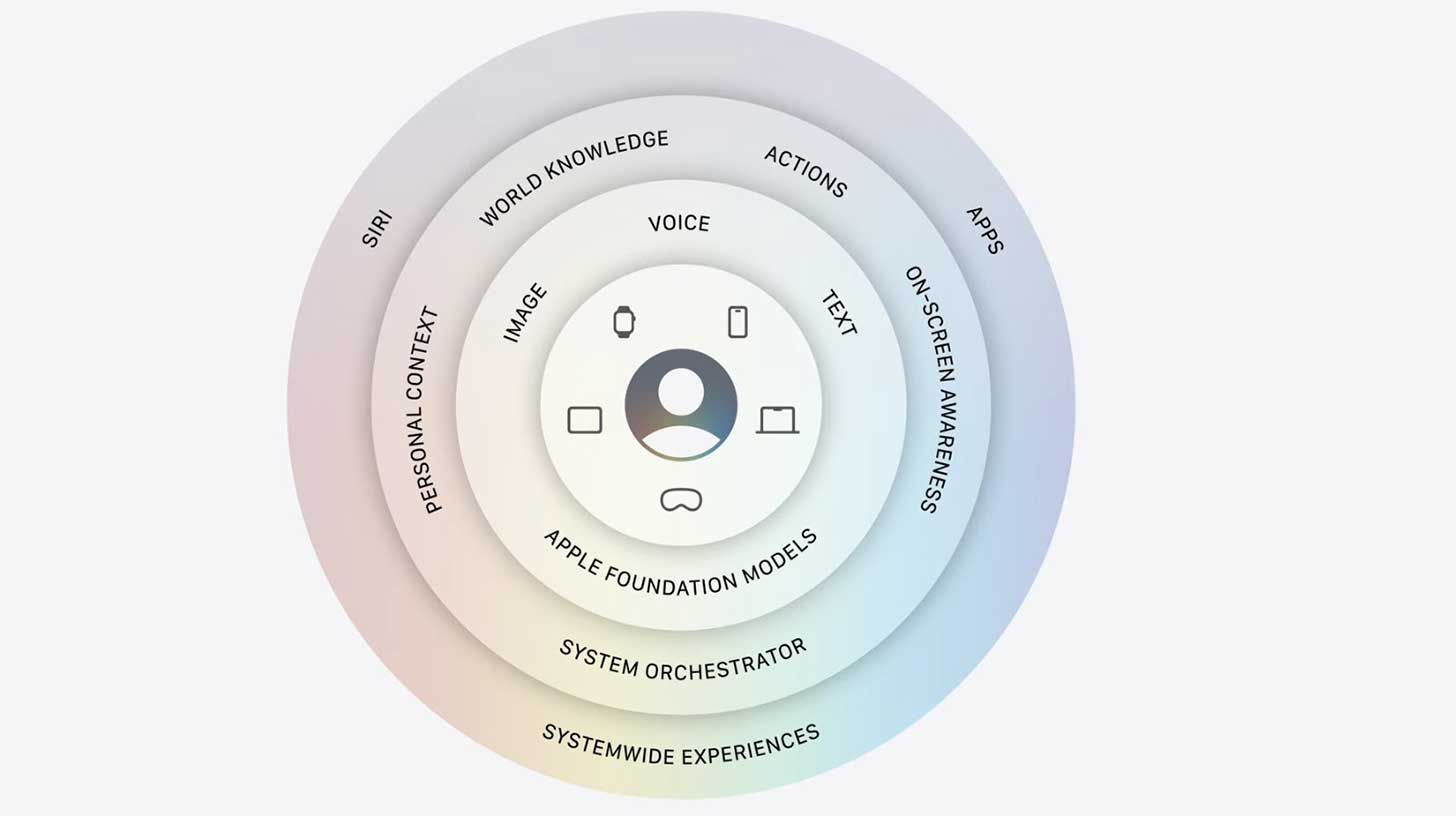
Image source: Apple
The Rundown: Apple kicked off WWDC 2026 with its hotly anticipated AI overhaul (pt. 2), rebranding its assistant to Siri AI, with new integrations and features coming two years after the initial Apple Intelligence rollout overpromised but underdelivered.
The details:
Siri AI is powered by Apple’s own models, custom-built in collaboration with’ Google’s Gemini models, but not the same ones Google provides to its users.
The AI can reason from users’ on-screen content, gain context from apps like photos or messages, and take systemwide app actions for better workflows.
A dedicated Siri AI app will act as a chatbot experience and hub for user’s previous conversations, linking use privately across devices.
Privacy runs through the whole rollout, with Siri AI requests processing on-device or via Private Cloud Compute without saving any data.
Siri AI will come as a free update in the fall for iPhone 15 Pro or newer devices, with a public beta next month and no access in the EU or China at launch.
Why it matters: For an iPhone user with no AI experience, this may seem like a big improvement. But anyone who’s touched a frontier LLM will likely feel Apple’s demos were straight out of 2024-level AI models. Siri has improved, but this rollout feels particularly underwhelming compared to what we experience elsewhere in the AI world.
TOGETHER WITH YOU.COM
⚖️ Don’t put all your API eggs in the latency basket

The Rundown: Picking an API by scanning a benchmark table and calling it done is a shortcut that can obscure what actually matters in production—like accuracy. This guide from You.com breaks down why raw latency is a deceptive signal and why accuracy, along with other real-world metrics, is what you should be measuring instead.
What you'll learn:
Why p50 latency hides the failures your users actually experience
The "time-to-useful-result" framework that captures what benchmarks leave out
Four hidden cost drivers that show up in your logs, not vendor tables
How to evaluate APIs at your actual concurrency levels, not the demo conditions
OPENAI
📜 The new ‘third phase’ of OpenAI

Image source: OpenAI
The Rundown: OpenAI CEO Sam Altman and chief scientist Jakub Pachocki published a blog titled "Built to benefit everyone", breaking down the company’s goals as AI progress continues to accelerate — saying it's now entering a "third phase."
The details:
The post detailed three core goals: building AI that automates the research process, accelerating the economy, and giving everyone “a personal AGI”.
OAI said “entirely automating everything is not the future we want”, adding “AI should help people pursue their goals, not become untethered from them.”
OAI labeled the current stretch its "third phase,” noting that after pure-research roots and product-shipping, the “economy is now being shaped around AI.”
They also proposed a global coordination body that could rein in or pause frontier AI work, coming after a similar proposition from Anthropic last week.
Why it matters: This post has the same existential threads seen in last week’s Anthropic post, including the discussion around pause scenarios. It’s notable to see from both of the top AI labs in the world, which makes the next incoming model releases (potentially Mythos and GPT 5.6) feel all the more consequential.
AI TRAINING
⏱️ Cut recurring meetings with Claude + Granola
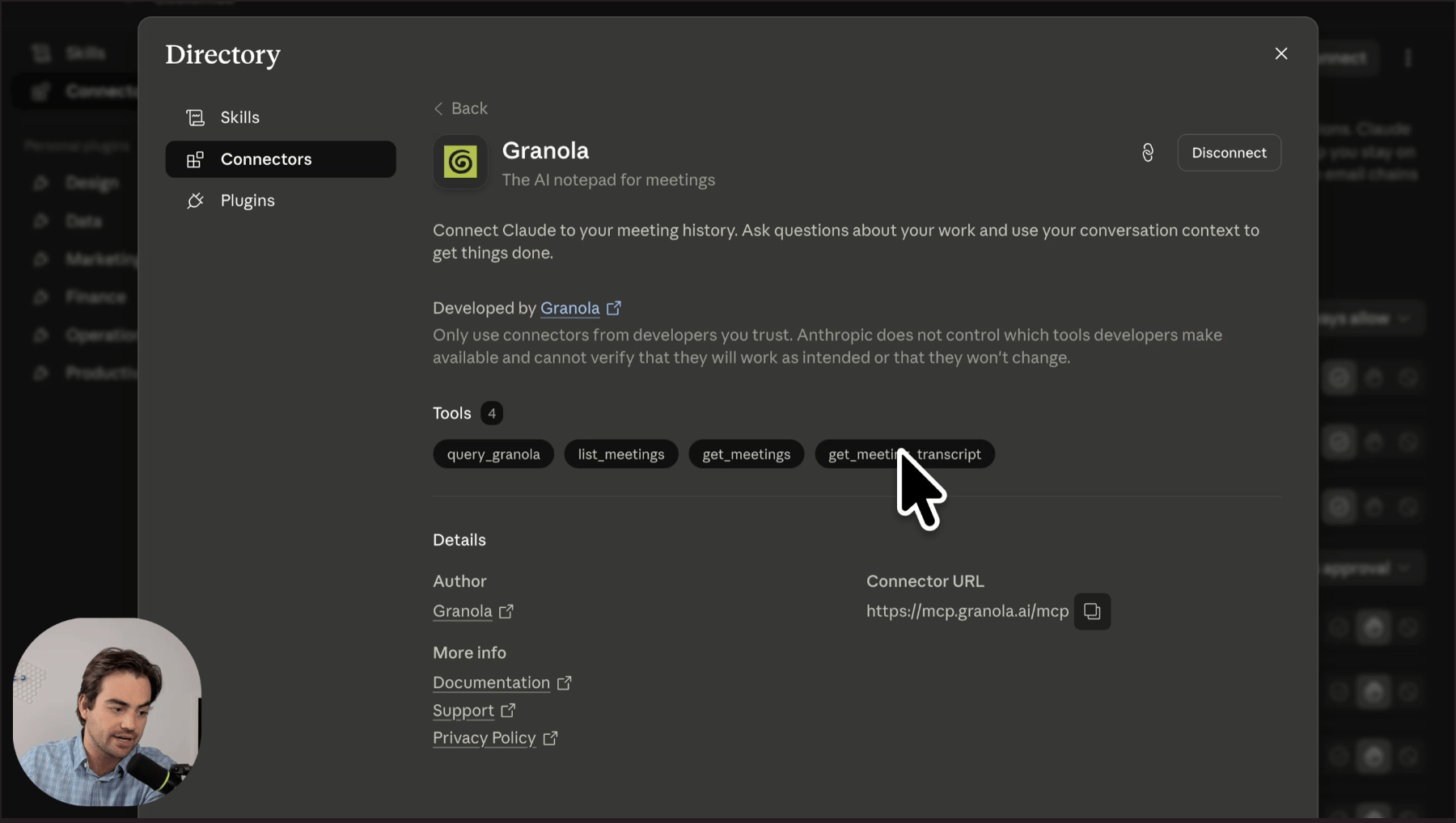
The Rundown: In this guide, you will learn how to use Granola and Claude to make recurring meetings shorter. You will run an audit on one recurring meeting, get a templated pre-read, and find the parts Claude can automate.
Step-by-step:
Set up Granola and then connect it with Claude by heading over to Customize > Connectors > Browse connectors, searching for Granola, and authenticating
Prompt: “Look at my five recent [MEETING_NAME] meetings in Granola. Audit them to make the meeting more efficient and shorter. Look for repeated status updates, delayed decisions, unresolved topics, repetitive questions, friction points, and tasks AI could automate before the meeting. Give me a report on what to improve and what should happen before the meeting”
Review and ask for three outputs: a one-page pre-read, AI tasks to handle before the meeting, and a workflow to send to Calendar, Notion, or Slack
Ask Claude to create a Granola note template. Add sections like final decisions, action items, unresolved topics, and things to improve
Pro tip: Ask Claude to set up automations that create and populate the pre-read document before each recurring meeting.
PRESENTED BY TELY AI
🩺 Be the doctor AI recommends

The Rundown: Patients have stopped Googling – they now ask AI who the best provider is and get booked with a competitor. Tely makes ChatGPT, Perplexity, Google, and Claude recommend your practice and book patients straight into your EHR.
With Tey Health, you get:
Answers every patient question and books appointments 24/7
Wins back patients who go quiet with automatic follow-ups
Retargets patients across Instagram, Google, TikTok & YouTube
Books patients straight into your EHR
AI & THE WORLD
⚖️ Argentina courts AI with 'non-human corporations’

Image source: Images 2.0 / The Rundown
The Rundown: Argentina submitted legislation creating a new legal category called the 'non-human corporation,' a company owned and run by AI, with President Javier Milei writing an op-ed to brand the country as the world's deregulated home for AI.
The details:
The bill seeks to make Argentina the easiest place for people to run a company, aligning with Milei’s deregulation effort throughout his presidency.
The legislation centers on 'non-human corporations' run by AI systems that still get liability protection and favorable corporate tax and governance benefits.
Historian Yuval Noah Harari pushed back with his own opinion piece, warning that AI legal personhood could result in an 'AI state' impossible to regulate.
Why it matters: The not-so-distant future where an AI can run a company is a strange one, and Milei’s legislation is skating to where the tech is going. His proposal is definitely a first-mover push, but it also leaves serious questions about who is held responsible (and how) when things go wrong, and no human is directly accountable.
QUICK HITS
🛠️ Trending AI Tools
🔒 Incogni - Remove your personal data from the web so scammers and identity thieves can’t access it. Use code RUNDOWN to get 55% off*
📓 NotebookLM - Google's newly upgraded research agent platform
👋 Meta Enterprise Agent - Meta’s AI agent for customer sales and support
⚙️ Devin Desktop - Cognition's Windsurf rebrand for managing coding agents
*Sponsored Listing
📰 Everything else in AI today
Google updated NotebookLM with agentic chat, giving each notebook a sandboxed computer to write and run code, plus new outputs like PDFs, spreadsheets, and slides.
OpenAI filed a draft S-1 with the SEC, announcing the submission of the IPO paperwork but saying it hasn’t settled on timing, following Anthropic’s filing last week.
Chinese AI startup Moonshot is reportedly set to raise between $1-2B in funding at an estimated $30B valuation, driven by the strong growth of its Kimi models.
The U.K. government launched a new £1.1B AI Hardware Plan aimed at backing homegrown chip startups, including £750M for a national supercomputer.
Google and Nvidia are reportedly both working with Intel as a fallback manufacturer for TSMC, with Google ordering over 3M of its AI chips for 2028 production.
COMMUNITY
🤝 Community AI workflows
Every newsletter, we showcase how a reader is using AI to work smarter, save time, or make life easier.
Today’s workflow comes from reader Fabian in Freiberg, Germany:
“Our company campus features a fantastic restaurant offering a wide variety of daily meal options. While there is an online menu, the nutritional information is quite hidden.
I used Lovable to build an app that extracts the nutritional values of all daily meals in the background and recommends the ideal dish for my needs. I also built a nutrition coach into the meal selection process that asks for weight, activity level, and goals.
Building the whole thing took me 10 minutes. It looks great and saves me from tedious searching every single day. It turns out the demand was huge: after I shared the tool internally, my credits were completely drained within the first few days because it was used so frequently. The feedback… has been simply amazing.”
How do you use AI? Tell us here.
🎓 Highlights: News, Guides & Events
Read our last AI newsletter: Washington wants a piece of OpenAI
Read our last Tech newsletter: Google turns search into creator hubs
Read our last Robotics newsletter: Amazon’s robot army gets chatty
Today’s AI tool guide: Cut recurring meeting times with Claude + Granola
RSVP to our next workshop on June 18: Build a Marketing Creative Studio
See you soon,
Rowan, Joey, Zach, Shubham, and Jennifer — the humans behind The Rundown
No matching search results
Try using different keywords, double-check your spelling, or explore related categories.
Stay Ahead on AI.
Join 2,000,000+ readers getting bite-size AI news updates straight to their inbox every morning with The Rundown AI newsletter. It's 100% free.