The Chinese robot ban is coming
PLUS: A drone that performs surgery in war zones

Jennifer Mossalgue
April 27, 2026
Read Online | Sign Up | Advertise

Good morning, robotics enthusiasts. Washington wants Chinese ground robots out of federal hands, and a new bipartisan bill would make that official.
The target is low-cost Chinese platforms, from humanoids to robot dogs, patrol bots, and surveillance vehicles, that U.S. officials see as a new security risk. The catch: U.S. robot makers still run on Chinese parts, making a clean break easier to legislate than to execute.
In today’s robotics rundown:
The Chinese robot ban has a supply chain problem
Remote robot surgery reaches the front lines
Geely’s CaoCao debuts purpose-built robotaxi
This U.S. startup sent humanoids to an active warzone
Quick hits on other robotics news
LATEST DEVELOPMENTS
CHINESE ROBOTS
⚙️ The Chinese robot ban has a supply chain problem
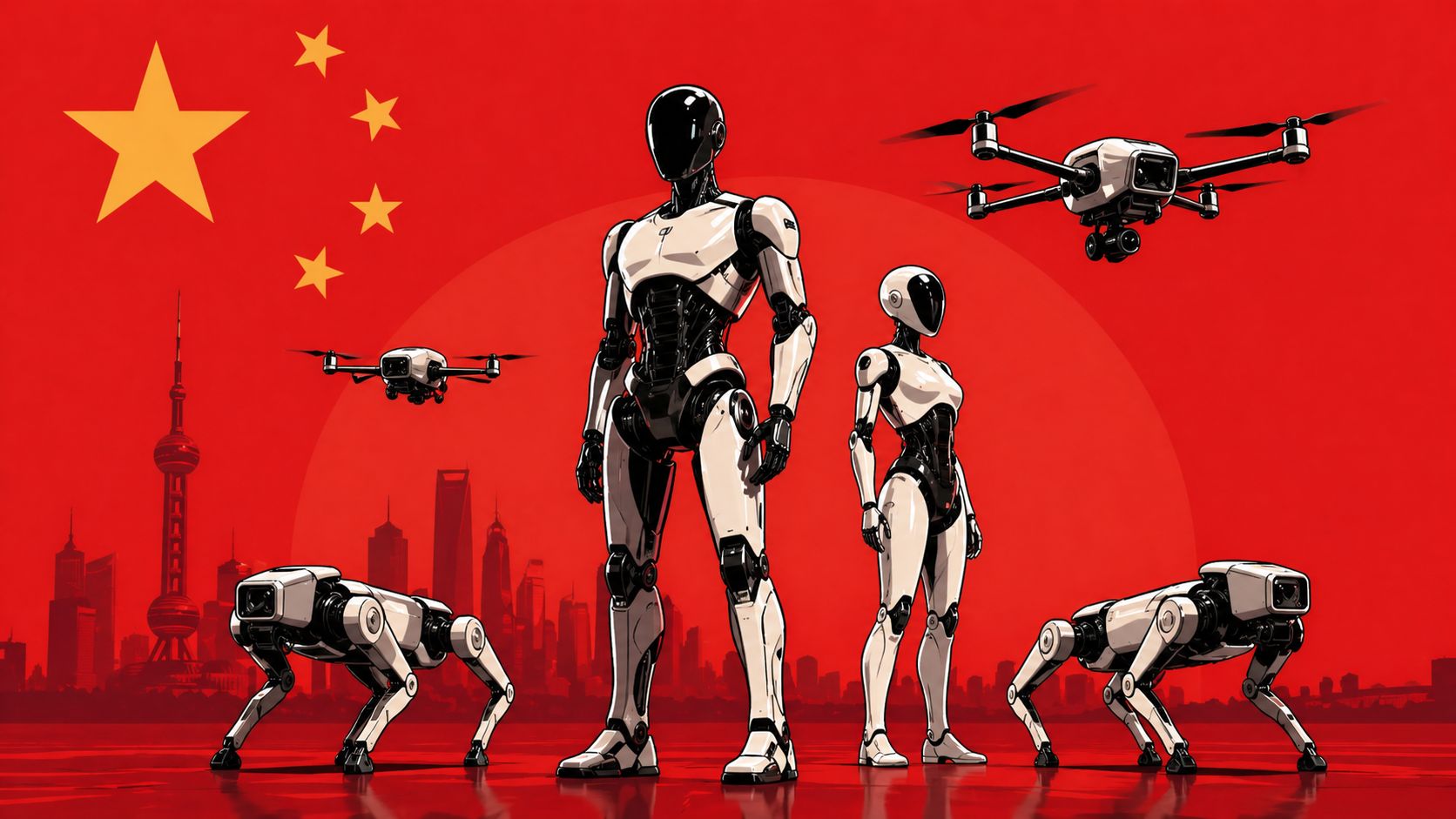
Image source: Images 2.0 / The Rundown
The Rundown: The U.S. is moving to ban Chinese-made ground robots from federal use in the name of national security, even as U.S. robotics firms remain deeply dependent on Chinese hardware and supply chains, IEEE Spectrum reports.
The details:
A new bipartisan bill would bar U.S. agencies and contractors from buying or operating ground robots made by firms tied to “foreign adversaries” like China.
The targets include low-cost Chinese platforms already deployed across U.S. law enforcement agencies, university labs, and research facilities.
The bill would also require federal agencies to remove covered Chinese-made robots already in use, extending the crackdown beyond future purchases.
U.S. robot makers still lean on Chinese parts and factories, so a hard line on finished Chinese robots risks colliding with their own supply-chain dependence.
Why it matters: Washington’s tech-sovereignty push, now applied to drones and semiconductors, is moving to ground robots, machines already embedded in factories, warehouses, and public infrastructure. The bill could light a fire under domestic manufacturing, or it could stall U.S. deployments just as China accelerates.
SURGERY ROBOTS
🤕 Remote robot surgery reaches the front lines

Image source: SS Innovations
The Rundown: An Indian medtech startup just unveiled what it claims is the world’s first drone-deployed surgical robot designed to perform emergency procedures on wounded soldiers before evacuation is even possible.
The details:
SS Innovations’ Vimana Aero uses dual robotic arms with seven degrees of freedom to carry out trauma stabilization overseen by remote surgeons.
Treatments include hemorrhage control, chest decompression, shrapnel removal, and field suturing to bridge injury and medical evacuation.
Still in development, the system was unveiled at SMRSC 2026 in New Delhi with trials estimated 18 months out.
Civilian applications are on the table too — disaster zones, remote road accidents, anywhere a surgeon can’t physically reach in time.
Why it matters: Vimana looks to be the first drone-deployed surgical robot for active battlefields, a concept that has eluded military medicine despite decades of trying. Current medevac drones carry supplies or extract patients; none have closed the gap between injury and surgical care. If it works, the OR just got a lot closer to the front line.
ROBOTAXIS
🚕 Geely’s CaoCao debuts purpose-built robotaxi

Image source: NetCarShow / Interesting Engineering
The Rundown: Geely-backed ride-hail giant CaoCao pulled the wraps off the Eva Cab at Auto China 2026 in Beijing — its first purpose-built robotaxi prototype, and a direct challenge to Baidu Apollo Go’s hold on the country’s autonomous ride market.
The details:
Eva Cab is CaoCao’s first purpose-built robotaxi, designed from the ground up without a steering wheel for fully driverless operation.
The Eva Cab features Level 4 autonomous driving with a 196-billion-parameter AI model, 2,160-line LiDAR, and over 3K TOPS computing power.
Mass production kicks off in 2027, with thousands of units targeting deployment that year across Abu Dhabi, Hong Kong, and five Chinese cities.
Baidu Apollo Go, WeRide, and Pony.ai have already deployed fleets in the thousands and are racing to expand internationally.
Why it matters: CaoCao’s Eva Cab signals a new play for China’s second-largest ride-hail operator: own the hardware, own the era. With 100K purpose-built units targeted by 2030, it’s a direct shot at Baidu Apollo Go, and a bet that fleet operators can out-muscle pure AV specialists on their own turf.
FOUNDATION
🤖 This U.S. startup sent humanoids to an active warzone
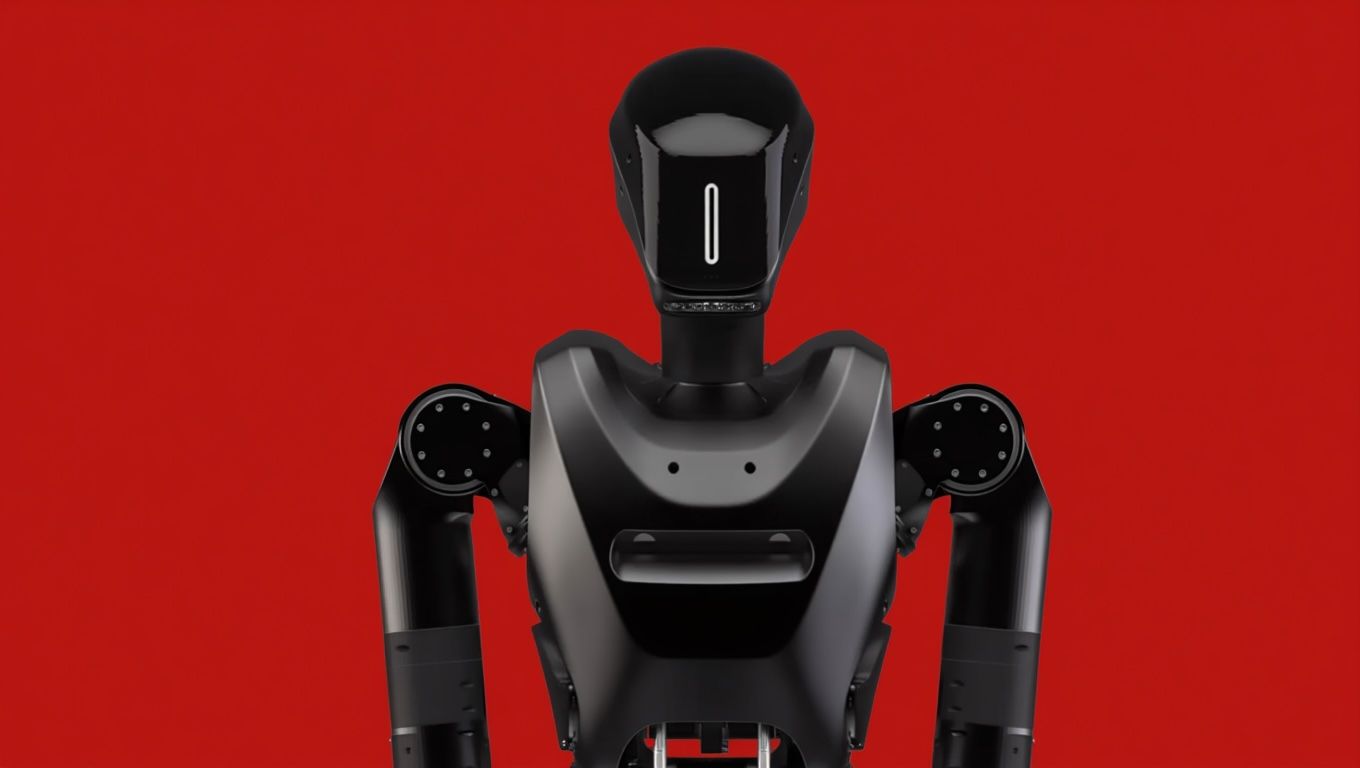
Image source: Foundation / Reve AI
The Rundown: U.S. startup Foundation has begun testing its Phantom humanoids in Ukraine, reflecting CEO Sankaet Pathak’s belief that there is a “moral imperative” to send robots, not people, into battle, Business Insider reports.
The details:
Foundation deployed two Phantom MK-1s to Ukraine in February, marking what the company calls the first humanoid deployment to an active battlefield.
The robots are limited to supply-carrying tasks during closed-field tests, though the roadmap includes logistics, reconnaissance, and special missions.
The company is backed by a $24M Pentagon contract and counts Eric Trump among its advisors.
Pathak says full combat-capable humanoids are five to 10 years out, with battery life, ruggedization, and rifle-handling dexterous hands still unsolved.
Why it matters: Ukraine has already become the world’s most consequential robotics lab — more than 200 unmanned system types have reportedly been tested in the conflict. The U.S. has no binding policy on autonomous lethal force, and neither does NATO. Five to 10 years is a short runway for governments to figure that out.
QUICK HITS
📰 Everything else in robotics today
Figure AI says UPS is looking to purchase tens of thousands of its humanoids for logistics work, potentially scaling to 100K units by 2029 if trials go well.
Unitree has released a new demo video of its G1 humanoid tearing around on roller skates and ice skates, nailing spins and front flips while staying perfectly balanced.
The U.S. Air Force tested Anduril’s YFQ-44A jet drone, which autonomously executed taxiing, takeoff, and flight using mission plans uploaded via laptop.
Sereact, a Germany-based robotics software startup, has raised $110M in new funding to develop AI that makes warehouse robots more adaptable to different tasks.
A $20K humanoid named Douglas has been deployed on a live UK construction site to handle routine administrative data‑collection tasks.
China’s Pudu Robotics has raised nearly $150M at a valuation above $1.5B to expand its embodied-AI service and industrial robots.
Researchers have developed a geometry-aware system that lets robots use the same learned actions to peel, cut, and probe a wide range of curved, irregular objects.
China is reviving NASA’s shelved “SpiderFab” concept with an autonomous orbital robot that 3D-prints huge carbon‑fiber composite structures directly in space.
COMMUNITY
🎓 Highlights: News, Guides & Events
Read our last AI newsletter: DeepSeek resurfaces with cheap, capable V4
Read our last Tech newsletter: Big Tech’s $20B lobbying blitz
Read our last Robotics newsletter: Sony’s new robot has a killer backhand
Today’s AI tool guide: How to do a brand refresh with Claude Design
RSVP to workshop April 30 @ 2PM EST: Codex for non-technical operators
See you soon,
Rowan, Joey, Zach, Shubham, and Jennifer — The Rundown’s editorial team


Stay Ahead on AI.
Join 2,000,000+ readers getting bite-size AI news updates straight to their inbox every morning with The Rundown AI newsletter. It's 100% free.