Humanoid smokes half-marathon record
PLUS: Tesla Robotaxis launch in two new cities

Jennifer Mossalgue
April 20, 2026
Read Online | Sign Up | Advertise

Good morning, robotics enthusiasts. On Sunday, Honor’s bright-red Lightning bot crossed Beijing’s half-marathon finish line in 50:26 — nearly seven minutes faster than the human world record — as more than 100 humanoids raced alongside 12K people.
The contrast from last year’s race tells you everything: the winner took 2 hours and 40 minutes, and most of the field couldn’t even make it past the first kilometer.
In today’s robotics rundown:
Robot beats the human half-marathon record
Tesla launches robotaxis in Dallas and Houston
Coco’s delivery bots are now accessibility scouts
Physical Intelligence’s robot brain can wing it
Quick hits on other robotics news
LATEST DEVELOPMENTS
HUMANOIDS
👟 Robot beats the human half-marathon record
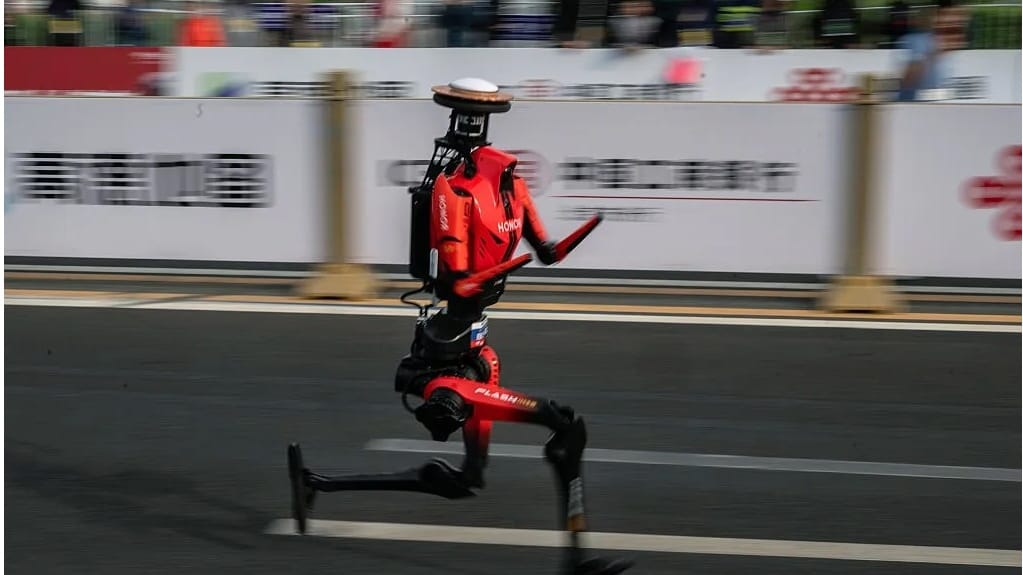
Image source: Keven Frayer / Getty Images
The Rundown: Humanoids just outran human runners at Beijing’s half marathon, with Honor’s bright-red “Lightning” bot finishing the 21km course in 50:26 — nearly seven minutes faster than Jacob Kiplimo’s freshly minted human world record.
The details:
More than 100 Chinese-made humanoids ran in a dedicated lane alongside 12K humans, in only the second year robots have joined the race.
Honor’s Lightning platform slashed last year’s robot-winning time from 2:40:00 to 50:26, and at least four bots broke the one-hour mark.
Roughly 40% robots ran fully autonomously while the rest were teleoperated, with organizers weighting the scoring to favor self-driving systems.
The race doubled as a showcase for China’s 150-plus humanoid startups, proving their robots’ balance, battery life, and navigation prowess.
Why it matters: A year after clunky, closely supervised bots jogged only part of the course, this race showed quieter, real progress. Most robots finished, a few fell, and their recovery systems mostly worked. That messy but steady evolution hints at how fast humanoids are being shaped for unpredictable real-world work.
TESLA
🚖 Tesla launches robotaxis in Dallas and Houston
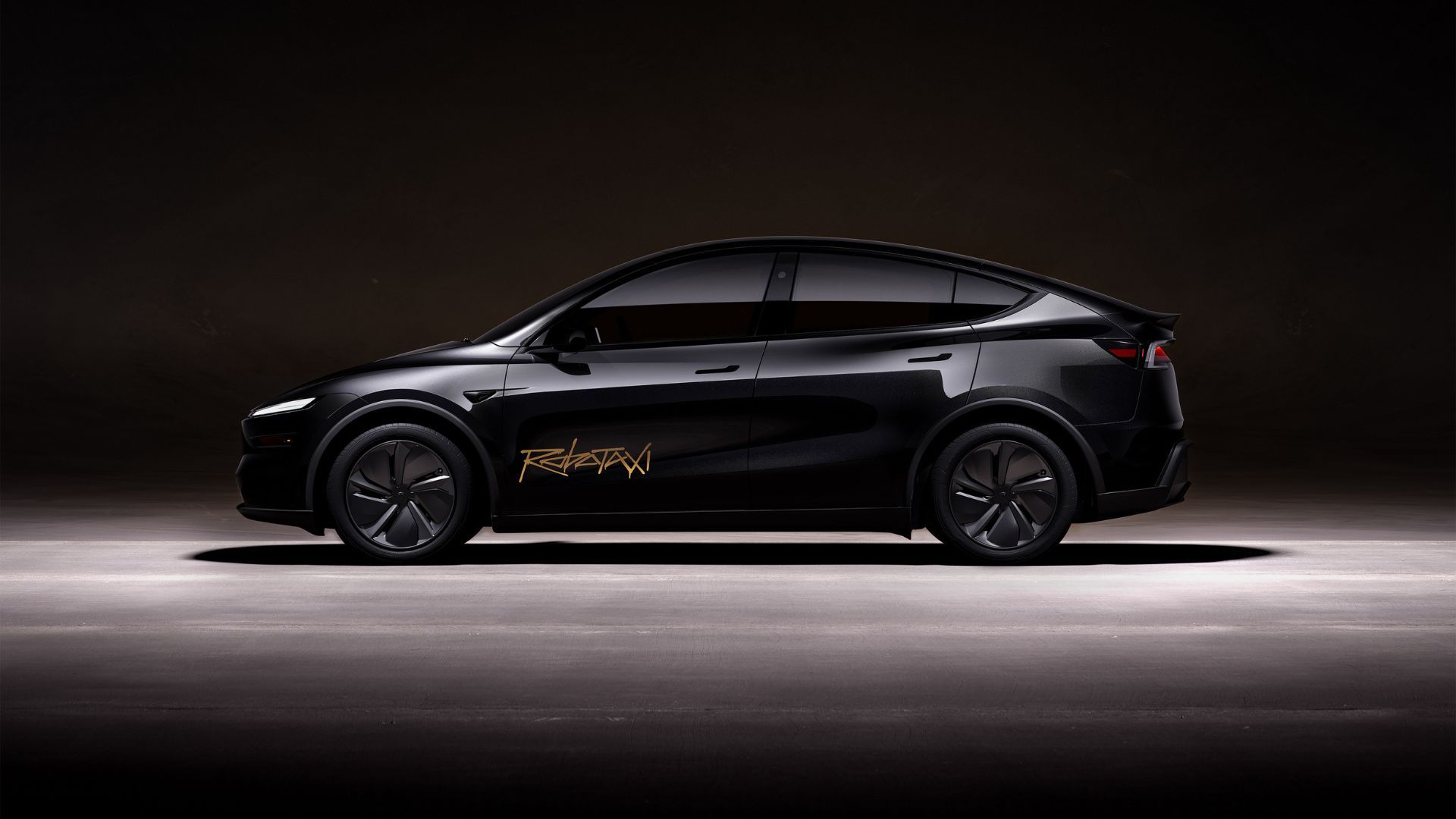
Image source: Tesla
The Rundown: Tesla is debuting its Robotaxi service in tight geofenced pockets of Dallas and Houston, tiptoeing into markets where rival Waymo has been operating since February with no safety monitors.
The details:
The launch follows pilots in Austin and San Francisco, but no word yet on fleet size, pricing, and how many rides — if any — will run without safety drivers.
Mapping of the initial service areas shows Houston limited to roughly 25 square miles and Dallas constrained to a small patch around Highland Park.
The launches are part of a planned 7-city expansion, including Phoenix, Miami, Orlando, Tampa, and Las Vegas in 2026.
Waymo is already live in both Texas cities with fully driverless vehicles and now claims around 500K paid robotaxi rides each week across 10 U.S. markets.
Why it matters: Tesla’s ‘Robotaxi’ expansion into Dallas and Houston opens with geofences a fraction of the size of its Austin footprint, which took nearly a year to grow from 20 to 245 square miles. The company has logged 15 crash incidents since its Austin launch, and faces increased federal scrutiny.
COCO ROBOTICS
🥡 Coco’s delivery bots are now accessibility scouts
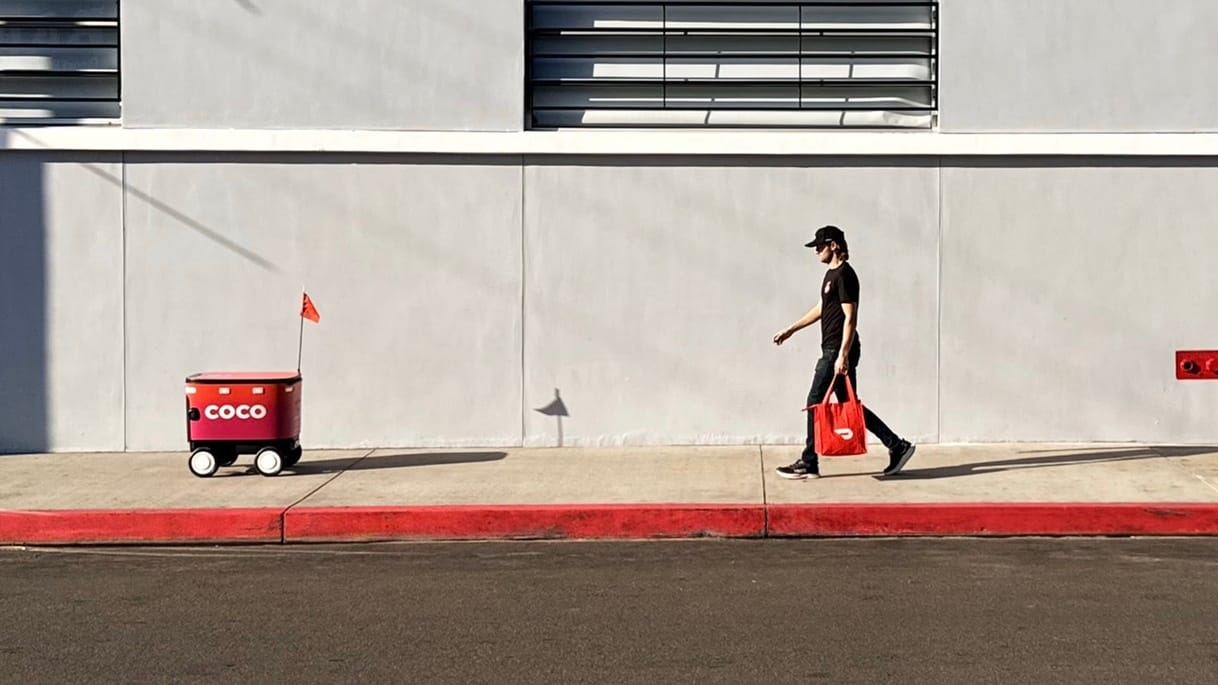
Image source: Coco Robotics
The Rundown: Delivery bot startup Coco is turning its 10K sidewalk robots into a live sensor network for BlindSquare, feeding real-time hazard alerts to blind pedestrians in six cities across the U.S. and Europe, Fortune reports.
The details:
Coco’s robots now stream live obstacle data, like fallen e-scooters or bad curb cuts, into BlindSquare’s self-voicing navigation app.
The partnership, born out of an EU-backed pilot in Helsinki, taps Coco’s constantly updated sidewalk map to fill in the accessibility gaps.
A two-way feedback loop lets BlindSquare users flag cleared hazards, helping Coco instantly reroute robots over newly accessible paths.
One goal is to use the stack for smarter cities, from bots “pressing” crosswalks to lights that extend green when robots and pedestrians bunch up.
Why it matters: Sidewalk delivery bots are usually cast as cute nuisances or job-stealing automatons, but this deal reframes them as infrastructure, quietly building live accessibility maps. If it works, every robot dodging tipped scooters and busted sidewalks becomes a roaming accessibility probe.
PHYSICAL INTELLIGENCE
🧠 Physical Intelligence’s robot brain can wing it
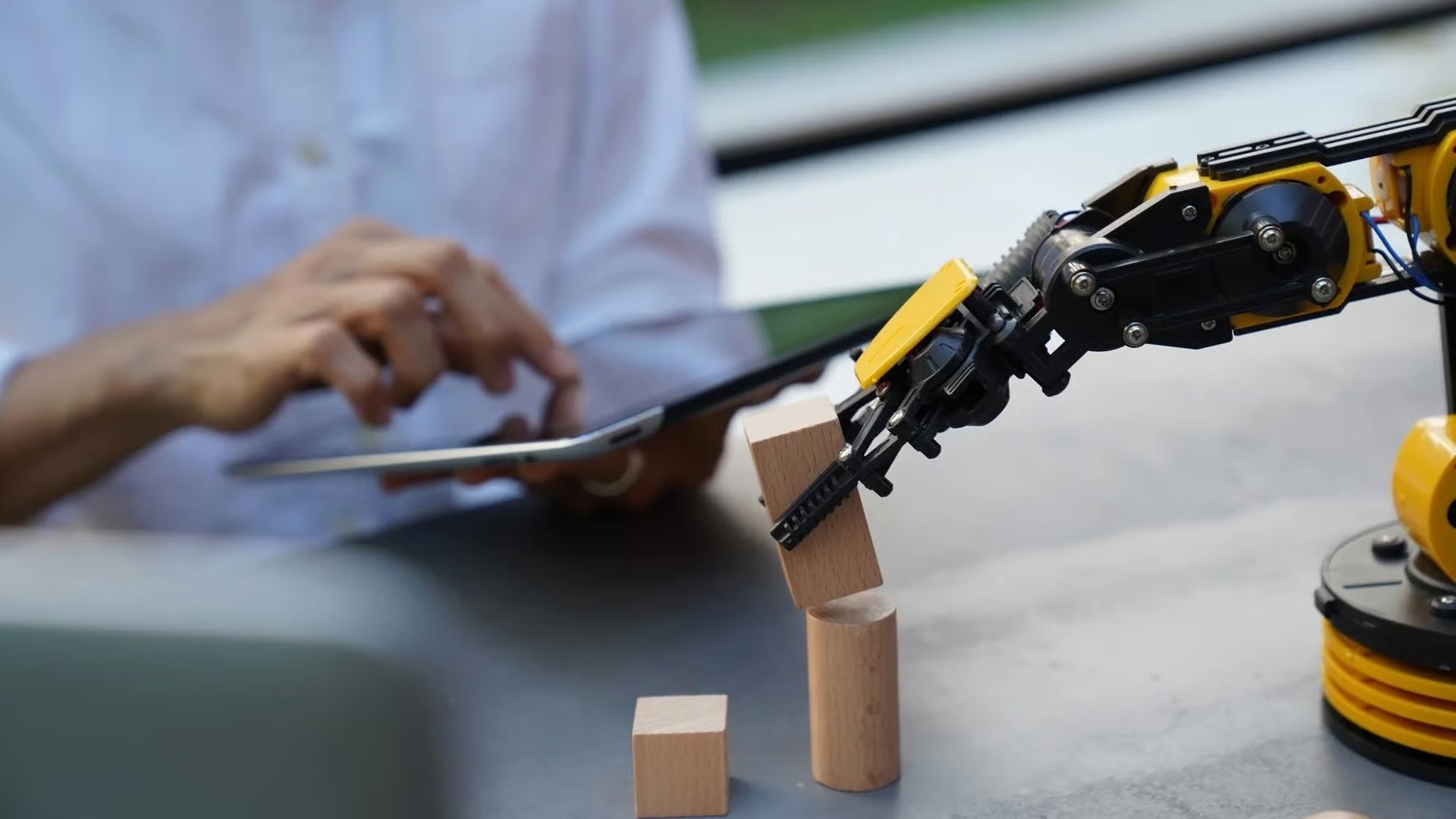
Image source: Physical Intelligence
The Rundown: Physical Intelligence’s new π0.7 model is showing early signs that a single generalist system can improvise — combining learned skills and web-scale training to handle real-world tasks it was never explicitly taught on.
The details:
π0.7 shows compositional smarts, remixing prior skills and web-scale pretraining to run an air fryer that it was effectively never trained on.
With verbal coaching, π0.7 robots completed multi‑step chores like cooking a sweet potato, and matched or beat specialist models on coffee and laundry.
The team says they were “genuinely surprised” when π0.7 handled unfamiliar setups, like new appliances, beyond what their training data should allow.
Physical Intelligence published the findings as a research paper, positioning π0.7 as an early-stage result, not a finished system.
Why it matters: Backed by over $1B in funding and reportedly in talks for a new round that would raise its valuation to $11B, Physical Intelligence is building toward a software-first foundation model for robotics. If generalist intelligence holds up, the field could stop building bespoke stacks and converge on a few shared intelligence layers.
QUICK HITS
📰 Everything else in robotics today
Figure’s new Vulcan AI balance policy lets the Figure 03 robot stay upright and limp itself to a repair bay even after losing up to three lower‑body actuators.
Siemens trialed Humanoid’s Nvidia-powered HMND 01 Alpha at Siemens’ Erlangen electronics factory, where it autonomously handled tote logistics for 8+ hours.
MIT built a soft ion-conducting gel that becomes roughly 400x more conductive under light, enabling adaptive wearables, human–machine interfaces, and soft robotics.
Neptune Robotics is investing $12M in a new Singapore manufacturing and R&D facility to scale its AI-powered autonomous ship hull-cleaning operations.
Chef Robotics said its AI-powered kitchen robots have assembled 100M product servings in commercial production, marking a major scale milestone.
Agibot is deploying its G2 semi-humanoid robots on Longcheer’s tablet production lines in China, moving embodied AI into full-time electronics manufacturing.
Scientists developed a slime-like artificial muscle that can be reconfigured on demand, self-heal, and reused, so one soft robot can morph for multiple tasks.
Chinese researchers tested a ground-based microwave system that beams power to drones in flight, letting them stay aloft for hours without landing to recharge.
German retailer Rossmann is running a year-long trial of UBTECH’s Walker S2 humanoid at its Burgwedel logistics hub to handle repetitive warehouse tasks.
Researchers built a leg-mounted robotic diving exoskeleton that uses waist motors and smart sensors to sync with a diver’s kicks, cutting oxygen use by 40%.
COMMUNITY
🎓 Highlights: News, Guides & Events
Read our last AI newsletter: Claude comes for the design stack
Read our last Tech newsletter: SpaceX buys up a lot of Cybertrucks
Read our last Robotics newsletter: Uber’s $10B robotaxi pivot
Today’s AI tool guide: Run your own free coding agent on your laptop
See you soon,
Rowan, Joey, Zach, Shubham, and Jennifer — The Rundown’s editorial team

Stay Ahead on AI.
Join 2,000,000+ readers getting bite-size AI news updates straight to their inbox every morning with The Rundown AI newsletter. It's 100% free.