Waymo's flood problem just got bigger
PLUS: Hugging Face's 3D-printable humanoid

Jennifer Mossalgue
May 25, 2026
Read Online | Sign Up | Advertise

Good morning, robotics enthusiasts. Waymo’s robotaxis are smart enough to navigate a city. Flooded streets? Not so much.
One empty car drove into San Antonio floodwater and wasn’t recovered for four days; another got stuck in flooded Atlanta. Now service is suspended in four cities, NHTSA is watching, and Waymo still doesn’t have a fix.
In today’s robotics rundown:
Waymo pauses 4 cities over flood failures
Hugging Face drops $2.5K 3D-printable humanoid
Robot butlers get first real-world test in China
Robot arms help nonprofit serve 2,500 daily meals
Quick hits on other robotics news
LATEST DEVELOPMENTS
WAYMO
🚖 Waymo pauses 4 cities over flood failures

Image source: Images 2.0 / Getty Images
The Rundown: Waymo suspended robotaxi service in Atlanta, San Antonio, Dallas, and Houston after its vehicles continued driving into flooded roads despite a software recall issued the previous week, TechCrunch reports.
The details:
An unoccupied Waymo vehicle drove into a flooded Atlanta street and got stuck for an hour, triggering service suspension in the city.
Waymo said it had not yet developed a “final remedy” when it issued its software recall, and had only placed restrictions in areas with high flood risk.
The company blamed the Atlanta incident partly on the storm producing flooding faster than National Weather Service alerts could be issued.
Last month, an unoccupied Waymo vehicle drove into deep floodwater in San Antonio and was swept into a creek, forcing a citywide suspension.
Why it matters: Waymo’s flooding problem — now across four cities and still without a permanent fix — exposes a critical gap in how autonomous vehicles handle real-world weather conditions that outpace official warning systems. With NHTSA already circling, the incidents threaten to slow Waymo’s aggressive expansion push.
HUGGING FACE
🔥 Hugging Face drops $2.5K 3D-printable humanoid
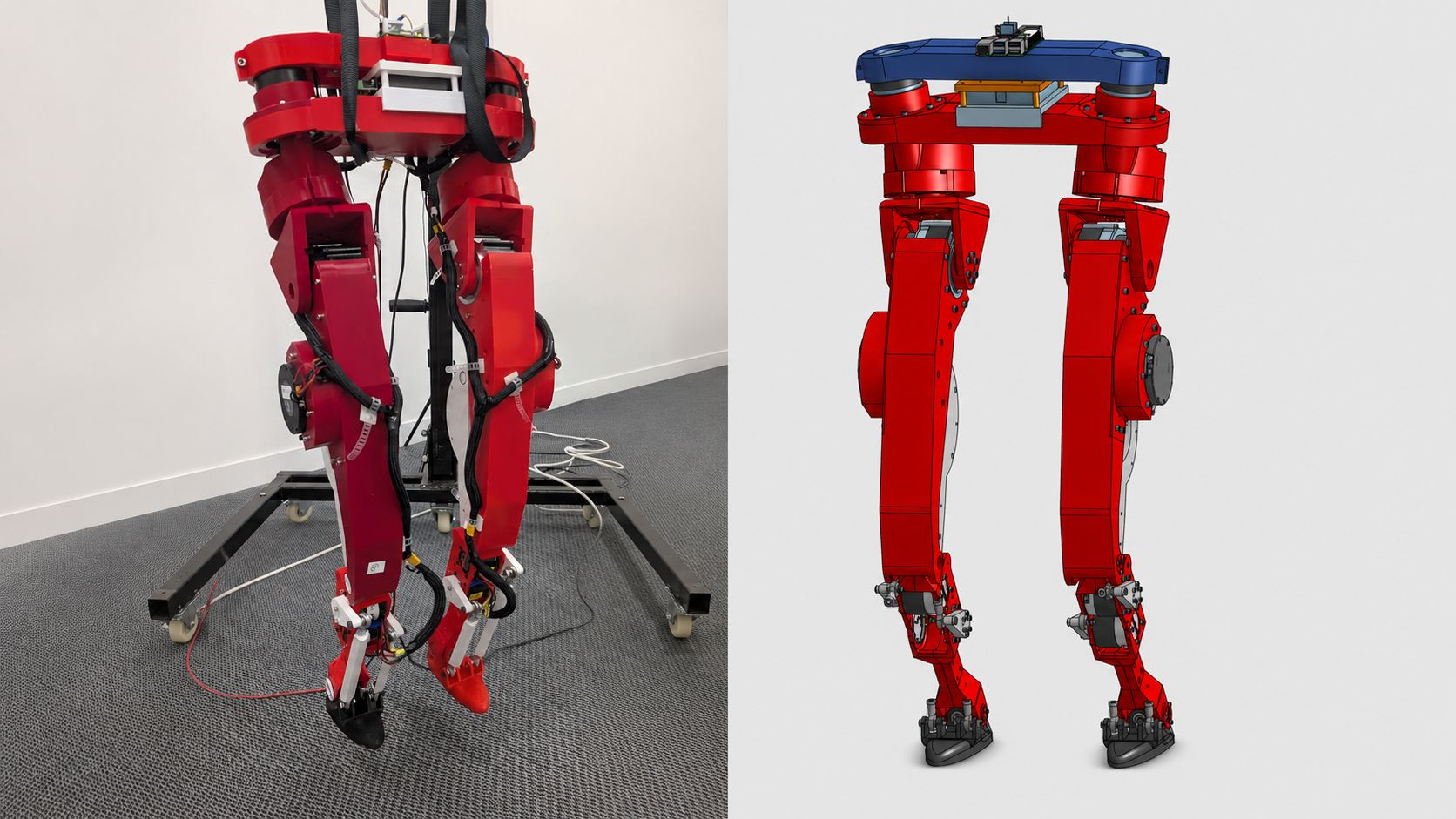
Image source: Hugging Face
The Rundown: Hugging Face’s LeRobot team released a fully 3D-printable bipedal humanoid for around $2,500, betting that cheap, repairable hardware can unlock the next wave of robot learning research.
The details:
The LeRobot Humanoid is an open-source bipedal platform built from 3D-printed components and off-the-shelf actuators.
The release is a full-stack ecosystem, covering hardware design, sim tools, real-world calibration, sim-to-real ID pipelines, and locomotion training.
The current release covers the leg assembly only; upper-body integration and more complex whole-body behaviors are on the roadmap.
The launch follows Hugging Face’s acquisition of Pollen Robotics and the release of the sub-$3K HOPEJr humanoid.
Why it matters: The biggest bottleneck in open robotics research has long been the cost and fragility of physical hardware, with researchers having to wait months for proprietary parts if they break. A repairable humanoid with integrated sim-to-real tooling could put serious locomotion research within reach of anyone with a 3D printer.
GIGAAI
🏡 Robot butlers get first real-world test in China

Image source: GigaAI
The Rundown: Chinese startup GigaAI is rolling out its SeeLight S1 — a two-armed, wheeled humanoid — into real apartments in Wuhan, pitching it as an early test of whether robots can move beyond factory floors and handle everyday chores.
The details:
Built by GigaAI with two state-backed Hubei research hubs, the S1 demos chopping vegetables, frying eggs, loading laundry, and making beds.
The first 100 units will be tested in employee housing in Wuhan this month, before a broader free home pilot in 2027.
GigaAI is targeting a price of sub-100K yuan — roughly $14.7K — by June 2027, which would reportedly cut the robot’s current cost in half.
The rollout lands just after SF startup Gatsby announced an app-booked pilot where a humanoid cleans apartments for $150 per session.
Why it matters: GigaAI’s Wuhan pilot could help give China a head start on real-home manipulation data — bedsheets, frying pans, cluttered counters, pets, elderly users — while aligning neatly with Beijing’s plan to push humanoids into elder care as the country heads toward 400M people over 60 by 2035.
CHEF ROBOTICS
🍴 Robot arms help nonprofit serve 2,500 daily meals

Image source: Chef Robotics
The Rundown: San Francisco nonprofit Project Open Hand is using Chef Robotics’ robotic arms to plate up to 2,500 medically tailored meal kits a day — a response to chronic volunteer shortages, Wired reports.
The details:
While humans cook, the robots scoop and portion food onto trays with the precision required to meet each recipient’s specific dietary and medical needs.
Two robotic arms work alongside human volunteers on the assembly line, with interchangeable attachments that let them handle a range of food items.
Project Open Hand says the technology fills volunteer gaps for some of the most monotonous jobs rather than displacing human workers.
The systems can plate up to 300 meals per hour; roughly one in five meals served in the Tenderloin is now assembled by a robot.
Why it matters: Chef Robotics’ model — flexible robotic arms that can be trained to portion many foods rather than perform one repetitive factory task — gives nonprofits and community kitchens a way to scale meal prep when volunteers are scarce, while keeping humans focused on quality control, care, and client-facing work.
QUICK HITS
📰 Everything else in robotics today
Tesla’s Lars Moravy released a video of Optimus production lines now being built in Germany, Toronto, and the U.S. Midwest at a farewell event for the Model S and X.
Wayve and Stellantis are teaming up to integrate Wayve’s self-driving software into Stellantis vehicles in North America starting in 2028.
Israeli drone company Flytrex is opening a facility in the Dallas–Fort Worth area to build thousands of delivery drones for partners like Uber Eats and DoorDash.
Robotics exoskeletons like Hypershell’s X Ultra S are turning hiking into “e-hiking” by giving outdoor enthusiasts motorized assistance so they can go farther and faster.
China rolled out AI-powered autonomous robots that patrol rivers, lakes, and reservoirs to collect floating waste and reduce water pollution without human operators.
China’s UBTECH showcased its new Walker C1 humanoid performing precise Swan Lake ballet routines alongside human dancers.
Bosch is partnering with London-based startup Humanoid to scale up production and European deployment of its HMND industrial humanoids.
MIT researchers developed an open-source drone navigation system called MIGHTY that enables real-time obstacle avoidance faster than existing methods.
China is field-testing humanoids in real tea plantations in Fujian, challenging them to pick, transport, and help process delicate white tea leaves.
ANYbotics’ robot dog “Roberta” patrols a carbon storage facility in Norway, using sensors to detect gas leaks as captured CO2 is pumped into undersea reservoirs.
COMMUNITY
🎓 Highlights: News, Guides & Events
Read our last AI newsletter: Google tops OpenAI’s math breakthrough
Read our last Tech newsletter: Musk’s SpaceX IPO has a CEO-for-life vibe
Read our last Robotics newsletter: App sends humanoid for home cleaning
Today’s AI tool guide: Build an AI secretary that plans your day
RSVP to next workshop on May 27: Become an AI-native leader
See you soon,
Rowan, Joey, Zach, Shubham, and Jennifer — The Rundown’s editorial team


Stay Ahead on AI.
Join 2,000,000+ readers getting bite-size AI news updates straight to their inbox every morning with The Rundown AI newsletter. It's 100% free.