Agility Robotics going public at $2.5B
PLUS: China's humanoid shipments set to double

Jennifer Mossalgue
June 25, 2026
Read Online | Sign Up | Advertise

Good morning, robotics enthusiasts. Salem, Oregon’s Agility Robotics is going public via SPAC at a $2.5B valuation — ticker $AGLT — beating better-funded rivals like Figure AI to become the first pure-play humanoid company trading on U.S. markets, with its bipedal Digit robot already on Toyota and Schaeffler factory floors.
Now investors get to decide just how real the humanoid hype actually is.
In today’s robotics rundown:
Agility Robotics set to go public at $2.5B
Morgan Stanley doubles China’s humanoid forecast
MIT solves tiny robots’ navigation problem
Robot.com and Physical Intelligence’s new humanoid
Quick hits on other robotics news
LATEST DEVELOPMENTS
AGILITY ROBOTICS
🤖 Agility Robotics set to go public at $2.5B
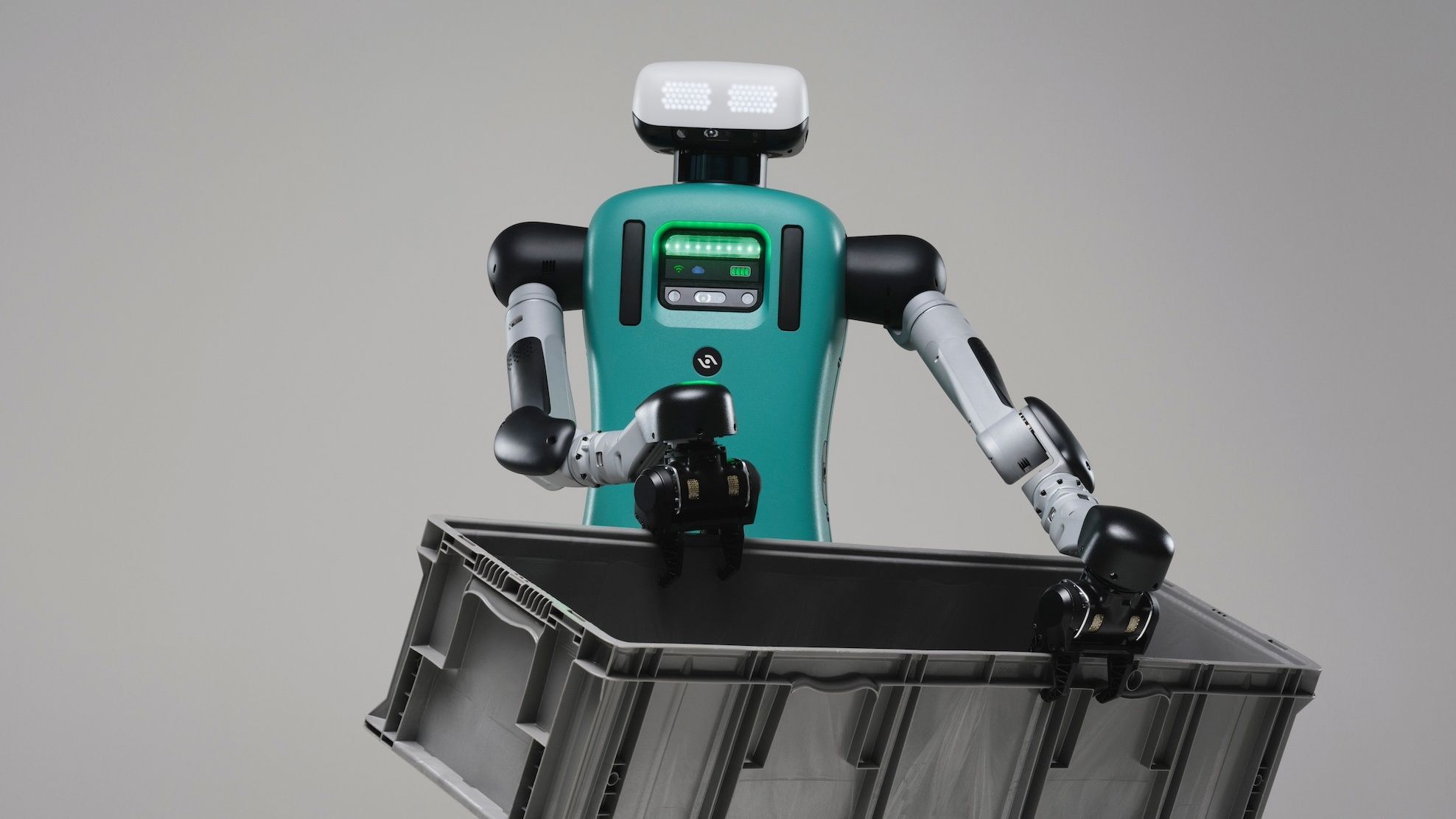
Image source: Agility Robotics
The Rundown: Agility Robotics is going public via SPAC at a $2.5B valuation, merging with Churchill Capital Corp XI to become the first pure-play humanoid company to trade on U.S. markets — beating better-funded rivals like Figure AI to Wall Street.
The details:
The deal is expected to generate more than $620M in proceeds, including ~$200M from a group led by manufacturing giant Foxconn.
Agility’s Digit is deployed across nine customer sites, including Schaeffler and Toyota, with more than 65K hours of real-world operation logged.
The cash is meant to scale production of Digit v5, a next-gen model designed to work smarter and move beyond fenced-off industrial cells.
Agility claims $300M+ in committed Digit v5 orders, but filings show the figure comes from a single undisclosed customer’s 3-year contract for 1K robots.
Why it matters: If the deal closes, Agility would be the first U.S. pure-play humanoid company with real deployments. Going public via SPAC won’t let Agility hide from the challenge much longer — scaling robots that work alongside people is brutally capital-intensive, and the market will now judge whether Digit can survive production reality.
CHINESE ROBOTICS
📈 Morgan Stanley doubles China’s humanoid forecast
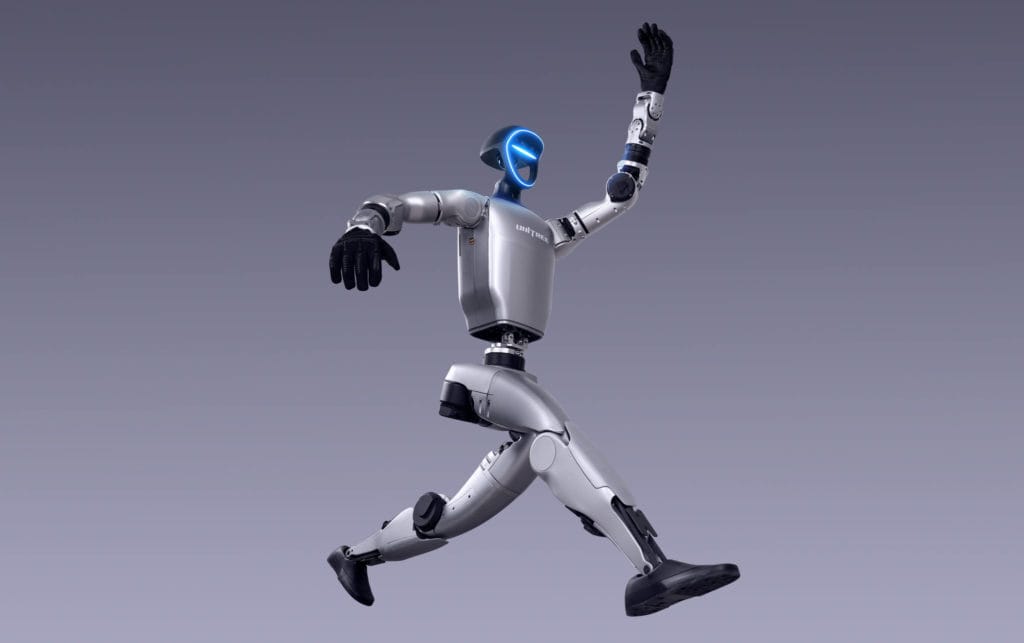
Image source: Unitree
The Rundown: Morgan Stanley raised its 2026 forecast for Chinese humanoid shipments for the second time this year — now projecting 50K units, up from an initial January estimate of 14K, CNBC reports.
The details:
China’s humanoid market is projected to hit $2B this year and $15B by 2030, with annual shipments reaching 446K units.
The biggest demand signal: a ~$1B State Grid procurement order covering 500 humanoids, 3K dual-arm robots, and 5K quadruped robots.
China already accounts for 80%+ of global humanoid shipments, led domestically by Agibot, Unitree, UBTECH, and Leju.
Beijing has made “embodied AI” a five-year national priority, directing local governments to subsidize startups and banks to extend favorable lending.
Why it matters: China is moving faster from lab to deployment than anyone projected, with state-backed industrial policy now aligned behind humanoid robotics at scale. The gap with U.S. competitors is growing: China’s top two players each shipped 5K+ units in 2025, while Figure AI and Tesla each moved a few hundred or fewer.
MIT
🔎 MIT solves tiny robots’ navigation problem
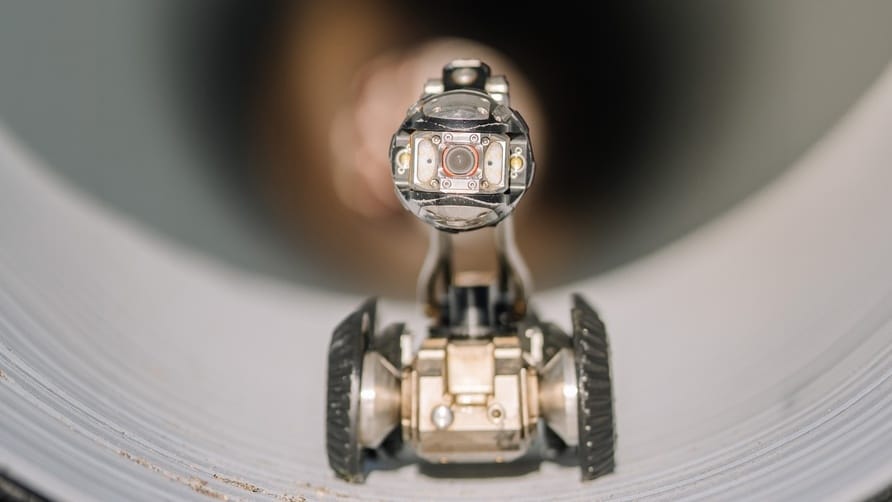
Image source: MIT
The Rundown: MIT’s new Gleanmer chip gives tiny robots a low-power way to see the world in 3D — turning depth-camera data into real-time navigation maps while sipping about 6 milliwatts or roughly LED-scale power.
The details:
The chip is built for small autonomous machines, like inspection drones and confined-space robots that cannot carry bulky mapping hardware.
Instead of voxel-heavy 3D maps, Gleanmer represents obstacles with Gaussian ellipsoids, compressing complex geometry into less memory.
Its companion algorithm, GMMap, processes depth images in a single pass, so the chip does not need to store whole images or revisit raw pixels repeatedly.
Why it matters: Tiny robots are useful only if they can understand complicated spaces without burning through their batteries. Gleanmer suggests that serious 3D spatial awareness could move out of power-hungry rigs and into microbots, AR glasses, and other edge devices that need to navigate the world on a tiny energy budget.
U.S. HUMANOIDS
🤝 Robot.com and Physical Intelligence’s new humanoid
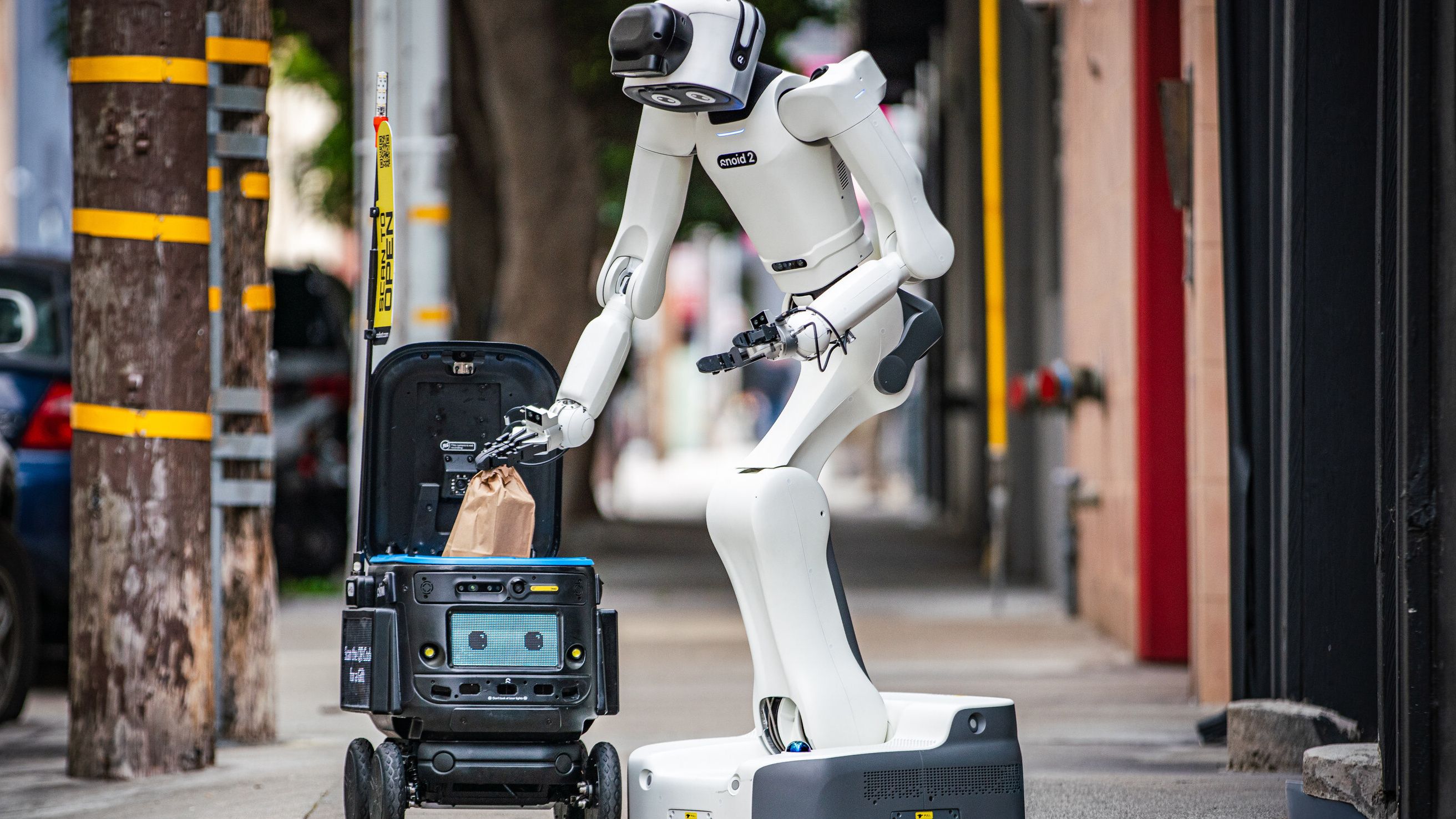
Image source: Robot.com
The Rundown: San Francisco’s Robot.com, the campus delivery startup formerly known as Kiwibot, is pivoting to workplace automation with a new wheeled humanoid built in partnership with Physical Intelligence.
The details:
The robot, called R-noid, is designed to handle repetitive commercial tasks like packing orders, loading boxes, and preparing workstations.
Robot.com is targeting warehouses, logistics operations, food service, and other commercial environments.
R-noid is wheeled rather than bipedal, a form factor that trades mobility for stability and easier deployment in structured indoor spaces.
Physical Intelligence — the robot startup backed by Google and Bezos — gives R-noid access to generalist manipulation models trained across diverse tasks.
Why it matters: Robot.com’s last-mile delivery robots, once confined to college campuses, are eyeing a bigger commercial opportunity in indoor automation. With Physical Intelligence’s software stack underneath, R-noid is betting that general-purpose manipulation is the faster path to warehouse-scale deployment.
QUICK HITS
📰 Everything else in robotics today
NVIDIA unveiled Halos for Robotics, a full-stack safety system adapted from its autonomous vehicle technology, with Agility Robotics as the first adopter.
Hyundai is buying out SoftBank’s remaining 9.65% stake in Boston Dynamics for $325M to take full ownership and fast-track a Nasdaq IPO by 2027 or 2028.
Boston Dynamics is investing $100M to build an advanced robotics and AI center near its Massachusetts headquarters — a move expected to add 1,250 jobs by 2033.
Howard Lutnick warned top robotics execs that the Commerce Department is reviewing Chinese robotics imports and may move to restrict them, Politico reported.
JD.com founder Richard Liu said that robots will “sooner or later” replace the Chinese e-commerce giant’s 700K delivery couriers.
China is turning to AI-powered humanoids to plug its looming labor shortfall as its workforce shrinks sharply over the coming decades, The Financial Times reports.
The NTSB opened an investigation into a crash in Katy, Texas, where a Tesla driver allegedly using Autopilot slammed into a home, killing a 76-year-old woman.
Norway just sent an autonomous submarine the size of a torpedo 20K feet into the deep sea to map one of Earth’s last unexplored frontiers.
UBTech debuted the Walker C1 — a full-size service humanoid — as the official “silicon ambassador” at the China International Supply Chain Expo in Beijing.
WeRide is partnering with Geely to launch purpose-built right-hand-drive robotaxis, with commercial services starting in Hong Kong.
Realbotix — a firm that emerged from a lifelike doll manufacturer — launched what it’s calling the first humanoid deployment in a U.S. public school district.
Waymo’s charging partner Terawatt Infrastructure is securing up to $300M to buy and build EV and autonomous-vehicle charging depots in the U.S. and abroad.
Indian factory workers are being made to wear head-mounted cameras to film their tasks to train robots, raising concerns over exploitation, consent, and job security.
COMMUNITY
🎓 Highlights: News, Guides & Events
Read our last AI newsletter: OpenAI’s spicy new custom AI chip
Read our last Tech newsletter: Meta’s employee tracking hits a wall
Read our last Robotics newsletter: GM replaces 1K workers with 50 robots
Today’s AI tool guide: Get World Cup ticket deals with AI price tracking
RSVP to workshop @ 2 PM EST today: Consultant-grade strategy with AI
See you soon,
Rowan, Joey, Zach, Shubham, and Jennifer — The Rundown’s editorial team



Stay Ahead on AI.
Join 2,000,000+ readers getting bite-size AI news updates straight to their inbox every morning with The Rundown AI newsletter. It's 100% free.