Sony's new robot has a killer backhand
PLUS: Ukraine's war robot revolution

Jennifer Mossalgue
April 23, 2026
Read Online | Sign Up | Advertise

Good morning, robotics enthusiasts. Table tennis has long been robotics’ unsolvable puzzle — a blurring ball, invisible spin, decisions that unfold in milliseconds.
Sony’s Ace just solved it, with an industrial arm that now beats Olympic-level players. Compared to humanoids winning marathons, Ace is doing something even harder: reading physics in real time and acting on it, in a perceptual-motor loop with implications far beyond ping-pong.
In today’s robotics rundown:
Sony’s robot just beat elite ping-pong players
Robots are taking over Ukraine’s front lines
Reliable Robotics’ $1B bet on robot pilots
MIT spinout is building homes with robot arms
Quick hits on other robotics news
LATEST DEVELOPMENTS
SONY
🏓 Sony’s robot just beat elite ping-pong players
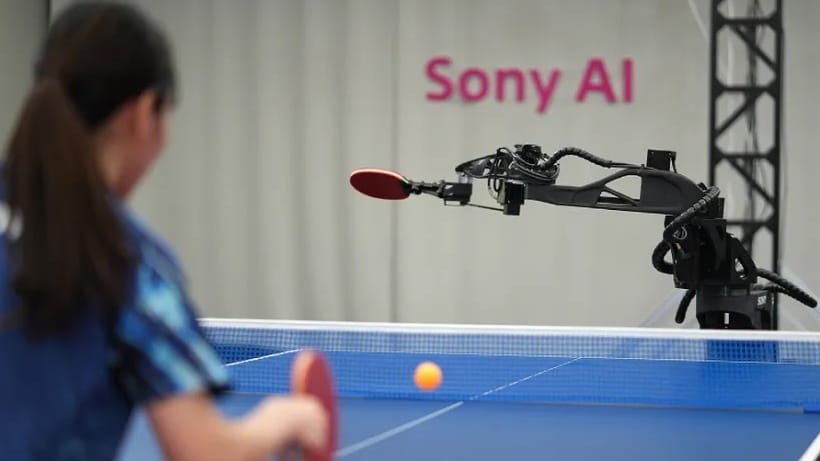
Image source: Sony
The Rundown: Ace, Sony’s AI table-tennis robot, is the first machine to defeat elite human players on a full-size court — tracking spin, predicting trajectories, and swinging an industrial arm in the same instant.
The details:
The system uses 9 high-speed cameras to triangulate the ball in 3D while three gaze-control rigs zoom in on the logo mid-flight to read its spin axis in real time.
End-to-end, Ace reacts in 20 ms, around 10x faster than a human, by feeding that spin and trajectory data straight into a deep reinforcement learning policy.
The system was trained entirely in simulation, playing against itself for ~3K hours with no human demos before transferring to an eight-joint industrial arm.
By December, Ace was beating professionals, including an unreturnable backspin shot that stumped 1992 Olympian Kinjiro Nakamura courtside.
Why it matters: Table tennis is brutal for robots with its fast ball, unpredictable spin, and millisecond decisions. Ace cracked that loop, and the underlying architecture — high-speed perception fused with learned motor policy — is exactly what robotics needs for higher-stakes environments beyond the ping-pong table.
DEFENSE ROBOTS
🤖 Robots are taking over Ukraine’s front lines

Image source: Reve AI / The Rundown
The Rundown: Ukraine’s ground war is going robotic. Drones and unmanned ground vehicles (UGVs) have become a standard-issue tactical asset in 12 months — and Kyiv is now treating them as a template for how to fight short on soldiers, Politico reports.
The details:
Ukraine’s Defense Ministry says ground robots carried out more than 9K missions in March, and nearly 24,500 in the first three months of 2026.
Kyiv plans to contract around 25K ground robots in the first half of 2026, with an explicit goal of automating 100% of frontline logistics.
In 2025, Ukrainian forces said a single machine-gun-armed UGV held a frontline position for 45 days, undergoing maintenance and reloading every 48 hours.
The 3rd Assault Brigade reportedly moved more than 200 tonnes of supplies in a single month via UGVs, equivalent to 10K soldiers each carrying 20 kg.
Why it matters: With 280 companies now reportedly building UGVs, Ukraine is scaling what aerial drones demonstrated: keep humans back, let machines take the risk. Russia is adapting quickly, developing swarm models and UGVs that deploy FPV drones, turning the front into a real-time testbed for robotic warfare.
RELIABLE ROBOTICS
✈️ Reliable Robotics’ $1B bet on robot pilots
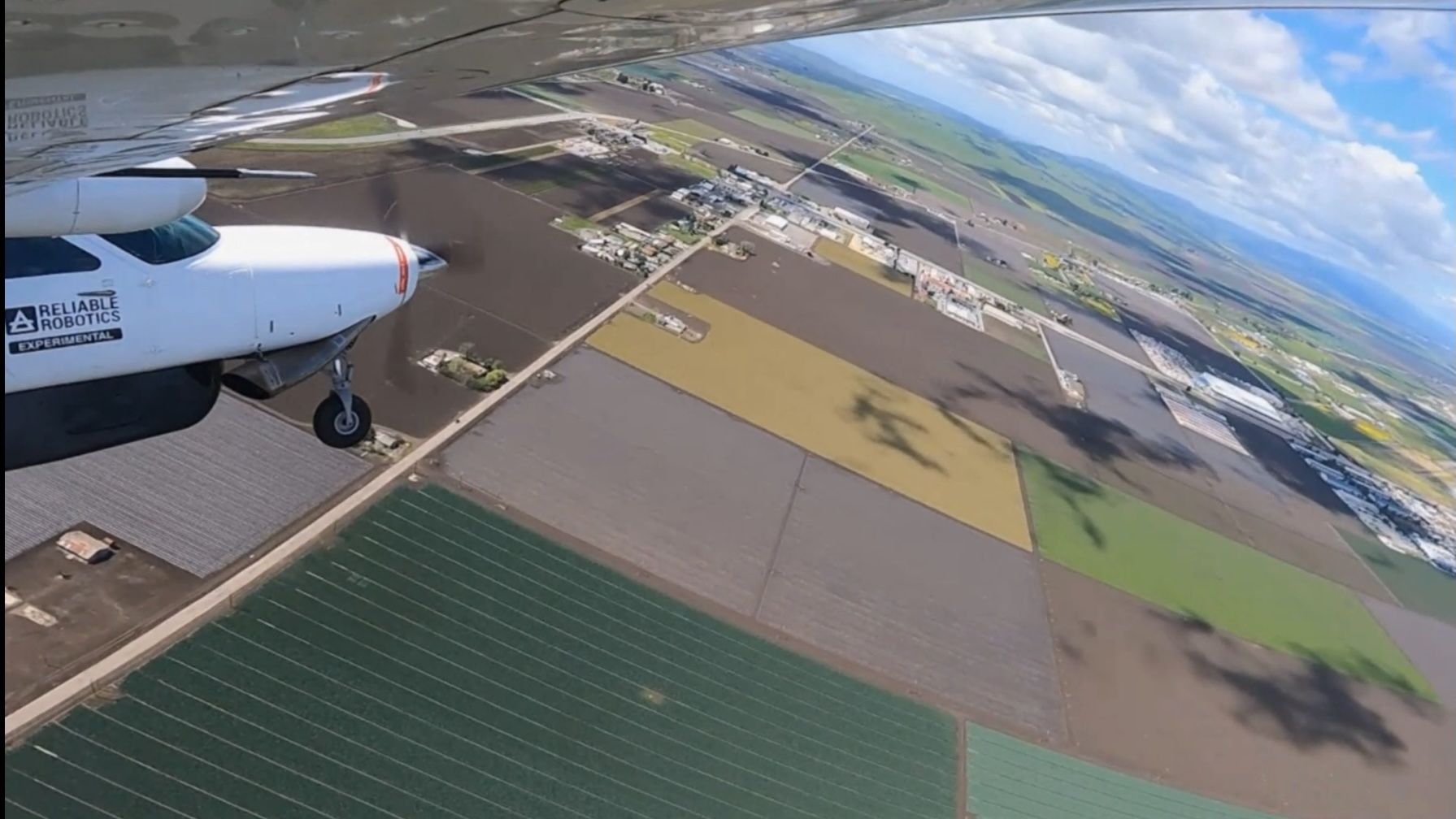
Image source: Reliable Robotics
The Rundown: Reliable Robotics, a Mountain View-based autonomous flight startup led by a SpaceX alum, just raised $160M in new funding at a near-$1B valuation to accelerate development and FAA certification of its uncrewed flight system.
The details:
The startup is building a “robot pilot” stack that lets aircraft like the Cessna Caravan taxi, take off, cruise, and land under continuous software control.
Its autonomous system fuses high‑precision navigation, flight controls, and fail‑operational automation so the plane can fly gate‑to‑gate.
Founded in 2017 by SpaceX veteran Robert Rose, the company says it is applying software-first, aerospace-grade rigor to FAA-certified aviation.
In 2023, it completed an FAA-approved uncrewed Caravan cargo flight, operated remotely from a control room 50 miles away.
Why it matters: The robot pilot market is real now, and this round keeps Reliable in a tight race with Merlin Labs and Xwing to certify uncrewed cargo ops on existing airframes, skipping the eVTOL speculation entirely. If FAA approval comes through, it’ll be a big win for Reliable and a regulatory template for pilotless cargo aviation.
REFRAME SYSTEMS
🏠 MIT spinout is building homes with robot arms
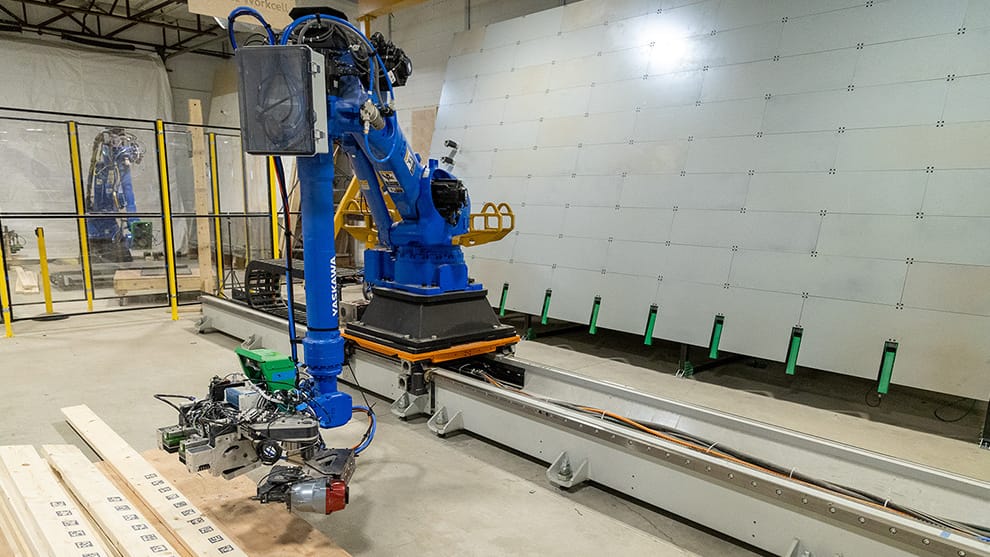
Image source: Reframe Systems
The Rundown: America’s housing shortage has a labor problem, and an MIT spinout thinks robots stationed close to high-demand markets can help close the gap faster and cleaner than traditional construction ever could.
The details:
Reframe Systems is using compact robotic microfactories to prefabricate modular home panels near high-demand markets like Greater Boston.
Industrial robot arms handle wall and ceiling framing inside a local microfactory, while human crews finish wiring, plumbing, and on-site assembly.
Completed homes have already gone up in Arlington and Somerville, Mass., with a second microfactory in southern California to support wildfire rebuilding.
The firm says that standardized modular panels cut jobsite waste, and finished homes are designed to be energy-efficient and solar-ready.
Why it matters: The U.S. construction sector is short on workers and long on inefficiency, a combination that keeps housing expensive and carbon-intensive. Reframe bets that moving fabrication off-site and closer to demand can compress timelines, cut emissions, and sidestep the chaos that plagues traditional builds.
QUICK HITS
📰 Everything else in robotics today
Tesla said it is starting work in Q2 on a Fremont Optimus line targeting 1M robots a year — with a next‑gen, 10M‑per‑year factory at Giga Texas also in the pipeline.
Korean robotics firm ROBOTIS unveiled AI Sapiens, a 130cm-tall, 34kg open-source humanoid positioned as a lower-cost research rival to Unitree’s G1 and R1.
Tesla dropped five patents that blueprint the tendon‑driven Optimus hand and forearm, from a gearless wrist to concentric forearm actuators.
Sudo emerged from stealth with R1, a new robot trained fully in simulation that achieves about 98% first‑try grasp success on previously unseen objects.
U.S. startup Agility Robotics trained its Digit humanoid to repeatedly deadlift 65 lb. with controlled precision in the lab.
Vancouver-based A&K Robotics raised $5.8M in Series A funding to scale deployment of its self-driving mobility pods in airports.
The Pentagon’s new budget proposal includes about $54B to expand drone use, an amount reportedly larger than the entire annual military spending of most countries.
Coco Robotics launched its zero-emission sidewalk delivery robots in downtown San Jose, California, in partnership with Uber Eats.
VinGroup’s robotics arm, VinDynamics, and Germany’s Schaeffler signed a deal to co-develop high-demand humanoid parts like actuators, motors, and gear systems.
Swiss startup Bubble Robotics raised a $5M pre-seed round to deploy autonomous underwater robot “BubbleBots” for long-duration inspection of offshore infrastructure.
COMMUNITY
🎓 Highlights: News, Guides & Events
Read our last AI newsletter: Anthropic's locked-down Mythos leaks
Read our last Tech newsletter: Apple gets a new boss
Read our last Robotics newsletter: Humanoid smokes half-marathon record
Today’s AI tool guide: Write better docs using dictation
RSVP to workshop April 30 @ 2PM EST: Codex for non-technical operators
See you soon,
Rowan, Joey, Zach, Shubham, and Jennifer — The Rundown’s editorial team

Stay Ahead on AI.
Join 2,000,000+ readers getting bite-size AI news updates straight to their inbox every morning with The Rundown AI newsletter. It's 100% free.