Exclusive: Inside Canva AI 2.0 with CPO Cameron Adams
How Canva AI 2.0 changes design, productivity, and what it means to be great at your craft

Shubham Sharma
April 19, 2026
Read Online | Sign Up | Advertise
Good morning, AI enthusiasts. Most AI design tools give you a result and stop there. You get a finished image, and then you're on your own, prompting in circles to get it closer to what you actually meant.
Canva is betting the real value isn't in generation — it's in what comes after. The company just launched Canva AI 2.0, turning its platform into an AI-native environment where generated designs are fully editable, and the AI refines alongside you rather than handing off a flat image and stepping back.
We sat down with Cameron Adams, Canva's co-founder, CPO, and a designer himself, in an exclusive Q&A to understand what this actually unlocks, where it still falls short, and what it means for the people whose jobs revolve around making things.
In today’s AI rundown:
Closing the gap between words and vision
Being 'great' when AI makes everyone good
Where the model surprised its creators
The ‘last mile’ of creative work
What changes for teams worldwide
Quick hits with Cameron
LATEST DEVELOPMENTS
DESIGN INTELLIGENCE
💪 Closing the gap between words and vision
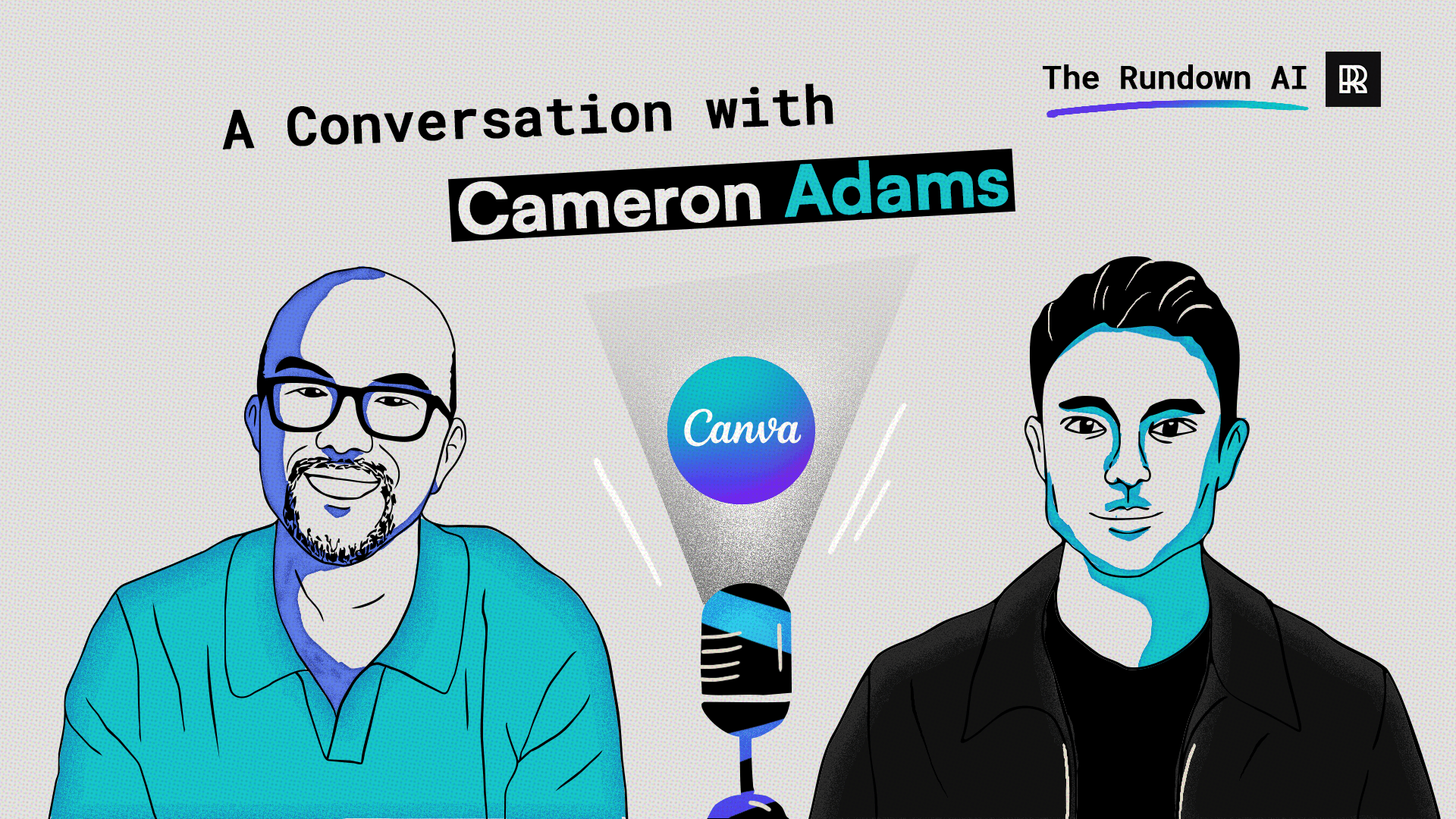
The Rundown: Adams says understanding what a user actually means, not just what they type, is a major problem in creative AI. Canva is tackling this by training its model not just on language, but also on the sequence of actions that lead to a finished design.
Cheung: If I prompt to create a minimal ad with “tension in the negative space." Does the Canva AI 2.0 actually understand what tension in negative space means?
Adams: Most AI systems learn from finished outputs... What they can't see is everything that happened before it. We trained our foundation model, the Canva Design Model, on structured data, millions of designs, and the actual sequence of edits used to build them.
Understanding how people actually get to good work (Canva has 265M+ monthly users), the hesitations, the pivots, the moments of clarity, is what separates creative intelligence from generation. Rather than sitting outside the creative process, the Canva Design Model lives in the editor itself, shaped by the same typography systems, layout rules, brand kits, and collaborative workflows our users work within every day.
If you were to use this prompt in Canva AI 2.0, you'd see it share back its thought process on how to tackle the design. It's combining language model reasoning to interpret the prompt with its design training to execute it... And it's not re-assembling templates, it's generating entirely new editable elements (coming from Canva’s 2024 acquisition of Leonardo.ai) to fulfill your vision.
Why it matters: While it remains to be seen how good Canva AI 2.0 really is at capturing design nuances professionals often use, this is a step toward a future where you spend less time on the loop of prompting again and again, and get to a usable outcome with far less effort.
DIFFERENTIATION IN THE AI AGE
💯 Being 'great' when AI makes everyone good
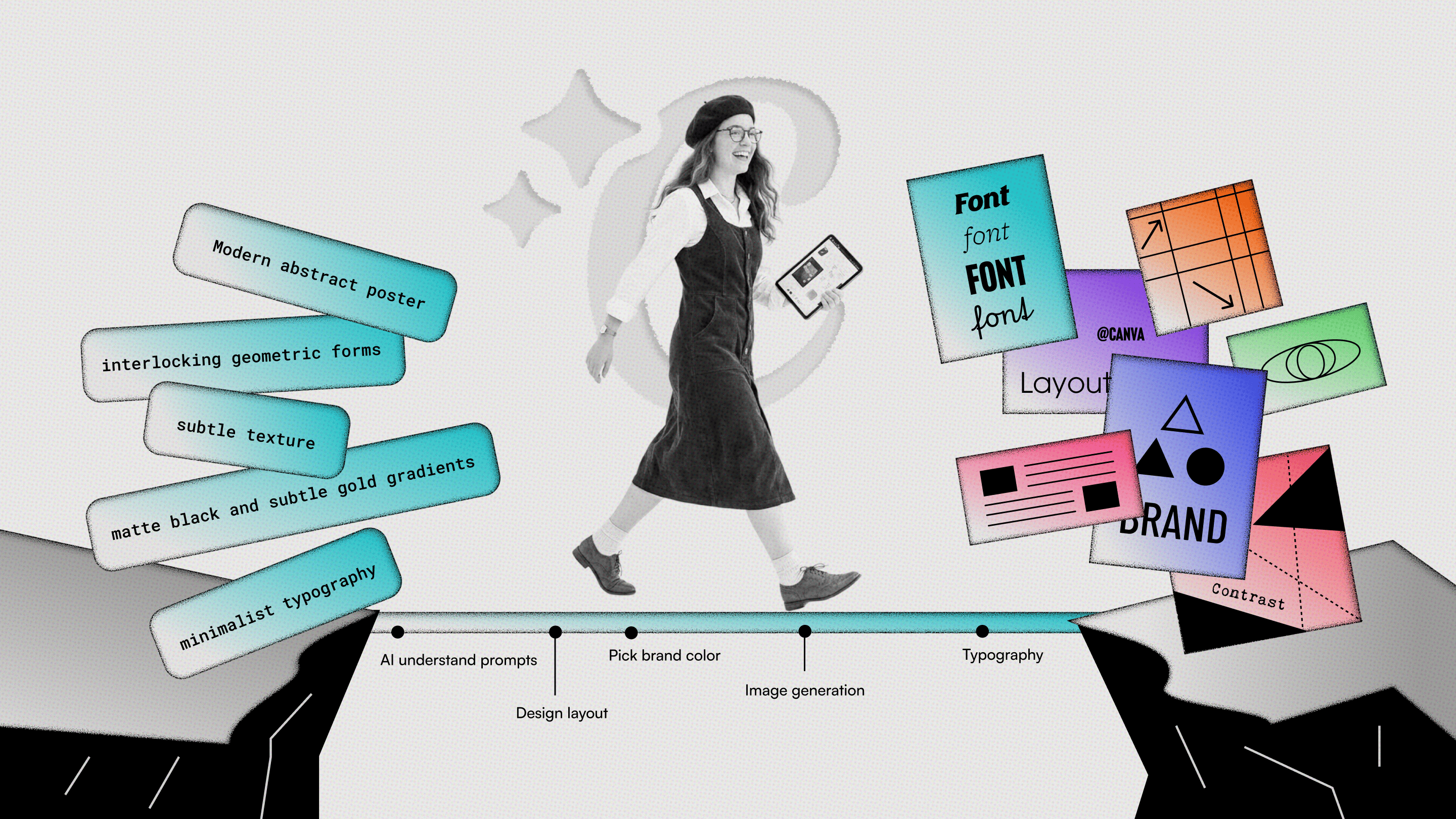
The Rundown: As AI-driven design makes creation accessible to anyone, Adams says there will always be room for “greats” to stand out with their judgment, empathy, and knowing what will strike a chord with the audience.
Cheung: Canva AI 2.0 can now generate and edit at the layer level — text, elements, colours. That means anyone with a vision can execute it without touching a tool. Does the gap between a great designer and an average one get smaller?
Adams: When it comes to creativity, there will always be room for “greats” to stand out from the “goods”, but the skills that you need to stand out are constantly evolving. When you think about other eras of creative change, democratisation always makes room for more expression but also enables the best in the field to push even further.
When anyone can produce something polished, what separates the work is the thinking behind it and the message it contains. Judgement and empathy become more important: the strength of the idea, the sensitivity to context, the instinct about what will resonate, and the fundamentals of creating connection with other people. These things only humans can bring, and that’s why we’ve built an agentic experience that keeps the user at the center.
This is powerful for designers, but even more so for those who need to create visual materials but aren’t designers: a marketer creating campaign materials, a wedding planner designing a seating chart, or a student’s school project.
Why it matters: For anyone in a creative role wondering what AI leaves for them and how to shine — this is the answer. AI handles the execution. What it can’t replicate is the harder stuff: knowing your audience, your instinct, and getting what actually will work. The better you are at that, the more successful you become in the age of AI.
AI CREATIVE PARTNER
🧠 Where the model surprised its creators
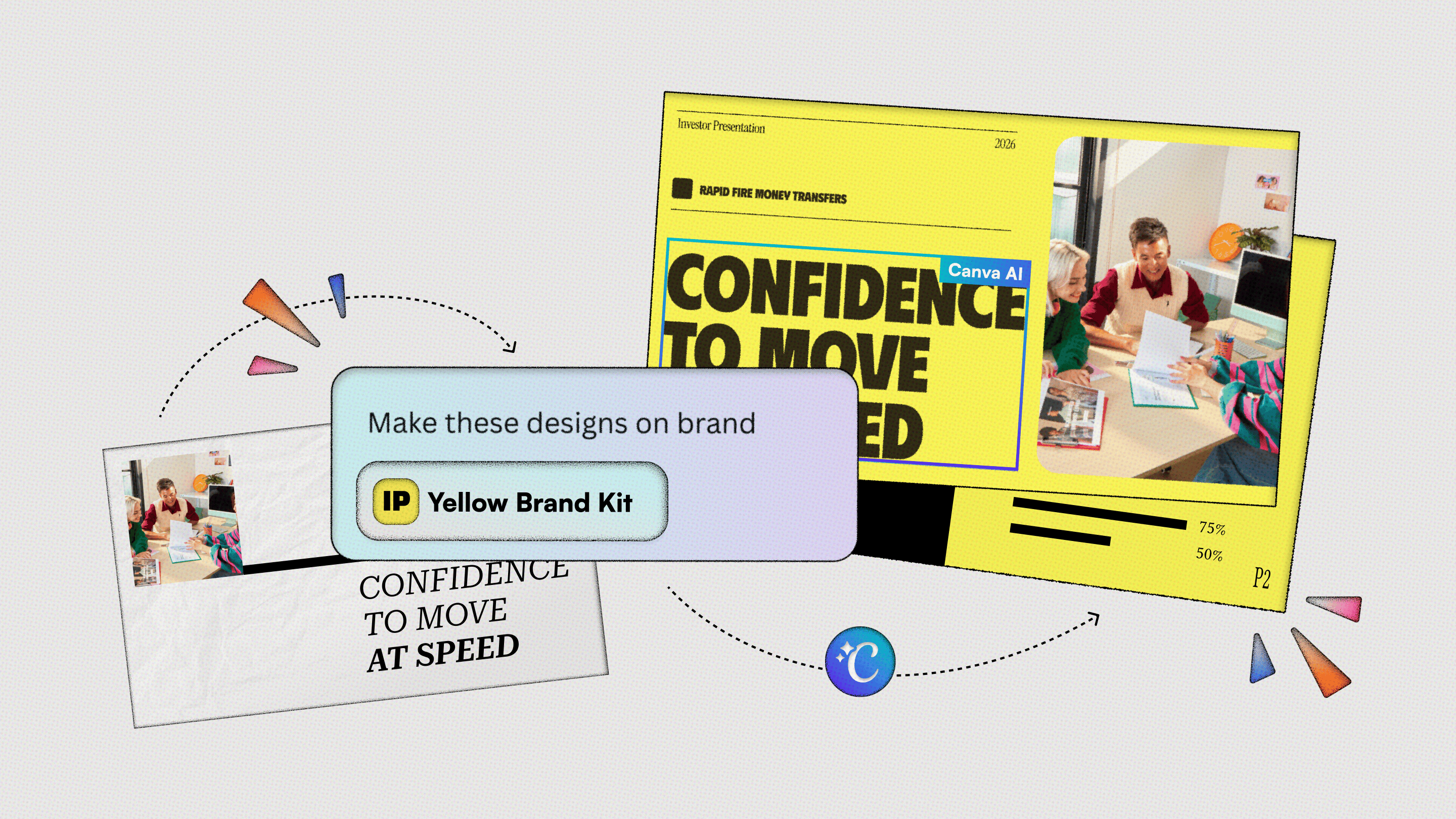
The Rundown: From scavenger hunts to cleaning up docs and slides, Adams says he’s using Canva AI to handle both personal and professional creative tasks, along with the small fixes around them — with the AI sometimes catching issues well before he even notices.
Cheung: You're a designer. What’s something you built with Canva AI that surprised you?
Adams: I love making scavenger hunts for my kids, but it’s often time-consuming... Canva AI is actually really brilliant at doing a scavenger hunt if you give it a list of places around your house. It can design a cryptic visual clue for each of them and deliver it as a finished design ready for me to print and place around the house.
Then, in my work, having that design partner on call is invaluable for tweaking the decks and docs that I’m already working on. Being able to call up Canva AI and ask it to tidy up some mess I’ve made as I’ve been brainstorming a slide, or inject a table into a doc I’m writing with research on the latest market stats are invaluable time saver.
Adams added: It consistently upskills itself and handles tasks we’ve never tested or optimised for. One example was when it started to get really good at converting ASCII diagrams into designs almost flawlessly.
Why it matters: When AI starts catching what you missed before you notice it, and keeps improving over time, the relationship with the tool changes. Less effort goes into spotting errors and fixing inconsistencies. But that same trust can also create blind spots, where both the user and the AI miss something — and the output quietly breaks.
AI & ACCURACY
🔍️ The ‘last mile’ of creative work
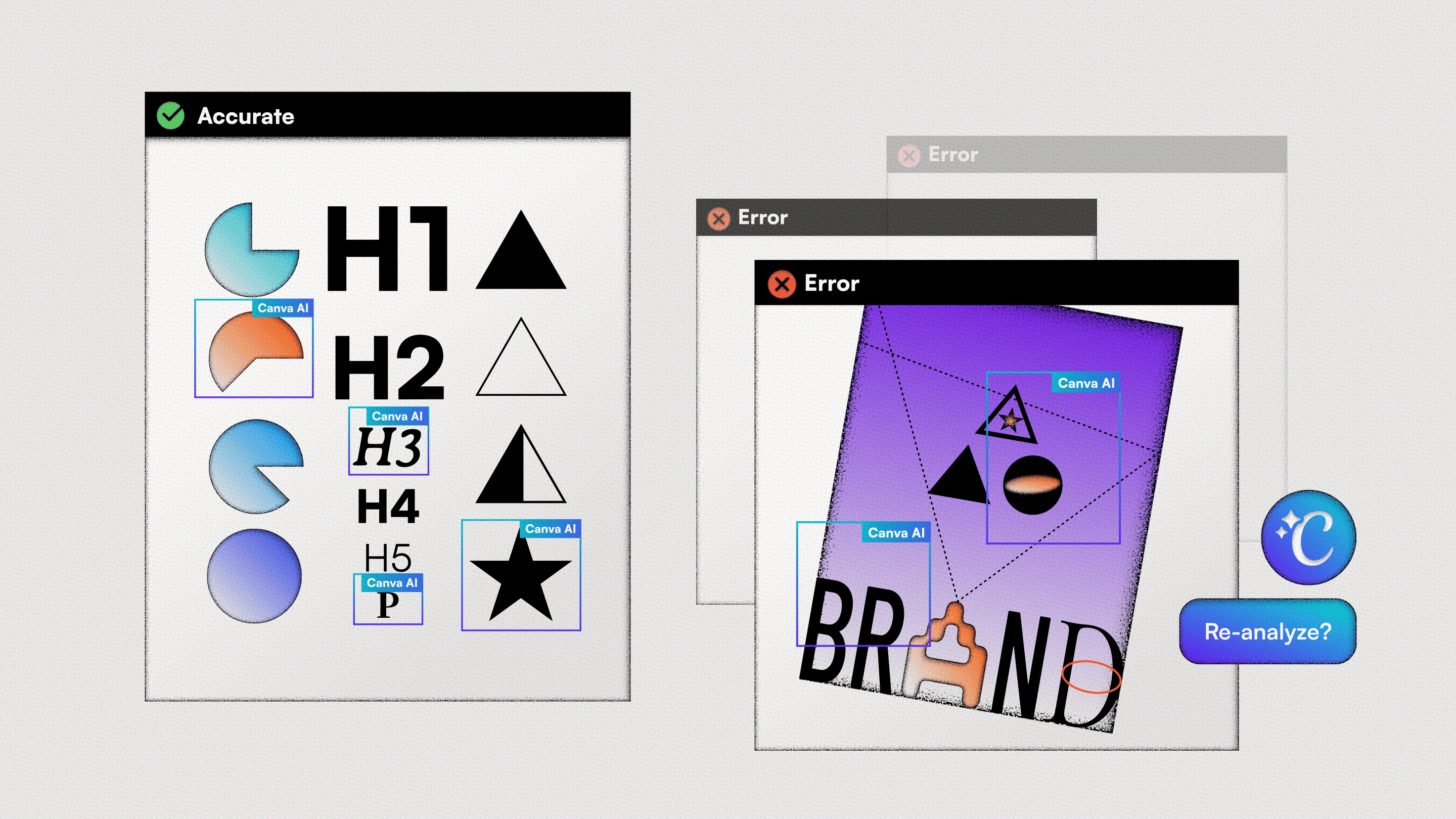
The Rundown: Adams says Canva is actively stress-testing its AI model by deliberately breaking designs, while also positioning the platform as the “last mile” of the creative process, completing the ideas started by AI assistants like ChatGPT and Claude.
Cheung: In creative work, a small error can spiral into a long back-and-forth. How are you improving the accuracy of your AI when it comes to designing?
Adams: We "perturb" designs, purposely breaking the spacing or hierarchy, to train the model to recognize and score those errors. Plus, we evaluate against large-scale patterns from real-world usage, like alignment, readability, and brand consistency. This all culminates in what we call agentic editing: a system designed to catch small errors and refine them alongside you.
Cheung: As AI assistants like ChatGPT now generate, edit, and publish campaigns from chat, where does the design canvas still matter, and how does Canva stay the destination?
Adams: We don’t see the rise of AI assistants as a bypass; we see it as a massive expansion of how people start their creative journey. By embedding Canva into AI ecosystems people use – ChatGPT, Claude, Copilot, and now Google Gemini – we’ve established Canva as the definitive visual layer for the AI ecosystem.
The design canvas will remain essential because most AI assistants are great for thinking, but they’re often a dead end for doing. If you want to make a precise change, collaborate with your team, or ensure every pixel is strictly on-brand, you eventually hit a wall in a chat box. You end up in a loop of prompts instead of just grabbing an element and moving it.
Why it matters: While AI enthusiasts may position chatbots as the go-to for creative tasks, the reality is that these tools are great for starting ideas, but not finishing them. The gap between a prompt and a publish-ready design is still wide, and that's where Canva is planting its flag, stress-testing its AI to pick up where assistants leave off.
FUTURE OF WORK
🧑💼 What changes for teams worldwide
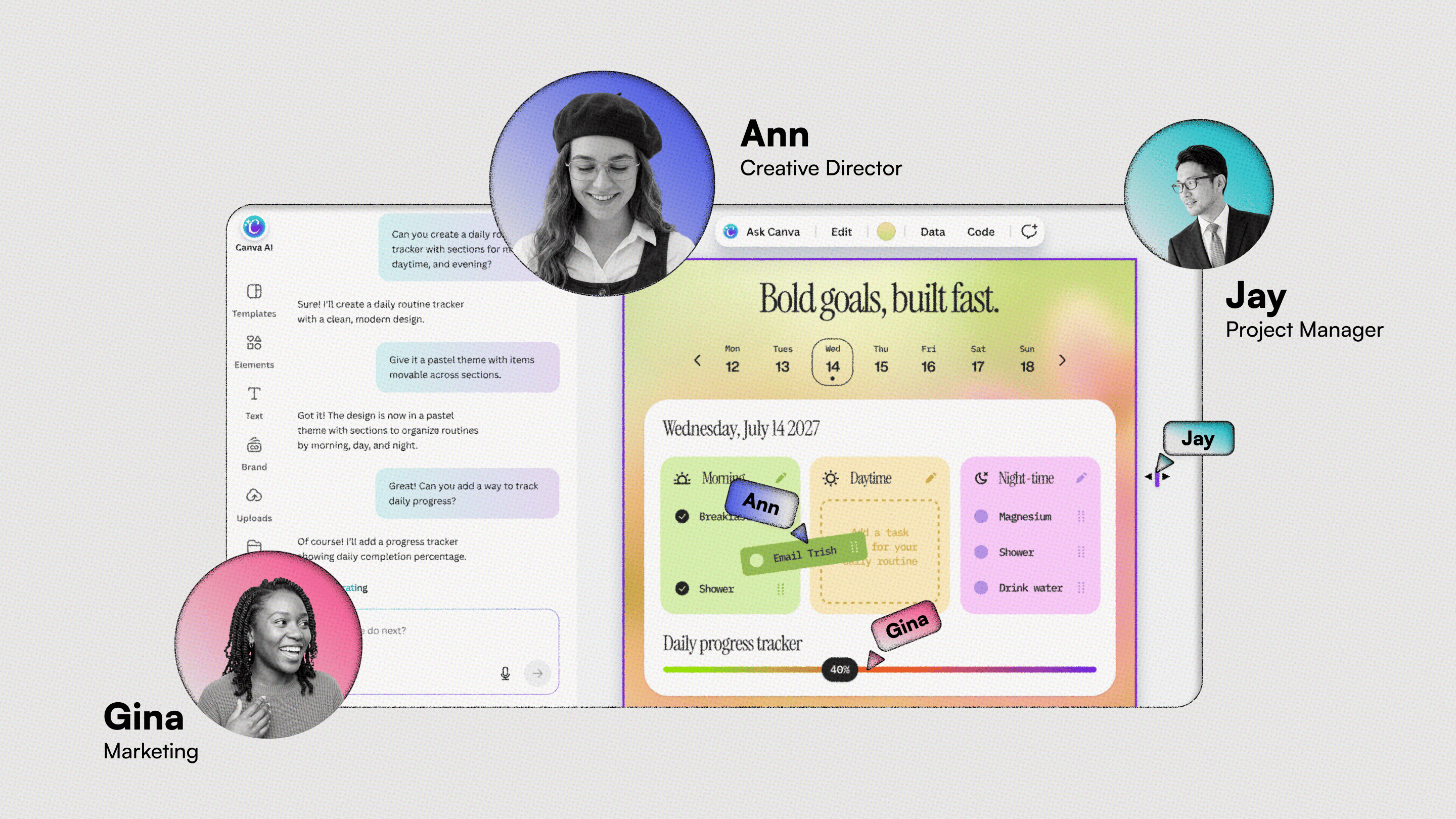
The Rundown: Adams argues the real story isn’t teams getting smaller, it’s that every team in a company suddenly gains design capability they never had before. The roles that matter most shift toward creative strategy and brand stewardship.
Cheung: Do you see design teams shrinking with AI in the loop? Which roles do you think will become vital in this age of AI?
Adams: I’d actually flip the premise. This isn’t really a story about design teams getting smaller. It’s about every team in a company suddenly having design capability they never had before.
The marketing coordinator, the sales lead, or the founder pulling together a pitch at 11 pm. They’re already doing this work in Canva, and now they have an always-on partner to produce work that spans a far greater breadth, without waiting on a design queue.
The ability to think about campaigns and projects with far greater scope and higher impact is now what teams should be striving for, and it’s letting teams stretch beyond their traditional boundaries and constraints.
Adams added: The roles that become vital are the ones focused on creative strategy and brand stewardship. You need people who can set the vision and craft the brand kit ingredients that the AI will then use to scale your capabilities.
We’ve already been anticipating this overlap and building Canva up as a platform where anyone can create visual work, while remaining plugged into a full productivity suite that includes your team’s context, connects with customer data, and integrates with your other work tools like Slack.
Why it matters: As agent teams handle execution, the professional edge goes from producing the work to directing it. Adams’ framing is useful: it’s not about teams shrinking, but design capability spreading across the entire company. The people who thrive are those who move up to creative strategy — setting a vision that AI then scales.
LIGHTNING ROUND
⚡️ Quick hits with Cameron
The one design task that AI will never do better than a human?
Adams: Deciding not to do something. Knowing which idea to go with and which to leave on the table is a purely human insight. AI can give you options, but it will never have the gut feeling to tell you that none of them are as good as the one idea you have.
Who keeps you up at night — Adobe, Figma, or OpenAI?
Adams: People often ask me about Adobe & Figma, but we’re in a totally different (and much bigger market) to them. We’re bringing design to the entire world, not just a subset of professionals.
On the flipside, as the only worksuite that genuinely brings creativity and productivity together with AI, we’re also more than just a chatbot. People need somewhere where they can collaborate with their team and turn AI-generated content into real, usable work. So I’m sleeping pretty soundly at the moment.
Things Canva usage data tell you about how people use AI in design?
Adams: The biggest surprise is how much people want to stay in control of the output. Not full automation, not a magic “make it for me” button. They want options, they want to suggest edits, they want to describe what they’re after in their own words, often quite subjective ones. “Make it feel more premium” or “something a bit warmer,” and they expect the tool to understand that.
The other thing that’s become really clear is that most people genuinely don’t care what model is running under the hood. They’re not shopping for AI, they’re trying to get something done. What matters is whether it fits into how they already work.
See you soon,
Rowan, Joey, Zach, Shubham, and Jennifer — the humans behind The Rundown



Stay Ahead on AI.
Join 2,000,000+ readers getting bite-size AI news updates straight to their inbox every morning with The Rundown AI newsletter. It's 100% free.