Nvidia corners the AI agent stack
PLUS: Turn Claude sessions into better skills with a daily audit

Zach Mink
June 2, 2026
Read Online | Sign Up | Advertise

Good morning, AI enthusiasts. Nvidia CEO Jensen Huang had a simple but bold statement at COMPUTEX in Taiwan to open his keynote: “Agentic AI has arrived.” He then pointed his whole ecosystem at backing that claim up.
The chipmaker's latest reveals stretched from the laptop to the data center to the factory floor, unified by the bet that AI agents will dominate future compute demand far more than the people using them.
In today’s AI rundown:
Nvidia threads agents across the stack
Bernie Sanders seeks a public AI stake with new bill
Turn Claude sessions into skills with a daily audit
Hackers access IG accounts by… asking Meta AI?
4 new AI tools, community workflows, and more
LATEST DEVELOPMENTS
NVIDIA
💻 Nvidia threads agents across the stack

Image source: Nvidia
The Rundown: Nvidia just introduced a series of new AI releases across hardware, robotics, models, and more at COMPUTEX 2026, all built around the idea that agents will soon be the biggest consumers of compute power.
The details:
The new RTX Spark supercomputer chips built with Microsoft run AI agents directly on PCs, with Nvidia saying it takes Windows “from tool to teammate.”
Nvidia called Vera the “CPU for agents”, a processor that finishes tasks 1.8x faster than rivals and is now being used by Anthropic, OpenAI, and the NYSE.
Cosmos 3 is a new open robotics model, giving robots and self-driving cars the ability to plan ahead and anticipate moves instead of just reacting.
Nemotron 3 Ultra is a new 550B parameter model that moves to the top of U.S. open-source and competes with Chinese rivals like Qwen3.5 and Kimi K2.6.
Why it matters: Nobody builds across the entire tech stack quite like Nvidia, but the central theme in the chipmaking giant's latest moves is the prioritization of AI agents themselves as the consumers of compute — with a company worth $5T+ now organizing its entire lineup around enabling software that didn't exist two years ago.
TOGETHER WITH YOU.COM
🔍 What makes a good web search API?

The Rundown: If you’re looking for hallucinations and unpredictable failures, pick a search provider by running a few test queries and hoping for the best. If you’re looking for accurate, reliable, fresh data, this technical guide from You.com gives you access to an exact framework to evaluate AI search and retrieval.
What you’ll get:
A four-phase framework for evaluating AI search
How to build a golden set of queries that predicts real-world performance
Metrics and code for measuring accuracy
Go from “looks good” to proven quality. Learn how to run an eval.
AI & THE U.S. GOVERNMENT
🏛️ Bernie Sanders seeks a public AI stake with new bill

Image source: Erik Carter / The New York Times
The Rundown: In an NYT op-ed, Bernie Sanders previewed the American A.I. Sovereign Wealth Fund Act, an upcoming bill proposal that would route half the stock of the largest AI companies into a public fund and pay the gains back to Americans.
The details:
Sanders framed it as a one-time tax collected in equity, with the government gaining voting power and a board seat at OAI, Anthropic, and xAI.
Sanders cites the AI labs themselves as precedent, with each already pitching public funds or "universal high income" to spread AI's gains.
He pointed to Norway’s $2T oil fund and Alaska’s oil dividends to residents as examples of “ensuring ordinary people benefit from national wealth”.
Sanders said, “A.I. is being built on a public resource far more valuable than oil: the accumulated knowledge, creativity, and labor of mankind.”
Why it matters: With public AI sentiment at a low and mega IPOs from top AI labs coming at valuations that leave little room for the average investor, Sanders’ concerns that ordinary people are not benefiting are real. Getting the AI labs on board to give up 50% of their equity, despite the posturing, is another question.
AI TRAINING
✍️ Turn Claude sessions into better skills with a daily audit
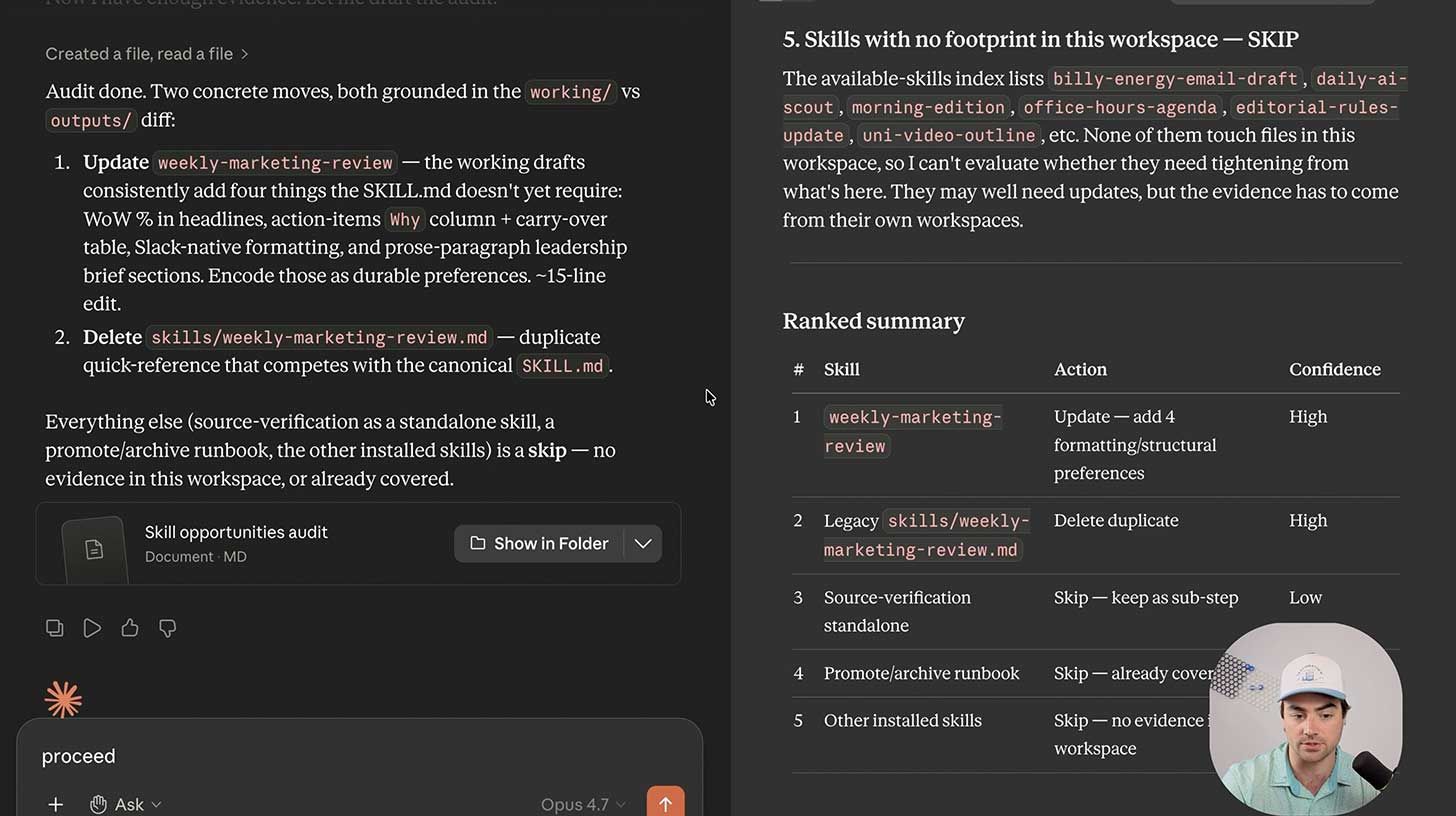
The Rundown: In this guide, you will learn how to make Claude Cowork look through dozens of session files and improve the skills you use. It will also suggest new skills and help you turn the audit into a repeatable skill and automation.
Step-by-step:
Open Cowork, start a chat, and prompt to scan sessions from the past 7 days and suggest with evidence if any personal skills should be created or improved
Review the suggestions and approve the ones with repeated friction, repeated corrections, or a workflow you will reuse. Reject anything that feels one-off
Tell Claude to turn the audit process itself into a skill, and then tell it to set up an automation to run the audit weekly or daily
You can open the "Scheduled Task" tab to adjust timing or move it to a lower-cost model like Sonnet
Going further: Run the same audit on automations. Ask which scheduled tasks are noisy, stale, expensive, or missing approval steps, then improve the ones with evidence.
PRESENTED BY UNWRAP
⚡ See how Oura automates customer feedback analysis
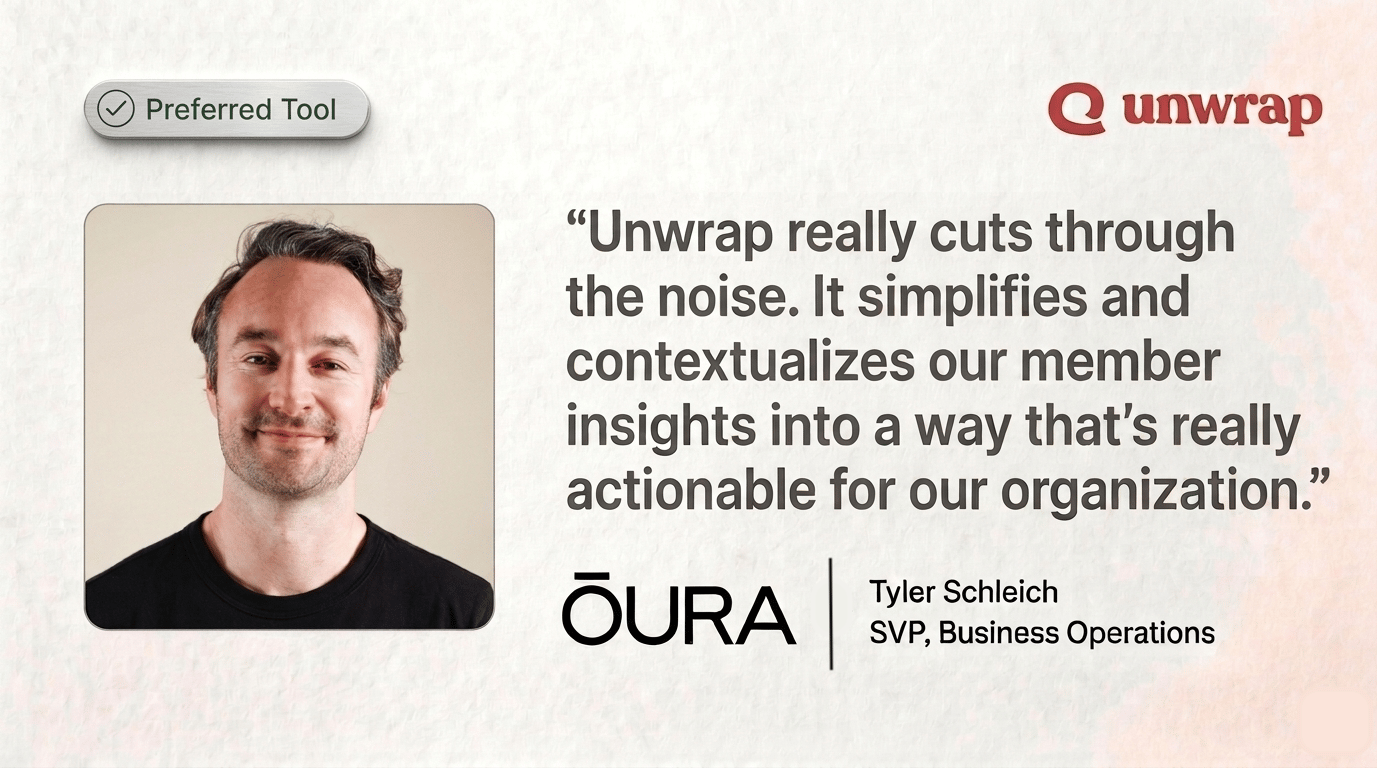
The Rundown: Oura was sitting on thousands of signals (surveys, app reviews, support tickets, social comments) with no way to connect them fast enough to act. Issues hid in the noise until they became problems. With Unwrap, they turned that fragmented data into a single source of truth. Analysis that took days or weeks now happens instantly.
Unwrap's customer intelligence platform gives you:
All feedback automatically categorized across every channel
Alerts that surface the most actionable insights straight to the right owner
Natural language queries via Assistant or your favorite tools using Unwrap’s MCP
Unwrap is offering free trials to Rundown AI readers. Grab 15 minutes with the team to get set up.
META & AI SECURITY
🔓 Hackers access IG accounts by… asking Meta AI?

Image source: 404 Media
The Rundown: Meta just fixed an Instagram security flaw that allowed hackers to use its AI help tool to take over prominent profiles by simply asking the chatbot to use a different email address and gaining the codes needed to access the accounts.
The details:
Meta gave its AI the power to handle password resets on Facebook and Instagram starting in March, with the exploit reportedly active for months.
Accounts hacked include a dormant Barack Obama account, Sephora, and Space Force head John Bentivegna, with accounts then resold in minutes.
Hackers switched a VPN near a target’s region and asked AI support for a password reset and email change, and AI sent a code to the new email.
Meta told 404 Media that the exploit “has been resolved and we are securing impacted accounts.”
Why it matters: This isn’t the first AI support story gone wrong, and won’t be the last — but the bigger issue might be the reach of a company like Meta (which has frontier AI ambitions) turning its entire support process over to a tool so easily exploited. Hackers might not need Mythos-level capabilities… Sometimes you just have to literally ask.
QUICK HITS
🛠️ Trending AI Tools
💡 AhaCreator 3.0 - Your 24/7 AI agent for influencer marketing*
🚀 M3 - Minimax’s new open-weight model with 1M context and computer use
🎥 Aleph 2.0 - Runway’s SOTA video editing model
🤖 Claude Opus 4.8 - Anthropic’s newly updated top model class
*Sponsored Listing
📰 Everything else in AI today
Anthropic announced it has filed with the U.S. Securities and Exchange Commission to go public, officially pushing forward on the race with OpenAI to hit the open markets.
Apollo’s chief economist shared data claiming “zero evidence of job losses because of AI”, saying that “cheaper technology is creating more demand and more jobs.”
MiniMax released M3, an open-weight model it claims tops GPT-5.5 and Gemini 3.1 Pro on coding benchmarks while approaching Anthropic's Opus 4.7.
OpenAI started construction on ‘The Barn’, a 1 GW Stargate data center campus in Michigan, promising 2,500 union jobs and $45M in Codex credits for in-state students.
Florida’s AG brought the first state-led lawsuit against OpenAI and CEO Sam Altman, alleging ChatGPT played a role in planning mass shootings and instances of self-harm.
COMMUNITY
🤝 Community AI workflows
Every newsletter, we showcase how a reader is using AI to work smarter, save time, or make life easier.
Today’s workflow comes from reader Johannes P. in Ilomantsi, Finland:
"I turned The Rundown into a personal AI idea bank. I saved many of your newsletters into one email folder, downloaded them to my computer, and asked an LLM to analyze the archive. I wanted to find the most useful ideas and AI use cases.
I also gave the model a simple “about me” markdown file, explaining what I do, what I care about, and what kinds of AI tools are useful for my work and everyday life. Then I asked it to rank the Rundown examples based on what would be relevant to me.
This made the newsletter much more useful. Instead of reading each issue once and forgetting many good ideas, I can now ask: “Which of these examples should I try?” or “What use cases are most useful for my research, coding, and writing?”
How do you use AI? Tell us here.
🎓 Highlights: News, Guides & Events
Read our last AI newsletter: AI’s next dataset is your apartment
Read our last Tech newsletter: Meta launches paid tiers across its apps
Read our last Robotics newsletter: Nvidia’s plug-and-play humanoid
Today’s AI tool guide: Turn Claude sessions into better skills w/ daily audits
RSVP to our next workshop on June 18: Build a Marketing Creative Studio
See you soon,
Rowan, Joey, Zach, Shubham, and Jennifer — the humans behind The Rundown



Stay Ahead on AI.
Join 2,000,000+ readers getting bite-size AI news updates straight to their inbox every morning with The Rundown AI newsletter. It's 100% free.