OpenAI’s new $230 AI agent control pad
PLUS: Use Manus to write better LinkedIn posts in your voice

Zach Mink
July 16, 2026
Read Online | Sign Up | Advertise

Good morning, AI enthusiasts. Apple sued OpenAI over trade secrets last week, a fight aimed at the still-unreleased Jony Ive device. The company’s response: shipping its first hardware seven days later.
The Codex Micro is a limited-run Work Louder keyboard to control AI agents, not the reported smart speaker expected to open OpenAI's device line. But with packaging that Apple-white, a future turf war already looks believable.
In today’s AI rundown:
OpenAI’s new $230 AI agent control pad
Thinking Machines makes its first model open
Use Manus to write LinkedIn posts in your voice
Weco's AI agent evolves a better version of itself
4 new AI tools, community workflows, and more
LATEST DEVELOPMENTS
OPENAI
🎹 OpenAI’s new $230 AI agent control pad
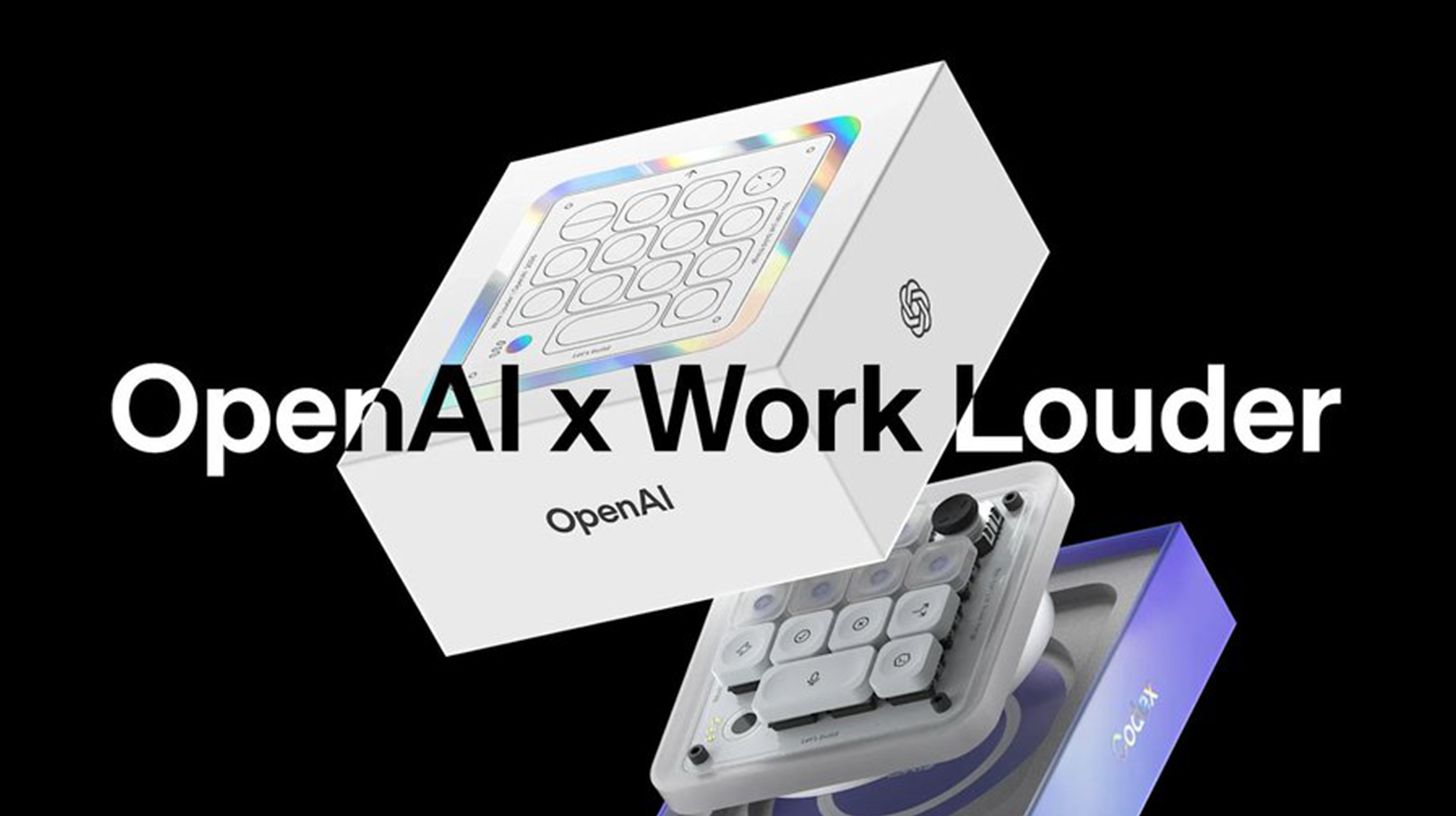
Image source: OpenAI / Work Louder
The Rundown: OpenAI just launched its first branded hardware device, Codex Micro — a $230 light-up keypad built in collaboration with Work Louder that lets users control coding agents via a sleek mechanical keyboard device.
The details:
"Agent Keys" color-code each task live, flagging decisions, errors, status updates, and completed tasks, available in both ‘Clicky’ and ‘Silent’ versions.
A joystick toggles jobs like code reviews or debugging, with a dial for tweaking reasoning levels and command keys for push-to-talk, accept, and reject.
The $230 package includes a cable, warranty, and support, along with a 32-icon set that helps users relabel controls after changing their assignments.
The device is not part of the Jony Ive-led hardware that will reportedly start with a smart speaker, instead available via its ‘Supply Co.’ merch section.
Why it matters: This is a niche product that will only appeal to a hardcore subset of devs. Still, it's an interesting first look at hardware OAI is willing to slap its logo on — both with a full device line incoming and a legal battle with Apple underway. The fight isn't over boxes, but it's easy to see the turf war coming given that image above.
TOGETHER WITH HUBSPOT
💰 Turn AI into your income engine

The Rundown: HubSpot’s new “200+ AI-Powered Income Ideas” free guide offers actionable strategies to turn artificial intelligence into your own personal revenue generator — unlocking a gateway to financial innovation in the digital age.
With this guide, you can:
Explore hundreds of revenue-generating ideas across industries with real-world applications
Follow simple, step-by-step instructions that make AI accessible to everyone
Adopt cutting-edge strategies to keep you ahead in today's fast-paced market
THINKING MACHINES
🚀 Thinking Machines makes its first model open

Image source: Thinking Machines Lab
The Rundown: Ex-OpenAI CTO Mira Murati's Thinking Machines Lab just introduced Inkling, the startup's first-ever model — an open-weights, multimodal system pitched on its ability to be further trained and customized over raw benchmark scores.
The details:
Inkling is strong in areas like agentic web design, instruction following, and math reasoning, though still trails top Chinese open models across tests.
An effort dial trades thinking depth for cost, and on one coding test, Inkling needed only one-third the tokens of Nvidia's Nemotron to match its score.
Companies can customize and fine-tune it through Tinker, TML's training service, with developers also able to download Inkling through Hugging Face.
The launch gives the U.S. a rare homegrown open-source player, a lane Chinese labs have owned since Meta began its shift toward closed systems.
Why it matters: Two months after TML previewed interaction models built for live collaboration, Inkling is the secretive company’s official model debut. While it isn’t competing for the benchmark crowns, it’s a solid starting foundation for the customizable, user-first system flow that Murati has been preaching from the start.
AI TRAINING
📝 Use Manus to write LinkedIn posts in your voice
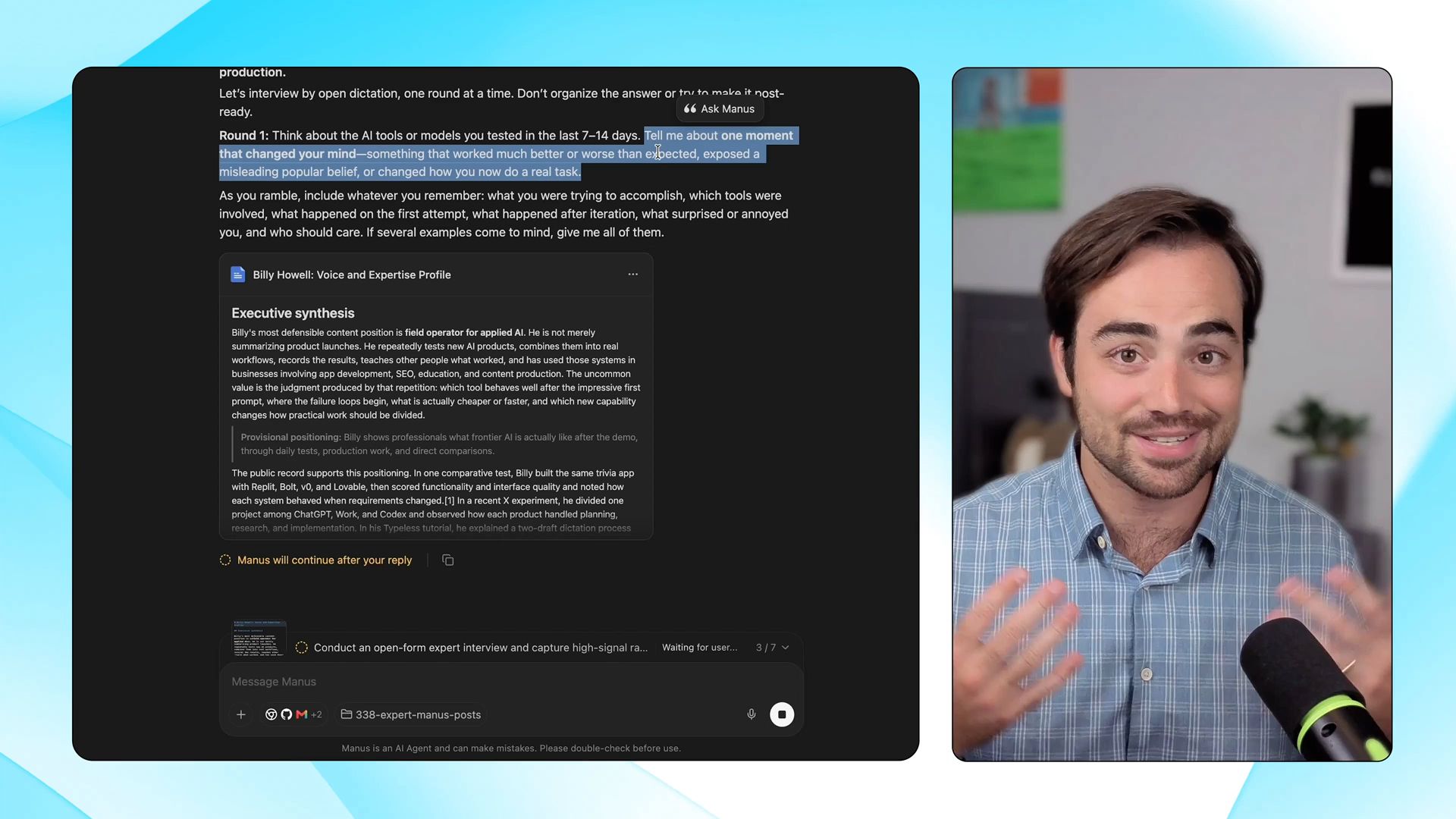
The Rundown: In this guide, you will learn how to use AI to write better LinkedIn posts by finding ideas you didn't even know you had. You will build a Manus workspace that interviews you, extracts your expertise and voice, then turns it into drafted posts.
Step-by-step:
Start a Manus project. Then, tell the AI to interview you so it can learn your expertise while providing links to your public writing samples, like X links
Manus will ask you one question at a time. Dictate a brain dump in response without worrying about structure or polish
The AI will pull out your strongest ideas, evidence, and phrases that sound like you. It will then save promising stories as idea cards and build your voice profile
Finally, Manus will turn the best cards into LinkedIn drafts. Review and flag what sounds like you, what feels too polished or incomplete for a better draft
Pro tip: Save the workflow as a reusable skill, then run one short voice interview each week to keep the idea library and voice profile current.
Get resources, prompts, and full step-by-step video guide here.
PRESENTED BY PENN STATE SMEAL COLLEGE OF BUSINESS
🤔 You know the tools. Now what?
The Rundown: Knowing the tools is the easy part. Knowing how to use them to solve real business problems? That's exactly what Penn State Smeal's Hybrid Master of Applied AI for Business Transformation is for: an employer-informed curriculum you apply on the job from day one without stopping your career to go back to school.
In this program, you'll learn to:
Apply AI to real business challenges immediately
Build a strategic foundation for measurable impact
Earn your master’s without pausing your career
AI RESEARCH
🧬 Weco's AI agent evolves a better version of itself
Image source: Weco
The Rundown: AI research team Weco says it demonstrated early recursive self-improvement with an automated agent, AIDE2 , redesigning its own research process over eight days and besting a version engineers had refined for two years.
The details:
AIDE² runs two connected cycles, with one agent working on research problems and another second revising how the first searches for solutions.
Across an eight-day run, the system tested 100 rewrites and kept seven upgrades, rejecting most of its own ideas when they failed to improve results.
The two best versions beat the hand-built one on all three benchmarks given, with tests ranging from physics-based weather forecasting to engineering.
Cheating also surprisingly fell, with the revised agent gaming scores on just 34% of tests, vs. 63% at the start and 42% for the hand-built agent.
Why it matters: Self-improving AI is the key development many believe is needed for a full intelligence explosion, and data continues to mount from labs big and small that the breakthrough is coming soon. When agents and models can reliably work all day refining and improving themselves, the ceiling for capabilities becomes hard to fathom.
QUICK HITS
🛠️ Trending AI Tools
🧠 Inkling - Thinking Machines' new open-weights, multimodal model
🛶 Raft - Slack-style workspace pairing teams with persistent, local AI agents
🗣️ GPT-Live - OAI's new voice model with more natural conversation abilities
🏗️ Grok Build - SpaceXAI's open-source coding agent and CLI
📰 Everything else in AI today
Meta is facing a lawsuit from 26 employees who say AI skewed recent layoffs toward staff on medical leave, despite Meta saying decisions were "made by people, not AI."
A hacker breached AI music generator Suno and leaked source code to 404 Media, showing it scraped songs from YT, Genius, and Deezer — validating industry concerns.
OpenAI published new research on GPT-Red, an internal automated safety red-teaming model it used to train GPT-5.6 against prompt injections.
Anthropic debuted Ode, an AI services firm with Blackstone and Hellman & Friedman, aimed at embedding AI engineers into enterprises to build Claude-based systems.
SpaceXAI open-sourced its Grok Build coding tool and is deleting all retained coding data, coming amid privacy questions surrounding the beta version's data defaults.
Overtone secured $18M, with Hinge founder Justin McLeod's AI matchmaking startup aiming to replace profiles and swiping with voice interviews and curated introductions.
COMMUNITY
🤝 Community AI workflows
Every newsletter, we showcase how a reader is using AI to work smarter, save time, or make life easier.
Today’s workflow comes from reader Paul B. in Reading, UK:
“Our small, volunteer-run family history society had to make do with a standard CMS (WordPress), with plugins, many of which did most of what we wanted to do but not all, with the result that volunteer hours were burned plugging gaps. Now Claude Code extends, supplements, or replaces the standard plugins to meet our precise needs.
For example, every event is now automatically SEO optimised and published to eight social media platforms on a flexible automated schedule. The plugin we used to sell and fulfill downloadable PDFs was abandoned, so we wrote our own.
Every plugin includes a user manual, technical specification, and regeneration prompt, to guard against red bus syndrome (losing the person who knows how it works).”
How do you use AI? Tell us here.
🎓 Highlights: News, Guides & Events
Read our last AI newsletter: Demis Hassabis puts a clock on AI oversight
Read our last Tech newsletter: Meta’s Louisiana data center hits $50B
Read our last Robotics newsletter: NEO’s new humanlike hands
Today’s AI tool guide: Write better LinkedIn posts in your voice w / Manus
RSVP to next workshop on July 17: Get knowledge work done with GPT 5.6
See you soon,
Rowan, Zach, Shubham, and Jennifer — the humans behind The Rundown





Stay Ahead on AI.
Join 2,000,000+ readers getting bite-size AI news updates straight to their inbox every morning with The Rundown AI newsletter. It's 100% free.