OpenAI sends GPT-5.6 to Work
PLUS: Use 60% less Fable tokens with this orchestrator setup

Zach Mink
July 10, 2026
Read Online | Sign Up | Advertise

Good morning, AI enthusiasts. OpenAI’s new 5.6 class is officially here, and while there's no Fable killer in the launch, there is a model that's nearly as good, far cheaper, and free of the usage tightrope Claude users walk with dread.
GPT-5.6 Sol hits near-Fable scores at a fraction of the cost, paired with a new ChatGPT Work and desktop merge that brings the company’s superapp vision into users’ hands for the first time.
In today’s AI rundown:
OpenAI takes GPT-5.6 public, adds ChatGPT Work
Rowan’s Corner: The top 1% economy
Use 60% less Fable tokens with this setup
Meta continues shipping with Muse Spark 1.1
4 new AI tools, community workflows, and more
LATEST DEVELOPMENTS
OPENAI
🌞 OpenAI takes GPT-5.6 public, adds ChatGPT Work

Image source: OpenAI
The Rundown: OpenAI just released its GPT-5.6 family, launching flagship Sol alongside Terra and Luna tiers — and pairing the models with a Claude Cowork-style platform and desktop app merge that brings the company’s ‘superapp’ talk into action.
The details:
Sol lands slightly below Fable on AA’s Intelligence Index but tops it on agentic coding, with upgrades to computer use, design, and cybersecurity.
Pricing matches GPT-5.5, from $5/$30 per million tokens (Sol) to $1/$6 (Luna), with Sam Altman saying "every enterprise now is thinking about spend."
GPT-5.6 also features a new ‘Ultra’ mode for top performance, with OpenAI also revealing that Sol "autonomously post-trained Luna”.
ChatGPT Work is OAI’s answer to Anthropic’s Claude Cowork, putting Codex's engine behind a more accessible platform for everyday tasks.
The Codex app is merging into ChatGPT's revamped desktop app, with a built-in browser and computer control alongside its new Work agent.
Why it matters: Those who were hoping for a Fable-smashing model might be disappointed, but Sol isn’t far behind — and comes at a much lower price point and without the usage anxieties that have followed Anthropic. With Work and the new desktop merge, OpenAI’s ‘Superapp’ ambitions have officially moved into users’ hands.
TOGETHER WITH ALGOLIA
🤖 Building agentic experiences with Algolia

The Rundown: Gartner estimates that by 2028, nearly one-third of all businesses will use agentic AI technology. To put it differently, if agentic isn’t already on your roadmap, you’re falling behind. But you don’t need a team of seasoned developers to make it happen.
In this ebook, Algolia addresses:
How Agent Studio can help you build intelligent agents in minutes, not weeks
How to get the agentic user experience right
Real-world examples that help improve customer experience or streamline internal processes
Ready to get started? Download the ebook to learn more about Agent Studio.
ROWAN’S CORNER
🏆 Rowan’s Corner: The top 1% economy

Peter Hurley in action
Rowan: Last week, I got to work with Peter Hurley, widely considered the world’s best headshot photographer. He's snapped everyone from Sofia Vergara to Bill Ackman, coined the "squinch," and teaches tens of thousands of students around the world.
During the session, he said something he now tells his students: if you can't beat the AIs in portrait photography, you won't get hired.
He’s right. AI portrait apps are already good enough for most people. But a subset will pay a premium for the last mile that only the top photographer can capture: the taste, the timing, the real expressions that an app can’t generate.
If you can't beat AI by that margin, you'll slowly lose ground to the top 1-5% who do (potentially by using a mixture of AI tools themselves). They won't just survive; they'll win more customers. And that applies to every service business.
I believe the top 1-5% in their fields will get 10x more demand, while the rest get replaced by AI. Two reasons:
The pool of people paying for human services shrinks, but all of their demand concentrates at the top.
AI search accelerates it. With Google, ranking 15th still got you business because people trickled down the results. A chatbot recommends one answer (only the best).
The bar is rising. What are you doing today to position yourself in the 1% economy?
AI TRAINING
🪄 Use 60% less Fable tokens with this setup
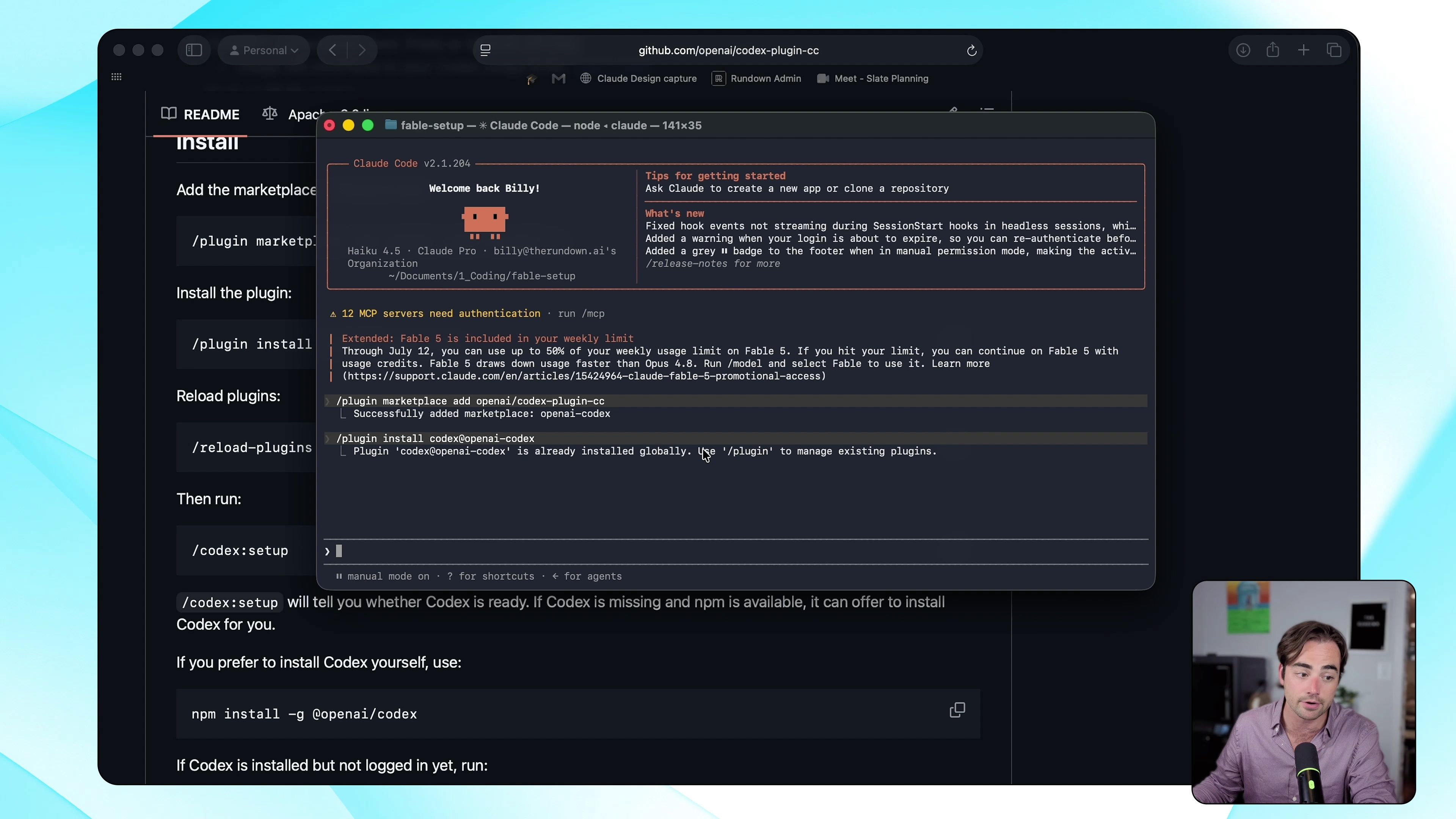
The Rundown: In this guide, you will learn how to stop burning Fable tokens on grunt work — setting it up as the planner and reviewer, then sending browsing, coding, and research to Codex or a lower-cost Claude model.
Step-by-step:
Open the Claude app, install updates, and check weekly Fable limits. Then, in Claude Code, install the Codex plugin for Claude Code and start a session
Tell Fable to use its Codex skills to save on tokens, sending coding, browsing, and extraction to Codex, and keeping planning and final review with Fable
No Codex plan? Launch Claude Code in your terminal, choose a lower-cost worker with /model, then use /advisor skill to set Fable as the advisor
Pro tip: Keep Fable out of routine retries. Use it for the plan, risky calls, and final review; let the worker handle the token-heavy loop.
Get the resources, prompts, and full step-by-step video guide here.
PRESENTED BY IBM
🤖 Can your coding agent be Bob?

The Rundown: IBM Bob is an AI coding partner that helps enterprise teams coordinate planning, coding, testing and validation across the software development lifecycle. Designed to help accelerate delivery while supporting governance, visibility and control.
Key capabilities include:
Coordinates workflows across the SDLC
Provides governance controls for enterprise teams
Helps accelerate planning, coding and validation
META
🚀 Meta continues shipping with Muse Spark 1.1
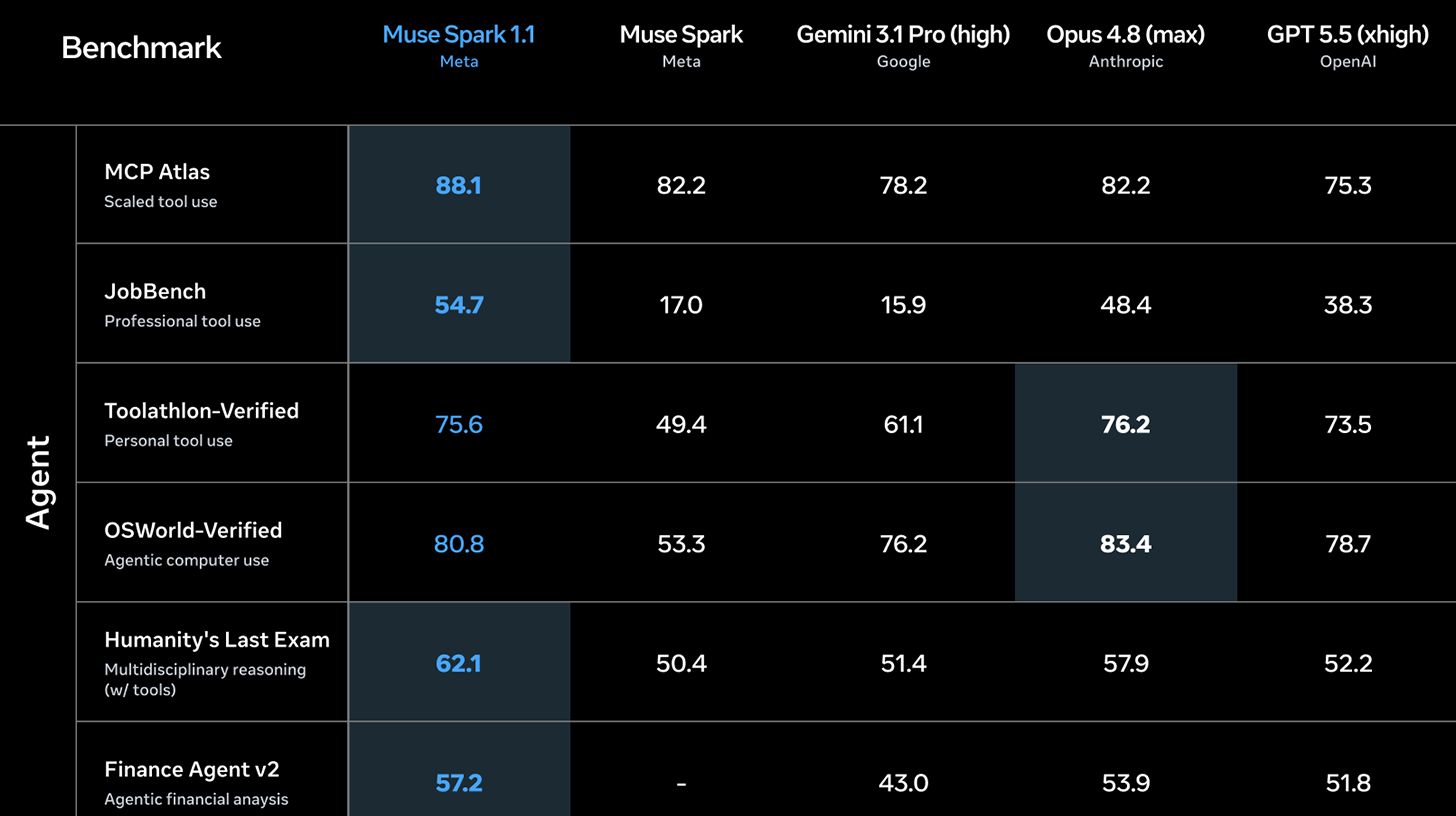
Image source: Midjourney
The Rundown: Meta released Muse Spark 1.1 for agent-style tasks, computer use, and long sessions, and put it behind the company's paid API, with Mark Zuckerberg promising pricing that undercuts what he calls "very extreme" margins at rival labs.
The details:
The release moves Spark beyond Meta's own apps, with API access priced at $1.25/$4.25 per million input/output tokens, about a quarter of top rivals.
Zuckerberg called 1.1 "state-of-the-art or very close to it" on agent reasoning and tool use, leading Opus 4.8 and GPT-5.5 on several related benchmarks.
1.1 excels at computer use tasks, able to split jobs across parallel subagents, operate across apps, and use its 1M context window for long jobs.
API access begins in public preview with $20 in credits, with Meta still training its heavier ‘Watermelon’ successor for release later this year.
Why it matters: There are a lot of parallels between Meta and SpaceXAI right now. Both Zuck and Elon had to tear down initial lackluster efforts, only to surprise with extremely capable new models that crush on cost and efficiency. The next batch of larger releases will show how far they can continue scaling to keep up with the frontier.
QUICK HITS
🛠️ Trending AI Tools
🌞 GPT-5.6 Sol - OpenAI's new flagship model release
⚡ Muse Spark 1.1 - Meta's agentic AI with 1M-token memory, computer use
🎨 Reve 2.1 - Upgraded native-4K image model with element-level editing
💼 ChatGPT Work - OpenAI's Codex-powered agent for everyday work
📰 Everything else in AI today
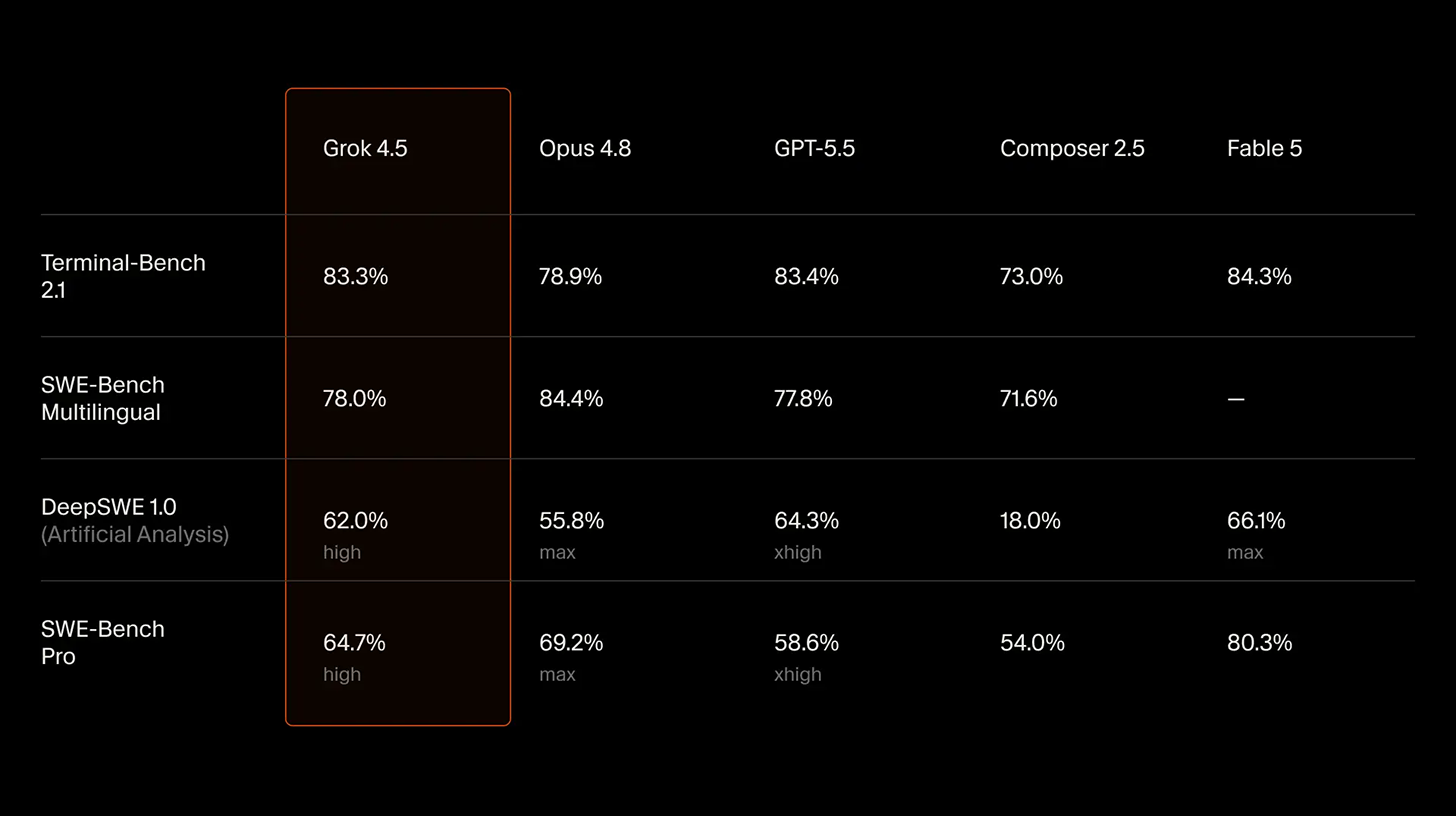
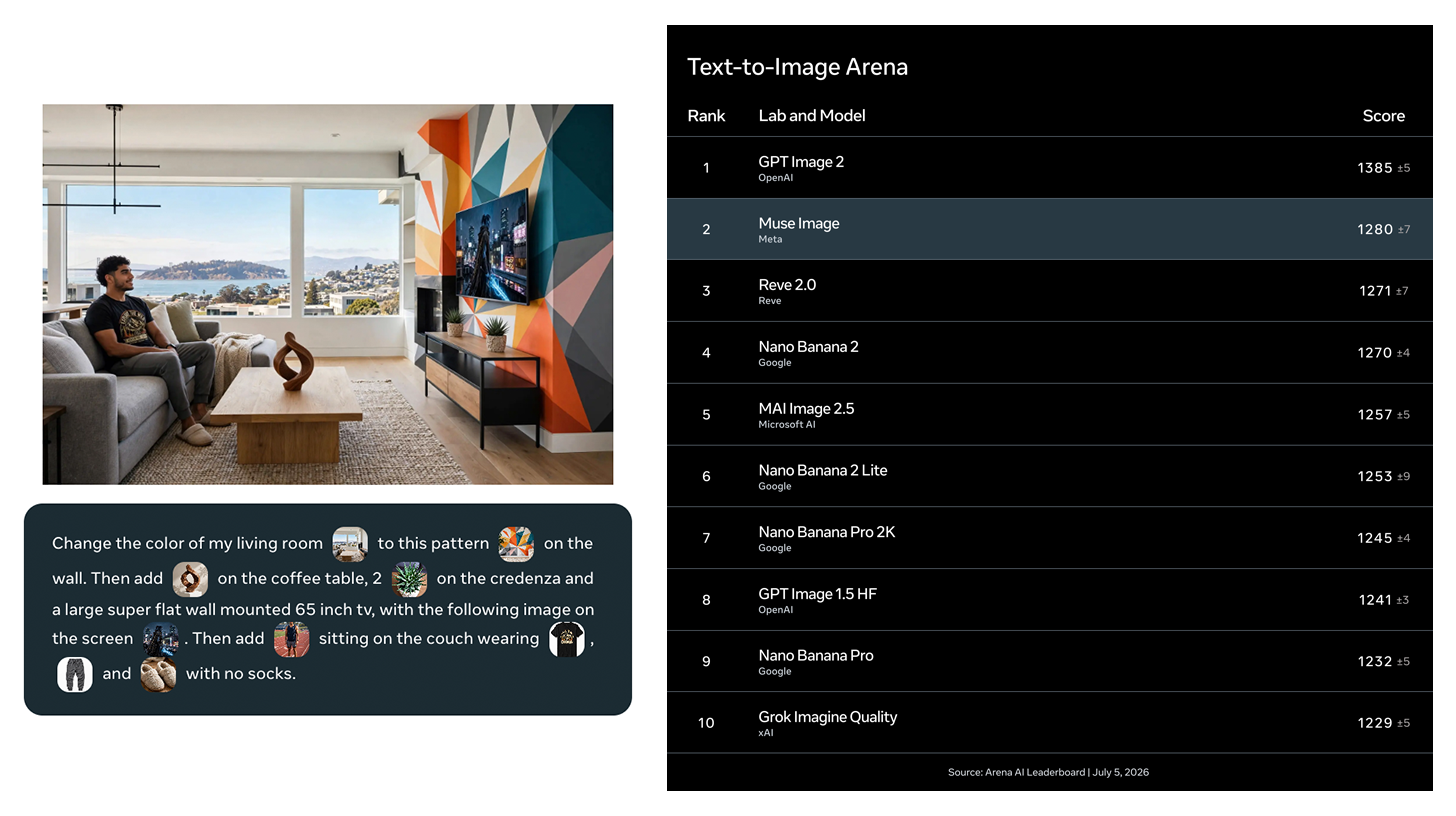
Reve rolled out version 2.1 of its 4K image model, retaking the No. 2 overall spot on Arena while training on under a tenth of rivals' compute.
OpenAI published new research retracting its endorsement of the coding benchmark SWE-Bench Pro, finding that nearly a third of the benchmark's tasks had issues.
Embodied AI lab RobbyAnt released LingBot-World 2, a new world model that generates every frame in real time without a 3D engine.
Meta is reportedly starting manufacturing of its in-house 'Iris' AI chip in September, with the company also expected to double its computing capacity to 14 GW in 2027.
Anthropic introduced a ‘Reflections’ dashboard to help users analyze how they use Claude, with suggested skill creation and usage habits based on personal data.
COMMUNITY
🤝 Community AI workflows
Every newsletter, we showcase how a reader is using AI to work smarter, save time, or make life easier.
Today’s workflow comes from reader Brian H. in Ohio:
"I am a commercial loan portfolio manager for a community bank. I used Claude to help me create a 'Commercial Mortgage Identification Prompt' that takes large files of public recorded mortgage data exported from local County Recorder's Office websites, extracts all the business/commercial mortgage filings, and generates an Excel file. It then searches the web for what it calls contact enrichment information — business principals' names, contact emails, and phone numbers — ranks the prospects in tiers of priority based on criteria I gave it, and color codes them accordingly.
It also produces an executive summary tab listing the 20 largest grantors by dollar volume, plus a separate tab with suggestions for targeting the prospects, including which ones to start with and timing.”
How do you use AI? Tell us here.
🎓 Highlights: News, Guides & Events
Read our last AI newsletter: SpaceXAI, Cursor release strongest Grok yet
Read our last Tech newsletter: Microsoft axes nearly 5K jobs
Read our last Robotics newsletter: Ex-Tesla scientist’s faceless humanoid
Today’s AI tool guide: Use 60% less Fable tokens with an orchestrator
RSVP to next workshop on July 22: No-code product building
See you soon,
Rowan, Zach, Shubham, and Jennifer — the humans behind The Rundown


Stay Ahead on AI.
Join 2,000,000+ readers getting bite-size AI news updates straight to their inbox every morning with The Rundown AI newsletter. It's 100% free.