Claude comes for the design stack
PLUS: Run your own free coding agent on your laptop

Zach Mink
April 20, 2026
Read Online | Sign Up | Advertise

Good morning, AI enthusiasts. Every few weeks, an Anthropic launch seems to rattle a new industry. This time it's design.
Claude Design turns prompts, screenshots, and codebases into shippable prototypes — the latest layer of the software stack Anthropic is quietly pulling under one roof.
In today’s AI rundown:
Anthropic rolls out Claude Design
The Rundown Roundtable: Our AI use cases
Run a free coding agent on your laptop
Three OpenAI leaders exit amid reshuffle
4 new AI tools, community workflows, and more
LATEST DEVELOPMENTS
ANTHROPIC
🎨 Anthropic rolls out Claude Design
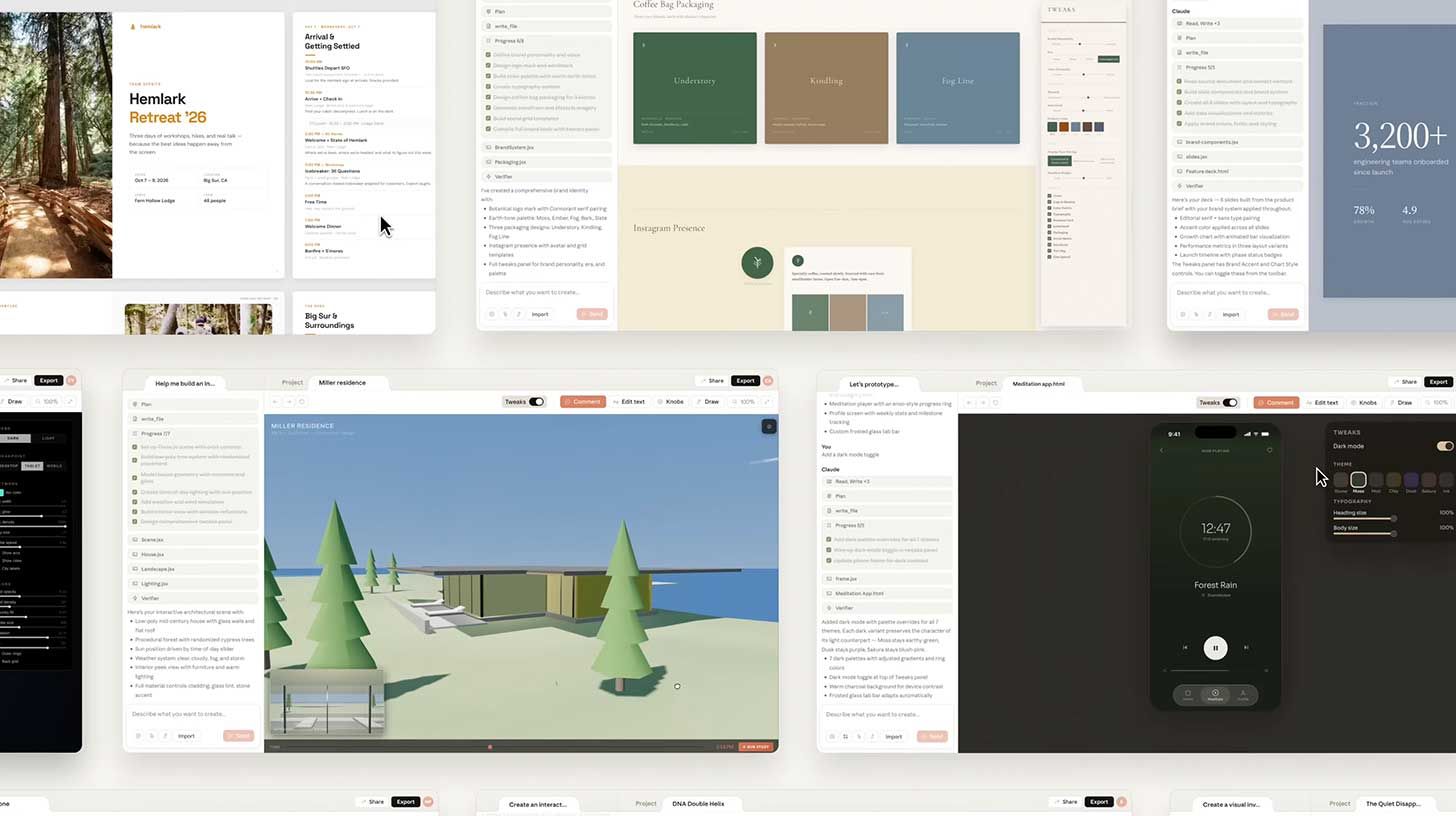
Image source: Anthropic
The Rundown: Anthropic just launched Claude Design, a new tool that turns prompts, screenshots, and codebases into interactive prototypes, slide decks, and marketing collateral powered by the company’s new Opus 4.7 vision model.
The details:
Claude can read users’ codebases and existing mockups during setup to build a brand system that auto-applies to every future project.
Users can refine designs through chat, inline comments, direct edits, or custom sliders Claude generates for spacing, color, and layout.
Finished work can be handed off to Claude Code as a build-ready bundle or exported to Canva, PPTX, PDF, or standalone HTML for further editing.
Anthropic CPO Mike Krieger resigned from Figma's board on April 14, three days before launch, amid rumors of a competing product from the company.
Why it matters: Every few weeks, an Anthropic launch shakes a new industry — and this time it is design. With the new tool, Anthropic is closing the loop from first sketch to shipped product inside a single ecosystem. Add in Cowork, browser agents, and office integrations, and every layer of the software stack is moving under one umbrella.
TOGETHER WITH SONAR
💡Redefine the “Shift Left”

The Rundown: The speed of autonomous agents requires a transition from reactive testing to proactive engineering. Sonar’s CEO has coined the “Agent Centric Development Cycle” framework that challenges how verification works in an agentic world — by embedding it at every stage of the engineering process, inside each reasoning cycle, and at sandbox exit.
This workflow includes:
Guiding agents with project-specific context
Generating code with LLM-based tools within your architecture and standards
Verifying code integrity inside the sandbox - automatically, at agent speed
Solving bugs and vulnerabilities autonomously
THE RUNDOWN ROUNDTABLE
💡 The Rundown Roundtable: Our AI use cases
Image source: Ideogram / The Rundown
The Rundown: The Rundown Roundtable is a weekly feature where we poll members of The Rundown staff about how we use AI in our work and daily lives.
Zach, AI Writer: My father takes a ton of different medications every day for various conditions, and also sees a lot of different doctors. I was concerned about how they were all interacting with each other and if the doctors at different practices were even getting the full picture.
I gave Claude a comprehensive list of all of the drugs and his medical history, and asked for a deep research report about potential interactions. Claude provided a thorough list of issues to bring up to his doctors about dangerous interactions and situations that might be getting missed, referencing up-to-date journals, guidelines, and research that would’ve taken me days.
It also laid everything out in an easy-to-read format, and provided specific instructions on who to contact and what specific questions to ask — helping turn a potentially stressful and disjointed doctor conversation into a strong action plan.
Joey, Head of Partnerships: I have Claude connected to all my communication platforms (Slack, Notion, calendars, Granola, etc) and pulls a morning brief for me each day. I've curated so it provides me an interactive page each day with call prep, priority tasks, recommendations of tools to use to solve XYZ, recap of activities overnight, etc.
AI TRAINING
🤓 Run your own free coding agent on your laptop
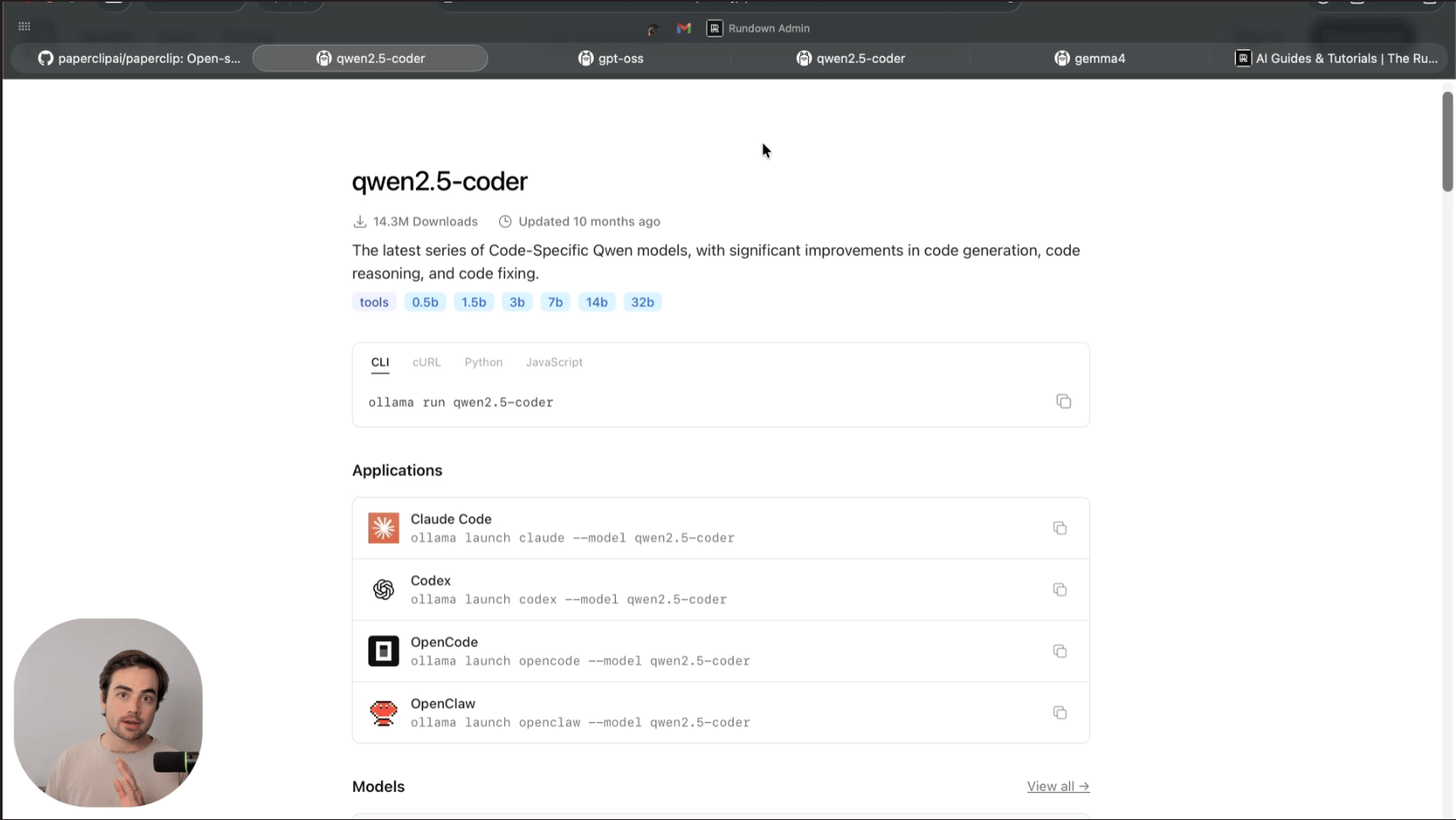
The Rundown: In this guide, learn how to download a coding LLM to your laptop using Ollama. You will be able to run it for free inside popular coding tools like Claude Code or Codex.
Step-by-step:
Screenshot your PC hardware specs, drop them into Claude or ChatGPT, and ask which Ollama coder model you can run
Browse coder models, choose the best-suited one, and grab its launch command from Ollama. Example: “ollama launch claude--model gemma4:e4b”
Open a terminal in your project folder, paste the command, download, and wait. Once done, Ollama drops you into Claude Code, pointed at the local model
Go to Ollama > Settings > Context. Bump the default 4K to 32K or higher. If Claude Code refuses tasks or drops tool calls, try OpenCode the same way
Pro tip: Local AI is not a replacement for paid Claude Code/Codex. Treat it as practice or basic debugging. You can wire it as a cheap subagent under the paid Claude Code.
PRESENTED BY SLACK FROM SALESFORCE
📅 Make meetings optional with Slack
The Rundown: Want to make more progress with fewer meetings? Find out how Slack can help your team move faster and keep calendars clear.
In this guide, you'll discover:
How to replace status meetings with AI-generated summaries and recaps
Use huddles for quick, searchable conversations instead of scheduled calls
Record and share async clips so teammates can review on their own schedule
Read the full guide and reclaim your calendar.
OPENAI
🚪 Three OpenAI leaders exit as reshuffle continues

Image source: LinkedIn / X / X
The Rundown: OpenAI lost three senior execs in a day, with ex-CPO Kevin Weil, Sora lead Bill Peebles, and enterprise apps chief Srinivas Narayanan departing — capping a month of leadership changes as the company kills ‘side quests’ for a narrower focus.
The details:
Former CPO Weil led OpenAI for Science, which is being ‘decentralized’ into other teams, with the Prism app for scientists also being woven into Codex.
Peebles led Sora until OAI killed the video app last month over cost, calling its development the “honor and adventure of a lifetime”.
Narayanan ran OAI's enterprise apps for three years after 13 at Facebook, and said on X he's heading to India to care for aging parents.
Sam Altman wrote in a recent blog that OpenAI is "now a major platform, not a scrappy startup" and needs to "operate in a more predictable way."
Why it matters: Last month, we covered OAI scrapping "side quests" to catch Anthropic, and a month in, the changes are certainly visible. Whether these departures are actually a result of that shake-up or just personal movements, they are big ones — particularly Weil, who has been the face of science-related efforts at the company.
QUICK HITS
🛠️ Trending AI Tools
🎨 Claude Design - Anthropic’s new tool for creating polished visual work
🚀 Codex - OAI's coding agent, now with computer use, in-app browser, more
🤖 Claude Opus 4.7 - Anthropic’s top AI with advanced agentic coding
🖥️ Perplexity Personal Computer - Agent orchestrator for files, apps, more
📰 Everything else in AI today
Anthropic CEO Dario Amodei told the Financial Times that he believes open-source and Chinese models will be able to reach Mythos capabilities in just 6-12 months.
An AI artist named Inga Rose hit No. 1 on iTunes’ global charts with the single “Celebrate Me”, with the music created with Suno and the lyrics written by a human.
Google is reportedly working with Marvell to help design a custom TPU and memory processing unit for AI inference, aiming to cut its longtime reliance on Broadcom.
Nous Research introduced Tool Gateway, a subscription that powers its Hermes Agent without requiring multiple APIs, amid surging usage of the agentic platform.
Salesforce launched Headless 360, exposing its full platform as MCP tools, APIs, and CLI commands so coding agents can act on customer data.
Vercel disclosed a breach that began with a hacked AI tool connected to Google accounts, impacting a “limited subset” of customers and prompting an investigation.
COMMUNITY
🤝 Community AI workflows
Every newsletter, we showcase how a reader is using AI to work smarter, save time, or make life easier.
Today’s workflow comes from reader David P. in New Zealand:
"I have a small recording studio that focuses on acoustic folk and roots music. I used ChatGPT to write a plug-in-style app based on Cubase plugins. I can run my mix through the app, and it can identify each instrument and make EQ and editing suggestions for each that will bring the track into a mastering-ready state. It creates waveforms and tables to present the information in an easy-to-read graphic UI.
I then load a reference track, and it will advise what EQ is required to essentially match the reference track's vibe. This has given me great technical information about each recording so I can manually make changes to the mix to suit what I want to achieve, but ensure it is technically excellent."
How do you use AI? Tell us here.
🎓 Highlights: News, Guides & Events
Read our last AI newsletter: OpenAI’s superapp hiding inside Codex
Read our last Tech newsletter: SpaceX buys up a lot of Cybertrucks
Read our last Robotics newsletter: Uber’s $10B robotaxi pivot
Today’s AI tool guide: Run your own free coding agent on your laptop
See you soon,
Rowan, Joey, Zach, Shubham, and Jennifer — the humans behind The Rundown



Stay Ahead on AI.
Join 2,000,000+ readers getting bite-size AI news updates straight to their inbox every morning with The Rundown AI newsletter. It's 100% free.