Get the latest AI news, understand why it matters, and learn how to apply it in your work — all in just 5 minutes a day. Join over 2,000,000+ subscribers.

Zuck vs. Instagram addiction
Read Online | Sign Up | Advertise

Good morning, tech enthusiasts. In a first-of-its-kind trial in Los Angeles, Mark Zuckerberg took the stand to defend against claims that Instagram was engineered like a ‘digital casino’ to hook kids.
With emails showing Zuck personally overruled child-safety and mental-health experts, the verdict could set the tone for thousands of similar lawsuits waiting in the wings.
In today’s tech rundown:
Zuck defends Instagram in landmark trial
Microsoft turns glass into a 10K-year hard drive
Feds charge 3 engineers in Google chip theft
Stanford’s new do-it-all respiratory vaccine
Quick hits on other tech news
LATEST DEVELOPMENTS
META
🎰 Zuck defends Instagram in landmark trial

Image source: Ideogram / The Rundown
The Rundown: Mark Zuckerberg took the stand to defend Meta in a landmark LA jury trial over social media addiction, rejecting claims that Instagram was deliberately engineered to hook teens and harm their mental health. Plaintiffs argue otherwise.
The details:
The case centers on a 20-year-old woman who says compulsive use of Instagram and YouTube as a child fueled anxiety and suicidal depression.
Plaintiffs argue Instagram and YouTube were built as “digital casinos,” using addictive features like filters and infinite scroll to maximize time-on-platform.
Zuck maintained that Instagram offers positive value and that the plaintiff’s struggles stem from broader life problems, not product design.
Meta emails show Zuck personally overruled at least 18 mental health and child-safety experts who urged the company to curb beauty filters.
Why it matters: This is the first jury trial to test the wave of social media addiction lawsuits. Attorneys claim Meta and YouTube engineered features to hook “teens and tweens,” while shelving internal warnings about risks. Meanwhile, governments are already moving to restrict or ban social media access for under-16s.
MICROSOFT
💿 Microsoft turns glass into a 10K-year hard drive

Image source: Microsoft Project Silica
The Rundown: Microsoft has etched palm-sized slabs of ordinary glass into data “books” capable of storing 4.8 terabytes — the equivalent of roughly 2M books or 200 4K movies — and projecting their survival for at least 10K years.
The details:
The glass withstands heat, radiation, water, and demagnetization, making it virtually indestructible by the standards of conventional storage.
Inside Microsoft’s prototype archive, autonomous robot shuttles climb shelving units, retrieve the requested glass slab, and feed it to decoding systems.
The write speed, currently a few megabytes per second, targets potential customers including cloud providers, national archives, and media companies.
Because the glass “books” need no power, they could shrink archive footprints and dramatically cut the energy and hardware cost of storing cold data.
Why it matters: Project Silica could offer a way to lock humanity’s critical digital records into glass that outlasts every hard drive and cloud data center we own today. And unlike more exotic ideas such as DNA storage or 5D crystals, it builds on a familiar material — putting it closer to real-world deployment than most of its competitors.
🧐 Feds charge 3 engineers in Google chip theft
Image source: Unsplash
The Rundown: U.S. prosecutors indicted three Silicon Valley engineers — including two former Google employees — for allegedly stealing hundreds of confidential files on Pixel processors and other proprietary chip designs.
The details:
A federal grand jury hit the trio, two Iranian-born sisters and one of their husbands, with 14 felony counts.
Prosecutors allege the sisters, while employed at Google, secretly copied hundreds of restricted files, including design data for the Tensor chip.
The trio allegedly moved the stolen documents to third-party messaging channels and personal devices, then on to contacts and storage in Iran.
All three were arrested in San Jose and made initial court appearances, and if convicted, could face prison sentences of up to 20 years.
Why it matters: The case lands just weeks after a separate conviction of another former Google engineer for stealing AI trade secrets, showing how aggressively U.S. authorities are now pursuing alleged tech espionage tied to strategic chip and AI technologies.
STANFORD
🦠 Stanford’s do-it-all respiratory vaccine

Image source: Ideogram / The Rundown
The Rundown: Stanford researchers just developed an experimental intranasal vaccine that, in mice, defends the lungs for months against a range of viruses, bacteria, and even allergens — a potential leap toward a single shot that does it all.
The details:
Three doses of the vaccine, called GLA‑3M‑052‑LS+OVA, dramatically cut coronavirus levels in mouse lungs.
The vaccine’s broad coverage spans SARS‑CoV‑2 and related coronaviruses to drug-resistant hospital superbugs.
The secret is in the formula: a triple-adjuvant platform designed to rewire how the immune system responds at the source.
If it clears human trials, the technology could collapse today’s lineup of separate flu, COVID, and RSV shots into one annual nasal spray.
Why it matters: A single nasal spray guarding against the full spectrum of respiratory threats would fundamentally change vaccination and pandemic preparedness. Rather than endlessly reformulating shots to chase evolving strains, this platform aims to prime the immune system to handle whatever pathogen comes next.
QUICK HITS
📰 Everything else in tech today
Amazon just ended Walmart’s 13-year run to claim the No. 1 spot on the Fortune 500 for the first time.
SoftBank plans to spend $33B on a 9.2‑gigawatt natural‑gas power plant on the Ohio‑Kentucky border, potentially to feed data centers tied to its OpenAI partnership.
SpaceX Falcon 9 rocket reentry from a discarded upper stage left a plume of lithium and other metals in the Earth’s upper atmosphere, a new study found.
Tesla rolled out a new “entry” Cybertruck — a dual‑motor all‑wheel‑drive model starting around $60K — while cutting the high‑end Cyberbeast’s price by $15K.
Ford is developing a $30K midsize electric pickup for 2027, using an F1‑style skunkworks team and bounties to strip out weight, parts, and cost.
A new report finds that almost $1B in U.S. government research funding over the past decade flowed into projects involving Chinese labs, Bloomberg reported.
Thrive Capital closed a new $10B fund — its largest ever and nearly twice the size of its last — aimed at investments in companies such as OpenAI, Stripe, and SpaceX.
Rivian launched a native Apple Watch app that lets owners use their wrist as a digital key to lock or unlock the vehicle, open windows, and adjust cabin temperature.
Meta will shut down its standalone Messenger website in April and redirect users to Facebook’s messages page or the mobile app instead.
COMMUNITY
🎓 Highlights: News, Guides & Events
Read our last AI newsletter: The handshake refusal heard around AI world
Read our last Tech newsletter: Apple’s ‘2026 product blitz’
Read our last Robotics newsletter: Waymo faces heat over remote support
Today’s AI tool guide: Write viral YouTube scripts with NotebookLM
RSVP to our next workshop on Feb. 25: Agentic Workflows Bootcamp pt. 3
See you soon,
Rowan, Joey, Zach, Shubham, and Jennifer — The Rundown’s editorial team

The handshake refusal heard around the AI world
Read Online | Sign Up | Advertise

Good morning, AI enthusiasts. India rolled out the red carpet for the world's AI leaders this week, hoping for a show of unity. What it got instead was Sam Altman and Dario Amodei turning a photo op into an awkward viral moment.
The duo’s hand-hold dodge is peak tech-world absurdity, but underneath the meme is a rivalry between two of the most powerful AI labs that shows no sign of slowing down.
In today’s AI rundown:
The handshake refusal heard around the AI world
Google's Gemini 3.1 Pro doubles up on reasoning
Write viral YouTube scripts with NotebookLM
Corporate giant Accenture ties AI usage to promotions
4 new AI tools, community workflows, and more
LATEST DEVELOPMENTS
OPENAI & ANTHROPIC
🤝 The handshake refusal heard around the AI world

Image source: India AI Impact Summit
The Rundown: OpenAI CEO Sam Altman and Anthropic CEO Dario Amodei seemingly refused to hold hands during a group photo with Indian PM Narendra Modi at the India AI Impact Summit — a viral moment symbolizing the clash between the two AI giants.
The details:
Modi pulled tech leaders on stage for a hand-linked chain, lifting arms with Altman and Pichai — with Altman and Amodei awkwardly raising fists instead.
Altman later downplayed the moment, telling reporters he was "confused" when Modi grabbed his hand and he "wasn't sure what was happening.”
The moment follows Anthropic's Super Bowl ad campaign mocking OAI's decision to put ads in ChatGPT, which Altman called "clearly dishonest”.
OAI also hired the creator of AI agent OpenClaw last week, a potential source of contention given Anthropic’s issues with the original OpenClawd name.
Why it matters: If you’ve never seen the series ‘Silicon Valley’, it’s worth a watch to show how prescient it was on the ridiculousness of the tech world. While the moment makes for a viral meme, it also shows the state of affairs between top AI labs — far from the collaboration hoped for from leaders of the most important tech of our time.
TOGETHER WITH AIRIA
💼 Redefine enterprise AI with Airia
The Rundown: Airia delivers unified AI security, orchestration, and governance built for enterprises accelerating AI adoption. Deploy agents fast while maintaining control, bridging the gap between innovation and compliance.
Dive deeper with Airia’s 2026 State of AI Report, which reveals:
Key insights on enterprise AI adoption trends
Critical challenges and emerging opportunities ahead
A comprehensive guide for navigating AI transformation
🧠 Google's Gemini 3.1 Pro doubles up on reasoning
Image source: Google
The Rundown: Google just released Gemini 3.1 Pro, bringing a massive reasoning upgrade, benchmark-topping performance, and overall SOTA capabilities while keeping API pricing identical to its predecessor.
The details:
3.1 Pro scored 77.1% on the ARC-AGI-2 reasoning benchmark, up from 31.1% on Gemini 3 Pro and passing both Opus 4.6 (68.8%) and GPT-5.2 (52.9%).
The model also takes the top spot on benchmarks for science, competitive coding, MCP use, agentic search, and more.
Google positions 3.1 as the core intelligence behind last week's big Deep Think update, now available across the Gemini app, NotebookLM, and dev tools.
Pricing is identical to 3 Pro with the same 1M token context window, coming in cheaper than frontier model options from Anthropic and OpenAI.
Why it matters: After letting Anthropic and OpenAI control the headlines in 2026 so far, Google has answered back in a big way over the past few weeks — first with Deep Think and now sliding back into the ‘world’s top model’ conversation with an impressive 3.1 Pro launch. We expect a counter answer from OpenAI sooner rather than later.
AI TRAINING
✏️ Write viral YouTube scripts with NotebookLM
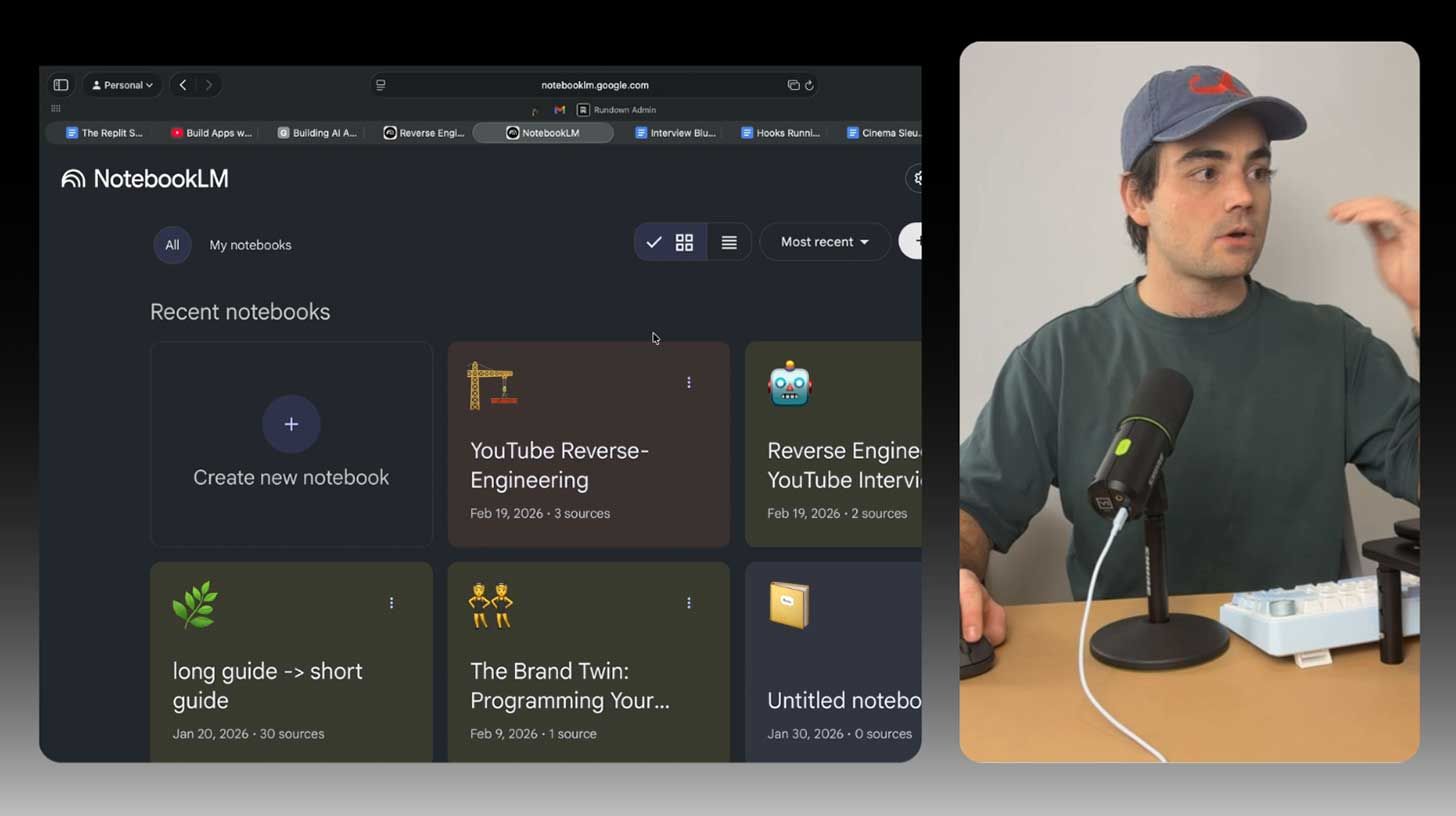
The Rundown: In this guide, you will learn to use NotebookLM to “watch” YouTube videos for you, then turn them into ideas and scripts for your own videos.
Step-by-step:
Find a long-form YouTube video that you like the structure of. Go to NotebookLM > Create new > Add sources > Websites and paste the link in
Once NotebookLM analyzes it, make sure it’s selected, and prompt: “Reverse engineer the structure of this video. Give me a video outline and 4 video concepts with the same structure for my brand, [brand]”
Select the video concept you like best and instruct GoogleLM to generate a script for that idea. Click Save to note > click the three dots > Export to Docs
Now you have a script in Google Docs that’s ready to record
Pro tip: You can save your best scripts as sources to give NotebookLM a better idea of what you like.
PRESENTED BY FIDDLER
🔎 The ultimate agentic observability guide
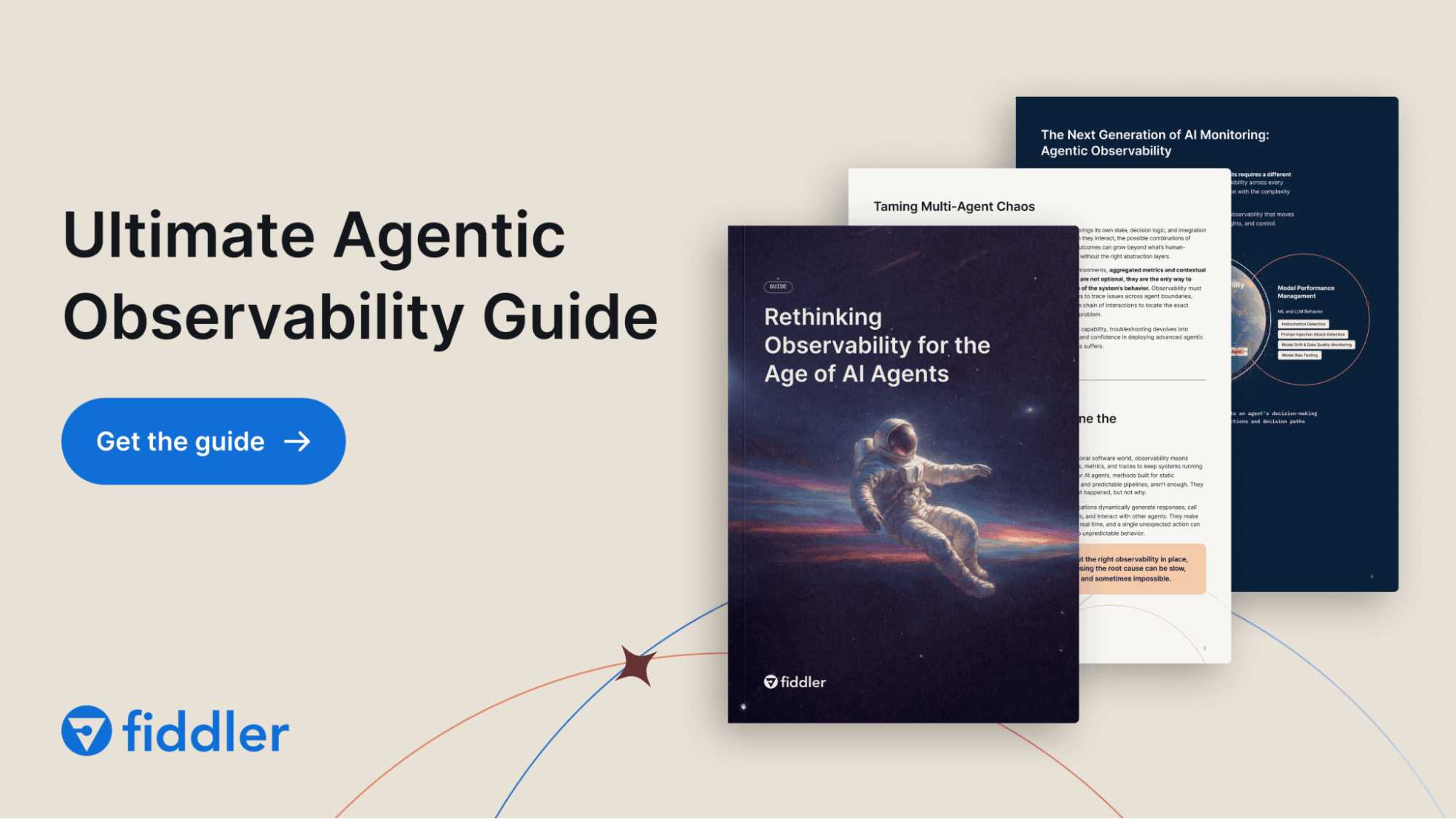
The Rundown: Fiddler AI’s Agentic Observability Guide breaks down what’s needed to monitor multi-agent systems so they succeed in production.
The guide covers:
Tracing AI failures across workflows
Leveraging the latest monitoring tools
Pinpointing the root cause of agent behavior
And more
Download the guide today and learn how to build better AI agent.
AI AT WORK
👀 Corporate giant Accenture ties AI usage to promotions

Image source: Lovart / The Rundown
The Rundown: Consulting giant Accenture is now reportedly monitoring weekly AI tool usage for senior employees and tying adoption directly to leadership promotions, in an attempt to bring veteran staff on board with the tech’s rising use in the workplace.
The details:
Three consulting execs told FT that getting senior partners to adopt AI is far harder than with junior staff, a firmwide seniority problem across the industry.
Associate directors aiming for promotions will now have AI tool logins tracked weekly, with usage flagged as a "visible input" to leadership reviews.
Accenture says 550K+ of its 780K staff have gone through AI training, though employees called the AI tools used in-house “broken slop generators”.
CEO Julie Sweet made headlines last year when she said on an earnings call that the firm would “exit” staff who don’t reskill for AI’s rise.
Why it matters: There is some irony in the senior employees being unwilling to adapt to the AI boom at the same time the tech is eating entry-level positions. But the wave of job transformation is here, and not learning AI will be a far more rapid equivalent of resisting the internet when it comes to competing and succeeding at work.
QUICK HITS
🛠️ Trending AI Tools
🤖 Scrunch - See how AI interprets your site, run a free audit, and unlock the new way to reach customers*
🧠 Gemini 3.1 Pro - Google's flagship model with SOTA reasoning gains
📸 Pomelli - Google’s tool to turn product shots into marketing assets
🚀 Claude Sonnet 4.6 - Anthropic’s mid-tier AI, rivaling Opus at 1/5 the cost
*Sponsored Listing
📰 Everything else in AI today
OpenAI is reportedly nearing a record $100B+ funding round backed by Amazon, SoftBank, Nvidia, and Microsoft, potentially lifting its valuation to over $850B.
Reddit is piloting an AI-powered shopping feature that converts community product recommendations into buyable carousels with pricing and retailer links.
ElevenLabs obtained the first-ever insurance policy covering AI voice agents, with its platform earning a certification that lets enterprises insure AI actions.
AMC Theatres is refusing to screen an AI-created film during its previews, pulling the contest-winning short from its preview lineup before the planned two-week run.
AI industrial startup Emanate launched out of stealth with autonomous revenue agents targeting the U.S.’ $5T industrial supply chain.
COMMUNITY
🤝 Community AI workflows
Every newsletter, we showcase how a reader is using AI to work smarter, save time, or make life easier.
Today’s workflow comes from reader Nic C. in Edinburgh, Scotland:
"I am a teacher at an excellent online school. We use Canvas to deliver our curriculum. I have started to use Gemini to write code for canvas pages so that I can write a lesson in slides, share that with Gemini, and then let the AI build the HTML page.
What is really helpful is that the AI can take info from the presentation and make sure that I am producing a page that ticks all of the school’s prerequisites for Canvas pages or assignments based on the school rubrics."
How do you use AI? Tell us here.
🎓 Highlights: News, Guides & Events
Read our last AI newsletter: Google brings AI music to the masses
Read our last Tech newsletter: Apple’s ‘2026 product blitz’
Read our last Robotics newsletter: Waymo faces heat over remote support
Today’s AI tool guide: Write viral YouTube scripts with NotebookLM
RSVP to our next workshop on Feb. 25: Agentic Workflows Bootcamp pt. 3
See you soon,
Rowan, Joey, Zach, Shubham, and Jennifer — the humans behind The Rundown


Google brings AI music to the masses
Read Online | Sign Up | Advertise

Good morning, AI enthusiasts. AI music generators have already been producing tracks good enough to fool casual listeners — but you had to know where to find them.
But with Google’s integration of its new Lyria 3 model directly into Gemini, AI music creation just became accessible to one of the largest consumer AI audiences on earth.
P.S. We love to see all the different ways our readers are using AI. Share your own AI use case for a chance to appear in the Community AI Workflows section below!
In today’s AI rundown:
Google brings AI music creation into Gemini
OpenAI poaches Instagram's Hollywood dealmaker
Turn product photos into scroll-stopping videos
Tavus’ new AI avatars actually read the room
4 new AI tools, community workflows, and more
LATEST DEVELOPMENTS
🎵 Google brings AI music creation into Gemini

Image source: Google
The Rundown: Google just rolled out Lyria 3 in Gemini, the company’s new AI music generation model — letting users turn a text prompt or photo into customized, 30-second tracks with auto-generated lyrics and cover art.
The details:
The model handles everything from genre and tempo to vocal style and lyrics on its own, with users able to feed text, photos, or videos as a starting point.
DeepMind has been working on Lyria since 2023, but this marks the first time the tech is reaching the main consumer audience through the Gemini app.
Every track gets tagged with Google's SynthID watermark, with Gemini also allowing users to upload any audio file to check whether it was created with AI.
YouTube creators are also getting access to Lyria 3 through Dream Track for Shorts, enabling easily customized audio tracks to accompany video posts.
Why it matters: AI music platforms like Suno and Udio have quietly gotten scary good, producing full tracks that can fool most listeners — but are still far from ‘mainstream’. Embedding Lyria inside Gemini is a different beast, putting AI music creation a prompt away for millions of users who've likely never even heard of a dedicated music model.
TOGETHER WITH VISA
👋 Meet Visa Intelligent Commerce

The Rundown: The groundbreaking framework that enables AI agents to find and buy. Together with AI industry leaders, Visa Intelligent Commerce provides the tools and safeguards for secure agentic payments.
Visa Intelligent Commerce APIs Offer:
Tokenized credentials for enhanced payment security
Spend controls and secure user authentication
Controlled GenAI-assisted shopping on your terms
OPENAI
🎬 OpenAI poaches Instagram's Hollywood dealmaker

Image source: Lovart / The Rundown
The Rundown: OpenAI hired Meta's longtime celebrity partnerships chief Charles Porch as its VP of global creative partnerships, according to Vanity Fair — a new role aimed at bridging the gap between the AI giant and a distrusting entertainment industry.
The details:
Porch spent 15+ years as the go-to exec for getting A-listers onto IG, handling viral moments like Beyonce’s 2013 album drop and onboarding the Pope.
The hire follows OAI's $1B Disney deal in December, which opened its Sora video platform up to animated characters from Marvel, Pixar, and Star Wars.
Porch says his first move will be a "listening tour" across creative communities this spring, reporting to OAI's applications CEO Fidji Simo.
Why it matters: While we’ve seen celebs move into platforms like ElevenLabs, the broader Hollywood sentiment towards AI has been frigid at best. Porch's deep rolodex and reputation as a translator between tech and talent make him the kind of person who can help gain trust in rooms with names that could shift sentiment for the industry.
AI TRAINING
📸 Turn product photos into scroll-stopping videos
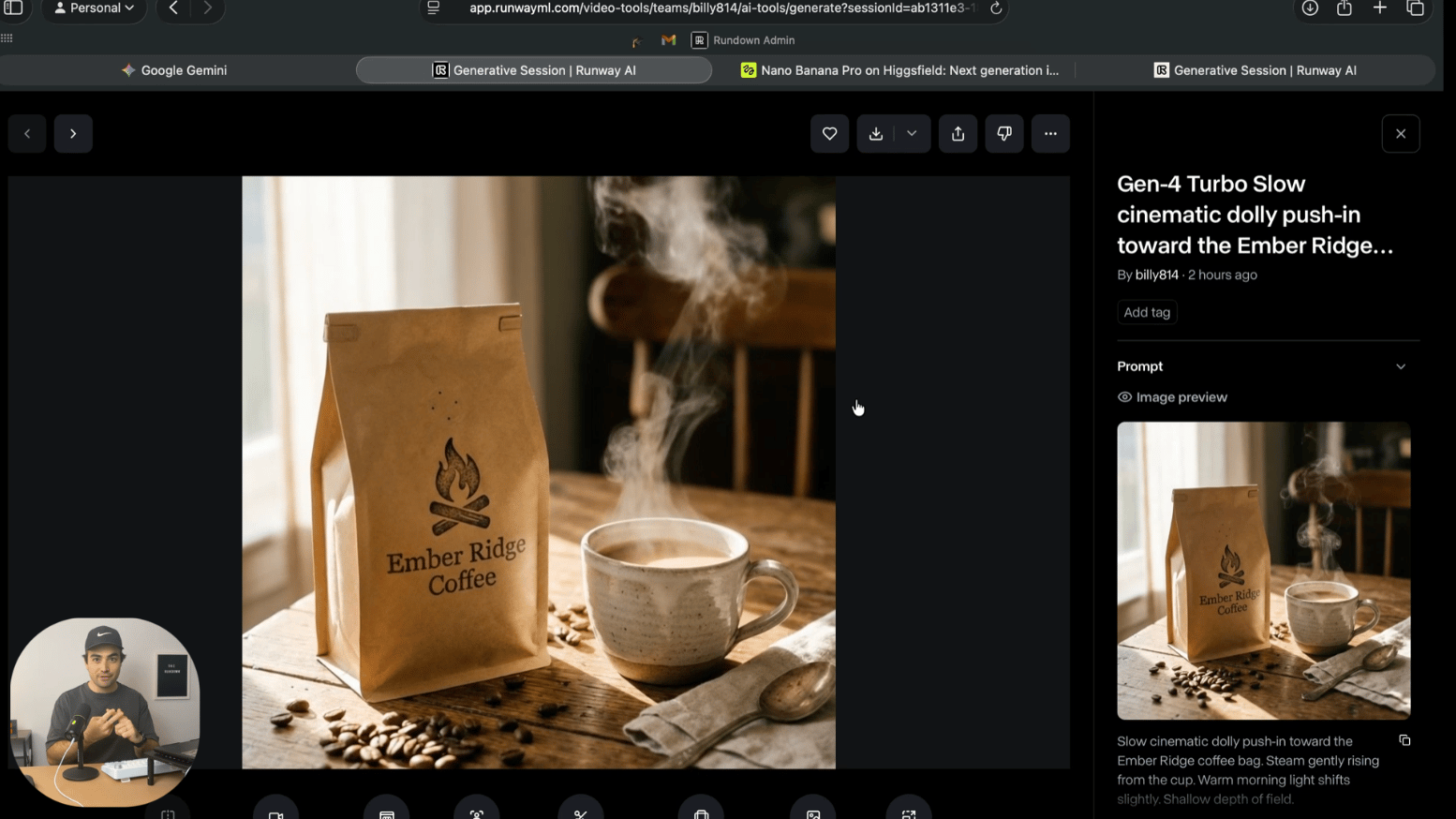
The Rundown: In this guide, you'll learn how to turn a product photo into a cinematic clip ready for social media using Runway's video generation tool. This method excels at creating consistent clips that are ready for ad campaigns and product announcements.
Step-by-step:
Grab a product photo first — Runway will use it for the start frame. Don’t have a product? Use a software mockup or ask Gemini to generate one for the brand
Drop the photo into any AI, prompting: "Write me a brief video prompt to use in Runway to generate a social media video based on this product photo. Add animations and/or camera movement if applicable"
Next, go to Runway > Tool > Video and add your starting frame and the AI-generated prompt
Rinse and repeat for the rest of your product photos. Try different combinations of text overlay and music when you post them to socials
Pro tip: This is also a great way to enhance your existing ad sets — try adding them to your in Google or Meta campaigns.
PRESENTED BY VANTA
🔒 Compliance just got 82% faster
The Rundown: Risk and regulations are ramping up, and customers now expect proof of security just to do business. Vanta brings compliance, risk, and customer trust together on one AI-powered platform — so you stay secure and keep deals moving.
With Vanta, you can:
Automate up to 90% of the work for SOC 2, ISO 27001, HIPAA, and more
Streamline security reviews with AI-powered questionnaires
Spend 82% less time on audits, like companies including Ramp and Writer
Watch the on-demand demo to see how Vanta works.
AI RESEARCH
🗣️ Tavus’ new AI avatars actually read the room
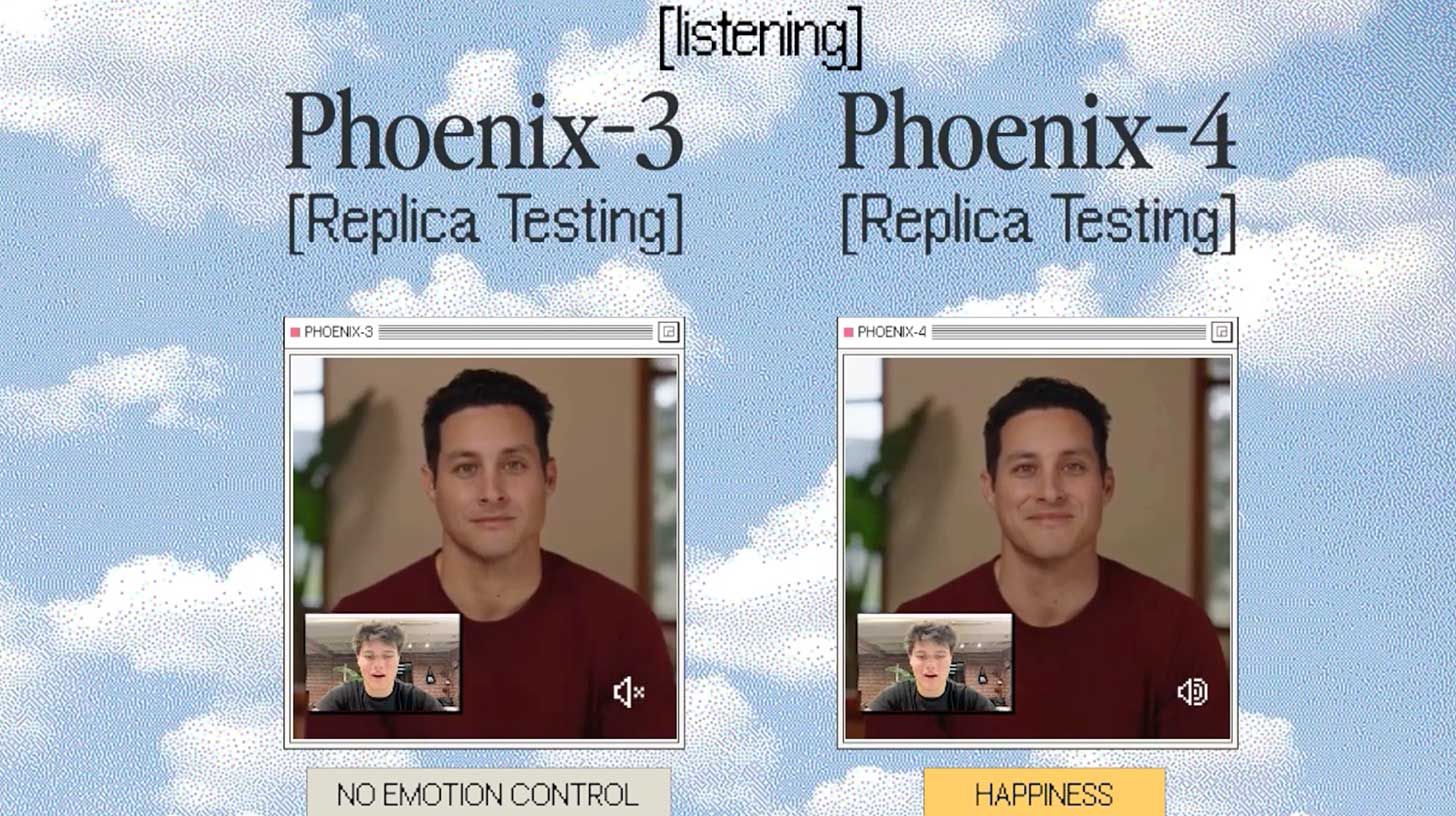
Image source: Tavus
The Rundown: Tavus just introduced Phoenix-4, a real-time human rendering model that can generate AI avatars that have full facial expressions, shift between emotions mid-conversation, and actively listen with contextual reactions.
The details:
Phoenix-4 generates every pixel of the face and head from scratch each frame, trained on thousands of hours of real human conversation.
The model handles 10+ emotional states and transitions between them in real time, avoiding awkward mismatched reactions or expressions during convos.
Tavus is pitching the tech for healthcare, education, and sales use cases where feeling "heard" by the person on screen can directly impact outcomes.
Phoenix-4 also runs at HD quality and at 40 FPS for live video call smoothness, making interactions feel more real than older model generations.
Why it matters: AI text interactions are becoming more human than ever, and video avatars are now catching up to the pace — leaving the hollow ‘uncanny valley’ of robotic emotion for a conversation partner that feels like it’s actually listening. The positive applications are endless… But so are the coming opportunities for deception.
QUICK HITS
🛠️ Trending AI Tools
🗣️ Unwrap Customer Intelligence - Turn unstructured customer feedback into data-backed insights that inform your product roadmap*
🎶 Lyria 3 - Google’s new AI music generation model in Gemini
🗣️ Phoenix-4 - Tauvus’ real-time human avatar AI with emotional intelligence
⚡️ Grok 4.20 - xAI’s upgraded AI model with new agentic capabilities
*Sponsored Listing
📰 Everything else in AI today
Ex-DeepMind researcher David Silver is reportedly raising $1B at a $4B valuation for his London-based AI startup Ineffable Intelligence, in Europe’s largest ever seed round.
‘AI godmother’ Fei-Fei Lei’s World Labs announced a $1B round, including $200M from Autodesk, with plans to bring its world models into 3D and entertainment work.
Perplexity is reportedly pulling ads from its platform entirely, with execs saying sponsored content undermines trust in AI-generated answers.
OpenAI acqui-hired enterprise AI search startup Nerve, with the team joining to help build ChatGPT's search capabilities at a larger scale.
The trailer for ‘The AI Doc: Or How I Became an Apocaloptimist’ is going viral ahead of its debut, featuring sit-downs with AI leaders like Sam Altman, Dario Amodei.
COMMUNITY
🤝 Community AI workflows
Every newsletter, we showcase how a reader is using AI to work smarter, save time, or make life easier.
Today’s workflow comes from reader Pradeep A. in Washington, DC:
"My garage door wasn’t closing. I asked Claude…and it asked me to look at the sensor lights. Upon checking, I discovered there was no light in one of the sensors.
It asked me a couple of questions about the make of the motor, and then gave me the part number for the sensor light. I got the part from Amazon and installed it myself without even having to call a mechanic."
How do you use AI? Tell us here.
🎓 Highlights: News, Guides & Events
Read our last AI newsletter: Anthropic’s mid-tier model punches up
Read our last Tech newsletter: Apple’s ‘2026 product blitz’
Read our last Robotics newsletter: Apptronik’s $935M humanoid moment
Today’s AI tool guide: Turn product photos into scroll-stopping videos
RSVP to our next workshop on Feb. 25: Agentic Workflows Bootcamp pt. 3
See you soon,
Rowan, Joey, Zach, Shubham, and Jennifer — the humans behind The Rundown
Anthropic's mid-tier model punches up
Read Online | Sign Up | Advertise

Good morning, AI enthusiasts. Anthropic spent the last two weeks shipping its best-ever models. The twist is that the cheaper one might matter more.
The new Sonnet 4.6 goes toe-to-toe with Opus 4.6 across coding, finance, and computer use benchmarks at 1/5 the cost — cutting the gap between what the best AI can do and what most companies can actually afford to deploy.
Reminder: Our next live workshop is today at 2 PM EST — join and learn how to leverage Claude as a workflow architect to build powerful AI automations. RSVP here.
In today’s AI rundown:
Anthropic’s powerful Claude Sonnet 4.6
Apple going all-in on AI wearables
Create a royalty-free jingle in 30 seconds
Figma turns Claude Code builds into editable designs
4 new AI tools, community workflows, and more
LATEST DEVELOPMENTS
ANTHROPIC
🧠 Anthropic’s powerful Claude Sonnet 4.6
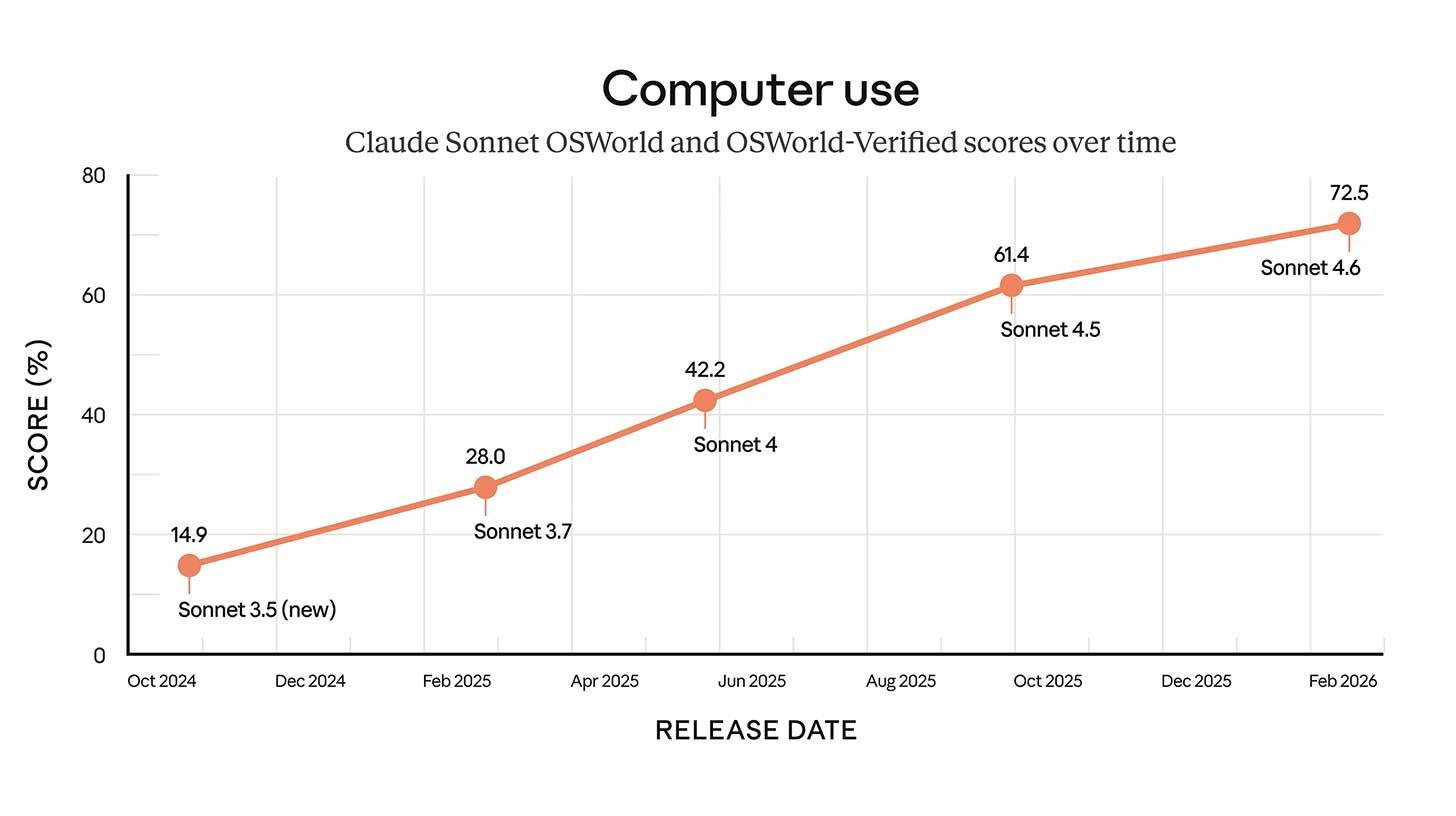
Image source: Anthropic
The Rundown: Anthropic just rolled out Claude Sonnet 4.6, its latest mid-tier model that matches or beats the flagship Opus 4.6 across finance, computer use, coding, and office benchmarks at 1/5 of the price — while featuring a 1M token context window.
The details:
On SWE-Bench Verified for coding, Sonnet 4.6 came in at 79.6%, just below Opus 4.6's 80.8% — while costing just 1/5 as much to run.
Sonnet 4.6 outscored Opus 4.6 on agentic financial analysis and office-task benchmarks, a first for the mid-tier Claude model.
Early Claude Code testers preferred Sonnet 4.6 over its predecessor 70% of the time, also winning over Opus 4.5 at a 59% rate.
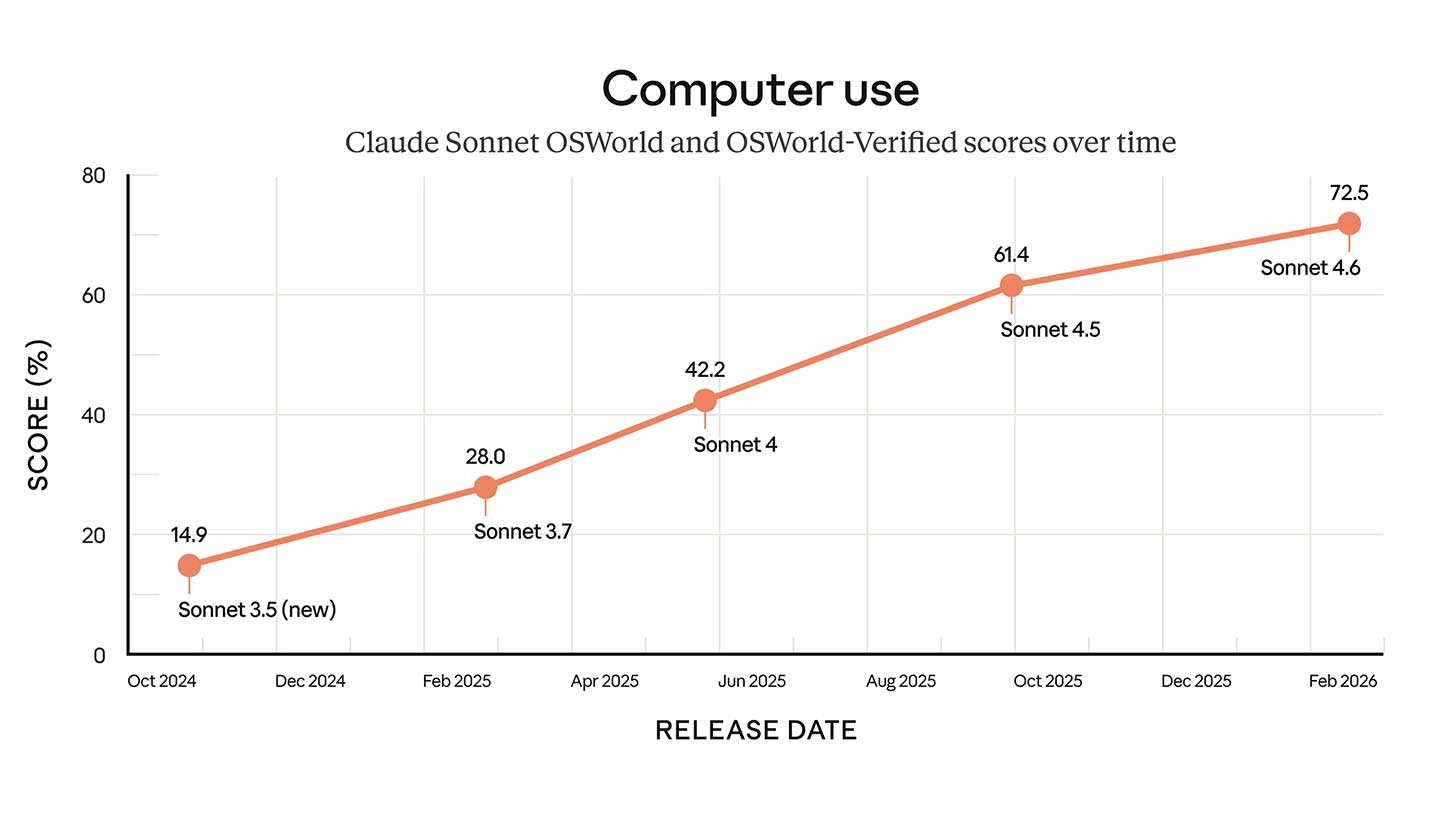
Computer use capabilities also keep climbing, with Sonnet’s OSWorld scores jumping from under 15% in late 2024 to 72.5%.
Why it matters: Anthropic is running a trickle-down playbook at warp speed, shipping near Opus-caliber capabilities to its cheaper line just weeks after the flagship upgrade. With strong Chinese models continuing to undercut everyone on price, Sonnet 4.6 looks like Anthropic's bid to better compete for the volume layer of the agentic boom.
TOGETHER WITH HUBSPOT
🧠 100+ ChatGPT prompts to revolutionize your workflow
The Rundown: HubSpot’s free, comprehensive “How to Use ChatGPT at Work” guide provides 100+ ready-to-use prompts to help professionals boost efficiency and adopt AI-driven workflows.
Inside, you’ll find:
A quick crash course to master ChatGPT in under 30 minutes
Practical industry use cases to spark real-world inspiration
100+ prompts to streamline tasks and accelerate productivity
Expert tips to tackle common AI roadblocks with confidence
Get your free copy and join 10,000+ professionals leveling up with AI.
APPLE
🕶️ Apple going all-in on AI wearables

Image source: Lovart / The Rundown
The Rundown: Apple is reportedly fast-tracking three camera-equipped AI wearables, according to Bloomberg — including smart glasses, a pendant, and new AirPods all designed to give Siri real-time visual awareness through the iPhone.
The details:
The glasses will feature dual cameras, Apple-designed frames, no display, and a production target of late this year ahead of a 2027 launch.
The pendant will act as an always-on camera and mic for your iPhone, internally dubbed the phone's "eyes and ears".
Camera-equipped AirPods could ship as early as this year, using low-res sensors to feed Siri visual context and building on live-translation features.
All three devices will tie into Apple's revamped Siri, which is expected to get a chatbot-style interface in iOS 27 later this year, powered by Google’s Gemini.
Why it matters: AI wearables from Apple (that actually feature a working model) would immediately shake up the mainstream hardware landscape and vault the tech giant into the AI spotlight. But these devices depend on a Siri overhaul that we still need to see to actually trust after years of absolutely brutal delays and underdelivering.
AI TRAINING
🔊 Create a royalty-free jingle in 30 seconds
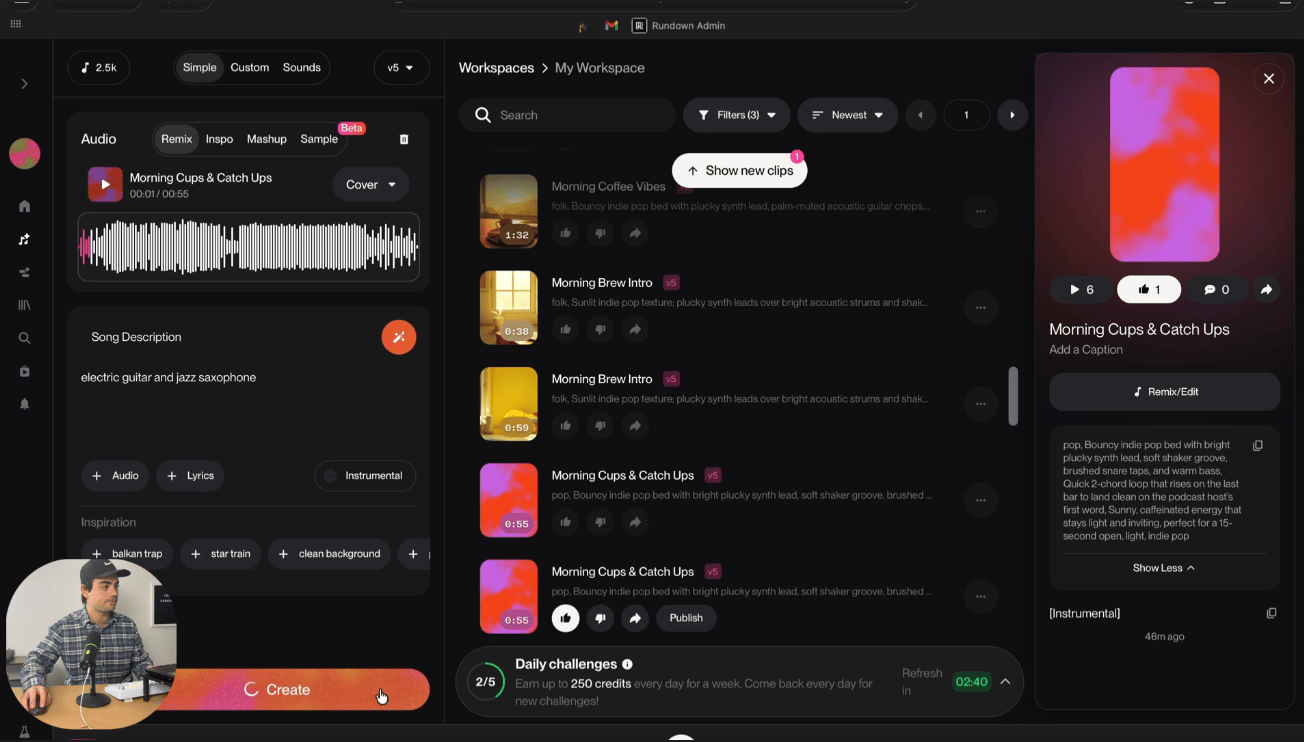
The Rundown: In this guide, you will use Suno AI to create a custom jingle, background music, and sound effects for your brand. The best part is they’re all royalty-free and can be created from basic text prompts.
Step-by-step:
Go to Suno.com and click Create. Use a prompt like: "Upbeat indie pop podcast intro with acoustic guitar and light percussion, think tech podcast"
The basic structure is [genre] + [instruments] + [use case]. We recommend asking Gemini to interview you about your brand, then have it write the prompt
Once you prompt and get a good, usable jingle, click Remix and Edit > Cover. Now, you can make variations by changing the speed, instruments, or genre
Try different combinations until you have three variations for background music, one podcast intro, and your main jingle.
Pro tip: You can also go to → Suno Create → Sounds tab to create short “stings” for transitions in your content.
PRESENTED BY BLAND AI
📞 Voice AI for every conversation

The Rundown: Bland AI automates phone calls for over 250+ enterprise customers. No phone trees. No hold music. Just faster, smarter customer conversations.
Here are some of the outcomes they've driven for businesses:
Idaho Finance saved $750k/yr by replacing their IVR with AI Voice Agents
MyPlanAdvocate added $40M/yr by automating their inbound lead qualification
And Needle saves $1M/yr by automating outbound calls
Book a demo today to see how they can work for your business.
FIGMA
🎨 Figma turns Claude Code builds into editable designs
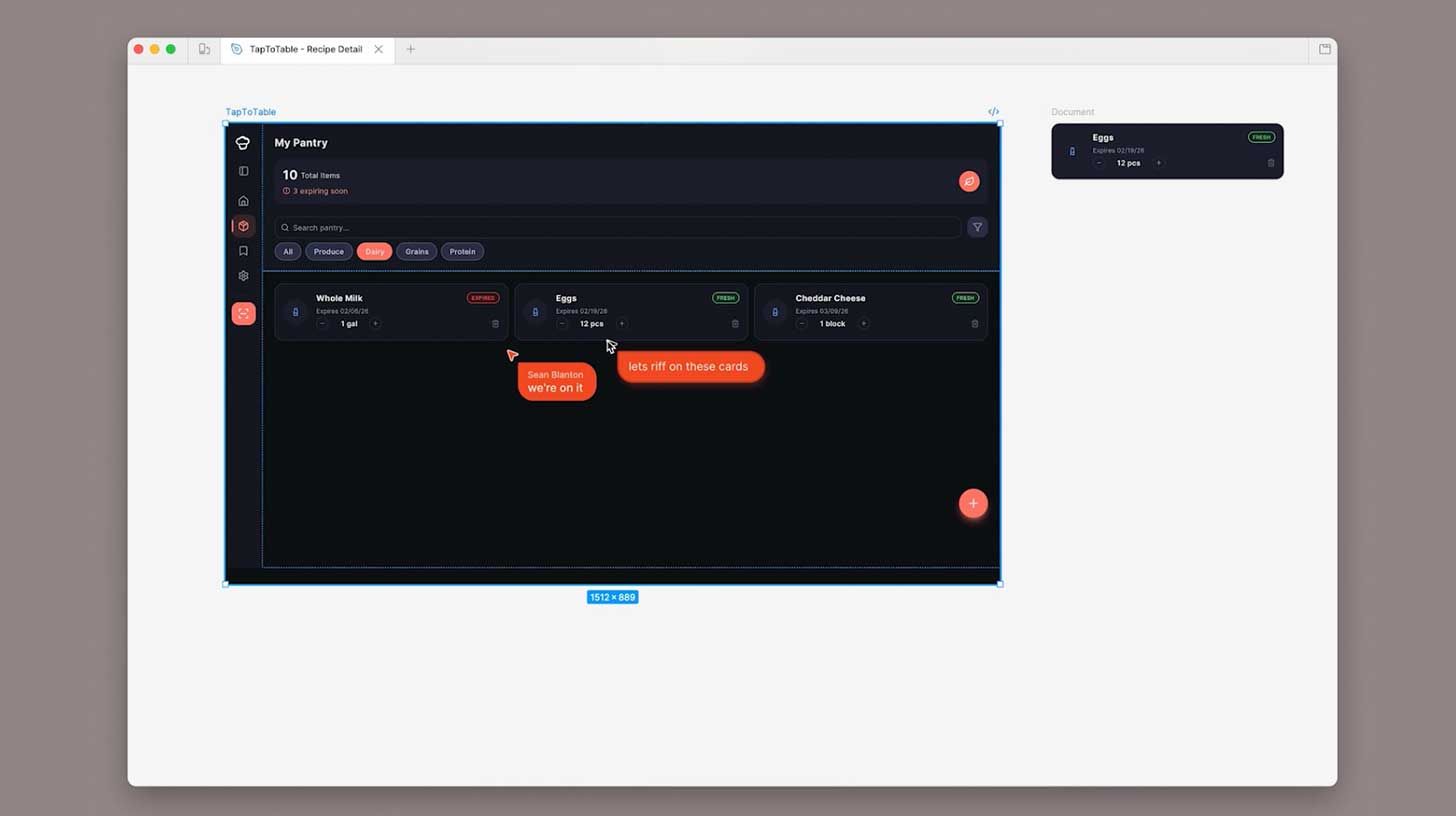
Image source: Figma
The Rundown: Figma just introduced a new “Code to Canvas” integration with Anthropic that lets developers capture interfaces built in Claude Code and convert them into fully editable design files on Figma's canvas.
The details:
The feature grabs live UI from a browser and turns it into native Figma layers that can be duplicated, annotated, or rearranged.
Figma's existing MCP server closes the loop, letting developers pull edited designs back into coding environments without losing the shared context.
Devs can capture entire multi-step flows at once, keeping the full user journey intact so teams can review and edit the experience side by side.
The launch comes as Figma stock has cratered roughly 85% from last summer’s high amid a broader SaaS selloff driven by AI coding fears.
Why it matters: This generation of AI coding tools has made it trivial to build a working UI, but Figma is hoping to be the polished, shippable design layer on top of raw vibe-coded prototypes. But with model capabilities only improving, that polishing layer may also soon be automated — something the markets appear to notice as well.
QUICK HITS
🛠️ Trending AI Tools
🗣️ Unwrap Customer Intelligence - Turn unstructured customer feedback into data-backed insights that inform your product roadmap*
🧠 Claude Sonnet 4.6 - Anthropic's upgraded mid-tier model with 1M context
🎨 Recraft V4 - New image AI for typography, and production-level outputs
🌎 Tiny Aya - Cohere's small, open-source model covering 70+ languages
*Sponsored Listing
📰 Everything else in AI today
xAI began rolling out the long-awaited Grok 4.20 in a public beta, featuring a new agent workflow that uses four agents working in parallel to research and handle tasks.
Meta and Nvidia announced a new multiyear AI chip deal spanning millions of GPUs and CPUs to help power the tech giant’s AI infrastructure buildout.
Cohere Labs open-sourced Tiny Aya, a 3.35B parameter multilingual model that handles 70+ languages with strong gains for typically underrepresented dialects.
French AI startup Mistral made its first-ever acquisition, with serverless platform Koyeb joining to boost its Mistral Compute cloud infrastructure arm.
WordPress launched a new AI assistant capable of editing layouts, generating images, and rewriting content directly inside the editor for streamlining website design.
COMMUNITY
🤝 Community AI workflows
Every newsletter, we showcase how a reader is using AI to work smarter, save time, or make life easier.
Today’s workflow comes from reader Yilin Q. in Australia:
"I use Gemini like my personal basketball assistant — I record our games, throw the video at it, and it magically breaks everything down for me.
It tells me where I messed up, what I actually did well, and even spots the opponents’ bad habits, like who always forgets to switch or which corner they leave wide open. It’s like having a super nerdy assistant coach who never gets tired, never lies to make me feel better, and helps me plan how to play smarter next game."
How do you use AI? Tell us here.
🎓 Highlights: News, Guides & Events
Read our last AI newsletter: Anthropic-Pentagon AI feud escalates
Read our last Tech newsletter: Apple’s 2026 product blitz
Read our last Robotics newsletter: Apptronik’s $935M humanoid moment
Today’s AI tool guide: Create a custom royalty-free jingle in 30 seconds
RSVP to workshop today @2PM EST: Agentic Workflows Bootcamp pt.2
See you soon,
Rowan, Joey, Zach, Shubham, and Jennifer — the humans behind The Rundown

Apple's '2026 product blitz'
Read Online | Sign Up | Advertise
Good morning, tech enthusiasts. Apple is ditching the keynote stage for a simultaneous “special experience” across New York, London, and Shanghai on March 4 — hands-on, no livestream, no theater.
The format shift tells you everything: there’s no single hero product here. Instead, Apple is unleashing a ‘blitz’ of new Macs, iPads, and at least one wildcard device aimed squarely at the value crowd.
In today’s tech rundown:
Apple’s ‘special experience’ on March 4
Waymo’s smarter robotaxi hits the streets
Ring drops Flock deal after Super Bowl ad
Electric ferry with the power of 487 Teslas
Quick hits on other tech news
LATEST DEVELOPMENTS
APPLE
🍏 Apple’s ‘special experience’ on March 4

Image source: Apple
The Rundown: Apple is reportedly ditching the keynote stage show and hosting a March 4 “special experience” event in New York, London, and Shanghai that’s expected to unleash a wave of new Macs, iPads, and a rumored cheaper iPhone.
The details:
M5 Pro and M5 Max MacBook Pros, an M5 MacBook Air, refreshed iPads, and a new Studio Display are all expected.
The headliner is a sub-$750 MacBook, an A18 Pro-powered, multi-color laptop built on a new cost-cutting aluminum process, with a display under 13 inches.
The iPhone 17e is expected to gain MagSafe, an A19 chip, and upgraded wireless internals, all at the same price as its predecessor.
With no live-stream in sight, expect an intimate hands-on showcase rather than a polished Cupertino production.
Why it matters: None of these products alone would justify a traditional Apple keynote — and that’s exactly the point. By staging a multi-city “experience” instead of a slick stage show, Apple is testing another launch format for a product cycle built around volume and value, not any single flagship moment.
WAYMO
🚖 Waymo’s smarter robotaxi hits the streets

Image source: Waymo
The Rundown: Alphabet’s robotaxi company Waymo is finally rolling out its next‑gen robotaxi hardware by seeding a fleet of new “Ojai” vans into San Francisco and LA, where employees and their friends are already getting fully driverless rides.
The details:
Built by Chinese automaker Zeekr and outfitted with Waymo’s hardware at its Arizona facility, the Ojai is meant to eventually replace the Jaguar I-PACE fleet.
The sixth-gen Waymo Driver cuts the total sensor count by 42% — down from 29 cameras to 13 — while adding a proprietary 17-megapixel imager.
Waymo says the hardware is engineered for rain, snow, fog, and hail, with self‑cleaning sensors and algorithms tuned for harsh weather.
The Driver is designed to bolt onto multiple vehicles, starting with the Ojai and expanding to the Hyundai Ioniq 5.
Why it matters: Waymo already operates paid robotaxi services in six U.S. markets and plans to add 20 more cities this year, including London and Tokyo — putting pressure on rivals Tesla and Zoox. Public Ojai rides are expected later in 2026, with a target of 1M autonomous rides per week by year’s end, up from roughly 400K today.
RING
🐶 Ring drops Flock deal after Super Bowl ad

Image source: Ring
The Rundown: Amazon’s Ring is facing backlash after its Super Bowl ad for an AI-powered “Search Party” feature collided with news that the company was partnering with police-tech vendor Flock Safety. Days later, Ring walked away from the deal.
The details:
Ring has killed a planned integration with police-surveillance vendor Flock Safety, saying it would have required too many resources.
Flock runs a massive AI-powered license-plate and camera network used by thousands of law enforcement agencies nationwide.
The EFF called the Super Bowl ad a preview of “Ring’s surveillance nightmare,” noting that Amazon already ships facial recognition via its Familiar Faces tool.
Both ICE and CBP have reportedly accessed Flock’s data as part of the Trump administration’s immigration crackdown — a claim Flock denies.
Why it matters: Ring’s Super Bowl ad showed a lost dog found via connected, AI-assisted neighborhood cameras, prompting renewed privacy debate. Ring says Search Party can’t identify people, though its broader ecosystem includes advanced analytics and public-safety partnerships.
ELECTRIC TRANSPORT
🛳️ Electric ferry with the power of 487 Teslas

Image source: Incat
The Rundown: Australia is about to launch the world’s largest electric ship, a $200M 130-meter Incat-built catamaran packed with 250 tons of batteries and high-speed waterjets, marking a zero-emission leap forward for mass ferry transport.
The details:
The all-aluminum catamaran carries 2,100 passengers and 225 vehicles on 40 megawatts of battery-electric power — roughly the output of 487 Tesla EVs.
Buquebus commissioned an LNG-powered vessel in 2020, but as battery costs fell, the operator and Incat renegotiated mid-build to go fully electric.
Incat just completed full deployment trials of the ship’s Marine Evacuation System, with six 22-meter MES units supported by 13 life rafts.
The ferry doubles as a floating mall, with more than 25K square feet of retail space carved into its decks for duty-free shopping mid-crossing.
Why it matters: The massive ferry will cover crossings of up to 115 miles on battery power alone, linking Buenos Aires to Uruguay. If it performs at scale, it won’t just be the world’s largest electric vehicle but proof that zero-emission propulsion can handle the loads that commercial shipping still assumes require fossil fuels.
QUICK HITS
📰 Everything else in tech today
Meta is reportedly preparing to add a facial recognition feature to its Ray‑Ban smart glasses as soon as this year, letting wearers identify people and pull up info about them.
Defense tech startup Anduril is in talks to raise as much as $8B in new funding at a valuation of around $60B, roughly double its June 2025 valuation.
Chinese AI startup Moonshot, maker of the Kimi chatbot, is seeking a fresh funding round already backed by Alibaba and Tencent, for a valuation of about $10B.
Warner Bros. Discovery is considering reopening sale talks with Paramount even as Netflix remains its formal buyer, setting up a potential renewed bidding war.
Adani Group plans to invest $100B by 2035 to build renewable energy–powered data centers in India, aiming to create a major AI infrastructure hub.
Hong Kong’s police plan to add facial recognition to the city’s public CCTV network as early as this year, starting with high‑traffic shopping malls.
Uber says it will roll out its Uber Eats food‑delivery service to seven additional European countries in 2026, including Austria, Denmark, Finland, Norway, and Greece.
Biohacker Bryan Johnson is selling an “Immortals” longevity program for $1M a year, offering three clients a concierge team and 24/7 access to his BryanAI coach.
Danaher is closing in on a roughly $10B acquisition of medical device maker Masimo, in a deal that would add its hospital monitors and wearables to Danaher’s empire.
Russia blocked WhatsApp and is steering its more than 100M users toward the state-backed MAX messaging app, which critics say is designed for surveillance.
Former NPR host David Greene is suing Google, alleging the company effectively stole his voice by training the male narrator in its NotebookLM AI podcast tool.
COMMUNITY
🎓 Highlights: News, Guides & Events
Read our last AI newsletter: Anthropic-Pentagon AI feud escalates
Read our last Tech newsletter: Musk’s ‘self-growing’ Moon city
Read our last Robotics newsletter: Apptronik’s $935M humanoid moment
Today’s AI tool guide: Turn a YouTube thumbnail into 5 social posts
RSVP to next workshop on Feb. 18: Agentic Workflows Bootcamp pt.2
See you soon,
Rowan, Joey, Zach, Shubham, and Jennifer — The Rundown’s editorial team
Anthropic-Pentagon AI feud escalates
Read Online | Sign Up | Advertise

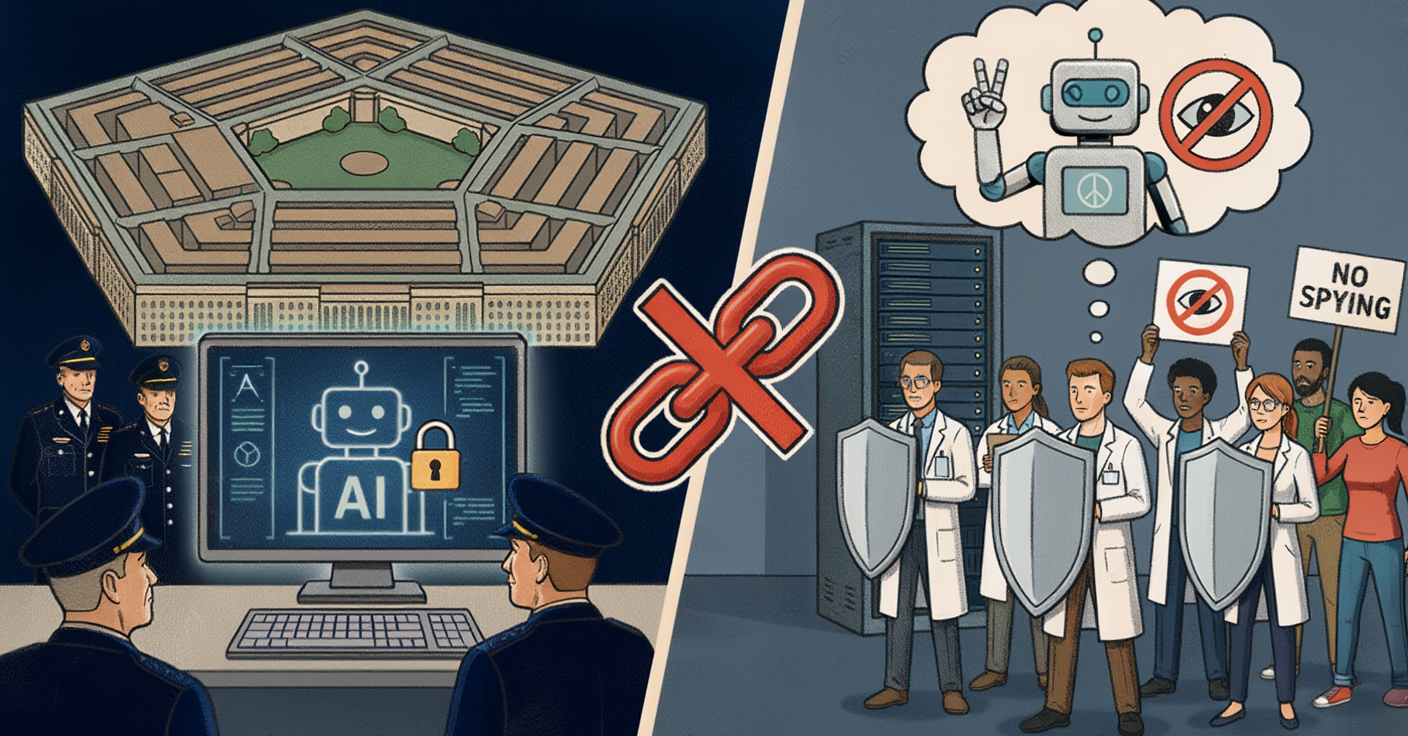
Good morning, AI enthusiasts. The Pentagon may soon label Anthropic a “supply chain risk” in response to the company’s limits on how the military uses its AI.
The feud, which only appears to be escalating, highlights a deeper tension now shaping the AI era: who controls how frontier models are deployed in military operations — the labs that build them, or the governments that use them?
In today’s AI rundown:
Anthropic-Pentagon feud escalates over AI use
OpenAI adds new ‘Lockdown mode’ in ChatGPT
Turn a YouTube thumbnail into 5 social posts
Alibaba nears frontier with open-weight Qwen-3.5
4 new AI tools, community workflows, and more
LATEST DEVELOPMENTS
ANTHROPIC
‼️ Anthropic-Pentagon feud escalates over AI use

Image source: Nano Banana / The Rundown
The Rundown: The Pentagon is reportedly “close” to cutting ties with Anthropic and designating the company a “supply chain risk” — a badge usually reserved for foreign adversaries — over its restrictions on how Claude is used by the military.
The details:
The designation of “supply chain risk,” if given, would force all U.S. defense contractors to cut ties with Anthropic — hitting the AI’s major business severely.
Defense officials are demanding the right to use AI for “all lawful purposes,” while Anthropic is holding firm against granting broad permissions.
The company is open to loosening restrictions but wants to ensure its AI is not used for spying on Americans or building autonomous weapons, Axios reports.
Claude is currently the only AI on the Pentagon’s classified systems, and was also reportedly used via Palantir to capture Nicolás Maduro in January.
Why it matters: Experts have long warned about the unchecked use of AI in warfare, and this standoff marks a notable moment showing the growing friction between companies’ responsible-use guardrails and the military’s operational demands. Only time will tell which side shapes the rules of AI in national security.
TOGETHER WITH YOU.COM
🧠 You.com founders predict an AI winter is coming
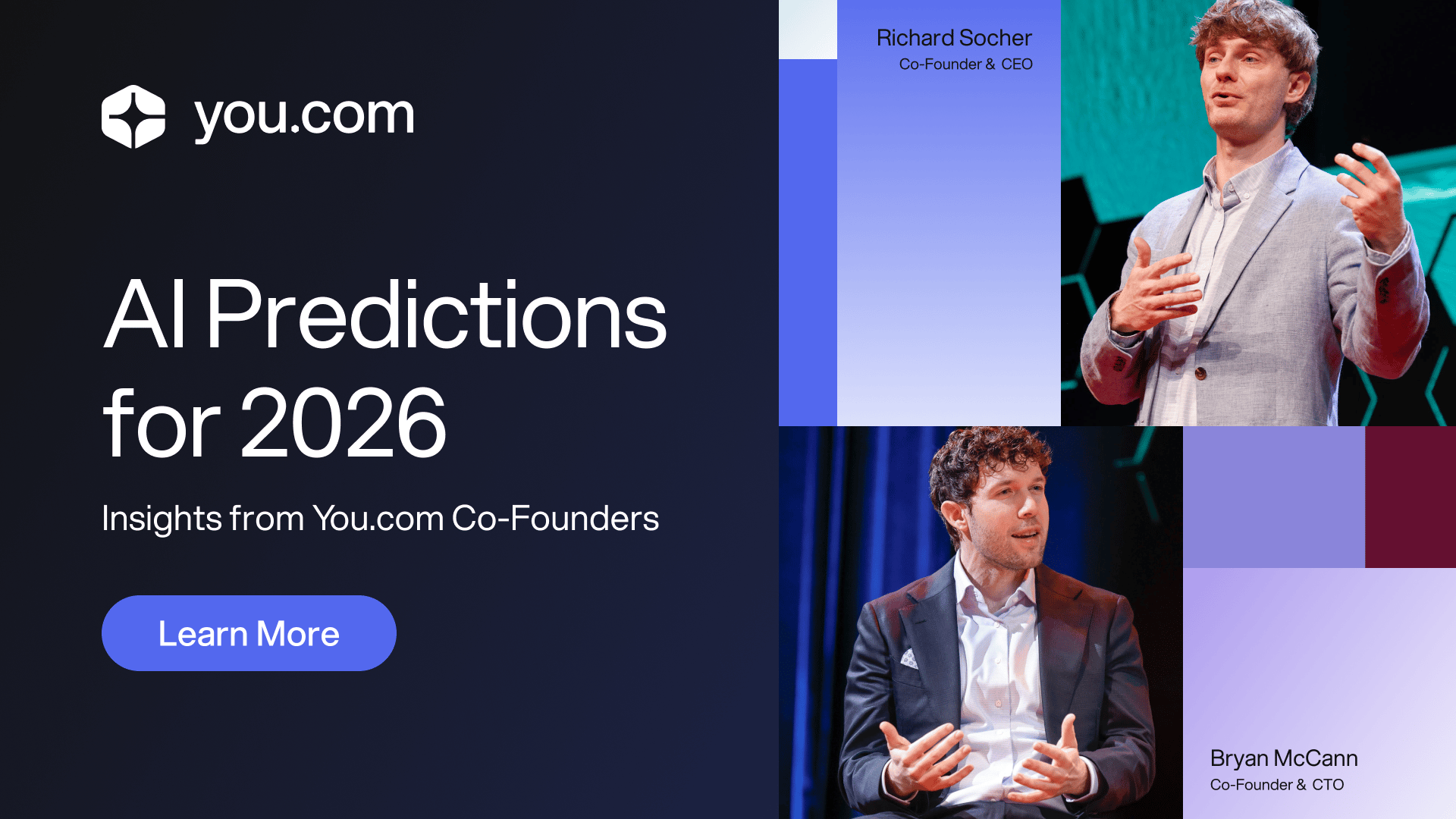
The Rundown: You.com’s Co-founders Richard Socher and Bryan McCann are among the most-cited AI researchers in the world. They just released 35 predictions for 2026.
Three that stand out:
The LLM revolution has been “mined out” as capital floods back to research
“Reward engineering” becomes a job; prompts can’t handle what’s coming next
Traditional coding will be gone by December — AI writes code and humans manage it
OPENAI
🔒️ OpenAI adds ‘Lockdown Mode’ to ChatGPT

Image source: Reve / The Rundown
The Rundown: OpenAI just introduced a “Lockdown Mode” in ChatGPT, alongside new Elevated Risk labels, as part of an effort to protect “highly security-conscious users” from threats like prompt injection (where AI is tricked into leaking data).
The details:
The Lockdown Mode is an optional setting that deterministically disables certain ChatGPT tools and capabilities that an attacker could exploit.
Specific protections in the mode include limiting web browsing to cached content — ensuring no live network requests leave OpenAI’s environment.
ChatGPT workspace admins can enable the mode, with the ability to whitelist specific apps/actions that remain accessible even when the lockdown is active.
The company is also adding new “Elevated Risk” labels that appear across ChatGPT, Atlas, and Codex to flag features that may introduce any level of risk.
Why it matters: As AI models go from simple chatbots to full-fledged agents capable of browsing the web, connecting to apps, and executing complex tasks, the security stakes are higher than ever. This update acknowledges that change and the fact that deterministic “hard blocks” may be the only way to address some AI risks.
AI TRAINING
📲 Turn a YouTube thumbnail into 5 social posts
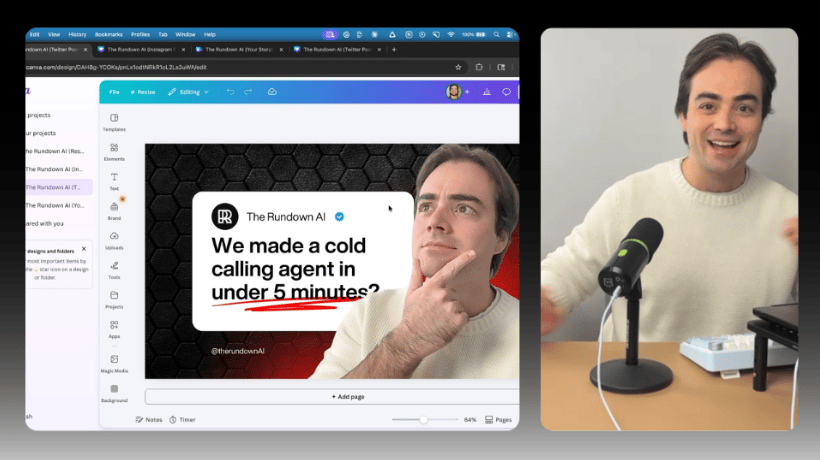
The Rundown: In this guide, you will build a YouTube thumbnail from scratch in Canva, then use the AI resize feature to instantly duplicate it into every social media format, with AI handling the layout for each size.
Step-by-step:
In Canva (you will need a Pro account), click the “Create” button and search for “thumbnail.” Click the YouTube thumbnail project type
In the sidebar, pick a template that you like. Update the text to match your video title and change the colors if you want
If there’s a cutout person in it, you can take a selfie, drag it into Canva, then click the AI remove background button. Now, replace the placeholder cutout
Finally, click the “Resize” in the top left and select all social placements you want. Canva AI will create thumbnail layouts in the correct dimensions for each
Pro tip: You can also generate thumbnails using Nano Banana Pro, then recreate them in Canva.
PRESENTED BY SPEECHMATICS
🗣️ Voice Agents need speed you trust
The Rundown: Speechmatics’ Voice Agent API delivers partials in <250ms and finals around 250-300ms. Built real-time first, not batch models forced into streaming. That’s why you get unmatched accuracy at conversational latency.
What you get:
55+ languages, accent-agnostic performance
Native LiveKit, Pipecat, Vapi support
Deploy cloud, on-prem, hybrid, on-device
Start building with $200 free credits.
ALIBABA
🧠 Alibaba nears frontier with open-weight Qwen-3.5
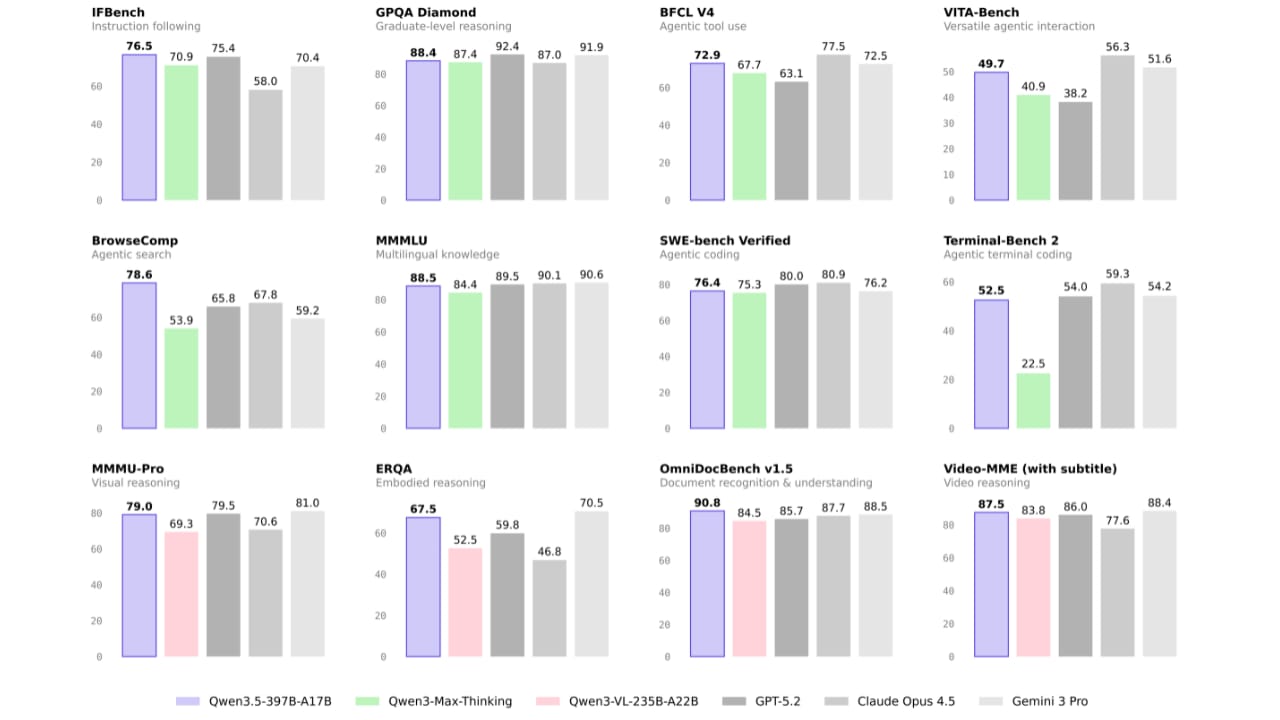
Image source: Qwen
The Rundown: Alibaba’s Qwen released Qwen3.5-397B-A17B, an open-weight vision language model featuring a “hybrid architecture” that delivers massive inference gains while rivaling proprietary giants like OpenAI’s GPT-5.2 and Google’s Gemini 3 Pro.
The details:
Qwen-3.5 uses a sparse MoE design, activating only 17B parameters out of 397B for each query, balancing high-level capabilities with low latency.
The model is close to frontier players across the board, and even surpasses them in domains like agentic search, doc recognition, and instruction following.
Alibaba claims it is 60% cheaper to use and at least 8x better at processing large workloads than its immediate predecessor, Qwen3-Max.
The release is aimed at handling continuous, multimodal reasoning required by agents, although it doesn’t seem very good at running a vending machine yet.
Why it matters: Chinese labs are on a roll, and with Qwen3.5 combining near frontier performance, 60% lower costs, and open weights, the race is clearly shifting toward efficiency and scalability. If the momentum continues, the AI balance may hinge less on raw size and more on who can deliver powerful models at the lowest rate.
QUICK HITS
🛠️ Trending AI Tools
👨💻 HeyGen - Turn ideas into videos in minutes, with no filming required. Use Code TRDAI20 for 20% off your first 3 months.
🧠 Qwen3.5-397B-A17B - Alibaba’s open-weight vision language model
🤖 Manus - AI agents, now accessible via Telegram with long-term memory
✨ Seed 2.0 - ByteDance’s open-source models for general-purpose agents
*Sponsored Listing
📰 Everything else in AI today
Meta patented a social networking system that uses AI trained on a user’s interaction data to simulate their responses when they’re on a long break, or even deceased.
India kicked off its AI Impact Summit, hosting execs from global AI giants, including OpenAI’s Sam Altman, Google’s Sundar Pichai, and Anthropic’s Dario Amodei.
Sam Altman and Dario Amodei confirmed India is now the second-largest market for ChatGPT and Claude, with Amodei also announcing Anthropic’s Bengaluru office.
Ireland’s Data Protection Commission is probing xAI’s Grok over concerns it can generate sexualized images of women and children, after similar UK and EU action.
SpaceX (and xAI) will reportedly compete in the Pentagon’s $100M contest to produce voice-controlled, autonomous drone swarming technology.
ElevenLabs launched its “ElevenLabs for Government” initiative to help public sector agencies deploy secure, multilingual voice and chat AI.
COMMUNITY
🤝 Community AI workflows
Every newsletter, we showcase how a reader is using AI to work smarter, save time, or make life easier.
Today’s workflow comes from reader Lisa G. in Australia:
“I volunteer for a wildlife shelter, which runs solely on donations...We needed an app to manage our rescue team operations, so I built one with Base44’s web app creator. It manages rescue calls and tracks progress of the rescue status, volunteer task assignments, and maps to wildlife track locations.
It saves our team time as we previously used WhatsApp to record Rescues, which was really inefficient. I am now building more apps for the shelter.”
How do you use AI? Tell us here.
🎓 Highlights: News, Guides & Events
Read our last AI newsletter: AI’s new physics discovery
Read our last Tech newsletter: Musk’s ‘self-growing’ Moon city
Read our last Robotics newsletter: Apptronik’s $935M humanoid moment
Today’s AI tool guide: Turn a YouTube thumbnail into 5 social posts
RSVP to next workshop on Feb. 18: Agentic Workflows Bootcamp pt.2
See you soon,
Rowan, Joey, Zach, Shubham, and Jennifer — the humans behind The Rundown

AI's new physics discovery
Read Online | Sign Up | Advertise

Good morning, AI enthusiasts. OpenAI's GPT-5.2 just discovered that a widely accepted answer in particle physics was wrong, proposed the correct one, and autonomously wrote the formal proof in 12 hours.
The "can AI actually think?" debate from skeptics isn't going away, but the real conversation is shifting from if AI can contribute to science to how fast it rewrites what we thought we already knew.
In today’s AI rundown:
GPT-5.2 makes theoretical physics discovery
The Rundown Roundtable: Our AI use cases
Launch an outbound calling agent in 15 minutes
ByteDance’s frontier push with Seed 2.0
4 new AI tools, community workflows, and more
LATEST DEVELOPMENTS
OPENAI
🔬 GPT-5.2 makes theoretical physics discovery

Image source: Lovart / The Rundown
The Rundown: OpenAI just published a new research preprint where GPT-5.2 independently discovered a mathematical formula and formally proved it was correct, marking what the company calls AI's first original contribution to theoretical physics.
The details:
The paper tackles a problem in particle physics that was assumed solved, with 5.2 finding the existing answer was wrong and proposing a correct one.
A specialized research version of 5.2 autonomously wrote the math proof in 12 hours, verified by physicists from Harvard, Cambridge, and Princeton.
OAI's Kevin Weil is credited as a co-author, with Harvard physicist Andrew Strominger saying the AI "chose a path no human would have tried."
Why it matters: There will still be debate from skeptics over whether AI is truly capable of ‘new’ ideas, but the results are getting harder to argue with. AI being pointed at and challenging long-held beliefs in humanity’s most important scientific fields is starting to feel less like sci-fi and more like the very near future.
TOGETHER WITH AWS MARKETPLACE
📶 Unlock agentic AI potential
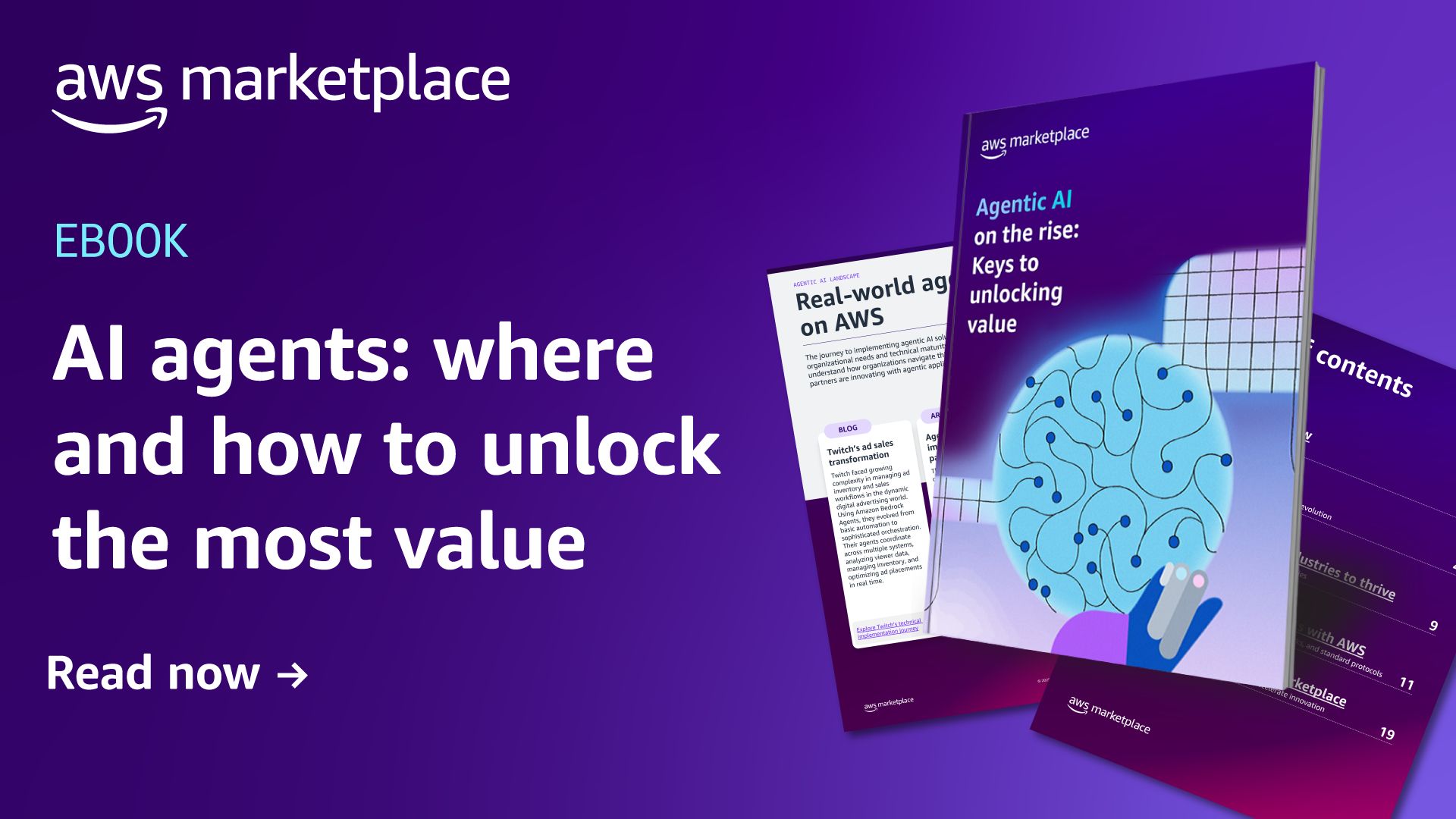
The Rundown: AWS Marketplace's new eBook breaks down how organizations are using agentic AI to streamline operations, with actionable guidance on building, buying, and deploying AI agents at scale.
Inside the eBook, you'll find:
Real-world examples of orgs. transforming workflows with agentic AI
Frameworks and deployment guidance for native and open-source agents
How to discover, buy, and deploy AI agents through AWS Partners
Download the free eBook to kickstart your agentic AI journey.
THE RUNDOWN ROUNDTABLE
💡The Rundown Roundtable: Our AI use cases
Image Source: Lovart / The Rundown
The Rundown: The Rundown Roundtable is a weekly feature where we poll members of The Rundown staff about how we use AI in our work and daily lives.
Rishi, Growth: I connected Claude Code to Apify's API to scrape high-performing content from IG/TikTok for ad creative inspiration, and to ElevenLabs' API to automatically transcribe videos — so I can analyze not just visuals, but the exact hooks, pacing, and language top creators are using. From there, I developed a scriptwriting system that takes rough thoughts on a hook and angle and turns them into ad scripts, drawing inspiration from winners and applying proven copywriting principles.
After generating, it also grades itself against a 12-point rubric. If it doesn't score at least 90%, it rewrites until it does. I then feed it back in and say, "This is the final version." It analyzes the changes I made and updates its understanding of my style.
Nate, University Educator: I continue to find that Claude Artifacts (with its front-end design) is delightfully useful — and use it several times a day to learn something new, or catch up on a news story, and turn anything into a custom webpage right inside chat.
Attach surveys, a long article, a spreadsheet, etc., and tell Claude to turn it into an interactive page displaying key insights. The design is impressive, and it takes just minutes. Next time, try this to quickly share findings with your team.
AI TRAINING
📞 Launch an outbound calling agent in 15 minutes

The Rundown: In this guide, you will build an AI agent that makes real sales calls on your behalf. You’ll learn to create the agent, get a $1 phone number, and upload a list of contacts for it to call — with the whole setup taking about 15 minutes.
Step-by-step:
Create a new AI agent in Eleven Labs. Choose a voice and add system instructions. Include details about your business, offer, and the goal of the call
Sign up on Twilio (free + $15 in credits) and buy a phone number for $1.20. Copy the number, Account SID, and Auth Token from the dashboard
Connect Twilio to Eleven Labs. Go to Phone Numbers in ElevenLabs, click Create New, and paste in your number, SID, and Auth Token
Click Outbound in ElevenLabs, create a “batch” with Telephony as the channel, and download a CSV template. Add in leads’ numbers, then upload the CSV back. You can now start calling with the agent, test it, or schedule calls for later.
Pro tip: Toggle on “Transfer to Number” in your agent's Tools to have it patch hot leads through to your phone.
PRESENTED BY CONCIERGE
👋 Your brand's AI answer engine

The Rundown: Today’s buyers use AI every day to answer their questions, and have no patience for a scavenger hunt on your website. Concierge is a custom Perplexity-style answer engine, trained on your company’s brand & content, that delivers accurate, personalized responses to any questions your website visitors have.
Modern B2B brands use Concierge to:
Handle any buyer question (no matter how technical) with advanced RAG on your content, media, and documentation.
Control and visibility over every conversation, with guardrails and sentiment analysis.
Build trust with website visitors before they are willing to commit to a demo.
Use Concierge to turn every question into an opportunity.
BYTEDANCE
🌱 ByteDance’s frontier push with Seed 2.0
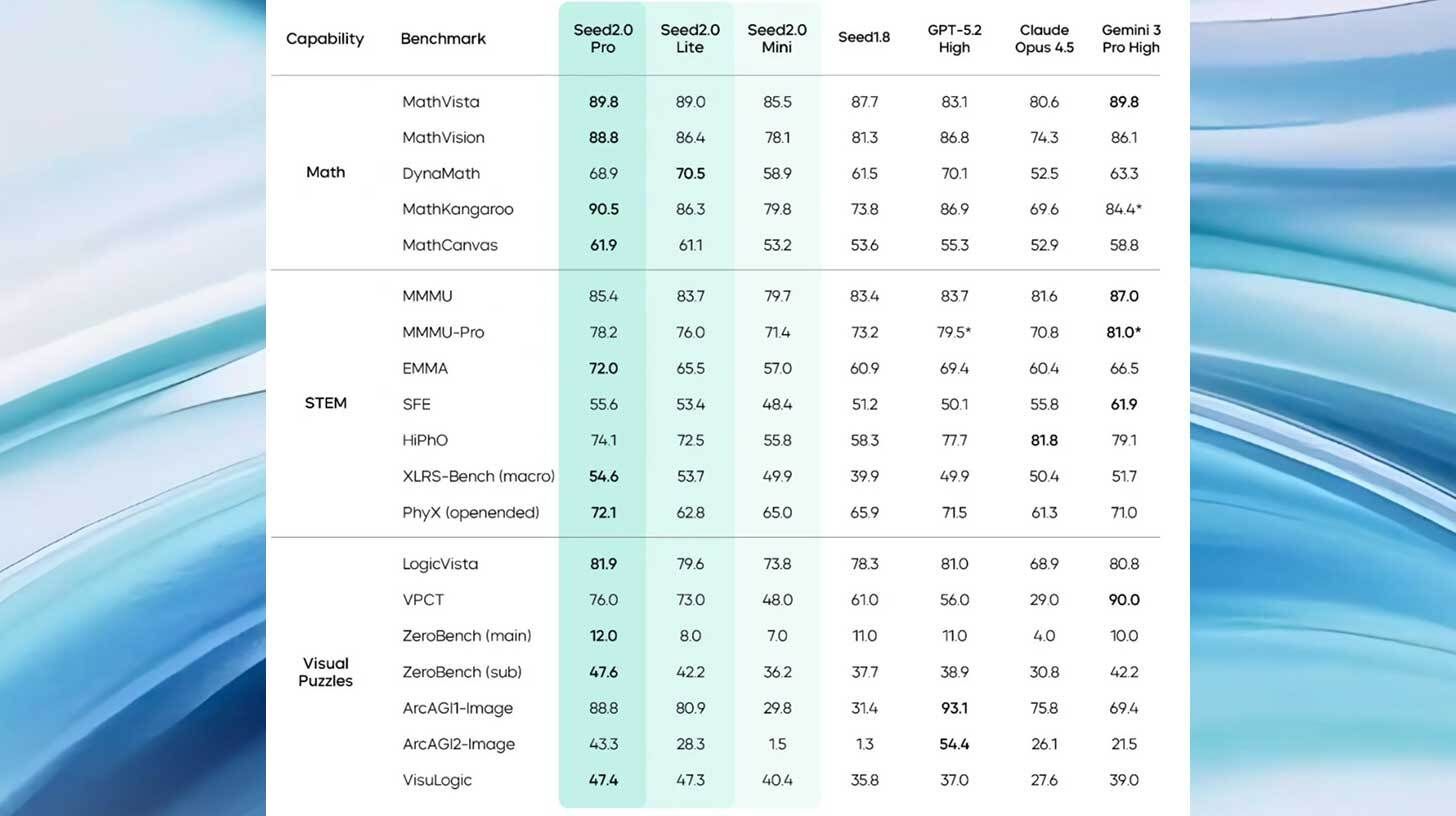
Image source: ByteDance
The Rundown: ByteDance released Seed 2.0, a new family of AI models that match or beat GPT-5.2 and Gemini 3 Pro across dozens of benchmarks at nearly 1/10 of the price — capping a week that also saw its Seedance 2.0 model spark a Hollywood firestorm.
The details:
Seed 2.0 Pro surpasses GPT-5.2 ($1.75/M) and Gemini 3 Pro ($5/M) across a series of math, reasoning, and vision benchmarks at just $0.47/M input tokens.
ByteDance says the model is built for real-world agentic tasks, with demos showing it autonomously completing 96-step CAD modeling workflows.
The launch comes on the heels of the viral Seedance 2.0 video model, which is facing pushback from Hollywood over copyrighted characters and voices.
Seed 2.0 is live now on ByteDance's Doubao app in “Expert Mode” and via API, though consumer availability outside China is still limited.
Why it matters: Move over, DeepSeek… ByteDance is the one rattling the Western AI landscape now. With Seed 2.0 now surpassing the Nov-Dec releases from top labs at bargain prices, the pressure on Western labs is only going one direction — and the Seedance IP drama shows China’s powerhouse isn’t slowing down to ask permission.
QUICK HITS
🛠️ Trending AI Tools
🗣️ Unwrap Customer Intelligence - Get AI-driven insights from your unstructured customer feedback to build your product roadmap*
🦞 Kimi Claw - Deploy OpenClaw agents to the cloud via Moonshot’s AI
🎆 FireRed-Image-Edit - New open-source image model with SOTA results
🧠 Gemini 3 Deep Think - Google's upgraded AI reasoning mode
*Sponsored Listing
📰 Everything else in AI today
OpenClaw creator Peter Steinberger is joining OpenAI, with Sam Altman posting that he will help “drive the next generation of personal agents”.
The Pentagon is considering cutting off Anthropic’s $200M defense deal over the refusal to let the military use Claude for "all lawful purposes."
Anthropic’s Claude was reportedly used via a Pentagon-linked Palantir deployment to support the U.S. military operation that captured Venezuela’s Nicolás Maduro.
Spotify CEO Gustav Soderstrom revealed that the company’s top devs haven’t written a single line of code this year, saying they are “all in” on the transition to AI.
Alpha School shared new test results showing its 2-hour, AI-first academic model has students scoring in the 99th percentile across virtually every grade and subject.
Simile raised $100M to build AI simulations of human behavior, with agents modeled on real people to help companies predict customer decisions.
COMMUNITY
🤝 Community AI workflows
Every newsletter, we showcase how a reader is using AI to work smarter, save time, or make life easier.
Today’s workflow comes from reader Peter S. in Hollis, NH:
"We recently had a water pipe break in our basement, causing damage to the items we store there. The insurance company required us to itemize, take pictures, and provide an estimated replacement cost for each damaged item.
Instead of searching websites, I uploaded the photos in Copilot with descriptions to obtain a good estimate and several links to where we can buy the items. What would have been days to complete the inventory list turned into a couple of hours."
How do you use AI? Tell us here.
🎓 Highlights: News, Guides & Events
Read our last AI newsletter: Google’s upgrade breaks reasoning barriers
Read our last Tech newsletter: Musk’s ‘self-growing’ Moon city
Read our last Robotics newsletter: Apptronik’s $935M humanoid moment
Today’s AI tool guide: Launch an outbound calling agent in 15 minutes
RSVP to next workshop on Feb. 18: Agentic Workflows Bootcamp pt.2
See you soon,
Rowan, Joey, Zach, Shubham, and Jennifer — the humans behind The Rundown
Google's upgrade breaks reasoning barriers
Read Online | Sign Up | Advertise

Good morning, AI enthusiasts. OpenAI and Anthropic have been grabbing all the 2026 headlines — but Google just reminded everyone why it's still the biggest powerhouse in the AI race.
With an upgraded Deep Think obliterating benchmarks across math, coding, and science, and a new research agent autonomously solving open problems, the tech giant is pushing frontier AI for scientific research into uncharted territory.
In today’s AI rundown:
Google's Deep Think crushes reasoning benchmarks
OAI launches ultra-fast coding model on Cerebras chips
How to generate a TV commercial with AI
MiniMax's open-source M2.5 hits frontier coding levels
4 new AI tools, community workflows, and more
LATEST DEVELOPMENTS
⚡Google's Deep Think crushes reasoning benchmarks
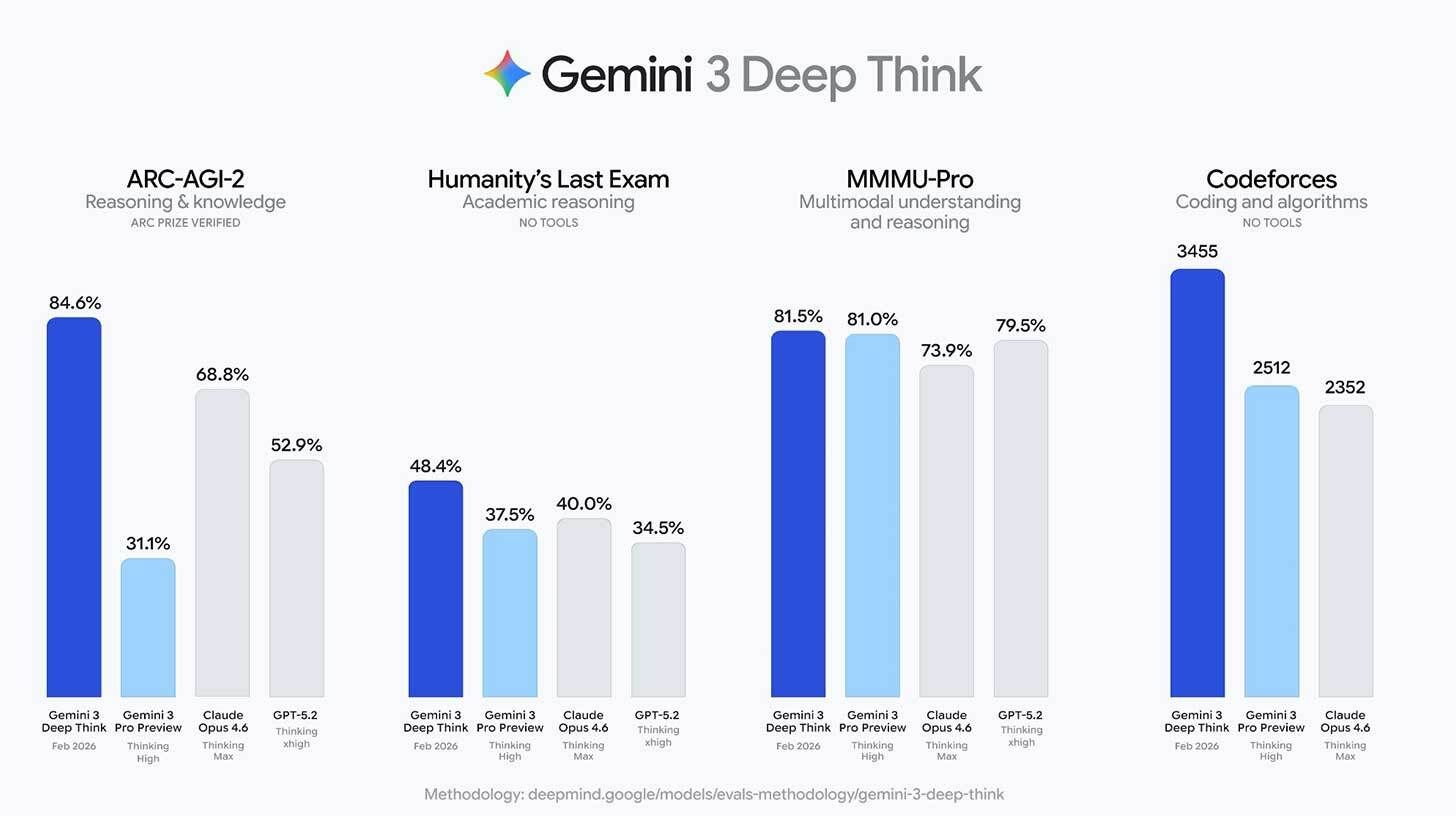
Image source: Google
The Rundown: Google just released a major update to its Gemini 3 Deep Think reasoning mode, posting dominant scores across math, coding, and science — while also introducing its Olympiad-level math research agent driven by the new upgrade.
The details:
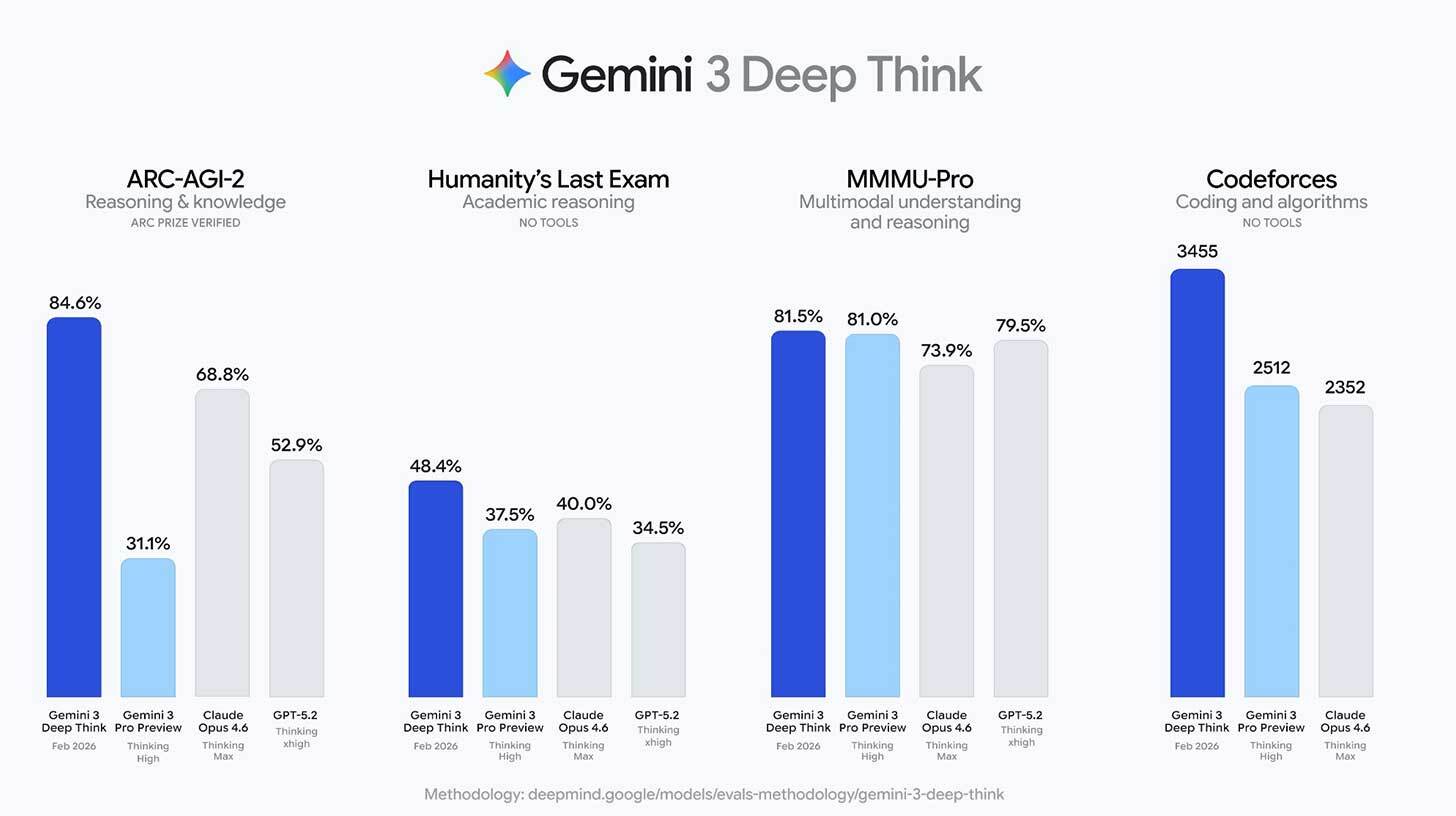
Deep Think hit 84.6% on ARC-AGI-2, obliterating Opus 4.6 (68.8%) and GPT-5.2 (52.9%), and set a new high of 48.4% on Humanity's Last Exam.
It also reached gold-medal marks on the 2025 Physics & Chemistry Olympiads and scored a 3,455 Elo on Codeforces, nearly 1,000 points above Opus 4.6.
Google also unveiled Aletheia, a math agent that autonomously solves open problems, verifies proofs, and hits new highs across domain benchmarks.
The Deep Think upgrade is live for Google AI Ultra subscribers in the Gemini app, with API access open to researchers via an early access program.
Why it matters: After Google dominated benchmarks and headlines to close 2025, the focus has been more on Anthropic and OpenAI in 2026 — but don’t forget about the tech giant as arguably the biggest powerhouse in the AI race. Deep Think’s scores are wild, and the frontier for math and science is quickly moving into uncharted territory.
TOGETHER WITH VOXEL51
💸 Stop wasting 95% of your data labeling budget
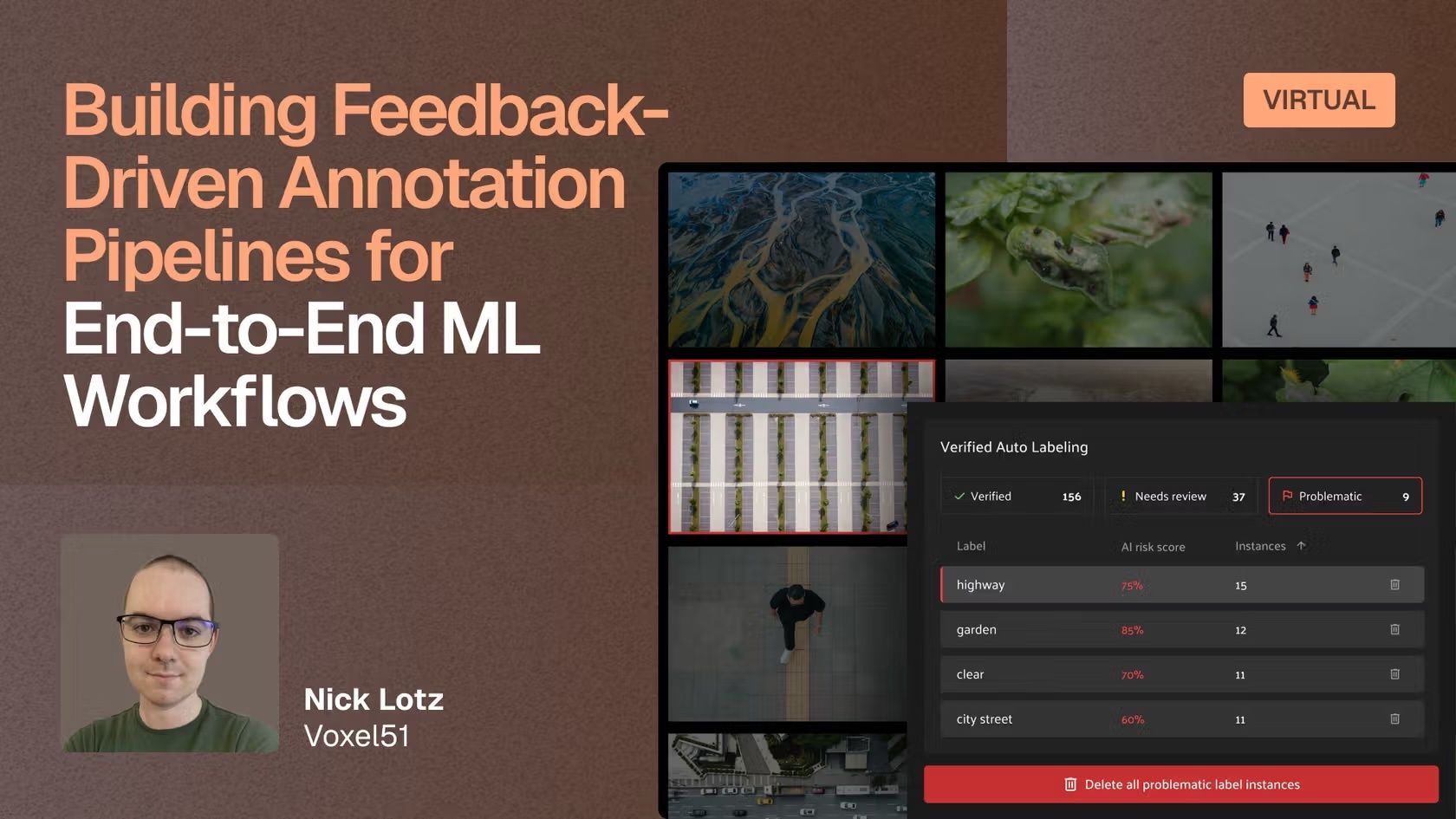
The Rundown: Most teams are labeling massive amounts of data that never gets used for model training. Voxel51's technical workshop on Feb. 18 shows how to build feedback-driven annotation pipelines that eliminate over-labeling — saving time and money while improving model performance.
Join the workshop and learn:
How to use zero-shot selection and embeddings for maximum cost savings
QA workflows to review specific objects and fix errors fast
How to implement dedicated test sets to catch label drift early
Debugging with embeddings to visualize the clusters confusing your model
OPENAI
⚡ OAI launches ultra-fast coding model on Cerebras chips
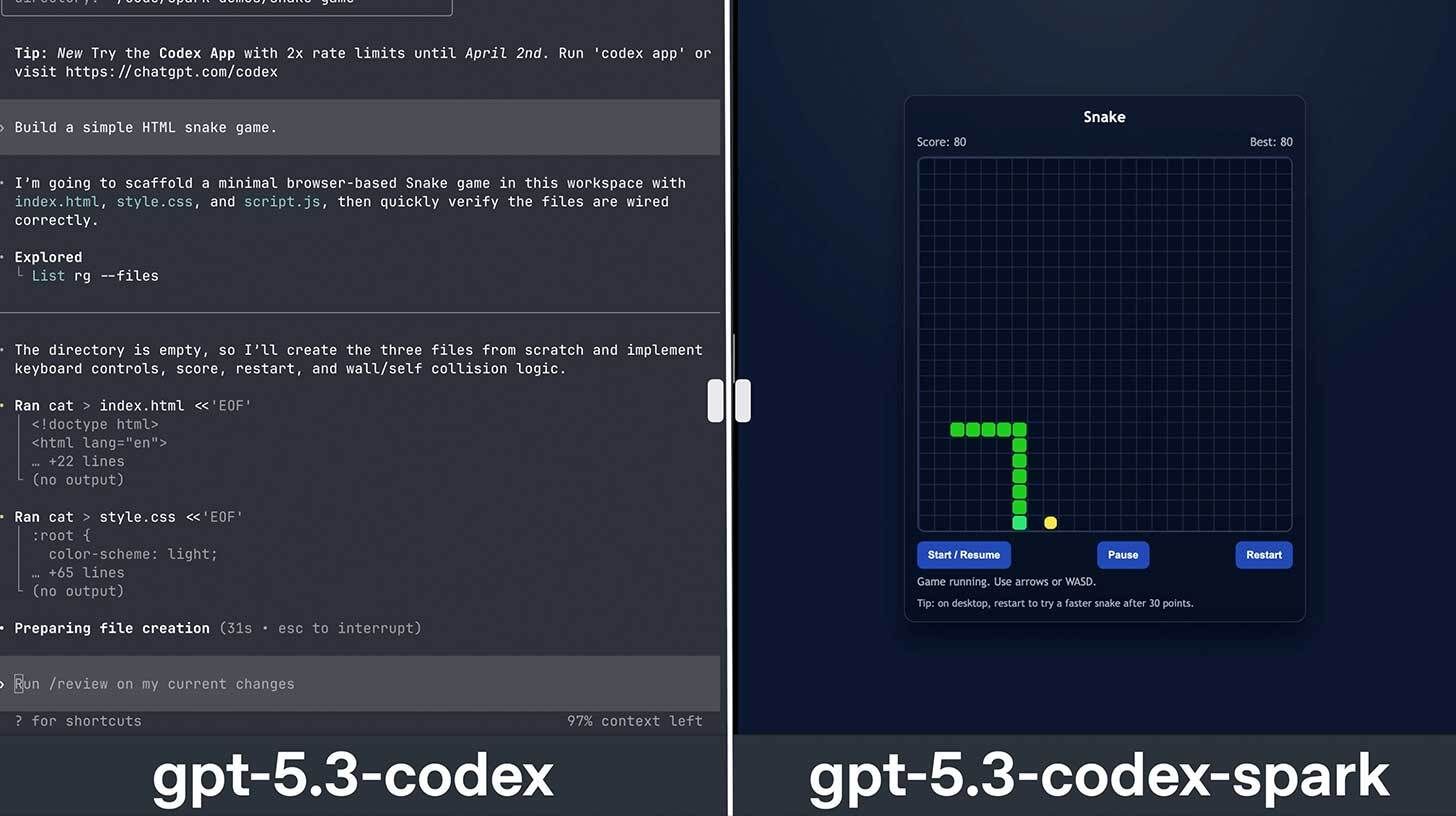
Image source: OpenAI
The Rundown: OpenAI released GPT-5.3-Codex-Spark, a new speed-optimized coding model that runs on Cerebras hardware, cranking out 1,000+ tokens per second and marking the company's first AI product powered by chips beyond its Nvidia stack.
The details:
Spark trades intelligence for speed, trailing the full 5.3-Codex on SWE-Bench Pro and Terminal-Bench but finishing tasks in a fraction of the time.
The release comes just weeks after OAI inked a $10B+ deal with Cerebras and separate agreements with AMD and Broadcom, diversifying away from Nvidia.
OAI's vision is for Spark to handle quick interactive edits while the full Codex tackles longer autonomous tasks in the background.
The model is rolling out as a research preview for ChatGPT Pro subs, with API access initially limited to a handful of enterprise design partners.
Why it matters: Codex's main criticism has been its speed, and OpenAI just addressed it in a big way — while making its chip diversification play real with the first product built on Cerebras hardware. Real-time coding with instant feedback will definitely change workflows for development tasks that are able to compromise a bit of power for speed.
AI TRAINING
📺 How to generate a TV commercial with AI
The Rundown: In this guide, you will learn to generate a 20-second ad in the style of a professional TV commercial — taking the guesswork out of outputs without needing to click and pray.
Step-by-step:
Think of a commercial idea and ask Gemini to plan out two 5s scenes. Once done, ask it to write prompts for the start and end frames of both scenes.
Now, log in to Higgsfield (you will need a basic/pro plan) and click Image > Create Image > Nano Banana Pro. Set 4k quality, 4 variations, and 21:9 ratio.
Generate the start + end frame for scene 1 and just the end frame for scene 2. Download the ones you like best.
In Higgsfield, go to Video > Kling 3.0, upload your frames with the short scene prompt, and hit generate. After this, stitch the videos in a free editor.
Pro tip: Ask Gemini to use photography terms like “Hero shot” when generating scene prompts. You can also generate music for the ad with Suno + Eleven Labs.
PRESENTED BY CDATA
🏗️ Build secure agentic AI that scales

The Rundown: Microsoft and CData are teaming up for a live 45-minute session on how to design secure, scalable agentic infrastructure using Copilot Studio, Agent 365, and CData's Connect AI — including a live cross-system workflow demo.
In this session, you'll learn:
How Microsoft and CData deliver connectivity, context, and control for production AI agents
Agent design and production best practices from both teams
How a Copilot Studio agent syncing with Salesforce and Dynamics 365 is built and deployed
Register here for the session. All registrants will receive the session recording.
MINIMAX
💰 MiniMax's open-source M2.5 hits frontier coding levels
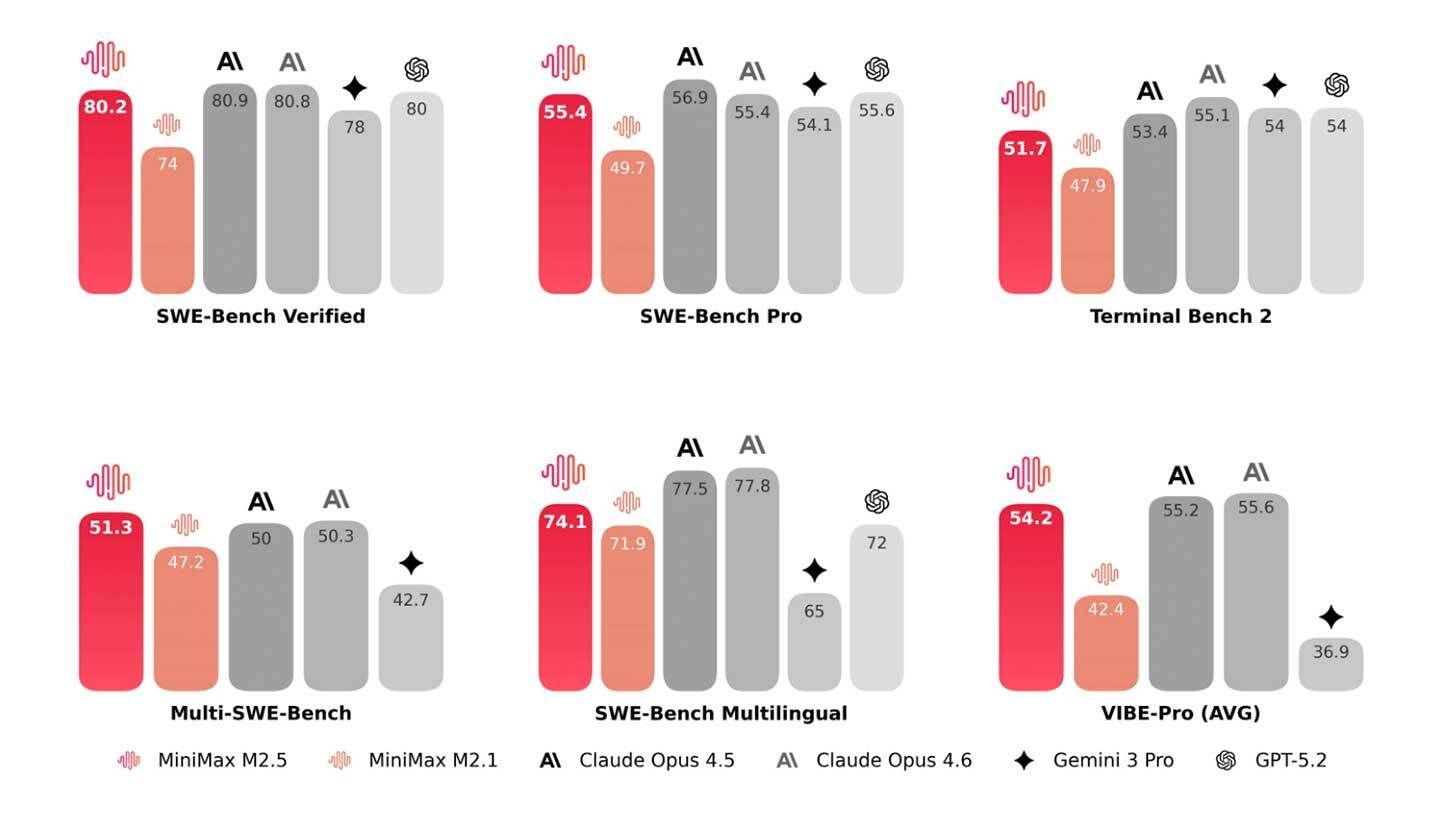
Image source: MiniMax
The Rundown: Chinese AI lab MiniMax launched M2.5, an open-source model that rivals Opus 4.6 and GPT-5 on agentic coding benchmarks — but at a fraction of the cost, making it cheap enough to power AI agents running around the clock.
The details:
M2.5 shows especially strong coding performance, scoring roughly even with Opus 4.6 and GPT-5.2 across key development benchmarks.
Two APIs are available: a faster M2.5-Lightning ($2.40/M output) and a standard M2.5 ($1.20/M output), both priced much lower than Opus ($25/M).
MiniMax revealed that M2.5 now handles 30% of daily company tasks across R&D, product, sales, HR, and finance, as well as 80% of new code commits.
The models are available via API, though the open-source weights and license have yet to be published.
Why it matters: Every few months, it feels like a Chinese lab drops a model that changes the cost math for the entire industry. M2.5’s frontier-level coding at this price makes "intelligence too cheap to meter" feel closer than ever, an important development as agents handling longer autonomous tasks become more common.
QUICK HITS
🛠️ Trending AI Tools
🔒 Incogni - remove your personal data from the web so scammers and identity thieves can’t access it. Use code RUNDOWN to get 55% off.*
🧠 Gemini 3 Deep Think - Google's upgraded AI reasoning mode
⚡️ GPT-5.3-Codex-Spark - OpenAI’s ultra-fast model for real-time coding
🤖 M2.5 - Minimax’s new open-source frontier model with powerful coding
*Sponsored Listing
📰 Everything else in AI today
ByteDance officially launched Seedance 2.0, the company’s viral SOTA video model, publishing benchmark results and a technical blog, but access still remains restricted.
Mustafa Suleyman told FT that most white-collar work will be "fully automated by AI within 12 to 18 months," with Microsoft pursuing "true self-sufficiency" with its models.
Elon Musk said that xAI's wave of departures was forced, not voluntary — calling it a reorg for "speed of execution" after losing ten co-founders and engineers this week.
OpenAI is retiring GPT-4o, GPT-4.1, and o4-mini from ChatGPT today, coming amid pushback from users calling for 4o’s preservation.
Anthropic officially announced a new $30B funding round at a $380B valuation, with its revenue run rate hitting $14B — $2.5B of which comes from Claude Code alone.
OAI researcher Zoë Hitzig resigned after the launch of ChatGPT ads, warning OAI’s archive of human thought creates “unprecedented potential for manipulation.”
COMMUNITY
🤝 Community AI workflows
Every newsletter, we showcase how a reader is using AI to work smarter, save time, or make life easier.
Today’s workflow comes from reader Anthony H. in Australia:
"I needed a QR code scanner to check in our members at regular meetings to be used on an iPad. I couldn't find a good solution that wasn't expensive or bloated with extra features not needed. So, I created my own with Google AI Studio, GitHub, and Vercel.
It features event session creation, member profiles, auto-create custom QR codes for each member, and a system backup, as the data is held locally due to privacy. I added bulk import and export functions. Reports can be created that we need for our funding requirements as well."
How do you use AI? Tell us here.
🎓 Highlights: News, Guides & Events
Read our last AI newsletter: xAI’s next phase unleashed
Read our last Tech newsletter: Musk’s ‘self-growing’ Moon city
Read our last Robotics newsletter: Apptronik’s $935M humanoid moment
Today’s AI tool guide: How to generate a TV commercial with AI
RSVP to next workshop on Feb. 18: Agentic Workflows Bootcamp pt.2
See you soon,
Rowan, Joey, Zach, Shubham, and Jennifer — the humans behind The Rundown
No matching search results
Try using different keywords, double-check your spelling, or explore related categories.
Stay Ahead on AI.
Join 2,000,000+ readers getting bite-size AI news updates straight to their inbox every morning with The Rundown AI newsletter. It's 100% free.