Apple's '2026 product blitz'
PLUS: Amazon's $8M ad backfires

Jennifer Mossalgue
February 17, 2026
Read Online | Sign Up | Advertise

Good morning, tech enthusiasts. Apple is ditching the keynote stage for a simultaneous “special experience” across New York, London, and Shanghai on March 4 — hands-on, no livestream, no theater.
The format shift tells you everything: there’s no single hero product here. Instead, Apple is unleashing a ‘blitz’ of new Macs, iPads, and at least one wildcard device aimed squarely at the value crowd.
In today’s tech rundown:
Apple’s ‘special experience’ on March 4
Waymo’s smarter robotaxi hits the streets
Ring drops Flock deal after Super Bowl ad
Electric ferry with the power of 487 Teslas
Quick hits on other tech news
LATEST DEVELOPMENTS
APPLE
🍏 Apple’s ‘special experience’ on March 4

Image source: Apple
The Rundown: Apple is reportedly ditching the keynote stage show and hosting a March 4 “special experience” event in New York, London, and Shanghai that’s expected to unleash a wave of new Macs, iPads, and a rumored cheaper iPhone.
The details:
M5 Pro and M5 Max MacBook Pros, an M5 MacBook Air, refreshed iPads, and a new Studio Display are all expected.
The headliner is a sub-$750 MacBook, an A18 Pro-powered, multi-color laptop built on a new cost-cutting aluminum process, with a display under 13 inches.
The iPhone 17e is expected to gain MagSafe, an A19 chip, and upgraded wireless internals, all at the same price as its predecessor.
With no live-stream in sight, expect an intimate hands-on showcase rather than a polished Cupertino production.
Why it matters: None of these products alone would justify a traditional Apple keynote — and that’s exactly the point. By staging a multi-city “experience” instead of a slick stage show, Apple is testing another launch format for a product cycle built around volume and value, not any single flagship moment.
WAYMO
🚖 Waymo’s smarter robotaxi hits the streets
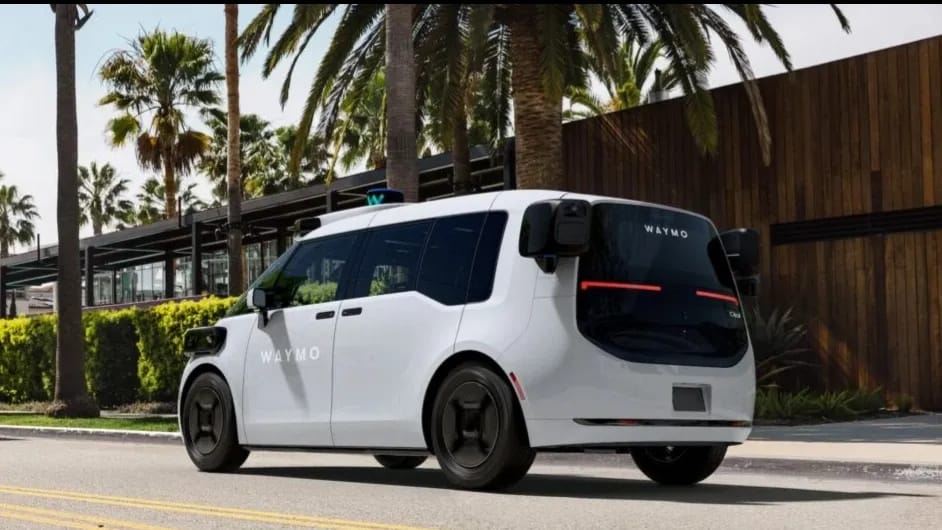
Image source: Waymo
The Rundown: Alphabet’s robotaxi company Waymo is finally rolling out its next‑gen robotaxi hardware by seeding a fleet of new “Ojai” vans into San Francisco and LA, where employees and their friends are already getting fully driverless rides.
The details:
Built by Chinese automaker Zeekr and outfitted with Waymo’s hardware at its Arizona facility, the Ojai is meant to eventually replace the Jaguar I-PACE fleet.
The sixth-gen Waymo Driver cuts the total sensor count by 42% — down from 29 cameras to 13 — while adding a proprietary 17-megapixel imager.
Waymo says the hardware is engineered for rain, snow, fog, and hail, with self‑cleaning sensors and algorithms tuned for harsh weather.
The Driver is designed to bolt onto multiple vehicles, starting with the Ojai and expanding to the Hyundai Ioniq 5.
Why it matters: Waymo already operates paid robotaxi services in six U.S. markets and plans to add 20 more cities this year, including London and Tokyo — putting pressure on rivals Tesla and Zoox. Public Ojai rides are expected later in 2026, with a target of 1M autonomous rides per week by year’s end, up from roughly 400K today.
RING
🐶 Ring drops Flock deal after Super Bowl ad

Image source: Ring
The Rundown: Amazon’s Ring is facing backlash after its Super Bowl ad for an AI-powered “Search Party” feature collided with news that the company was partnering with police-tech vendor Flock Safety. Days later, Ring walked away from the deal.
The details:
Ring has killed a planned integration with police-surveillance vendor Flock Safety, saying it would have required too many resources.
Flock runs a massive AI-powered license-plate and camera network used by thousands of law enforcement agencies nationwide.
The EFF called the Super Bowl ad a preview of “Ring’s surveillance nightmare,” noting that Amazon already ships facial recognition via its Familiar Faces tool.
Both ICE and CBP have reportedly accessed Flock’s data as part of the Trump administration’s immigration crackdown — a claim Flock denies.
Why it matters: Ring’s Super Bowl ad showed a lost dog found via connected, AI-assisted neighborhood cameras, prompting renewed privacy debate. Ring says Search Party can’t identify people, though its broader ecosystem includes advanced analytics and public-safety partnerships.
ELECTRIC TRANSPORT
🛳️ Electric ferry with the power of 487 Teslas
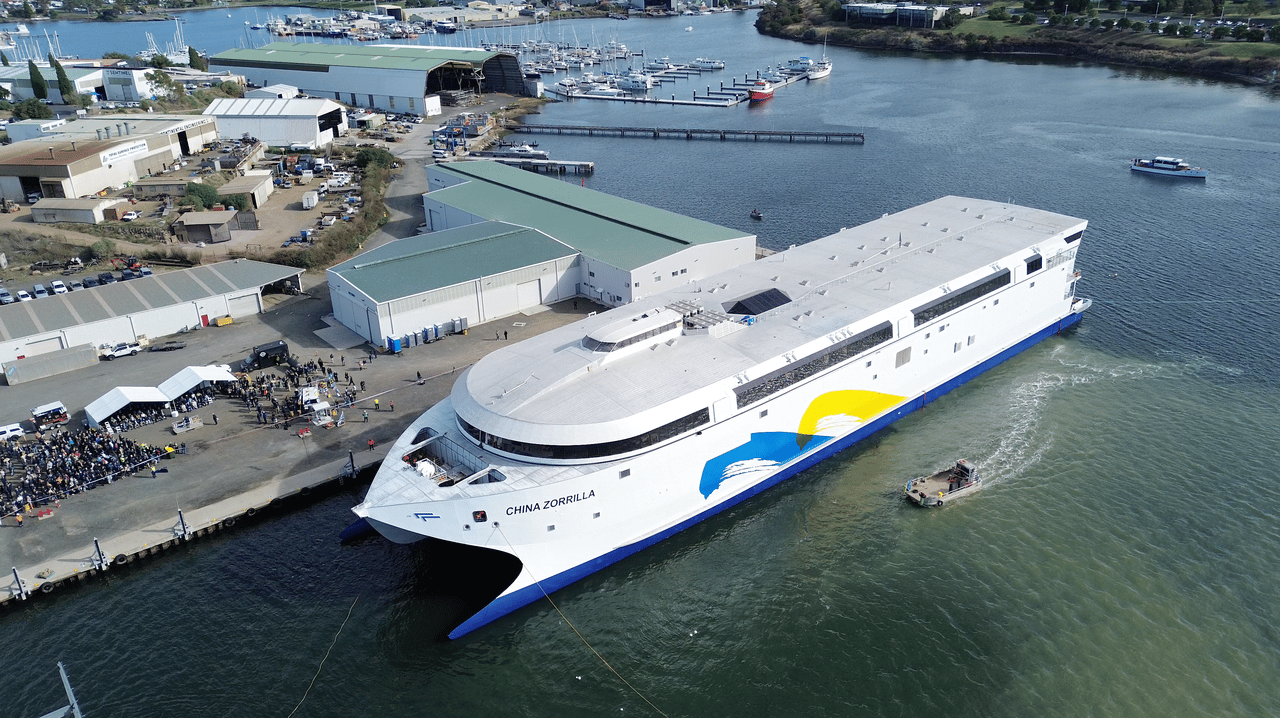
Image source: Incat
The Rundown: Australia is about to launch the world’s largest electric ship, a $200M 130-meter Incat-built catamaran packed with 250 tons of batteries and high-speed waterjets, marking a zero-emission leap forward for mass ferry transport.
The details:
The all-aluminum catamaran carries 2,100 passengers and 225 vehicles on 40 megawatts of battery-electric power — roughly the output of 487 Tesla EVs.
Buquebus commissioned an LNG-powered vessel in 2020, but as battery costs fell, the operator and Incat renegotiated mid-build to go fully electric.
Incat just completed full deployment trials of the ship’s Marine Evacuation System, with six 22-meter MES units supported by 13 life rafts.
The ferry doubles as a floating mall, with more than 25K square feet of retail space carved into its decks for duty-free shopping mid-crossing.
Why it matters: The massive ferry will cover crossings of up to 115 miles on battery power alone, linking Buenos Aires to Uruguay. If it performs at scale, it won’t just be the world’s largest electric vehicle but proof that zero-emission propulsion can handle the loads that commercial shipping still assumes require fossil fuels.
QUICK HITS
📰 Everything else in tech today
Meta is reportedly preparing to add a facial recognition feature to its Ray‑Ban smart glasses as soon as this year, letting wearers identify people and pull up info about them.
Defense tech startup Anduril is in talks to raise as much as $8B in new funding at a valuation of around $60B, roughly double its June 2025 valuation.
Chinese AI startup Moonshot, maker of the Kimi chatbot, is seeking a fresh funding round already backed by Alibaba and Tencent, for a valuation of about $10B.
Warner Bros. Discovery is considering reopening sale talks with Paramount even as Netflix remains its formal buyer, setting up a potential renewed bidding war.
Adani Group plans to invest $100B by 2035 to build renewable energy–powered data centers in India, aiming to create a major AI infrastructure hub.
Hong Kong’s police plan to add facial recognition to the city’s public CCTV network as early as this year, starting with high‑traffic shopping malls.
Uber says it will roll out its Uber Eats food‑delivery service to seven additional European countries in 2026, including Austria, Denmark, Finland, Norway, and Greece.
Biohacker Bryan Johnson is selling an “Immortals” longevity program for $1M a year, offering three clients a concierge team and 24/7 access to his BryanAI coach.
Danaher is closing in on a roughly $10B acquisition of medical device maker Masimo, in a deal that would add its hospital monitors and wearables to Danaher’s empire.
Russia blocked WhatsApp and is steering its more than 100M users toward the state-backed MAX messaging app, which critics say is designed for surveillance.
Former NPR host David Greene is suing Google, alleging the company effectively stole his voice by training the male narrator in its NotebookLM AI podcast tool.
COMMUNITY
🎓 Highlights: News, Guides & Events
Read our last AI newsletter: Anthropic-Pentagon AI feud escalates
Read our last Tech newsletter: Musk’s ‘self-growing’ Moon city
Read our last Robotics newsletter: Apptronik’s $935M humanoid moment
Today’s AI tool guide: Turn a YouTube thumbnail into 5 social posts
RSVP to next workshop on Feb. 18: Agentic Workflows Bootcamp pt.2
See you soon,
Rowan, Joey, Zach, Shubham, and Jennifer — The Rundown’s editorial team

Stay Ahead on AI.
Join 2,000,000+ readers getting bite-size AI news updates straight to their inbox every morning with The Rundown AI newsletter. It's 100% free.