The race to make space babies
PLUS: Palantir's double-edged rise

Jennifer Mossalgue
February 3, 2026
Read Online | Sign Up | Advertise

Good morning, tech enthusiasts. Mars rovers and moon bases are one thing, but the final frontier of space exploration might just be the delivery room.
A new crop of startups is racing to crack the code on cosmic conception, with one Dutch biotech already lobbing early prototypes into orbit aboard SpaceX rockets.
The science is shaky, the ethics are messy, and nobody’s figured out how to handle a diaper change in zero-g — but that’s not stopping anyone.
In today’s tech rundown:
The race to make space babies has begun
Palantir soars amid ICE backlash
Blue Origin halts space tourism to chase the moon
India offers Big Tech a 21-year tax break
Quick hits on other tech news
LATEST DEVELOPMENTS
BIOTECH/SPACE
🍼 The race to make space babies has begun

Image source: Ideogram / The Rundown
The Rundown: A new wave of startups and researchers is racing to test whether humans can safely conceive, carry pregnancies, and raise children beyond Earth — a prerequisite for any permanent lunar or Martian settlement, The Information reports.
The details:
Space ambitions for moon and Mars bases face an unknown: no one yet knows if pregnancies can safely develop in microgravity and intense radiation.
Biotech startup SpaceBorn United is developing a mini-IVF lab for embryos in orbit; its first nonhuman prototype launched aboard a SpaceX rocket.
Early experiments with mouse embryos in orbit show that development might be possible in space, but with higher failure rates and potential DNA damage.
Ethicists warn that commercial space stations could become a “wild west” for high‑risk human reproduction trials.
Why it matters: These ventures are early and ethically fraught — scientists say we barely understand the health risks of long-duration spaceflight for adults, let alone fetuses. But as SpaceX, Blue Origin, and national space agencies sketch plans for lunar bases and Martian cities, the strange age of space babies looks to be taking shape.
PALANTIR
👁️ Palantir soars amid ICE backlash

Image source: Reve / The Rundown (CEO Alex Karp)
The Rundown: Palantir’s Q4 was a blowout: $1.41B in revenue, up 70% year-over-year, with profits that crushed estimates. It also landed amid nationwide protests over the company’s surveillance work for ICE.
The details:
Palantir’s U.S. commercial revenue jumped 137% year-over-year; U.S. government revenue rose 66%. Total contract bookings hit $4.3B.
The Denver-based firm builds data integration and high-resolution surveillance platforms for government agencies and corporate clients.
The company holds a $30M ICE contract for "ImmigrationOS," designed to track migrants and prioritize deportations.
Amnesty International warns that Palantir has failed to adequately vet these contracts and may be contributing to serious abuses against migrants.
Why it matters: CEO Alex Karp framed the performance as “an n of 1,” arguing that Palantir is now a category rather than a company. Civil liberties groups and some former employees argue that the more successful Palantir becomes, the more normalized high-res state surveillance will be, from immigration to predictive policing.
BLUE ORIGIN
🚀 Blue Origin halts space tourism to chase the moon
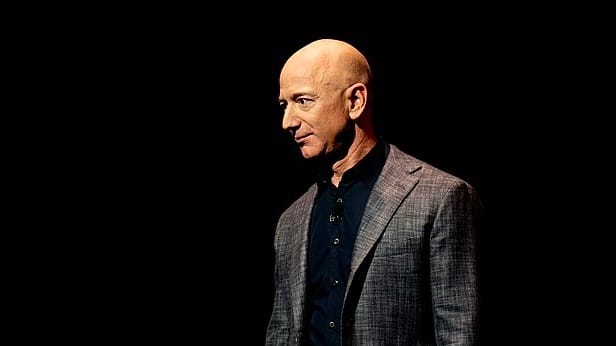
Image source: Daniel Oberhaus / Wikimedia Commons
The Rundown: Jeff Bezos’ Blue Origin is grounding its New Shepard space-tourism rocket for at least two years to accelerate development of its crewed lunar lander and other moon-focused hardware.
The details:
Blue Origin said it will “pause its New Shepard flights and shift resources to further accelerate development of the company’s human lunar capabilities.”
The move comes as the Trump administration pressures NASA to land astronauts on the moon before the end of the president’s second term.
Transportation Secretary Sean Duffy said NASA may use Blue Origin’s lander for the Artemis III mission if SpaceX’s Starship is too far behind schedule.
Since its first crewed flight in July 2021, New Shepard has carried 98 people above the Kármán line on 10-minute suborbital hops.
Why it matters: Blue Origin is grounding its celebrity joyrides to focus on a $3.4B NASA contract for a crewed lunar lander. With SpaceX facing delays on its Starship lander, Bezos sees a window to leapfrog his rival for Artemis-era dominance — and that prize dwarfs anything the tourism business could deliver.
BIG TECH
💰 India offers Big Tech a 21-year tax break

Image source: Ideogram / The Rundown
The Rundown: India is offering foreign cloud giants a 21‑year tax holiday if they run global AI workloads from Indian data centers, effectively turning the country into a zero‑tax export hub for compute while it races to fix power and water constraints.
The details:
The budget proposal lets foreign providers pay no corporate tax on revenue from cloud services sold outside India through local data centers until 2047.
Google, Microsoft, and Amazon have already pledged tens of billions of dollars for new AI hubs and data‑center capacity in India.
Indian sales must flow through locally taxed resellers, which critics fear will leave domestic cloud firms stuck as low‑margin middlemen.
The plan also proposes a 15% cost-plus safe harbor for Indian data center operators that provide services to related foreign entities.
Why it matters: India’s zero‑tax offer through 2047 is a bold play to divert AI data‑center investment from hubs like Singapore and the Gulf. But critics say that if it can’t fix unreliable power, steep electricity costs, and severe urban water stress, India risks becoming a place with great tax breaks and nowhere to plug in GPUs.
QUICK HITS
📰 Everything else in tech today
Mozilla’s Firefox 148 will add an AI settings panel that lets you flip a switch to block AI features in the browser, or selectively turn off individual tools.
NASA pushed the first crewed Artemis II moon mission back to March after a wet‑dress rehearsal exposed liquid hydrogen leaks in the rocket’s fueling system.
Oracle is reportedly weighing layoffs of 20K to 30K employees and potential asset sales to free up billions in cash to finance a massive expansion of its AI data centers.
Tesla rolled out a new all‑wheel‑drive Model Y variant in the U.S. priced at $41,990, slotting above the cheaper rear‑wheel‑drive “Standard” version.
Swedish startup Candela set a new benchmark for electric ferries after its P‑12 hydrofoil shuttle completed a 160‑nautical‑mile voyage using DC fast chargers.
France is moving ahead with a social media ban for under‑15s, with a key digital minister suggesting that the country might target VPNs next.
Uber is relaunching in Macau, its first new Asian market in years, with in‑app taxi bookings and a premium car service linking the city to Hong Kong.
Amazon’s latest round of 16K corporate layoffs includes about 1,400 jobs in Seattle and 700 in nearby Bellevue, deepening a tech‑sector downturn in the region.
Trump says he had no knowledge of, or role in, the $500M Abu Dhabi investment that bought a 49% stake in his family’s crypto company.
China banned hidden car door handles on new vehicles from 2027, requiring mechanical releases after crashes where flush handles allegedly trapped people inside.
Google delayed the Fitbit‑to‑Google account migration deadline again, giving users until May 19 to move their data (or export it) before old Fitbit logins stop working.
COMMUNITY
🎓 Highlights: News, Guides & Events
Read our last AI newsletter: xAI joins SpaceX in mega-merger
Read our last Tech newsletter: Humans head back to the moon
Read our last Robotics newsletter: Waymo hits record $110B valuation
Today’s AI tool guide: Prompts, strategies for generating AI Headshots
RSVP to our next workshop on Feb. 11: Agentic Workflows Bootcamp pt. 1
See you soon,
Rowan, Joey, Zach, Shubham, and Jennifer — The Rundown’s editorial team




Stay Ahead on AI.
Join 2,000,000+ readers getting bite-size AI news updates straight to their inbox every morning with The Rundown AI newsletter. It's 100% free.