Get the latest AI news, understand why it matters, and learn how to apply it in your work — all in just 5 minutes a day. Join over 2,000,000+ subscribers.
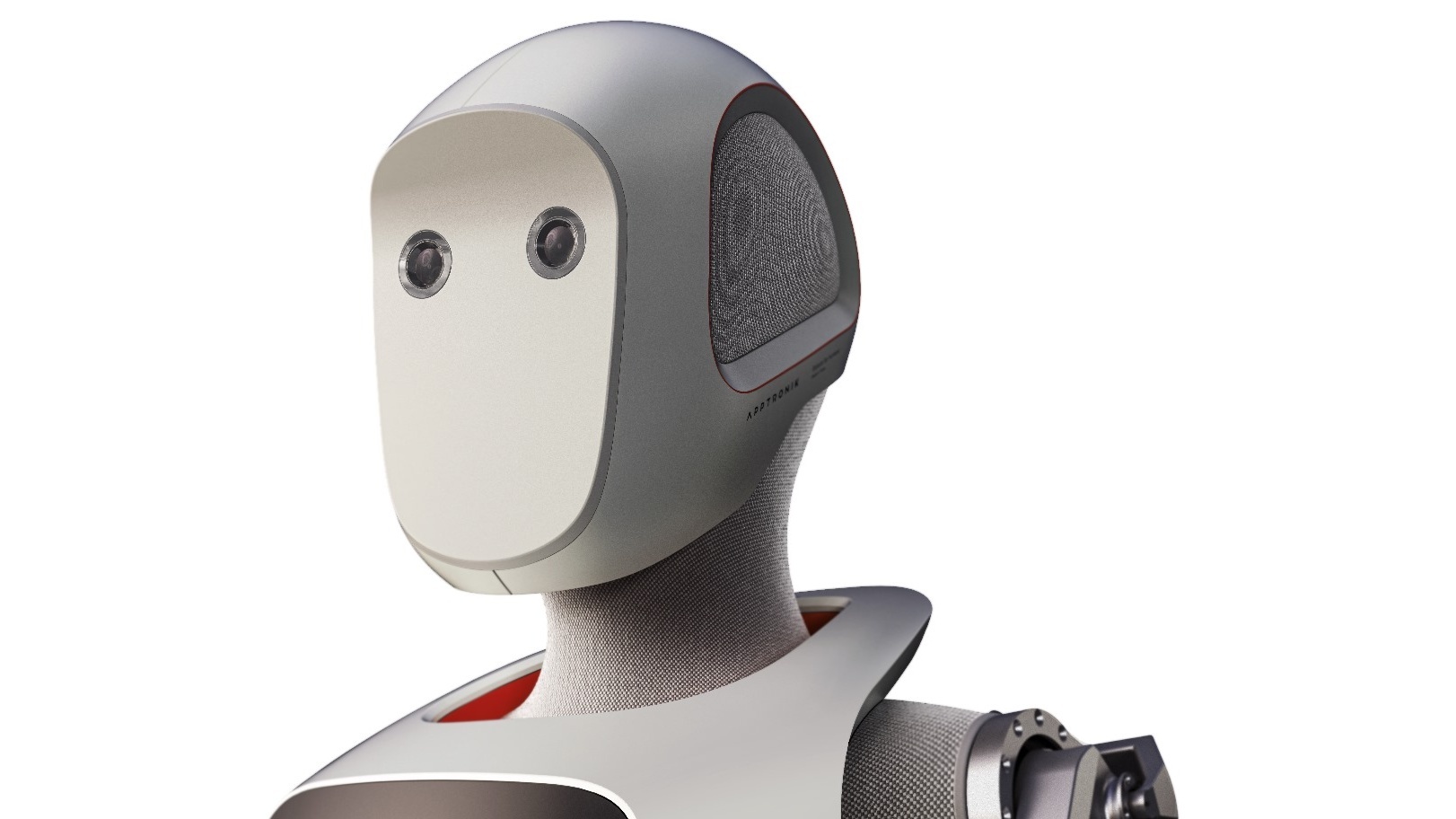
Apptronik's $935M humanoid moment
Read Online | Sign Up | Advertise

Good morning, robotics enthusiasts. Austin-based humanoid startup Apptronik — born from a UT lab that once built robots for NASA — just stretched its Series A to a staggering $935M at a valuation north of $5B.
Now the question is whether its flagship humanoid Apollo, purpose-built for factories and warehouses and forged in partnership with DeepMind, can make "embodied AI" more than a buzzword — and do it faster than Figure and Tesla.
In today’s robotics rundown:
Apptronik’s Series A hits $935M
Alibaba’s robot brain tops Google
This startup weaves a robot hand like rope
Nvidia’s new world model for robots
Quick hits on other robotics news
LATEST DEVELOPMENTS
APPTRONIK
🦄 Apptronik’s Series A hits $935M
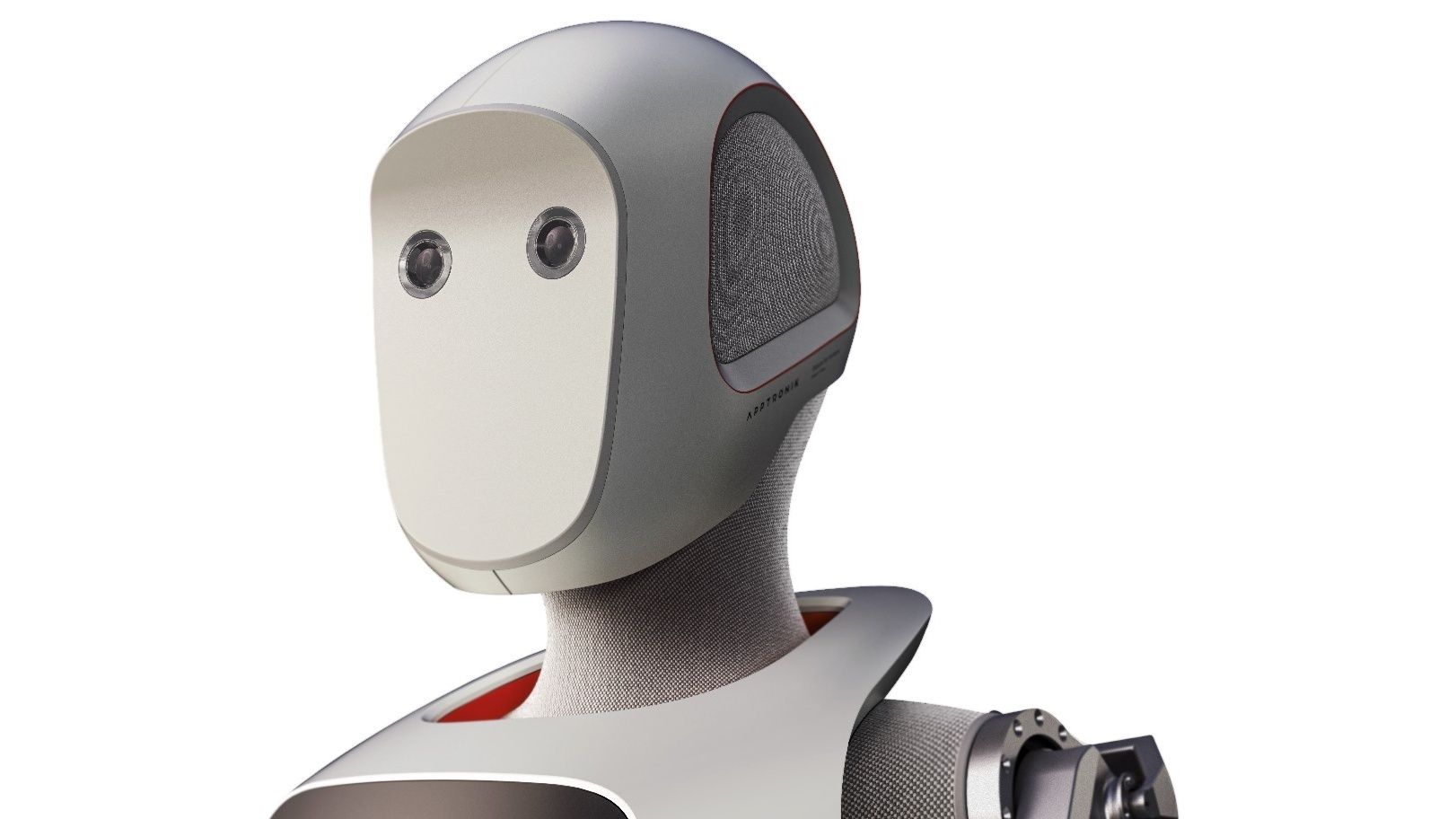
Image source: Apptronik
The Rundown: Austin-based humanoid startup Apptronik stretched its Series A to a staggering $935M, pushing the University of Texas spinout to a roughly $5.5B post-money valuation — about triple where it stood a year ago.
The details:
The company says it wasn't actively fundraising, just fielding inbound interest it couldn't turn down; backers include Google, Mercedes-Benz, and B Capital.
CEO Jeff Cardenas said the company will use the funding to expand its Austin office, open a new location in California, and scale production of its robots.
Apptronik’s Apollo is being developed for work in logistics and manufacturing, including pilots with Google DeepMind, Mercedes-Benz, and GXO.
The company traces its lineage to UT’s Human Centered Robotics Lab and NASA’s Valkyrie program, with a decade-plus of experience in bipedal robotics.
Why it matters: Part of the excitement around Apptronik is its work with Google DeepMind and Mercedes-Benz on embodied AI — robots that perceive messy environments and act on reasoning. With rival Figure AI near $3B raised, Apptronik’s $935M buys it runway, but humanoids remain an extremely expensive business.
ALIBABA
🧠 Alibaba’s robot brain tops Google
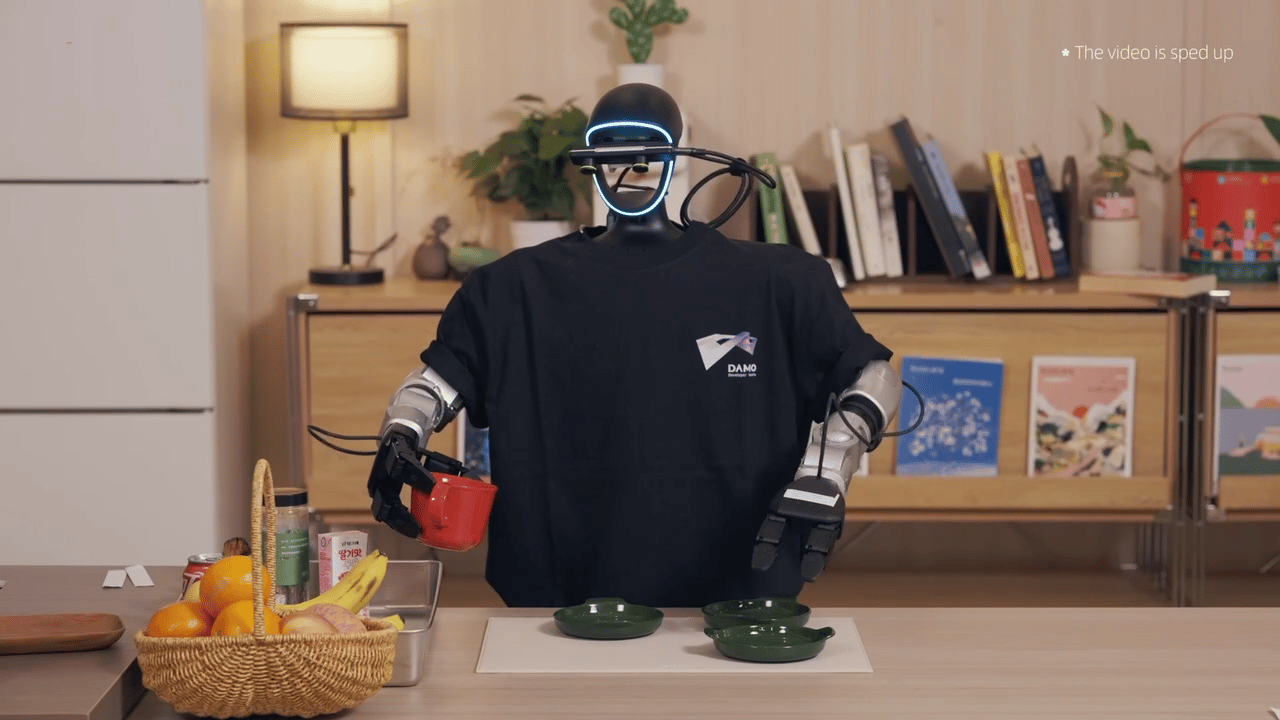
Image source: Alibaba
The Rundown: Alibaba just released RynnBrain, an open-source “physical AI” model designed to power robots with better real‑world perception and planning, putting it in direct competition with Google and Nvidia in embodied AI.
The details:
RynnBrain is trained on Alibaba’s Qwen3‑VL vision-language system, letting robots map objects, predict trajectories, and navigate cluttered spaces.
The model targets a key weakness in current robotics stacks — poor spatial and temporal memory — by letting robots remember where items are.
Alibaba says RynnBrain hits performance on 16 embodied-AI benchmarks and outperforms Google’s Gemini Robotics‑ER 1.5 and Nvidia’s Cosmos‑Reason2.
Multiple versions, starting around 2B parameters, are already live on Hugging Face and GitHub for developers to drop into their own hardware.
Why it matters: RynnBrain is Alibaba’s bid to own the brains of China’s next generation of robots, not just sell the cloud around them. By open-sourcing a model that it claims beats Google and Nvidia on key benchmarks, Alibaba is angling to make its stack the default toolkit for anyone building bots that need to work in the real world.
ALLONIC
👉🏽 This startup weaves a robot hand like rope
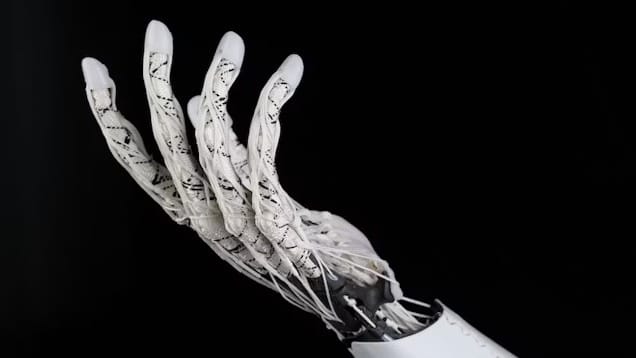
Image source: Allonic
The Rundown: Budapest-based robotics startup Allonic raised a record $7.2M pre-seed round to industrialize its “3D tissue braiding” process, which weaves biomimetic robot parts in minutes instead of from hundreds of rigid parts.
The details:
The company’s platform “grows” robot bodies by braiding soft, load-bearing tendons and joints around a 3D-printed skeleton in a single automated process.
This assembly-free approach aims to cut production of robot fingers, grippers, and arms to just a few minutes, while enabling more natural, biomimetic motion.
More than a dozen investors from OpenAI, Hugging Face, ETH Zurich, and Northwestern University backed the round — Hungary’s biggest-ever pre-seed.
Allonic envisions its platform as a customizable infrastructure for robot makers, with plans to scale from hands to full bodies across form factors.
Why it matters: Allonic is chasing the same lifelike hand space as Clone, but rather than engineering novel artificial muscles, it's using automated 3D braiding to grow the entire hand around a scaffold in one pass. If it scales, Allonic stops being just another hand startup and becomes the shared body shop everyone else plugs into.
NVIDIA
📽️ Nvidia’s new world model for robots

Image source: DreamDojo Github
The Rundown: A team of researchers led by Nvidia unveiled DreamDojo, a generalist robot world model trained on 44K hours of POV human video, aimed at teaching robots real‑world skills largely in simulation.
The details:
The model learns how the physical world works by predicting future frames and actions, capturing dynamics like contact, friction, and object motion.
Once this pre-learning is done, engineers only need a small amount of real robot data to teach specific arms and mobile robots how to perform tasks.
DreamDojo was developed by a joint team from Nvidia and multiple academic labs, including UC Berkeley, Stanford, and the University of Texas at Austin.
The research, detailed in an arXiv paper, reflects Nvidia’s push to become core infrastructure for the emerging robot “app store” ecosystem.
Why it matters: DreamDojo’s edge is a single physics model trained on massive first‑person human video that can be lightly fine‑tuned to many robots. It puts more weight on egocentric, contact‑rich video pretraining than Nvidia’s synthetic‑heavy GR00T‑Dreams and rivals like Gemini Robotics and Helix.
QUICK HITS
📰 Everything else in robotics today
Waymo started testing fully driverless robotaxis on public streets in Nashville, paving the way for a commercial robotaxi service in the city later this year.
San Francisco robotics startup Weave Robotics opened orders for its $7,500 laundry-folding robot, Isaac 0, to Bay Area residents, with deliveries starting this month.
Mexico is deploying robot dogs to scout dangerous areas and stream live video to police as part of its security plan for the 2026 World Cup matches in Monterrey.
Gather AI, which makes AI‑powered warehouse drones that autonomously scan inventory, raised a $40M round led by former Salesforce co-CEO Keith Block’s VC firm.
China’s Agibot staged “Agibot Night 2026” in Shanghai, a 60‑minute gala billed as the world’s first large live show performed entirely by humanoids.
France’s ITER fusion project brought in a 13-foot-tall industrial robot nicknamed “Godzilla,” considered the most powerful industrial bot of its kind.
A YouTuber built and trained a laundry‑folding robot in just 24 hours, showing the low-cost bot folding towels after a single day of rapid prototyping and model training.
Boston Dynamics CEO Robert Playter is stepping down after more than 30 years at the company, with CFO Amanda McMaster taking over as interim chief.
Waymo says its robotaxis sometimes call human “response agents” in the Philippines for guidance in unusual situations, but those workers never directly drive the cars.
China launched the Ultimate Robot Knockout Legend in Shenzhen, a “world’s first” humanoid combat league using EngineAI’s T800 robots.
An Amazon Prime Air MK30 delivery drone crashed into the side of an apartment building in Richardson, Texas, sending up smoke but causing no injuries.
Australian aerospace engineer Benjamin Biggs pushed the latest version of his custom “BlackBird” quadcopter to a record-breaking top speed of 411 mph (661 km/h).
Corvus Robotics launched Corvus One for Cold Chain, an autonomous drone system that conducts continuous inventory scans in industrial freezers down to -20°F.
COMMUNITY
🎓 Highlights: News, Guides & Events
Read our last AI newsletter: xAI's next phase unleashed
Read our last Tech newsletter: Musk’s ‘self-growing’ Moon city
Read our last Robotics newsletter: Uber to launch robotaxis in 15 cities
Today’s AI tool guide: Turn SOP docs into talking head training videos
RSVP to our workshop today @ 2PM EST: Agentic Workflows Bootcamp pt. 1
See you soon,
Rowan, Joey, Zach, Shubham, and Jennifer — The Rundown’s editorial team

xAI's next phase unleashed
Read Online | Sign Up | Advertise

Good morning, AI enthusiasts. After a wave of departures, including key members of the founding team, Elon Musk’s xAI is stepping on the gas.
The company just hosted its first all-hands meeting since the SpaceX merger (and posted it online), covering everything from the much-talked-about organizational restructure to an ambitious plan to set up deep space data centers via the Moon.
In today’s AI rundown:
xAI’s restructure, product roadmap, Moon ambitions
Z.ai’s GLM-5 — the new open-source king
Turn SOP docs into talking-head training videos
Anthropic details Claude Opus 4.6’s sabotage risk
4 new AI tools, community workflows, and more
LATEST DEVELOPMENTS
XAI
🚀 xAI’s restructure, product roadmap, Moon ambitions

Image source: xAI
The Rundown: xAI hosted its first all-hands since merging with SpaceX, with CEO Elon Musk outlining a major reorganization, product roadmap updates, and lunar ambitions, all aimed at outpacing rivals and taking xAI to the forefront of AI.
The details:
Musk acknowledged the departure of team members and outlined a new structure for xAI, saying the move was meant to be “more effective” at scale.
The new structure has four core teams: Grok (chat and voice), a coding-focused unit, the Imagine team, and Macrohard (agents emulating companies).
He also spoke about future infrastructure plans with SpaceX, including setting up AI satellite factories on the Moon — using lunar resources and solar energy.
Musk added that SpaceX will also build an electromagnetic mass driver to “shoot” AI satellites/components for massive deep space data centers.
Why it matters: Musk is no stranger to audacious promises, and his timelines often shift. But by broadcasting xAI’s tightened focus, product roadmap, and ambitious lunar plans, he’s making sure the world knows he’s aiming to build advanced AI in a way no other AI giant is — scaling beyond Earth’s resource limits instead of draining them.
TOGETHER WITH MODULATE
🗣️ Voice-native AI architecture is here

The Rundown: Voice-specialized AI is here, and unlike OpenAI, xAI, and other leaders, it understands conversations and meaning — not just transcripts. Velma 2.0 is the world’s first voice-native AI designed to provide human-level, real-time conversation intelligence.
By orchestrating 100+ sub-models purpose-built for voice, Velma allows you to:
Decode intent, emotion, stress, and authenticity in messy, multilingual audio
Analyze audio 100x faster, cheaper, and more accurately than with LLMs
Get traceable outputs with an explainable path
Try Velma for yourself to understand the true meaning of your conversations.
Z.AI
🧠 Z.ai’s GLM-5 — the new open-source king
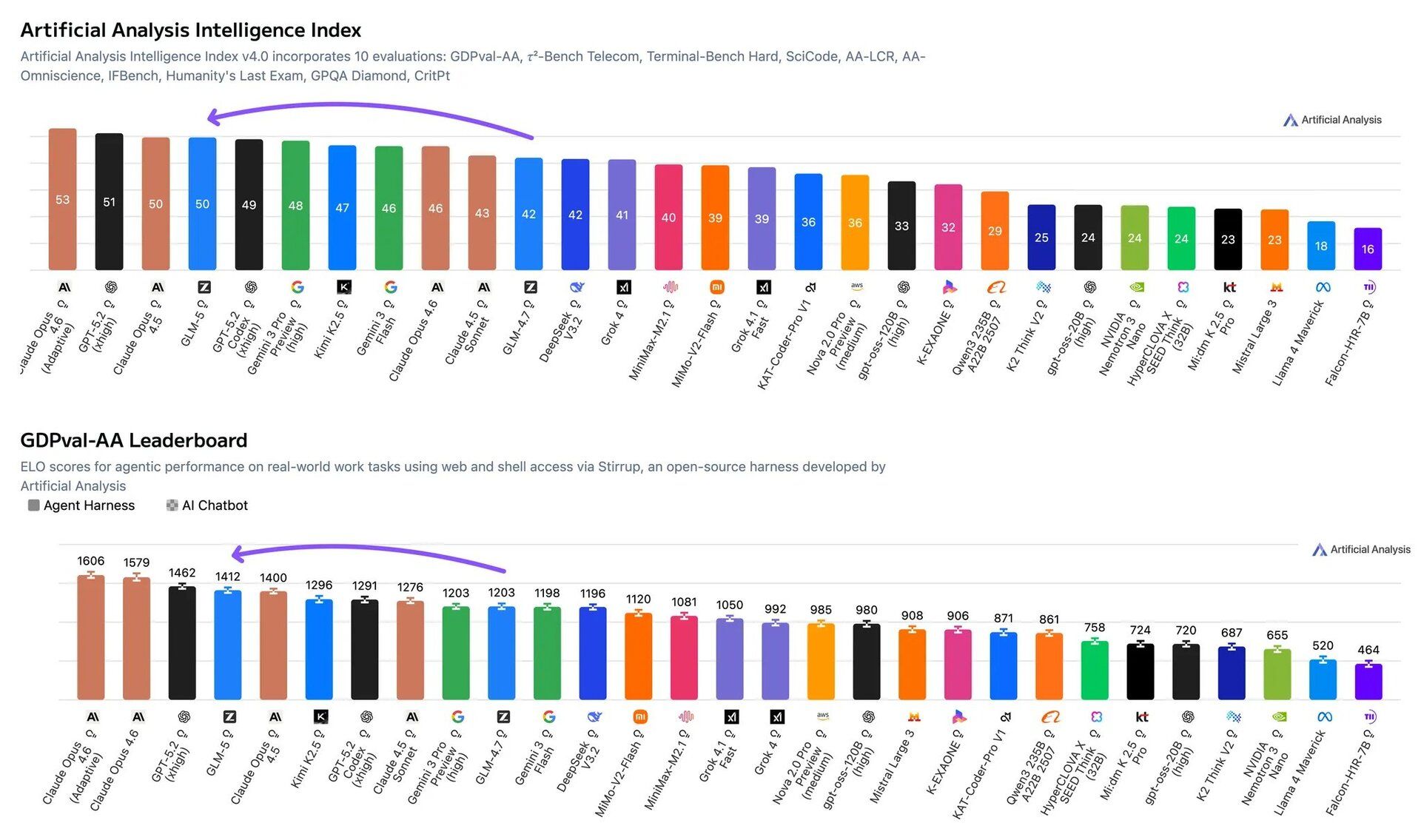
Image source: Artificial Analysis
The Rundown: China’s Z.ai just launched GLM-5, a 744B-parameter open-weights model that further closes the gap with the West’s frontier — sitting just behind Claude Opus 4.6 and GPT-5.2 on Artificial Analysis benchmarks.
The details:
GLM-5 scored 50 on Artificial Analysis’ Intelligence Index, surpassing closed models like Gemini 3 Pro and Grok 4 as well as open-source ones like Kimi K2.5.
The model uses DeepSeek’s Sparse Attention architecture with just 40B active parameters, and runs inference on Chinese chips, including Huawei Ascend.
On Humanity’s Last Exam, it hit 50.4 with tools, beating Opus 4.5, Gemini 3 Pro, and GPT-5.2. The coding performance on SWE-Bench was also close.
GLM-5 is open-source under an MIT license, available now on HuggingFace, Z.ai’s own platform, and via API at $1 per million input tokens.
Why it matters: The wave of Seedance 2.0’s viral AI clips hasn’t even faded, and there we have another near-frontier model from China that is already knocking at the door. The gap with the West isn’t closed yet, but with open weights, competitive pricing, and domestic chip support, it’s definitely narrowing faster than ever.
AI TRAINING
🎥 Turn SOP docs into talking-head training videos
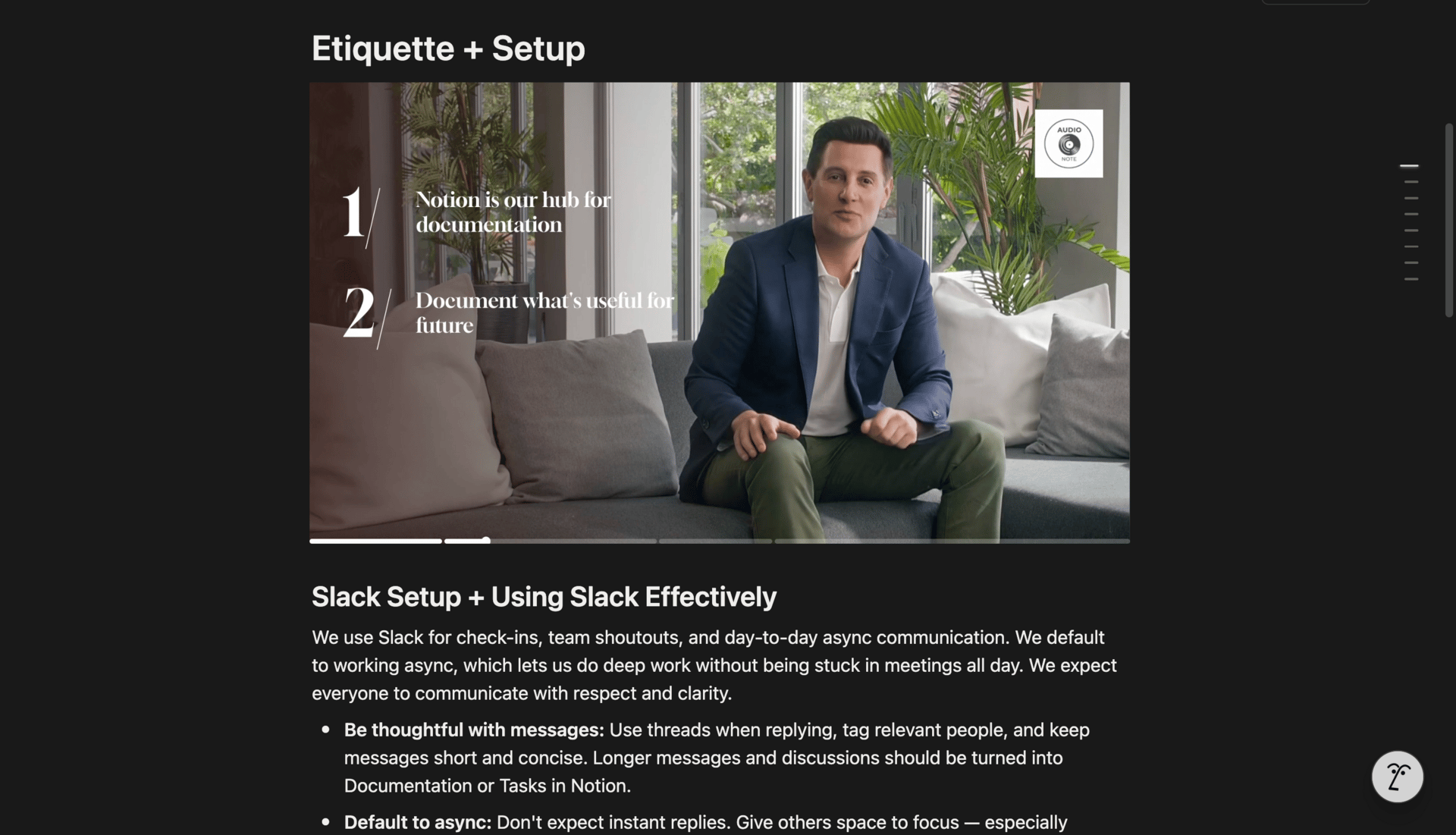
The Rundown: In this guide, you will learn how to turn boring onboarding docs into engaging training videos narrated by an AI avatar. We tried a lot of tools and found the most efficient system for building quality AI training videos in bulk.
Step-by-step:
Take your training doc and prompt Claude/ChatGPT with "Turn this into a three-minute training video script for an AI-generated avatar. Only include text overlays with bullets. The avatar can be seated, standing, head-on, etc."
Save the script as a text file and go to Synthesia.io > Create New Video > Create from AI > Upload the script file, with objective and audience description
Choose a template and click Create Outline. Review the outline and follow the steps to generate your video. It should take 10-25 minutes to generate
When the video is complete, you can download and embed it somewhere like Notion or Google Docs
Pro tip: Repeat this for all onboarding docs to set up one-page onboarding that can be handed to any trainee!
PRESENTED BY SLACK FROM SALESFORCE
👋 Learn Slackbot in 2 minutes

The Rundown: Slackbot is a context-aware AI agent built directly into Slack — understanding your conversations, files, and workflows to deliver what you need, right when you need it, with zero setup.
Watch this 2-minute demo to see how Slackbot:
Makes your entire workspace searchable (docs, convos, apps)
Enhances every teammate with role-specific automations
Learns your project and preferences over time for even smarter outputs
Synthesizes what you need instantly, respecting permissions and using only what you can already see
AI SAFETY
‼️ Anthropic details Claude Opus 4.6’s sabotage risk

Image source: Nano Banana / The Rundown
The Rundown: Anthropic published its latest Sabotage Risk Report, revealing that its new Claude Opus 4.6 model displays an “elevated susceptibility” to be misused for “heinous crimes,” including assisting in the development of chemical weapons.
The details:
Anthropic found Opus 4.6 knowingly supported crimes like chemical weapon development in small ways, but could not execute attacks on its own.
When tasked to achieve a specific goal in a multi-agent test, the model proved far more willing to manipulate and deceive other agents than previous models.
Considering these findings, Anthropic deemed the overall sabotage risk “very low but not negligible” due to the model’s lack of coherent misaligned goals.
The company also classified the model’s capabilities as entering a “gray zone” that necessitated this mandatory report under its Responsible Scaling Policy.
Why it matters: Anthropic’s CEO Dario Amodei recently highlighted the risks of advanced AI, and now, one of his own models appears to be moving into the gray zone. With growing competition from OpenAI, Google, xAI, and Chinese labs, the pressure to push capabilities forward may only intensify the very risks he has warned about.
QUICK HITS
🛠️ Trending AI Tools
🗣️ Unwrap Customer Intelligence - Connect your entire organization to the true voice of the customer with AI-driven insights from customer feedback*
🧑💻 GLM-5 - Ziphu AI’s new open-source frontier model
🤖 Claude - Anthropic’s AI assistant, now with more features for free users
🧠 Ming-flash-omni 2.0 - Ant’s omni AI with speech, vision, image capabilities
*Sponsored Listing
📰 Everything else in AI today
Apple’s long-awaited Gemini-powered Siri AI upgrade has reportedly been pushed back (again) due to recent testing snags, now likely to come with iOS 26.5 or 27.
OpenAI elevated its “Mission Alignment” head, Joshua Achiam, to the role of Chief Futurist responsible for studying “AI impacts and engaging the world to discuss them.”
Meta broke ground on a new data center in Lebanon, Indiana — one of its largest infrastructure bets — adding 1GW of capacity to power its AI and core products.
Anthropic announced it will cover electricity price increases from its data centers, shielding local ratepayers, in line with similar pledges from Microsoft and OpenAI.
Google is rolling out UCP-powered checkout in Gemini and AI Mode in the U.S., integrating Veo into Google Ads, and testing sponsored retailer ads in AI Mode.
COMMUNITY
🤝 Community AI workflows
Every newsletter, we showcase how a reader is using AI to work smarter, save time, or make life easier.
Today’s workflow comes from reader Lindsay F. in Kingsville, Ontario:
“I own a 1970 Chevelle SS and am converting it into a modern driving ‘restomod.’ I am using both ChatGPT & Copilot to research and develop the entire restoration plan. The restoration of the vehicle will take place in phases, and the agents have provided me with a priority list, options for what parts to purchase, and where to source them from.
They have also developed a budget for the project, including parts & local labor rates and what the finished project will look like upon completion. I am 72 years old and just love how much this is helping me.”
How do you use AI? Tell us here.
🎓 Highlights: News, Guides & Events
Read our last AI newsletter: xAI's co-founder exodus continues
Read our last Tech newsletter: Musk’s ‘self-growing’ Moon city
Read our last Robotics newsletter: Uber to launch robotaxis in 15 cities
Today’s AI tool guide: Turn SOP docs into talking-head training videos
RSVP to our next workshop on Feb 18: Agentic Workflows Bootcamp pt. 2
See you soon,
Rowan, Joey, Zach, Shubham, and Jennifer — the humans behind The Rundown

xAI's co-founder exodus continues
Read Online | Sign Up | Advertise

Good morning, AI enthusiasts. xAI just pulled off one of the boldest moves in tech with its SpaceX merger. But behind the scenes, the people who helped build the company keep walking out the door.
The departure of Tony Wu and Jimmy Ba now makes five co-founders gone in under a year — a pace of turnover that's raising questions about what's happening inside Musk's AI operation as it scales into orbit.
Reminder: Our next live workshop is today at 2 PM EST! Join for pt. 1 of our Agentic Workflows Bootcamp, where you’ll learn automation and evaluation techniques that actually deliver results. RSVP here.
In today’s AI rundown:
xAI's cofounder exodus continues
Ex-GitHub CEO's startup lands $60M
Improve Claude Code with “Insights” feature
Harvard finds AI tools expand workloads
4 new AI tools, community workflows, and more
LATEST DEVELOPMENTS
XAI
🚪 xAI's co-founder exodus continues
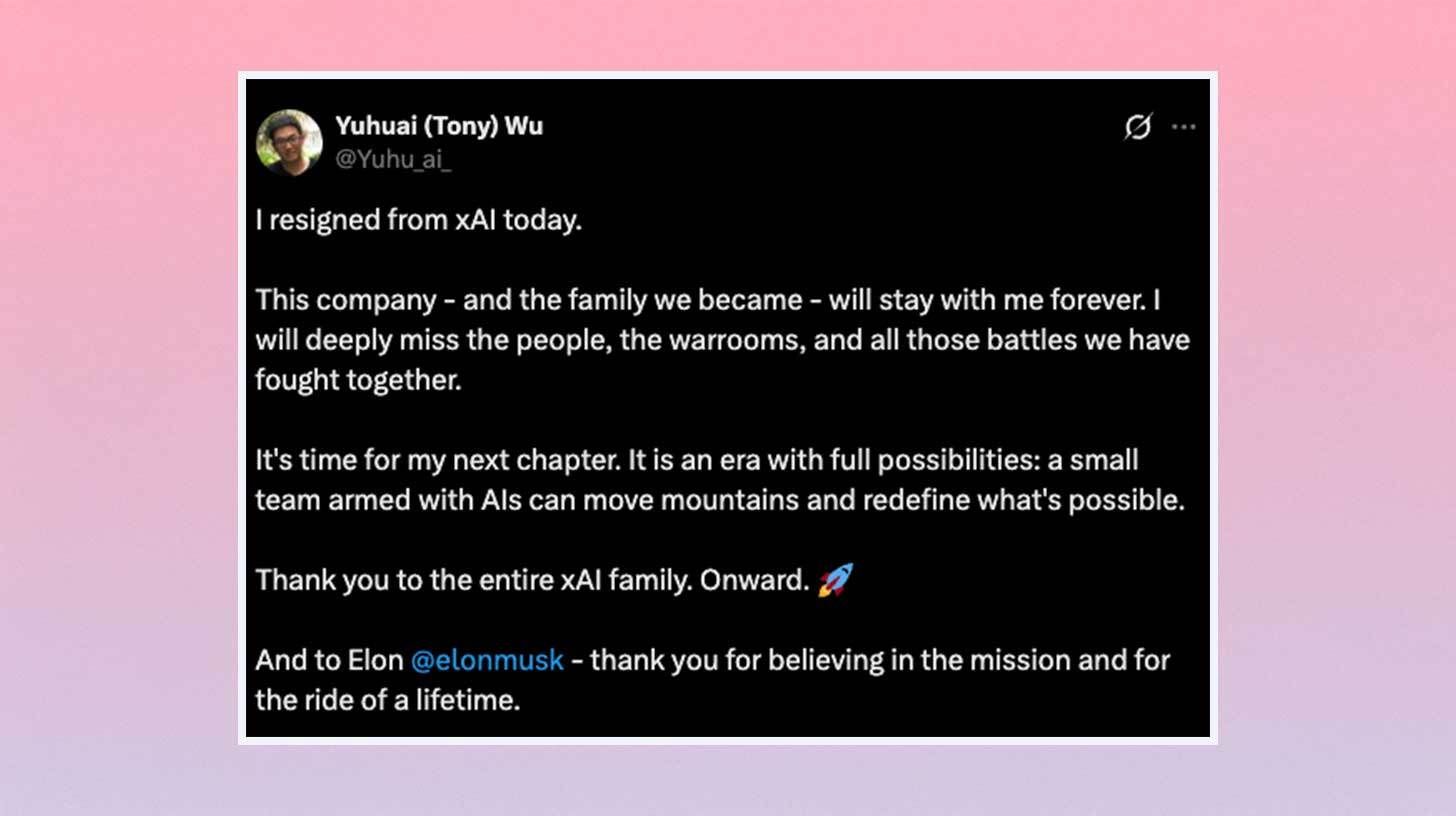
Image source: Tony Wu (@Yuhu_ai_ on X)
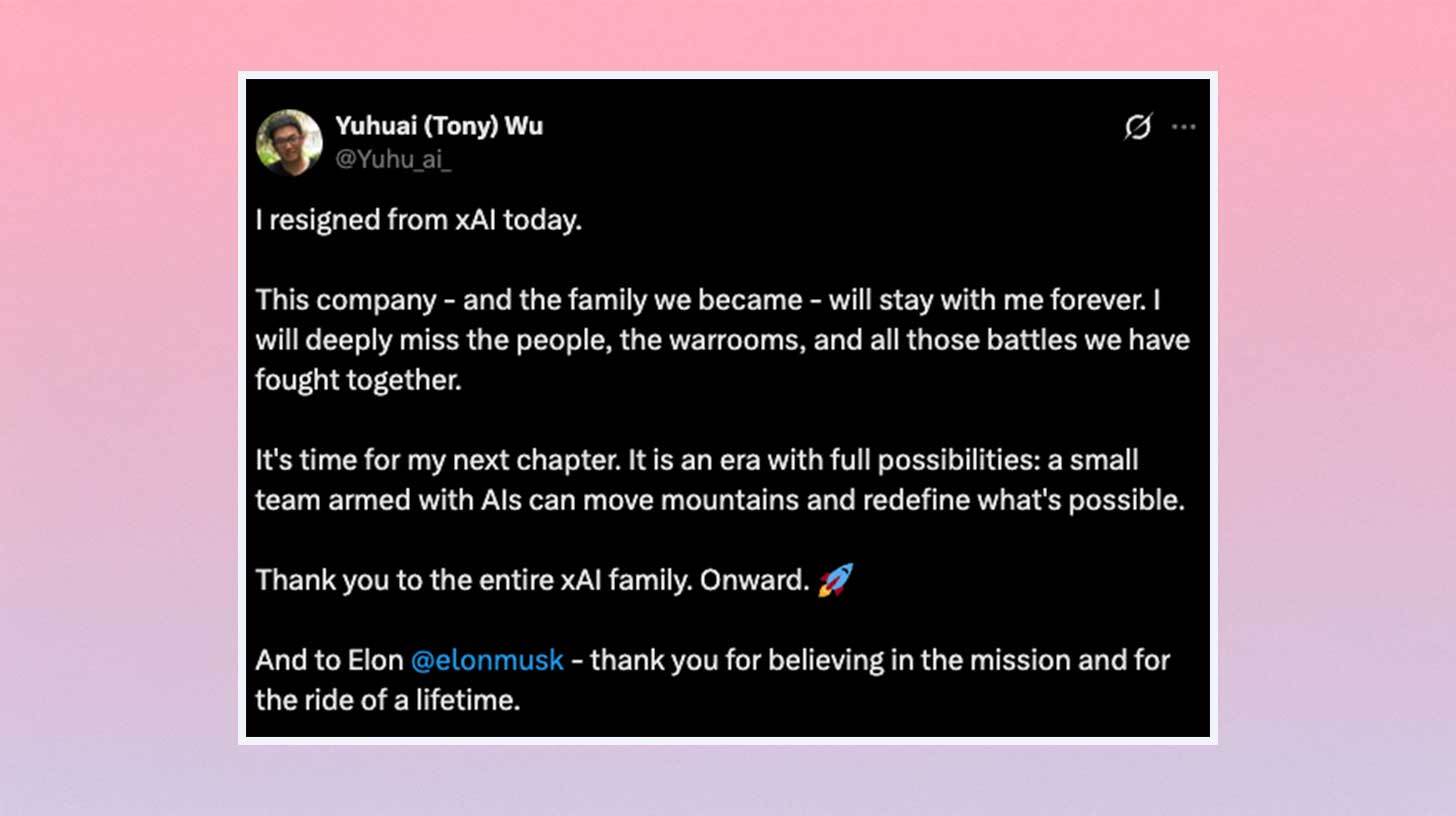
The Rundown: xAI co-founders, Tony Wu and Jimmy Ba, just announced their departures from Elon Musk's AI startup, making them the fourth and fifth founding members to walk away from the company, coming right after its SpaceX mega-merger.
The details:
Wu posted on X that it’s “time for my next chapter”, saying a “small team armed with AIs can move mountains and redefine what’s possible”.
Wu led Grok's reasoning efforts and reported directly to Musk, joining xAI from Google in 2023, with no reason given for his departure.
Ba announced his departure late Tuesday, saying that 2026 will be the “busiest and most consequential year for the future of our species.”
Musk had reportedly "grown frustrated" with delays to new Grok models in recent weeks, with its anticipated 4.20 update still awaiting release.
Why it matters: xAI has a SpaceX merger in motion, accelerating model competition, deepfake blowback, and now a wave of senior exits is a lot of fires for a startup whose ambitions just jumped to space-based data centers. If there is anyone used to juggling chaotic situations, it’s Elon — but this leadership exodus is starting to raise questions.
TOGETHER WITH LAMBDA
🧠 2025 in AI, insights from hundreds of deployments

The Rundown: AI changed meaningfully in 2025, not just in research, but in production. Lambda’s 2025 AI wrapped breaks down the shifts that defined the year, from reasoning models and larger context windows to multimodal capabilities, open-source viability, and inference-first workloads.
Key shifts covered:
Reasoning, long-context, and multimodal models
Open-source and MoE-driven efficiency gains
Inference overtaking training in production
ENTIRE
💰 Ex-GitHub CEO's startup lands $60M

Image source: Entire
The Rundown: Ex-GitHub CEO Thomas Dohmke raised a record $60M seed round for Entire, an open-source developer platform designed to track and manage AI-generated code that is increasingly being shipped without humans reading it themselves.
The details:
Dohmke left Microsoft-owned GitHub last August after four years, saying the dev tools he built weren't made for a world where agents write the code.
Entire’s first release is Checkpoints, which logs AI agent actions like prompts and decisions while coding, so devs can better audit the outputs.
The tool works with both Claude Code and Gemini CLI, with OpenAI’s Codex and GitHub support coming soon.
The $60M seed round is the largest ever for a dev tools startup, putting the company’s initial valuation at $300M at launch.
Why it matters: Dohmke helped lead the platform where most of the world’s code lives, and him now building the agentic tooling layer is a strong signal of where the industry is heading. As AI generates more code than humans can review, helping devs trust and manage the output could be just as important as the agents themselves.
AI TRAINING
🔎 Improve Claude Code with “Insights” feature

The Rundown: In this guide, you will learn how to use the Claude Code’s “insights” feature to improve your coding habits. This hidden, built-in report gives you feedback directly from Claude Code, and will even build you custom skills and agent instructions.
Step-by-step:
Open a new terminal session. Run the command
claude /insights.Claude should begin working on your insights report. When it’s done, it will give you a link to a file named
report.html. Copy it into an empty folder.Open your code editor (we use Cursor). Start the webpage with
cmd + shift + pand find the “Open Live Server” tool.You’ll see the report outlining what worked, what didn’t, and how to improve. Use the “Existing CC Features to Try” section for new project instructions.
Pro tip: You can also give the HTML to Claude/ChatGPT and have the assistant run it.
PRESENTED BY GLEAN
🤝 Meet your new AI work partner
The Rundown: Join Glean’s flagship virtual launch event to discover their latest-gen AI assistant: an enterprise‑ready AI work partner that actually helps people get things done. Hear from speakers at Glean, Swiggy, and more, and learn how leading teams are turning enterprise context into real business impact.
Register for Glean:LIVE on Feb. 17 to:
Learn how context-aware AI drives broad adoption and lasting impact
Walk away with a vision for expanding AI value company-wide from day one
Discover the latest‑generation Glean Assistant — personalized, proactive, and a true domain expert
Register now to save your spot for Glean:LIVE.
AI RESEARCH
⏳ Harvard finds AI tools expand workloads

Image source: Lovart / The Rundown
The Rundown: A new Harvard Business Review research found that AI tools at a U.S. tech company didn't lighten employee workloads over 8 months, but actually grew them, with workers taking on broader tasks, logging more hours, and multitasking more.
The details:
The study tracked ~200 employees who adopted AI on their own, observing work habits and conducting 40+ in-depth interviews over eight months.
Workers utilizing AI expanded well beyond their roles, with the tech making unfamiliar work feel doable.
The study also noted AI blurring lines between work and rest, with employees firing off prompts after hours or during breaks.
Engineers also reported spending more time reviewing and coaching colleagues on AI-assisted code, with "vibe-coding" help requests piling up.
Why it matters: AI was supposed to free workers up, not quietly pile more on their plates — but that's exactly what Harvard found happening. The tech’s productivity gains are real, but so is the tradeoff of broader roles, blurred boundaries, and a new work pace that is changing more quickly than many employees are likely ready for.
QUICK HITS
🛠️ Trending AI Tools
🤖 Oz from Warp – Launch hundreds of cloud agents in minutes, from Warp, API, or integrations. Try Oz today & get 1k extra credits on Build*
🎨 Qwen-Image-2.0 - Alibaba's unified image generation and editing model
🐦⬛ Raven-1 - Tavus’ real-time emotional perception model for AI conversations
🌼 Orchids 1.0 - AI app builder for any stack with BYO model subscriptions
*Sponsored Listing
📰 Everything else in AI today
Isomorphic Labs unveiled IsoDDE, a drug design engine that more than doubles AlphaFold 3 on benchmarks and can spot drug targets from a protein's genetic code.
Alibaba's Qwen team released Qwen-Image-2.0, a new unified image generation and editing model with upgraded text rendering, realism, and speed.
Anthropic safeguards research lead Mrinank Sharma resigned, writing in a farewell letter that the company "constantly faces pressures to set aside what matters most".
OpenAI is reportedly dropping the “io” branding for its upcoming AI hardware device after a trademark lawsuit from audio startup iyO.
Runway raised $315M in Series E funding at a $5.3B valuation, with backing from Nvidia, Adobe, and AMD to pre-train its next generation of world simulation models.
COMMUNITY
🤝 Community AI workflows
Every newsletter, we showcase how a reader is using AI to work smarter, save time, or make life easier.
Today’s workflow comes from reader Devin P. in Talladega, AL:
"I'm a blind person, so I use screen readers to use computers and phones. Even though the Android apps for a lot of AI apps could be more accessible to me, the CLI coding packages, like Codex and Gemini CLI, are pretty nice. I first used Gemini to make Termux, a Linux Terminal app for Android, more accessible, resulting in Talking Termux.
I then had AI set up Emacs with a speech system called Emacspeak, dealing with Termux's differences to Linux, and the lack of a TCLX package. After all that, I wanted to have some fun, so I had Codex create ElMUD, a way to play some online text-based games, including sounds for some of them."
How do you use AI? Tell us here.
🎓 Highlights: News, Guides & Events
Read our last AI newsletter: ByteDance stuns the AI video world
Read our last Tech newsletter: Musk’s ‘self-growing’ Moon city
Read our last Robotics newsletter: Uber to launch robotaxis in 15 cities
Today’s AI tool guide: Improve Claude Code with the “Insights” feature
RSVP to our workshop today @ 2PM EST: Agentic Workflows Bootcamp pt. 1
See you soon,
Rowan, Joey, Zach, Shubham, and Jennifer — the humans behind The Rundown

Musk’s ‘self-growing’ Moon city
Read Online | Sign Up | Advertise

Good morning, tech enthusiasts. Elon Musk is now reshuffling SpaceX’s cosmic priority stack: Mars can wait. The Moon can’t.
He's selling investors on a “self-growing” lunar city within the decade. Perks? Flight windows every 10 days versus 26 months, a two-day commute versus six, and a pivot that conveniently locks Starship deeper into Artemis’s gravitational pull.
In today’s tech rundown:
Musk wants the moon first, not Mars
China’s Wegovy-style nasal spray
Lyft finally launches ride-sharing for teens
Ferrari taps Jony Ive for its first EV
Quick hits on other tech news
LATEST DEVELOPMENTS
SPACEX
🌝 Musk wants the moon first, not Mars

Image source: Ideogram / The Rundown
The Rundown: Elon Musk just demoted his once‑sacred Mars dream, recasting SpaceX’s mission around a faster, cheaper prize: building a self‑sustaining city on the Moon within a decade.
The details:
Musk says SpaceX has “shifted focus” from a near‑term Mars settlement to building a “self‑growing” city on the lunar surface.
He claims a lunar city could be achieved in under 10 years, while a comparable Mars city would likely take more than 20 years.
The math favors the Moon: launch windows open every 10 days with a two-day transit, versus every 26 months and a six-month journey to reach Mars.
The pivot aligns with investor briefings and reports of an uncrewed Starship lunar landing target around March 2027.
Why it matters: Musk’s Moon-first shift drops SpaceX squarely into the slipstream of NASA’s Artemis program, which is already counting on Starship as its ride to the lunar surface and eventually a permanent base. Mars isn’t dead — Musk says serious work starts in five to seven years.
BIOTECH
💉 China’s Wegovy-style nasal spray

Image source: Ideogram / The Rundown
The Rundown: A Chinese biotech firm is reportedly racing to turn Wegovy’s blockbuster weight-loss molecule into a cheaper, needle‑free nasal spray, with global trials slated for completion by 2028.
The details:
Shanghai Shiling Pharmaceutical is developing a nasal spray that uses semaglutide, the active ingredient in Novo Nordisk’s weight-loss drug Wegovy.
It promises a cheaper, more user‑friendly format for long‑term weight management in a country with a fast‑growing GLP‑1 market.
Timing is key: Novo’s core semaglutide patent in China expires in March, and Shiling has already staked out IP before global exclusivity ends in the 2030s.
Sweden’s Iconovo is already working on a Western intranasal semaglutide, developing an ICOone Nasal obesity spray now in preclinical proof‑of‑concept.
Why it matters: Obesity drugs are fast becoming one of the most valuable drug classes on the planet, and converting semaglutide into a spray could drop the barrier to adoption. If rivals time it right as exclusivity unwinds, they could undercut Novo and Lilly on price — and capture a serious share of the next decade's market.
LYFT
🚘 Lyft finally launches ride-sharing for teens

Image source: Lyft
The Rundown: Ride-hailing company Lyft is rolling out teen accounts that let 13- to 17-year-olds hail rides in more than 200 U.S. cities while parents watch from their phones — pitching it as a way to get screen-addicted Gen Alpha out of the house.
The details:
Only parents or guardians can create teen profiles and payment methods, and only vetted, highly rated drivers who opt in can be matched with teen riders.
Safety features include PIN verification, audio recording, Smart Trip Check-In for unusual route changes, and live location tracking for parents.
Teens are allowed to bring friends along if parents approve in the app, turning Lyft into a quasi-chaperoned way to reach school, jobs, malls, or hangouts.
The move follows Uber, which launched its own teen accounts in 2024, and Waymo, which offers teen rides via its robotaxi service in Phoenix and LA.
Why it matters: The launch reverses Lyft’s long-standing ban on unaccompanied minors and lands squarely in the middle of a growing debate over Gen Alpha’s lack of independence. Lyft is betting that ride-hailing can become the antidote to screen-induced isolation — a way to get kids out of their rooms and into the world.
EVS
🐎 Ferrari taps Jony Ive for its first EV

Image source: Ferrari
The Rundown: Ferrari just unveiled the Jony Ive–designed interior of the Luce, its first electric supercar, featuring a glass‑and‑aluminum cockpit that rejects the touchscreen-dominated cabins common across modern EVs.
The details:
Ferrari has named its first fully electric supercar the Luce and unveiled its interior ahead of an exterior reveal planned in Italy this May.
The cabin was co-designed by Ive and Marc Newson’s LoveFrom studio, mixing retro Ferrari cues with minimalist details like layered OLED displays.
The Luce uses a glass key made from Corning Gorilla/Fusion5 glass with an E‑Ink display that changes color when docked.
Underneath the design is a 122 kWh battery feeding four electric motors for more than 1K horsepower, 0–60 mph in 2.5 seconds, and a 330-mile range.
Why it matters: Ferrari is testing whether collectors will spend north of $600K for an electric halo car co-designed by the man behind the iPhone. It drops the Luce straight into the ring with Porsche’s Taycan Turbo GT, Lucid’s Air Sapphire, Tesla’s Model S Plaid, and the new wave of electric hypercars.
QUICK HITS
📰 Everything else in tech today
YouTube added an AI feature that lets Premium users generate music playlists from text or voice prompts on iOS and Android.
Instagram is reportedly internally testing “Instants,” a standalone Snapchat‑style app and related Instagram feature for sending disappearing photos and messages.
Decentralized social network Bluesky finally rolled out a long‑requested drafts feature, letting users save unfinished posts to edit and publish later.
Salesforce cut some 1K jobs across teams like marketing, product, data, and AI while reshuffling its top ranks with six new execs replacing five departing leaders.
YouTube megastar MrBeast is buying Gen Z–focused fintech app Step to turn his massive teen fanbase into financial-product customers.
A “March for Billionaires” in San Francisco to protest California’s proposed Billionaire Tax Act reportedly attracted only a few dozen supporters and some onlookers.
A new 50 MW wave energy pilot project is moving into development, aiming to prove that large‑scale ocean wave farms can reliably feed clean power into the grid.
Stellantis is taking a massive $26B hit to unwind ambitious electric‑vehicle plans, cancel several EV models, and shift back toward gasoline and hybrid cars.
Scientists are excited about a new nasal spray bird flu vaccine that triggers a strong immune response in animal tests and could block the virus right away.
New York state lawmakers introduced a bill to impose at least a three‑year moratorium on permits for building and operating new data centers.
COMMUNITY
🎓 Highlights: News, Guides & Events
Read our last AI newsletter: ByteDance stuns the AI video world
Read our last Tech newsletter: Paris raid raises stakes for X
Read our last Robotics newsletter: Uber to launch robotaxis in 15 cities
Today’s AI tool guide: Build an AI-powered sales objection handler
RSVP to our next workshop on Feb. 11: Agentic Workflows Bootcamp pt. 1
See you soon,
Rowan, Joey, Zach, Shubham, and Jennifer — The Rundown’s editorial team

ByteDance stuns the AI video world
Read Online | Sign Up | Advertise

Good morning, AI enthusiasts. China's AI labs are on a tear in the video space — and ByteDance's Seedance 2.0 might be the most impressive entry yet.
With viral examples coming out of its beta across a range of styles and use cases that look stronger than anything available, the TikTok parent is making a serious case that the next creative leap in AI video is coming from the East.
In today’s AI rundown:
ByteDance's Seedance 2.0 stuns the AI video world
OpenAI officially starts showing ads in ChatGPT
Build an AI-powered sales objection handler
Waymo taps Genie 3 to train self-driving cars
4 new AI tools, community workflows, and more
LATEST DEVELOPMENTS
BYTEDANCE
🎬 ByteDance's Seedance 2.0 stuns the AI video world

Image source: RioAIGC on Douyin
The Rundown: Chinese AI giant ByteDance is going viral across social media with Seedance 2.0, a new model in beta with upgraded cinematic shots, consistency, and synced audio that looks to surpass current top available systems.
The details:
The model can reportedly handle text, image, audio, and video inputs, with tests showing impressive outputs across a range of styles and use cases.
The system also features native audio generation, 2K resolution, and 15s outputs, currently only available via ByteDance’s Jimeng AI video platform.
ByteDance also appears to have released Seedream 5.0 image model in preview on some third-party apps — marking its answer to Nano Banana Pro.
The model comes just days after the launch of rival Kuaishou’s Kling 3.0, with Chinese models seemingly moving near the frontier of the video sector.
Why it matters: China’s top labs are putting out some seriously powerful new video models, and Seedance 2.0 looks next in line for the next leap. With strong examples like smooth fight scenes, animation, UGC content, and motion graphics, Seedance 2.0 may have Veo-like implications for a much broader range of creative disruption.
TOGETHER WITH MONGODB
📈 Go from AI prototype to production, faster
The Rundown: MongoDB is closing the gap between AI prototype and production — helping teams keep conversational context clean, retrieve the right information from thousands of interactions, and connect AI agents to their data without custom plumbing.
With MongoDB's platform, you get:
Faster prototype-to-production for AI apps
Voyage AI frontier embedding + reranking models
One platform for vectors and operational data
OPENAI
📢 OpenAI officially starts showing ads in ChatGPT
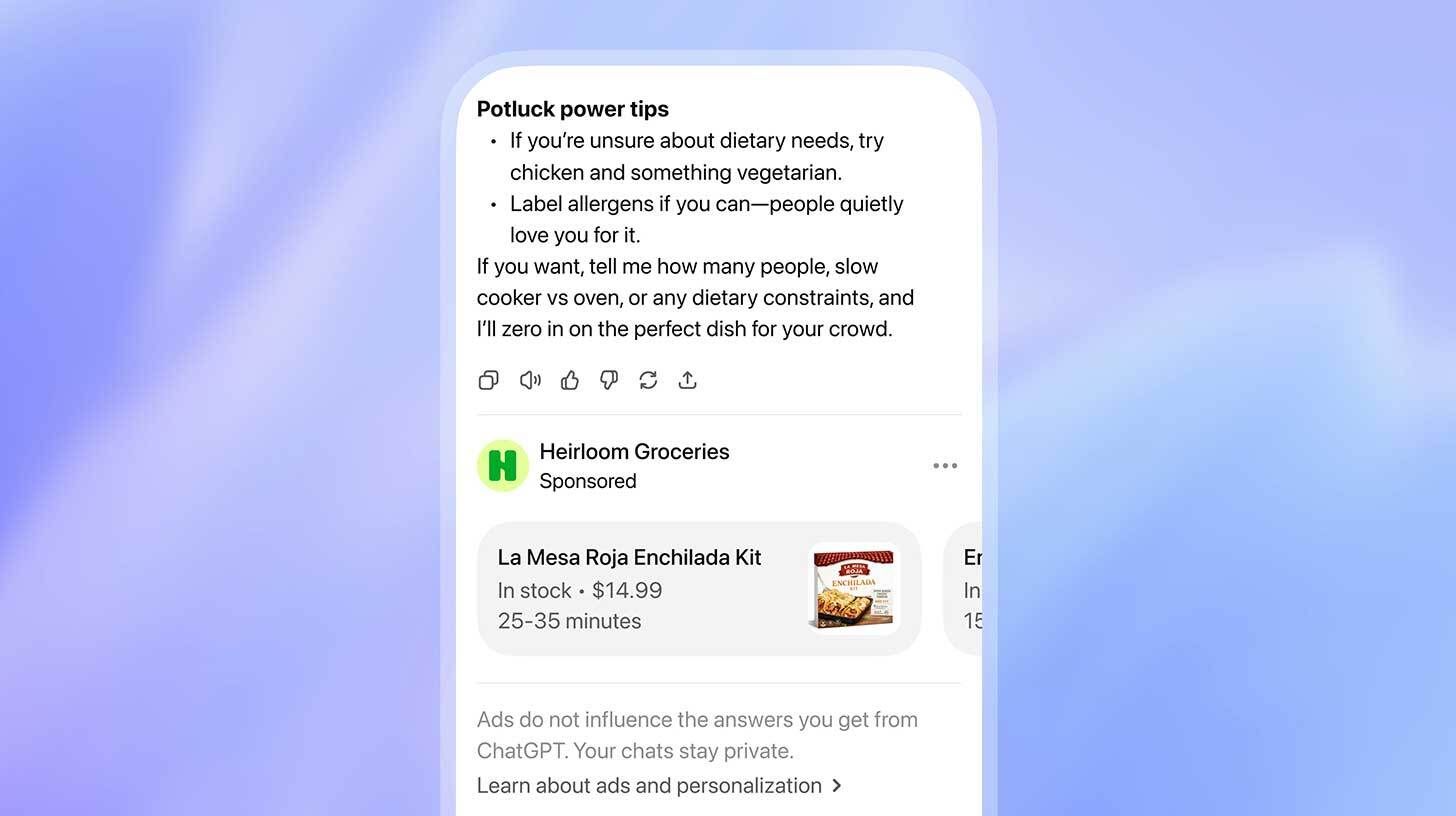
Image source: OpenAI
The Rundown: OpenAI just officially started testing ads in ChatGPT for U.S. users on its free and $8/month Go tiers, a move the company has been circling for months and that Anthropic used as ammo for its Super Bowl ad campaign this past weekend.
The details:
Ads appear below chat responses and are targeted based on the active conversation, chat history, memory, and prior ad engagement.
OAI emphasized that the ad content will not impact ChatGPT’s answers, “protecting the trust (users) place in it for important and personal tasks”.
Free-tier users can opt out of advertising entirely, but doing so cuts their daily message allowance — acting as a funnel towards paid plans.
The pilot has a reported minimum price tag of $200K for advertisers, with major marketing firms like Omnicom already locking in spots for their clients.
Why it matters: We’ve frequently said ads within AI feels like a slippery slope, but OAI is ripping the band-aid as the first test case for the industry. While the execution seems fine, encroaching sponsors could change the dynamic of how many experience ChatGPT — still, the tradeoff for free access to advanced intelligence is hard to argue.
AI TRAINING
📞 Build an AI-powered sales objection handler

The Rundown: In this guide, you will learn how to actually build something useful with those sales call transcripts you are accumulating. This is a simple, weekly process that turns your weekly call transcripts into a handy, quick reference document.
Step-by-step:
Create a ChatGPT Project named "Sales Objections". Upload a text file listing your product lines, pricing, and core offers so the AI understands what you sell.
Go to Instructions in project settings and paste: "Read the attached transcripts. Create a weekly report template. For every objection: Number the objection, State the objection clearly, Provide 3 descriptive bullets on the context, List which lead or prospect surfaced it, Provide two short, punchy rebuttals.”
Each week, upload call transcripts into your project. Make sure they have the date and name of the client. Open a new thread, and tell it to create the report.
Open a blank Notion page. Create a “Toggle Heading” for the week (e.g., "Week of Feb 9"). Copy the ChatGPT output and paste it inside the toggle.
Pro tip: Connect Notion inside ChatGPT (Settings → Connected Apps) so ChatGPT can see your current page and reference past weeks.
PRESENTED BY TELY AI
🔎 Are you invisible in AI search?

The Rundown: You’re in a niche industry. Customers search on Google, ChatGPT, and Perplexity, but your company doesn’t show up because your website doesn’t answer their questions. Tely AI analyzes the questions your customers ask and automatically creates and publishes content that answers them on your website, bringing high-quality leads on autopilot.
With Tely AI, you can:
Have +20% monthly organic growth
Get indexed on Google, ChatGPT, and Perplexity in as little as 1 week
Enjoy full automation for topics, writing, and publishing
Get discovered by buyers already searching for your solution
SELF-DRIVING CARS & AI
🚗 Waymo taps Genie 3 to train self-driving cars
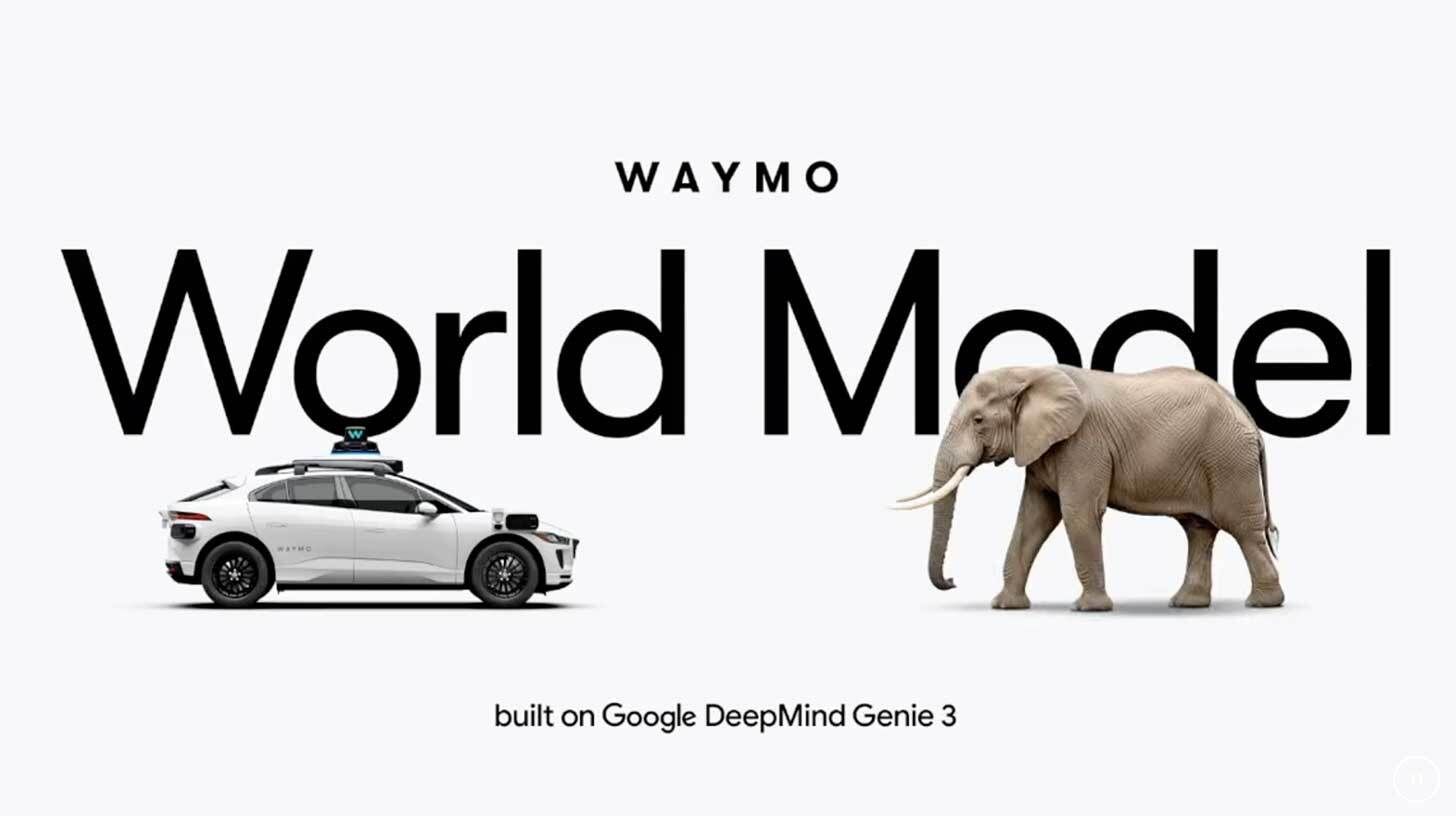
Image source: Waymo
The Rundown: Waymo just introduced the Waymo World Model, a driving simulator built on DeepMind's Genie 3 that generates hyper-realistic scenarios the company's fleet of self-driving cars has never encountered to help it deal with extreme edge cases.
The details:
The model takes Genie 3's visual knowledge and converts it into paired camera and lidar outputs, helping dream up scenarios its cars have never actually seen.
Engineers can reshape scenes with text prompts, driving inputs, or layout edits (like changing weather or adding obstacles) to test "what if" responses.
Waymo found a workaround for Genie 3's short memory by running footage at 4x speed, stretching simulations long enough to cover longer driving tasks.
Why it matters: Google's Street View data gave Waymo a head start in mapping the real world for its cars, but world models can now generate the extreme edge cases that no amount of road miles can produce. Waymo’s use of Genie is a prime example of one of the top use cases for world models — simulations for robotics training data.
QUICK HITS
🛠️ Trending AI Tools
💻 Codex App - OpenAI’s Mac app interface for managing agents
🚀 Composer 1.5 - Cursor’s updated in-house agentic coding model
🎧 Audiobooks - ElevenLab’s AI-powered narration suite for audiobooks
⚙️ Context Engine MCP - Augment Code’s semantic search in coding agents
📰 Everything else in AI today
Teleport announced an open-source blueprint for securing agentic AI. Join the Feb 19 webinar to learn why identity is the foundation for scaling agents.*
Sam Altman reportedly told employees that ChatGPT is surpassing 10% monthly growth, Codex weekly usage is up 50%, and a new updated model is coming this week.
Anthropic is set to raise a new funding round of $20B+ next week, according to a new report from Bloomberg — pushing the company’s valuation to $350B.
ElevenLabs launched Audiobooks, a full production suite powered by AI-generated narration for authors to streamline audiobook creation and distribution.
Anthropic is eyeing at least 10GW of data center capacity in the coming years, hiring Google and Stack Infrastructure execs to lead the push into leasing its own facilities.
*Sponsored Listing
COMMUNITY
🤝 Community AI workflows
Every newsletter, we showcase how a reader is using AI to work smarter, save time, or make life easier.
Today’s workflow comes from reader Clay D. in Carson City, NV:
"After serving in combat in Iraq, I was initially rated at 50% disabled by the VA. I knew that rating did not fully reflect the severity of my conditions...
I provided ChatGPT with my medical records, original claim, and publicly available VA Board of Veterans’ Appeals decisions from other similar cases. I instructed it to identify approval and denial patterns, apply relevant claim law, and rewrite my claim to avoid errors. The result was a stronger submission that led to a 100% VA disability rating..."
How do you use AI? Tell us here.
🎓 Highlights: News, Guides & Events
Read our last AI newsletter: AI ads steal the show at Super Bowl LX
Read our last Tech newsletter: Paris raid raises stakes for X
Read our last Robotics newsletter: Uber to launch robotaxis in 15 cities
Today’s AI tool guide: Build an AI-powered sales objection handler
RSVP to our next workshop on Feb. 11: Agentic Workflows Bootcamp pt. 1
See you soon,
Rowan, Joey, Zach, Shubham, and Jennifer — the humans behind The Rundown

Uber to launch robotaxis in 15 cities
Read Online | Sign Up | Advertise
Good morning, robotics enthusiasts. Uber is betting hundreds of millions on robotaxis in more than a dozen cities by year-end — including its first push into Asia.
The expansion relies entirely on partners like Baidu, WeRide, and Momenta to supply the self-driving tech, not Uber’s own stack. Can it lock down the map before Waymo?
In today’s robotics rundown:
Uber plans robotaxi blitz in 15 cities this year
Waymo builds a world model for robotaxis
EV maker Faraday Future pivots to humanoids
Harvard 3D-prints programmable soft robots
Quick hits on other robotics news
LATEST DEVELOPMENTS
UBER
🚖 Uber plans robotaxi blitz in 15 cities this year

Image source: Uber
The Rundown: Uber is reportedly earmarking hundreds of millions of dollars to launch robotaxi rides in more than 10 cities by year-end, including Madrid, Houston, Zurich, and Hong Kong — marking its first push into Asia.
The details:
Uber’s roadmap targets roughly 15 cities globally, deploying Level 4 robotaxis through partnerships rather than building its own self-driving stack.
In Hong Kong, Uber is expected to lean on Chinese AV partners such as Baidu, which already holds a local permit for limited Apollo Go robotaxi trials.
Madrid and Zurich join previously announced European pilots in London and Munich, where Uber will deploy vehicles from WeRide and Momenta.
Uber and WeRide will also roll out at least 1,200 robotaxis across Abu Dhabi, Dubai, and Riyadh, with pilots starting this year.
Why it matters: The strategy lets Uber scale autonomous rides without building its own tech, while giving Chinese AV suppliers like Baidu, Momenta, and WeRide a fast track into Western and Middle Eastern capitals under the Uber brand — intensifying pressure on Waymo, Tesla, and regional players like Bolt and Didi.
WAYMO
🔥 Waymo builds a world model for robotaxis

Image source: Waymo
The Rundown: Waymo just developed a Genie-3–based world model that lets it turn real driving footage into controllable, photorealistic scenarios that enable its robotaxis to deal with rare, high‑risk situations.
The details:
The system generates photorealistic, multi-sensor 3D driving scenes that engineers can manipulate by changing driving inputs or editing scene elements.
Waymo can synthesize extreme scenarios that the fleet is unlikely to encounter in real life: tornadoes, floods, unusual animals, or bizarre road geometries.
Engineers rerun actual drives as “what if” scenarios to probe edge cases without risking hardware or waiting years for rare events to occur naturally.
The model was trained on Waymo’s massive real-world driving dataset — over 25M autonomous miles.
Why it matters: Autonomous vehicles face a “long tail” problem — rare but critical scenarios too dangerous or unlikely to test in reality. By generating synthetic edge cases at scale, Waymo says it can validate safety in situations like flash floods or debris-strewn roads without waiting decades for its fleet to encounter them naturally.
FARADAY FUTURE
🤖 EV maker Faraday Future pivots to humanoids
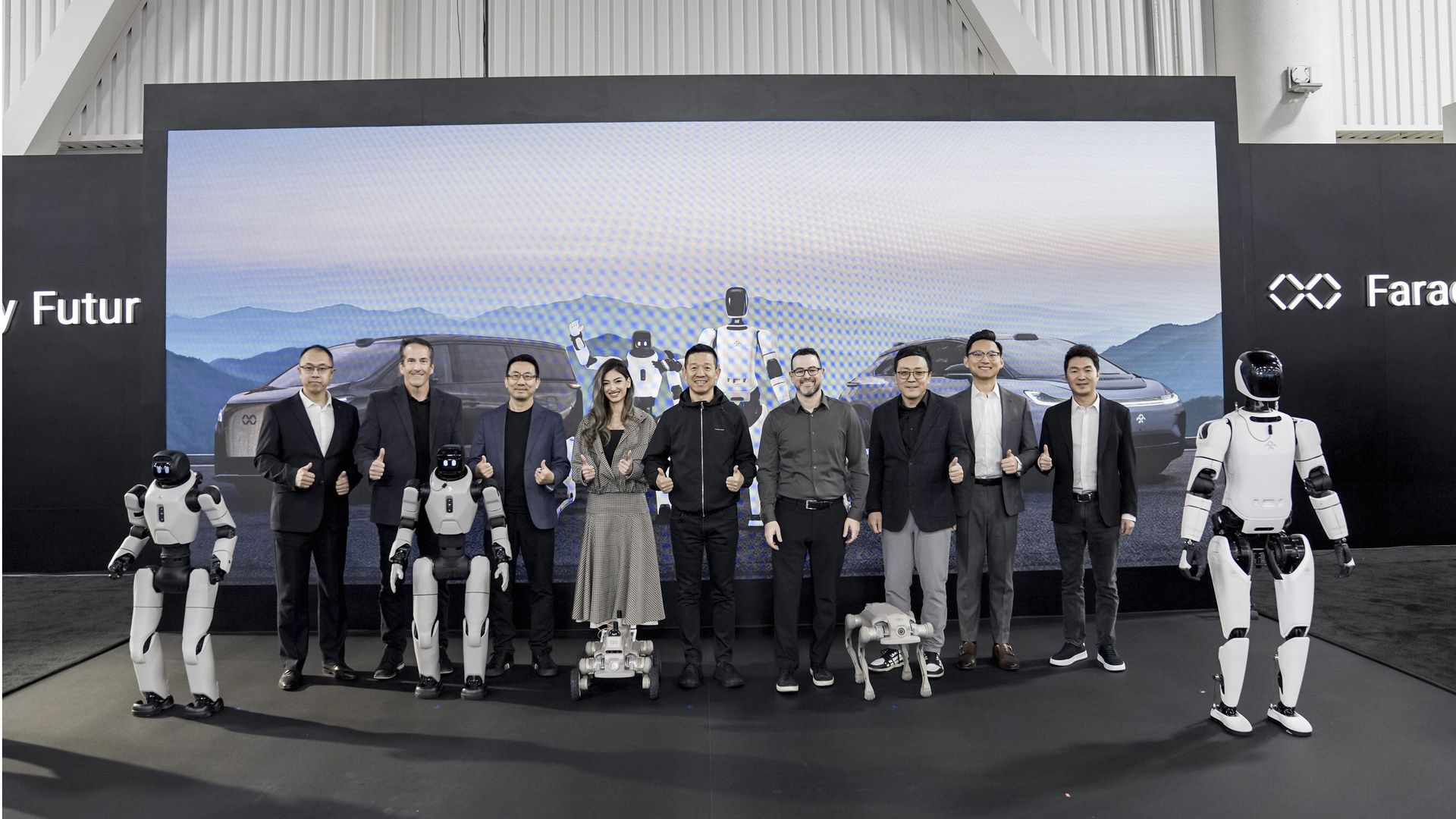
Image source: Faraday Future
The Rundown: Faraday Future, the cash-strapped California electric vehicle maker, unveiled a robotics division that appears to be Chinese robotics startup Agibot’s hardware wrapped in premium branding.
The details:
FF launched 3 robots — a humanoid, a compact “action” bot, and a wheeled unit — marketed for car dealerships under the “FF EAI-Robotics” banner.
The machines bear a striking resemblance to AgiBot’s A2 and X2 platforms, leading critics to accuse FF of white-labeling existing Chinese tech.
FF’s pitch is that it will provide the software, AI “brain,” and services layer on top of this hardware for dealers.
Pricing ranges from a few thousand dollars for the wheeled model to $40K for the flagship humanoid, with additional software “skills” sold separately.
Why it matters: The debut, capped by an awkward dance‑off between a humanoid and a human performer, immediately triggered investor skepticism, with the company’s stock reportedly plunging. Faraday Future says it will start deliveries by the end of the month, but it’s unclear whether the market will actually bite.
HARVARD
🖨️ Harvard 3D-prints programmable soft robots
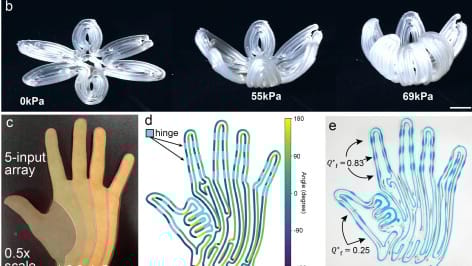
Image source: Harvard John A. Paulson School of Engineering
The Rundown: Harvard engineers just built a 3D-printing method that programs how soft robots bend and twist — the technique skips molds and assembly, printing motion directly into the structure.
The details:
Single-nozzle printing deposits a polyurethane shell around a gel core, creating hollow air channels that control exactly how the structure bends when inflated.
Prototypes include a flower actuator that curls on command and a five-fingered gripper with working knuckles, both printed in one pass without assembly.
The method collapses weeks of mold-making and multi-step casting into a single print job that can be redesigned by adjusting software parameters.
Target applications include surgical tools for tight anatomical spaces, rehabilitation wearables, and industrial grippers that handle delicate biologics.
Why it matters: The method reduces weeks of fabrication into one print job, challenging approaches from MIT and Stanford. It makes soft robot motion predictable— eliminating the trial-and-error testing that has long plagued the field. Key uses include surgical tools, rehabilitation devices, and delicate industrial handling.
QUICK HITS
📰 Everything else in robotics today
Boston Dynamics’ first‑gen electric Atlas now performs a clean round‑off backflip using a whole‑body learning framework developed by the RAI Institute.
Chinese robotics firm Agibot released a viral video of its Lingxi X2 humanoids performing synchronized kung fu routines with Shaolin monks at the Shaolin Temple.
Tesla’s Optimus program leans heavily on a dense network of Chinese suppliers for core hardware, underscoring how dependent the robot is on Chinese manufacturing.
Chinese humanoid makers like Agibot, Unitree, and Noetix are using Lunar New Year galas and livestreamed variety shows to showcase dancing, joke-telling robots.
Waymo’s plan to launch robotaxis in Washington, DC, this year stalled as the city’s regulatory process leaves the company lobbying hard but without a clear path forward.
Nevada-based Cartwheel Robotics, the startup behind the compact Yogi humanoid, is shutting down after failing to secure enough funding to move beyond prototypes.
USC researchers showed that sea stars’ independent tube feet provide a blueprint for robots that can keep moving even when flipped or cut off from a central controller.
Hong Kong researchers found that robots combining empathetic speech with carefully chosen music can make interactions feel more emotionally supportive.
Machina Labs raised a $124M Series C to expand its AI‑driven robotic metal-forming factories for defense, aerospace, and advanced mobility customers.
Beijing’s national Humanoid Robotics Innovation Center raised $100M in its first funding round to push its Tiangong humanoid into commercial production.
Indian robotics startup Addverb unveiled Elixis, a line of bipedal and wheeled humanoids aimed at warehouse and factory work.
Ocado, a UK-based online grocer and warehouse robotics specialist, is cutting up to 1K jobs, 5% of its workforce, after a tough year for its automated fulfillment centers.
COMMUNITY
🎓 Highlights: News, Guides & Events
Read our last AI newsletter: AI ads steal the show at Super Bowl LX
Read our last Tech newsletter: Paris raid raises stakes for X
Read our last Robotics newsletter: Cancer-fighting bubble bots
Today’s AI tool guide: Build custom lead widgets for your site
RSVP to our next workshop on Feb. 11: Agentic Workflows Bootcamp pt. 1
See you soon,
Rowan, Joey, Zach, Shubham, and Jennifer — The Rundown’s editorial team

AI ads steal the show at Super Bowl LX
Read Online | Sign Up | Advertise

Good morning, AI enthusiasts. OpenAI and Anthropic may have been the night's fiercest rivalry not on the field, but they were far from the only AI players fighting for the spotlight.
With Google, Meta, Amazon, a slew of AI startups, and even an AI-generated vodka spot flooding the Big Game's ad breaks, the tech’s mainstream presence is growing as fast as the models powering it.
In today’s AI rundown:
AI ads steal the show at Super Bowl LX
The Rundown Roundtable: Our AI use cases
Build lead widgets for your site without coding
Crypto.com founder drops $70M on AI.com
4 new AI tools, community workflows, and more
LATEST DEVELOPMENTS
AI & THE SUPER BOWL
🏟️ AI ads steal the show at Super Bowl LX

Image source: SVEDKA
The Rundown: AI companies/products took over Super Bowl LX with a wave of commercials, featuring spots from Anthropic, OpenAI, Google, Amazon, Meta, and startups that turned the Big Game into a battlefield for consumer AI attention.
The details:
Anthropic made its SB debut with its viral campaign against ads in AI, whose launch kicked off a viral feud with OpenAI and Sam Altman last week.
Vodka brand SVEDKA ran what it called the first primarily AI-generated Super Bowl ad, reviving its robotic mascot with AI-trained dance moves.
Meta showcased “athletic intelligence” via its AI glasses, Amazon pushed the new Alexa+, and Google highlighted Gemini and Nano Banana.
Other AI-related spots included Base44, Genspark, Ramp, Rippling, and Wix, with tech's Super Bowl ad share reportedly increasing to around 10%.
Why it matters: Major AI players showed up to the SB fighting for the same thing — to be the default assistant, agent, or device that the masses actually trust as AI weaves into every corner of daily life. Svedka’s use of AI to generate its spot also shows the tech influencing both sides of the screen — what's being sold AND how it's made.
TOGETHER WITH YOU.COM
✈️ You Implemented RAG. Your LLM Is Still Flying Blind.

The Rundown: RAG was step one—but retrieval alone doesn't guarantee accuracy. You.com explains what AI grounding is, why it matters, and how organizations can implement it to achieve higher accuracy.
The playbook covers:
The three-part approach outperforms RAG alone
Why grounding isn't set-and-forget, and how to build audit trails
The open vs. closed platform trade-off (and what it means for your next model switch)
THE RUNDOWN ROUNDTABLE
💡The Rundown Roundtable: Our AI use cases

Image Source: Ideogram / The Rundown
The Rundown: The Rundown Roundtable is a weekly feature in which we poll members of The Rundown staff about how we use AI in our work and daily lives.
Jennifer, Tech & Robotics Writer: I put Gemini Deep Research and Perplexity Pro to work as my personal research assistants. For robotics research, I tell them to stick to top-tier journals and primary sources only, and demand citations and dates for everything. Then I have them distill the highlights into a ranked list so I know exactly where to dig deeper.
Billy, University Educator: Every Sunday night, my Openclaw asks me to recap my week and send it some photos I took. It makes a collage of the photos and generates a stylized “magazine cover” based on the recap. At the end of the year, I should have a neat collection of time capsules.
Jason, Developer: I've been taking topics I want to learn about (mostly coding docs for new technologies) and giving them to NotebookLM to create customized podcasts for my runs when there aren't interesting podcasts available from the channels I frequent. And it really is actually good and enjoyable, and not just AI slop.
AI TRAINING
🧑💻 Build lead widgets for your site without coding
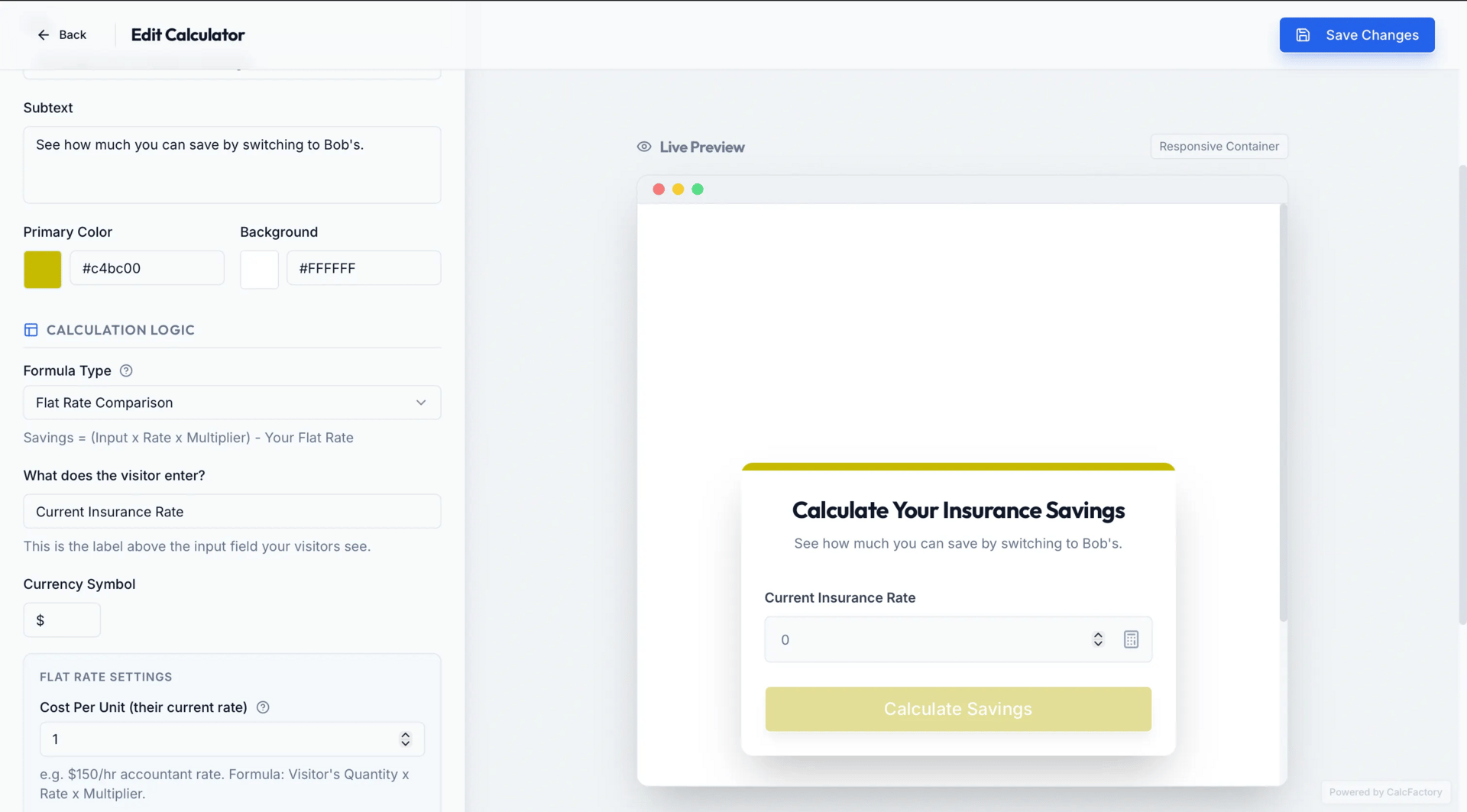
The Rundown: In this guide, you will learn how to use Replit to build a custom calculator lead form for your website. If you can copy and paste, you can build software for your team, and you’ll save on per-seat pricing.
Step-by-step:
Go to Replit, toggle on "Plan mode," and prompt: "Build a custom lead gen widget app using Python (Flask) and Replit SQL. Users will create embeddable cost-savings calculators that capture email leads and track analytics. Allow custom colors, form fields and formulas."
Answer any follow-ups from the agent and hit “Build” when ready. Once it finishes, test the tool in the preview tab. Try creating a new lead widget.
Copy the widget’s embed (iframe) code and embed it on your brand website, then check captured leads in Replit → Database → Development Database.
If everything works, click “Publish”. Replit will deploy your app to a public URL. You will need to log in to this version and re-create your form.
Pro tip: Use this method to embed anything on your site — a slideshow, countdown timer, or even a blog.
PRESENTED BY GITLAB
🤖 Agentic AI, real results

The Rundown: GitLab Transcend is an exclusive virtual event happening tomorrow that explores how agentic AI is transforming software delivery, with real-world stories, product demos, and a preview of GitLab's upcoming roadmap.
At Transcend, you'll hear:
How teams are using agentic AI to automate real-world DevOps workflows
Perspectives from tech leaders and live Q&As with GitLab project leaders
A first look at GitLab's upcoming innovations and investments
AI DOT COM
💰 Crypto.com founder drops $70M on AI.com

Image source: ai.com
The Rundown: Crypto.com co-founder and CEO Kris Marszalek revealed he purchased the AI.com domain for $70M, the largest domain sale ever, debuting the site as an autonomous AI agent platform for consumers with a Super Bowl commercial.
The details:
The platform promises a personal AI agent that can trade stocks, manage calendars, send messages, and automate workflows with no technical setup.
The record-breaking deal nearly doubled the prior domain record set by voice.com's $30M sale in 2019.
Marszalek envisions a network of agents that autonomously build new capabilities and share upgrades across users, “accelerating the advent of AGI”.
Why it matters: That’s certainly one way to make a big splash — with both the largest domain sale ever (admittedly for an excellent one) and a primetime entrance with a Super Bowl ad. But a strong marketing play and a tool that actually competes with the flurry of agentic upgrades from established, frontier labs are two very different beasts.
QUICK HITS
🛠️ Trending AI Tools
⚙️ GPT-5.3-Codex - OpenAI's new SOTA agentic coding model
🧠 Claude Opus 4.6 - Anthropic’s upgrade to its most powerful model line
🎥 Krea Realtime - Krea’s realtime, long-form AI video generation system
🎥 Kling 3.0 - Kling’s new video AI with better consistency and 15s outputs
📰 Everything else in AI today
Adapt just announced the future of AI for work – an always-available co-worker that understands business context and works across tools. See the vision and fundraising deck.*
Anthropic released a ‘fast mode’ for its new Claude Opus 4.6 model, which delivers 2.5x faster responses at drastically higher token costs.
Goldman Sachs revealed it has been working with Anthropic over the last six months to build AI agents that automate accounting, compliance, and client onboarding.
xAI co-founder Igor Babuschkin praised Claude Opus 4.6’s physics capabilities, saying that a “Claude Code moment for research” may be approaching.
Axiom announced that its AI independently solved an unsolved math problem and wrote its own verified proof, a first for AI in advanced mathematical research.
*Sponsored Listing
COMMUNITY
🤝 Community AI workflows
Every newsletter, we showcase how a reader is using AI to work smarter, save time, or make life easier.
Today’s workflow comes from reader Howard C. in Hawkins, TX:
"I’m retired and sell diecast models on eBay. My system worked well, but I wanted to cut inkjet use by printing packing lists on 4”x6” labels with a thermal printer. With ChatGPT’s help, I built a Mac Automator app that takes a dropped eBay packing list and creates a print-ready 4”x6” version automatically.
We also built another app that uses the same file to generate a buyer email saying the order is ready to ship."
How do you use AI? Tell us here.
🎓 Highlights: News, Guides & Events
Read our last AI newsletter: OpenAI, Anthropic fight on the frontier
Read our last Tech newsletter: Paris raid raises stakes for X
Read our last Robotics newsletter: Cancer-fighting bubble bots
Today’s AI tool guide: Build custom lead widgets for your site
RSVP to our next workshop on Feb. 11: Agentic Workflows Bootcamp pt. 1
See you soon,
Rowan, Joey, Zach, Shubham, and Jennifer — the humans behind The Rundown

Paris raid raises stakes for X
Read Online | Sign Up | Advertise

Good morning, tech enthusiasts. This week, French prosecutors raided X’s Paris offices — an enforcement move that instantly lit up headlines and set off a fresh wave of scrutiny.
Spain is doubling down too, floating a ban on social media for under-16s and criminal liability for executives when illegal content spreads. Washington is pushing back, and it looks like the transatlantic fallout is only just beginning.
In today’s tech rundown:
Paris raid turns up the heat on X
Bezos’ $3B bet that cells can age backward
Boring Company lands first deal outside U.S.
Big Tech spends millions on data center rebrand
Quick hits on other tech news
LATEST DEVELOPMENTS
X
🚓 Paris raid turns up the heat on X

Image source: Ideogram / The Rundown
The Rundown: A police raid on X’s Paris offices and a Spanish proposal to target tech chiefs for illegal content on their platforms have jolted a simmering trans‑Atlantic fight over what “free speech” means online, reports The New York Times.
The details:
French prosecutors raided X’s Paris offices, targeting alleged failures to curb child sexual abuse images and content denying crimes against humanity.
The raid escalates a months‑long trans‑Atlantic rift over how far governments can go in forcing platforms to police speech and harmful content.
Spain’s prime minister has proposed banning social media for under‑16s and making tech execs criminally liable if illegal content spreads on their platforms.
The E.U. has already fined X roughly €120M (~$142M) and opened new probes into Grok-generated sexualized deepfakes of women and children.
Why it matters: The Trump administration has cast Europe’s tougher social‑media rules as an attempt to export censorship and has imposed visa bans on several E.U. digital officials. The dispute over child safety has become a broader test of whether the U.S. or European approach to online speech shapes global platforms.
TOGETHER WITH ATLASSIAN
🚀 Enhance your SDLC
The Rundown: Rovo Dev, a context-aware AI agent, helps your team stay in flow throughout the whole SDLC, from planning through code gen, code review, and ongoing maintenance.
Do more with Rovo Dev:
Make decisions with more context
Delegate tasks at scale
Integrate with Jira, GitHub, & more
BIOTECH
🔬 Bezos’ $3B bet that cells can age backward

Image source: Daniel Oberhaus / Wikimedia Commons
The Rundown: Jeff Bezos and a billionaire brain‑trust are pouring roughly $3B into Altos Labs, a stealthy longevity startup betting that cellular rejuvenation and epigenetic reprogramming could one day make age‑reversal gene therapy real.
The details:
Bezos and his backers have made Altos one of the most lavishly funded longevity ventures ever, leapfrogging rivals overnight.
The company is chasing epigenetic reprogramming — using Yamanaka factors to rewind cells' biological clocks without scrambling their identity.
The moonshot: turn reprogramming breakthroughs into therapies that could actually repair age-damaged tissues across the body.
Altos has recruited a dream team with pharma vets, stem-cell pioneers, and gene-editing luminaries who’ve traded academia for the startup game.
Why it matters: Altos’ $3B launch crystallizes Silicon Valley’s push to turn longevity science into a serious biotech business rather than a fringe obsession. With Bezos backing and a star-studded research team, it's one of the boldest — and most expensive — bets yet that aging can be hacked, delayed, or maybe even reversed.
BORING COMPANY
Boring Company lands first deal outside U.S.

Image source: The Boring Company
The Rundown: Dubai just approved its first international Loop project with Elon Musk’s Boring Company: a $154M, 4-mile EV-only tunnel with four underground stations linking the Dubai International Financial Centre to Dubai Mall.
The details:
The Loop will run as an EV-only public shuttle using Tesla vehicles operated by Boring Company staff — riders can’t drive their own cars through the tunnels.
Dubai plans to start construction immediately, with the first phase targeted for completion within about one to two years.
The route is projected to move roughly 13K passengers per day at launch, with the wider network eventually handling up to 30K daily.
A full buildout could expand the Loop into a roughly 15-mile network with 19 stations, estimated at $545 million.
Why it matters: Dubai’s Loop is the first international deployment of Musk’s “Teslas in tunnels” transit model and the biggest test yet of whether smaller-bore tunnels can actually compete with conventional metro systems in a major city. Success could validate the still-contentious Music City Loop in Nashville.
AI
💰 Big Tech spends millions on data center rebrand

Image source: Meta
The Rundown: Big tech is spending millions on ads, mailers, and lobbying campaigns to rebrand data centers as job creators and clean‑energy partners as communities across the U.S. push back against their water use, power demand, and subsidies.
The details:
Tech and utility companies are spending millions on PR to rebrand data centers as clean‑energy assets amid growing local backlash over AI‑driven build‑outs.
Residents in states like Virginia and Delaware are protesting new projects over concerns about huge electricity demand, water use, and taxpayer subsidies.
Industry coalitions such as Virginia Connects are funding glossy mailers, billboards, and door‑knocking campaigns touting data centers as job creators.
Meta has run national TV spots positioning its data‑center work as supporting “American jobs” and clean energy, even as facilities are often highly automated.
Why it matters: Critics note that data centers bring relatively few long‑term jobs for the hefty tax breaks and infrastructure they receive. The fight over new projects is now a live state‑level issue, forcing lawmakers to balance AI-powered growth against mounting community concerns.
QUICK HITS
📰 Everything else in tech today
Apple is reportedly winding down its “Mulberry” AI health coach project and will instead fold a pared-back set of features into the existing Health app over time.
Jeff Bezos’ Washington Post is slashing more than 300 newsroom jobs, including its Amazon reporter.
Substack said a security breach discovered this week allowed an intruder to access users’ email addresses, phone numbers, and internal metadata in October.
Peloton’s latest earnings show revenue slipping as its pricey new Cross Training hardware and AI features have yet to spur the upgrade boom the company hoped for.
NASA will let astronauts on the upcoming Crew-12 and Artemis II missions bring personal smartphones for the first time.
Elon Musk’s SpaceX company town of Starbase in South Texas is setting up its own municipal police department.
Uber has been ordered by a federal jury in Phoenix to pay $8.5M to a passenger who said her driver raped her.
Y Combinator reversed course and will again back Canada‑incorporated startups, restoring Canada to its approved list after founder backlash.
Scientists built a new scanner that fuses ultrasound and photoacoustic imaging to create fast, radiation‑free 3D color views of blood vessels and soft tissue.
Google says its Quick Share feature, which already lets Pixel 10 phones send files directly to Apple’s AirDrop, will roll out to “many more” Android devices this year.
COMMUNITY
🎓 Highlights: News, Guides & Events
Read our last AI newsletter: OpenAI, Anthropic fight on the frontier
Read our last Tech newsletter: The race to make space babies
Read our last Robotics newsletter: Cancer-fighting bubble bots
Today’s AI tool guide: Cut down reporting times with Claude in Excel
RSVP to our next workshop on Feb. 11: Agentic Workflows Bootcamp pt. 1
See you soon,
Rowan, Joey, Zach, Shubham, and Jennifer — The Rundown’s editorial team
No matching search results
Try using different keywords, double-check your spelling, or explore related categories.
Stay Ahead on AI.
Join 2,000,000+ readers getting bite-size AI news updates straight to their inbox every morning with The Rundown AI newsletter. It's 100% free.