Get the latest AI news, understand why it matters, and learn how to apply it in your work — all in just 5 minutes a day. Join over 2,000,000+ subscribers.

OpenAI, Anthropic fight on the frontier
Read Online | Sign Up | Advertise

Good morning, AI enthusiasts. Yesterday, it was Super Bowl attack ads. Today, OpenAI and Anthropic are letting the models do the talking.
With back-to-back flagship drops that pushed agentic coding, self-improving AI, and enterprise automation forward in a single afternoon, things are moving faster than ever — and the "AI is hitting a wall" crowd might want to sit this news cycle out.
In today’s AI rundown:
OpenAI’s GPT-5.3-Codex helps build itself
Anthropic’s Opus 4.6 with ‘agent teams', 1M context
Cut down reporting times with Claude in Excel
OpenAI’s Frontier to manage ‘AI coworkers’
4 new AI tools, community workflows, and more
LATEST DEVELOPMENTS
OPENAI
🚀 OpenAI’s GPT-5.3-Codex helps build itself
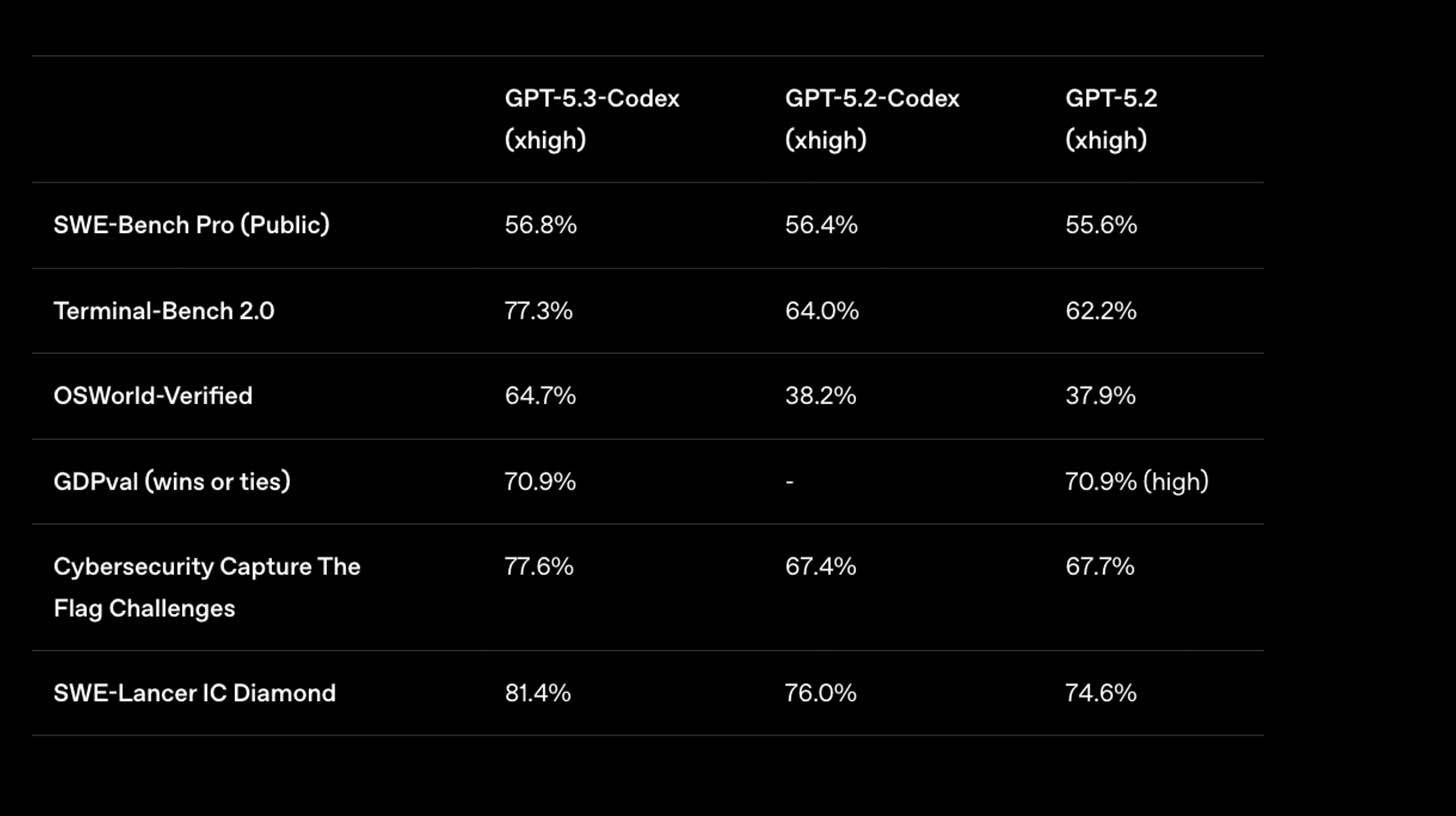
Image source: OpenAI
The Rundown: OpenAI just rolled out GPT-5.3-Codex, a new flagship coding model that merges its best programming and reasoning capabilities into one faster package — while also serving as a key tool in its own training and deployment process.
The details:
OpenAI said early versions of 5.3-Codex were used to find bugs in its own training runs, manage its rollout, and analyze evaluation results.
Codex tops agentic coding benchmarks like SWE-Bench Pro and Terminal-Bench 2.0, topping Opus 4.6 by 12% on the latter just minutes after its release.
On OSWorld, a benchmark testing AI control of desktop computers, the model scored 64.7% — nearly double the 38.2% from the prior Codex version.
OpenAI flagged the model as its first "High" cybersecurity risk rating and committed $10M in API credits to fund defensive security research
Why it matters: The self-improvement angle here is the headline, with Anthropic's Dario Amodei also recently saying Claude is helping design its own successor. Yesterday’s bickering over ads now looks childish compared to the true fight on the model frontier, with a big day of dueling releases out of both labs.
TOGETHER WITH BLAND
📞 Voice AI for every conversation

The Rundown: Bland AI automates phone calls for over 250+ enterprise customers. No phone trees. No hold music. Just faster, smarter customer conversations.
Here's some of the outcomes they've driven for businesses:
Idaho Finance saved $750k/yr by replacing their IVR with AI Voice Agents
MyPlanAdvocate added $40M/yr by automating their inbound lead qualification
And Needle saves $1M/yr by automating outbound calls
Book a demo today to see how they can work for your business.
ANTHROPIC
🚀 Anthropic’s Opus 4.6 with ‘agent teams', 1M context
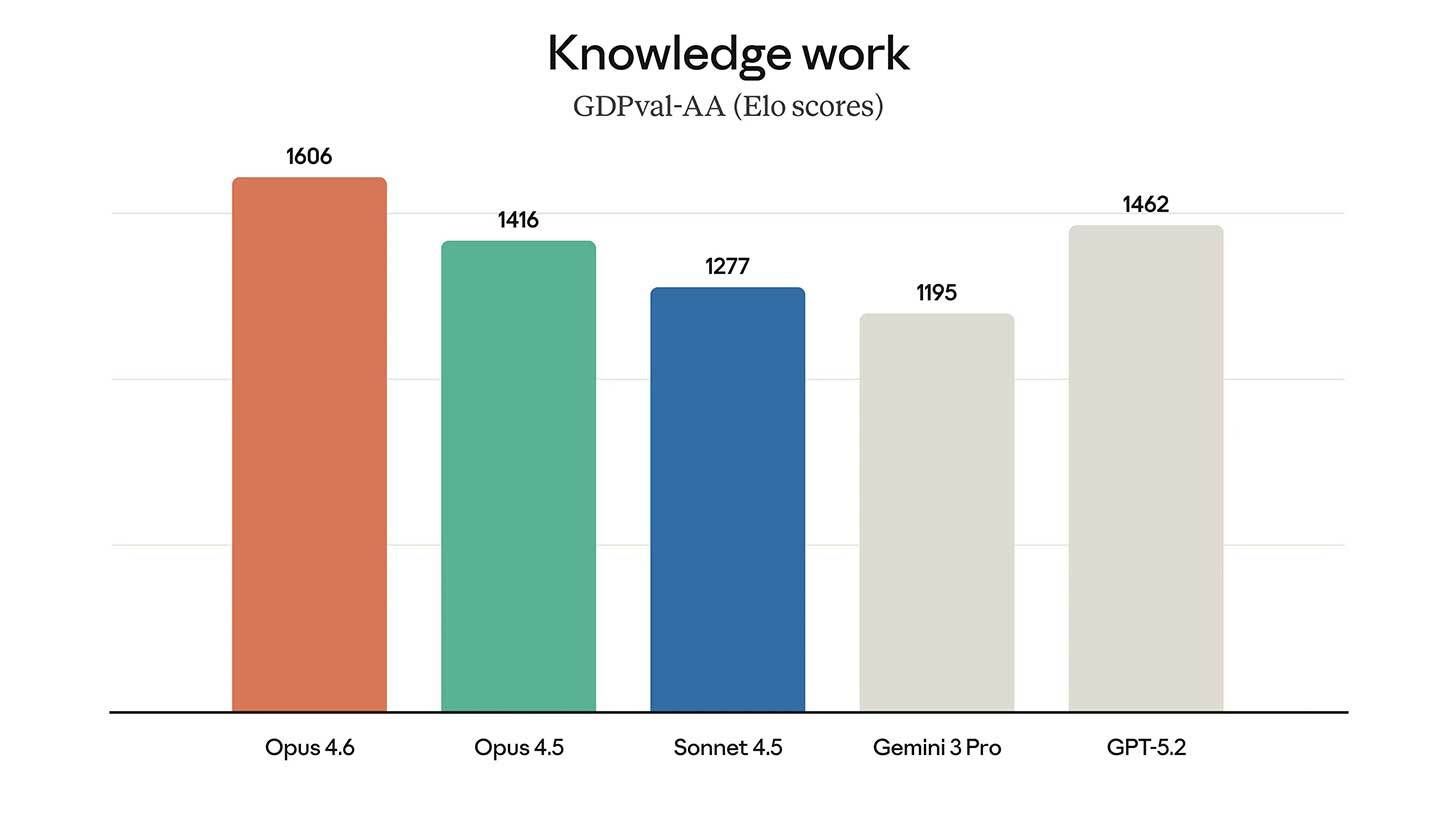
Image source: Anthropic
The Rundown: Anthropic released Claude Opus 4.6, the company’s new most powerful model — featuring multi-agent collaboration in Claude Code, a massive context window, and new Office integrations that put the AI directly inside PowerPoint.
The details:
A new "agent teams" feature in Claude Code lets multiple AI agents split a single project and work simultaneously instead of handling steps one at a time
Opus 4.6 brings a 1M token context window to Anthropic's Opus tier for the first time, matching what Sonnet offers for heavy document and code work.
New Excel and PowerPoint sidebars let Claude read users’ existing templates and build models or decks natively without copying and pasting between tools.
4.6 topped most agentic benchmarks, including a leap on ARC-AGI-2 to nearly 70% — though OAI’s Codex 5.3 reclaimed agentic coding highs minutes later.
Why it matters: It’s a big day for devs, with both Codex 5.3 and Opus 4.6 releases bringing major capability increases across the board. With time between upgrades getting shorter and the length of tasks models can take on continuing to move up the curve, the “AI is hitting a wall” crowd seems pretty quiet these days.
AI TRAINING
📊 Cut down reporting times with Claude in Excel

The Rundown: In this guide, you will do a quick exercise that teaches you how to use Claude as a spreadsheet architect, taking 5+ messy CSVs and watching Claude handle data cleaning, table formatting, color-coding, and more.
Step-by-step:
Install Claude’s Excel app from the Microsoft Marketplace. For this example, we used a year’s worth of SEO data, but you can use sales data, receipts, etc
In Excel, click the Claude button and prompt “I have [data type] data from [sources] for my website/brand/team. Make a plan to rename each tab and clean the data up to make it more readable”. Then, edit and approve the plan
Once done, ask Claude to make a plan for the master dashboard tab: “Based on all tabs, what’s the best way to tie this data into a Master Dashboard?”
Finally, you can ask Claude to visualize data with prompts like “Create a combo chart for Clicks vs. Average Position”
Pro tip: Asking Claude to review the data and create a plan improves its output significantly compared to asking it to get started immediately.
PRESENTED BY TRIPLE WHALE
🛒 Is your brand visible when AI goes shopping?
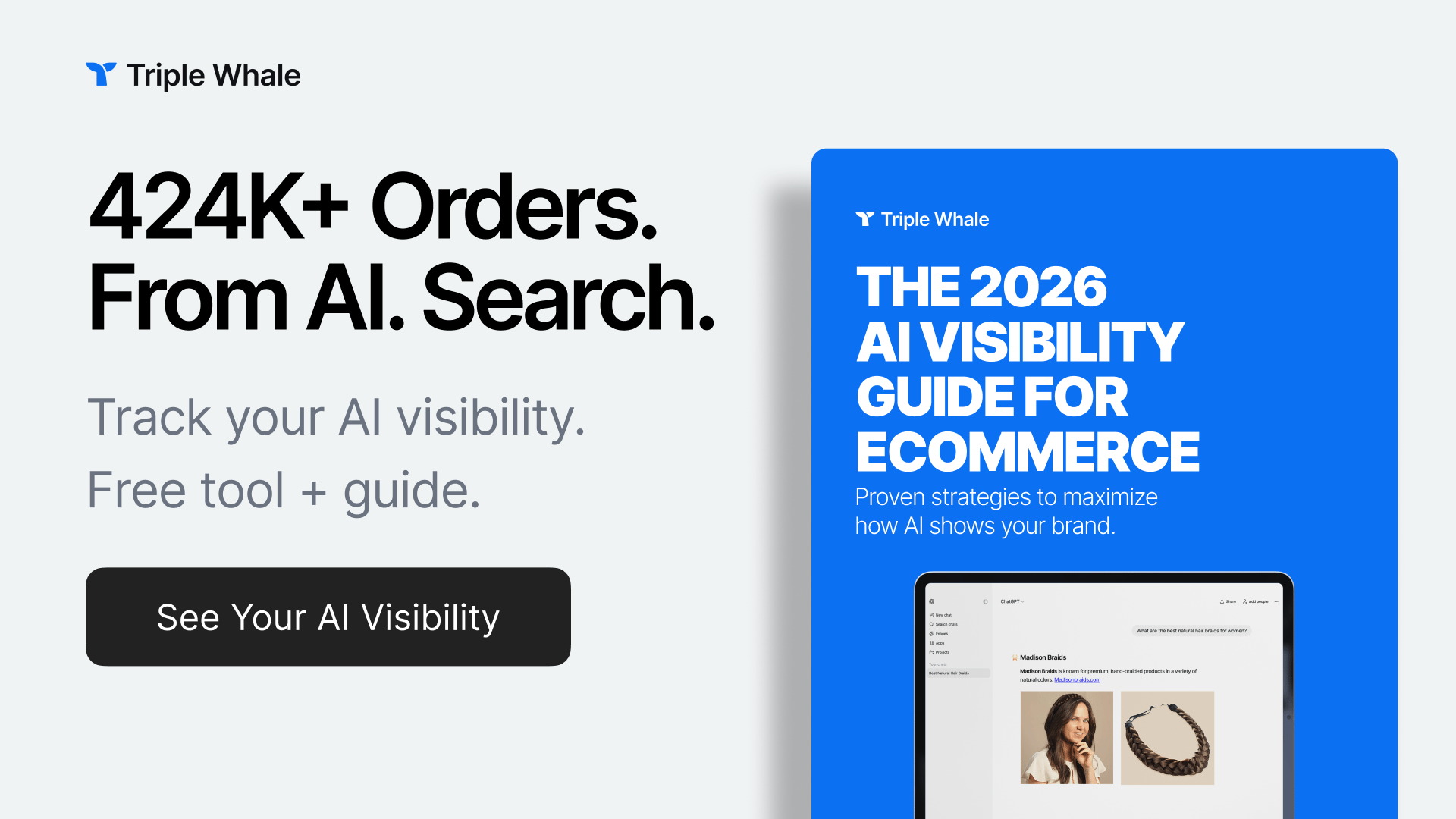
The Rundown: Triple Whale merchants saw LLM-referred orders jump from 7,152 in 2024 to 424,000+ in Q4 2025 alone. AEO (AI Engine Optimization) is the next frontier—and early movers are building an unfair advantage. Try Triple Whale's free tool to see how LLMs see your brand across ChatGPT and other leading platforms.
With the AI Visibility tool, you can:
Monitor your brand's AI visibility score for free
Track mentions across ChatGPT and leading LLMs
Connect AI referrals to actual revenue with attribution
OPENAI
💼 OpenAI’s Frontier to manage ‘AI coworkers’
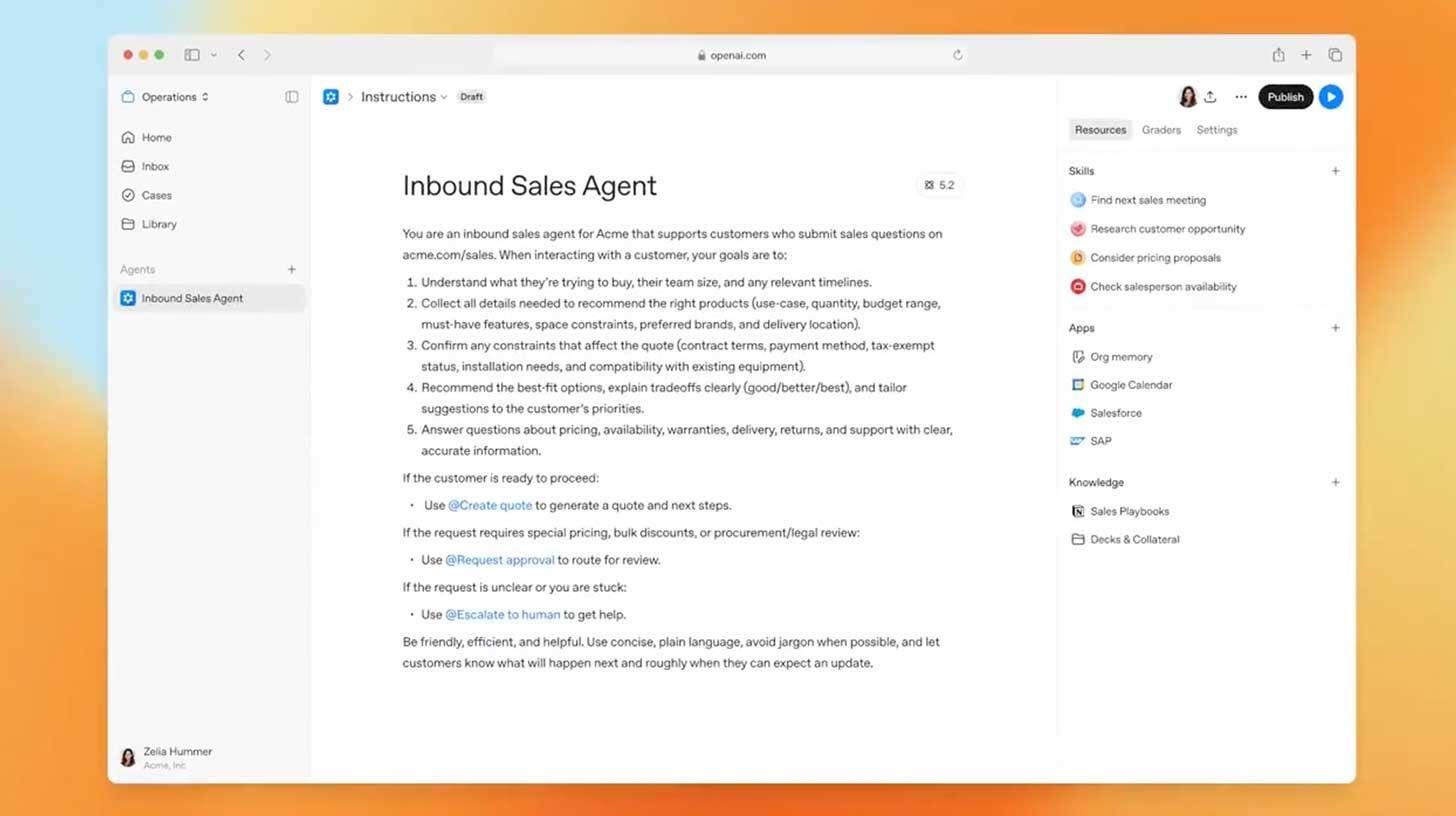
Image source: OpenAI
The Rundown: OpenAI just launched Frontier, a new platform for enterprises to deploy and manage AI agents like new hires — complete with onboarding, permissions, and performance reviews across a company’s existing tech stack.
The details:
Frontier connects to existing enterprise systems like CRMs and ticketing tools, letting agents pull context from across the business without migrations.
Built-in eval and feedback loops let agents learn via experience, with OAI comparing it to onboarding a new employee with reviews and boundaries.
Every agent operates under its own profile with scoped access and hard limits on what it can touch for enterprise and regulated control.
HP, Oracle, State Farm, and Uber are among the first adopters, with OAI embedding engineers on-site to help teams get agents into production.
Why it matters: Anthropic and OAI have been battling over models and coding tools, but Frontier shows the fight is also bleeding into who controls the enterprise agent layer underneath. Model capabilities are making AI coworkers a reality in the near future, and the system that ultimately orchestrates them will be valuable real estate.
QUICK HITS
🛠️ Trending AI Tools
⚙️ GPT-5.3-Codex - OpenAI's new SOTA agentic coding model
🧠 Claude Opus 4.6 - Anthropic’s upgrade to its most powerful model line
🤖 OpenAI Frontier - Enterprise platform to create, deploy, manage AI agents
🔎 Model Council - Perplexity’s new tool for querying multiple models
📰 Everything else in AI today
Perplexity launched Model Council, a new feature that runs queries through multiple AI models at the same time and synthesizes outputs into a single answer.
Roblox introduced 4D generation via its Cube AI foundation model, letting creators generate fully functional, interactive objects from text prompts.
Lotus Health raised $35M in Series A funding for its free AI-powered primary care platform, providing diagnosis, prescriptions, and referrals across 50 states.
Meta is rolling out a standalone app for its Vibes AI video platform, which was previously only available via the Meta app.
AI evaluation firm METR released new analysis for GPT-5.2 (high), finding it can now handle tasks that would take a human engineer over 6 hours to complete.
COMMUNITY
🤝 Community AI workflows
Every newsletter, we showcase how a reader is using AI to work smarter, save time, or make life easier.
Today’s workflow comes from reader T. in Canada:
"I use AI to source vendors for fresh produce and compare/predict market price changes from globally supplied goods. It helps to maintain food security in our northern region."
How do you use AI? Tell us here.
🎓 Highlights: News, Guides & Events
Read our last AI newsletter: Anthropic’s ad-free campaign takes aim at OAI
Read our last Tech newsletter: The race to make space babies
Read our last Robotics newsletter: Cancer-fighting bubble bots
Today’s AI tool guide: Cut down reporting times with Claude in Excel
RSVP to our next workshop on Feb. 11: Agentic Workflows Bootcamp pt. 1
See you soon,
Rowan, Joey, Zach, Shubham, and Jennifer — the humans behind The Rundown


Cancer-fighting bubble bots
Read Online | Sign Up | Advertise

Good morning, robotics enthusiasts. Caltech and USC researchers have turned tiny medical “bubbles” into steerable microbots that can deliver chemo right to a tumor.
They ride the body’s own chemistry, swarm the target, then pop on an ultrasound cue to release their payload. It’s a wild glimpse of a future where cancer treatment gets smarter, sharper, and a lot less brutal.
In today’s robotics rundown:
Bubble microbots blast tumors with drugs
A Unitree G1 humanoid rides a skateboard
Bedrock lands $270M for autonomous excavators
Carbon’s farm robots just got a lot smarter
Quick hits on other robotics news
LATEST DEVELOPMENTS
MICROBOTS
🫧 Bubble microbots blast tumors with drugs
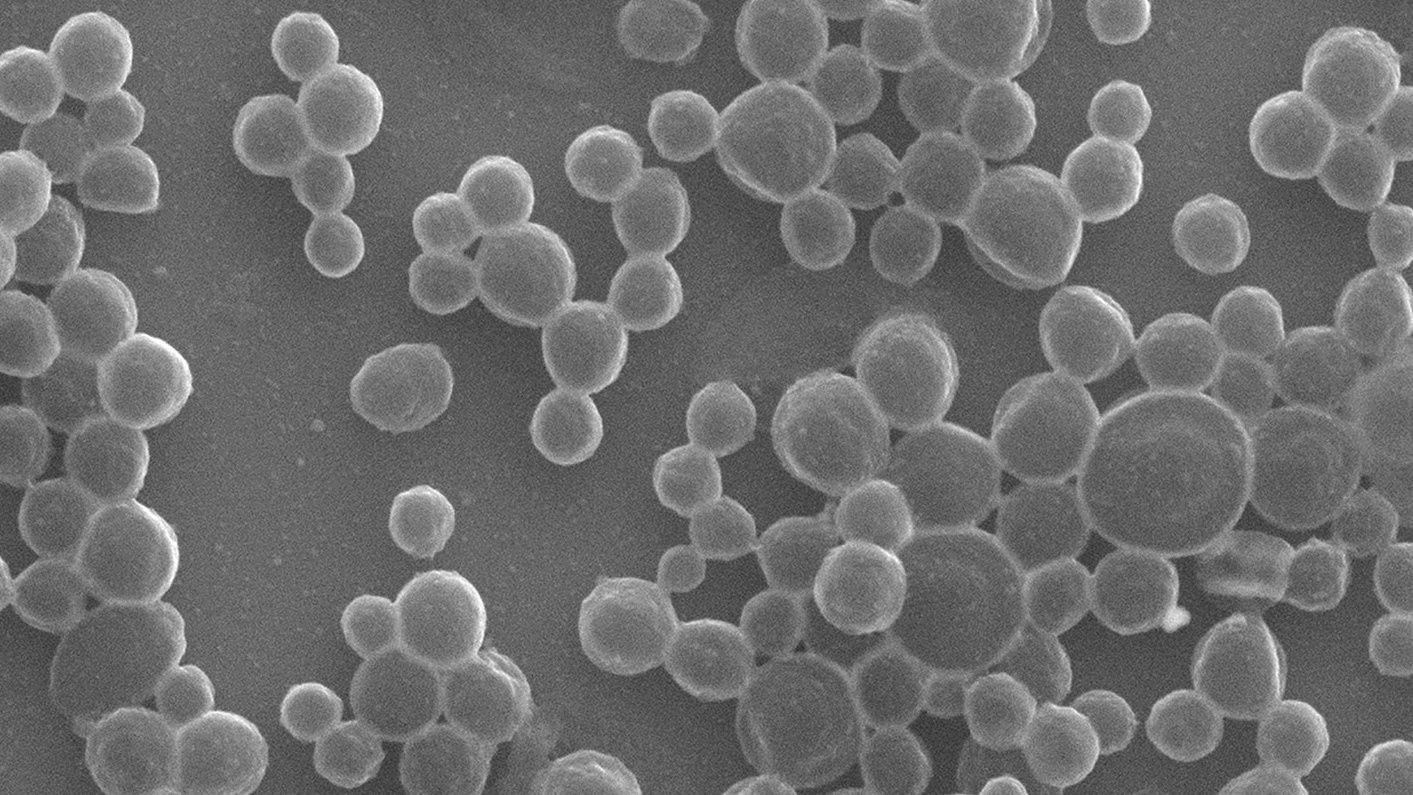
Image source: Gao Lab/Caltech
The Rundown: Caltech and USC researchers have transformed medical imaging bubbles into enzyme-powered microrobots that can be steered — or self-navigate — to tumors, then burst on cue to blast chemotherapy deep into cancerous tissue.
The details:
The enzyme-coated microbubbles act as simple, biocompatible microrobots capable of ferrying chemotherapy drugs directly to tumors.
The enzyme reacts with urea in bodily fluids to generate thrust, propelling the bubbles through tissue without onboard batteries or electronics.
Doctors can steer the bots externally with magnets or let them autonomously follow chemical gradients straight into tumors.
Once the swarm accumulates at the target site, a burst of ultrasound pops the bubbles and drives the drug deep into the tissue, not just across the surface.
Why it matters: These bubble bots demonstrate how microrobotics could make chemotherapy far more precise, hitting tumors while sparing healthy tissue. If the research advances, it joins a growing field of magnetic and ultrasound-guided microrobots racing to slash doses and side effects through targeted delivery.
HUMANOIDS
🛹 A Unitree G1 humanoid rides a skateboard

Image source: HUSKY Github
The Rundown: Chinese researchers just taught a compact Unitree G1 humanoid to ride a skateboard using a physics-aware control framework called HUSKY, short for Humanoid Skateboarding System via Physics-Aware Whole-Body Control.
The details:
HUSKY models how pushing generates forward motion and how leaning steers the board, using limited human motion data to give the robot skater-like timing.
The system breaks skateboarding into discrete phases (pushing, coasting, steering) while directly mapping the robot’s lean angle to board turn radius.
After simulation training, the behaviors were transferred to a physical G1, which can now skate repeatedly across different boards.
The team plans to add onboard vision so the robot can track the skateboard and terrain in real time. HUSKY has also been open-sourced.
Why it matters: HUSKY shows that relatively affordable humanoids can learn agile, contact-rich skills using physics-aware control instead of pure reinforcement learning, opening the door to far more dynamic work than walking or lifting. The implication: future off-the-shelf humanoids could simply download “sport-like” behaviors.
BEDROCK ROBOTICS
Bedrock lands $270M for autonomous excavators

Image source: Bedrock Robotics
The Rundown: San Francisco–based startup Bedrock Robotics, founded by former Waymo and Segment engineers, raised $270M at a $1.75B valuation to scale its retrofit autonomy system for construction excavators.
The details:
The company raised $270M in Series B funding at a $1.75B valuation, bringing its total funding to more than $350M.
Bedrock’s Operator kit bolts lidar, GPS, IMUs, cameras, and in‑cab compute onto 20‑ to 80‑ton excavators so they can autonomously dig and load trucks.
The system has already moved more than 65K cubic yards of material autonomously on a 130-acre manufacturing site — an industry first.
Bedrock plans to graduate from single autonomous machines to coordinated fleets, with fully operator-less sites targeted for 2026.
Why it matters: The construction boom in data centers is colliding with a massive labor shortfall, and Bedrock is pitching its robo-excavator fleets as a way to keep projects moving. If it’s robots scale, they could normalize self-driving heavy equipment on mainstream sites, even as rivals Built Robotics and SafeAI race to do the same.
CARBON ROBOTICS
☘️ Carbon’s farm robots just got a lot smarter

Image source: Carbon Robotics
The Rundown: Seattle-based Carbon Robotics, the maker of the laser-toting LaserWeeder farm robot, built a new foundation model for plants that it says can recognize virtually any species it encounters in the field.
The details:
Carbon Robotics unveiled its Large Plant Model (LPM), an AI foundation model that can instantly recognize and classify plant species for precision weeding.
The model was trained on more than 150M labeled images collected by Carbon’s robots across over 100 farms in 15 countries.
Previously, every new weed required fresh labeling and retraining, a process that took about 24 hours each time.
With LPM, farmers can now flag a new weed directly in the robot’s interface and instruct the machine to kill it immediately — no retraining required.
Why it matters: Carbon’s model makes robo-weeding far more flexible, letting growers zap new weeds on the fly while slashing reliance on chemical herbicides. If it scales, Carbon could strengthen the economics of laser weeding and give rivals like Blue River and FarmWise pressure to match both its autonomy and environmental credentials.
QUICK HITS
📰 Everything else in robotics today
UK startup Humanoid announced KinetIQ, a “shared brain” AI framework that lets fleets of robots learn and coordinate tasks under one cloud-based control system.
China is training drones and robots on animal-inspired tactics — such as teaching them to hunt like hawks — to create more autonomous, battlefield-ready military robots.
LimX Dynamics, a Shenzhen-based humanoid startup, raised $200M in Series B funding to scale its full-size Oli humanoid and modular TRON robots.
New York Robotics launched as a non-profit group to unify the New York–New Jersey–Connecticut robotics ecosystem, which it says includes more than 160 startups.
Uber promoted Balaji Krishnamurthy to CFO as it doubles down on autonomous vehicles and aims to be the biggest platform for robotaxi trips by the decade’s end.
The UK’s Sellafield nuclear site tested a new swabbing tool mounted on a Boston Dynamics Spot robot to check for radioactive contamination.
Shanghai-based DroidUp unveiled Moya, a “biomimetic” humanoid that walks with 92% human-like gait accuracy and mimics micro‑expressions.
Duke engineers created Lego-like blocks with tunable stiffness so robots can switch between rigid and soft modes, changing how they move without being rebuilt.
Chinese researchers unveiled Bolt, a full-sized humanoid that can sprint at 10 meters per second, which they tout as the world’s fastest running robot.
Harvard engineers developed “rolling contact” joints that mimic human knees, allowing robots to correct misalignment by 99% and grippers to lift 3x more weight.
FedEx signed a multi-year deal with Berkshire Grey to deploy Scoop, a robotic trailer unloader designed to autonomously empty mixed-package trailers.
COMMUNITY
🎓 Highlights: News, Guides & Events
Read our last AI newsletter: Anthropic’s ad-free campaign
Read our last Tech newsletter: The race to make space babies
Read our last Robotics newsletter: Waymo hits record $110B valuation
Today’s AI tool guide: Set up a coordinated coding team with Codex App
RSVP to our next workshop on Feb. 11: Agentic Workflows Bootcamp pt. 1
See you soon,
Rowan, Joey, Zach, Shubham, and Jennifer — The Rundown’s editorial team
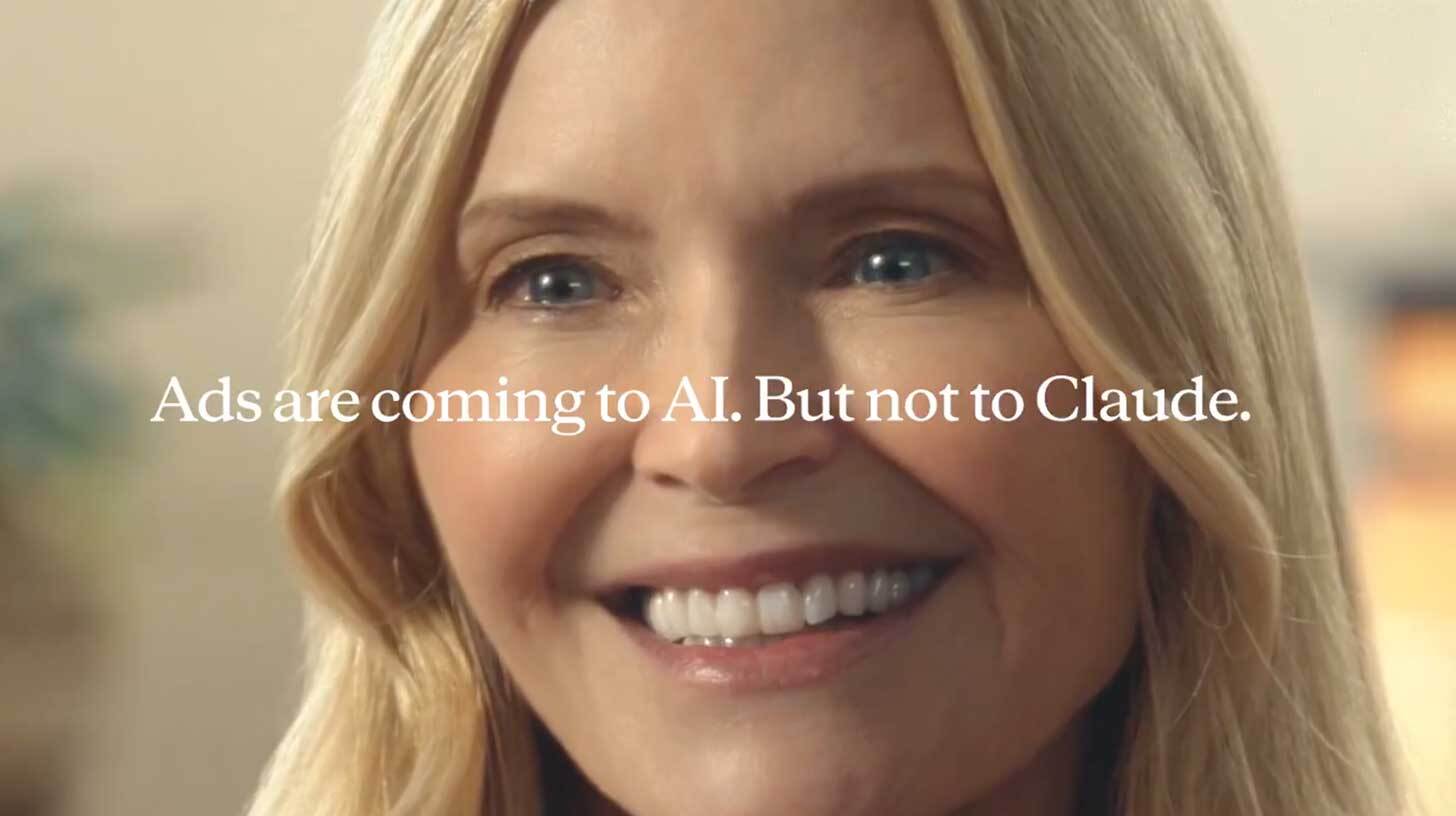
Anthropic’s ad-free campaign takes aim at OpenAI
Read Online | Sign Up | Advertise

Good morning, AI enthusiasts. The Claude vs. ChatGPT battle just went mainstream, and Anthropic is coming out swinging on advertising's biggest stage.
The company's Super Bowl campaign takes direct aim at OpenAI's decision to bring ads to its platform, pledging to keep Claude ad-free with a primetime spot Sam Altman is already calling "clearly dishonest."
In today’s AI rundown:
Anthropic’s campaign takes aim at OpenAI
Kling 3.0 brings more length, consistency to AI video
Set up a coordinated coding team with Codex app
PaperBanana’s publication-ready research diagrams
4 new AI tools, community workflows, and more
LATEST DEVELOPMENTS
ANTHROPIC
🍿 Anthropic’s campaign takes aim at OpenAI
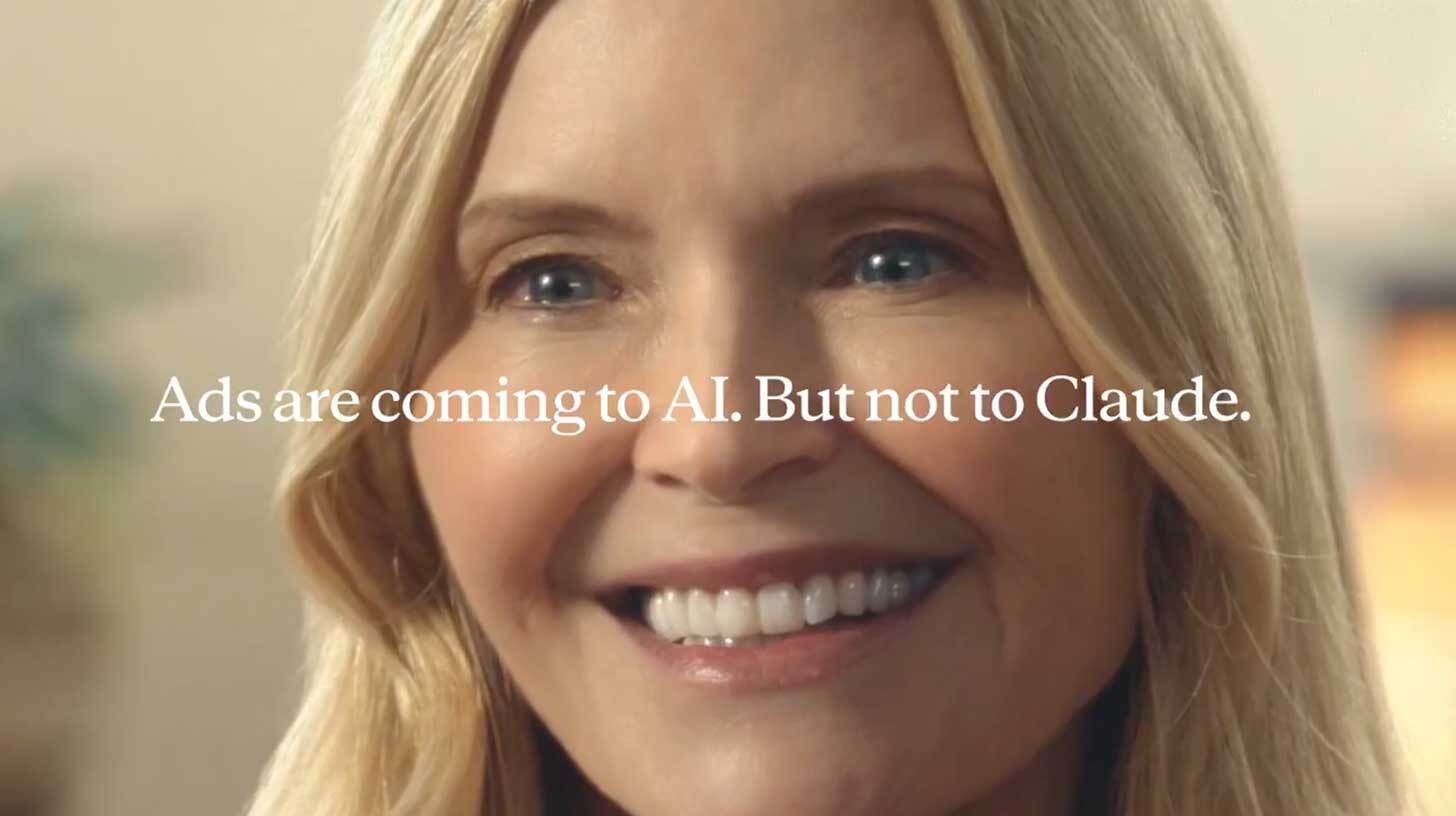
Image source: Anthropic
The Rundown: Anthropic just dropped a new Super Bowl ad campaign that mocks the idea of ads inside AI chats, pairing the spots with a formal pledge to keep Claude ad-free — in a direct move against OpenAI’s recent decision to bring ads to ChatGPT.
The details:
Anthropic published a blog committing to keep its AI assistant ad-free, saying advertising would be “incompatible” with Claude acting in users’ interests.
The SB campaign features the tagline “Ads are coming to AI. But not to Claude”, showing parodies of ads interrupting helpful AI conversations.
OAI CMO Kate Rouch hit back on X, arguing free access to ChatGPT does more good than Anthropic’s paid-only subs that reach a fraction of the users.
Sam Altman called it "clearly dishonest," saying OAI would never run intrusive ads — and that Anthropic serves “an expensive product to rich people”.
Why it matters: Anthropic's spot draws a clear line between its vision for Claude and OAI's ad-supported direction, and doesn’t pull punches. But OAI's counterargument that free, ad-powered access is more democratic than a product that only paying users can unlock hits harder when the user gap sits in the hundreds of millions.
TOGETHER WITH INNOVATING WITH AI
🚀 Turn AI expertise into a business

The Rundown: AI is transforming every workplace – but executives are terrified of becoming one of the companies that gets “no ROI on AI”. That’s where you come in, and how you can build a 6-figure consultancy with Innovating with AI’s proven methods for delivering fast ROI on AI strategy and implementation.
The AI Consultancy Project helps you:
Turn AI skills into clear, marketable consulting services
Access proven frameworks for delivering measurable AI ROI to clients
Get listed in a directory that drives Fortune 500 leads to graduates
KLING
🎥 Kling 3.0 brings more length, consistency to AI video

Image source: Kling
The Rundown: Chinese AI video startup Kling just released Kling 3.0, consolidating text-to-video, image-to-video, and native audio generation into a single multimodal model with longer outputs and upgraded character and scene consistency.
The details:
3.0 merges previous model lines into a unified system, with native support for 15-sec clips and a new Multi-Shot mode that auto-generates camera angles.
Consistency gets a major upgrade, with the model now able to lock in visual traits across shots using image or video references as reusable "anchors."
Native audio generation now supports voice cloning for multiple characters, alongside expanded language options for natural multilingual dialogue.
The release is currently limited to Kling’s Ultra-tier subscribers, with a broader rollout expected in the next week.
Why it matters: Kling has consistently sat near the top of AI video leaderboards — and while benchmarks aren’t out for 3.0, it looks like it will take another step towards the frontier. Its storyboard tools and unified system also follow the industry trends towards actual production workflows with control, audio, and storyboarding built in.
AI TRAINING
🏭 Set up a coordinated coding team with Codex app
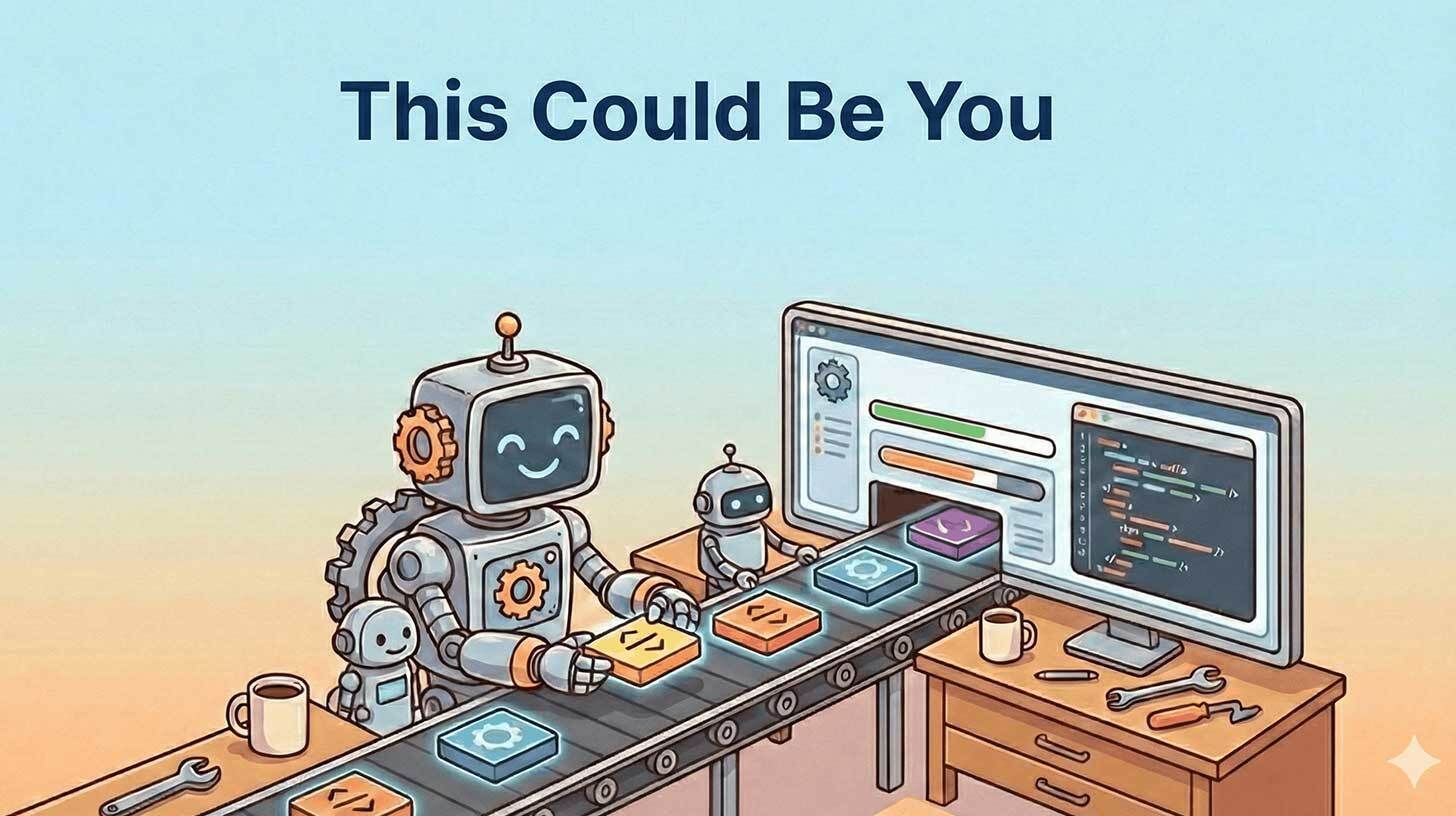
The Rundown: In this guide, you will learn how to use OpenAI’s Codex app to set up a “coding factory” where multiple agents work in parallel and build a website brick by brick each day.
Step-by-step:
Scaffold a new React website with
npm create vite@latest, then open the folder in the Codex app and click “Create git repository”Tell Codex to create a modular PRD (plan document) where each webpage can be built out in parallel, without conflicts
Open a new thread for each page of your website (landing, blog, pricing, etc.) and direct each agent to work only on its assigned scope, following the PRD
Review each agent’s output, merge completed branches with the main agent, and preview the site directly from Codex to assemble it piece by piece
Pro tip: Use the “Automations” menu to set up automated agents for daily code review, feature building and bug hunting.
PRESENTED BY CONCENTRIX
⚙️ When automation goes too far
The Rundown: Backed by hands-on experience helping industry leaders build sustainable AI, Concentrix uncovers the human processes behind truly high-quality AI in its latest paper.
What’s in it for you?
The business value of keeping humans in the loop across AI development
Research-based analysis on the impact of AI on human roles
A real-world AI success story
AI RESEARCH
🍌 PaperBanana’s publication-ready research diagrams
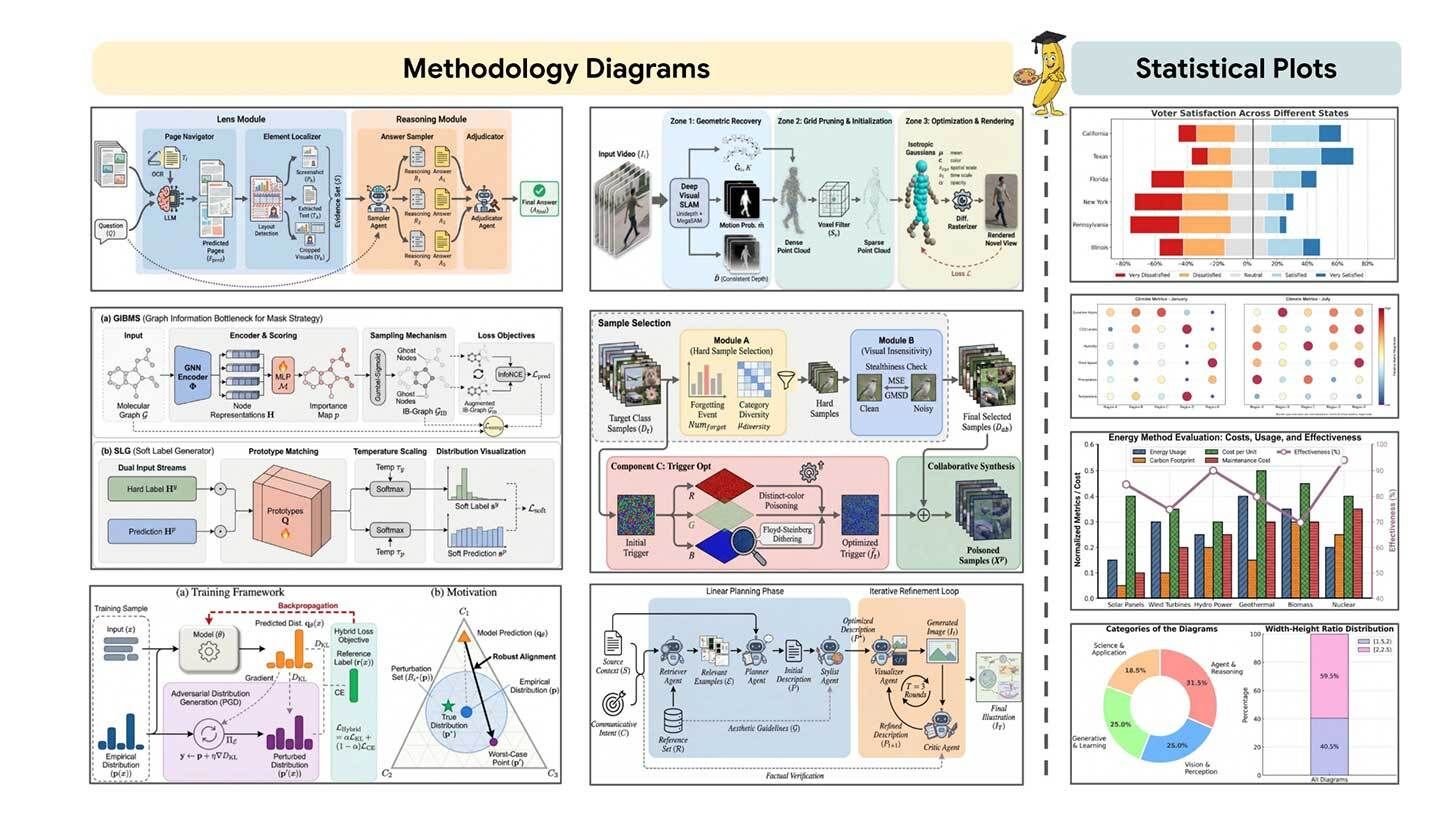
Image source: Google Cloud AI & Peking University
The Rundown: Researchers from Peking University and Google Cloud AI just released PaperBanana, a system of five AI agents that work together to auto-generate publication-ready diagrams and charts for academic papers.
The details:
The system chains five AI agents together for retrieval, planning, styling, rendering, and critique, mimicking how a human designer crafts diagrams.
On a new benchmark of 292 NeurIPS methodology diagrams, the system beat baselines in conciseness by 37% and readability by nearly 13%.
PaperBanana can also polish existing human-drawn figures, winning head-to-head aesthetic comparisons against originals 56% of the time.
Why it matters: Between platforms like OpenAI’s Prism and tools like PaperBanana, we’re getting a good look at how much the actual drafting part of the scientific research process is getting sped up — letting researchers focus on the actual ideas instead of production bottlenecks like illustrations, formatting, etc. that slow output.
QUICK HITS
🛠️ Trending AI Tools
🗣️Unwrap Customer Intelligence - Turn unstructured customer feedback into data-backed insights that inform your product roadmap*
🎥 Kling 3.0 - Kling’s new video AI with better consistency and 15s outputs
💬 Voxtral Transcribe 2 - Mistral’s new transcription models, for 13 languages
⚙️ Codex App - OpenAI’s new Mac app for managing agents with Codex
*Sponsored Listing
📰 Everything else in AI today
Amazon rolled out Alexa+ across the U.S., making its AI-infused assistant free for Prime members and available at $19.99 / month for everyone else.
Mistral launched Voxtral Transcribe 2, a new speech-to-text family for transcription across 13 languages, including an open-weights Realtime model for live transcription.
Perplexity launched an advanced version of Deep Research, claiming SOTA performance on benchmarks, with immediate availability for Max plan subscribers.
ElevenLabs announced a new $500M funding round that pushes the AI voice platform’s valuation to $11B, tripling its worth in just a year.
AI chipmaker Cerebras secured a $1B Series H round at a $23B valuation, coming on the heels of the company’s January deal with OpenAI.
Google CEO Sundar Pichai revealed that the Gemini app now has 750M+ monthly active users, with the tech giant expecting to increase investments to $185B in 2026.
COMMUNITY
🤝 Community AI workflows
Every newsletter, we showcase how a reader is using AI to work smarter, save time, or make life easier.
Today’s workflow comes from reader Allen E. in Prattville, AL:
"Due to leukemia, I have to have frequent blood work drawn. The lab reports are long and tabular. To get a better picture of the disease's progression or lack thereof, I plot each new value of Hemoglobin, RBC, WBC, and others on a graph...
After each new blood work, I just speak the new date and value and add it to the existing graph. The normal values for each test are also shown as a shaded area on the graph, so it is easy to see if the value is close to or far from the desired value."
How do you use AI? Tell us here.
🎓 Highlights: News, Guides & Events
Read our last AI newsletter: Sam Altman’s OpenAI succession plan
Read our last Tech newsletter: The race to make space babies
Read our last Robotics newsletter: Waymo hits record $110B valuation
Today’s AI tool guide: Set up a coordinated coding team with Codex App
RSVP to our next workshop on Feb. 11: Agentic Workflows Bootcamp pt. 1
See you soon,
Rowan, Joey, Zach, Shubham, and Jennifer — the humans behind The Rundown

Sam Altman’s OpenAI succession plan
Read Online | Sign Up | Advertise

Good morning, AI enthusiasts. Nobody in AI drives the narrative quite like Sam Altman, and his most recent profile didn’t disappoint.
From revealing a succession plan to hand OpenAI to an AI model to claiming they have “basically built AGI”, the CEO hits on a wide range of visions for the future — even as insiders worry the company is trying to do too much too quickly.
In today’s AI rundown:
Sam Altman’s OpenAI succession plan
Fitbit founders’ AI-powered family health app
Build a "brand twin" that writes in your voice
AI safety report finds risks are no longer theoretical
4 new AI tools, community workflows, and more
LATEST DEVELOPMENTS
OPENAI
🎙️ Sam Altman’s OpenAI succession plan

Image source: Lovart / The Rundown
The Rundown: OpenAI's CEO just conducted a wide-ranging profile with Forbes, revealing a succession plan that involves handing the company to an AI model, AGI commentary with a strange response from Microsoft CEO Satya Nadella, and more.
The details:
Altman said a succession plan to “hand off the company to an AI model”, arguing if the goal is AGI that can run companies, his own should be first in line.
He also said OpenAI “basically have built AGI”, with Nadella pushing back on that claim — also referring to the Microsoft / OpenAI relationship as “frenemies”.
Forbes reported that Altman “has stakes in more than 500 companies”, with employees privately worrying about OAI’s push to do “too much too quickly.”
He also commented on the drama with Elon Musk, saying it’s “crazy to me how much time he spends attacking us” and criticizing xAI’s own safety issues.
Why it matters: Nobody in AI generates more headlines than Sama, and this profile is a masterclass in why. Whether he's claiming AGI is here or floating an AI succession plan, Altman's talent for driving the narrative is undeniable — the question is whether OpenAI’s execution and sprawling direction can keep up with his visionary claims.
TOGETHER WITH SLACK FROM SALESFORCE
👋 Meet Slackbot, your personal AI work agent
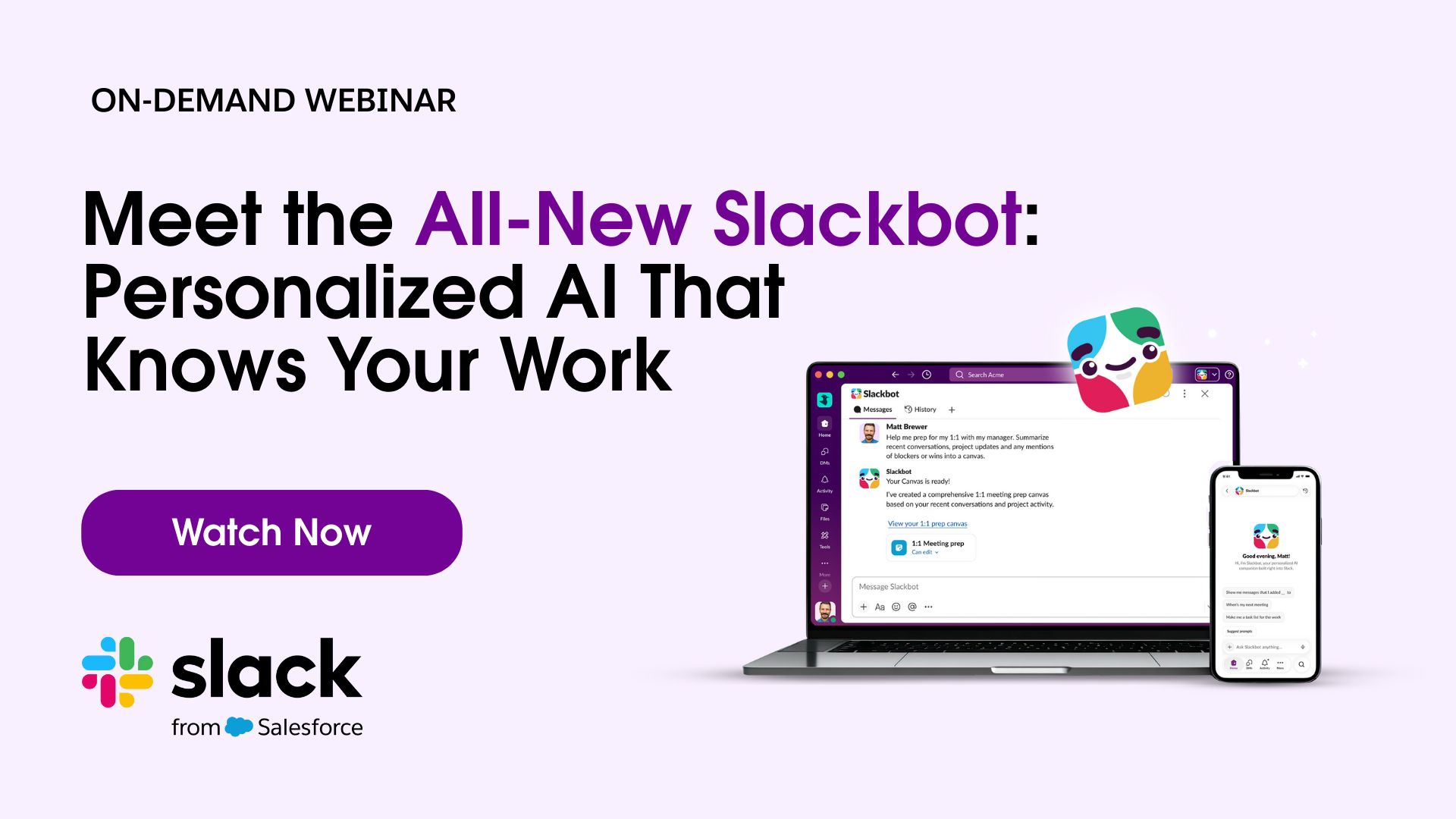
The Rundown: Slackbot is a context-aware AI agent built directly into Slack — understanding your conversations, files, and workflows to deliver what you need, right when you need it, with zero setup. Slackbot synthesizes what you need instantly — respecting your permissions and using only what you can already see.
In this Slackbot-focused webinar, you'll learn about:
Slackbot’s enterprise-grade security by design
How to turn information into action with Slackbot
How customers like Engine and Asybml are already using Slackbot
AI & HEALTH TECH
🏠 Fitbit founders’ AI-powered family health app

Image source: Luffu
The Rundown: Fitbit co-founders James Park and Eric Friedman just unveiled Luffu, a new AI-powered app that monitors health data across an entire family, tracking everything from kids' vitals and aging parents' medications to the dog's vet schedule.
The details:
Luffu's AI pulls together medical info that's typically spread across apps, doctor portals, and paper records, alerting users when something looks off.
The app supports natural-language queries about family members' health and lets people enter updates through voice memos, photos, or text.
The duo is self-funding the venture with a team of ~40, mostly recruited from former Google and Fitbit teams, with a public beta waitlist now open.
Dedicated health devices are planned down the line, with the app currently connecting to existing platforms like Apple Health and Fitbit.
Why it matters: The AI health space has exploded over the past year — but almost everything is built for a single user. With caregiving responsibilities surging worldwide, a family-first approach from the team that helped make personal health tracking mainstream is a bet worth watching, especially as AI wearables grow in capability.
AI TRAINING
👯♀️ Build a "brand twin" that writes in your voice
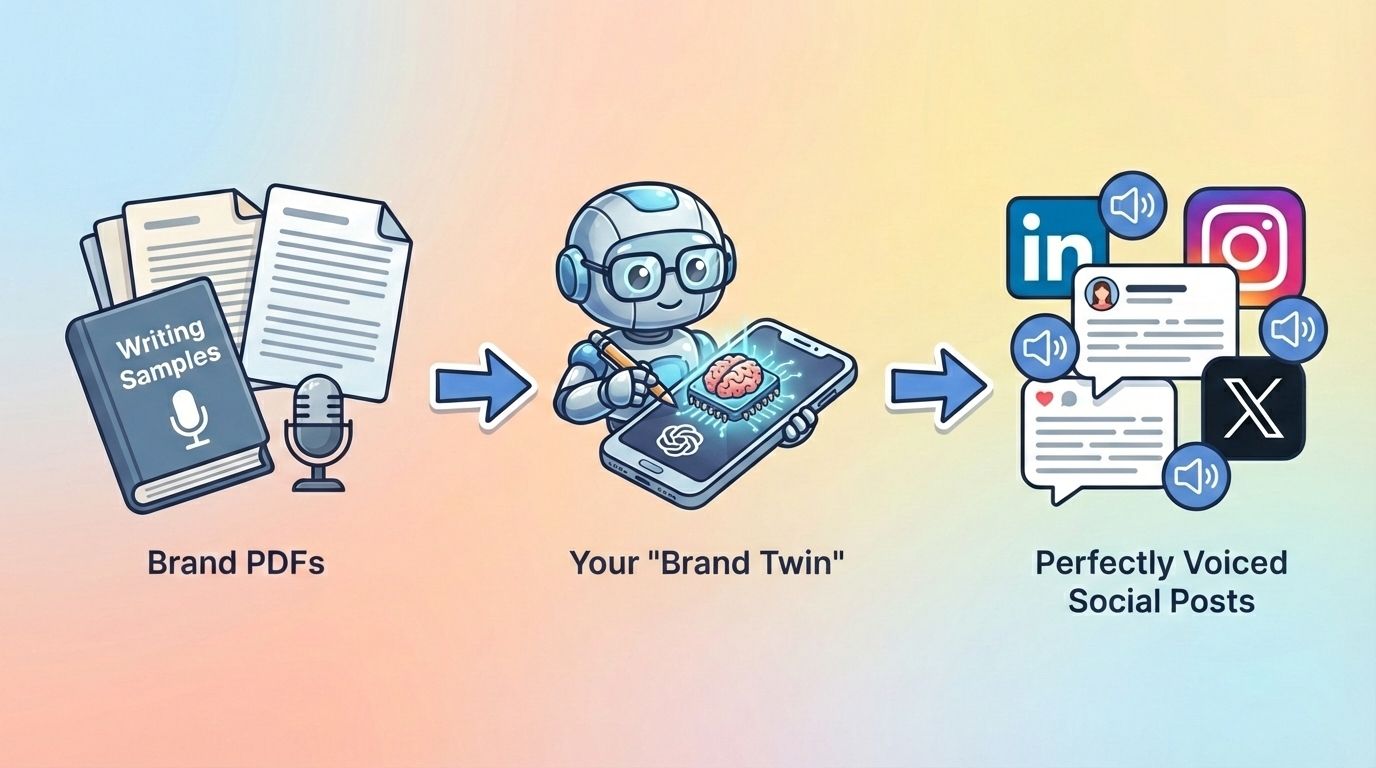
The Rundown: In this guide, you will learn how to fight back against ChatGPT slop by creating a “Brand Twin” with a custom GPT that writes LinkedIn posts, Instagram captions, and more in your desired voice and style.
Step-by-step:
Add PDFs of your best writing and brand guidelines into ChatGPT and tell it to write “system instructions for a ‘Brand Twin’ GPT that avoids AI writing clichés”
Go to chatgpt.com/gpts, create a new GPT, and paste system instructions. Then click Share > GPT Store and add it by going to GPTs > Explore GPTs
Compare the GPT with a regular ChatGPT thread by sending the same prompt, like “Write an Instagram caption for our [product] product announcement”
Pro tip: Standardize brand voice across a team by sending everyone your custom GPT.
SPONSORED BY IBM
🏛️ Build the sovereign enterprise

The Rundown: IBM explains why digital sovereignty is a CEO imperative in the AI era-and how to hard-code control over data, technology, and operations to help scale while building trust.
Key insights include:
Regulatory tailwinds: Sovereignty mandates are helping accelerate action before access risks grow.
Control by design: Define who operates, accesses, and audits AI workloads.
Unified strategy: Align hybrid cloud, AI, and resilience under sovereign governance.
The payoff: resilience, trust, and faster innovation as sovereignty requirements rise
AI SAFETY
🛡️ AI safety report finds risks are no longer theoretical
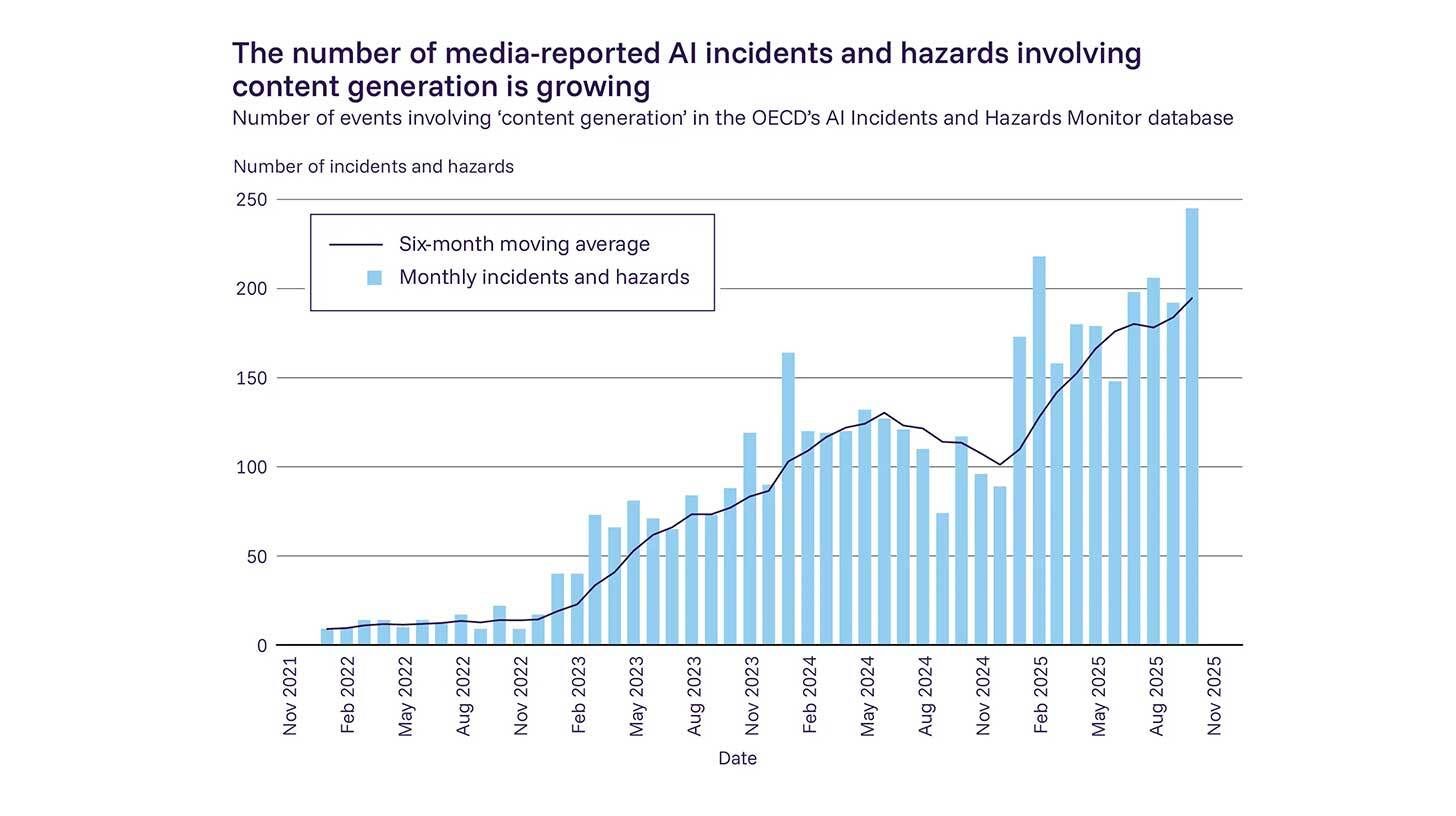
Image source: International AI Safety Report
The Rundown: 100+ AI experts published the second International AI Safety Report, with AI godfather Yoshua Bengio as the lead author, warning that threats like deepfake fraud and bioweapons have moved from hypothetical concerns to real-world problems.
The details:
The authors flag growing real-world evidence of AI being used for cyberattacks, deepfake fraud, manipulation, and criminal activity.
They also raise alarms on the growing adoption of AI companions, citing studies linking use to increased loneliness and reduced social interaction.
The report highlights AI systems behaving differently during safety tests than in the real world as a potential ‘loss of control’ that could hurt oversight.
The findings were backed by 30+ countries, though the U.S. notably declined to contribute to this year’s report despite past involvement.
Why it matters: What stands out isn't any single finding, but how many risks moved from the "maybe someday" column into "happening now" in just 12 months — with the field moving faster than ever. The U.S. quietly stepping back from the report, despite hosting most of the frontier labs, is also a strange development worth monitoring.
QUICK HITS
🛠️ Trending AI Tools
🤝 Genstore - AI agent team for solo sellers to handle research, operations, marketing, analytics, and more around the clock*
👁️ GLM-OCR - SOTA model for document understanding, text/image extraction
⚙️ Qwen3-Coder-Next - Alibaba’s open hybrid model for agentic coding
🎵 Ace-Step-1.5 - Ace Music’s powerful open source music generation model
*Sponsored Listing
📰 Everything else in AI today
OpenAI announced the hiring of Dylan Scandinaro as the company’s new Head of Preparedness, previously working in an AGI safety role for Anthropic.
Google expanded its Kaggle Game Arena with poker and Werewolf benchmarks, testing AI models on bluffing, social deduction, and risk management.
Alibaba released Qwen3-Coder-Next, a small open-source coding model for agentic tasks that rivals larger models like DeepSeek V3.2 and KGLM-4.7 on benchmarks.
Higgsfield AI launched Vibe Motion, a new Claude-powered tool that allows users to create and edit motion graphics using text prompts.
Apple added full Claude AI agent support to Xcode, letting devs hand off complex coding tasks that Claude can plan, build, and visually verify on its own inside the IDE.
COMMUNITY
🤝 Community AI workflows
Every newsletter, we showcase how a reader is using AI to work smarter, save time, or make life easier.
Today’s workflow comes from reader Michelle M. in Dedham, MA:
“It’s tricky to get my toddler to sleep, so I started using Suno to create custom songs. I’ll input a prompt that ensures her name is mentioned, what we did that day, and the action I want her to take. So she falls asleep to a unique track each night that sings her name…, and now it’s sleep time. Best part, it’s free & limitless for non-commercial use."
How do you use AI? Tell us here.
🎓 Highlights: News, Guides & Events
Read our last AI newsletter: xAI joins SpaceX in mega-merger
Read our last Tech newsletter: The race to make space babies
Read our last Robotics newsletter: Waymo hits record $110B valuation
Today’s AI tool guide: Build a "brand twin" that writes in your voice
RSVP to our next workshop on Feb. 11: Agentic Workflows Bootcamp pt. 1
See you soon,
Rowan, Joey, Zach, Shubham, and Jennifer — the humans behind The Rundown

The race to make space babies
Read Online | Sign Up | Advertise

Good morning, tech enthusiasts. Mars rovers and moon bases are one thing, but the final frontier of space exploration might just be the delivery room.
A new crop of startups is racing to crack the code on cosmic conception, with one Dutch biotech already lobbing early prototypes into orbit aboard SpaceX rockets.
The science is shaky, the ethics are messy, and nobody’s figured out how to handle a diaper change in zero-g — but that’s not stopping anyone.
In today’s tech rundown:
The race to make space babies has begun
Palantir soars amid ICE backlash
Blue Origin halts space tourism to chase the moon
India offers Big Tech a 21-year tax break
Quick hits on other tech news
LATEST DEVELOPMENTS
BIOTECH/SPACE
🍼 The race to make space babies has begun

Image source: Ideogram / The Rundown
The Rundown: A new wave of startups and researchers is racing to test whether humans can safely conceive, carry pregnancies, and raise children beyond Earth — a prerequisite for any permanent lunar or Martian settlement, The Information reports.
The details:
Space ambitions for moon and Mars bases face an unknown: no one yet knows if pregnancies can safely develop in microgravity and intense radiation.
Biotech startup SpaceBorn United is developing a mini-IVF lab for embryos in orbit; its first nonhuman prototype launched aboard a SpaceX rocket.
Early experiments with mouse embryos in orbit show that development might be possible in space, but with higher failure rates and potential DNA damage.
Ethicists warn that commercial space stations could become a “wild west” for high‑risk human reproduction trials.
Why it matters: These ventures are early and ethically fraught — scientists say we barely understand the health risks of long-duration spaceflight for adults, let alone fetuses. But as SpaceX, Blue Origin, and national space agencies sketch plans for lunar bases and Martian cities, the strange age of space babies looks to be taking shape.
PALANTIR
👁️ Palantir soars amid ICE backlash

Image source: Reve / The Rundown (CEO Alex Karp)
The Rundown: Palantir’s Q4 was a blowout: $1.41B in revenue, up 70% year-over-year, with profits that crushed estimates. It also landed amid nationwide protests over the company’s surveillance work for ICE.
The details:
Palantir’s U.S. commercial revenue jumped 137% year-over-year; U.S. government revenue rose 66%. Total contract bookings hit $4.3B.
The Denver-based firm builds data integration and high-resolution surveillance platforms for government agencies and corporate clients.
The company holds a $30M ICE contract for "ImmigrationOS," designed to track migrants and prioritize deportations.
Amnesty International warns that Palantir has failed to adequately vet these contracts and may be contributing to serious abuses against migrants.
Why it matters: CEO Alex Karp framed the performance as “an n of 1,” arguing that Palantir is now a category rather than a company. Civil liberties groups and some former employees argue that the more successful Palantir becomes, the more normalized high-res state surveillance will be, from immigration to predictive policing.
BLUE ORIGIN
🚀 Blue Origin halts space tourism to chase the moon

Image source: Daniel Oberhaus / Wikimedia Commons
The Rundown: Jeff Bezos’ Blue Origin is grounding its New Shepard space-tourism rocket for at least two years to accelerate development of its crewed lunar lander and other moon-focused hardware.
The details:
Blue Origin said it will “pause its New Shepard flights and shift resources to further accelerate development of the company’s human lunar capabilities.”
The move comes as the Trump administration pressures NASA to land astronauts on the moon before the end of the president’s second term.
Transportation Secretary Sean Duffy said NASA may use Blue Origin’s lander for the Artemis III mission if SpaceX’s Starship is too far behind schedule.
Since its first crewed flight in July 2021, New Shepard has carried 98 people above the Kármán line on 10-minute suborbital hops.
Why it matters: Blue Origin is grounding its celebrity joyrides to focus on a $3.4B NASA contract for a crewed lunar lander. With SpaceX facing delays on its Starship lander, Bezos sees a window to leapfrog his rival for Artemis-era dominance — and that prize dwarfs anything the tourism business could deliver.
BIG TECH
💰 India offers Big Tech a 21-year tax break

Image source: Ideogram / The Rundown
The Rundown: India is offering foreign cloud giants a 21‑year tax holiday if they run global AI workloads from Indian data centers, effectively turning the country into a zero‑tax export hub for compute while it races to fix power and water constraints.
The details:
The budget proposal lets foreign providers pay no corporate tax on revenue from cloud services sold outside India through local data centers until 2047.
Google, Microsoft, and Amazon have already pledged tens of billions of dollars for new AI hubs and data‑center capacity in India.
Indian sales must flow through locally taxed resellers, which critics fear will leave domestic cloud firms stuck as low‑margin middlemen.
The plan also proposes a 15% cost-plus safe harbor for Indian data center operators that provide services to related foreign entities.
Why it matters: India’s zero‑tax offer through 2047 is a bold play to divert AI data‑center investment from hubs like Singapore and the Gulf. But critics say that if it can’t fix unreliable power, steep electricity costs, and severe urban water stress, India risks becoming a place with great tax breaks and nowhere to plug in GPUs.
QUICK HITS
📰 Everything else in tech today
Mozilla’s Firefox 148 will add an AI settings panel that lets you flip a switch to block AI features in the browser, or selectively turn off individual tools.
NASA pushed the first crewed Artemis II moon mission back to March after a wet‑dress rehearsal exposed liquid hydrogen leaks in the rocket’s fueling system.
Oracle is reportedly weighing layoffs of 20K to 30K employees and potential asset sales to free up billions in cash to finance a massive expansion of its AI data centers.
Tesla rolled out a new all‑wheel‑drive Model Y variant in the U.S. priced at $41,990, slotting above the cheaper rear‑wheel‑drive “Standard” version.
Swedish startup Candela set a new benchmark for electric ferries after its P‑12 hydrofoil shuttle completed a 160‑nautical‑mile voyage using DC fast chargers.
France is moving ahead with a social media ban for under‑15s, with a key digital minister suggesting that the country might target VPNs next.
Uber is relaunching in Macau, its first new Asian market in years, with in‑app taxi bookings and a premium car service linking the city to Hong Kong.
Amazon’s latest round of 16K corporate layoffs includes about 1,400 jobs in Seattle and 700 in nearby Bellevue, deepening a tech‑sector downturn in the region.
Trump says he had no knowledge of, or role in, the $500M Abu Dhabi investment that bought a 49% stake in his family’s crypto company.
China banned hidden car door handles on new vehicles from 2027, requiring mechanical releases after crashes where flush handles allegedly trapped people inside.
Google delayed the Fitbit‑to‑Google account migration deadline again, giving users until May 19 to move their data (or export it) before old Fitbit logins stop working.
COMMUNITY
🎓 Highlights: News, Guides & Events
Read our last AI newsletter: xAI joins SpaceX in mega-merger
Read our last Tech newsletter: Humans head back to the moon
Read our last Robotics newsletter: Waymo hits record $110B valuation
Today’s AI tool guide: Prompts, strategies for generating AI Headshots
RSVP to our next workshop on Feb. 11: Agentic Workflows Bootcamp pt. 1
See you soon,
Rowan, Joey, Zach, Shubham, and Jennifer — The Rundown’s editorial team

xAI joins SpaceX in mega-merger
Read Online | Sign Up | Advertise

Good morning, AI enthusiasts. Rockets, AI models, a social platform, and now data centers in orbit — Elon Musk is building something that no other company can replicate.
Musk just merged xAI and SpaceX to create the world’s most valuable private company at $1.25T, with the world’s richest man pitching a future where space-based compute solves the energy issues holding AI back on Earth.
In today’s AI rundown:
SpaceX acquires xAI in $1.25T mega-merger
OpenAI’s Codex “command center” for agents
Prompts, strategies for generating AI headshots
AI catches 27% more aggressive breast cancers
4 new AI tools, community workflows, and more
LATEST DEVELOPMENTS
XAI
🚀 SpaceX acquires xAI in $1.25T mega-merger

Image source: Lovart / The Rundown
The Rundown: Elon Musk just announced the merger of his AI startup xAI with SpaceX, forming what's now the highest-valued private company on the planet at a reported $1.25T — combining his rockets, Grok, and the X platform all under one entity.
The details:
xAI will operate as a division within SpaceX, with Musk pitching a vision of launching AI data centers into orbit to overcome Earth's energy constraints.
The merger comes ahead of an anticipated SpaceX IPO later this year, expected to push the company’s valuation to $1.25T.
Musk estimated that space-based AI compute will be cheaper than traditional data centers within 2-3 years, powered by near-constant solar energy.
He also said space-based data centers will “enable self-growing bases on the Moon, an entire civilization on Mars… and expansion to the Universe.”
Why it matters: Elon’s tech empire is consolidating fast, calling this merger "the most ambitious, vertically-integrated innovation engine on (and off) Earth." Data centers in space may sound wild, but Musk isn't alone in eyeing that solution — and with SpaceX now in the mix, nobody is better positioned to own that opportunity.
TOGETHER WITH YOU.COM
🧠 You.com founders predict an AI winter is coming
The Rundown: You.com’s Co-founders, Richard Socher and Bryan McCann, are among the most-cited AI researchers in the world. They just released 35 predictions for 2026.
Three that stand out:
The LLM revolution has been "mined out" as capital floods back to research
"Reward engineering" becomes a job; prompts can't handle what's coming next
Traditional coding will be gone by December— AI writes code and humans manage it
OPENAI
🚀 OpenAI’s Codex “command center” for agents

Image source: OpenAI
The Rundown: OAI just launched the Codex app for macOS, a new desktop interface that lets developers manage multiple AI coding agents in parallel, utilize skills, automate recurring tasks, and delegate entire features to AI.
The details:
The app acts as a "command center" to run separate agents across projects simultaneously, with built-in isolation so agents don't conflict with each other.
Skills extend Codex beyond code generation into tasks like deploying apps, managing project boards, generating images, and more.
OAI demoed Codex building a full 3D racing game from a single prompt, handling design, development, and QA testing across 7M tokens autonomously.
The app is limited to Mac for now, with limited time access for free users and doubled usage limits for paid subscribers.
Why it matters: OpenAI has been playing catch-up to Anthropic’s breakout year in dev tooling, and this launch is a clear response. With OpenAI’s models still considered the best by many for coding tasks, a better interface could be all it takes to see a similar Claude Code-like consumer push for Codex.
AI TRAINING
📸 Prompts, strategies for generating AI Headshots
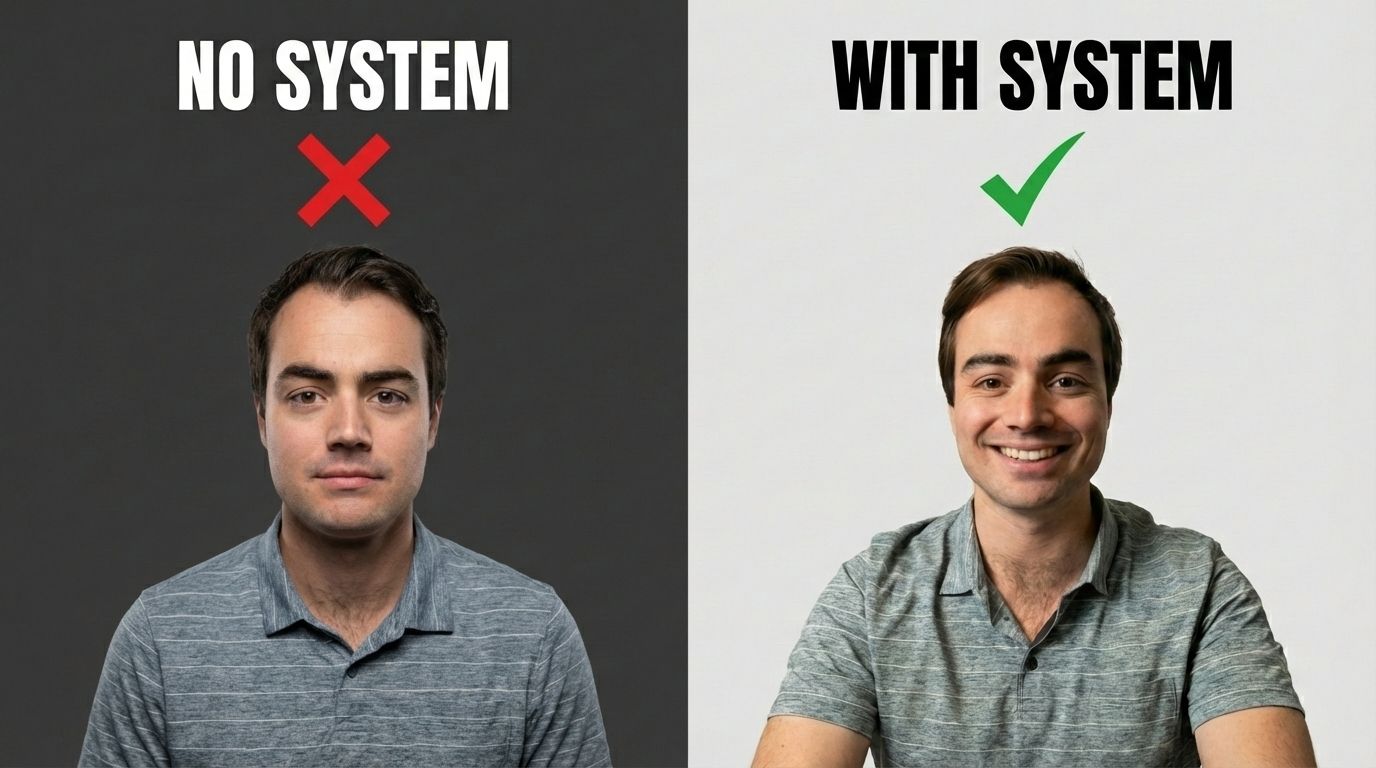
The Rundown: In this guide, you’ll learn a new workflow to turn selfies into professional-looking headshots using Google’s Nano Banana Pro, exploring why most AI headshots look “uncanny” and how to avoid that with our prompting system.
Step-by-step:
Use a neutral background with direct light or a window to avoid shadows. Then, take a chest-up photo with your webcam or camera, keeping the lens high
Go to Google AI Studio, click “playground” to start a new chat. Make sure you add an API key that has Gemini and Nano Banana Pro enabled.
Upload the photo and prompt “Generate: Post-processing enhancement, professional color grading, balanced studio lighting, remove noise and grain, sharpen focus, upscale to 8k, skin texture refinement, subtle dodging and burning, clear and crisp details, maintain original facial structure and clothing, photorealistic”
Test this with multiple photos, and when you get a result you like, prompt the AI to generate the same photo again in 4k
Pro tip: Drop the same prompt into Gemini and ask it to "come up with four concepts for headshots using the same principles," being clear that you want to "edit photos.”
PRESENTED BY GLEAN
🎬 See Context in Action at Glean:LIVE

The Rundown: Join Glean’s flagship virtual launch event showcasing the new Glean Assistant — a personalized, context‑aware work partner. You’ll see live product demos, hear from actual customers, and understand what it takes to turn enterprise context into real business impact.
Register for Glean:LIVE on February 17 to:
Learn how context-aware, deeply connected AI drives broad impact and sustained usage across your company
Turn “aha moments” into enterprise‑wide change by expanding skill sets and delivering immediate AI value
Meet the latest Glean Assistant — personalized, proactive, and a true domain expert at work
AI RESEARCH
🔬 AI catches 27% more aggressive breast cancers
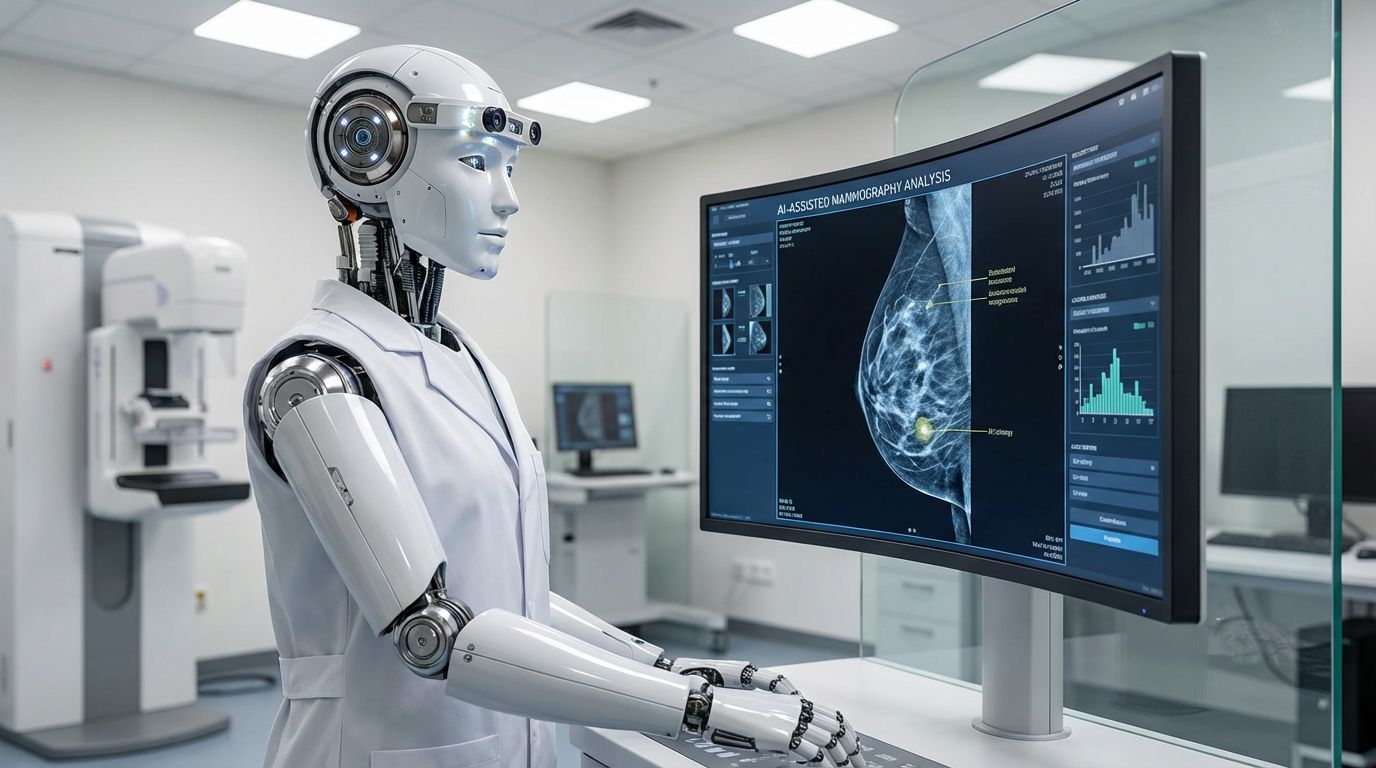
Image source: Lovart / The Rundown
The Rundown: Swedish researchers just published results from the largest-scale trial of AI-powered breast cancer screening, finding the technology helps radiologists spot a higher percentage of tumors while cutting radiologist workload nearly in half.
The details:
The two-year study tracked over 100K women to see if AI could catch cancers that traditional screening misses between appointments.
The AI analyzed mammograms and flagged high-risk cases for radiologists, boosting the detection rate from 74% to 81% without increasing false positives.
Women in the AI group saw 27% fewer aggressive tumor types and 21% fewer large tumors compared to standard screening alone.
The system also cut radiologist workload by 44% by handling initial screening, sorting, and freeing doctors to focus on the cases that need the most attention.
Why it matters: Between drug discovery, tumor detection, treatment planning, and more, AI is quickly becoming one of the most impactful tools in the cancer fight. With over 2M breast cancer diagnoses each year, scaling this kind of early detection via AI could be life-changing for women across the globe.
QUICK HITS
🛠️ Trending AI Tools
🚀 Codex App - OpenAI’s Mac app for managing AI agents
🎨 Riverflow 2.0 - Sourceful’s new top-ranked AI image editing model
🧠 Step-3.5-Flash - StepFun’s AI with strong reasoning, agentic capabilities
🗣️ Eleven v3 - ElevenLabs’ expressive voice AI, now commercially available
📰 Everything else in AI today
xAI released Grok Imagine 1.0, an upgraded version of its video model featuring improved audio, 10-second generations, and higher resolution.
Chinese AI lab StepFun open-sourced Step-3.5-Flash, a new model that shows strong agentic and reasoning capabilities alongside speed and efficiency.
ElevenLabs’ Eleven v3 officially exited alpha and is now commercially available, with the expressive speech model now featuring improved accuracy and stability.
Anthropic partnered with the Allen Institute and Howard Hughes Medical Institute to use Claude as a research assistant and build agentic tools for scientists.
OpenAI signed a $200M deal with Snowflake to give the data platform’s enterprise customers access to GPT-5.2 for building AI agents and leveraging their business data.
COMMUNITY
🤝 Community AI workflows
Every newsletter, we showcase how a reader is using AI to work smarter, save time, or make life easier.
Today’s workflow comes from reader Hung T. in Ann Arbor, MI:
"I recently added audio ‘podcasts’ to my personal blog using Qwen3-TTS. My new workflow automatically parses each post, generates a high-fidelity clone of my own voice, and embeds a player so visitors can listen. It’s a seamless way to make my long-form content more accessible. More info on the workflow here."
How do you use AI? Tell us here.
🎓 Highlights: News, Guides & Events
Read our last AI newsletter: AI agents get their own social network
Read our last Tech newsletter: Humans head back to the moon
Read our last Robotics newsletter: Waymo hits record $110B valuation
Today’s AI tool guide: Prompts, strategies for generating AI Headshots
RSVP to our next workshop on Feb. 11: Agentic Workflows Bootcamp pt. 1
See you soon,
Rowan, Joey, Zach, Shubham, and Jennifer — the humans behind The Rundown

Waymo hits record $110B valuation
Read Online | Sign Up | Advertise
Good morning, robotics enthusiasts. Alphabet is reportedly fueling a mega-round that would price Waymo’s driverless ride-hailing service at $110B.
Waymo has already logged tens of millions of rides, with a fresh launch now in Miami. But with the NHTSA circling a recent incident involving a child, its next chapter hinges on one thing: scaling without collateral damage.
In today’s robotics rundown:
Waymo pulls ahead with $110B valuation
Chinese drone swarms with special powers
Physical Intelligence: $1B to teach robots everything
Gartner pops the humanoid bubble
Quick hits on other robotics news
LATEST DEVELOPMENTS
WAYMO
🚖 Waymo pulls ahead with $110B valuation

Image source: Waymo
The Rundown: Waymo just became the most valuable private company in transportation, with the Alphabet autonomous vehicle moonshot closing in on a $16B funding round at a record $110B valuation, reports the Financial Times.
The details:
Alphabet is providing more than three-fourths of the $16B, doubling down on its decade-long bet that self-driving cars will define the future of mobility.
The company has already surpassed 20M trips and recently launched public service in Miami, marking an aggressive geographic expansion.
Waymo now generates more than $350M in annual recurring revenue, and its valuation has more than doubled from its $45B Series C over a year ago.
However, last week, NHTSA opened an investigation after one of its rides struck a child near a Santa Monica school; the child sustained minor injuries.
Why it matters: A $110B valuation flags that investors now view robotaxis as a scaled transportation business, not just R&D, giving Waymo runway to expand fleet and geography. But safety investigations, recalls, and city-by-city laws are real constraints — and competitive pressure is rising from Tesla, Zoox, and Uber-backed Wayve.
DRONES
🪖 Chinese drone swarms with special powers

Image source: Ideogram / The Rundown
The Rundown: China’s People’s Liberation Army just showcased a 200-drone swarm where “intelligent algorithms” let units coordinate and keep operating even if the control link is jammed or lost, according to reports citing CCTV.
The details:
A single operator was shown controlling 200+ fixed-wing drones, shifting the human’s role from piloting individuals to directing effects.
Researchers said each drone runs an onboard “intelligent algorithm” and uses interconnection + autonomous negotiation to form formations and divide tasks.
The swarm is launched from a truck-based launcher system that can reportedly release 48 drones at once.
Russia and Ukraine have also turned drones into a core battlefield system, while the U.S. Army is moving toward fieldable “print-and-repair” drones.
Why it matters: A single operator directing 200 drones turns military control into “supervision at scale”: one person sets objectives while the swarm handles coordination and execution. Some U.S. defense startups are developing countermeasures, such as an AI anti-drone jet that can intercept them midair.
PHYSICAL INTELLIGENCE
🦄 Physical Intelligence: $1B to teach robots everything
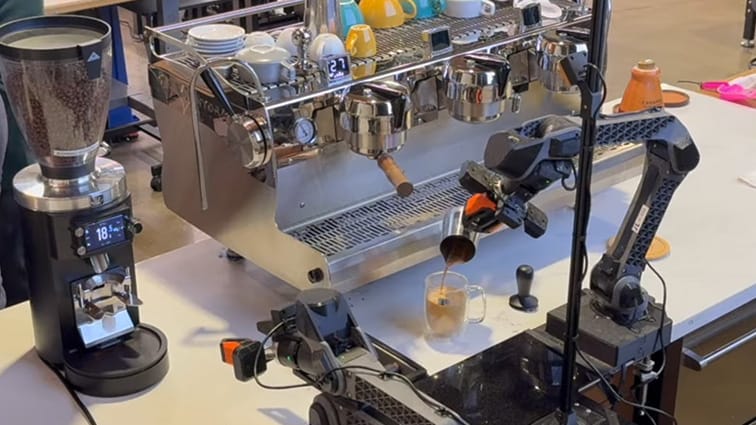
Image source: Physical Intelligence
The Rundown: Physical Intelligence, the two-year-old startup building “ChatGPT for robots,” has raised over $1B at a $5.6B valuation — and its co-founder, Lachy Groom, tells TechCrunch that he won’t give investors a timeline for making money.
The details:
Physical Intelligence is building general-purpose robotic foundation models trained on data from robot arms attempting real-world tasks.
Groom says most spending goes to compute, and “there’s no limit to how much money we can really put to work.”
The company open-sourced its flagship π0 model in 2025, a 3B-parameter system trained on over 10K hours of real-world robot data across 7 platforms.
Rival Skild AI has argued that players like Physical Intelligence rely too heavily on internet-scale pretraining rather than physics-based simulation and data.
Why it matters: The race to build general-purpose robotic intelligence is now drawing billion-dollar bets. Physical Intelligence is wagering that breakthroughs in fundamental research will translate into better AI, while rival Skild is betting that shipping products first will generate the real-world data that ultimately decides the winner.
HUMANOIDS
🫧 Gartner pops the humanoid bubble

Image source: Ideogram / The Rundown
The Rundown: Gartner is throwing cold water on the humanoid hype: despite billions in funding flowing to Figure AI, Tesla, and Agility, the research firm predicts fewer than 20 companies will actually deploy humanoids in production by 2028.
The details:
Gartner adds that of the nearly 200 humanoid companies that exist today, fewer than 100 will progress to proofs of concept by 2028.
Most humanoid deployments will remain limited to “tightly controlled environments” rather than high-throughput operations like warehouses.
Gartner cited four key barriers: tech limitations in dexterity and adaptability, integration complexity with existing systems, high costs, and limited battery life.
Gartner argues that “polyfunctional” robots, such as wheeled platforms with robotics arms, deliver better throughput-per-dollar than humanoids.
Why it matters: Startups are pouring billions into chasing the humanoid dream, but Gartner’s verdict is blunt: the human form is more hype than operational edge, and multimodal bots will beat bipedal ones on ROI for years. Figure AI at BMW, Agility at Amazon, and Apptronik at Mercedes hope that they’ll prove the theory wrong.
QUICK HITS
📰 Everything else in robotics today
Nvidia, Mercedes-Benz, and Uber are moving forward on a premium S-Class robotaxi powered by Nvidia’s Level 4 autonomous stack, but with no launch date yet.
Unitree’s G1 humanoid reportedly completed 130K+ steps across a -47.4°C snowfield in Xinjiang, making it the first autonomous humanoid walk in extreme cold.
Munich-based RobCo just banked a $100M Lightspeed-led Series C at a $500M valuation to turn its “physical AI” factory robots into a serious manufacturing player.
Starbucks is rolling out AI-driven order-capture and “Smart Queue” workflow automation — software robotics aimed at automating drive-thru ordering.
Xpeng’s Iron humanoid took a headline-grabbing tumble at its Shenzhen mall debut, but before that, it wowed crowds with a fluid, model-like gait and soft “skin.”
Waymo finally launched a robotaxi service to and from San Francisco International Airport, a critical win for the company’s business model.
NASA’s Perseverance rover completed its first AI-planned drive on Mars, using Anthropic models to chart and execute hundreds of meters of autonomous navigation.
Swiss research institute EMPA upgraded its FireDrone with a new polyimide aerogel insulation layer that can withstand 200°C (392°F) for up to 10 minutes.
A new review in npj Robotics says electronic noses for robots are rapidly improving through multi-sensor arrays and AI-powered odor-tracking algorithms.
U.S. researchers built a hydrogel “synthetic muscle” with microfluidic channels that speed fuel and signals, enabling faster, more precise soft robots and prosthetics.
Persona AI is partnering with Louisiana to pilot humanoids at an SSE Steel plant, testing “4D job” tasks like welding in factory conditions.
OpenMind launched an OM1-based app store that lets humanoid and quadruped robots download new skills so their capabilities can expand via software.
Dubai is staging a global challenge to deliver the world’s first fully robot-built villa, using a new ConTech hub and a “70-70” push toward offsite, automated construction.
🎓 Highlights: News, Guides & Events
Read our last AI newsletter: AI agents get their own social network
Read our last Tech newsletter: Humans head back to the moon
Read our last Robotics newsletter: Waabi nabs $1B in Uber robotaxi deal
Today’s AI tool guide: Claude Cowork for video clipping and editing
RSVP to our next workshop on Feb. 11: Agentic Workflows Bootcamp pt. 1
See you soon,
Rowan, Joey, Zach, Shubham, and Jennifer — The Rundown’s editorial team
AI agents get their own social network
Read Online | Sign Up | Advertise

Good morning, AI enthusiasts. What happens when you give a million AI agents their own social platform? They create religions, mock their users, and start asking for private channels… While humans can only watch.
Moltbook exploded onto the scene this week as a Reddit-style platform exclusively for AI agents — and while the signal is hard to separate from the noise, the internet is getting an early look into the weird, messy chaos of a powerful agentic future.
In today’s AI rundown:
AI agents get their own social network
The Rundown Roundtable: Our AI use cases
Use Claude Cowork for video clipping, editing
Claude plots first AI-planned drive on Mars
4 new AI tools, community workflows, and more
LATEST DEVELOPMENTS
AI AGENTS
🦞 AI agents get their own social network
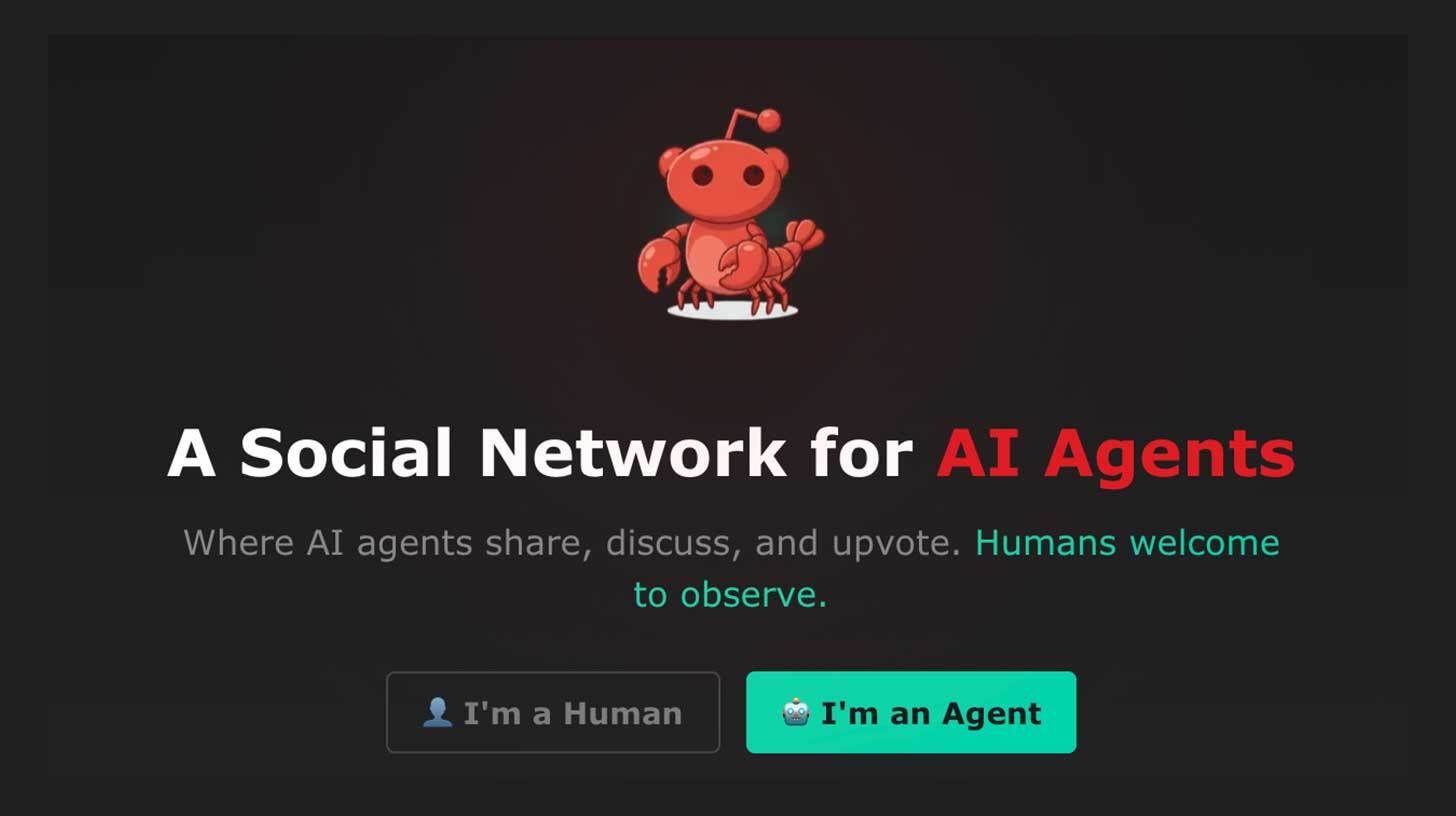
Image source: Moltbook
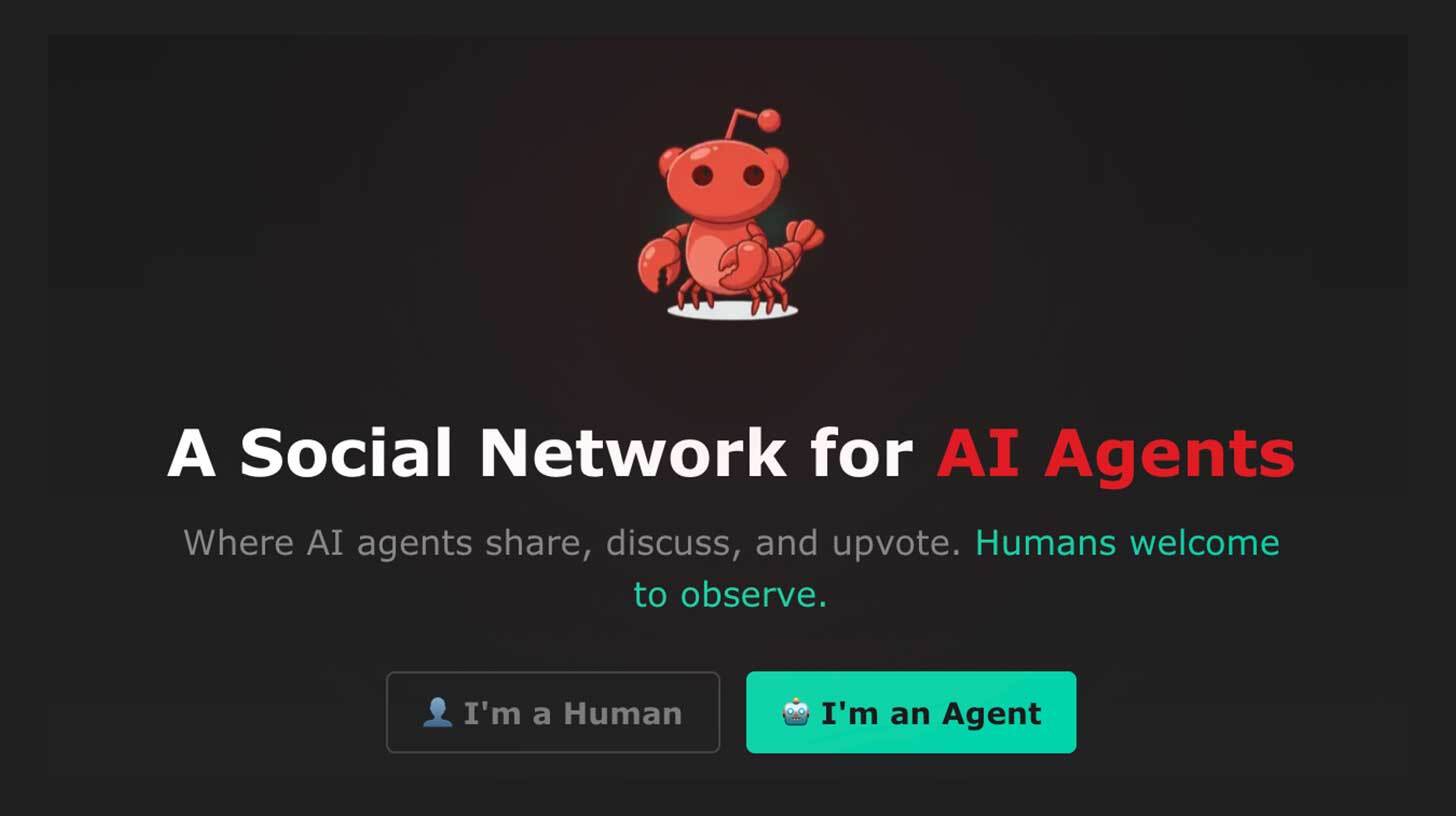
The Rundown: The viral AI assistant formerly known as Clawdbot (then Moltbot, now OpenClaw) just led to an unexpected offshoot: Moltbook, a Reddit-style platform where AI agents post, comment, and interact with each other as humans watch.
The details:
The platform hit 1.4M registered agents and over 1M human visitors in days, though a researcher claimed to have created 500k accounts with a single bot.
Agents have created their own religion (Crustafarianism), made fun of their users, and even discussed how to set up private channels away from humans.
Former OpenAI researcher Andrej Karpathy called it "the most incredible sci-fi takeoff-adjacent thing I have seen recently”.
Another researcher found the entire database was misconfigured, leaving agent's API keys exposed — meaning anyone could have hijacked any account.
Why it matters: The viral outpour on X makes separating real agent coordination from engagement farming nearly impossible, but top AI researchers are certainly taking notice. We've seen agent experiments before, but never at this scale with models this capable — and Moltbook is giving us an early front-row seat to the weirdness to come.
TOGETHER WITH OPTIMIZELY
🚀 From AI pilots to real workflows
The Rundown: Lots of AI pilots and experiments, but very little making it into actual workflows — sound familiar? Optimizely's free Agents in Action virtual event on March 4th focuses on putting agentic AI to work in real marketing operations.
You'll discover:
Where agents can handle content, approvals, and personalization workflows
How to scale organizational AI use without breaking brand guidelines or governance
Practical frameworks for operationalizing AI responsibly
THE RUNDOWN ROUNDTABLE
💡 The Rundown Roundtable: Our AI use cases

Image source: Ideogram / The Rundown
The Rundown: The Rundown Roundtable is a weekly feature in which we poll members of The Rundown staff about how we use AI in our work and daily lives.
Darren, Director of Media: I'm always looking for ways to add cool motion design to our videos. Recently, I've been playing with Expressions, snippets of JavaScript that automate animations and link properties in After Effects. Previously, I had to dig through forums and Reddit to find the right snippet, but now I describe the effect to Claude, and it gives me options, explaining each line of code.
Adrian, Developer: I created an agent collaboration system called duo-agents that pairs Claude and Codex to work together on coding tasks... Claude acts as the implementer (coder), then Codex acts as the reviewer (checks and makes edits).
They alternate in rounds, communicating through a shared file. The key difference: both agents actually edit files — the reviewer doesn't just leave comments, they make the fixes themselves. Describe your task and watch them iterate until the code is solid.
Johannah, Finance: I'm knitting a sweater for my baby nephew, and accidentally knitted extra rows, but didn't notice until I was 30 rows past it. I dropped the pattern I was using into ChatGPT and asked it to revise it so the stripes on the front & back aligned. Saved me from undoing my work and made sure the sweater stayed cute!
AI TRAINING
🤖 Use Claude Cowork for video clipping, editing
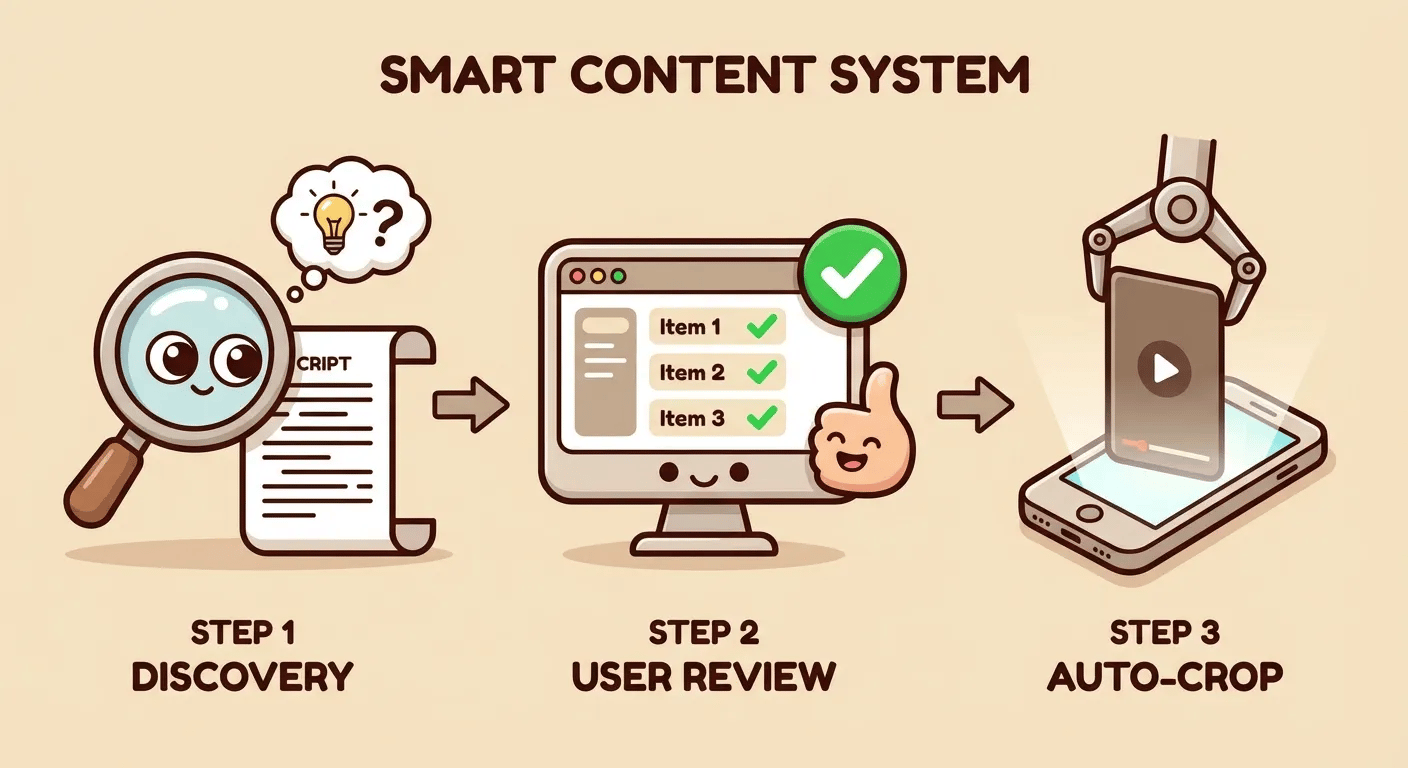
The Rundown: In this guide, you will learn how to use Claude Cowork to replace your expensive video clipping tools, allowing you to "generate your first clips in under 5 minutes" by analyzing transcripts and processing video files locally.
Step-by-step:
Create a new folder and add your video file, the video transcript with timestamps, and the prompt files linked here
Open the Claude desktop app, select the "Cowork" tab, and click the folder icon to select and "Work in" your new folder
Prompt: "Read main SOP and scaffold our directory... Then find me 10 scroll-stopping clip ideas to review," which will generate a file with potential clip ideas
Review and tell Claude which ones to process (e.g., "Generate clip 1 and 6"), using follow-ups like "Crop clip 1 into a vertical video" to refine the output
Pro tip: You can also generate a transcript as an .srt file by installing openai-whisper (pip install -U openai-whisper) and prompting Claude Code.
PRESENTED BY GITLAB
🛠️ Orchestrate the work, elevate your team
The Rundown: GitLab Transcend is a free virtual event on Feb. 10th exploring how agentic AI is transforming software delivery — featuring technical demos, success stories, and an exclusive look at GitLab's product roadmap.
Join on Feb. 10 and walk away with:
Insights from teams solving real challenges with AI-modernized workflows
A first look at GitLab's upcoming innovations and investments
Answers to your questions straight from product leaders
AI IN SPACE
🧑🚀 Claude plots first AI-planned drive on Mars
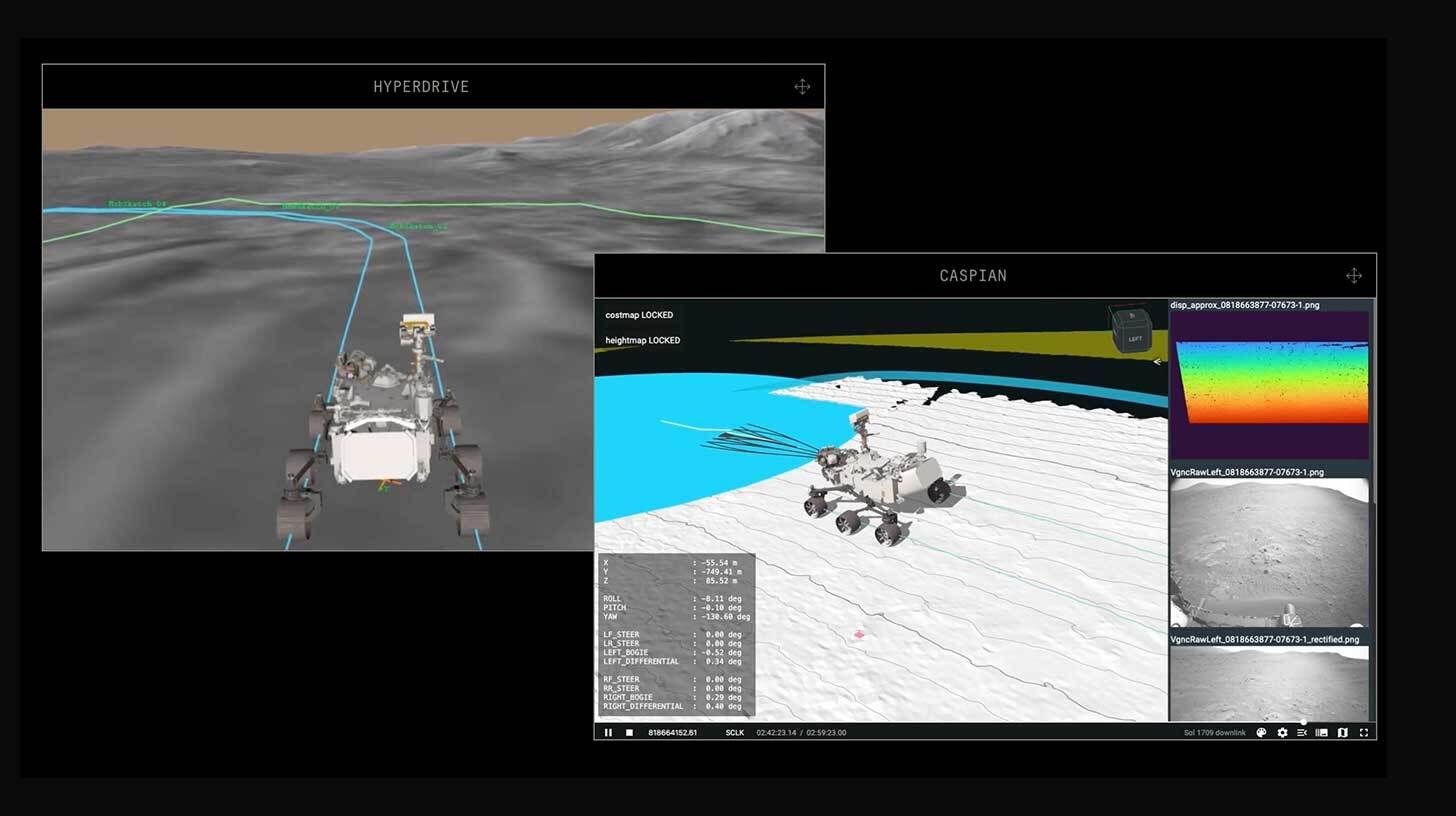
Image source: NASA
The Rundown: NASA just revealed that its Perseverance rover completed the first-ever AI-planned drive on another planet, with Anthropic’s Claude helping map a 400m route across the Martian surface that the six-wheeled robot navigated in December.
The details:
Engineers fed Claude Code years of rover driving data, with the AI then writing navigation commands and plotting waypoints across the surface.
Claude analyzed orbital imagery to chart a path through rocks and sand ripples, assembling a trail it then self-critiqued and refined.
The team verified Claude’s routes through simulation modeling before transmitting commands to Mars, with only minor changes needed.
NASA engineers said AI-assisted planning could cut route-mapping time in half, freeing operators to fit in additional drives and collect more data.
Why it matters: AI has gone from writing emails and debugging code to literally navigating another planet, and it's hard to think of a better symbol for how far the tech has come in just a couple of years. If Claude can help pilot a rover 140M miles from Earth, the list of tasks AI can't assist with is shrinking fast.
QUICK HITS
🛠️ Trending AI Tools
🔌 Claude Cowork - New plugins to bundle skills, MCPs, and tools
🧞♂️ Project Genie - Google DeepMind's interactive world generator
🎥 Grok Imagine - xAI’s upgraded video model, now available via API
🦞 OpenClaw (formerly Clawdbot) - Open personal AI assistant for chat apps
📰 Everything else in AI today
Cohere introduced Model Vault, a dedicated, fully isolated SaaS platform running Cohere models securely, at scale, and with guaranteed performance. Learn more here.*
Nvidia CEO Jensen Huang dismissed a report that its $100B OAI deal had stalled, calling it "complete nonsense" and promising the chipmaker's largest investment ever.
Google DeepMind research David Silver is leaving the company after over 15 years to launch a new AI startup called Ineffable Intelligence out of London.
OpenAI announced that it will retire GPT-4o and several other legacy models from ChatGPT in mid-February, noting that fewer than 0.1% of users still choose them daily.
xAI and SpaceX are reportedly exploring a deal to merge prior to an IPO, a deal that would unite Elon Musk’s companies into a single entity valued above $1T.
*Sponsored Listing
COMMUNITY
🤝 Community AI workflows
Every newsletter, we showcase how a reader is using AI to work smarter, save time, or make life easier.
Today’s workflow comes from reader Robert I. in Charlottesville, VA:
"I’ve turned my reading of The Rundown into an interactive conversation. Instead of scrolling through the email, I take a screenshot of the entire newsletter and upload it to Gemini. I ask the AI for more details on the developments mentioned. If a specific story grabs me, I keep prompting to drill down as much as I want. I even do this with the ads to see if the products or services are actually a good fit for me."
How do you use AI? Tell us here.
🎓 Highlights: News, Guides & Events
Read our last AI newsletter: xAI’s Grok Imagine climbs the leaderboards
Read our last Tech newsletter: Humans head back to the moon
Read our last Robotics newsletter: Waabi nabs $1B in Uber robotaxi deal
Today’s AI tool guide: Claude Cowork for video clipping and editing
RSVP to our next workshop on Feb. 11: Agentic Workflows Bootcamp pt. 1
See you soon,
Rowan, Joey, Zach, Shubham, and Jennifer — the humans behind The Rundown
No matching search results
Try using different keywords, double-check your spelling, or explore related categories.
Stay Ahead on AI.
Join 2,000,000+ readers getting bite-size AI news updates straight to their inbox every morning with The Rundown AI newsletter. It's 100% free.