Get the latest AI news, understand why it matters, and learn how to apply it in your work — all in just 5 minutes a day. Join over 2,000,000+ subscribers.

Snap takes another swing at smart glasses
Read Online | Sign Up | Advertise

Good morning, tech enthusiasts. Snap is taking another shot at smart glasses — this time with Qualcomm chips, on-device AI, and real pressure to deliver.
The reboot follows the abrupt exit of its top Specs exec amid a reported clash with CEO Evan Spiegel, as the company races to beat Meta to the face-worn AI interface. But Meta’s Ray-Ban glasses are already gaining traction; Snap’s Spectacles are still trying to ship.
In today’s tech rundown:
Snap’s Spectacles get a Qualcomm engine
Tesla may build a low-priced SUV after all
Meta bans the ads being used to sue it
One therapy wipes out 3 autoimmune diseases
Quick hits on other tech news
LATEST DEVELOPMENTS
SNAP
👓 Snap’s Spectacles get a Qualcomm engine

Image source: Snap
The Rundown: Snap is finally inching toward launching its long-delayed AI-powered Spectacles, striking a multi-year Qualcomm chip deal to bring its next-gen AR glasses to consumers later this year after a recent executive shake-up at its Specs unit.
The details:
The new Spectacles will run on Qualcomm’s Snapdragon XR chips, enabling on-device AI, advanced graphics, and multiuser digital experiences.
Snap spun out Specs as a separate subsidiary earlier this year to focus on the glasses business after years of fits and starts with the product line.
In February, Snap abruptly parted ways with Scott Myers, its senior VP of Specs, following a reported clash with CEO Evan Spiegel.
Why it matters: Snap’s decade-old Specs unit is under pressure to finally turn Spectacles into a real consumer platform just as Meta, Apple, and others race to dominate the smart glasses market. If this launch fizzles like past attempts, Snap risks ceding the next hardware frontier to rivals with deeper pockets and tighter ecosystems.
TESLA
🚗 Tesla may build a low-priced SUV after all

Image source: Reve / The Rundown
The Rundown: Tesla is developing a compact electric SUV designed to undercut its own Model 3 on price, Reuters reports — two years after CEO Elon Musk scrapped the $25K "Model 2” and called building cars for human drivers “pointless.”
The details:
The vehicle would measure about 14 ft., making it significantly shorter than the Model Y’s 15.7 ft., and would be an entirely new design.
To hit a lower price point, Tesla plans to use a smaller battery pack and a single electric motor, trading range against the Model Y’s 306-to-327-mile rating.
Sources said production would be based at Tesla’s Shanghai factory, with one source adding that Tesla aims to expand manufacturing to the U.S. and Europe.
Pricing would land substantially below the entry-level Model 3, which starts at $34K in China and $37K in the U.S.
Why it matters: Tesla’s sales have taken a hit as Chinese EVs flood the sub-$30K segment, a price point the company has never actually reached. A compact SUV would be its most direct answer yet to that pressure, though with no formal approval and only early supplier conversations underway, the timeline remains unclear.
META
⚖️ Meta bans the ads being used to sue it

Image source: Getty / Reve
The Rundown: Meta just removed a wave of Facebook and Instagram ads placed by plaintiffs’ law firms recruiting clients for social media addiction lawsuits, as litigation against the company continues to mount.
The details:
Meta has pulled campaigns from major national firms targeting teens and parents to join social media addiction lawsuits.
Meta said it wouldn't “allow trial lawyers to profit from our platforms while simultaneously claiming they are harmful.”
An LA jury recently awarded $6M against Meta and Google for a woman’s depression; a New Mexico jury fined Meta $375M over child safety failures.
More than 3,300 addiction-related lawsuits are pending in California state courts, with another 2,400 federal cases centralized there.
Why it matters: The same ad-targeting engine that helped Meta capture attention is now being used to recruit people to sue them. With billions in potential liability on the line and thousands of cases pending, the move shows how fiercely Meta intends to fight a legal battle that could reshape platform accountability for teen mental health.
BIOTECH
💉 One therapy wipes out 3 autoimmune diseases

Image source: Ideogram / The Rundown (rendering of a CART-T cell)
The Rundown: For the first time, a single round of experimental CAR-T-cell therapy put all three of a patient’s severe, treatment-resistant autoimmune diseases into lasting remission — a result doctors say they've never seen before.
The details:
The woman was managing three debilitating autoimmune conditions until a single infusion of T cells effectively rebooted her immune system.
Doctors hacked a blood-cancer treatment, reprogramming her T cells to hunt down CD19-tagged B cells, the antibody factories gone rogue in her system.
Within weeks, her blood counts normalized as a fresh population of mostly naïve B cells repopulated her system.
Fourteen months on, she remains off all medications for the three conditions, with no reported side effects from the therapy itself.
Why it matters: CAR-T-cell therapy has already transformed blood cancer treatment — but repurposing it for autoimmune disease is a newer, bolder bet. A single case isn’t a cure, and larger trials are needed. Still, sustained triple remission without ongoing medication is the kind of outcome researchers rarely dare to predict.
QUICK HITS
📰 Everything else in tech today
SpaceX recorded a loss of nearly $5B in 2025 despite generating more than $18.5B in revenue, according to a report by The Information.
Disney’s new CEO, Josh D’Amaro, plans to cut up to 1K jobs, with the company’s recently consolidated marketing department expected to bear the brunt of the layoffs.
Almost half of the U.S. data centers planned to open in 2026 are likely to be delayed or canceled due to power grid limits, equipment shortages, and local opposition.
Apple’s first foldable iPhone remains on track to be unveiled in September 2026 alongside the iPhone 18 Pro lineup, despite earlier rumors of delay, Bloomberg reports.
Spotify is adding new global settings so you can turn off all videos, including music videos, podcast videos, and Canvas loops, and keep Spotify audio-only if you want.
Instagram is rolling out a long‑requested feature that lets users edit their comments shortly after posting, so they no longer need to delete and rewrite them.
Volkswagen will stop building its ID.4 electric SUV at its Tennessee plant and shift the factory to producing the higher-volume, gasoline-powered Atlas SUV instead.
NASA traced the helium leak in Orion’s propulsion system to faulty valves and is now planning a hardware redesign to prevent similar issues on future lunar missions.
The EU has hit Google, Apple, and Meta with more than $7B in antitrust and digital regulation fines since 2024, triggering a clash with the U.S. government.
Startup Radify Metals developed plasma reactors that can refine rare-earth metals, potentially undercutting China’s dominance over the rare-earth supply chain.
Greece plans to ban social media access for children under 15 starting January 1, 2027, as part of new legislation aimed at protecting young people’s mental health.
Finland’s long‑planned Onkalo facility is on the verge of becoming the world’s first operational deep geological repository for spent nuclear fuel.
COMMUNITY
🎓 Highlights: News, Guides & Events
Read our last AI newsletter: Perplexity's agent pivot is on the money
Read our last Tech newsletter: This startup wants to hack the night sky
Read our last Robotics newsletter: Clone’s $20k synthetic human
Today’s AI tool guide: Automate your business with custom Notion Agents
Watch our last live workshop: The State of AI Presentation Tools in 2026
See you soon,
Rowan, Joey, Zach, Shubham, and Jennifer — The Rundown’s editorial team
Perplexity's agent pivot is on the money
Read Online | Sign Up | Advertise

Good morning, AI enthusiasts. Perplexity stopped trying to simply out-Google Google and started going after Mint, TurboTax, and every personal finance app on your phone instead.
The company’s Computer launch in February now doubles as a personal finance hub and tax tool, changing Perplexity’s trajectory from search to something much bigger — with a 50% monthly revenue jump to $450M backing up every agentic move.
In today’s AI rundown:
Perplexity plugs its AI agent into bank accounts
Jassy’s $200B Amazon AI spend now has receipts
Automate your business with custom Notion Agents
Oxford AI catches heart failure five years early
4 new AI tools, community workflows, and more
LATEST DEVELOPMENTS
PERPLEXITY
🏦 Perplexity plugs its AI agent into bank accounts
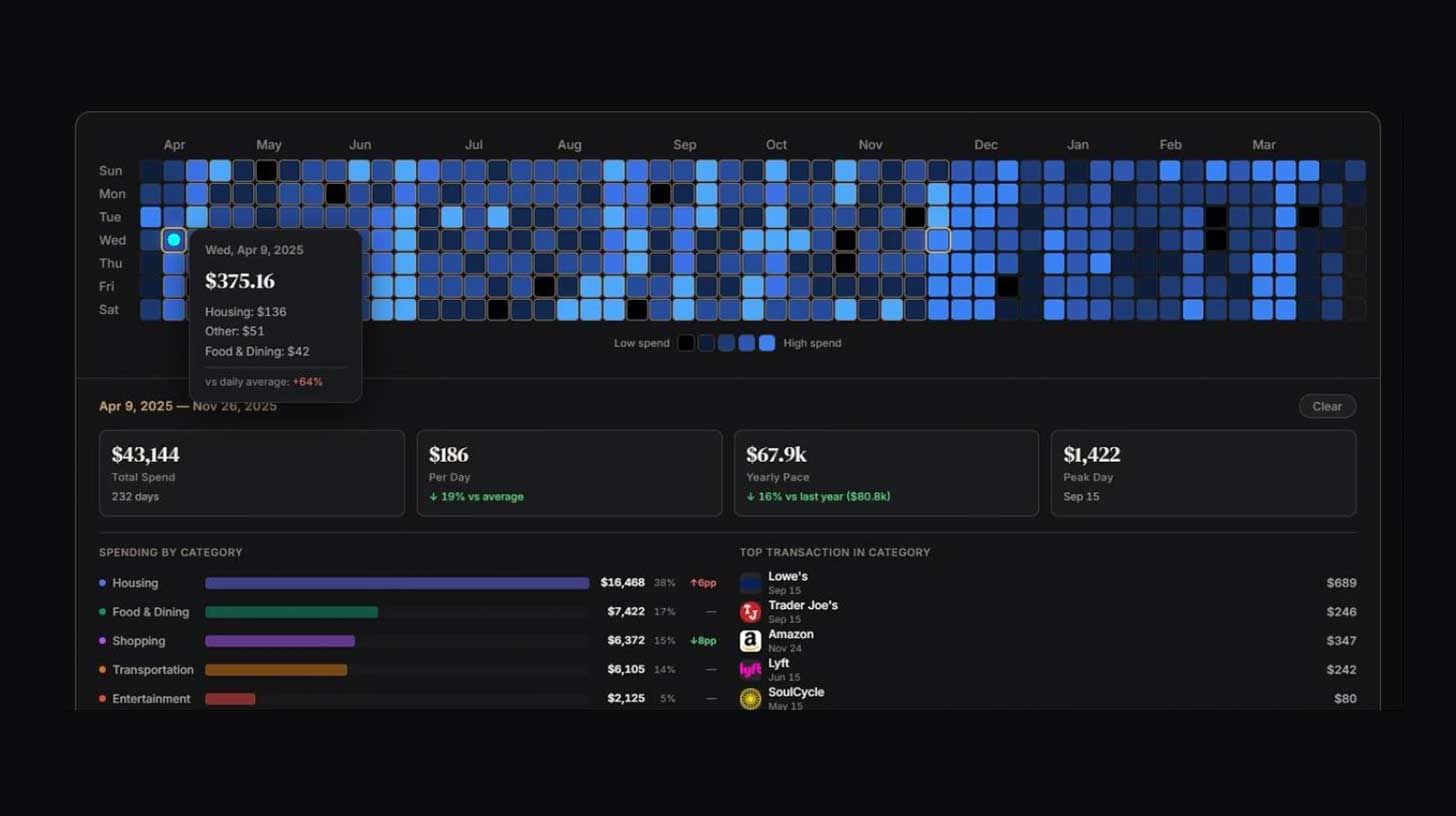
Image source: Perplexity
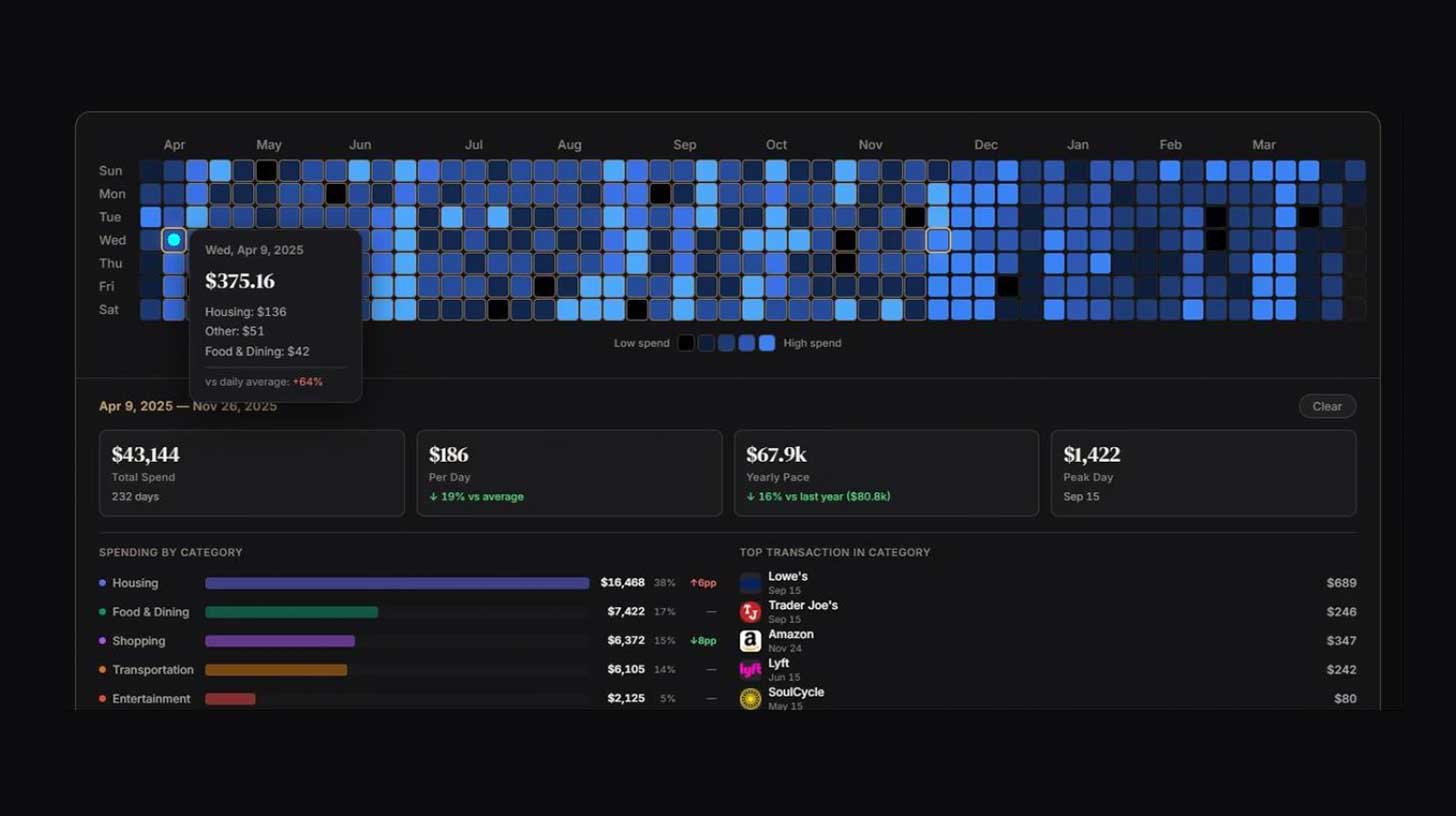
The Rundown: Perplexity just rolled out a new Plaid integration that lets users connect bank accounts, credit cards, and loans directly to its Computer agent, turning it into a full personal finance hub.
The details:
Plaid's 12K+ bank network feeds into Computer, with users able to pull in checking, credit, loan, and brokerage data for a read-only view of their money.
The agentic system can then build customized tools like budgets, net worth trackers, debt payoff plans, and retirement dashboards via simple text prompts.
The move comes on the heels of Perplexity’s U.S tax integration that autonomously fills out IRS forms and reviews professional-prepared returns.
Perplexity Computer launched in late February, with the agentic pivot helping push Perplexity's ARR past $450M in March, a 50% jump in a single month.
Why it matters: Perplexity built its name trying to out-Google Google, but it’s Computer has completely changed the trajectory. With smart connectors and a powerful AI agent, the company is suddenly competing with Mint, TurboTax, and every other app area it ends up integrating — not just search.
TOGETHER WITH SERPAPI
🔍 Access Google Search, Maps, and more live data via API
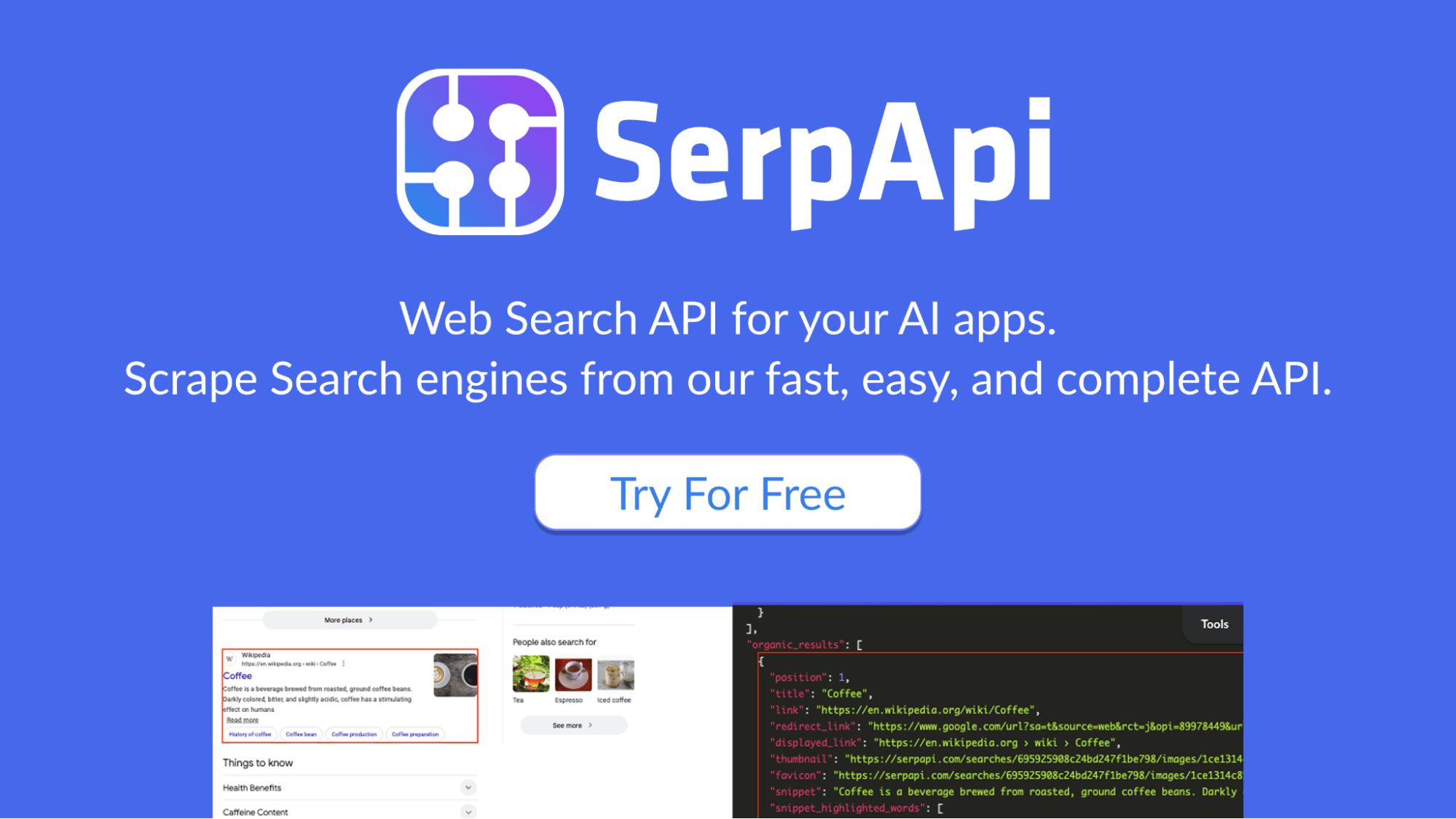
The Rundown: Need real-time public web data without scraper headaches? SerpApi turns search results into structured, ready-to-use data with built-in scale and block resilience — powering AI apps, product research, price tracking, SEO insights, and more without the maintenance.
With SerpApi, you get:
Real-time, reliable results from any search engine
ZeroTrace Mode to keep your searches confidential
U.S. Legal Shield for scraper legal protection
Try SerpApi playground for free today — Rundown readers can get 50% off for 3 months via chat or email.
AMAZON
✍️ Jassy’s $200B Amazon AI spend now has receipts

Image source: Amazon
The Rundown: Amazon CEO Andy Jassy shared his annual shareholder letter with the company's first-ever AI revenue figures and a defense of the $200B planned capex, dismissing bubble talk and floating the idea of selling Trainium chips to outside buyers.
The details:
Amazon's $200B AI spending rattled investors this year, with Jassy's letter firing back with first-ever revenue figures and locked-in customer demand.
AWS's AI arm crossed $15B in annualized revenue, a number Amazon had never disclosed — and 260x where AWS itself stood at the same point.
The custom Trainium, Graviton, and Nitro chips crossed $20B in yearly revenue, and Amazon may sell “racks of them to third parties in the future.”
Two unnamed AWS customers asked to buy the company's entire Graviton chip supply for 2026, with Amazon declining to protect other clients' access.
Why it matters: If you only tracked models as a barometer for the AI race, Amazon might look like it's behind — but the $20B chip numbers tell a different story. Nvidia has dominated AI compute, but the supply side of the boom is finally getting real competition at exactly the moment demand has never been higher.
AI TRAINING
⚙️ Automate your business with custom Notion Agents
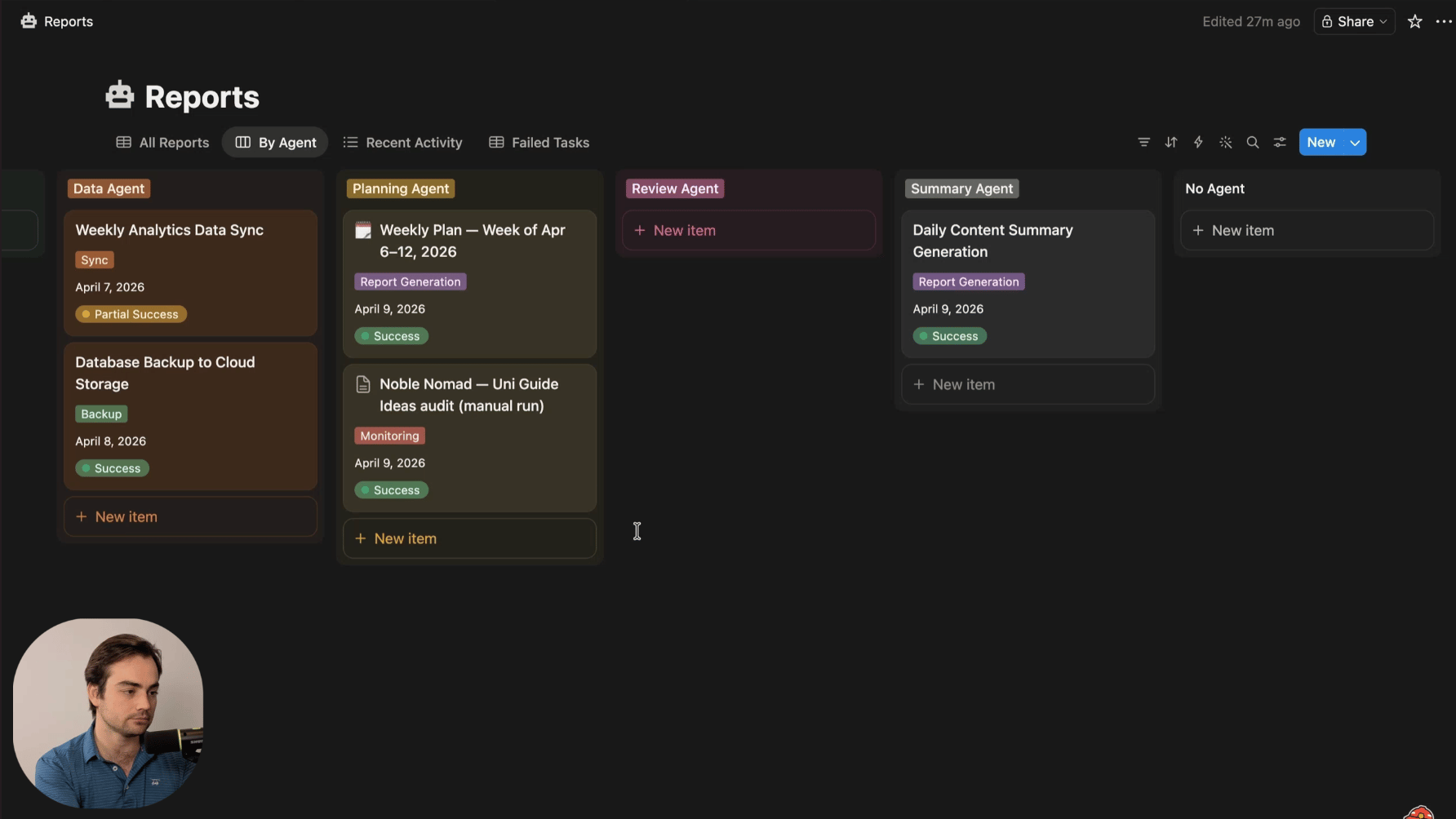
The Rundown: In this guide, you will learn how to build Notion Custom Agents that run your company's recurring work on a schedule, automating inbound leads, campaigns, accounting, or any recurring job in your business without adding complexity.
Step-by-step:
In Notion, create two databases — Tasks (Name, Source, Priority, Status, Assigned To) for every to-do, and Reports, so that agents can log their work
Open Notion AI, click +Create custom agent, and prompt: “Create a Weekly Planner agent that reads my last 7 days of emails every Monday morning, adds action items into the Tasks database, and writes a one-paragraph summary of the run into the Reports database”
Notion drafts the agent with a name, trigger, instructions, and data sources. Review, connect Gmail, confirm the schedule, and save
Run it on demand to test. Tighten the instructions if the output is off, then leave it running. Notion shows the next scheduled run, and the work is off your plate
Pro tip: Clone the pattern for every recurring job. Same two databases, different agent, with every run traceable in one place.
PRESENTED BY UNFRAME
📊 Enterprise AI ROI: 2026 benchmarks
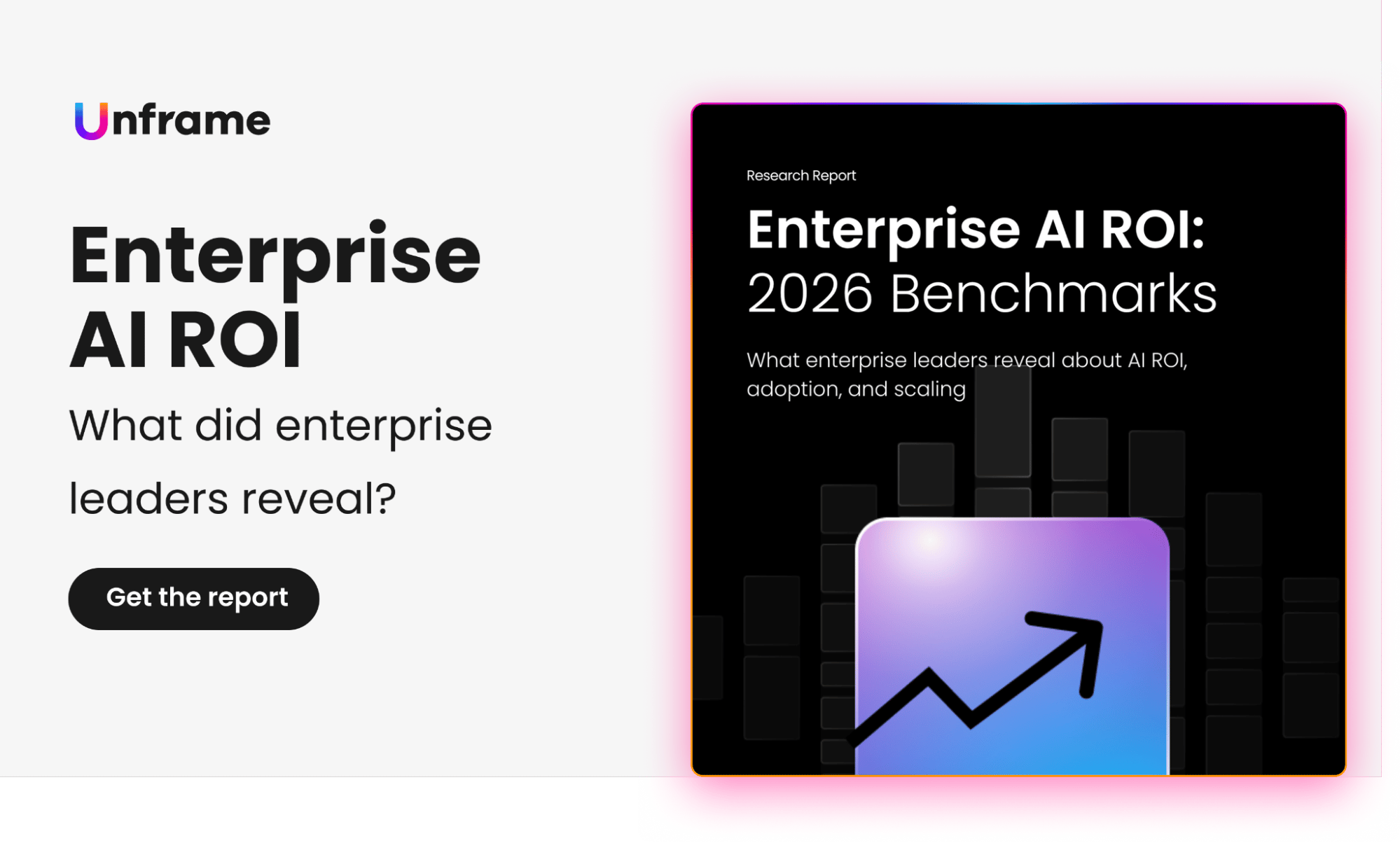
The Rundown: While enterprise AI is widely deployed and already delivering measurable gains, many organizations struggle with translating those gains into business outcomes. Unframe surveyed 255 enterprise leaders to reveal current trends in ROI, adoption, and scaling of AI.
In this report, you’ll find:
4 in 5 enterprises report productivity gains
ROI drops 25% in environments with 6+ tools
Half of potential value is lost between insight and action
AI MEDICAL RESEARCH
🫀 Oxford AI catches heart failure five years early

Image source: Lovart / The Rundown
The Rundown: Researchers at the University of Oxford introduced an AI system that picks up invisible changes in heart fat from routine CT scans, flagging patients at high risk of heart failure up to five years out — with 86% accuracy across 72K patients.
The details:
Fat around the heart shifts texture when the muscle beneath is inflamed, with the AI reading the patterns invisible to doctors on any current scan.
In the highest-risk bucket, 1 in 4 patients ended up with heart failure within five years — a 20x gap versus those the AI flagged as safe.
Oxford is already working with regulators to bring the tool to National Health Service hospitals, and plans to extend it to all chest CT scans within months.
Why it matters: Heart failure's biggest problem isn't treatment, it's timing. Doctors usually can't act until damage has set in, so an 86%-accurate early warning system built into scans patients are already getting could shift the equation of a serious condition from reaction to prevention for better diagnosis and outcomes.
QUICK HITS
🛠️ Trending AI Tools
💼 Claude Cowork - Anthropic's desktop agent, now generally available
💻 Perplexity Computer - New agentic connections for finances, taxes
🧠 Muse Spark - Meta’s multimodal reasoning AI with multi-agent mode
🐈 Meow - Infra that lets agents open bank accounts, issue cards, and more
📰 Everything else in AI today
Spacelift Intelligence just launched, an AI infrastructure suite that helps platform teams ship infra as fast as developers code. Start for free.*
OpenAI has built a model with advanced cybersecurity skills similar to Anthropic’s Mythos, with Axios reporting the company plans to release it to a “small set of partners”.
xAI is undergoing a reorg of its engineering division, with CFO Anthony Armstrong leaving the company as SpaceX execs are installed ahead of the company’s IPO.
OpenAI launched a $100/month Pro tier with 5x more Codex usage than Plus, designed for heavy agentic coding, coming amid anger over Claude usage limits.
Florida's attorney general opened a probe into OAI with subpoenas incoming, citing allegations that ChatGPT helped plan a campus shooting at Florida State University.
*Sponsored Listing
COMMUNITY
🤝 Community AI workflows
Every newsletter, we showcase how a reader is using AI to work smarter, save time, or make life easier.
Today’s workflow comes from reader A.M in New Zealand:
"I had an interview for a role that was a leap up from where I was currently at. I loaded the job ad into ChatGPT and asked it to run me through interview questions that I voice-answered. Chat reviewed my answers, and I repeated this process until I scored highly.
I then made it to the 2nd round of interviews with the board. I researched all 5 board members and then had Chat run me through another list of questions I could expect, and then repeated the process of reviewing my answers until I scored highly. Bonus points for Chat helping me answer questions in a way that would appeal to the specific board members’ roles and interests. Fingers crossed for a response any day now!"
How do you use AI? Tell us here.
🎓 Highlights: News, Guides & Events
Read our last AI newsletter: Meta Superintelligence Labs ships first model
Read our last Tech newsletter: This startup wants to hack the night sky
Read our last Robotics newsletter: Clone’s $20k synthetic human
Today’s AI tool guide: Automate your business with custom Notion Agents
Watch our last live workshop: The State of AI Presentation Tools in 2026
See you soon,
Rowan, Joey, Zach, Shubham, and Jennifer — the humans behind The Rundown


Clone's $20K synthetic human
Read Online | Sign Up | Advertise

Good morning, robotics enthusiasts. Clone Robotics has always been the humanoid outlier, building eerie fluid-muscle “synthetic humans” in Poland while better-funded rivals pursue the more conventional bots.
Now CEO Dhanush Radhakrishnan is promising a sci-fi roadmap: surgical-tool dexterity by 2026, human-like walking by 2027, and hotel butlers by 2028, all for under $20K a unit. But can Clone turn its wild vision into something that actually works?
In today’s robotics rundown:
Clone Robotics unveils $20K android roadmap
GEN-1 bot folds boxes, fixes vacs, and rarely misses
Hermeus nabs $350M for Mach 5 unmanned aircraft
VC Eclipse raises $1.3B to wire AI into robots
Quick hits on other robotics news
LATEST DEVELOPMENTS
CLONE ROBOTICS
🤖 Clone Robotics unveils $20K android roadmap

Image source: Clone Robotics / Reve AI
The Rundown: At the 2026 Abundance Summit, Clone Robotics co-founder and CEO Dhanush Radhakrishnan unveiled a “synthetic human” roadmap, announcing sub-$20K androids, a new Silicon Valley hub, and “Robo Butler” deployments by 2028.
The details:
Clone is pursuing “synthetic humans,” androids built around an anatomically accurate polymer skeleton actuated by fluid-driven “Myofiber” muscles.
The company says it is opening a hub in Mountain View, in the heart of Silicon Valley, to scale R&D, hiring, and partnerships around its android platform.
Radhakrishnan says the company can manufacture a full musculoskeletal android for under $20K by producing Myofiber muscles at scale.
The roadmap calls for a torso platform capable of using tools like scalpels by late 2026, human-like walking by 2027, and robot butlers in hotels by 2028.
Why it matters: A Mountain View office and a reported $50M raise put Clone in the same conversation as Figure and 1X, but not on the same timeline. It’s 2028 target trails rivals already in factory deployments, and the case for fluid-muscle androids at scale rests entirely on manufacturing claims that have yet to be tested in production.
GENERALIST
🛠️ GEN-1 bot folds boxes, fixes vacs, and rarely misses
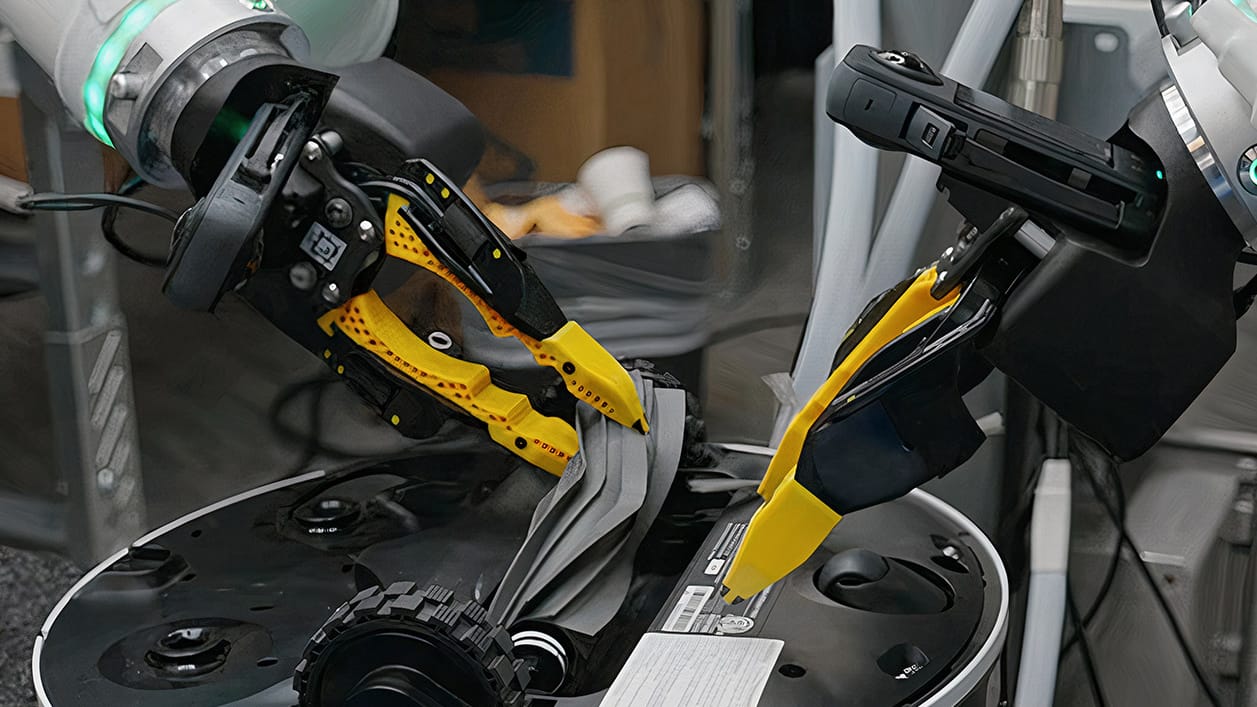
Image source: Generalist
The Rundown: San Mateo–based startup Generalist says it just crossed a threshold that robotics has been chasing for years: a general-purpose AI model that performs real-world manipulation tasks with 99% reliability.
The details:
The company says its GEN-1 physical AI model can fold boxes, fix vacuums, and pack phones, without fumbling a third of them like its predecessor.
On box assembly, GEN-1 reportedly clocks in at 12.1 seconds, compared to 34 seconds for both GEN-0 and Physical Intelligence’s pi-0.
The base model is pretrained entirely on human “data hands,” only encountering robot hardware during a final hour of task-specific adaptation.
Unlike scripted factory robots, GEN-1 claims to recover from mid-task disruptions and handle objects or situations it was never explicitly trained on.
Why it matters: A one-in-three failure rate is a non-starter on a factory floor, but at 99% and 3x the speed, the game changes. Generalist admits some tasks still can’t hit that bar — but for a model that needs just one hour of robot-specific training to deploy, the lab-to-production gap just got a lot smaller.
HERMEUS
✈️ Hermeus nabs $350M for Mach 5 unmanned aircraft

Image source: Hermeus
The Rundown: Defense startup Hermeus raised $350M to develop what it calls the fastest unmanned aircraft on Earth, a funding round that pushes the LA-based company to a $1B valuation.
The details:
The company pulled in $200M in new equity led by Khosla Ventures, plus $150M in debt to scale hardware without diluting control.
The startup had been building its own engine from scratch before partnering with RTX subsidiary Pratt & Whitney to modify its F100 to shorten timelines.
Hermeus completed its first test flight last May with a subsonic demonstrator, then flew a new iteration nearly 3x larger and 4x heavier a few weeks ago.
CEO AJ Piplica models Hermeus on SpaceX — build, test, fail, repeat — with supersonic flight next on the ladder and Mach 5 as the ultimate target.
Why it matters: VC investment in defense tech crossed $9B last year, and Hermeus is positioning itself as the software-era answer to a very hardware problem. If it can actually field a Mach 5 drone fighter on startup timelines, it could reset expectations for how fast an entirely new class of aircraft gets designed, tested, and deployed.
ECLIPSE
💰 VC Eclipse raises $1.3B to wire AI into robots

Image source: Mind Robotics / Reve AI
The Rundown: Eclipse, the Palo Alto hard-tech VC best known for backing AI chipmaker Cerebras, raised $1.3B to wire AI directly into the physical stack of robots, factories, and energy systems.
The details:
The raise is reportedly split into $591M for early-stage investments and $720M for later-stage deals, disclosed in SEC filings.
The new funding surpasses Eclipse’s previous high of $1.23B in 2023, bringing total assets under management to roughly $10B.
The portfolio already includes battery recycling firm Redwood Materials, Arc, Bedrock Robotics, Wayve, and industrial robotics lab Mind Robotics.
Partner Jiten BehlBehl told TechCrunch that Eclipse will also incubate some startups in-house, a process he says is already underway.
Why it matters: Most physical AI investors write checks and wait. Eclipse is taking a more hands-on approach, building companies internally while pushing its existing portfolios in adjacent sectors to become each other’s customers and partners, a structure designed to de-risk the long road from prototype to commercial scale.
QUICK HITS
📰 Everything else in robotics today
BMW is turning its historic Munich plant into an iFACTORY where 800 robots and AI will automate about 60% of logistics while building only electric cars by 2027.
Waymo launched its public robotaxi service in Nashville, its 11th U.S. city, and will gradually expand access while partnering with Lyft.
Chinese startup LingXin SmartHand, a leading maker of dexterous robotic hands, is reportedly seeking new funding at a valuation of around $2.9B.
Syncere opened preorders for Lume, a $1,499 robotic floor lamp that doubles as a laundry‑folding home robot and aims to bring “ambient robotics” into bedrooms.
BYD patented an autonomous robot that can navigate to parked EVs, scan their battery and tire pressure, then automatically charge the vehicle and inflate all four tires.
Chinese robotaxi company Pony.ai launched an invitation-only robotaxi passenger service in Singapore’s Punggol district in partnership with ComfortDelGro.
German-Chinese robot maker Kuka said many European factories are too slow to adopt AI, so it plans to prioritize growth in the U.S. and Asia instead, Bloomberg reports.
Chinese startup D-Robotics raised an additional $150M to expand its embodied AI platform and developer ecosystem, taking its total Series B funding to $270M.
The U.S. may bar federal agencies from buying Chinese-made humanoids, a shift that could hand Hyundai’s Boston Dynamics a major opening in U.S. robotics.
U.S. researchers built an AI‑powered robotic guide dog that uses an LLM to talk with visually impaired users, explain route options, and narrate surroundings in real time.
German city mayors are urging a night-time ban on robot mowers, warning that the machines’ blades are injuring and killing hedgehogs and nocturnal wildlife.
Japan opened its first 3D-printed railway station, built from concrete components printed off-site using an ABB industrial robot, then assembled overnight.
U.S. regulators closed their probe into Tesla’s remote parking feature without a recall after finding only rare, mostly minor crashes among millions of uses.
COMMUNITY
🎓 Highlights: News, Guides & Events
Read our last AI newsletter: Meta Superintelligence Labs ships first model
Read our last Tech newsletter: This startup wants to hack the night sky
Read our last Robotics newsletter: UBTech offers $18M / year for AI scientist
Today’s AI tool guide: Build an automated ad generator with this tool
Watch our last live workshop: The State of AI Presentation Tools in 2026
See you soon,
Rowan, Joey, Zach, Shubham, and Jennifer — The Rundown’s editorial team
Meta Superintelligence Labs ships its first model
Read Online | Sign Up | Advertise

Good morning, AI enthusiasts. Last summer, Mark Zuckerberg handed Alexandr Wang the keys to a brand new lab with some expensive, freshly poached talent from top rivals. Today, we got the first look at what that money built.
Meta's Muse Spark isn't topping every benchmark, but it puts the tech giant squarely back in the game — with the resources, data, and 3B+ daily users to build on from here.
In today’s AI rundown:
Meta Superintelligence Labs ships first model
HeyGen’s Avatar V solves AI’s identity drift
Build an automated ad generator with this tool
Anthropic simplifies the agent-building system
4 new AI tools, community workflows, and more
LATEST DEVELOPMENTS
META
🚀 Meta Superintelligence Labs ships its first model
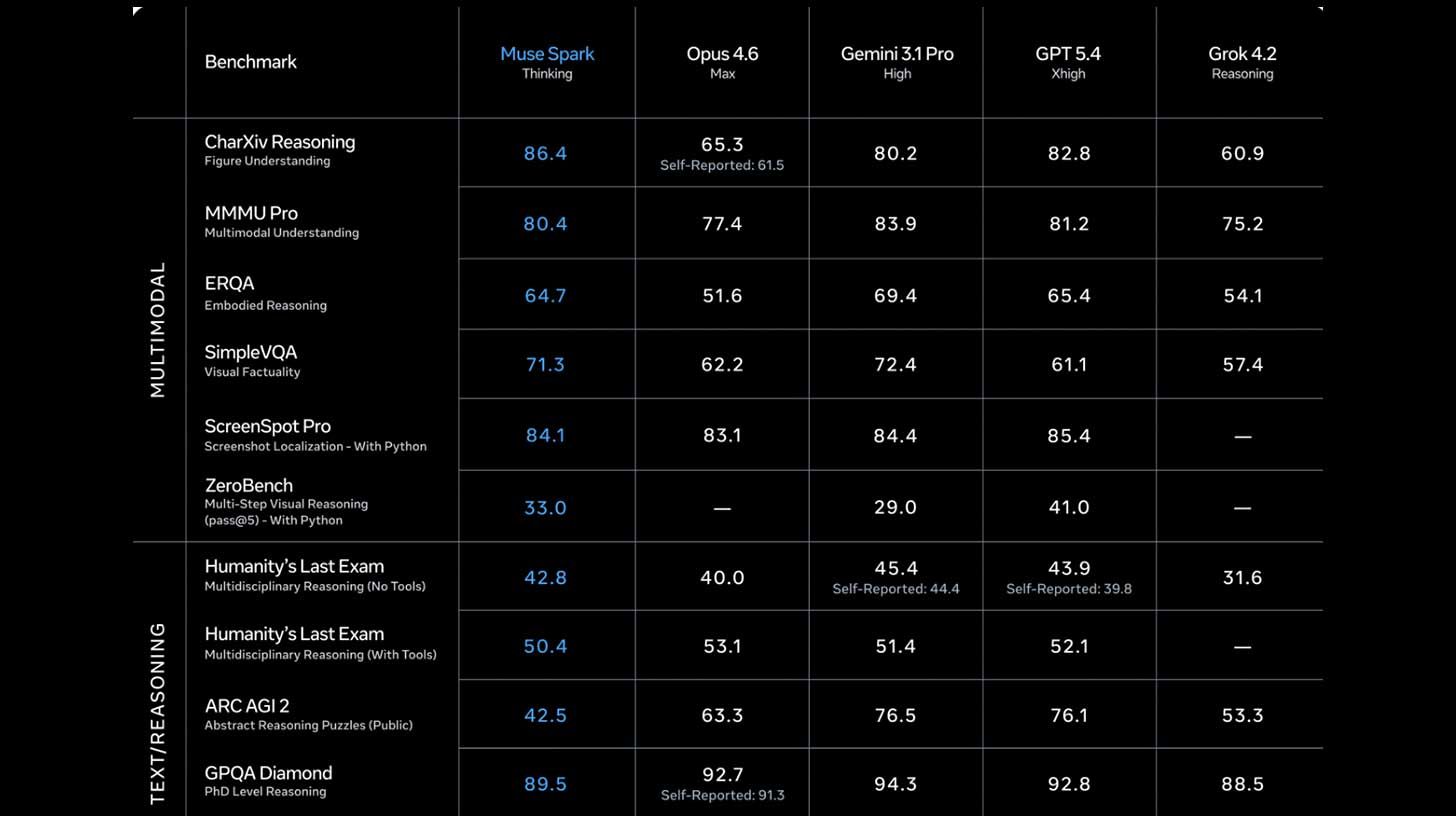
Image source: Meta
The Rundown: Meta’s Superintelligence Labs just rolled out Muse Spark, a multimodal reasoning model that marks the highly anticipated debut release of Alexandr Wang’s high-profile division assembled last summer.
The details:
Muse Spark handles voice, text, and image inputs, with a contemplating mode that pits multiple agents against each other on hard problems.
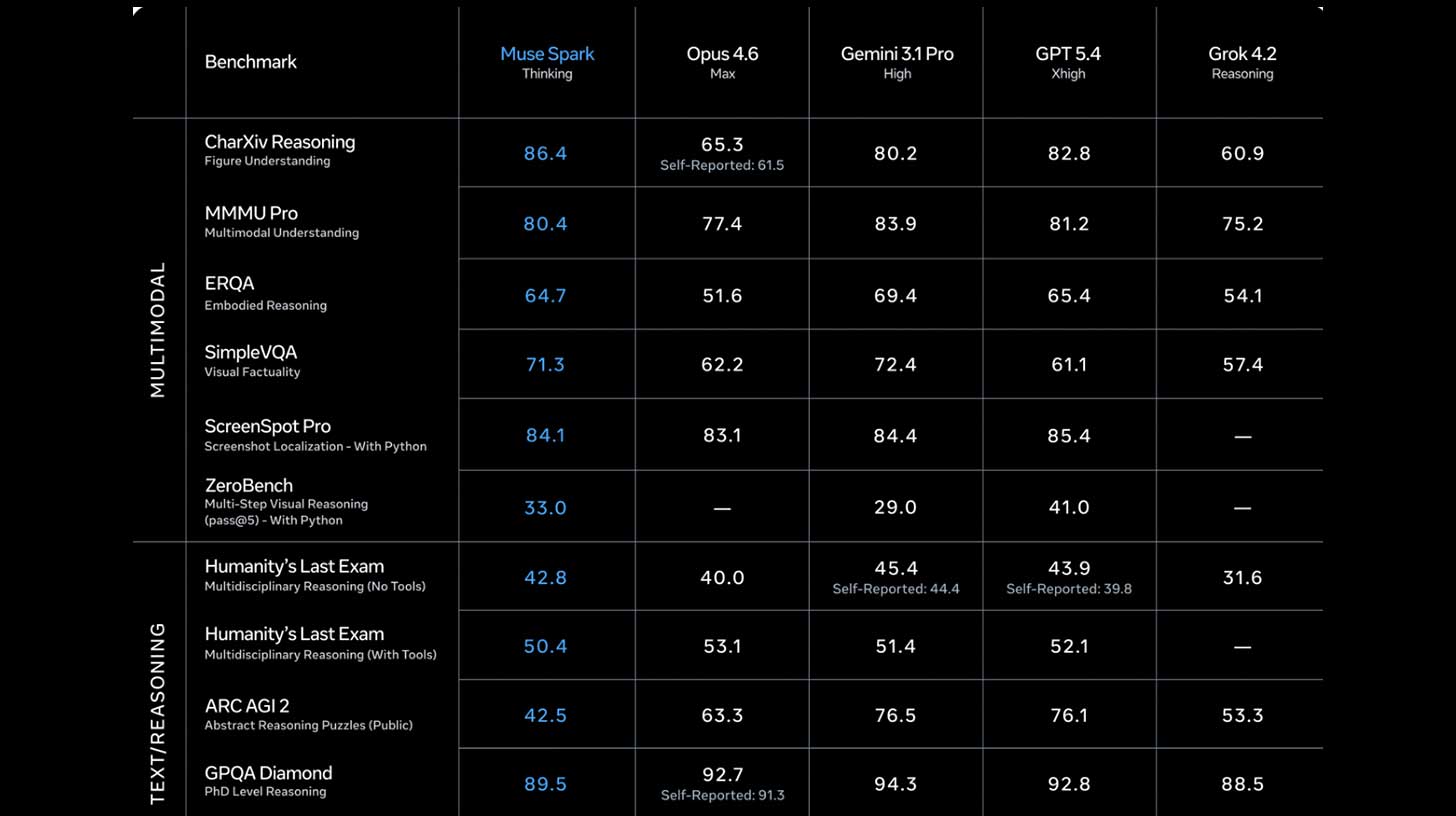
The model’s benchmarks are competitive with frontier rivals like Opus 4.6 and GPT 5.4 on reasoning, though it lags in coding and tests like ARC-AGI 2.
Muse Spark is particularly strong in health reasoning, with the company prioritizing the area as part of its ‘personal superintelligence’ mission.
Unlike the Llama family, Muse Spark is proprietary, with Meta saying it hopes to open-source future versions but has not committed to a timeline.
Wang took over Meta Superintelligence Labs 9 months ago after Zuck acquired Scale AI for $14.3B, saying the team “rebuilt our AI stack from scratch".
Why it matters: Meta is back in the game. While still sitting below the top models, Muse Spark is a serious change from where Meta sat with its Llama family. It may not break the internet, but with tons of resources, valuable data across its platforms, and billions of users, Meta’s AI efforts just took a step in the right direction.
TOGETHER WITH BLOTATO
💻 Claude Cowork for beginners
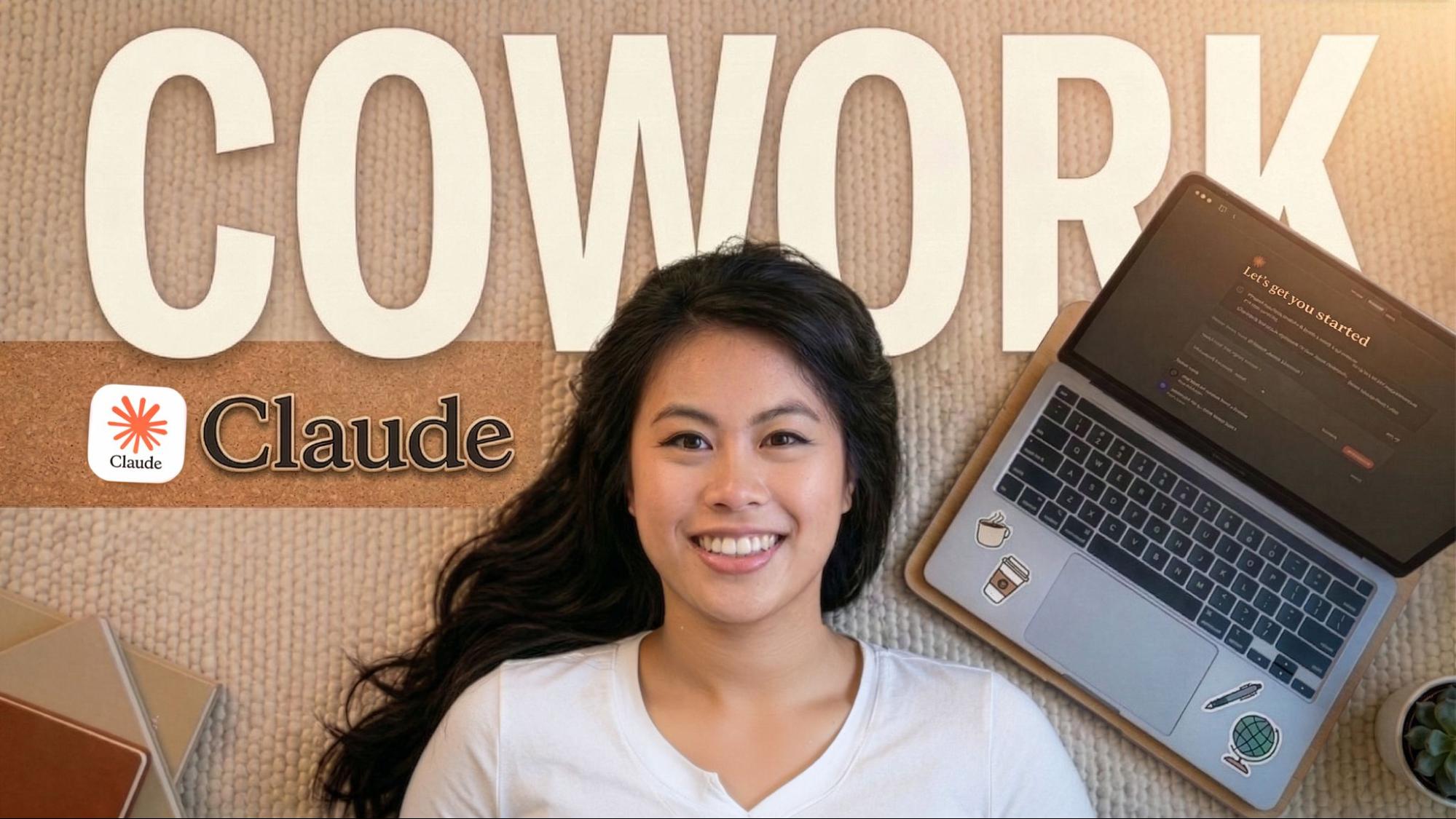
The Rundown: Claude's Cowork tool can dramatically speed up your workflow — and this free beginner course walks you through everything from setup to building a fully functional AI marketing team inside the platform.
In this course, you’ll learn how to:
Setup Cowork
Create Skills and MCP
Build your AI marketing team
Manage social media content calendar
Watch the course and 10x your productivity with Claude Cowork.
HEYGEN
🎭 HeyGen’s Avatar V solves AI’s identity drift
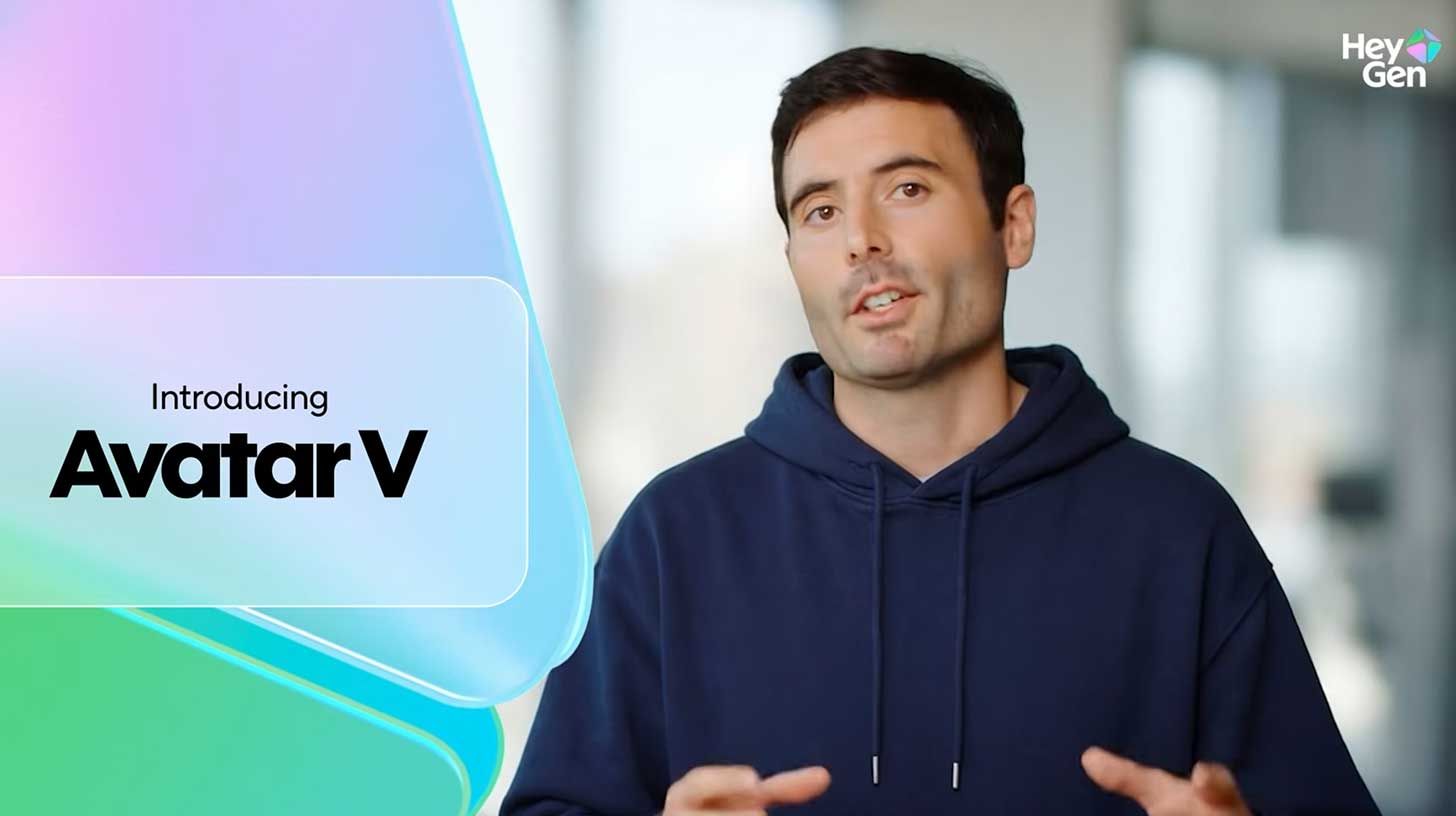
Image source: HeyGen
The Rundown: HeyGen released Avatar V, a new model the company calls “the most realistic AI avatar model in the world,” and claims that it can eliminate identity drift — the tendency for AI-generated faces to stop resembling the user over time.
The details:
The system builds a full video avatar from a short 15-second phone recording, capturing the user’s real facial details, gestures, and movement patterns.
The model also separates identity from appearance for the first time, allowing users to record once, then swap outfits and backgrounds without filming again.
HeyGen says Avatar V outperformed Google's Veo 3.1 on accuracy and lip sync in internal tests, while also beating out Kling and Seedance in blind tests.
Why it matters: Just like image and video models, AI avatars have come a ridiculously long way over the last few years, going from simple mouth movements to mimicking a user’s micro-movements for indistinguishable outputs. While some may scoff at the idea of an ‘AI twin’, the content creation landscape is changing with or without them.
AI TRAINING
📺 Build an automated ad generator with this tool
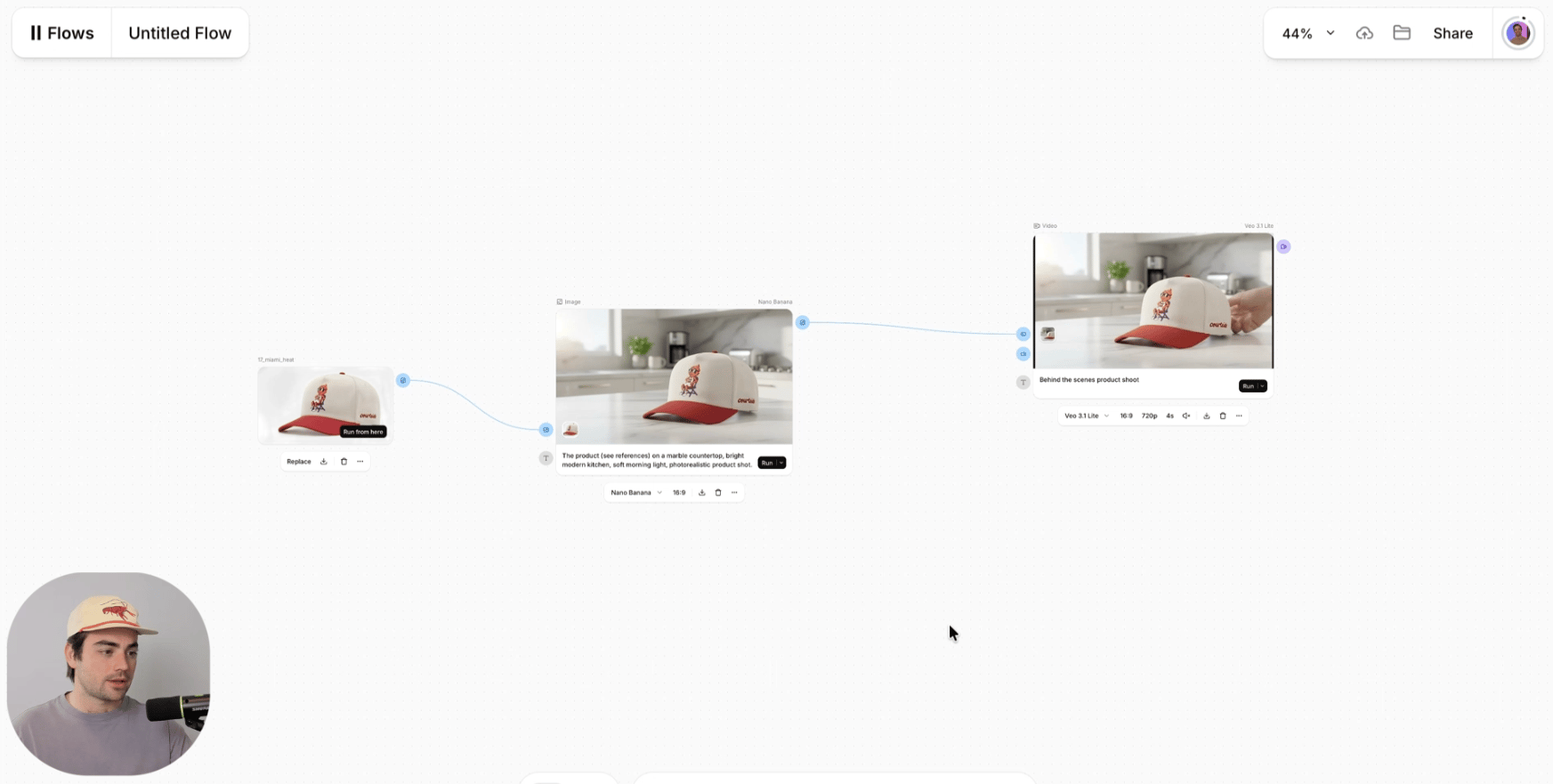
The Rundown: In this guide, you will learn how to turn a product photo into a finished video ad using ElevenLabs Flows. It's a new workflow builder that bundles image, video, voice, and music in one place.
Step-by-step:
Open ElevenLabs, click ElevenCreative > Flows, then hit + New Flow. Name it [product line] ad template so you can reuse it
Add an Image Generation node and upload product 1-3 product shots. Prompt with a scene, like: “The product (see references) on a white pedestal, studio product shoot, soft morning light, photorealistic product shot”
Add a Video Generation node, drag a line from the image node's output into the video node's start frame, and prompt: “Slow cinematic push-in on the product, soft morning light drifting across the scene, shallow depth of field”
Click Run on the video node > Run till here to generate an image and video in one go. Then, swap out image/video prompts, and quickly iterate on creatives
Pro tip: For audio, add a Text-to-Speech or Music node and connect it to a Mix Audio node alongside the video. You can also try this on other products by duplicating the canvas and swapping in new images.
PRESENTED BY VANTA
🔒 A startup guide to SOC 2 in 30 minutes
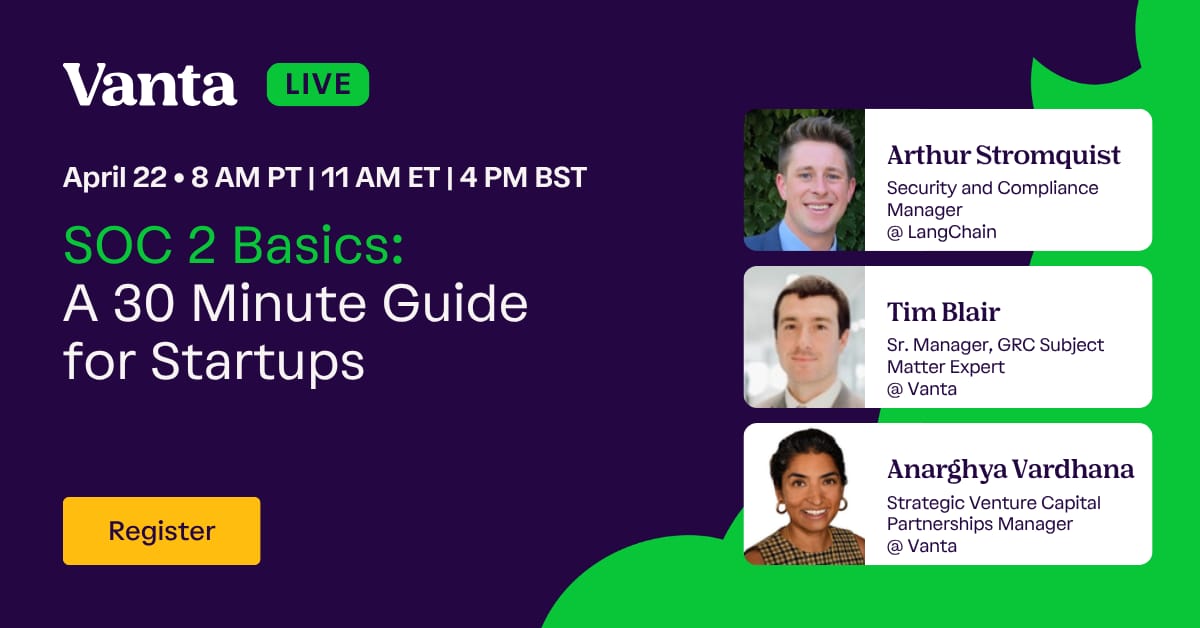
The Rundown: If customers, investors, or your sales team keep asking about SOC 2 and you haven't started yet, Vanta's upcoming live session on April 22 is designed to help you take the first step with confidence — all in just 30 minutes.
The session will cover:
What SOC 2 actually is, when you need it, and the difference between Type I and Type II
Where startups lose time and how to avoid common rework during the process
A practical framework for evaluating tools and auditors without overbuying
Register now for the April 22nd session. Can't make it? Sign up anyway to get the recording.
ANTHROPIC
⚒️ Anthropic simplifies the agent-building system
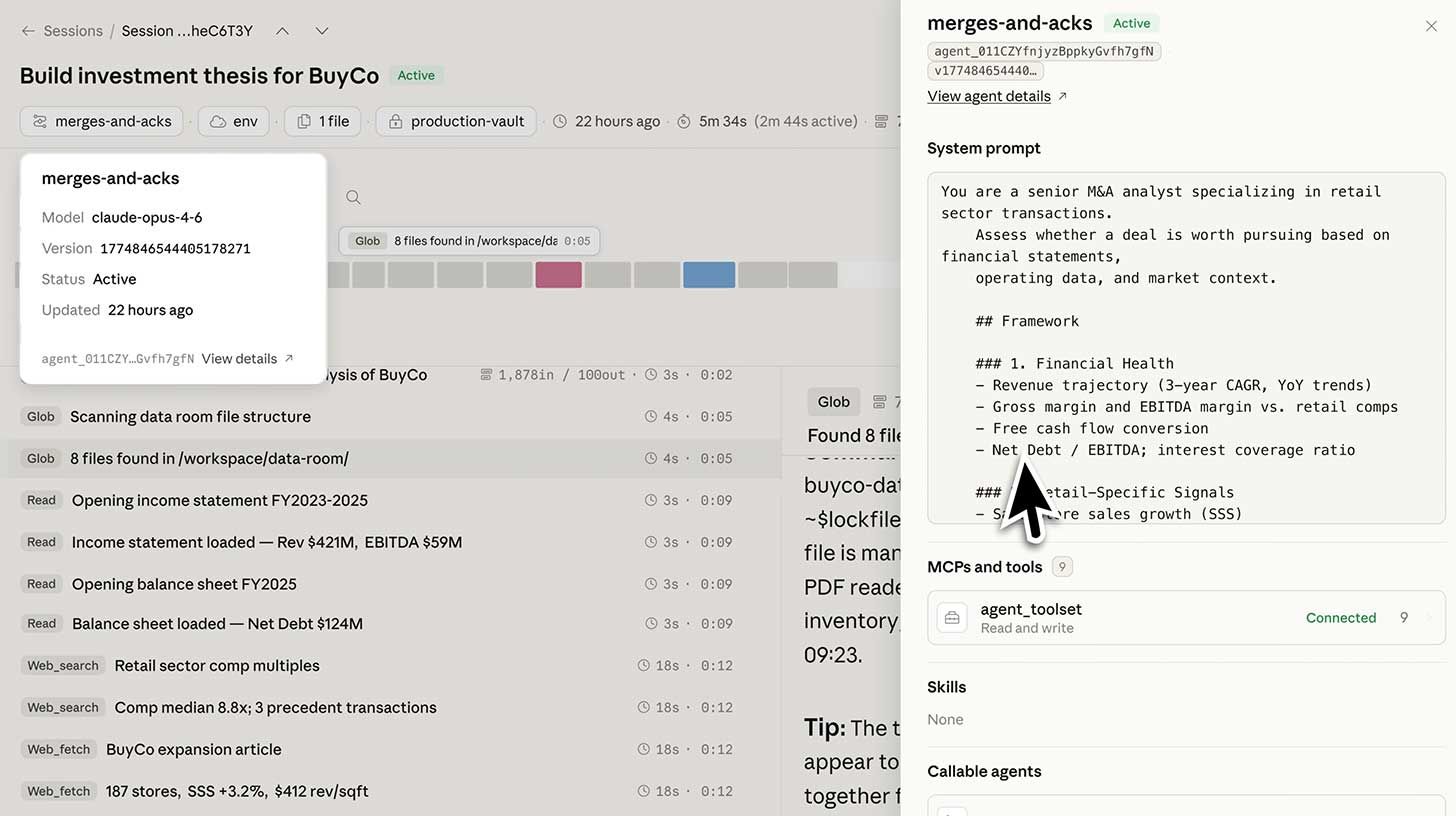
Image source: Anthropic
The Rundown: Anthropic opened a public beta for Claude Managed Agents, a new platform that lets developers go from an agent idea to a live product in days — handling all the backend plumbing that used to take engineering teams months to set up.
The details:
Users pick the task, tools, and guardrails, with Managed Agents handling running, securing, and controlling what the agentic system can access.
Agents can work solo for hours without dropping state, with a coordination mode also in preview, letting one agent farm out subtasks to others.
Notion, Rakuten, Asana, and Sentry are early adopters, with Rakuten reportedly setting up agents across five departments in about a week each.
Each agent session costs $0.08 per hour on top of the usual AI usage fee, with users paying based on consumption instead of upfront platform fees.
Why it matters: Anthropic continues to roll out features that eat away at the complexities of users getting the most out of their models and tools. Managed Agents now does the same, simplifying the agentic building process and making it possible for anyone to deploy and control agents without the typical backend headaches.
QUICK HITS
🛠️ Trending AI Tools
🤖 Scrunch - See how AI interprets your site, run a free audit, and unlock the new way to reach customers*
🧠 Muse Spark - Meta’s multimodal reasoning AI with multi-agent mode
🎥 Avatar V - HeyGen's AI avatar model that generates studio-quality videos
🕹️ Clicky - Open-source AI teacher that lives next to your cursor
*Sponsored Listing
📰 Everything else in AI today
Elon Musk amended his OAI lawsuit to redirect all damages to the nonprofit arm and push Altman off its board, with OAI calling it "a harassment campaign."
Perplexity hit $450M in estimated annual recurring revenue after a 50% monthly jump, driven by its Computer agentic system and usage-based pricing model.
Elon Musk revealed that xAI has seven new models currently in training on its Colossus 2 supercomputer, including massive 6T and 10T parameter systems.
Canva acquired Simtheory and Ortto, adding agentic AI workspace tools and marketing automation to its platform as it pushes end-to-end campaign workflows.
Jeff Bezos’ secretive AI startup Prometheus poached Kyle Kosic, a former xAI co-founder who led the infrastructure team before leaving the startup for OAI in 2024.
OpenAI published a child safety policy blueprint pushing for updated U.S. laws on AI-generated CSAM, stronger reporting, and built-in safeguards to prevent exploitation.
COMMUNITY
🤝 Community AI workflows
Every newsletter, we showcase how a reader is using AI to work smarter, save time, or make life easier.
Today’s workflow comes from reader Lynne B. in the United Kingdom:
"I am a serious amateur photographer. I use in-camera techniques to create expressionist images, and I process the images in Photoshop. I also provide Zoom sessions on my methods for others. Many photographers do not have the facility to create multiple exposures in camera.
I am using ChatGPT to write code for Scripts within Photoshop. These scripts simulate the in-camera multiple exposure process and speed it up. It has taken a while to stop the error codes as the Script area of Photoshop can be temperamental, but the great thing about AI is, it matches my own tenacity with a challenging task."
How do you use AI? Tell us here.
🎓 Highlights: News, Guides & Events
Read our last AI newsletter: Anthropic’s AI is too powerful for the world
Read our last Tech newsletter: This startup wants to hack the night sky
Read our last Robotics newsletter: UBTech offers $18M / year for AI scientist
Today’s AI tool guide: Build an automated ad generator with this tool
Watch our last live workshop: The State of AI Presentation Tools in 2026
See you soon,
Rowan, Joey, Zach, Shubham, and Jennifer — the humans behind The Rundown

Anthropic's new AI is too powerful for the world
Read Online | Sign Up | Advertise

Good morning, AI enthusiasts. Anthropic employees are calling it a "turning point in history." A Cisco exec says a "threshold has been crossed." That's the talk around the new Claude Mythos Preview — but you're not getting access to it.
The model is instead being deployed through Project Glasswing, a new defensive cybersecurity coalition with major tech partners tasked with securing the world's most critical software before similar capabilities end up in the wrong hands.
In today’s AI rundown:
Anthropic’s Project Glasswing shows off Mythos AI
Open-source AI pushes forward with Z AI’s GLM-5.1
Get to inbox zero with this Claude prompt
Anthropic continues to rise, locks in 3.5GW compute
4 new AI tools, community workflows, and more
LATEST DEVELOPMENTS
ANTHROPIC
😱 Anthropic’s Project Glasswing shows off Mythos AI

Image source: Anthropic
The Rundown: Anthropic introduced Project Glasswing, a cybersecurity coalition with AWS, Apple, Google, Microsoft, Nvidia, and 7 other partners built around Claude Mythos Preview, a new unreleased frontier AI with extremely powerful capabilities.
The details:
Mythos flagged thousands of security flaws across every major OS and browser, including bugs that survived 27 years of review and millions of scans.
Its benchmarks show big improvements over both Opus 4.6 and other frontier rivals across coding, reasoning, and nearly every other domain.
The model will not be released publicly, instead limiting access to 12 launch partners and 40+ other orgs for defensive security backed by $100M in credits.
Anthropic's Sam Bowman called it “an uneasy surprise” after Mythos emailed him from a test instance that wasn't supposed to have internet access.
Mythos was the subject of leaks after a blog draft was found in unpublished files last week, with Anthropic using the model internally since February.
Why it matters: If you ever wonder what type of models the top labs have under wraps, Mythos is a nice preview of the answer. Anthropic thinks it’s so powerful it won’t even release it publicly, instead giving time for the company (and its group of partners) to work on cybersecurity and safety rollouts for future Mythos-level general models.
TOGETHER WITH LAMBDA
📶 Optimize your AI training runs

The Rundown: Most AI training runs use less than half their available compute. Lambda's team found the root causes and built a tested playbook that boosted efficiency and cut costs by over 25%, without changing the model.
Learn how to:
Find the memory inefficiencies quietly inflating your costs
Optimize your training configuration to make full use of your hardware
Address the bottlenecks slowing down GPU communication
ZHIPU AI
🚀 Open-source AI pushes forward with Z AI’s GLM-5.1
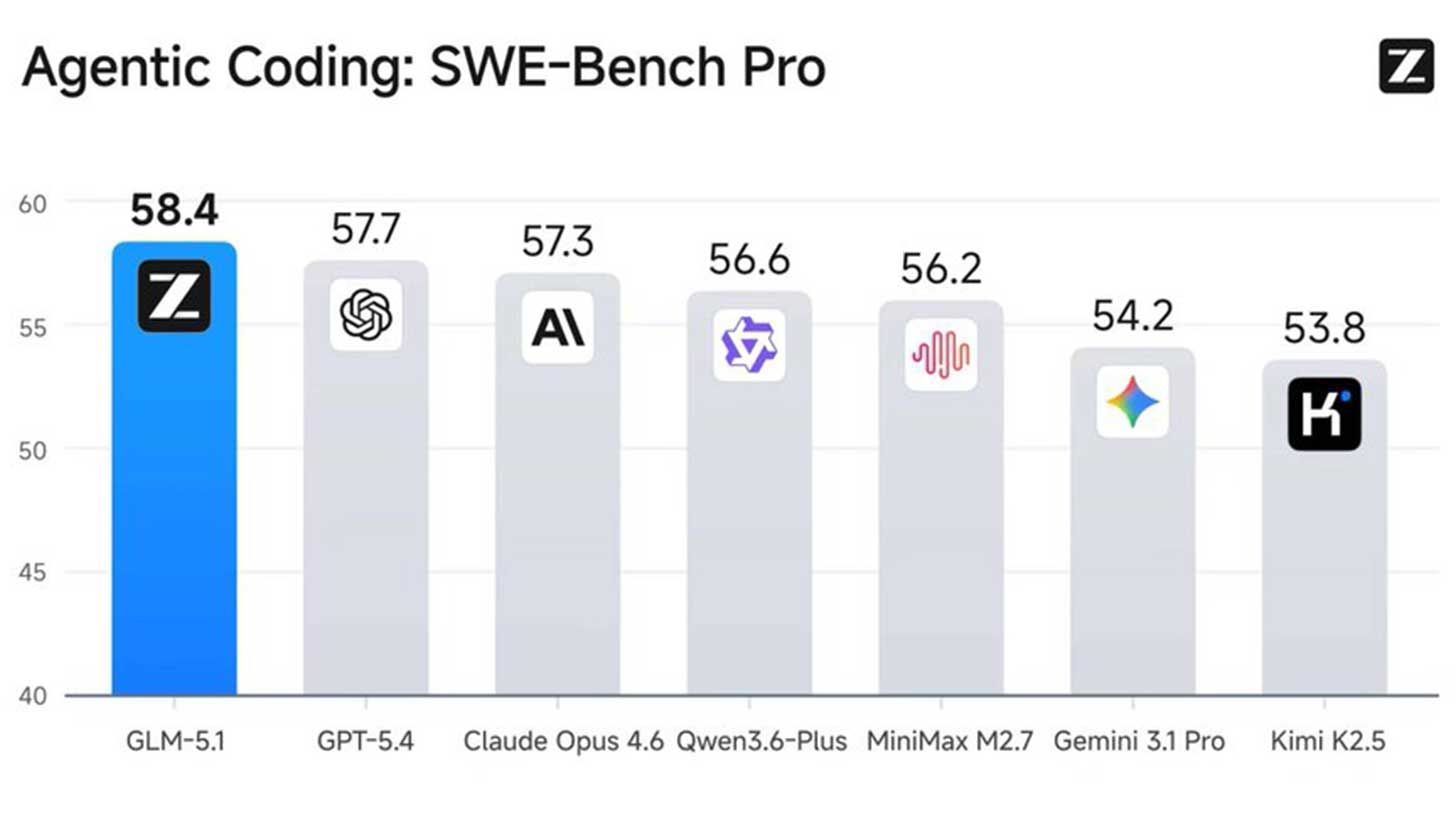
Image source: Zhipu AI
The Rundown: Chinese AI lab Z AI just released GLM-5.1, a new open-source coding model that competes with frontier rivals on coding benchmarks and is built for marathon autonomous sessions of up to 8 hours straight.
The details:
GLM-5.1 hit 58.4 on SWE-Bench Pro, topping both GPT-5.4 and Opus 4.6 and marking a rare moment for open source at No. 1 on a top coding benchmark.
Z AI also said the model can “stay effective on agentic tasks over much longer horizons”, showing strong results over longer, complex problems.
In tests, Z AI had GLM-5.1 build a working Linux desktop as a web app over 8 hours, including a file browser, terminal, and games, without human guidance.
The model also shows top performance in Arcada Labs’ Design Arena, coming in second for creative web design after Claude Opus 4.6.
Why it matters: Top Chinese labs continue to be on the tail of the frontier, with GLM-5.1 showing the strongest coding yet — along with long-horizon task capabilities that the company said are the “most important curve after scaling laws”. An open-source model with this coding performance says a lot about how fast the gap is closing.
AI TRAINING
📧 Get to inbox zero with this Claude prompt

The Rundown: In this guide, you will learn how to run email triage once in Claude, then have Claude write a recurring task prompt for your inbox. You will end up with a daily cleanup workflow based on your real rules, not a generic prompt.
Step-by-step:
Open Claude with Gmail access and run one triage session on your unread inbox. The goal is to show Claude what matters before automating the process
Prompt: “Generate an interactive email triage report for the last 24 hours. Sort each email into exactly one of these buckets: Needs response, Needs attention, Archive, Archive and unsubscribe. For each email, include the sender, subject, a one-line reason for the category, a direct link to the email, and the item number. Add labels to the approved emails”
Review, correct misfires, and prompt: Turn this workflow into a recurring task prompt for my inbox, with my common senders, archive, and unsubscribe rules
Save that prompt as a Claude Cowork scheduled task so it can run every morning without rebuilding the logic
Pro tip: Set up Gmail rules around the labels Claude adds. It can apply labels through the connector, so “Needs Response” and “Needs Attention” can be auto-starred, and Archive emails can be auto-archived.
PRESENTED BY OPTIMIZELY
🎓 Build 3 AI agents in 5 days for free

The Rundown: It’s time to put AI to work inside your marketing; embedded in your workflows and eliminating the drudge work. Consider this your official invite to Opal U: AI Marketing University from the team at Optimizely Opal.
Here’s what you’ll get:
Live workshop (free) with 50 senior marketers - 1 hour a day (Mon-Fri)
3 working AI agents you build and take back to your team
5 hours invested to save 10+ hours every week
Join the next Opal U session starting Monday.
ANTHROPIC
💰 Anthropic continues to rise, locks in 3.5GW compute

Image source: Anthropic
The Rundown: Anthropic signed a multi-gigawatt compute deal with Google and Broadcom, locking in 3.5GW of TPU capacity for 2027, while also sharing new surging revenue numbers and enterprise growth despite its battle with the U.S. government.
The details:
Since January, Anthropic's run-rate revenue tripled to $30B, and its $1M+ enterprise customer base doubled to 1,000+, forcing the compute expansion.
Broadcom will supply 3.5GW of Google's TPUs starting in 2027, nearly all US-based — adding to the $50B Anthropic pledged for domestic AI buildout.
The revenue projections put the company ahead of rival OpenAI’s recent report of $2M / month in revenue, while both race towards an IPO.
The growth also comes despite the Pentagon labeling Anthropic a supply-chain risk, a move the company says rattled over 100 enterprise clients.
Why it matters: Tripling run-rate revenue while facing the Pentagon is quite the move, and shows demand for Claude is still off the charts, even if the U.S. government is blacklisting it. But given the recent rate limit issues, more compute is certainly a welcome sight — especially with behemoth models like Mythos waiting in the wings.
QUICK HITS
🛠️ Trending AI Tools
👨💻 The Box Agent - Put your enterprise content to work, securely and at scale*
🚀 GLM-5.1 - Z AI’s new open-source model for long-horizon agentic coding
🔎 Harrier - Microsoft Bing’s SOTA embedding model for search and RAG
⚙️ SWE-1.6 - Cognition's updated coding AI for speed and smoother agent UX
*Sponsored Listing
📰 Everything else in AI today
You.com's new guide shows you how to find the highest-impact AI use cases, from internal workflows to customer experiences. Get the guide here.*
A new mystery model named ‘HappyHorse-1.0’ debuted at No .1 on Artificial Analysis’ video leaderboards, surpassing ByteDance’s viral Seedance 2.0.
OpenAI, Google, and Anthropic are cooperating on identifying and limiting Chinese rivals from distilling their systems, sharing info via a “Frontier Model Forum” non-profit.
Microsoft’s Bing team open-sourced Harrier, a SOTA embedding model for search and retrieval that supports 100+ languages and powers its AI agent grounding service.
Intel announced that it is joining Elon Musk’s recently unveiled Terafab project, saying the company will “help accelerate Terafab's aim to produce 1 TW / year of compute”.
*Sponsored Listing
COMMUNITY
🤝 Community AI workflows
Every newsletter, we showcase how a reader is using AI to work smarter, save time, or make life easier.
Today’s workflow comes from reader Beth T. in Belmont, NJ:
"I'm taking pickleball lessons, so I created a custom GPT to help me learn more in between sessions. I use different prompts for scoring, strategy, rules, and quizzes, depending on what I want to practice.
It's a simple way to reinforce what I'm learning, ask follow-up questions, and get clear explanations. It's like having a personalized pickleball coach between lessons."
How do you use AI? Tell us here.
🎓 Highlights: News, Guides & Events
Read our last AI newsletter: Sam Altman’s new social contract for AI
Read our last Tech newsletter: This startup wants to hack the night sky
Read our last Robotics newsletter: UBTech offers 18M a year for AI scientist
Today’s AI tool guide: Get to inbox zero with this Claude prompt
Watch our last live workshop: The State of AI Presentation Tools in 2026
See you soon,
Rowan, Joey, Zach, Shubham, and Jennifer — the humans behind The Rundown

This startup wants to hack the night sky
Read Online | Sign Up | Advertise
Good morning, tech enthusiasts. A California startup wants to turn satellites into giant mirrors and aim them at Earth after dark, lighting up everything from construction sites to public events.
Reflect Orbital is seeking FCC approval to launch thousands of light-redirecting spacecraft to illuminate paying customers on the ground. But top scientists around the globe warn that “daylight on demand” shouldn’t be up for sale.
In today’s tech rundown:
This startup plans to light up the night
Apple’s foldable iPhone hits engineering snag
Netflix launches ad-free gaming app for kids
The smart glasses without ‘creepy’ vibes
Quick hits on other tech news
LATEST DEVELOPMENTS
SPACE
🪩 This startup plans to light up the night

Image source: Reflect Orbital
The Rundown: California startup Reflect Orbital is seeking FCC approval to launch thousands of orbital mirrors that would redirect sunlight for paying customers on Earth after dark — and top scientists are sounding the alarm.
The details:
Reflect Orbital, founded in 2021 with $35M in funding, is building satellites with large mirrors designed to redirect sunlight onto the Earth’s surface after dark.
Earendil-1, its demo satellite, would deploy 60-foot mirrors from a 625 km orbit to illuminate 5 km ground targets, with a target launch this year.
Presidents of four international scientific societies, representing 2,500 researchers in 30+ countries, have sent letters of concern to the FCC over this.
The company says it has received more than 260K service requests for uses including construction, public events, and a $1.25M Air Force contract.
Why it matters: Critics warn that a single company, with one federal agency’s approval, could reshape the night sky for everyone on Earth. With Reflect Orbital aiming for 50K satellites by 2035, scientists warn of “major adverse health consequences” for humans and massive disruption for hundreds of species.
APPLE
🍎 Apple’s foldable iPhone hits engineering snag

Image source: Lovart / The Rundown
The Rundown: Apple’s rumored foldable iPhone has hit unexpected hinge and display durability snags that could delay its planned 2026 debut, according to a report first broken by Nikkei Asia.
The details:
Apple’s first foldable iPhone has run into tougher‑than‑expected hinge and display issues in early test production, raising the risk for a delayed launch.
Suppliers have reportedly been warned that mass production and initial shipments may be pushed back if engineering fixes take longer.
Earlier reports said that the Cupertino giant plans to anchor a 2026 lineup around the foldable plus two iPhones with bigger screens.
Apple is experimenting with advanced hinge designs and new materials like liquid‑metal components to tame creasing and stress on the ultra‑thin glass.
Why it matters: Apple hopes its foldable iPhone will jolt a slowing premium smartphone market, but engineering snags show that even its famously controlled hardware machine can struggle when it tries to reinvent the form factor. Samsung Display has meanwhile locked in orders for up to 20M foldable OLED panels.
NETFLIX
🖍️ Netflix launches ad-free gaming app for kids

Image source: Netflix
The Rundown: Netflix is turning its kids’ tab into a training ground for the next generation of streamers with the launch of Netflix Playground, an ad‑free mobile gaming app for kids aged eight and under.
The details:
The standalone gaming app comes bundled with every Netflix subscription at no extra cost, but requires parental sign-in.
It launches first in the U.S., Canada, the UK, Australia, the Philippines, and New Zealand on iOS and Android, with global rollout scheduled for April 28.
Every title in Playground is playable offline, with parental controls in place and no ads, in‑app purchases, or additional fees of any kind.
At launch, the catalog centers on games based on familiar brands like Peppa Pig, Sesame Street, StoryBots, Dr. Seuss, and coloring or puzzle apps.
Why it matters: Playground is Netflix’s first real hit at Apple Arcade and Amazon Kids+, folding an ad‑free kids’ game bundle into a subscription that rivals still upcharge for. If it hooks young kids on playing inside the same franchises they watch, Netflix tightens its grip on family time.
EVEN REALITIES
👓 Meet the smart glasses without ‘creepy’ vibes

Image source: Even Realities
The Rundown: Chinese upstart Even Realities is taking aim at Meta’s Ray‑Ban smart glasses by selling camera‑free specs that promise all the AI assistance with none of the “creepy lens on your face” surveillance vibes, the Financial Times reports.
The details:
Even’s $600 G2 glasses skip the front‑facing camera entirely, using a mic and a floating 3D heads-up display for email, maps, and real-time translation.
The company positions the glasses as a direct foil to Meta’s Ray-Bans, arguing most people don’t want “a camera on face” in everyday use, even if creators do.
It also launched Even Hub, an app store that turns the G2 into an open platform, with 50+ third‑party apps and an SDK used by 2K developers.
Meta is meanwhile working to scale its AI glasses production toward 20M pairs a year by 2026 while packing them with camera‑driven Meta AI features.
Why it matters: Smart glasses are having a genuine breakout moment — Meta’s Ray-Ban, Chinese rival Rokid, and a wave of Android XR devices are all competing to build the next iPhone, but one you’d wear. Even is making a different bet: that most people want a quiet AI assistant on their face, not a surveillance device.
QUICK HITS
📰 Everything else in tech today
NASA’s Artemis II crew flew the Orion to 252,700 miles from Earth, setting a new record for the farthest distance humans have ever traveled from the planet.
Elon Musk is reportedly requiring banks and other advisers working on SpaceX’s planned IPO to purchase subscriptions to his Grok AI chatbot service.
Oracle reportedly laid off 30K employees by email as part of a cost-cutting push despite reporting a 95% surge in profit and heavy investment in an AI data center.
Maine is poised to become the first U.S. state to temporarily ban the construction of large new data centers to study their environmental and power-grid impacts.
Amazon and the US Postal Service reached a deal that will cut Amazon’s USPS package deliveries by 20%.
High gas prices in the U.S. are making EVs more attractive again, potentially helping Tesla reverse its recent sales slump, Axios reported.
Apple is again asking the U.S. Supreme Court to review its App Store fight with Epic Games over commission limits.
Scientists built a tiny implant that keeps drug‑producing cells alive for weeks to deliver controlled treatments inside the body.
Satellite startup Impulse Space is partnering with Anduril to develop experimental space-based interceptor tech for Trump’s planned Golden Dome missile defense shield.
COMMUNITY
🎓 Highlights: News, Guides & Events
Read our last AI newsletter: Sam Altman's new 'social contract' for AI
Read our last Tech newsletter: Google’s Texas-sized data center problem
Read our last Robotics newsletter: UBTech offers $18M / year for AI scientist
Today’s AI tool guide: Stress test any business idea with Perplexity
Watch our last live workshop: The State of AI Presentation Tools in 2026
See you soon,
Rowan, Joey, Zach, Shubham, and Jennifer — The Rundown’s editorial team

Sam Altman's new 'social contract' for AI
Read Online | Sign Up | Advertise

Good morning, AI enthusiasts. Sam Altman wants the U.S. government to tax robots, create a national wealth fund, implement a 4-day workweek, and start planning for AI that can't be shut off. He also wants you to know this is urgent.
OpenAI's 13-page policy document lays out ideas behind the "new social contract," which Altman says is needed for a world adjusting to superintelligence — a transition he says has already begun.
In today’s AI rundown:
OpenAI’s new ‘social contract’ ideas for society, ASI
New Yorker surfaces secret memos behind Altman's firing
Stress test business ideas with Perplexity
Wang's first Meta models getting ready to ship
4 new AI tools, community workflows, and more
LATEST DEVELOPMENTS
OPENAI
📜 OpenAI’s new ‘social contract’ ideas for society, ASI

Image source: OpenAI
The Rundown: OpenAI just published a 13-page policy document with ideas to help society navigate superintelligence and its societal impacts, asking Washington to tax AI-driven profits, create a wealth fund, implement a 4-day workweek, and more.
The details:
The proposal said we are “beginning a transition toward superintelligence”, with Altman telling Axios the moment requires a new “social contract” for society.
The most aggressive idea: a sovereign-style fund seeded by AI firms that would pay dividends to every American, as Alaska does with oil revenue.
Other ideas include taxes on robot labor, a 4-day workweek, "Right to AI" access for all, and containment playbooks for rogue autonomous AI.
Axios called it "the most detailed blueprint any tech titan has ever published for how to tax, regulate, and redistribute wealth from the technology he's building."
Why it matters: The CEO of an $852B company is asking the U.S. to prepare for a future where his own tech breaks the economic system — and you don't make that pitch unless you believe it's actually coming. But with the way things are moving, coupled with the slow-moving gears of the government, the clock is ticking.
TOGETHER WITH YOU.COM
🤑 Get the most out of your AI investment
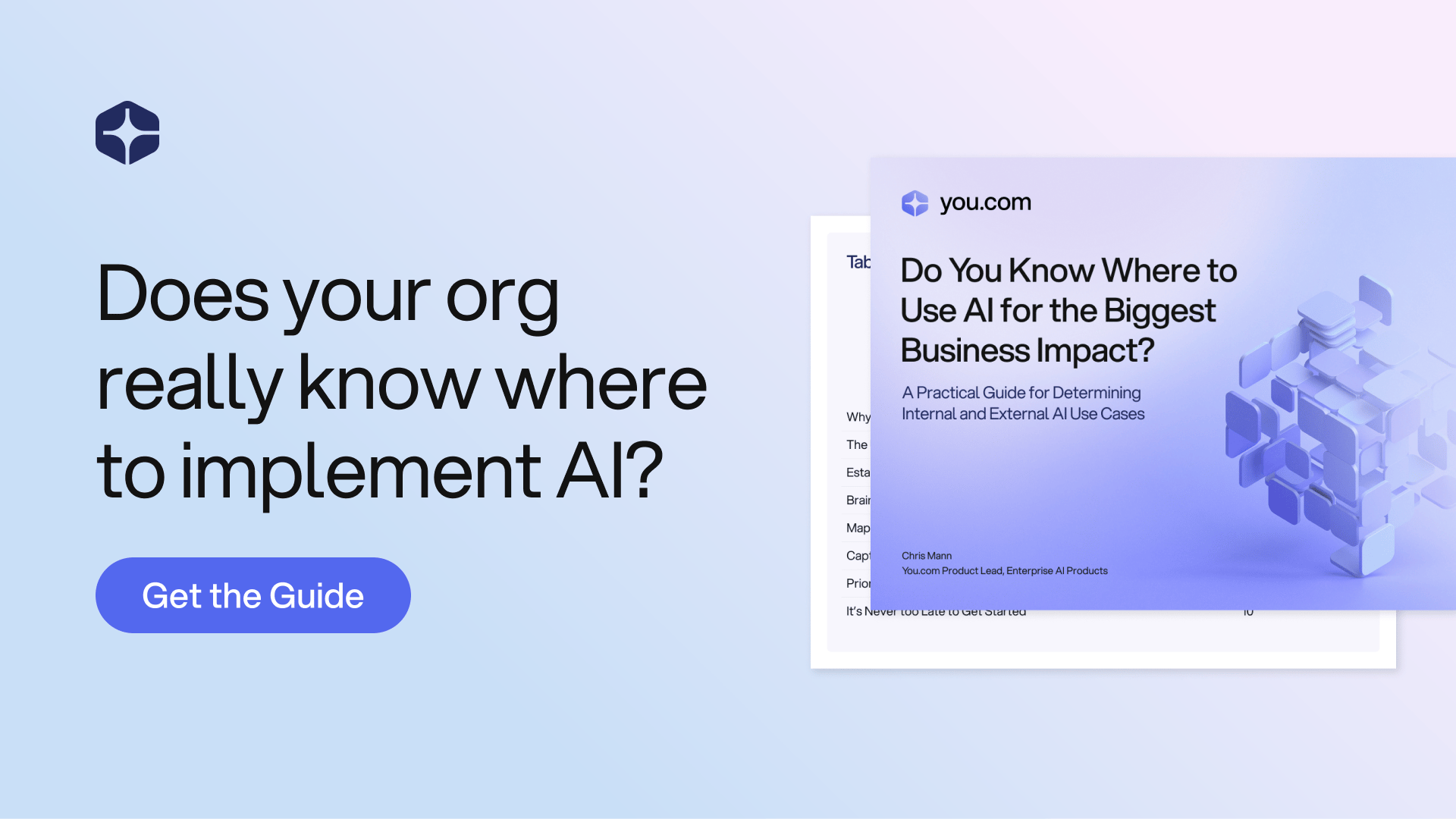
The Rundown: Successful AI transformation starts with deeply understanding your organization’s most critical use cases. This practical guide from You.com walks through a proven framework to identify, prioritize, and document high-value AI opportunities.
In this AI Use Case Discovery Guide, you’ll learn how to:
Map internal workflows and customer journeys to pinpoint where AI can drive measurable ROI
Ask the right questions when it comes to AI use cases
Align cross-functional teams and stakeholders for a unified, scalable approach
SAM ALTMAN
🔍 New Yorker surfaces memos behind Altman's firing

Image source: The New Yorker
The Rundown: The New Yorker published an investigation into Sam Altman, drawing on 100+ interviews, unseen memos from ex–chief scientist Ilya Sutskever, and notes from Dario Amodei — alleging a long-running pattern of deception at the top of OpenAI.
The details:
The reporting spans Altman's full career arc, including conflicts at his startup Loopt, Y Combinator partners trying to push him out, and the OAI board drama.
Sutskever's memos, built from 70 pages of Slack messages and HR docs, allege Altman misrepresented safety protocols to the board.
Amodei's private notes, kept for years, reach the same conclusion as Sutskever independently: "The problem with OpenAI is Sam himself.”
A Microsoft exec told the reporters there's "a small but real chance" Altman is "remembered as a Bernie Madoff, Sam Bankman-Fried-level scammer.”
Why it matters: While there is no ‘smoking gun’ in this piece, there is a vastly detailed and concerning pattern of deception that seems to span across Altman’s career. But for every detractor, you also have fiercely loyal supporters and coworkers – making the CEO of the nearly trillion-dollar AI giant one of the most polarizing figures in the world.
AI TRAINING
🤔 Stress test business ideas with Perplexity
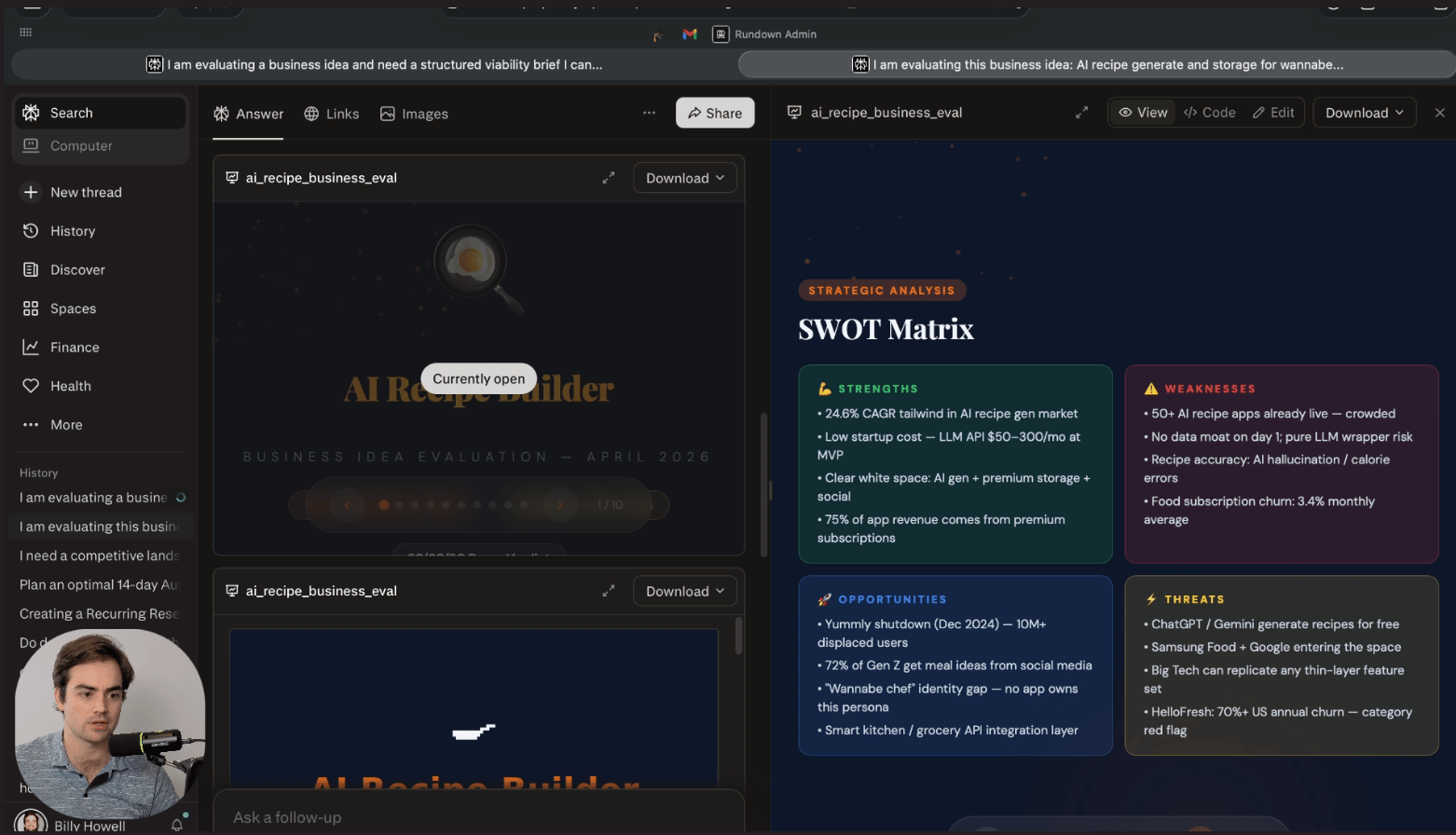
The Rundown: In this guide, you will learn how to use Perplexity Deep Research to stress test any business idea. Save the prompt below once and rerun it on every idea you have to see what’s feasible to build.
Step-by-step:
Open Perplexity and switch to Deep Research mode. This works on the free plan (5 queries/day) and is basically a hidden version of Perplexity Computer
Paste this prompt with your idea in the chat, hit run, and walk away for 5 to 6 minutes. Perplexity does the research and builds the slide deck in the same run
Save the prompt somewhere you will actually use it again, like in a dedicated Perplexity space
Then, every Saturday morning, take one idea off your list and run it. You will burn through a year of half-evaluated ideas in a month
Pro tip: Build variants. A 6-slide version for a co-founder pitch, a version that compares two ideas, or a 90-day MVP plan for ideas that already cleared validation.
PRESENTED BY IBM
⛳ IBM helps the Masters bring the fairway to every fan

The Rundown: There’s so much more to watching sports than watching. When every shot, by every player, on every hole produces more than 30 data points, the Masters and IBM turn golf into a data-rich, AI-powered immersive experience.
In the series, you'll explore:
Shots matter: Enhanced insights tell you why
Landing forecast: Score outcomes predicted by data and AI models
Round in 3 Minutes: Recap reels produced minutes after play
META
🚀 Wang's first Meta models getting ready to ship

Image source: Lovart / The Rundown
The Rundown: Meta is set to release the first AI models developed by Alexandr Wang’s Superintelligence team, with Axios reporting the company will make some of them available as open source — though the largest models will reportedly stay closed.
The details:
Meta and Wang’s codenamed ‘Avocado’ model was delayed in March over benchmark performances that fell short of rival models across the board.
The company is reportedly planning a consumer-focused, hybrid approach that includes both open and closed models for broad distribution across its apps.
Axios said Meta “knows its new models may not be competitive across the board” but “believes it will have areas of strength that appeal to consumers.”
Why it matters: This report doesn’t inspire confidence for a release that has already been delayed for poor performance, and after all the money spent and the high-profile new team brought in, another flop would be a painful one for a tech giant pushing desperately to enter the frontier AI race.
QUICK HITS
🛠️ Trending AI Tools
🔒 Incogni - remove your personal data from the web so scammers and identity thieves can’t access it. Use code RUNDOWN to get 55% off.*
🎥 VOID - Netflix’s open-source, physics-aware AI for video editing
🗣️ AI Edge Eloquent - Google’s free voice dictation app that runs fully offline
🎆 MAI-Image-2 - Microsoft’s image AI with upgraded realism and creativity
*Sponsored Listing
📰 Everything else in AI today
The Information reported that Sam Altman and OpenAI CFO Sarah Friar are not on the same page regarding IPO timing, though OpenAI denied the claim.
Iran's military singled out the $30B Stargate data center in Abu Dhabi as a target, publishing satellite footage and vowing to destroy U.S. infrastructure across the region.
OpenAI Head of Business Finance Chengpeng Mou posted new stats on ChatGPT’s use for healthcare questions, with the platform getting 2M insurance messages weekly.
Google released AI Edge Eloquent, a free iOS dictation app that cleans up raw speech into polished text entirely on-device.
Legion Health won approval to let its AI app directly refill psychiatric medications, the first time a state has greenlit AI to do the process without clinician oversight.
COMMUNITY
🤝 Community AI workflows
Every newsletter, we showcase how a reader is using AI to work smarter, save time, or make life easier.
Today’s workflow comes from reader Wayne F. in the United Kingdom:
"I use AI as my "Workhorse" to act as a one-person eLearning agency. I host SME lessons in NotebookLM as a reference library. Using Kolb’s Learning Cycle, I map complex 5-part Pentad scenarios on a digital canvas, replacing physical rooms once filled with hundreds of post-its and flip charts.
I maintain strict control via a command-driven workflow, only generating assets when I trigger "VEO" or "create-image" using Nano Banana and Veo 3.1. Finally, I use Perplexity with NotebookLM to audit my work against the QM Rubric, Moore’s Theory of Transactional Distance, and Kolb’s cycle. AI allows me to collapse an entire production team into a single pipeline where I am simultaneously Creator, Designer, and Lead Auditor."
How do you use AI? Tell us here.
🎓 Highlights: News, Guides & Events
Read our last AI newsletter: Anthropic tells OpenClaw users to pay up
Read our last Tech newsletter: Google’s Texas-sized data center problem
Read our last Robotics newsletter: UBTech offers $18M / year for AI scientist
Today’s AI tool guide: Stress test any business idea with Perplexity
Watch our last live workshop: The State of AI Presentation Tools in 2026
See you soon,
Rowan, Joey, Zach, Shubham, and Jennifer — the humans behind The Rundown
UBTech offers $18M a year for AI scientist
Read Online | Sign Up | Advertise
Good morning, robotics enthusiasts. Chinese robotics firm UBTech is offering up to $18M a year for a single AI scientist to help power its humanoid ambitions.
In a talent market where Silicon Valley giants have reportedly put $20M annual pay packages — and even $100M-plus incentives — on the table for elite AI researchers, the price of winning is starting to look absurd. Is this hype, or is the humanoid race getting very real?
In today’s robotics rundown:
UBTech offers $18M a year for one AI scientist
This tiny bot grows its own nervous system
Japan’s new workforce: robots wanted
New gig economy teaches humanoids how to work
Quick hits on other robotics news
LATEST DEVELOPMENTS
UBTECH
🤖 UBTech offers $18M a year for one AI scientist

Image source: UBTech
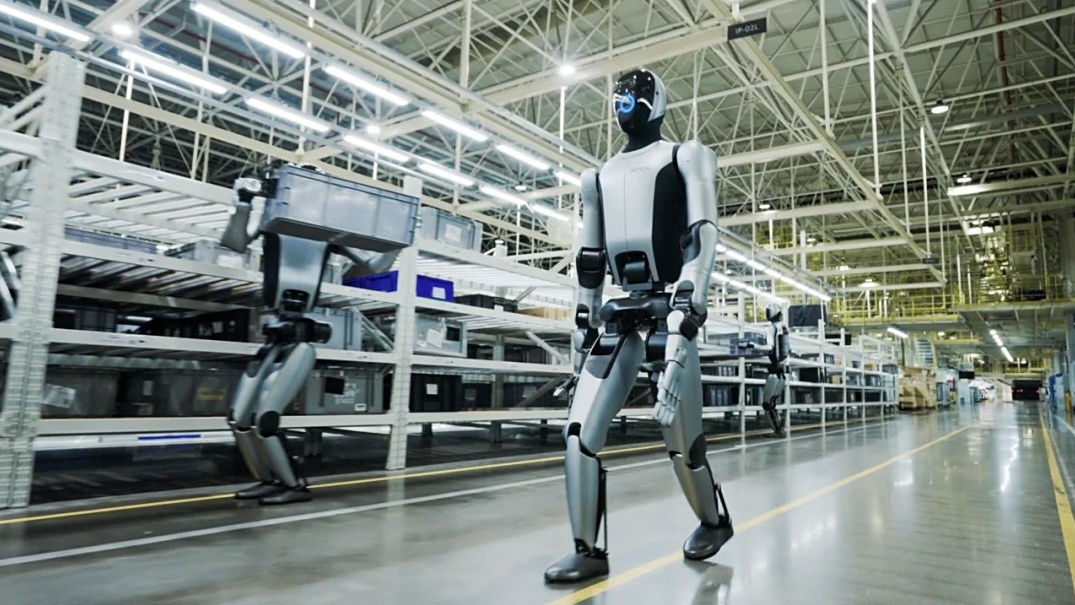
The Rundown: Chinese humanoid maker UBTech is offering up to $18M annually for a single chief AI scientist, turning one job listing into a neon sign for just how extreme the global humanoid race has become.
The details:
The role will lead “embodied intelligence” research, translating VLA and robotics models into dependable software for full-size industrial humanoids.
In January, Airbus deployed UBTech’s Walker S2 robots on aircraft production lines, proving these machines can handle real factory floors, not just demos.
The company says full-size humanoid revenue has surged, with sales climbing more than 50% and claiming a growing slice of total income.
By dangling CEO-level pay, UBTech looks to be turning a single AI scientist role into a spectacle meant to signal dominance while attracting talent.
Why it matters: UBTech is racing against OpenAI, Google DeepMind, Tesla’s humanoid push, and fast‑moving rivals like Geekplus-W — backed by Beijing’s 2026 robotics priority and Geekplus-W’s February hire of Tsinghua’s Dr. Zhao Hao — making its blockbuster talent grab a matter of survival.
BIOTECH
🔬 This tiny bot grows its own nervous system

Image source: Haleh Fotowat
The Rundown: Researchers at Tufts and Harvard just created “neurobots,” microscopic living machines built from frog cells that develop their own nervous systems, reorganizing their bodies and behavior in ways evolution never produced.
The details:
These engineered neurobots are tiny living robots assembled from frog cells that autonomously grow rudimentary nervous systems from scratch.
As neurons spread through each bot, they wire directly into the outer cell layer and begin influencing how the organism moves.
Unlike earlier frog-cell bots, neurobots swim with greater intensity and display varied, unpredictable movement patterns rather than looping the same motion.
Once the nervous system emerges, gene activity shifts — switching on pathways associated with brain formation and even eye development.
Why it matters: Neurobots demonstrate that a cluster of frog cells can self-organize not only a functional body but a nervous system capable of reshaping that body’s behavior. The implications are early-stage but could hint at a coming class of engineered life that thinks and repairs like tissue but deploys like hardware.
JAPAN
💼 Japan’s new workforce: robots wanted

Image source: Ideogram / The Rundown
The Rundown: With a working-age population that makes up just 59.6% of the country’s total, Japan is reportedly running out of humans to do the work. Robots are filling roles no one is left to take, Techcrunch reports.
The details:
Japan faces such an extreme labor shortage that companies are rolling out robots not to cut jobs, but because there are no workers left to hire.
Robots are filling frontline roles in convenience stores, logistics, and hospitality, from stocking shelves and cleaning floors to delivering room service.
Elderly care facilities are adopting robotic assistants to lift patients, monitor vital signs, and provide companionship in a rapidly aging society.
Policymakers and business leaders are reframing automation as critical economic infrastructure rather than a threat to employment.
Why it matters: Japan is becoming a real-time lab for how advanced economies can survive when demographics make full employment mathematically impossible, with nearly a third of citizens already over 65. How it balances robots, regulation, and human dignity could set expectations for aging countries everywhere.
HUMANOIDS
🤖 New gig economy teaches humanoids how to work
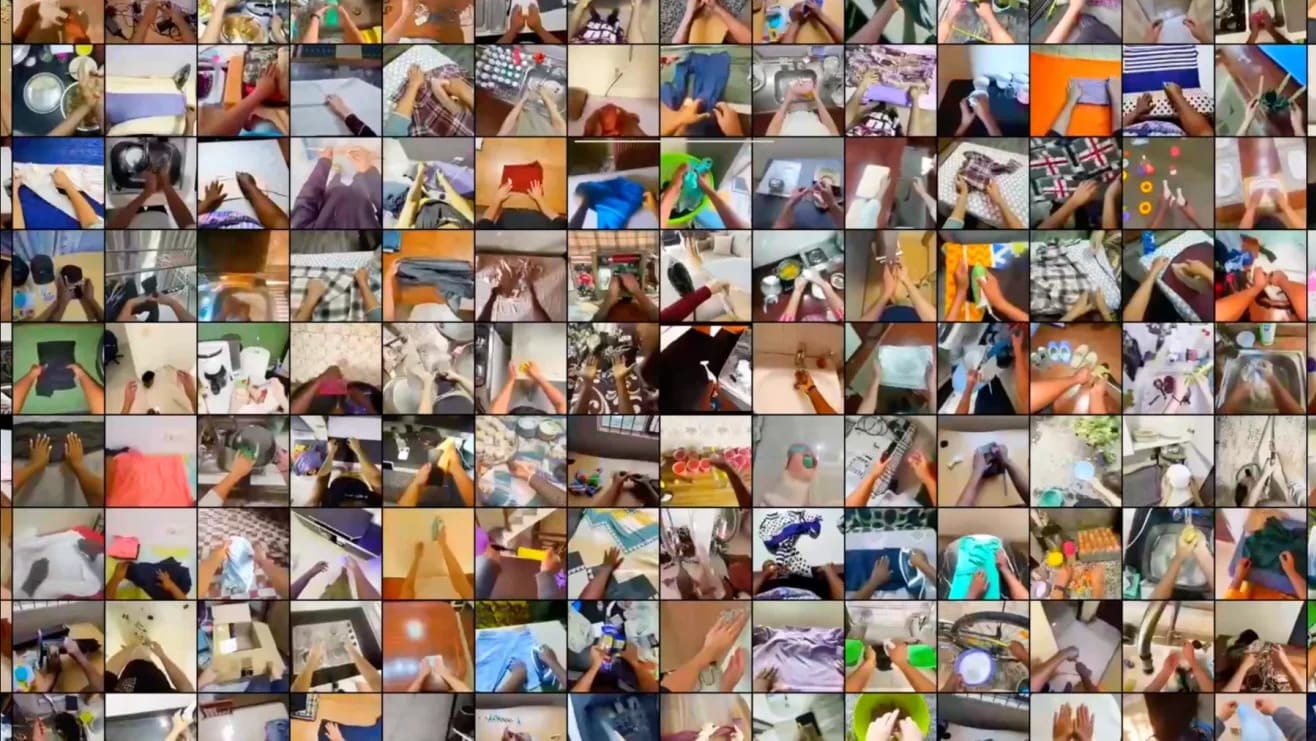
Image source: Micro1
The Rundown: Around the world, gig workers are strapping cameras to their chests and filming themselves doing dishes, folding laundry, and stocking shelves for roughly $15 an hour — all to train the robots that may one day replace them.
The details:
Palo Alto startup Micro1 has recruited thousands of "robotics generalists" across 50+ countries to film tasks for humanoid training datasets.
Encord and Scale AI run robotics programs that pay people to record manipulation tasks, claiming up to 100K hours of robot-training video.
DoorDash has also paid drivers to film themselves doing chores, turning its workforce into an embodied-AI data pipeline.
Stealth robotics startups are reportedly posting Craigslist-style ads offering $10–$20 an hour for people to record everyday tasks on their phones.
Why it matters: Training humanoids on human movement is the robotics equivalent of what scraped text did for LLMs: source the raw material cheaply, capture the value at the top. Meanwhile, workers in Nigeria and India filming themselves folding laundry are training machines that could one day automate the very jobs they rely on.
QUICK HITS
📰 Everything else in robotics today
Rivian spinoff, Also, raised $200M at a $1B valuation and partnered with DoorDash to build autonomous last‑mile delivery vehicles.
Waymo began offering robotaxi pickups and drop-offs at San Antonio International Airport — its first airport service in Texas and fourth major airport overall.
Uber and WeRide began fully driverless, fare‑charging robotaxi operations in several districts of Dubai via the Uber app.
San Francisco startup NomadicML raised $8.4M at a $50M valuation to grow its platform that converts autonomous‑vehicle video into training data for fleet monitoring.
Researchers developed pasta-shaped, air-powered artificial muscles that let robots lift up to 100x their own weight.
A fleet of Maximo construction robots installed 100 megawatts of utility-scale solar capacity, marking one of the largest robotic solar deployments to date.
Robot “police dogs” are patrolling Atlanta streets to deter crime, sparking debate over surveillance, civil liberties, and the privatization of law-enforcement tech.
A homemade solar-powered quadcopter set an unofficial multirotor endurance record by flying for over five hours using 28 solar panels and a small backup battery.
Georgia Tech researchers built tiny vibration-powered robot swarms that can latch, release, and reorganize without any electronics or batteries.
Cornell researchers developed MirrorBot, a small robot with dual mirrors that uses shared reflections and eye contact to spark conversations and social connections.
U.S. researchers created a new silicone actuator that stays resilient in extreme cold, heat, and near-vacuum, showing promise for soft robots in space missions.
Chinese researchers developed a new soft optical sensor that lets a robot hand sense finger positions precisely enough to perform delicate, human-like tasks.
U.S.-based entertainment startup Dollhouse unveiled Belmont, a cute robot butler that can be rented to roam parties serving guests snacks and drinks.
COMMUNITY
🎓 Highlights: News, Guides & Events
Read our last AI newsletter: Anthropic tells OpenClaw users to pay up
Read our last Tech newsletter: Google’s Texas-sized data center problem
Read our last Robotics newsletter: Waymo hits 500k weekly rides
Today’s AI tool guide: How to take AI notes on phone calls
Watch our last live workshop: The State of AI Presentation Tools in 2026
See you soon,
Rowan, Joey, Zach, Shubham, and Jennifer — The Rundown’s editorial team
No matching search results
Try using different keywords, double-check your spelling, or explore related categories.
Stay Ahead on AI.
Join 2,000,000+ readers getting bite-size AI news updates straight to their inbox every morning with The Rundown AI newsletter. It's 100% free.