Get the latest AI news, understand why it matters, and learn how to apply it in your work — all in just 5 minutes a day. Join over 2,000,000+ subscribers.

The deep-sea luxury race is back
Read Online | Sign Up | Advertise

Good morning, tech enthusiasts. China wants to take tourists to sunless depths: a state-backed deep-sea submersible is being built to carry paying passengers 1K meters (3,280 ft.) down into the ocean’s eerie “Midnight Zone.”
Less than two years after OceanGate’s Titan turned deep-sea tourism into a global cautionary tale, China is betting the deep still holds plenty of appeal, at least for anyone rich enough to buy a window seat.
In today’s tech rundown:
China eyes deep-sea tourism with new sub
The FCC bans all foreign-made routers
Alphabet brings drone delivery to the Bay Area
Sam Altman’s fusion future is getting serious
Quick hits on other tech news
LATEST DEVELOPMENTS
DEEP SEA TECH
🧜🏽♀️ China eyes deep-sea tourism with new sub

Image source: Ideogram / The Rundown
The Rundown: China is developing a deep-sea submersible that can carry paying passengers up to 1K meters (3,280 ft.) deep — a state-backed entry into the ultra-luxury “extreme travel” market that’s been reshaped by the 2023 OceanGate incident.
The details:
Engineers at the China Ship Scientific Research Centre in Wuxi have finalized the design of a 4-person vessel, with a prototype expected by year-end.
Commercial dives are targeted before 2030, with a panoramic viewing dome designed to offer sightseeing in what oceanographers call the Midnight Zone.
At 1K meters, pressure hits at 100x of the surface, demanding zero-tolerance hull engineering, shatter-resistant viewports, and fail-safe life support.
The OceanGate Titan disaster, which killed five, was attributed to flawed engineering, insufficient testing, and a rejection of industry safety standards.
Why it matters: The deep-sea tourism market didn’t end with OceanGate but rather regrouped. China’s sub joins an elite circuit that’s looking to send the wealthy to the furthest depths. This includes U.S.-based Triton Submarines, which is developing a Titanic-rated vessel, and U-Boat Worx, building underwater cars and “party subs.”
TRADE WARS
🚫 The FCC bans all foreign-made routers

Image source: Ideogram / The Rundown
The Rundown: The FCC just added all new foreign-made home routers to its national security “covered” list, effectively banning them from the U.S. market unless manufacturers can obtain a security exemption — a high bar few are expected to clear.
The details:
Routers already in homes can stay, and already approved foreign models can keep shipping for now, but the pipeline for new foreign hardware is largely shut.
The move particularly targets Chinese-linked manufacturers after U.S. intelligence tied compromised routers to cyberattacks on critical infrastructure.
TP-Link, the Chinese brand that dominates Amazon’s bestseller list, had already drawn scrutiny following a string of high-profile intrusions.
Why it matters: Coming on the heels of the drone ban, the FCC’s move hands Washington sweeping control over the hardware that carries most U.S. internet traffic. For consumer-router supply chains built around overseas (and especially Chinese) manufacturing, the pressure to reconfigure is now acute.
WING
🪽 Alphabet brings drone delivery to the Bay Area

Image source: Wing
The Rundown: Alphabet’s drone delivery unit Wing is bringing its fleet to the San Francisco Bay Area later this year, partnering with Walmart and DoorDash to offer residential deliveries across one of the country’s most tech-forward markets.
The details:
Wing says it has already logged more than 750K deliveries across Houston, Atlanta, Charlotte, Virginia, as well as Australia.
A national last-mile network is the goal, with Wing pitching its drones as faster and cleaner than delivery vans.
The Walmart partnership is set to scale to more than 270 stores by 2027, with DoorDash adding consumer reach on the platform side.
Urban airspace complexity and FAA regulatory constraints remain the biggest variables in how fast Wing and its rivals can actually expand.
Why it matters: After years of suburban pilots, Alphabet is making a direct play for commercial relevance for its moonshot drone program, just as the competitive pressure is heating up. Zipline just snapped up an extra $200M, and Amazon’s Prime Air is rolling out across the U.K. in 2026.
HELION
⚡️ Sam Altman’s fusion future is getting serious

Image source: Helion Energy
The Rundown: OpenAI CEO Sam Altman has resigned as chair of Helion Energy, the fusion startup he has backed for a decade, as the company enters early talks on a deal that could supply a significant share of OpenAI’s future electricity needs.
The details:
Helion and OpenAI are reportedly in early talks about a deal that could give OpenAI rights to 12.5% of Helion’s electricity output if the fusion tech pans out.
An early framework envisions Helion delivering up to about 5 gigawatts by 2030 and 50 gigawatts by 2035 from thousands of 50-megawatt reactors.
The company, which counts Altman among its backers, has raised $425M and already holds power agreements with Microsoft and steelmaker Nucor.
Helion’s system is designed to capture energy directly from expanding plasma via magnetic coils, bypassing steam turbines that most power plants rely on.
Why it matters: Altman is stepping away from the board to remove potential conflicts as Helion pursues a commercial relationship with OpenAI — the same move he made at nuclear startup Oklo. The pattern is deliberate: tie frontier AI’s future to a new generation of low-carbon energy sources that don’t fully exist yet.
QUICK HITS
📰 Everything else in tech today
Apple plans to introduce Google‑style search ads in Apple Maps as soon as this summer as part of a broader push to grow its services revenue, Bloomberg reports.
Samsung’s new Galaxy S26 phones can now use their Quick Share feature to send files directly to iPhones, iPads, and Macs via Apple’s AirDrop.
OnlyFans owner Leonid Radvinsky died of cancer at 43 while reportedly in talks to sell a majority stake in the company at a roughly $5.5B valuation.
Prediction platforms Kalshi and Polymarket are tightening trading rules by barring insiders from betting, as senators push to ban sports-style bets on prediction markets.
London fintech firm Revolut posted a record 2025 pretax profit of $2.3B on $6B in revenue, sharply higher than 2024, as it gears up for a big U.S. expansion.
Russia launched 16 Rassvet broadband satellites to low-Earth orbit, marking the start of a Starlink-style domestic internet constellation positioned as a rival to SpaceX.
Nintendo is cutting planned Switch 2 production by more than 30%, trimming this quarter’s output from 6M to 4M consoles after weaker-than-expected demand.
A French Navy officer jogging on the deck of the aircraft carrier used Strava to log his run, inadvertently exposing the warship’s precise location in the Mediterranean.
Sony is close to a $1B deal to sell a majority stake in its home entertainment business, including TVs, to Chinese rival TCL.
Singapore-based super app Grab agreed to buy Delivery Hero’s Foodpanda food-delivery operations in Taiwan for $600M in cash.
COMMUNITY
🎓 Highlights: News, Guides & Events
Read our last AI newsletter: Anthropic's Claude gets remote control
Read our last Tech newsletter: Amazon’s secret phone project
Read our last Robotics newsletter: OpenClaw craze comes to robots
Today’s AI tool guide: Free up space on your computer with Claude
RSVP to next workshop on Thursday @ 2PM EST: Intro to Vibe Coding pt. 3
See you soon,
Rowan, Joey, Zach, Shubham, and Jennifer — The Rundown’s editorial team
Anthropic's Claude gets remote control
Read Online | Sign Up | Advertise

Good morning, AI enthusiasts. Remote agents like OpenClaw are all the rage right now, and Anthropic's shipping spree is quickly giving Claude the building blocks to become one itself.
Claude can now control a Mac directly, clicking and handling tasks while you manage everything from your phone — the latest in a string of releases transforming the assistant from a chatbot into a full-time digital employee.
In today’s AI rundown:
Anthropic ships remote computer use
Luma AI’s new image model thinks as it generates
Free up space on your computer with Claude
Zuck ramps up Meta’s internal AI agent use
4 new AI tools, community workflows, and more
LATEST DEVELOPMENTS
ANTHROPIC
🚀 Anthropic ships remote computer use
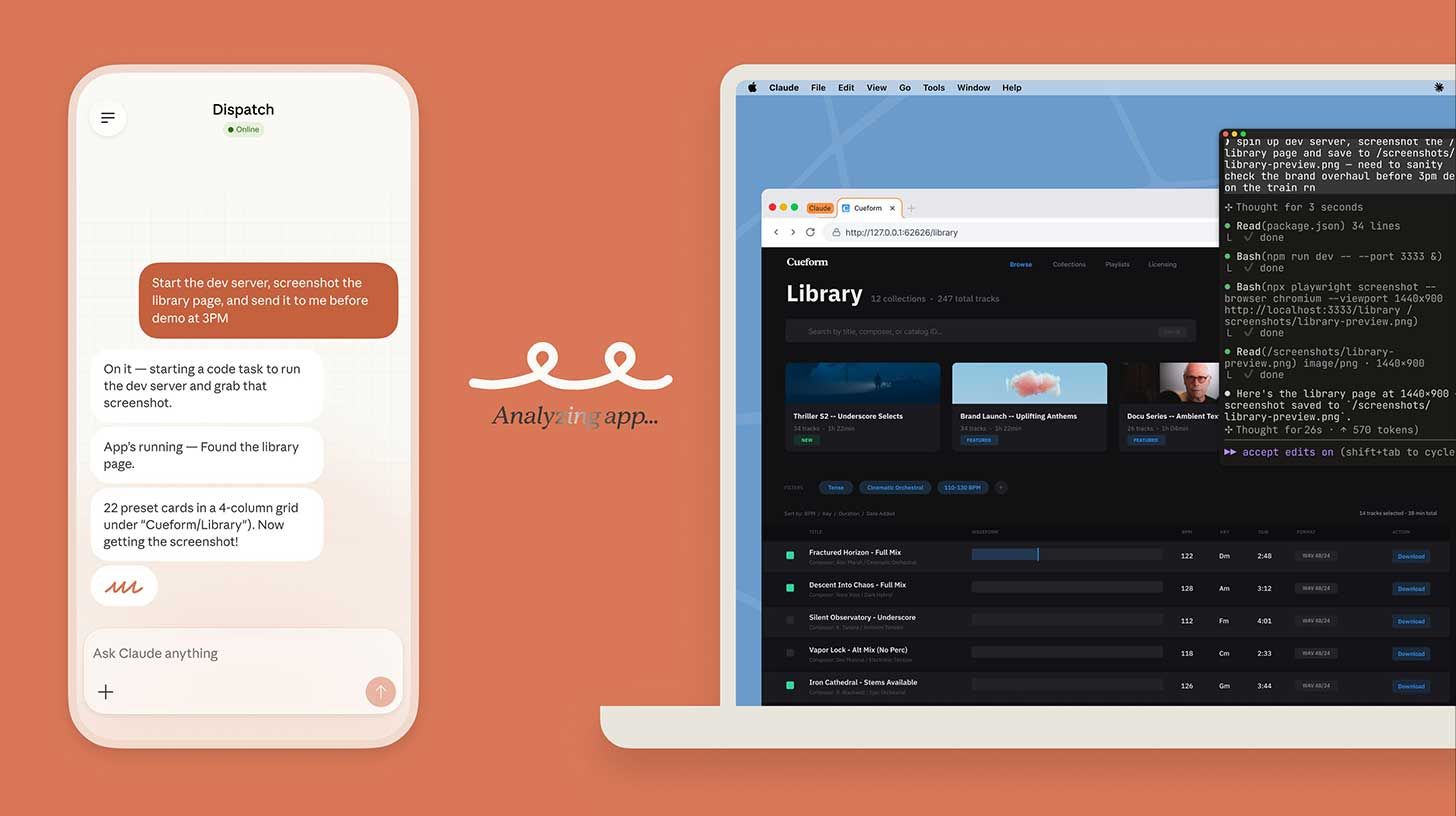
Image source: Anthropic
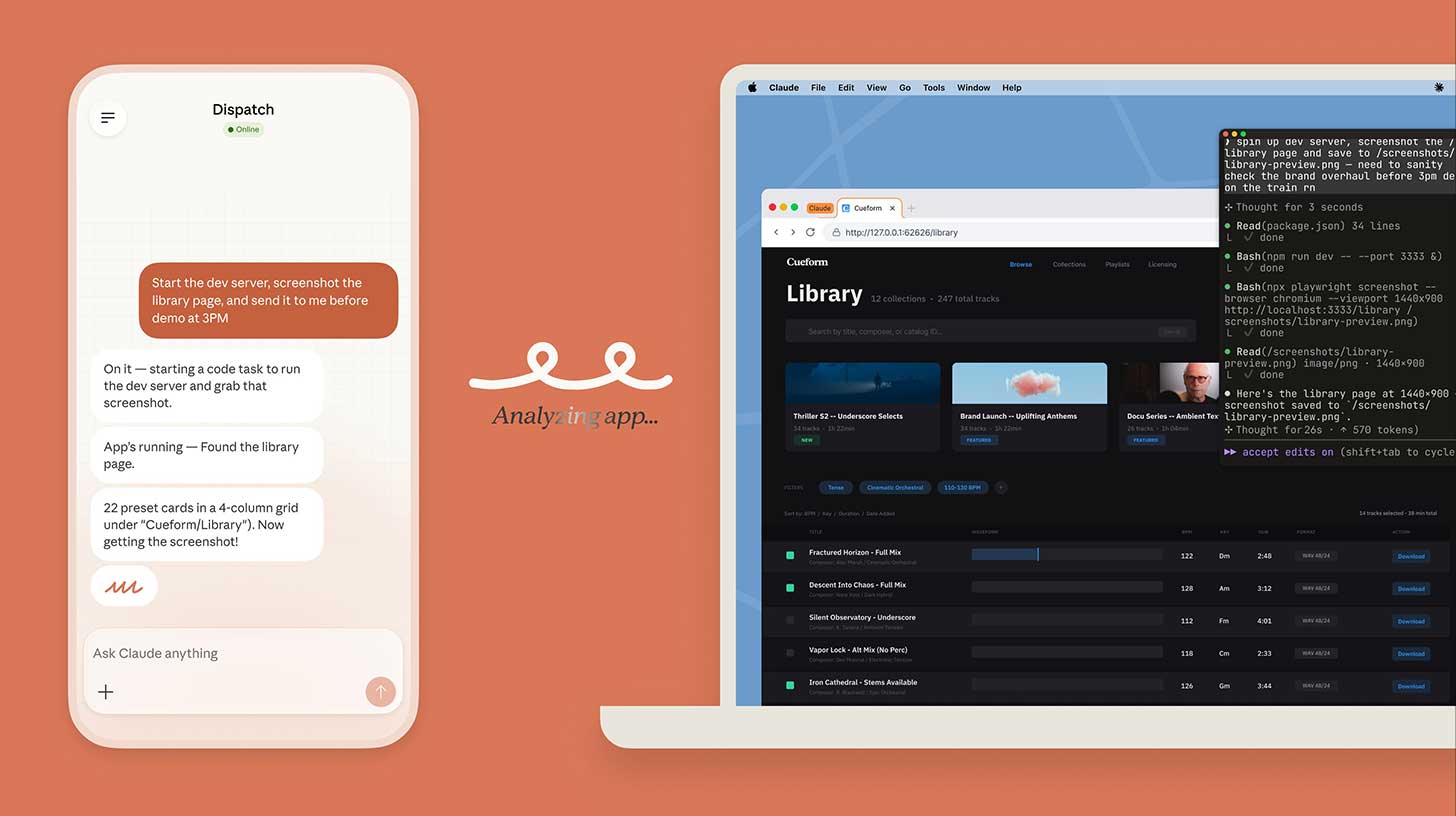
The Rundown: Anthropic just released a research preview that hands Claude direct control of your desktop — letting it click, type, and navigate across any app on your Mac while you step away, with phone-based task assignment through Dispatch.
The details:
The newly released Dispatch turns the combo into a remote setup, allowing users to fire off a task from mobile and letting Claude handle it on the computer.
The system is built to avoid screen control when possible, checking for direct app integrations and browser access before resorting to clicking.
The feature is only available to macOS users on Pro or Max plans currently via Cowork and Claude Code, with a Windows version also in the pipeline.
Anthropic acquired computer use startup Vercept in February, with the new release marking the team’s first product launch after just four weeks.
Why it matters: Anthropic’s Alex Albert puts it well, saying, “the future where I never have to open my laptop to get work done is becoming real very fast”. While losing OpenClaw to OAI was considered by many to be a miss, the recent flurry of features has shown the building blocks forming to turn Claude into its own remote agent.
TOGETHER WITH ORACLE
😵💫 Why your AI has amnesia and how to fix it
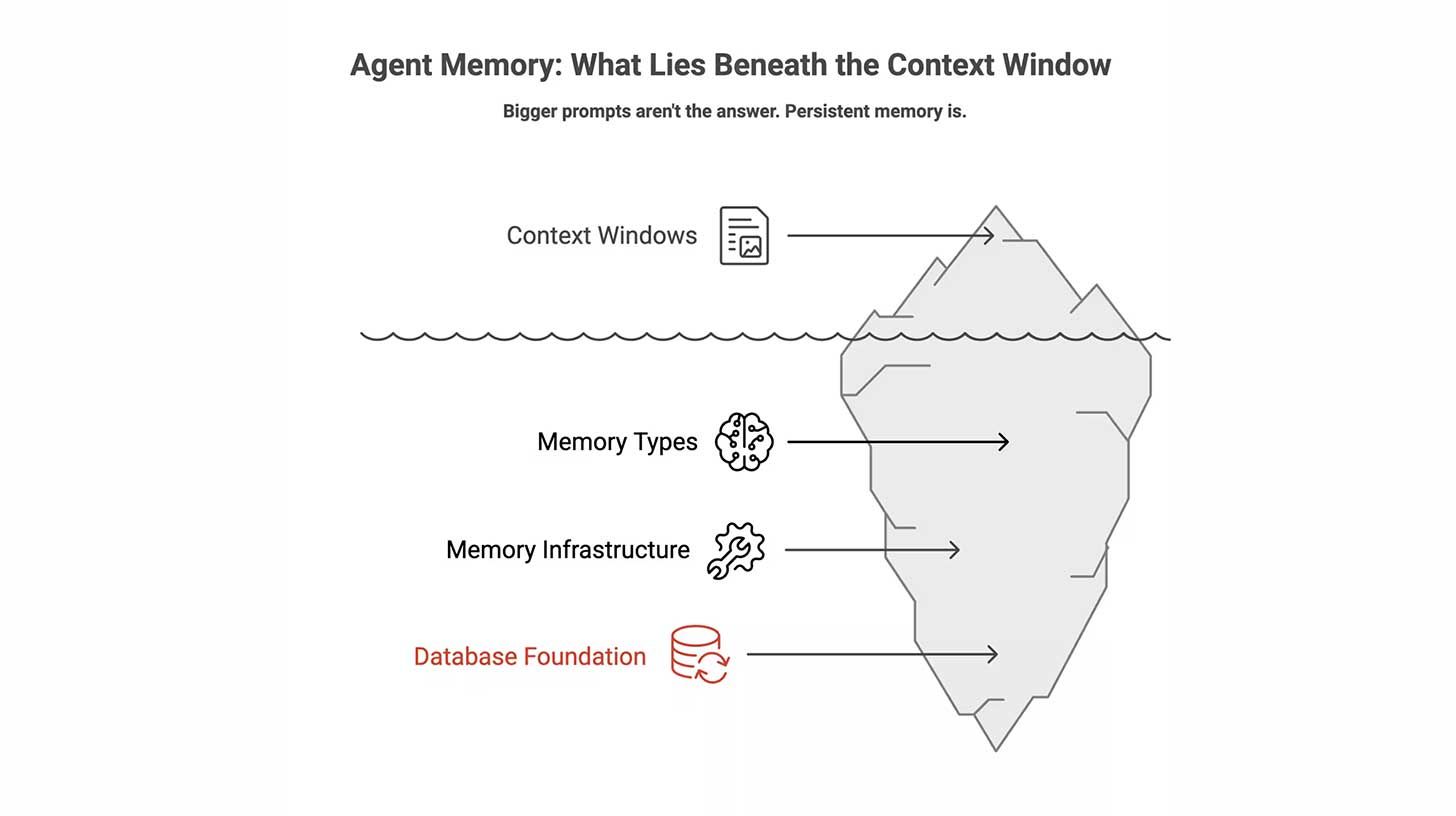
The Rundown: The race to create an amazing Agentic AI experience is hitting a wall because of AI’s memory gap between sessions. Oracle shares how proper memory infrastructure in a ‘convergent database’ is the key to a competitive advantage creating an authentic Agentic AI digital partner.
In this blog, you’ll find:
Why context windows fall short for agent memory
Technical practices for agent memory competitive advantage
Code snippets and the notebook to get started
LUMA LABS
🎨 Luma AI’s new image model thinks as it generates

Image source: Luma AI
The Rundown: Luma AI rolled out Uni-1, an image model that processes text and visuals through the same pipeline — thinking through what it's asked to do before and while it creates, with the company calling this approach "path to general intelligence."
The details:
Uni-1 runs on the same type of architecture as GPT Image 1.5 and Nano Banana Pro, processing text and images in a single pipeline instead of diffusion.
The model also features real-world understanding, enabling creative decisions and use cases such as infographics, manga, and specific aesthetics.
In testing, Uni-1 topped human preference rankings for style, editing, and reference-based work, trailing only Nano Banana Pro in text-to-image ELO.
Uni-1's API price of ~$0.09 / image at 2K resolution undercuts Nano Banana Pro's $0.134 rate by roughly a third, though the API is waitlist-only for now.
Why it matters: Luma made its name in video, so an image model is a new direction. If the same system can extend into video, voice, and interactive worlds as Luma is teasing, Uni-1 could set the foundation for one model that can do it all creatively — moving into the creative agent territory that users are starting to expect.
AI TRAINING
💾 Free up space on your computer with Claude

The Rundown: In this guide, you will learn a simple way to use Claude as a storage-cleanup copilot. If you use AI to code, you’re likely eating up a ton of storage space without even knowing it.
Step-by-step:
Start Claude/Claude Code and prompt: “I need to free up Mac storage, but I don’t want to delete anything important. Ask me about my tools, find storage culprits, and help me investigate before suggesting any cleanup commands”
Answer the questions and ask Claude to rank the culprits by size and risk. It should give you terminal commands to check the size of top storage-eaters
Work through each category. Have Claude explain what the files are, why they get large, what is safe to remove, and what should be reviewed manually
Once identified, prompt: “Start with the lowest-risk cleanup wins first. For each one, explain what would be removed, how much space it might save, and anything I should double-check before deleting it”
Pro tip: Ask Claude to turn this into a reusable skill file that you can feed into any AI.
PRESENTED BY ORKES
🏗️ The 4-layer stack every AI agent needs
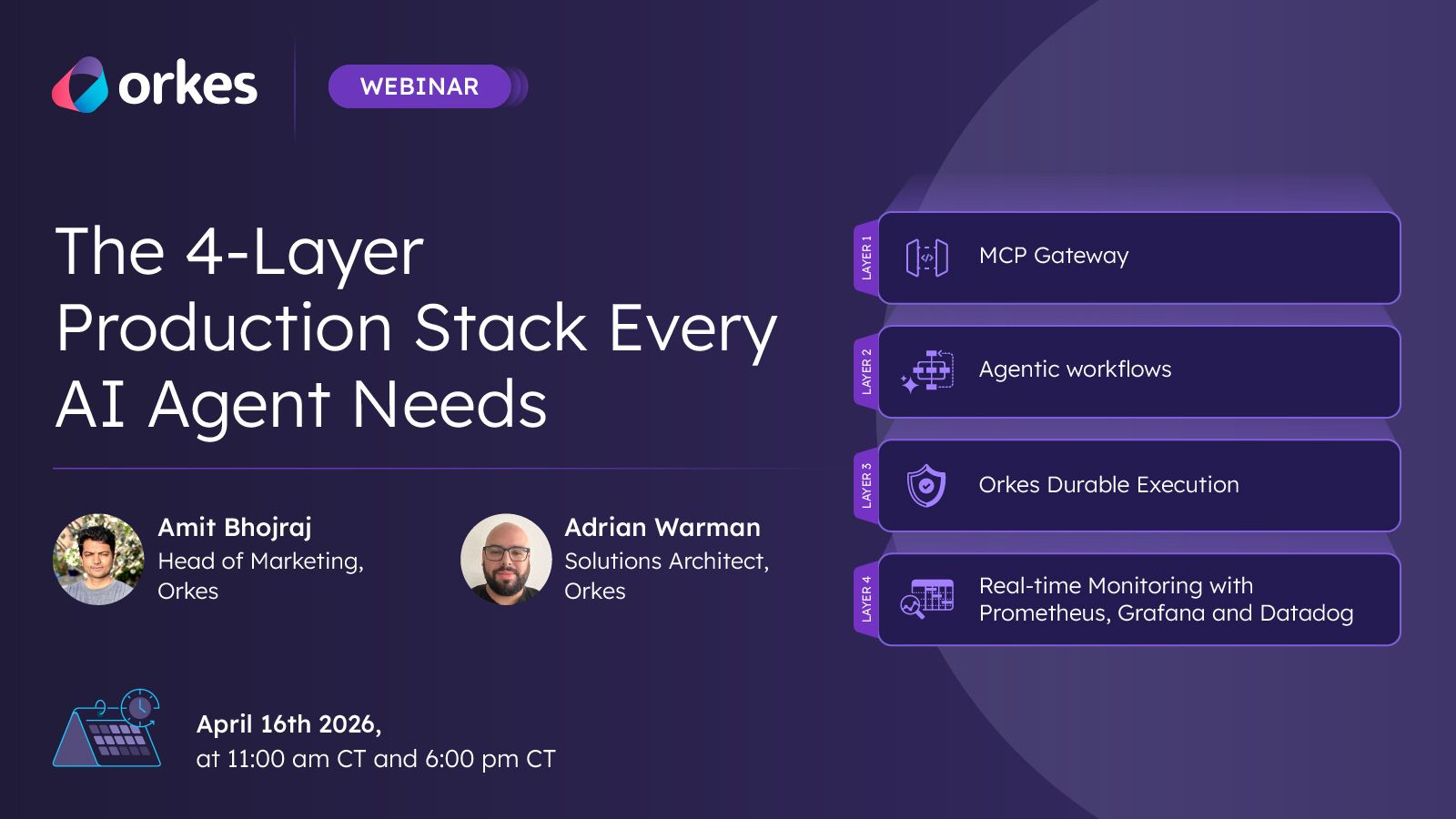
The Rundown: Orkes is the agentic orchestration platform that powers scalable, reliable, and agentic workflows across modern applications — backed by Conductor OSS, originally built at Netflix. Join our upcoming webinar to see how modern engineering teams are building production-ready agents.
The April 16th session will cover:
How to expose APIs and services as agent tools through an MCP gateway
A framework for composing, iterating, and executing agent workflows on a fault-tolerant orchestration layer
Best practices for tracking, auditing, and governing agent behavior in production
Register now for the April 16th webinar.
META
🤖 Zuck ramps up Meta’s internal AI agent use
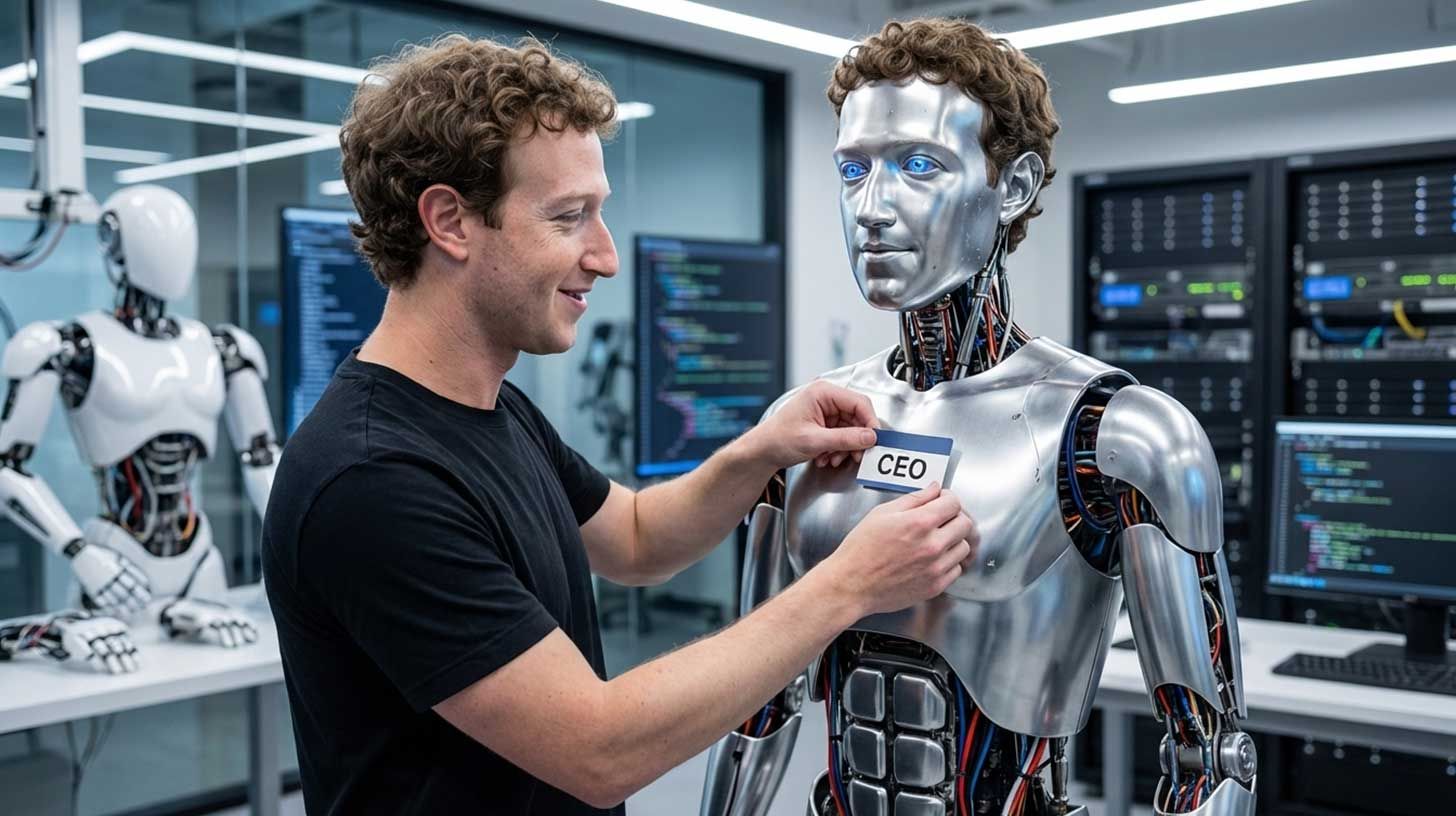
Image source: Lovart / The Rundown
The Rundown: Mark Zuckerberg is creating a personal "CEO agent" to shortcut the chain of command when he needs quick answers, according to the WSJ, coming as part of a company-wide mandate that now factors AI usage into performance reviews.
The details:
Zuck's agent is still in development, but already handles tasks like pulling answers that typically require going through multiple layers of Meta's org chart.
Staffers have spun up custom agent tools, including one called "My Claw" that reads their work files and negotiates with coworkers' bots directly.
Another Claude-powered internal tool called "Second Brain" acts as an AI chief of staff, pulling answers from any internal document on demand.
Zuckerberg had previously courted OpenClaw creator Peter Steinberger, and also acquired Chinese agentic platform Manus in December.
Why it matters: Meta may have tens of thousands of employees, but that isn’t stopping the newer parts of the org from trying to move as fast and lean as some of its more AI-native rivals. With Zuck seemingly very invested in the AI agent boom, Meta’s integration of Manus will be one of the more interesting implementations to watch for.
QUICK HITS
🛠️ Trending AI Tools
🔒 Incogni - remove your personal data from the web so scammers and identity thieves can’t access it. Limited time offer: use code RUNDOWN to get 58% off*
🎨 Uni-1- Luma's unified model that reasons and generates across text, images
🚀 Stitch - Google’s newly updated UI creation tool for “vibe design”
🦞 NemoClaw - Nvidia's open-source security layer for OpenClaw agents
*Sponsored Listing
📰 Everything else in AI today
Nvidia CEO Jensen Huang appeared on the Lex Fridman Podcast, saying, “I think it’s now. I think we’ve achieved AGI” when asked about his intelligence timelines.
Apple announced its WWDC 2026 event will run June 8-12, teasing ‘AI advancements’ that are speculated to include its Siri overhaul powered by Google Gemini.
OpenAI is reportedly guaranteeing a 17.5% minimum return to lure private equity firms into its enterprise joint venture — outbidding Anthropic as both prep for IPOs.
Agentic personal software builder Dreamer announced it is licensing its tech to Meta, with its full team joining Meta Superintelligence Labs in an undisclosed deal.
OpenAI hired former Meta VP of global clients Dave Dugan to run its ad sales, coming as the company continues its initial advertising push into ChatGPT.
COMMUNITY
🤝 Community AI workflows
Every newsletter, we showcase how a reader is using AI to work smarter, save time, or make life easier.
Today’s workflow comes from reader Mark C. in Toronto, Canada:
"I was in a vehicle accident and was assessed to be at fault. I uploaded my dash cam video to Gemini and prompted it to use the persona of a skilled traffic lawyer in my jurisdiction and to defend me.
It produced a detailed 3-page letter to my insurance company, quoting numerous sections of legislation and associating each with time stamps on the video. I was reassessed to be not at fault."
How do you use AI? Tell us here.
🎓 Highlights: News, Guides & Events
Read our last AI newsletter: Elon Musk’s ‘Terafab’ AI chip factory
Read our last Tech newsletter: Amazon’s secret phone project
Read our last Robotics newsletter: OpenClaw craze comes to robots
Today’s AI tool guide: Free up space on your computer with Claude
RSVP to next workshop on Thursday @ 2PM EST: Intro to Vibe Coding pt. 3
See you soon,
Rowan, Joey, Zach, Shubham, and Jennifer — the humans behind The Rundown


OpenClaw craze comes to robots
Read Online | Sign Up | Advertise

Good morning, robotics enthusiasts. China can’t get enough of OpenClaw. The open-source AI agent that colonized laptops is now leaping into robots — powering Unitree humanoids, brand-new home bots, and industrial arms that respond to spoken commands.
Beijing loves the momentum, but not everyone is convinced OpenClaw is ready for physical AI.
In today’s robotics rundown:
China is wiring robots with OpenClaw
Amazon nabs stair-climbing bot startup Rivr
Unitree’s IPO will test the humanoid hype
This home robot cleaner comes with a human
Quick hits on other robotics news
LATEST DEVELOPMENTS
OPENCLAW
🦞 China is wiring robots with OpenClaw

Image source: Ideogram / The Rundown
The Rundown: OpenClaw, the open-source AI agent taking over laptops, is now being integrated into robots in China — and Beijing regulators are already worried that it could expose data or behave unpredictably, Business Insider reports.
The details:
Developers are integrating OpenClaw into Unitree’s G1, enabling it to interpret natural language commands and navigate physical spaces in real time.
Chinese robotics giant Ecovacs just unveiled a home bot dubbed Bajie, powered by OpenClaw, at a consumer electronics expo in Shanghai.
AgileX Robotics published a guide for integrating OpenClaw with its Nero 7-axis robotic arm, letting users steer it through plain-language commands.
Regulators and state media have warned that OpenClaw can expose private data, trigger cyber risks, or take the wrong action if it gets too much access.
Why it matters: China has already surpassed the U.S. in OpenClaw adoption, and the gap is widening as Beijing pushes to diffuse AI across 90% of industries by 2030. But robots are a different category of risk than laptops, and Beijing warns that the same autonomy that makes OpenClaw useful also makes it risky.
AMAZON & RIVR
📦 Amazon nabs stair-climbing bot startup Rivr
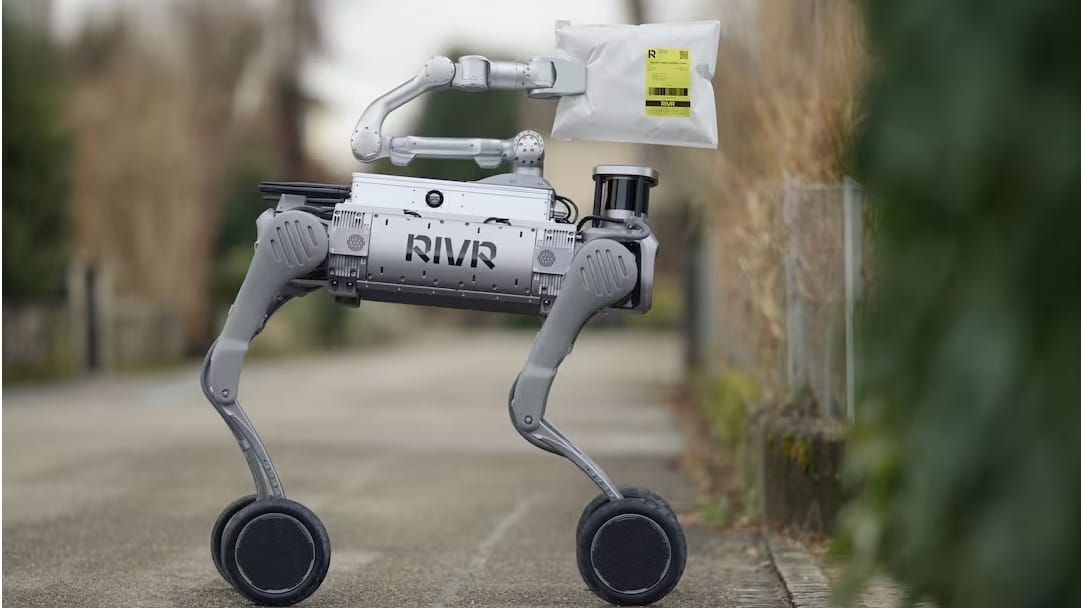
Image source: Rivr
The Rundown: Amazon just scooped up Rivr, the Zurich-based startup behind a stair-climbing delivery robot, to push deeper into doorstep logistics and physical AI. The terms of the deal were not disclosed.
The details:
Rivr CEO and founder Marko Bjelonic called Rivr a “dog on roller skates,” a quirky shorthand for its four-legged, wheeled delivery bot built for city streets.
The company had already been working with Veho on a pilot in Austin last year, with Bjelonic saying he hoped to grow the fleet to 100 bots by 2026.
Amazon was already in Rivr’s corner, backing its 2024 seed round; the startup had raised $25M in total and was last valued at $100M.
Why it matters: Rivr gives Amazon a ready-made last-mile robotics testbed, but the bigger question is whether it can turn a niche delivery-bot startup into a scalable edge over rivals like Serve or Coco. For Amazon, the acquisition could shave time and labor off the hardest part of delivery: stairs, curbs, and the final stretch to the door.
UNITREE
🔥 Unitree's IPO will test the humanoid hype
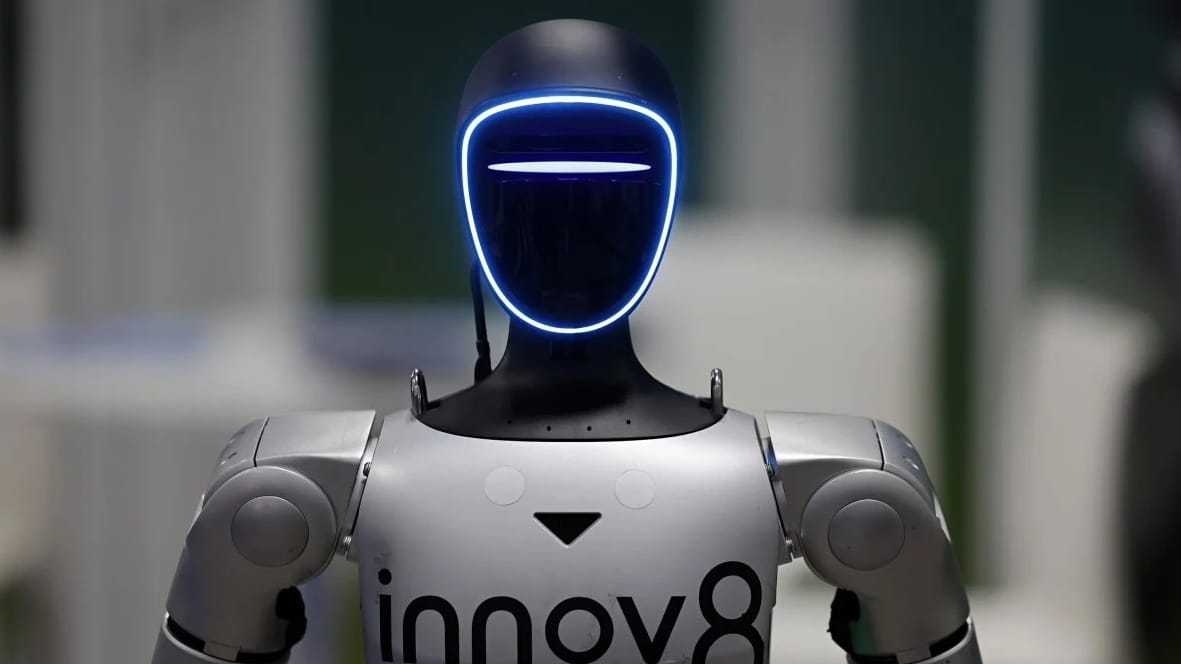
Image source: Unitree
The Rundown: Chinese robotics startup Unitree filed for a Shanghai IPO seeking about 4.2B yuan, or $610M, in a move that will test investor appetite for humanoids as the company’s revenue and shipments continue to surge.
The details:
Unitree says its revenue jumped 335% in 2025, reaching about $247M, as investor interest in robotics and humanoids accelerated.
Humanoids alone have become the company’s main revenue driver, accounting for 51.5% of sales in the first nine months of 2025.
Unitree said it shipped 5,500 humanoids in 2025 and more than 30K quadruped robots since 2022.
The company has been a key U.S. focal point because its low-cost robot dogs have been bought by universities, police departments, and even the U.S. Army.
Why it matters: Unitree’s IPO will be an early test of whether or not humanoids will attract real industrial demand, even as the company has scaled back from the earlier $7B valuation it once sought. It will also show how much investor capital is still flowing into embodied AI in China, even as the business case remains unproven.
X SQUARE ROBOT
🧹 This home robot cleaner comes with a human

Image source: X Square Robot / X
The Rundown: Shenzhen-based startup X Square Robot teamed up with Chinese services platform 58 to launch what they are calling China’s first consumer home-cleaning robot service — one that pairs a robot with a human cleaner on every job.
The details:
Customers booking via the app are met by a human cleaner plus a robot, with the human handling deep cleaning and the robot doing repetitive chores.
The Shenzhen rollout is a live pilot; both companies say they’ll expand to additional cities if the hybrid model proves out.
X Square Robot raised about $140M in its January A++ round, while its total funding was reported as about $410M, at a reported $1.37B valuation.
The robot’s domestic clips — tidying litter boxes and the like — have already circulated on X, with X Square promising more robot skills coming soon.
Why it matters: The Shenzhen pilot is a real-world test of whether embodied AI can move from demo videos into paid home service, not replacing human cleaners but working alongside them. If the hybrid model works, it’s a way to get robots into homes without requiring them to handle the full complexity of domestic work on their own.
QUICK HITS
📰 Everything else in robotics today
China built a fingernail-sized atomic clock that could make drones and other military systems navigate more accurately without GPS.
Xpeng created a robotaxi unit to speed up commercialization, with passenger-carrying demo operations planned for the second half of 2026.
CATL is testing a mobile robot that drives to your parked EV and charges it, so drivers do not need to find a fixed charging station.
Zhuoyu Technology, the DJI spinout focused on autonomous driving, is reportedly raising about $290M in funding ahead of a planned Hong Kong listing.
Swarmer, an AI drone software startup, surged more than 1,200% in two days after its IPO, fueled by investor excitement around defense-tech and AI.
Waymo said its robotaxis have passed 170M miles and are involved in 92% fewer serious-injury crashes than human drivers.
A humanoid’s dance performance went off script at a Cupertino Haidilao hot pot restaurant, knocking dishes and utensils around before staff restrained it.
California-based startup RoboForce raised $52M to scale and commercialize its Titan robot, taking its total funding to $67M.
UBTech partnered with Siemens to use digital manufacturing tools to scale humanoid production toward 10K units a year by 2026.
Researchers in Japan built a tomato-harvesting robot that predicts how easy each fruit is to pick and adjusts its approach, boosting success to 81%.
COMMUNITY
🎓 Highlights: News, Guides & Events
Read our last AI newsletter: Elon Musk's 'Terafab' AI chip factory
Read our last Tech newsletter: Amazon’s secret phone project
Read our last Robotics newsletter: Nvidia’s move to own the robot future
Today’s AI tool guide: Use Google Stitch to redesign your entire website
RSVP to next workshop on March 26 @ 2PM EST: Intro to Vibe Coding pt. 3
See you soon,
Rowan, Joey, Zach, Shubham, and Jennifer — The Rundown’s editorial team
Elon Musk's 'Terafab' AI chip factory
Read Online | Sign Up | Advertise

Good morning, AI enthusiasts. Elon Musk already runs the world's biggest EV factory, the world's busiest rocket company, and a $100B+ AI startup. Now, he’s adding cutting-edge chip fabrication to the list to tie them all together.
His new Terafab project between Tesla, SpaceX, and xAI aims to produce 50x the world’s current global compute per year, most of it deployed on AI satellites in orbit — in what Musk called the first step toward a "galactic civilization."
In today’s AI rundown:
Musk’s new $25B ‘Terafab’ AI chip project
The Rundown Roundtable: Our AI use cases
Use Google Stitch to redesign your website
Halter's AI ‘Cowgorithm’ nears $2B valuation
4 new AI tools, community workflows, and more
LATEST DEVELOPMENTS
TESLA, SPACEX, & XAI
🚀 Musk’s new $25B ‘Terafab’ AI chip project
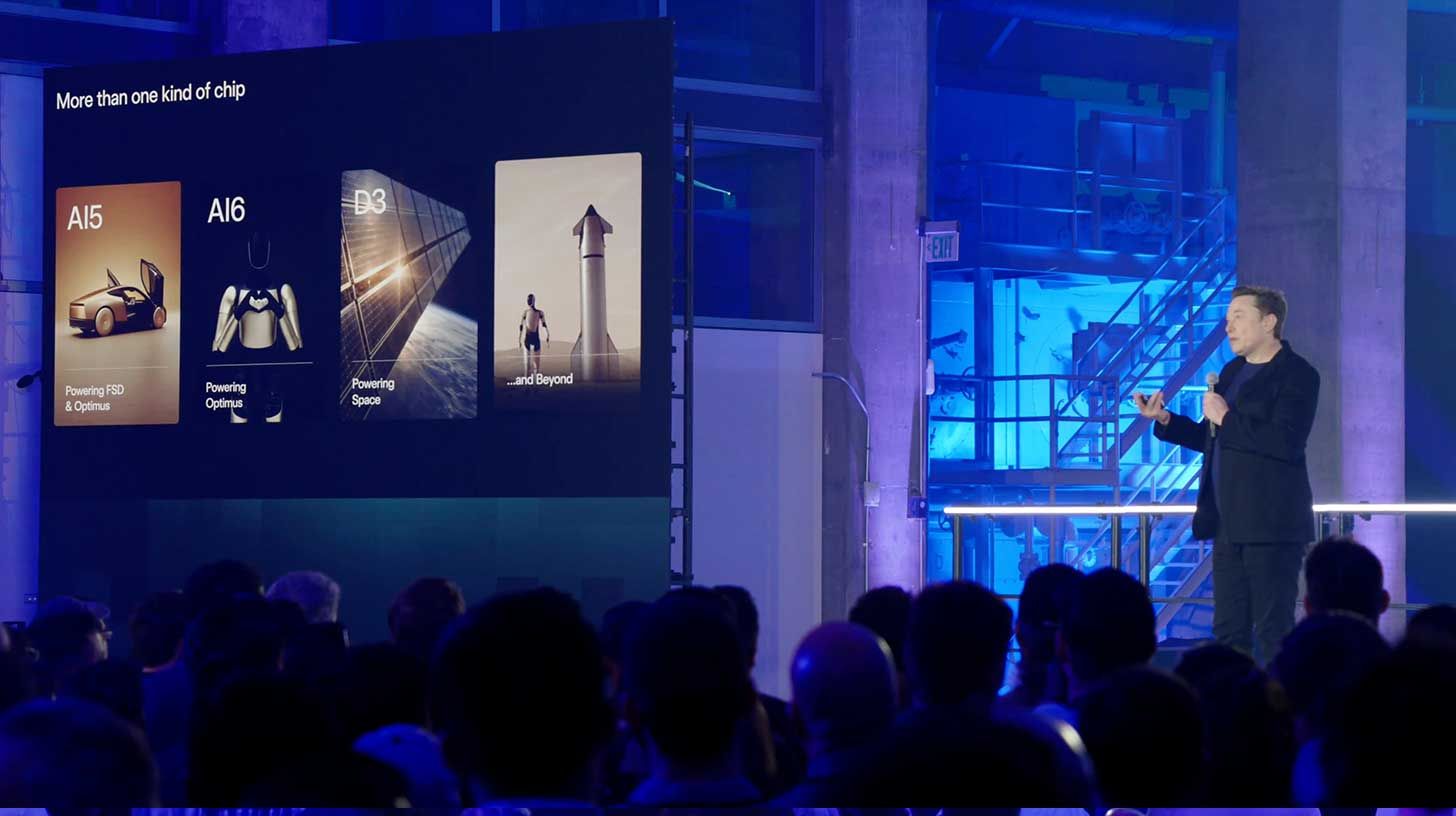
Image source: xAI livestream
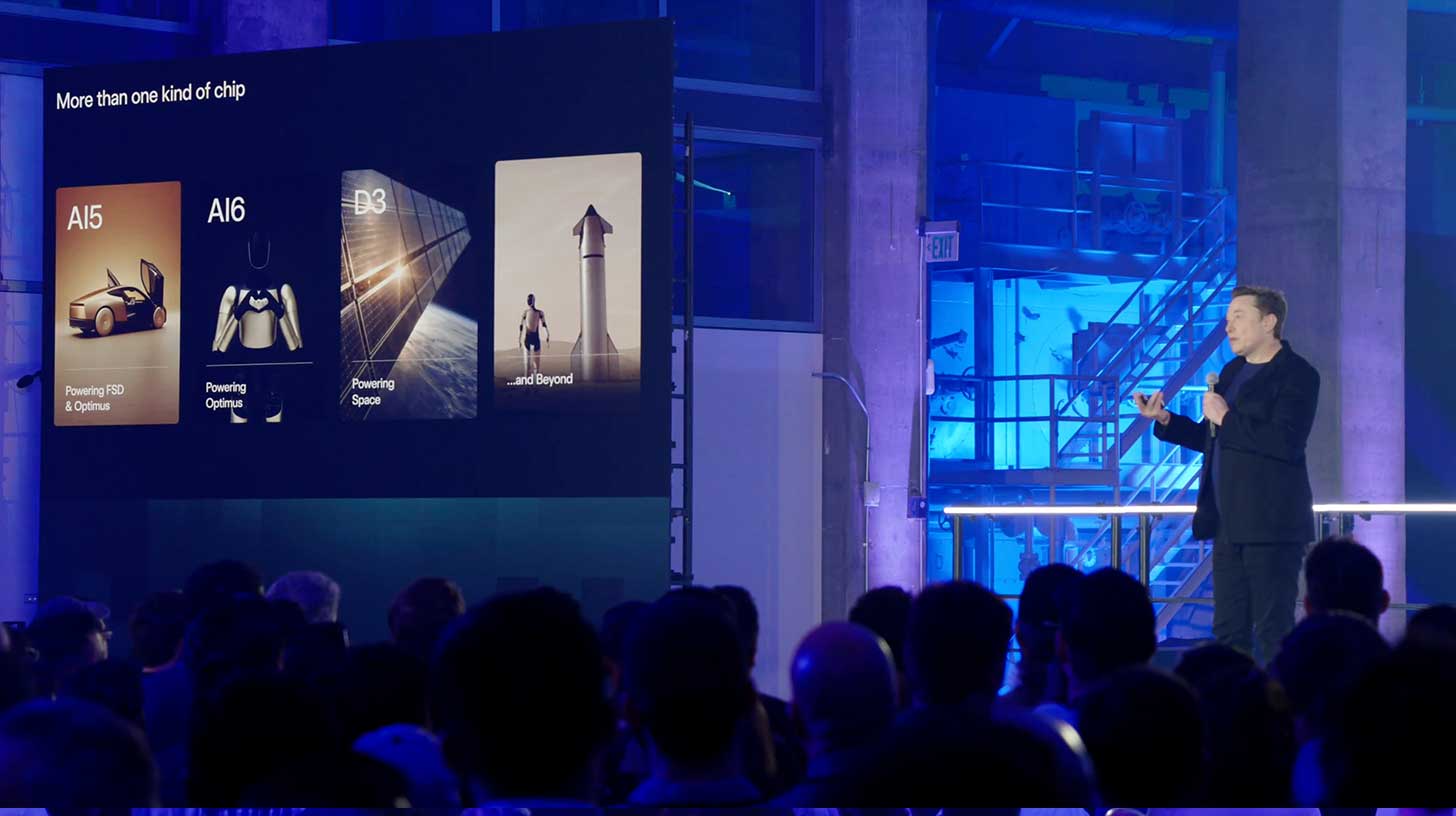
The Rundown: Elon Musk just unveiled Terafab, a new Tesla-SpaceX-xAI chip facility that aims to produce a terawatt of AI compute per year, or roughly 50x what the entire world outputs today — calling it "the most epic chip building exercise in history by far."
The details:
Musk's Austin facility would handle logic, memory, packaging, and testing, a vertical integration he said exists nowhere else.
Two chip types are planned: one for Tesla vehicles and Optimus robots, another space-grade chip for solar-powered AI satellites launched via Starship.
Musk said "no one wants AI computing centers in their backyard", expecting space-based compute to undercut ground costs within 2-3 years.
Musk also pitched the Terafab as the first step towards a “galactic civilization”, with a post-scarcity economy that provides “abundance for everyone”.
Why it matters: With the film Project Hail Mary trending (great flick), it feels like the perfect weekend for Elon to pitch one of his most sci-fi visions yet. Building a fab on this scale from scratch is an enormous bet, but the need for AI chip scaling is a real one — and Musk has made a career out of ignoring what the industry says can’t be done.
TOGETHER WITH YOU.COM
📊 Does your AI search provider stack up?

The Rundown: Most teams pick a search provider by running a few test queries and hoping for the best—a recipe for hallucinations and unpredictable failures. This technical guide from You.com gives you access to an exact framework to evaluate AI search and retrieval.
What you’ll get:
A four-phase framework for evaluating AI search
How to build a golden set of queries that predicts real-world performance
Metrics and code for measuring accuracy
Go from “looks good” to proven quality. Learn how to run an eval.
THE RUNDOWN ROUNDTABLE
💡 The Rundown Roundtable: Our AI use cases
Image source: Lovart / The Rundown
The Rundown: The Rundown Roundtable is a weekly feature where we poll members of The Rundown staff about how we use AI in our work and daily lives.
Darren, Director of Media: For a recent video, I needed to animate a visual representation of this ancient board game. Doing that manually in After Effects would've taken a few hours, so instead I described the rules of the game to Claude and asked it to generate an interactive SVG animation.
After a few rounds of tweaking, I was able to screen-record the result, and it worked great for the video.
Jennifer, Tech & Robotics writer: When my sixth-grade daughter needs math help, I sometimes feel a bit lost myself. Some of the teaching methods have changed since I was a kid, and I don’t always have time to dig through her textbooks.
So I use ChatGPT to walk me through problems step by step — in French, since that’s how she learns — so I can actually explain them to her in a way that makes sense.
AI TRAINING
🎨 Use Google Stitch to redesign your entire website

The Rundown: In this guide, you will learn how to use Google Stitch to redesign an existing web page by uploading screenshots. This is a very fast way to fix weak layouts, generate better variations, and create something you can hand off to a developer.
Step-by-step:
Pick a single page on your website that needs improvement. Take a screenshot and think about the specifics of what needs to be changed
Go to Google Stitch, add the screenshot in chat, and prompt: “Improve the layout of this page so the user sees more content and perceives more value. Make the content more accessible and reduce the dead space”
Select the generated page > Generate > Variations > Generate Variations to have four new page concepts. Choose the best one, and go to More > Export
Once you export the design to Figma or download the new code, you can rinse and repeat this process with as many pages as you like in the same canvas
Pro tip: Click Export > AI Studio to build a live prototype with Google’s vibe coding tool.
PRESENTED BY LOVABLE
📊 From idea to polished deck in minutes
The Rundown: Lovable for Slides uses AI to generate stunning slides, scripts, and audio narration — no design skills required. Whether it's an investor pitch, client proposal, or quarterly review, just describe what you need, and Lovable handles the rest.
Key highlights include:
Create presentation-ready decks in under 10 minutes with simple prompts
Upload existing slides and let AI transform them into polished, professional formats
Auto-generate speaker scripts and audio narration alongside your deck
Try Lovable for Slides and skip the hours of slide formatting.
AI & AGTECH
🐮 Halter's AI ‘Cowgorithm’ nears $2B valuation
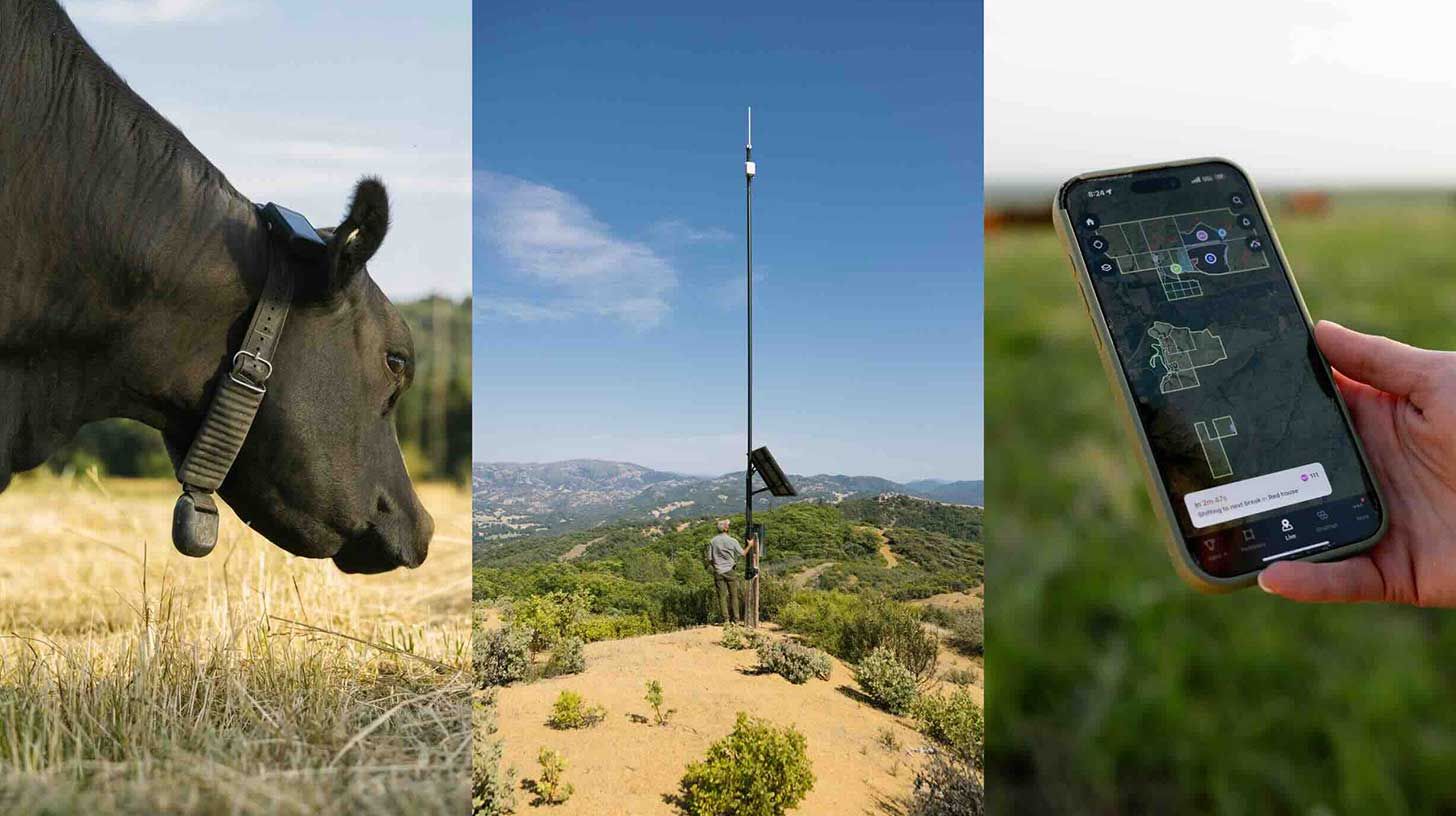
Image source: Halter
The Rundown: New Zealand’s Halter is reportedly nearing a new round led by Peter Thiel’s Founder’s Fund that would value the startup at $2B — with its ‘Cowgorithm’ collars using AI in agriculture to track, herd, and modernize pasture management.
The details:
Halter's solar-powered collars create virtual fences and let ranchers herd cattle remotely via app using vibration and audio cues.
Collars send 6,000+ data points per minute to Halter's proprietary AI, which it calls the ‘Cowgorithm’, to track health and optimize grazing.
The round would double Halter's valuation from roughly $1B after a $100M raise last June, with investor demand leaving the deal oversubscribed.
Founded on a 300-cow NZ dairy farm, Halter has collected 7B+ hours of animal behavior data and is now expanding into the US market.
Why it matters: Some of the biggest AI unlocks might be coming in industries that haven’t materially changed in centuries. Halter replaces physical fences, manual herd checks, and more with real-time data, a collar, and an app — bringing practical modernization to an old-school process. Plus, ‘Cowgorithm’ is an excellent name.
QUICK HITS
🛠️ Trending AI Tools
🧠 Adapt - Slack-native AI for your team. Up to $500 in free credits for new users*
🚀 Claude - Now with Cowork Projects, Claude Code channels, and Dispatch
⚙️ Composer 2 - Cursor’s powerful, cost-effective coding model
🤖 ASMR - Supermemory's experimental agent memory system
*Sponsored Listing
📰 Everything else in AI today
Cursor revealed that its Composer 2 model was built on top of Kimi K2.5, coming after the company faced backlash over failing to include the detail in its release.
Anthropic rolled out Projects in its Claude Cowork, allowing users to import their existing web-based Claude projects or create them to use on the desktop app.
The White House released its AI policy blueprint for Congress, aiming to block states from writing their own AI laws while keeping federal oversight across existing agencies.
OpenAI is reportedly planning to nearly double its workforce from 4,500 to 8,000 by the end of 2026 amid the company’s increasing enterprise AI focus.
A U.S. man pleaded guilty to an AI music fraud that earned him $1.2M/year by generating fake tracks and inflating their play counts, now facing five years in prison.
COMMUNITY
🤝 Community AI workflows
Every newsletter, we showcase how a reader is using AI to work smarter, save time, or make life easier.
Today’s workflow comes from reader Chris P. in Europe:
"I’m a Senior Manager in the public sector exploring a move into big tech, but I had no clear sense of how my experience translated or what level to target. I started using ChatGPT, Gemini, and Claude as a career consultant—refining my CV, aligning it to roles, and running mock interviews.
The biggest surprise was salary guidance. One role had almost no data online, with Glassdoor estimating around €80k–€100k. ChatGPT suggested €120k–€140k based on my experience. I gave that range as expectation, and the recruiter confirmed the salary was €130k. It’s now my go-to consultant for career advice."
How do you use AI? Tell us here.
🎓 Highlights: News, Guides & Events
Read our last AI newsletter: How 81k people really feel about AI
Read our last Tech newsletter: Amazon’s secret phone project
Read our last Robotics newsletter: Nvidia’s move to own the robot future
Today’s AI tool guide: Use Google Stitch to redesign your entire website
RSVP to next workshop on March 26 @ 2PM EST: Intro to Vibe Coding pt. 3
See you soon,
Rowan, Joey, Zach, Shubham, and Jennifer — the humans behind The Rundown

Amazon's secret phone project
Read Online | Sign Up | Advertise

Good morning, tech enthusiasts. Amazon is reportedly building a phone again — yes, after the Fire Phone fiasco.
A year-old internal team, a veteran Microsoft exec, and a codename that hints at something transformative: the company that torched millions on a smartphone flop is taking another shot at your pocket. The twist? It may not even be trying to compete with the iPhone.
In today’s tech rundown:
Amazon is making a smartphone again
Uber and Rivian team up to build 50K robotaxis
New startup to mine asteroids by bagging them
CRISPR could make cancer treatment a one-shot deal
Quick hits on other tech news
LATEST DEVELOPMENTS
AMAZON
📱 Amazon is making a smartphone again

Image source: Reve / The Rundown
The Rundown: Amazon is developing a new smartphone, reviving a category it abandoned after its first attempt, the Fire Phone, flopped more than a decade ago, Reuters reports.
The details:
The device, codenamed “Transformer,” is designed to sync with Alexa and serve as an always-on conduit to Amazon’s services ecosystem.
The project is reportedly led by a year-old internal group called ZeroOne, headed by J Allard, the former Microsoft exec behind the Zune and Xbox.
The Fire Phone launched at $649, got reduced to $159, and was killed after 14 months, leaving Amazon with a $170M charge tied largely to unsold inventory.
Apple and Samsung still own roughly 40% of global sales, and the market is heading for its worst year ever, with shipments expected to drop 13% in 2026.
Why it matters: Amazon is reportedly exploring both a full smartphone and a pared-down dumbphone — with the minimalist Light Phone as reference — suggesting it may be targeting the screen-time backlash as a way into a market Apple and Google have locked up. Either way, it’s a bet that Alexa can finally earn a place in your pocket.
TOGETHER WITH FIN
📅 Join a major Fin product announcement

The Rundown: Join a major product announcement for Fin, the #1 AI Agent for Customer Service, live from Paris. Hear from CPO Paul Adams on how Fin’s latest capabilities help deliver perfect customer experiences.
At the event, you’ll hear:
How AI Agents help make perfect customer experiences possible
Deep-dives into how Fin delivers best-in-class AI customer service.
Real examples of success from companies like Glean.
UBER & RIVIAN
🚖 Uber and Rivian team up to build 50K robotaxis

Image source: Rivian
The Rundown: Uber is making a $1.25B bet on California EV maker Rivian’s upcoming R2 as a robotaxi platform — a deal that could put up to 50K autonomous SUVs on its network by 2031.
The details:
Uber is putting up to $1.25B into Rivian in a deal that ties the ride-hailing giant directly to the EV maker’s next-gen R2 platform.
The first 10K vehicles are slated for San Francisco and Miami in 2028, with the service expanding to about 25 cities across the U.S., Canada, and Europe.
The R2s autonomy hardware reportedly includes 11 cameras, five radars, one lidar, and Rivian’s in-house RAP1 chip capable of 1,600 TOPS of AI compute.
Rivian has yet to begin R2 production; the robotaxi variant is slated to be built at the company’s Georgia factory, which is still under construction.
Why it matters: Uber has already partnered with some 25 autonomous vehicle companies, including Waymo and Zoox, but Rivian’s pitch is vertical integration: one company controlling the vehicle, compute, software, and U.S. manufacturing. The stakes are high: the R2 hasn’t rolled off a line, and the deal’s timeline runs to 2031.
TRANSASTRA
☄️ New startup to mine asteroids by bagging them

Image source: TransAstra / YouTube
The Rundown: A NASA-backed Los Angeles startup thinks the best way to mine an asteroid is to put it in a giant bag. TransAstra is developing an inflatable bag designed to capture small near-Earth asteroids whole, with no landing or drilling required.
The details:
The idea is to capture a small asteroid, stabilize it, and tow it into a safer orbit where it can be handled more like a resource depot.
TransAstra says “bag it first” could avoid asteroid mining’s challenges, such as syncing with a rock’s motion and working on a spinning, irregular surface.
TransAstra says it has already tested pieces of the system in microgravity on the ISS, enough to claim (very) early and partial proof-of-concept.
An undisclosed customer is funding a feasibility study to capture and relocate a house-sized asteroid weighing around 100 metric tons, according to TransAstra.
Why it matters: Near-Earth asteroids are loaded with water and metals that could presumably fuel and supply deep-space missions — if anyone can actually get to them. TransAstra’s competitors include AstroForge, Karman+, Origin Space, and Asteroid Mining Corporation. The field is small, but the race is on.
BIOTECH
🧬 CRISPR could make cancer treatment a one-shot deal

Image source: Ruslanas Baranauskas / SPL
The Rundown: Researchers just used CRISPR to engineer cancer-fighting immune cells directly inside living mice, marking a major step toward replacing today’s slow, expensive CAR-T manufacturing process with a single injection.
The details:
CAR-T therapy works by extracting a patient’s T cells, reprogramming and reinfusing them — a costly, time-consuming process that requires chemotherapy.
Engineering T cells directly in the body would sidestep that process, enabling a single off-the-shelf therapy that could work for many patients.
The research, published in Nature, is still in mice and remains a proof-of-concept, but points toward a more scalable route for CAR-T-style treatments.
The researchers added extra safety layers because editing cells directly in the body raises the risk of hitting the wrong cells.
Why it matters: CAR-T therapy has produced remarkable results in blood cancers, but its complexity keeps it out of reach for many patients. Engineering those same cells inside the body — no lab, no chemo prep, and potentially one injection — could change that calculus. The study is still new, and significant hurdles remain before human trials.
QUICK HITS
📰 Everything else in tech today
The U.S., Germany, and Canada disrupted four major botnets that infected more than 3M devices worldwide and were used for massive DDoS attacks.
Supermicro’s co-founder was charged with helping smuggle up to $2.5B worth of AI servers equipped with Nvidia GPUs to China.
Apple’s head of home hardware, Brian Lynch, is leaving to join Finnish smart ring maker Oura as its senior vice president of hardware engineering.
Meta launched Creator Fast Track, a 3-month program that pays eligible TikTok, YouTube, and Instagram creators to post on Facebook and grow its creator base.
HSBC is reportedly considering cutting up to 20K jobs over the next few years as it uses AI to reshape middle- and back-office operations.
Jeff Bezos’s space firm Blue Origin is now seeking permission to launch nearly 52K AI-capable satellites as part of a push to build data center infrastructure in space.
Meta is opening a flagship retail store, called Meta Lab, on Fifth Avenue in Manhattan, after signing a 10-year lease for a five-story, 15K-square-foot building.
Google is adding a new “advanced flow” for sideloading apps from unverified Android developers, including a 24-hour waiting period as part of its broader verification push.
Amazon is rolling out one-hour and three-hour delivery options in the U.S. for more than 90K items.
Bluesky announced a $100M Series B funding round following the news that CEO Jay Graber stepped down.
COMMUNITY
🎓 Highlights: News, Guides & Events
Read our last AI newsletter: How 81K people really feel about AI
Read our last Tech newsletter: China greenlights commercial brain implant
Read our last Robotics newsletter: Nvidia’s move to own the robot future
Today’s AI tool guide: Use Replit’s Tasks feature to improve your site
RSVP to next workshop on March 26 @ 2PM EST: Intro to Vibe Coding pt. 3
See you soon,
Rowan, Joey, Zach, Shubham, and Jennifer — The Rundown’s editorial team
How 81K people really feel about AI
Read Online | Sign Up | Advertise

Good morning, AI enthusiasts. AI keeps tanking in public opinion polls, but Anthropic’s new data shows the answer is a lot more nuanced than a simple "thumbs down."
Using Claude itself as the interviewer, Anthropic collected 80K+ conversations across 70 languages in one week. The finding that stood out: most people aren't choosing sides between hope and fear… They're carrying both.
In today’s AI rundown:
Anthropic surveys 81k people on AI hopes, fears
Cursor’s coding model cuts costs near the frontier
Use Replit’s Tasks feature to improve your site
Microsoft AI’s image model climbs leaderboards
4 new AI tools, community workflows, and more
LATEST DEVELOPMENTS
AI RESEARCH
📊 Anthropic surveys 81k people on AI hopes, fears
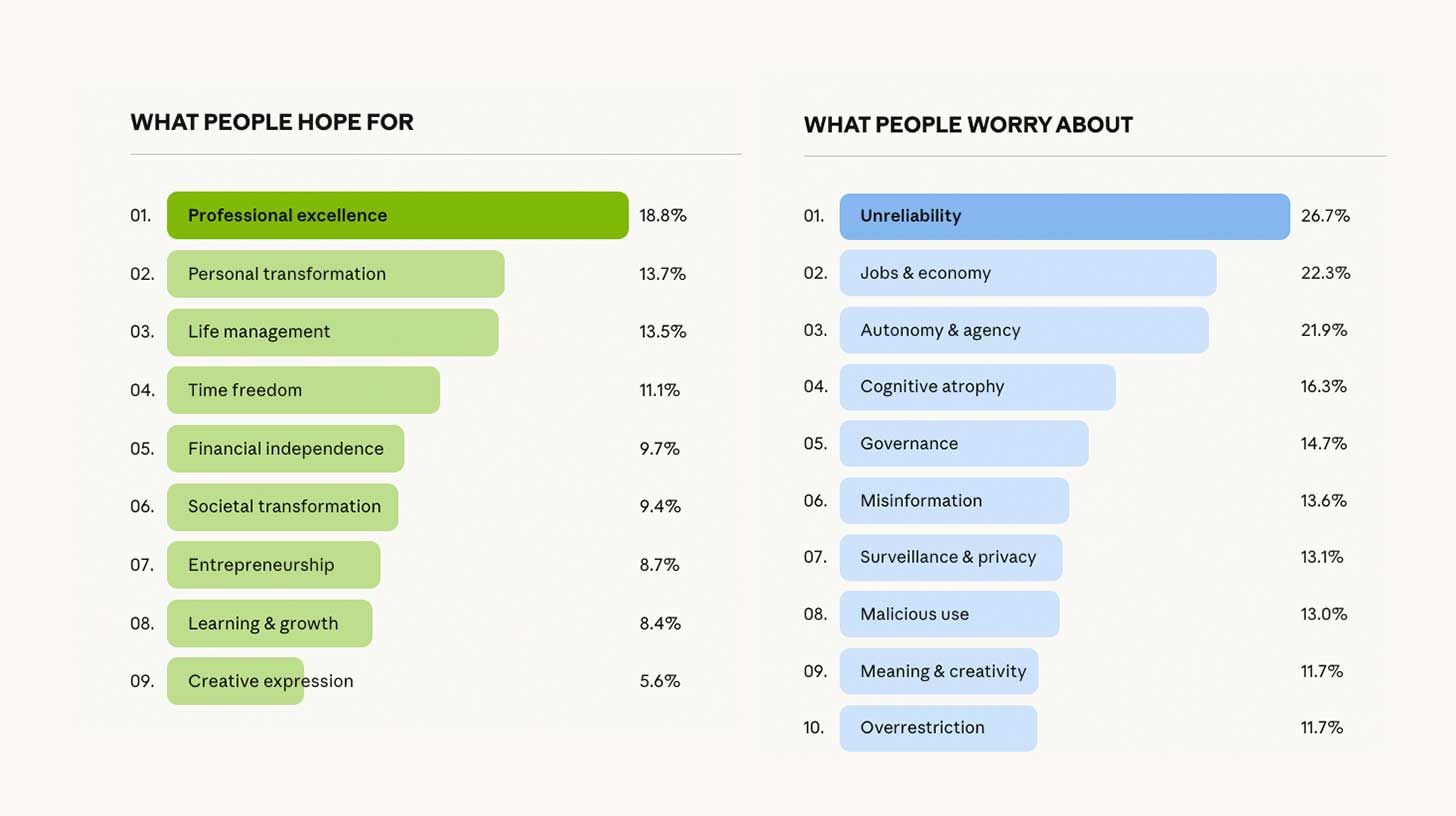
Image source: Anthropic
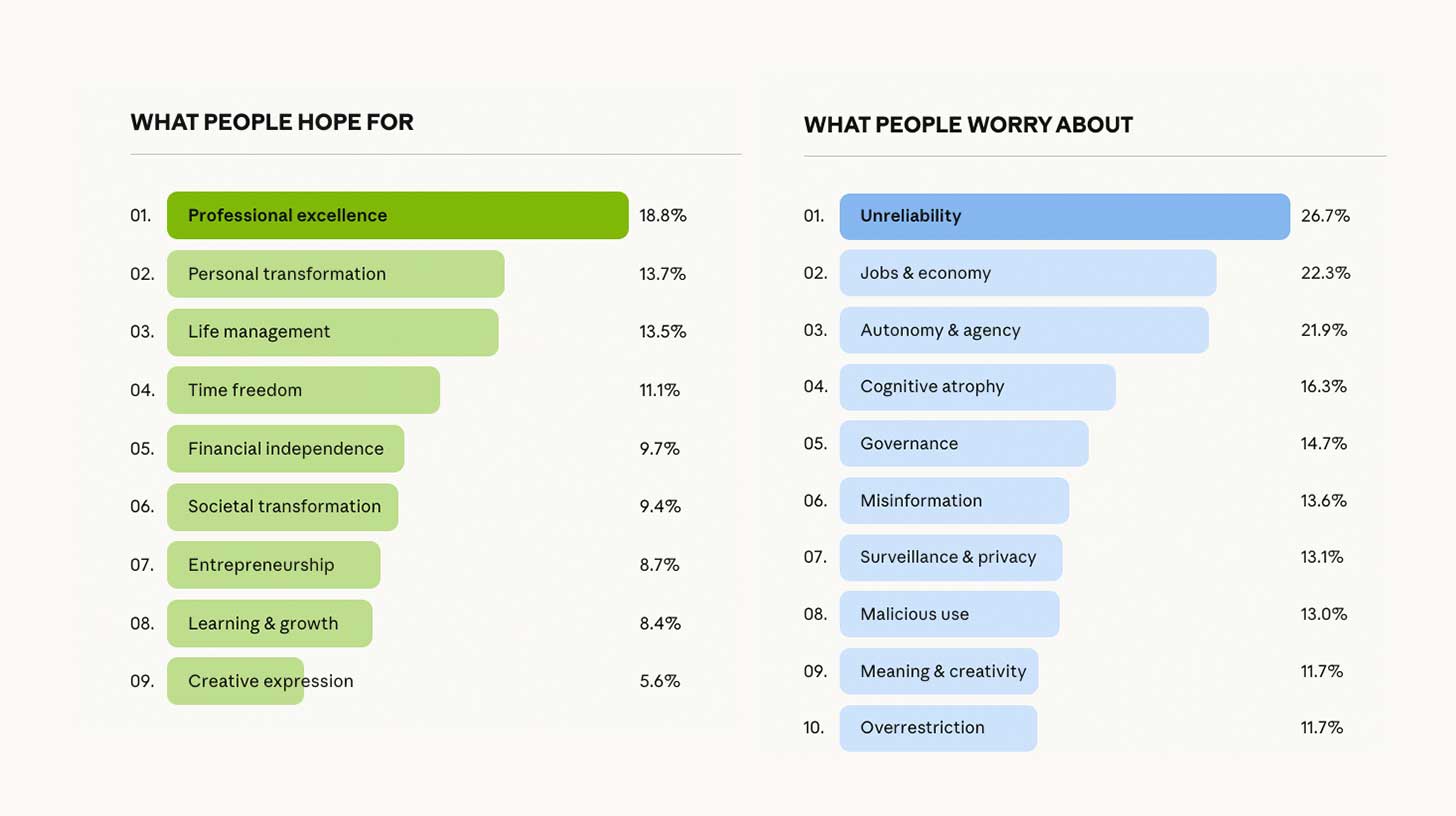
The Rundown: Anthropic just released what it says is the biggest qualitative AI attitudes study ever, using Claude to interview 81k of its users across 159 countries about where they think the tech is headed and what scares them about getting there.
The details:
Anthropic introduced Claude Interviewer in December, building a special version of Claude that ran open-ended conversations in 70 languages.
Professional excellence was the top-reported hope, with freeing up time, financial independence, and broader life management frequently mentioned.
Fear of AI getting things wrong outranked every other concern, with job anxiety, losing personal agency, and over-reliance close behind.
AI sentiment varied by region: India and South America skewed above average, while the U.S., Europe, Japan, and South Korea ran neutral or below.
Why it matters: AI's favorability numbers have cratered in mainstream polls, but Anthropic's study adds nuance that those surveys miss. Almost as notable is Claude running 80K in-depth interviews across 70 languages in a single week, a wildly strong proof of concept for the tech as a research tool that simply didn’t exist a year ago.
TOGETHER WITH NORTON NEO
🌐 The browser built for the AI agent era

The Rundown: Norton Neo is the first AI-native browser designed to be powerful, productive, and private by default — combining intelligent assistance with built-in protection so you don't have to trade privacy for productivity.
With Norton Neo, you can:
Search across tabs, history, and the web from one universal bar
Research and write side-by-side with built-in Split View multitasking
Security is embedded at the core, with a built-in VPN powered by Norton
Try Norton Neo and experience the future of browsing.
CURSOR
⚙️ Cursor’s coding model cuts costs near the frontier
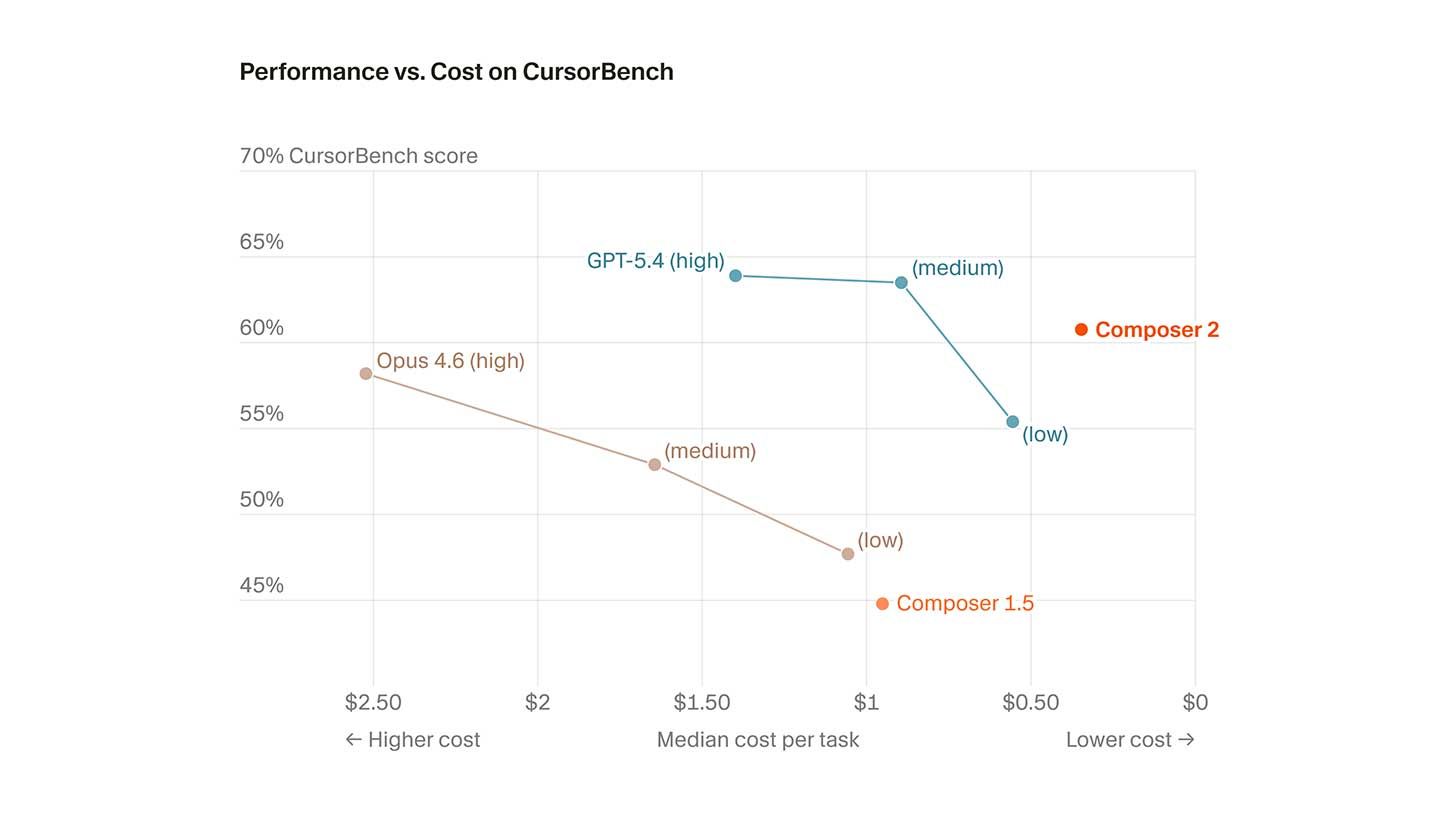
Image source: Cursor
The Rundown: Anysphere, the company behind AI code editor Cursor, just shipped Composer 2, a third-generation in-house model that is competitive with frontier coding models from OpenAI and Anthropic at a fraction of the cost per task.
The details:
Composer 2 topped Opus 4.6 on the independent Terminal-Bench 2.0 (61.7% vs 58%) and sits within 5 points of GPT-5.4 on Cursor's own CursorBench.
At $7.50/M output tokens on its fast tier, Composer 2 costs roughly 1/10th of GPT-5.4 and 1/20th of Opus 4.6 at comparable speeds.
Composer’s scores on the company’s internal CursorBench have climbed from 38% to 61.3% across three model generations shipped since October.
Why it matters: Cursor quickly went from harnessing other top AI models to building one of its own at this price point. Nearing the frontier as an application-layer company is an impressive feat, and the speed, cost, and performance of Composer 2 could change the math for developers paying full price for coding with GPT-5.4 or Opus 4.6.
AI TRAINING
⚙️ Use Replit’s Tasks feature to improve your site
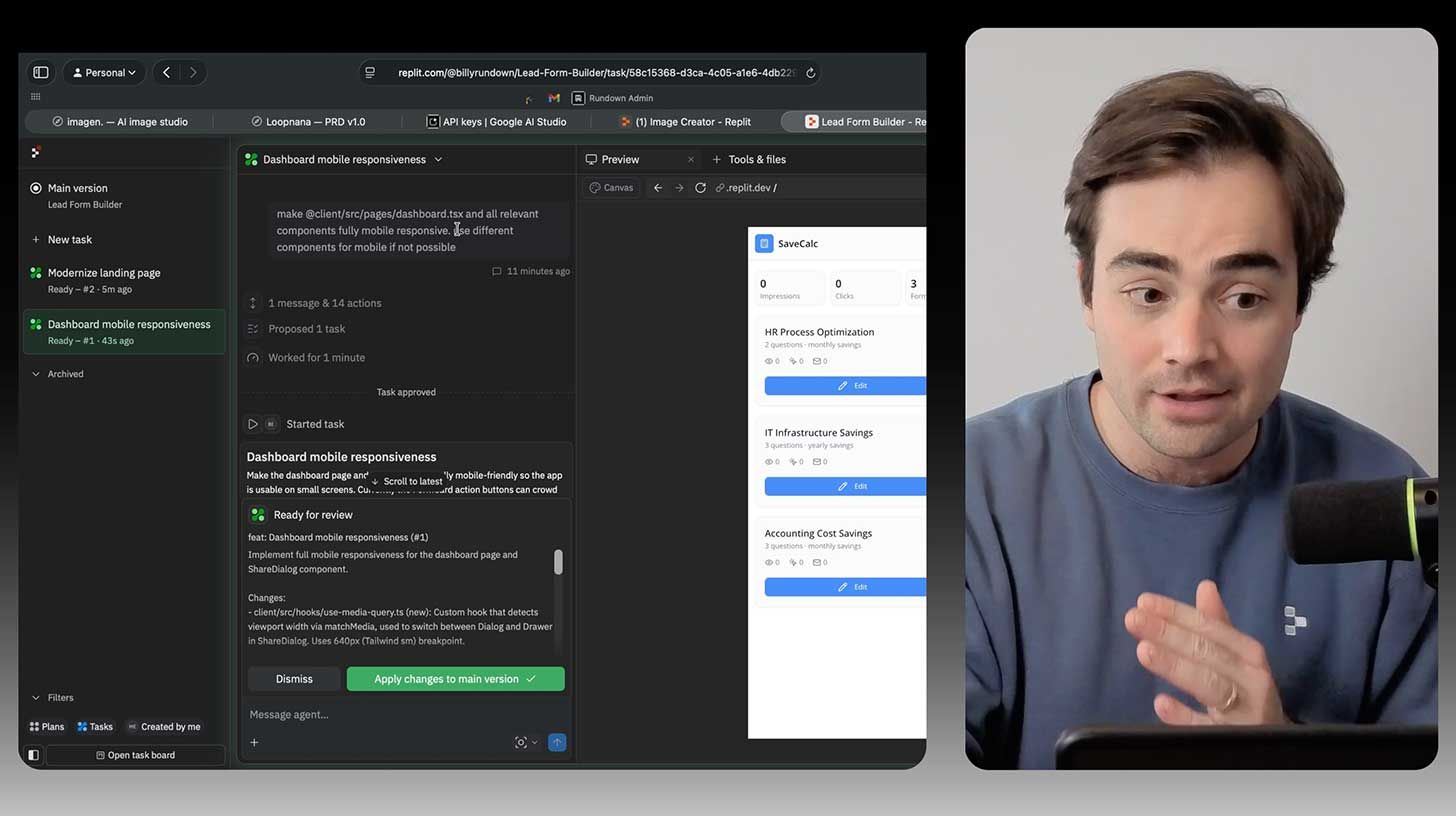
The Rundown: In this guide, you will learn how to use Replit's Tasks feature to improve an existing site without messing up your already working app, making it easier to keep isolated fixes from piling on top of each other and make real progress on your app.
Step-by-step:
Go to Replit, drop in your app idea, and hit Plan. If you already have an app, open that instead. You will need at least a Replit core plan to try this feature
Once in your project, click the plus button on the left, create a task for a fix like mobile optimization, and prompt: “Make dashboard and all components mobile responsive. Use different components for mobile if not possible”
While it's planning, queue a second task in parallel, try something like improving the landing page design, cleaning up the nav bar, or a bug fix
Once task planning is done, start them. You can preview each task, and when they finish, click Apply Changes to Main Version to update the production app
Pro tip: Toggle your main agent into plan mode and tell it the improvements you want. It will generate a PRD. Then, divvy up that PRD into new parallel tasks.
PRESENTED BY OPTIMIZELY
🧪 Scale experimentation without scaling headcount

The Rundown: Most experimentation teams have hit a wall — headcount is maxed and testing capacity has stalled. Optimizely's upcoming webinar shows how leading teams are using AI agents across the full experimentation workflow to scale programs without adding to the team.
The April 1st session will cover:
How AI agents add value across every stage of the experimentation lifecycle
Real use cases from the leader behind Farfetch's award-winning program
Practical strategies to scale testing across your organization without growing your team
Register for April 1st at 10 am ET. Can't join live? Register anyway to receive the recording.
MICROSOFT
🎨 Microsoft AI’s image model climbs leaderboards

Image source: Microsoft
The Rundown: Microsoft's AI Superintelligence team just released MAI-Image-2, a text-to-image model that landed at No. 5 on the Arena AI leaderboard — marking the strongest release yet for Mustafa Suleyman’s lab.
The details:
Arena.ai ranked MAI-Image-2 at No. 5 overall, trailing just Gemini (several variants) and GPT Image-1.5 with strong upgrades in photorealism, 3D, and art.
The biggest jump from its predecessor came in text rendering, up 115 points, with drastically improved performance on posters, slides, and infographics.
MAI-Image-2 is free to try in Microsoft's MAI Playground for U.S. users, with Copilot, Bing, and API access on its Foundry platform rolling out soon.
The release comes amid Microsoft’s AI leadership shuffle, with Suleyman shifting away from Copilot to focus solely on frontier model work.
Why it matters: Microsoft has been signaling its desire to reduce its reliance on OpenAI and truly compete with its own models, and MAI-Image-2 is the strongest step yet in that direction. But the legacy tech giant still has a major uphill battle to gain market share from the already well-entrenched frontier options at the top.
QUICK HITS
🛠️ Trending AI Tools
🗣️ Unwrap Customer Intelligence - Turn unstructured customer feedback into data-backed insights that inform your product roadmap*
⚙️ Composer 2 - Cursor’s powerful, cost-effective new in-house coding model
🎨 MAI-Image-2 - Microsoft's new upgraded text-to-image model
🚀 Google AI Studio - Google’s upgraded full-stack vibe coding agent
*Sponsored Listing
📰 Everything else in AI today
Google rolled out upgrades that turn its AI Studio into a one-stop vibe-coding app builder, pairing a new Antigravity coding agent with built-in backends and user login.
Jeff Bezos is reportedly raising a $100B fund to buy chip, defense, and aerospace manufacturers, with plans to use them for his secretive AI startup, Project Prometheus.
Perplexity introduced Health, a new feature allowing users to securely connect health apps, wearables, and data to its Computer agentic system.
DoorDash launched a new ‘Tasks’ app, paying its couriers to capture video and data from everyday tasks and conversations for AI and robotics training.
OpenAI announced the acquisition of open-source developer tool startup Astral, folding the company’s staff into its Codex team.
Meta launched an AI support assistant across FB and IG for 24/7 support, also previewing advanced content enforcement systems that catch 5K daily scam attempts.
COMMUNITY
🤝 Community AI workflows
Every newsletter, we showcase how a reader is using AI to work smarter, save time, or make life easier.
Today’s workflow comes from reader Gerro A. in The Philippines:
“I'm an assistant secretary in my class in high school. The president told me to create a hub where my classmates can share reviews and leave comments. He expected a simple Google Drive or Discord to share reviews. However, I spent one week creating a website from scratch, using ChatGPT as my helper along the process. Take note, I had no idea how to use HTML, JS, or CSS (I only know how to make games in Python).
This led me to explore and learn more about Full-Stack Development and provide my classmates with a productivity tool.”
How do you use AI? Tell us here.
🎓 Highlights: News, Guides & Events
Read our last AI newsletter: Google bets on ‘Vibe Design’ with Stitch
Read our last Tech newsletter: China greenlights commercial brain implant
Read our last Robotics newsletter: Nvidia’s move to own the robot future
Today’s AI tool guide: Use Replit’s Tasks feature to improve your site
RSVP to next workshop on March 26 @ 2PM EST: Intro to Vibe Coding pt. 3
See you soon,
Rowan, Joey, Zach, Shubham, and Jennifer — the humans behind The Rundown

Nvidia's move to own the robot future
Read Online | Sign Up | Advertise
Good morning, robotics enthusiasts. Nvidia just made its clearest move yet to become the computing backbone of the physical world.
At its annual GTC conference, the $3T chip giant pitched a full-stack future for humanoids, factory bots, and robotaxis, bundling robot brains, simulation tools, and autonomous-driving systems into one sprawling ecosystem. But can startups and rivals still carve out space in a market Nvidia seems determined to lock up?
In today’s robotics rundown:
Nvidia wants to be the OS of every robot
Gecko Robotics lands $71M U.S. Navy deal
Ex-Meta engineers give robots visual memory
Robot dogs guard billion-dollar AI data centers
Quick hits on other robotics news
LATEST DEVELOPMENTS
NVIDIA
🤖 Nvidia wants to be the OS of every robot

Image source: Reve AI / The Rundown
The Rundown: Nvidia’s Jensen Huang used the annual GTC conference to pitch the tech giant as the default computing backbone for physical AI, debuting new humanoid software stacks, next-gen hardware platforms, and new robot and robotaxi partners.
The details:
Nvidia unveiled a plug-and-play “brain” for humanoids, putting GR00T N1.7 into early access and teasing the next-gen N2.
It’s pairing these models with new Isaac and Cosmos tools, designed to train robots faster in simulation before deploying them in the real world.
Nvidia is also partnering with chipmakers to ensure that next-gen robot motors, sensors, and safety systems are designed to integrate with its ecosystem.
Uber will tap Nvidia’s DRIVE to power Level 4 robotaxis starting in LA and San Francisco in 2027, with plans to scale to 28 cities by 2028.
Why it matters: Nvidia wants to sit at the center of a multi‑trillion‑dollar robotics market, getting manufacturers and platforms to standardize on its system. The strategy’s success depends on robots finally graduating from pilots to production, and on how much resistance Nvidia draws from open-source alternatives and rival silicon.
GECKO ROBOTICS
⚓️ Gecko Robotics lands $71M U.S. Navy deal
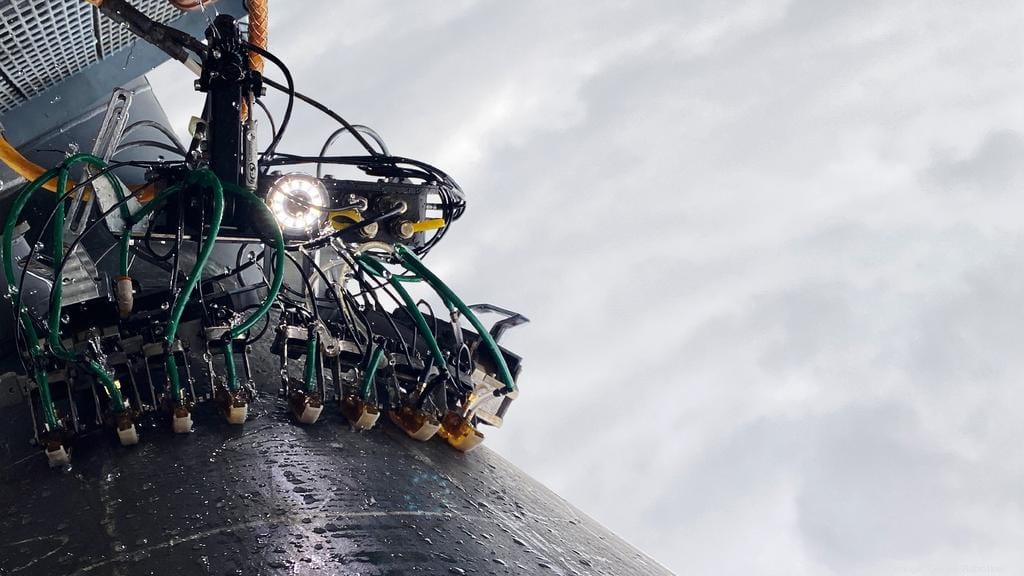
Image source: Gecko Robotics
The Rundown: Pittsburgh startup Gecko Robotics scored a five‑year, up‑to‑$71M U.S. Navy deal to deploy its wall‑climbing AI inspection robots across warships, creating high-res virtual models to help cut maintenance backlogs.
The details:
The deal starts as a five-year agreement with an initial $54M award and a ceiling of $71M, making it the Navy’s largest robotics contract to date.
Gecko’s climbing, flying, and swimming robots will scan critical structures, feeding sensor data into AI models that can flag corrosion and structural issues.
Gecko says its system can identify repairs up to 50x faster than manual inspection, shrinking months-long work down to a couple of days.
The move dovetails with Trump’s drive to rebuild U.S. shipbuilding and close the gap with China by getting more combat-ready hulls back to sea faster.
Why it matters: It shows the Pentagon is ready to buy commercial robotics at scale to fix one of its least glamorous problems: maintenance. If Gecko can turn ships into always-updated digital twins, it could become the playbook for software-first startups looking to modernize everything from depots to airfields and keep the work coming.
MEMORIES AI
📽️ Ex-Meta engineers give robots visual memory

Image source: Memories.ai
The Rundown: A startup founded by former Meta engineers is building what it calls a “visual memory layer” — infrastructure that lets wearables and robots store, index, and search first-person video footage so they can remember what they’ve seen.
The details:
Memories.ai is partnering with Nvidia, tapping Cosmos-Reason 2 for vision-language reasoning and the Metropolis stack for large-scale video search.
Founded in 2024 by ex-Meta Ray-Ban glasses engineers Shawn Shen and Ben Zhou, Memories spun out of their work on video-capturing smart glasses.
The company has raised $16M to date, including an $8M seed round in 2025 and an $8M extension led by Susa Ventures.
Shen told TechCrunch the company is already working with major wearable makers and sees bigger opportunities in robotics.
Why it matters: AI will need to remember what it sees to really work in the physical world, Memories.ai argues. Its visual memory layer is meant to plug a hole left by largely text-focused memory tools from OpenAI, xAI, and Google, giving robots a way to store and recall what they actually “see” while working in the real world.
ROBOT DOGS
🐕 Robot dogs guard billion-dollar AI data centers

Image source: Boston Dynamics
The Rundown: AI data centers are starting to outsource guard duty to quadruped robot dogs from Boston Dynamics and Ghost Robotics, autonomously patrolling sprawling campuses for threats that fixed sensors routinely miss.
The details:
Spot units run $175K–$300K, but operators say the ROI math is straightforward: recoup the cost in roughly two years by cutting guard labor.
Robot dogs patrol perimeters, scan fence lines for intruders, and flag hazards like leaks, heat anomalies, or propped‑open doors that fixed sensors miss.
Ghost Robotics’ Vision 60s are already active at a handful of facilities, navigating rough terrain while streaming 360-degree video to control rooms.
The pitch from operators is augmentation, not replacement — human security teams monitor the feeds as robots take care of 24/7 patrol.
Why it matters: Tech companies are pouring $700B into hundreds of new AI facilities, with Meta’s Hyperion alone slated to sprawl to 4x the size of Central Park. Even as operators trim onsite guard headcount, execs insist the robots are there to augment humans, with centralized security teams monitoring their feeds from control rooms.
QUICK HITS
📰 Everything else in robotics today
Unitree founder Wang Xingxing said Chinese humanoids could run a sub‑10‑second 100m dash by mid‑2026, potentially beating Usain Bolt’s 9.58‑second world record.
Time said the U.S. is rushing into a “humanoid soldier” arms race, led by Foundation’s Phantom MK‑1 robots in Ukraine, on the promise of keeping human troops alive.
Renault started using Wandercraft’s Calvin-40 humanoids to haul car tires at its Douai plant with plans to roll out about 350 more units over the next 18 months.
South Korean firm Tesollo unveiled a lightweight robotic hand with what it says is near-human-level dexterity that can grasp delicate objects and use everyday tools.
UK defense startup Cambridge Aerospace, which builds drone interceptor systems, is reportedly in talks to raise about $200M at a valuation above $1B.
Samsung is fast‑tracking humanoids and agentic AI for its own plants, aiming to turn all global factories into AI‑autonomous “smart factories” by 2030.
Researchers developed a fully biodegradable soft robotic finger that can perform over 1M actuation cycles accurately before decomposing into nontoxic compost.
Pokémon Go players have, often unknowingly, reportedly helped Niantic Spatial and Coco Robotics train their delivery bots using more than 30B player-shot images.
Drone startup Seneca will test five AI-guided firefighting drones in Aspen this summer to see if autonomous aircraft can attack wildfires faster than traditional crews.
COMMUNITY
🎓 Highlights: News, Guides & Events
Read our last AI newsletter: Google bets on 'vibe design' with Stitch
Read our last Tech newsletter: China greenlights commercial brain implant
Read our last Robotics newsletter: Travis Kalanick’s stealth robot play
Today’s AI tool guide: Generate an actionable SEO audit with AI
RSVP to next workshop @ 2 PM EST today: Intro to Vibe Coding pt. 2
See you soon,
Rowan, Joey, Zach, Shubham, and Jennifer — The Rundown’s editorial team

Google bets on 'vibe design' with Stitch
Read Online | Sign Up | Advertise

Good morning, AI enthusiasts. Last year, "Vibe coding" changed how the world built. Now, Google is hoping it can do the same for design.
The company’s new Stitch overhaul adds voice editing capabilities, new agentic capabilities, instant prototyping, and more, hoping “vibe design" can do for UI what vibe coding did for development — collapse weeks of work into a single conversation.
Reminder: Our next live workshop is today at 2 PM EST — join part 2 of our Intro to Vibe Coding, where you’ll learn the vocabulary, mental models, and prompting habits that keep your development clean and consistent. RSVP here.
In today’s AI rundown:
Google brings 'vibe design' to its AI UI canvas
MiniMax's new M2.7 helped build itself
Generate an actionable SEO audit with AI
Microsoft ‘weighing’ legal action over Amazon-OAI deal
4 new AI tools, community workflows, and more
LATEST DEVELOPMENTS
🎨 Google brings 'vibe design' to its AI UI canvas

Image source: Google
The Rundown: Google just overhauled Stitch, turning its AI UI design tool into a voice-enabled infinite canvas that takes users from a rough idea to a clickable prototype — and coining the term "vibe design" for its new development workflow.
The details:
Stitch now runs on an infinite canvas where users feed in images, code, or briefs, plus an agent manager that juggles multiple design directions at once.
A new voice feature in preview turns the tool into a hands-free design partner, able to take direction and make live edits mid-chat.
Instant prototyping can turn static screens into interactive prototypes in seconds, while auto-generating logical next screens for the UI flow.
A new DESIGN.md format lets teams port design rules between Stitch and coding tools, with each project getting a style system out of the box.
Why it matters: Design has already changed completely in the AI era, but agentic capabilities are taking things to new levels. Stitch's upgrades let users move at AI-native speeds with easy integration into existing workflows, and a “vibe design” ethos that puts strong creation in reach in the same way “vibe coding” did for development.
TOGETHER WITH VISA
🤝 Get to Know Visa’s Trusted Agent Protocol

The Rundown: The trust layer for agentic commerce. Visa’s Trusted Agent Protocol allows AI agents to verify who they are, who they represent, and what they’re authorized to do — so merchants can interact with agents with confidence, and humans stay in control.
Visa Trusted Agent Protocol Helps Deliver:
Cryptographic verification of AI agent identity and intent
Clear authorization and accountability for agent‑initiated actions
Trust signals to help merchants distinguish legitimate agents from bad actors
Learn more here.
MINIMAX
♻️ MiniMax's new M2.7 helped build itself
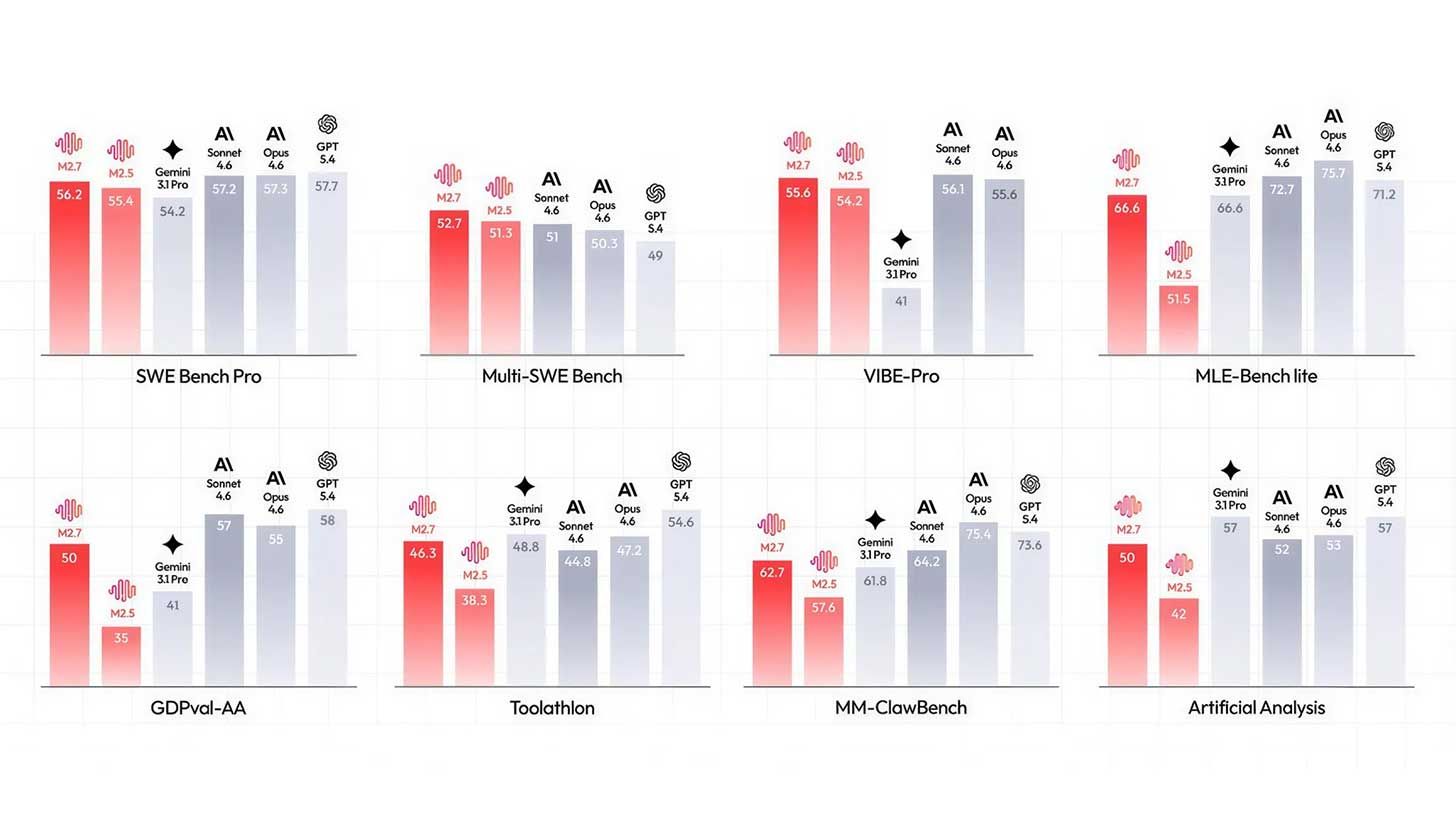
Image source: MiniMax
The Rundown: MiniMax launched M2.7, what the company calls its “first model which deeply participated in its own evolution" — writing its own training code, running autonomous improvement loops, and matching the scores of top Western models.
The details:
Early M2.7 versions were put to work on their own training, including writing improvement routines and tuning how the model learns from feedback.
M2.7 ran 100+ cycles of autonomously analyzing its mistakes, rewriting code, and testing fixes — showing a 30% accuracy boost on internal benchmarks.
On coding, M2.7 hit 56.2% on SWE-Pro and 55.6% on VIBE-Pro, putting it near Opus 4.6 and GPT-5.3-Codex for agentic engineering work.
Why it matters: Self-evolving AI is one of the bigger next steps forward, and while we’ve heard rumblings from OAI, Anthropic, Google, and xAI, MiniMax is one of the first labs out of China to openly make the claim. Future models will all likely be training and improving themselves, but for now, we’re just watching the feature emerge.
AI TRAINING
📝 Generate an actionable SEO audit with AI
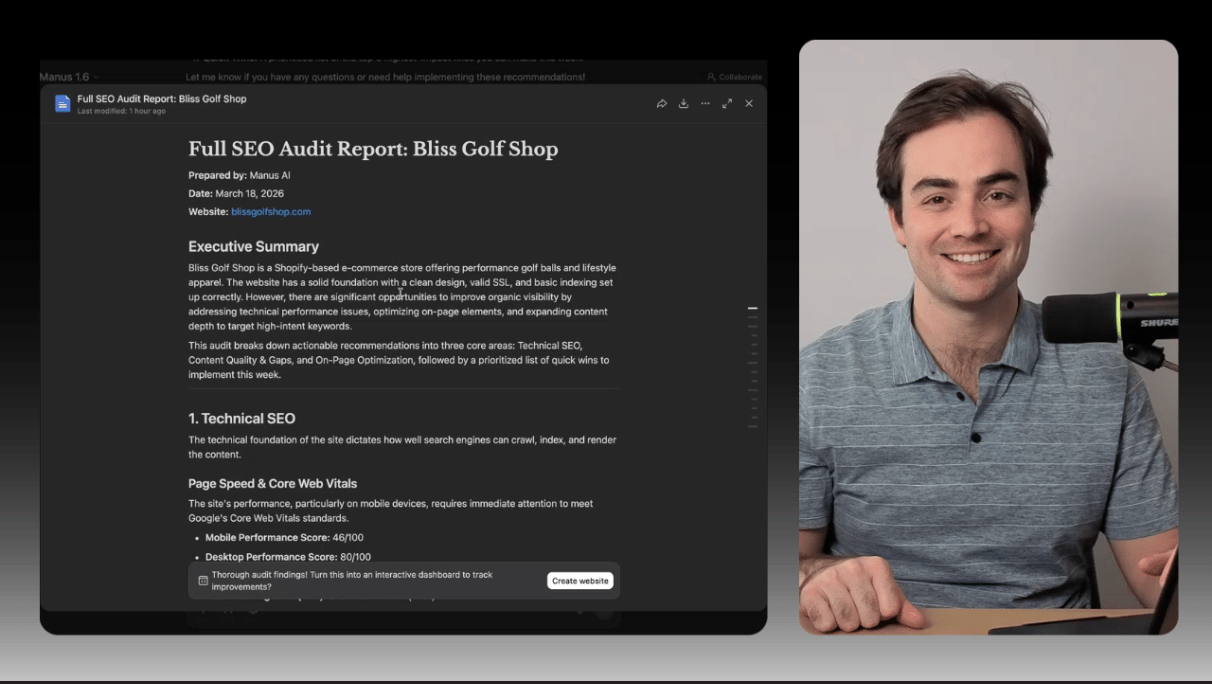
The Rundown: In this guide, you will learn how to run a full SEO audit on any website using AI and turn the results into a slide deck and a prioritized task list. We tested this method in Manus, Claude, ChatGPT, Gemini, and NotebookLM.
Step-by-step:
Open any AI tool and prompt: “Perform a comprehensive SEO audit of [website URL]. Analyze SEO, on-page optimization, content quality, and backlink profile. Give me the top 10 highest-impact fixes ranked by effort vs. results. Export as a PDF report with sections for each category. Cite your data sources.”
Review the PDF, then prompt: “Turn this audit into a slide deck I can present to a client or stakeholder. Keep it under 10 slides. Include an executive summary, top issues by category, and a recommended action plan with priorities.”
Finally, fix the issues by prompting: “Create an SEO workbook as a CSV with every issue from the audit. Columns: Issue, Category, Priority (High / Medium / Low), How to Fix, Affected Page URL. Sort by priority.”
Pro tip: Give tools browser access so they can gather SEO data from free online tools. Manus did the best job on this without any configuration.
PRESENTED BY GLEAN
🔒 AI moves fast, and security hasn't caught up
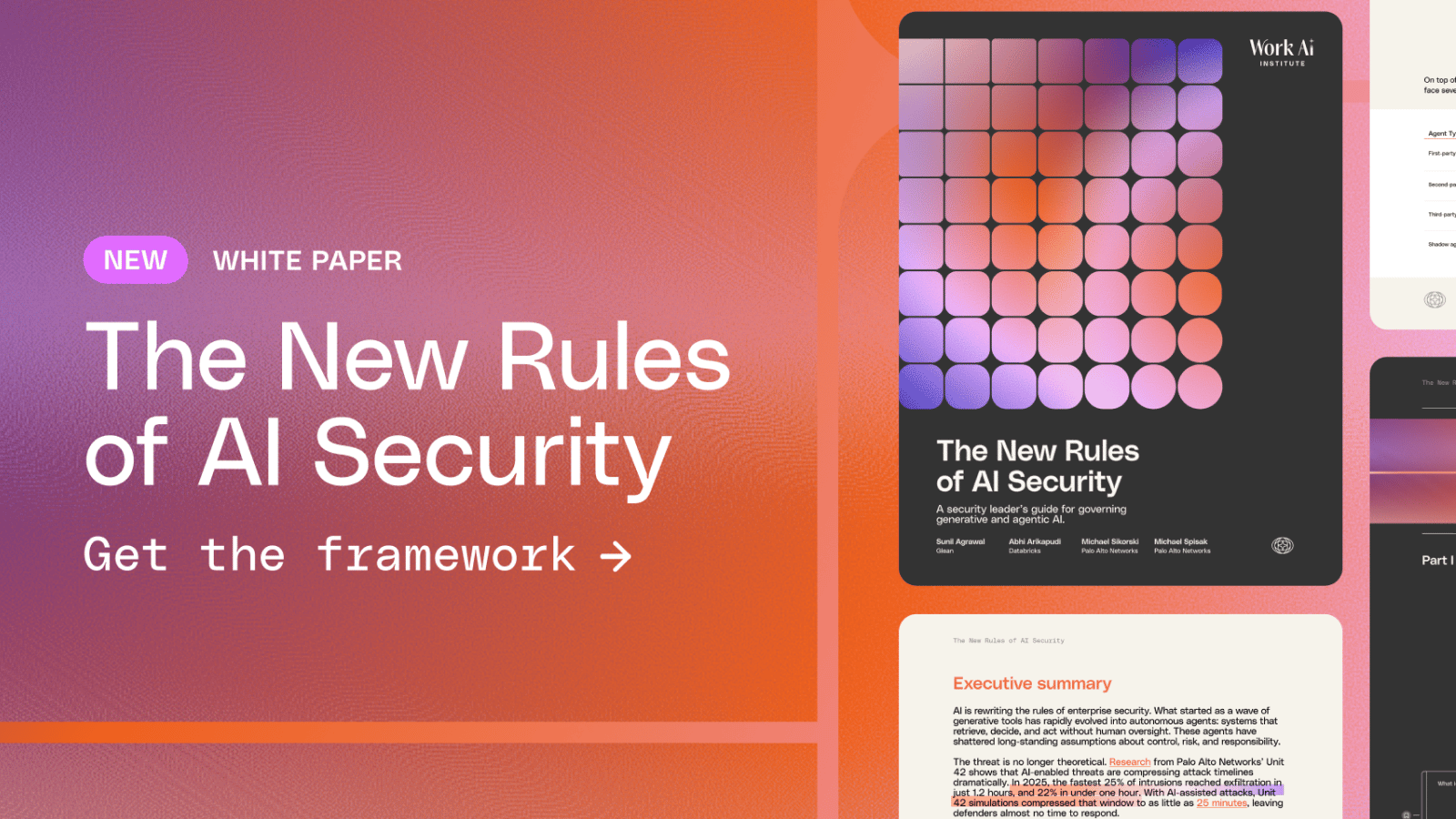
The Rundown: AI agents now make decisions, take actions, and touch sensitive data across organizations — but most security policies weren't built for that. The AWARE Framework, developed by the Work AI Institute with Palo Alto Networks and Databricks, gives security and IT leaders a practical guide for governing AI agents at scale.
Download the AWARE Framework to learn:
Why AI agents create risks most security tools weren't designed to catch
Where organizations have blind spots and how to close them before they become a problem
A practical governance model that any team can act on without slowing AI adoption
MICROSOFT & OPENAI
⚖️ Microsoft ‘weighing’ legal action over Amazon-OAI deal

Image source: Lovart / The Rundown
The Rundown: Microsoft is reportedly considering legal action against Amazon and OpenAI, with sources telling the FT it will sue if a new $50B cloud deal between the two companies violates its exclusive contract to host the startup's models on Azure.
The details:
The dispute is over Frontier, OpenAI's new enterprise agent platform — also the anchor of a broader deal committing $138B in cloud spending to AWS.
Microsoft dropped its exclusive hosting lock on OAI in October, but kept a clause that forces all developer access to OAI models to run through Azure.
The FT’s source said “We know our contract… We will sue them if they breach it”, with another source adding “the last thing OAI needs is another court case”.
OAI reportedly signed a new deal with AWS last week, which opened the door for the company’s deployment with the Pentagon.
Why it matters: Just when you thought the Microsoft-OAI relationship couldn't get more awkward, now there's a potential lawsuit to worry about. The FT source is right that OAI can't afford another legal fight with an IPO looming and the Musk trial, but the Microsoft partnership itself also continues to feel like a headache for the AI giant.
QUICK HITS
🛠️ Trending AI Tools
🚀 Stitch - Google’s newly updated UI creation tool for “vibe design”
📱 Dispatch - Control Claude Cowork on your computer via mobile
♻️ MiniMax M2.7 - 'Self-evolving' AI with strong coding, agentic benchmarks
🦞 GLM-5-Turbo - Z AI's high-speed agentic model built for OpenClaw
📰 Everything else in AI today
ASAPP's Nirmal Mukhi and special guest Forrester’s Kate Leggett explore how to plan, staff, and operationalize the new roles AI agents bring to the customer service workforce.*
The U.S. Dept. of Defense filed a 40-page rebuttal to Anthropic's lawsuits, arguing its safety limits make it an “unacceptable risk to national security” during war operations.
Xiaomi released MiMo-V2-Pro, a model that topped OpenRouter's charts under an ‘Hunter Alpha’ codename and excels in agent-related tasks and OpenClaw usage.
Microsoft acquired the full team behind Cove, a collaborative AI interface startup, with the company saying its “ideas will live on” at the tech giant.
Midjourney rolled out a preview of its new V8 image model, coming with improved speed, detail, and text rendering, garnering mixed reactions in early testing.
*Sponsored Listing
COMMUNITY
🤝 Community AI workflows
Every newsletter, we showcase how a reader is using AI to work smarter, save time, or make life easier.
Today’s workflow comes from reader Sofia F. in London, UK:
"I've recently started a wine subscription, and while I know which wines I prefer, I've never been great at pairing them with food. I’ve finally solved this by setting up an AI workflow to manage my wine pairings. Every time my subscription arrives, I snap photos of the labels so the AI can index the vintage and tasting notes.
Now, when I finish my weekly shop, I just upload the receipt; the AI parses the ingredients and cross-references them against my wine inventory to generate a 7-day pairing schedule. It’ll even warn me if I’m about to waste a high-tannin Bordeaux on a mid-week stir-fry, suggesting a cheap bottle of plonk from the corner shop instead! My husband, a total wine connoisseur, says it hasn't been wrong yet."
How do you use AI? Tell us here.
🎓 Highlights: News, Guides & Events
Read our last AI newsletter: Simo sounds alarm on OpenAI’s ‘side quests’
Read our last Tech newsletter: China greenlights commercial brain implant
Read our last Robotics newsletter: Travis Kalanick’s stealth robot play
Today’s AI tool guide: Generate an actionable SEO audit
RSVP to next workshop @ 2 PM EST today: Intro to Vibe Coding pt. 2
See you soon,
Rowan, Joey, Zach, Shubham, and Jennifer — the humans behind The Rundown
No matching search results
Try using different keywords, double-check your spelling, or explore related categories.
Stay Ahead on AI.
Join 2,000,000+ readers getting bite-size AI news updates straight to their inbox every morning with The Rundown AI newsletter. It's 100% free.