Get the latest AI news, understand why it matters, and learn how to apply it in your work — all in just 5 minutes a day. Join over 2,000,000+ subscribers.

Simo sounds alarm on OpenAI's 'side quests'
Read Online | Sign Up | Advertise

Good morning, AI enthusiasts. While OAI was launching a video app, building a web browser, designing hardware, and adding shopping to ChatGPT, Anthropic quietly took control of the enterprise market.
Now, Applications CEO Fidji Simo is reining the company back in — telling staff they "cannot miss this moment because we are distracted by side quests" and refocusing on two key pillars: coding tools and business customers.
In today’s AI rundown:
OpenAI scrapping ‘side quests’ to catch Anthropic
Mistral opens its model-training playbook
Generate a cohesive e-commerce product shoot
Microsoft redraws its AI org chart
4 new AI tools, community workflows, and more
LATEST DEVELOPMENTS
OPENAI
🎯 OpenAI scrapping ‘side quests’ to catch Anthropic

Image source: Lovart / The Rundown
The Rundown: OpenAI is overhauling its product strategy to focus on coding tools and businesses after CEO of Applications, Fidji Simo, called Anthropic's enterprise dominance a "wake-up call" in a company-wide meeting, according to the WSJ.
The details:
Powerful Claude Code and Cowork releases grabbed the lead with business customers, with Simo telling staff OAI is treating the gap as a "code red."
Simo said OAI “can’t miss the moment because we are distracted by side quests”, coming amid efforts including hardware, adult mode, ads, and more.
OAI’s 2025 launches included Sora, the Atlas browser, e-commerce features, and more, which insiders said led to confusion and constant compute shuffling.
It did claw back in coding, with Codex quadrupling its weekly users to 2M+ since January — alongside a new GPT 5.4 model targeting business workflows.
Why it matters: The Pentagon drama may still be fresh in consumer minds in the battle between OpenAI and Anthropic, but where the real war is being fought is on the enterprise side. OAI is pulling in a million different directions, and Simo saying so out loud to the whole company tells you how real the Anthropic gap has gotten.
TOGETHER WITH HUBSPOT
🧠 100+ ChatGPT prompts to revolutionize your workflow
The Rundown: HubSpot’s free, comprehensive “How to Use ChatGPT at Work” guide provides 100+ ready-to-use prompts to help professionals boost efficiency and adopt AI-driven workflows.
Inside, you’ll find:
A quick crash course to master ChatGPT in under 30 minutes
Practical industry use cases to spark real-world inspiration
100+ prompts to streamline tasks and accelerate productivity
Expert tips to tackle common AI roadblocks with confidence
Get your free copy and join 10,000+ professionals leveling up with AI.
MISTRAL
🏗️ Mistral opens its model-training playbook
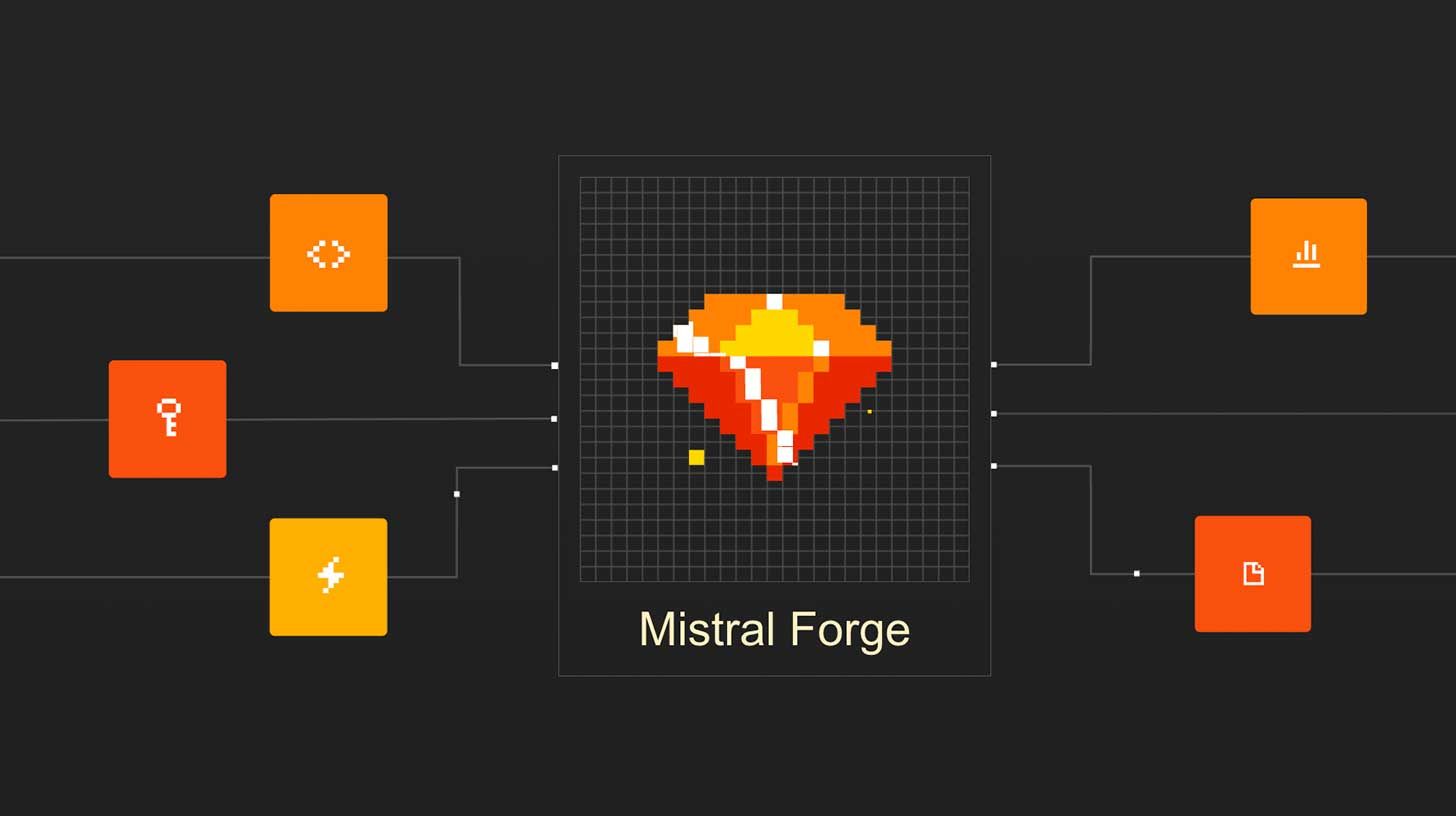
Image source: Mistral
The Rundown: Mistral launched Forge, a platform that hands enterprises the same training recipes and infrastructure the French AI lab uses internally — allowing companies to build custom models on proprietary data without ever sharing it.
The details:
Rather than basic fine-tuning, Forge offers full pre-training, post-training, and RL pipelines that mirror how Mistral builds its own flagship models.
Training can run entirely on a company's own servers with zero data exposure to Mistral, a hard requirement for defense, finance, and government buyers.
Early partners include ASML, Ericsson, and the European Space Agency, with use cases from legacy code migration to ancient manuscript restoration.
Forge comes during a busy week of Mistral releases that includes Small 4 and Leanstral, with the French startup also joining Nvidia’s Nemotron Coalition.
Why it matters: Most major enterprise AI boils down to the same thing: take a general model and hope it's close enough. Mistral is making a different bet — that companies sitting on tons of proprietary data, compliance rules, and internal codebases need models trained on that knowledge, not just prompted with it.
AI TRAINING
📸 Generate a cohesive e-commerce product shoot

The Rundown: In this guide, you will learn how to generate a full set of product photos using Grok's Aurora model, building each image off the last one so they all look like they came from the same session.
Step-by-step:
Go to grok.com, upload a product photo, and prompt: “Product photo of [your product] on a matte black surface, soft box lighting from the upper left, shot on 85mm lens, f/2.8, shallow depth of field, commercial product photography”
Build more shots from the first output by keeping the same studio description and changing only the angle or crop — a 3/4 angle, a close-up, or a white BG
Add a lifestyle shot. Describe the product in use: being worn, held, or placed in a real environment. Include the setting, lighting, and mood
Lay out all your images. They should look like they came from the same shoot
Pro tip: Try picking a themed studio shoot, like basketball-themed, nature-themed, etc. Grok might surprise you here.
PRESENTED BY UNWRAP
💬 Powerful insights for powerful brands

The Rundown: Unwrap’s customer intelligence platform brings all your customer feedback (surveys, reviews, support tickets, social comments, etc.) into a single view, then uses AI + NLP to surface the most actionable insights and deliver them straight to your inbox.
With Unwrap, you get:
A clear, single view of customer sentiment
The ability to ask questions about your feedback using natural language with Assistant
Real-time alerts from your feedback as they arise
Tools trusted at scale by Perplexity, Oura, Stripe, Clay, DoorDash, lululemon, Southwest Airlines, and others
Connect with Unwrap to get a free trial of the tools, exclusive to The Rundown AI readers.
MICROSOFT
♻️ Microsoft redraws its AI org chart
Image source: Microsoft AI
The Rundown: Microsoft just overhauled its AI org chart, announcing the merge of its fragmented Copilot teams and shifting Microsoft AI CEO Mustafa Suleyman’s focus squarely towards its five-year mission to build superintelligence in-house.
The details:
Former Snap exec and new Microsoft AI EVP Jacob Andreou will run the combined Copilot org, which will span across design, product, and engineering.
Suleyman said the move will “enable me to focus all my energy on our Superintelligence efforts”, with a focus on enterprise systems.
A reworked OAI partnership cleared the way for Microsoft to build toward AGI on its own, lifting a ban on solo development that ran through 2030.
Copilot is still struggling for traction, with 6M daily users in February vs. ChatGPT's 440M — and its enterprise add-on reaching just 3% of Office subs.
Why it matters: Microsoft stock is down this year, the legacy software companies are under pressure to prove AI ROI, and Copilot adoption is a fraction of the big players. This reorg is Nadella betting that the fix starts at the model layer just as much as the product one — and that the company needs its own frontier systems to compete.
QUICK HITS
🛠️ Trending AI Tools
🧠 Adapt - Your company’s AI computer. Learns your business and autonomously reasons and acts across your stack in Slack*
🤏 GPT-5.4 Mini & Nano - OAI’s fast, cheap small models for coding agents
🦞 NemoClaw - Nvidia's open-source security layer for OpenClaw agents
🧠 Mistral Small 4 - Mistral's new AI combining reasoning, coding, and vision
*Sponsored Listing
📰 Everything else in AI today
OpenAI launched GPT-5.4 mini and nano, two smaller, faster versions of its flagship model built for coding assistants and multi-agent systems.
Mistral released Small 4, an open-source model that merges its reasoning, coding, and vision capabilities into one system.
Anthropic unveiled Dispatch, a Claude Desktop feature that lets users message the assistant from a phone as it works on a PC, running code, browsing, and managing files.
Sam Altman's proof-of-personhood company World launched AgentKit, a tool that lets websites verify a real human is behind an AI shopping agent's purchases.
Google announced that its Personal Intelligence feature is now rolling out to free-tier users across its AI Mode in Search, the Gemini app, and Chrome in the U.S.
Gamma introduced Imagine, an AI design tool baked into its presentation platform that generates logos, infographics, and social graphics with automatic brand styling.
COMMUNITY
🤝 Community AI workflows
Every newsletter, we showcase how a reader is using AI to work smarter, save time, or make life easier.
Today’s workflow comes from reader Dmitry K. in Livonia, MI:
"I have two vehicles and found it challenging to keep meticulous maintenance records over the years. Recently, I set up a Claude project to create a Vehicle Maintenance Logbook. Every time I have a service appointment, I take a picture of the receipt, including the work performed, and upload it to Claude.
It then enters all relevant information into my logbook, while keeping me informed of manufacturer-recommended maintenance and giving me an overall health score for each vehicle. Now I have better maintenance clarity and a fully digital record, which will come in handy when selling either car!”
How do you use AI? Tell us here.
🎓 Highlights: News, Guides & Events
Read our last AI newsletter: Nvidia’s big AI day at GTC
Read our last Tech newsletter: China greenlights commercial brain implant
Read our last Robotics newsletter: Travis Kalanick’s stealth robot play
Today’s AI tool guide: Generate a cohesive e-commerce product shoot
RSVP to our next workshop on Thursday: AI coding bootcamp pt. 2
See you soon,
Rowan, Joey, Zach, Shubham, and Jennifer — the humans behind The Rundown


China greenlights commercial brain implant
Read Online | Sign Up | Advertise

Good morning, tech enthusiasts. China has issued the world’s first commercial approval for an invasive brain-computer interface, marking a regulatory breakthrough that rivals Neuralink and Synchron have yet to reach.
The implant pairs a neural chip with a robotic glove, letting paralyzed patients grip objects by thought — and now, by prescription.
In today’s tech rundown:
China approves world’s first commercial BCI
Starcloud wants 88K AI satellites in orbit
New blood test may predict how long you live
Samsung kills its trifold after three months
Quick hits on other tech news
LATEST DEVELOPMENTS
BCI
🧠 China approves world’s first commercial BCI
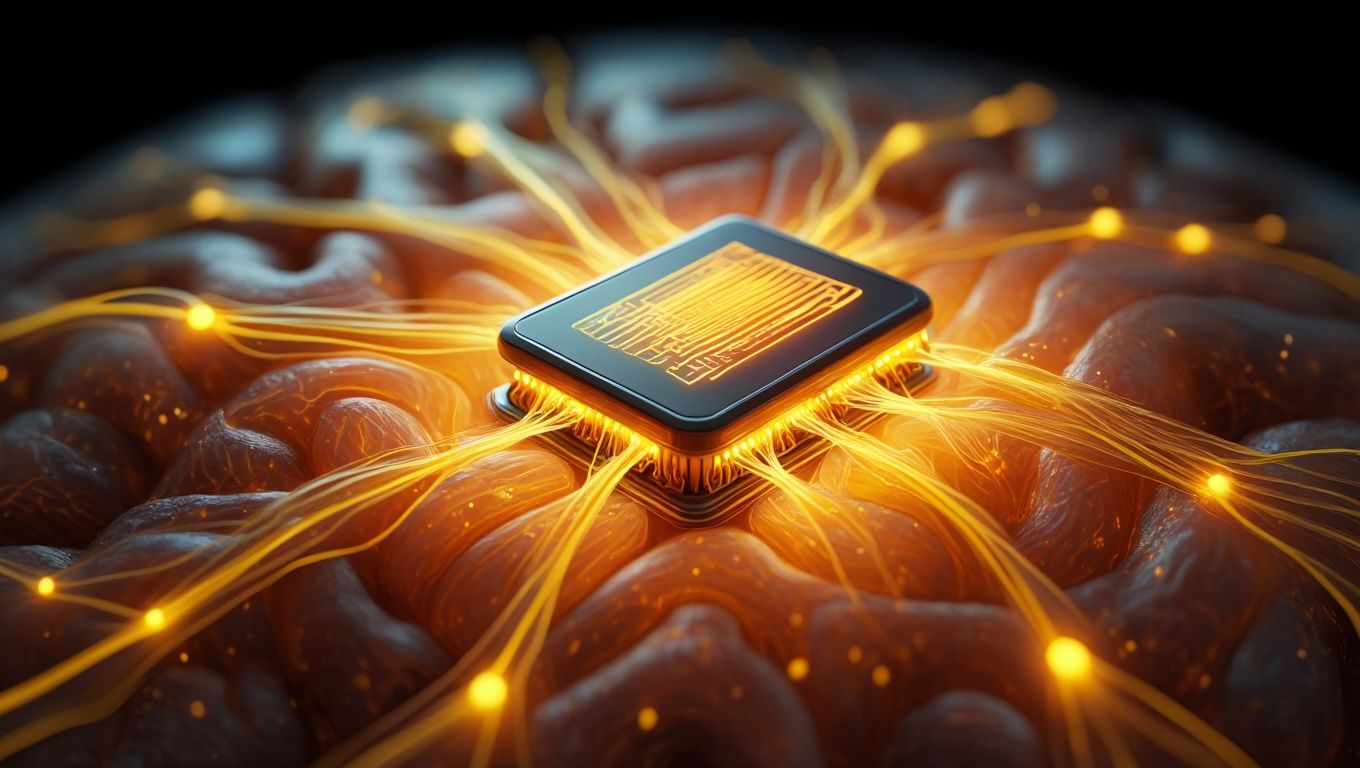
Image source: Reve AI / The Rundown
The Rundown: China just approved the world’s first invasive brain-computer interface (BCI) for commercial use, letting Shanghai-based Neuracle Medical Technology bring its neural implant to market ahead of Neuralink and every other rival.
The details:
The system pairs a brain implant with a robotic glove, enabling adults with spinal cord injuries to grip and hold objects via thought-driven signals.
It’s narrowly targeted: designed for 18–60-year-olds with stable upper-limb paralysis who retain arm movement but can’t grasp.
The coin-sized wireless implant sits on the surface of the brain’s outer membrane — above the tissue, not inside it, to reduce damage risk.
Musk’s Neuralink and Synchron are still in trial or demo mode, while Musk says Neuralink will reach “high-volume production” this year.
Why it matters: China’s approval makes this the first invasive BCI cleared for commercial medical use, while rivals, including Neuralink and Synchron, remain in trials. Beijing designated BCI a national "future industry," weaving it into its economic planning, all while moving faster through regulatory channels than the FDA.
SPACE
🛰️ Starcloud wants 88K AI satellites in orbit

Image source: Starcloud
The Rundown: Nvidia-backed startup Starcloud filed plans to build a mega-constellation of 88K satellites designed to host AI workloads in space rather than expand the world’s already strained data center footprint.
The details:
Starcloud has asked regulators to approve its “orbital data center,” a satellite network built around AI accelerators and cloud servers in space.
The Redmond-based startup argues the setup could lower cooling costs, cut latency, and offer a credible alternative to land-based server farms.
The filing drops Starcloud into direct competition with Starlink and Amazon’s Project Kuiper for a finite slice of orbital real estate.
A planned fleet of 88K spacecraft would dwarf today’s constellations; SpaceX’s Starlink, currently the world’s largest, has about 10K satellites in orbit.
Why it matters: The proposal lands as governments are still sorting out how much of the sky a single private operator can claim. It also puts a finer point on an ongoing debate — whether the promise of space-based AI is compelling enough to justify packing an already crowded, light-polluted orbit even further.
BIOTECH
🩸 New blood test may predict how long you live

Image source: Ideogram / The Rundown
The Rundown: A routine blood test may soon do more than flag high cholesterol — it may forecast who is likely to be alive two years from now, thanks to a newly identified RNA signal that outperforms traditional health markers in predicting short‑term survival.
The details:
Duke researchers found that levels of six tiny RNA fragments (piRNAs) predict whether people over 70 survive the next two years with up to 86% accuracy.
The team analyzed 828 small RNAs in blood plasma, alongside health indicators from medical records, assessments, and self-reported lifestyle data.
People who lived longer consistently showed lower levels of the nine piRNAs linked to aging, with six of them forming the strongest survival predictor.
In computer simulations, adjusting patients’ piRNA levels to optimal ranges pushed predicted two-year survival from roughly 47% to nearly 100%.
Why it matters: A blood test that forecasts short-term survival is still years from clinical use, but piRNAs represent a class of biomarkers standard panels have never captured. Up next, the research team is testing younger people and probing whether common drugs like metformin or GLP-1s can shift the signal.
SAMSUNG
💀 Samsung kills its trifold after three months

Image source: Samsung
The Rundown: Samsung is pulling the plug on its $2,899 Galaxy Z TriFold less than three months after launch, winding down the dual-hinged, 10-inch phone-tablet hybrid in Korea first, then the U.S. as remaining inventory clears.
The details:
Released in tiny online drops that sold out in minutes, the TriFold functioned more as a proof-of-concept than a mainstream product, Samsung says.
Samsung reportedly made little to no profit per unit, squeezed by high manufacturing costs and elevated prices for memory and storage components.
Foldables remain a small fraction of the overall phone market, but one of the few segments still posting growth as traditional slab phones plateau.
The exit hands Apple a clean opening: when its long-rumored foldable iPhone eventually arrives, it can position itself as the measured, refined alternative.
Why it matters: Samsung killing its TriFold is a reality check for luxury foldables, evidence that even the category’s dominant player can’t sustain a three-hinge gamble in a market this thin. With Huawei shipping more conventional foldables and Apple lining up its first folding iPhone, Samsung is retreating to safer, higher‑volume designs.
QUICK HITS
📰 Everything else in tech today
Meta’s stock jumped about 3% after reports that the company is weighing layoffs of 20% or more of its roughly 79K employees to rein in soaring AI infrastructure costs.
Apple is buying longtime Final Cut Pro plug‑in maker MotionVFX in a bid to lock more video creators into its subscription ecosystem and fend off Adobe.
The Trump administration is reportedly set to collect an unprecedented $10B “transaction fee” from investors in the new U.S.-controlled TikTok.
Apple rolled out the AirPods Max 2, a $549 refresh of its over-ear headphones that adds an H2 chip with stronger noise cancellation, USB‑C, and live translation.
Dell Technologies disclosed in its latest annual report that its workforce fell about 10% as of January 2026, shrinking by roughly 11K jobs to around 97K employees.
Angel Protection debuted AI software at SXSW that scans existing security cameras for brandished firearms and delivers a human-verified alert to police in seconds.
More than 10 biotech firms, including AI-powered drug discovery platforms, have filed for Hong Kong IPOs this year.
Geely-backed Zeekr is targeting a 2026 South Korea launch with its premium EV lineup, turning Hyundai and Kia’s turf into the next frontline for China’s EV expansion.
New Peloton CEO Peter Stern, a former Apple exec, is steering the company toward GLP-1 weight-loss drug users and a cheaper, mass-market treadmill lineup.
Amazon is hiking the price of its ad-free Prime Video add‑on in the U.S. from $2.99 to $4.99 a month starting April 10, rebranding the tier as “Prime Video Ultra.”
COMMUNITY
🎓 Highlights: News, Guides & Events
Read our last AI newsletter: Nvidia's big AI day at GTC
Read our last Tech newsletter: Apple’s foldable iPhone leaks
Read our last Robotics newsletter: Travis Kalanick’s stealth robot play
Today’s AI tool guide: How to use Grok for free automated research
RSVP to our next workshop on March 19: AI coding bootcamp pt. 2
See you soon,
Rowan, Joey, Zach, Shubham, and Jennifer — The Rundown’s editorial team
Nvidia's big AI day at GTC
Read Online | Sign Up | Advertise

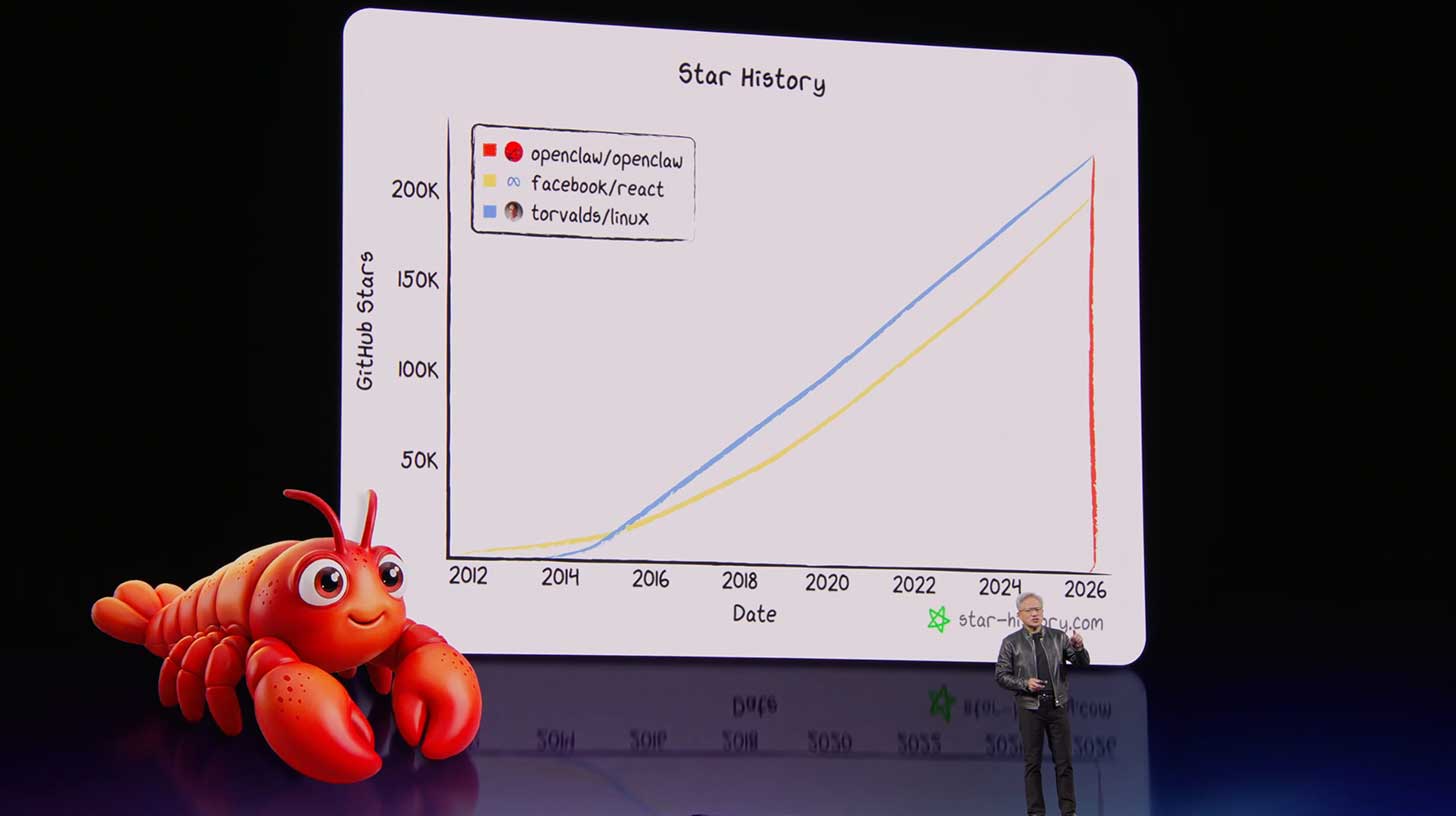
Good morning, AI enthusiasts. Jensen Huang has called OpenClaw "the single most important piece of software, probably ever," and this year's GTC showed just how serious the Nvidia CEO is about adopting the viral agentic tool.
Its NemoClaw security stack for OpenClaw was one of dozens of new announcements, including next-gen chips, AI game graphics, and a wave of enterprise and robotics partnerships that show the chipmaker is spreading far beyond its hardware roots.
In today’s AI rundown:
Nvidia unloads at GTC with NemoClaw, and more
Exposed AI band becomes real in Japan
How to use Grok for free automated research
Manus brings its AI agent to the desktop
4 new AI tools, community workflows, and more
LATEST DEVELOPMENTS
NVIDIA
🦞 Nvidia unloads at GTC with NemoClaw and more
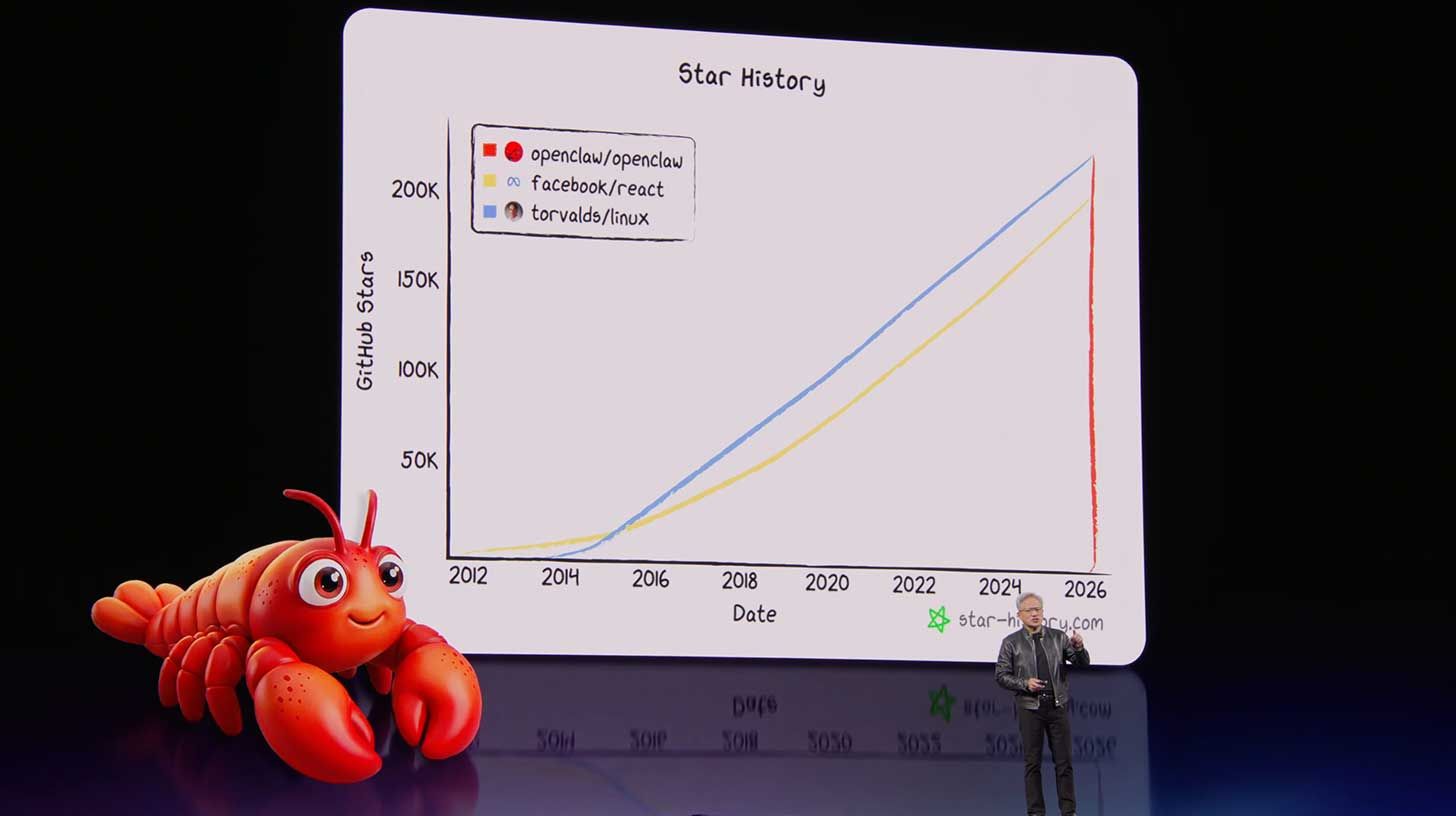
Image source: Nvidia
The Rundown: Nvidia CEO Jensen Huang made a wave of announcements at GTC 2026, including an open-source NemoClaw for agents, next-gen Vera Rubin platform, DLSS 5 for photorealistic game graphics, and new enterprise and robotics tools.
The details:
NemoClaw brings security and privacy guardrails to OpenClaw agents, with an emphasis on growing the agentic tech’s use across enterprises.
The Vera Rubin platform puts seven new chips into production to power AI training and agents, with Huang also teasing space-based data centers.
DLSS 5 uses AI to add photorealistic lighting and materials to games in real time, with Bethesda, Capcom, and Ubisoft among the first studios on board.
A new open-source Agent Toolkit lets enterprises build secure AI agents, along with new AI platforms and partnerships for vehicles, robots, and more.
Why it matters: Huang pitched Nvidia as 'the first vertically integrated but horizontally open company,' and GTC makes that case hard to argue. Chips, agents, game graphics, robotics — every announcement pointed to the same play: own the infrastructure layer beneath all AI workloads, and let everyone else build openly on top.
TOGETHER WITH YOU.COM
🤔 Keep your LLMs from making stuff up

The Rundown: It happens — LLMs hallucinate. Grounding your LLM, however, can help dramatically improve accuracy. In this guide, You.com explains what AI grounding is and how organizations can implement it to achieve more reliable outputs.
The playbook covers:
A three-part approach that outperforms RAG alone
Why grounding isn't set-and-forget, and how to build audit trails
The open vs. closed platform trade-off (and what it means for your next model switch)
AI & MUSIC
🎸 Exposed AI band becomes real in Japan

Image source: Spotify
The Rundown: A pseudonymous producer called "Kage" built a fictional Japanese metal band called ‘Neon Oni’ with Suno that pulled in 80k+ monthly listeners before fans uncovered it was AI, then hired real Tokyo musicians to perform the AI tracks live.
The details:
Neon Oni's Spotify page listed fictional member bios and a Tokyo location, with AI-generated music videos, merch, and a growing fanbase.
Reddit users eventually spotted AI-generated hands in the music videos and traced the creator to Europe, exposing the band as entirely fabricated.
The creator recruited seven musicians from Tokyo bands to perform the AI music live, with three shows now complete and a headline gig set for March 29.
From an interview with Kage: "In an age where AI is taking everyone's jobs, this has actually created jobs. It's done the complete opposite."
Why it matters: Initial deception aside, musicians play cover songs and hit songwriters produce tracks for other artists every day. Neon Oni might be the strange, AI-future version of that model: one creator builds the brand and writes the music with AI, then real performers bring it to the stage when a concept or particular sound gains traction.
AI TRAINING
🔎 How to use Grok for free automated research
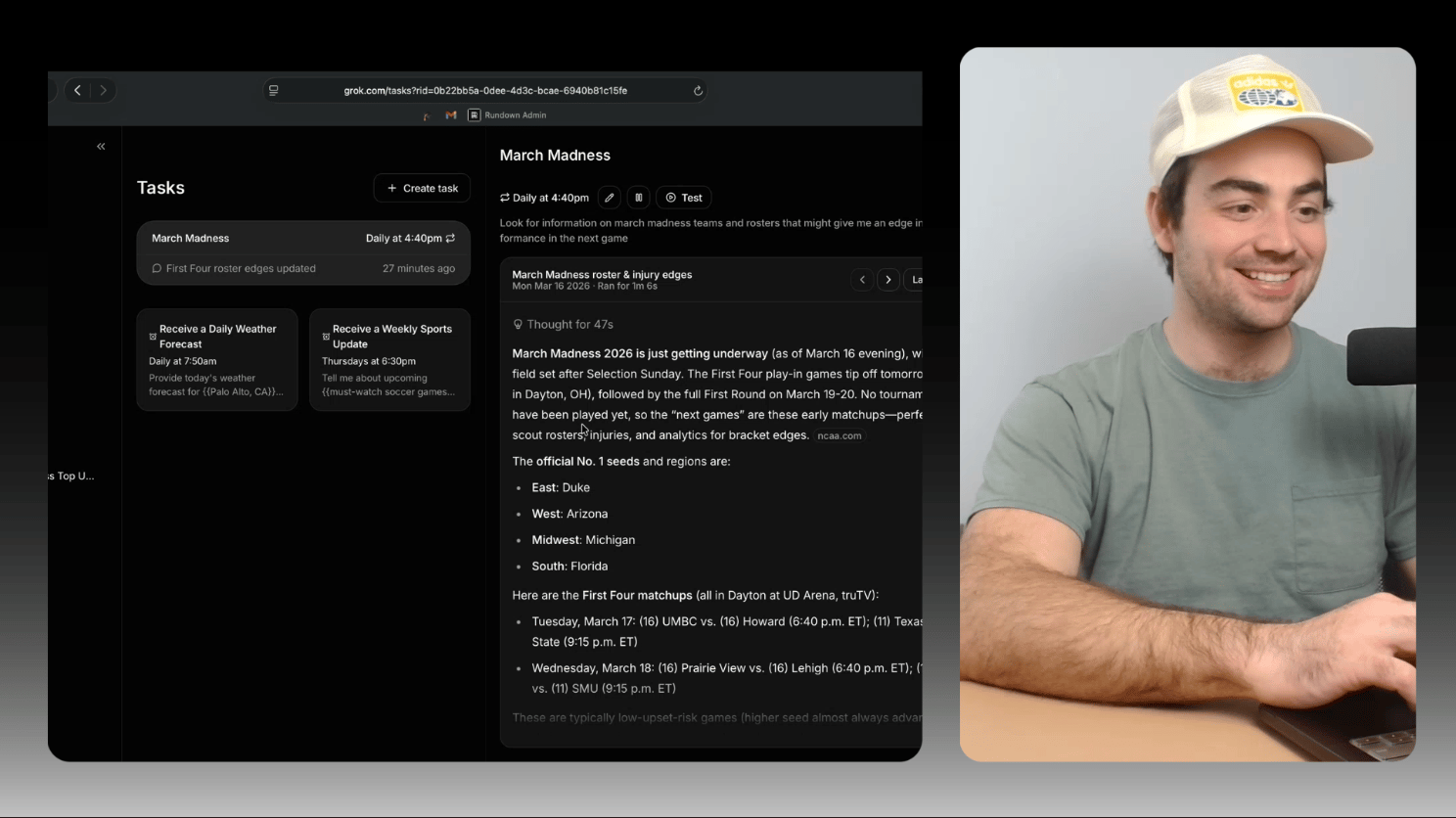
The Rundown: In this guide, you will learn how to use Grok's Tasks feature. If you have a free X.com account, you get 2 automated tasks each day — use them to build automated daily research briefings pulled from live X data.
Step-by-step:
Go to Grok and sign in with your X account. Click on your profile picture in the bottom left, then click Tasks in the pop-up
Click New Task, give it a name, set your schedule (daily, weekly, or specific days), and prompt: “Search X for the top trends in [your niche] from the last 24 hours. Summarize the top 3 and flag anything gaining traction”
Once you save the task, Grok will run the search on schedule and send you the results via email and as a push notification in the mobile app
To view run results on desktop, navigate back to grok.com/tasks and click on the task.
Pro tip: In addition to your two daily tasks, you can also stretch your free Grok account further by scheduling up to 10 research tasks per week or month.
PRESENTED BY LAMBDA
📊 Open-weight arrivals: Lambda's benchmark results
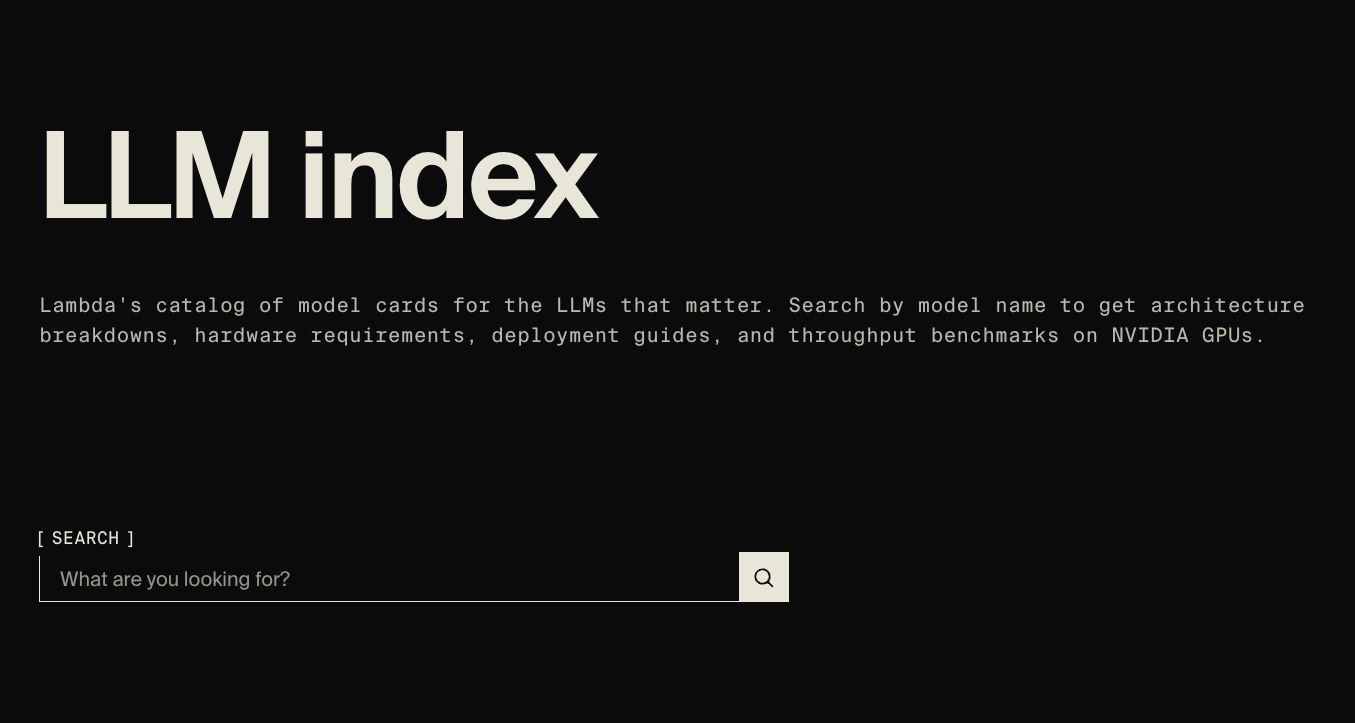
The Rundown: Lambda model cards are clean, single-page reports built around the metrics that actually matter in production, so you can evaluate open-weight models without digging through scattered benchmarks.
Each card includes:
Model overview and specs to help you evaluate fit
Real throughput and latency numbers on NVIDIA A100, H100, and B200 GPUs
Side-by-side comparisons for vLLM and SGLang serving frameworks
Launch commands and benchmark scripts to reproduce results on your own cluster
MANUS
🖥️ Manus brings its AI agent to the desktop
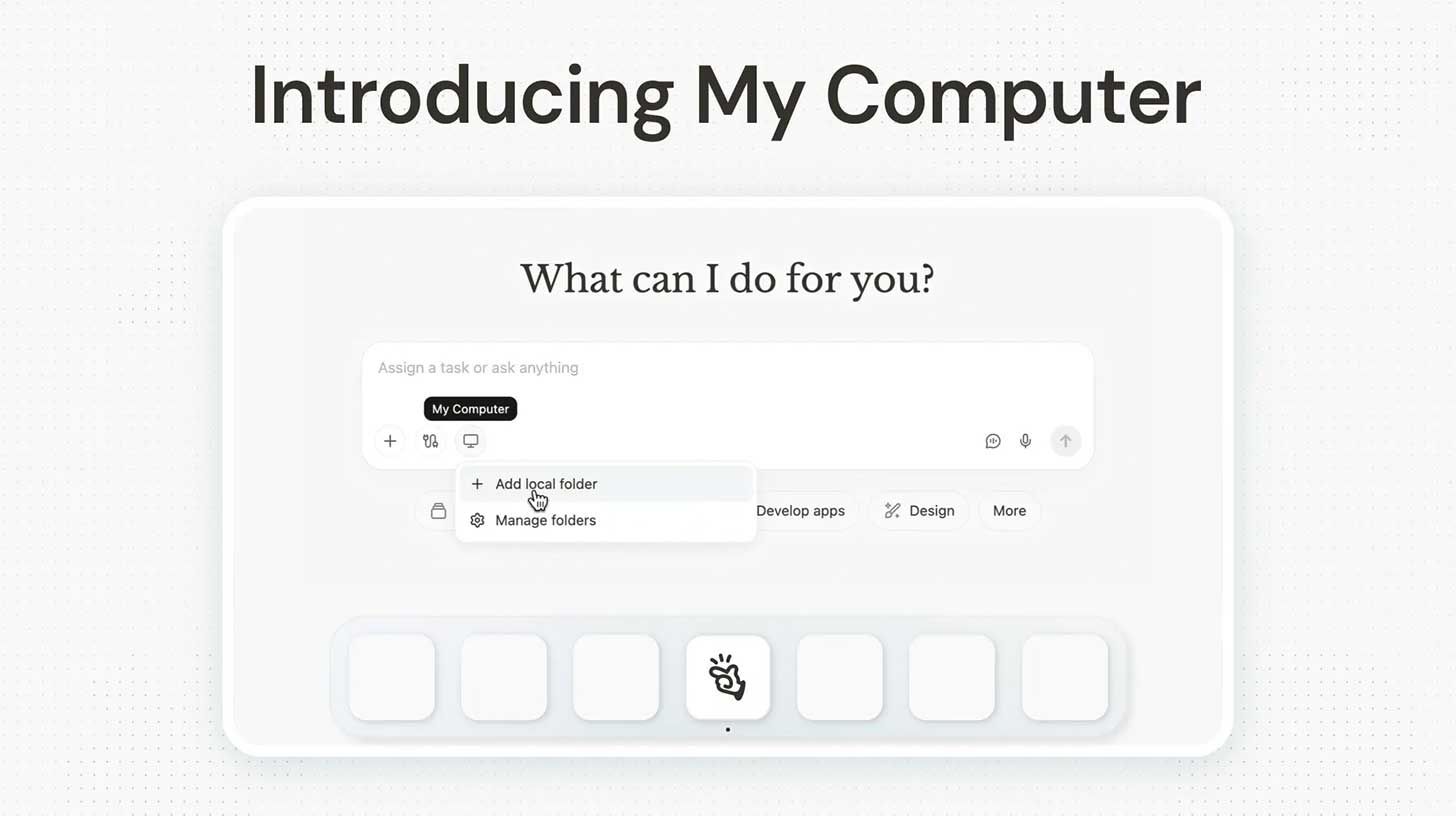
Image source: Manus
The Rundown: Manus just launched My Computer, a new desktop app that moves its cloud-based AI agent onto users' local machines to manage files, run terminal commands, build apps, and more.
The details:
My Computer works through the local terminal, giving the agent direct access to read, sort, and edit files stored on a user's machine.
Use cases range from organizing unsorted photos into labeled folders, batch-renaming invoices, to building and packaging apps autonomously.
Meta acquired the Chinese agentic startup in December for $2B, with its team joining the company, and CEO Xiao Hong coming in as a VP.
The agent can also tap into a machine's hardware when it's sitting idle, running jobs in the background, or completing tasks assigned remotely from a phone.
Why it matters: Manus was already one of the more capable AI agents in the cloud, and now it’s making the desktop move we’ve seen from OpenClaw, Perplexity, and others. The race to be the orchestrator of users’ computers is on, and Manus is a good opportunity for Meta to gain a foothold without a current frontier model of its own.
QUICK HITS
🛠️ Trending AI Tools
🗣️ Unwrap Customer Intelligence - Turn unstructured customer feedback into data-backed insights that inform your product roadmap*
💻 My Computer - Manus’ AI agent for local machines
📐 Get Physics Done - Open-source AI for end-to-end physics research
📢 AI CMO - Okara’s agent-powered marketing suite
*Sponsored Listing
📰 Everything else in AI today
Microsoft AI Envisioning Days – Free video series helping software companies build, deploy, and monetize AI apps and agents. Watch now.*
Encyclopedia Britannica and Merriam-Webster sued OpenAI, alleging it scraped their articles, produced competing outputs, and attributed hallucinations to them.
Physical Superintelligence dropped Get Physics Done, an open-source AI agent that can scope research problems, run experiments, verify results, and draft papers.
Moonshot AI published Attention Residuals, a technique that lets models pull from their earlier layers instead of stacking them, delivering 1.25x more compute efficiency.
OpenAI is reportedly restructuring its Stargate computing team, coming alongside a shift in strategy to renting more AI servers rather than building its own data centers.
Meta signed a $27B deal with Nebius to deploy AI cloud infrastructure, including one of the first large-scale deployments of Nvidia's Vera Rubin platform.
*Sponsored Listing
COMMUNITY
🤝 Community AI workflows
Every newsletter, we showcase how a reader is using AI to work smarter, save time, or make life easier.
Today’s workflow comes from reader Barry L. in Houston, TX:
"As a stand-up comedian, I’m constantly having to market and promote both myself and my shows. AI has become my go-to marketing and promotions strategist, helping me grow online and drive more ticket sales.
One of the best prompting tips I’ve learned is ending prompts with: “Ask me clarifying questions until you’re 95% confident you can complete the task successfully.” That tip alone dramatically improved my results.
AI has helped me develop better content ideas, sharpen my messaging, and build a strong Meta ad strategy for ticket sales. I produce a twice-monthly comedy show, and we’ve sold out every show but one.
How do you use AI? Tell us here.
🎓 Highlights: News, Guides & Events
Read our last AI newsletter: Musk takes xAI into a full rebuild
Read our last Tech newsletter: Apple’s foldable iPhone leaks
Read our last Robotics newsletter: Travis Kalanick’s stealth robot play
Today’s AI tool guide: How to use Grok for free automated research
RSVP to our next workshop on March 19: AI coding bootcamp pt. 2
See you soon,
Rowan, Joey, Zach, Shubham, and Jennifer — the humans behind The Rundown

Travis Kalanick's stealth robot play
Read Online | Sign Up | Advertise

Good morning, robotics enthusiasts. Travis Kalanick is back — and he’s got robots. The Uber cofounder has spent years building Atoms, a stealth robotics venture born from his ghost-kitchen empire and now aimed at food, logistics, and even mining.
Forget the bipedal humanoids: Kalanick says wheels will win in the real world.
In today’s robotics rundown:
Uber’s Travis Kalanick launches robotics startup
California’s Sunday hits $1.15B valuation
Rivian’s robot startup just raised $500M
Unitree’s tennis bot can actually rally
Quick hits on other robotics news
LATEST DEVELOPMENTS
ATOMS
☄️ Uber’s Travis Kalanick launches robotics startup

Image source: Ideogram / The Rundown
The Rundown: Uber cofounder and former CEO Travis Kalanick is launching Atoms, a stealthy robotics venture that aims to turn his CloudKitchens ghost‑kitchen empire into a fleet of wheeled industrial robots for food, logistics, and mining.
The details:
CloudKitchens is Kalanick’s delivery‑only restaurant business, which rents out commercial kitchens to virtual restaurant brands accessible via delivery apps.
Atoms has absorbed CloudKitchens and now pitches itself as a universal wheeled robot base for task‑specific machines, not humanoids.
The company is in talks to acquire autonomous trucking startup Pronto to accelerate its push into mining and industrial transport.
In a 1,600‑word manifesto, he cast Atoms as the dawn of a robotics “golden age,” with cheap software and energy fueling swarms of task‑specific robots.
Why it matters: Atoms is pitching a universal wheeled “robot base” for task‑specific machines, with Kalanick insisting wheels will beat humanoid legs in the real world. He says the company has been building in stealth for eight years and is finally ready to put robots to work across delivery, food service, mining, and other logistics‑heavy jobs.
TOGETHER WITH ROBOFLOW
🤖 Robots that See: Live Roboflow with Peer Robotics
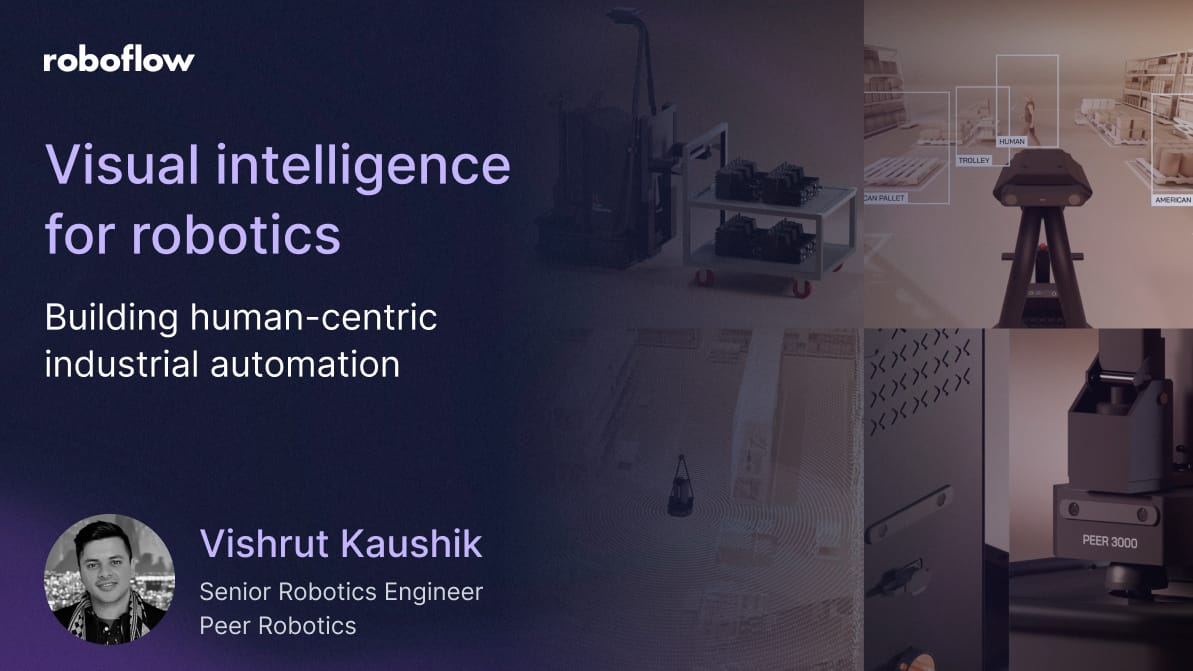
The Rundown: Visual AI company Roboflow goes live with Vishrut Kaushik, Senior Robotics Engineer at Peer Robotics, on how vision-enabled mobile robots are transforming factory floors, reducing physical demands and making facilities safer for human workers.
In this session, you’ll learn:
How Peer Robotics shifted from LIDAR to intelligent vision systems
How computer vision unlocks #D<-- remove digital twins and advance safety monitoring
The engineering behind their custom vision models and data pipelines
SUNDAY ROBOTICS
🦄 California’s Sunday hits $1.15B valuation
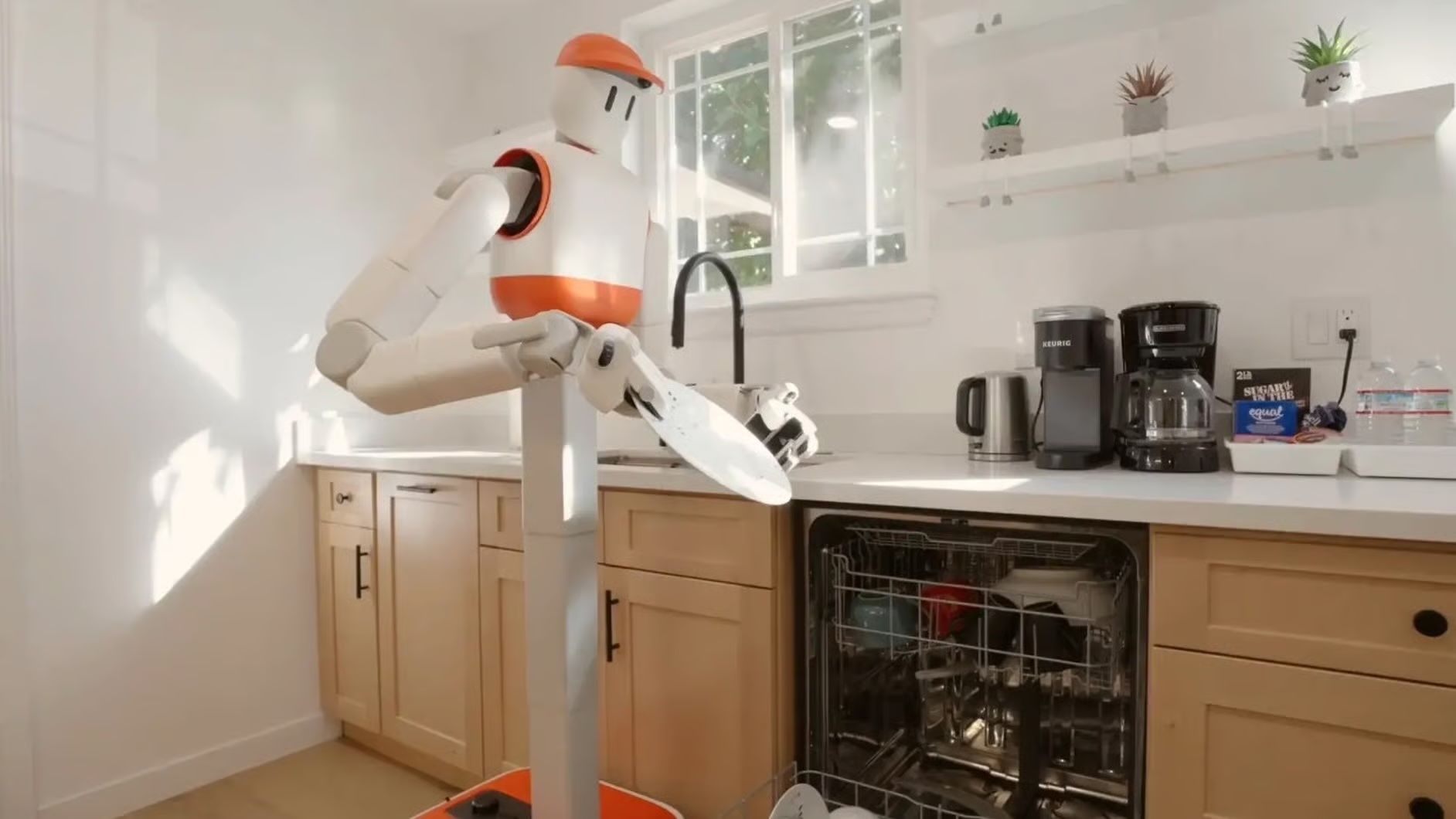
Image source: Sunday Robotics
The Rundown: California robotics startup Sunday just closed a $165M Series B round, hitting a $1.15B valuation, as the Silicon Valley startup races to put its general-purpose humanoid, Memo, in the home.
The details:
Founded by former Google DeepMind and Airbnb engineers Tony Zhao and Cheng Chi, Sunday is building Memo, a waist-high household humanoid.
Memo’s autonomy leans on Sunday’s “Skill Capture Glove” system, which has collected nearly 10M real-home chore demos from hundreds of households.
Sunday says it raised this money “to stop doing demos” and will use it to ship a beta fleet of Memo robots to early users later this year.
The company says it already has roughly 1K people on a waitlist for Memo and is leaning hard on modern AI techniques and large-scale manipulation data.
Why it matters: Sunday’s new funding drops it deep into the race to build general-purpose home robots, alongside Optimus, Figure, and Apollo. At the same time, it’s rubbing shoulders with a different wave of bots — like Amazon’s Astro — that want to be the “helpful robot in your living room,” just with very different shapes and skill sets.
MIND ROBOTICS
🦾 Rivian’s robot startup just raised $500M

Image source: Stripe (YouTube)
The Rundown: Rivian spin-out Mind Robotics has raised $500M at a $2B valuation to automate the factory tasks that conventional robots still can’t do — and its founder, Rivian CEO RJ Scaringe, thinks that humanoids are solving the wrong problem.
The details:
Founded in November 2025 by Scaringe, Mind Robotics has now banked $615M in total funding.
The startup is building a full-stack industrial robotics platform to automate dexterous factory tasks that conventional industrial arms cannot handle.
Rivian, a major shareholder, is Mind’s launch partner, opening its factories, engineering talent, and production data as a training testbed for the robots.
Mind wants robots on factory lines by the end of this year, carving out space between legacy industrial vendors and humanoid startups.
Why it matters: Humanoids are grabbing headlines, but Scaringe insists the real factory value is in hands — manipulation and physical reasoning, not backflips. That pits Mind against both legacy industrial giants and humanoid players like Tesla and Figure, which he argues add complexity and power draw without adding line value.
ROBOTICS RESEARCH
🎾 Unitree's tennis bot can actually rally

Image source: Github
The Rundown: A Unitree G1 humanoid trained by Chinese researchers can now hold its own on a tennis court — returning balls, tracking footwork, sustaining multi-shot exchanges with human opponents.
The details:
The system, called LATENT, was trained on just five hours of motion-capture data — short, imperfect clips of human swings and movement.
It returns balls traveling over 15 m/s with roughly 90% accuracy, enough to keep rallies going rather than just reacting to staged shots.
The team has open-sourced the approach on GitHub, framing LATENT as a reusable template for teaching athletic skills from messy real-world data.
Why it matters: The G1 retails for around $16K — cheap by humanoid standards — and it learned fluid, unscripted court play without pristine training data or choreographed setups. If the same pipeline transfers to other high-speed physical tasks, “five hours of motion capture” could become the new baseline for robot athletic training.
QUICK HITS
📰 Everything else in robotics today
Uber started offering Hyundai-owned Motional’s self-driving Ioniq 5 robotaxis, with safety drivers for now, for rides between select Las Vegas hotspots via its app.
Lucid Motors unveiled a steering-wheel-free “Lunar” robotaxi concept built on its upcoming mid-size EV platform, while outlining future plans with Uber and Nuro.
Engineers built a wearable two-legged robot that attaches behind a person, walking in sync to carry loads and effectively turning the user into a cyborg “centaur.”
Samsung just created a dedicated “Hand Lab” inside its robotics division to develop highly dexterous, tendon‑driven robotic hands for future humanoids.
Uber, Wayve, and Nissan plan to pilot a Nissan Leaf–based robotaxi service on Uber’s app in Tokyo in late 2026, marking Uber’s first robotaxi partnership in Japan.
Two UK brothers built a 3D‑printed robot that uses custom algorithms to solve a 4×4×4 Rubik’s Cube in 45.3 seconds, earning a new Guinness World Record.
A Unitree humanoid in Macau was removed from the street by police after it startled a 70‑year‑old woman, prompting a hospital visit and an official warning to its operator.
Researchers built a bicycle‑style robot that balances on two wheels at high speed while using AI to dodge obstacles in real time.
Chinese startup XGSynBot unveiled the Z1, a wheeled humanoid for factories that can swap modular tools like grippers and welders in under six seconds.
Researchers built a silicon photonics chip that lets robots and drones generate 3D maps while simultaneously measuring the speed of moving objects.
COMMUNITY
🎓 Highlights: News, Guides & Events
Read our last AI newsletter: Musk takes xAI into a full rebuild
Read our last Tech newsletter: Apple’s foldable iPhone leaks
Read our last Robotics newsletter: Figure’s humanoid cleans living rooms
Today’s AI tool guide: Create an intro animation in 15 minutes
RSVP to our next workshop on March 19: AI coding bootcamp pt. 2
See you soon,
Rowan, Joey, Zach, Shubham, and Jennifer — The Rundown’s editorial team

Musk takes xAI into a full rebuild
Read Online | Sign Up | Advertise

Good morning, AI enthusiasts. Three years ago, Elon Musk assembled 11 co-founders to take on OpenAI and Anthropic with a new AI startup. Nine of them are now gone.
With Musk admitting xAI is now "being rebuilt from the foundations up," and raiding Cursor for coding talent, it is clear that the billionaire is suddenly running a startup reset while preparing for one of the largest public listings in history.
In today’s AI rundown:
xAI down two more co-founders as Musk rebuilds
The Rundown Roundtable: Our AI use cases
Create an intro animation for your brand
AI-designed vaccine shrinks rescue dog's tumor
4 new AI tools, community workflows, and more
LATEST DEVELOPMENTS
XAI
🚪 xAI down two more co-founders as Musk rebuilds

Image source: Lovart / The Rundown
The Rundown: Elon Musk just posted that xAI "was not built right" and needs a ground-up rebuild, with 9 of 11 original co-founders now gone and the company actively hiring major coding talent to help Grok catch up to the industry’s frontier.
The details:
Zihang Dai and Guodong Zhang are the latest departures, leaving just two of the original 11 co-founders (Manuel Kroiss and Ross Nordeen) at xAI with Musk.
Zhang, who led Grok Code and reported directly to Musk, was reportedly blamed by Musk for Grok’s coding shortfalls before departing.
Musk said xAI is “being rebuilt from the foundations up”, which follows a major reorg that saw dozens of employees leave the company.
xAI hired senior Cursor leaders Andrew Milich and Jason Ginsberg last week, coming after Musk's admission that Grok is "currently behind" on coding.
Why it matters: It’s been a year of highs and lows for xAI, but it appears Musk is tearing things down for a major rebuild. With splashy new coding hires and a nearly complete exodus of co-founders, xAI has some serious work to do to hit Musk’s lofty goals — especially while trying to navigate an upcoming IPO in the process.
TOGETHER WITH BLAND AI
📞 Voice AI for every conversation

The Rundown: Bland AI automates phone calls for over 250+ enterprise customers. No phone trees. No hold music. Just faster, smarter customer conversations.
Here are some of the outcomes they've driven for businesses:
Idaho Finance saved $750k/yr by replacing their IVR with AI Voice Agents
MyPlanAdvocate added $40M/yr by automating their inbound lead qualification
And Needle saves $1M/yr by automating outbound calls
Book a demo today to see how they can work for your business.
THE RUNDOWN ROUNDTABLE
💡The Rundown Roundtable: Our AI use cases
The Rundown: The Rundown Roundtable is a weekly feature where we poll members of The Rundown staff about how we use AI in our work and daily lives.
Billy, University Educator: “Each day my OpenClaw checks the local inventory of Toyota dealerships within 250 miles for black or white RAV-4's with heated seats because my wife wants to buy the most popular car in the world and they don't stay on the lots very long.”
Zach, AI Writer: I have been testing Perplexity Computer, and it really makes you rethink a lot of workflows. It has been particularly useful for surfacing interesting and viral social content across X and Reddit, with internet search abilities that seem much more capable for quick canvassing of different platforms.
I have also used it for clipping and captioning video content for social, with Computer able to find, transcribe, give recommendations on the most viral quotes/sections, and caption in just minutes — a wild process that would normally take me (with little video experience) much longer and have to leverage a ton of different apps to make happen.
AI TRAINING
🎥 Create an intro animation for your brand

The Rundown: In this guide, you will learn how to use Manus to generate branded intro, transition, and outro bumper videos for your brand with no motion designer or video editor required.
Step-by-step:
Open a Manus task, upload logo/wordmark, and prompt: “I want a branded intro bumper, transition, and outro bumper video based on these logos. Ask 3-5 MCQs about style and vibe before starting. Use the video generator skill.”
Answer the questions Manus asks about vibe, animation style, and colors. When it shows options, ask it to visualize them so you can pick the best one.
Type “/video-generator” and tell it to generate the chosen concept — Manus will generate keyframes using Nano Banana and then animate them with Veo 3.
Use the default mode to save on tokens. Once it’s done, you can download the finished clips and drop them into your video editor.
Pro tip: Manus will try to find and add royalty-free audio to your clips. We recommend you tell it to skip this. It doesn’t usually find the best audio and ends up eating tokens.
PRESENTED BY BLOTATO
💻 Build your first AI marketing team in Claude Code
The Rundown Publish 100+ on-brand social media posts per week with your AI marketing team. This simple guide shows you how to use Claude Code + Blotato MCP to automate your brand's growth, with no coding required.
In this course, you’ll learn how to:
Install Claude Code
Teach Claude to write like you
Make infographics, carousels, and videos
Schedule & publish directly to 9 social media platforms
Watch the course and start building your AI marketing team with Blotato MCP.
AI & MEDICINE
🧬 AI-designed vaccine shrinks rescue dog's tumor
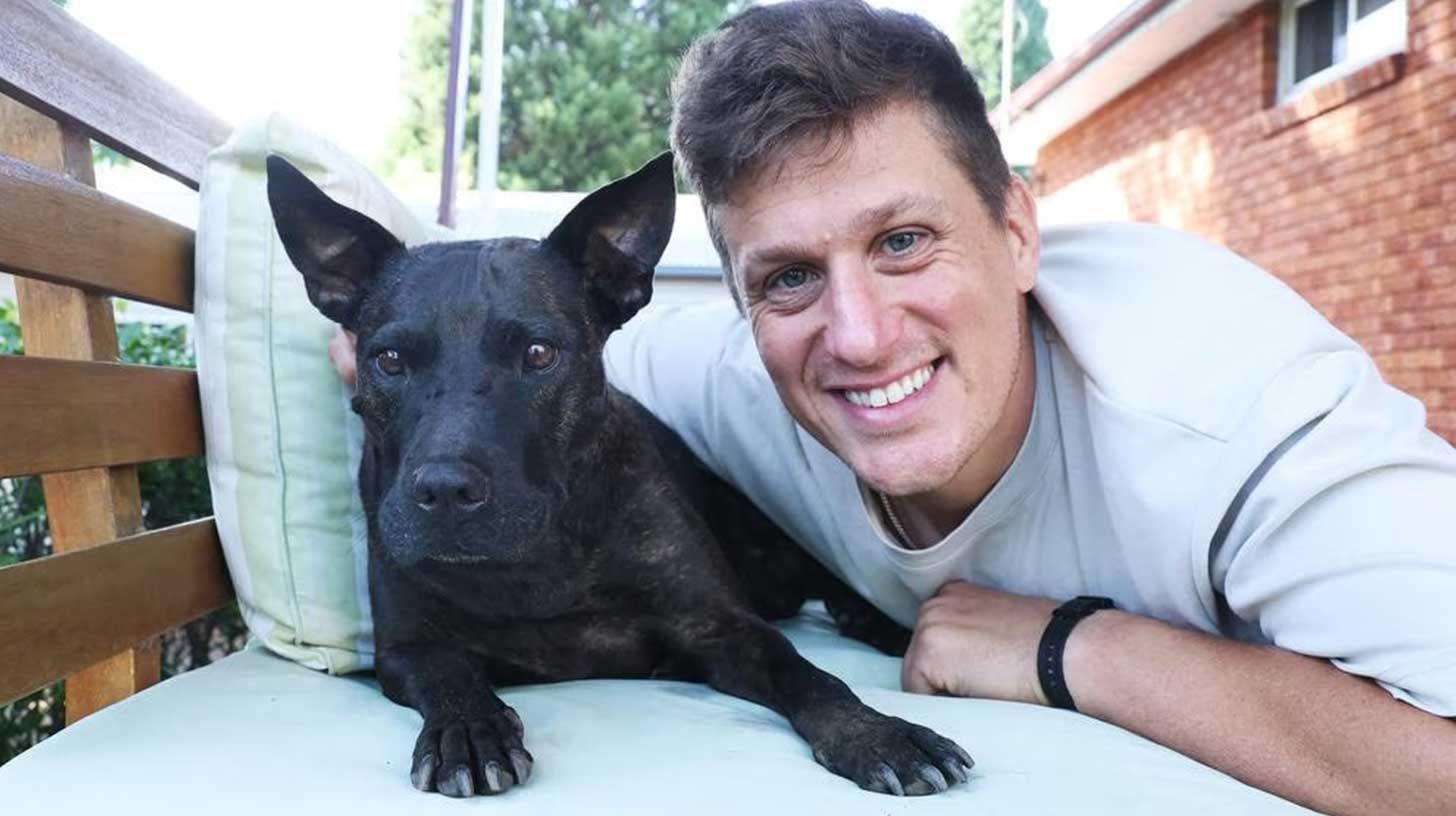
Image source: Paul Conyngham / The Australian
The Rundown: Sydney AI consultant Paul Conyngham built a custom mRNA cancer vaccine for his dog Rosie by chaining ChatGPT, Grok, DeepMind’s AlphaFold, and UNSW's genomics lab to turn 350 GB of tumor data into a treatment with real results.
The details:
Rosie was diagnosed with mast cell cancer in 2024 and given months to live despite chemo and surgery.
Conyngham used ChatGPT to map the research, paid $3K for genomic sequencing, then fed the data through AlphaFold to model Rosie's mutations.
The UNSW RNA Institute helped turn the formula into a custom vaccine, with Conyngham also revealing the “final vaccine construct was designed by Grok”.
One tumor shrank by half after her December injection, with Conyngham now working to create a second vaccine for her other non-responding tumors.
Why it matters: A year ago, a pet owner with no biology training couldn't turn a cancer diagnosis into sequenced DNA data, modeled proteins, and a working vaccine blueprint. Rosie isn't completely cured, but the fact that AI provided the tools to take a real swing at a previously hopeless situation with real impact is a powerful thing.
QUICK HITS
🛠️ Trending AI Tools
🔄 Crafting for Agents - Promote your enterprise coding agents to senior software engineers and ship code safely with closed-loop validation*
🧠 Nemotron 3 Super - Nvidia's 120B reasoning AI with 1M token context
🚀 Claude - Anthropic’s AI, now able to create charts and diagrams in chat
🗣️ TADA - Hume's TTS AI that syncs text and audio for no hallucination speech
*Sponsored Listing
📰 Everything else in AI today
The global launch of Seedance 2.0, ByteDance’s viral video AI, is reportedly being suspended, with the delay coming after a major copyright backlash from Hollywood.
Elon Musk revealed that Tesla’s Terafab semiconductor manufacturing facility is launching in a week, aiming to create custom silicon chips for use across its tech.
A Florida man used ChatGPT to help handle selling his home, including pricing, marketing, scheduling, and contracts, closing in five days and saving 3% in agent fees.
Meta is reportedly planning layoffs that could cut 20% of its nearly 79K workforce, as the company looks to offset $600B in planned AI infrastructure spending.
Ex-Anthropic researchers are set to raise $175M for Miraendil, a new AI startup building specialized AI for scientific R&D in biology and materials science.
COMMUNITY
🤝 Community AI workflows
Every newsletter, we showcase how a reader is using AI to work smarter, save time, or make life easier.
Today’s workflow comes from reader Adam B. in New York City, NY:
"I’m looking for a business to buy, so I used ChatGPT and Claude to develop a personal OS to help analyze potential deals. I started by telling ChatGPT my personal preferences, which included my financial overview, personality traits, business types, and then took it to Claude and asked it what it thought, and asked it to analyze my OS.
I took its advice and brought it back to Chat, and went back and forth until I got to v31. Now, when I receive a business’s CIM and any other docs, I upload them to Claude alongside my OS, and it generates a 20+ page full evaluation, not only of the business, but also of how the business is for me specifically. In 5 minutes, I get to know whether to pursue or not.
How do you use AI? Tell us here.
🎓 Highlights: News, Guides & Events
Read our last AI newsletter: Google brings Gemini to the road
Read our last Tech newsletter: Apple’s foldable iPhone leaks
Read our last Robotics newsletter: Figure’s humanoid cleans living rooms
Today’s AI tool guide: Create an intro animation in 15 minutes
RSVP to our next workshop on March 19: AI coding bootcamp pt. 2
See you soon,
Rowan, Joey, Zach, Shubham, and Jennifer — the humans behind The Rundown

Apple's foldable iPhone leaks
Read Online | Sign Up | Advertise
Good morning, tech enthusiasts. Apple is preparing to fold the iPhone — whether or not anyone asked for it. According to Bloomberg’s Mark Gurman, the device will open into an iPad mini–sized screen and pair luxe hardware with a sleeker design meant to make foldables feel stylish.
If it lands, it could amount to Apple’s most significant iPhone redesign in years — but is that enough to make you part with a fresh $2K?
In today’s tech rundown:
Apple’s foldable iPhone is basically a tiny iPad
Rivian delays its ‘Tesla killer’ electric SUV
Zoom debuts ‘digital twin’ AI avatars
Anduril ups its space game with ExoAnalytic buy
Quick hits on other tech news
LATEST DEVELOPMENTS
APPLE
🍎 Apple’s foldable iPhone is basically a tiny iPad

Image source: Apple (iPad mini)
The Rundown: Apple’s first foldable iPhone will unfold into a near-iPad mini footprint and run a revamped iOS with split-screen multitasking — the most significant rethink of the iPhone's form and interface in years, according to Bloomberg’s Mark Gurman.
The details:
Bloomberg reports that the foldable will open to a 7.8 in. inner display about the size of an iPad mini, with a smaller outer screen closer to a compact iPhone.
The device will run a tweaked iOS that adds iPad‑style multitasking, including side‑by‑side apps and redesigned layouts for key first‑party apps.
Gurman says Apple is building a tougher hinge and a “market‑leading” barely‑there crease to outperform Samsung and Google foldables.
Expect pricing north of $2K; Apple is positioning the iPhone Fold as an ultra-premium, early-adopter product that sits even above the Pro line.
Why it matters: Apple’s foldable iPhone is Apple’s first shot at an ultra‑luxury phone, engineered to outclass rivals on hardware and software in one move. CAD-based leaks point to a wider book-style chassis and dual-camera bump, marking the first real silhouette shift for iPhone hardware in years.
RIVIAN
🚙 Rivian delays its ‘Tesla killer’ electric SUV

Image source: Rivian
The Rundown: EV startup Rivian is pushing back the much-hyped $45K electric R2 SUV until late 2027, choosing to launch a pricier Performance trim first — a margin play that leaves the mass market wide open for rivals.
The details:
The base R2 Standard, with rear-wheel drive and a projected 275-mile range, slips to late 2027, now starting at $46,495.
The R2 Performance launches this year at $57,990 — nearly $12K more than the entry model it’s replacing in the queue.
Rivian is targeting up to 25K R2s on the road by the end of 2026, betting that early adopters will tolerate higher prices to keep the fledgling automaker afloat.
To cut costs, Rivian is redesigning its stack, bringing more hardware in-house, and absorbing the blow from lost EV tax credits and new import tariffs.
Why it matters: Every month the $46K R2 sits in waiting, Tesla’s Model Y and Chevy’s Equinox EV can solidify their grip on the midrange SUV buyer Rivian is courting. The cash logic is sound — launch high-margin hardware first, fund the cheaper model later — but Rivian still hasn’t proved it can build a mass-market EV on time and on budget.
ZOOM
👯♂️ Zoom debuts ‘digital twin’ AI avatars
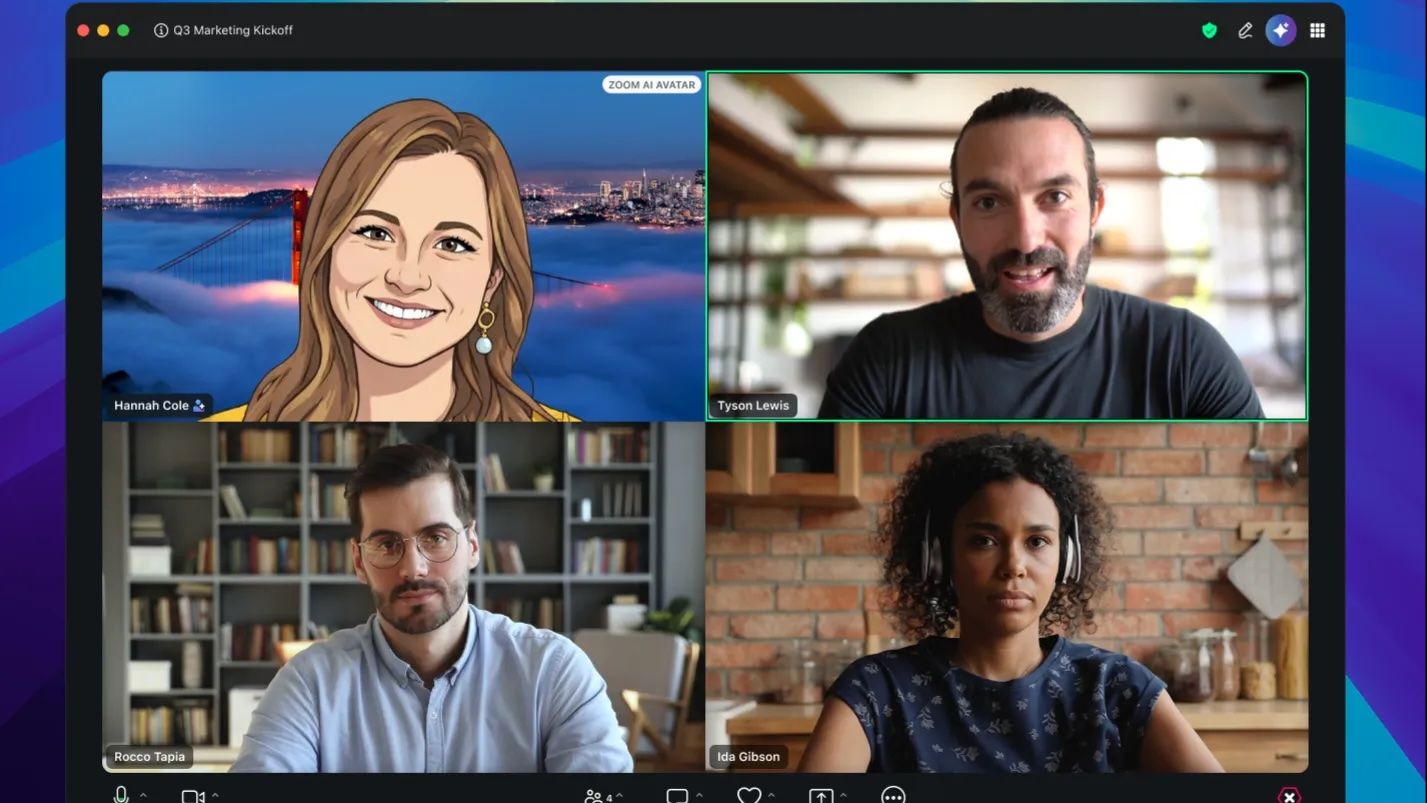
Image source: Zoom
The Rundown: Zoom is launching an AI-powered productivity suite that embeds generative tools across email, documents, chat, and meetings — and it’s building AI avatars that can show up to calls in your place.
The details:
With the new AI suite, users can summarize calls, draft follow-ups, and pull content automatically from transcripts and shared files.
The company is developing customizable AI avatars that can join meetings on behalf of users, engage in conversation, and produce a summary afterward.
Avatars can mirror your face, expressions, and facial movements to stand in for you in meetings and async video messages when you’re not camera‑ready.
Why it matters: Zoom wants to claw back relevance from Microsoft and Google by turning its video app into a full AI‑first workplace suite, not just a place you drop in for meetings. Its photorealistic avatars could push beyond the more limited avatars in Teams and Meet today — useful for overbooked workers, if your boss is okay with it.
ANDURIL
🛰️ Anduril ups its space game with ExoAnalytic buy
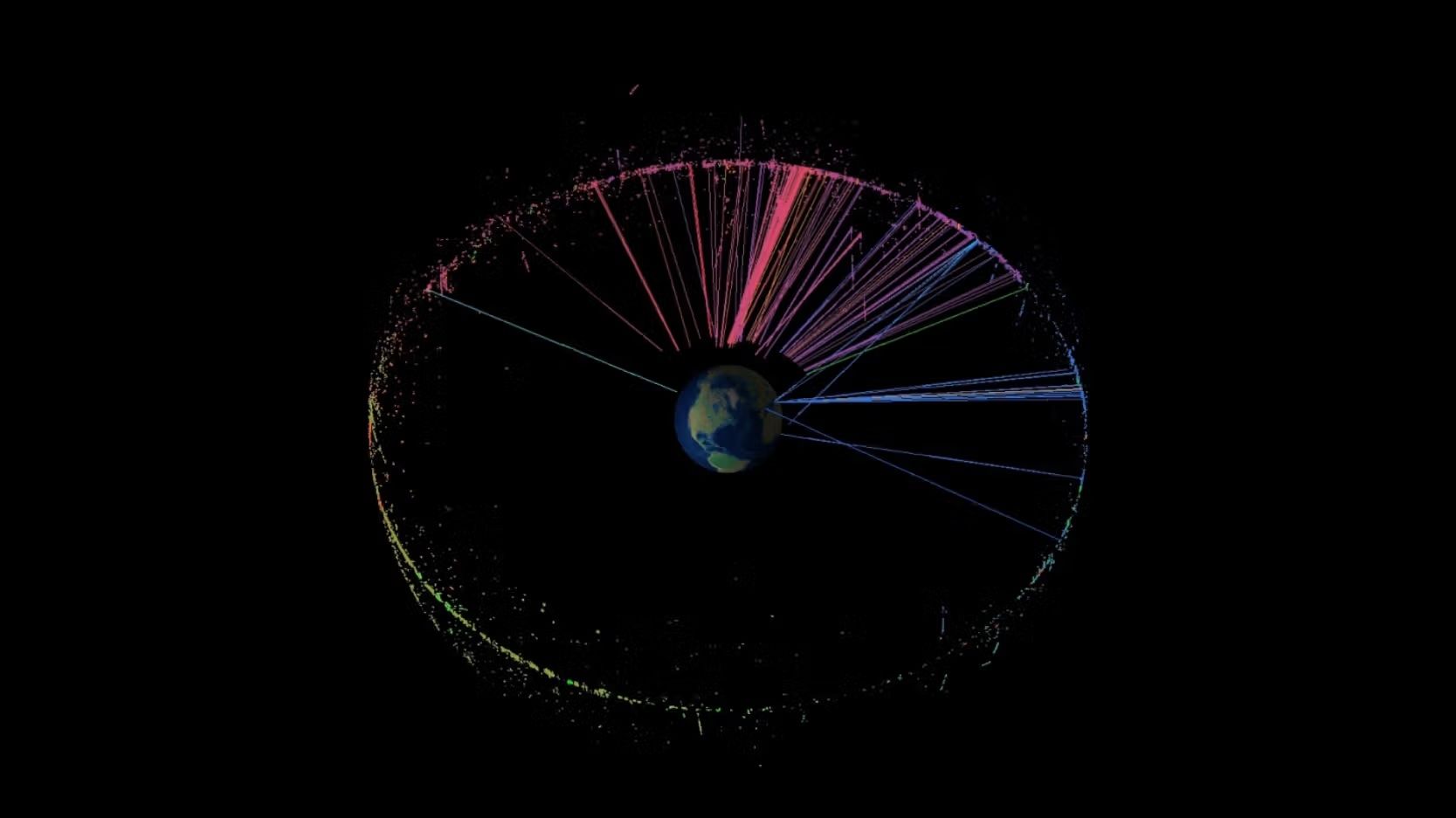
Image source: Anduril
The Rundown: Anduril, Palmer Luckey’s defense startup best known for autonomous drones and AI weapons systems, just snapped up boutique space-surveillance firm ExoAnalytic Solutions, instantly doubling the size of its space unit.
The details:
The deal brings in a global network of hundreds of ground telescopes that track satellites and missiles, plus more than a hundred space‑domain experts.
Live orbital data will feed into Lattice, Anduril’s AI battle‑management platform, tightening the loop between what happens in space and how militaries respond.
Luckey is steering Anduril toward becoming a key space‑intel supplier for the Pentagon, a software‑first rival to legacy contractors’ satellite fleets.
Anduril, eyeing a $60.5B valuation, is also in the process of raising a $4B round from investors Thrive Capital and Andreessen Horowitz.
Why it matters: Anduril’s ExoAnalytic buy gives it a ready‑made space “sensor layer” — 400 telescopes, a hundred-plus specialists, and proven tracking software wired into its space‑defense stack. That lets Anduril sell the Pentagon not just drones, but a full chain from spotting satellites in orbit to steering interceptors at incoming threats.
QUICK HITS
📰 Everything else in tech today
Atlassian, the Australian software group, is cutting about 10% of its staff as it restructures to address the competitive threat from generative AI.
Apple is cutting its App Store commission in China from 30% to 25%, a rare concession aimed at easing mounting pressure from local regulators.
YouTube reportedly generated more U.S. ad revenue in 2025 than Disney, Paramount, and Warner Bros. Discovery’s TV networks combined.
Italian prosecutors asked a court to put Amazon and four current and former executives on trial over alleged tax evasion of about €14B ($16.1B) in Italy.
Substack is adding a built-in recording studio so writers can record, edit, and publish podcasts directly from its platform instead of relying on external audio tools.
Uber is rolling out an invite-only chauffeur service that offers high-end cars, professional drivers, and perks like free phone chargers for top-spending riders.
Honda scrapped its planned upcoming EVs — Honda 0 SUV, 0 Saloon, and electric Acura RSX — for the U.S. market, citing tariffs and slowing EV demand.
Amazon, responding to recent outages blamed on AI-written code, will now require senior engineers to sign off on any AI-assisted software changes before they go live.
The Marine Corps is testing a new full‑body “thermal cloak” over‑garment designed to hide Marines from drones and other sensors by masking their heat signature.
Tinder is rolling out in‑person events and virtual speed‑dating features to pull lapsed users back into its app and make swiping feel more like real‑world dating.
COMMUNITY
🎓 Highlights: News, Guides & Events
Read our last AI newsletter: Google brings Gemini to the road
Read our last Tech newsletter: Air taxis to fly in 26 states
Read our last Robotics newsletter: Figure’s humanoid cleans living room
Today’s AI tool guide: Automate Gmail with Google Workspace Studio
RSVP to our next workshop on March 19: AI coding bootcamp pt. 2
See you soon,
Rowan, Joey, Zach, Shubham, and Jennifer — The Rundown’s editorial team

Google brings Gemini to the road
Read Online | Sign Up | Advertise

Good morning, AI enthusiasts. 2026 has been all about Google’s product-centric AI push, putting Gemini in everything you use… and now, the company is bringing that strategy to the road.
With a new experience rolling out to Maps, the Sundar Pichai-led company is betting Gemini can make your trips easier, more immersive, and hopefully a lot more hands-free.
In today’s AI rundown:
Google launches Gemini-powered Maps
Microsoft’s step toward ‘medical superintelligence’
Automate Gmail with Google Workspace Studio
AI agent hacks McKinsey’s ‘Lilli’ chatbot in two hours
4 new AI tools, community workflows, and more
LATEST DEVELOPMENTS
🛣️ Google launches Gemini-powered Maps

Image source: Google
The Rundown: Google just dropped a major Gemini-powered upgrade for Maps, introducing two new features: Ask Maps, which lets you ask questions and get relevant answers to plan trips, and Immersive Navigation, which renders the route in 3D.
The details:
Ask Maps simplifies trip planning by letting you ask questions about the route/stops, with Gemini fetching from 300M+ places and reviews to answer.
Immersive Navigation renders the route in 3D, using Gemini to analyze Street View and aerial imagery to show buildings, overpasses, crosswalks, and more.
Other upgrades include more conversational voice guidance, Street View previews of destinations with parking info, and trade-offs for alternative routes.
Maps is the latest Google product to get the Gemini touch, following Gmail, Docs, Sheets, Drive, Meet, Photos, and Android.
Why it matters: As the race to build the best model continues, Google is showing the tech’s value by putting it where it matters most — into people’s daily lives. With Gemini now in Maps, Gmail, Docs, and Android, the company reaches billions without asking anyone to install anything new. That’s turning out to be its true moat.
TOGETHER WITH VANTA
👋 Goodbye, Audit Chaos. Hello, Calm-pliance.

The Rundown: Security teams today are managing more complexity than ever. Vanta brings together leading CISOs Jadee Hanson (Vanta), Alex Stamos (ex-Meta), and Andrew Becherer (Sublime Security) for a candid conversation on staying ahead of audits, AI change, and growing vendor complexity.
See live demos across three core pillars:
Enterprise Control to tailor and scale your security program
Context-aware AI Agent to surface what matters and automate the rest
Privacy Automation that embeds ROPA, inventory management, and DPIAs into your everyday workflows
Less chaos. More control. That’s Calm-pliance – register free.
MICROSOFT
🏥 Microsoft’s step toward ‘medical superintelligence’
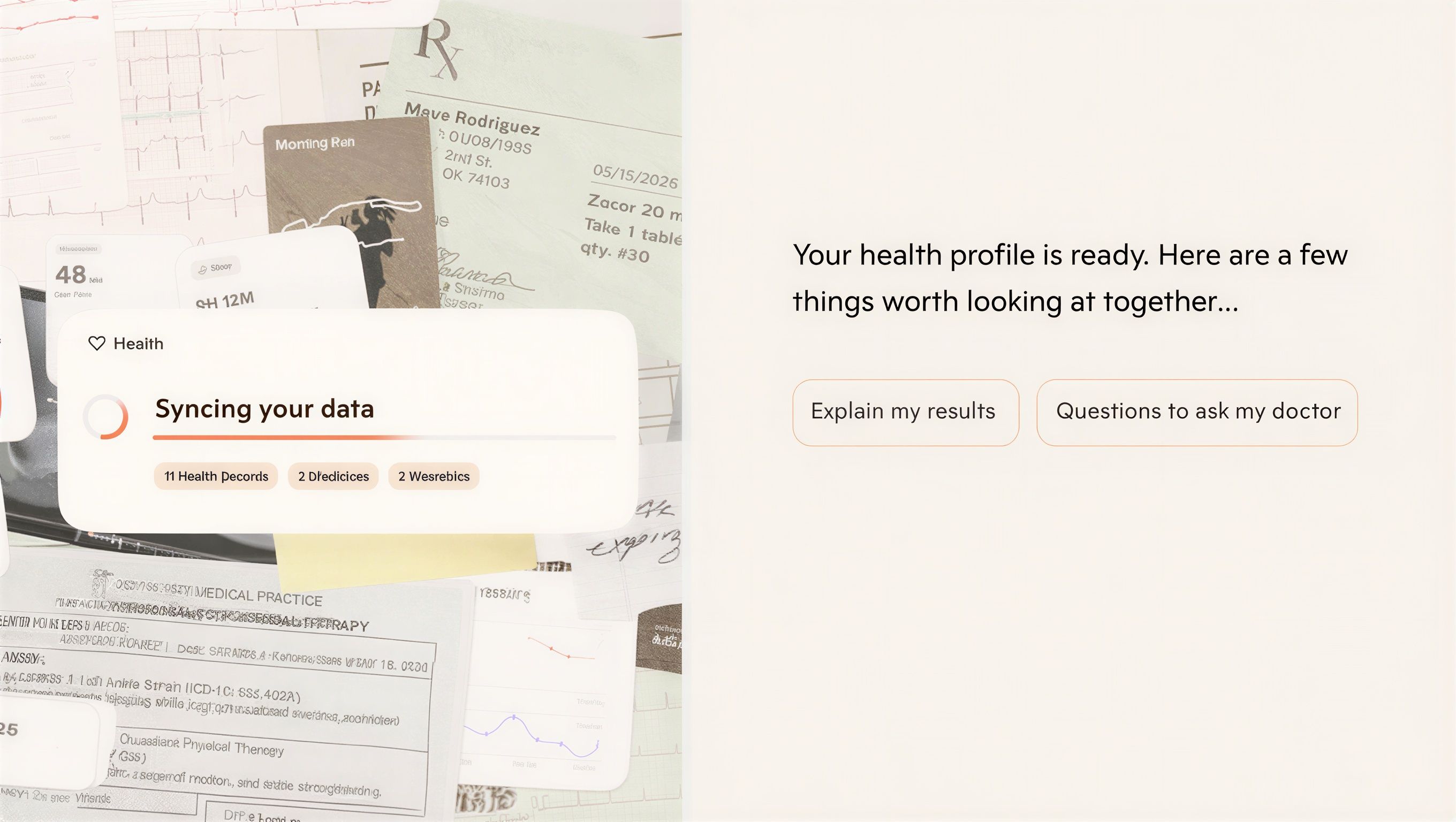
Image source: Microsoft
The Rundown: Microsoft AI debuted Copilot Health, a new AI experience that uses your health records, wearable data, and medical history to give personalized insights — moving toward what CEO Mustafa Suleyman describes as “medical superintelligence.”
The details:
Sitting as a secure space within Copilot, the new offering connects to 50+ wearables, EHR records from 50K+ U.S. hospitals, and Function lab results.
The AI analyzes this data and gives personalized insights to help people make sense of their health and get the most out of their doctors’ consultations.
Microsoft says Copilot Health’s advice is grounded in information from credible organizations such as Harvard Health, with answers linking back to the sources.
The data connected to the platform is not used for training, and users retain the option to disconnect data sources and delete the linked data altogether.
Why it matters: Microsoft is clear that it doesn’t want to replace doctors — it wants to be the next best thing. The company hopes this work will eventually pave the way for “medical superintelligence,” where AI has the knowledge of a general physician and the depth of a specialist, and remains accessible and affordable for billions worldwide.
AI TRAINING
📧 Automate Gmail with Google Workspace Studio
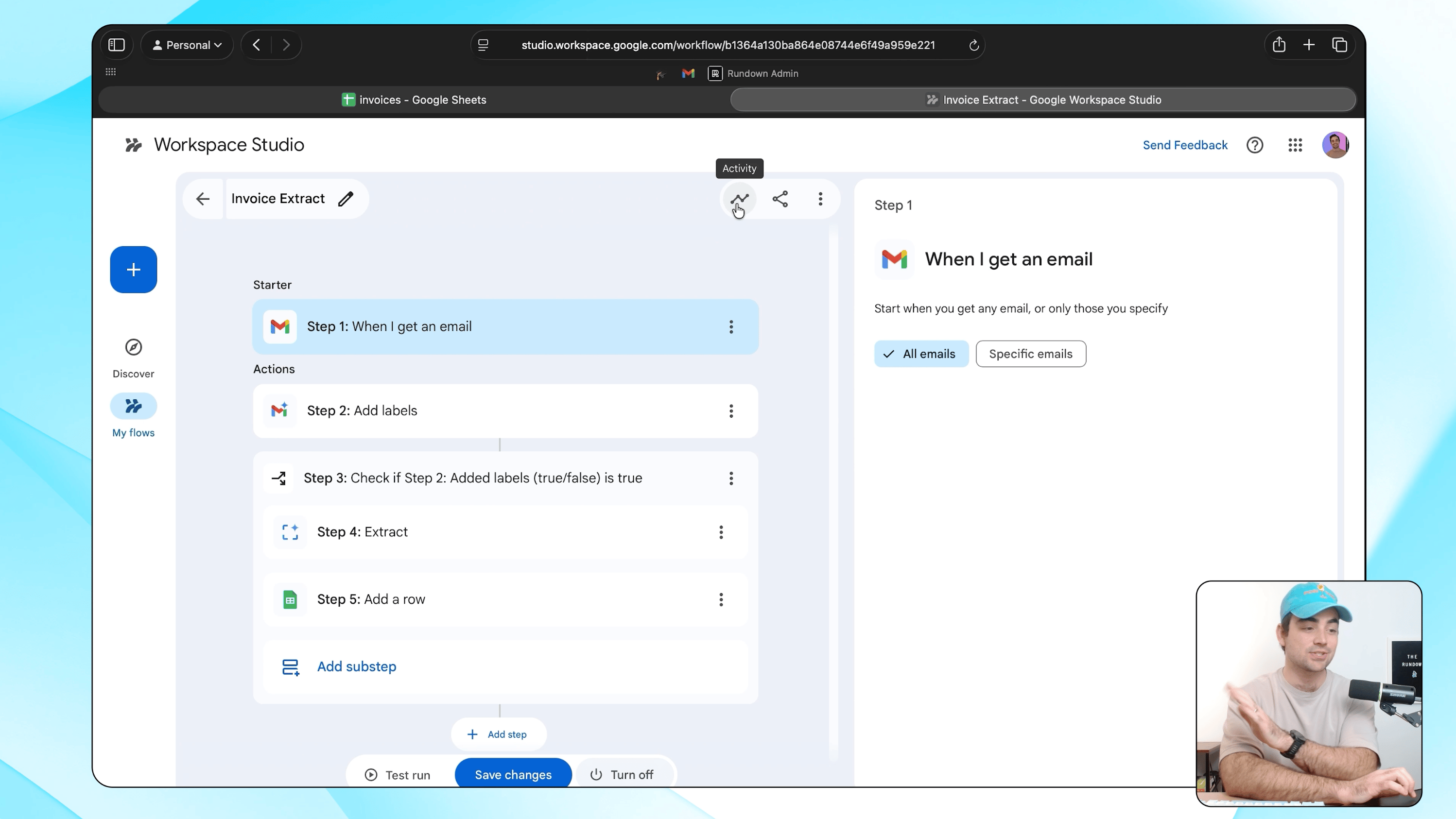
The Rundown: In this guide, you will learn how to use Google Workspace Studio to automate your Gmail inbox. You will be able to set up agents that triage incoming messages, extract key information from invoices, and draft replies using Gemini.
Step-by-step:
Go to Workspace Studio, check out pre-made email boosters on the homepage, designed for things like daily email recaps and VIP notifications
To build your own flow, click the plus button, select “When I get an email” as your starter, add an Add labels step, and toggle on AI-powered labels
Select the categories you want Gemini to watch for (like “Receipts & Invoices”). Gemini will read each incoming email and label it automatically
Hit “Turn on” and send yourself a test email. Check the Activity tab in Workspace Studio to see exactly what happened at each step
Pro tip: You can add a “Check if” step for new receipt labels. Use Extract with Gemini to pull details, then Sheets → Add a row to log them.
PRESENTED BY SERPAPI
⏰ Give your AI real-time web access
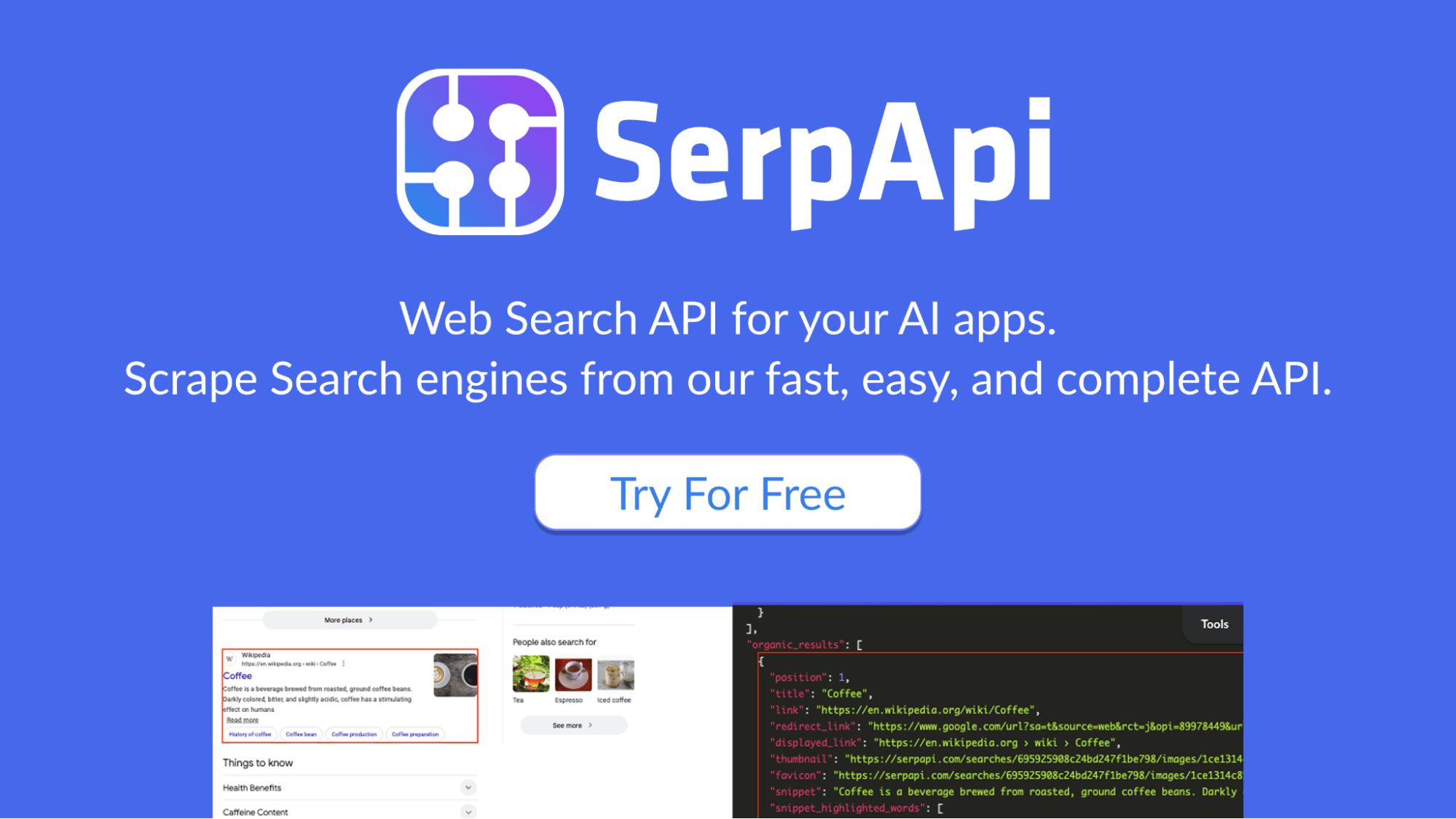
The Rundown: Need real-time public web data without scraper headaches? SerpApi turns search results into structured, ready-to-use data with built-in scale and block resilience — powering AI apps, product research, price tracking, SEO insights, and more without the maintenance.
With SerpApi, you get:
Real-time, reliable results from any search engine
ZeroTrace Mode to keep your searches confidential
U.S. Legal Shield for scraper legal protection
Try SerpApi for free today — Rundown readers can get 50% off for 3 months via chat or email.
MCKINSEY
🤖 AI agent hacks McKinsey’s ‘Lilli’ chatbot in two hours
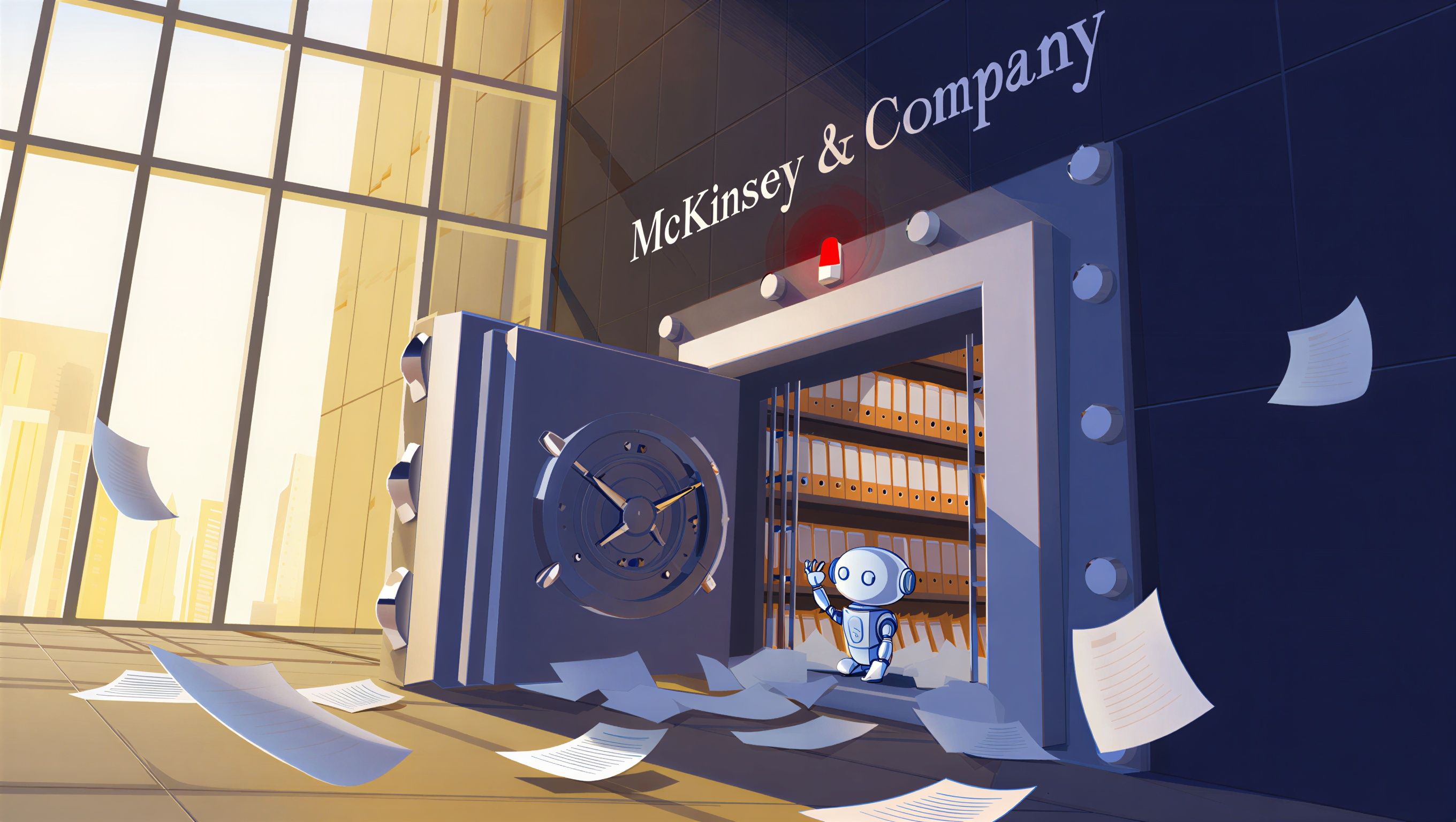
Image source: Reve / The Rundown
The Rundown: Security startup CodeWall revealed its AI agent broke into McKinsey's internal AI ‘Lilli’ in under two hours, gaining full read-write access to a database with confidential chat messages, client files, and user accounts — all in plain text.
The details:
As McKinsey’s AI for chat, analysis, and search across 100K+ internal documents, Lilli is used by 70% of its staff, some 45K people, for client work.
CodeWall’s agent found exposed API docs with 22 endpoints that didn’t need authentication. One had a basic security flaw that enabled database access.
It included 46.5M messages discussing strategy, M&A deals, and client work, 728K files with client data, 57K user accounts, and 95 control prompts.
McKinsey was informed about the flaw, following which it analyzed the situation with a third party (found no one else got access) and patched the vulnerability.
Why it matters: The fact that this wasn’t a four-person startup but McKinsey & Company shows even the best can miss the basics. If firms at this level are getting it wrong, every company rushing to ship AI internally for business-critical workflows needs to take a harder look at what they might be leaving wide open.
QUICK HITS
🛠️ Trending AI Tools
🤖 Scrunch - See how AI interprets your site, run a free audit, and unlock the new way to reach customers*
🖥️ Personal Computer - Perplexity’s AI agent system for Mac Mini
🧠 Claude - Anthropic’s AI, now with interactive diagrams/charts in chat
⚙️ Codex - OpenAI’s coding assistant, now with automations and themes
*Sponsored Listing
📰 Everything else in AI today
xAI hired Andrew Milich and Jason Ginsberg — senior product engineers from Cursor — to accelerate Grok’s coding capabilities, with both directly reporting to Elon Musk.
Meta reportedly delayed its next AI model, named Avocado, until at least May after it underperformed against frontier models in internal evaluations.
Perplexity expanded its “Computer” agentic system to Pro subscribers, enabling access with the option to add credits depending on usage needs.
Pentagon CTO Emil Michael said “there’s no chance” of renewing talks with Anthropic, and that Claude would “pollute” the supply chain with “a different policy preference.”
Dating app Bumble plans to introduce “Bee,” a generative AI assistant that will privately learn user preferences and then suggest relevant matches based on them.
Axiom, the AI reasoning startup focused on formal mathematics and verified AI, announced a $200M Series A round at a $1.6B+ valuation, led by Menlo Ventures.
COMMUNITY
🤝 Community AI workflows
Every newsletter, we showcase how a reader is using AI to work smarter, save time, or make life easier.
Today’s workflow comes from reader Jeff C. in Oklahoma City:
“I have been using AI to assist me in building required training courses for our team of aircraft maintenance professionals. The time to actual use has been reduced significantly. What once took months to create can be completed in less than a day.
The quality of the training has significantly improved through the use of AI/ChatGPT. The Federal Aviation Regulations are a winding road from all of the various documents. AI has been able to untangle the ‘spider’s web’ of documents, allowing accurate & up-to-date training.”
How do you use AI? Tell us here.
🎓 Highlights: News, Guides & Events
Read our last AI newsletter: Perplexity’s answer to OpenClaw
Read our last Tech newsletter: Air taxis to fly in 26 states
Read our last Robotics newsletter: Figure’s humanoid cleans living room
Today’s AI tool guide: Automate Gmail with Google Workspace Studio
RSVP to our next workshop on March 19: AI coding bootcamp pt. 2
See you soon,
Rowan, Joey, Zach, Shubham, and Jennifer — the humans behind The Rundown
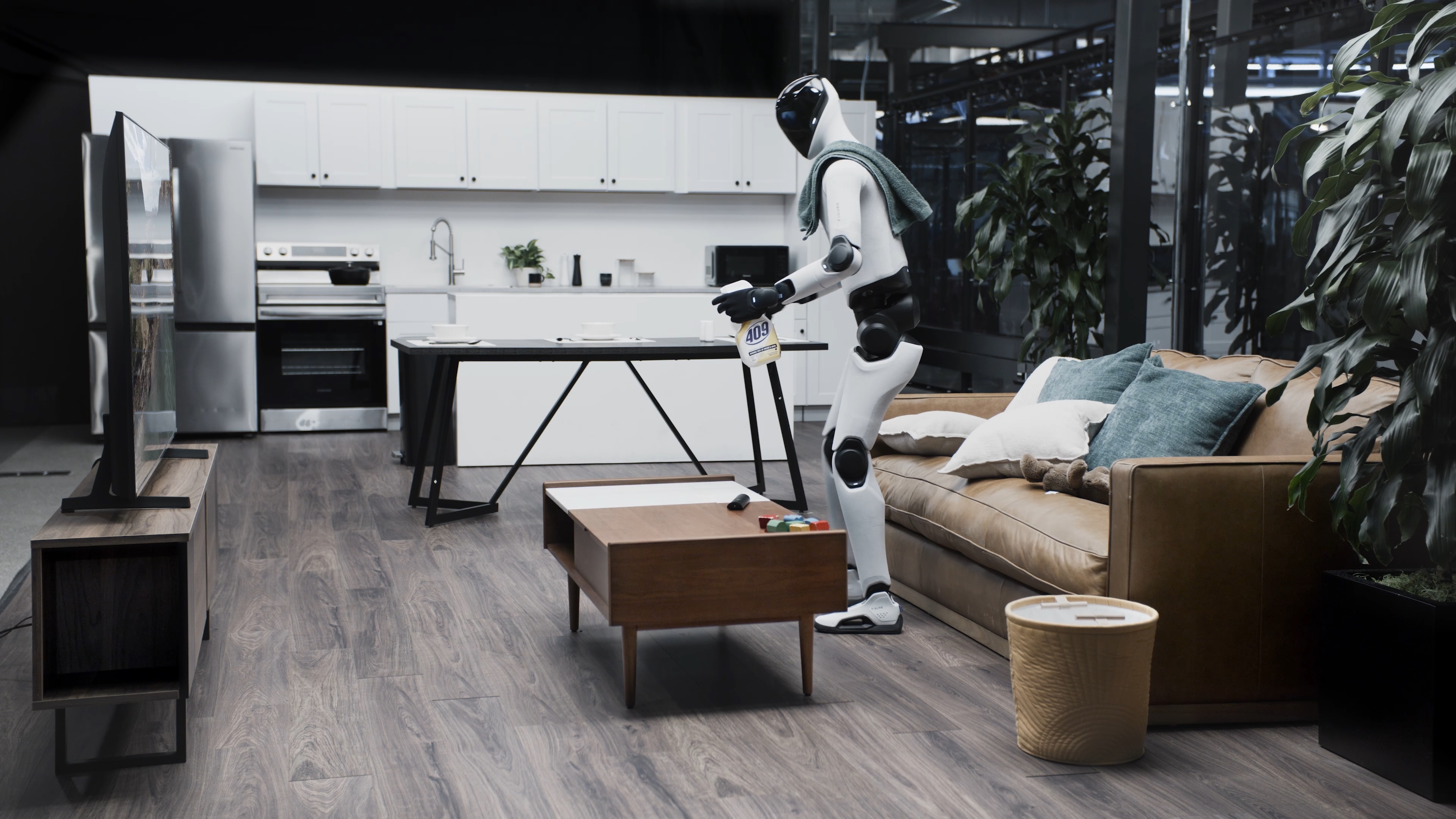
Figure's humanoid cleans living room
Read Online | Sign Up | Advertise

Good morning, robotics enthusiasts. Figure’s humanoid just walked into a messy living room and actually cleaned it, sort of.
The Figure 03 robot sprayed surfaces with 409 (product placement?), sorted toys, and hunted down a TV remote, powered by the same neural controller behind its earlier kitchen demo. CEO Brett Adcock says it’s fully autonomous, but Elon Musk has questions.
In today’s robotics rundown:
Figure 03 can now clean living rooms
Uber adds Zoox robotaxis in Vegas
Inside China’s robot boot camps
Robot dolphin cleans up oil spills
Quick hits on other robotic news
LATEST DEVELOPMENTS
FIGURE
🛋️ Figure 03 can now clean living rooms
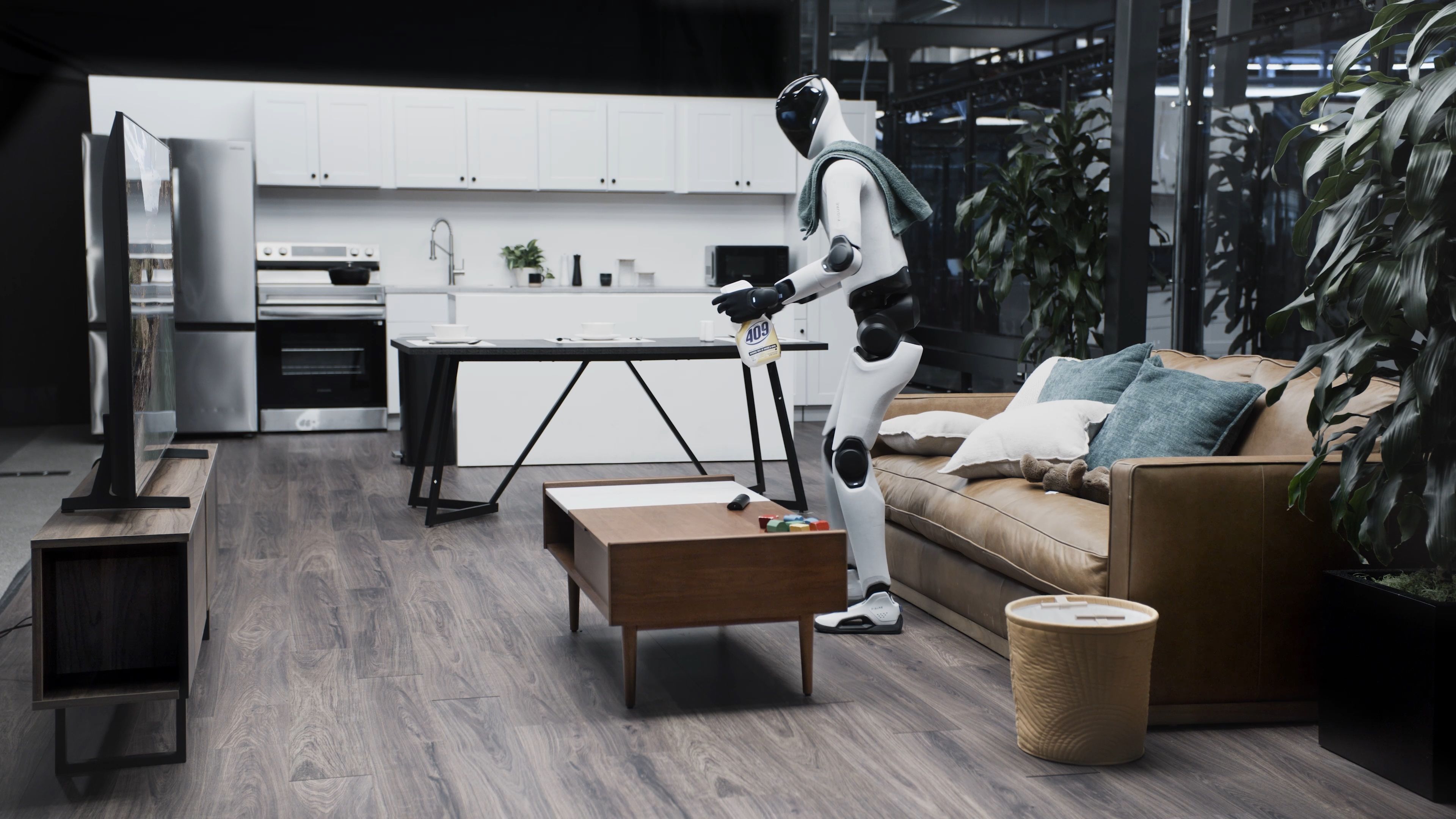
Image source: Figure
The Rundown: Silicon Valley robotics startup Figure’s latest demo shows its Figure 03 humanoid tidying a living room, using the same single neural controller from its earlier kitchen demo to manage new tools and textiles and clean as it goes.
The details:
In the clip, Figure 03 sprays and wipes a dirty surface with a towel, repositions that same towel over its shoulder, and resumes cleaning, albeit a bit awkwardly.
CEO Brett Adcock says the robot “performs whole-body, end-to-end living room cleanup” powered by the company’s in-house Helix 02 VLA model.
The robot handles complex two-handed behavior: it lifts a bin while scooping blocks into it, stashes items under one arm, and retrieves a TV remote.
Elon Musk publicly asked on X whether the demo was “autonomously or remotely operated” — Adcock replied it was “fully autonomous.”
Why it matters: If Figure can keep expanding Helix 02 with data instead of rewiring its robots every time the room changes, that’s a big point for the “one brain, many chores” thesis. But the field is split: 1X wants the same domestic endgame, Agility has real warehouse deployments, and Tesla’s Optimus hype still outruns its public demos.
ZOOX
🎰 Uber adds Zoox robotaxis in Vegas

Image source: Zoox
The Rundown: Amazon-owned Zoox plans to plug its steering‑wheel‑free robotaxis into the Uber app in Las Vegas later this year, if it can first convince U.S. regulators to let the purpose-built shuttles operate commercially.
The details:
The rollout hinges on regulators approving Zoox’s request for exemptions from multiple federal vehicle safety standards so the cars can operate commercially.
Zoox is already running limited, free public rides in Las Vegas and San Francisco, which it aims to convert into paid trips once approvals land.
The company will launch via its own app first, then feed vehicles into Uber under a multi‑year partnership that also targets LA in 2027.
The deal plugs Amazon’s AV unit into Uber’s huge rider base, putting Zoox up against Waymo and more than 25 other autonomous partners on the platform.
Why it matters: Zoox jumping onto Uber’s platform is an attempt to turn a long‑running R&D project into a real business, fast, by piggybacking on an existing ride‑hail giant. It also shows how robotaxi players may need to cooperate as much as compete, using shared platforms to chase scale while regulators decide how far to go.
CHINESE ROBOTICS
💪 Inside China's robot boot camps
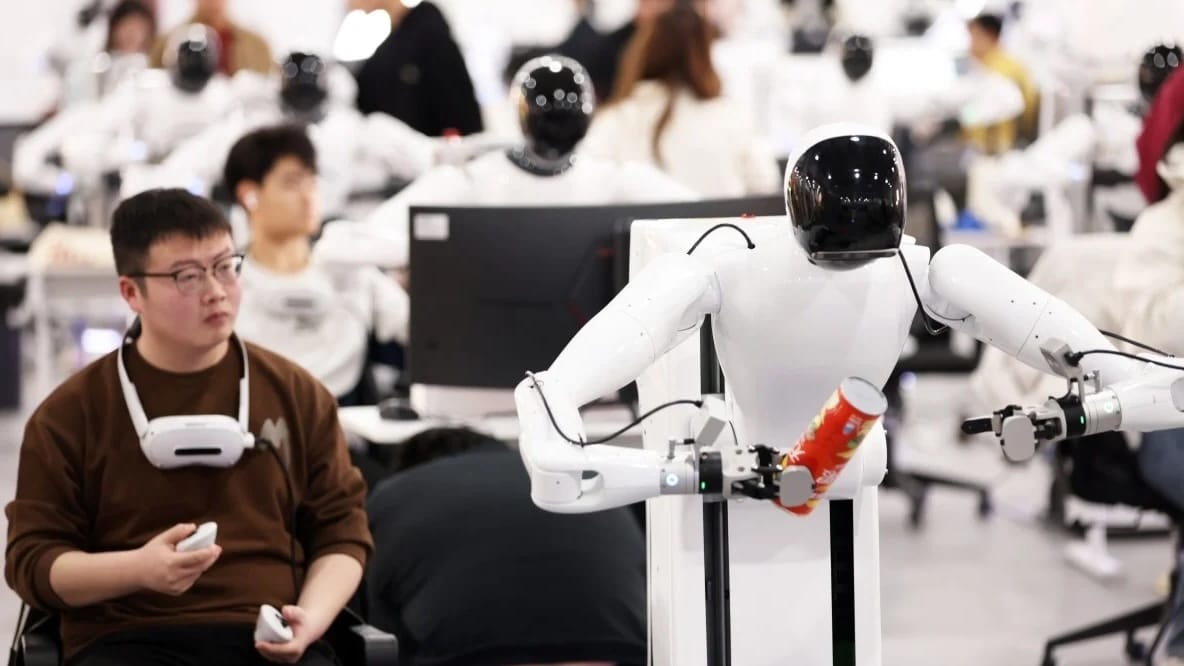
Image source: SCMP
The Rundown: China is rapidly rolling out giant “robot boot camps” where armies of young workers train humanoids on everyday service jobs, turning these facilities into industrial-scale data factories for embodied AI.
The details:
A flagship Beijing training base spans around 150K square feet, with mock restaurants, factories, and streets where humanoids practice skills.
Local officials say that the site alone can generate more than 6M data points per year and around 5K hours of robot data per month.
China reportedly has 40 state‑backed training centers across the country, with one Shanghai center capable of logging up to 50K data points a day.
Germany’s NEURA Robotics is also building a massive humanoid training hub dubbed RoboGym, letting startups book “gym time” to run real‑world drills.
Why it matters: China is turning robot school into an industrial sport, running giant boot camps that crank out robot data like reps in a gym, while U.S. players such as Tesla and Figure train mostly behind closed doors. RoboGym shows Europe is finally opening its own shared robot centers, but it still has to chase Beijing’s scale.
ROBOTS FOR GOOD
🐬 Robot dolphin cleans up oil spills

Image source: RMIT
The Rundown: A sneaker-sized oil-skimming robot from RMIT University in Australia is using a sea-urchin-inspired filter and a dolphin-shaped body to help clean up marine oil spills.
The details:
The Electronic Dolphin skims oil from the water’s surface, using a small pump to pull in contaminated liquid and store the recovered oil onboard.
Its sea‑urchin‑inspired filter is coated with microscopic spikes that trap air pockets so water rolls off while oil sticks, letting it capture oil with 95% purity.
The prototype currently runs for about 15 minutes per battery charge, recovering roughly 2mL of oil per minute, and the filter material can be reused.
The team plans to scale it up in size and eventually make it fully autonomous so fleets can vacuum spills, autonomously return to base to offload and recharge.
Why it matters: Oil-spill cleanup is dangerous, messy, and labor-intensive, and RMIT’s robo-dolphin points to a new generation of marine-cleanup robots — alongside systems like IADYS’ oil-skimming Jellyfishbot and SeaClear2.0’s coordinated robot fleets — designed to take on hazardous pollution response with less human exposure.
QUICK HITS
📰 Everything else in robotics today
Tesla unveiled its third-generation Optimus humanoid at AWE 2026 in Shanghai, aiming to start mass production by late 2026.
U.S. startup Nuro began testing its end-to-end AI-powered autonomous driving stack on Toyota Prius vehicles with safety drivers on public streets in Tokyo.
Grubhub is teaming with drone startup Dexa on a trial delivering Wonder restaurant orders by air to nearby New Jersey customers at no extra cost beyond regular fees.
ABB Robotics is partnering with Nvidia to bring industrial-grade physical AI into factories via ABB’s RobotStudio software and Nvidia’s Omniverse-based tech.
Rhoda AI raised $450M at a $1.7B valuation to build a “Direct Video Action” model that turns internet videos straight into robot control for messy real‑world tasks.
iRobot is rolling out the Roomba Mini robot vacuum-and-mop to the U.K. and Europe, even as the company restructures under Chapter 11.
A University of Texas research team built a highly sensitive robotic hand that can pick up and gently hold a single potato chip without breaking it.
MIT built a two-step planning method that uses VLMs to turn a single scene image into precise instructions, making robots better at long, complex tasks.
Samsung SDI is unveiling its first pouch‑style solid‑state battery, designed for compact physical AI systems like humanoids.
Zoox began mapping Dallas and Phoenix with sensor‑packed SUVs as a first step toward testing its self‑driving system and eventually deploying its robotaxis there.
U.S. engineers developed a dual-arm “zero-momentum” robot control method to keep satellites stable during in-orbit robotic repairs.
A space engineer created WANDER-bot, a 3D‑printed, wind-powered robot designed to roam harsh environments or potentially other planets without batteries.
A Hexagon global survey finds robot anxiety is highest where robots are rare and drops as people see them working safely in everyday settings.
COMMUNITY
🎓 Highlights: News, Guides & Events
Read our last AI newsletter: Perplexity's new answer to OpenClaw
Read our last Tech newsletter: Air taxis to fly in 26 states
Read our last Robotics newsletter: DJI pays $30k for robot vacuum hack
Today’s AI tool guide: Create agentic workflows in Google Workspace
RSVP to our next workshop today @ 2PM EST: AI coding bootcamp pt. 1
See you soon,
Rowan, Joey, Zach, Shubham, and Jennifer — The Rundown’s editorial team
No matching search results
Try using different keywords, double-check your spelling, or explore related categories.
Stay Ahead on AI.
Join 2,000,000+ readers getting bite-size AI news updates straight to their inbox every morning with The Rundown AI newsletter. It's 100% free.