China greenlights commercial brain implant
PLUS: This startup wants to put 88K satellites in orbit

Jennifer Mossalgue
March 17, 2026
Read Online | Sign Up | Advertise

Good morning, tech enthusiasts. China has issued the world’s first commercial approval for an invasive brain-computer interface, marking a regulatory breakthrough that rivals Neuralink and Synchron have yet to reach.
The implant pairs a neural chip with a robotic glove, letting paralyzed patients grip objects by thought — and now, by prescription.
In today’s tech rundown:
China approves world’s first commercial BCI
Starcloud wants 88K AI satellites in orbit
New blood test may predict how long you live
Samsung kills its trifold after three months
Quick hits on other tech news
LATEST DEVELOPMENTS
BCI
🧠 China approves world’s first commercial BCI
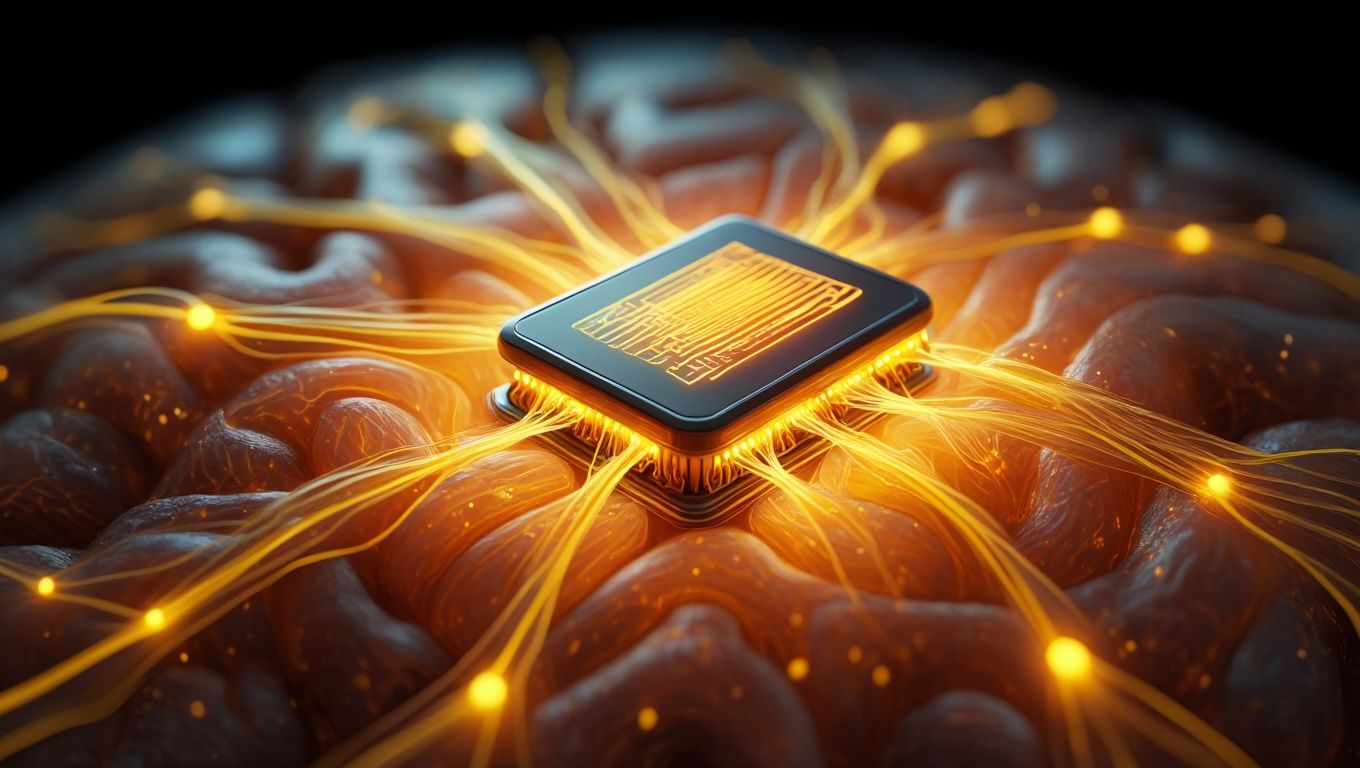
Image source: Reve AI / The Rundown
The Rundown: China just approved the world’s first invasive brain-computer interface (BCI) for commercial use, letting Shanghai-based Neuracle Medical Technology bring its neural implant to market ahead of Neuralink and every other rival.
The details:
The system pairs a brain implant with a robotic glove, enabling adults with spinal cord injuries to grip and hold objects via thought-driven signals.
It’s narrowly targeted: designed for 18–60-year-olds with stable upper-limb paralysis who retain arm movement but can’t grasp.
The coin-sized wireless implant sits on the surface of the brain’s outer membrane — above the tissue, not inside it, to reduce damage risk.
Musk’s Neuralink and Synchron are still in trial or demo mode, while Musk says Neuralink will reach “high-volume production” this year.
Why it matters: China’s approval makes this the first invasive BCI cleared for commercial medical use, while rivals, including Neuralink and Synchron, remain in trials. Beijing designated BCI a national "future industry," weaving it into its economic planning, all while moving faster through regulatory channels than the FDA.
SPACE
🛰️ Starcloud wants 88K AI satellites in orbit

Image source: Starcloud
The Rundown: Nvidia-backed startup Starcloud filed plans to build a mega-constellation of 88K satellites designed to host AI workloads in space rather than expand the world’s already strained data center footprint.
The details:
Starcloud has asked regulators to approve its “orbital data center,” a satellite network built around AI accelerators and cloud servers in space.
The Redmond-based startup argues the setup could lower cooling costs, cut latency, and offer a credible alternative to land-based server farms.
The filing drops Starcloud into direct competition with Starlink and Amazon’s Project Kuiper for a finite slice of orbital real estate.
A planned fleet of 88K spacecraft would dwarf today’s constellations; SpaceX’s Starlink, currently the world’s largest, has about 10K satellites in orbit.
Why it matters: The proposal lands as governments are still sorting out how much of the sky a single private operator can claim. It also puts a finer point on an ongoing debate — whether the promise of space-based AI is compelling enough to justify packing an already crowded, light-polluted orbit even further.
BIOTECH
🩸 New blood test may predict how long you live
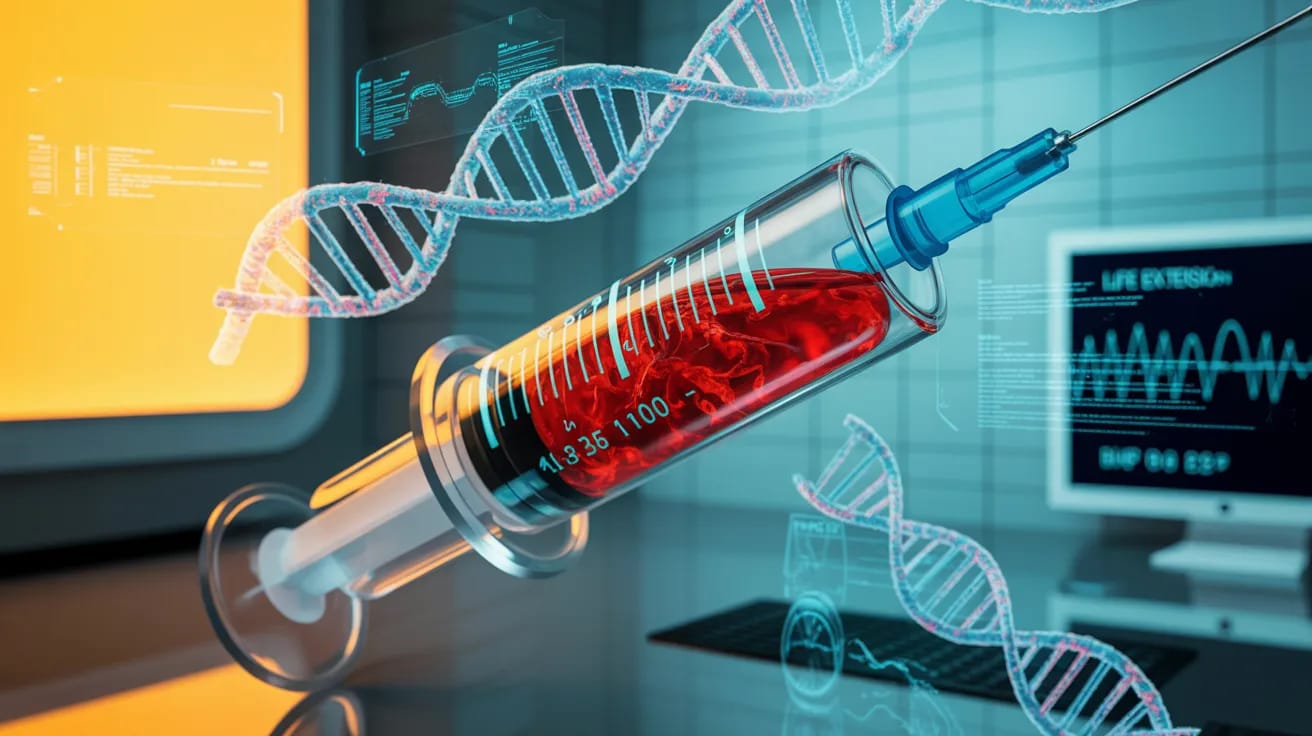
Image source: Ideogram / The Rundown
The Rundown: A routine blood test may soon do more than flag high cholesterol — it may forecast who is likely to be alive two years from now, thanks to a newly identified RNA signal that outperforms traditional health markers in predicting short‑term survival.
The details:
Duke researchers found that levels of six tiny RNA fragments (piRNAs) predict whether people over 70 survive the next two years with up to 86% accuracy.
The team analyzed 828 small RNAs in blood plasma, alongside health indicators from medical records, assessments, and self-reported lifestyle data.
People who lived longer consistently showed lower levels of the nine piRNAs linked to aging, with six of them forming the strongest survival predictor.
In computer simulations, adjusting patients’ piRNA levels to optimal ranges pushed predicted two-year survival from roughly 47% to nearly 100%.
Why it matters: A blood test that forecasts short-term survival is still years from clinical use, but piRNAs represent a class of biomarkers standard panels have never captured. Up next, the research team is testing younger people and probing whether common drugs like metformin or GLP-1s can shift the signal.
SAMSUNG
💀 Samsung kills its trifold after three months
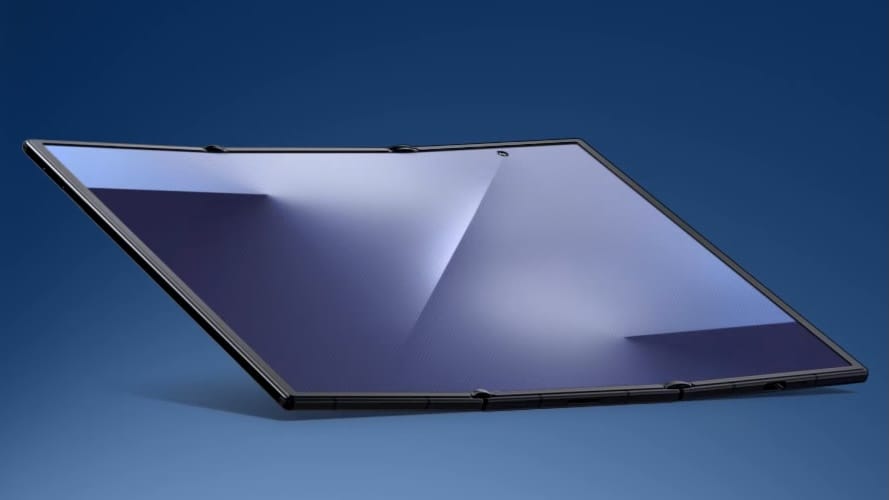
Image source: Samsung
The Rundown: Samsung is pulling the plug on its $2,899 Galaxy Z TriFold less than three months after launch, winding down the dual-hinged, 10-inch phone-tablet hybrid in Korea first, then the U.S. as remaining inventory clears.
The details:
Released in tiny online drops that sold out in minutes, the TriFold functioned more as a proof-of-concept than a mainstream product, Samsung says.
Samsung reportedly made little to no profit per unit, squeezed by high manufacturing costs and elevated prices for memory and storage components.
Foldables remain a small fraction of the overall phone market, but one of the few segments still posting growth as traditional slab phones plateau.
The exit hands Apple a clean opening: when its long-rumored foldable iPhone eventually arrives, it can position itself as the measured, refined alternative.
Why it matters: Samsung killing its TriFold is a reality check for luxury foldables, evidence that even the category’s dominant player can’t sustain a three-hinge gamble in a market this thin. With Huawei shipping more conventional foldables and Apple lining up its first folding iPhone, Samsung is retreating to safer, higher‑volume designs.
QUICK HITS
📰 Everything else in tech today
Meta’s stock jumped about 3% after reports that the company is weighing layoffs of 20% or more of its roughly 79K employees to rein in soaring AI infrastructure costs.
Apple is buying longtime Final Cut Pro plug‑in maker MotionVFX in a bid to lock more video creators into its subscription ecosystem and fend off Adobe.
The Trump administration is reportedly set to collect an unprecedented $10B “transaction fee” from investors in the new U.S.-controlled TikTok.
Apple rolled out the AirPods Max 2, a $549 refresh of its over-ear headphones that adds an H2 chip with stronger noise cancellation, USB‑C, and live translation.
Dell Technologies disclosed in its latest annual report that its workforce fell about 10% as of January 2026, shrinking by roughly 11K jobs to around 97K employees.
Angel Protection debuted AI software at SXSW that scans existing security cameras for brandished firearms and delivers a human-verified alert to police in seconds.
More than 10 biotech firms, including AI-powered drug discovery platforms, have filed for Hong Kong IPOs this year.
Geely-backed Zeekr is targeting a 2026 South Korea launch with its premium EV lineup, turning Hyundai and Kia’s turf into the next frontline for China’s EV expansion.
New Peloton CEO Peter Stern, a former Apple exec, is steering the company toward GLP-1 weight-loss drug users and a cheaper, mass-market treadmill lineup.
Amazon is hiking the price of its ad-free Prime Video add‑on in the U.S. from $2.99 to $4.99 a month starting April 10, rebranding the tier as “Prime Video Ultra.”
COMMUNITY
🎓 Highlights: News, Guides & Events
Read our last AI newsletter: Nvidia's big AI day at GTC
Read our last Tech newsletter: Apple’s foldable iPhone leaks
Read our last Robotics newsletter: Travis Kalanick’s stealth robot play
Today’s AI tool guide: How to use Grok for free automated research
RSVP to our next workshop on March 19: AI coding bootcamp pt. 2
See you soon,
Rowan, Joey, Zach, Shubham, and Jennifer — The Rundown’s editorial team



Stay Ahead on AI.
Join 2,000,000+ readers getting bite-size AI news updates straight to their inbox every morning with The Rundown AI newsletter. It's 100% free.