Nvidia's move to own the robot future
PLUS: Gecko Robotics grabs $71M Navy deal

Jennifer Mossalgue
March 19, 2026
Read Online | Sign Up | Advertise

Good morning, robotics enthusiasts. Nvidia just made its clearest move yet to become the computing backbone of the physical world.
At its annual GTC conference, the $3T chip giant pitched a full-stack future for humanoids, factory bots, and robotaxis, bundling robot brains, simulation tools, and autonomous-driving systems into one sprawling ecosystem. But can startups and rivals still carve out space in a market Nvidia seems determined to lock up?
In today’s robotics rundown:
Nvidia wants to be the OS of every robot
Gecko Robotics lands $71M U.S. Navy deal
Ex-Meta engineers give robots visual memory
Robot dogs guard billion-dollar AI data centers
Quick hits on other robotics news
LATEST DEVELOPMENTS
NVIDIA
🤖 Nvidia wants to be the OS of every robot
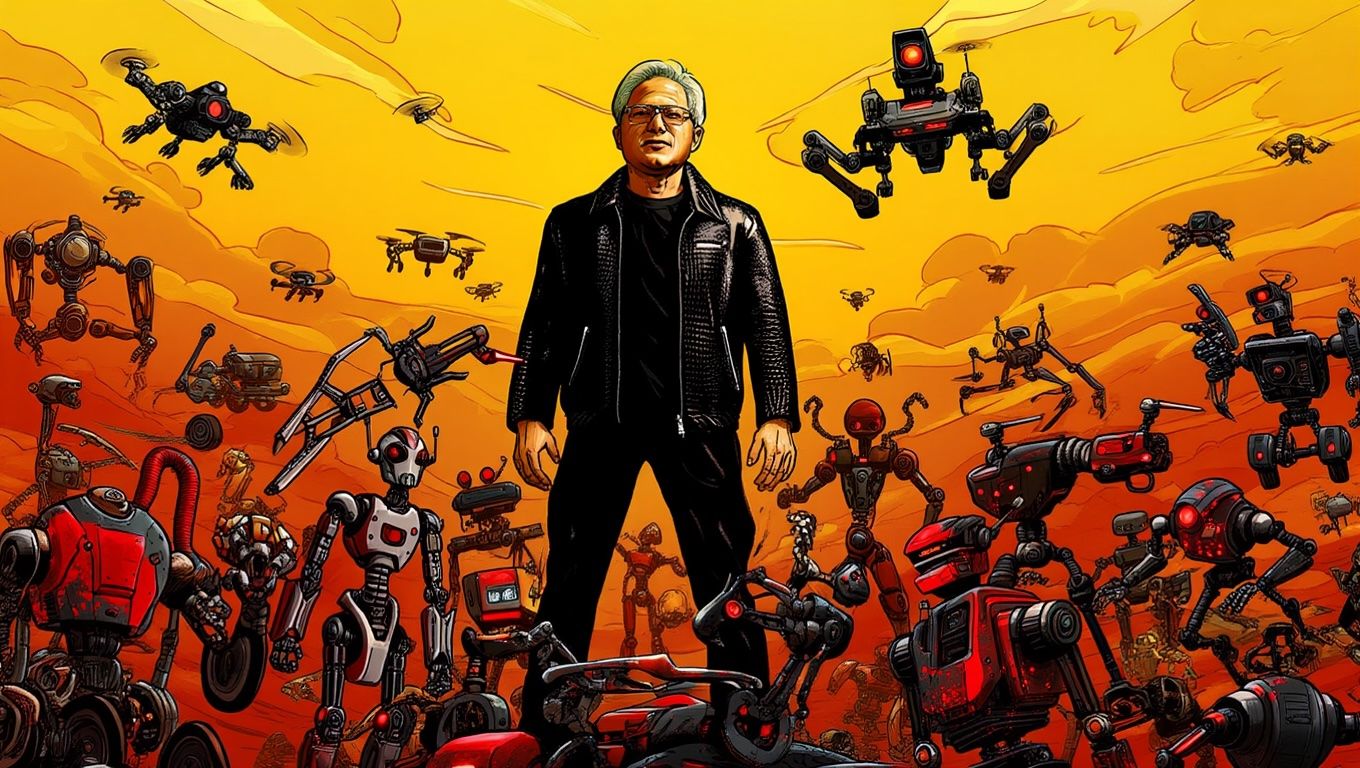
Image source: Reve AI / The Rundown
The Rundown: Nvidia’s Jensen Huang used the annual GTC conference to pitch the tech giant as the default computing backbone for physical AI, debuting new humanoid software stacks, next-gen hardware platforms, and new robot and robotaxi partners.
The details:
Nvidia unveiled a plug-and-play “brain” for humanoids, putting GR00T N1.7 into early access and teasing the next-gen N2.
It’s pairing these models with new Isaac and Cosmos tools, designed to train robots faster in simulation before deploying them in the real world.
Nvidia is also partnering with chipmakers to ensure that next-gen robot motors, sensors, and safety systems are designed to integrate with its ecosystem.
Uber will tap Nvidia’s DRIVE to power Level 4 robotaxis starting in LA and San Francisco in 2027, with plans to scale to 28 cities by 2028.
Why it matters: Nvidia wants to sit at the center of a multi‑trillion‑dollar robotics market, getting manufacturers and platforms to standardize on its system. The strategy’s success depends on robots finally graduating from pilots to production, and on how much resistance Nvidia draws from open-source alternatives and rival silicon.
GECKO ROBOTICS
⚓️ Gecko Robotics lands $71M U.S. Navy deal
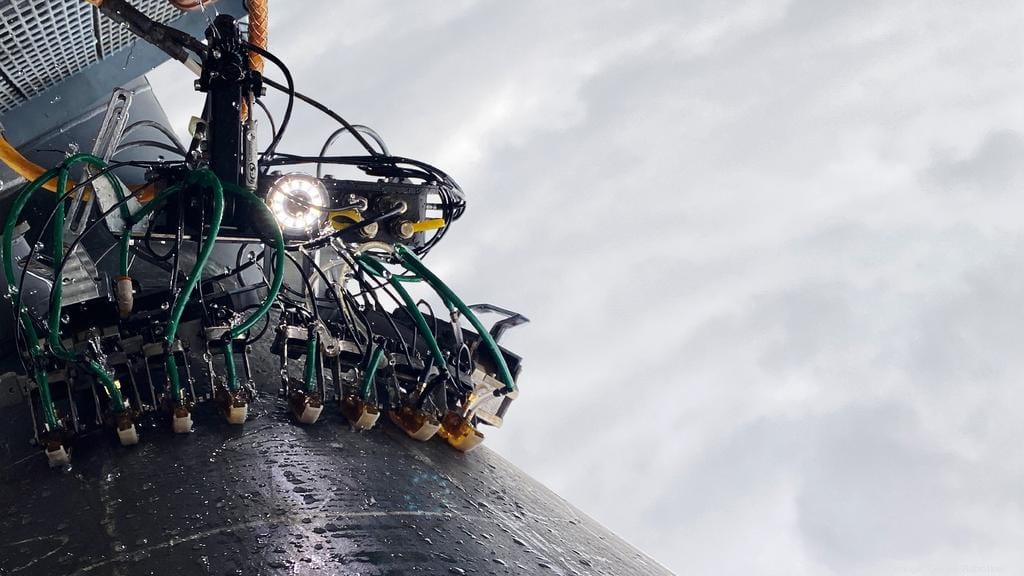
Image source: Gecko Robotics
The Rundown: Pittsburgh startup Gecko Robotics scored a five‑year, up‑to‑$71M U.S. Navy deal to deploy its wall‑climbing AI inspection robots across warships, creating high-res virtual models to help cut maintenance backlogs.
The details:
The deal starts as a five-year agreement with an initial $54M award and a ceiling of $71M, making it the Navy’s largest robotics contract to date.
Gecko’s climbing, flying, and swimming robots will scan critical structures, feeding sensor data into AI models that can flag corrosion and structural issues.
Gecko says its system can identify repairs up to 50x faster than manual inspection, shrinking months-long work down to a couple of days.
The move dovetails with Trump’s drive to rebuild U.S. shipbuilding and close the gap with China by getting more combat-ready hulls back to sea faster.
Why it matters: It shows the Pentagon is ready to buy commercial robotics at scale to fix one of its least glamorous problems: maintenance. If Gecko can turn ships into always-updated digital twins, it could become the playbook for software-first startups looking to modernize everything from depots to airfields and keep the work coming.
MEMORIES AI
📽️ Ex-Meta engineers give robots visual memory

Image source: Memories.ai
The Rundown: A startup founded by former Meta engineers is building what it calls a “visual memory layer” — infrastructure that lets wearables and robots store, index, and search first-person video footage so they can remember what they’ve seen.
The details:
Memories.ai is partnering with Nvidia, tapping Cosmos-Reason 2 for vision-language reasoning and the Metropolis stack for large-scale video search.
Founded in 2024 by ex-Meta Ray-Ban glasses engineers Shawn Shen and Ben Zhou, Memories spun out of their work on video-capturing smart glasses.
The company has raised $16M to date, including an $8M seed round in 2025 and an $8M extension led by Susa Ventures.
Shen told TechCrunch the company is already working with major wearable makers and sees bigger opportunities in robotics.
Why it matters: AI will need to remember what it sees to really work in the physical world, Memories.ai argues. Its visual memory layer is meant to plug a hole left by largely text-focused memory tools from OpenAI, xAI, and Google, giving robots a way to store and recall what they actually “see” while working in the real world.
ROBOT DOGS
🐕 Robot dogs guard billion-dollar AI data centers

Image source: Boston Dynamics
The Rundown: AI data centers are starting to outsource guard duty to quadruped robot dogs from Boston Dynamics and Ghost Robotics, autonomously patrolling sprawling campuses for threats that fixed sensors routinely miss.
The details:
Spot units run $175K–$300K, but operators say the ROI math is straightforward: recoup the cost in roughly two years by cutting guard labor.
Robot dogs patrol perimeters, scan fence lines for intruders, and flag hazards like leaks, heat anomalies, or propped‑open doors that fixed sensors miss.
Ghost Robotics’ Vision 60s are already active at a handful of facilities, navigating rough terrain while streaming 360-degree video to control rooms.
The pitch from operators is augmentation, not replacement — human security teams monitor the feeds as robots take care of 24/7 patrol.
Why it matters: Tech companies are pouring $700B into hundreds of new AI facilities, with Meta’s Hyperion alone slated to sprawl to 4x the size of Central Park. Even as operators trim onsite guard headcount, execs insist the robots are there to augment humans, with centralized security teams monitoring their feeds from control rooms.
QUICK HITS
📰 Everything else in robotics today
Unitree founder Wang Xingxing said Chinese humanoids could run a sub‑10‑second 100m dash by mid‑2026, potentially beating Usain Bolt’s 9.58‑second world record.
Time said the U.S. is rushing into a “humanoid soldier” arms race, led by Foundation’s Phantom MK‑1 robots in Ukraine, on the promise of keeping human troops alive.
Renault started using Wandercraft’s Calvin-40 humanoids to haul car tires at its Douai plant with plans to roll out about 350 more units over the next 18 months.
South Korean firm Tesollo unveiled a lightweight robotic hand with what it says is near-human-level dexterity that can grasp delicate objects and use everyday tools.
UK defense startup Cambridge Aerospace, which builds drone interceptor systems, is reportedly in talks to raise about $200M at a valuation above $1B.
Samsung is fast‑tracking humanoids and agentic AI for its own plants, aiming to turn all global factories into AI‑autonomous “smart factories” by 2030.
Researchers developed a fully biodegradable soft robotic finger that can perform over 1M actuation cycles accurately before decomposing into nontoxic compost.
Pokémon Go players have, often unknowingly, reportedly helped Niantic Spatial and Coco Robotics train their delivery bots using more than 30B player-shot images.
Drone startup Seneca will test five AI-guided firefighting drones in Aspen this summer to see if autonomous aircraft can attack wildfires faster than traditional crews.
COMMUNITY
🎓 Highlights: News, Guides & Events
Read our last AI newsletter: Google bets on 'vibe design' with Stitch
Read our last Tech newsletter: China greenlights commercial brain implant
Read our last Robotics newsletter: Travis Kalanick’s stealth robot play
Today’s AI tool guide: Generate an actionable SEO audit with AI
RSVP to next workshop @ 2 PM EST today: Intro to Vibe Coding pt. 2
See you soon,
Rowan, Joey, Zach, Shubham, and Jennifer — The Rundown’s editorial team

Stay Ahead on AI.
Join 2,000,000+ readers getting bite-size AI news updates straight to their inbox every morning with The Rundown AI newsletter. It's 100% free.