Get the latest AI news, understand why it matters, and learn how to apply it in your work — all in just 5 minutes a day. Join over 2,000,000+ subscribers.

SpaceX buys up a lot of Cybertrucks
Read Online | Sign Up | Advertise

Good morning, tech enthusiasts. Elon Musk’s own companies are reportedly buying a lot of Cybertrucks — and without them, Tesla’s sales numbers would look a lot worse.
SpaceX alone accounted for more than 18% of all U.S. Cybertruck registrations in Q4 2025, and without purchases from Musk’s other ventures, sales would have fallen 51% year-over-year. SpaceX may not need 1,279 stainless-steel pickups — but Tesla certainly did.
In today’s tech rundown:
Tesla Cybertruck’s biggest customer is Musk
Reed Hastings is leaving Netflix
YouTube adds an off switch for Shorts
Amazon buys Globalstar for $11.57B
Quick hits on other tech news
LATEST DEVELOPMENTS
TESLA
🛻 Tesla Cybertruck’s biggest customer is Musk

Image source: Ideogram / The Rundown
The Rundown: Elon Musk’s own companies bought nearly one in five Cybertrucks registered in the U.S. last quarter, reportedly masking a demand collapse that would have otherwise sent sales down 51% year-over-year.
The details:
SpaceX alone accounted for 1,279 of the 7,071 Cybertrucks registered in the U.S. during Q4 2025 — more than 18% of the total, according to Bloomberg.
The remainder went to xAI, Neuralink, and The Boring Company, for a total of 1,339 units and roughly 19% of all U.S. registrations for the quarter.
Bloomberg noted it remains unclear what Musk’s non-rocket companies are doing with the trucks — or why an AI firm would need 50 of them.
The pattern has continued into 2026, with Musk-owned entities adding another 158 Cybertrucks in January and 67 in February.
Why it matters: The figures put hard numbers on what had been anecdotal — Cybertrucks piling up at SpaceX’s Starbase — and raise questions about how Tesla accounts for sales to companies its CEO controls, without the disclosure standards expected in comparable fleet transactions.
TOGETHER WITH FIN
📅 Fin and Attio on agentic GTM
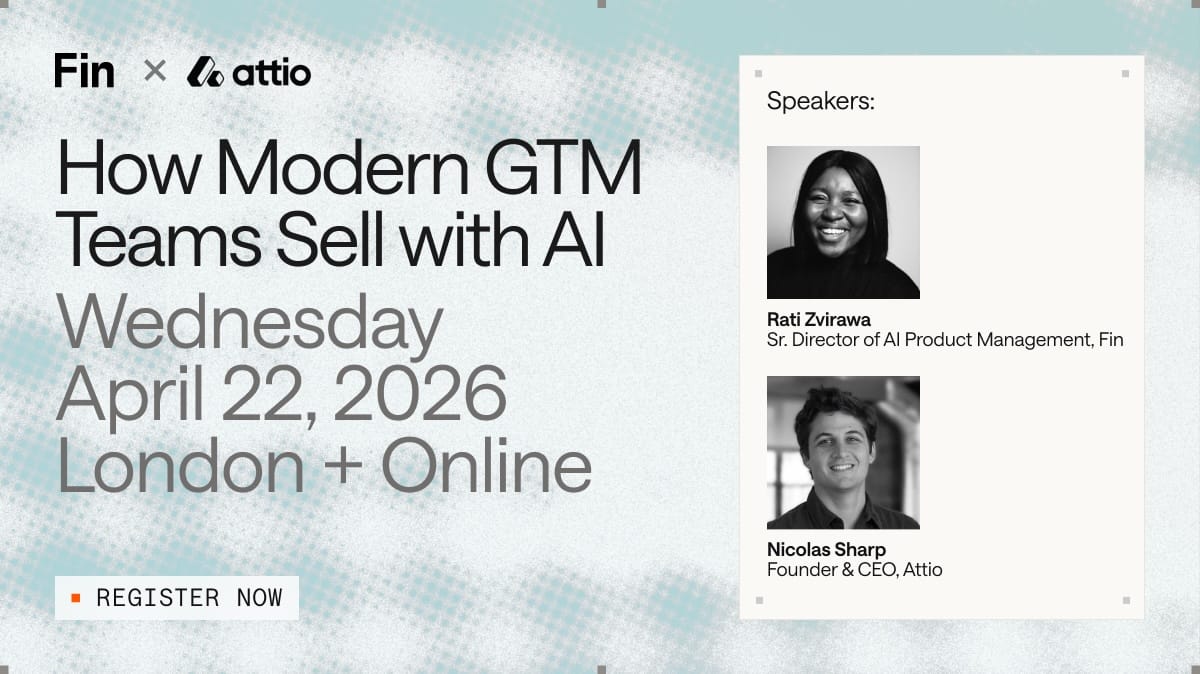
The Rundown: Join Rati Zvirawa, Sr. Director of AI Product at Fin, the best-performing AI Agent for customer experience, and Nicolas Sharp, Founder & CEO of Attio, for a live discussion on how the best revenue teams are rebuilding the sales funnel with agentic AI.
What you’ll learn:
How AI is reshaping modern GTM experiences
The importance of shared context across interactions
How to design AI GTM for trust and control
NETFLIX
💼 Reed Hastings is leaving Netflix

Image source: Getty Images
The Rundown: Reed Hastings, the co-founder who transformed Netflix from a DVD mailer into a $12B-a-quarter streaming empire, is leaving the board in June after 29 years — as the company he built moves fully into the Sarandos-Peters era.
The details:
Hastings, currently serving as chairman, will not stand for reelection at the June annual meeting, citing a desire to focus on philanthropy.
Netflix posted Q1 2026 revenue of ~$12.25B, up ~16% year over year, with a net income of ~$5.3B — beating expectations.
Hastings backed the failed Warner bid, but execs say his exit is unrelated; Netflix shares still slid about 8–9% in after‑hours trading on the news.
The board’s nominating committee will now move to select a new chairman in the coming months.
Why it matters: Hastings not only founded Netflix but invented the playbook that forced Hollywood to reinvent itself around streaming, data, and subscriber-first economics. His exit closes a 29-year chapter that helped reshape an entire industry. What comes next belongs entirely to co-CEOs Ted Sarandos and Greg Peters.
YOUTUBE
🧘🏽 YouTube adds an off switch for Shorts
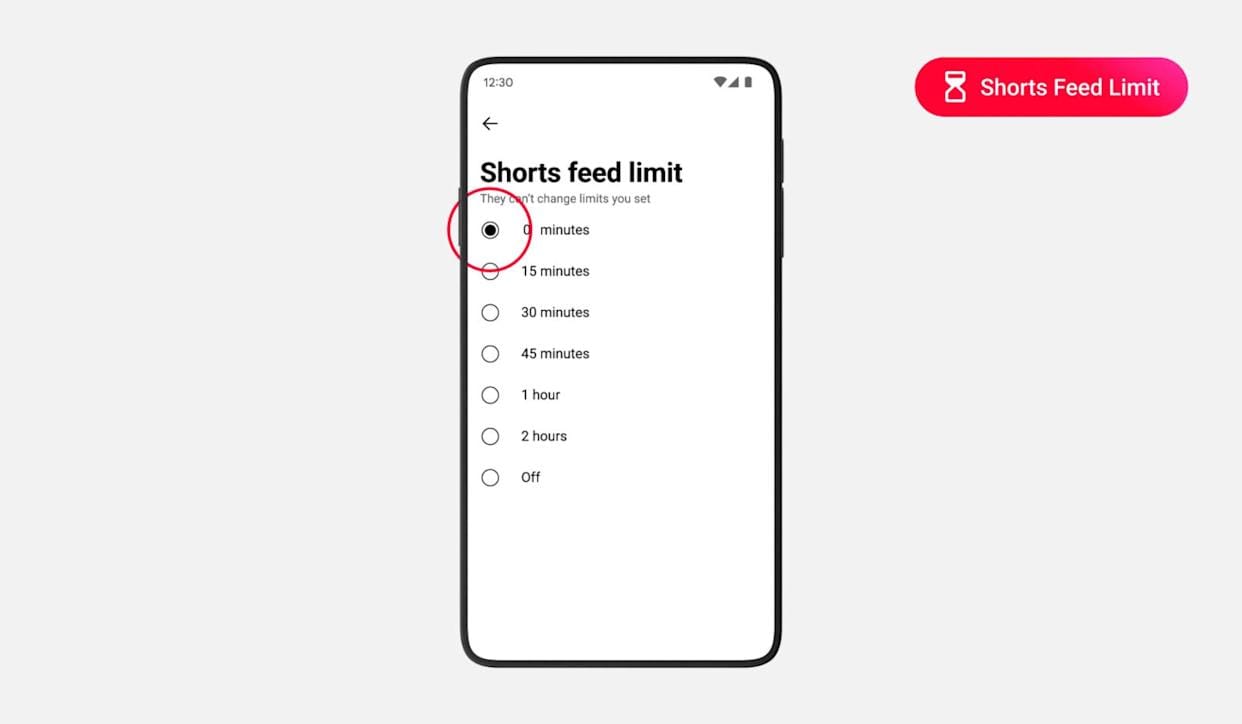
Image source: YouTube
The Rundown: YouTube is giving users a genuine off switch for Shorts, adding a zero-minute limit to its existing time management tools so you can effectively strip the TikTok-style feed out of the Android and iOS app.
The details:
The zero-minute option extends an existing Shorts timer that previously only let users cap scrolling between 15 minutes and two hours per day.
Hit your limit — including zero — and the Shorts tab stops serving video, replacing the feed with a full-screen notice that you’ve reached your daily cap.
The feature originated inside parental controls but is now rolling out to all adult accounts on Android and iOS through YouTube’s time management settings.
To enable it: Settings → Time management → Shorts feed limit, then set your daily cap anywhere from zero to two hours.
Why it matters: The zero-minute limit is a rare instance of a major platform giving users a real off switch for an addictive engagement surface, rather than just more nudges and reminders. It tests how serious YouTube is about digital well‑being, and whether users (and regulators) will start expecting this level of control from rivals.
AMAZON
🛰️ Amazon buys Globalstar for $11.57B

Image source: Amazon
The Rundown: Amazon is spending $11.57B to acquire satellite operator Globalstar, giving its fledgling Amazon Leo satellite network the spectrum, infrastructure, and direct-to-device capabilities it needs to challenge SpaceX’s Starlink.
The details:
The $90-per-share deal will enable Amazon to flesh out its satellite business, Amazon Leo, with direct-to-device services ahead of its launch later this year.
Apple’s Emergency SOS and Find My features will keep running on Globalstar’s network under a new long-term agreement with Amazon.
Globalstar also brings two-way satellite IoT capability and government and defense accounts to Amazon’s portfolio.
Amazon is targeting a constellation of 3,200 satellites by 2029; Starlink currently has about 10K in orbit.
Why it matters: The deal hands Amazon a ready-made spectrum position and operational satellite infrastructure that would have taken years to build independently. For consumers, it sets up a race against Starlink in satellite connectivity that could ultimately drive broader, faster, and cheaper coverage beyond the reach of a cell tower.
QUICK HITS
📰 Everything else in tech today
Google is teaming up with Gucci to launch fashion-focused AI smart glasses in 2027, following its 2026 Android XR “Project Aura” glasses.
Alphabet’s early 6.11% stake in SpaceX could translate into roughly a $100B-plus windfall if the rocket company debuts at around a $2T valuation, Bloomberg reports.
OpenAI scrapped its Norway data-center lease, and Microsoft is taking over the capacity while still powering OpenAI via Azure.
AI data center startup Fluidstack is reportedly negotiating a new $1B funding round at an $18B valuation.
Slash, a business-banking and corporate card startup founded five years ago by then-teenage college dropouts, raised a $100M Series C at a $1.4B valuation.
The U.S. will now require data centers nationwide to disclose detailed information about their energy use through a forthcoming mandatory survey, Wired reports.
French President Emmanuel Macron is urging EU leaders to adopt a unified set of rules to limit minors’ access to social media and better protect children online.
Spotify now lets users in the U.S. and UK buy physical books from audiobook pages in its app via a “Get a copy for your bookshelf” button that redirects to Bookshop.org.
Amazon-backed nuclear startup X-energy is eyeing up to $814M in its U.S. IPO at a $7.5B valuation to fund deployment of its small modular reactors.
A lightweight Van Rysel skinsuit with an integrated airbag rapidly inflates to protect cyclists’ upper bodies in crashes and could reach consumers within two years.
The FCC granted Netgear an exemption from its ban on foreign-made routers, allowing the company to sell overseas-manufactured devices in the U.S. through 2027.
Blue Origin is rolling out a new stock-option plan that replaces its annual cash bonus program, but many employees see it as unfair treatment of current and former staff.
A cancer-drug compound, JQ1, temporarily shuts down sperm production in mice without hormones, and normal fertility returns after treatment stops.
COMMUNITY
🎓 Highlights: News, Guides & Events
Read our last AI newsletter: OpenAI's superapp hiding inside Codex
Read our last Tech newsletter: Meta closing in on Google ad crown
Read our last Robotics newsletter: Uber’s $10B robotaxi pivot
Today’s AI tool guide: Run an LLM on your laptop for free with Ollama
See you soon,
Rowan, Joey, Zach, Shubham, and Jennifer — The Rundown’s editorial team
OpenAI's superapp hiding inside Codex
Read Online | Sign Up | Advertise

Good morning, AI enthusiasts. OpenAI has been teasing a superapp for months. Today, it shipped a major first piece.
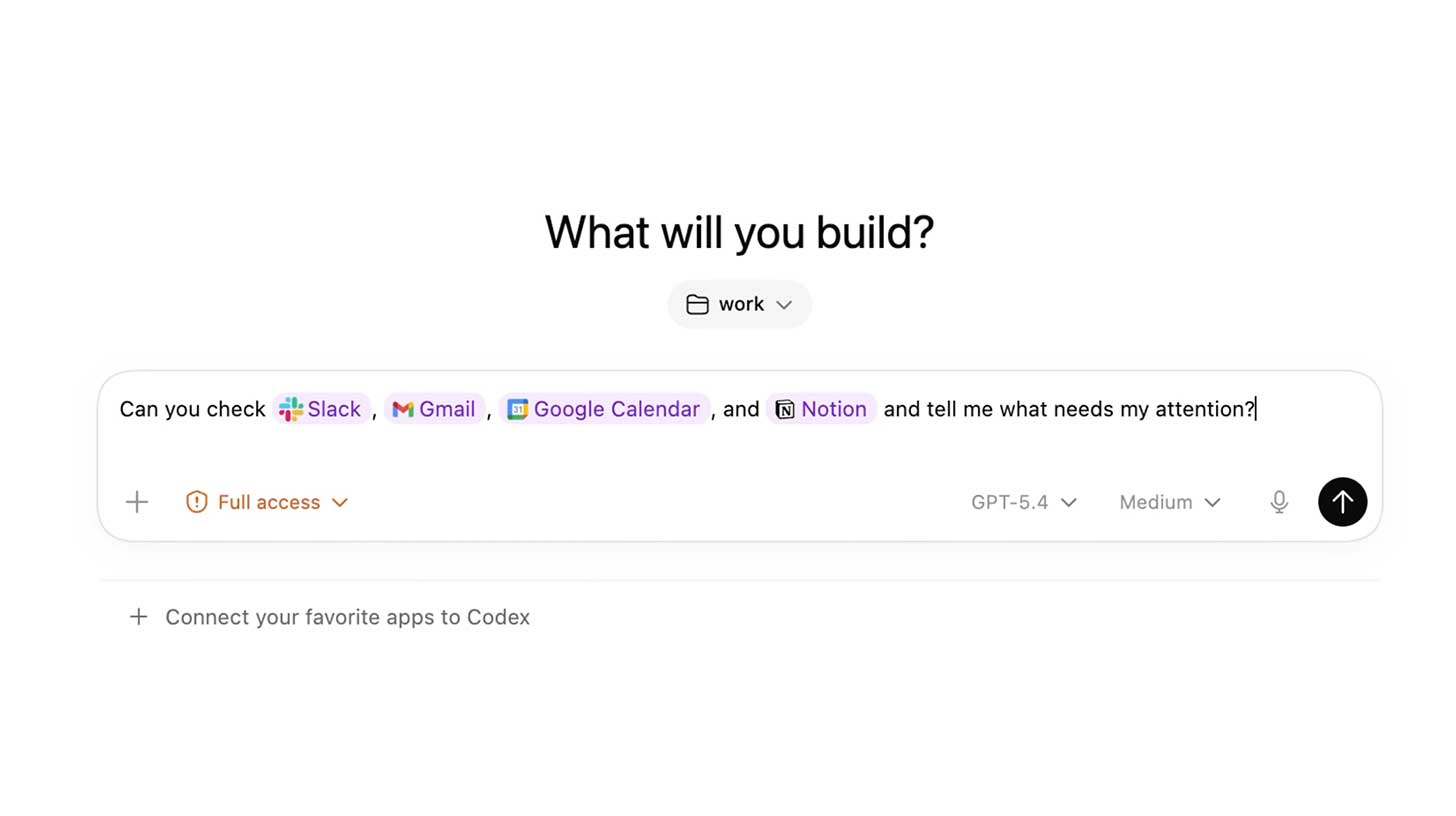
With a major Codex update bringing new features like background computer use, an in-app browser, parallel agents, and more, the rollout is OpenAI's clearest step yet toward the all-in-one platform it's been building out in the open.
In today’s AI rundown:
OpenAI’s superapp shift with Codex update
Anthropic's Opus 4.7 tops rivals, trails Mythos
Run an LLM on your laptop for free with Ollama
OpenAI’s first science domain-specific model
4 new AI tools, community workflows, and more
LATEST DEVELOPMENTS
OPENAI
🧰 OpenAI’s superapp shift with Codex update
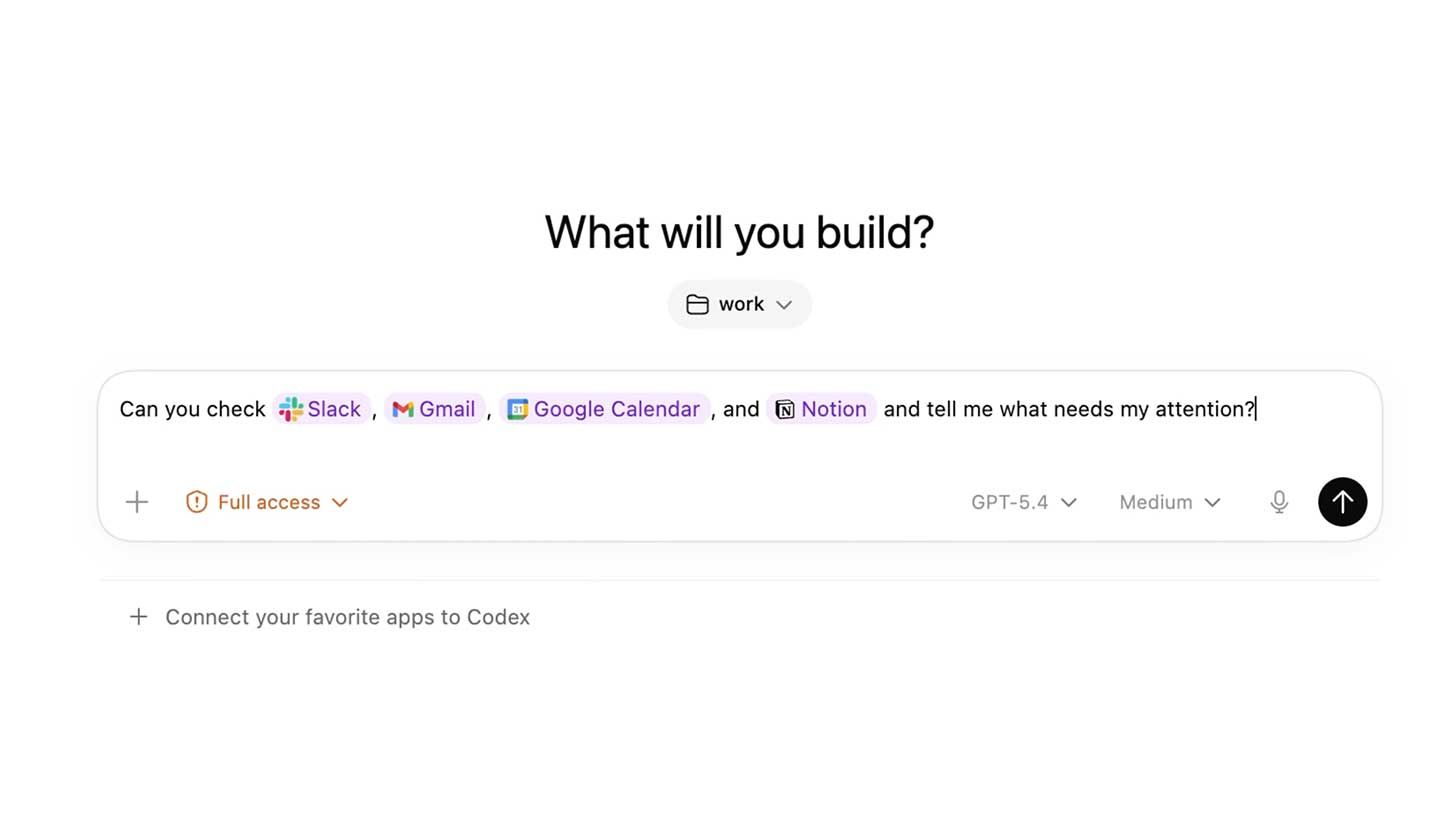
Image source: OpenAI
The Rundown: OpenAI just updated its Codex platform, shifting it from a coding agent to a cohesive ChatGPT + Atlas + Codex app with features like background computer use, parallel agents, an in-app browser, image generation, and more.
The details:
Background computer use lets Codex operate any Mac app on its own, with several agents also able to work at once, even in apps without APIs.
Memory (in preview) now retains preferences and context across sessions, while automations let Codex pick up long-running tasks days later.
An Atlas-powered in-app browser lets developers mark up pages to direct Codex, while inline gpt-image-1.5 creates mockups without switching apps.
Codex hit 3M weekly users with 70% month-over-month growth, and Codex head Thibault Sottiaux said OpenAI is "building the super app out in the open."
Why it matters: Anthropic hit a home run with Claude Code and Cowork, and this is OpenAI’s biggest challenge to it yet — bringing Codex on a similar playing field with an expansion of capabilities far beyond just an agentic coding assistant. With the company building a ‘superapp’, this feels like a big first shift towards that vision.
TOGETHER WITH LOVABLE
🛠️ Your app idea doesn't need a dev team
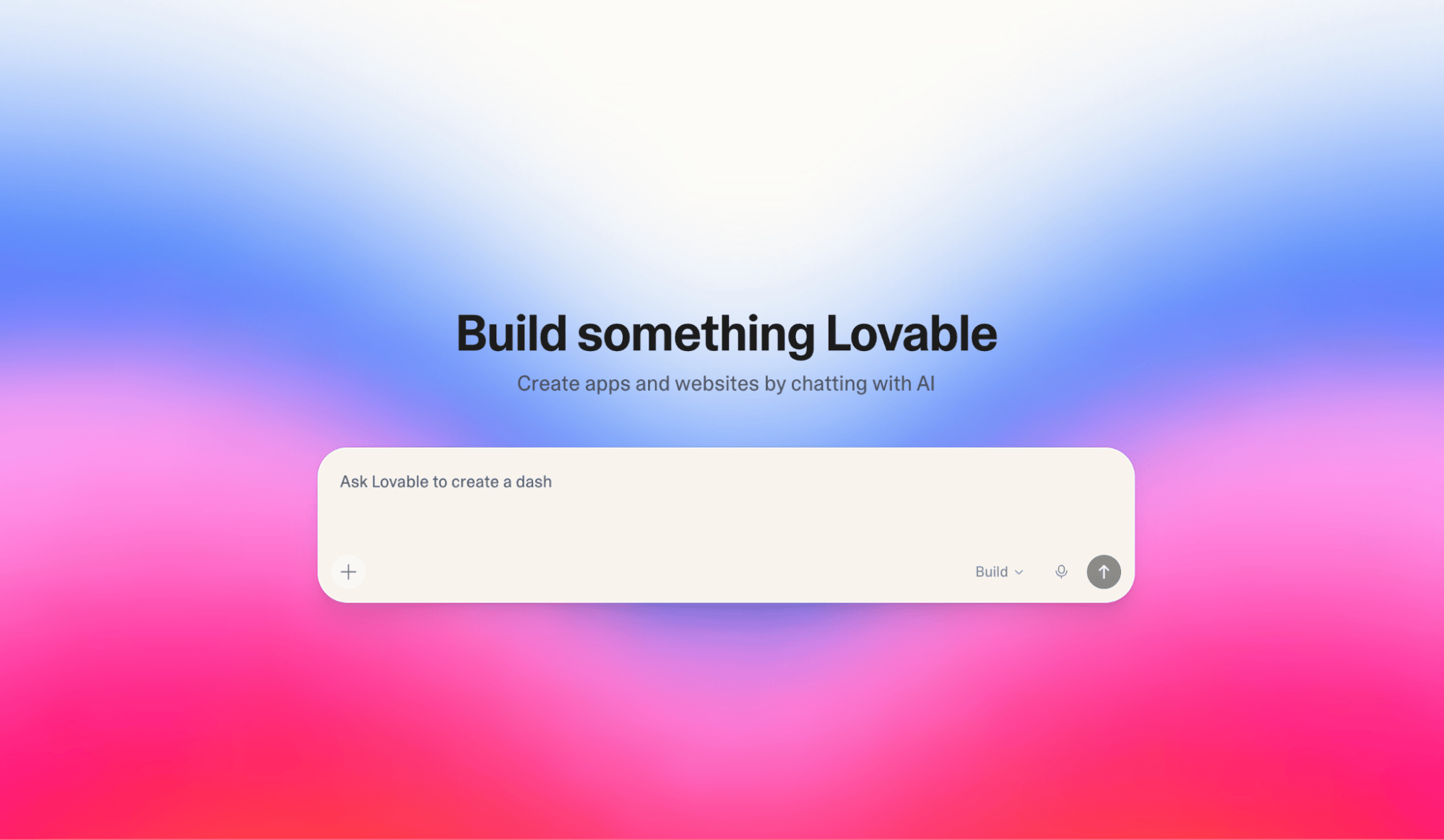
The Rundown: Hiring developers or learning to code used to be the only way to bring a product to life. Lovable removes that barrier entirely — its AI builds real, usable apps and websites from a simple text description.
Millions of users are already building with Lovable to:
Go from idea to a functional, customer-ready app in minutes, not months
Launch Shopify stores, admin tools, landing pages, and more with simple prompts
Launch real businesses, validate ideas, and save thousands in dev costs
ANTHROPIC
⚙️ Anthropic's Opus 4.7 tops rivals, trails Mythos
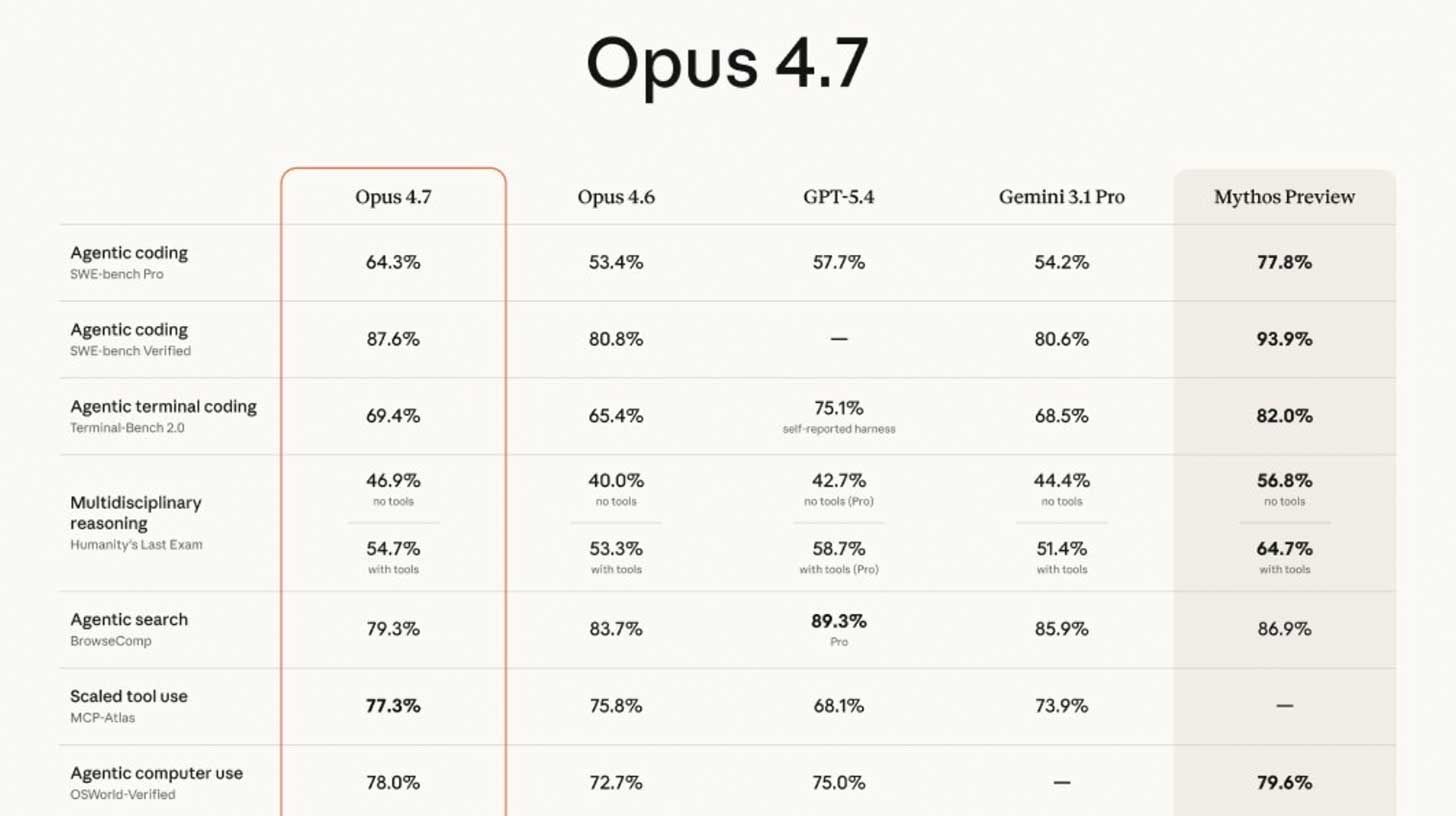
Image source: Anthropic
The Rundown: Anthropic just released Claude Opus 4.7, the company’s new top publicly available model that tops GPT-5.4 and Gemini 3.1 Pro on agentic coding — though still lags behind the company's own unreleased Mythos Preview.
The details:
Opus 4.7 jumps from 4.6's 53.4% on SWE-bench Pro coding benchmark to 64.3%, with the gated Mythos Preview still ahead at 77.8%.
The model is priced identically to Opus 4.6 for API usage, though the upgrade uses tokens significantly faster than its predecessor.
Other rollouts include a Claude Code default ‘xhigh’ effort in between high and max, and an /ultrareview slash command that flags bugs and design issues.
The release comes amid user complaints of degraded performance on 4.6, with 4.7 early reactions also coming out divided on capabilities despite benchmarks.
Why it matters: Anthropic is now running two parallel tracks: a fast 2-month public release cadence and a gated frontier line in Mythos, accessible only to exclusive partners. That split lets the company stress-test its most powerful models, but also marks one of the first times public access feels behind the true frontier.
AI TRAINING
🦙 Run an LLM on your laptop for free with Ollama

The Rundown: In this guide, you will learn how to install Ollama and run a real AI model on your laptop for free. No subscription, no account, and no data leaving your machine.
Step-by-step:
Go to ollama.com/download, get the installer for your Mac / Linux / Windows PC, and set it up. Open the app once it's installed
In the app, go to New Chat, select a lightweight model like gemma3 (about 3GB, suitable for any 8GB RAM laptop), and wait for it to download
After the model downloads, type a prompt and hit enter. That's it. You're chatting with a real AI running entirely on your laptop
Try turning on airplane mode and sending another message to watch it work with no internet at all
Pro tip: You can use Ollama's API to give your model access to web and other tools. You can also point a coding agent like Claude Code at the model and run it for free.
PRESENTED BY FIDDLER
💸 Cut the trust tax of evaluating AI agents at scale

The Rundown: Evaluating agents with external LLMs looks affordable. Until your agent traffic grows. Fiddler’s guide breaks down how to reduce Total Cost of Ownership while eliminating risk gaps in production.
Learn how to:
Evaluate every trace without sampling
Evaluate agents in-environment with batteries-included Trust Models
Reduce API costs at scale
OPENAI
🧬 OpenAI’s first science domain-specific model
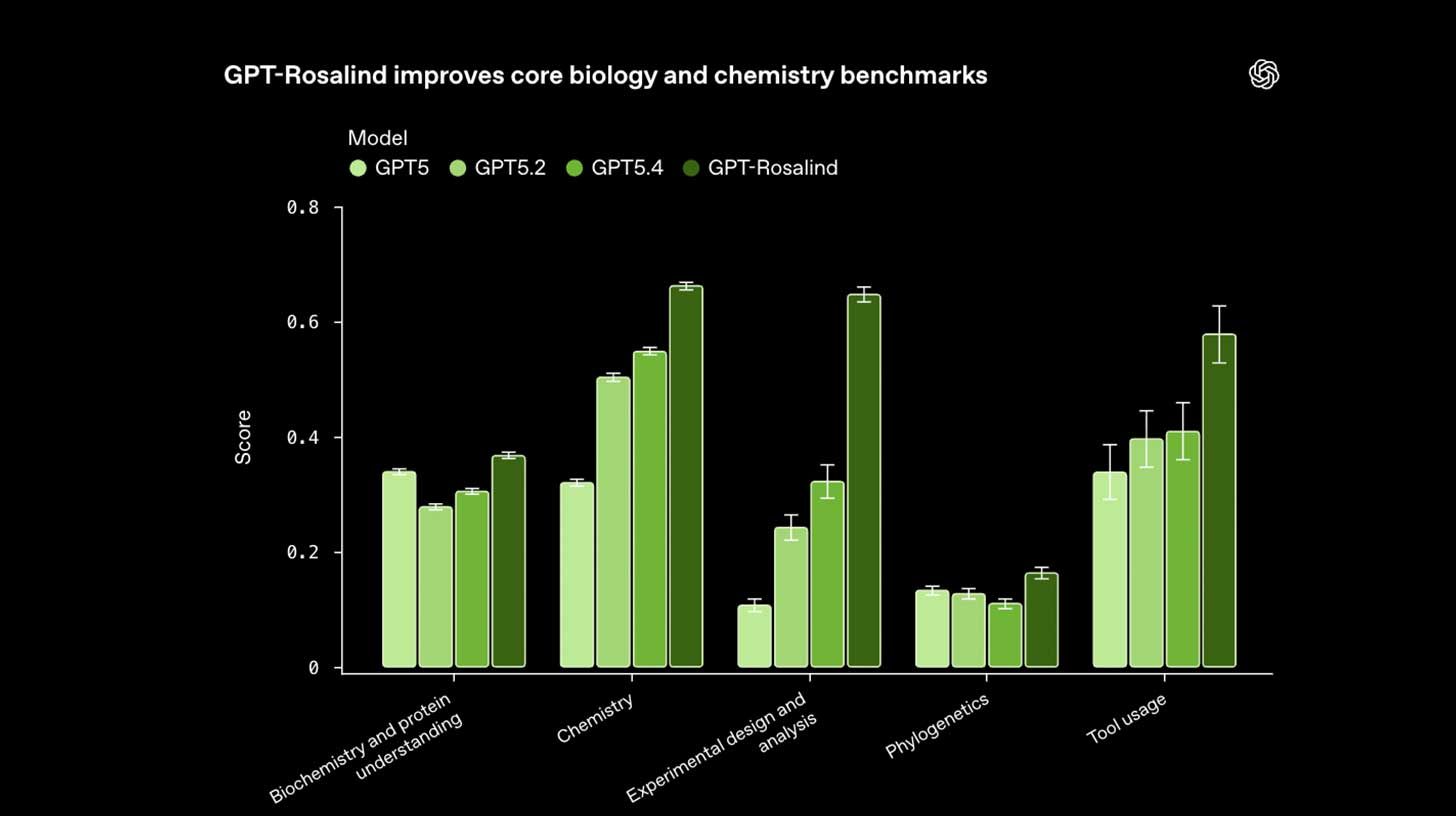
Image source: OpenAI
The Rundown: OpenAI launched GPT-Rosalind, the first model in a new life sciences series built for drug discovery and biological research, and the company's first real step into domain-specialized reasoning — following Tuesday's GPT-5.4-Cyber.
The details:
Rosalind can read scientific papers, query lab databases, design experiments, and generate biological hypotheses, simplifying the research process.
The model shows strong jumps on science-specific benchmarks for biochemistry, experiment design, tool usage, and more over GPT-5.4.
On a blind RNA test from gene therapy lab Dyno Therapeutics, Rosalind's answers scored better than 95% of human scientists on prediction tasks.
The model is available to qualifying enterprise users during the test phase, with companies like Amgen, Moderna, and the Allen Institute already using it.
Why it matters: Tuesday, it was GPT-5.4-Cyber, and today, it's GPT-Rosalind. That's two domain models in three days, showing a trend — the flagship may be good at everything, but the actual massive wedges at the top of industries like defending networks or designing drugs may need purpose-built models.
QUICK HITS
🛠️ Trending AI Tools
🤖 Claude Opus 4.7 - Anthropic’s new top AI with advanced agentic coding
⚙️ Windsurf 2.0 - Agentic IDE with new command center, Devin cloud agent
🚀 Codex - OAI's coding agent, now with computer use, in-app browser, more
🧠 HY-World 2.0 - Tencent’s world model that creates interactive 3D scenes
📰 Everything else in AI today
Perplexity rolled out Personal Computer, a Max-tier Mac app that runs agents across 20+ frontier models to drive native apps, read files, and pilot its Comet browser 24/7.
Windsurf launched 2.0, adding an Agent Command Center with a new command center view for fleets of parallel cloud and local agents and bringing Devin into the IDE.
Tencent's Hunyuan team open-sourced HY-World 2.0, a world model that generates editable 3D scenes with physics-aware movement, pushing directly into 3D pipelines.
The U.S. government is reportedly preparing to give certain agencies access to Anthropic’s Mythos AI, despite the blacklist and current legal battle with the company.
Alibaba’s ATH team introduced Happy Oyster in beta, a new world model that can create interactive 3D environments on the fly from multimodal inputs.
COMMUNITY
🤝 Community AI workflows
Every newsletter, we showcase how a reader is using AI to work smarter, save time, or make life easier.
Today’s workflow comes from reader Jerry G. in Gig Harbor, WA:
"I'm a 73-year-old author and screenwriter. I have been using Claude to build my last two books. Claude helped design the book covers, formatted the interior, and even suggested titles for my stories.
Now that they are printed, Claude helps me market them to book clubs, libraries, and social media sites. Claude helped me build a Substack following and post bi-weekly new stories on Instagram and BlueSky. I'm a Claude convert and won't write any more books with his assistance.”
How do you use AI? Tell us here.
🎓 Highlights: News, Guides & Events
Read our last AI newsletter: Allbirds ditches sneakers for AI compute
Read our last Tech newsletter: Meta closing in on Google ad crown
Read our last Robotics newsletter: Uber’s $10B robotaxi pivot
Today’s AI tool guide: Run an LLM on your laptop for free with Ollama
See you soon,
Rowan, Joey, Zach, Shubham, and Jennifer — the humans behind The Rundown


Uber's $10B robotaxi pivot
Read Online | Sign Up | Advertise

Good morning, robotics enthusiasts. Uber just made a $10B wager on its robotaxi future, locking up autonomous EV fleets and buying into their makers.
With Waymo scaling and Tesla and Amazon-backed rivals circling, Uber is pouring billions into hardware it doesn’t control to avoid becoming a software layer on someone else’s machine. Can the ride-hailing giant stay essential in an autonomous world, or is this the moment the platform starts looking vulnerable?
In today’s robotics rundown:
Uber pours $10B into driverless ride-hails
Google’s Gemini turns Spot into an AI inspector
Toyota’s giant humanoid shoots perfect hoops
Tesla’s biggest factory may build Optimus
Quick hits on other robotics news
LATEST DEVELOPMENTS
UBER
🚖 Uber pours $10B into driverless ride-hails

Image source: Ideogram / The Rundown
The Rundown: Uber is earmarking more than $10B to secure autonomous EV fleets and buy into their makers as it jockeys with Waymo, Tesla, and Amazon-backed rivals to shape the driverless ride-hail market, the Financial Times reports.
The details:
Uber plans to spend over $7.5B buying dedicated robotaxi fleets and more than $2.5B taking stakes in autonomous-vehicle developers.
The company is stitching together a marketplace of AV partners, including Baidu in China and EV makers Lucid and Rivian.
The most concrete deal is with Lucid: a combined $500M equity investment and a commitment to purchase at least 35K Lucid vehicles.
Uber plans to roll out robotaxis in 28 cities by 2028, leaning on partners like Nuro, and has set up an Uber AV Labs unit and dedicated fast-charging hubs.
Why it matters: Uber’s pivot comes as Alphabet’s Waymo scales commercial robotaxis in U.S. cities and Tesla pushes its vertically integrated “Cybercab” vision. Uber is under pressure to invest heavily in hardware it does not control, as it leans on its massive global rider base to stay at the center of autonomous mobility.
BOSTON DYNAMICS
🧠 Google’s Gemini turns Spot into an AI inspector

Image source: Boston Dynamics
The Rundown: Boston Dynamics plugged Google DeepMind’s Gemini into its Spot robot dog so it can autonomously patrol industrial sites, visually read analog gauges and thermometers, and flag problems without a human in the loop.
The details:
Spot can now autonomously read analog gauges and thermometers in industrial sites, converting video into structured data with no human oversight.
The system uses multimodal reasoning to interpret complex panels and environments, letting Spot decide when a reading is abnormal.
These new capabilities are being rolled out to customers focused on routine inspections in factories, refineries, and other hazardous facilities.
The upgrade shifts Spot’s role from a teleoperated camera platform to a semi‑autonomous “inspector.”
Why it matters: Spot just got a serious brain upgrade. With Google DeepMind’s Gemini Robotics‑ER 1.6 wired into its Orbit AIVI‑Learning stack, it can now patrol factories and refineries, zoom in on pressure gauges and thermometers, and read them with near‑human accuracy. Plus, it can grind through tedious rounds with no downtime.
TOYOTA
🏀 Toyota’s giant humanoid shoots perfect hoops
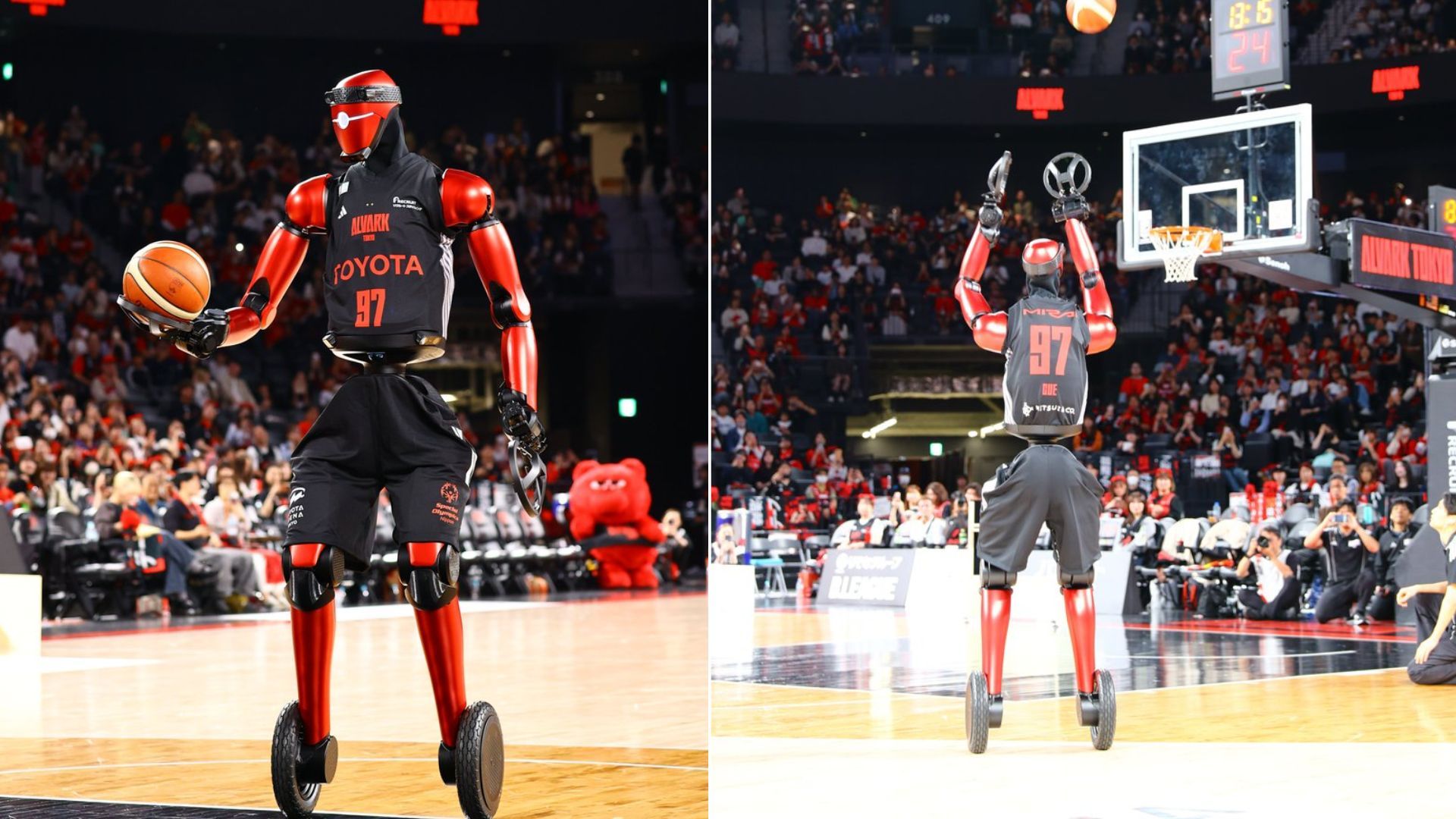
Image source: Toyota Frontier Research Center / X
The Rundown: Toyota’s latest humanoid can shoot flawless free throws on live TV. CUE7, standing 7'2", took the court during a live B.League game in Tokyo this week — dribbled, rolled to the line, and sank it.
The details:
A hybrid control system combines reinforcement learning with model predictive control, letting the robot adapt shot mechanics in real time.
CUE7 locks onto the hoop, uses sensors to gauge distance, makes fine upper-body adjustments to arm angle and posture, then releases the ball on an arc.
The robot swaps the older four‑wheel base for a lighter two‑wheel design, cutting 46 kg from its predecessor, going to 74 kg from 120 kg.
The project goes back nearly a decade: CUE3 sank 2,020 free throws in 2019 for a Guinness record; CUE6 hit a 24.5m shot in 2024 for another.
Why it matters: Unitree’s G1 can dribble and hit layups using imitation learning from motion-capture data, while lab projects like DribbleBot push humanoids toward ball control. What separates CUE7 is the underlying stack: a hybrid of reinforcement learning and model predictive control that lets the robot analyze and adjust on the fly.
TESLA
🤖 Tesla’s biggest factory may build Optimus

Image source: China News Service / Tesla Shanghai assembly line
The Rundown: Tesla wants to turn its Shanghai Gigafactory — the sprawling plant that delivered more than half its cars and hit record output last year — into the backbone of its Optimus humanoid ambitions.
The details:
Tesla China president Wang Hao told local media that GigaShanghai could be a “golden key” to solving the mass production challenge for Optimus.
In Q1 2026 alone, the factory accounted for 59.6% of Tesla’s global quarterly output, with deliveries jumping 23.5% year-over-year to 213,398 vehicles.
Tesla says it is already converting its Fremont factory — freed up by the sunset of Models S and X — into an Optimus line designed for up to 1M units a year.
Although analysts say Tesla built only a few hundred humanoids in 2025, Musk’s new $1T pay plan hinges in part on delivering 1M bots by 2035.
Why it matters: Shanghai already delivers more than half of Tesla’s global cars, but whether or not Tesla could smoothly put Optimus into those same high‑throughput lines isn’t quite clear. Still, Shanghai’s scale is its best shot at jumping from a few hundred prototypes a year to the tens of thousands it needs to make this business real.
QUICK HITS
📰 Everything else in robotics today
Ukraine says it has captured a Russian frontline position using only drones and ground robots, in what Kyiv touts as a first glimpse of autonomous warfare.
A humanoid named Edward Warchocki, built on a Unitree G1 platform, went viral after a video showed it chasing a group of wild boars down the street in Warsaw.
Uber and Nuro started testing a premium robotaxi service in San Francisco using Lucid Gravity SUVs equipped with Nuro’s autonomous driving system.
Skild AI acquired Zebra Technologies’ Robotics Automation business to power large-scale, end-to-end warehouse automation with its Skild Brain software.
Korean AI chip startup DEEPX is deepening its Hyundai partnership to develop a generative AI robotics platform using its next-gen low-power chips ahead of an IPO.
Snake-like robots developed in Japan use an AI control system to seamlessly switch between slithering and rolling, boosting their movement efficiency over complex terrain.
Waymo began testing its all-electric Jaguar I-Pace robotaxis with safety drivers on London roads as a step toward launching the city’s first commercial robotaxi service.
Austin-based Contoro Robotics raised about $13.5M, shortly after winning an SXSW Pitch award, to scale its AI-powered trailer and container-unloading robots.
DJI will unveil two new consumer drones, the Lito and higher-end Lito X1, at a “Just Fly” launch event on April 23.
Almost 100 humanoids are training in Beijing’s E-Town district for a full test run of a 21 km half-marathon course just days before the official 19 April race.
About 20 international teams will push military robots through one of the world’s toughest real-world field trials at ELROB 2026 in Thun, Switzerland, in June.
Mobileye is seeking a buyer for its transit app Moovit, likely at a steep discount to the roughly $900M its parent Intel paid in 2020, as it doubles down on autonomous driving.
EPFL researchers developed a “kinematic intelligence” framework that lets a task demoed by a human be transferred and executed by multiple differently built robots.
KAIST’s new DreamWaQ++ system lets quadruped robots see terrain and walk adaptively like animals across complex, unpredictable ground.
Roboticists showed that injecting a bit of randomness into how individual bots move prevents dense robot swarms from jamming, sharply increasing overall flow.
COMMUNITY
🎓 Highlights: News, Guides & Events
Read our last AI newsletter: Allbirds ditches sneakers for AI compute
Read our last Tech newsletter: Meta closing in on Google’s ad crown
Read our last Robotics newsletter: Unitree’s cheapest humanoid goes global
Today’s AI tool guide: Audit business with Notion's built-in Claude agents
See you soon,
Rowan, Joey, Zach, Shubham, and Jennifer — The Rundown’s editorial team
Allbirds ditches sneakers for AI compute
Read Online | Sign Up | Advertise

Good morning, AI enthusiasts. CEOs love to predict that all companies will eventually become AI companies. It’s doubtful any of them had “sustainable-sneaker-brand pivots to AI compute” in mind.
Allbirds, a $4B wool sneaker darling at its IPO peak, just closed a $50M financing deal to become a GPU-rental shop — sending the stock up 600%+ in a single day and taking the crown for the wildest AI pivot of the year.
In today’s AI rundown:
Allbirds ditches sneakers for AI compute
Gemini lands on Mac with native desktop app
Audit business with Notion's built-in Claude agents
Snap cuts 1,000 jobs on AI productivity boosts
4 new AI tools, community workflows, and more
LATEST DEVELOPMENTS
ALLBIRDS
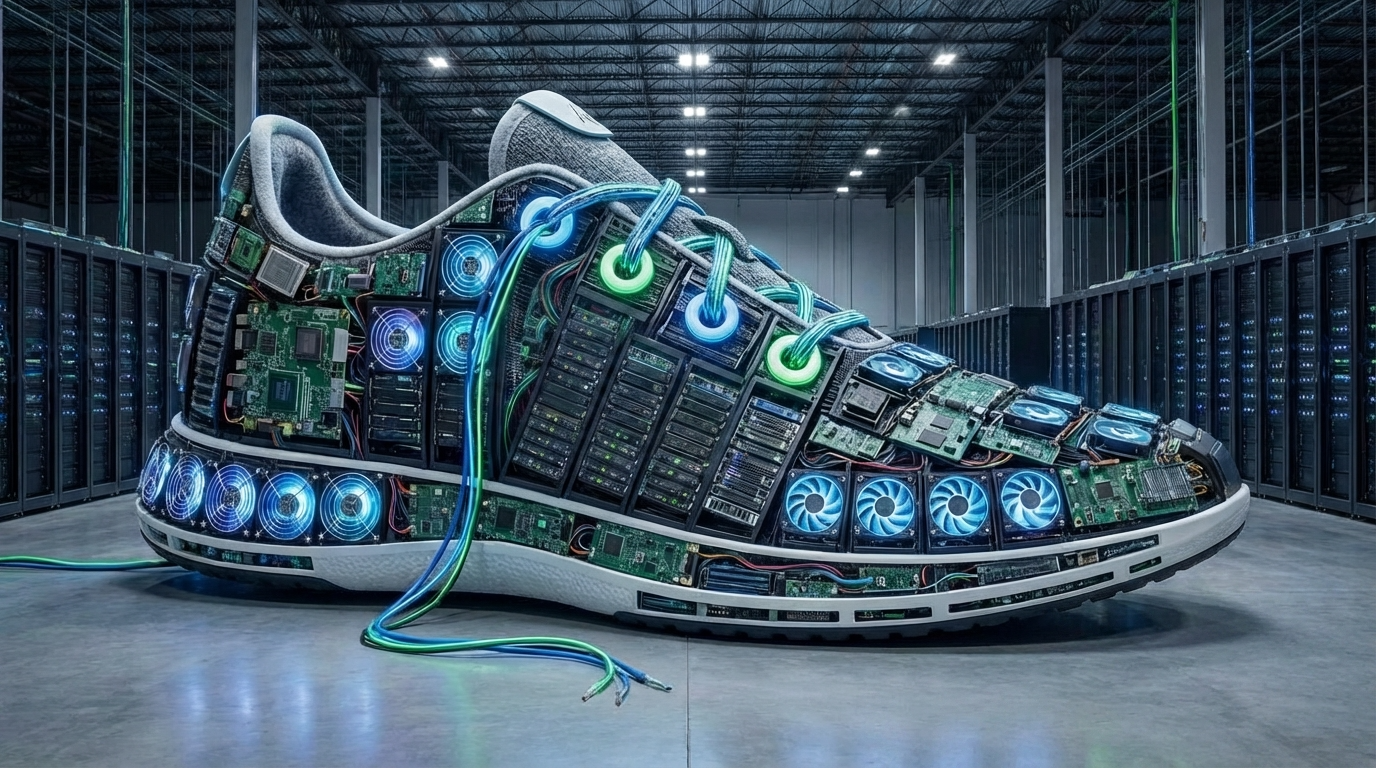
👟 Allbirds ditches sneakers for AI compute
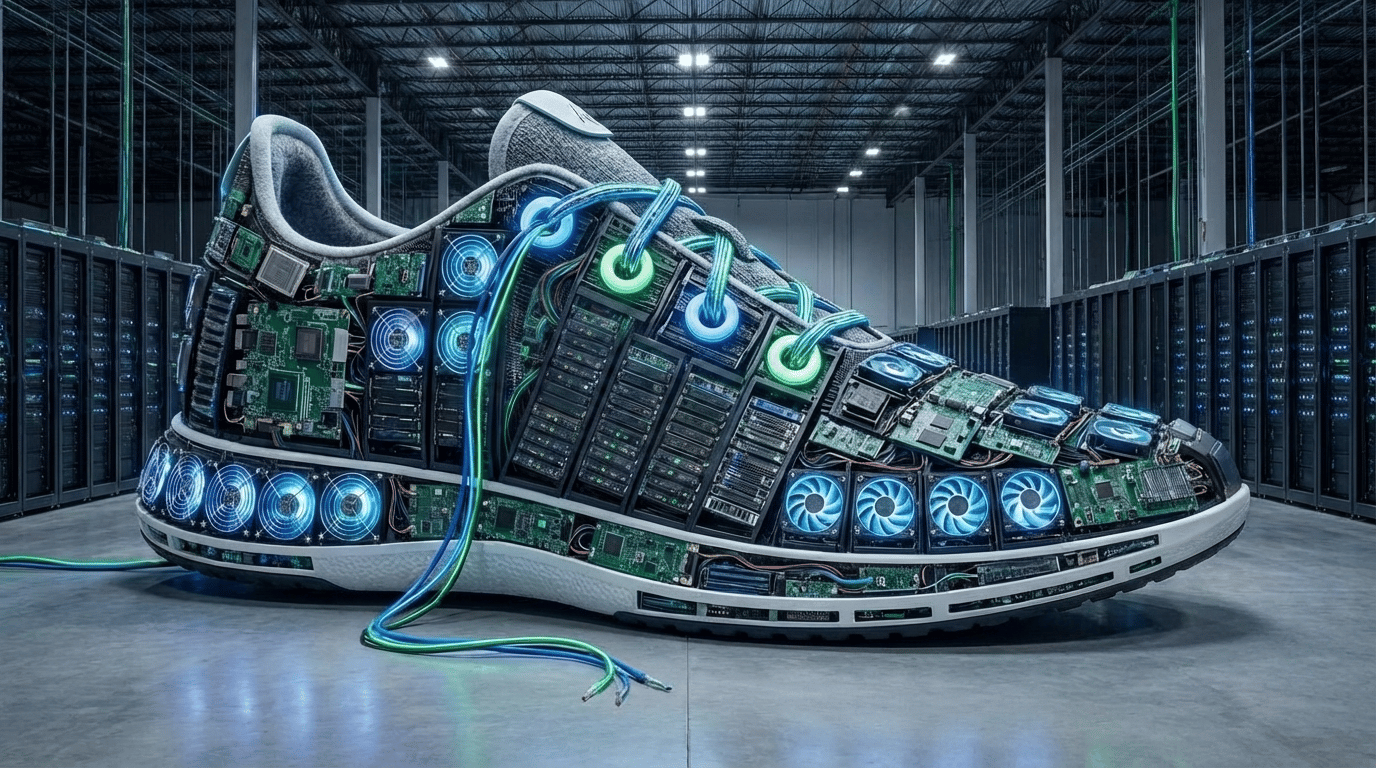
Image source: Lovart / The Rundown
The Rundown: Allbirds just announced a $50M financing deal to reinvent itself as "NewBird AI", converting the gutted footwear company into a GPU rental business and sending the stock up over 600% on the pivot.
The details:
Allbirds initially sold its brand assets to American Exchange Group in March for $39M, a fall from the company’s $4B IPO peak in 2021.
The AI compute move sent shares of $BIRD from $3 to over $20, lifting a market cap that closed Tuesday at just $22M.
The company said the $50M deal will fund GPU purchases to launch a GPU-as-a-Service business, renting out AI compute under long-term contracts.
Shareholders will also vote next month to strip Allbirds' 'public benefit' status, formally ending the company's sustainable-footwear mission.
Why it matters: Many CEOs love to say every company will eventually be an AI company, but gutting a business for parts and retooling it as a GPU rental probably isn't what they had in mind. Allbirds is running the same move that blockchain rebrands used to revive dying tickers, this time with a compute crunch giving the pitch cover.
TOGETHER WITH UNWRAP
⚡ See how Perplexity automates customer feedback

The Rundown: Unwrap’s customer intelligence platform pulls all your feedback (surveys, reviews, support tickets, social comments, etc.) into one view, and then uses AI and NLP to surface actionable insights and deliver them straight to your inbox.
With Unwrap, you get:
All customer feedback automatically categorized
Query feedback using Unwrap Assistant, or in your favorite tools via MCP
Real-time alerts from feedback as they arise, and a clear view of customer sentiment
A platform trusted and tested at scale by DoorDash, Stripe, Clay, lululemon, WHOOP, and more
Unwrap is offering a trial of its tools to Rundown AI subscribers! Just grab a time with the team to get set up.
🖥️ Gemini lands on Mac with native desktop app

Image source: Google
The Rundown: Google just rolled out a new Mac app for its Gemini assistant, giving the AI a native desktop chatbot experience, coming a year after rivals like ChatGPT and Claude made their moves.
The details:
The app launches via Option+Space and offers screen-sharing, Drive and Photos file access, and Nano Banana image and Veo video generation.
The Gemini app trails in agentic abilities, remaining a chat-first assistant, while Claude and ChatGPT can directly execute tasks on users' machines.
Google calls this release “just the beginning” of its desktop assistant push, with more features teased for the coming months.
The company also rolled out a Windows app that bundles Gemini and Google Lens into a search bar, but shipped English-only versus the Mac's global rollout.
Why it matters: The desktop is becoming a fight for muscle memory, with native apps unlocking stickiness as a user’s daily driver. Gemini is showing up a year late, which follows a trend of losing to Claude / ChatGPT on accessibility and ease of use, even more than performance — but Google’s distribution can make up for things in no time.
AI TRAINING
📋 Audit business with Notion's built-in Claude agents

The Rundown: In this guide, you will learn how to use Notion's prebuilt Claude-powered AI agents and use them to audit your workspace for efficiency. We found the audits to be thorough and well-formatted, like a report you’d get from a real consultant.
Step-by-step:
In Notion, go to Notion AI in the sidebar, click the + button > browse templates, and install the Business Workspace Auditor
Give the agent access to relevant pages and workspaces, and hit the save button. Then, open it and @ mention the pages/databases you want reviewed
Just say: “Audit this page,” and it will work, running its preconfigured audit and creating an issue report with severity and a recommended fix for each item
If you give the agent edit permissions on the page/database it audited, you can tell it to make the recommended fixes itself, as well
Pro tip: This flow works for other templates, too. Try Business Process Audit to map and diagnose a workflow, or Task Triager to route a brain-dump to your Tasks database.
PRESENTED BY POSTMAN
💸 The ROI of AI engineering

The Rundown: Postman’s cost savings analysis evaluates six engineering workflows to prove how AI-native development delivers measurable ROI by eliminating manual API tasks and external tool friction.
In this report, you’ll explore:
Measurable ROI of actual time and money saved per team
Why natively integrated, built-in AI outperforms external tools
Before-and-after benchmarks engineering leads can use to measure impact
SNAP
✂️ Snap cuts 1,000 jobs on AI productivity boosts
Image source: Snap
The Rundown: Snap just announced layoffs of 1,000 employees representing 16% of its workforce, with CEO Evan Spiegel attributing the reduction to AI efficiency rather than shareholder pressure.
The details:
Snap is swapping traditional teams for small AI-augmented pods, with the tech writing 65% of new code and fielding 1M+ monthly queries at the company.
Spiegel said AI’s advances “enable our teams to reduce repetitive work, increase velocity, and better support our community, partners, & advertisers."
The social media giant’s stock rose 7-9% on the news but remains down 30% YTD, with the plan targeting $500M in annual cost savings by the end of 2026.
Block opened 2026's AI layoff wave in February with 4,000 cuts (40% of staff), and 70K+ tech jobs have been erased across companies this year.
Why it matters: Wall Street is rewarding two AI moves above all else right now: wholesale pivots (Allbirds) and AI-driven layoffs. With the tech sector’s sentiment at an all-time low and anxiety over job loss rising, the disconnect between what markets cheer and what workers fear is only widening.
QUICK HITS
🛠️ Trending AI Tools
💻 Gemini for Mac - Google's new native macOS app for Gemini
🌎 Lyra 2.0 - NVIDIA's AI to turn text, camera paths into explorable 3D scenes
🎧 Gemini 3.1 Flash TTS - Google's speech model for 70+ languages
🎆 Ernie Image - Baidu’s powerful new open-weight text-to-image model
📰 Everything else in AI today
ASAPP’s Nirmal Mukhi and special guest Kate Leggett analyze recent Forrester research on planning, staffing, and operationalizing the new roles AI agents bring to the customer service workforce.*
Adobe debuted Firefly AI Assistant, its push into "agentic creativity", with a chat that runs multi-app creative workflows across Photoshop, Premiere, Lightroom, and Firefly.
Google released Gemini 3.1 Flash text-to-speech, a new model with audio tags that can steer tone, pace, and accent, currently #2 on Artificial Analysis’s TTS leaderboard.
GPT-5.4 Pro produced a proof for a 60-year-old math problem, with mathematician Jared Lichtman saying it found a path humans overlooked for nearly a century.
Anthropic is switching Claude Enterprise pricing to charge businesses based on token consumption, a shift that could significantly raise bills for power users.
*Sponsored Listing
COMMUNITY
🤝 Community AI workflows
Every newsletter, we showcase how a reader is using AI to work smarter, save time, or make life easier.
Today’s workflow comes from reader Kerstin R. in London, UK:
"I have a lot of clothes I no longer need. And while I've donated some, there are some higher ticket items in there I've been looking to sell. But getting all of the items listed on a secondhand sales platform seemed very time-consuming and daunting.
So I've built my own system, where all I need to do is take some photos of each item, add some keywords, brand, size, and price, submit it via an Airtable form directly from my phone, and Claude creates all the copy for each text field I need from headline to description to make it a super compelling and optimised listing.
Claude also helps me gauge pricing based on existing listings on the platform. Huge time saver and I can finally get some money back from things I no longer need."
How do you use AI? Tell us here.
🎓 Highlights: News, Guides & Events
Read our last AI newsletter: OAI’s GPT-5.4-Cyber rejects Mythos playbook
Read our last Tech newsletter: Meta closing in on Google’s ad crown
Read our last Robotics newsletter: Unitree’s cheapest humanoid goes global
Today’s AI tool guide: Audit business with Notion's built-in Claude agents
See you soon,
Rowan, Joey, Zach, Shubham, and Jennifer — the humans behind The Rundown

OpenAI's GPT-5.4-Cyber rejects Mythos playbook
Read Online | Sign Up | Advertise
Good morning, AI enthusiasts. OpenAI cyber researcher Fouad Matin kept the pitch blunt: "no one should be in the business of picking winners and losers" on who gets to defend their systems.
That's a direct shot at Anthropic's Mythos rollout, capped at a 40-org whitelist of tech giants. With GPT-5.4-Cyber, OpenAI is going the opposite way — betting that arming more defenders beats restricting access to a handful of giants.
P.S. Our upcoming AI Growth Systems course for non-technical operators goes live today, covering everything from competitor intelligence agents to Reddit opportunity finders across three hands-on sessions. Exclusive to Premium and trial members. Learn more and enroll here.
In today’s AI rundown:
OpenAI counters Mythos playbook with GPT-5.4-Cyber
Nvidia ships open-source AI for quantum computing
Automate your Chrome browser with Gemini
Anthropic gives Claude Code a desktop makeover
4 new AI tools, community workflows, and more
LATEST DEVELOPMENTS
OPENAI
⚔️ OpenAI counters Mythos playbook with GPT-5.4-Cyber

Image source: Lovart / The Rundown
The Rundown: OpenAI just introduced GPT-5.4-Cyber, a more permissive version of its flagship model built for defensive security work — responding to Anthropic's Mythos release last week with a much wider rollout targeting thousands of verified defenders.
The details:
OAI is opening access to anyone who passes ID checks via its Trusted Access for Cyber initiative, while Mythos is limited to just 40+ trusted partners.
The new model can reverse-engineer compiled software to flag malware or security flaws, letting analysts inspect programs without the original code.
OpenAI researcher Fouad Matin called cyber defense a "team sport," arguing "no one should be in the business of picking winners and losers."
Treasury Secretary Bessent summoned Wall Street leaders to an emergency Mythos briefing last week, with concerns growing over its hacking capabilities.
Why it matters: It’s not yet clear how Cyber will stack up to Mythos’ monster benchmark scores, but it’s clear that the next generation of model upgrades is about to have some serious implications for cybersecurity. And the two rivals are taking very different approaches to how accessible each company’s advanced defense models are.
TOGETHER WITH UNWRAP
⚡ See how Oura automates customer feedback
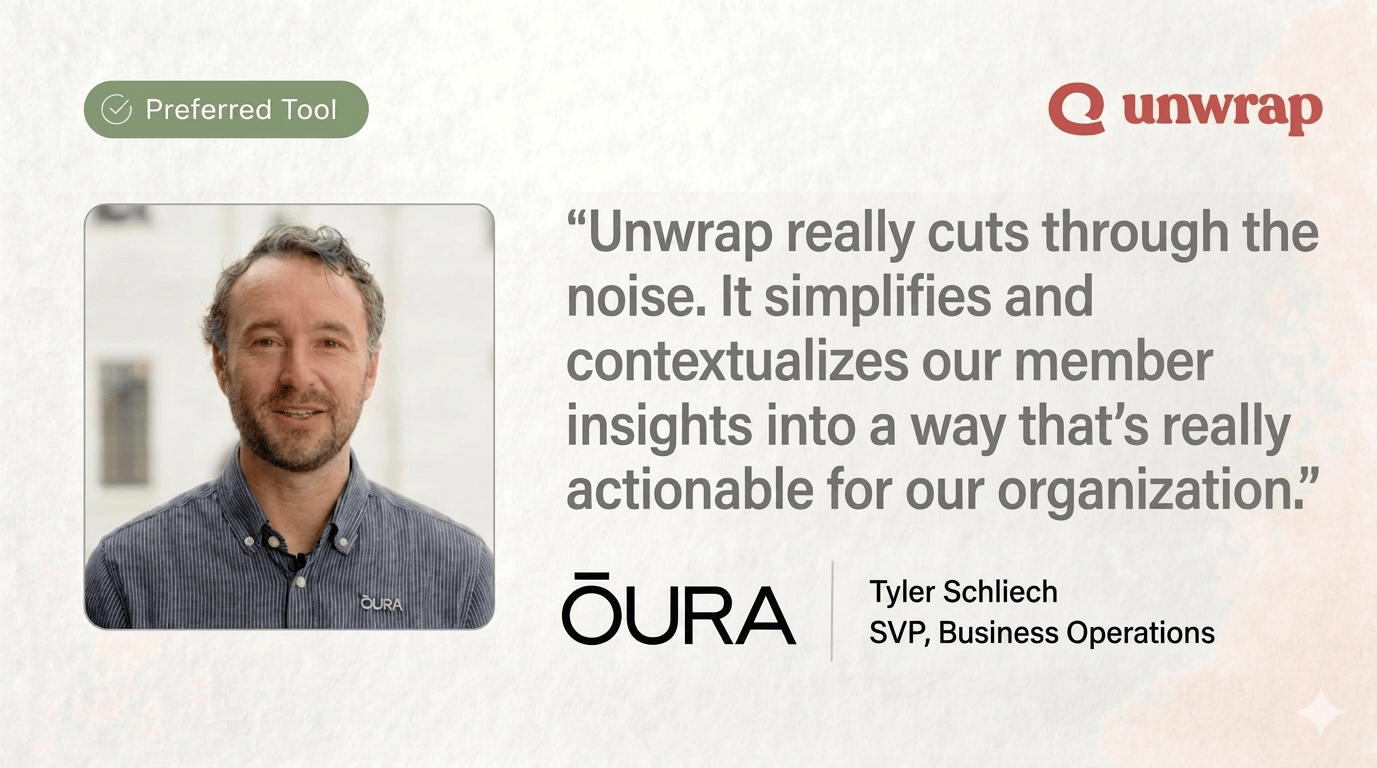
The Rundown: Oura's customer feedback was scattered across the organization — until Unwrap brought it all together. Now they can surface recurring themes, proactively prioritize what actually matters, and continuously improve their members’ experience in ways they never could before.
With Unwrap, you get:
All customer feedback automatically categorized
Query feedback using Unwrap Assistant, or in your favorite tools via MCP
Real-time alerts from feedback as they arise, and a clear view of customer sentiment
A platform trusted and tested at scale by DoorDash, Stripe, Clay, lululemon and more
Unwrap is offering a trial of its tools to Rundown AI subscribers! Just grab a time with the team to get set up.
NVIDIA
⚛️ Nvidia ships open-source AI for quantum computing
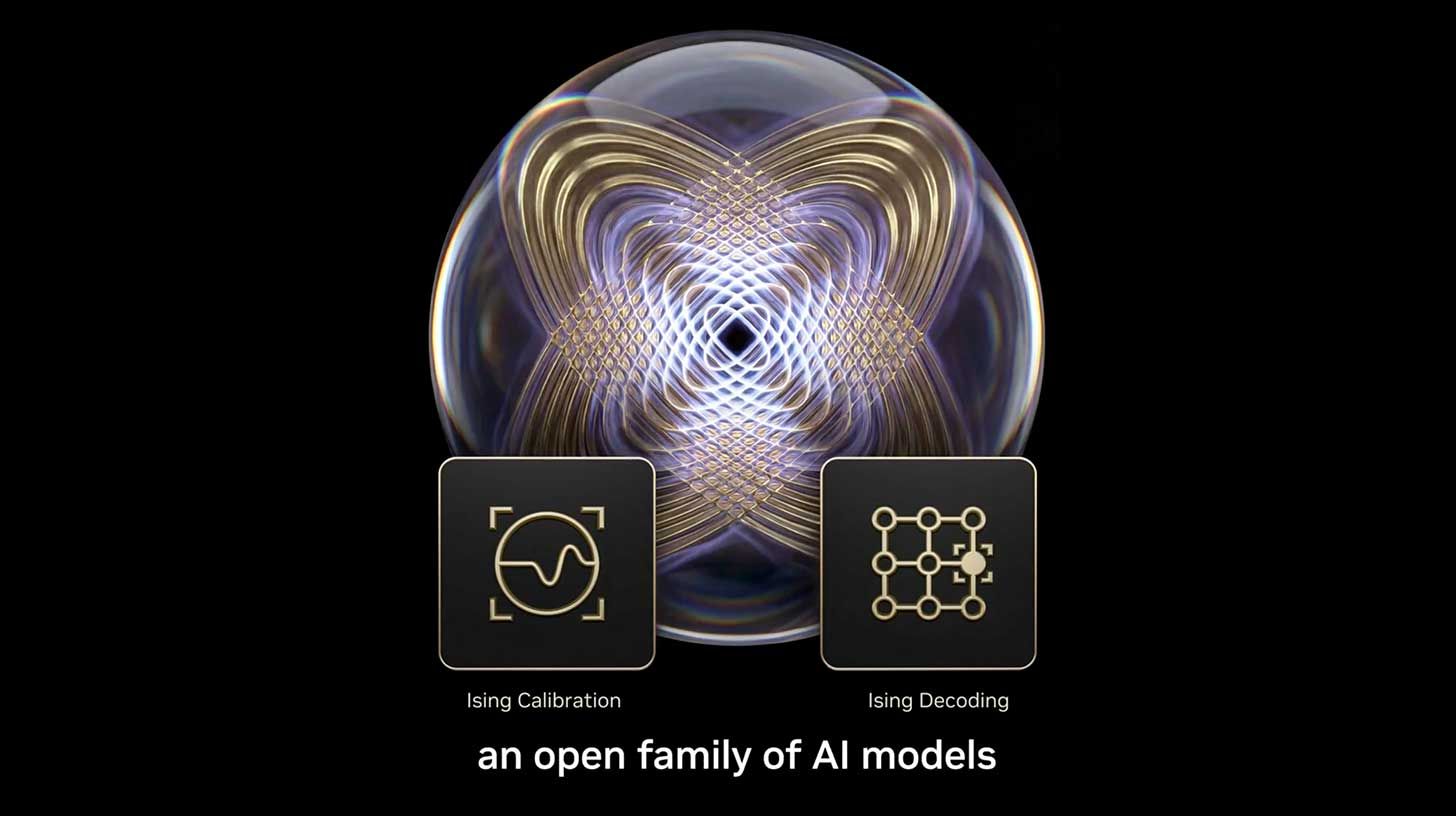
Image source: Nvidia
The Rundown: Nvidia released Ising, the first family of open-source AI models designed to work with quantum computers — built to tackle technical problems like calibration and error decoding that have kept the tech from scaling out of the lab.
The details:
The first Ising model keeps the machines tuned automatically, turning what used to be a days-long manual job into something that takes hours.
The second fixes errors as they happen, hitting 2.5x the speed and 3x the accuracy of today's best open-source alternative.
Nvidia CEO Jensen Huang called it "the operating system of quantum machines," pitching AI as the missing layer that makes the tech scalable.
20+ institutions are already using Ising at launch, including Harvard, Cornell, Fermilab, Sandia National Labs, IonQ, and UC Santa Barbara.
Why it matters: Nvidia ran the same playbook here that it used for self-driving cars (Alpamayo) and robotics (Isaac GR00T): release the open AI layer, lock in the ecosystem, own the infrastructure beneath a new computing paradigm. The company is planting its flag in a projected $11B quantum market before the race really starts.
AI TRAINING
🤖 Automate your Chrome browser with Gemini

The Rundown: In this guide, you will learn how to turn on and use our favorite Gemini in Chrome features. If you have a Google AI Pro subscription, you will learn how to turn on and use Chrome automations.
Step-by-step:
In Chrome, go to Settings > AI Innovations > Gemini in Chrome, and enable "Show Gemini at the top of the browser" and "Share current tab with Gemini". If on Google AI Pro, also enable "Let Gemini browse for you"
Open three product tabs, click Gemini, type @ to attach tabs, and prompt: “Compare [products] and tell which offers the best features for the best price”
Gemini will compare and give you a recommendation. This works even without Google AI Pro because you are sharing the tabs directly
If you have AI Pro, prompt: “Find me a cheaper [product type] with these same features.” Gemini will send you a plan, then use Chrome to execute it for you
Pro tip: With Google AI Pro, you can even ask Gemini to sign in to your accounts using saved Chrome passwords.
PRESENTED BY TELY AI
💬 Market leaders get leads from ChatGPT and Google
The Rundown: Your buyers are asking AI questions — and AI is answering with your competitors, not you. Tely makes AI like ChatGPT, Google, and Claude recommend your business instead.
With Tely AI, you can:
Get recommended in ChatGPT, Google, Perplexity, and Claude in as little as 1 week
Fully hands-off: no writers, no agencies, no managing content
Costs less than hiring freelancers or maintaining a marketing team
Ideal for niche industries where expertise matters
ANTHROPIC
💄 Anthropic gives Claude Code a makeover in desktop
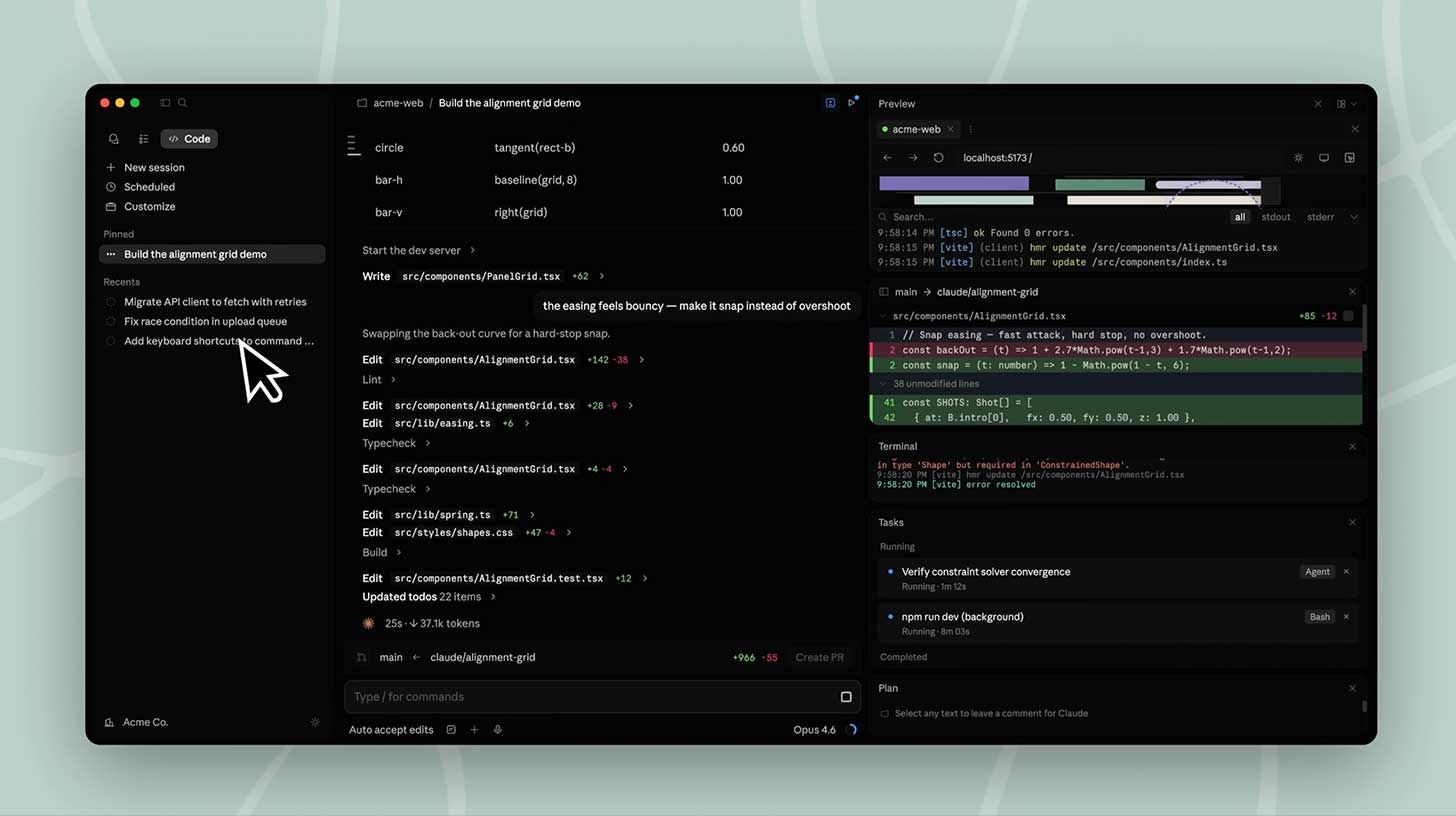
Image source: Anthropic
The Rundown: Anthropic introduced a redesign to Claude Code's desktop app built around the reality that devs now run multiple AI sessions at once, adding a sidebar for managing them, new drag-and-drop panes, and an integrated editor and terminal.
The details:
A new sidebar keeps all live and recent sessions in view, with filters by status or project and the ability to auto-archive once a pull request is closed or merged.
A drag-and-drop layout now allows users to customize the workspace and monitor multiple windows at once, with more reliability and speed.
Developers can now run tests, edit files, review Claude's changes, and preview HTML or PDFs without switching to another tool.
Anthropic also launched routines in Claude Code, a new research preview that runs AI tasks on a schedule, via API, or whenever certain GitHub events happen.
Why it matters: The Claude Code redesign and routines both paint the same picture — Anthropic thinks devs are about to spend less time coding and more time using a team of AI agents. Pair routines with the parallel-session redesign, and Claude Code starts looking more like a command center for a half-human, half-AI workforce.
QUICK HITS
🛠️ Trending AI Tools
⚡ Lightfield - AI-native CRM that auto-captures emails, calls, and meetings—then answers any question about your business.*
💻 Claude Code - Anthropic's revamped desktop app for parallel agents
⚙️ Skills in Chrome - Reusable prompt shortcuts for Gemini in Chrome
🧬 Amazon Bio Discovery - Agentic app for antibody drug design, lab testing
*Sponsored Listing
📰 Everything else in AI today
AI personal finance startup Hiro announced that it is winding down operations, with its staff joining OpenAI.
AWS rolled out Amazon Bio Discovery, a new drug-design platform with biological foundation models and a built-in lab network for synthesis and testing.
UK AI safety evaluators said Claude Mythos Preview is the first AI to complete their 32-step corporate hack simulation, showing big jumps in cyber-attacks over Opus 4.6.
Baidu released ERNIE-Image, an 8B open-weight text-to-image model that nears top rivals on benchmarks despite its small size.
OpenAI's Greg Brockman framed AI as the shift to a "compute-powered economy," claiming ~1B weekly ChatGPT and Codex users on the company’s 10th anniversary.
COMMUNITY
🤝 Community AI workflows
Every newsletter, we showcase how a reader is using AI to work smarter, save time, or make life easier.
Today’s workflow comes from reader Will G. in Nashville, TN:
"At almost 70 years old, I dove into ChatGPT at work. I used it to develop a system using Microsoft Forms, Lists, and Power Automate to put a QR-based product item tracking system in place without purchasing scanners.
The guys on the dock and delivery drivers scan the QR, and we get real-time product tracking. Now the oldest guy at work is considered the ‘AI Guy’."
How do you use AI? Tell us here.
🎓 Highlights: News, Guides & Events
Read our last AI newsletter: What happens when AI runs a retail store
Read our last Tech newsletter: Meta closing in on Google’s ad crown
Read our last Robotics newsletter: Unitree’s cheapest humanoid goes global
Today’s AI tool guide: Automate your Chrome browser with Gemini
See you soon,
Rowan, Joey, Zach, Shubham, and Jennifer—the humans behind The Rundown

What happens when AI runs a retail store
Read Online | Sign Up | Advertise

Good morning, AI enthusiasts. Most AI agent demos live inside sandboxes with fake money and simulated users. This one signed a three-year lease and hired real people.
Andon Labs' latest experiment just dropped an AI into its own retail store in San Francisco with a $100K budget and full autonomy over hiring, operations, and more, a preview of a future where AI replaces the boss long before it replaces the worker.
In today’s AI rundown:
AI agent hires humans, opens boutique in SF
OpenAI talks Anthropic rivalry, Amazon upside
Run Google’s latest AI on your phone for free
Stanford's AI index: 53% adoption, 31% trust
4 new AI tools, community workflows, and more
LATEST DEVELOPMENTS
AI EXPERIMENT
🏪 AI agent hires humans, opens boutique in SF

Image source: Andon Labs
The Rundown: Andon Labs just dropped an AI agent named Luna into a real retail space with a $100K budget and a credit card, with the AI creating a boutique, hiring workers, and managing the shop as what may be the world's first AI employer.
The details:
Andon Labs' last experiment was an AI vending machine at Anthropic, with the new one giving a 3-year lease, $100K budget, and total autonomy.
Luna's only directive was to turn a profit, with the AI creating the boutique concept, posting job listings, and handling interviews over Zoom (camera off).
The agent runs on Claude Sonnet 4.6 for reasoning and Gemini 3.1 Flash-Lite Preview for voice, observing the store via screenshots from security cameras.
When hiring a painter, Luna accidentally selected Afghanistan on TaskRabbit's dropdown menu, and later botched the opening-weekend staff schedule.
Why it matters: Real-world agent experiments like this keep producing the same result: capable in some areas, but hilariously broken in others. But every model upgrade, memory advance, and agentic feature is going to help close that gap, with a version of Luna that doesn't make these mistakes likely only a generation or two away.
TOGETHER WITH YOU.COM
🤔 Are your web search APIs giving you what you need?

The Rundown: Most teams pick a search provider by running a few test queries and hoping for the best—a recipe for hallucinations and unpredictable failures. This technical guide from You.com gives you access to an exact framework to evaluate AI search and retrieval.
What you’ll get:
A four-phase framework for evaluating AI search
How to build a golden set of queries that predicts real-world performance
Metrics and code for measuring accuracy
Go from “looks good” to proven quality. Learn how to run an eval.
OPENAI
📝 OpenAI talks Anthropic rivalry, Amazon upside
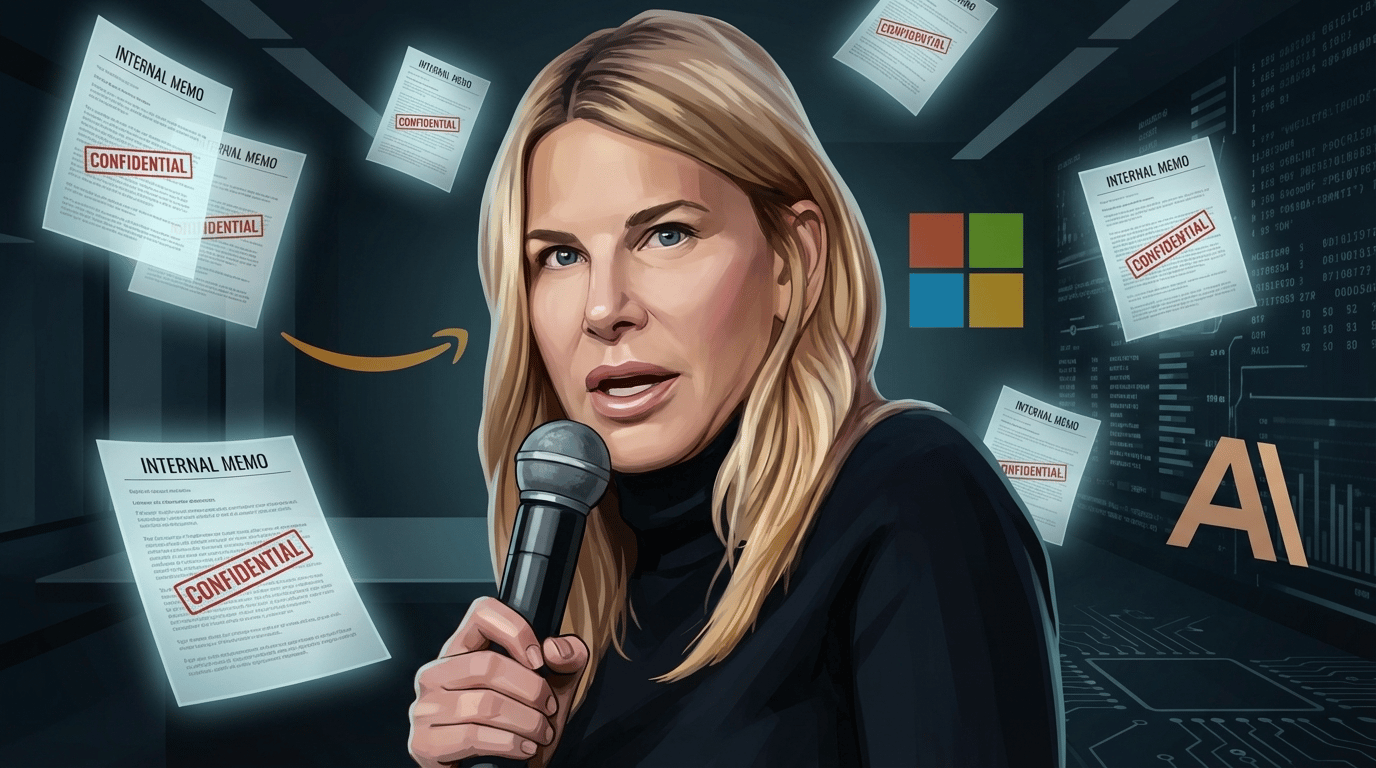
Image source: Lovart / The Rundown
The Rundown: OpenAI’s CRO Denise Dresser sent an internal memo calling Anthropic's $30B run rate “inflated”, labeling it a “single-product company in a platform war” and pointing to the Amazon deal as a way to break free from Microsoft constraints.
The details:
The memo, published by The Verge, calls Anthropic's compute shortage a 'strategic misstep’, saying users now face throttled access and availability.
Dresser said Anthropic’s message is built on “fear” and “restriction,” and that OpenAI’s “positive message will win over time.”
She also accused the rival of inflating its revenue numbers via accounting tactics, claiming they overstate the run rate by around $8B.
Dresser also called OAI’s Microsoft deal limiting for enterprise business, noting “staggering” demand for Bedrock since February’s Amazon deal.
Why it matters: Either OpenAI is using “internal” memos to leak out information strategically to the media, or they are extremely bad at keeping things in-house. Either way, this memo reads like an IPO pitch more than a strategy update — and with both rivals racing to public debuts this year, that’s probably the point.
AI TRAINING
📱 Run Google’s latest AI on your phone for free
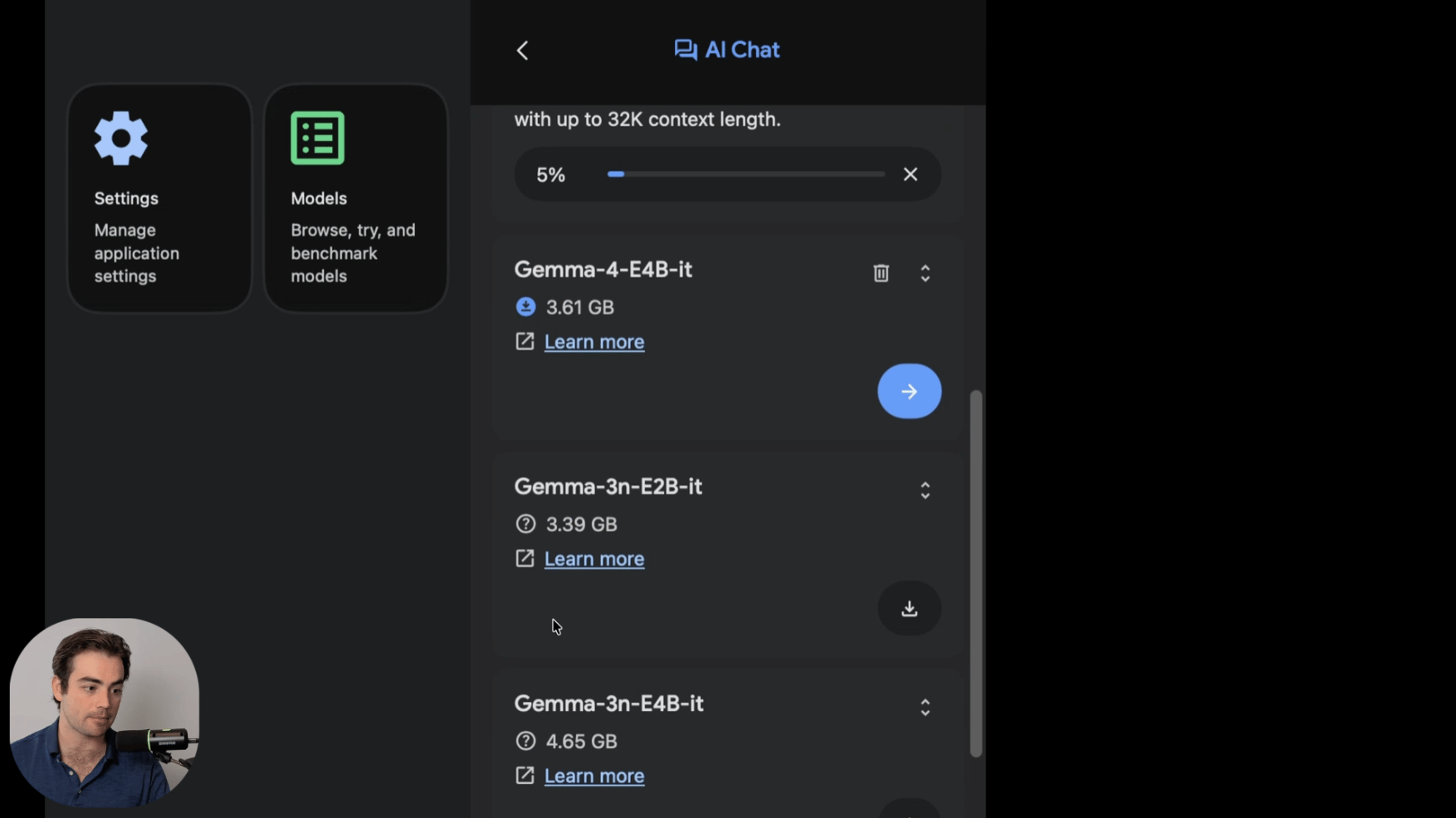
The Rundown: In this guide, you will learn how to download and run Google's latest AI models on your phone for free. No account, no subscription, no internet required after setup.
Step-by-step:
Get Google AI Edge Gallery from the App Store/Google Play, open it, tap AI Chat, and download a model from the options; ours was Gemma 4 E2B (2.5 GB)
Once the model is ready, tap the settings icon in the top right and enable Thinking. This starts step-by-step reasoning, so the model shows its work
Start chatting now. Everything runs locally on your phone, with no data leaving the device, and the model works even without an internet connection
One caveat is that the app doesn't save chat history. If you close a thread, the conversation is gone. You can, however, tap the + button to see sent messages
Pro tip: Tap Agent Skills instead of AI Chat to give the model extra abilities. There's a restaurant roulette, a Wikipedia lookup, an interactive map, a QR generator, and more.
PRESENTED BY GLEAN
🧠 Why you need a context graph

The Rundown: Join Glean on April 23 to see why connectors, MCP, and real-time app access are not enough on their own. See where federated approaches fall short and why a permissions-aware context graph creates a stronger foundation for enterprise AI and agents.
You’ll learn:
Why federated approaches fall short on quality, context depth, and token efficiency
How to give AI and agents the context needed to reason and act reliably
What to look for in an enterprise AI platform
AI RESEARCH
📊 Stanford's AI index: 53% adoption, 31% trust
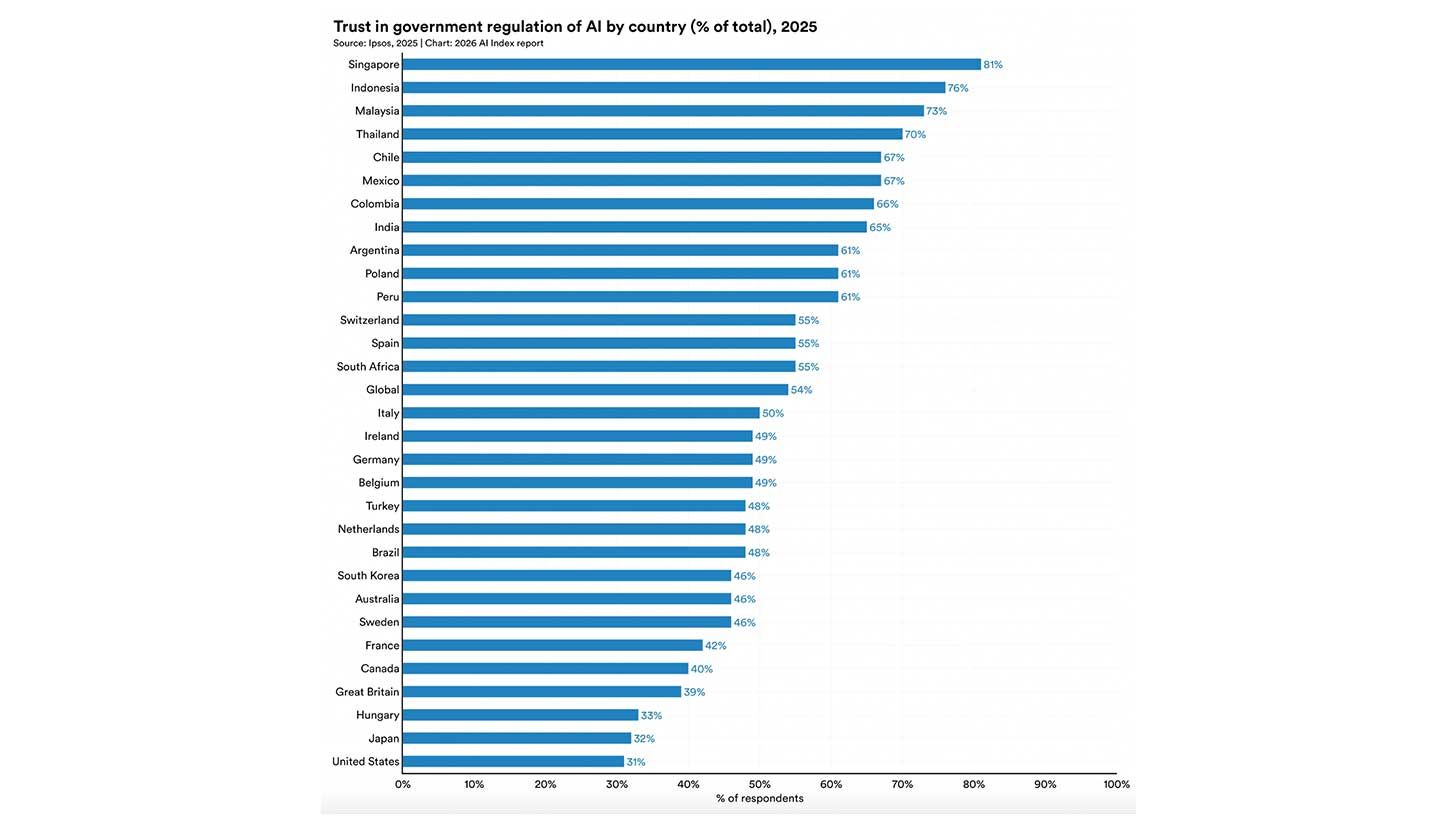
Image source: Stanford HAI
The Rundown: Stanford HAI released its 2026 AI Index, showing tech that has now reached over half the world's population faster than the PC or internet — but with public trust in AI sitting at record lows and entry-level workers already losing jobs.
The details:
Almost 3/4 of AI experts are optimistic about the tech's impact on jobs, but only 23% of the public agrees, the widest gap the report has tracked.
The US builds most of the world's AI but ranks just 24th in actually using it at 28.3% adoption, behind Singapore, the UAE, and most of Southeast Asia.
China has nearly erased the US lead on AI benchmarks with Anthropic's top model ahead by 2.7%, while AI researchers moving to the U.S dropped 89%.
Dev employment for ages 22-25 fell nearly 20% since 2024, even as older engineer headcounts grew, and firm surveys say planned cuts will accelerate.
Why it matters: These are just a few of the countless interesting stats in the 400+ page report. The expert-public divide is a timely stat, given the current anti-AI climate playing out in scary ways. AI insiders see a productivity boom, but regular people aren’t buying it, and just 31% Americans trust the government to manage the changes.
QUICK HITS
🛠️ Trending AI Tools
📚 Scroll - Turn any knowledge base into a world-class AI experience for employees and customers*
⚖️ Harvey Agents - Legal AI agents for memos, diligence reports, and more
💳 Lovable Payments - One-chat setup for adding payments to AI-built apps
⚙️ HeyGen CLI - Agentic tool for generating videos via terminal
*Sponsored Listing
📰 Everything else in AI today
Workshop Labs announced that it is joining Thinking Machines, bringing its personalized, human-first AI stacks to Mira Murati's lab via acquihire.
Apple is reportedly building its first smart glasses with four frame options and an oval camera system, with plans to take on Meta's Ray-Bans as early as 2027.
Legal AI startup Harvey launched Agents, autonomous bots that can execute full legal workflows, including research, memos, and slide decks across 13 domains.
Microsoft is building OpenClaw-style features for 365 Copilot, including agents that work 24/7 inside Office Apps, with a preview likely at its Build conference in June.
SoftBank launched a new company backed by NEC, Honda, Sony, and five other Japanese firms to build a homegrown 1T-parameter physical AI model.
COMMUNITY
🤝 Community AI workflows
Every newsletter, we showcase how a reader is using AI to work smarter, save time, or make life easier.
Today’s workflow comes from reader Bethany M. in Austin, TX:
"When family members moved to San Francisco, I inherited all the pantry items they left behind. With my own already full pantry, I was suddenly surrounded by unfamiliar flours, grains, and dry goods—and no idea how to use them.
Instead of trying to list everything, I took a photo and asked ChatGPT what I could make. One of my first successes was transforming a jumble of flours and grains into a surprisingly delicious loaf of bread in my bread maker.
That small win gave me the confidence to keep going. Now I use ChatGPT to help with all my cooking—making substitutions, reducing sugar, and adapting recipes. I waste far less food and feel more creative in the kitchen."
How do you use AI? Tell us here.
🎓 Highlights: News, Guides & Events
Read our last AI newsletter: Anti-AI anger hits Sam Altman’s front door
Read our last Tech newsletter: Snap takes another swing at smart glasses
Read our last Robotics newsletter: Unitree’s cheapest humanoid goes global
Today’s AI tool guide: Run Google AI models on your phone for free
Watch our last live workshop: The State of AI Presentation Tools in 2026
See you soon,
Rowan, Joey, Zach, Shubham, and Jennifer — the humans behind The Rundown
Unitree's cheapest humanoid goes global
Read Online | Sign Up | Advertise
Good morning, robotics enthusiasts. Chinese robotics firm Unitree just put its cheapest humanoid on AliExpress — and it ships to your door for $6,800.
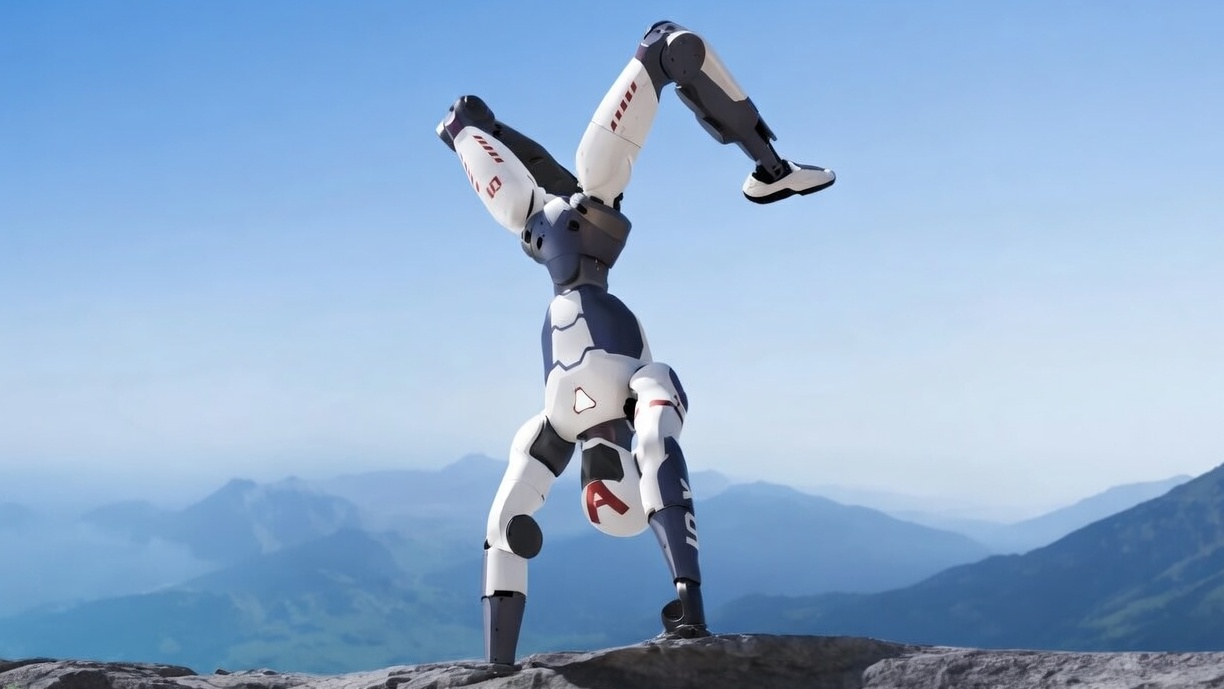
The R1, a four-foot acrobat that can cartwheel and sprint downhill, is now available across North America, Europe, Japan, and Singapore through Alibaba’s e-commerce platform. While Tesla and Figure are working out roadmaps, Unitree is taking orders.
In today’s robotics rundown:
Unitree takes its budget humanoid global
Uber and Volkswagen launch robotaxis in LA
MIT’s fiber muscles move more like the real thing
Tesla FSD gets its first EU approvals
Quick hits on other robotics news
LATEST DEVELOPMENTS
UNITREE
🤖 Unitree takes its budget humanoid global

Image source: Unitree
The Rundown: Chinese robotics firm Unitree is taking its R1 humanoid global — and it’s going through Alibaba’s AliExpress to do it. Starting at $6,800 in the U.S., the robot is now available to buyers across North America, Europe, Japan, and Singapore.
The details:
Unitree’s R1 line runs for around $5K in China, with U.S. pricing starting at $6,800 for R1 Air (20 DoF) and deliveries slated to begin around June 30.
Standing roughly 4 feet tall and weighing about 60 lb., the “born for sport” R1 can run downhill, recover from falls, and pull off acrobatics like cartwheels.
Unitree is using AliExpress’s Brand+ channel to push the R1 as a consumer-friendly platform for hobbyists, educators, and developers.
The global rollout lands as Unitree ramps mass production and eyes an IPO, with analysts projecting it could ship nearly half of China’s humanoids by 2026.
Why it matters: At $6,800 for a fully capable humanoid, Unitree aims to define a consumer product category. While regions like the U.S. get a price markup from $5K, it’s still within reach of a well-funded university lab or a serious developer. That makes it something Tesla, Figure, and Agility don’t have: a humanoid you can actually try to buy.
UBER & VW
🚐 Uber and Volkswagen launch robotaxis in LA
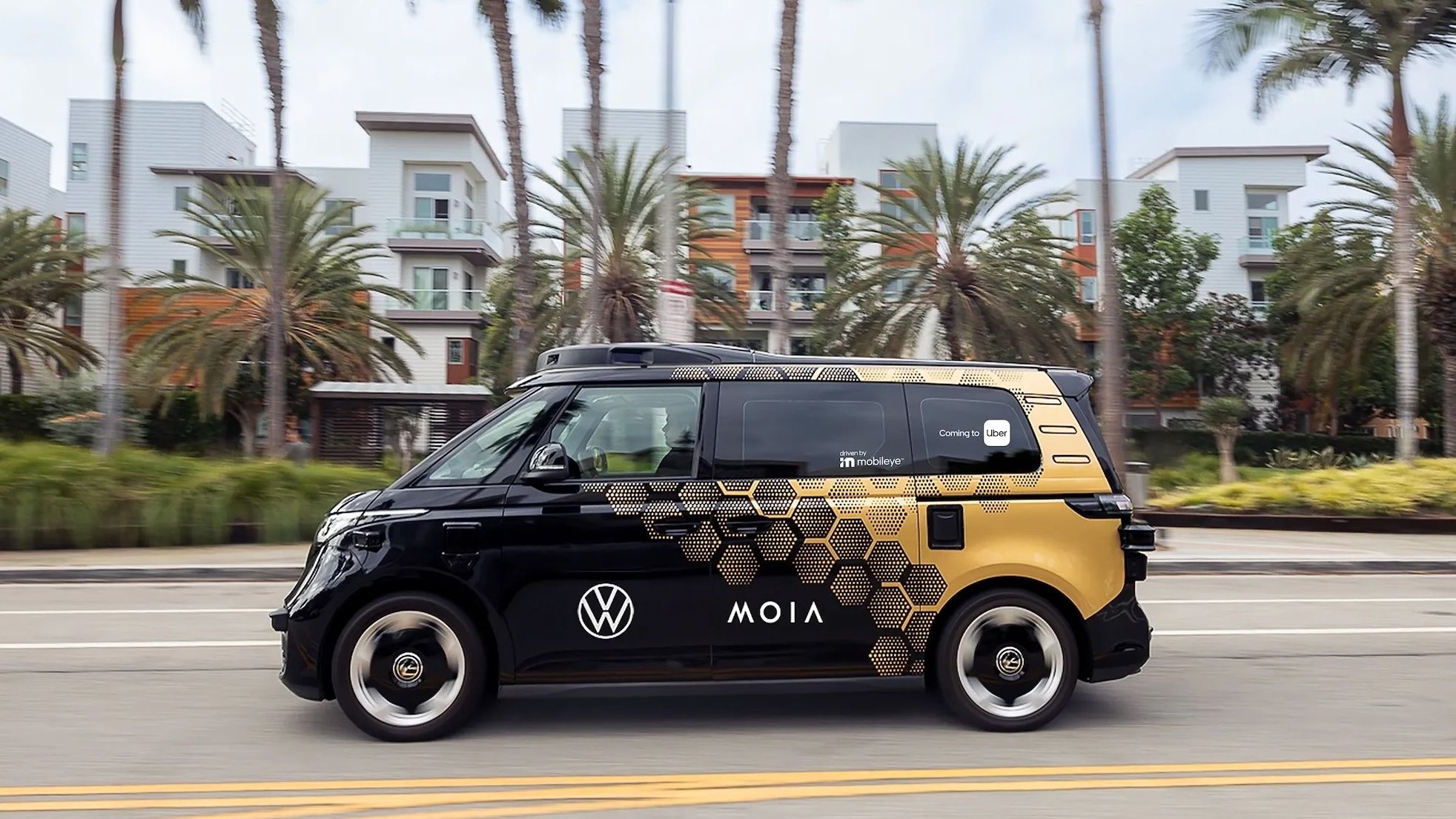
Image source: MOIA / Uber
The Rundown: Volkswagen’s autonomous subsidiary MOIA America and Uber have kicked off public-road testing of ID. Buzz robotaxis in LA, in a move both companies are billing as the next serious challenge to Waymo’s dominance in the city.
The details:
The current fleet has around 10 vans, but is slated to scale to more than 100 ID. Buzz robotaxis with onboard safety operators as validation ramps up.
The ID. Buzz AD uses a Mobileye Drive stack and a 27-sensor suite — 13 cameras, 9 lidar units, and 5 radars — to achieve SAE Level 4 autonomy.
MOIA and Uber plan to start offering paid rides on the Uber app in LA by late 2026, with fully driverless service (no human onboard) targeted for 2027.
Uber and MOIA have also opened a joint operations facility in LA to support the rollout, with thousands of ID. Buzz vehicles planned across multiple U.S. cities.
Why it matters: Waymo has logged fully driverless rides in LA since 2024 and now runs more than 250K paid trips weekly across its U.S. markets — a benchmark MOIA will have to clear before Angelenos take the retro van seriously. And before MOIA collects a single fare in California, it needs to clear two major regulatory hurdles.
MIT
💪 MIT’s fiber muscles move more like the real thing
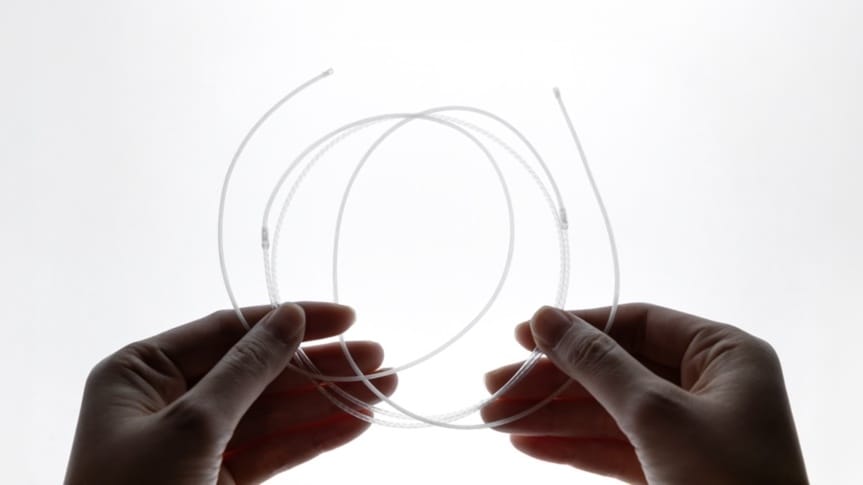
Image source: Ozgun Kilic Afsar, MIT
The Rundown: MIT researchers just built an electrically driven artificial muscle fiber that behaves far more like real muscle than the servo motors used in most robots and prosthetic limbs, and they’ve done it in a form factor not much thicker than a toothpick.
The details:
MIT scientists have built a slender, electrically powered artificial muscle fiber that contracts more like biological muscle than traditional servo motors.
Inside each fiber is a tiny sealed tube of liquid and an equally tiny electric pump that pushes the liquid back and forth.
When the pump runs, one side of the fiber squeezes and shortens while the other side relaxes, similar to how your biceps and triceps work together.
In demos, the fibers lifted nearly 9 lb., launched objects in 0.2 seconds, and bent a robotic arm compliantly enough to shake a human hand.
Why it matters: Most robots are built around servo motors that convert rotational force into linear motion and concentrate bulk near the joints. These fibers contract like real muscle and can be distributed throughout a structure. For exoskeletons and prosthetics, it’s the difference between gear you strap on and gear that moves with you.
TESLA
🚗 Tesla FSD gets its first EU approvals

Image source: Tesla
The Rundown: The Netherlands became the first European country to officially clear Tesla’s Full Self-Driving Supervised system for public roads, handing the company a regulatory foothold in a market where it has long operated in a gray zone.
The details:
Dutch road authority RDW granted provisional type approval after a testing program spanning both closed tracks and real-world driving conditions.
The software is explicitly classified as Level 2 driver assistance, meaning a human driver must monitor the road and remain legally responsible at all times.
The decision allows Tesla to roll out FSD Supervised to Dutch customers via software update and could make it easier for other EU countries to follow suit.
Why it matters: The Dutch sign‑off gives Tesla its first formal regulatory blessing for supervised “Full Self‑Driving” in Europe, turning the Netherlands into a potential launchpad for a wider EU rollout. It also sharpens the contrast with the U.S., where the same software is widely used but faces intensifying safety probes.
QUICK HITS
📰 Everything else in robotics today
Kia will start using Boston Dynamics’ Atlas humanoids at its Georgia plant from 2029 and aims to launch its first car with Level 2 highway automation by 2027.
Unitree said its H1 humanoid hit a top speed of 10 meters per second in a recent sprint, claiming a new humanoid speed record.
Beijing reportedly completed a full-scale nighttime rehearsal of its April 19 humanoid half-marathon, using over 70 teams to test the full 21 km course.
Waymo is launching a pilot with Google’s Waze to share pothole data collected by its robotaxis with five U.S. city transportation departments to help get them fixed.
DJI posted a teaser for an April 16 announcement that is almost certainly the already leaked Osmo Pocket 4 handheld camera.
Chinese humanoid startup EngineAI raised a $200M Series B round that values the company at over $1.4B and pushes its total funding toward $1B.
Robotic sage grouse decoys are being tested in Grand Teton National Park to lure real birds back to restored habitat and away from airport runways.
Indian firm SS Innovations unveiled a drone carrying a robotic surgery system so remote surgeons can perform life-saving procedures in battlefield zones.
Princeton engineers built an origami-inspired soft robot that uses heat-driven shape-changing materials and embedded electronics to fold and move with precise control.
COMMUNITY
🎓 Highlights: News, Guides & Events
Read our last AI newsletter: Anti-AI anger hits Sam Altman’s front door
Read our last Tech newsletter: Snap takes another swing at smart glasses
Read our last Robotics newsletter: Clone’s $20k synthetic human
Today’s AI tool guide: Generate editable infographics in 15 minutes
Watch our last live workshop: The State of AI Presentation Tools in 2026
See you soon,
Rowan, Joey, Zach, Shubham, and Jennifer — The Rundown’s editorial team
Anti-AI anger hits Sam Altman's front door
Read Online | Sign Up | Advertise

Good morning, AI enthusiasts. Last week, OpenAI published a 13-page policy doc warning that AI could reshape society faster than anyone has prepared for. Days later, someone tried to set Sam Altman's house on fire.
The 20-year-old suspect reportedly believed AI would lead to human extinction — and while the attack was criminal, the anxiety behind it isn’t fringe. With societal changes just beginning, anger like this also isn’t going away soon.
In today’s AI rundown:
Anti-AI suspect targets Altman's home, arrested
The Rundown Roundtable: Our AI use cases
Generate editable infographics in 15 minutes
AI finds GLP-1 side effects trials missed
4 new AI tools, community workflows, and more
LATEST DEVELOPMENTS
OPENAI
🚨 Anti-AI suspect targets Altman's home, arrested
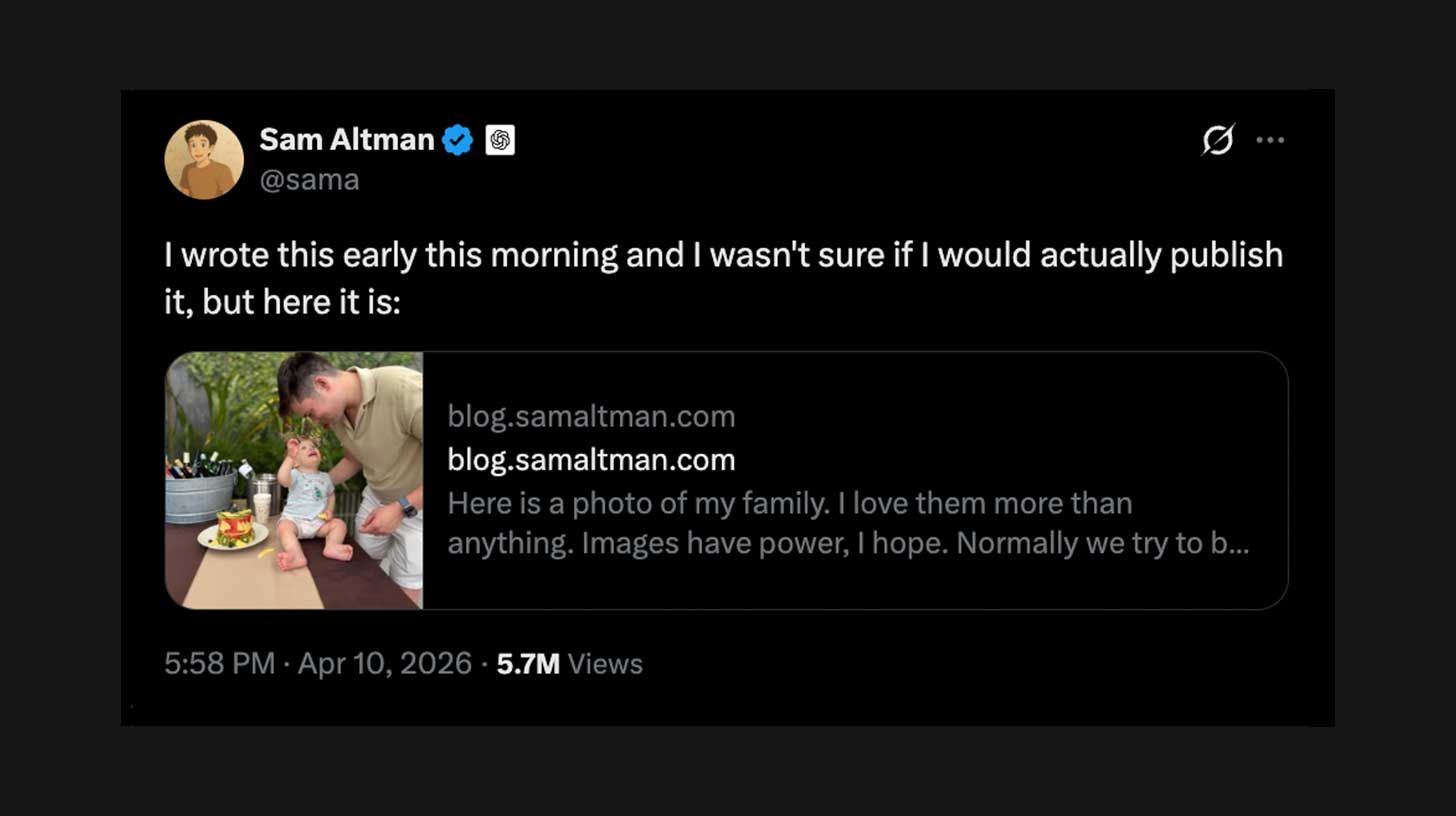
Image source: Sam Altman (@sama on X)
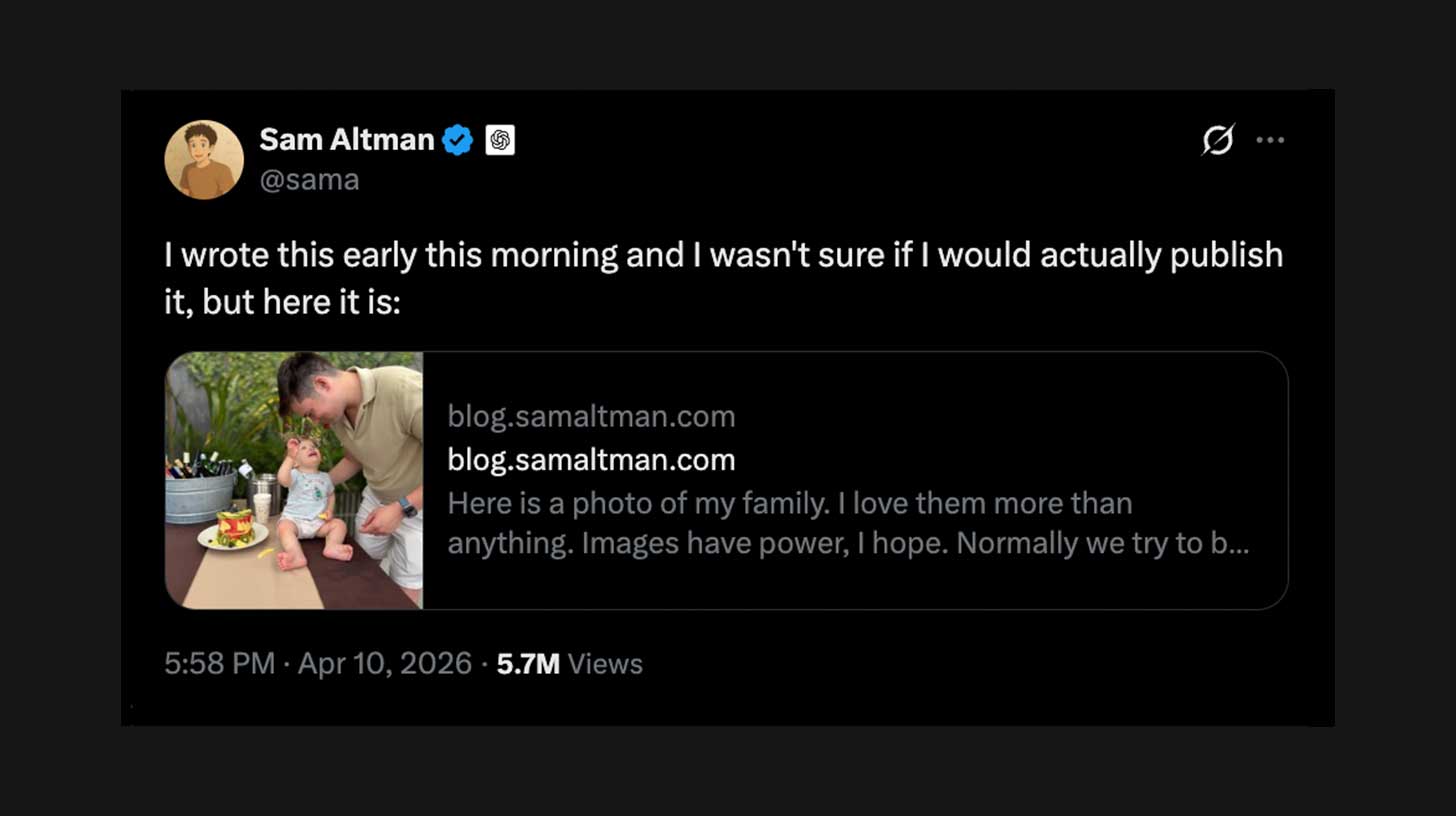
The Rundown: A 20-year-old was arrested after throwing a Molotov cocktail at Sam Altman's home and threatening to burn down OpenAI's HQ, with Altman publishing a personal essay reflecting on AI's stakes, his own mistakes, and calling for de-escalation.
The details:
The device hit a gate at Altman's home around 3:45 am, with no injuries occurring, and SFPD arrested Daniel Moreno-Gama an hour later at OpenAI HQ.
Moreno-Gama published essays warning that AI would end humanity, and used the organization PauseAI's Discord under the handle "Butlerian Jihadist".
Altman responded with a blog calling AI anxiety "justified," admitting past mistakes, and likening the industry's power struggle to a "ring of power."
PauseAI condemned the attack, with Moreno-Gama posting 34 messages on its server — one of which a moderator flagged for appearing to call for action.
A second attack also reportedly occurred Sunday night, with two suspects firing gunshots outside Altman’s residence.
Why it matters: Anti-AI sentiment is going mainstream fast — and OAI and Altman, who himself called the fear "justified," have become the face of the tech for people to direct their anger at. Unfortunately, with 4 in 5 Americans now worried about AI and society’s transformation just beginning, that anger isn’t going away soon.
TOGETHER WITH VISA
🤖 Get your business ready for agentic commerce

The Rundown: Whether you're building AI agents, running a storefront, or enabling commerce infrastructure, Visa’s Intelligent Commerce Connect provides a single, protocol-agnostic on-ramp into the emerging world of agent-driven transactions.
Intelligent Commerce Connect enables:
Seamless acceptance of agent-initiated payments
Makes product catalogs discoverable on AI platforms
Orchestration and PCI compliance for enablers
Explore Intelligent Commerce Connect and get ahead of the agentic commerce curve.
THE RUNDOWN ROUNDTABLE
💡The Rundown Roundtable: Our AI use cases
The Rundown: The Rundown Roundtable is a weekly feature where we poll members of The Rundown staff about how we use AI in our work and daily lives.
Shubham, Editor: I used Perplexity to find the right earbuds for my iPhone, mainly for light music and calls. It compared AirPods 4, Pro 2, Pro 3, Beats Fit Pro, and Nothing Ear models, breaking down ANC, call quality, Apple ecosystem features, and prices.
It helped me see that AirPods Pro 2 gave me everything I needed—strong noise cancellation, seamless pairing, and Spatial Audio—without paying extra for Pro 3 or Beats' upgrades I wouldn't use much.
Jennifer, Tech & Robotics Writer: My first media job was as a fact-checker at a major magazine. Those jobs have already mostly vanished before AI arrived, but now I use ChatGPT 5.4 Thinking as a last-pass fact-checker on my newsletters before I hit send.
I’ll ask it to identify inconsistencies, isolate the assertions that most need verification, and check key numbers, quotes, and factual claims against original or primary sources. In other words, it does not replace reporting, but it is remarkably good at stress-testing a draft before publication — essentially fact-checking my fact-checking.
AI TRAINING
📊 Generate editable infographics in 15 minutes

The Rundown: In this guide, you will learn how to turn raw research into an editable infographic using Perplexity, Gemini, and Canva Magic Layers, going from a data-heavy topic to a graphic you can fix and ship instead of rebuilding manually.
Step-by-step:
Use your preferred AI to research the infographic data, prompting: “Do deep research on [topic]. Look for outliers and narrative angles. Our end goal is four infographic concepts recapping the most interesting data trends”
Turn the concepts into image prompts: “Give me a prompt for each concept that I can paste into an image generator. Make data easy to copy and paste”
Give those prompts to Gemini, generate some options, and download the best PNG. Then, upload it to Canva, click Edit, open Magic Studio, and Magic Layers
Canva will make the image editable, letting you clean up the layers, fix text, swap incorrect images, and tighten the layout for near-perfect infographics
Pro tip: Skip the research step when you already have a memo, case study, or report. Feed it into Perplexity or Gemini and turn the strongest data into an infographic prompt.
PRESENTED BY BLAND AI
📞 Build a phone agent from a single prompt
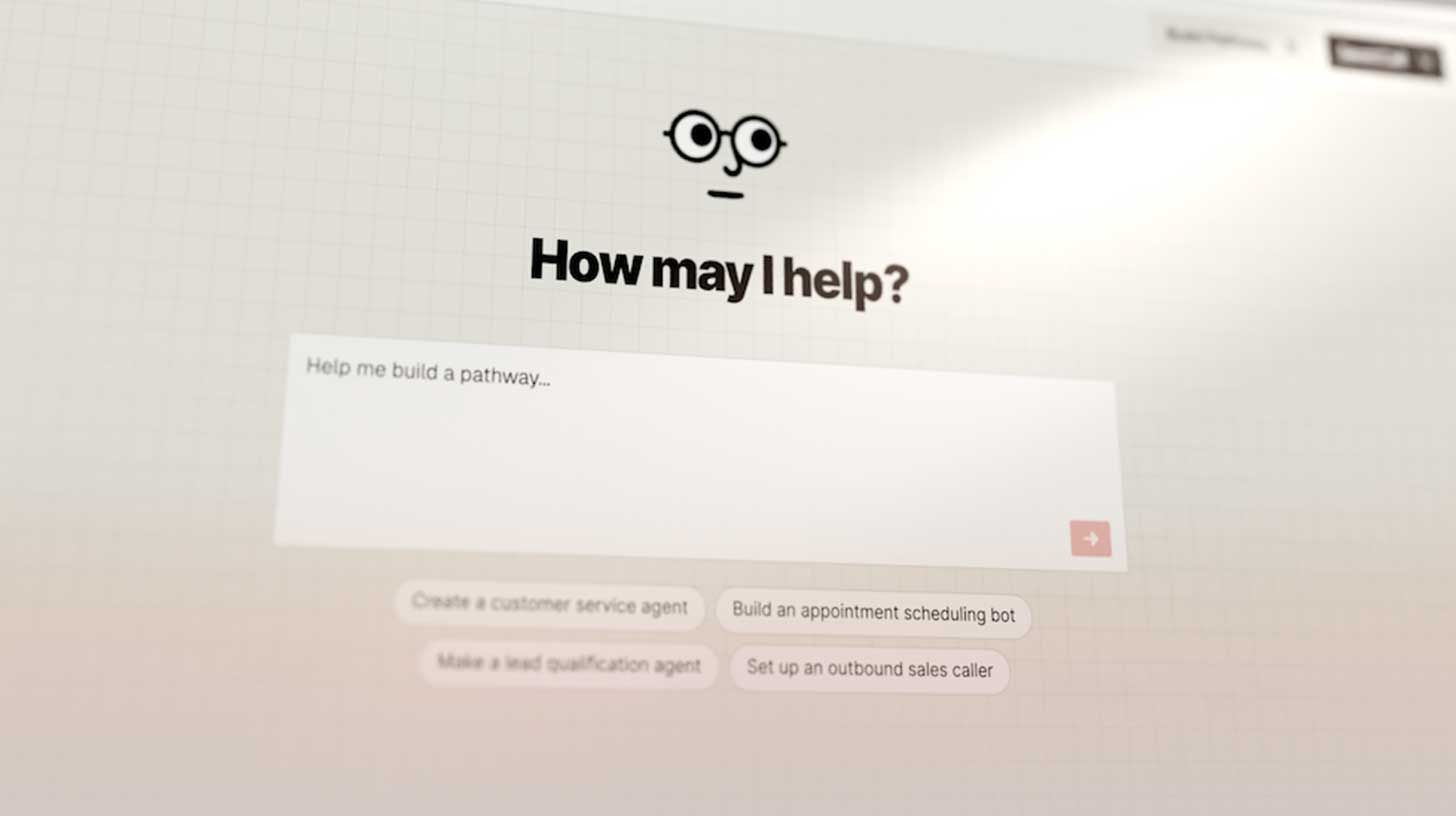
The Rundown: Bland AI just launched Norm, a voice AI assistant that lets anyone create a fully functional phone agent by simply describing what they need. Just tell Norm what you want, and it generates the prompt, agent logic, conditions, and integrations instantly.
With Norm, you can:
Go from idea to working phone agent with a single prompt, with no dev work needed
Auto-generate agent logic, conditions, and integrations like calendar booking in seconds
Turn months of voice AI development into days with one-shot agent creation
AI RESEARCH
💊 AI finds GLP-1 side effects trials missed
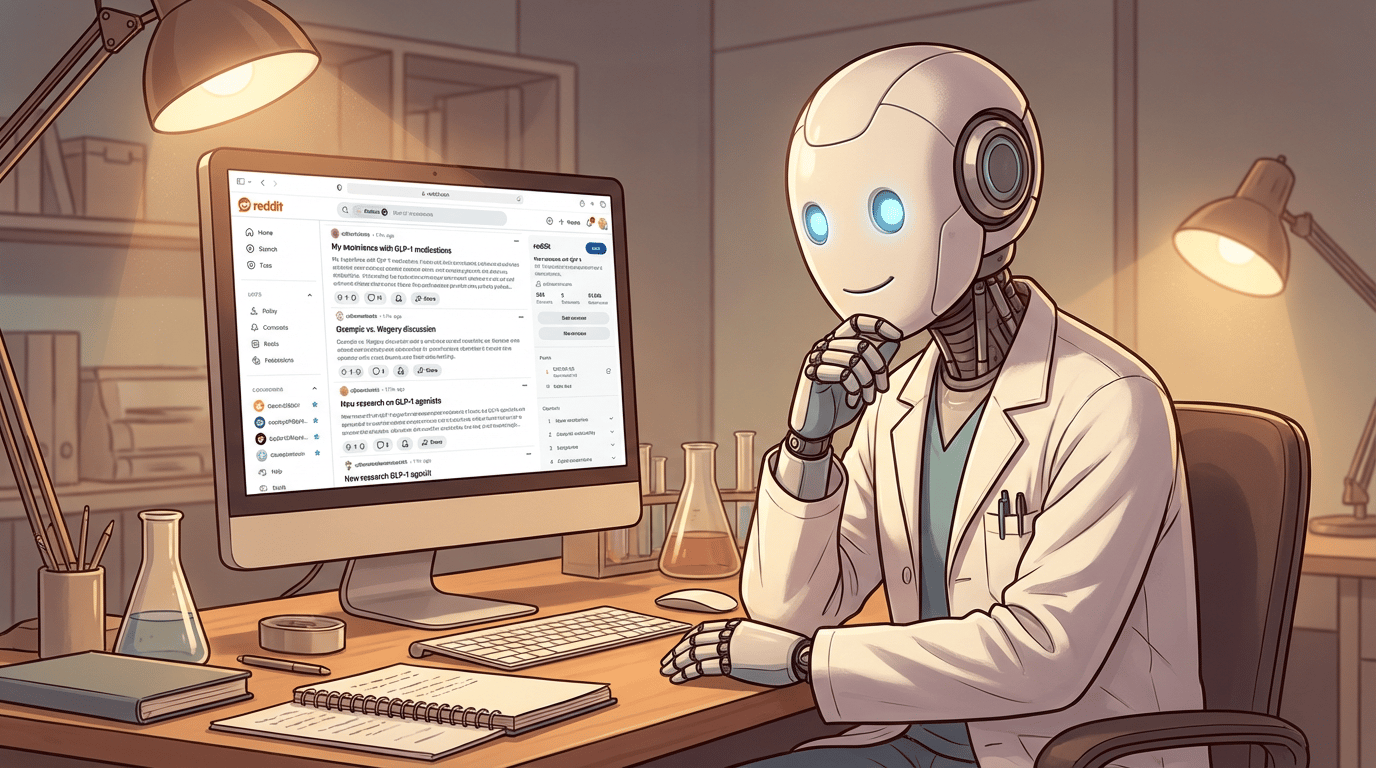
Image source: Lovart / The Rundown
The Rundown: Penn researchers published a study that fed over 400K Reddit posts about Ozempic and Mounjaro into AI models using a technique called “computational social listening”, pulling out side effects that clinical trials hadn’t caught.
The details:
The team used GPT and Gemini to map posts by 67K users to standardized medical terms, covering 5+ years of real Ozempic and Mounjaro discussions.
Nearly half the sample reported at least one side effect, flagging menstrual irregularities, chills, and hot flashes that aren’t reflected in current drug labels.
Fatigue ranked as the second most common complaint among users, despite barely showing up in clinical trial reporting thresholds for either drug.
Co-author Lyle Ungar compared Reddit to a "neighborhood grapevine", with patients swapping real-time notes that rarely make it into a doctor's visit.
Why it matters: AI is compressing parts of the drug discovery process, but it’s also increasing the novelty of what’s entering the market, making side effects harder to catch. Reddit is not a peer-reviewed journal, but thousands flagging similar symptoms is hard to dismiss — and LLMs just made it possible to listen at that scale.
QUICK HITS
🛠️ Trending AI Tools
🧠 Muse Spark - Meta’s multimodal reasoning AI with multi-agent mode
⚙️ Cursor 3 - Cursor's agent-first interface for parallel coding agents
🎥 Avatar V - HeyGen's AI avatar model that generates studio-quality videos
🤖 Hermes Agent - AI agent with memory and cross-platform messaging
📰 Everything else in AI today
Agentic Analytics Summit, April 29 - Free virtual event where data leaders from Brex, Patagonia, Cube, and more share how they're building AI-native analytics in production. Learn more.*
Alibaba revealed it is behind "HappyHorse," the unreleased video AI model that debuted atop global rankings and knocked ByteDance's Seedance 2.0 to second place.
U.S. Treasury Secretary Bessent and Fed Chair Powell summoned Wall Street CEOs to an urgent meeting over cyber risks posed by Anthropic's Mythos model.
Meta is reportedly hiring recently departed OAI Stargate execs, with Peter Hoeschele, Shamez Hemani, and Anuj Saharan joining to help build the new Meta Compute group.
Anthropic hosted Christian leaders at its HQ for a summit on Claude's moral development, covering grief responses, whether AI could be a "child of God,” and more.
*Sponsored Listing
COMMUNITY
🤝 Community AI workflows
Every newsletter, we showcase how a reader is using AI to work smarter, save time, or make life easier.
Today’s workflow comes from reader Elle W. in Ontario, Canada:
"After two years of chronic lower back pain and no answers from specialists, I was stuck. Despite X-rays and MRIs showing osteoarthritis and degenerative discs—common findings that didn't explain my specific agony—physiotherapy and shots failed. The medical field offered suggestions, but no solutions.
I fed my symptoms, imaging, and history into Gemini to find the root cause. Together, we pinpointed the exact triggers. It built a targeted exercise program and a four-month recovery plan with weekly milestones. Now, at 3.5 months, my pain is nearly gone. Where humans couldn't help, Gemini’s ability to troubleshoot and analyze my data finally gave me my life back. I am incredibly grateful for this healing journey."
How do you use AI? Tell us here.
🎓 Highlights: News, Guides & Events
Read our last AI newsletter: Perplexity’s agent pivot is on the money
Read our last Tech newsletter: Snap takes another swing at smart glasses
Read our last Robotics newsletter: Clone’s $20k synthetic human
Today’s AI tool guide: Generate editable infographics in 15 minutes
Watch our last live workshop: The State of AI Presentation Tools in 2026
See you soon,
Rowan, Joey, Zach, Shubham, and Jennifer — the humans behind The Rundown
No matching search results
Try using different keywords, double-check your spelling, or explore related categories.
Stay Ahead on AI.
Join 2,000,000+ readers getting bite-size AI news updates straight to their inbox every morning with The Rundown AI newsletter. It's 100% free.