Netflix exits $83B Warner Bros. deal
PLUS: Jack Dorsey slashes 40% of Block's workforce

Jennifer Mossalgue
February 27, 2026
Read Online | Sign Up | Advertise

Good morning, tech enthusiasts. Netflix just blinked, walking away from its $82.7B bid for Warner Bros. Discovery’s studios and streaming crown.
Now Paramount Skydance — bankrolled by Oracle billionaire Larry Ellison and run by his son David — wants the whole empire, from HBO Max to CNN. But is handing one family that much media control something regulators can stomach?
In today’s tech rundown:
Netflix walks away from Warner Bros. deal
Jack Dorsey replaces Block employees with AI
Sam Altman’s eyeball scanner nabs Gap deal
China ready as NASA kills hunt for Martian life
Quick hits on other tech news
LATEST DEVELOPMENTS
NETFLIX
🎬 Netflix walks away from Warner Bros. deal

Image source: Ideogram / The Rundown
The Rundown: Netflix just walked away from its $82.7B deal to acquire Warner Bros. Discovery’s studio and streaming assets, ceding the fight to Paramount Skydance, whose $111B offer for the entire company could reshape the media landscape.
The details:
Netflix declined to counter Paramount Skydance’s raised bid of $31 per share, calling the new price “no longer financially attractive.”
Paramount, backed by Larry Ellison’s fortune, aims to absorb the WBD studios, HBO Max, CNN, TBS, TNT, HGTV, and Turner Classic Movies.
Paramount Skydance agreed to cover the $2.8B termination fee that WBD would owe Netflix if WBD ends Netflix’s deal in favor of Paramount.
Netflix co-CEO Ted Sarandos reportedly spent Thursday meeting with White House chief of staff Susie Wiles and AG Pam Bondi before pulling the plug.
Why it matters: The deal would hand one family — Oracle founder and Trump ally Ellison and his son David — control over two major Hollywood studios and a sprawling national news footprint. Critics warn that’s exactly the kind of consolidation that can alter the culture pipeline, and antitrust alarms are already ringing.
BLOCK
🪓 Jack Dorsey replaces Block employees with AI
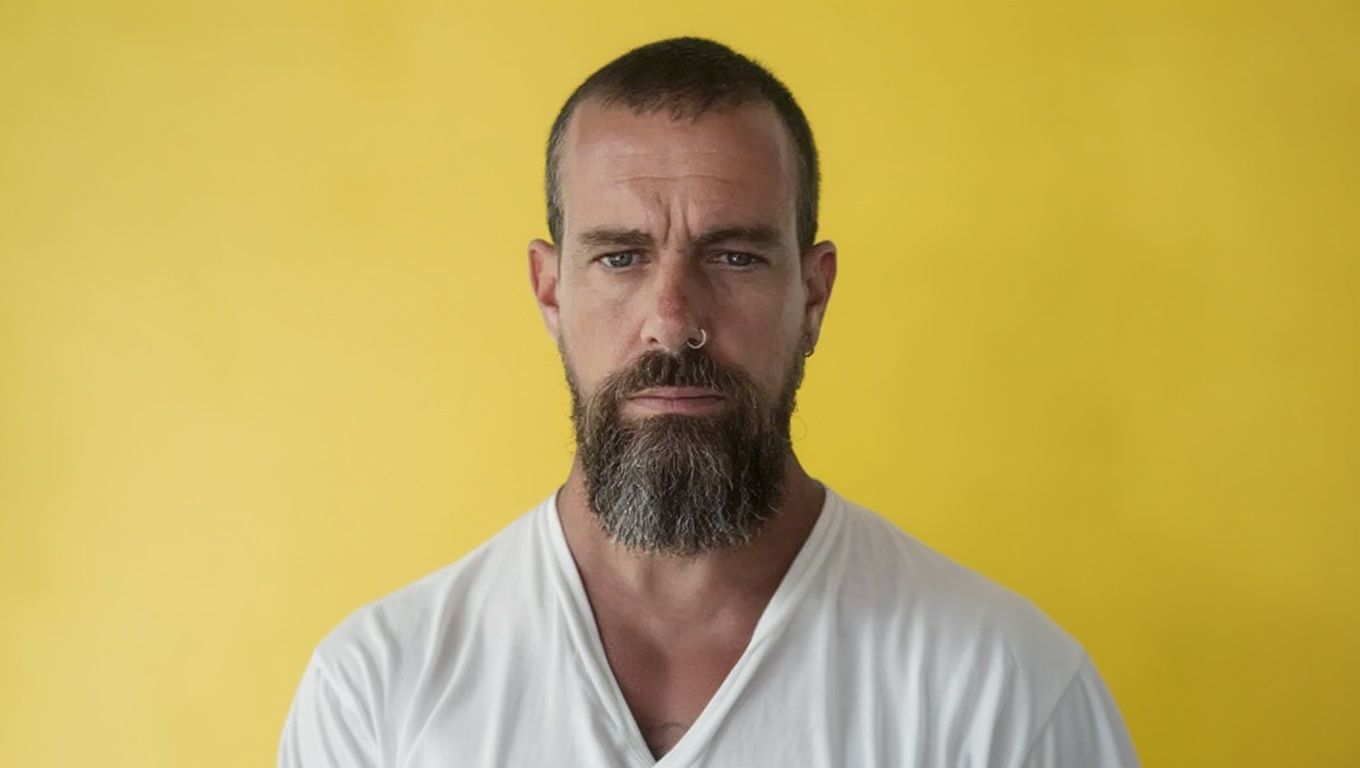
Image source: Block / Reve
The Rundown: Jack Dorsey is slashing nearly half of Block’s workforce — more than 4K jobs — and replacing them with AI tools, a move that sent the payment giant’s stock soaring more than 20% in after-hours trading.
The details:
Dorsey says the move is driven by AI “intelligence tools” that let smaller, flatter teams run Block’s payments and Cash App businesses.
Internally, Block has rolled out its Goose AI agent, which execs say saves workers 8–10 hours a week and eliminates 20–25% of manual work.
The layoffs land alongside strong Q4 numbers: revenue of about $6.25B, gross profit up 24% year over year, and guidance that tops Wall Street’s forecasts.
Dorsey is also offering a warning: most companies will reach the same conclusion this year as automation starts absorbing more white-collar work.
Why it matters: Dorsey just demonstrated that aggressive AI-driven headcount cuts can be sold to investors as a growth story, not a crisis, with shares jumping more than 20% on the news of more than 4K layoffs. If the market keeps rewarding the math, other CEOs might not need much convincing.
TOOLS FOR HUMANITY
👁️ Sam Altman’s eyeball scanner nabs Gap deal

Image source: Tools for Humanity
The Rundown: Sam Altman’s biometric startup, Tools for Humanity, is expanding where its World ID system can be used, including deals with Gap, Visa, and Tinder, as it tests whether its iris-scanning ID checks can fit into everyday consumer services.
The details:
A Gap store in San Francisco now hosts one of the company’s Orbs, a volleyball-sized biometric scanner that captures iris data on the spot.
Visa and Match Group want World ID to underpin payments and dating, from a World‑branded Visa card to Tinder verification trials in Japan.
The project has signed up tens of millions of users globally, with roughly 18M verified humans, but adoption in North America remains relatively small.
Why it matters: Tools for Humanity has drawn regulatory heat for incentivizing signups with its WLD crypto, and critics warn that if World IDs go mainstream, they could be targets for theft in ways users can’t easily undo, since you can’t change your iris. Still, in the quest to verify “real humans,” big brands seem willing to experiment.
NASA
👽 China ready as NASA kills hunt for Martian life

Image source: NASA / Perseverance Rover
The Rundown: After years of cost overruns, political battles, and failed redesigns, Congress has effectively killed NASA’s Mars Sample Return program — leaving dozens of carefully drilled rock cores stranded on the Red Planet with no plan to retrieve them.
The details:
MIT Tech Review reports that Perseverance spent years collecting samples from an ancient Martian lakebed — with no current funded plan to retrieve them.
The mission’s budget swelled toward roughly $11B, provoking years of political backlash and, ultimately, cancellation despite attempts to slim it down.
China’s Tianwen-3 is now positioned to become the first mission to return Martian material to Earth, targeting a 2028 launch.
Tianwen-3 is targeting a “grab-and-go” surface collection that would deliver at least 500 grams of rock and soil by 2031.
Why it matters: Tianwen-3’s samples may lack Perseverance’s surgical precision, but the science would still be transformative — and whoever returns the first rocks from Mars writes the history books. If those rocks carry biosignatures, Beijing gets first crack at the most consequential discovery in human history.
QUICK HITS
📰 Everything else in tech today
Google struck a roughly $1B deal with Form Energy to install a 300‑megawatt, 30‑gigawatt‑hour iron‑air battery capable of delivering power for 100 hours.
Ford is recalling 4.3M U.S. vehicles to fix a software bug that can disable trailer lights and brakes, with most vehicles getting the repair via an over‑the‑air update.
Oura rolled out its first proprietary AI model for women’s health, using clinician-vetted data to power personalized guidance in its Oura Advisor feature.
eBay is laying off about 800 people — roughly 6% of its global staff — as the e-commerce veteran looks to reinvest in its operating model needs.
A new study finds that Americans now spend slightly more of their listening time on podcasts (40%) than on AM/FM talk radio (39%).
UCLA researchers used CRISPR to delete a “brake” gene in human natural killer cells, boosting their survival and tumor-killing power against solid tumors in mice.
A Harvard-led study finds many employees value remote flexibility so much that they’d give up a quarter of their pay rather than return to fully in‑office work.
Self-driving truck startup Einride raised an oversubscribed $113M PIPE (private investment in public equity) financing to back its SPAC merger and NYSE debut.
Poland is drafting a law that would ban social media for children under 15 and fine platforms that fail to verify users’ ages, setting up a potential clash with U.S. tech firms.
COMMUNITY
🎓 Highlights: News, Guides & Events
Read our last AI newsletter: The new top banana in AI image generation
Read our last Tech newsletter: Apple goes big on ‘Made in America’
Read our last Robotics newsletter: Unitree’s most powerful robot dog yet
Today’s AI tool guide: Create an AI Assistant with its own phone number
RSVP to our next workshop on March 12: AI Coding Bootcamp pt. 1
See you soon,
Rowan, Joey, Zach, Shubham, and Jennifer — The Rundown’s editorial team


Stay Ahead on AI.
Join 2,000,000+ readers getting bite-size AI news updates straight to their inbox every morning with The Rundown AI newsletter. It's 100% free.