Apple’s budget iPhone goes AI-first
PLUS: Lenovo’s foldable, expandable gaming handheld

Jennifer Mossalgue
March 3, 2026
Read Online | Sign Up | Advertise

Good morning, tech enthusiasts. Apple’s entry-level iPhone just leveled up, without a price hike.
The iPhone 17e starts at $599 with flagship-grade A19 power, 256GB standard, and MagSafe back on the menu. And with Apple Intelligence built in, it’s the cheapest ticket into the Cupertino giant’s on-device AI push — resetting what “entry-level” even means.
In today’s tech rundown:
Apple unveils iPhone 17e at $599
MWC 2026’s wild new hardware
Ultrahuman’s smart ring eyes U.S. return
App that warns about nearby smart glasses
Quick hits on other tech news
LATEST DEVELOPMENTS
APPLE
🍎 Apple unveils iPhone 17e at $599

Image source: Apple
The Rundown: Apple’s iPhone 17e is here, and $599 buys more than it used to. The new model, with preorders open on March 4, packs the A19 chip, doubles storage to 256GB, restores MagSafe, and ships with Apple Intelligence built in.
The details:
The phone restores MagSafe and adds Qi2, boosting wireless charging to 15W, and comes in white, black, and a soft pink color (similar to that of iPhone 15).
A new 48MP main camera delivers 2x optical‑quality zoom, improved low‑light performance, and Dolby Vision 4K/60 video capture.
Apple bakes in its on‑device Apple Intelligence suite, enabling features like smarter photo cleanup, call screening, and translation.
It is also rolling out a refreshed iPad Air alongside the 17e, a modest update built around Apple Intelligence with newer silicon and a longer support window.
Why it matters: Apple is turning its entry phone into the default Apple Intelligence device, pushing flagship‑class silicon, more storage, and modern charging down to $599. That raises the floor for what a midrange phone — and even Apple’s entry‑level iPad — has to deliver, and puts real pressure on Android makers.
MWC
🕹️ MWC 2026’s wild new hardware
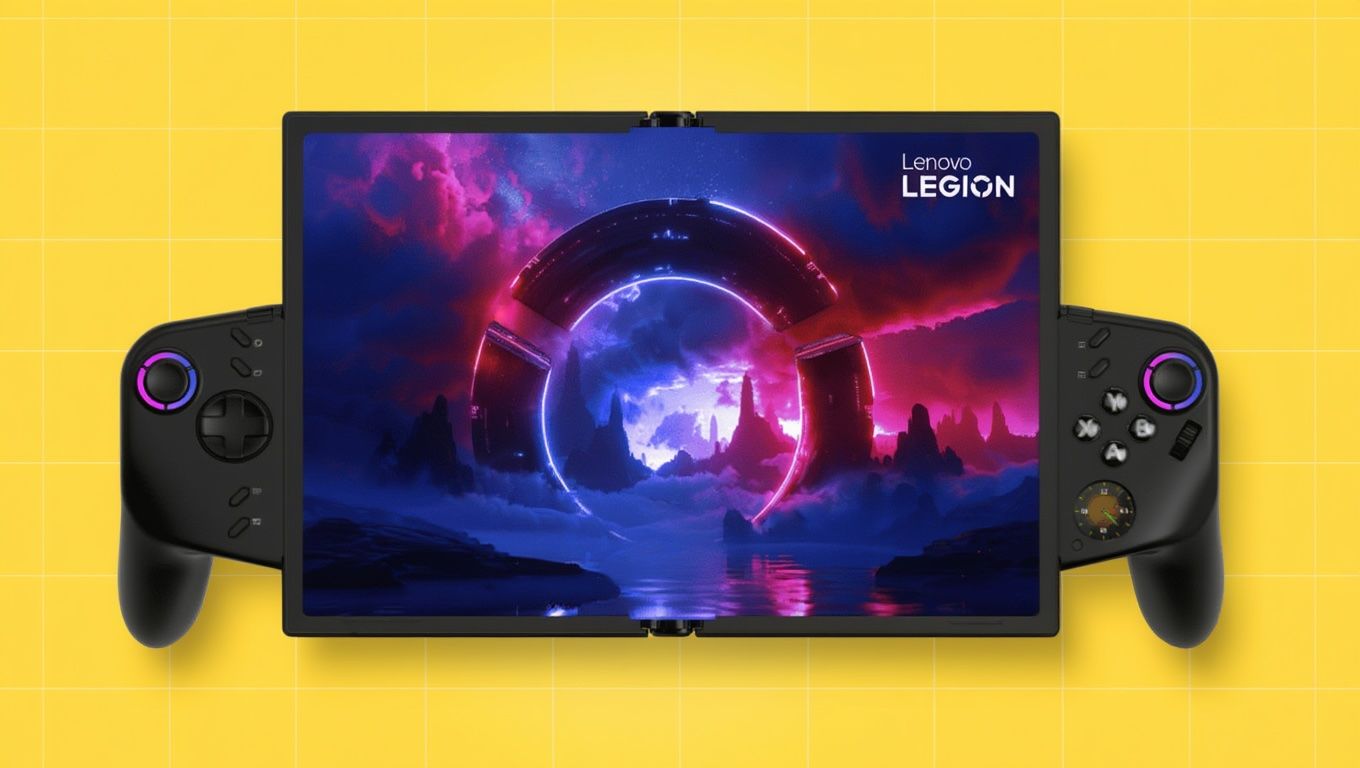
Image source: Lenovo / Reve
The Rundown: At the Mobile World Congress in Barcelona, Lenovo’s foldable gaming handheld and Honor’s new Robot Phone showed how hardware makers are betting on new form factors to stand out in a saturated market.
The details:
Lenovo unveiled the Legion Go Fold, a Windows-based gaming handheld whose foldable 7.7‑inch display can expand into an 11.6‑inch screen.
Honor debuted its so-called Robot Phone, built around a motorized pop-out gimbal camera that tracks subjects and swivels like a tiny head.
Xiaomi dropped the 17 Ultra, a Leica-co-engineered triple-camera flagship loaded with oversized sensors and on-device AI processing.
The show’s wilder fringe included Tecno's magnetically modular ultra-thin concept and bendy phones designed to curl around your wrist.
Why it matters: The mobile industry has a complacency problem: upgrade cycles are slow, and spec bumps aren’t inspiring purchases. MWC’s answer is to make the hardware fun again, and the real story out of Barcelona isn’t any single device but a shared bet that AI‑native form factors are the best shot at boosting demand.
ULTRAHUMAN
👀 Ultrahuman’s smart ring eyes U.S. return
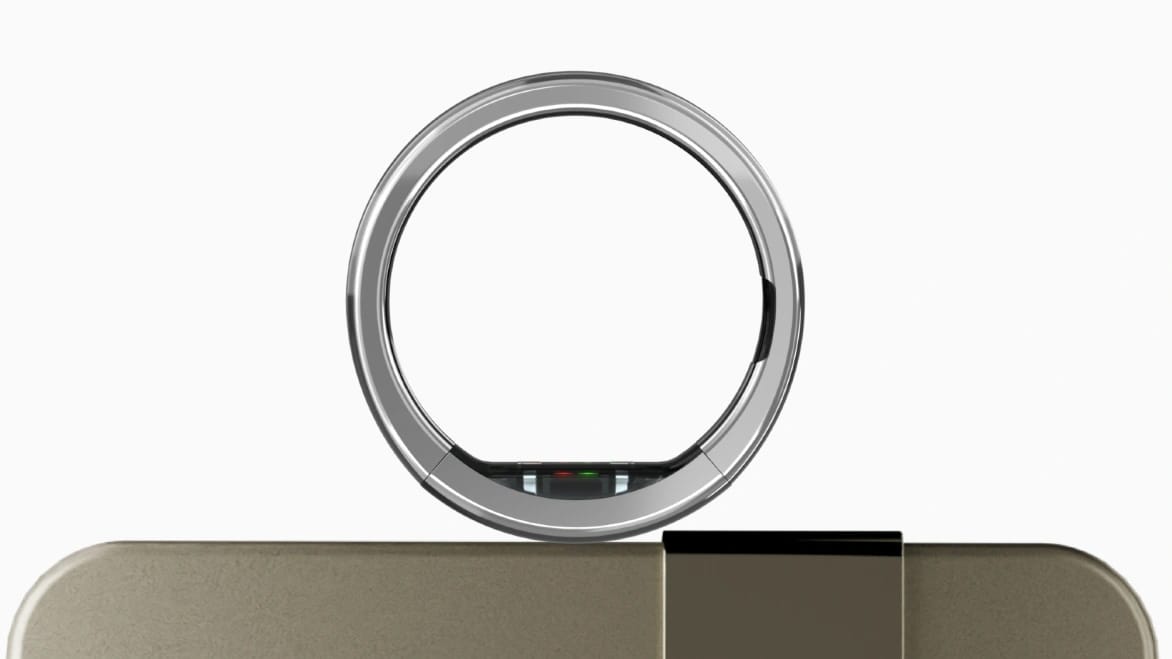
Image source: Ultrahuman
The Rundown: Ultrahuman is betting a redesigned, AI-powered smart ring can claw back the U.S. market — months after a bruising patent battle with Oura got its previous hardware blocked at the border.
The details:
Priced at $479, the Ring Pro extends battery life to 15 days, pairs a redesigned sensor array with a dual-core processor, and can store 250 days of data.
The ring ships with a Pro Charger packing 45 days of reserve power and supports Qi wireless charging — a first for the lineup.
Ultrahuman is seeking U.S. Customs clearance after an ITC patent ruling halted imports, cutting off roughly 45% of its 700K daily active users.
The company has also launched Jade, a real-time “biointelligence” engine that converts raw biometric data into actionable health guidance.
Why it matters: Smart rings are the sharpest testbed for AI-first wearables, and Ultrahuman is fighting to stay relevant as Oura and Samsung tighten their grip on the U.S market. With the Ring Pro still in regulatory limbo, the company is betting that new hardware and Jade’s real-time coaching will be enough to stand out.
SMART GLASSES
👓 App that warns about nearby smart glasses
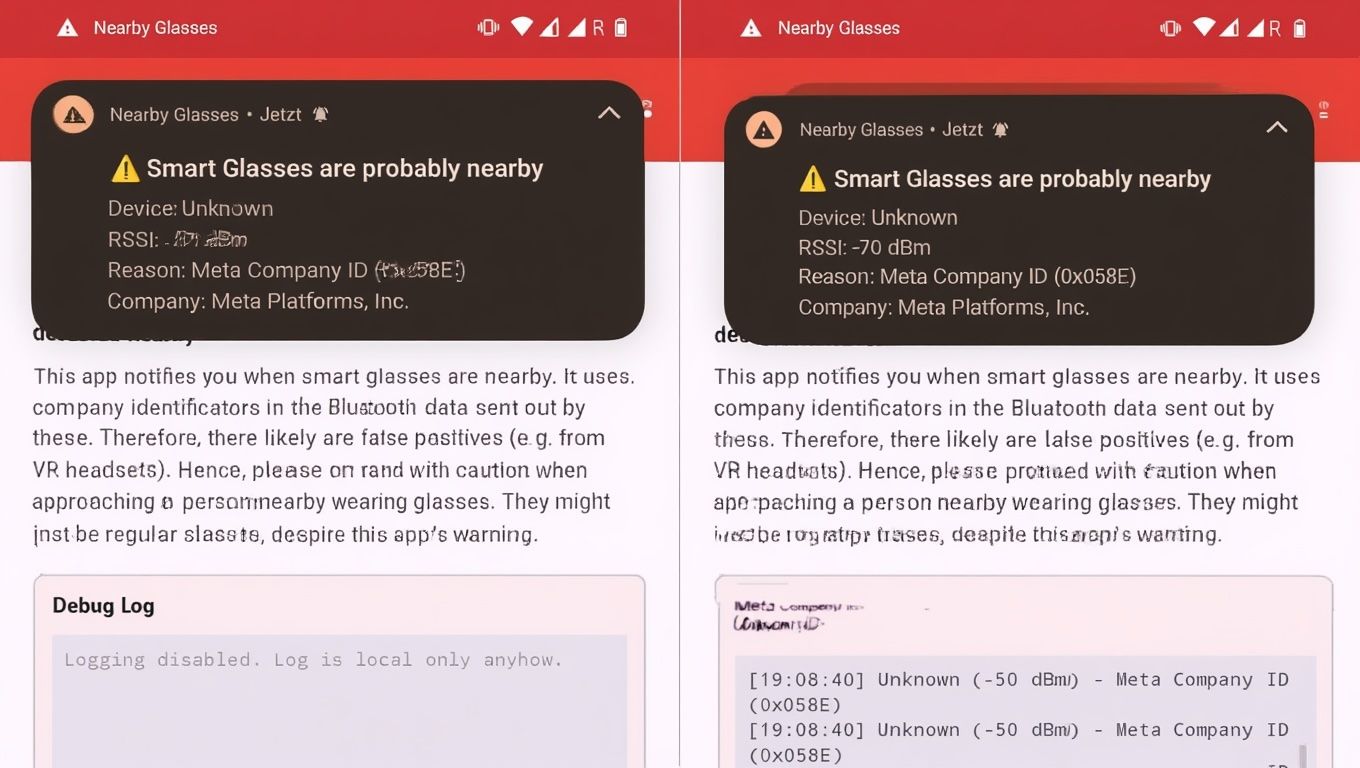
Image source: Nearby Glasses
The Rundown: A new Android app called Nearby Glasses scans Bluetooth signals to flag camera-equipped smart glasses nearby — a direct counterpunch to the creeping normalization of what critics are calling “luxury surveillance.”
The details:
Nearby Glasses scans ambient Bluetooth signals and alerts users when someone in range is wearing camera-equipped smart glasses.
The app identifies manufacturer-specific Bluetooth signatures from devices, including Meta’s Ray-Ban smart glasses and Snap’s Spectacles.
Creator Yves Jeanrenaud, a sociologist, built the app after researching how smart glasses were used in immigration raids and to harass sex workers.
He told TechCrunch the app is an “act of resistance” against consentless ambient recording and is considering an iOS version.
Why it matters: Smart glasses don’t just record as phones do — they make recording invisible, collapsing the social cues that let people notice, object, or step away, and right now, there’s no legal framework requiring them to announce themselves. As surveillance tech gets sleeker, we’re likely to see more counter-tools like this app.
QUICK HITS
📰 Everything else in tech today
SoftBank-backed PayPay reportedly delayed its roughly $10B U.S. IPO amid weakening tech markets and rising geopolitical tensions.
Anthropic’s Claude surged to the No. 1 spot on Apple’s iPhone apps chart in the U.S., riding a wave of publicity after the Pentagon sidelined it from government AI work.
Paramount+ and HBO Max will be combined into a single streaming service once Paramount Skydance’s acquisition of Warner Bros. Discovery closes.
Instagram will soon notify parents who use its supervision tools when their teens repeatedly search for terms related to suicide or self-harm.
Elon Musk’s xAI is redeeming $3B in high-yield bonds at a premium as part of a plan to wipe out about $17.5B in debt tied to xAI and X, ahead of a blockbuster SpaceX IPO.
A U.S. federal court blocked Virginia’s law that would have limited under-16s to one hour a day on social media and required platforms to verify users’ ages.
GSK agreed to buy Canadian biotech 35Pharma for $950M in cash to bolster its pipeline of cardiopulmonary and obesity-related drugs.
MyFitnessPal snapped up Cal AI, the viral teen-built calorie-counting app with over 15M downloads and around $30M in annual revenue.
Chinese AI startup MiniMax more than doubled revenue to $79M in 2025, driven largely by overseas demand for its generative AI models and apps.
Amazon says three of its data centers in the Middle East were damaged by drone strikes tied to the escalating U.S.-Iran conflict, disrupting key AWS cloud services.
Xiaomi launched its new flagship 17 and 17 Ultra smartphones globally, keeping prices flat at $1,079 and $1,619 despite a surge in memory chip costs.
COMMUNITY
🎓 Highlights: News, Guides & Events
Read our last AI newsletter: Supreme Court ducks AI copyright question
Read our last Tech newsletter: Netflix exits $83B Warner Bros deal
Read our last Robotics newsletter: Bio-robotic spy roaches
Today’s AI tool guide: Transcribe any video for free with this local AI
RSVP to our next workshop on March 12: AI coding bootcamp pt. 1
See you soon,
Rowan, Joey, Zach, Shubham, and Jennifer — The Rundown’s editorial team


Stay Ahead on AI.
Join 2,000,000+ readers getting bite-size AI news updates straight to their inbox every morning with The Rundown AI newsletter. It's 100% free.