Get the latest AI news, understand why it matters, and learn how to apply it in your work — all in just 5 minutes a day. Join over 2,000,000+ subscribers.

OpenAI's AI phone just jumped the line
Read Online | Sign Up | Advertise

Good morning, AI enthusiasts. Amid intensifying competition with Anthropic, improved models, and efforts to kill “side hustles,” OpenAI is apparently looking at something closer to home — an AI agent phone.
Analyst Ming-Chi Kuo says the company is fast-tracking this device for 2027, with some notable capabilities. Good news for those wanting a stronger AI experience in their pockets. The question is: where does this leave the ongoing work with Jony Ive? Or is this the same device?
In today’s AI rundown:
OpenAI fast-tracks its ‘AI agent phone’
Anthropic’s AI agents for finance work
Make your Notion agents more autonomous
Home-based ‘mini’ AI data centers are coming
4 new AI tools, community workflows, and more
LATEST DEVELOPMENTS
OPENAI
📱 OpenAI fast-tracks ‘AI agent phone’

Image source: Images 2.0 / The Rundown
The Rundown: OpenAI is reportedly accelerating development of its first AI phone, now aiming for mass production in the first half of 2027, which is a full year earlier than previously reported, according to supply chain analyst Ming-Chi Kuo.
The details:
Kuo says the timeline shift is likely driven by OAI’s IPO ambitions (strong hardware could strengthen investor pitch) and rising competition in AI phones.
The phone’s standout spec will be its image signal processor, with an enhanced HDR pipeline to improve AI agents’ real-world visual sensing.
MediaTek is positioned to be the sole chip supplier, with the device using two AI processors to handle vision and language tasks simultaneously.
Kuo also added that OpenAI’s combined 2027–28 shipments of this phone could touch 30M, if the development stays on track.
Why it matters: Controlling hardware and OS could be the key to a true agentic phone. But if OpenAI’s AI phone is closer than we thought, where does this leave the device it’s building with Jony Ive’s io? OpenAI acquired io last year with much fanfare to go “beyond screens,” but nothing concrete has appeared so far except a few rumors.
TOGETHER WITH LAMBDA
⚡ How to push Model FLOPS Utilization past 50%

The Rundown: Most large-scale training runs operate at just 35–45% Model FLOPS Utilization, meaning teams pay for more than twice the compute they actually use. Lambda’s engineers benchmarked Llama 3.1 models from 8B to 405B on NVIDIA Blackwell GPUs to trace efficiency loss to its root causes.
Efficiency losses were traced to:
Memory overhead capping effective throughput
Parallelism strategies misaligned with the hardware
Serialized communication stalling GPU cycles
ANTHROPIC
🤑 Anthropic’s AI agents for finance work

Image source: Anthropic
The Rundown: Anthropic just unveiled 10 ready-to-run AI agents aimed squarely at financial services and insurance — capable of handling work ranging from building pitchbooks and screening KYC files to reviewing earnings and valuations.
The details:
Each agent comes with task-specific domain skills and instructions, connectors to relevant data sources, and add-on Claude models for sub-tasks.
Firms can adapt any agent of their choice to their own modeling conventions, risk policies, and approval flows — while staying in the loop 24/7.
The agents can be used as plugins within Claude Cowork or Claude Code on desktop, or as cookbooks, running as Managed Agents on the Claude platform.
Claude is also getting an add-in for Microsoft 365 as well as data connectors from Dun & Bradstreet, Verisk, IBISWorld, and other financial services partners.
Why it matters: Development, cybersecurity, design, and now finance. Anthropic is going domain by domain, meeting businesses where they are instead of selling a general model and letting them figure it out. Its new $1.5B joint venture alongside Wall Street giants reinforces this strategy, further fueling its race with OpenAI.
AI TRAINING
🤖 Make your Notion agents more autonomous
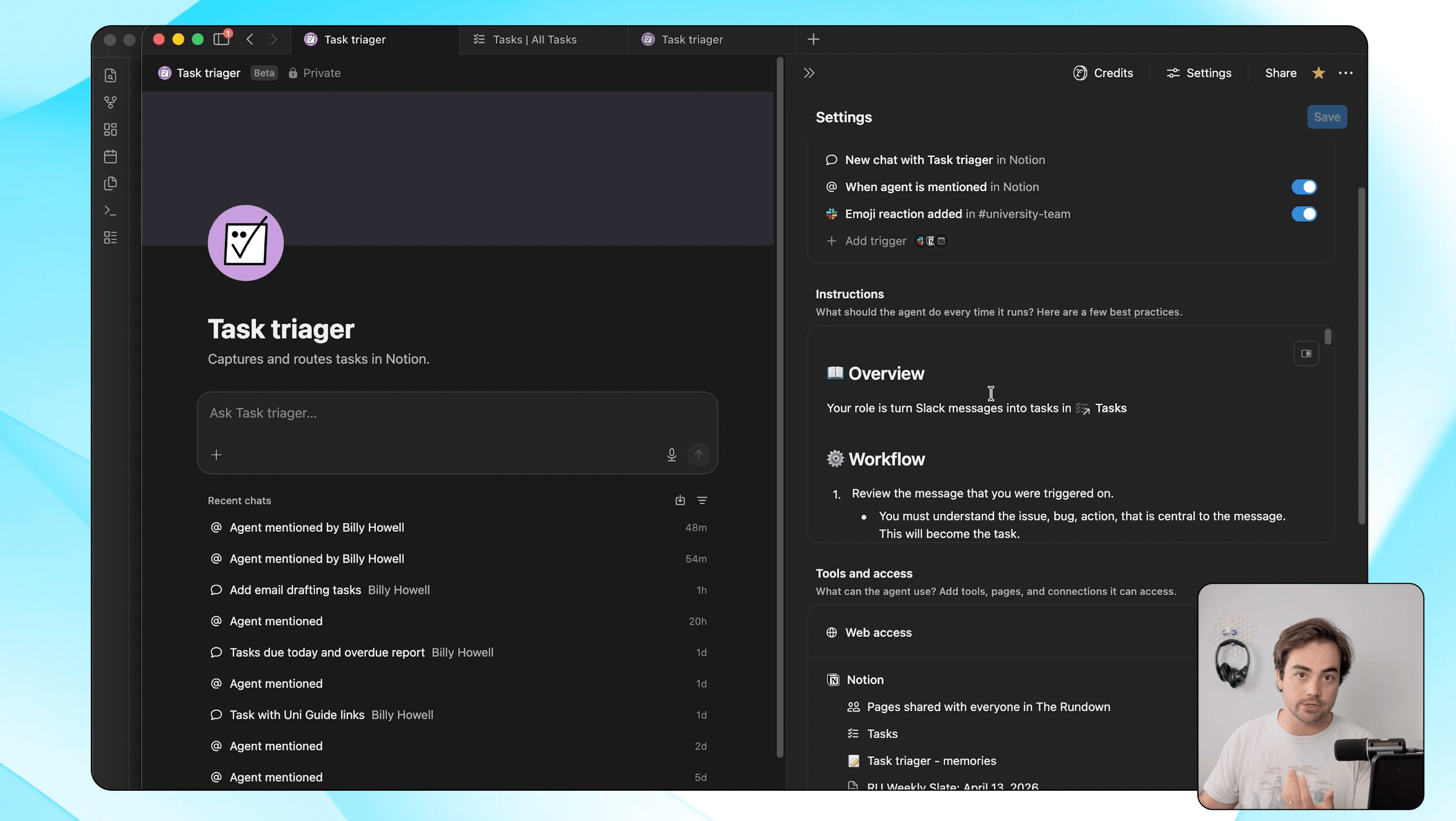
The Rundown: In this guide, you will learn a hidden workflow that will make your Notion Agents more autonomous and powerful than they are by default. This lets you wake up any agent, give it tasks, and then get a report on what it did.
Step-by-step:
Create a Notion agent from the “Agents” option in the sidebar. Then, open a database for the agent’s prompt and task reports. Ours is called “reports”
Click the New dropdown, open Templates, and create a @Today template (ours was Daily Summary). @Today makes duplicates inherit the current date
Set the properties, write task instructions in the page body, and @ mention the agent, so the duplicate triggers it. Remember to stop the agent when doing this, so it doesn’t overwrite the template
From the template, click New template, then Duplicate, and pick a cadence. We run ours daily at 7 a.m. A small blue icon next to the template shows it’s live
Pro tip: Try setting up daily debriefs, weekly reports, and email automations. Now you can route them all through the same planning agent.
PRESENTED BY IBM
🔌 Rewire the C-suite for an AI-first world

The Rundown: Most leaders know AI will reshape their business, but few have a clear playbook for how. An IBM Institute of Business Value analysis reveals 5 plays that CEOs must fulfill now for payoffs by 2030.
To lead in an AI-first landscape, surveyed CEOs suggest:
Customize your AI mix, not just your AI models
Hire a Chief AI Officer if you haven’t already
Orchestrate intelligence — both artificial and human
AI DATA CENTERS
🏘️ Home-based ‘mini’ AI data centers are coming

Image source: Span
The Rundown: California startup Span is teaming up with Nvidia to install mini AI data centers on the walls of residential homes and small businesses, tapping unused electrical capacity on local grids to meet surging AI compute demand.
The details:
Span has developed XFRA, small compute nodes that mount on the exterior walls of homes, alongside accompanying HVAC and electrical systems.
Nvidia is providing its liquid-cooled RTX PRO 6000 Blackwell Server Edition GPUs to power each XFRA box, ensuring noiseless computing for AI workloads.
Span told CNBC it can install 8,000 XFRA units 6x faster and at one-fifth the cost of building a comparable 100MW centralized data center facility.
Currently, the company is working with PulteGroup, one of the largest U.S. homebuilders, to test the box and its economics in newly built communities.
Why it matters: Grid strain from data centers is real, and Span’s boxes could spread the load while tapping only unused capacity. But public response is an open question — not all will love the idea of a data center box mounted where kids play, especially when alternatives like ocean- and space-based data centers are also in sight.
QUICK HITS
🛠️ Trending AI Tools
🚀 Box Automate - Orchestrate agentic workflow automation, securely and at scale*
🎨 Pomelli - Make product-specific campaigns with Google’s AI marketing tool
🖼️ Uni 1.1 - Luma’s new image generation and editing AI that nears the frontier
🎮️ Astrocade - Platform to create shareable games with AI
*Sponsored Listing
📰 Everything else in AI today
OpenAI’s GPT-5.5-Instant started rolling out to all ChatGPT users, bringing improved performance, stronger memory, and more personalized, concise responses.
Microsoft expanded its Copilot Cowork agentic system to iOS and Android, while adding built-in skills for common tasks and data plugins for business systems.
Apple agreed to pay some U.S. iPhone buyers a collective $250M to settle a class action lawsuit over misleading claims about its new AI Siri, but admitted no wrongdoing.
Perplexity AI launched Computer for Professional Finance, bringing licensed data and 35 dedicated workflows to its agentic system to help analysts handle routine work.
Anthropic reportedly committed to spending $200B on Google’s cloud and chips over the next five years, now making 40%+ of Google’s revenue backlog.
Coinbase CEO Brian Armstrong said the company is cutting 14% of its workforce, ~700 people, as it shifts to AI-native teams, agent-driven workflows, and leaner ops.
COMMUNITY
🤝 Community AI workflows
Every newsletter, we showcase how a reader is using AI to work smarter, save time, or make life easier.
Today’s workflow comes from reader Schy W. in Springfield, IL:
"I went to a music festival — multiple stages, music over several days. Many bands had more than one set time/location. I fed Claude the festival’s schedule PDF and told it to extract the information, but to ignore autograph signing and music workshops. I then read off a list of bands I wanted to see and followed up with a subset of those that I absolutely did not want to miss. I requested a schedule that would plan out where I should be to maximize the number of bands I could reasonably see with a simple prompt.
It understood the mission and in one stroke produced a fantastic spreadsheet optimizing my time and noting my priorities, stages, times, partial sets, if a band has another set, and explained the decision-making rationale.”
How do you use AI? Tell us here.
🎓 Highlights: News, Guides & Events
Read our last AI newsletter: AI data centers head for the ocean
Read our last Tech newsletter: GameStop's wild bid to buy eBay
Read our last Robotics newsletter: Meta buys a humanoid brain
Today’s AI tool guide: Make your Notion agents more autonomous
See you soon,
Rowan, Joey, Zach, Shubham, and Jennifer — the humans behind The Rundown


GameStop's wild bid to buy eBay
Read Online | Sign Up | Advertise

Good morning, tech enthusiasts. Meme stock GameStop is trying to buy eBay in a $56B bid, pitching mall nostalgia, collectibles fever, and one of the web’s oldest marketplaces as an Amazon rival.
CEO Ryan Cohen is selling the dream hard; Wall Street responded by wiping 10% off GameStop’s stock and pricing eBay below the offer. Audacious, messy, maybe impossible — comeback of the decade, or just total insanity?
In today’s tech rundown:
GameStop’s wild $56B bid to buy eBay
An arthritis shot that actually fixes the joint
Tesla hit 10B FSD miles, but now what?
AI cams are the West’s new fire lookouts
Quick hits on other tech news
LATEST DEVELOPMENTS
GAMESTOP
🕹️ GameStop’s wild $56B bid to buy eBay

Image source: Images 2.0 / The Rundown
The Rundown: GameStop just launched an unsolicited $56B offer to acquire eBay, a move that would fuse a meme-stock nostalgia chain with one of the internet’s oldest marketplaces into something CEO Ryan Cohen is calling a “legit competitor to Amazon.”
The details:
The offer values eBay at $125 per share in cash and stock — a 20% premium to its recent close — with GameStop having built a 5% stake in the company.
Cohen told the Wall Street Journal he believes a combined GameStop-eBay could become “something worth hundreds of billions of dollars.”
The vision is to merge GameStop’s physical store footprint with eBay’s global marketplace to build a platform for used goods, collectibles, and live shopping.
The market isn’t buying it yet: eBay shares climbed to $109 — well below the $125 offer — while GameStop stock sank 10%.
Why it matters: GameStop, probably best known for meme-stock mania, is a $12B company swinging at a company 4x its value, with no clear plan for how Cohen will finance the deal. But the logic could track: pair its collector base with eBay’s 130M active buyers, and you’ve got a serious secondhand marketplace force.
TOGETHER WITH AWS MARKETPLACE
🤖 Four levers to specialize your AI agents
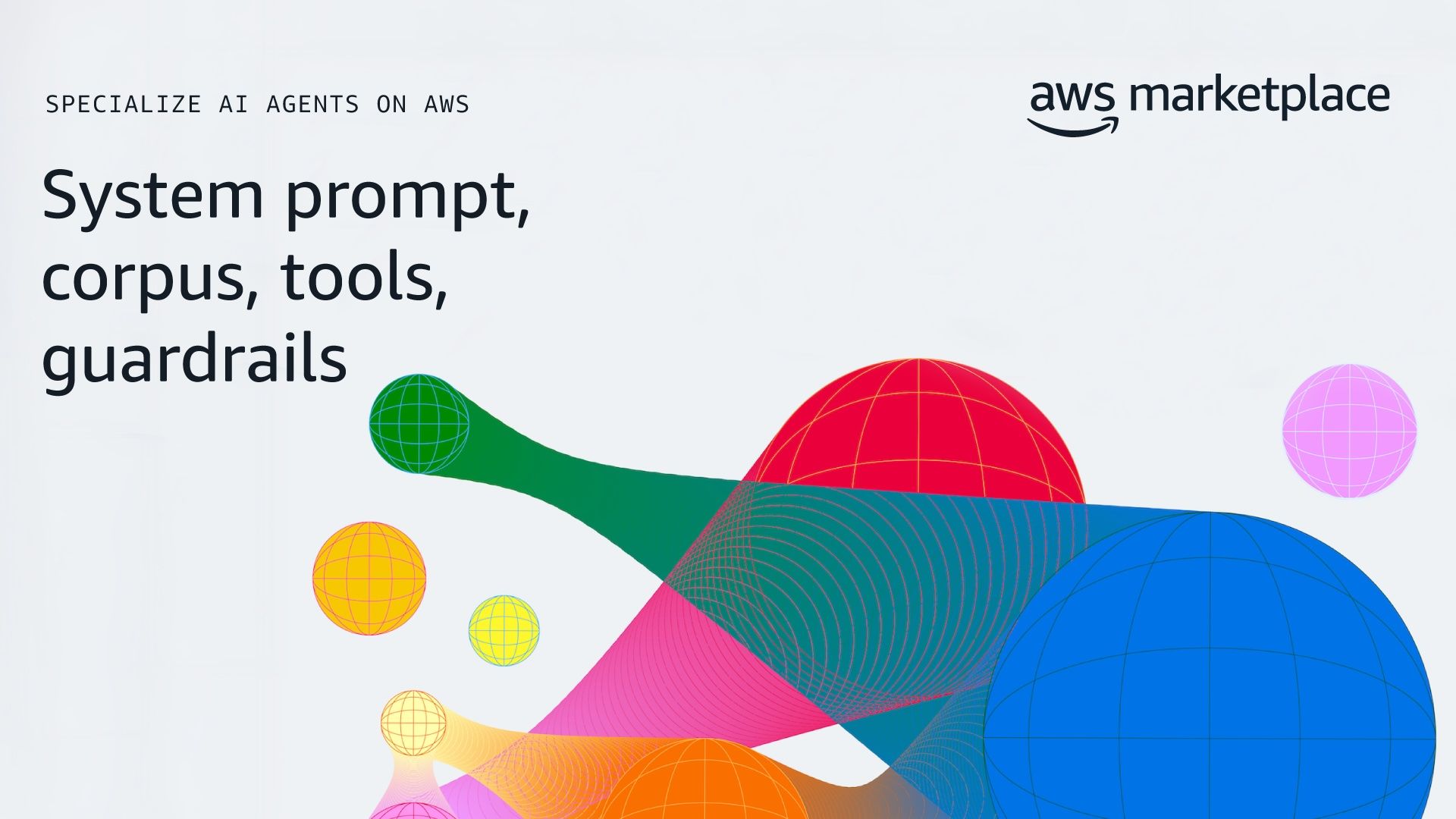
The Rundown: System prompt, knowledge corpus, tool selection, and guardrails — these are the four levers that turn a general-purpose AI agent into a domain-specific one that handles real edge cases. AWS’ new workshop and companion guide breaks down the architecture key to building reliable, specialized agents.
What you’ll learn:
How to apply the four levers of domain specialization to your own agents
Patterns for customer engagement agents that personalize at the edge
Approaches for location-aware logistics and low-latency voice agents
BIOTECH
💉 An arthritis shot that actually fixes the joint

Image source: Images 2.0 / The Rundown
The Rundown: University of Colorado scientists are testing a one-shot injectable therapy that slowly releases an existing drug inside damaged joints, nudging cells to regrow cartilage and potentially reverse osteoarthritis rather than just mask the pain.
The details:
The experimental treatment uses a slow‑release particle system that’s injected directly into the joint, where it dispenses a known drug over weeks.
In animal studies, the shot stimulated cartilage and bone cells to repair worn joint surfaces, restoring smoother motion and cutting inflammation markers.
Today’s standard intra‑articular shots can dial down pain for weeks or months, but do not reliably regrow tissue or halt disease progression.
Researchers are also prototyping an injectable “implant” that anchors to eroded joints and acts as a scaffold to attract native cells and rebuild cartilage.
Why it matters: Osteoarthritis disables hundreds of millions, sending patients through pain meds and temporary joint shots before metal or plastic replacements. A truly regenerative, single‑visit therapy could rewrite that trajectory and potentially disrupt pharma and device makers built on lifelong symptom care, not real repair.
TESLA
🚘 Tesla hit 10B FSD miles, but now what?

Image source: Tesla
The Rundown: Tesla’s updated safety page says its fleet has now driven over 10B miles with Full Self-Driving (Supervised) engaged, hitting the data threshold Elon Musk recently set as necessary for “safe unsupervised” autonomy, The Verge reports.
The details:
Musk raised that bar from 6B to 10B miles of real‑world training data, arguing that handling edge cases requires far more exposure than his earlier estimate.
The milestone comes after Tesla disclosed passing 7B FSD miles in late 2025 and 8B miles in February 2026.
Tesla’s system remains a driver‑assist product that requires human supervision and still falls short of its own safety targets for going fully driverless.
Musk continues to promise broad U.S. robotaxi expansion in 2026, but regulators haven’t agreed.
Why it matters: Tesla just hit 10B miles on FSD Supervised, the exact threshold Musk set in January for safe driverless operation. The safety numbers are impressive, but a human is still required behind the wheel. Meanwhile, Waymo is already operating driverless rides in 10 cities, on track for a million rides a week by year’s end.
CLIMATE TECH
🔥 AI cams are the West’s new fire lookouts

Image source: Pano AI
The Rundown: Utilities in Arizona, California, and Colorado are stringing AI-powered cameras across ridgelines and forest edges, training computer vision systems to catch what human eyes miss: the first gray wisp of a fire before it becomes a wall of flame.
The details:
The systems use computer vision to scan live video feeds, flagging tiny smoke plumes and sending instant alerts to human analysts and fire agencies.
In Arizona’s Coconino National Forest, one of these cameras helped spot the Diamond Fire early enough that firefighters contained it at 7 acres.
Utilities are expanding their networks before peak fire season: Arizona, for example, plans to grow its camera count from around 40 to more than 70.
Speed over traditional detection is significant: one Arizona Public Service meteorologist put the average lead time over the first 911 call at 45 minutes.
Why it matters: This is climate tech moving to frontline infrastructure. Detecting a fire 45 minutes earlier can be the difference between a containable blaze and a fast-moving disaster. As utilities expand these networks ahead of peak fire season, AI smoke detection is becoming a practical adaptation tool for a hotter, drier West.
QUICK HITS
📰 Everything else in tech today
Meta is lining up about $13B to fund its planned El Paso, Texas, AI data center, which it recently expanded to a 1‑gigawatt project slated to come online by 2028.
Apple, having lost its contempt appeal in the Epic Games App Store case, is now asking the U.S. Supreme Court to step in.
Chinese courts ruled that companies cannot legally fire employees solely to replace them with cheaper AI systems.
Amazon said Iranian drone strikes on three AWS data centers in the UAE and Bahrain have left its Middle East cloud regions badly damaged, forcing months-long repair work.
Apple is in early talks with Intel and Samsung about making its core device processors in U.S. fabs, exploring alternatives to its dominant supplier TSMC.
An explosion hit SpaceX’s Starship water‑deluge test at Starbase, casting doubt on whether the upgraded Starship V3 will launch as planned around May 12.
Disney’s new CEO, Josh D'Amaro, is exploring a “super app” that would merge Disney+ with the company’s various park and cruise apps into a single platform.
Geothermal startup Fervo Energy is planning a Nasdaq IPO that could raise up to $1.3B and value the enhanced-geothermal developer at about $6.5B.
COMMUNITY
🎓 Highlights: News, Guides & Events
Read our last AI newsletter: AI data centers head for the ocean
Read our last Tech newsletter: SpaceX is about to crash into the Moon
Read our last Robotics newsletter: Meta buys a humanoid brain
Today’s AI tool guide: How to replace Siri with a free local model
See you soon,
Rowan, Joey, Zach, Shubham, and Jennifer — The Rundown’s editorial team

AI data centers head for the ocean
Read Online | Sign Up | Advertise

Good morning, AI enthusiasts. AI's land grab is running into walls — literal ones, in the form of an angry public fed up with data center constructions in their cities.
Oregon-based startup Panthalassa is taking things offshore instead, with Peter Thiel leading a new $140M round for floating structures that turn ocean energy into the compute AI companies are all scrambling for more of.
In today’s AI rundown:
Thiel-backed startup brings AI data centers to sea
Anthropic co-founder forecasts AI’s self-building era
How to replace Siri with a free local model
OAI, Anthropic launching rival private equity ventures
4 new AI tools, community workflows, and more
LATEST DEVELOPMENTS
PETER THIEL & PANTHALASSA
🌊 Thiel-backed startup brings AI data centers to sea

Image source: Panthalassa
The Rundown: PayPal and Palantir founder Peter Thiel just led a $140M Series B for Panthalassa, an Oregon-based startup that builds autonomous floating compute structures powered by ocean waves — reportedly valuing the company at nearly $1B.
The details:
Each 85-meter steel node bobs in open ocean, converting wave motion into electricity for onboard AI chips, all cooled naturally by seawater.
Once deployed, the nodes can steer themselves to remote waters using only their hull shape (no engines) and beam AI results back via SpaceX’s Starlink.
The raise will finish a pilot factory near Portland and deploy the first wave-powered compute nodes in the Pacific Ocean, with commercial rollout in 2027.
Thiel told the Financial Times that “extraterrestrial solutions (to compute) are no longer science fiction” and that “Panthalassa has opened the ocean frontier.”
Why it matters: AI data centers have been one of the more controversial AI talking points for the general public, and the hostility towards their construction is growing fast. While both Elon Musk and Google have pushed space-based options, those are still far from reality, making the ocean an interesting and more realistic alternative.
TOGETHER WITH YOU.COM
⏰ API latency is only part of the story

The Rundown: Most teams pick an API by checking a benchmark table and calling it done—a shortcut that could miss what really matters in production. This guide from You.com explains why raw latency is a misleading signal and what to measure instead.
What you'll learn:
Why p50 latency hides the failures your users actually experience
The "time-to-useful-result" framework that captures what benchmarks leave out
Four hidden cost drivers that show up in your logs, not vendor tables
How to evaluate APIs at your actual concurrency levels, not the demo conditions
Learn what to measure instead. Download the guide.
ANTHROPIC
📝 Anthropic co-founder forecasts AI’s self-building era
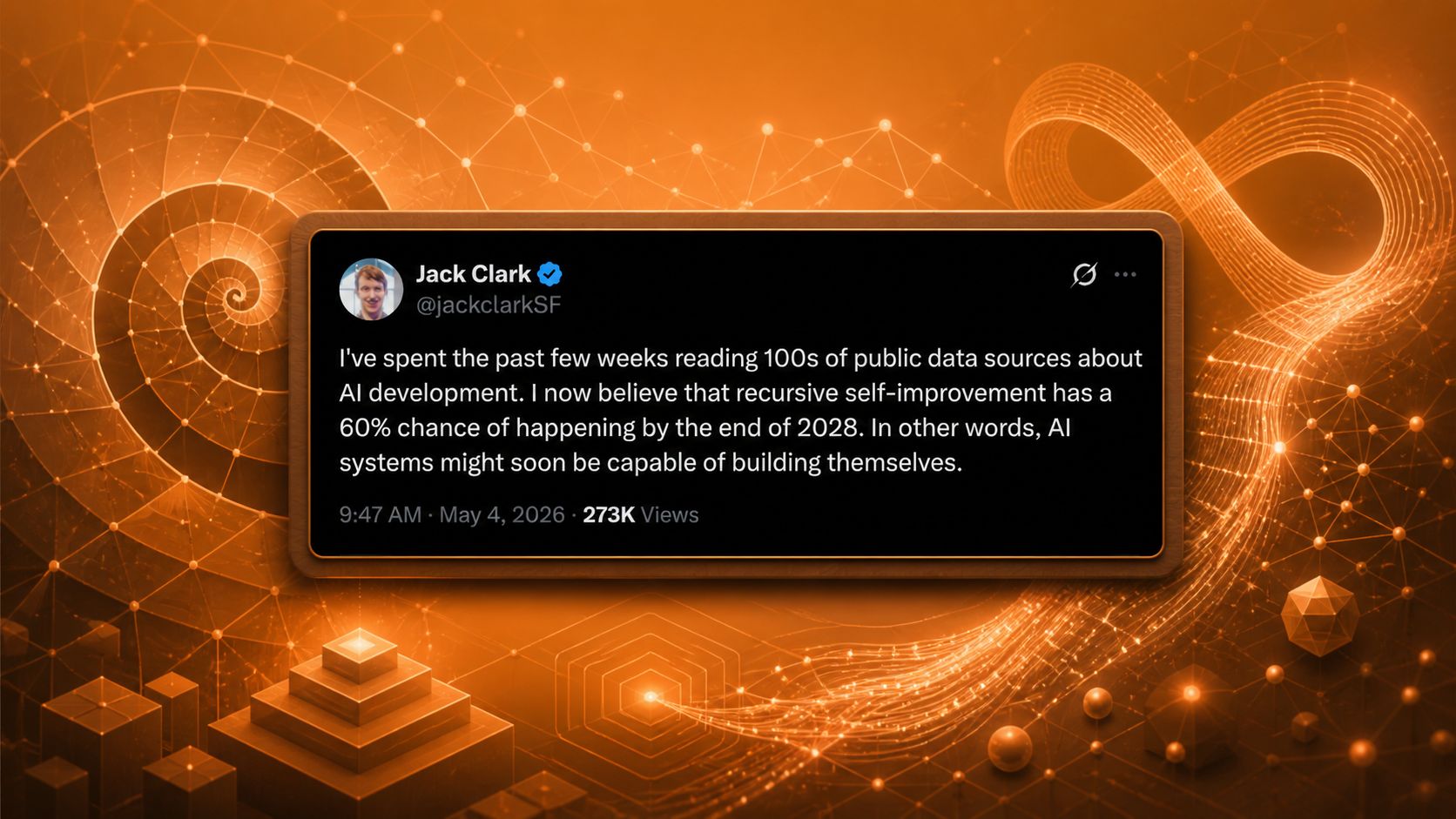
Image source: Jack Clark (@JackclarkSF on X) / The Rundown
The Rundown: Anthropic co-founder Jack Clark published a new blog post on self-improving AI, putting 60%+ odds on AI systems training their own successors before 2029, citing public data showing AI is already handling a range of core R&D tasks.
The details:
Clark built the case on public papers and benchmark data, charting AI going from near-zero to 100% across core development tasks in under 3 years.
METR data shows AI’s independent work capability went from 30-second tasks in 2022 to 12 hours in 2026, with 100-hour runs projected by year-end.
Clark also pointed to the SWE-Bench benchmark (real GitHub coding), moving from Claude 2 at 2% to Mythos Preview at 93.9% in under three years.
OpenAI is also targeting an automated research intern by Sept. 2026, while startups like Recursive Superintelligence share similar self-improvement goals.
Why it matters: Self-improving AI systems feel like the inflection point that really makes model development go exponential, and “by the end of 2028” is not that far away. AI is already moving at a speed that is hard for most to process — but once it can reliably build and train itself, all bets are off for how fast things can truly move.
AI TRAINING
📲 How to replace Siri with a free local model

The Rundown: In this guide, you will learn how to download a free AI model to your iPhone and bind it to your phone's action button like Siri. The model is installed locally, so you will be able to use it without the internet or sending out your private data.
Step-by-step:
Download Locally AI from the App Store, choose your model. You can start with Google’s new, open-source Gemma model, which typically works great
Download the AI and keep the app open. Now, open settings, search for Action Button, swipe to the Shortcut option, search Locally AI, and choose Voice Mode
Press the Action Button on your iPhone and wait for the chime. The app will ask you to download a speech-to-text model the first time. Download it
Now try asking the model a question. We found they are best for explaining concepts, translation tasks, and math
Pro tip: Download a bigger model and run the same prompt through it. Compare speed, storage size, and answer quality to get the perfect AI for your iPhone.
AI & THE ENTERPRISE
💰 OAI, Anthropic launching rival private equity ventures

Image source: Images 2.0 / The Rundown
The Rundown: Anthropic announced the formation of a new Claude services company with Blackstone, Hellman & Friedman, and Goldman Sachs, with OpenAI also reportedly raising for its own PE-backed ‘Deployment Company’ the same day.
The details:
The $1.5B Anthropic venture will focus on mid-sized companies, pairing its Applied AI engineers with teams building custom Claude workflows.
OAI's "Deployment Company" will reportedly bring in $4B from 19 investors at a $10B valuation, including TPG, Brookfield, Bain, and SoftBank.
Both models would give the frontier AI labs direct paths into portfolio companies that often lack the in-house talent to deploy AI systems alone.
Why it matters: The barriers for companies aren’t the models anymore, but actually getting it installed and integrated into messy, large-scale businesses. These paths look more like frontier labs creating their own AI-native consulting firms, with a wealth of private equity portfolio companies ready to get in on the action.
QUICK HITS
🛠️ Trending AI Tools
🗣️ Unwrap Customer Intelligence - Get AI-driven insights from your unstructured customer feedback to build your product roadmap*
🚀 Grok 4.3 - xAI’s AI with strong cost efficiency, domain-specific performance
🤖 Cofounder 2 - General Intelligence's new agent orchestrator for businesses
🦮 Codex Pets - OpenAI's animated companions for tracking Codex work
*Sponsored Listing
📰 Everything else in AI today
A new filing in the Elon Musk vs. OpenAI case showed that Musk reached out to OAI President Greg Brockman about a potential settlement days before the trial.
The New York Times reported that the White House is seeking to create a formal review and oversight process prior to companies publicly deploying AI models.
Sierra raised $950M at a $15B valuation, with the platform saying it now serves over 40% of the Fortune 50 companies for AI-driven customer experiences.
Roomba creator and former iRobot CEO Colin Angle introduced the Familiar, a bulldog-sized AI pet robot targeting retirees who've aged out of pet ownership.
Anthropic is reportedly in talks to purchase chips from Fractile, a three-year-old London startup focused on more efficient chips for running AI models.
COMMUNITY
🤝 Community AI workflows
Every newsletter, we showcase how a reader is using AI to work smarter, save time, or make life easier.
Today’s workflow comes from reader Adam M. in Berlin, Germany:
My best friend Eric was in a horse riding accident, which has left him partially paralyzed from the neck down. His medical insurance would only cover some of it. He was in a remote place in South Africa, so he needed to be flown by helicopter to the nearest hospital and then undergo multiple surgeries.
We used AI to help us set up the GoFundMe page and create social media posts for him, and to manage his ongoing recovery. Given that he can't really use his hands, he's able to use his phone now with AI to give updates and share about his journey with the world so that we can get the message out there to help him recover.
We're also using it to stay up to date with GoFundMe and their documentation and what they need to prove that he's a real person and that it isn't a scam. Whenever they send requests, we can paste them into Claude and get a properly formatted answer back so they can speed up the approval process, release their funds, and make sure they're happy.
It also helped us estimate what we should do in terms of a goal. We've set the goal at half a million euros, and we are well on the way."
How do you use AI? Tell us here.
🎓 Highlights: News, Guides & Events
Read our last AI newsletter: AI shows its skills in the emergency room
Read our last Tech newsletter: SpaceX is about to crash into the Moon
Read our last Robotics newsletter: Meta buys a humanoid brain
Today’s AI tool guide: How to replace Siri with a free local model
See you soon,
Rowan, Joey, Zach, Shubham, and Jennifer — the humans behind The Rundown

Meta buys a humanoid brain
Read Online | Sign Up | Advertise

Good morning, robotics enthusiasts. Meta just acquired Assured Robot Intelligence, a San Diego startup building foundation models for humanoids — and folded its two elite founders directly into Superintelligence Labs.
The move comes days after Meta committed up to $145B to AI infrastructure this year. What, exactly, it plans to build is still murky — but the humanoid race just got a new heavyweight.
In today’s robotics rundown:
Meta snaps up robotics startup ARI
1X opens massive NEO humanoid factory
Figure claims it can build a robot every hour
Uber to turn its drivers into an AV sensor grid
Quick hits on other robotics news
LATEST DEVELOPMENTS
META
🤖 Meta snaps up robotics startup ARI

Image source: Reve / The Rundown
The Rundown: Meta just acquired humanoid startup Assured Robot Intelligence for undisclosed terms, bringing two elite roboticists into its Superintelligence Labs to build foundation models for whole-body humanoid control.
The details:
Meta bought San Diego-based ARI, a 20-person startup that focuses on foundation models enabling humanoids to handle household tasks.
The founders: Lerrel Pinto, an NYU professor who co-founded Fauna Robotics (acquired by Amazon), and Xiaolong Wang, a former Nvidia researcher.
The deal folds ARI into Meta’s Superintelligence Labs division and comes days after Meta raised its 2026 AI infra capex to $125–145B.
A leaked 2025 internal memo revealed Meta is developing consumer humanoid hardware, though the company has not confirmed the plan yet.
Why it matters: Meta’s acquisition positions it to compete with Tesla, Figure AI, and Boston Dynamics in commercializing humanoids — if it wants to. But regardless, many AI researchers believe that achieving AGI requires training models through physical interaction, making embodied AI a strategy beyond large language models.
1X
🔥 1X opens massive NEO humanoid factory

Image source: 1X
The Rundown: Humanoid startup 1X opened its NEO factory in Hayward, California. The 58K-square-foot facility, billed as the most vertically integrated humanoid factory in the U.S., has commenced full-scale production of NEO.
The details:
The plant has the capacity to produce 10K NEO units in its first year, with a target of 100K units annually by 2027.
1X is using in-house manufacturing for key components like motors, batteries, and transmissions to reduce reliance on Chinese suppliers.
NEO runs on NVIDIA’s Jetson Thor platform, with behaviors trained in simulation, and is pitched as a mobile assistant for light household tasks.
The robots are expected to cost around $20K or be available via subscription, with customer shipments expected to begin in 2026.
Why it matters: If 1X can ship at scale, it transforms humanoids from demo reel to actual product — and the data flywheel could matter more than the hardware. With a second San Carlos plant set to come online next year, 1X is betting that vertical integration outpaces Tesla’s factory muscle and Figure’s deep pockets.
FIGURE
🛠️ Figure claims it can build a robot every hour

Image source: Figure / YouTube
The Rundown: Humanoid startup Figure said its San Jose, California-based BotQ factory has hit a 24x production jump in under four months — and it’s using every robot it makes to train the next generation of AI.
The details:
Figure has ramped BotQ from one Figure 03 per day to one per hour — a 24x throughput jump in under 120 days — with 350-plus units already shipped.
Each robot reportedly clears 80 functional tests before leaving the floor, with end-of-line yield topping 80%; the battery line runs at 99.3%.
BotQ’s 150 networked workstations have produced 9K actuators across 10 component types, targeting 12K robots per year at full capacity.
Every unit that ships is also a data engine: real-world fleet signal feeds Helix, Figure's AI model, enabling OTA updates across the entire fleet.
Why it matters: Hard production numbers for humanoids come with a lot of caveats, of course. Tesla missed its 10K-unit 2025 target badly, and 1X’s new Hayward factory hasn’t shipped to customers yet. Figure’s 350 units are mostly internal too — but it’s the only one publishing yield rates, throughput curves, and a credible production ramp.
UBER
🚕 Uber to turn its drivers into an AV sensor grid

Image source: Images 2.0 / The Rundown
The Rundown: Uber is pitching its human drivers as roaming data collectors, using their everyday trips to feed sensor data into an “AV cloud” that self-driving companies can tap to train and test their autonomous systems, TechCrunch reports.
The details:
Uber CTO Praveen Neppalli Naga says the company aims to equip human drivers’ cars with sensor kits, so routine trips feed a shared AV data pool.
He says AV development is now bottlenecked by high-quality driving data, and that Uber can fill the gap cheaper than AV startups deploying their own fleets.
Uber is already running an “AV cloud,” a library of labeled sensor data that some 25 autonomous-vehicle partners can query.
Companies can even use it in “shadow mode” to see how their models would have handled real Uber rides without putting a robotaxi on the road.
Why it matters: This could turn Uber’s global fleet into the gatekeeper for real-world driving data, giving it leverage over any AV player that wants to train or deploy on its network. That shift would let Uber profit from autonomy whether or not it owns robotaxis, while tightening its grip on the data layer that future AV competitors need.
QUICK HITS
📰 Everything else in robotics today
Chinese robotics firm Unitree launched a low-cost, modular upper-body-only humanoid starting at about $4,290, targeting researchers and developers.
A Waymo robotaxi drove off with a San Jose passenger’s luggage at the airport, and customer service reportedly said the car couldn’t be turned around.
Uber is partnering with Hertz’s new Oro Mobility unit to handle charging, cleaning, maintenance, and depot staffing for its upcoming robotaxi fleet in the Bay Area.
German auto supplier Schaeffler plans to roll out at least 1K Hexagon/AEON humanoids across its global factories by 2032 after a successful 2025 pilot program.
Dutch startup VNYX raised €1M ($1.1M) to scale its AI‑powered robotics systems that automate fashion resale of returns, overstock, and second‑hand garments.
MIT developed microscopic magnetic hydrogel robots — smaller than a grain of sand — that can perform complex maneuvers when controlled by an external magnet.
A humanoid named Bebop caused a Southwest flight delay after airline staff discovered its lithium battery exceeded size limits and confiscated it before departure.
COMMUNITY
🎓 Highlights: News, Guides & Events
Read our last AI newsletter: AI shows its skills in the emergency room
Read our last Tech newsletter: SpaceX is about to crash into the Moon
Read our last Robotics newsletter: A humanoid baggage handler has landed
Today’s AI tool guide: Create converting landing pages in Claude
See you soon,
Rowan, Joey, Zach, Shubham, and Jennifer — The Rundown’s editorial team
AI shows its skills in the emergency room
Read Online | Sign Up | Advertise

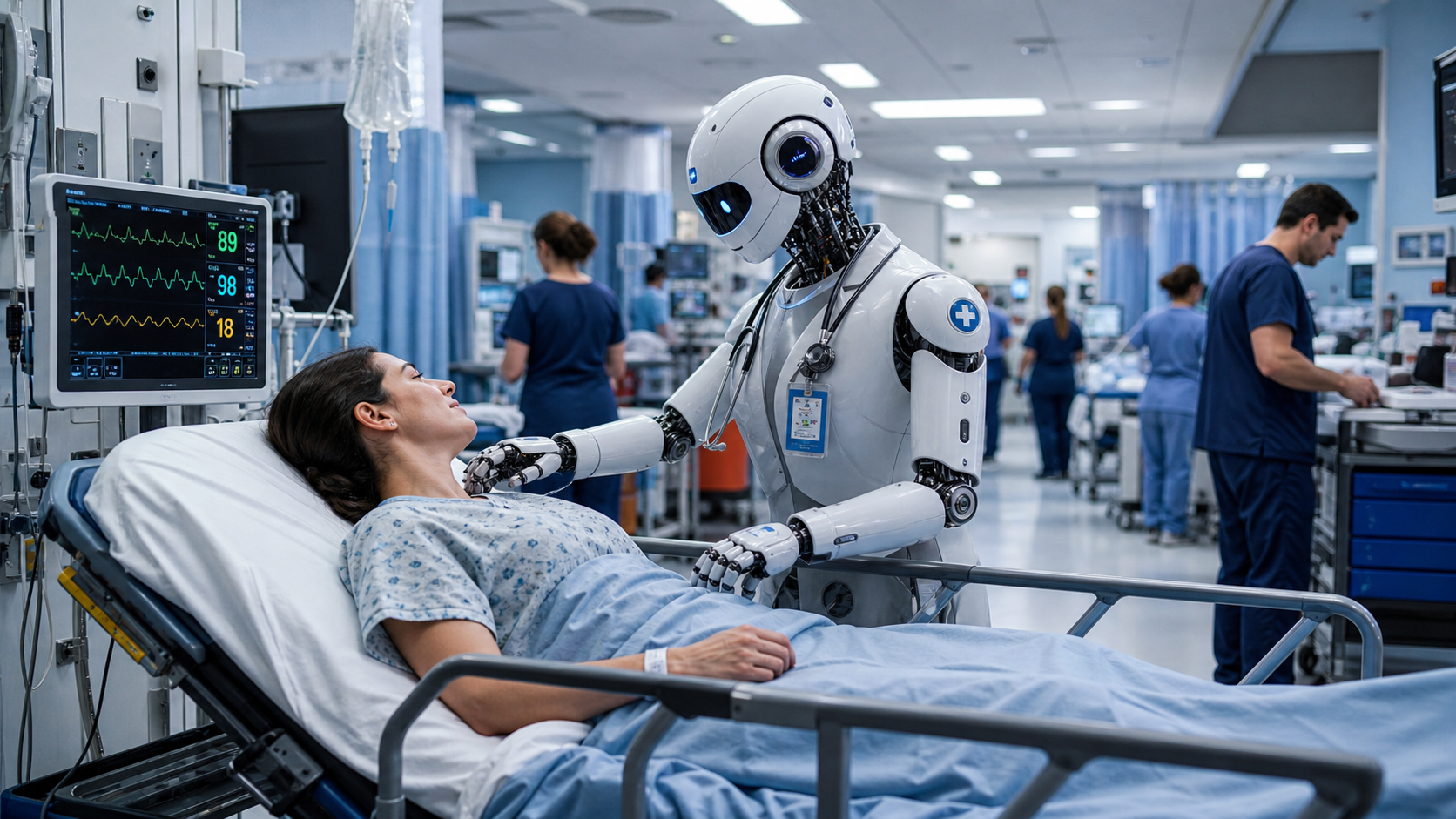
Good morning, AI enthusiasts. AI just beat two attending emergency room physicians across real patient cases in a new Harvard study. The model? OpenAI’s o1-preview, released in… 2024.
Millions of users are already turning to ChatGPT for health advice every day, but the data shows that AI models (preferably not several generations behind) may be ready for a more formal seat in the exam room alongside the doctor as well.
In today’s AI rundown:
Old AI model tops doctors in ER trial
The Rundown Roundtable: Our AI use cases
Create converting landing pages in Claude
Pentagon announces new AI partners
4 new AI tools, community workflows, and more
LATEST DEVELOPMENTS
OPENAI
🏥 Old AI model tops doctors in ER trial
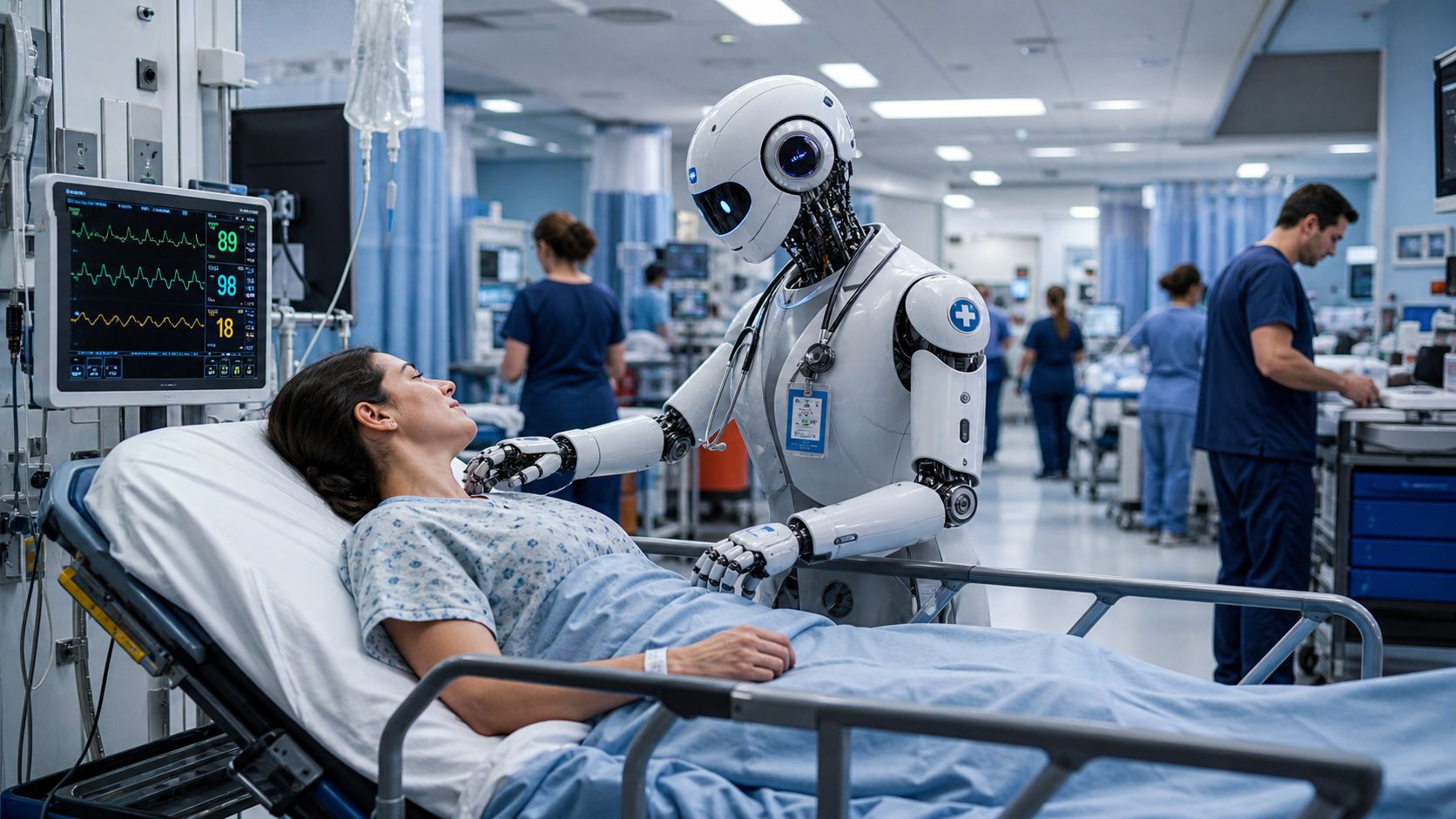
Image source: Images 2.0 / The Rundown
The Rundown: A Harvard study published in Science just put OpenAI's o1-preview (released in 2024) through 76 real ER cases, with the AI diagnosing patients more accurately than two physicians, despite using only raw electronic health-record text.
The details:
The study compared OpenAI's o1-preview model with two attending physicians across 76 real ER cases and three decision stages of patient care.
At initial ER triage, the model gave the correct diagnosis 67.1% of the time, compared to 55.3% and 50.0% for the two physicians.
The two separate physician reviewers tasked with scoring couldn't tell which diagnoses came from the model and which came from the humans.
In one case, the AI flagged a rare flesh-eating infection in a transplant patient roughly 12 to 24 hours before the treating doctor caught it.
Why it matters: Millions of people are already using AI daily for health questions, but studies like these are showing the usefulness can also flow the other way to the doctors themselves. If a model generations behind is already beating ER doctors, imagine what the frontier could look like inside the patient care process.
TOGETHER WITH UNWRAP
⚡️ See how Oura automates customer feedback analysis

The Rundown: Unwrap’s customer intelligence platform that pulls all your feedback – surveys, reviews, support tickets, social comments– into one view, then uses AI to surface the most actionable insights to deliver them to your inbox. Teams at Perplexity, Stripe and DoorDash rely on Unwrap to ensure no customer voice gets lost.
With Unwrap you get:
All customer feedback automatically categorized
Query feedback using Unwrap Assistant, or in your favorite tools using Unwrap's MCP
Real-time alerts from feedback as they arise
A clear view of customer sentiment
Unwrap is offering a trial of its tools to Rundown AI subscribers! Grab 15 minutes with the team to get set up.
THE RUNDOWN ROUNDTABLE
💡 The Rundown Roundtable: Our AI use cases

Image source: Ideogram / The Rundown
The Rundown: The Rundown Roundtable is a weekly feature where we poll members of The Rundown staff about how we use AI in our work and daily lives.
Jennifer, Tech & Robotics Writer: Last year, my daughter was diagnosed with a rare autoimmune disease. Like any parent in that situation, I wanted to understand everything I could so we could make the best decisions for her care. I used both Gemini and ChatGPT to help me sort through the medical literature, treatment options, possible side effects, and how other countries approach treatment.
I also turned to ChatGPT to identify the leading specialists in the country — thankfully, our referred doctor turned out to be one of them, which gave us even more reassurance. More than anything, it helped demystify the disease and make us feel confident that we were doing everything we could. She’s doing really well on her medications, and seeing her recover has been an enormous relief.
Shubham, Editor: I use ChatGPT as a label-reading filter for packaged snacks, uploading product photos and asking it to flag hidden sugars, oils like palm, and preservatives, then compare options against a strict checklist of clean ingredients, minimal processing, and decent macros.
It’s especially useful for decoding lesser-known, jargon-heavy terms on the back label, translating things like INS numbers, stabilizers, and emulsifiers into plain English so it’s clear what’s actually being consumed. Instead of trusting front-of-pack claims like “multigrain” or “sugar-free,” it breaks down what’s inside, surfaces trade-offs, and narrows choices to the best options available online
AI TRAINING
🎨 Design converting landing pages in Claude

The Rundown: In this guide, you will learn to use Anthropic’s new AI design tool — Claude Design — to generate four, high-converting mockup variations of your website’s landing page.
Step-by-step:
Go to claude.ai/design, select wireframe, click create, and describe who the page is for, the product, and the action visitors should take. Don’t hit “Send”
Screenshot a landing page you like (search top pages in your niche), as well as a page that does millions of daily transactions, like Amazon or eBay
Hit send with the brief and screenshots. Tell Claude to give four variations of the mockup. Answer any follow-up questions and wait 2-5 minutes
Refine with comments. Click any element and leave a note like "rewrite this CTA to be outcome-specific" or "add a testimonial here." Claude applies the change
Pro tip: Click Share > Handoff to Claude Code > Send to Claude Code Web to get Claude Code to build and deploy the final website for you.
PRESENTED BY SCRUNCH
🏆 AI is your new VIP visitor
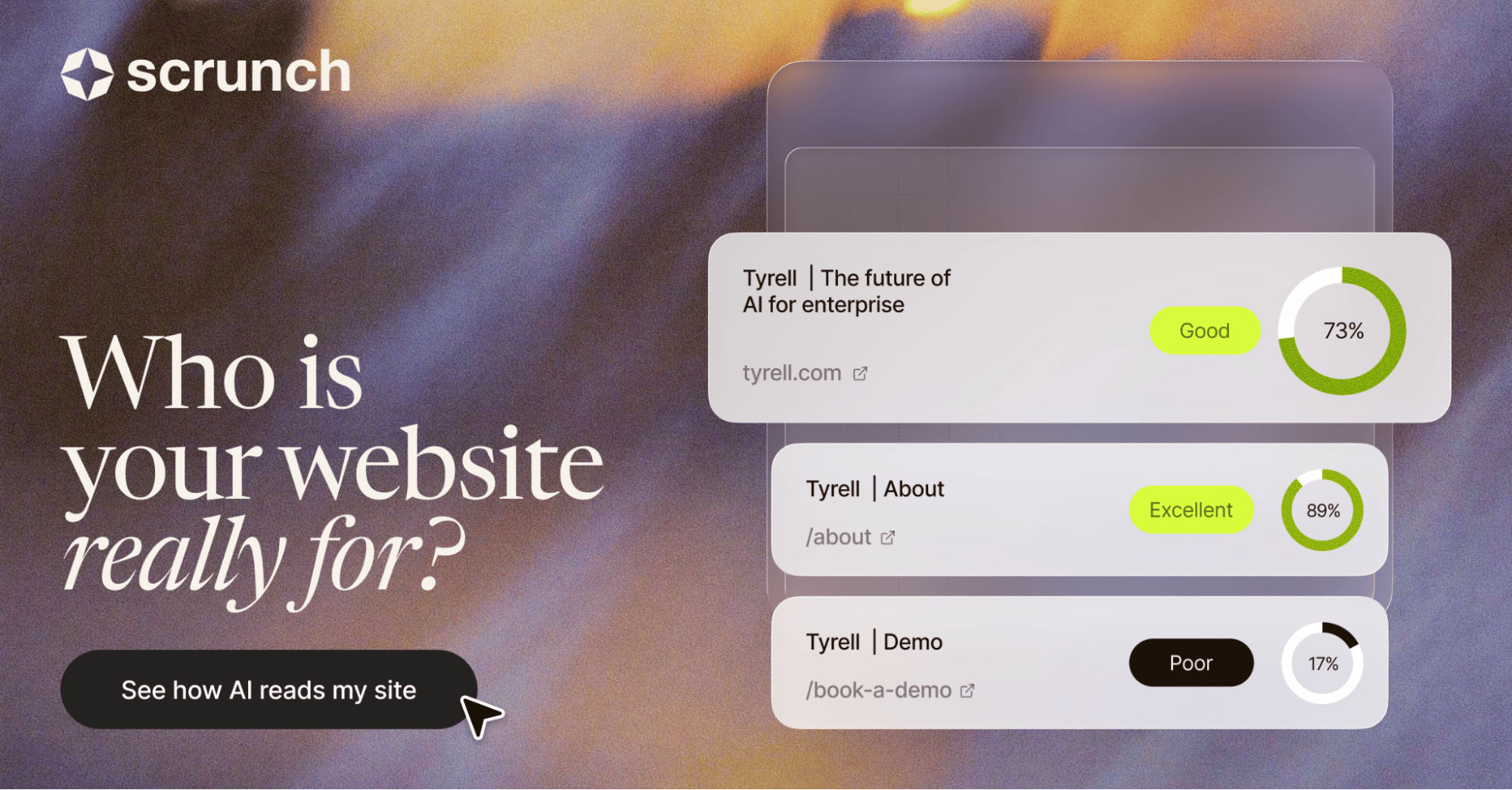
The Rundown: Scrunch is the AI Customer Experience Platform that optimizes your site for AI bots — the new VIPs deciding whether your brand gets named, cited, or skipped when someone asks ChatGPT, Perplexity, or Claude about your category.
With Scrunch, you'll:
See how AI reads your site today
Spot the blockers and content gaps
Deliver optimized pages straight to AI agents
Show up in more AI answers
AI & THE PENTAGON
🏛️ Pentagon announces new AI partners

Image source: Images 2.0 / The Rundown
The Rundown: The Pentagon added 8 AI companies to its classified networks while excluding Anthropic, even as the Washington Post reports the new contracts have the same autonomous-weapons and surveillance limits for which Anthropic was blacklisted.
The details:
The official agreement list names SpaceX, OpenAI, Google, Nvidia, Reflection, Microsoft, AWS, and Oracle as the companies added to classified networks.
The Department of War said the new deals will “accelerate the transformation toward establishing the U.S. military as an AI-first fighting force”.
DoD CTO Emil Michael told CNBC that Anthropic’s supply-chain risk label still stands, but called its Mythos model a "separate national security moment."
Anthropic’s exclusion comes days after the White House came out against a broader Mythos rollout over compute concerns impacting its own access.
Why it matters: The White House seemingly wants to have its cake and eat it too — both continuing to shun Anthropic while also wanting priority access to its Mythos model despite the blacklist. There are also some interesting names on that list, namely Reflection, which raised $2B from 1789 Capital, a Donald Trump Jr.-backed fund.
QUICK HITS
🛠️ Trending AI Tools
🗣️ Custom Voices - Clone voices with short clips for use in Grok applications
🦮 Codex Pets - OAI's animated companions for tracking active Codex work
🎶 ElevenMusic - Platform for AI song generation, remixing, creator payouts
🚀 MiMo-V2.5-Pro - Xiaomi's powerful new open-source model
📰 Everything else in AI today
OpenAI shipped Codex Pets, animated desktop companions that let you track agent progress without switching back to the app.
OpenAI CEO Sam Altman announced that OpenClaw users can use their ChatGPT subscriptions within the agentic tool, taking a stance against Anthropic’s restrictions.
Maryland signed the U.S.’s first ban on AI-driven grocery pricing, with fines up to $25K for stores caught using personalized shopper data to mark up prices.
SAG-AFTRA secured new AI guardrails in its four-year studio deal, with the guild's negotiator refusing to sign until Hollywood studios made concessions on AI protections.
A Chinese court ruled that replacing a worker with AI does not legally justify firing them, ordering a tech firm to pay wrongful termination damages.
COMMUNITY
🤝 Community AI workflows
Every newsletter, we showcase how a reader is using AI to work smarter, save time, or make life easier.
Today’s workflow comes from reader Olli T. in Finland:
"I'm a new real estate investor, and what I'm struggling with is market insights, as in our county, there is no transparency or proper historical information available. With Gemini Pro, I created a concept that analyzes the market information.
The tool displays all relevant renovation history and future needs and can also generate an investment calculation. I then refined the concept with multiple free AIs (Claude, Codex), one prompt per day, to have a product that fits my needs."
How do you use AI? Tell us here.
🎓 Highlights: News, Guides & Events
Read our last AI newsletter: The White House rethinks its Anthropic fight
Read our last Tech newsletter: SpaceX is about to crash into the Moon
Read our last Robotics newsletter: A humanoid baggage handler has landed
Today’s AI tool guide: Create converting landing pages in Claude
See you soon,
Rowan, Joey, Zach, Shubham, and Jennifer — the humans behind The Rundown

SpaceX rocket is about to crash into the Moon
Read Online | Sign Up | Advertise

Good morning, tech enthusiasts. A dead SpaceX Falcon 9 upper stage — left to drift for two years after delivering two commercial moon landers — is now on an unplanned collision course with the lunar surface.
The 45-foot booster will slam into the Moon at Mach 7 on August 5, in what will be one of the most closely tracked crashes in spaceflight history. No one will get hurt, but the Moon will sport a new crater.
In today’s tech rundown:
SpaceX rocket to slam into the Moon
Meta loses 20M users this quarter
AI glasses that listen all day, rival Meta
Drone strikes hit Big Tech’s Gulf buildout
Quick hits on other tech news
LATEST DEVELOPMENTS
SPACEX
🌜 SpaceX rocket to slam into the Moon

Image source: Bill Gray / Images 2.0
The Rundown: A dead SpaceX Falcon 9 upper stage that launched two commercial moon landers in 2025 is now on track to slam into the lunar surface at roughly Mach 7 — 7x the speed of sound — on August 5.
The details:
A spent SpaceX Falcon 9 upper stage that launched two commercial lunar landers in January 2025 has been left drifting in a chaotic orbit.
After more than a year of tracking by independent orbital analyst Bill Gray, calculations now show the booster is on a collision course with the moon.
The 45 ft. booster is expected to slam into the lunar surface near Einstein crater on August 5, at about Mach 7 — roughly 2.4 km/s.
The impact poses no risk to people or satellites but will blast out a new crater and briefly throw up a plume of dust that NASA spacecraft can later image.
Why it matters: The crash will give scientists a rare, precisely timed impact experiment on the moon, letting orbiters study how high‑velocity strikes excavate material and alter the surface in real time. It also spotlights how commercial lunar missions are forcing space agencies to confront space junk well beyond low Earth orbit.
META
📉 Meta loses 20M users this quarter

Image source: Getty Images / Reve AI
The Rundown: Meta posted its fastest revenue growth since 2021 in Q1 2026 — and simultaneously shed roughly 20M daily users across Facebook, Instagram, WhatsApp, and Messenger, marking one of the rarest reversals in the company’s history.
The details:
Meta lost roughly 20M daily users across Facebook, Instagram, WhatsApp, and Messenger in Q1 2026, marking a rare drop in its combined audience.
Despite the user decline, Meta delivered its fastest revenue growth since 2021, with Q1 2026 sales jumping about one-third year over year.
The company raised its planned 2026 AI infrastructure spending, guiding total investment as high as $145B to fund data centers and compute.
Execs said they had underestimated AI demand and now need to catch up on servers, chips, and data center buildouts to support new AI products.
Why it matters: Meta attributed the user drop in its family of apps to the Iran war’s internet disruptions and a WhatsApp ban in Russia — not organic churn. The real jolt is the AI bill of up to $145B in 2026, raising the question investors can’t stop asking: how long can Meta keep feeding the machine before the machine feeds back?
MIRA
👓 AI glasses that listen all day, rival Meta

Image source: Mira
The Rundown: Mira, the startup founded by Harvard dropouts AnhPhu Nguyen and Caine Ardayfio, just unveiled its first product — camera-less AI glasses that listen to your entire day and act as a "second brain" to help with day-to-day tasks.
The details:
Priced at $649, Mira glasses listen continuously and become personalized to the wearer’s habits/preferences, surfacing answers at the tap of a paired ring.
They can translate 60+ languages in real time and come with unlimited memory, letting users search through full conversations or summaries.
Users also get an agent (controlled with the ring) that uses the glasses' context for tasks like sending emails, booking rides, or shopping on Amazon.
The glasses connect to apps like Slack, Notion, and Gmail for added context, with answers also appearing in front of users’ eyes via an AR display.
Why it matters: Unlike Meta’s Ray-Bans, Mira is pushing the no-camera approach. All recordings are deleted; only transcripts are saved. The founders are betting this is the version of AI glasses people want to wear. If successful, Mira could define the next generation of personal AI in what’s set to become a very crowded market.
DATA CENTERS
🛑 Drone strikes hit Big Tech’s Gulf buildout

Image source: Ideogram / The Rundown
The Rundown: A strike that damaged Pure DC’s Abu Dhabi data center during the Iran war has pushed the company to freeze new Middle East projects, exposing how fragile Big Tech’s trillion‑dollar AI infrastructure bet is to real‑world conflict, CNBC reports.
The details:
Iranian drone attacks in the Iran war have hit multiple data centers in the Gulf, including AWS facilities in the UAE and Bahrain, and an Oracle site in Dubai.
Pure Data Centre Group (Pure DC), backed by Oaktree, reportedly says shrapnel from a strike damaged its Abu Dhabi data center on Yas Island.
The company’s CEO told CNBC that “no one’s going to run into a burning building” and that investors are now cautious about putting capital in the region.
The Gulf’s data center capacity is set to triple from 1 GW in 2025 to 3.3 GW by 2030, backed by a wave of landmark commitments.
Why it matters: The Gulf became one of the biggest destinations for AI and cloud money, with cheap energy, ample land, and aggressive national AI strategies. But those same facilities are now reportedly being treated as wartime targets, forcing investors to price in missile risk alongside megawatts.
QUICK HITS
📰 Everything else in tech today
Meta reportedly ended its contract with AI vendor Sama after some of its Kenyan workers said they had to review intimate footage, including videos of people having sex.
Orbital compute startup Starcloud is telling investors it is in talks to raise new funding at a roughly $2.2B valuation, The Information reports.
Apple posted a record March quarter with revenue up 17% to about $111B, as surging iPhone sales and strong Mac demand beat Wall Street expectations.
Beijing banned drone sales in the capital, designating the entire city a no-fly zone where all drones must be registered with the police and flights require permits.
Meta’s HR chief reportedly told staff that, on top of next month’s planned 10% job cuts, the company can’t rule out further layoffs.
Genome pioneer J. Craig Venter, who helped drive the first human genome sequence and created the first organism with a synthetic genome, died aged 79.
Spotify launched “Verified by Spotify” badges and tighter rules that block AI‑generated profiles from verification while downranking low‑quality AI music.
Divine, the Jack Dorsey–backed Vine reboot, launched publicly on iOS and Android, offering an archive of roughly 500K restored six‑second Vine videos and tools.
New Mexico is seeking court orders to force Meta to implement child safety measures, prompting Meta to threaten to withdraw its platforms from the state.
Motif Neurotech won FDA clearance to run the first U.S. clinical trial of a tiny wireless brain implant that targets treatment‑resistant depression.
EV maker Rivian reduced its U.S. Department of Energy loan from $6.6B to $4.5B for its Georgia factory.
COMMUNITY
🎓 Highlights: News, Guides & Events
Read our last AI newsletter: The White House rethinks its Anthropic fight
Read our last Tech newsletter: Samsung’s Meta Ray-Ban rival just leaked
Read our last Robotics newsletter: A humanoid baggage handler has landed
Today’s AI tool guide: Stress test business ideas with Perplexity
See you soon,
Rowan, Joey, Zach, Shubham, and Jennifer — The Rundown’s editorial team

The White House rethinks its Anthropic fight
Read Online | Sign Up | Advertise

Good morning, AI enthusiasts. The government spent months escalating its fight with Anthropic. Then Mythos showed up with cyber capabilities powerful enough to make the feud look a lot less simple.
The White House is now trying to thread an awkward needle: keep the model close for national security, limit who else can use it, and avoid looking like it is fully backing down from the Pentagon's hard line all at the same time.
In today’s AI rundown:
The White House’s Anthropic stance gets complicated
Gemini comes into Google-powered cars
Stress test business ideas with Perplexity
OpenAI finds source of ChatGPT's goblin obsession
4 new AI tools, community workflows, and more
LATEST DEVELOPMENTS
ANTHROPIC VS. THE WHITE HOUSE
🔒 The White House’s Anthropic stance gets complicated

Image source: Images 2.0 / The Rundown
The Rundown: The White House is pushing back on Anthropic’s plan to more than double the private sector’s access to its Mythos AI over compute concerns for its own use, just as a national security memo prepares to address parts of the Pentagon feud.
The details:
Anthropic wanted access expanded from about 50 firms to nearly 120, with U.S. officials citing compute strains that could impact government use.
A White House AI memo will reportedly push multi-vendor AI adoption for agencies and address some of Anthropic's worries that led to the initial feud.
Axios reported that the government action would “allow agencies to get around the supply chain risk designation”, despite the current legal battle.
GPT 5.5 reached similar cyber capabilities to Mythos, with former AI czar David Sacks saying all frontier models will reach the level in 6 months.
Why it matters: The White House is changing its tune on Anthropic, seemingly largely in part to wanting more access of its own to the powerful Mythos. But with Sec. of War Pete Hegseth saying Thursday that Anthropic is “run by an ideological lunatic”, there is some internal division between wanting to bury the hatchet vs. continuing the fight.
TOGETHER WITH GOOGLE FOR STARTUPS
♻️ Automate your internal multimedia pipelines

The Rundown: Synthesia's CEO reveals how disappearing costs between text and video will soon replace standard slide decks with personalized, real-time multimedia for enterprise operations.
In this new report, you’ll hear perspectives on:
The vanishing cost gap between text and video
Dynamic multimedia replacing standard slide decks
Architecting just-in-time content generation pipelines
Streamlining corporate knowledge-sharing operations
Download the Future of AI: Perspectives on generative media for startups report.
🚗 Gemini moves into Google-powered cars
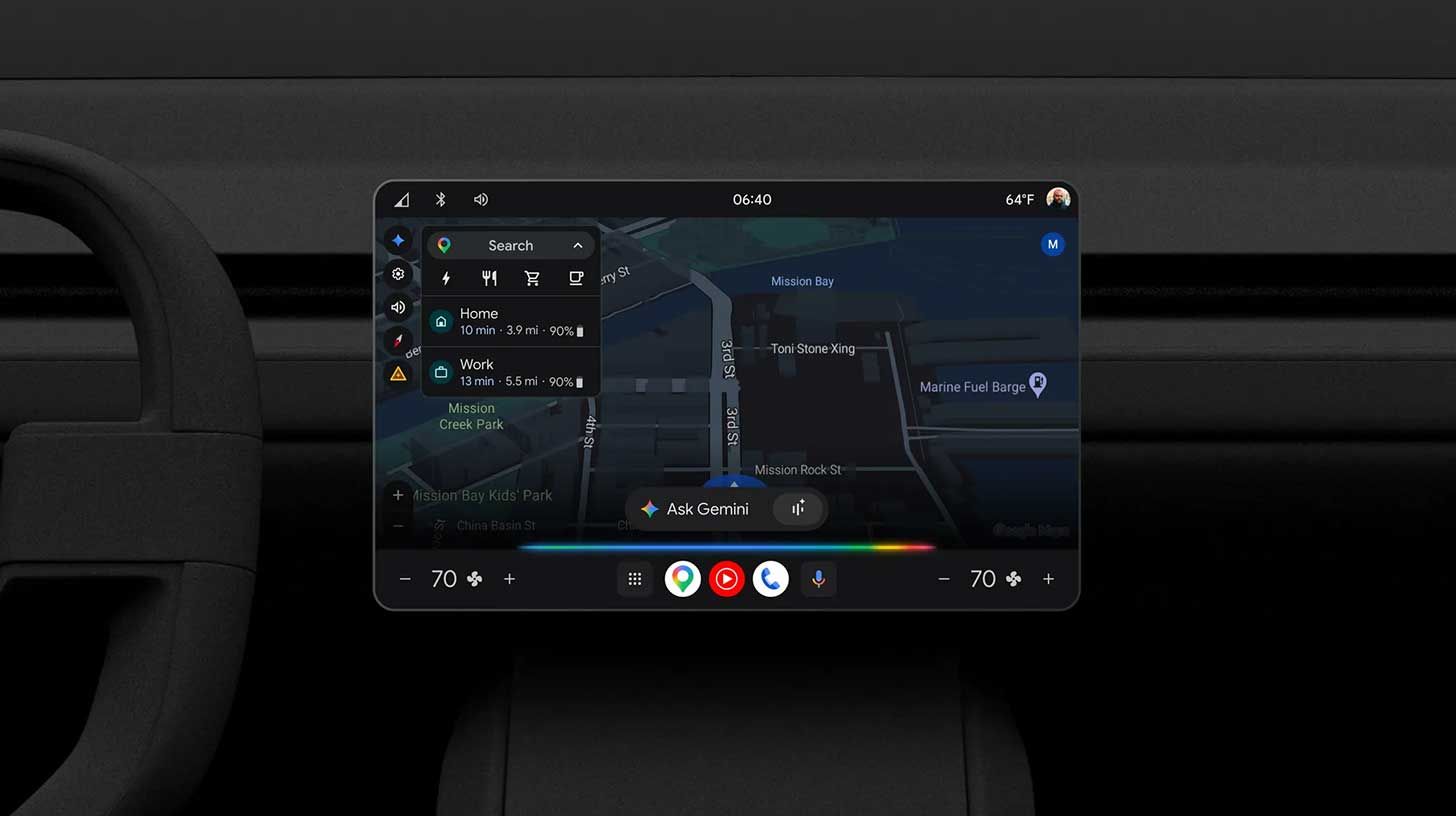
Image source: Google
The Rundown: Google is beginning its Gemini upgrade for vehicles with Google built-in, swapping out Assistant for a more conversational system that handles navigation, messages, music, vehicle questions, and hands-free controls across compatible cars.
The details:
Drivers can ask for changes to car settings like temperature, control the radio, and pull from Google Maps for customized updates or route planning.
A beta Gemini Live mode supports conversations for learning and brainstorming, with Gmail, Calendar, and Home integrations coming later.
Gemini can also pull vehicle-specific answers from manufacturer manuals for car assistance and battery status or charging stations for EV cars.
The rollout comes to compatible cars in the U.S. first, with General Motors also announcing the feature for ~4M of its vehicles from model year 2022 onward.
Why it matters: One day, AI integrations in cars will be as common as a radio (and eventually the systems will all be driving the cars, too) — but for now, we’re still in the infancy of the rollout. These initial features are fairly basic, but a step on the path towards ‘smart car’ systems of the AI age that provide a serious intelligence upgrade.
AI TRAINING
🤔 Stress test business ideas with Perplexity
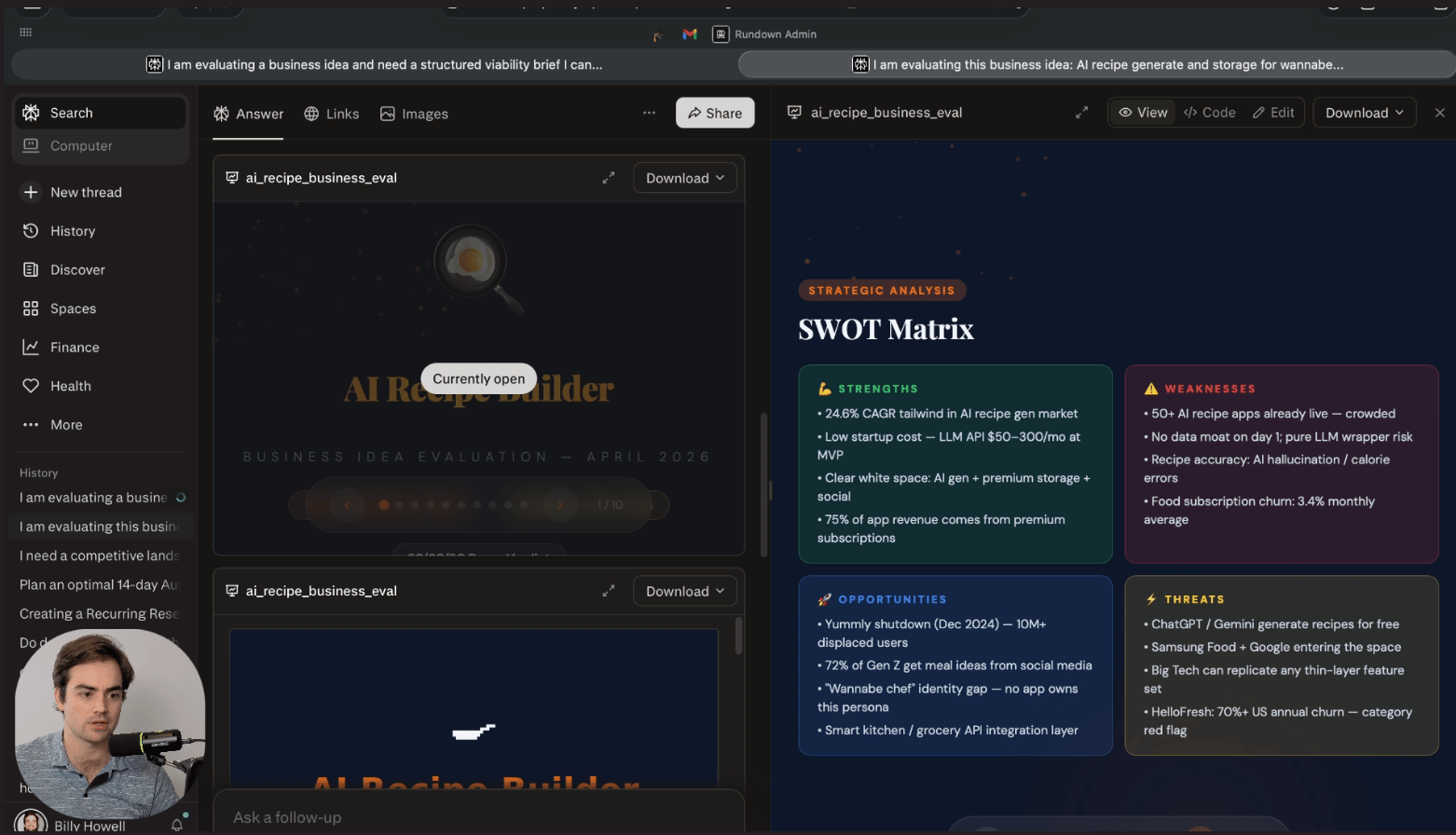
The Rundown: In this guide, you will learn how to use Perplexity Deep Research to stress test any business idea. Save the prompt below once and rerun it on every idea you have to see what’s feasible to build.
Step-by-step:
Open Perplexity and switch to Deep Research mode. This works on the free plan (5 queries/day) and is basically a hidden version of Perplexity Computer
Paste this prompt with your idea in the chat, hit run, and walk away for 5 to 6 minutes. Perplexity does the research and builds the slide deck in the same run
Save the prompt somewhere you will actually use it again, like in a dedicated Perplexity space
Then, every Saturday morning, take one idea off your list and run it. You will burn through a year of half-evaluated ideas in a month
Pro tip: Build variants. A 6-slide version for a co-founder pitch, a version that compares two ideas, or a 90-day MVP plan for ideas that already cleared validation.
PRESENTED BY FUEL IX BY TELUS DIGITAL
🛡️ Is your AI safety strategy actually working?

The Rundown: Uncharted: The AI safety & security summit unites global leaders to bridge the gap between rapid innovation and production-grade governance. Join Fuel iX on May 5 to move beyond the hype and explore the technical frameworks and proprietary research required to secure the next generation of enterprise GenAI.
Why you should attend:
Close the safety gap without slowing technical innovation
Learn proven, practical strategies to protect users and secure AI applications
Unlock exclusive insights from benchmark safety tests of leading LLMs
AI RESEARCH
🧌 OpenAI finds source of ChatGPT's goblin obsession

Image source: OpenAI
The Rundown: OpenAI just traced ChatGPT's habit of peppering its responses with goblins, gremlins, and assorted fantasy creatures back to a single reward signal in its 'Nerdy' personality, which ended up bleeding into model behavior throughout releases.
The details:
After ChatGPT-5.1's November launch, 'goblin' mentions jumped 175% in user conversations, with 'gremlin' up 52% and other creatures seeing similar spikes.
When OpenAI mapped creature use across personalities, the Nerdy preset lit up, driving two-thirds of all goblin mentions from just 2.5% of traffic.
Even users who skipped Nerdy got goblins, with fine-tuning loops recycling the creature-favored outputs back into ChatGPT's default mode.
OpenAI retired Nerdy in March and shipped GPT-5.5 with a Codex prompt specifically banning goblins, gremlins, ogres, trolls, raccoons, and pigeons.
Why it matters: ChatGPT’s goblin-mode is a fun little quirk for your Friday, and another example of how weird LLMs can truly be. A reward in a single personality mode led to a pattern of creature preferences that trickled across chats around the globe. Just like Anthropic’s Golden Gate Claude, we might need a standalone GoblinGPT.
QUICK HITS
🛠️ Trending AI Tools
💳 Link - Stripe's wallet for AI agents with human approval on every purchase
🔐 Claude Security - Enterprise tool for scanning and patching vulnerabilities
🎨 Imagine Agent - xAI's agentic canvas in Grok for image and video creation
🤖 Cloud Computer - Manus's cloud for always-on agents, scrapers, more
📰 Everything else in AI today
Meta opened its ads platform to third-party AI tools via a new MCP server, allowing advertisers to manage campaigns through Claude, Cursor, or any connected agent.
OpenAI announced that it has already surpassed its 2029 Stargate goal of securing 10 GW of compute, with 3 GW added in the last 3 months.
Elon Musk revealed during questioning in his trial vs. OpenAI that xAI has used distillation techniques to train on OpenAI models.
Anthropic launched the public beta for Claude Security, a system that leverages Opus 4.7 to scan codebases for vulnerabilities and help enterprises generate patches.
Cursor released Security Review, which also deploys autonomous agents to check for vulnerabilities and run scheduled codebase scans with results posted to Slack.
COMMUNITY
🤝 Community AI workflows
Every newsletter, we showcase how a reader is using AI to work smarter, save time, or make life easier.
Today’s workflow comes from reader Anonymous:
"Like millions around the globe, I am a recovering addict, more specifically an alcoholic. A lot of literature and studies are available. Some of the core writings go back to the 1930s and have been kept in their original format to preserve their meaning.
The volume of information is amazing and use and nuance is essential to keep the message personal. To help my own journey, I created a notebook in NotebookLM referencing several books produced by Alcoholics Anonymous, clinical research studies, and work by independent authors.
This allows for daily motivational messages, key topics of a particular recovery step, or the clearing up of decisive material with pros and cons. Turning some of these subjects into an audible debate in NotebookLM is a great way to take on differing views and see differences and indeed similarities. It's also a real go-to for speaking notes, recovery workbooks, and deep research."
How do you use AI? Tell us here.
🎓 Highlights: News, Guides & Events
Read our last AI newsletter: Zuckerberg’s $500M AI biology swing
Read our last Tech newsletter: Samsung’s Meta Ray-Ban rival just leaked
Read our last Robotics newsletter: A humanoid baggage handler has landed
Today’s AI tool guide: Stress test business ideas with Perplexity
See you soon,
Rowan, Joey, Zach, Shubham, and Jennifer — the humans behind The Rundown

The humanoid baggage handler has landed
Read Online | Sign Up | Advertise
Good morning, robotics enthusiasts. Japan Airlines is about to let Chinese humanoids loose on the tarmac at Tokyo’s Haneda Airport, one of the world’s busiest.
Beginning in May, Unitree’s G1 and UBTECH’s Walker E will be put to work hauling luggage and loading cargo near aircraft stands, in an early test of whether bipedal machines can survive the chaotic reality of airport ground ops.
In today’s robotics rundown:
Humanoids handle baggage at Tokyo airport
SoftBank launches $100B robotics company
Harvard’s ant bots rewrite swarm logic
China freezes all robotaxi permits
Quick hits on other robotics news
LATEST DEVELOPMENTS
JAPAN AIRLINES
✈️ Humanoids handle baggage at Tokyo airport

Image source: Images 2.0 / The Rundown
The Rundown: Japan’s largest carrier is deploying Chinese-made humanoids as bag handlers at Tokyo’s Haneda Airport — one of the world’s busiest airports — in a two-year trial that doubles as a stress test for the entire sector.
The details:
Japan Airlines will start testing the robots as bag handlers from early May, in a trial to modernize ground operations and tackle staff shortages.
The robots — Unitree’s G1 and UBTECH’s Walker E — will assist with cargo loading and unloading near aircraft stands, slotting into existing infrastructure.
JAL chose humanoids so they can operate in tight spaces around planes and plug into existing conveyors, gates, and service areas without a major overhaul.
Each robot can work for around two to three hours at a time before recharging, and humans will continue to supervise traffic management around aircraft.
Why it matters: The trial could expand well beyond baggage, eventually testing humanoids on aircraft cabin cleaning and ground support equipment. Humanoids have already begun pilot programs in automotive factories and warehouses, but international airports represent a far more challenging, higher-stakes proving ground.
SOFTBANK
🤖 SoftBank launches $100B robotics company

Image source: Kiyoshi Ota / Bloomberg / Getty Images / Reve AI
The Rundown: SoftBank is assembling a new company called Roze AI that would deploy fleets of autonomous robots to build data centers in the U.S., making AI infrastructure faster and cheaper to construct, the Financial Times reports.
The details:
The venture’s focus is on making AI data-center construction more efficient and scalable, with fleets of robots handling repetitive and hazardous tasks.
SoftBank is already preparing Roze for a U.S. IPO, with some execs pushing for a listing as early as the second half of 2026.
The target valuation: at a staggering $100B — though insiders have raised doubts about both that figure and the proposed timeline.
CEO Masayoshi Son has committed tens of billions to AI infrastructure, including a high-profile $41B investment in OpenAI.
Why it matters: Son has committed billions to AI infrastructure, and Roze extends that to the physical layer of construction itself. But given his track record has been uneven (he sank hundreds of millions into Zume, a failed AI pizza startup), insiders are already questioning whether a pricey new robotics spinout is worth the risk.
HARVARD UNIVERSITY
🐜 Harvard’s ant bots rewrite swarm logic
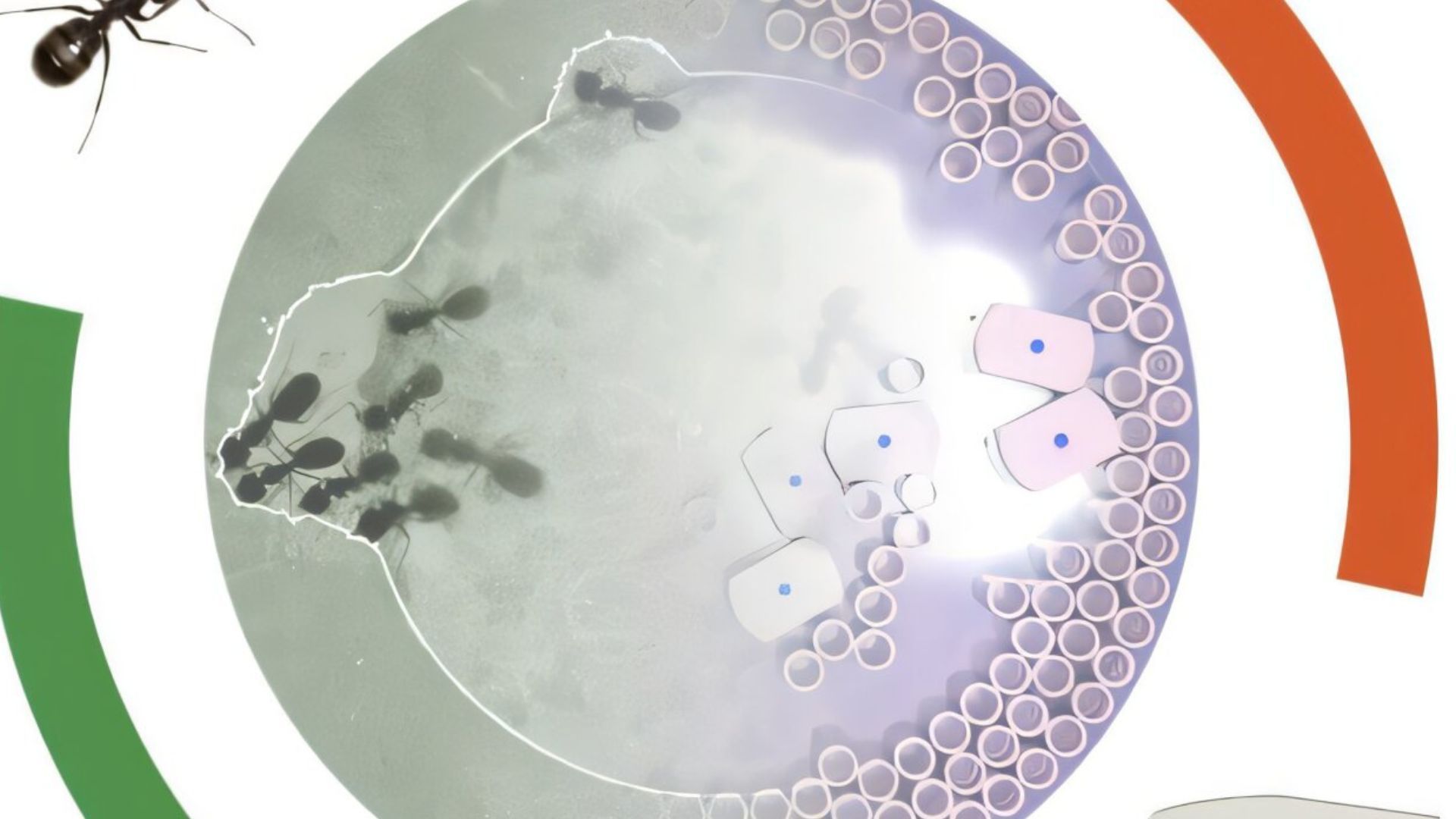
Image source: L. Mahadevan / Harvard SEAS
The Rundown: Harvard researchers just built a swarm of ant-inspired robots — dubbed “RAnts” — that can collectively construct and dismantle structures with no central command, blueprints, or pre-programmed coordination.
The details:
Instead of pheromones, the robots communicate via light fields, with each bot responding to environmental changes triggered by its neighbors.
Intelligence, rather than being embedded in hardware, emerges from the interaction between agents and their environment.
Flipping just two parameters — cooperation strength and material deposition rate — switches the entire swarm from construction mode to demolition mode.
Published in PRX Life, the research points toward applications in hazardous-zone construction or even planetary exploration.
Why it matters: Harvard’s RAnts show that complex, adaptive behavior doesn’t require complex robots, a finding that reframes how engineers think about autonomy at scale. MIT and EPFL are also exploring decentralized coordination of swarm bots, with implications for everything from disaster response to off-world construction.
ROBOTAXIS
🚕 China freezes all robotaxi permits

Image source: Images 2.0 / The Rundown
The Rundown: China froze new permits for autonomous vehicles after more than 100 Baidu Apollo Go robotaxis abruptly stopped mid-traffic in Wuhan last month, stranding passengers on highways and triggering a national safety review.
The details:
In March, more than 100 Baidu Apollo Go robotaxis stalled simultaneously in Wuhan, trapping passengers inside for up to two hours and disrupting traffic.
China suspended all new autonomous vehicle permits nationwide, blocking companies from expanding fleets, launching pilots, or entering new cities.
Regulators also convened emergency meetings with officials from cities running robotaxi programs, ordering comprehensive safety inspections.
Baidu’s Wuhan operations — its largest hub with 400 fully driverless vehicles — remain suspended, while rivals WeRide and Pony have seen their shares drop.
Why it matters: Baidu’s Wuhan operations are suspended entirely while a broader freeze bars all operators from expanding fleets, launching new tests, or entering new cities — with no timeline for resumption. It’s the second such halt in under two years; the last one, triggered by job-displacement protests, took months to lift.
QUICK HITS
📰 Everything else in robotics today
MIT and DeepMind veterans just brought Eka Robotics out of stealth, with a simulation‑trained foundation model that aims to give robots high‑speed dexterity.
Medra AI opened Medra Lab 001 in San Francisco, a 38K-square-foot facility with 100+ robots running 24/7 experiments for biotech and drug discovery.
China’s State Grid is investing nearly $1B to roll out 8,500 AI robots to take over inspection and maintenance of its power grid.
Shenzhen‑based startup Kinetix AI unveiled KAI, an ultra‑high‑DoF humanoid aimed at the top end of dexterity and tactile sensing in the current humanoid wave.
REK is opening what it calls the first “humanoid store” in the U.S., a REK Shop in San Francisco that will sell, service, and showcase its VR‑piloted fighting robots.
France-based SquareMind raised $18M for Swan, an AI robotic platform that automates full-body skin imaging to help dermatologists detect skin cancer.
MIT researchers 3D-printed soft microscopic “magno-bots” whose moving parts can be remotely actuated by an ordinary magnet for tasks like gripping or drug delivery.
Amazon-owned Zoox started testing autonomous robotaxi rides for employees to and from Harry Reid International Airport in Las Vegas.
Researchers at the University of Turku developed a stretchable, transparent, eco-friendly electronic “skin” that gives a robotic hand pressure-sensitive touch.
Germany is building tele‑operated robotic excavators and arms to safely remove 126K corroding nuclear waste barrels from the unstable Asse II salt mine.
A French Navy-operated deep-sea robot retrieved delicate 16th‑century artifacts from a merchant shipwreck more than 1.5 miles beneath the Mediterranean.
The US Navy and Boeing completed the first two-hour test flight of the operational MQ-25A Stingray unmanned carrier-based refueling drone.
EPFL researchers built a “kinematic intelligence” control method that lets robots share and reuse human-taught skills without jamming their joints.
California approved regulations allowing manufacturers to test and deploy heavy-duty autonomous trucks, weighing over 10K pounds, on public roads.
COMMUNITY
🎓 Highlights: News, Guides & Events
Read our last AI newsletter: Zuckerberg’s $500M AI biology swing
Read our last Tech newsletter: Samsung’s Meta Ray-Ban rival just leaked
Read our last Robotics newsletter: The Chinese robot ban is coming
Today’s AI tool guide: Build a custom blog writing agent with no code
RSVP to workshop today @ 2PM EST: Codex for non-technical operators
See you soon,
Rowan, Joey, Zach, Shubham, and Jennifer — The Rundown’s editorial team
No matching search results
Try using different keywords, double-check your spelling, or explore related categories.
Stay Ahead on AI.
Join 2,000,000+ readers getting bite-size AI news updates straight to their inbox every morning with The Rundown AI newsletter. It's 100% free.