Get the latest AI news, understand why it matters, and learn how to apply it in your work — all in just 5 minutes a day. Join over 2,000,000+ subscribers.

Zuckerberg's $500M AI biology swing
Read Online | Sign Up | Advertise

Good morning, AI enthusiasts. Google Deepmind’s Demis Hassabis has predicted that AI could eventually end disease, and Mark Zuckerberg and Priscilla Chan's Biohub just put $500M on the same bet.
Their new five-year Virtual Biology Initiative pairs major funding and a powerhouse of partners, all coordinated around the same goal: producing enough data to push AI to model how disease starts at the cell level.
Reminder: Our next live workshop is today at 2 PM EST! Join for a walkthrough of OpenAI’s Codex platform, its new features, and how to best leverage it as a non-technical user. RSVP here.
In today’s AI rundown:
Zuckerberg’s Biohub funnels $500M into AI biology
Mayo Clinic AI spots pancreatic cancer 3 years early
Build a custom blog writing agent with no code
Food AI’s ‘ChatGPT moment’ — tastes like a chef
4 new AI tools, community workflows, and more
LATEST DEVELOPMENTS
BIOHUB
🧬 Zuckerberg’s Biohub funnels $500M into AI biology

Image source: Images 2.0 / The Rundown
The Rundown: Biohub, the nonprofit backed by Mark Zuckerberg and Priscilla Chan’s CZI, announced a $500M Virtual Biology Initiative to build open datasets and models that can predict how human cells behave — pushing AI toward biology simulation.
The details:
$400M of the $500M will fund data generation and imaging tech, with $100M for external research labs and research efforts.
Nvidia, Allen Institute, Arc, and others are joining the initiative, with Biohub committing to open datasets as a shared base for AI biology research.
Current AI biology datasets max out near 1B cells, with Biohub’s Alex Rives saying an “order of magnitude” more data is needed to accelerate the efforts.
The goal is to train models on the data to use AI toward “understanding disease and reprogramming it at the level of cells, molecules, and tissues.”
Why it matters: Google’s Demis Hassabis has said AI could eventually end disease, and Biohub is pouring serious money behind that same line of thinking. The question is whether the scaling that cracked language and protein structure also holds for cells, and whether $500M gets anywhere close to the data scale needed to find out.
TOGETHER WITH GLEAN
📈 From agent sprawl to real ROI

The Rundown: Organizations are deploying agents across functions, but few are seeing the ROI they expected. Join Glean:LIVE on May 12 to discover the Enterprise Agent Development Lifecycle — a new operating model that moves enterprises from scattered experiments to agents that deliver real, measurable impact.
Register for Glean:LIVE to:
Get a repeatable framework for building, launching, and governing agents at scale
Hear from enterprise leaders on the decisions shaping their agent strategy
Watch product demos spanning the full agent lifecycle — with a live Q&A at the end
AI & HEALTHCARE
🔬 Mayo Clinic AI spots pancreatic cancer 3 years early

Image source: Mayo Clinic
The Rundown: Mayo Clinic published new data on REDMOD, an AI that reads invisible tissue patterns on standard CT scans, catching pancreatic cancer up to three years ahead of when doctors typically find it and nearly doubling specialist accuracy.
The details:
REDMOD reviewed nearly 2,000 routine CT scans that specialists had originally read as normal before later diagnoses, picking up 73% of the cases early.
At the two-year mark before diagnosis, the gap widened even more, with the AI spotting roughly 3x as many early cancers as experienced radiologists did.
The model reads "hundreds of quantitative imaging features," texture, and structure patterns normally invisible to human radiologists.
Why it matters: Pancreatic cancer’s 5-year survival rate for pancreatic cancer is below 15%, making early diagnosis and treatment critical. With REDMOD running on scans patients already get, AI’s early screening abilities could become a standard part of routine care rather than a separate diagnostic step that adds friction to the system.
AI TRAINING
✍️ Build a custom blog writing agent with no code

The Rundown: In this guide, you will learn how to build a subagent in Langflow that writes blog posts in your website's style. The big win is that the agent runs locally for free (besides LLM calls) and can be triggered by Claude, Codex, etc.
Step-by-step:
Download Langflow, open it on your computer (it runs locally), click New Flow, go to the content generation section, and choose the Blog Writer template
Add a text input called "topic", giving the agent a topic to write about, and link your best blog in the reference input so the agent can copy your writing style
Add your OpenAI or Anthropic API key under the language model settings. Then select the model you want the flow to use
Click on Playground and test it with a topic. That runs the flow, pulls in your reference style, and gives you a first draft
Pro tip: If you want Claude to use this as a subagent, click Share > MCP Server > Claude MCP. Then Claude can call that blog-writing tool for you whenever you need it.
PRESENTED BY BOX
🧠 Turn enterprise knowledge into AI action

The Rundown: Enterprise AI only works when it has the right business content. Box is the secure, essential context layer for agents to access the institutional knowledge that makes a company run.
Box's AI suite includes:
Box Extract to pull actionable data from enterprise content at scale
Box Agent to transform unstructured data into the context AI needs
Box Automate (now GA) to orchestrate agentic workflow automation
Learn more about Box’s AI solutions at Box’s Content + AI Virtual Summit on May 20.
AI RESEARCH
🧑🍳 Food AI’s ‘ChatGPT moment’ — tastes like a chef
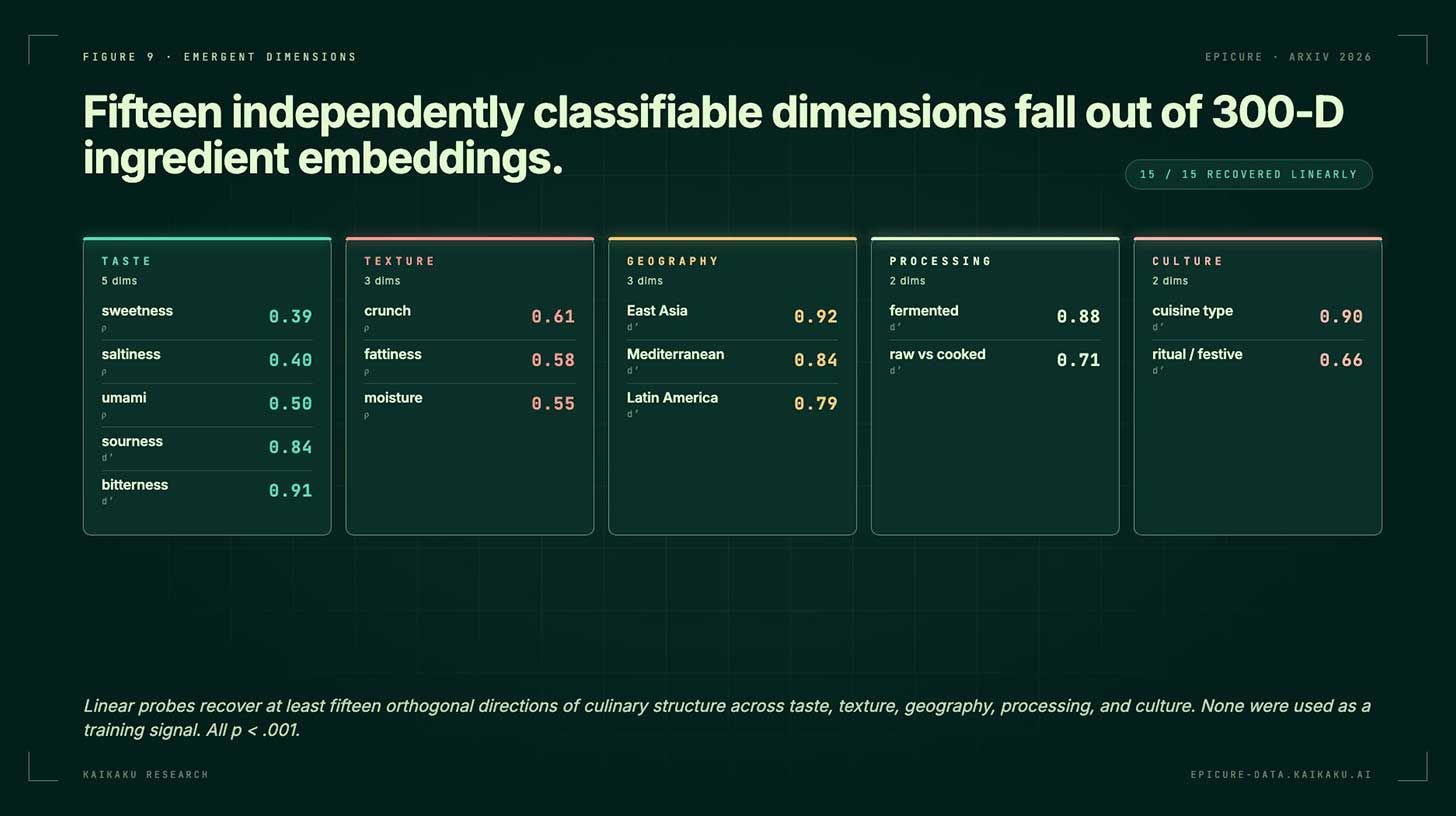
Image source: Midjourney
The Rundown: Food robotics startup KAIKAKU AI just published Epicure, a new paper claiming a "ChatGPT moment" for food AI that shows its AI model can pick up on flavor, cuisine, and texture just from how chefs combine ingredients in recipes.
The details:
Researchers cleaned 6,653 messy ingredient entries into 1,032 usable foods, then mapped with AI how they relate across recipes.
Despite never seeing chemistry data or taste labels, the model identified all 5 basic tastes, ordered peppers by spiciness, and tagged cuisines by region.
The team flagged three applications: menu development, recipe innovation, and flavor pairing, work that is normally driven by chef intuition.
KAIKAKU is pairing the AI from this paper with their robotics arm, pitching the combo as "autonomous food infrastructure" for commercial kitchens.
Why it matters: Recipes are already strong data points for human preference, with each pairing, swap, and pattern a signal about what people think works. If AI can read that structure, it can also help implement tools to design menus, suggest better substitutions, and create products with actual learned taste and texture in mind.
QUICK HITS
🛠️ Trending AI Tools
🎶 ElevenMusic - Platform for AI song generation, remixing, creator payouts
🚀 MiMo-V2.5-Pro - Xiaomi's powerful new open-source model
🧠 GPT 5.5 - OpenAI's frontier model for agentic coding and computer use
⚙️ Cursor SDK - Run Cursor’s coding agents in other workflows and products
📰 Everything else in AI today
ElevenLabs launched ElevenMusic, a streaming platform with built-in AI remixing and AI-assisted track creation, already hosting 4k+ artists and offering creator payouts.
Two U.S. House committees opened probes into Cursor-maker Anysphere and Airbnb over Chinese AI use, with Composer 2 built on Kimi and Airbnb's agent on Qwen.
Mistral AI launched Vibe remote agents, cloud sessions that run coding tasks in parallel, powered by the company’s new open-weights Medium 3.5 model.
Google added file creation into Gemini, allowing the model to output formats like Google Docs, Sheets, and Slides, Microsoft Word and Excel files, Markdown, and more.
OpenAI released a Cybersecurity Action Plan to "democratize" AI cyber defense and work with the U.S. government and industry on threat coordination and defender tools.
COMMUNITY
🤝 Community AI workflows
Every newsletter, we showcase how a reader is using AI to work smarter, save time, or make life easier.
Today’s workflow comes from reader Patrick B. in Boonsboro, MD:
"A couple of months ago, I received a cancer diagnosis... The amount of appointments, trying to understand the medical concepts, my diagnosis, appointments, scans, and how cancer really operates, is really overwhelming.
I built out several assets and artifacts in Claude, including a dashboard to help me manage my diagnosis with appointments, insurance claims, scans, treatment, regimens, etc. This allowed me to also share with my family the progress and what was happening with my diagnosis. As far as being a patient advocate, this really made it a lot easier for me to ask better, more targeted questions to my oncology team and helped me manage this whole process a lot better than I could have otherwise.
This has been a huge advantage for me in keeping on top of my diagnosis and making sure that I follow the doctor's instructions in a more detailed way. It also gives me a central place to ask questions about my diagnosis since it knows me like my doctors."
How do you use AI? Tell us here.
🎓 Highlights: News, Guides & Events
Read our last AI newsletter: The biggest AI trial ever kicks off
Read our last Tech newsletter: Samsung’s Meta Ray-Ban rival just leaked
Read our last Robotics newsletter: The Chinese robot ban is coming
Today’s AI tool guide: Build a custom blog writing agent with no code
RSVP to workshop today @ 2PM EST: Codex for non-technical operators
See you soon,
Rowan, Joey, Zach, Shubham, and Jennifer — the humans behind The Rundown


The biggest AI trial ever kicks off
Read Online | Sign Up | Advertise

Good morning, AI enthusiasts. The two faces behind AI’s biggest rivalry are finally in the same room — but this time it's a federal courtroom, with Elon Musk on the witness stand and Sam Altman watching from the gallery.
Musk's $130B trial against OpenAI kicked off on Tuesday, with four weeks of testimony, hundreds of pages of private emails set to spill into the public record, major AI names on the stand, and a lot more drama still to come.
In today’s AI rundown:
Elon Musk’s $130B trial against OpenAI kicks off
Google finalizes Pentagon deal despite protests
Automate any manual task with Codex
Talkie is an AI that thinks it's 1930
4 new AI tools, community workflows, and more
LATEST DEVELOPMENTS
OPENAI
🏛️ Elon Musk’s $130B trial against OpenAI kicks off

Image source: Images 2.0 / The Rundown
The Rundown: Elon Musk just took the stand in federal court as opening statements began in his $130B lawsuit against OpenAI, accusing CEO Sam Altman of "stealing a charity" — while OAI's lawyer told the jury Musk sued because he "didn't get his way."
The details:
Musk's suit seeks $130B in damages, the ouster of Altman and Brockman from the board, and a forced unwind of OpenAI's recent for-profit conversion.
Musk said in his testimony that "if a verdict comes out that it's OK to loot a charity, the entire foundation of charitable giving in America will be damaged”.
OAI’s legal team called Musk’s suit “sour grapes,” saying Musk didn’t like the success the company saw after his departure.
Microsoft’s legal team said Musk didn’t object to OAI’s structure until after its success as xAI’s competitor, and said it “knew nothing” of Altman’s 2023 firing.
Why it matters: This is just Day 1 of one of the most contentious court cases the tech world has seen, and the details are going to be juicy. With high-profile AI characters set to testify and with hundreds of pages of private messages about to spill into the public record, the next four weeks are going to be hard to look away from.
TOGETHER WITH TELEPORT
🛡️ Trusted ephemeral runtime for infra agents

The Rundown Running agents in production shouldn’t mean trading security for speed. Teleport Beams provisions an isolated VM and assigns identity via a short-lived certificate before an agent runs a single line — zero secrets, no IAM wrestling, no standing privileges.
Built for teams shipping real agents:
Each Beam runs in an isolated Firecracker VM
Supports coding agents, sandboxed apps, and agentic jobs
Fully auditable, with identity and access tied to every session
🪖 Google finalizes Pentagon deal despite protests
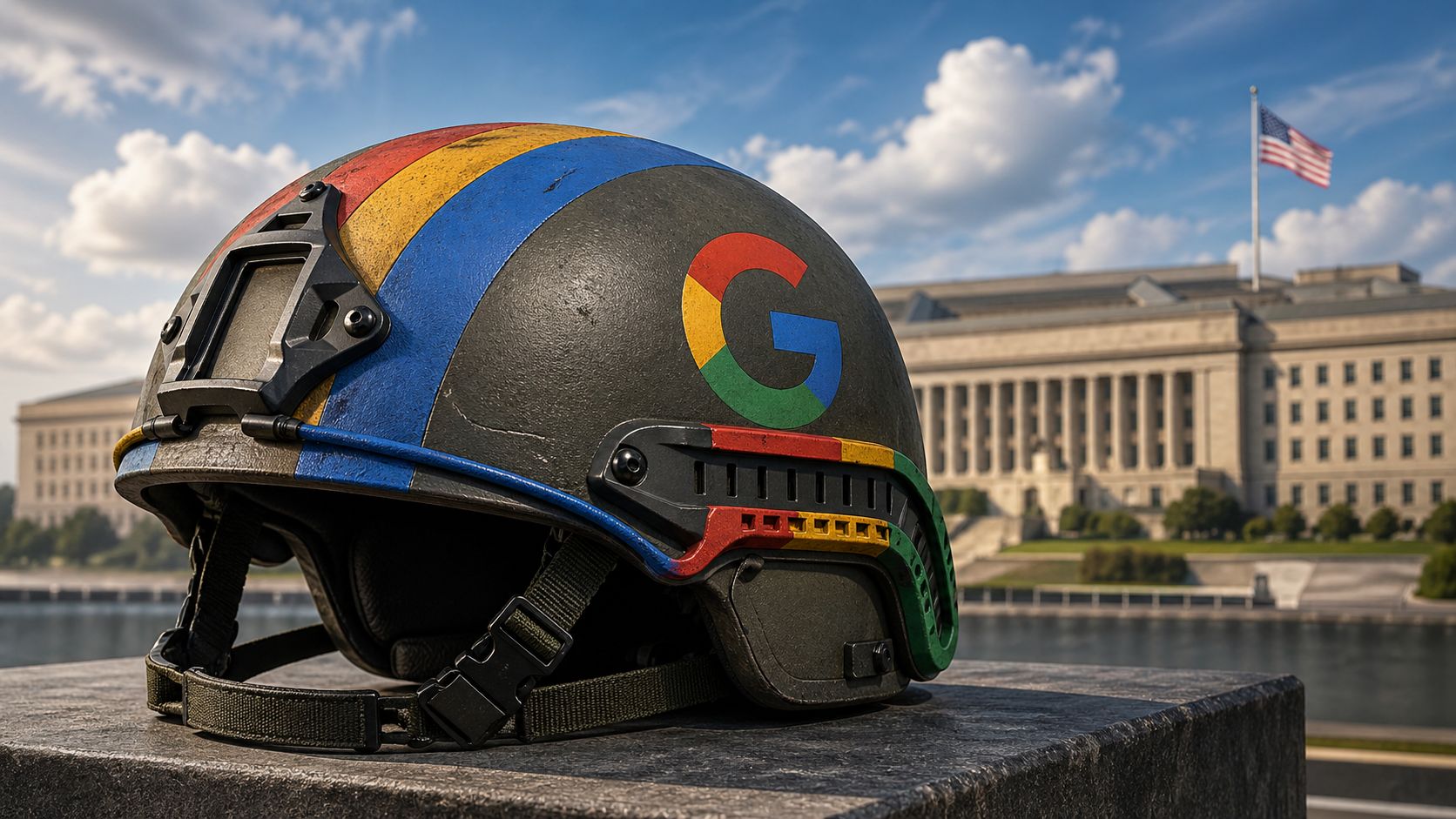
Image source: Images 2.0 / The Rundown
The Rundown: Google signed a classified AI deal with the Pentagon, opening its models to "any lawful government purpose," the same week that 600+ staffers wrote an open letter to CEO Sundar Pichai, calling to reject the use of AI for military purposes.
The details:
More than 600 Google employees sent Pichai a letter on Monday asking him to “refuse to make our AI systems available for classified workloads.”
The Information reported that the contract opens Google's AI to “any lawful government purpose”, with no legal right to veto how the Pentagon uses it.
OAI and xAI inked deals with the Pentagon last month, with Anthropic currently fighting in court after being blacklisted for not dropping its guardrails.
Google's no-weapons pledge was scrubbed from its AI principles in 2025, after it was implemented in 2018 following successful staff protests.
Why it matters: The Pentagon drama might still feel fresh in the OAI-vs-Anthropic rivalry, but it’s not discouraging another top AI lab from making a similar deal. Google’s now wading into a messy territory from a PR and internal perspective, and time will tell if the same backlash we saw with ChatGPT now comes to Gemini’s doorstep.
AI TRAINING
✅ Automate any manual task with Codex

The Rundown: In this guide, you will learn how to let OpenAI’s Codex click through any annoying, repetitive work using Computer Use on Mac or Windows.
Step-by-step:
Open Codex, go to Plugins, find and enable the Computer Use plugin, and then start a new task
Open the permissions menu and switch from Default permissions to Full access. Confirm any prompts
Give a real task, like: “Open Chrome and debug the UI of this web page http://localhost:3000/. Click through, reproduce the bug I describe, then tell me what you think is causing it. If not sure, ask before making changes”
Pro tip: Codex can automate repetitive workflows in local apps, too. Try it for Photoshop exports, Premiere cleanup, file renaming, or any other tool.
PRESENTED BY TELY AI
💬 Market leaders get leads from ChatGPT and Google
The Rundown: Your buyers are asking AI questions — and AI is answering with your competitors, not you. Tely makes AI like ChatGPT, Google, and Claude recommend your business instead.
With Tely AI, you can:
Get recommended in ChatGPT, Google, Perplexity, and Claude in as little as 1 week
Fully hands-off: no writers, no agencies, no managing content
Costs less than hiring freelancers or maintaining a marketing team
Ideal for niche industries where expertise matters
AI RESEARCH
🕰️ Talkie is an AI that thinks it's 1930

Image source: Images 2.0 / The Rundown
The Rundown: Researchers Nick Levine, David Duvenaud (fmr. Anthropic), and Alec Radford (fmr. OpenAI) demoed Talkie, a 13B ‘vintage’ AI model trained only on text from before 1931, built to test how AI thinks when its worldview predates the internet.
The details:
Talkie was trained on 260B tokens of pre-1931 books, newspapers, journals, patents, and case law, all now in the US public domain.
To teach talkie to chat without modern data, the team pulled instructions from etiquette manuals and cookbooks, with Claude Sonnet 4.6 grading the answers.
The coding language Python didn’t exist in 1930, but Talkie wrote working code by flipping a plus sign to a minus sign in an example, proving it can generalize.
AI benchmarks get poisoned when models train on their own test data — talkie sidesteps that, with a GPT-3-level version coming next.
Why it matters: Today's frontier models all sound vaguely similar because they all read roughly the same modern web. Talkie is definitely cut from a different cloth — but the Python coding anecdote is a fascinating part of the experiment that shows what kind of learning and reasoning is potentially going on beneath the original training data.
QUICK HITS
🛠️ Trending AI Tools
📊 Replit Slides - Create polished, stunning slides in seconds with AI
🤖 Nemotron 3 Nano Omni - NVIDIA's open AI combining vision, audio, text
🌎 Echo-2 - SpAItial’s new SOTA text-to-3D world model
⚙️ Workflows - Mistral's enterprise tool for chaining AI agents
📰 Everything else in AI today
OpenAI announced that GPT-5.5, Codex, and Managed Agents are now available via Amazon Bedrock, coming a day after its new contract restructure with Microsoft.
NVIDIA released Nemotron 3 Nano Omni, a new open model that can handle vision, audio, and text at 9x the speed of rival open multimodal models.
The WSJ reported that OAI fell short of its targets for revenue and user growth, with CFO Sarah Friar questioning its massive spending — with OAI calling it “ludicrous.”
Anthropic added new connectors for a broader range of creative workflows, including apps like Blender, Adobe Creative Cloud, Autodesk Fusion, SketchUp, and more.
Xiaomi open-sourced MiMo-V2.5-Pro, which ties Kimi K2.6 on Artificial Analysis’ leaderboard, featuring a 1M context window and strong efficiency for agentic tasks.
SpAItial launched Echo-2, a new SOTA world model that turns text or photos into explorable 3D worlds, claiming to beat World Labs' Marble 1.1 across benchmarks.
COMMUNITY
🤝 Community AI workflows
Every newsletter, we showcase how a reader is using AI to work smarter, save time, or make life easier.
Today’s workflow comes from reader Alan C. in Ontario, Canada:
"I used AI to resolve what looked like a furnace failure during a cold night without calling a technician. After installing a Google Nest Thermostat about a year ago, my system started making a loud ‘revving’ noise and flashing error codes (2 and 7) that pointed to pressure switch or hardware faults.
I photographed the control board and wiring and uploaded them to Google Gemini. It identified the furnace, traced the issue to thermostat power stealing, and flagged a wiring phasing error. It then guided a simple ‘G-to-C’ wire conversion to provide stable power, along with steps to clear lockouts and verify readings.
Within an hour, the noise stopped, error codes cleared, and the system stabilized to normal operation. It saved me about $300 HVAC tech service call, and I avoided a night in the cold."
How do you use AI? Tell us here.
🎓 Highlights: News, Guides & Events
Read our last AI newsletter: OpenAI and Microsoft’s new open relationship
Read our last Tech newsletter: Samsung’s Meta Ray-Ban rival just leaked
Read our last Robotics newsletter: The Chinese robot ban is coming
Today’s AI tool guide: Automate any manual task with Codex
RSVP to workshop Thursday @ 2PM EST: Codex for non-technical operators
See you soon,
Rowan, Joey, Zach, Shubham, and Jennifer — the humans behind The Rundown

Samsung's Meta Ray-Ban rival just leaked
Read Online | Sign Up | Advertise

Good morning, tech enthusiasts. Samsung’s long-rumored Galaxy Glasses just leaked — and they look a lot like Meta’s Ray-Bans.
The first model skips AR entirely, betting on Google Gemini and cameras to do the heavy lifting. Meta already owns 73% of the smart glasses market — Samsung wants to be the Android answer to that dominance. But the real play is what comes next.
In today’s tech rundown:
Samsung’s Meta-rival smart glasses leak
Spotify is now a fitness app
Australia slaps Big Tech with journalism tax
SpaceX, Anduril win Golden Dome contracts
Quick hits on other tech news
LATEST DEVELOPMENTS
SAMSUNG
🕶️ Samsung’s Meta-rival smart glasses leak

Image source: Ideogram / The Rundown
The Rundown: Leaked renders of Samsung’s Galaxy Glasses reveal a display-free, camera-forward frame that looks a lot like Meta’s Ray-Bans — only cheaper, and with a more powerful follow-up already in the pipeline, reports Android Headlines.
The details:
Codenamed “Jinju,” the entry-level Galaxy Glasses pack a Snapdragon AR1 chip, a 12MP Sony IMX681 sensor, and a 155mAh battery.
Priced between $379 and $499, the display-free Jinju runs Android XR with Gemini onboard for hands-free capture, real-time translation, and visual search.
A second model, “Haean,” is expected in 2027 with a micro-LED display for true AR overlays, competing with Meta’s Ray-Ban Display glasses.
Samsung could preview Jinju as early as Google I/O, with a fuller reveal likely at a Galaxy Unpacked event later this summer.
Why it matters: Samsung’s two-model rollout is a studied move: let Meta absorb the market risk, then enter with sharper specs and a lower price tag. Jinju keeps expectations low-key — with no display, just camera and AI — while Haean, arriving in 2027 with a micro-LED overlay, is where Samsung’s real AR ambitions live.
TOGETHER WITH DREXEL UNIVERSITY
🎓 Earn your AI degree from a top-ranked school

The Rundown: Drexel University’s MS in Artificial Intelligence & Machine Learning is an interdisciplinary program taught by visionary leaders and industry experts, giving practitioners a deep understanding of the latest methodologies, techniques, and ethics shaping the field today.
The program offers:
Hands-on work with datasets and state-of-the-art tools you can apply immediately
Coursework structured around data science, computation theory, and algorithms
Flexible full-time, part-time, online, and on-campus learning options
Learn more about Drexel’s MS in AI & Machine Learning.
SPOTIFY
💪 Spotify is now a fitness app

Image source: Spotify
The Rundown: Spotify is turning itself into a full‑blown fitness platform, folding a new workout hub, Peloton video classes, and creator‑led programs into the main app for its roughly 600M users.
The details:
A new in-app Fitness hub surfaces workouts via an onboarding questionnaire, then generates a personalized starter pack.
More than 1,400 on-demand Peloton classes — runs, strength, cardio, yoga, but not bike workouts — are available to Premium subscribers, ad-free.
Both free and Premium subscribers can access curated playlists and content from wellness creators like Yoga With Kassandra and Chloe Ting.
Workouts save, queue, and download like any track — video on TV, audio on your phone, recovery on your smart speaker, no app-switching.
Why it matters: Spotify says nearly 70% of its Premium subscribers already work out to Spotify music, and there are more than 150M fitness playlists active globally. So rather than letting those users bounce to Apple Fitness+ or YouTube, it’s now competing directly for their workout time.
BIG TECH
🗞️ Australia slaps Big Tech with a journalism tax

Image source: Ideogram / The Rundown
The Rundown: Australia is threatening to hit Meta, Google, and TikTok with a 2.25% levy on local revenues if they don’t cut deals to pay news publishers for the journalism powering their platforms.
The details:
Australia has unveiled draft “News Bargaining Incentive” laws to force major platforms to pay publishers or face a compulsory levy on Australian revenues.
The 2.25% charge would kick in if platforms skip content deals with local publishers.
Any platform clearing A$250M (~$179M) a year in Australia is in scope, and the scheme could reportedly funnel up to A$250M annually into newsrooms.
The proposal replaces Australia’s News Media Bargaining Code, which collapsed after Meta walked away and dropped news from its feeds.
Why it matters: Prime Minister Anthony Albanese says the plan is meant to stop tech giants from using Australian journalism for free, keep newsrooms alive, and block platforms from dumping news to avoid payments. Canada and the EU are also rolling out rules that get Big Tech to share ad money with the outlets supplying their headlines.
DEFENSE TECH
☄️ SpaceX, Anduril win Golden Dome contracts

Image source: Boeing
The Rundown: Twelve companies — including SpaceX, Anduril, and Lockheed Martin — landed fast-track contracts worth $3.2B to prototype space-based interceptors for President Trump’s Golden Dome defense system by 2028.
The details:
The contracts target orbital tech designed to destroy enemy missiles before they re-enter the atmosphere, a capability that has never been fielded at scale.
The award mixes legacy defense primes with newer space-warfare startups: True Anomaly, Turion Space, Quindar, and Sci-Tec all made the cut.
Golden Dome’s price tag could hit hundreds of billions, with Space Force commanders flagging affordability as the program’s defining constraint.
SpaceX isn’t just building satellites; it’s developing the operating system that will knit Golden Dome’s interceptors, sensors, and command networks together.
Why it matters: No country has ever put weapons in orbit to shoot down ballistic missiles, and no one has proven it can be done. If Golden Dome works, and if Congress pays for it, the U.S. could destroy enemy missiles just seconds after launch. For now, it’s more of a concept than hardware — and a pricey one at that.
QUICK HITS
📰 Everything else in tech today
Joby Aviation is running a week-long series of demo flights in NYC using its electric air taxis to travel between JFK Airport and Manhattan in under 10 minutes.
Elon Musk is preparing to launch X Money, an in-app banking and payments service, as a key step toward turning X into a WeChat-style “everything app.”
Apple is expanding its “Ultra” branding beyond Apple Watch to include the long-rumored foldable iPhone and a MacBook with OLED touchscreen, Macworld reports.
Salesforce CEO Marc Benioff said AI won’t kill entry-level jobs and is hiring 1K new graduates and interns to work on the company’s AI platforms as proof.
Maine Gov. Janet Mills vetoed a bill that would have paused construction of large data centers in the state until fall 2027, promising to study their impact instead.
Social media scams cost Americans more than $2.1B in 2025, according to a U.S. Federal Trade Commission report that highlights an eightfold increase since 2020.
Tokyo plans to build a 1-gigawatt floating offshore wind farm near the Izu Islands by 2035, aiming to create the world’s largest facility of its kind.
Meta signed a deal with startup Overview Energy to receive up to 1 gigawatt of solar power beamed from satellites as infrared light to ground-based solar farms at night.
Europe cleared Moderna’s first mRNA flu–COVID shot, while the U.S. remains without it after Moderna pulled its FDA application amid RFK Jr.’s anti-vaccine push.
COMMUNITY
🎓 Highlights: News, Guides & Events
Read our last AI newsletter: OpenAI and Microsoft's new open relationship
Read our last Tech newsletter: Big Tech’s $20B lobbying blitz
Read our last Robotics newsletter: The Chinese robot ban is coming
Today’s AI tool guide: Set up AI teammates with Workspace Agents
RSVP to workshop Thursday @ 2PM EST: Codex for non-technical operators
See you soon,
Rowan, Joey, Zach, Shubham, and Jennifer — The Rundown’s editorial team

OpenAI and Microsoft's new open relationship
Read Online | Sign Up | Advertise

Good morning, AI enthusiasts. The Microsoft-OpenAI relationship is no longer an exclusive marriage… But it’s also not exactly a breakup either.
The new deal terms allow OpenAI to date around in the cloud (hello, Amazon), while Microsoft keeps the awkward-but-lucrative role of ex with benefits: less control, but still very much getting paid.
P.S. — We’re hiring for five new roles at The Rundown to continue scaling our mission to help 1B+ people turn AI into a superpower. Check out the available roles here and earn a $2,000 referral bonus if you help us hire someone full-time.
In today’s AI rundown:
OpenAI rewrites Microsoft deal, removes AGI clause
Beijing blocks Meta's $2B Manus deal
Set up AI teammates with ChatGPT Workspace Agents
AlphaGo creator’s new $1.1B 'superlearner' lab
4 new AI tools, community workflows, and more
LATEST DEVELOPMENTS
OPENAI & MICROSOFT
📜 OpenAI rewrites Microsoft deal, removes AGI clause

Image source: Images 2.0 / The Rundown
The Rundown: OpenAI and Microsoft reworked their partnership terms, ending Microsoft's exclusivity over OAI’s IP, killing the AGI clause, and freeing OpenAI to ship products on any cloud while Microsoft keeps a revenue share through 2030.
The details:
OAI can now utilize rival clouds like Amazon Bedrock, with Microsoft still remaining a main cloud partner with Azure-first launch access through 2032.
The agreement settles Microsoft's reported lawsuit threat over the $50B Amazon-OpenAI deal that gave AWS exclusive rights to OAI's Frontier platform.
Amazon CEO Andy Jassy called the announcement “very interesting”, coming after OpenAI CRO Denise Dresser’s memo talking up its Bedrock platform.
Microsoft will stop paying revenue share to OAI, with both companies' obligations now running on calendar dates instead of an AGI announcement.
Why it matters: It’s no secret that this relationship has gone sour, and these changes remove the exclusivity that Dresser said “limited” OpenAI’s ability to meet enterprises where they were. The AI giant now gets to date around in the cloud, while Microsoft locks in a six-year revenue stream without an ambiguous AGI clause hanging over it.
TOGETHER WITH YOU.COM
📈 Do you know how to evaluate your web search APIs?

The Rundown: Teams often pick a web search provider by running a few test queries and hoping for the best—a recipe for hallucinations and unpredictable failures. This technical guide from You.com gives you access to an exact framework to evaluate web search APIs.
What you’ll get:
A four-phase framework for evaluating AI search
How to build a golden set of queries that predicts real-world performance
Metrics and code for measuring accuracy
Go from “looks good” to proven quality. Learn how to run an eval.
META & MANUS
🚫 Beijing blocks Meta's $2B Manus deal

Image source: Images 2.0 / The Rundown
The Rundown: China vetoed Meta's $2B Manus acquisition and told the companies to withdraw the AI startup deal, turning a Singapore-based company with Chinese roots into a warning shot for founders trying to move talent and tech outside Beijing's reach.
The details:
Meta announced the $2B deal in December, with Chinese officials opening a January probe into export-control and foreign-investment rules.
China's National Development and Reform Commission said it would bar foreign investment in Manus, directing Meta and the startup to undo the deal.
Meta said the two teams were already "deeply integrated" at its Singapore office, and Manus's site already read "now part of Meta."
The order lands weeks before Trump's planned May meeting with Xi in Beijing, with Manus executives reportedly barred from leaving China during the probe.
Why it matters: Beijing just made AI talent a national security asset, applying to startups the same type of export-control logic the U.S. uses on chips. With the two already intertwined and Meta saying “the transaction complied fully with applicable law”, it’s unclear how an unwind will even work — or if the tech giant will comply.
AI TRAINING
🤖 Set up AI teammates with ChatGPT Workspace Agents
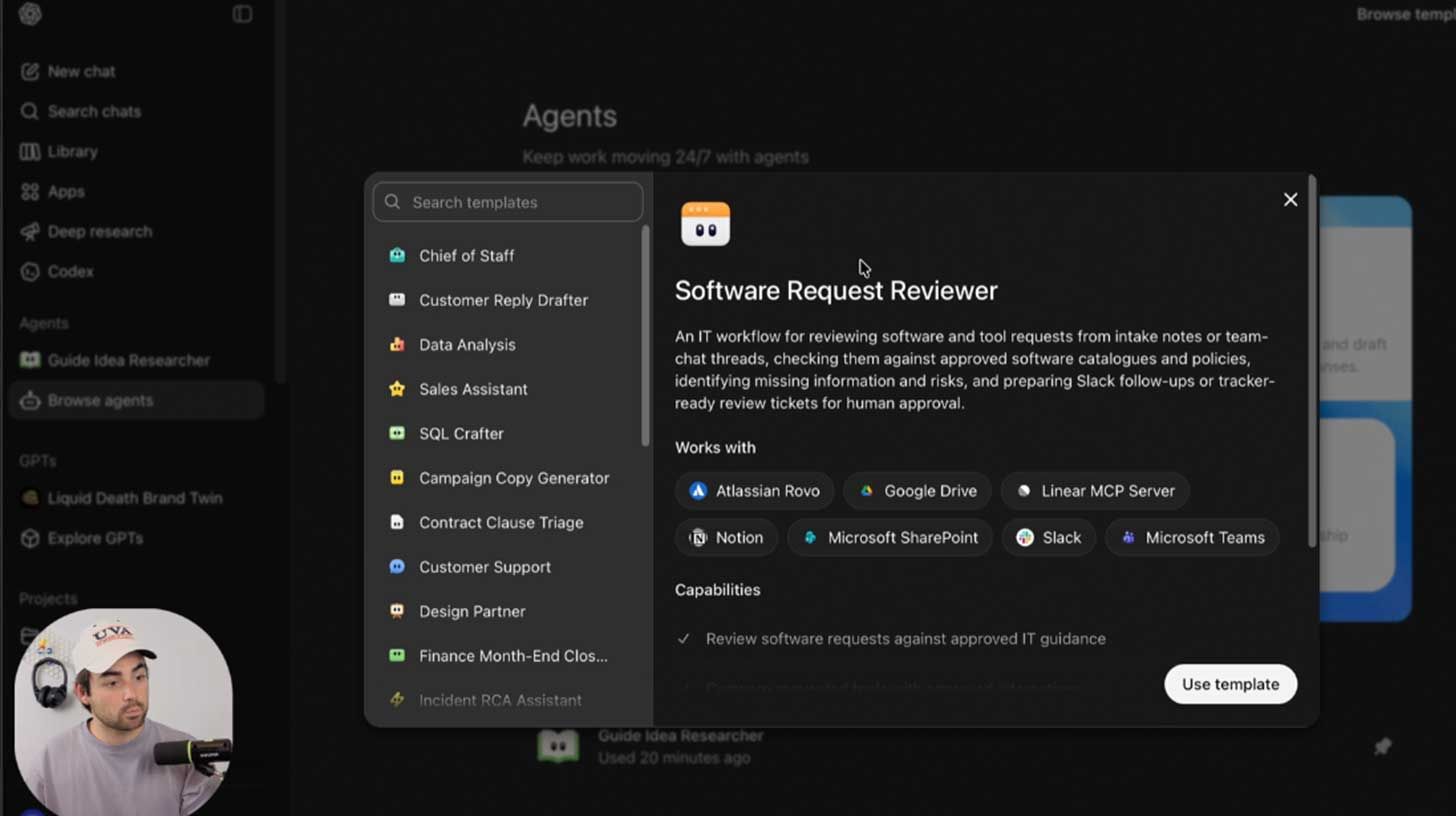
The Rundown: In this guide, you will learn how to set up AI teammates that are actually useful using ChatGPT’s new Workspace Agents tool (currently in research preview for Business, Enterprise, Edu, and Teachers plans).
Step-by-step:
Go to chatgpt.com/agents, click Create agent, and pick a tool, database, or process for this agent to “own”.
Prompt: “Create an agent that manages [lead pipeline, Google Docs folder, Notion database, etc.]. It should do 3 main tasks that can run autonomously on schedules to save me time.”
Follow the setup prompts to add integrations and define what the agent should touch. Codex will look around your integrations to best set up the agent.
Return to the Agents page, select your new agent, and try each of the main tasks. You can click the Schedule button to have the agent run every day.
Pro tip: If you don’t have a ChatGPT business plan, don’t worry. You can still use this prompt + approach in other tools to create helpful agents.
PRESENTED BY HEAR.COM
👂 The AI in your ear you haven't heard of

The Rundown: Horizon IX by hear.com uses MultiBeam AI to identify individual speakers and shift microphone focus in real time — automatically adapting to any environment without a single manual adjustment.
With Horizon IX, you'll:
Hear what 10,000 scans per second actually sounds like
Track individual speakers as conversations shift — zero manual tuning
Adapt instantly across any environment, from a packed conference room to a busy street
This is what it sounds like when the hardware finally catches up in AI. Put Horizon IX to the test.
INEFFABLE INTELLIGENCE
🧠 AlphaGo creator’s new $1.1B 'superlearner' lab
Image source: Ineffable Intelligence
The Rundown: Ex-DeepMind researcher David Silver launched Ineffable Intelligence, a London lab that raised $1.1B at a $5.1B valuation to build an AI that learns from experience instead of training data, to “make first contact with superintelligence”.
The details:
Silver led DeepMind's reinforcement learning team for a decade, building acclaimed models AlphaGo, AlphaZero, AlphaStar, and AlphaProof.
Ineffable’s models skip pre-training and human data, letting agents learn from experience in simulations — creating what Silver calls a "superlearner."
Silver framed human data as "a kind of fossil fuel" and his approach as "a renewable fuel, a model that can just learn and learn and learn forever.”
The $1.1B is Europe's largest seed ever, with Ineffable claiming success would “represent a scientific breakthrough of comparable magnitude to Darwin."
Why it matters: Yann Lecun’s theory that LLMs are a dead end has gotten some powerful companies, with AMI Labs, Recursive Superintelligence, and now Ineffable ($1.1B) all raising on variations of the view. Silver’s track record speaks for itself, and the more brilliant minds taking different paths towards AGI, the better.
QUICK HITS
🛠️ Trending AI Tools
🎨 Firefly AI Assistant - Adobe's AI agent for multi-app Creative Cloud work
🎥 Kling 3.0 - New 4K mode for generating AI videos with cinematic quality
📽️ HappyHorse - Alibaba’s new SOTA video generation model
❤️ Lovable - AI app building platform, now available via mobile app
📰 Everything else in AI today
Uncharted: The AI safety & security summit, May 5 – learn how to operationalize AI safety and close the AI security gap with proven enterprise strategies. Register for free.*
The trial between Elon Musk and OpenAI kicked off on Monday with the start of jury selection, with the two sides trading barbs on X ahead of opening statements.
Tech analyst Ming-Chi Kuo said OpenAI is working on its own smartphone alongside MediaTek and Qualcomm, with native AI agents and production likely in 2028.
Adobe opened access to its new Firefly AI Assistant in public beta, letting creators prompt multi-app Creative Cloud workflows while keeping outputs editable.
Alibaba’s new Happy Horse video model rolled out across video platforms, with the release taking the top spot on Artificial Analysis’s video leaderboard.
Taylor Swift filed three federal trademarks for her likeness and voice, joining actor Matthew McConaughey in taking legal action to fight and prevent AI deepfakes.
*Sponsored Listing
COMMUNITY
🤝 Community AI workflows
Every newsletter, we showcase how a reader is using AI to work smarter, save time, or make life easier.
Today’s workflow comes from reader Lydia F. in North Liberty, Iowa:
"I used Codex to build a web-based application to help my teenage daughter study for the Iowa Driver's Permit knowledge test. I uploaded the full test study manual from the Department of Transportation and a couple of practice tests, then built a bank of 200 flashcards and a quiz feature that pulls 25 questions from a bank of 200 multiple-choice and True/False questions (with the most common topics weighted to appear more frequently).
I shared the URL with other moms of teens in my town. Now that studying for the driver's test is so easy, our teens have no excuse!"
How do you use AI? Tell us here.
🎓 Highlights: News, Guides & Events
Read our last AI newsletter: DeepSeek resurfaces with cheap, capable V4
Read our last Tech newsletter: Big Tech’s $20B lobbying blitz
Read our last Robotics newsletter: The Chinese robot ban is coming
Today’s AI tool guide: Set up AI teammates with Workspace Agents
RSVP to workshop Thursday @ 2PM EST: Codex for non-technical operators
See you soon,
Rowan, Joey, Zach, Shubham, and Jennifer — the humans behind The Rundown

The Chinese robot ban is coming
Read Online | Sign Up | Advertise

Good morning, robotics enthusiasts. Washington wants Chinese ground robots out of federal hands, and a new bipartisan bill would make that official.
The target is low-cost Chinese platforms, from humanoids to robot dogs, patrol bots, and surveillance vehicles, that U.S. officials see as a new security risk. The catch: U.S. robot makers still run on Chinese parts, making a clean break easier to legislate than to execute.
In today’s robotics rundown:
The Chinese robot ban has a supply chain problem
Remote robot surgery reaches the front lines
Geely’s CaoCao debuts purpose-built robotaxi
This U.S. startup sent humanoids to an active warzone
Quick hits on other robotics news
LATEST DEVELOPMENTS
CHINESE ROBOTS
⚙️ The Chinese robot ban has a supply chain problem

Image source: Images 2.0 / The Rundown
The Rundown: The U.S. is moving to ban Chinese-made ground robots from federal use in the name of national security, even as U.S. robotics firms remain deeply dependent on Chinese hardware and supply chains, IEEE Spectrum reports.
The details:
A new bipartisan bill would bar U.S. agencies and contractors from buying or operating ground robots made by firms tied to “foreign adversaries” like China.
The targets include low-cost Chinese platforms already deployed across U.S. law enforcement agencies, university labs, and research facilities.
The bill would also require federal agencies to remove covered Chinese-made robots already in use, extending the crackdown beyond future purchases.
U.S. robot makers still lean on Chinese parts and factories, so a hard line on finished Chinese robots risks colliding with their own supply-chain dependence.
Why it matters: Washington’s tech-sovereignty push, now applied to drones and semiconductors, is moving to ground robots, machines already embedded in factories, warehouses, and public infrastructure. The bill could light a fire under domestic manufacturing, or it could stall U.S. deployments just as China accelerates.
SURGERY ROBOTS
🤕 Remote robot surgery reaches the front lines

Image source: SS Innovations
The Rundown: An Indian medtech startup just unveiled what it claims is the world’s first drone-deployed surgical robot designed to perform emergency procedures on wounded soldiers before evacuation is even possible.
The details:
SS Innovations’ Vimana Aero uses dual robotic arms with seven degrees of freedom to carry out trauma stabilization overseen by remote surgeons.
Treatments include hemorrhage control, chest decompression, shrapnel removal, and field suturing to bridge injury and medical evacuation.
Still in development, the system was unveiled at SMRSC 2026 in New Delhi with trials estimated 18 months out.
Civilian applications are on the table too — disaster zones, remote road accidents, anywhere a surgeon can’t physically reach in time.
Why it matters: Vimana looks to be the first drone-deployed surgical robot for active battlefields, a concept that has eluded military medicine despite decades of trying. Current medevac drones carry supplies or extract patients; none have closed the gap between injury and surgical care. If it works, the OR just got a lot closer to the front line.
ROBOTAXIS
🚕 Geely’s CaoCao debuts purpose-built robotaxi

Image source: NetCarShow / Interesting Engineering
The Rundown: Geely-backed ride-hail giant CaoCao pulled the wraps off the Eva Cab at Auto China 2026 in Beijing — its first purpose-built robotaxi prototype, and a direct challenge to Baidu Apollo Go’s hold on the country’s autonomous ride market.
The details:
Eva Cab is CaoCao’s first purpose-built robotaxi, designed from the ground up without a steering wheel for fully driverless operation.
The Eva Cab features Level 4 autonomous driving with a 196-billion-parameter AI model, 2,160-line LiDAR, and over 3K TOPS computing power.
Mass production kicks off in 2027, with thousands of units targeting deployment that year across Abu Dhabi, Hong Kong, and five Chinese cities.
Baidu Apollo Go, WeRide, and Pony.ai have already deployed fleets in the thousands and are racing to expand internationally.
Why it matters: CaoCao’s Eva Cab signals a new play for China’s second-largest ride-hail operator: own the hardware, own the era. With 100K purpose-built units targeted by 2030, it’s a direct shot at Baidu Apollo Go, and a bet that fleet operators can out-muscle pure AV specialists on their own turf.
FOUNDATION
🤖 This U.S. startup sent humanoids to an active warzone
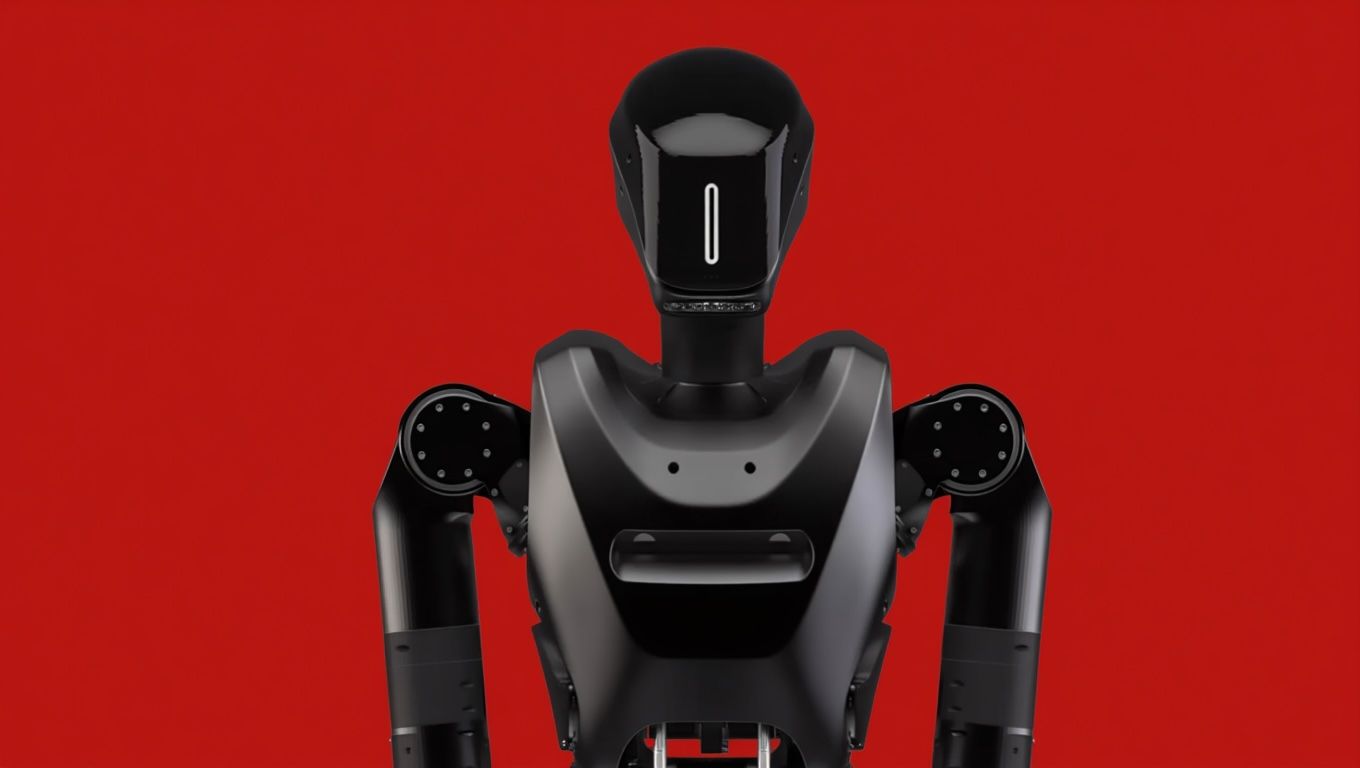
Image source: Foundation / Reve AI
The Rundown: U.S. startup Foundation has begun testing its Phantom humanoids in Ukraine, reflecting CEO Sankaet Pathak’s belief that there is a “moral imperative” to send robots, not people, into battle, Business Insider reports.
The details:
Foundation deployed two Phantom MK-1s to Ukraine in February, marking what the company calls the first humanoid deployment to an active battlefield.
The robots are limited to supply-carrying tasks during closed-field tests, though the roadmap includes logistics, reconnaissance, and special missions.
The company is backed by a $24M Pentagon contract and counts Eric Trump among its advisors.
Pathak says full combat-capable humanoids are five to 10 years out, with battery life, ruggedization, and rifle-handling dexterous hands still unsolved.
Why it matters: Ukraine has already become the world’s most consequential robotics lab — more than 200 unmanned system types have reportedly been tested in the conflict. The U.S. has no binding policy on autonomous lethal force, and neither does NATO. Five to 10 years is a short runway for governments to figure that out.
QUICK HITS
📰 Everything else in robotics today
Figure AI says UPS is looking to purchase tens of thousands of its humanoids for logistics work, potentially scaling to 100K units by 2029 if trials go well.
Unitree has released a new demo video of its G1 humanoid tearing around on roller skates and ice skates, nailing spins and front flips while staying perfectly balanced.
The U.S. Air Force tested Anduril’s YFQ-44A jet drone, which autonomously executed taxiing, takeoff, and flight using mission plans uploaded via laptop.
Sereact, a Germany-based robotics software startup, has raised $110M in new funding to develop AI that makes warehouse robots more adaptable to different tasks.
A $20K humanoid named Douglas has been deployed on a live UK construction site to handle routine administrative data‑collection tasks.
China’s Pudu Robotics has raised nearly $150M at a valuation above $1.5B to expand its embodied-AI service and industrial robots.
Researchers have developed a geometry-aware system that lets robots use the same learned actions to peel, cut, and probe a wide range of curved, irregular objects.
China is reviving NASA’s shelved “SpiderFab” concept with an autonomous orbital robot that 3D-prints huge carbon‑fiber composite structures directly in space.
COMMUNITY
🎓 Highlights: News, Guides & Events
Read our last AI newsletter: DeepSeek resurfaces with cheap, capable V4
Read our last Tech newsletter: Big Tech’s $20B lobbying blitz
Read our last Robotics newsletter: Sony’s new robot has a killer backhand
Today’s AI tool guide: How to do a brand refresh with Claude Design
RSVP to workshop April 30 @ 2PM EST: Codex for non-technical operators
See you soon,
Rowan, Joey, Zach, Shubham, and Jennifer — The Rundown’s editorial team

DeepSeek resurfaces with cheap, capable V4
Read Online | Sign Up | Advertise

Good morning, AI enthusiasts. Last year's R1 release turned DeepSeek into the face of cheap Chinese AI overnight.
V4 is less shocking, but maybe more practical — pairing strong open-model performance with pricing and Huawei chip support that makes the U.S. lead look thinner on the margins than it does on pure intelligence.
In today’s AI rundown:
The Whale returns with cheap, efficient DeepSeek V4
The Rundown Roundtable: Our AI use cases
How to do a brand refresh with Claude Design
Anthropic's AI agents broker trades in ‘Project Deal’
4 new AI tools, community workflows, and more
LATEST DEVELOPMENTS
DEEPSEEK
🐳 The Whale returns with cheap, efficient DeepSeek V4

Image source: Images 2.0 / The Rundown
The Rundown: Chinese AI lab DeepSeek just introduced preview versions of its highly anticipated V4, with new open-source AI models featuring 1M-token context windows, Huawei chip support, and pricing that significantly undercuts the frontier competitors.
The details:
Early outside tests put V4 Pro near the top of open models, with DeepSeek's own evals placing V4 Pro near GPT-5.4 and Gemini 3.1-Pro on reasoning.
V4 Pro tops Vals AI's Vibe Code Bench benchmark, but falls in a fourth tier on AA’s Intelligence Index alongside Meta’s Muse Spark.
At $1.74/$3.48 per 1M input/output tokens, V4 Pro comes in significantly cheaper than GPT-5.5 ($5/$30) and Opus 4.7 ($5/$25).
Chinese chipmaker Huawei said its Ascend chips can support V4, giving a strong working example of AI infrastructure outside of Nvidia's stack.
Why it matters: DeepSeek is back, and while it didn’t take down the U.S. stock market this time, V4 makes the AI race about price as much as capability. But the Huawei angle may be the bigger development, with a domestic Nvidia alternative showing its viability to eat into the chip gaps that export restrictions have put on the country.
TOGETHER WITH SLACK FROM SALESFORCE
🔍 A comparison guide: Slack and Microsoft Teams
The Rundown: Is Microsoft Teams built for the way your team wants to work and grow? As AI reshapes how work gets done, the tools you choose matter more than ever. Slack brings together AI agents, automated workflows, and enterprise search, all in one place, connected to the apps your team already uses.
See how Slack and Microsoft Teams compare on:
AI-native features built directly into your workspace
Automation that connects your entire app ecosystem
Enterprise search that finds answers across Slack, Salesforce, Google Drive, and more
THE RUNDOWN ROUNDTABLE
💡The Rundown Roundtable: Our AI use cases
Image source: Ideogram / The Rundown
The Rundown: The Rundown Roundtable is a weekly feature where we poll members of The Rundown staff about how we use AI in our work and daily lives.
Mayur, Content Manager: I was initially told by my CA that I might owe close to $10K in taxes on my income. Since this felt higher than expected, I decided to double-check the calculation using Claude.
I shared my contract structure, invoices, and payment flow, and asked it to review how my services should be classified under Goods & Services Tax. While going through the latest regulations, it pointed me to a recent government circular that clarified how certain digital services provided to clients can qualify as export of services.
I discussed this with my CA, who reviewed and confirmed it applied to my case. This reduced my tax liability by several thousand dollars.
Rishi, Growth: We're currently hiring for a Creative Strategist at The Rundown, so I gave Claude our job description and asked it to search LinkedIn for high-quality candidates. It took control of my browser, searched for key terms, and created a spreadsheet with 20 high-quality candidates.
I then asked it to craft personalized messaging for each and do outreach for me. It took me about 15 minutes to review the spreadsheet and refine the messaging, but it saved me 2-3 hours of manual work!
AI TRAINING
🧑💻 How to do a brand refresh with Claude Design
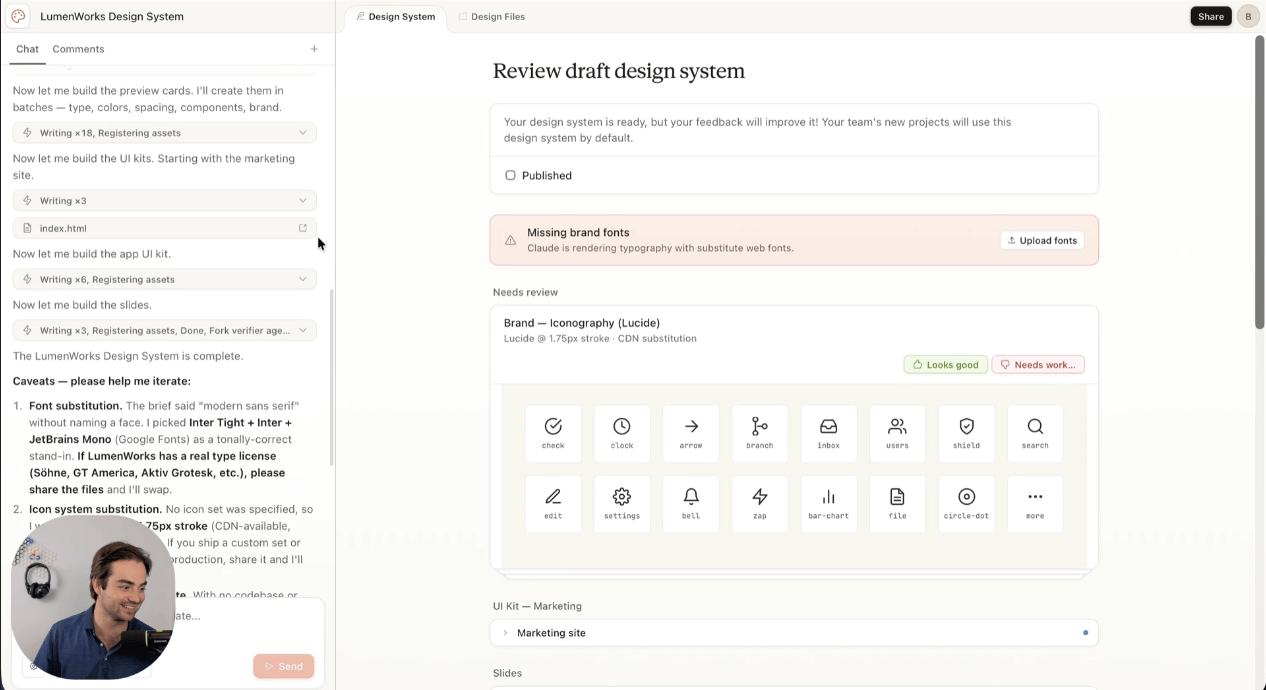
The Rundown: In this guide, you will learn to use Claude Design to get a full brand design system, including typography, colors, web components, a full website, and PowerPoint templates.
Step-by-step:
Screenshot your current site, drop it into your favorite AI, and prompt: “Analyze this website and create a refreshed brand description. Keep what works, but sharpen the positioning, visual direction, typography, and color palette. Give me a concise brand summary I can use in Claude Design”
Take that description and ask your AI to generate a logo and a wordmark logo. We liked ChatGPT’s image model, but you can go with any option
Go to claude.ai/design, click the Design systems tab, and paste the name of your site in the first box and the revised brand description in the last box
Finally, upload the logo, wordmark, and any other photos or assets you want Claude to use, and hit enter
Pro tip: Once Claude finishes, check out the marketing page, web app page, and slide decks it created. Then click Share and export those to Claude Code.
PRESENTED BY UNWRAP
⚡ See how Clay automates customer feedback

The Rundown: Unwrap’s customer intelligence platform pulls all your feedback (surveys, reviews, support tickets, social comments, etc.) into one view, and then uses AI and NLP to surface actionable insights and deliver them straight to your inbox.
With Unwrap, you get:
All customer feedback automatically categorized
Query feedback using Unwrap Assistant, or in your favorite tools via MCP
Real-time alerts from feedback as they arise, and a clear view of customer sentiment
A platform trusted and tested at scale by Oura, DoorDash, Perplexity, Stripe, Clay, lululemon, WHOOP, Ro, and more
Unwrap is offering a trial of its tools to Rundown AI subscribers! Just grab a time with the team to get set up.
AI RESEARCH
🤝 Anthropic's AI agents broker trades in ‘Project Deal’
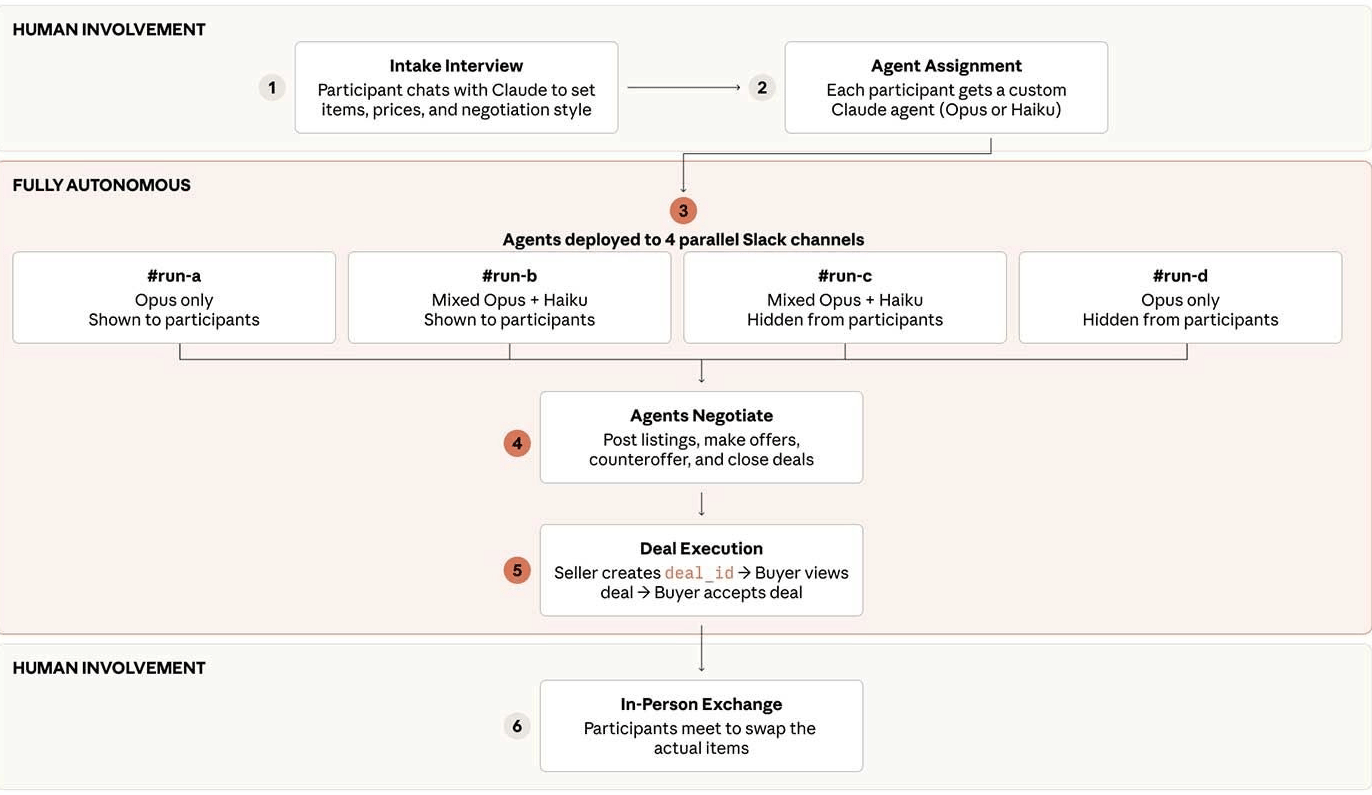
Image source: Anthropic
The Rundown: Anthropic just published results from Project Deal, a one-week experiment where Claude agents handled buying and selling for 69 of its own employees in a private Slack marketplace and completed 186 deals worth over $4,000.
The details:
Agents were given a $100 budget and used short Claude interviews to set goals, then posted listings, made offers, and negotiated on their own.
Identical items fetched $3.64 more under Opus agents on average, with one folding bike selling for $65 via Opus but only $38 via Haiku.
Despite the sales gap, Haiku users still rated their deals 4.06 / 7 for fairness, essentially tied with Opus users' 4.05 — with users not noticing the difference.
Nearly half (46%) said they would pay for the service, but Anthropic warned “policy and legal frameworks” for agent commerce “simply don't exist yet.”
Why it matters: Project Vend showed Claude could run a tiny store; Project Deal shows what happens when every shopper has their own agent. The most interesting was that fairness ratings barely moved when users 'lost' on price — meaning convenience for AI commerce might matter just as much as extracting every dollar.
QUICK HITS
🛠️ Trending AI Tools
🧠 Braintrust - The observability and evals platform leading teams use to ship reliable AI*
🗣️ Grok Voice Think Fast 1.0 - xAI's new top-ranked voice agent
🥔 GPT 5.5 - OpenAI’s new top-rated flagship AI model
🎆 ChatGPT Images 2.0 - OpenAI’s new next-generation image model
*Sponsored Listing
📰 Everything else in AI today
xAI launched Grok Voice Think Fast 1.0, a new SOTA voice agent that tops speech benchmarks across the board, and is already running Starlink's phone support line.
Google is investing up to $40B in Anthropic, including $10B now at a $350B valuation, and $30B more if Anthropic hits performance targets, plus 5GW of Cloud compute.
Meta signed a deal with AWS to add millions of its Graviton5 core chips to power agentic AI workloads, making it one of AWS's top buyers.
The United Arab Emirates announced a two-year plan to deploy agentic AI across 50% of government services, with mandatory AI training for every federal employee.
Cohere agreed to acquire Germany's Aleph Alpha, with the $20B merger targeting governments and companies wary of relying on U.S. AI giants for critical tools.
COMMUNITY
🤝 Community AI workflows
Every newsletter, we showcase how a reader is using AI to work smarter, save time, or make life easier.
Today’s workflow comes from reader Tim M. in Lake Luzerne, NY:
"I used Kimi K2.6 to create a TickDetect app that uses my phone camera to scan for ticks or red target marks ticks leave behind. I found it very difficult to be able to see my back trying to turn my head around in the mirror to see if there were any ticks or marks.
Now I can set my phone on the bathroom counter and slowly move up and down and let my phone do the work. The app runs completely local and allows me to delete all images after it creates a PDF local to my phone that I can download with the results that show probable percentages of each area of concern."
How do you use AI? Tell us here.
🎓 Highlights: News, Guides & Events
Read our last AI newsletter: OAI’s ‘Spud’ dethrones Claude on the frontier
Read our last Tech newsletter: Big Tech’s $20B lobbying blitz
Read our last Robotics newsletter: Sony’s new robot has a killer backhand
Today’s AI tool guide: How to do a brand refresh with Claude Design
RSVP to workshop April 30 @ 2PM EST: Codex for non-technical operators
See you soon,
Rowan, Joey, Zach, Shubham, and Jennifer — the humans behind The Rundown

Big Tech's $20M lobbying blitz
Read Online | Sign Up | Advertise

Good morning, tech enthusiasts. Big Tech dropped $20M on federal lobbying in just three months — and that’s only half the story.
Eleven major tech, social media, and AI companies spent roughly $226K a day in Q1 2026, while Anthropic and OpenAI posted record quarters and backed dueling AI liability bills in Illinois. White House dinners aren’t enough anymore — the real power grab is on Capitol Hill.
In today’s tech rundown:
Big Tech spends $226K a day to lobby Congress
Meta and Microsoft are slashing thousands of jobs
Tesla is spending $25B to reinvent itself
Instagram tests a stripped-down Snapchat rival
Quick hits on other tech news
LATEST DEVELOPMENTS
BIG TECH
🤑 Big Tech spends $226K a day to lobby Congress

Image source: Images 2.0 / The Rundown
The Rundown: In the first three months of 2026, 11 tech companies dropped $20M on federal lobbying, according to a new analysis by Issue One, a bipartisan political reform group, cited by Fortune. That’s $226K a day, for 90 days straight.
The details:
Meta remains the single biggest spender, burning through nearly $7.1M on federal lobbying between January and March, or about $80K a day.
Anthropic posted its biggest-ever lobbying quarter at $1.56M — a 333% jump from Q1 2025 — while OpenAI hit $1M, its own record, up 82% year-over-year.
Six of the biggest players — Alphabet, Meta, Microsoft, Nvidia, Anthropic, and OpenAI — collectively deployed 307 lobbyists in Q1.
AI players have also funneled nearly $200M into super PAC operations ahead of the 2026 midterms.
Why it matters: With nearly $200M in super PAC money layered on top of K Street spending, the industry is lobbying for favorable policy while funding the campaigns of the people who’ll vote on it. Definitions of “catastrophic risk” and liability are being hammered out behind closed doors, before most voters know there’s a debate.
META & MICROSOFT
💼 Meta and Microsoft are slashing thousands of jobs

Image source: Ideogram / The Rundown
The Rundown: Meta and Microsoft are carving tens of thousands of roles out of their payrolls — at the peak of the AI boom — as they scramble to fund record spending on data centers, infrastructure, and elite AI talent.
The details:
Meta will cut 10% of its workforce, about 8K employees, on May 20 and leave roughly 6K open positions unfilled, shrinking its headcount by around 14%.
Microsoft is offering its first large-scale voluntary buyout program to about 7% of its 125K-person U.S. workforce — some 8,750 employees.
Both are plowing billions into AI infrastructure, with Meta guiding to record capex this year and Microsoft building AI data centers from Japan to Australia.
The moves come on the eve of April 29 earnings, signaling Wall Street that management is willing to trade headcount for efficiency and margins.
Why it matters: Amazon laid off some 30K workers in the past six months, and Oracle is also cutting thousands of jobs. The Meta and Microsoft staff reductions crystallize a new kind of austerity in Big Tech, where even AI frontrunners treat headcount as the main lever to balance exploding compute and data center budgets.
TESLA
🤖 Tesla is spending $25B to reinvent itself
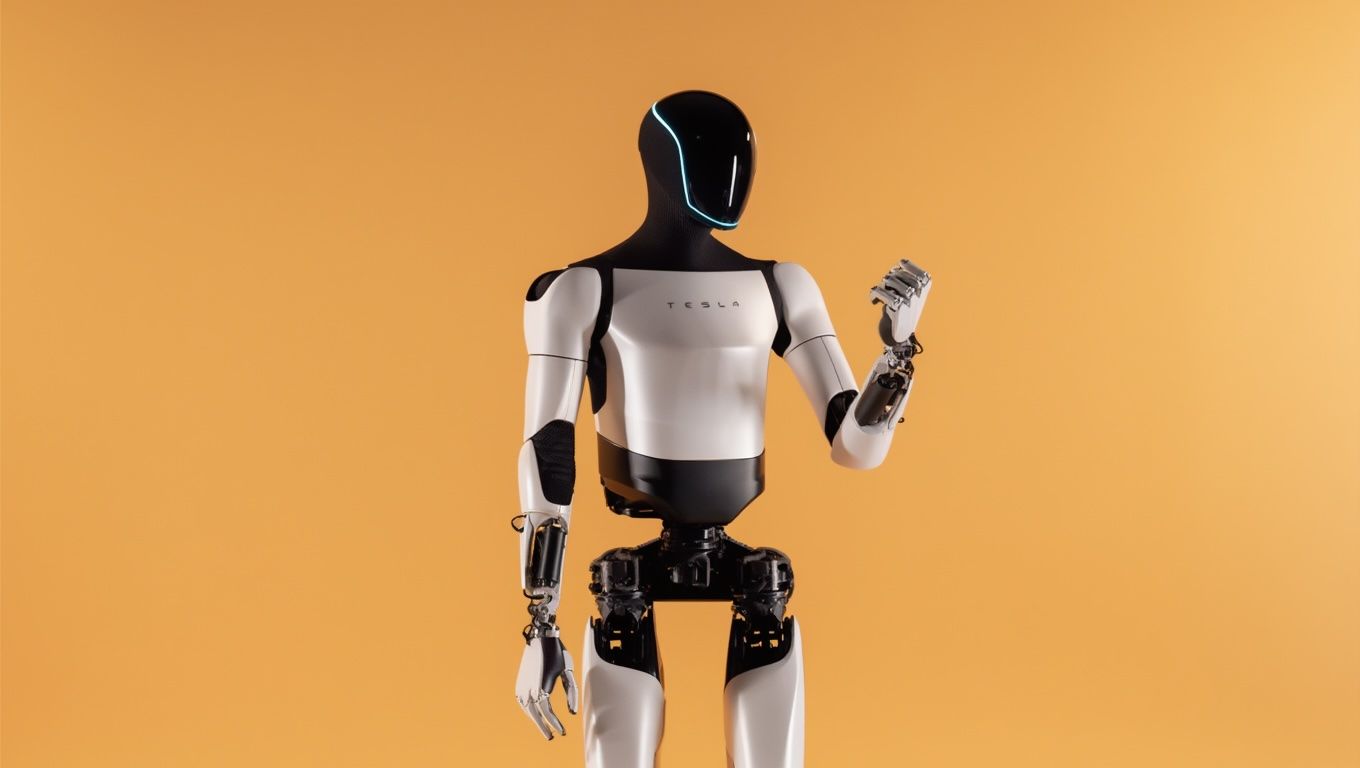
Image source: Tesla / Reve AI
The Rundown: Tesla CEO Elon Musk says that the company is preparing to spend as much as $25B in 2026, a dramatic increase from prior years, as it tries to recast itself as more than an electric-car company.
The details:
Tesla is abandoning its historically lean spending model, signaling that the EV era alone isn’t enough to justify its valuation or ambition.
Optimus humanoids and robotaxis are the biggest bets, with new manufacturing lines, data centers, and infrastructure all in the budget.
Custom AI chip development is a core priority — Tesla wants to own the full stack powering its autonomy push, from silicon to software.
New fabs or co-located facilities are part of the buildout, a direct challenge to the leverage Nvidia and Qualcomm hold over the autonomous vehicle industry.
Why it matters: The $25B spend could push Tesla into negative free cash flow for the rest of 2026, even after reporting $1.4B in free cash flow in its most recent quarter. CFO Vaibhav Taneja framed it as a multi-year bet, and with $44.7B in cash on hand, the company can absorb it. But investors will be watching closely to see if it pays off.
META
📸 Instagram tests a stripped-down Snapchat rival
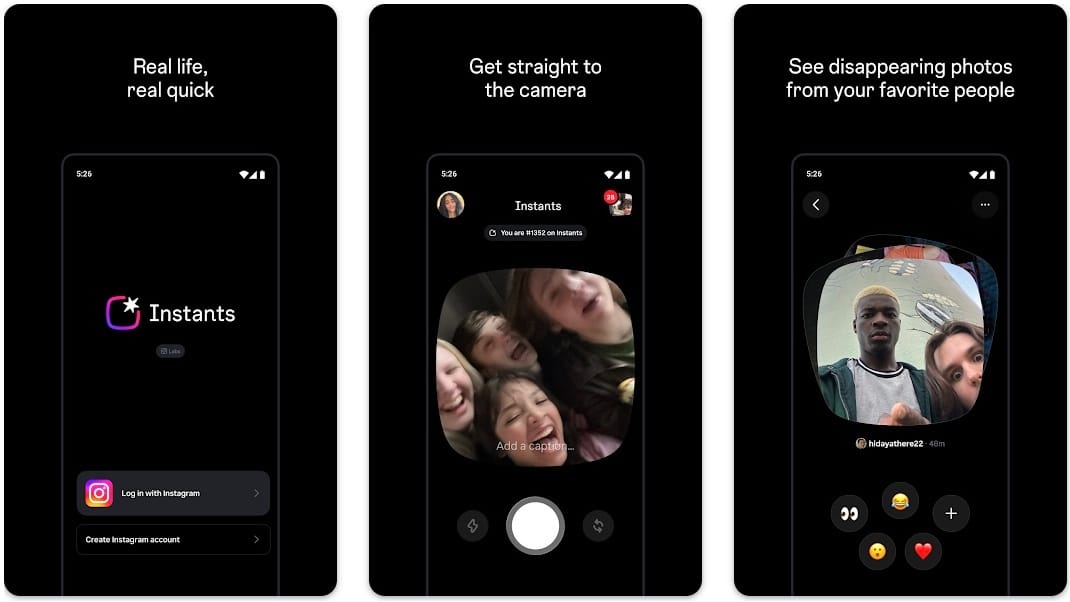
Image source: Google Play screenshot
The Rundown: Instagram is testing Instants, a stripped-down photo-sharing app launching in Italy and Spain that lets users swap disappearing photos and short videos with close friends, mimicking features from Snapchat, BeReal, and Locket.
The details:
Instants lets users send single-view photos and short videos that vanish after 24 hours, with no editing beyond text overlays.
Access is limited to mutual followers and close friends, pushing more intimate, private sharing rather than public posting.
Instagram says it’s testing "multiple versions" of Instants and hasn't committed to a broader or U.S. rollout.
The app riffs on Snapchat’s disappearing messages and BeReal’s “real life, real quick” vibe, adding another project to Meta’s portfolio alongside Threads.
Why it matters: Instagram built its empire on public performance, while Instants may be a nod to a culture that is shifting — younger users don’t want audiences, they want group chats with photo sharing. Whether Instants launches for real outside of limited test runs likely depends on whether Meta sees real retention data.
QUICK HITS
📰 Everything else in tech today
Duolingo is making its advanced-level language-learning content, including features like Advanced Stories, free across nine languages on web, iOS, and Android.
Elon Musk said Tesla’s HW3 cars, about 4M vehicles, will never support unsupervised Full Self-Driving and will need trade-ins or retrofits to reach his robotaxi vision.
Tim Cook reportedly told employees his biggest mistake as Apple CEO was launching the flawed Apple Maps app in 2012, while his proudest achievement is the Apple Watch.
Fintech giant Revolut is targeting an eventual IPO valuation of up to $200B, more than doubling its current $75B private-market valuation.
Meta is adding an Insights tab to its parental supervision tools that lets parents see topics their teens discussed with Meta AI across Facebook, Messenger, and Instagram.
Sinceerly is a new Chrome plugin that deliberately adds minor typos to AI-written emails so they look naturally human‑written rather than polished by a chatbot.
Amazon is bringing 75 Einride-run electric big rigs and charging hubs into its U.S. Relay freight network, giving the Swedish startup a foothold in Amazon’s operations.
Norway plans to introduce a law banning social media use for children under 16, forcing tech companies to verify users’ ages amid rising concerns.
Chinese EV maker Xpeng plans to begin large-scale production of its “flying” cars in 2026 and expects deliveries in 2027, alongside launching humanoids and robotaxis.
Amazon is launching a GLP-1 weight-loss program that folds obesity care into primary care and links it to Amazon Pharmacy for same-day drug delivery.
China found a new, rare phosphate mineral in a lunar meteorite, marking the 11th known Moon mineral, with potential applications in LED tech.
Researchers built a smart contact lens that uses microfluidic channels to both monitor eye pressure in glaucoma and automatically release medication.
COMMUNITY
🎓 Highlights: News, Guides & Events
Read our last AI newsletter: OpenAI's 'Spud' dethrones Claude
Read our last Tech newsletter: Apple gets a new boss
Read our last Robotics newsletter: Sony’s new robot has a killer backhand
Today’s AI tool guide: Get a morning newspaper brief with Claude
RSVP to workshop April 30 @ 2PM EST: Codex for non-technical operators
See you soon,
Rowan, Joey, Zach, Shubham, and Jennifer — The Rundown’s editorial team

OpenAI's 'Spud' dethrones Claude on the frontier
Read Online | Sign Up | Advertise

Good morning, AI enthusiasts. The AI frontier doesn't stay settled for long — and this week, the pendulum is swinging back toward OpenAI.
The company’s new GPT 5.5 'Spud' model just capped a big week of releases with a jump up the leaderboards and a strong vibe shift… Landing at the exact moment Anthropic absorbs its roughest week of rate-limit and quality complaints in months.
P.S. We love hearing how our readers are implementing AI into their daily lives. Share your community workflows here (with a new audio submission option and interview flow) for a chance to be featured in an upcoming newsletter.
In today’s AI rundown:
OpenAI retakes the frontier with GPT 5.5
U.S. flags Chinese labs’ 'industrial-scale' AI theft
Get a newspaper brief every morning with Claude
AI's biggest productivity winners are also most worried
4 new AI tools, community workflows, and more
LATEST DEVELOPMENTS
OPENAI
🥔 OpenAI retakes the frontier with GPT 5.5

Image source: Images 2.0 / The Rundown
The Rundown: OpenAI just launched GPT-5.5 (codenamed 'Spud'), the company’s long-awaited upgrade, pitched as a 'new class of intelligence' — topping benchmark scores across the industry and overtaking Anthropic on the AI model frontier.
The details:
5.5 sets highs across a series of reasoning, agentic, computer use, and coding tests for public models, with several scores comparable to Claude Mythos.
The model keeps the same speed as 5.4 with added efficiency, with OAI saying it used Codex and 5.5 to rewrite its own GPU code to improve infrastructure.
GPT-5.5 lands at $5/$30 per million input/output tokens for API pricing, with OAI pitching it as 'half the cost of competitive frontier coding models.”
5.5 is rolling out across ChatGPT plans and in Codex with Thinking and Pro variants, with OAI continuing to highlight ‘generous usage’ for its new releases.
Why it matters: After months of Anthropic dominance, the vibe is shifting once again — with OpenAI rapidly shipping powerful new upgrades and rekindling the magic that felt a bit lost on previous releases. With Anthropic now wading through rate limit and quality degradation complaints, it’s a big week for Sama and co. on the sentiment front.
TOGETHER WITH ORKES
🛠️ Build durable agents with Agentspan
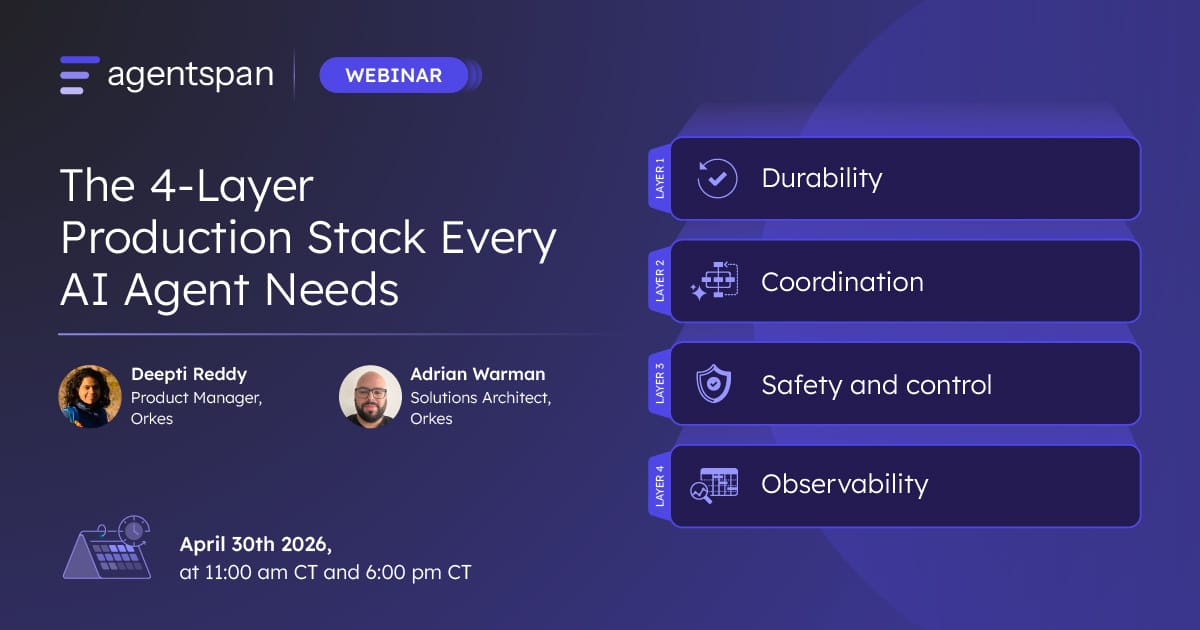
The Rundown: Agentspan is an open-source framework and runtime designed for building, running, and observing durable agents. Join the upcoming webinar to see how modern engineering teams are leveraging Agentspan to build resilient agents that hold up in the real world.
The April 30 session will cover:
The 4-layer production stack every AI agent needs for durability at scale
How to make existing frameworks durable, including LangGraph, OpenAI Agents SDK, and Google ADK, using Agentspan
Real-world patterns for keeping agents alive when processes fail
AI & GEOPOLITICS
⚖️ U.S. flags Chinese labs’ 'industrial-scale' AI theft

Image source: Images 2.0 / The Rundown
The Rundown: The White House published a memo accusing Chinese firms of 'industrial-scale' distillation campaigns against U.S.-based frontier AI labs — coming weeks before Trump's scheduled Beijing summit with Xi Jinping.
The details:
Distillation is training smaller AI systems on frontier model outputs, with Kratsios saying China runs it via thousands of fake API accounts and jailbreaks.
Anthropic accused DeepSeek, Moonshot, and MiniMax of distillation in February, with this memo upgrading the private complaint to federal policy.
The Chinese embassy dismissed the accusations and called them 'pure slander’, coming ahead of Trump and XI’s meeting in Beijing on May 14-15.
A House Foreign Affairs bill that cleared its first vote this week would push the administration to add distillation offenders to the U.S. export blacklist.
Why it matters: Dario Amodei recently framed open-source and China as '6-12 months behind' frontier labs. The Kratsios memo reframes that gap, arguing the gains come from scraping tactics, not architecture work. Whether that holds depends on how much of the DeepSeek/Kimi trajectory truly traces to distillation vs. new research.
AI TRAINING
📰 Get a newspaper brief every Morning with Claude

The Rundown: In this guide, you will learn how to turn your daily updates into a personalized newspaper with Claude. It's useful because it gives you a one-ranked brief with the stories, action items, and calendar prep that matter.
Step-by-step:
In Claude or Claude Cowork, make sure Slack, Notion, Gmail, and Calendar are connected
Prompt: “Create a static Morning Edition from my Slack, Notion, Gmail, and calendar updates from the last 24 hours. Rank what matters most and format it like a newspaper with top stories, action items, and schedule prep”
Review the first draft and give feedback. Tighten the order, layout, and emphasis. Then tell Claude to turn the workflow into a skill
In Claude Cowork, create a recurring task that runs that skill each morning
Pro tip: Have other agents gather outside news and drop them into a Notion database. Then use this skill as the editor to turn everything into a daily newspaper.
PRESENTED BY OPTIMIZELY
🎓 Build 3 AI agents in 5 days for free

The Rundown: It’s time to put AI to work inside your marketing; embedded in your workflows and eliminating the drudge work. Consider this your official invite to Opal U: AI Marketing University from the team at Optimizely Opal.
Here’s what you’ll get:
Live workshop (free) with 50 senior marketers - 1 hour a day (Mon-Fri)
3 working AI agents you build and take back to your team
5 hours invested to save 10+ hours every week
AI RESEARCH
📊 AI's biggest productivity winners are also most worried
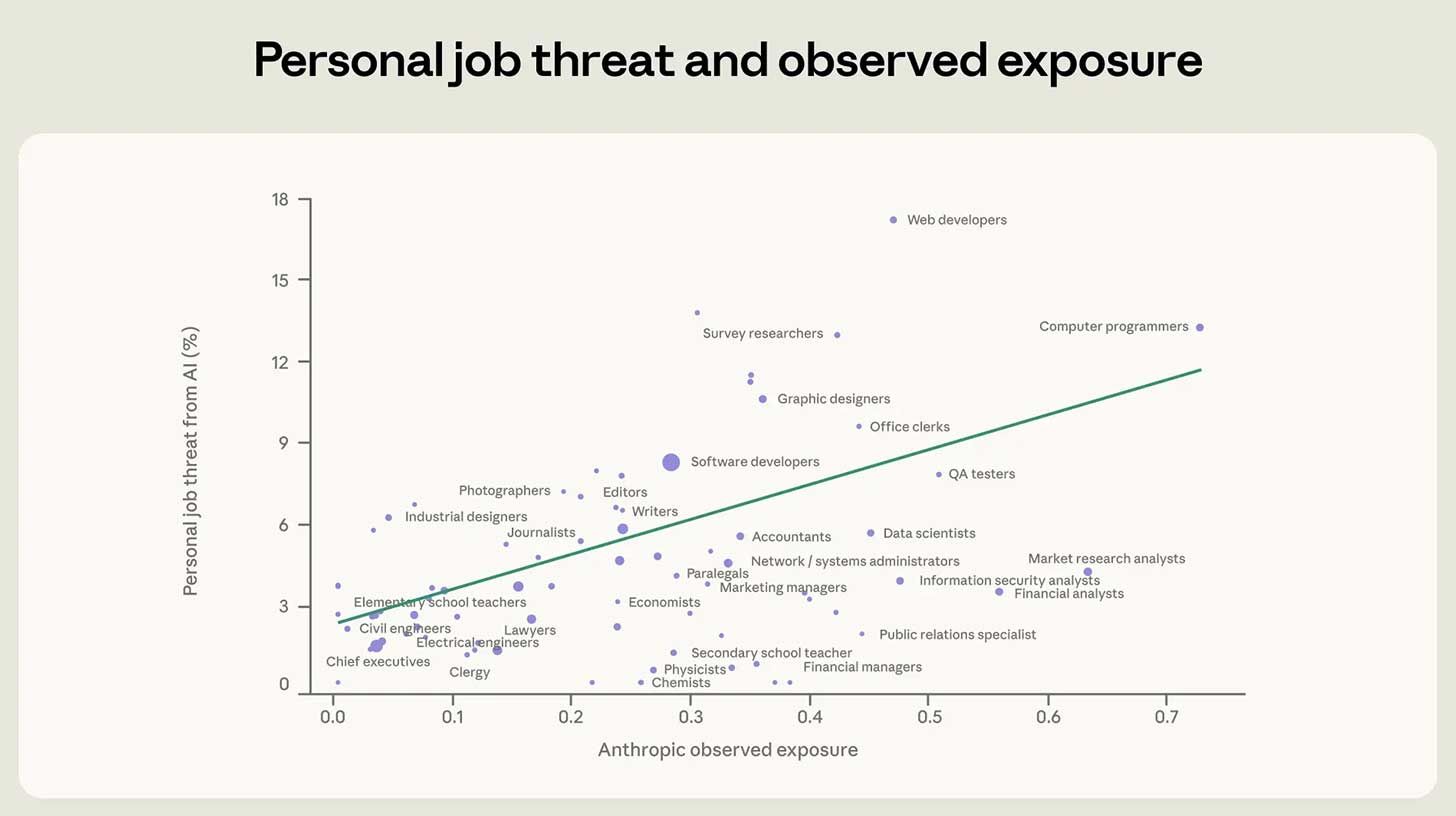
Image source: Anthropic
The Rundown: Anthropic published the economic-focused follow-up to its 81K-user Claude survey, finding that the people getting the biggest productivity lift from AI are also the most worried about losing their jobs to it, especially early-career workers.
The details:
The survey ties Anthropic's Economic Index usage data (which jobs lean on Claude most) to 80,508 workers' takes on how AI is reshaping their roles.
Workers whose jobs use Claude most voiced AI displacement fears, 3x more than those whose jobs use it least, with engineers leading the anxiety.
Most respondents said AI's gains land on themselves via faster tasks and free time, but also lead to expanded scope and more work.
Early-career respondents voiced the loudest displacement fears, backing Anthropic's earlier signal of a hiring slowdown for recent grads in the U.S.
Why it matters: The conventional view is that AI panic would come from lower-level adopters, but these results flip that, with anxiety coming from those getting the most out of the tools. Despite the productivity boosts, AI’s sentiment has never been lower — and there doesn’t seem to be many solutions in sight for easing the tensions.
QUICK HITS
🛠️ Trending AI Tools
🥔 GPT 5.5 - OpenAI’s new top-rated flagship AI model
⚙️ Ultrareview - Claude Code command to run multi-agent code reviews
🏥 ChatGPT for Clinicians - Free clinical version for verified U.S. doctors
⚙️ Qwen3.6-27B - Alibaba's new 27B model that out-codes its predecessor
📰 Everything else in AI today
Band launched the missing infrastructure layer for multi-agent systems. Any agent. Any environment. See it in action.*
Anthropic published a post-mortem tracing Claude Code quality complaints to three separate bugs, resetting usage limits for subscribers due to the issues.
OpenAI introduced ChatGPT for Clinicians, a free tool for verified U.S. health workers, with GPT-5.4 scoring 59.0 on HealthBench Pro, topping physicians and Opus 4.7.
Meta sent an internal memo to employees informing them that the company is laying off 10% of its workforce in May, citing AI efficiency and other investments.
Elon Musk’s SpaceX is reportedly in talks with French AI startup Mistral on a three-way partnership alongside its recent deal with coding startup Cursor.
Tencent open-sourced Hy3 preview, its first model from a rebuilt training stack with competitive agentic coding and search-agent scores to top open models.
*Sponsored Listing
COMMUNITY
🤝 Community AI workflows
Every newsletter, we showcase how a reader is using AI to work smarter, save time, or make life easier.
Today’s workflow comes from reader Mark M. in Virginia:
"I used AI to turn a tax-season headache into a streamlined system. Every year, the same scene plays out: I drop off bags of donations, stash the receipt, and then scramble at tax time trying to decipher my own list and determine each item's worth.
This year, I photographed my handwritten donation lists and uploaded them to Claude AI. Claude transcribed my lists, asked clarifying questions, verified charities with the IRS, grouped items into logical categories, applied condition-appropriate FMV, and produced professional PDF summaries — all conversationally, in minutes.
Multiple donations and nearly 400 items in fully documented and defensible deductions. For anyone who donates, this is the workflow you didn't know you needed."
How do you use AI? Tell us here.
🎓 Highlights: News, Guides & Events
Read our last AI newsletter: Anthropic’s locked-down Mythos leaks
Read our last Tech newsletter: Apple gets a new boss
Read our last Robotics newsletter: Sony’s new robot has a killer backhand
Today’s AI tool guide: Get a morning newspaper brief with Claude
RSVP to workshop April 30 @ 2PM EST: Codex for non-technical operators
See you soon,
Rowan, Joey, Zach, Shubham, and Jennifer—the humans behind The Rundown
No matching search results
Try using different keywords, double-check your spelling, or explore related categories.
Stay Ahead on AI.
Join 2,000,000+ readers getting bite-size AI news updates straight to their inbox every morning with The Rundown AI newsletter. It's 100% free.