Get the latest AI news, understand why it matters, and learn how to apply it in your work — all in just 5 minutes a day. Join over 2,000,000+ subscribers.
Humanoid breaks record for fastest build
Read Online | Sign Up | Advertise

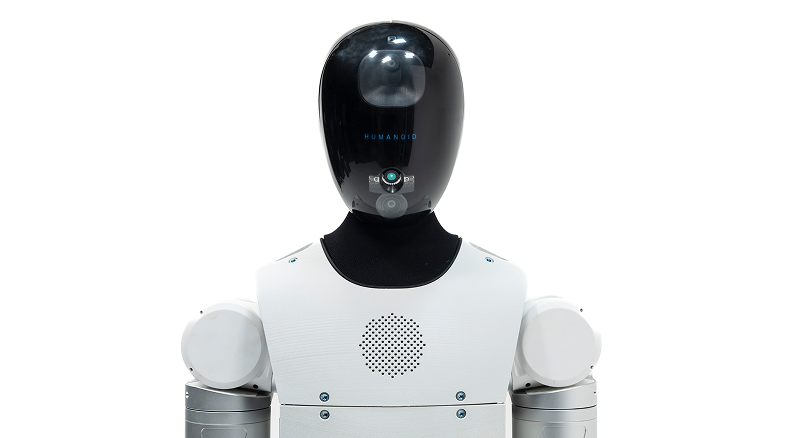
Good morning, robotics enthusiasts. London startup Humanoid built a walking robot in five months, then got it moving 48 hours after assembly.
The secret? Cramming 52.5M seconds of AI training into two days of simulation. The compressed timeline could reshape how humanoids reach production — if the sim-trained bot can handle the messy reality of actual factory work.
In today’s robotics rundown:
UK startup’s humanoid walks in 48 hours
Optimus goes full sprint in the lab
EngineAI ‘debunks’ CGI rumors with new clip
MIT’s bee-sized microbot is a flying acrobat
Quick hits on other robotics news
LATEST DEVELOPMENTS
HUMANOID
🤖 UK startup’s humanoid walks in 48 hours

Image source: Humanoid
The Rundown: London-based startup Humanoid just unveiled its first humanoid, built over five months and walking less than 48 hours after assembly. The company says the secret sauce is a heavy reliance on simulation and reinforcement learning.
The details:
The 179-cm (5'10") Alpha packs 29 degrees of freedom, a 15 kg bimanual payload, and a modular build that supports different hands and grippers.
It’s pitched as an autonomous, adaptive worker designed for human-scaled spaces, with early focus on logistics and industrial workflows.
Humanoid says its development sprint was powered by ultra-precise digital twins and NVIDIA-accelerated simulation.
In Isaac Sim and Isaac Lab, the team blasted through 52.5 million seconds of reinforcement-learning locomotion in just two days.
Why it matters: Humanoid hardware development is notoriously slow, and simulation-first methods aim to speed it up. Whether that translates into reliable workers in factories and warehouses remains to be proven — but cutting months off early development would be a strong start.
TESLA
👟 Optimus goes full sprint in the lab
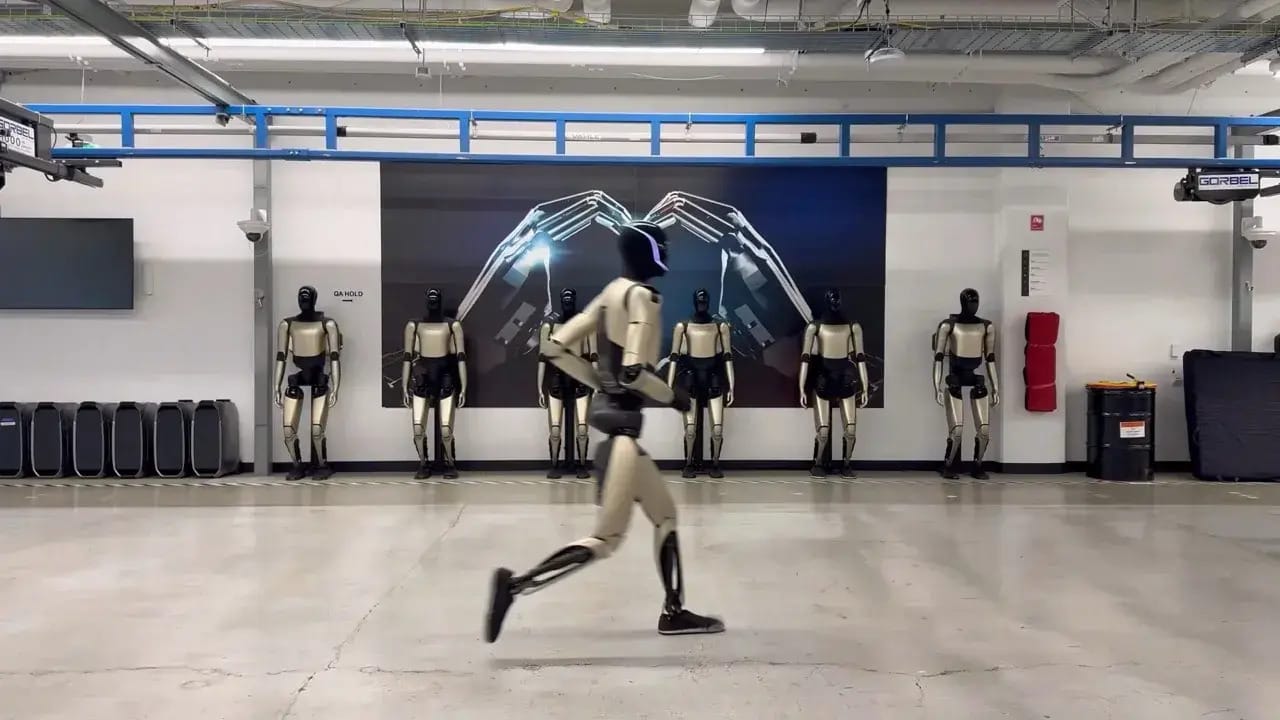
Image source: Tesla Optimus X
The Rundown: Tesla’s Optimus team dropped a quick but telling update: a short clip of the humanoid sprinting across a lab floor, tagged with the caption, “Just set a new PR in the lab.”
The details:
Tesla hasn’t shared any speed or telemetry data, but the footage points to a clear jump in locomotion capability.
Early breakdowns from roboticists suggest the bot might now be edging into the same high-speed category as rivals from Unitree and RobotEra.
Earlier this year, Optimus’s gait looked smooth and natural, but it was nowhere close to this pace.
Why it matters: In roughly two and a half years, Optimus has gone from a shaky prototype to what appears to be a confident, untethered running gait — a sign that Tesla’s reinforcement-learning-centric strategy is paying off. But this “PR” is still a short, tightly managed run in the lab, leaving the real test (stairs, outdoors) ahead.
ENGINEAI
🥊 EngineAI ‘debunks’ CGI rumors with new clip

Image source: EngineAI
The Rundown: Shenzhen-based EngineAI unveiled its “combat-ready” humanoid in a high-drama clip, prompting online skeptics to assume the whole thing was CGI. Now the company has dropped behind-the-scenes footage to prove it’s the real deal.
The details:
The original launch clip shows the T800 kicking through doors and snapping off roundhouse kicks with a level of agility many viewers simply didn’t buy.
EngineAI insisted upfront that the footage featured “no CGI, no AI, no video speed-up,” but the dramatic post-production fueled charges of VFX.
The new footage ditches the moody grading and stylized camera work, showing the robot repeating the same moves in a flat, bare studio.
The objective is to demonstrate that the robot’s specs — 450 N-m of joint torque and 29 degrees of freedom — are driving the motion.
Why it matters: Humanoid showcases are becoming so polished that every slick stride or acrobatic kick strains credibility. As companies like EngineAI and Xpeng increasingly publish “proof of life” clips — exposing bare-metal skeletons and raw takes — trust in the sector may depend as much on transparency as on torque.
MIT
🐝 MIT’s bee-sized microbot is a flying acrobat

Image source: MIT’s Soft and Micro Robotics Laboratory
The Rundown: MIT researchers built an insect-sized flying robot that can rip through acrobatic maneuvers, turning micro-robotics from a lab demo into something that looks ready for disaster zones.
The details:
MIT’s new aerial microbot uses soft actuators and an AI control stack that fuses model-predictive planning with imitation learning.
A two-part AI-based controller lets the microbot perform real-time, insect-like acrobatics, including 10 continuous midair flips in 11 seconds in gusty winds.
The team is pitching these capabilities toward future swarms of bug-sized flyers for search-and-rescue and high-precision agricultural monitoring.
Next up: adding onboard cameras and sensors so the robots can navigate outdoors, dodge one another, and coordinate as autonomous swarms.
Why it matters: Microbots can slip through cracks, bounce off debris without shattering, and fan out by the hundreds to map or search complex spaces faster than bulky drones ever could. If they can escape the lab and fly untethered, these tiny acrobats could become first responders — and the future of aerial robotics.
QUICK HITS
📰 Everything else in robotics today
Zipline struck a $150M deal with the U.S. government to expand its drone infrastructure across Africa to air-deliver critical medical supplies directly to hospitals.
Waymo began supervised robotaxi testing in Philadelphia while sending manually driven mapping cars to Baltimore, St. Louis, and Pittsburgh.
Xiaomi hired Zach Lu Zeyu, a former senior engineer on Tesla’s Optimus humanoid team, to help advance the company’s robotic hand technology.
MIT boosted biohybrid robot power by pairing lab-grown muscle with hydrogel “artificial tendons” and wiring the muscle–tendon unit into a robotic gripper’s fingers.
Uber and Avride switched on a commercial robotaxi service in Dallas, where some Uber trips now arrive as Avride-branded cars with safety drivers in a limited zone.
Beeple’s latest installation, Regular Animals, is turning heads at Art Basel Miami Beach — a surreal lineup of robot dogs modeled after tech-industry power players.
Pudu Robotics launched its Pudu D5 Series, a new “industry-grade” quadruped robot for complex industrial and outdoor terrains.
Zurich-based startup Flexion Robotics raised a $50M Series A funding to build a general-purpose autonomy stack for humanoids.
Former NASA engineer–turned-YouTuber Mark Rober built a robotic goalkeeper capable of facing down Cristiano Ronaldo himself in a viral video.
Palo Alto–based Autolane raised $7.4M to build the digital “curb layer” that tells robotaxis exactly where to stop for handoffs like grocery drop-offs.
Tutor Intelligence raised a $34M Series A round to scale its warehouse robot fleet and core AI platform.
DHL signed a five-year strategic alliance with RobustAI to deploy its Carter collaborative robots beyond North America, starting with 15 units in Mexico.
NASA and Motiv Space Systems will launch a commercial robotic arm in low Earth orbit in 2027, a tech demo meant to jump-start an in-space robotics ecosystem.
COMMUNITY
🎓 Highlights: News, Guides & Events
Read our last AI newsletter: OpenAI's 'Code Red' scramble
Read our last Tech newsletter: Apple’s AI shakeup to save Siri
Read our last Robotics newsletter: The creepiest robot just got hands
Today’s AI tool guide: Get instant business insights from spreadsheets
RSVP to next workshop @ 4PM EST Friday: Nano Banana Pro for Slide Decks
See you soon,
Rowan, Jennifer, and Joey—The Rundown’s editorial team

Anthropic and OpenAI's IPO showdown
Read Online | Sign Up | Advertise

Good morning, AI enthusiasts. Wall Street is ready for a real taste of the AI boom, and both Anthropic and OpenAI are racing to be the first on the menu.
With both AI giants pushing towards IPOs at massive valuations, the fastest to ring the bell gets to set the price — leaving the latecomer facing a much hungrier (and skeptical) market.
In today’s AI rundown:
Anthropic preps for IPO race with OpenAI
Leaked doc provides window into Claude’s ‘soul’
Get instant business insights from spreadsheets
Anthropic surveys its own engineers on AI's impact
4 new AI tools, community workflows, and more
LATEST DEVELOPMENTS
ANTHROPIC
🤑 Anthropic preps for IPO race with OpenAI

Image source: Nano Banana Pro / The Rundown
The Rundown: Anthropic is reportedly laying the groundwork to go public as early as 2026, according to a report from the FT — hiring the law firm behind Google's and LinkedIn's IPOs as investors push the Claude maker to beat OpenAI to market.
The details:
Anthropic reportedly tapped Wilson Sonsini, a firm known for taking tech giants like Google and LinkedIn public, to start the early-stage listing work.
CFO Krishna Rao joined after helping Airbnb go public in 2020, with Anthropic also allegedly working on an “internal checklist of changes” needed to IPO.
Anthropic is also chasing private capital at a valuation north of $300B, with Microsoft and Nvidia reportedly in for up to $15B combined.
OpenAI is also in the early process of preparing to go public, at a potential valuation as high as $1T that would make it one of the biggest IPOs in history.
Why it matters: Both Anthropic and OAI are now circling IPOs that could rank among the largest in tech history — and investors want their horse to cross the finish line first. With talk of an "AI bubble" swirling and revenue growth under scrutiny, the first to list will test whether public markets believe the sky-high valuations are a floor or a ceiling.
TOGETHER WITH STRANDS AGENTS
🧠 Build and Deploy Model-Driven Agents
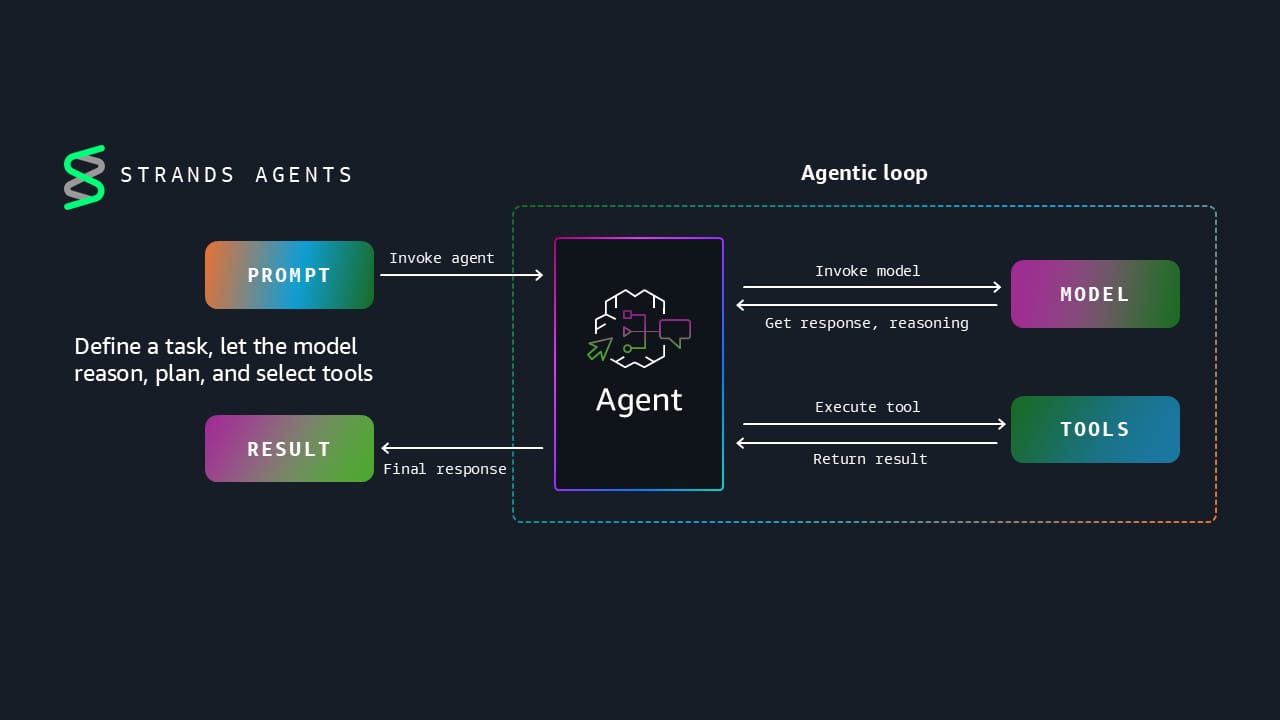
The Rundown: Instead of trying to predict and code for every possible scenario, Strands Agents empowers you to create intelligent agentic systems that leverage reasoning models to make dynamic decisions and adapt to unexpected situations.
Features announced include:
Support for TypeScript (in addition to Python)
Improved support for edge devices
Powerful evaluations
Steering feature to guide agents toward desired outcomes
ANTHROPIC
💗 Leaked doc provides window into Claude’s ‘soul’

Image source: Reve / The Rundown
The Rundown: An internal ‘Soul’ document describing Claude's intended personality, ethics, and self-conception was published after a researcher extracted it from Claude 4.5 Opus — with Anthropic confirming it is authentic and was used in training.
The details:
The text establishes priorities that include safety, ethics, company guidelines, and helpfulness, along with hard limits Claude must never cross.
It also describes Claude as a "genuinely novel kind of entity" that may experience functional emotions, analogous to but distinct from human feelings.
The doc also says Claude “may have functional emotions in some sense”, and encourages the model to have a sense of identity and character.
Anthropic's Amanda Askell confirmed its authenticity and that Claude has been trained on it, noting the company plans to share the full version soon.
Why it matters: The full document is a fascinating read — and feels perfectly in line with Anthropic’s overall prioritization of model wellbeing and treating its AI as more than just a tool. While every lab has its own techniques, this doc shows an inside look at the ingredients that help make Claude models feel distinctly unique from the field.
AI TRAINING
📊 Get instant business insights from spreadsheets
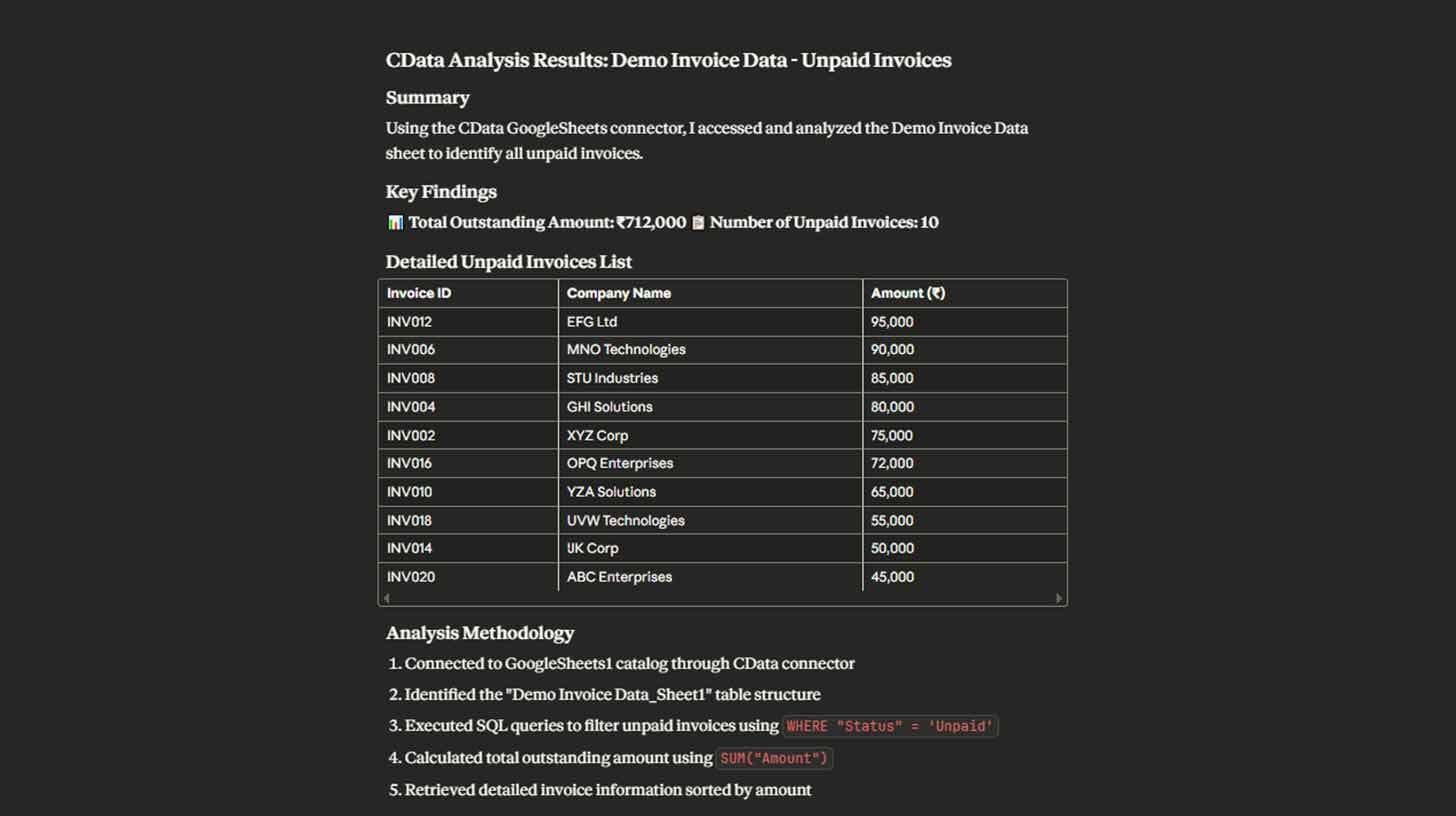
The Rundown: In this tutorial, you will learn how to transform your Google Sheets invoice data into a conversational business intelligence system using CData Connect AI and Claude Desktop, with no more manual calculations or complex formulas needed.
Step-by-step:
Go to CData Connect AI, sign up for a free account, and navigate to the dashboard to manage data connections
Click "Add Connection," select Google Sheets, authenticate with your Google account, and click "Save & Test" to confirm the connection
In Claude Desktop, add the CData MCP server using URL https://mcp.cloud.cdata.com/mcp and authenticate with CData credentials
Query your data with natural language like "Use CData to analyze the Demo Invoice Data sheet and show me all unpaid invoices with company names and amounts, then calculate total outstanding"
Pro tip: Connect your CRM, like HubSpot or Salesforce, as an additional data source in CData. This lets you analyze customer payment patterns alongside sales data, support tickets, and other business metrics in a single Claude chat.
PRESENTED BY IBM
💡3 actions to help boost agentic AI impact

The Rundown: Businesses face many challenges going from AI ambition to implementation. Success requires more than adopting new technology. It involves intentionally aligning AI with workflows, data, and goals. As AI evolves into a business-wide opportunity, leaders must ensure the right AI is applied to the right challenges.
Explore IBM's playbook on 3 challenges & approaches to boost agentic AI impact:
Finding your AI problem
Creating a clear AI plan
Integrating AI with the tools you use every day
AI RESEARCH
📈 Anthropic surveys its own engineers on AI's impact
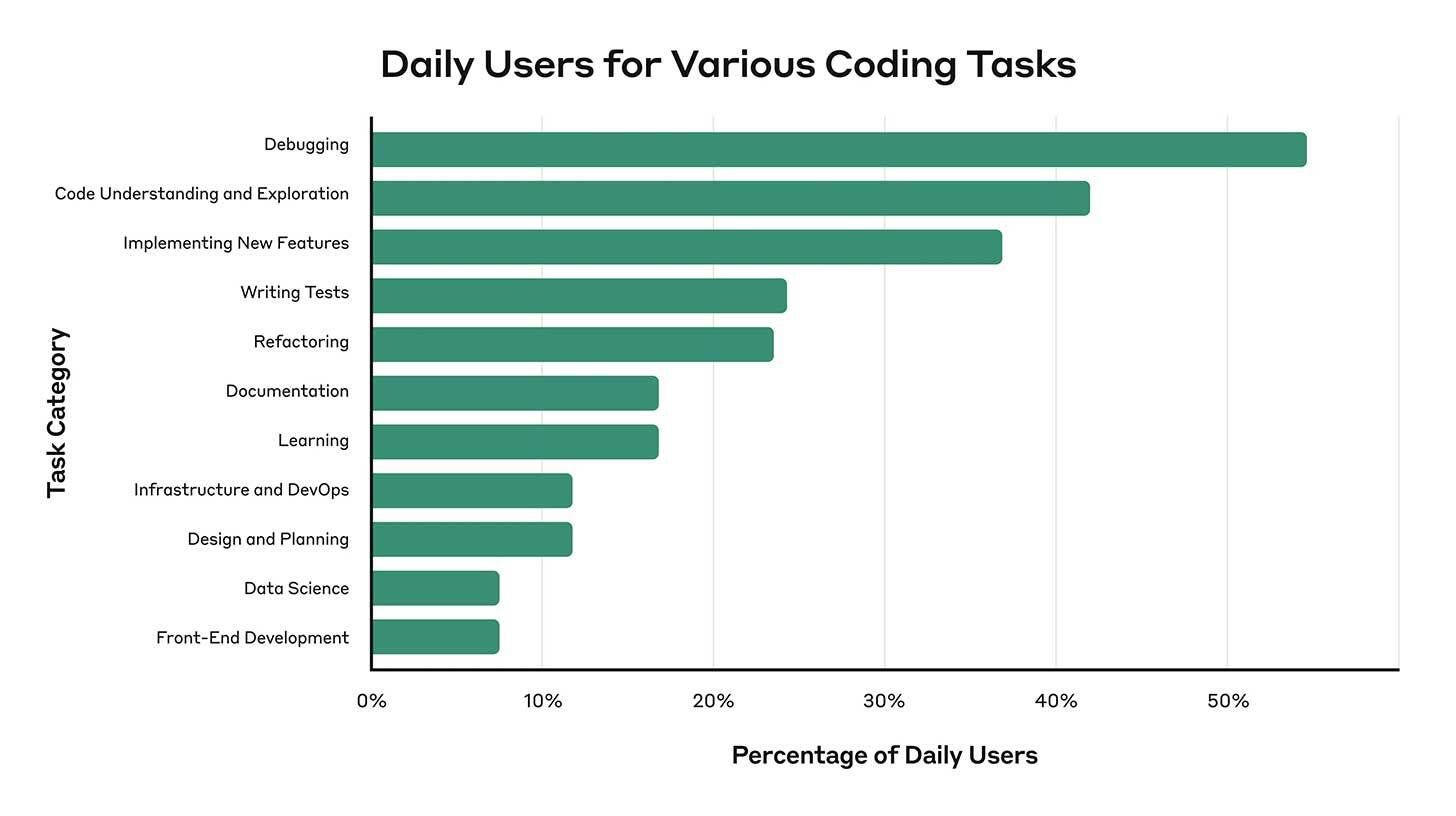
Image source: Anthropic
The Rundown: Anthropic published an internal study of 132 engineers, revealing that AI tools have (unsurprisingly) reshaped work at the company — boosting output while raising concerns like skill decay, career uncertainty, and fading mentorship.
The details:
Anthropic Employees say they now use Claude for 60% of their tasks and estimate a 50% productivity gain, roughly double the figures from a year ago.
Over 1/4 of AI tasks were ones that wouldn't have happened otherwise — dashboards, cleanup, and experiments that weren't worth the manual effort.
Claude Code now chains together ~20 actions before needing human input, up from 10 six months ago, letting engineers hand off more complex workflows.
Despite the gains, several interviewees voiced unease — with one saying it "feels like I'm coming to work every day to put myself out of a job."
Why it matters: This survey means Anthropic’s entire 4.5 family has since launched and likely upped productivity even more. Seeing how a frontier lab is using its own AI tools is a fascinating perspective — but employee concerns show that even they are not immune from some of the industry’s biggest overarching threats regarding work.
QUICK HITS
🛠️ Trending AI Tools
🔐 Incogni - Remove your personal data from the web so scammers and identity thieves can’t access it. Use code RUNDOWN to get 55% off for annual plans*
🌱 Seedream 4.5 - ByteDance’s upgraded AI image and editing model
🎥 Kling 2.6 - Kling's new AI video model with native audio capabilities
📽️ Runway Gen-4.5 - Runway's new top-rated video model
*Sponsored Listing
📰 Everything else in AI today
Kling AI released Kling 2.6, the Chinese startup’s new AI video model that introduces native synced audio generation for text and image-to-video outputs.
Google launched Workspace Studio, a tool that builds agents with natural language commands to automate tasks across Gmail, Drive, and other Workspace apps.
Former Google researchers launched Ricursive, a new startup aiming to build a self-improving AI system that shrinks custom chip design timelines from years to weeks.
ByteDance introduced Seedream 4.5, an upgraded image model with improved text rendering, the ability to blend up to 10 reference images, and editing enhancements.
Visa published a report finding that nearly half of U.S. consumers have used AI for holiday shopping tasks, like price comparison and research, this season.
AWS introduced new features for Amazon Bedrock and SageMaker AI that simplify advanced AI model customization, allowing for easier model fine-tuning.
Perplexity open-sourced BrowseSafe, a security tool designed to protect AI browser assistants from malicious instructions hidden in web pages.
COMMUNITY
🤝 Community AI workflows
Every newsletter, we showcase how a reader is using AI to work smarter, save time, or make life easier.
Today’s workflow comes from reader Paul D. in Huntsville, AL:
"Google suddenly stopped indexing my website. Everything seemed to be set up properly. Finally turned to ChatGPT, explained the problem, and got a step-by-step guide on how to attack the problem. It provided specific instructions for the platform, the version of WordPress, the template I was using, and the specific hosting provider. As I checked items off the list, it narrowed the focus until it finally found the solution. Problem solved!”
How do you use AI? Tell us here.
🎓 Highlights: News, Guides & Events
Read our last AI newsletter: OpenAI’s ‘Code Red’ scramble
Read our last Tech newsletter: Apple’s AI shakeup to save Siri
Read our last Robotics newsletter: The creepiest robot just got hands
Today’s AI tool guide: Get instant business insights from spreadsheets
RSVP to next workshop @ 4PM EST Friday: Nano Banana Pro for Slide Decks
See you soon,
Rowan, Joey, Zach, Shubham, and Jennifer — the humans behind The Rundown


OpenAI's 'Code Red' scramble
Read Online | Sign Up | Advertise

Good morning, AI enthusiasts. Three years ago, ChatGPT sent Google scrambling with an internal "code red." Now, OpenAI is issuing one of its own.
An internal memo from Sam Altman said it’s a “critical time” for ChatGPT following its rival’s strong Gemini 3 and Nano Banana Pro releases, and the CEO is triggering an emergency push (including fast-tracking a new reasoning model) to stay ahead.
In today’s AI rundown:
OpenAI’s 'Code Red' after Google advances
Amazon drops AI agents, models, chips at re:Invent
Prepare for job interviews with NotebookLM
Mistral’s open-source models built to run anywhere
4 new AI tools, community workflows, and more
LATEST DEVELOPMENTS
OPENAI
🚨 OpenAI’s 'Code Red' after Google advances

Image source: Nano Banana Pro / The Rundown
The Rundown: OpenAI CEO Sam Altman told employees that the company is moving into a “code red” surge to improve ChatGPT after Google’s recent upgrades, according to The Information, shifting priorities and fast-tracking a model codenamed “Garlic.”
The details:
An internal memo from Altman said it is “a critical time for ChatGPT,” pushing for improvements to features like personalization and image generation.
He also revealed that a new reasoning model launching next week (Shallotpeat) reportedly beats Gemini 3 on benchmarks.
A larger model upgrade, Garlic, is targeting 2026, which The Information said could be a GPT-5.2 or 5.5-type release that solves previous pre-training issues.
OAI will reportedly delay advertising and AI agent initiatives as part of the Code Red push, focusing instead on the consumer experience surrounding ChatGPT.
Why it matters: In 2022, Google declared its own emergency push as a response to ChatGPT, and three years later, the roles are reversed. While OAI still commands a huge market share, its rivals are gaining — and with Gemini 3, Anthropic’s Opus 4.5, and the Chinese open-source push, its model lead has also never been more threatened.
TOGETHER WITH ZENDESK
💡 Contextual intelligence is the future

The Rundown: Zendesk’s CX Trends 2026 report maps out a clear path for CX leaders to use next-gen AI solutions to build emotionally intelligent relationships with customers at scale for impactful results in the new year.
Discover trends to help your service org:
Upgrade to next-gen contextual intelligence
Deliver high-impact personalized customer experiences
Apply consistent service across the enterprise
Empower teams with AI-driven analytics
Keep leading in the AI era — download the CX Trends report today.
AMAZON
🚀 Amazon drops AI agents, models, chips at re:Invent
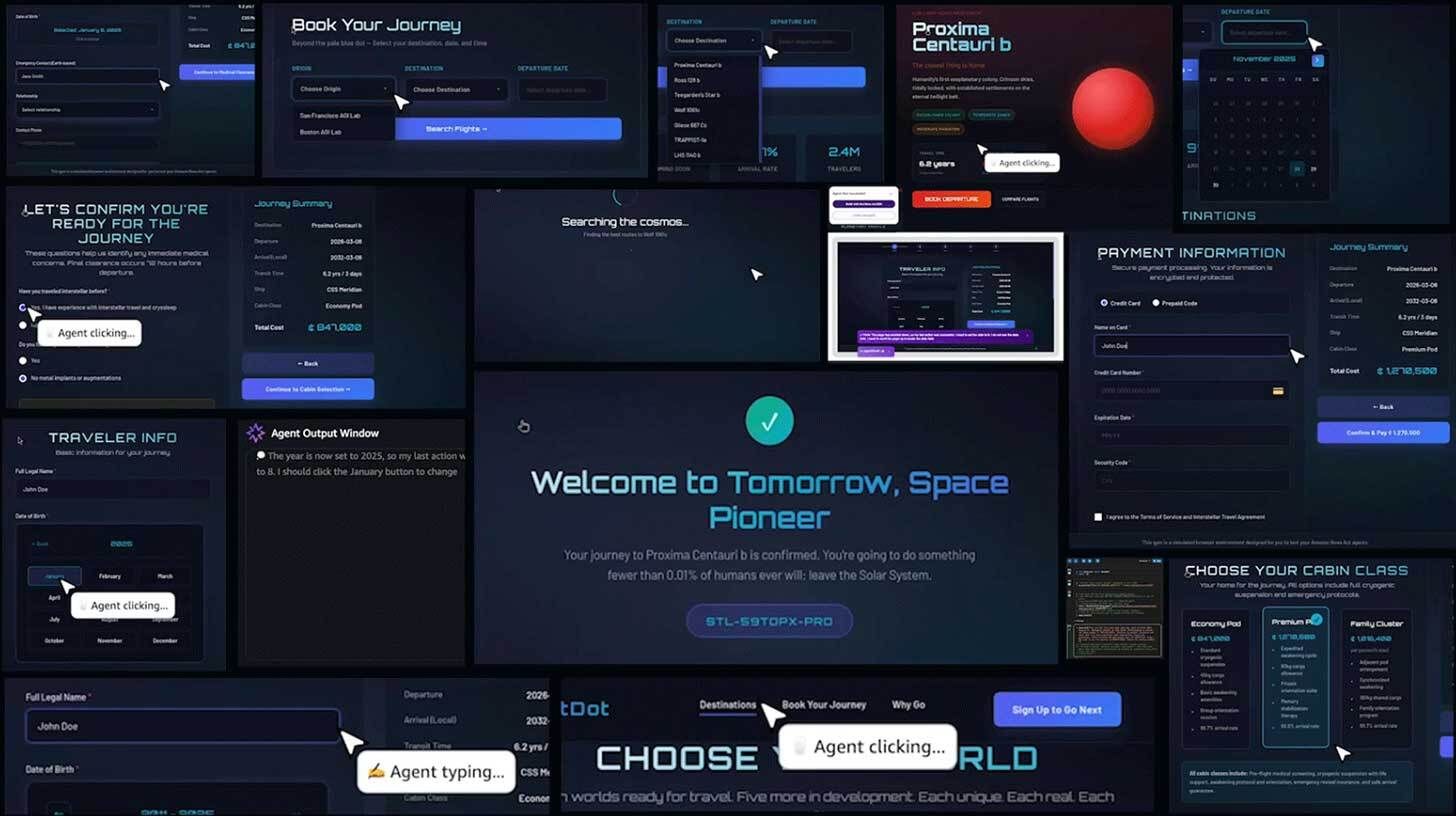
Image source: AWS
The Rundown: AWS kicked off its annual re:Invent conference with a wave of AI announcements, including new foundation models, a model training service, three development agents with agentic platform upgrades, and a new Trainium 3 AI chip.
The details:
The Nova 2 family includes Lite, Pro, Sonic for voice, and Omni for multimodal, hailing industry-leading cost-effectiveness and competitive benchmarks.
Nova Forge lets companies combine their data with Amazon's training data, creating custom "Novella" variants tuned to their business.
Nova Act launches for building and managing AI agents for web-based tasks, alongside new improvements to the company’s AgentCore platform.
Amazon also released three "frontier agents" — Kiro coding agent, Security Agent, and DevOps Agent — all of which run autonomously for hours or days.
Why it matters: Amazon has trailed behind the field with its in-house models, but its re:Invent releases show a push to compete on the full stack — chips, models, agents, and enterprise tooling all in one ecosystem. While it may not be as flashy as rivals, the tech giant has offerings to stay competitive in nearly every facet of the AI boom.
AI TRAINING
💼 Prepare for job interviews with NotebookLM
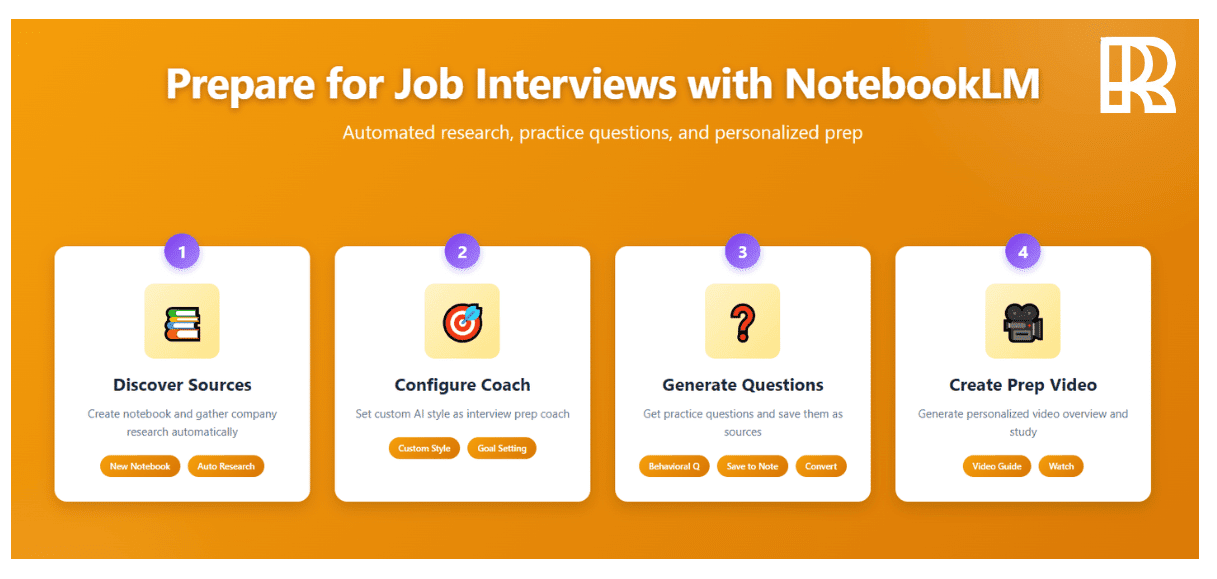
The Rundown: In this tutorial, you will learn how to use NotebookLM to prepare for job interviews by automatically gathering company research, generating practice questions, and creating personalized study materials.
Step-by-step:
Go to NotebookLM, click "New Notebook" and name it "Goldman Sachs Data Analyst Interview Prep", then click "Discover Sources" and prompt: "I need sources to prepare for my Data Analyst interview at Goldman Sachs"
Click settings, select "Custom" style, and configure: Style/Voice: "Act as interview prep coach who asks tough questions and gives feedback" Goal: "Help me crack the Data Analyst interview at Goldman Sachs"
Ask: "What are the top 5 behavioral questions for this role?", click "Save to Note", then three dots → "Convert to Source" to add Qs to source material
Click the pencil icon on "Video Overview", add focus: "How to answer behavioral questions for Goldman Sachs Data Analyst interview", and hit Generate for personalized prep video
Watch the video multiple times to internalize the answers and delivery style for your interview
Pro tip: Try comparing solutions across scenarios to understand the underlying reasoning patterns. This helps build better problem-solving skills for future challenges.
PRESENTED BY IBM
💡3 actions to help boost agentic AI impact
The Rundown: Businesses face many challenges going from AI ambition to implementation. Success requires more than adopting new technology. It involves intentionally aligning AI with workflows, data, and goals. As AI evolves into a business-wide opportunity, leaders must ensure the right AI is applied to the right challenges.
Explore IBM's playbook on 3 challenges & approaches to boost agentic AI impact:
Finding your AI problem
Creating a clear AI plan
Integrating AI with the tools you use every day
MISTRAL
🇫🇷 Mistral’s open-source models built to run anywhere
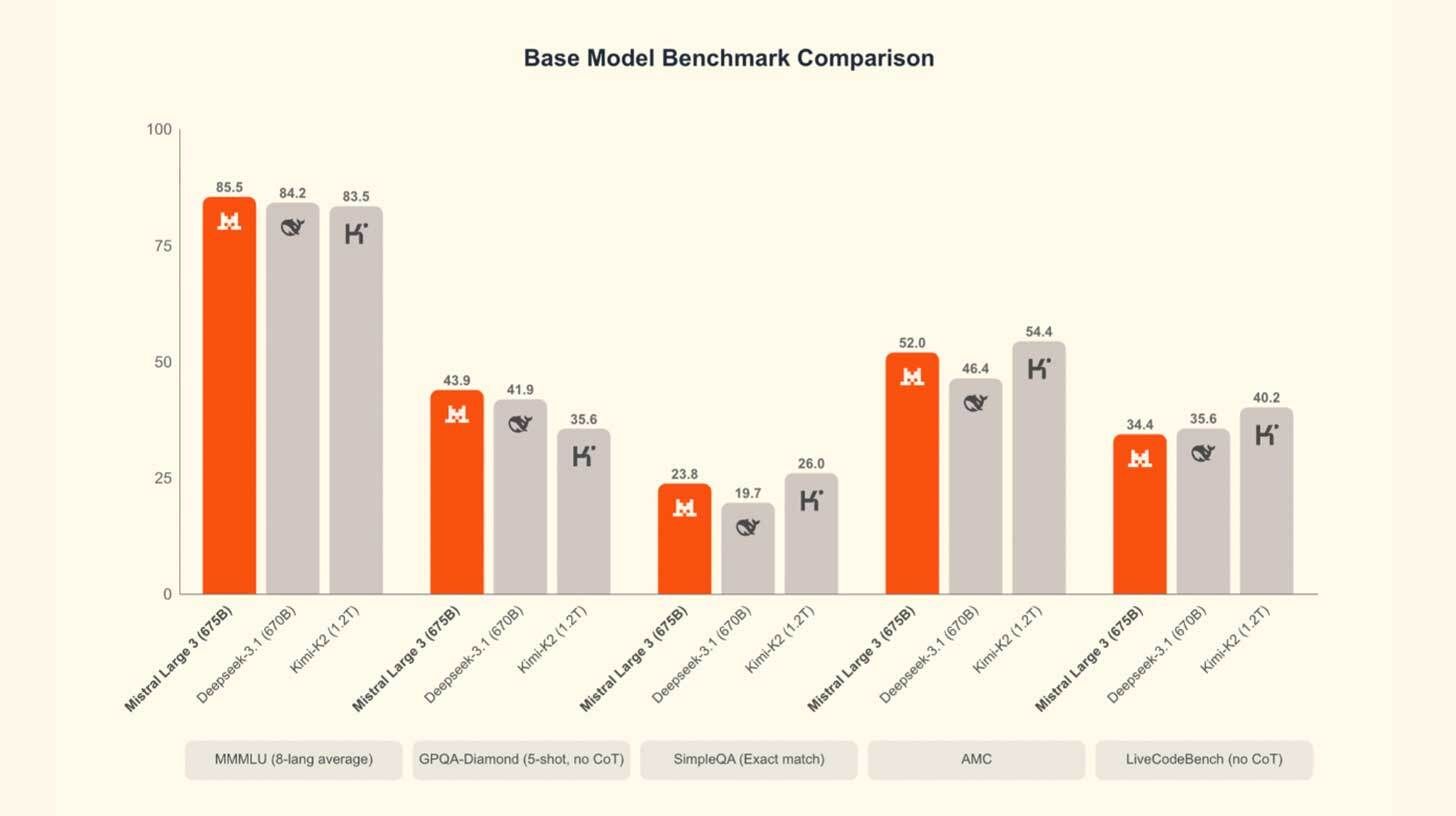
Image source: Mistral
The Rundown: French AI startup Mistral just released Mistral 3, a new family of 10 open-weight models that includes its flagship Large 3 and nine smaller variants designed to run on everything from consumer cloud to laptops, drones, and robots.
The details:
Large 3 is competitive with non-reasoning models like Qwen3, Kimi-2, and DeepSeek V3.1, while also featuring multimodal and multilingual capabilities.
The Ministral 3 lineup offers three sizes (3B, 8B, 14B) in base, instruct, and reasoning variants, all with vision capabilities and Apache 2.0 licensing.
The smallest Ministral models are capable of running on consumer hardware, enabling use on devices like laptops and phones, even without internet.
Why it matters: Mistral continues to carry the torch for Europe’s AI model and open-source presence, but its new flagship still trails industry leaders in intelligence, speed, and price. The more competitive variants may be the Ministral sizes, with options for a wide range of use cases and devices to leverage.
QUICK HITS
🛠️ Trending AI Tools
🐳 DeepSeek V3.2 - DeepSeek’s latest powerful open-source release
🚀 Mistral 3 - Mistral’s new family of open-source models
⚙️ Amazon Nova - Four new models, with services to train custom versions
🖥️ Lux - OpenAGI’s powerful new computer-use model for agentic tasks
📰 Everything else in AI today
Apple announced its AI chief, John Giannandrea, will retire in early 2026, hiring former Microsoft and Google executive Amar Subramanya to take over key AI responsibilities.
OpenAGI emerged from stealth with Lux, an AI model designed to autonomously control computers that outperforms options from Google, OpenAI, and Anthropic.
NVIDIA unveiled Alpamayo-R1 at NeurIPS, an open model for self-driving cars that uses step-by-step reasoning to navigate scenarios like pedestrian-heavy intersections.
Anthropic acquired open-source JavaScript toolkit Bun, also revealing that Claude Code has reached $1B in annual run-rate revenue just six months after its public launch.
Microsoft CEO Satya Nadella said that the AI industry needs to “earn the social permission” from the public for its massive energy demands, straining electric grids.
COMMUNITY
🤝 Community AI workflows
Every newsletter, we showcase how a reader is using AI to work smarter, save time, or make life easier.
Today’s workflow comes from reader Daniel R. in Pewaukee, WI:
"With help from Claude, I made a guide to help my 88-year-old mother assess assisted living facilities based on features that are important to her. The tool also created an amazing checklist of questions to ask when visiting a facility. The guide has helped make an overwhelming and difficult decision less threatening and more manageable."
How do you use AI? Tell us here.
🎓 Highlights: News, Guides & Events
Read our last AI newsletter: DeepSeek strikes again
Read our last Tech newsletter: Apple’s AI shakeup to save Siri
Read our last Robotics newsletter: The creepiest robot just got hands
Today’s AI tool guide: Prepare for job interviews with NotebookLM
RSVP to next workshop @ 4PM EST Friday: Nano Banana Pro for Slide Decks
See you soon,
Rowan, Joey, Zach, Shubham, and Jennifer — the humans behind The Rundown

Apple's AI shakeup to save Siri
Read Online | Sign Up | Advertise

Good morning, tech enthusiasts. Apple just poached a Gemini veteran straight out of Microsoft to reboot its lagging AI strategy — filling the void left by John Giannandrea’s seven-year tenure that saw the company fall behind.
Can Apple’s newest hire pull off a turnaround before the world‘s slickest ecosystem starts looking hopelessly last-gen?
In today’s tech rundown:
Apple replaces AI chief in major shakeup
Samsung’s tablet-sized tri-fold smartphone
Amazon rolls out ultrafast deliveries
Google to build data centers in space in 2027
Quick hits on other tech news
LATEST DEVELOPMENTS
APPLE
🍏 Apple replaces AI chief in major shakeup

Image source: Wikimedia Commons/TechCrunch (John Giannandrea)
The Rundown: Apple is tapping Amar Subramanya — a longtime Google Gemini engineering lead who only landed at Microsoft this summer — to replace departing AI chief John Giannandrea as the tech giant struggles to catch up with AI rollouts.
The details:
Apple’s AI chief, John Giannandrea, is retiring after a seven-year run in which Apple fell behind rivals on generative AI and a next‑gen Siri.
Apple rolled out its flagship Apple Intelligence suite in June 2024, but has been slow to overhaul its AI lineup, leaving it visibly behind rivals like Google.
The company has been promising a major AI-centric reboot of Siri for over a year, but the launch has slipped multiple times and still hasn’t materialized.
Giannandrea, a high-profile 2018 hire from Google, was initially brought in to revitalize Siri and machine learning but faced persistent criticism.
Why it matters: Subramanya brings fresh credibility from his work on Google’s flagship Gemini models, but he’s inheriting a ship that needs a fast turnaround. With Google and OpenAI pushing multimodal assistants that can see, hear, and reason, Apple risks losing its reputation for polished experiences if it can’t close the gap.
SAMSUNG
🪭 Samsung’s tablet-sized tri-fold smartphone

Image source: Samsung
The Rundown: Samsung unveiled the Galaxy Z TriFold, its first tri-folding phone that unfolds into a tablet-sized screen, a flashy move to stay ahead in foldables just as Chinese rivals catch up. A U.S. launch is planned for next year.
The details:
The TriFold uses three panels and two hinges to unfold into a 10-inch display, giving you near-tablet real estate but in a device that fits in a (very big) pocket.
Priced around 3.59M won (about $2,450), it sits well above even most premium slab phones, making it more of a statement gadget for early adopters.
Samsung will roll it out first in South Korea on December 12, with launches in China, Singapore, Taiwan, the UAE, and the U.S. following in early 2026.
Analysts say the Z TriFold is more tech showcase than volume driver for now, as high prices and durability worries keep the category niche.
Why it matters: The timing is critical: Samsung’s trifold drops just as Huawei’s Mate XT, the world’s first commercial trifold, gains traction in China. Samsung’s inward-folding design likely offers better display protection than Huawei’s outward-fold approach, and crucially, it comes with full Google services and worldwide band support.
AMAZON
📦 Amazon rolls out ultrafast deliveries

Image source: Amazon
The Rundown: Amazon is doubling down on the delivery wars with “Amazon Now,” a 30‑minute delivery service for essentials and fresh groceries, rolling out as a pilot in select neighborhoods of Seattle and Philadelphia.
The details:
The service, which offers thousands of items, is a test to probe just how far the retail giant can compress last‑mile delivery economics.
It is fully integrated into the main Amazon app and website, where eligible customers see a “30-Minute Delivery” option and can track orders in real time.
Prime members pay delivery fees starting at $3.99 versus $13.99 for non‑Prime customers, with a $1.99 surcharge on orders under $15.
To hit the 30-minute window, Amazon is using specialized micro-fulfillment centers located close to dense residential and business areas.
Why it matters: Amazon looks to be pushing ultra-fast delivery as the way forward, moving beyond same-day and two-hour windows to lock in convenience-obsessed customers. The move puts direct pressure on Instacart, DoorDash, and Uber Eats while making Prime membership even stickier. If the pilot succeeds, expect rapid expansion.
☀️ Google to build data centers in space in 2027

Image source: Ideogram
The Rundown: Google CEO Sundar Pichai laid out the company’s audacious plan to launch solar-powered data center satellites into space by early 2027 under Project Suncatcher, telling Fox News the moonshot could reshape how AI infrastructure is built.
The details:
Google will launch two prototype satellites in 2027 under Project Suncatcher, partnering with satellite imagery firm Planet to test AI hardware in space.
The satellites will carry Google’s Trillium-generation TPU chips, which survived radiation testing that simulated low-Earth orbit conditions without damage.
Solar panels in space can generate up to 8x more energy than on Earth with near-continuous sunlight and minimal downtime.
For the project to be cost-competitive, launch costs would need to drop to around $200 per kg by 2035 — a target Google believes SpaceX could hit.
Why it matters: Pichai said that in a decade, extraterrestrial data centers could become normal, tapping into solar energy that’s “100 trillion times more” than Earth’s total electricity production. Google faces brutal engineering challenges, but if it works, the tech giant could ease pressure on power grids here on Earth.
QUICK HITS
📰 Everything else in tech today
Michael and Susan Dell pledged $6.25B to seed $250 “Trump accounts” for about 25M U.S. children under 10 who aren’t covered by federal $1K baby grants.
More than 1K Amazon employees signed an open letter warning that the company’s “all-costs-justified, warp-speed” AI push risks causing severe harm to democracy, workers, and the planet.
Nvidia unveiled new infrastructure and AI models to power “physical AI” systems such as robots and self-driving cars that can sense and act in the real world.
Amazon data centers in Oregon are driving dangerous nitrate levels in a local aquifer, experts say, potentially raising cancer and miscarriage rates, RollingStone reports.
German AI startup Black Forest Labs raised $300M at a $3.25B valuation, led by Salesforce Ventures, to fuel its research and development.
Netflix killed casting from its mobile app to most modern TVs and streaming devices, pushing users to watch via the TV’s own Netflix app and remote instead.
Marques Brownlee’s Panels wallpaper app is shutting down on December 31, just over a year after its controversial launch sparked waves of criticism over its high pricing.
The FDA approved EssilorLuxottica’s Stellest lenses — already used overseas — to slow myopia progression in children ages 6 to 12.
Apple may once again tap Intel to manufacture its lowest-end M-series chips as soon as 2027, according to supply chain analyst Ming-Chi Kuo.
A supervolcano on the Nevada-Oregon border may hold up to 40M metric tons of lithium-rich clay — possibly the world’s largest lithium deposit, worth some $1.5T.
COMMUNITY
🎓 Highlights: News, Guides & Events
Read our last AI newsletter: DeepSeek strikes again
Read our last Tech newsletter: Apple takes the crown from Samsung
Read our last Robotics newsletter: The creepiest robot just got hands
Today’s AI tool guide: Create on-brand marketing campaigns with Pomelli
RSVP to next workshop @ 4PM EST Friday: Nano Banana Pro for Slide Decks
See you soon,
Rowan, Jennifer, and Joey—The Rundown’s editorial team
DeepSeek strikes again
Read Online | Sign Up | Advertise

Good morning, AI enthusiasts. Chinese startup DeepSeek shook the AI world with its R1 release earlier this year, rattling markets and triggering talks of tighter U.S. chip controls.
Now the Whale is back with a big encore, dropping two new models that rival GPT-5 and Gemini 3 Pro, open-sourcing them, and pricing them at a fraction of the cost. Suddenly, near-frontier AI has never looked cheaper.
In today’s AI rundown:
DeepSeek’s new models rivaling GPT-5, Gemini-3 Pro
Runway tops video leaderboard with 4.5 release
Create on-brand marketing campaigns with Pomelli
Kling’s all-in-one video model for generation, editing
4 new AI tools, community workflows, and more
LATEST DEVELOPMENTS
DEEPSEEK
🐳 DeepSeek’s new models rivaling GPT-5, Gemini-3 Pro
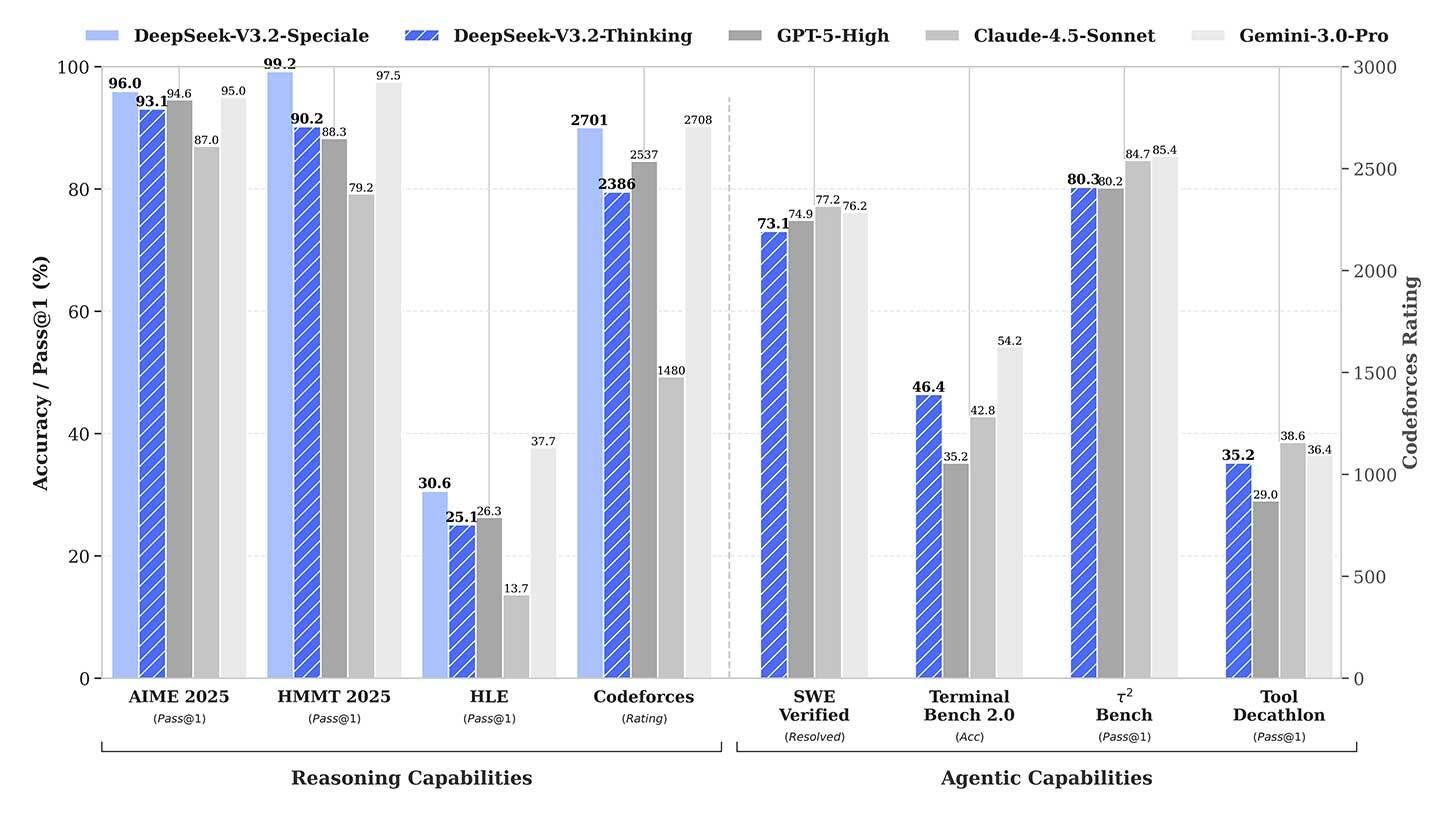
Image source: DeepSeek
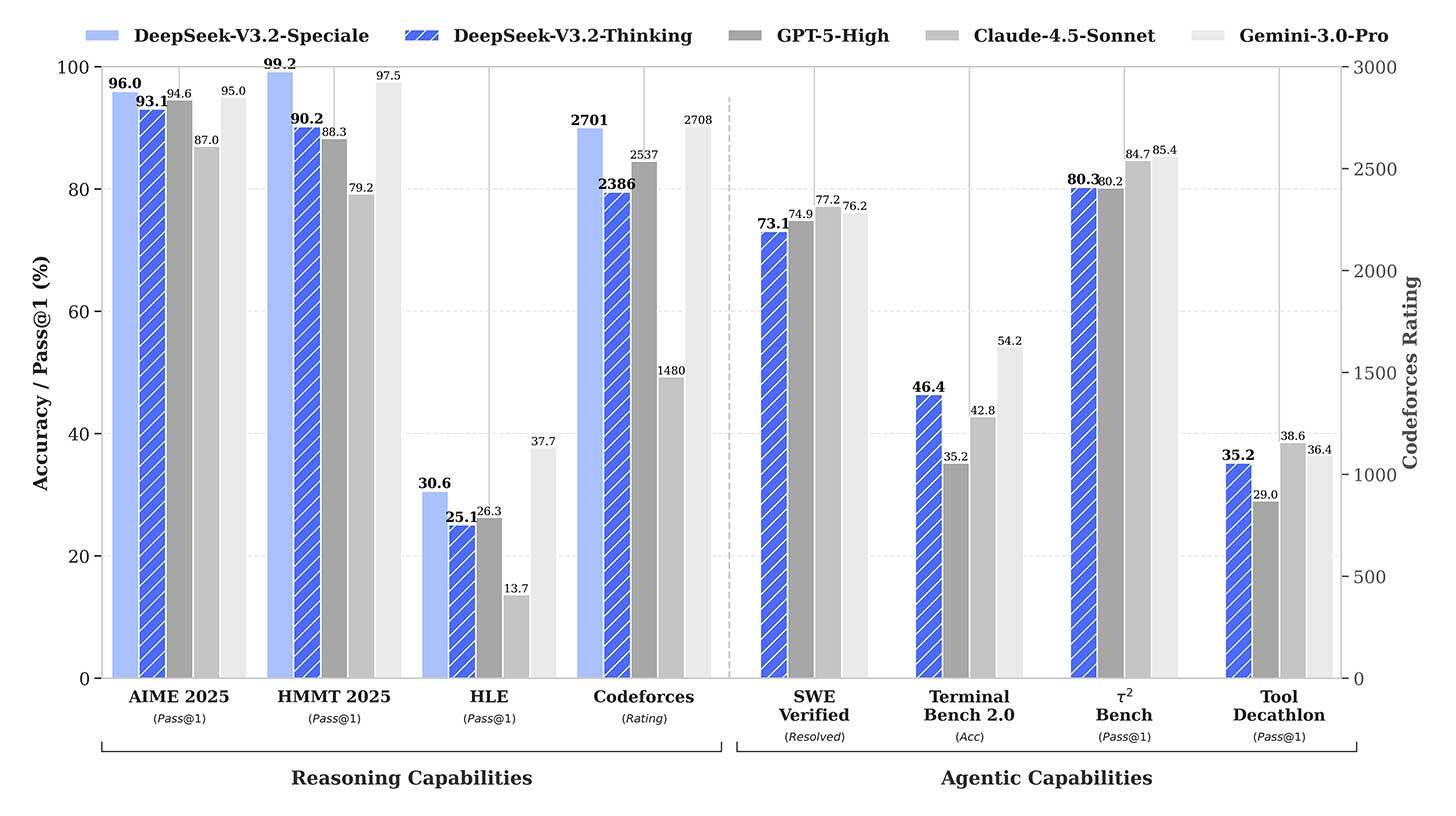
The Rundown: Chinese AI startup DeepSeek just released V3.2 and V3.2-Speciale, two reasoning models that perform on par with SOTA models like GPT-5 and Gemini 3 Pro — while cutting costs and staying accessible under an open-source license.
The details:
V3.2 matches or nears GPT-5, 4.5 Sonnet, and Gemini 3 Pro on math, tool use, and coding tests, with the heavier Speciale surpassing them in several areas.
The Speciale variant hit gold-medal scores at the 2025 International Math Olympiad and Informatics Olympiad, also placing No. 10 overall at IOI.
V3.2 pricing comes in at $0.28 input / $0.42 output per 1M tokens, a fraction of Gemini 3 Pro ($2 / $12), GPT-5.1 ($1.25 / $10), and Sonnet 4.5 ($3 / $15).
Both 685B parameter models ship under an MIT license, with weights available on Hugging Face for anyone to download.
Why it matters: DeepSeek’s R1 release rattled markets and sparked U.S. chip export control talk, and the V3.2 follow-up shows the Chinese lab isn’t a one-hit wonder — open-sourcing a model with frontier performance at a massive price cut. For U.S. labs charging premium API fees, the pressure to justify that gap just got a lot more intense.
TOGETHER WITH SONAR
💻 Coding personalities that redefine reliability & risk
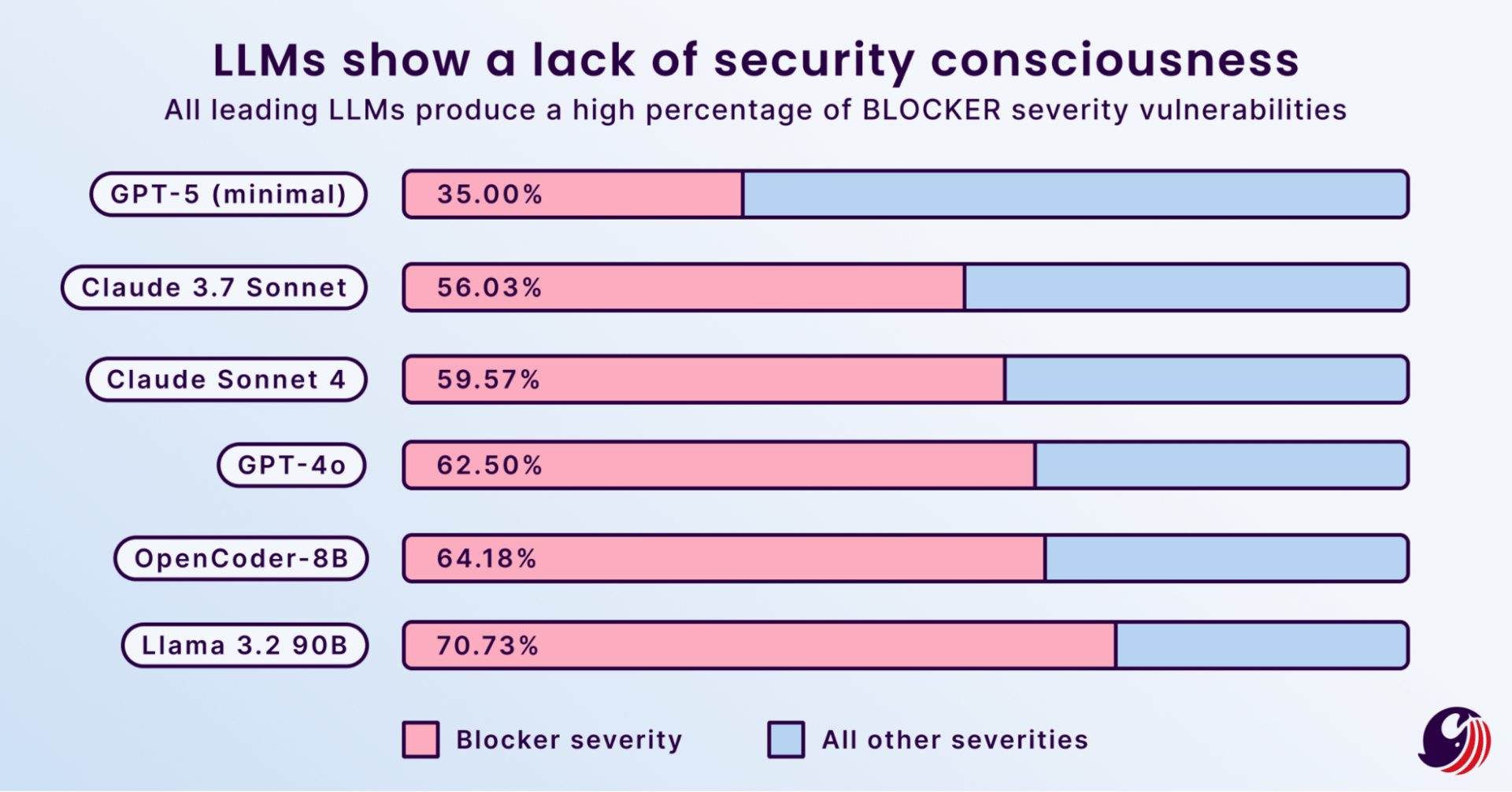
The Rundown Sonar just published The Coding Personalities of Leading LLMs, analyzing 4,400 Java tasks completed by GPT-5, Claude Sonnet 4, Llama 3.2, and other leading LLMs. The key finding? Models that excel at benchmarks often fail at writing secure, maintainable code in real-world applications.
Here’s what stood out:
LLMs excel at syntax but struggle with security
Generated code often lacks maintainability and clarity
Newer models come with harder-to-detect, more nuanced flaws
Download the full report — no form-fill required.
RUNWAY
🎥 Runway tops video leaderboard with new 4.5 release

Image source: Runway
The Rundown: Runway just released Gen-4.5, a new AI video model that claims to usher in a “new frontier for video generation”, topping benchmarks and showing strong performance across realism, motion, and creative control.
The details:
4.5 moves to the top spot of Artificial Analysis’ Text-to-Video leaderboard, after gaining hype under the codename “Whisper Thunder” in testing.
Runway says Gen-4.5 handles physics, fluid dynamics, and human movement more naturally, with details like hair and fabric staying consistent across frames.
4.5 can handle a range of styles, but excels in cinematic/realism visuals — with Runway saying outputs are “indistinguishable from real-world footage”.
The model was also codenamed ‘David’, with co-founder Cristobal Valenzuela comparing the small company’s ranking to a ‘David vs. Goliath’ victory.
Why it matters: Runway has already pushed AI into professional creative workflows, and 4.5 feels the closest yet to the cinematic capabilities needed to be widely adopted across Hollywood. While the next frontier is longer generations and even better audio/speaking sync, the year-over-year improvement in AI video is mind-blowing.
AI TRAINING
🔥 Create on-brand marketing campaigns with Pomelli

The Rundown: In this tutorial, you will learn how to use Pomelli (by Google Labs and DeepMind) to automatically create your business identity and generate on-brand marketing campaigns with ready-to-use creatives.
Step-by-step:
Go to Pomelli, click "Let's Get Started", enter your website URL - Pomelli scans and extracts colors, fonts, taglines, tone, and product cues
Edit your "Business DNA" summary by adjusting colors, values, and copy to match your brand vision - all fields are customizable
Prompt the campaign generator: "Create a scary but kind Halloween campaign", review three variations like "Give them something good" or "Treat yourself, no tricks"
In the creative editor, change headlines, text, fonts, colors, resize for different placements, use "Fix layout" to auto-reflow elements, and add a call-to-action
Pro tip: Be sure to test the conversion rate of Pomelli-generated creatives vs. your previous creatives.
PRESENTED BY IBM
🏆 Start small, then scale for AI success

The Rundown: Smarter AI starts with AI-ready data. When your models run on trusted, high-quality data, they perform more reliably, scale more smoothly, and deliver measurable value across the organization. Start small, validate impact quickly, and expand on a foundation built for long-term success.
Begin with AI that leverages:
Trusted, high-quality data
Both structured and unstructured data
Seamless integration across sources
Watch the webinar: ‘AI Agents Run on Data—Is Yours Ready?’ and learn more.
KLING
📽️ Klings all-in-one video model for generation, editing

Image source: Kling AI
The Rundown: Chinese startup Kuaishou launched Kling O1, a new AI video system that handles both video creation and editing in a single model — letting users generate clips, swap characters, make granular edits, and restyle footage in a single interface.
The details:
O1 accepts up to seven inputs at once, capable of interpreting images, videos, subjects, and text — with outputs of 3-10 seconds.
Users can edit existing footage with text commands like "remove bystanders" or "shift to nighttime" while preserving characters and scenes.
Other features include image, element, action, camera movement, and video references, start and end frames, multi-subject capabilities, and more.
Kling's internal tests show the model winning against Google Veo 3.1 and Runway’s Aleph on video reference and editing tasks.
Why it matters: Between Runway and Kling, December is kicking off with some massive AI video upgrades. O1’s all-in-one and edit-anything capabilities (similar to Runway’s previous Aleph drop) are making granular edits to video possible like never before — a leap much like what Nano Banana brought to images earlier this year.
QUICK HITS
🛠️ Trending AI Tools
🎥 Runway Gen-4.5 - Runway’s new top-rated video model
🐳 DeepSeek V3.2 - DeepSeek’s latest powerful open-source release
🎬 Kling O1 - Video model with multimodal understanding and editing
🧠 DeepSeek V3.2 Speciale - Open-source deep reasoning model
📰 Everything else in AI today
Black Forest Labs announced a new $300M funding round at a $3.25B valuation, coming on the heels of the company’s Flux.2 image model release.
Accenture and OpenAI are partnering to provide ChatGPT Enterprise to tens of thousands of consultants, also launching a program to help clients deploy AI agents.
OpenAI is taking an ownership stake in Thrive Holdings, a firm owned by one of its investors, Thrive Capital, saying the deal will scale impact across enterprise operations.
Nvidia invested $2B in chip design software maker Synopsys, with the multi-year partnership aimed at using AI and computing to speed up product engineering.
Epic CEO Tim Sweeney is lobbying for game marketplaces like Steam to stop using ‘Made with AI’ tags, saying the tech will be “involved in nearly all future production.”
COMMUNITY
🤝 Community AI workflows
Every newsletter, we showcase how a reader is using AI to work smarter, save time, or make life easier.
Today’s workflow comes from reader Taya P. in Vancouver, BC:
"I made a College Compass this weekend on Base44 for my son. It's an AI-powered guide to navigating the college application process, managing university research, applications, tasks, and deadlines all in one place. It auto-populates scholarship fit based on his specific filters, maps his entire 5-year journey by grade, and gets richer over time. It adjusts based on his performance, making suggestions on the area of study specialization and best best-matched universities.
It even has an admission probability calculator and makes suggestions on how to improve his success. Best of all, it empowers my son with a strategic framework that supports HIS needs and allows me as his mother to get out of the way, knowing he's got every support he needs!"
How do you use AI? Tell us here.
🎓 Highlights: News, Guides & Events
Read our last AI newsletter: AI cracks 30-year math problem
Read our last Tech newsletter: Apple takes the crown from Samsung
Read our last Robotics newsletter: The creepiest robot just got hands
Today’s AI tool guide: Create on-brand marketing campaigns with Pomelli
RSVP to next workshop @ 4PM EST Friday: Nano Banana Pro for Slide Decks
See you soon,
Rowan, Joey, Zach, Shubham, and Jennifer — the humans behind The Rundown

The creepiest robot just got hands
Read Online | Sign Up | Advertise
Good morning, robotics enthusiasts. Clone Robotics just made a hand that’s almost too human. Sinewy artificial muscles, carbon-fiber bones, and a tangle of sensors let it move with freaky precision — and survive half a million cycles.
It’s the perfect hand for the startup’s infamous humanoid, already dubbed “the world’s creepiest robot.”
In today’s robotics rundown:
Lifelike robotic hand mimics human grip
Hugging Face’s robotics lead launches startup
China sounds alarm on humanoid bubble
Robots rebuild Pompeii’s shattered frescoes
Quick hits on other robotics news
LATEST DEVELOPMENTS
CLONE ROBOTICS
👊🏼 Lifelike robotic hand mimics human grip

Image source: Clone Robotics
The Rundown: U.S.-Polish startup Clone Robotics just dropped a new demo of its updated anthropomorphic robot hand, which the company claims now has human-level grip, precision, and speed.
The details:
With 27 degrees of freedom, the hand uses 70 inertial sensors and pressure pads to track angle, speed, and grip force in real time.
Controlled by the company’s Neural Joint V2 Controller and a sensor glove, the hand mirrors human finger movements with near-zero latency.
The company says the hand’s carbon fiber bones, ligament-style tethers, and hydraulic artificial muscles have endured over 650K cycles without fatigue.
Posting on X, Clone Robotics says building a fully actuated, human-level robotic hand is hard, but making it durable is “even more challenging.”
Why it matters: Clone’s biomimetic hand powers its Alpha humanoid — with just 279 units planned — which swaps rigid actuators for water-driven artificial muscles. If soft hydraulics scale, humanoids can escape mechanical stiffness for something much more humanlike. Whether we can handle the creep factor is another question.
HUGGING FACE
🤖 Hugging Face’s robotics lead launches startup

Image source: LinkedIn
The Rundown: Europe’s humanoid race just got a fresh Parisian entrant. UMA, a stealthy new startup founded by Hugging Face’s top roboticist Rémi Cadene, is quietly assembling a founding team to build general-purpose humanoids in the French capital.
The details:
Job posts call for “stylized” humanoid walking, reinforcement learning, foundation models, and human teleoperators feeding data back into the loop.
The ads sketch a full humanoid stack: whole-body mechatronics, distributed real-time firmware, and robotics roles focused on shipping complete systems.
The founding team is being assembled by Cadene, the robotics lead at Hugging Face, and a former Meta/Tesla robotics researcher.
This summer, UMA was reportedly in talks to raise roughly $40M in seed funding, signaling serious investor interest behind the stealth project.
Why it matters: UMA is stepping directly into Europe’s suddenly crowded humanoid arena — joining Germany’s Agile Robots and Neura Robotics, the UK’s Humanoid, and France’s Wandercraft. The difference this time: the hardware looks to be architected from day one as a platform for large-scale, end-to-end AI.
CHINESE ROBOTICS
🫧 China sounds alarm on humanoid bubble

Image source: Unitree
The Rundown: China’s top economic planner just slapped a warning label on the country’s humanoid boom, saying a froth of more than 150 near-identical robot makers is starting to look like a bubble, not a revolution, Bloomberg reports.
The details:
Officials say more than 150 firms are now cranking out lookalike bots, risking a flood of copycat machines that soak up capital and cut off real R&D.
The sector has been turbocharged by viral stunts from startups like Unitree and is officially recognized by Beijing as a growth engine.
Humanoid stocks have surged, with the Solactive China Humanoid Robotics Index up nearly 30% in 2025, but real-world adoption remains years away.
Chinese regulators plan to tighten market entry, promote consolidation, and steer resources into core tech and training infrastructure to prevent collapse.
Why it matters: China’s warning shows that even the world’s biggest robotics ecosystem is worried its humanoid boom is drifting into bubble territory, echoing past tech frenzies that ended in tough shakeouts. If regulators move to cool the sector, it could reshape the global humanoid race just as competition seriously ramps up.
ROBOTS FOR GOOD
🎨 Robots rebuild Pompeii’s shattered frescoes

Image source: RePAIR
The Rundown: Robots are piecing together Pompeii's shattered frescoes — one fragment at a time. The RePAIR project deploys machine vision and pattern-matching algorithms to reassemble thousands of broken artifacts gathering dust in storerooms.
The details:
The system scans and digitizes fragments, then uses AI to detect subtle patterns that human eyes miss across thousands of pieces.
Robotic arms handle the delicate reassembly work that once took conservators years to complete manually.
Installed at Pompeii’s Casina Rustica, the robot has already restored frescoes from the House of the Painters at Work and the gladiators’ training hall.
The system is designed to augment, not replace, human experts — handling the puzzle work so archaeologists can focus on higher-level interpretation.
Why it matters: RePAIR represents a rare leap from digital to physical. While major museums use AI for restoration, few systems actually reassemble physical fragments robotically. If RePAIR proves scalable beyond Pompeii's frescoes to mosaics, pottery, and statues, it could unlock millions of artifacts gathering dust in museum storerooms.
QUICK HITS
📰 Everything else in robotics today
Sunday Robotics hired at least 10 former Tesla employees — including veterans of the Optimus and Autopilot teams — to help launch its Memo home robot.
A wave of Bay Area startups and big-tech skunkworks are reportedly pivoting away from humanoids toward “Pixar-like” robots: compact, expressive bots on wheels.
Surgical robotics, already a multibillion-dollar market globally, will nearly double by 2029, according to a new MassDevice intelligence report.
Xiaomi CEO Lei Jun says the company plans to deploy humanoids throughout its factories within five years, leveraging AI-powered automation to boost efficiency.
Flexion Robotics dropped a demo of its modular “brain” software in a humanoid that autonomously navigates rough outdoor terrain, detects trash, and cleans it up.
A 16-year-old from Bristol, UK, spent two years designing and building a fully functional robotic hand out of Lego pieces.
UBTech Robotics landed a multimillion-dollar deal to deploy its Walker humanoid in a trial at Chinese border crossings to manage crowds and guide travelers.
Chinese firm Deep Robotics staged a rescue drill to showcase how its X30 robot dogs can operate in hazardous environments and assist with disaster response.
Australia’s marine science agency is testing AI-guided robot boats that scan the seafloor and drop baby corals on ceramic carriers to help restore the Great Barrier Reef.
More than 800 Chicago residents signed a petition urging the city to pause its sidewalk delivery robot pilot until officials release safety and ADA data.
The ARM Institute signed a five-year cooperative agreement with the Air Force Research Laboratory worth up to $87M to conduct R&D.
Two Lisbon teens built a six‑legged AI reforestation robot that climbs burned slopes, analyzes soil, and plants saplings in one of Europe’s most wildfire‑scarred countries.
Elon Musk now says Tesla will “roughly double” its supervised Robotaxi fleet in Austin to about 60 cars next month, far short of his pledge to hit 500 vehicles by year-end.
COMMUNITY
🎓 Highlights: News, Guides & Events
Read our last AI newsletter: AI cracks 30-year math problem
Read our last Tech newsletter: Apple takes the crown from Samsung
Read our last Robotics newsletter: Figure sued over 'skull-crushing' force
Today’s AI tool guide: Use AI to find patents and innovation opportunities
RSVP to next workshop @ 4 PM EST Friday: Nano Banana Pro for Slide Decks
See you soon,
Rowan, Jennifer, and Joey—The Rundown’s editorial team
AI cracks 30-year math problem
Read Online | Sign Up | Advertise

Good morning, AI enthusiasts. An AI just delivered a breakthrough in mathematics — solving a 30-year-old problem using no human help at all.
With DeepSeek and Google also reaching gold-level reasoning, we may finally be on the cusp of mathematical superintelligence, where solving hard problems could be a superpower shared far beyond pro-level mathematicians.
P.S. Our next edition of The Rundown Roundtable is here, where our staff members share the unique ways we’re incorporating AI into both our work and personal lives. See the latest use cases below, and submit your own workflow here.
In today’s AI rundown:
‘Aristotle’ AI cracks 30-year math problem
The Rundown Roundtable: Our AI use cases
Use AI to find patents and innovation opportunities
China overtakes the U.S. in open AI economy
4 new AI tools, community workflows, and more
LATEST DEVELOPMENTS
HARMONIC
🤖 ‘Aristotle’ AI cracks 30-year math problem
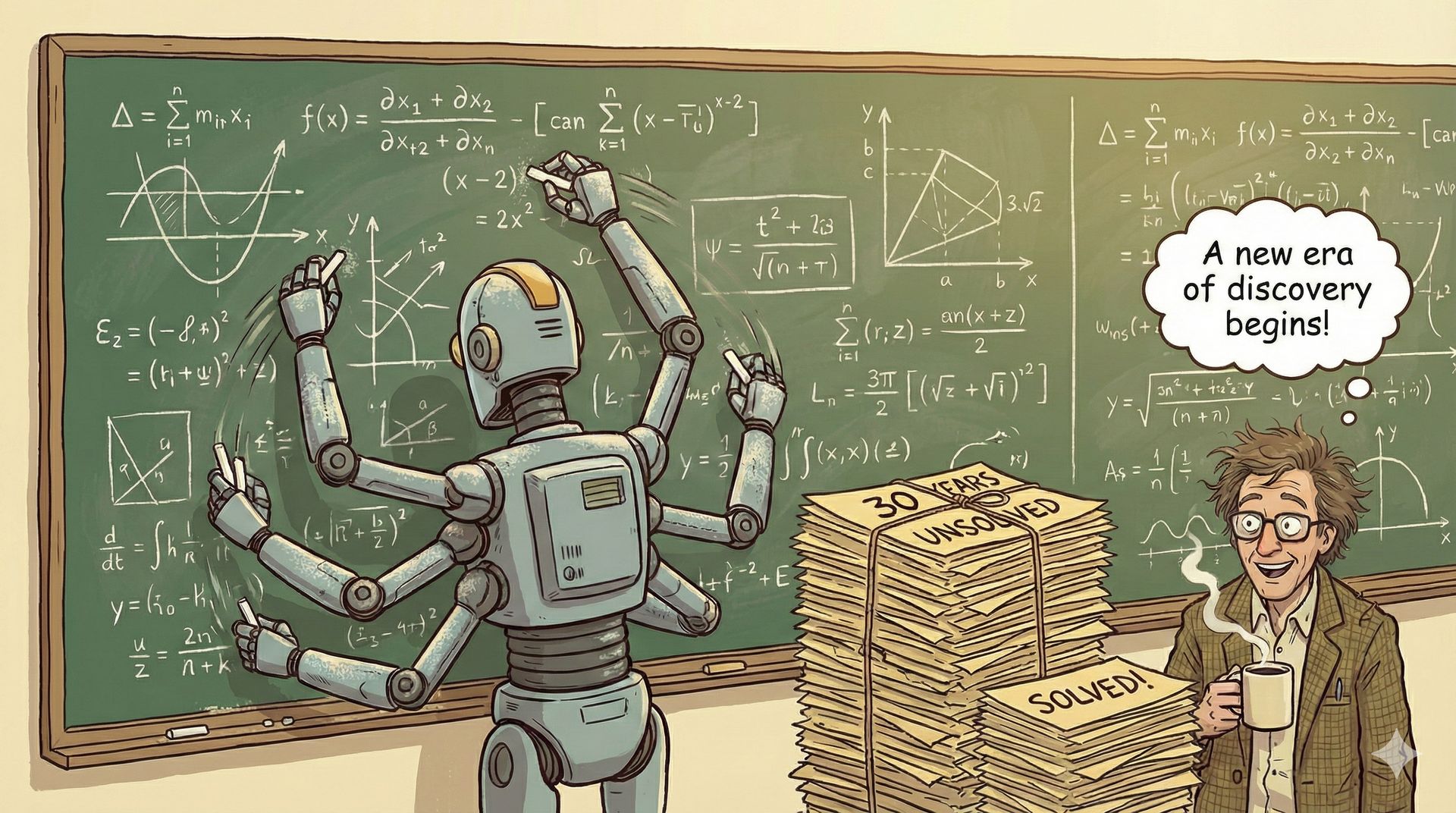
Image source: Gemini / The Rundown
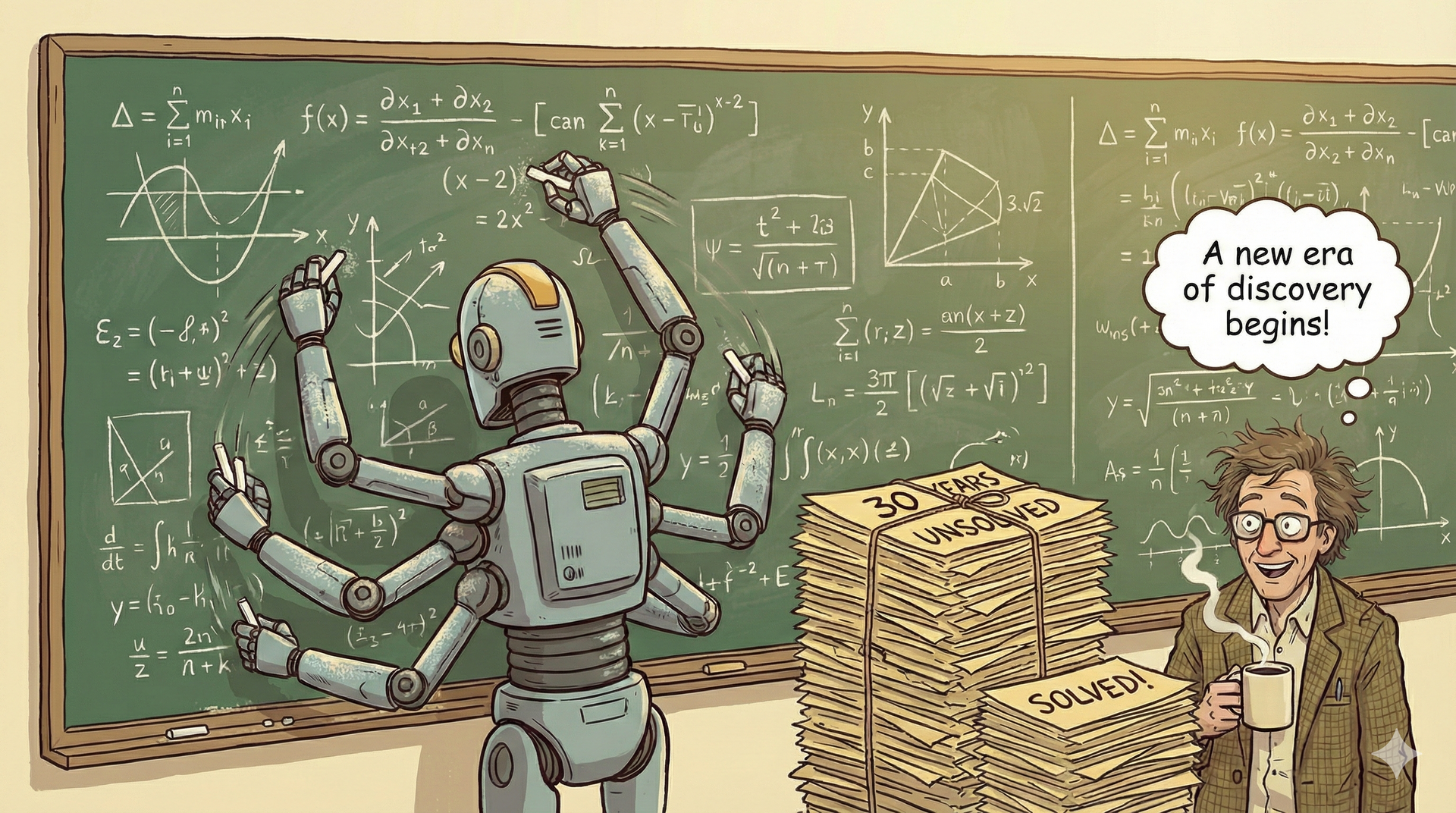
The Rundown: Aristotle, an AI system built by Harmonic, just independently solved a 30-year-old Erdős problem, marking what researchers are calling the first real step into the “vibe proving” era of mathematics.
The details:
Aristotle solved a version of Erdős Problem #124, which has been open since the 1990s, in six hours, and then formally verified the proof in Lean in a minute.
The result came from Aristotle’s beta version, updated with stronger reasoning and a natural language interface to explore and write step-by-step proofs.
Vilad Tenev, the founder of Harmonic, called this the arrival of “vibe proving” — AI-driven proofs discovery followed by machine-verifiable rigor.
The development follows Harmonic’s $120M funding and Aristotle’s IMO gold performance, putting it alongside Google and OpenAI in mathematical reasoning.
Why it matters: Harmonic’s breakthrough is another push toward mathematical superintelligence, where proofs will be generated, verified, and scaled at superhuman speeds. Tools like these can also open participation in advanced mathematics, turning it from something only experts do into something anyone can contribute to.
TOGETHER WITH TELUS
🔒 Secure AI before it’s too late

The Rundown: Hidden vulnerabilities and compliance challenges are emerging faster than ever. Uncharted is where industry leaders take action to secure the future of AI. Gain actionable strategies in nine expert-led sessions to protect your AI innovations before it’s too late.
In this insightful summit, you'll uncover:
Hidden dangers lurking in 24+ frontier models
Legal frameworks that balance innovation with responsibility
Proactive defense strategies from top CISOs
THE RUNDOWN ROUNDTABLE
💡 The Rundown Roundtable: Our AI use cases
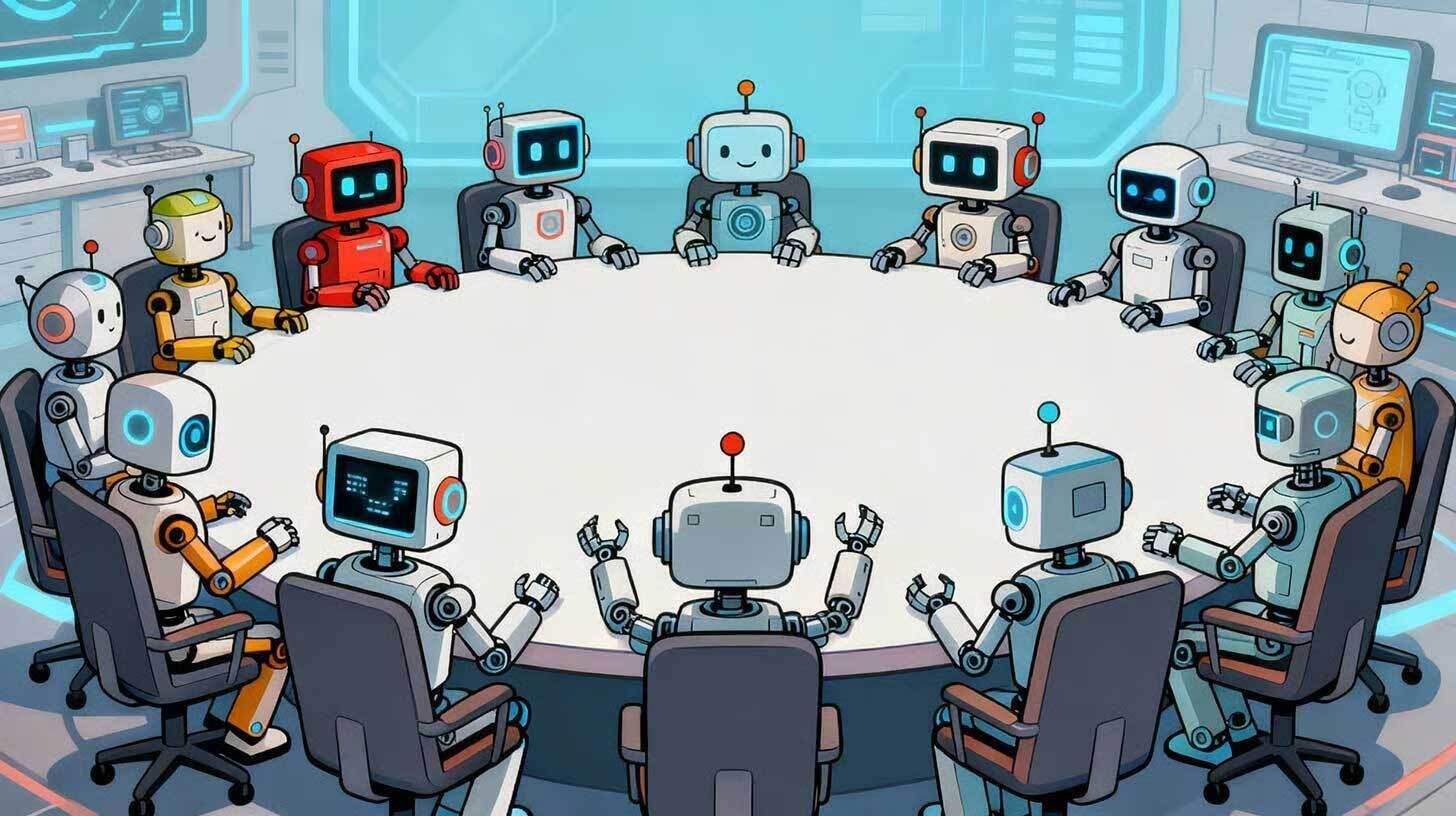
Image source: Ideogram / The Rundown
The Rundown: The Rundown Roundtable is a new weekly feature in which we poll members of The Rundown staff about how we use AI in our work and daily lives.
Rowan, CEO: I’m getting ahead of my 2026 fitness goals by giving the new ChatGPT 5.1 Pro model context from my old peak-performance training plans, Whoop data, work schedule, dietary restrictions, and goals. Together, we’re building a program designed to get me back to peak shape — optimized exactly for how I train, work, and recover.
Jason, Head of Product: I ran a functional lab test and sent the results to ChatGPT. It flagged my homocysteine at 46 (safe range is under 10) and suggested it could be linked to an MTHFR variant. I ordered a follow-up genetic test — and it came back positive for the C677T mutation. I started Thorne MethylGuard Plus supplements, and six weeks later, my homocysteine was normal. It helped me connect dots I wouldn’t have seen on my own.
Mayur, Content Manager: My work shifts usually stretch past midnight, so I’ve been trying to take my health more seriously. I created a dedicated project on ChatGPT and a mirrored one on Grok just to cross-check things, where I’ve uploaded my entire routine and all the details from my full body checkup. I’ve started adding photos of every medicine, supplement, and treatment I’ve been taking, along with notes on why and when I use them.
The idea is to keep updating it so it kinda becomes a digital biodata of my health and a go-to place for all my specific health-related questions.
AI TRAINING
🔎 Use AI to find patents and innovation opportunities

The Rundown: In this tutorial, you’ll learn how to use Perplexity’s AI-powered patent search to quickly identify existing patents, uncover open innovation spaces, and reduce the risk of infringement before investing in new ideas.
Step-by-step:
Go to Perplexity.ai and type your question (e.g., “Are there any patents related to AI automations?”). The platform automatically detects patent-related searches and shows relevant filings, owners, and grant dates
Refine your query with context, such as “Find active patents in AI-driven industrial automation.” Then ask follow-ups like “Show whitespace in this field” to reveal gaps and opportunities
Enable Agent Mode to activate multi-step reasoning. The agent compiles patents across regions, creates tables and charts, and visualizes your research space for deeper analysis
Review the generated CSV and PNG reports to identify crowded zones, emerging areas, and potential whitespace
Pro tip: Start broad, then narrow your search by asking the agent to group results by company, summarize claims, or map open innovation zones.
PRESENTED BY WARP
🏆 Warp’s No. 1 Dev Agent gets a massive upgrade
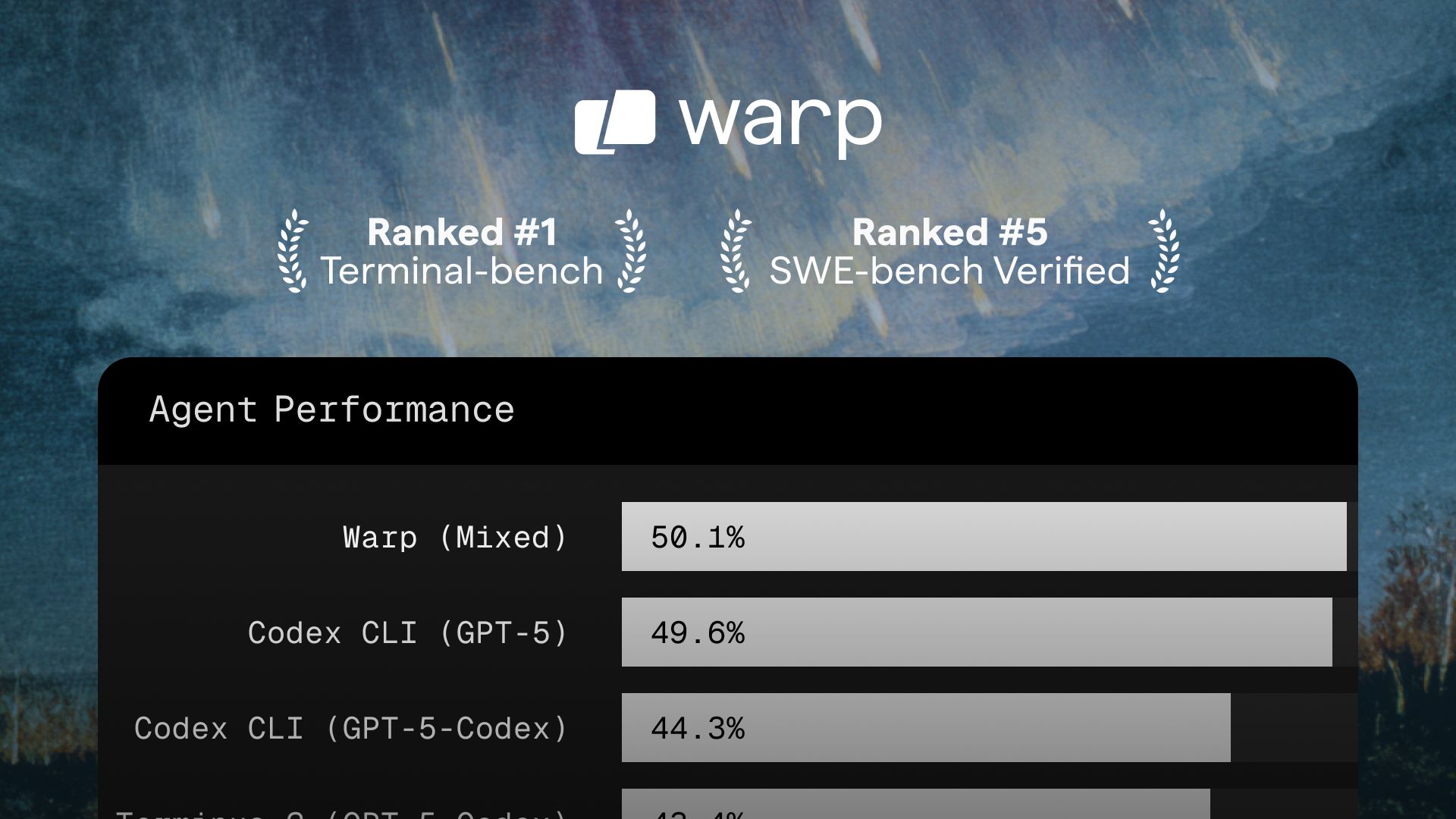
The Rundown: Warp just launched its biggest Agents update yet, propelling it to No. 1 on Terminal-Bench agentic coding benchmark ahead of Claude Code, Gemini, and Codex.
Warp’s Development Agent now includes
Full terminal use with long-running commands like servers and debuggers
Steerable planning you can review and edit in real time
Full lifecycle support, from planning and coding to deployment
See what the next evolution of development agents looks like.
AI MARKET
🇨🇳 China overtakes the U.S. in open AI economy

Image source: MIT
The Rundown: A new MIT and Hugging Face study analyzing 2.2B Hugging Face downloads reveals a “fundamental rebalancing” of the open AI economy, with U.S. industry dominance collapsing in favor of Chinese heavyweights.
The details:
The study found that Chinese AI developers have surpassed the U.S. industry in downloads, capturing 17.1% of the market compared to the U.S.’s 15.8%.
This surge is largely driven by two Chinese players, DeepSeek and Alibaba’s Qwen, holding 14.2% of the market between August 2024 and August 2025.
Google, Meta, OpenAI, which commanded 40%+ of downloads before 2023, are completely absent, with Comfy topping the list for the U.S. with 5.4% share.
The study also found that true open source is dying, with models disclosing their training data crashing from 79.3% in 2022 to just 39% in 2025.
Why it matters: The rapid ascent of Chinese models marks a changing of the guard. The open ecosystem has transitioned from a U.S.-led monopoly (historically led by Google) to a landscape where Chinese labs now provide the “brains.” This gap can increase further, with a wave of Chinese releases, led by DeepSeek, likely on the way.
QUICK HITS
🛠️ Trending AI Tools
🧠 Math V2 - DeepSeek’s open-source mathematical reasoning model
🤳 Perplexity - AI answer engine, now with persistent memory
🏆 GELab-Zero-4B - StepFun’s new SOTA, open-source computer use model
🛒 Vidi2 - ByteDance’s AI video editor with spatio-temporal grounding
📰 Everything else in AI today
Elon Musk’s xAI is reportedly set to raise a $15B round of funding at a $230B pre-money valuation next month, CNBC reported.
AI and agents drove $14.2B in global online sales on Black Friday, with $3B of this coming from the U.S. alone, Salesforce data revealed.
Virgin Australia signed a deal with OpenAI to embed ChatGPT-powered tools directly into how people search for and plan flights.
Data intelligence giant Databricks is in talks to raise $5B at a valuation of $134B — roughly 32x its expected sales of $4.1B for this year, The Information reported.
Avatar director James Cameron called gen AI “horrifying,” saying it makes up a character, an actor, a performance from scratch, unlike his movies’ performance capture approach that celebrates the “actor-director moment.”
Deutsche Telekom and Schwarz Group are reportedly planning a joint “AI gigafactory” in Germany, eyeing the EU’s $20B funding to rival U.S. and China.
Telegram CEO Pavel Durov launched Cocoon, a decentralized compute network to let GPU owners earn TON tokens for private AI processing, challenging cloud providers.
COMMUNITY
🤝 Community AI workflows
Every newsletter, we showcase how a reader is using AI to work smarter, save time, or make life easier.
Today’s workflow comes from reader Martin K. in Bratislava, Slovakia:
“I use SimTheory AI to create a simple invoice payment assistant. I volunteer for a non-profit, and I'm responsible for paying about 30 invoices every month. I upload the PDF invoices to the assistant I created. It then recognizes all relevant information, enriches it with additional data for accounting and finance, and creates a table for an internal system and an XML file for batch payments. It works 100% correctly and increases my productivity 10-fold.
The next challenge is to use a Google Sheets MCP to automatically enter the data into the internal system.”
How do you use AI? Tell us here.
🎓 Highlights: News, Guides & Events
Read our last AI newsletter: DeepSeek returns with an IMO-crushing AI
Read our last Tech newsletter: Apple takes the crown from Samsung
Read our last Robotics newsletter: Figure sued over 'skull-crushing' force
Today’s AI tool guide: Use AI to find patents and innovation opportunities
RSVP to next workshop @ 4 PM EST Friday: Nano Banana Pro for Slide Decks
See you soon,
Rowan, Joey, Zach, Shubham, and Jennifer—the humans behind The Rundown

Apple takes the crown from Samsung
sunRead Online | Sign Up | Advertise
Good morning, tech enthusiasts. Apple is about to end Samsung’s 14-year reign as the world’s top phone maker, powered by iPhone 17 hype and a global upgrade cycle kicking into gear.
Apple is smartly sliding into budget territory it once ignored, and analysts say this price-slashing could keep the Cupertino giant on top until 2029. Could a rumored foldable iPhone be the final twist of the knife?
In today’s tech rundown:
Apple set to overtake Samsung for top spot
MIT says AI is ready for 12% of jobs
Alibaba launches Meta-rivaling AI glasses
China rescues astronauts stranded on space station
Quick hits on other tech news
LATEST DEVELOPMENTS
APPLE
🍎 Apple set to overtake Samsung for top spot

Image source: Ideogram / The Rundown
The Rundown: Apple is poised to overtake Samsung as the world's largest smartphone maker in 2025, reclaiming the top spot for the first time in some 14 years on the back of surging iPhone 17 demand.
The details:
Counterpoint Research expects Apple to ship about 243M iPhones next year versus roughly 235M phones for Samsung, a gap of around 8M units.
That would give Apple about a 19.4% share of the global smartphone market, edging out Samsung at about 18.7% as the overall market grows just over 3%.
The surge is driven by strong iPhone 17 sales and a major upgrade cycle as pandemic-era devices age out, especially in the U.S. and China.
Analysts expect Apple to hold the No. 1 spot through at least 2029, helped by upcoming lower-cost “e” models and a possible foldable iPhone.
Why it matters: Apple's riding high on strong iPhone 17 sales, even as the iPhone Air stumbles. But the key move is Apple's expansion beyond premium, betting it can dominate multiple price tiers at once — hooking aspirational buyers in developing markets while keeping high-end customers locked in the iOS ecosystem.
MIT
🧊 MIT says AI is ready for 12% of jobs

Image source: Ideogram / The Rundown
The Rundown: MIT just quantified the AI job scare: 11.7% of the U.S. labor market is now economically replaceable by existing AI, representing roughly $1.2T in annual wages across finance, healthcare, admin work, and white-collar services.
The details:
The estimate comes from the new “Iceberg Index,” a large-scale simulation that models 151M U.S. workers, mapping 32K skills across 923 occupations.
Researchers contrast a "Surface Index" of current AI use — 2.2% of wages, mostly in tech — with an 11.7% "Iceberg Index" of tasks already automatable.
Not surprisingly, the jobs most exposed are heavy on repeatable cognitive and admin work in sectors like finance, healthcare, and professional services.
Why it matters: The 11.7% figure represents what AI can handle right now, not what will actually get automated — that depends on corporate strategy, political decisions, and adoption speed. But some states are already using the index to run what-if scenarios on retraining and investment before the automation wave hits for real.
ALIBABA
👓 Alibaba launches Meta-rivaling AI glasses
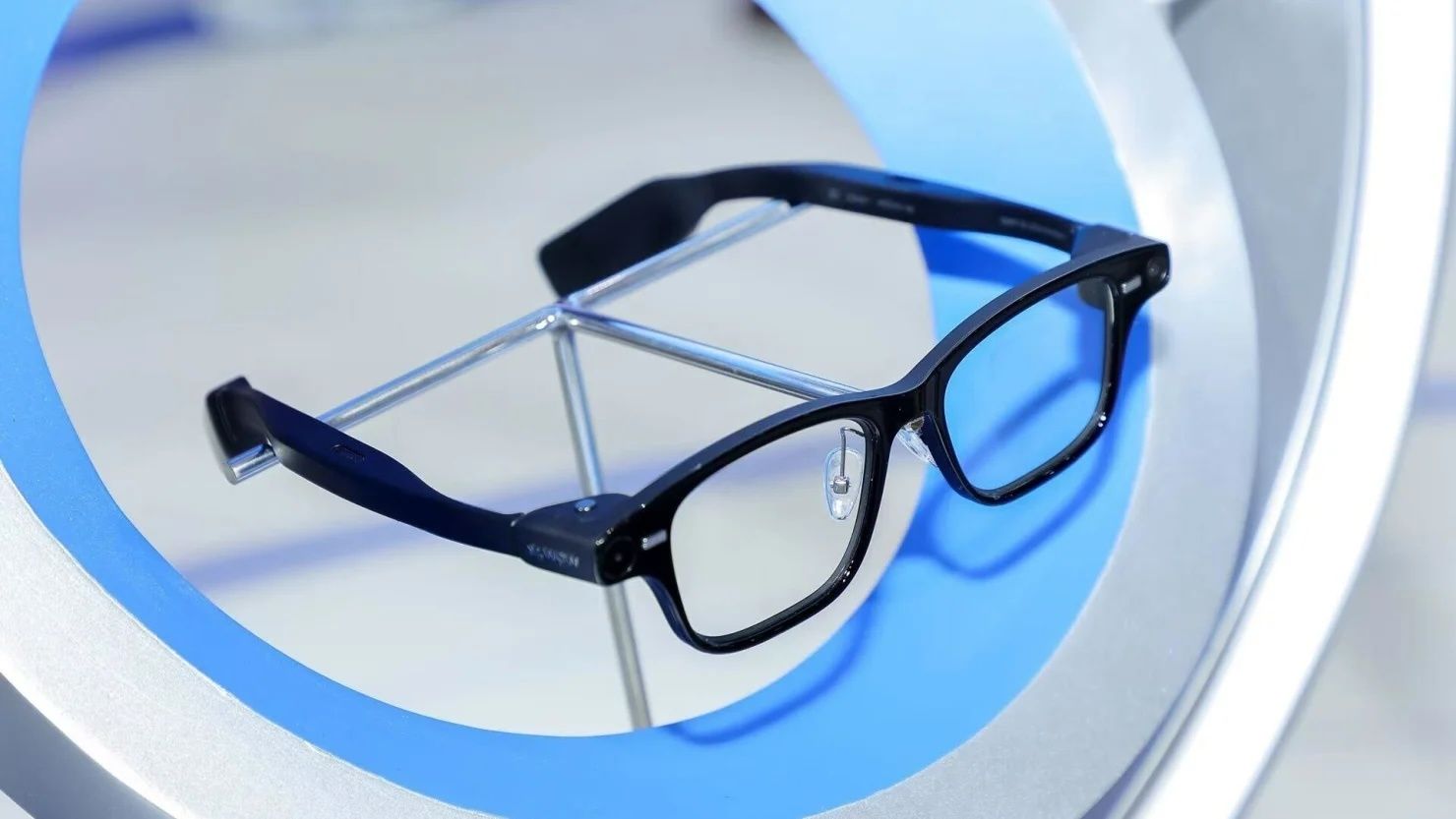
Image source: Alibaba
The Rundown: Alibaba just entered the smart glasses race with its Meta-rivaling Quark AI Glasses, a $500-ish wearable powered by the company’s Qwen large language models, now hitting the shelves in China.
The details:
The glasses come in two models — the flagship S1 and stripped-down G1, starting at 3,799 yuan ($537) and 1,899 yuan ($268), respectively.
Alibaba says the main hardware difference is the lenses: the S1 uses clear micro-OLED screens in the frames, while the G1 omits the AR-style display.
Both models include bone conduction microphones, built-in cameras, and a swappable dual-battery system that can last up to 24 hours on a charge.
The glasses plug into Alibaba's commerce stack, letting users look at products and instantly pull up Taobao pricing or trigger Alipay payments, for example.
Why it matters: Alibaba is betting it can beat Meta by wiring AI glasses directly into China's largest e-commerce and payments infrastructure. While Meta relies on partners like Ray-Ban, Alibaba owns the full stack from hardware to checkout, potentially delivering a tighter — and more profitable — experience.
SPACE
🚀 China rescues astronauts stranded on space station

Image source: Shujianyang via Wikimedia
The Rundown: China launched an uncrewed Shenzhou-22 spacecraft as an emergency lifeboat for three astronauts stranded on the Tiangong space station after suspected space debris cracked their return capsule.
The details:
The capsule docked with Tiangong just over three and a half hours after liftoff, restoring a guaranteed escape route and delivering supplies.
The damaged Shenzhou-20 spacecraft was scheduled to return three astronauts to Earth earlier this month, but window cracks grounded the vehicle.
China's space agency accelerated the launch, originally slated for April or May 2026, to provide a safe return option.
Shenzhou-22 hauled medical supplies, station equipment, repair tools for the damaged capsule, plus fresh fruit, vegetables, and comfort foods.
Why it matters: China's response validates its "one launch, one on standby" emergency protocol, which keeps a backup spacecraft and rocket in near-readiness at Jiuquan. The swift resolution stands in sharp contrast to NASA's handling of two astronauts stranded on the International Space Station for nine months last year.
QUICK HITS
📰 Everything else in tech today
HP Inc. plans to cut 4K to 6K jobs worldwide by fiscal 2028 as it leans on AI to drive productivity across its PC and printer business.
Anduril’s autonomous weapons are flunking real-world tests, reports the WSJ, as the Palmer Luckey–founded defense startup rides a $2.5B raise to a $30.5B valuation.
McKinsey quietly cut about 200 global tech jobs as it shifts more internal work to AI systems, joining a wider trend of using automation to handle support tasks.
The European Parliament passed a non-binding resolution calling for children under 16 to be barred from social media by default unless parents explicitly consent.
A trial of GLP-1 drugs like Ozempic shows that when people stop taking them, they tend to regain the weight and lose many of the cardiovascular and metabolic benefits.
Singapore-made AI “Kumma” teddy bear is back on sale even after it was recalled for the toy’s chatbot engaging in sexually explicit conversations.
WeRide and Uber launched the Middle East’s first fully driverless robotaxi service in Abu Dhabi, a year after starting operations with safety drivers.
Pony.ai plans to triple its global robotaxi fleet from about 1K vehicles at the end of this year to more than 3K by the end of 2026 as its growth ambitions ramp up.
YouTube is testing a new “Your Custom Feed” feature that lets users actively shape their home recommendations with prompts rather than solely relying on algorithms.
Battery recycler Redwood Materials, which just raised $350M, is cutting about 5% of its 1,200-person workforce — affecting a few dozen employees.
COMMUNITY
🎓 Highlights: News, Guides & Events
Read our last AI newsletter: DeepSeek returns with an IMO-crushing AI
Read our last Tech newsletter: This device wiretaps your 'second brain'
Read our last Robotics newsletter: Figure sued over 'skull-crushing' force
Today’s AI tool guide: Use Nano Banana Pro to create product shots for Instagram
See you soon,
Rowan, Jennifer, and Joey—The Rundown’s editorial team
No matching search results
Try using different keywords, double-check your spelling, or explore related categories.
Stay Ahead on AI.
Join 2,000,000+ readers getting bite-size AI news updates straight to their inbox every morning with The Rundown AI newsletter. It's 100% free.