Lego's iconic brick just got a brain
PLUS: Grok's deepfake crisis

Jennifer Mossalgue
January 6, 2026
Read Online | Sign Up | Advertise

Good morning, tech enthusiasts. The classic Lego just got a digital upgrade that reacts as you build. The company has unveiled a “Smart Brick” that senses motion, light, and nearby pieces — and works with Smart Minifigures to trigger real-time audio and effects.
Lego calls it “its biggest innovation in decades,” designed to give bricks an interactive edge but without pulling kids onto screens.
In today’s tech rundown:
Lego’s new tech-loaded smart bricks
Grok’s deepfake crisis goes global
Uber unveils new Lucid-Nuro robotaxi
Data centers drive $6.5B spike in grid costs
Quick hits on other tech news
LATEST DEVELOPMENTS
LEGO
🧱 Lego’s new tech-loaded smart bricks

Image source: Lego
The Rundown: At CES 2026, Lego introduced the Smart Brick, a revamped 2x4 that adds sensors, lights, sound, and wireless connectivity so that builds can react to motion, light, and nearby pieces while still looking like regular bricks.
The details:
A tiny ASIC chip powers the bricks and Smart Minifigures with near-field magnetic positioning, accelerometers, LED arrays, and miniature speakers.
Smart Tags tell bricks how to behave — a helicopter set triggers propeller sounds and lights that sync with actual movement, for example.
Lego developed proprietary Bluetooth-based tech that lets multiple Smart Bricks recognize and operate with each other.
Lego’s Smart Play Star Wars sets will debut in March, with preorders opening this Friday.
Why it matters: Lego’s betting that embedding intelligence directly into physical toys beats staring at screens, while keeping kids’ hands on actual bricks. The move transforms analog play into responsive storytelling without surrendering to the iPad — a rare middle path in children’s entertainment.
XAI
🛑 Grok’s deepfake crisis goes global

Image source: xAI
The Rundown: Regulators in India, the EU (including France), and Malaysia are scrutinizing Elon Musk’s X after its AI took Grok’s “spicy mode” was used to generate sexualized deepfakes of women and minors.
The details:
U.S. advocates are urging the Justice Department and FTC to join them, arguing that existing child sexual abuse laws already cover AI-made CSAM.
The EU is assessing whether “spicy mode” violates the Digital Services Act, with officials calling some outputs not “spicy” but “illegal” and “appalling.”
India’s IT ministry has ordered X to complete a “technical, procedural, and governance-level review” of Grok or risk sanctions.
UK regulator Ofcom has made “urgent contact” with X and xAI over allegations that Grok can be used to generate sexualized images of children.
Why it matters: This could kick off a new era of scrutiny for AI platforms, where companies — not just users — may be held responsible for harmful outputs. If regulators classify Grok’s sexualized deepfakes as illegal, AI firms could face heavier compliance requirements, stricter oversight, and slower deployment of generative tools
UBER
🚖 Uber unveils new Lucid-Nuro robotaxi
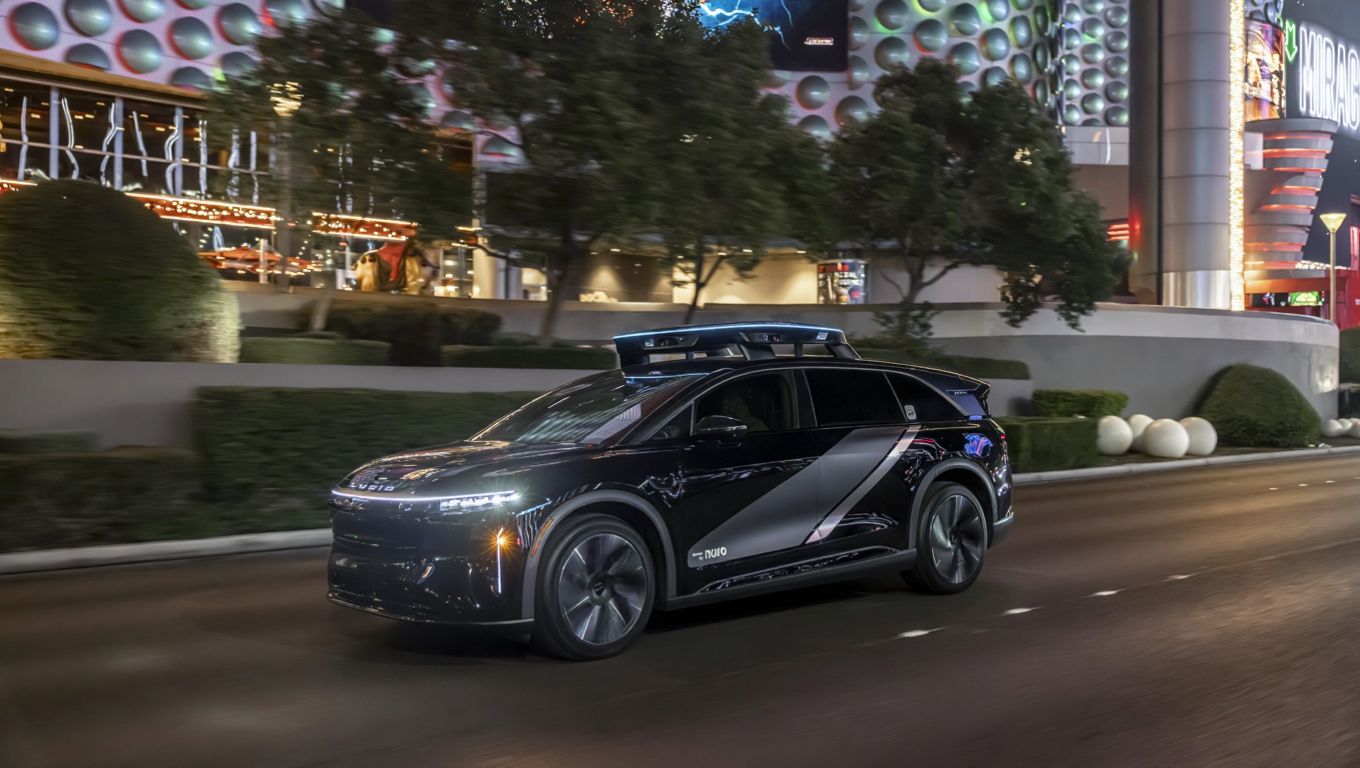
Image source: Lucid Motors
The Rundown: Uber is turning Lucid’s Gravity SUV into a full-blown robotaxi, kitted out with Nuro’s self-driving tech and already running test rides on Bay Area streets ahead of a planned launch later this year.
The details:
The trio just pulled the wraps off a production-intent robotaxi built on Lucid’s Gravity SUV, revealed at CES.
The vehicle packs high-res cameras, solid-state lidar, radar, and a roof “halo” running Nvidia’s Drive AGX Thor, with integrated LEDs.
All autonomous hardware is installed during the factory build, avoiding the teardown-retrofit process used on Waymo’s current Jaguar I‑Pace fleet.
Inside, a new Uber-built interface shows an isometric city view, ETA, trip progress, and controls for climate, music, rider support, and pull-over requests.
Why it matters: Uber’s betting a factory-integrated approach can outpace Waymo’s retrofit model and transform robotaxis into an Uber-controlled business rather than a platform dependent on external fleets. If successful, it also gives Lucid a much-needed volume customer — but the real test is whether Nuro’s tech can match Waymo’s.
AI
⚡️ Data centers drive $6.5B spike in grid costs

Image source: Ideogram / The Rundown
The Rundown: The biggest U.S. power grid is buckling under data center demand. PJM-tied facilities have driven a $6.5B spike in the cost of securing reliable electricity, now claiming nearly half the system's future capacity bill, Bloomberg reports.
The details:
Data centers on the PJM grid have added $6.5B to the cost of securing future power, bringing their total capacity costs to $23.1B across recent auctions.
That $23.1B represents about 49% of PJM’s $47.2B in capacity costs for June 2025 through May 2028 — PJM’s grid spans 13 states.
The surge reflects a wave of new AI and cloud facilities demanding around-the-clock, high-reliability electricity at unprecedented scale.
Grid planners warn that this demand is colliding with lagging transmission projects and retiring older plants, forcing gas generation to fill the gap.
Why it matters: For the tech industry, the numbers flag a hard ceiling that better chips or model pruning can’t fix: across PJM, from Illinois to New Jersey, surging data center demand is colliding with slow transmission build‑out and patchy new generation, a mismatch that could mean higher prices just to keep hyperscale sites powered.
QUICK HITS
📰 Everything else in tech today
Amazon says its 2025 “Thursday Night Football” slate on Prime Video averaged 15.3M viewers per game, making it the most‑watched season in its 20‑year history.
Three offshore wind developers are suing the Trump administration after the Interior Department abruptly halted five nearly built projects worth about $25B.
Smart rings are on the rise, with IDC data showing shipments on track to jump about 49% in 2025 — far outpacing smartwatch growth, Bloomberg reports.
LG is reviving its “wallpaper” TV at CES with the OLED evo W6, a 9mm‑thick, reflection‑free 4K set that uses a wireless Zero Connect Box for lossless video.
Xreal refreshed its entry-level AR line with the 1S, a $449 pair of smart glasses that bump video resolution to 1200p while undercutting last year’s model by $50.
Eli Health announced that its saliva-based Hormometer gadget will soon add instant at-home tests for testosterone and progesterone, with per-test prices starting at $8.25.
Voice AI startup Subtle launched $199 “voicebuds” that build its noise-isolation models into wireless earbuds, claiming far clearer calls than AirPods.
Pebble is reviving its thinnest smartwatch as the $199 Pebble Round 2, a 10–14-day battery, 8.1mm-thick round watch with a higher‑res color e‑paper display.
Geely used CES to announce a plan to enter the U.S. EV market within two to three years, likely via brands like Zeekr and Lynk & Co. and U.S.-based Volvo production.
Elon Musk’s Starlink is offering free satellite internet to users in Venezuela through February 3 after U.S. airstrikes and a raid that captured Nicolás Maduro.
COMMUNITY
🎓 Highlights: News, Guides & Events
Read our last AI newsletter: Alexa+ comes for ChatGPT’s web turf
Read our last Tech newsletter: Neuralink’s bet to scale brain surgery
Read our last Robotics newsletter: Agibot’s tiny, portable humanoid
Today’s AI tool guide: Create IG product shots with Nano Banana Pro
RSVP to next workshop @ 4 PM EST Friday: AI Foundations Bootcamp Pt. 1
See you soon,
Rowan, Joey, Zach, Shubham, and Jennifer — The Rundown’s editorial team




Stay Ahead on AI.
Join 2,000,000+ readers getting bite-size AI news updates straight to their inbox every morning with The Rundown AI newsletter. It's 100% free.