Get the latest AI news, understand why it matters, and learn how to apply it in your work — all in just 5 minutes a day. Join over 2,000,000+ subscribers.

Google’s Gemini update climbs the leaderboard
Read Online | Sign Up | Advertise

Good morning, AI enthusiasts. The AI leaderboard just got another shakeup, with Google dropping a new Gemini 2.5 Pro version right ahead of its I/O event and taking coding and web development to the next level.
Google may have just taken the next step up the AI ladder — but with GPT-5, DeepSeek R2, and other powerhouse models waiting in the wings, the next generation of rivals may not be far behind.
In today’s AI rundown:
Google’s Gemini 2.5 Pro climbs leaderboards
HeyGen brings new emotion to animations
Create a personal financial assistant with Zapier Agents
Lighttricks’ new open-source video model
4 new AI tools & 4 job opportunities
LATEST DEVELOPMENTS
🏆 Google’s Gemini 2.5 Pro climbs leaderboards

Image source: Google
The Rundown: Google just released an early preview of Gemini 2.5 Pro I/O Edition, an update that dramatically improves coding and web development capabilities — pushing the model to the top spot across the AI leaderboard rankings.
The details:
The update achieved the top score on the WebDev Arena leaderboard, surpassing the previous frontrunner, Claude 3.7 Sonnet, by a significant margin.
The model brings enhanced performance for frontend and UI development, code transformation, editing, and creating sophisticated agentic workflows.
2.5 Pro also features new video understanding capabilities, enabling workflows like converting video content into interactive learning applications.
In addition to coding, the model takes the No. 1 spot across all categories on the LM Arena leaderboard, beating OpenAI’s o3.
Why it matters: Google’s anticipated I/O event is still weeks away, but the tech giant couldn’t wait to flex its new powerhouse to the world. Much like December’s quiet barrage of SOTA upgrades, Google continues to ship top models without the hype. If the demos and early tests are any indication, vibe coding just leveled up in a big way.
TOGETHER WITH GAMMA
⚡The new standard for standout content

The Rundown: Gamma makes creating AI-driven presentations, social posts, and websites feel like magic — turning your prompts into professional content in seconds with no design skills (or headaches) needed.
Using Gamma's intuitive platform, you can:
Transform simple prompts into complete, visually stunning presentations in minutes
Turn boring docs into attention-grabbing content that actually gets read
Build social media carousels, microsites, and more with no design or coding skills
Collaborate live and maintain brand consistency with team-focused AI tools
Visit gamma.app today and join 50M other users quickly creating standout content.
HEYGEN
🗣️ HeyGen brings new emotion to animations

Image source: HeyGen
The Rundown: HeyGen just rolled out Avatar IV, a new AI model capable of creating lifelike and expressive animations from a single photo while capturing vocal nuances, natural gestures, and facial movements.
The details:
A new diffusion-inspired ‘audio-to-expression’ engine analyzes voices to create photorealistic facial motion, micro-expressions, and hand gestures.
The model requires just a single reference image and a voice script, and works with shots like side angles and various subjects like pets and anime characters.
Avatar IV also supports portrait, half-body, and full-body formats, allowing for more dynamic and non-traditional video generations.
HeyGen said the new model excels for videos, including influencer-style UGC, singing avatars, animated game characters, and expressive visual podcasts.
Why it matters: HeyGen continues to build on creating AI avatars that are virtually indistinguishable from reality, but new support for different camera shots and formats opens up completely new workflows that break free from the typical “talking head” avatars we’ve grown used to in AI generations.
AI TRAINING
💼 Create a personal financial assistant with Zapier Agents

The Rundown: In this tutorial, you will learn how to create an AI-powered system that automatically extracts information from invoices in Google Drive, categorizes expenses, and organizes everything in a Google Sheet for easy financial tracking.
Step-by-step:
Visit Zapier Agents, click the plus button, and create a New Agent
Click “Configure,” name your agent, and select “Add Behavior”
Set up Google Drive as the trigger for when a new invoice is uploaded and add three tools: Google Drive to retrieve the file, ChatGPT to extract invoice data, and Google Sheets to add the information to your spreadsheet
Test your agent and toggle it “On” to activate
Pro tip: Create a dedicated folder named “Invoices” in Google Drive to have the agent only look for new files there. Please make sure to double-check its responses as AI can hallucinate.
PRESENTED BY VANTA
🏥 Streamlining healthcare compliance in the AI era

The Rundown: AI is rewriting the rules for healthcare companies— and also raising the stakes for data security. Join Vanta, Modern Health, and US Med-Quip for an interactive panel on how leading teams are streamlining and scaling compliance with limited resources.
This discussion will explore:
Real-world approaches to protecting sensitive patient data while adopting AI
How to build scalable compliance frameworks with limited resources
Practical ways to turn regulatory requirements into trust-building opportunities
Future-proofing your compliance strategy as regulations evolve
LIGHTTRICKS
🎥 Lighttricks’ new open-source video model

Image source: Lighttricks
The Rundown: Lightricks unveiled LTXV-13B, an open-source AI video generation model that creates high-quality content 30x faster than existing models while being efficient enough to run on standard consumer hardware.
The details:
The model uses “multiscale rendering,” a new approach that creates videos in layers of detail, allowing for smoother and more consistent renderings.
It’s also able to run on everyday consumer GPUs while maintaining speed and quality, removing the need for expensive, enterprise-level computing power.
New features include precise camera motion control, keyframe editing, and multi-shot sequencing tools for professional-quality results.
LTXV is open source with free licensing for companies < $10M in revenue, and backed by partnerships with Getty Images and Shutterstock for training data.
Why it matters: There is no shortage of mind-blowing AI video models on the market, each making the options from just a year ago look like a completely different era of tech. With motion, consistency, speed, and efficiency continuing to scale and a flurry of high-quality open-source options, video creation is quickly changing forever.
QUICK HITS
🛠️ Trending AI Tools
🦜 Parakeet - NVIDIA’s open-source ASR model for high-quality transcriptions
🎬 Higgsfield Effects - Cinematic VFX effects for video generations
🎥 Recraft Advanced Style Control - Mix ready-to-use styles with images
⚙️ Windsurf Wave 8 - New updates to the OpenAI-acquired coding platform
📰 Everything else in AI today
OpenAI is reportedly set to acquire coding platform Windsurf (previously named Codeium) for $3B, which would be the AI giant’s largest acquisition to date.
Google launched AI Max, a suite of features embedded into Search for advertisers to optimize and expand the reach of their campaigns.
Elon Musk’s attorney responded to OpenAI’s PBC restructuring, saying the move “changes nothing” and is a “transparent dodge that fails to address the core issues.”
Microsoft is reportedly a major holdout in OpenAI’s announced restructuring, wanting assurances that its $13.75B investment in the AI leader is protected in the new plans.
Smart ring maker OURA announced two new AI features that allow users to log their food, nutrition and monitor their glucose while receiving personalized guidance.
FutureHouse released Finch in closed beta, a new AI agent designed to handle data-driven biology analysis and discovery.
COMMUNITY
🎥 Join our next live workshop

Join our next workshop this Friday, May 9th, at 4 PM EST with Dr. Alvaro Cintas, The Rundown’s AI professor. By the end of the workshop, you’ll you’ll be equipped to prompt with precision and creativity across any AI tool and improve AI responses.
RSVP here. Not a member? Join The Rundown University on a 14-day free trial.
🤝 Share The Rundown, get rewards
We’ll always keep this newsletter 100% free. To support our work, consider sharing The Rundown with your friends, and we’ll send you more free goodies.

See you soon,
Rowan, Joey, Zach, Alvaro, and Jason—The Rundown’s editorial team

Apple gets ready to fold
Read Online | Sign Up | Advertise

Good morning, tech enthusiasts. Apple is planning a major shakeup of its iPhone business — with new models, including a long-rumored foldable iPhone, and a new release timeline designed to keep consumers wanting more.
With sales slowing, AI struggles, and looming Trump tariffs, will a whole new batch of iPhone form factors be enough to drive upgrades?
In today’s tech rundown:
Apple’s iPhone shakeup, new foldables
Google’s new TV and film production house
DoorDash sweeps up Deliveroo and SevenRooms
Function Health buys MRI scan startup Ezra
Quick hits on other major news
LATEST DEVELOPMENTS
APPLE
🍏 Apple’s iPhone shakeup, new foldables

Image source: Apple
The Rundown: Apple is reportedly preparing a major overhaul of its flagship iPhone lineup to boost sales with a long-rumored foldable iPhone and a revamped release schedule — also on deck, a foldable iPad.
The details:
Starting in 2026, Apple will swap how it launches new iPhones, moving away from its long-standing tradition of unveiling all models at once in the fall.
Only the premium models will debut in the fall of 2026, including the iPhone 18 Pro, iPhone 18 Pro Max, a new ultrathin iPhone 18 Air, and the foldable iPhone.
The standard iPhone 18 and the more affordable iPhone 18e will be released in the spring of the following year, likely around March 2027.
An ultrathin iPhone is also expected later this year, with analysts predicting a foldable iPad by late 2026 and Bloomberg saying it could be as late as 2028.
Why it matters: It’s no secret that Apple’s iPhone business — which accounts for half of its revenue — has hit hard times. Whether the new shapes and schedules will boost consumer interest remains to be seen, but with pressures from China and Trump tariffs potentially raising iPhone prices, Apple is hoping for a win.
🍿 Google’s new film and TV production house

Image source: Ideogram / The Rundown
The Rundown: Apple has Apple Originals, and now Google wants to make its own mark. The tech giant just launched a film and TV production house dubbed 100 Zeros, with the quiet aim of promoting tech (especially its own) to young audiences.
The details:
100 Zeros reportedly plans to produce original content that subtly raises Google’s cool quotient and puts a positive spin on tech in general.
The project is the result of a multi-year partnership with Range Media Partners, the production company behind films A Complete Unknown and Longlegs.
Range’s mission is to find and develop projects that Google can help fund or co-produce, while weaving in next-gen tech into storylines.
But rather than stream on YouTube or Google TV, Google reportedly plans to sell the productions to major streaming platforms and Hollywood studios.
Why it matters: Instead of relying on product placement alone (as it did with White Lotus), Google aims to promote an overall positive view of tech to young viewers, as a kind of antidote to Black Mirror. In fact, the initiative quietly started last year with Neon’s horror film Cuckoo, which Google helped fund but had no hand in its content.
DOORDASH
🥡 DoorDash sweeps up Deliveroo and SevenRooms

Image source: Ideogram / The Rundown
The Rundown: DoorDash has been on a shopping spree, announcing today two major takeovers: a $3.9B purchase of UK-based food delivery service Deliveroo and a $1.2B acquisition of SevenRooms, a New York-based hospitality tech platform.
The details:
DoorDash’s $3.9B takeover offer for Deliveroo is set to strengthen its presence in Europe and the Middle East; the deal is expected to close in late 2025.
The SevenRooms deal will see DoorDash integrate advanced CRM, operations, and guest experience tools into its Commerce Platform.
In turn, SevenRooms, which serves more than 13K venues globally, will benefit from DoorDash’s scale and resources to accelerate innovation.
Despite the deals, DoorDash’s Q1 revenue of $3.03B missed Wall Street expectations, leading to a 4% share price drop following the announcements.
Why it matters: DoorDash is leading the pack in the U.S. food delivery market, with 67% of the market share over Uber Eats and Grubhub. These latest deals mark a bold pivot from its food delivery roots to becoming an omnichannel commerce powerhouse, while also expanding into coveted European markets.
FUNCTION HEALTH
🩺 Function Health buys MRI scan startup Ezra
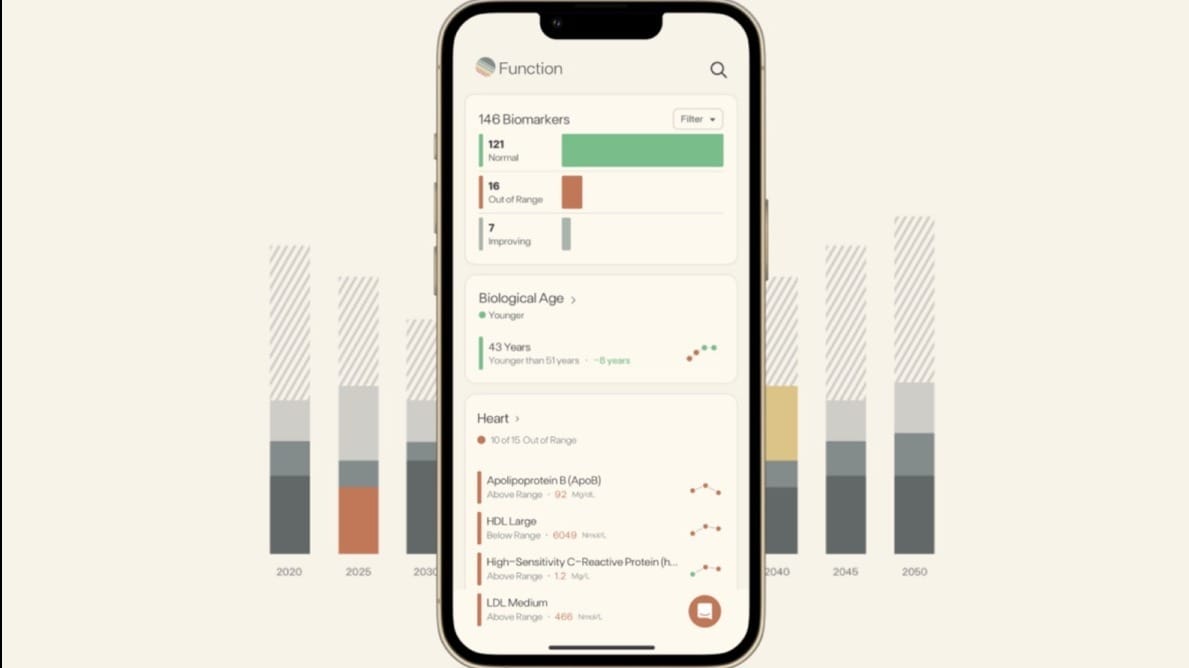
Image source: Function Health
The Rundown: Blood testing startup Function Health just nabbed Ezra, a startup specializing in full-body MRI scanning, for an undisclosed amount and launched a new, 22-minute scan that costs $499.
The details:
Function Health, backed by prominent American physician Dr. Mark Hyman, will integrate Ezra’s FDA-cleared, AI MRI tech into its preventive health platform.
Their new full-body scan, priced at $499, marks a significant reduction from Ezra’s previous $1,495 price for a 30-minute scan.
The scan is designed to screen for cancer and a host of other conditions and will be available through Ezra’s 70-plus locations in the U.S.
Function Health’s core offering is a $499 annual membership that gives its users access to more than 160 blood tests, with results tracked over time.
Why it matters: The demand for tech-enabled health testing is on the rise, with Function raising $53M as of June 2024 and eying another $200M round at a $2B valuation. Rival Prenuvo also just raised $120M. Still, medical experts are cautious about the risks of overdiagnosis and the psychological impact of elective MRIs.
QUICK HITS
📰 Everything else in tech today
Waymo, Alphabet’s self-driving unit, announced it is building more than 2K I-Pace robotaxis at a new factory in Arizona.
Elon Musk’s SpaceX now has a new city, as Texas residents living near the SpaceX launch and manufacturing complex voted to incorporate their community as Starbase.
Microsoft officially shut down its once-popular video calling service Skype, replacing it with a free-to-use version of Microsoft Teams for consumers.
Meta slashed 2K content moderation jobs in Barcelona, which handled French, Spanish, and Portuguese fact-checking across its social media platforms.
EV maker Rivian is receiving $16M in state incentives to build a new 1.2 million-square-foot supplier park in Normal, Illinois, with Rivian investing $120M.
OpenAI has reportedly agreed to buy AI-assisted coding tool Windsurf (formerly known as Codeium) for about $3B.
TeleMessage, makers of a modified version of Signal that archives messages for the U.S. government, has reportedly been hacked.
Tapple, a popular Japanese dating application, launched a new feature that enables users to verify their unmarried status via government-issued ID cards.
Google is launching its AI chatbot, Gemini, for children under 13 who have parent-managed Google accounts through Google’s Family Link.
COMMUNITY
🎥 Join our next live workshop

Join our next workshop today at 3 PM EST with Chris Cunningham and Joe Zapiain from ClickUp. In this live session, you’ll learn how to embed AI and automation directly into your ClickUp workspace to save time, reduce complexity, and scale your team's execution - without adding headcount.
RSVP here. Not a member? Join The Rundown University on a 14-day free trial.
See you soon,
Rowan, Jennifer, and Joey—The Rundown’s editorial team

OpenAI ends for-profit push
Read Online | Sign Up | Advertise

Good morning, AI enthusiasts. Silicon Valley’s most controversial pivot is officially taking a U-turn, with OpenAI announcing a surprising restructuring that keeps its nonprofit firmly in control.
After months of legal battles with Elon Musk and protests from former employees and civic leaders, the AI leader’s for-profit push is history — but something tells us the drama is far from over.
P.S.: Our next workshop is today at 3 PM EST with ClickUp — join and learn how to embed AI and automation directly into your ClickUp workspace to save time, reduce complexity, and scale your team's execution. RSVP here.
In today’s AI rundown:
OpenAI retains nonprofit control in surprise move
Tech giants push for mandatory AI education
Create professional spreadsheets with Canva Sheets
Nvidia open-sources top-tier transcription AI
4 new AI tools & 4 job opportunities
LATEST DEVELOPMENTS
OPENAI
🔄 OpenAI retains nonprofit control in surprise move

Image source: Getty Images
The Rundown: OpenAI just announced it will maintain nonprofit control as it transitions its business arm into a public benefit corporation (PBC), marking a major reversal of its polarizing previous plans to become a fully for-profit entity.
The details:
The existing for-profit LLC will now transition into a PBC, a structure used by other mission-driven companies like Anthropic and Patagonia.
Unlike previous considerations, the founding nonprofit organization will become a major shareholder and retain governance control over the new PBC.
The move comes amid pressure from civic groups and former employees and a lengthy legal battle with Elon Musk over the original non-profit mission.
Sam Altman detailed the decision to employees, saying the move will allow OAI to secure “trillions” to deliver beneficial AGI to the world.
Why it matters: After months of lawsuits and protests, OpenAI is backtracking on its for-profit ambitions. The PBC looks to thread a needle between the startup’s original nonprofit mission and the massive capital needed to create AGI — though it remains to be seen what this means for capital that was reportedly contingent on a for-profit turn.
TOGETHER WITH UNSTRUCTURED
🚀 Transform raw documents into structured data in minutes

The Rundown: With Unstructured, you can simply drag any document and get a structured JSON with no setup, no connectors, and no fuss.
Unstructured delivers:
Instant results: See structured output side-by-side
Easy customization: Add nodes for chunking, enrichment, and embedding
Seamless scaling: Test a single file or process thousands with ease
Transform PDFs, images, Word documents, emails, and more!
AI & EDUCATION
📣 Tech giants push for mandatory AI education

Image source: o3 / The Rundown
The Rundown: Over 250 tech leaders and CEOs from major companies just signed an open letter urging U.S. states to offer AI and computer science courses and make the subjects mandatory graduation requirements in high school.
The details:
The letter emphasizes keeping the U.S. competitive with nations like China that already mandate AI education, and preparing students as AI "creators."
It also highlights research that a single high school CS course can increase early wages by 8% across all career paths, regardless of college attendance.
Key signatories include CEOs from Microsoft, LinkedIn, Adobe, AMD, Indeed, Khan Academy, Airbnb, Dropbox, LinkedIn, Zoom, Uber, and more.
The push coincides with President Donald Trump's recent executive order establishing a White House task force to expand K-12 AI instruction.
Why it matters: Just as computer and internet learning became common throughout classrooms, AI is quickly becoming a vital skill— and one that will be applicable across every aspect of life. The next generation of students will need to be AI-native, and this move looks to make sure it’s a part of the educational curriculum.
AI TRAINING
📊 Create professional spreadsheets with Canva Sheets

The Rundown: In this tutorial, you will learn how to use Canva Visual Suite 2.0’s new spreadsheet tool with AI-powered features to automatically fill cells and extract instant data insights.
Step-by-step:
In Canva, click “Create” and select “Sheets” from the dropdown menu.
Choose a template or start from scratch to build your spreadsheet.
To automatically complete data patterns, select cells with partial data, right-click, and choose “Magic Fill.”
Generate insights by selecting your data, clicking “Magic Insights,” and asking questions like “What's my total budget?” or “Show performance by platform.”
Pro tip: You can save time by using templates for content calendars, budgets, or project trackers and then customizing them with your branding colors and fonts.
PRESENTED BY INNOVATING WITH AI
🚀 Launch a six‑figure AI consultancy in six months

The Rundown: Innovating With AI’s “The AI Consultancy Project” gives you the frameworks, playbooks, and client‑ready templates needed to turn “interesting AI ideas” into a revenue‑generating business – helping you ride the wave of an AI consulting boom expected to grow by 8x this decade.
In this program, you will:
Gain the tools and frameworks to find clients and deliver top-notch services
Follow a 6-month plan to build a 6-figure AI consulting business
Join a 700‑strong cohort where some members landed their first AI client in 72 hours
NVIDIA
🗣️ Nvidia open-sources top-tier transcription AI

Image source: Reve / The Rundown
The Rundown: Nvidia just released Parakeet V2, a powerful new open-source automatic speech recognition (ASR) model that can transcribe an hour of audio in a single second while achieving commercial-grade levels of accuracy.
The details:
Parakeet took the top spot on the Open ASR leaderboard with a 6.05% Word Error Rate, beating top models like ElevenLabs’ Scribe and OpenAI’s Whisper.
Released under a commercially permissive CC-BY-4.0 license, the 600M parameter model is fully open-source for developers and researchers.
The model also includes advanced features like precise timestamping, capitalization, punctuation handling, and song-to-lyric transcription capabilities.
Why it matters: Nvidia continues to not only dominate the chip game but also release powerful and largely open-source models. The days of tedious transcriptions are long gone, and this open yet top-tier ASR model significantly lowers the barrier for building advanced speech applications.
QUICK HITS
🛠️ Trending AI Tools
🧪 FutureHouse - AI research agents for accelerating scientific discovery
🤖 Olmo 2 1B - Ai2’s small but powerful open language model
🎹 Suno 4.5 - Next-gen AI music generation model
🔌 Zapier MCP - Connect your AI to thousands of apps
💼 AI Job Opportunities
📞 The Rundown - Account Manager
🎭 Meta - Creative Director
💰 OpenAI - Director of Treasury
✍️ Scale AI - Technical Writer
📰 Everything else in AI today
OpenAI CPO Kevin Weil said that their open model will be based on ‘Democratic values’ and a generation behind the frontier to avoid accelerating Chinese AI.
Coding platform Cursor’s parent company, AnySphere, raised $900M in new funding, bringing its valuation to nearly $9B.
OpenAI provided a detailed breakdown of recent GPT-4o sycophancy issues, announcing improved testing, an opt-in alpha phase, and stricter evaluation standards.
Anthropic launched its “AI for Science” program, offering free API credits to researchers in “high-impact” fields like drug discovery, genomics, and agriculture.
The United Arab Emirates announced mandatory AI education for all K-12 students starting this year, as part of the country’s strategy to establish regional AI leadership.
Pinterest unveiled new AI-powered visual search features, allowing users to find and describe their search queries using images instead of text.
COMMUNITY
🎥 Join our next live workshop

Join our next workshop today at 3 PM EST with Chris Cunningham and Joe Zapiain from ClickUp. In this live session, you’ll learn how to embed AI and automation directly into your ClickUp workspace to save time, reduce complexity, and scale your team's execution - without adding headcount.
RSVP here. Not a member? Join The Rundown University on a 14-day free trial.
🤝 Share The Rundown, get rewards
We’ll always keep this newsletter 100% free. To support our work, consider sharing The Rundown with your friends, and we’ll send you more free goodies.
See you soon,
Rowan, Joey, Zach, Alvaro, and Jason—The Rundown’s editorial team

Berkeley's open-source $5K humanoid
Read Online | Sign Up | Advertise

Good morning, robotics enthusiasts. UC Berkeley just unveiled a fully open-source humanoid that can be built with 3D-printed parts for as little as $5K.
It walks, writes, and learns tasks through AI-driven reinforcement learning. With projects like these gaining momentum, the open-source humanoid movement is picking up speed. The question is: Are you ready to build your own DIY humanoid?
In today’s robotics rundown:
UC Berkeley’s open-source humanoid
Hugging Face’s 3D-printed robot arm
Researchers make a robot cake you can eat
Sewer inspection drones do the dirty work
Quick hits on other robotics news
LATEST DEVELOPMENTS
UC BERKELEY
🦄 UC Berkeley’s open-source humanoid

Image source: University of California, Berkeley
The Rundown: Researchers at UC Berkeley just introduced Berkeley Humanoid Lite, a lightweight humanoid version of its research-geared open-source bot that can be built at home with 3D printed parts for less than $5K.
The details:
Berkeley Humanoid Lite can walk, solve a Rubik’s Cube, write with a marker, and perform real-world tasks using AI-driven reinforcement learning.
It weighs 16 kg, stands nearly 3 feet tall, and features modular, 3D-printed cycloidal gearboxes for its actuators and frame.
An onboard 6S 4000 mAh LiPo battery powers the robot for about 30 minutes, with optional tethering also available for extended sessions.
The whole design leverages widely available electronic and mechanical parts, making it easy for researchers and hobbyists to build, modify, and repair.
Why it matters: All hardware designs, code, and frameworks for the humanoid are fully open-source, and the researchers have even opened their WhatsApp communities for collaboration and support, making DIY robotics more accessible than ever. They also report that in testing, the bot proved as durable as robots costing up to $100K.
HUGGING FACE
🦾 Hugging Face’s 3D-printed robot arm

Image source: Hugging Face
The Rundown: Open-source leader Hugging Face is ready to give you a hand—literally. The AI startup just introduced the SO-101, a 3D-printable, programmable robotic arm that performs basic tasks through reinforcement learning.
The details:
The SO-101 arm features six motors and can be equipped with cameras, enabling it to perform tasks like picking up and sorting objects.
Building on its predecessor, the SO-100, it uses a leader-follower system for intuitive teleoperation when handling different objects.
All instructions, 3D files, and part lists are openly available on GitHub, allowing anyone to build their own robotic arm at a starting cost of around $100.
The SO-101 is also compatible with NVIDIA Jetson AI and can be enhanced with mobile bases for greater autonomy, supporting robotics research.
Why it matters: This is a major step up from last year’s S0-100, which was Hugging Face’s first venture into open-source robotics. Since then, the startup has come a long way — acquiring Pollen Robotics and expanding its portfolio as it works to democratize robotics through a collaborative, open-source approach.
EPFL
🎂 Researchers make a robot cake you can eat

Image source: EPFL
The Rundown: Researchers from the École Polytechnique Fédérale de Lausanne (EPFL) and the Italian Institute of Technology created RoboCake—a fully edible, robotic wedding cake that also comes with edible batteries.
The details:
The cake, showcased at Expo 2025 Osaka, features two edible, pomegranate-flavored gummy bears that move via an internal pneumatic system.
The world’s first edible, rechargeable battery—made of vitamin B2, quercetin, activated carbon, and chocolate—powers LED candles on the cake.
The cake is part of the EU-funded RoboFood project, a four-year, 3.5M euro research project to create edible robots and robotic foods.
Another major edible robotic project is ELFO, which is developing edible electronic circuits and sensors for applications like food supply chain tracing.
Why it matters: Novelty aside, dible robots can have life-saving applications such as smart pills, ingestible sensors for noninvasive diagnosis, and wildlife preservation (imagine robots delivering medicines to dangerous animals). Plus, it’s a big opportunity with the global edible soft robotics market projected to reach $49.2B by 2029.
FLYBOTIX
🚿 Sewer inspection drones do the dirty work

Image source: Flybotix
The Rundown: Back in 2016, a massive sinkhole opened in Fraser, Michigan, triggering the collapse of a major underground sewer line. In the aftermath, the region has become a leader in using drones and AI for inspecting aging sewer systems.
The details:
Wired reports that Macomb County, Michigan, is using Flybotix’s Asio X drone and SewerAI software, which can inspect up to 900 meters of pipe per day.
The drone features a protective cage, high-powered LED lights, and a 4K camera to capture footage inside pipes buried up to 60 feet underground.
The AI quickly analyzes the footage from the drone, automatically identifying defects such as cracks or blockages — and prioritizing repairs.
The total investment for the drone and AI system was about $100K, compared to the $1M previously spent every three years on manual inspection.
Why it matters: Inspecting old sewer systems is dangerous, dirty work, and drones make the process safer, faster, and more cost-effective. Atlanta and Detroit use drones equipped with LiDAR and 3D imaging to map aging sewer systems, while Houston has replaced 80% of manned inspections with drones, saving workers from gas exposure.
QUICK HITS
📰 Everything else in robotics today
China’s UBTech Robotics reportedly secured a buyer for a “small batch” of its humanoids to be deployed in manufacturing.
An alleged video of Unitree’s H1 humanoid exhibiting erratic behavior and nearly injuring two workers has gone viral.
Unitree also unveiled fire rescue robot dogs that can shoot water or foam with a range of 60 meters and a flow of 40 liters per second.
Near Space Labs nabbed $20M in Series B funding to expand deployment of its Swift robots for capturing high-res images in the stratosphere.
Montreal opened doors to Canada’s first and only hospital-based center dedicated to advancing surgical robots.
University of Houston researchers developed MyoStep, a next-gen soft exoskeleton designed to help children with cerebral palsy walk more easily and confidently.
Northeastern University researchers developed a novel algorithm, DFLIOM, that boosts mobile robot navigation by relying only on essential data points for 3D mapping.
Swiss researchers are developing LEVA, a multi-terrain autonomous delivery bot that can lift and drop off cargo boxes weighing up to 85 kg.
Trump’s tariffs were reportedly “top of mind” at last week’s Robotics Summits in Boston, with thousands of tech industry professionals attending.
The Netherlands-based Lely dairy farm robot milks cows when the cows choose to visit the bot for milking, while also handling feed and manure cleanup.
The UK’s National Health Service approved 11 cutting-edge robotic surgery systems for soft tissue and orthopedic procedures.
China unveiled a tube-shaped, two-pound grenade drone that allows a single soldier to control multiple units via AI targeting assistance.
British YouTuber James Bruton created a DIY unicycle robot that can balance and move forward and backward on one large wheel.
COMMUNITY
🎥 Join our next live workshop
Join our next workshop on Tuesday, May 6th at 3 PM EST with Chris Cunningham and Joe Zapiain from ClickUp. In this live session, you’ll learn how to embed AI and automation directly into your ClickUp workspace to save time, reduce complexity, and scale your team's execution, without adding headcount.
RSVP here. Not a member? Join The Rundown University on a 14-day free trial.
See you soon,
Rowan, Jennifer, and Joey—The Rundown’s editorial team

FutureHouse's superhuman science agents
Read Online | Sign Up | Advertise

Good morning, AI enthusiasts. Scientific research is about to hit new speeds, with FutureHouse releasing four superhuman AI agents that are said to outperform even PhD researchers.
With agentic research assistants about to crawl through millions of papers and datasets, a giant wave of AI-driven scientific breakthroughs is getting closer and closer.
In today’s AI rundown:
FutureHouse’s ‘superintelligent’ science agents
Apple, Anthropic partner on coding platform
Create interactive crosswords from your lessons
Google tackles AI's energy, workforce shortages
4 new AI tools & 4 job opportunities
LATEST DEVELOPMENTS
FUTUREHOUSE
🧪 FutureHouse’s ‘superintelligent’ science agents

Image source: FutureHouse
The Rundown: Eric Schmidt-backed FutureHouse launched a new suite of specialized AI research agents designed for scientific discovery, aiming to tackle the information bottleneck researchers face when navigating millions of papers and databases.
The details:
The platform offers four specialized agents, Crow, Falcon, Owl, and Phoenix — all immediately accessible via web or API.
Crow handles general research, Falcon conducts deep literature reviews, Owl IDs previous research, and Phoenix specializes in chemistry workflows.
FutureHouse said the agents reach superhuman levels in literature search and synthesis, beating out both PhD researchers and top traditional search models.
The agents can access specialized scientific databases and have transparent reasoning, allowing researchers to track how they arrive at a conclusion.
Why it matters: Plenty of labs are pursuing similar goals, but unlike FutureHouse, only a few have a product already available. The AI science wave is coming, and the ability to synthesize vast amounts of data and reason through libraries of research will soon be embedded into every scientific workflow.
TOGETHER WITH SALESFORCE
🧠 Lessons from 500,000 Agentforce customer conversations

The Rundown: Salesforce added Agentforce to its Help site in October 2024, giving customers 24/7 AI-powered support. Just 6 months later, AI agents have handled 500,000+ customer conversations with efficiency and empathy.
Takeaways from this implementation include:
Support teams now have more time to focus on high-touch customer engagements
AI agent implementation requires time to find the right mix of agent vs. human support
The most effective future involves humans and AI working together for customer success
Get more insights on how agents are redefining customer service.
APPLE & ANTHROPIC
🤝 Apple, Anthropic partner on coding platform
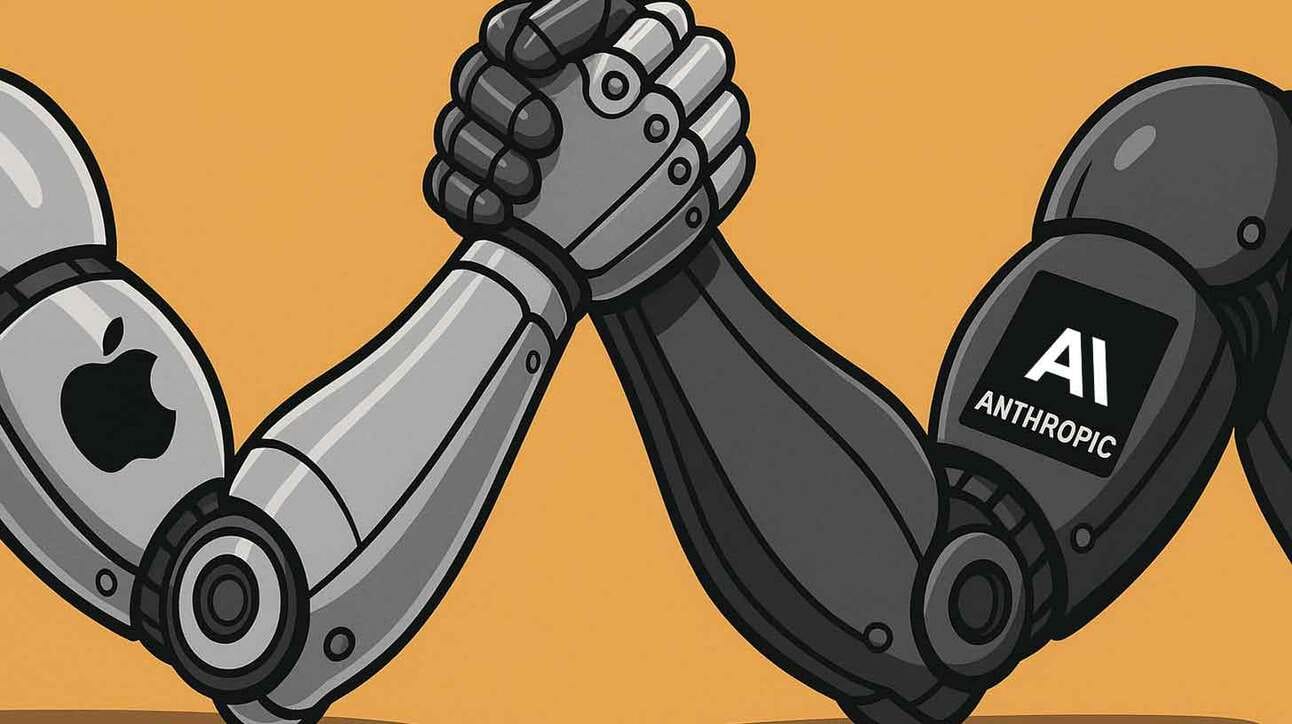
Image source: o3 / The Rundown
The Rundown: Apple is reportedly partnering with AI startup Anthropic to develop a new AI-powered ‘vibe-coding’ platform that will automate writing, editing, and testing code within Apple’s Xcode software, according to a new report from Bloomberg.
The details:
Apple’s revamped Xcode will incorporate Anthropic's Claude Sonnet model, with plans to initially test the system internally before a public release.
The "vibe-coding" tool will feature a conversational interface, allowing programmers to easily request, modify, and troubleshoot code.
Apple is expected to further diversify its external AI integrations by adding Google's Gemini later this year, alongside an existing partnership with OpenAI.
Why it matters: Despite Apple typically favoring in-house development, the Apple Intelligence debacle may have the tech giant branching out to industry leaders to play catch-up. Apple’s massive user base likely doesn’t care whether the company has its own SOTA model — they just need an actual functioning product across the ecosystem.
AI TRAINING
🧩 Create interactive crosswords from your lessons

The Rundown: In this tutorial, you will learn how to turn any lesson material into engaging crossword puzzles by combining NotebookLM's AI analysis with CrosswordLabs' puzzle generator.
Step-by-step:
Visit NotebookLM and click "Create new" to start a fresh notebook for your lesson materials.
Upload your content by clicking “Add” in the Sources section: PDFs, documents, and audio files all work great.
Use the prompt “Create [number] clues for a crossword in the following style. Do not add any bullets or formatting: Dog man’s best friend…” in the chat section.
Copy the generated word-clue pairs and paste them directly into CrosswordLabs to automatically build your puzzle.
Pro tip: For vocabulary-heavy subjects, create separate crosswords for different units, then combine key terms from each into a comprehensive review puzzle.
PRESENTED BY TAVUS
🗣️ AI that speaks — and shows up

The Rundown: A Tavus avatar appeared in a NY courtroom, sparking a national debate — and showcasing a groundbreaking future where AI doesn't just speak, but visually represents and communicates effectively at scale.
With Tavus, you can:
Build real-time video agents and generate realistic videos instantly via simple APIs
Create agents with 30+ languages, natural expressions, and tool-calling capabilities
Deploy versatile video agents anywhere human interaction occurs
⚡️ Google tackles AI's energy, workforce shortages

Image source: o3 / The Rundown
The Rundown: Google just released a new policy roadmap addressing America's power infrastructure challenges, while also announcing a major initiative to train 130K electrical workers needed to support the AI boom.
The details:
Google’s “Powering a New Era of American Innovation” outlines 15 proposals focused on energy generation, grid modernization, and labor development.
The company is also funding the Electrical Training Alliance to modernize electrician training with AI, targeting a 70% boost in the workforce by 2030.
The program will upskill 100K existing electrical workers and create 30K new apprenticeships to address the growing gap in qualified workers.
The initiative expands on Google's AI Opportunity Fund commitment to train 1M Americans in AI skills, now including crucial infrastructure roles.
Why it matters: With AI driving massive power demands, the U.S. faces an electricity challenge on two fronts — modernizing its own grid while also finding and training enough skilled workers to build and maintain it. With China also investing heavily in energy, the fuel of the AI race will be just as important as chips or training techniques.
QUICK HITS
🛠️ Trending AI Tools
🔌 Integrations - Connect external apps and tools to Claude
🧠 Phi-4 - Microsoft’s latest family of small, reasoning-focused models
🤖 Nova Premier - Amazon’s new multimodal ‘teacher’ model for fine-tuning
🌌 Midjourney Omni Reference - Use objects/characters from prompt images
💼 AI Job Opportunities
🤝 The Rundown - Partnerships Manager
🔍 Findem - Manager, Search Optimization
🎧 Meta - Experience Prototyper, Audio
🤖 Sanctuary AI - Field Service Technician
📰 Everything else in AI today
Google’s Gemini 2.5 Pro completed Pokémon Blue, with an independent engineer streaming the game after noting the (still unsuccessful) Claude Plays Pokémon.
Anthropic is reportedly offering to buy back employee shares at a $61.5B valuation, allowing current and former staff to sell up to 20% of their equity for up to $2M each.
U.S. AI czar David Sacks projects that AI will undergo a 1,000,000x increase over the next four years, driven by exponential growth of algorithms, chips, and compute.
Google is reportedly rolling out access to Gemini for children under 13, which will include safety guardrails and only be available for Family Link supervised accounts.
Google DeepMind’s Nikolay Savinov said that 10M+ token context windows are coming “reasonably soon,” which will create unrivaled and superhuman coding tools.
Zoom researchers published “Chain of Draft,” a new AI prompting strategy that achieves similar accuracy to the popular Chain-of-Thought using just 7% of the tokens.
COMMUNITY
🎥 Join our next live workshop
Join our next workshop on Tuesday, May 6th, at 3 PM EST with Chris Cunningham and Joe Zapiain from ClickUp. In this live session, you’ll learn how to embed AI and automation directly into your ClickUp workspace to save time, reduce complexity, and scale your team's execution — without adding headcount.
RSVP here. Not a member? Join The Rundown University on a 14-day free trial.
🤝 Share The Rundown, get rewards
We’ll always keep this newsletter 100% free. To support our work, consider sharing The Rundown with your friends, and we’ll send you more free goodies.
See you soon,
Rowan, Joey, Zach, Alvaro, and Jason—The Rundown’s editorial team

Exclusive: UiPath launches next-gen platform for 'Agentic Automation'

Good morning, AI enthusiasts. The software world just got a major agentic upgrade with enterprise automation leader UiPath’s latest announcement.
The company unveiled a new platform for agentic automation that expands the role of digital workers beyond routine tasks — and towards intelligent AI agents that can reason, adapt, and collaborate in more human-like ways.
So, we managed to get together with the company's founder and CEO, Daniel Dines, for an exclusive Q&A on how this innovation could transform the future of work!
In today’s AI rundown:
A new era of agentic automation
UiPath’s Maestro for seamless orchestration
An open, multi-agent ecosystem
Agentic workflows that businesses trust
Unlocking human potential with AI
EXCLUSIVE Q&A DANIEL DINES
ANNOUNCEMENT
🤖 UiPath’s new era of agentic automation

Image credits: Kiki Wu / The Rundown
The Rundown: UiPath, a global leader in agentic automation, just launched its new platform for ‘agentic automation’ designed to orchestrate AI agents, robots, and humans on a single intelligent system to autonomously manage complex tasks across enterprise environments.
Cheung: “Your company was founded on what’s called robotic process automation software, or RPA, but is now AI‑first—how do you define ‘agentic automation’?”
Dines: "Our mission has always been to empower people to free themselves of boring, mundane tasks and instead focus on meaningful work. And today, with the emergence of agentic AI, we can now emulate the human mind and capacity for decision making, ‘agentifying’ robots to automate more complex work.”
Dines added: “Agentic automation combines RPA, AI models, and human expertise into cohesive workflows where all three work together to understand, improve, and automate all kinds of workflows, which drives enterprise efficiency.”
Why it matters: Enterprise automation is no longer just about scripted workflows—it’s about intelligent, adaptive systems that can think, plan, and act. By enabling intelligent collaboration between AI, robots, and people, UiPath’s platform unlocks a new realm of possibilities, accelerating decision-making and driving productivity gains.
ORCHESTRATION
🎼 UiPath’s Maestro for seamless orchestration

Image credits: Kiki Wu / The Rundown
The Rundown: At the core of this evolution is Maestro, which coordinates AI agents, robots, and humans across business processes — turning static workflows into dynamic streams of events that can adapt to changing conditions in real-time.
Cheung: “UiPath has gone through a major transformation, re-platforming your workflow engine to support agentic automation. Can you break down some of those architectural changes in real-world terms?”
Dines: “To put simply, rather than treating workflows as rigid sequences of steps, we now treat them as streams of events. Every action and decision are recorded immutably, like a real-time system log that’s also the source of truth.”
Dines added: “Maestro is the heart of our new platform—automating, modeling, and optimizing complex business processes end-to-end with built-in process intelligence and KPI monitoring to enable continuous optimization. It gives businesses the control and visibility they need to scale AI safely across teams, systems, and the enterprise.”
Why it matters: Maestro dynamically assigns goals, adapts plans in real-time based on changing conditions, and maintains continuous feedback loops between agents and the environment. It enables automation that is resilient, context-aware, and capable of operating with minimal human intervention.
ECOSYSTEM & PARTNERSHIPS
🌎 UiPath’s open, multi-agent ecosystem

Image credits: Kiki Wu / The Rundown
The Rundown: Unlike closed competitors, UiPath designed its platform as an open ecosystem that integrates with leading agent frameworks like LangChain, CrewAI and Microsoft — avoiding vendor lock-in while connecting existing tech stacks.
Cheung: "How does UiPath’s open-framework strategy benefit enterprise customers?"
Dines: "The average enterprise relies on more than 175 different applications and systems. To scale AI enterprise-wide, businesses need it to work with their existing solutions and workflows. We like to say that where other companies are building walls around their AI, we’re building bridges.”
Dines added: "Our customers can use AI agents from UiPath, or AI solutions from partners like LangChain or Microsoft. In either scenario, agents can collaborate across systems to manage complex workflows, drive productivity, and ultimately accelerate innovation."
Why it matters: By integrating with leading frameworks, UiPath ensures its platform is not a closed box but a flexible hub. Its collaborative, cross-platform approach accelerates automation adoption, unlocks new use cases, and ensures enterprises can leverage best-in-class AI capabilities wherever they reside.
DATA PRIVACY & TRAINING
🔐 Building agentic workflows that businesses trust
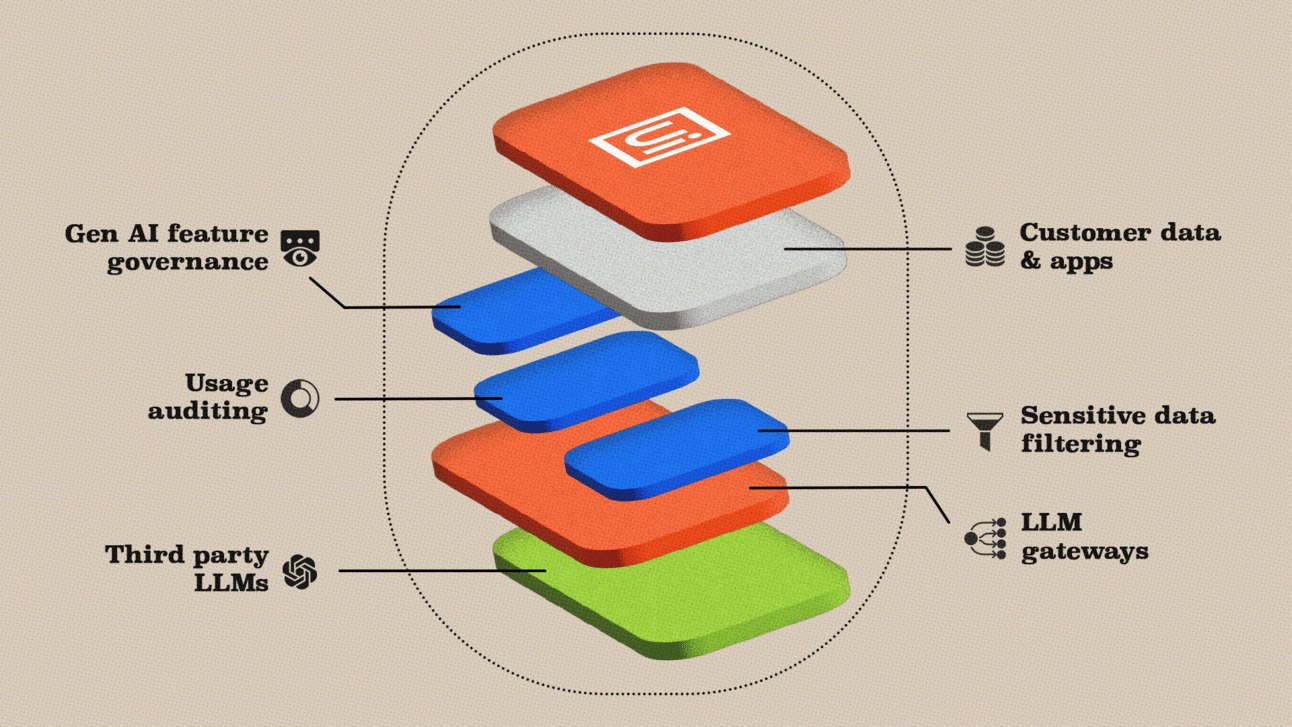
Image credits: Kiki Wu / The Rundown
The Rundown: UiPath tackles enterprise AI's biggest adoption barrier—security—with a model where AI agents access data only through rule-based robots, never receiving direct passwords, while an AI Trust Layer automatically masks sensitive information.
Cheung: "With AI models often requiring access to sensitive or proprietary data, what steps does UiPath take to ensure privacy and protections for enterprise customers?”
Dines: “UiPath robots provide the best method to ensure controlled data access for AI agents because they are rules-based and retrieve only the data required by the automation.”
Dines added: "Through our platform, agents won’t be given passwords or API tokens; they’ll access enterprise data exclusively via robots. We’ve already implemented the best-in-class, secure way to give our robots access to enterprise systems.”
Dines added: “The UiPath AI Trust Layer includes administrative and usage controls at a granular level. Harmful content filtering is built into and enabled on all third-party models. We also offer personally identifiable information and sensitive data masking.”
Why it matters: Through a robust AI Trust Layer, the platform ensures that agent actions are explainable, auditable, and compliant with enterprise policies. Sensitive data is protected with access controls and secure context passing, while dynamic guardrails and risk management keep autonomous behavior within safe boundaries.
FUTUREPROOFING & EVOLUTION
🧠 Unlocking human potential with AI

Image credits: Kiki Wu / The Rundown
The Rundown: As AI models and chips become commoditized, UiPath is positioning itself at the higher-value orchestration layer, with over 5,500 developers already trained on its agentic platform to help workers collaborate with AI agents more meaningfully.
Cheung: “How do you see the role of employees evolving as automation and AI become more deeply integrated into business processes? What cultural challenges will enterprises face, and how is UiPath helping them prepare?”
Dines: “To prepare people for this new way of working, we offer a variety of training courses through UiPath Academy—already more than 5,500 Academy developer courses on agentic automation have been completed, and more than 450 partners have begun their agentic automation courses.”
Dines added: "I am incredibly confident that over the next year, enterprises will be able to unlock the power of AI agents through agentic automation—unleashing human potential, driving innovation, and transforming the ways we work and live for the better. We’re only just getting started.”
Why it matters: Dines says UiPath started in 2005 with the belief that people “deserve more rewarding work,” and today, that is possible. Agentic automation is set to redefine how we work, with people working synergistically with agents and robots to execute processes faster and more intelligently than ever before.
GO DEEPER
LIVECAST REPLAY
🎥 Watch the global reveal
If you want to learn more, you can watch the global reveal of the UiPath Platform for agentic automation here and tune in to hear from customers and partners at the UiPath DevCon virtual event on May 14.

AI benchmarking under fire
Read Online | Sign Up | Advertise

Good morning, AI enthusiasts. Leaderboard prestige can make or break an AI model’s launch, but a new study claims the scoreboard might be stacked in favor of tech giants.
With allegations of private testing and biased experiments potentially distorting the results of a popular benchmarking platform, the AI evaluation game just got a lot hazier.
Reminder: Our next workshop is today at 4 PM EST — attend and learn how to use Google’s NotebookLM to improve your research, studying, and teaching! RSVP here.
In today’s AI rundown:
Study questions leading AI benchmark
Microsoft’s new small reasoning models
Create websites using ChatGPT o3 and Canvas
Amazon’s new Nova Premier teacher model
4 new AI tools & 4 job opportunities
LATEST DEVELOPMENTS
AI BENCHMARKING
🎯 Study questions leading AI benchmark

Image source: Cohere Labs
The Rundown: A new study from researchers at Cohere Labs, MIT, Stanford, and other institutions claims that LMArena, the leading crowdsourced AI benchmark, gives unfair advantages to major tech companies, potentially distorting its widely-followed rankings.
The details:
The study claims providers like Meta, Google, and OpenAI privately test multiple model variants on the Arena to publish the best performers.
It also found that models from top labs were favored over small/open models in sampling, with Google and OpenAI receiving over 60% of all interactions.
Experiments showed that access to Arena data boosts performance on Arena-specific tasks, suggesting model overfitting rather than actual capability gains.
The researchers also noted that 205 models have been silently removed on the platform, with open-source models deprecated at a higher rate.
Why it matters: LMArena has disputed the study, claiming the leaderboard reflects genuine user preferences. However, these claims can damage the platform's credibility, which shapes how models are perceived. Combined with the Llama 4 Maverick benchmark debacle, this study highlights that AI evaluation isn't always as it seems.
TOGETHER WITH INNOVATING WITH AI
🚀 Launch a six‑figure AI consultancy in six months
The Rundown: Innovating With AI’s “The AI Consultancy Project” gives you the frameworks, playbooks, and client‑ready templates needed to turn “interesting AI ideas” into a revenue‑generating business – helping you ride the wave of an AI consulting boom expected to grow by 8x this decade.
In this program, you will:
Gain the tools and frameworks to find clients and deliver top-notch services
Follow a 6-month plan to build a 6-figure AI consulting business
Join a 700‑strong cohort where some members landed their first AI client in 72 hours
MICROSOFT
🧠 Microsoft’s new small reasoning models

Image source: Microsoft
The Rundown: Microsoft just launched three new reasoning-focused, open-weights models in its Phi family — which outperform larger rivals at complex reasoning tasks while being small enough to run on phones and laptops.
The details:
The flagship Phi-4-reasoning has just 14B parameters but outperforms OpenAI's o1-mini and matches DeepSeek's 671B model on key benchmarks.
A smaller 3.8B parameter version called Phi-4-mini-reasoning can run on mobile devices while matching larger 7B models on math benchmarks.
Designed for efficiency, the models aim to bring strong reasoning capabilities to constrained environments (like edge devices and Copilot+ PCs).
All three models are open-source with permissive licenses, allowing unrestricted commercial use and modification by developers.
Why it matters: Microsoft continues to raise the bar for its small but powerful Phi, with the latest launch bringing extremely capable reasoning to models sized to fit on phones and laptops. It’s still early days in truly bringing system-integrated AI to devices, but Microsoft’s Copilot+ PCs could be the biggest beneficiary of this reasoning boost.
AI TRAINING
🖥️ Create websites using ChatGPT o3 and Canvas

The Rundown: In this tutorial, you will learn how to create fully-functional web applications with database capabilities using ChatGPT o3 and Canvas, and then deploy them for free — no coding skills required.
Step-by-step:
Head over to ChatGPT, select the “o3” model, and activate the ‘Canvas’ option.
Prepare a detailed prompt describing your desired HTML web application, including purpose, features, design preferences, and functionality requirements.
Test your application using the "Preview" button and request any necessary modifications.
Save the code as an HTML file and deploy using Cloudflare by navigating to Workers & Pages, selecting "Create using direct upload," and uploading the file.
Pro tip: Applications with local storage will maintain user data between sessions even when deployed, making them perfect for small applications.
PRESENTED BY CONVEYOR
📈 Meet Sue, an AI agent that actually gets stuff done
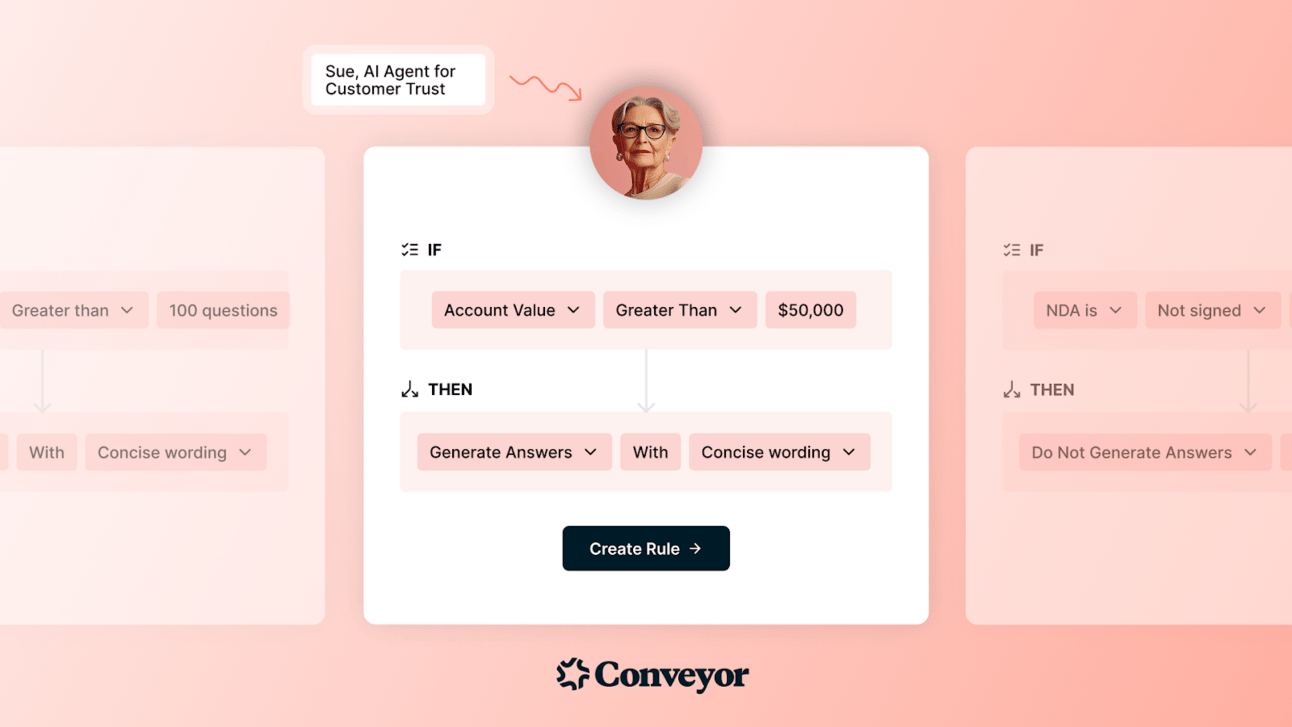
The Rundown: Most vendors building with AI talk a big game. Sue, Conveyor’s AI Agent for Customer Trust, actually does the work — deploying across F1000 enterprises to fully run customer security reviews, skip busywork, and keep deals moving with no headaches or delays.
Sue, the AI Agent, can:
Manage customer security requests seamlessly across teams and tools
Handle any questionnaire format
Automatically complete, reject, or escalate questionnaires
Personalize your Trust Center with data from conversation intelligence tools
Learn more and integrate Sue into your infosec and sales workflow today.
AMAZON
🚀 Amazon’s new Nova Premier teacher model

Image source: Amazon
The Rundown: Amazon just launched Nova Premier, the company’s most advanced AI model yet — designed to both handle complex tasks and also act as a “teacher” to fine-tune smaller models to match its capabilities.
The details:
The multimodal model can process text, images, and videos with a 1M-token context window, allowing it to analyze about 750,000 words at once.
Internal testing shows Premier lagging behind top competitors like Gemini 2.5 Pro on math, science, and coding benchmarks.
Nova Premier excels at orchestrating multi-agent workflows, showing strength in financial analysis and investment research applications in testing.
Using Amazon's Bedrock Model Distillation, Premier can transfer capabilities to smaller models like Nova Pro and Micro and boost performance by up to 20%.
Why it matters: With Nova Premier, Amazon positions its top offering not as a direct rival for cutting-edge reasoning tasks but rather as a powerful teacher that can uplift the entire model family — suggesting a focus on optimizing performance and prioritizing efficient, task-specific deployments over a single powerhouse model.
QUICK HITS
🛠️ Trending AI Tools
🎥 Gen-4 References - Generate consistent characters and scenes in videos
🎨 Gemini App - New update with native AI image editing capabilities
🧠 MiMo-7B - Xiaomi’s small but powerful open-source reasoning model
📸 F-Lite - Freepik’s open-weights image generation model
📰 Everything else in AI today
Anthropic released Integrations, allowing Claude to connect with remote MCPs to integrate additional tools — alongside new research capabilities like web support.
NVIDIA criticized Anthropic’s AI chip export policy recommendations, arguing that U.S. firms should focus on innovation instead of limiting competitiveness with policy.
Google expanded its AI Mode in Search to all Labs users in the U.S., also introducing new visual shopping and local planning features.
Suno introduced v4.5 of its AI music generation platform, adding new genres, better prompting and adherence, the ability to create songs up to 8 minutes long, and more.
Microsoft is reportedly adding xAI’s Grok model to its Azure development platform, coming amid rumored tensions between CEO Satya Nadella and OpenAI’s Sam Altman.
Google launched Little Language Lessons, three new AI-powered experiments that use Gemini’s multilingual capabilities for personalized learning experiences.
COMMUNITY
🎥 Join our next live workshop

Join our next workshop today at 4 PM EST with Dr. Alvaro Cintas, The Rundown’s AI professor. By the end of the workshop, you’ll confidently be able to use Google NotebookLM to improve your research, studying, and teaching.
RSVP here. Not a member? Join The Rundown University on a 14-day free trial.
🤝 Share The Rundown, get rewards
We’ll always keep this newsletter 100% free. To support our work, consider sharing The Rundown with your friends, and we’ll send you more free goodies.
See you soon,
Rowan, Joey, Zach, Alvaro, and Jason—The Rundown’s editorial team

Figure robots may land a new gig—with UPS
Read Online | Sign Up | Advertise
Good morning, robotics enthusiasts. U.S. robotics startup Figure is reportedly in advanced talks with UPS to put its newest humanoids in shipping and logistics.
Agility’s Digit is already being tested by Amazon, while Tesla’s Optimus also aims for high-stakes logistics jobs. But working in real-world warehouses is a far cry from controlled demos. Is Figure game-ready?
In today’s robotics rundown:
Figure may deploy humanoids with UPS
Bots make burgers at new fast-food concept
Humanoid market to hit $5T by 2050
Roombas repurposed as home assistants
Quick hits on other robotics news
LATEST DEVELOPMENTS
FIGURE
📦 Figure may deploy humanoids with UPS

Image source: Figure AI
The Rundown: Robotics startup Figure is reportedly in advanced talks with UPS to deploy its latest humanoids across UPS’s logistics network, although the specific roles the robots would take on remain unclear at this stage.
The details:
The potential partnership will complement UPS’s existing use of robotic arms, AI-driven software, and partnership with other robotics startups like Dexterity.
Both UPS and Figure declined to comment on the specifics of the engagement, with UPS stating it does not discuss vendor relationships publicly.
In February, Figure released a 90-second video on X, showcasing its sleek humanoid sorting small packages alongside conveyor belts.
The company has also been working with BMW to test its Figure 02 robots, but some have questioned whether it has exaggerated the extent of the pilot.
Why it matters: Adcock targets shipping 100K robots by 2028—and partnerships with BMW and UPS could serve as crucial launchpads for getting its humanoids in real-world environments. Meanwhile, UPS is aggressively reducing its Amazon deliveries, slashing $3.5B in costs, and investing in automation and smart factories.
ABB ROBOTICS
🍔 Bots make burgers at new fast-food concept

Image source: ABB Robotics
The Rundown: ABB Robotics and BurgerBots have opened two new “fast-casual” locations in Los Gatos, California, where ABB’s IRB 360 FlexPicker and YuMi robot work together to assemble made-to-order $18 burgers in 27 seconds flat.
The details:
The process begins with a human-cooked patty placed on a bun in a box, which is then QR-coded and sent along a conveyor for robotic assembly.
The IRB 360 FlexPicker reads the QR code to customize each burger, precisely dispensing toppings and condiments according to the order.
YuMi completes the burger by assembling the final layers and closing the box, with the entire process taking just 27 seconds per burger.
ABB’s robot controller monitors real-time inventory of ingredients, ensuring stock control and uninterrupted service.
Why it matters: This first-of-its-kind setup seamlessly combines two robot types and intelligent inventory tracking in a compact, customer-facing cell. The concept is designed for scalability, with BurgerBots’ founder and ABB executives predicting that robotic automation will become standard in restaurants within the next five years.
MORGAN STANLEY
🤖 Humanoid market to hit $5T by 2050

Image source: Ideogram/The Rundown
The Rundown: Morgan Stanley projects the global humanoid market will reach $4.7–5T in annual revenue by 2050, driven by industrial and commercial adoption, with China dominating supply chains and Tesla emerging as a key integrator.
The details:
Morgan Stanley analysts estimate that 1B humanoid robots could be deployed globally by mid-century, with 13–14M coming into use by 2035.
The rise of robots will also hit jobs, with machines potentially replacing 62.7M roles by 2050, starting with 40K roles by 2030.
Tesla’s Optimus robot is central to the forecast, with the company planning to produce 10K–12K units in 2025 and scale up to 50K by 2026.
Chinese firms are also advancing cost-efficient components and AI integration, with government initiatives aiming for 59M humanoids domestically by 2050.
Why it matters: The race for humanoid dominance is accelerating, with China controlling 63% of the global supply chain. As governments and corporations invest heavily, the sector is poised to reshape global manufacturing, logistics, and service industries, marking what analysts describe as the “next industrial revolution.”
UNIVERSITY OF BATH
🧹 Roombas repurposed as home assistants

Image source: The University of Bath
The Rundown: Scientists at the University of Bath just developed a framework to repurpose Roomba home vacuums to perform other household tasks, like watering plants with robotic arms and playing with pets with laser pointers.
The details:
Researchers retrained a Roomba to perform four new tasks: charging a mobile, projecting workout videos, home monitoring, and providing status alerts.
The work identified more than 100 potential applications that could be unlocked with simple hardware add-ons, like projectors or carts.
Roombas sit idle for ~22 hours daily (used less than 2 hours/day)—leaving massive untapped potential to put them to work elsewhere.
Conducted with the University of Calgary, the study was presented at the CHI 2025 conference, emphasizing user-centered robotics.
Why it matters: The research suggests that a little ingenuity can transform a single-task robot into a full-fledged home assistant. Of course, AI upgrades are needed for home vacuums to take on more complex environments, but the surging $24.5B home robotics sector should give manufacturers an incentive to think outside the box.
QUICK HITS
📰 Everything else in robotics today
Unitree live-streamed its G1 humanoid running 13km in two hours, averaging about 1.8m per second with two battery swaps.
Cornell University researchers developed a “robotability score” to rate every street in New York City on how adaptable it is to robots.
China’s Deep Robotics launched Lynx M20, a rugged version of its athletic robo-dog for industrial use, capable of rough terrain and extreme temperatures.
Starbucks is opening its first 3D-printed store in Texas, a drive-thru only location constructed by a computer-controlled robotic arm.
Glacier, a San Francisco-based AI and robotics startup backed by Amazon, raised $16M in Series A funding for its recyclable-material sorting robots.
China unveiled "Blue Whale," the world's first high-speed AI-equipped research vessel capable of staying up to 60 metres underwater autonomously for a month.
North Carolina State University engineers developed a soft robot that is powered by light and designed to travel along aerial cables for power line inspections.
COMMUNITY
🎥 Join our next live workshop

Join our next workshop this Friday, May 2nd, at 4 PM EST with Dr. Alvaro Cintas, The Rundown’s AI professor. By the end of the workshop, you’ll confidently be able to use Google NotebookLM to improve your research, studying, and teaching.
RSVP here. Not a member? Join The Rundown University on a 14-day free trial.
See you soon,
Rowan, Jennifer, and Joey—The Rundown’s editorial team
No matching search results
Try using different keywords, double-check your spelling, or explore related categories.
Stay Ahead on AI.
Join 2,000,000+ readers getting bite-size AI news updates straight to their inbox every morning with The Rundown AI newsletter. It's 100% free.