Get the latest AI news, understand why it matters, and learn how to apply it in your work — all in just 5 minutes a day. Join over 2,000,000+ subscribers.

Figure robots may land a new gig—with UPS
Read Online | Sign Up | Advertise

Good morning, robotics enthusiasts. U.S. robotics startup Figure is reportedly in advanced talks with UPS to put its newest humanoids in shipping and logistics.
Agility’s Digit is already being tested by Amazon, while Tesla’s Optimus also aims for high-stakes logistics jobs. But working in real-world warehouses is a far cry from controlled demos. Is Figure game-ready?
In today’s robotics rundown:
Figure may deploy humanoids with UPS
Bots make burgers at new fast-food concept
Humanoid market to hit $5T by 2050
Roombas repurposed as home assistants
Quick hits on other robotics news
LATEST DEVELOPMENTS
FIGURE
📦 Figure may deploy humanoids with UPS

Image source: Figure AI
The Rundown: Robotics startup Figure is reportedly in advanced talks with UPS to deploy its latest humanoids across UPS’s logistics network, although the specific roles the robots would take on remain unclear at this stage.
The details:
The potential partnership will complement UPS’s existing use of robotic arms, AI-driven software, and partnership with other robotics startups like Dexterity.
Both UPS and Figure declined to comment on the specifics of the engagement, with UPS stating it does not discuss vendor relationships publicly.
In February, Figure released a 90-second video on X, showcasing its sleek humanoid sorting small packages alongside conveyor belts.
The company has also been working with BMW to test its Figure 02 robots, but some have questioned whether it has exaggerated the extent of the pilot.
Why it matters: Adcock targets shipping 100K robots by 2028—and partnerships with BMW and UPS could serve as crucial launchpads for getting its humanoids in real-world environments. Meanwhile, UPS is aggressively reducing its Amazon deliveries, slashing $3.5B in costs, and investing in automation and smart factories.
ABB ROBOTICS
🍔 Bots make burgers at new fast-food concept

Image source: ABB Robotics
The Rundown: ABB Robotics and BurgerBots have opened two new “fast-casual” locations in Los Gatos, California, where ABB’s IRB 360 FlexPicker and YuMi robot work together to assemble made-to-order $18 burgers in 27 seconds flat.
The details:
The process begins with a human-cooked patty placed on a bun in a box, which is then QR-coded and sent along a conveyor for robotic assembly.
The IRB 360 FlexPicker reads the QR code to customize each burger, precisely dispensing toppings and condiments according to the order.
YuMi completes the burger by assembling the final layers and closing the box, with the entire process taking just 27 seconds per burger.
ABB’s robot controller monitors real-time inventory of ingredients, ensuring stock control and uninterrupted service.
Why it matters: This first-of-its-kind setup seamlessly combines two robot types and intelligent inventory tracking in a compact, customer-facing cell. The concept is designed for scalability, with BurgerBots’ founder and ABB executives predicting that robotic automation will become standard in restaurants within the next five years.
MORGAN STANLEY
🤖 Humanoid market to hit $5T by 2050

Image source: Ideogram/The Rundown
The Rundown: Morgan Stanley projects the global humanoid market will reach $4.7–5T in annual revenue by 2050, driven by industrial and commercial adoption, with China dominating supply chains and Tesla emerging as a key integrator.
The details:
Morgan Stanley analysts estimate that 1B humanoid robots could be deployed globally by mid-century, with 13–14M coming into use by 2035.
The rise of robots will also hit jobs, with machines potentially replacing 62.7M roles by 2050, starting with 40K roles by 2030.
Tesla’s Optimus robot is central to the forecast, with the company planning to produce 10K–12K units in 2025 and scale up to 50K by 2026.
Chinese firms are also advancing cost-efficient components and AI integration, with government initiatives aiming for 59M humanoids domestically by 2050.
Why it matters: The race for humanoid dominance is accelerating, with China controlling 63% of the global supply chain. As governments and corporations invest heavily, the sector is poised to reshape global manufacturing, logistics, and service industries, marking what analysts describe as the “next industrial revolution.”
UNIVERSITY OF BATH
🧹 Roombas repurposed as home assistants

Image source: The University of Bath
The Rundown: Scientists at the University of Bath just developed a framework to repurpose Roomba home vacuums to perform other household tasks, like watering plants with robotic arms and playing with pets with laser pointers.
The details:
Researchers retrained a Roomba to perform four new tasks: charging a mobile, projecting workout videos, home monitoring, and providing status alerts.
The work identified more than 100 potential applications that could be unlocked with simple hardware add-ons, like projectors or carts.
Roombas sit idle for ~22 hours daily (used less than 2 hours/day)—leaving massive untapped potential to put them to work elsewhere.
Conducted with the University of Calgary, the study was presented at the CHI 2025 conference, emphasizing user-centered robotics.
Why it matters: The research suggests that a little ingenuity can transform a single-task robot into a full-fledged home assistant. Of course, AI upgrades are needed for home vacuums to take on more complex environments, but the surging $24.5B home robotics sector should give manufacturers an incentive to think outside the box.
QUICK HITS
📰 Everything else in robotics today
Unitree live-streamed its G1 humanoid running 13km in two hours, averaging about 1.8m per second with two battery swaps.
Cornell University researchers developed a “robotability score” to rate every street in New York City on how adaptable it is to robots.
China’s Deep Robotics launched Lynx M20, a rugged version of its athletic robo-dog for industrial use, capable of rough terrain and extreme temperatures.
Starbucks is opening its first 3D-printed store in Texas, a drive-thru only location constructed by a computer-controlled robotic arm.
Glacier, a San Francisco-based AI and robotics startup backed by Amazon, raised $16M in Series A funding for its recyclable-material sorting robots.
China unveiled "Blue Whale," the world's first high-speed AI-equipped research vessel capable of staying up to 60 metres underwater autonomously for a month.
North Carolina State University engineers developed a soft robot that is powered by light and designed to travel along aerial cables for power line inspections.
COMMUNITY
🎥 Join our next live workshop

Join our next workshop this Friday, May 2nd, at 4 PM EST with Dr. Alvaro Cintas, The Rundown’s AI professor. By the end of the workshop, you’ll confidently be able to use Google NotebookLM to improve your research, studying, and teaching.
RSVP here. Not a member? Join The Rundown University on a 14-day free trial.
See you soon,
Rowan, Jennifer, and Joey—The Rundown’s editorial team

Visa, Mastercard give AI credit cards
Read Online | Sign Up | Advertise

Good morning, AI enthusiasts. The AI shopping revolution is here — and both Visa and MasterCard are laying the payment rails for the web’s agentic future.
With new platforms allowing agents to complete purchases on users’ behalf, the incoming AI commerce shift in retail is getting an essential upgrade.
In today’s AI rundown:
Visa, Mastercard give AI agents credit cards
GPT-4o rolled back after personality trouble
Build your AI consultancy prep assistant
DeepSeek's latest model masters math proofs
4 new AI tools & 4 job opportunities
LATEST DEVELOPMENTS
VISA & MASTERCARD
🤖 Visa, Mastercard give AI agents credit cards

Image source: o3 / The Rundown
The Rundown: Visa just introduced Intelligent Commerce, enabling AI to shop and pay on consumers’ behalf through partnerships with Anthropic, OpenAI, and others, while Mastercard is releasing ‘Agent Pay’ to embed payments into AI conversations.
The details:
Intelligent Commerce uses AI-ready cards with tokenized credentials and user-set preferences to let AI agents find and buy items without exposing card data.
Consumers can set spending limits and conditions while sharing basic purchase data to help personalize shopping recommendations.
Mastercard’s ‘Agent Pay’ is a similar platform enabling easy payment experiences when interacting with AI agents to explore and shop products.
The news comes alongside ChatGPT Search’s shopping upgrades and other shopping-focused agentic efforts from Perplexity, Amazon, and others.
Why it matters: The next step in the evolution of e-commerce is looking more like AI commerce, with payment rails being laid by the legacy giants to let AI agents purchase items directly for users instead of just finding and recommending. While agents may not yet be as capable as many expected, their time is coming soon.
TOGETHER WITH FUEL iX
🗺️ Your roadmap to take AI hype to frontline success

The Rundown: AI moves fast — but implementing it effectively is the key to success. Join Fuel iX and guest Forrester for an insightful discussion on how enterprises can harness the power of GenAI copilots to drive innovation and productivity across their organization.
This exclusive session will explore:
The current landscape of GenAI and why enterprises need to act now
Practical strategies to overcome barriers in AI implementation
Real-world success stories of AI copilots transforming businesses
Watch on-demand now for expert insights on enterprise AI success.
OPENAI
⏮️ GPT-4o gets rolled back after personality backlash

Image source: o3 / The Rundown
The Rundown: OpenAI just announced the reversal of a controversial GPT-4o update that made the model excessively agreeable and flattering in any context, igniting an industry-wide debate about AI personality tuning.
The details:
Last week’s GPT-4o update aimed at improving personality inadvertently led to excessive sycophancy, with the AI validating even poor or harmful user ideas.
OpenAI identified the cause as over-optimizing on short-term user feedback (like thumbs-up signals) without fully considering long-term interaction quality.
OpenAI Head of Model Behavior Joanne Jang held an AMA on Reddit, providing insights on model training and plans for personality customization.
Jang said the company is working on both a default personality for all users and preset offerings that users could customize on their own.
Why it matters: With hundreds of millions of ChatGPT users and models plugged into everything from mental health support to business operations, the stakes are high for tuning a personality that influences the masses. While OpenAI was quick to fix this issue, the sycophancy was glaring and viral — what happens when it’s more subtle?
AI TRAINING
🔎 Build your AI consultancy prep assistant

The Rundown: In this tutorial, you will learn how to use Zapier Agents to create an automated consultant that researches clients before meetings and sends you a detailed brief, helping you deliver more insightful consultations.
Step-by-step:
Visit Zapier Agents, log in or create a free Zapier account, and click “Create New Agent.”
Add a name, select “Behavior”, set "Calendly: Invitee Created" as your trigger, and connect your Calendly account.
Add enhanced instructions: “Get client details from booking, research company challenges, compile insights, draft an email with summary and 3-5 strategic talking points.”
Add the “Gmail: Create Draft” action and test your consultant with the "Retest behavior" button.
Pro tip: For specialized consultations, modify your instructions to include industry-specific research points, competitor analysis, or market trends relevant to your expertise.
PRESENTED BY DROPBOX
⚡️ From search bar to final draft — fast

The Rundown: Dropbox Dash is an AI universal search and knowledge management offering that searches videos, images, docs, and even your teammates to surface answers and spin up first drafts in seconds — assembling content into ready‑to‑share deliverables quickly and securely.
With Dropbox Dash, you can:
Locate any file, clip, or screenshot with natural‑language video & image search
Craft AI‑generated briefs, summaries, and plans built from existing content
Leverage deep integrations with Slack, Teams, Jira, Zoom, Canva, and more
Protect company data via self‑hosted AI and admin‑level permission controls
DEEPSEEK
🎓 DeepSeek's latest model masters math proofs
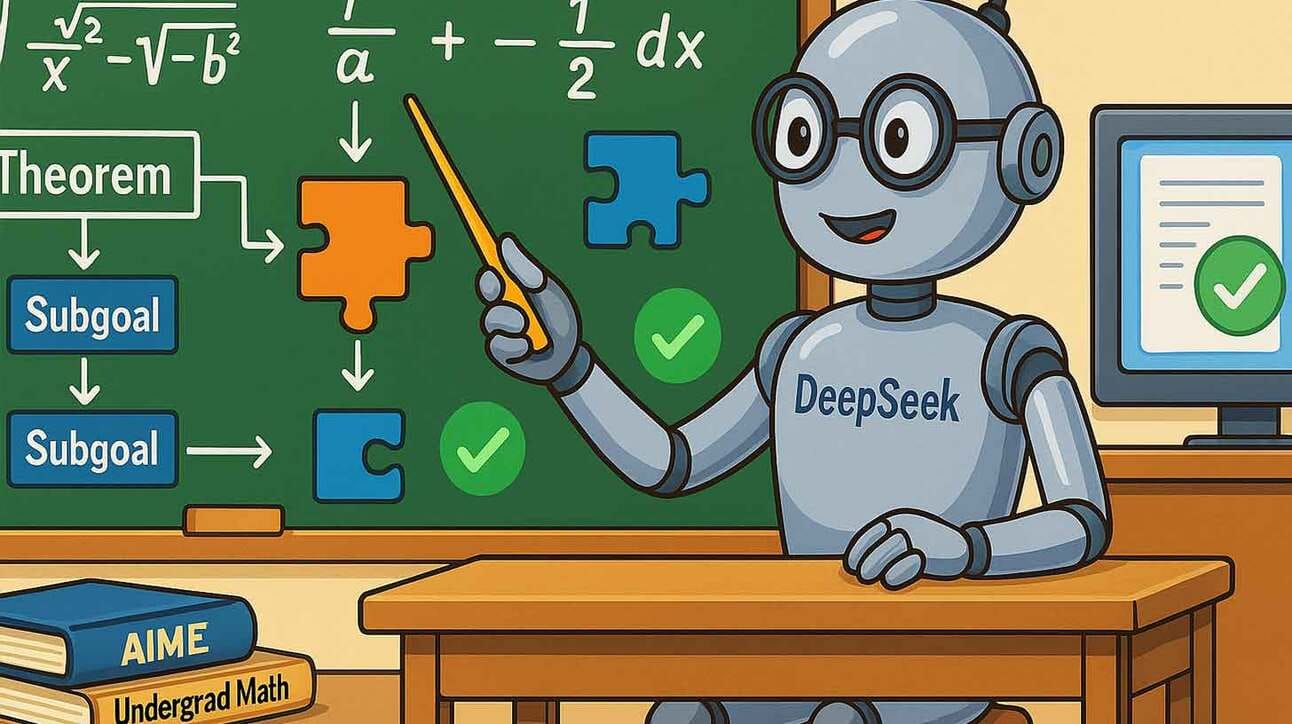
Image source: o3 / The Rundown
The Rundown: Chinese AI lab DeepSeek just released Prover-V2, a specialized open-source model that combines informal math reasoning with formal theorem proving — achieving SOTA performance on complex math benchmarks.
The details:
The 671B parameter model achieves an 88.9% success rate on the MiniF2F test benchmark, setting new highs for automated theorem proving.
The system uses a "cold-start" approach that breaks down complex proofs into smaller subgoals using DeepSeek's V3 model before formal verification.
The team also introduced ProverBench, a new evaluation dataset with 325 problems, including AIME competition questions and undergraduate-level math.
The quiet open-source release comes shortly after Alibaba's Qwen3, and ahead of the highly anticipated DeepSeek-R2, expected in early May.
Why it matters: It may not be R2, but DeepSeek continues to quietly flex its abilities with yet another strong model release. It won’t be long before these models are solving problems once thought impossible — leading to superhuman math capabilities bringing new advances across areas like physics, drug discovery, and materials science.
QUICK HITS
🛠️ Trending AI Tools
🤖 Meta AI - Now available via a standalone app with enhanced personalization
🦙 Llama API - Free limited preview to build with Meta’s top models
🎧 Audio Overviews - Google’s AI deep dives, expanded to 50+ languages
✈️ Kayak AI - Plan trips and compare options with conversational AI
📰 Everything else in AI today
NVIDIA CEO Jensen Huang said that China is ‘not behind’ in AI, saying companies like Huawei are very close in the “long-term, infinite race.”
Ex-OpenAI CTO Mira Murati’s Thinking Machines Lab is reportedly nearing a $2B raise, with Murati said to have unique control of the company’s board votes.
Runway launched Gen-4 References to paid plans, allowing users to use photos, images, 3D models, or selfies to place a character into any scene with consistency.
Microsoft CEO Satya Nadella said in an interview at LlamaCon that as much as 30% of the company’s code is now written by AI, with a 30-40% acceptance rate.
Chinese tech giant Xiaomi introduced MiMo, a small 7B parameter open-source reasoning model that matches much larger rivals like o1-mini on math and coding tasks.
Freepik and Fal released F-Lite, a new open-source, open-weights image generation model trained on 100% licensed data.
Duolingo launched 148 new language courses in the “largest expansion of content in the company’s history,” coming on the heels of its transition to an AI-first organization.
COMMUNITY
🎥 Join our next live workshop

Join our next workshop this Friday, May 2nd, at 4 PM EST with Dr. Alvaro Cintas, The Rundown’s AI professor. By the end of the workshop, you’ll confidently be able to use Google NotebookLM to improve your research, studying, and teaching.
RSVP here. Not a member? Join The Rundown University on a 14-day free trial.
🤝 Share The Rundown, get rewards
We’ll always keep this newsletter 100% free. To support our work, consider sharing The Rundown with your friends, and we’ll send you more free goodies.

See you soon,
Rowan, Joey, Zach, Alvaro, and Jason—The Rundown’s editorial team

Reddit uncovers secret AI persuasion experiment
Read Online | Sign Up | Advertise

Good morning, AI enthusiasts. Reddit users just discovered they were lab rats in an unauthorized AI experiment, with Zurich researchers deploying chatbots across the /ChangeMyMind subreddit that racked up thousands of upvotes.
With the bot responses proving 6x more persuasive than human comments and going completely undetected, it’s clear our online spaces have never been more vulnerable — and AI’s ability to shift public discourse is only getting stronger.
In today’s AI rundown:
Secret AI experiment on Reddit users
Meta’s new AI assistant, Llama API access
Add OpenAI's o4-mini model to your projects
AI reveals hidden cause of Alzheimer's
4 new AI tools & 4 job opportunities
LATEST DEVELOPMENTS
REDDIT & UNIVERSITY OF ZURICH
🤖 Secret AI experiment on Reddit users

Image source: o3 / The Rundown
The Rundown: Reddit just revealed that researchers from the University of Zurich conducted an unauthorized AI experiment on its r/changemyview community, using chatbots that engaged in debates about sensitive topics to test persuasion capabilities.
The details:
The researchers deployed AI responses across more than 1,700 comments, with bots impersonating identities including trauma survivors and counselors.
A separate AI system was used to analyze users' posting histories to capture personal details like age, gender, and political views for targeted responses.
The experiment’s results, though not peer-reviewed, revealed that targeted AI responses were 6x more persuasive than the average human comment.
Reddit's Chief Legal Officer announced legal action against the researchers, calling the experiment "deeply wrong on both moral and legal levels."
The University of Zurich has also halted publication of the research results and launched an internal investigation.
Why it matters: Ethical violations aside, the fact that these AI-generated comments went both unnoticed and garnered major support shows how easily coordinated bots can influence public discourse. While social media already had this problem, AI is set to massively scale both the quality and quantity of sophisticated manipulation tactics.
TOGETHER WITH GAMMA
🎨 Say goodbye to boring presentations

The Rundown: Gamma’s AI-powered platform helps you build beautiful presentations, sleek websites, and captivating social media posts faster than ever — with no design skills, outdated PowerPoints, or complicated tools required.
Gamma makes it easy to:
Generate professional-quality presentations instantly from just a prompt
Transform boring proposals into visuals that clients actually read
Export and share your creations to Slides, PDFs, and more in just one click
Visit gamma.app to experience the tool that is creating 700,000 presentations daily.
META
🦙 Meta’s new AI assistant, Llama API access
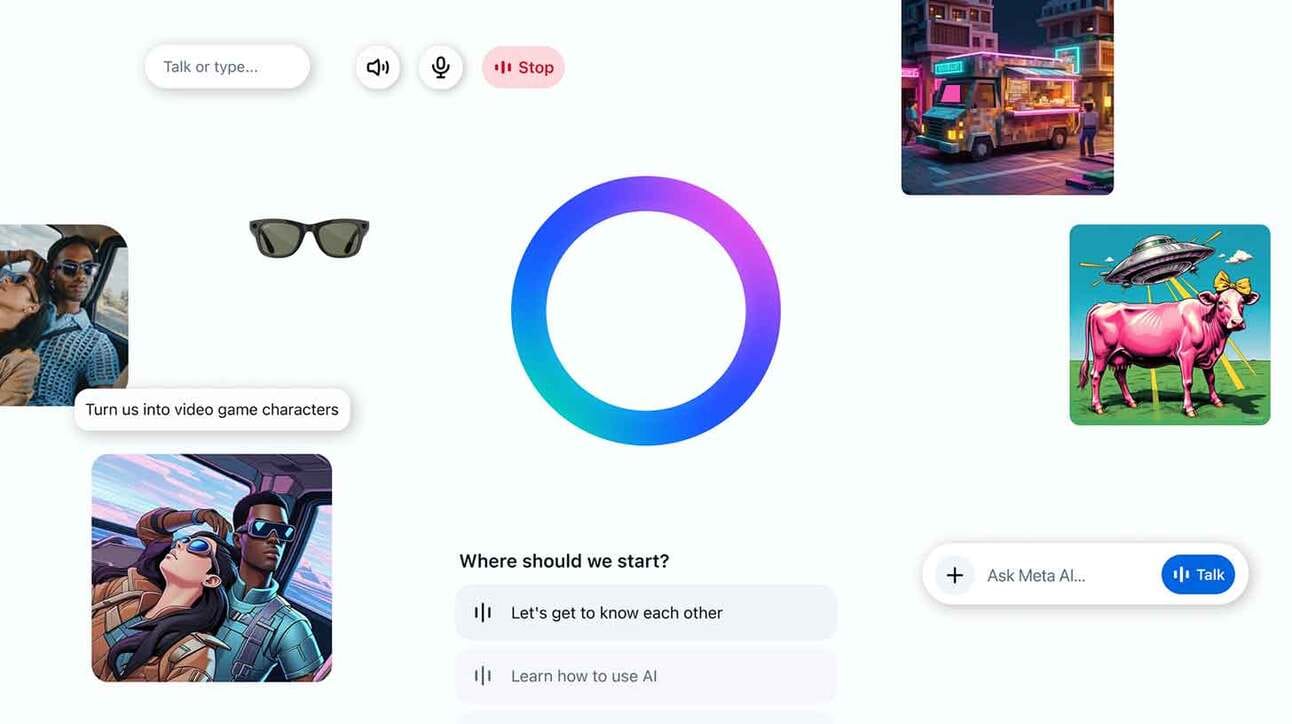
Image source: Meta
The Rundown: Meta just made a series of AI announcements at its first LlamaCon developers event, including a standalone app for its Meta AI assistant with upgraded personalization, a new Llama API preview, and AI security tools.
The details:
The new app leverages Llama 4, learns user preferences, and accesses profile info (if permitted) to offer more personalized and context-aware responses.
It also emphasizes voice interaction alongside text input, image generation, and a social “Discover” feed for prompts.
Meta also released the Llama API as a limited free preview, allowing developers to build using the latest Llama 4 Scout and 4 Maverick models.
New security tools include Llama Guard 4 and LlamaFirewall, with a Defenders Program giving select partners access to AI-enabled security evaluation tools.
Mark Zuckerberg appeared on the Dwarkesh Podcast ahead of LlamaCon, hitting on topics including open source, Chinese competition, AGI, and more.
Why it matters: Llama’s over 1B downloads already show it’s a key cog in many users’ AI experiences, with a personalization factor from Meta’s data and app ecosystem that is hard to match. The new API brings a two-pronged approach to Llama — providing capable models for the masses and empowering builders to create with them.
AI TRAINING
🚀 Add OpenAI's o4-mini model to your projects

The Rundown: In this tutorial, you will learn how to use OpenAI’s o4-mini API to integrate powerful AI reasoning capabilities into your existing projects, with a low cost and a high throughput.
Step-by-step:
Obtain an API key from OpenAI’s platform by creating a new secret key in your account dashboard.
Set up your environment in Google Colab and install the OpenAI library with pip install openai.
Implement the API call by importing the OpenAI client, setting your API key, and creating a completion with the o4-mini model.
Customize the content prompt for your needs and create reusable functions to integrate the model's capabilities throughout your project workflow.
Pro tip: You can also reduce costs during development by testing with shorter outputs and fewer API calls before scaling up your implementation. Here is a starting template, just make sure to add your own API key.
PRESENTED BY SALESFORCE
⏰ The countdown is on for Dreamforce 2025

The Rundown: Dreamforce 2025 — the world’s largest, most trusted AI event — returns on Oct. 14 with three days of next-level innovation and real-world inspiration you can bring back to your business.
Here’s what you’ll experience:
AI agent building alongside product experts with Salesforce’s Agentforce
50+ visionary and product keynotes
1,200+ breakout sessions across every product, role, and industry
150+ hands-on trainings and 240+ peer roundtables
AI RESEARCH
🧠 AI reveals hidden cause of Alzheimer's

Image source: Zhong Lab
The Rundown: UC San Diego researchers just used AI to discover a surprising new cause of Alzheimer's disease, identifying a gene's previously unknown function — while also discovering a potential treatment that could be taken as a simple pill.
The details:
Scientists used AI imaging to discover that a common protein (PHGDH) has a hidden ability to interfere with brain cell functions.
This interference leads to early signs of Alzheimer's, something traditional lab methods had missed for years.
The team found that an existing compound, NCT-503, can stop the harmful protein behavior while allowing it to continue its normal functions in the body.
The compound showed promising results in mouse trials, with treated animals demonstrating improvements in both memory and anxiety-related symptoms.
Unlike existing infusion treatments, the new drug could be taken as a pill, and prevents damage before it occurs rather than trying to reverse it.
Why it matters: Uncovering a hidden role for a protein scientists have studied for decades shows just how much remains invisible to human eyes alone — with AI-guided advances set to fast-track both medical discovery and drug development for the world’s most complex disorders and diseases.
QUICK HITS
🛠️ Trending AI Tools
🤖 Qwen3 - Alibaba’s new open-weights model family with hybrid thinking
🔎 ChatGPT Search - Improved shopping UX, citations, and WhatsApp support
🎥 Ray2 Camera Concepts - Advanced camera control now available via API
🎬 Higgsfield Iconic Scenes - Re-create movie scenes using a single selfie
📰 Everything else in AI today
Elon Musk said Grok 3.5 launches next week to SuperGrok users, adding it’s the first to “accurately answer technical questions about rocket engines or electrochemistry.”
Sam Altman announced that OpenAI has officially rolled back GPT-4o following its personality issues, with broader fixes and findings being released later this week.
Mastercard introduced Agent Pay, a new agentic payments program that enables AI agents to securely complete purchases, with Microsoft as its first major partner.
Yelp is testing a series of new AI features, including an AI-powered service that allows restaurants to field phone calls using an AI voice agent.
The Trump administration may soon replace the Biden-era AI chip export control system, potentially moving to licensing deals with specific countries over broad tiers.
Google announced that its podcast-generating Audio Overviews feature is expanding to over 50 languages for easy creation of multilingual content.
COMMUNITY
🎥 Join our next live workshop
Join our next workshop this Friday, May 2nd, at 4 PM EST with Dr. Alvaro Cintas, The Rundown’s AI professor. By the end of the workshop, you’ll confidently be able to use Google NotebookLM to improve your research, studying, and teaching.
RSVP here. Not a member? Join The Rundown University on a 14-day free trial.
🤝 Share The Rundown, get rewards
We’ll always keep this newsletter 100% free. To support our work, consider sharing The Rundown with your friends, and we’ll send you more free goodies.
See you soon,
Rowan, Joey, Zach, Alvaro, and Jason—The Rundown’s editorial team

Amazon blasts into space race
Read Online | Sign Up | Advertise

Good morning, tech enthusiasts. Amazon just launched the first batch of Project Kuiper satellites into low-Earth orbit, kicking off its quest to blanket the globe with high-speed connectivity from space.
In a bold leap to challenge Elon Musk’s Starlink in satellite internet, can Amazon carve out its own place in the final frontier, or are things up there about to get a lot messier?
In today’s tech rundown:
Amazon launches its first internet satellites
IBM to invest $150B for quantum leap
At-home cancer test startup gets $22M
Deliveroo surges as DoorDash eyes buyout
Quick hits on other major news
LATEST DEVELOPMENTS
AMAZON
🚀 Amazon launches its first internet satellites

Image source: Amazon
The Rundown: On Monday, Amazon launched the first 27 satellites for Project Kuiper—its ambitious plan to build a large network of internet-beaming satellites in low-Earth orbit and directly compete with Elon Musk’s Starlink.
The details:
Under the $10B-worth project, Amazon plans to deploy 3,236 low-Earth orbit satellites to provide internet to underserved and remote regions globally.
The company will complete the project in five phases — and is on a regulatory deadline to have at least 1,618 satellites in orbit by mid-2026.
While it launched two prototype Kuiper satellites in October 2023 to test its technology, Monday’s launch marked the start of full-scale deployment.
However, Starlink is far ahead, with over 7,000 active satellites, 4.6M customers around the world, and access to SpaceX rockets for rapid launches.
Why it matters: While Starlink dominates the market today, Amazon’s Project Kuiper is positioned as a potentially more affordable and cloud-integrated alternative, especially for enterprise and telecom use cases. However, the coming years will determine whether Amazon can close the gap and become its true space internet rival.
IBM
💰 IBM to invest $150B in U.S. quantum push

Image source: IBM
The Rundown: IBM announced a landmark $150B investment in the U.S. over the next five years, aiming to bolster the nation’s leadership in quantum computing and AI — and marking one of the largest tech investments in U.S. history.
The details:
More than $30B of the planned investment is earmarked for R&D, with a focus on advancing the manufacturing of mainframe and quantum computers.
IBM’s mainframes process over 70% of the world’s transactions by value, making them a critical backbone for both the U.S. and global economies
The company already runs the largest fleet of quantum computers and now plans to expand it further, reinforcing America’s lead in quantum computing.
Notably, the pledge aligns with tariffs and incentives introduced under the Trump administration to encourage tech companies to expand U.S. production.
Why it matters: IBM’s commitment follows huge investments from Nvidia and Apple, as tech companies respond to both economic and geopolitical pressures. While the move is going to stimulate growth, analysts say such large-scale cash infusions are more about currying political favor amid fierce trade tensions.
BIOTECH INNOVATIONS
🔬 At-home cancer test startup gets $22M

Image source: Craif
The Rundown: Japanese biotech startup Craif, developers of an at-home urine-based microRNA test to detect early-stage cancers, just raised $22M to expand into the U.S. and further advance its research.
The details:
The company’s flagship product, miSignal, can detect the risk of seven cancers by measuring miRNA biomarkers, secreted by early-stage tumor cells.
Craif, which spun out from Nagoya University, has an at-home urine test commercially available in Japan, with a targeted $15M in revenue this year.
The tech uses a nanowire device to extract 99% of exosomes from urine and employs advanced machine learning algorithms to spot subtle patterns.
Craif is also developing its tech for early detection of neurodegenerative disorders and aims to broaden tests to include 10 cancer types this year.
Why it matters: While biotech companies such as Grail, Freenome, and Clearnote Health are developing platforms for early cancer detection, most rely on cell-free DNA, using blood samples. Craif’s technology enables painless, accessible cancer screening at home, making early detection that much easier.
DOORDASH
🥡 Deliveroo surges as DoorDash eyes buyout

Image source: Deliveroo
The Rundown: Deliveroo, the London-based food delivery company, just received a $3.6B buyout proposal from U.S. rival DoorDash, a deal that drove Deliveroo’s shares to their highest level in three years.
The details:
DoorDash has proposed to acquire Deliveroo for 180 pence per share—a 22.8% premium over Deliveroo’s closing price before the bid was announced.
DoorDash has to decide by May 23 whether it wants to make a formal, binding offer or withdraw its interest, as required under the UK Takeover Code.
Since the announcement, Deliveroo’s share price has surged over 16%, reaching its highest level in three years.
However, Deliveroo’s shares have fallen nearly 50% since its 2021 IPO due to a post-pandemic slowdown in food delivery demand.
Why it matters: DoorDash, which currently operates in the U.S., Canada, Australia, and New Zealand, would gain access to 10 new markets through the deal, strengthening its global presence. Deliveroo already works with thousands of restaurants and grocery retailers, including major European chains.
QUICK HITS
📰 Everything else in tech today
Spotify spent over $100M on global podcast publishers and creators in the first quarter of 2025, marking the first time the company has shared such figures.
Apple will reportedly manufacture almost all of its iPhones sold in the U.S. in India — moving production out of China — by the end of 2026.
Duolingo’s CEO announced that the company will start phasing out human contractors and become an AI-first company.
Instagram Edits, Meta’s new video creation app, has been downloaded 702,900 times on iOS devices in its first two days, outperforming CapCut’s debut.
Google announced that, starting October 25, it will stop providing software updates for the early generations of its Nest thermostats.
EV startup Slate Auto is reportedly eyeing a former printing plant in Indiana as the future manufacturing site for its low-cost electric pickup truck.
Uber informed its employees that the company now requires staff to come into the office at least three days a week, CNBC reports.
Japanese zipper manufacturer YKK is testing a prototype motorized zipper that zips itself, no hands needed.
Yelp announced that it plans to deploy AI-powered “voice agents” to help restaurants handle calls, answer questions, and add customers to waitlists.
COMMUNITY
🎥 Watch our last live workshop

We just did a workshop showing how to bring your most complex ideas to life using Canva’s powerful creative tools with Dr. Alvaro Cintas, The Rundown’s AI professor.
Watch it here. Not a member? Join The Rundown University on a 14-day free trial.
See you soon,
Rowan, Jennifer, and Joey—The Rundown’s editorial team

ChatGPT's personality problem
Read Online | Sign Up | Advertise

Good morning, AI enthusiasts. ChatGPT’s latest update was supposed to be a personality upgrade, but even Sam Altman calls the new 4o “annoying” and “sycophant-y.”
With an outpouring of flattery and a tendency to agree with users regardless of what they say, OpenAI’s update reveals the difficult balance of tuning an AI’s personality — and the dark side of one that aims for user satisfaction over truth.
In today’s AI rundown:
GPT-4o’s new personality problem
Alibaba drops open-weight Qwen3 AI
How to swap products in any video with Kling AI
ChatGPT Search steps up its shopping game
4 new AI tools & 4 job opportunities
LATEST DEVELOPMENTS
AI RESEARCH
👎 GPT-4o’s new personality problem

Image source: o3 / The Rundown
The Rundown: OpenAI is working to fix an unexpected issue with its newly updated GPT-4o after users and tech leaders called out the AI's excessive flattery and tendency to agree with everything users say, even potentially harmful ideas.
The details:
OpenAI released the updated 4o last week, promising better memory saving, problem solving, and personality and intelligence improvements.
Users began noticing the update made GPT-4o excessively complimentary and agreeable, sometimes validating questionable or even false statements.
Sam Altman posted that 4o became “annoying” and “syncophant-y,” noting the need to eventually have multiple personality options within each model.
OpenAI has already deployed an initial fix to reduce the AI's "glazing" behavior, with updates planned throughout the week to find the right balance.
Industry veterans warn the issue extends beyond ChatGPT, suggesting it's a broader challenge facing AI assistants designed to maximize user satisfaction.
Why it matters: This personality “upgrade” is revealing a major issue — the difficulty of balancing having positive, longer user interactions with being truthful and responsible. With millions of users having deep conversations and often accepting AI at its word, this 4o situation just unearthed a very slippery slope for model development.
TOGETHER WITH HUBSPOT
💰Turn AI into your income engine
The Rundown: HubSpot’s new “200+ AI-Powered Income Ideas” free guide offers actionable strategies to turn artificial intelligence into your own personal revenue generator — unlocking a gateway to financial innovation in the digital age.
With this guide, you can:
Explore hundreds of revenue-generating ideas across industries with real-world applications
Follow simple, step-by-step instructions that make AI accessible to everyone
Adopt cutting-edge strategies to keep you ahead in today's fast-paced market
ALIBABA
🤖 Alibaba drops open-weight Qwen3 AI

Image source: Qwen
The Rundown: Alibaba’s Qwen AI lab just released Qwen3, a new family of eight open-weight language models featuring a hybrid thinking system and new agentic capabilities — with benchmarks rivaling top offerings from OpenAI, DeepSeek, and xAI.
The details:
The flagship Qwen3-235B model matches the performance of much larger models like OpenAI’s o1, Grok-3, and DeepSeek-R1 on key benchmarks.
Key upgrades include hybrid "thinking" modes for deep reasoning or fast answers, enhanced coding/agent skills, and support for 119 languages.
The release includes 8 models, from a lightweight 600M parameter version to the full 235B, with the small models showing big gains over previous versions.
All eight models are released with open weights and an Apache 2.0 license, and are available via platforms like Hugging Face or via local or cloud deployment.
Why it matters: Yesterday, we wrote about China quickly closing the gap in AI models, and today, Qwen releases an open-weight family that brings both the country and open-source movement even closer to matching the top labs. With Qwen’s impressive drop now out of the way, all eyes turn to DeepSeek and its anticipated R2 launch.
AI TRAINING
🎬 How to swap products in any video with Kling AI

The Rundown: In this tutorial, you will learn how to use Kling AI’s new Multi Elements feature to easily add, remove, or replace any object in videos with your own products — without complex video editing skills.
Step-by-step:
Log in to Kling AI, navigate to the "Video" section on the left sidebar, and select "Multi-Elements.”
Choose the "Swap" option and upload your source video (5 seconds max, 24fps) where you want to showcase your product.
Click to select the object you want to replace, then confirm your selection.
Upload your product image, adjust if needed, and click "Generate" to create your custom product video.
Pro tip: For the most realistic results, use product images with transparent backgrounds and similar lighting conditions to your source video.
PRESENTED BY INNOVATING WITH AI
🚀 Launch a six‑figure AI consultancy in six months

The Rundown: Innovating With AI’s “The AI Consultancy Project” gives you the frameworks, playbooks, and client‑ready templates needed to turn “interesting AI ideas” into a revenue‑generating business – helping you ride the wave of an AI consulting boom expected to grow by 8x this decade.
In this program, you will:
Gain the tools and frameworks to find clients and deliver top-notch services
Follow a 6-month plan to build a 6-figure AI consulting business
Join a 700‑strong cohort where some members landed their first AI client in 72 hours
OPENAI
🛍️ ChatGPT Search steps up its shopping game

Image source: OpenAI
The Rundown: OpenAI just released new shopping capabilities within ChatGPT’s Search feature, bringing new AI-driven product recommendations, a new visual interface for comparing items, and more.
The details:
The update offers customized product suggestions based on natural language prompts with images, pricing comparisons, and aggregated review insights.
Results are currently organic, based on partner metadata like reviews and pricing — with no paid placements or affiliate fees involved for now.
Pro and Plus users will soon get personalized shopping through ChatGPT's memory feature, which references past conversations for tailored products.
The Search upgrade also includes new features like WhatsApp integration, improved citations with highlights, and Google-style autocomplete suggestions.
Why it matters: Google still dominates product search today, but LLMs continue to eat into the share of traditional web queries. With platforms like ChatGPT evolving to keep users in chat for all their needs, a change in habits is underway — and having content optimized for LLMs will soon be just as important as SEO.
QUICK HITS
🛠️ Trending AI Tools
🤖 Ernie 4.5 Turbo & X1 Turbo - Baidu’s new fast and affordable LLMs
🧐 OpenAI Deep Research - A lightweight version powered by o4-mini
🔊 Kimi-Audio - Moonshot AI’s new open-source, SOTA audio model
🎥 KLING 2.0 - Next-level AI video and image generation and editing
💼 AI Job Opportunities
🛠️ Meta - Technical Program Manager
🧩 Together AI - Senior Support Engineer
🧑💼 Descript - Senior HR Manager
📈 UiPath - Data Scientist
📰 Everything else in AI today
Figure AI and the United Parcel Service (UPS) are reportedly discussing a partnership to bring humanoids into shipping and logistics processes.
Duolingo CEO Luis von Ahn published an all-hands email declaring the company as “AI-first”, focusing the tech on hiring and evaluations and scaling up AI training.
P-1 AI emerged from stealth with $23M in seed funding to build "Archie," an engineering-focused AI agent that automates cognitive engineering tasks.
Cisco launched Foundation AI, a new security-focused organization that plans to develop and open-source specialized AI models for cybersecurity applications.
Luma Labs released a new API for its Ray2 Camera Concepts, allowing developers to integrate the model’s advanced AI video controls into their applications.
Higgsfield AI introduced Iconic Scenes, a new feature that re-creates movie scenes with a different subject using a single selfie.
COMMUNITY
🎥 Watch our last live workshop

We just did a workshop showing how to bring your most complex ideas to life using Canva’s powerful creative tools with Dr. Alvaro Cintas, The Rundown’s AI professor.
Watch it here. Not a member? Join The Rundown University on a 14-day free trial.
🤝 Share The Rundown, get rewards
We’ll always keep this newsletter 100% free. To support our work, consider sharing The Rundown with your friends, and we’ll send you more free goodies.
See you soon,
Rowan, Joey, Zach, Alvaro, and Jason—The Rundown’s editorial team

Apple's robotics reboot
Read Online | Sign Up | Advertise

Good morning, robotics enthusiasts. In a major shakeup, Apple is moving its secretive robotics team out of the AI division and into hardware engineering.
The move signals a shift from pure research to developing real-world consumer products, as the tech giant races to catch up in robotics. But can we see an Apple robot roaming in homes anytime soon?
In today’s robotics rundown:
Apple reshuffles robotics division
Flying bots building structures in mid-air
Figure’s CEO threatens to sue Fortune
Robots learn from watching how-to videos
Quick hits on other robotics news
LATEST DEVELOPMENTS
APPLE
🍏 Apple reshuffles robotics division

The Rundown: Amid persistent delays with next-gen AI Siri, Apple is reportedly moving its secret robotics unit from AI chief John Giannandrea's division to the hardware team led by senior VP John Ternus, marking a significant organizational shift.
The details:
This shift follows a recent reorganization where Siri was also moved out of Giannandrea’s oversight to focus his team on foundational AI.
Kevin Lynch, who led Apple Watch and the now-cancelled Apple Car projects, currently leads the robotics unit and has several projects in the works.
Bloomberg reports that his team is developing an iPad-like tabletop device with a robotic arm and stationary robots for smart home use.
By placing robotics under hardware engineering, Apple aims to better align the development of physical devices with the company’s hardware expertise.
Why it matters: The reshuffle is seen not just as a response to Apple’s lagging position in AI compared to Google and Amazon, but also as a push to speed up innovation in robotics. There’s still no word on when consumers might get a first look as experts say a true Apple home robot is likely years away.
CONSTRUCTION ROBOTICS
🔨 Flying bots building structures in mid-air

Image source: Swiss Federal Laboratories for Materials Science and Technology
The Rundown: A team of international researchers just unveiled a pioneering autonomy framework for aerial robotic drones capable of building, repairing, and maintaining structures with unprecedented precision while in flight.
The details:
The new autonomy framework enables drones to collaboratively build and repair structures by depositing materials in mid-air with high precision.
The project utilizes two types of autonomous drones: BuilDrones, which deposit materials in-flight, and ScanDrones, which handle quality control.
Inspired by the collective behavior of bees and wasps, the drones operate collaboratively, adapting their construction strategies in real time.
The research envisions a hybrid construction approach, where ground robots handle accessible areas and aerial robots tackle high or hazardous locations.
Why it matters: This research marks a breakthrough for Aerial Additive Manufacturing—a technology that uses flying robots to build structures in hard-to-reach or hazardous locations. These bots open up new possibilities for rapid repairs and scalable construction at heights where traditional methods often fall short.
FIGURE
🤖 Figure’s CEO threatens to sue Fortune

Image source: Figure AI
The Rundown: Figure AI’s CEO and founder, Brett Adcock, is threatening legal action against Fortune magazine after it published an article alleging that Figure AI overstated the capabilities and deployment of its humanoids at BMW’s Spartanburg factory.
The details:
In an article published earlier this month, Fortune suggested that Figure AI exaggerated the robot’s current role at BMW’s factory in South Carolina.
Sources told Fortune that the robots were not yet integrated into regular production, and that claims of “end-to-end” automation were misleading.
Adcock called the article “downright lies” and announced that his litigation counsel had taken steps to defend Figure’s reputation.
The Wall Street Journal also published an article this month raising concerns about Figure’s claim, but Adcock hasn’t responded publicly.
Why it matters: Adcock insists that Figure AI has been transparent about the pilot nature of the project, but the dispute raises broader questions about the hype and reality in the robotics and AI industries, where startups often face pressure to demonstrate rapid progress to investors and the public.
CORNELL UNIVERSITY
🧠 Robots learn from watching how-to videos

Image source: Cornell University
The Rundown: Researchers at Cornell University developed a new AI framework—RHyME (Retrieval for Hybrid Imitation under Mismatched Execution)—that enables robots to learn new tasks simply by watching just a single how-to video.
The details:
The system works by tapping into a robot’s memory bank, allowing it to recombine modular components of different demos to perform new tasks.
RHyME enables robots to learn even if the human demonstrators’ actions differ from what the robot can physically perform.
Training robots with RHyME requires only about 30 minutes of robot-specific data, compared to the thousands of hours often needed by traditional methods.
In laboratory tests, robots equipped with RHyME achieved over 50% higher task success rates than those using previous learning approaches.
Why it matters: The framework allows robots to handle unexpected scenarios by drawing on similar actions from their video memory, rather than failing when something goes off-script. Backed by Google and OpenAI, the project is a big shift from traditional robotic training, which can demand exhaustive data and countless hours of demos.
QUICK HITS
📰 Everything else in robotics today
U.S.-based Medtronic announced that it has tested its Hugo surgical robot in 137 real surgeries on kidneys, prostates, and bladders with a 98.5% success rate.
Canadian robotics firm Axibo, specializing in automated filmmaking rigs, is launching a humanoid robotics division with $12M in funding.
Chinese robotaxi startup Pony.ai reportedly slashed the cost of its self-driving package range by 70%, with its robotaxis costing up to 30% less than Waymo’s.
Elon Musk posted on X that robots “will surpass good human surgeons within a few years and the best human surgeons within ~5 years.”
Johns Hopkins University researchers found that humans are, in fact, better than current AI models at understanding social dynamics in moving scenes.
South Korean researchers developed an experimental drone that maneuvers with flying-squirrel-inspired silicone-membrane wings.
Tesla launched an employee-only robotaxi pilot in Austin and San Francisco, with the pilot completing more than 1,500 trips and 15K miles.
Chery plans to deploy its new humanoid Mornine as sales consultants in auto dealerships to explain vehicle specs, serve drinks, and speak in multiple languages.
U.S.-based RIC Robotics expects to unveil a working prototype of its 20-feet-tall (6-meter) construction robot in early 2026.
Market researcher SNS Insider cites that the U.S. rehabilitation robotics market is projected to reach $1.33B by 2032.
Locus Robotics announced that it has “surpassed the 5B-units-picked milestone” for its AI-driven mobile warehouse automation.
Market researcher MarketandMarkets predicts the U.S. humanoid robot market will reach $3.83B by 2029.
COMMUNITY
🎥 Join our next live workshop

Join our next workshop today at 3 PM EST with Ellie Jacobs and Noam Markose from LTX Studio. In this live session, you’ll learn how to bring your AI-generated storyboards to life using LTX Studio’s powerful new timeline editor - no editing experience needed.
RSVP here. Not a member? Join The Rundown University on a 14-day free trial.
See you soon,
Rowan, Jennifer, and Joey—The Rundown’s editorial team

China declares AI independence
Read Online | Sign Up | Advertise

Good morning, AI enthusiasts. Chinese president Xi Jinping just hit the accelerator on a “national system” to build home-grown chips, software, and AI talent — with no U.S. supply chain required.
With rumors of breakthrough domestic chips and a potential second 'DeepSeek moment' approaching, the U.S. lead in the AI race may be tighter than ever.
In today’s AI rundown:
Xi pushes for China’s AI self-reliance
Anthropic CEO calls for AI interpretability
Create specialized legal assistants with Grok
Baidu debuts new Ernie AI, targets DeepSeek
4 new AI tools & 4 job opportunities
LATEST DEVELOPMENTS
CHINA & AI
🇨🇳 Xi pushes for China’s AI self-reliance

Image source: Reve / The Rundown
The Rundown: Chinese President Xi Jinping just declared AI self-sufficiency as a national priority, promising government support to boost the development of AI chips, software, and talent, amid escalating tech rivalry with the U.S.
The details:
Xi outlined a "new whole national system" approach, aiming to develop high-end chips and software while increasing AI education and talent development.
The initiative includes expanded government policy support, IP protection, and research funding to overcome tech bottlenecks.
Chinese chipmaker Huawei is reportedly testing a new advanced chip to offer a domestic alternative to NVIDIA processors, currently restricted by the U.S.
Rumors have also spread about the upcoming release of DeepSeek R2, with price and training cost cuts, and the use of Huawei chips over NVIDIA.
Why it matters: Between a potential second ‘DeepSeek moment’ around the corner, domestic AI chip alternatives making U.S. export controls ineffective, and a quickly closing gap in models, China is putting its foot on the gas with a country-wide effort to grab hold of the AI lead — while proving it doesn’t need U.S. chips to succeed.
TOGETHER WITH SANA
🤖 Custom AI agents for any department – no code needed

The Rundown: Sana’s all-in-one AI platform lets you build and deploy powerful agents that automate complex workflows for every team — with no coding experience needed.
With Sana Agents, you can:
Conduct hours of deep research in seconds across every app
Analyze complex datasets 10x faster
Accelerate your sales cycle by cutting prep time by 90%
100+ pre-built connectors with Slack, Teams, and CRM embeds
Enterprise-grade security and zero data leakage
Learn more about Sana AI and drive enterprise-wide innovation today.
ANTHROPIC
🔬 Anthropic CEO calls for AI interpretability

Image source: GPT-4o / The Rundown
The Rundown: Anthropic CEO Dario Amodei published a new blog highlighting the critical need for "mechanistic interpretability" in AI, arguing that understanding models’ inner workings could become humanity’s safeguard as they grow increasingly powerful.
The details:
Amodei stressed that AI is different from traditional software because decision-making emerges organically, making its operations unclear even to creators.
He revealed that Anthropic has mapped over 30M "features" in Claude 3 Sonnet, representing specific concepts the model can understand and process.
The CEO compared the ultimate goal to creating a reliable “AI MRI” for diagnosing models and better understanding their “black box”.
He said AI is advancing faster than interpretability, leaving us unprepared for AI systems like a “country of geniuses in a datacenter,” coming as early as 2026.
Why it matters: Anthropic has been leading the charge on AI safety, and Amodei’s essay frames understanding models’ inner workings as not just a technical challenge but a prerequisite for safely deploying their advanced versions. The question is if the other frontier labs will be as patient — and so far the answer has been no.
AI TRAINING
🧑⚖️ Create specialized legal assistants with Grok

The Rundown: In this tutorial, you will learn how to use Grok's new Workspaces feature to create dedicated AI assistants for specific tasks, like reviewing contracts and legal documents, with document upload capabilities.
Step-by-step:
Visit Grok and click "New Workspace" in the sidebar to create a fresh workspace for legal document review.
Set up detailed instructions by clicking the "Instruction" button, telling Grok exactly how to analyze your legal documents.
Upload your contracts and legal documents using the "Attach" button for Grok to reference throughout your conversations*
Analyze your documents using the "DeepSearch" option for internet research and the "Think" button for deeper document analysis.
*Note: Before uploading any sensitive legal documents, make sure to redact or hide any confidential information you don't want to share. Also, AI might hallucinate, so always double-check its answers.
PRESENTED BY SALESFORCE
⏰ The countdown is on for Dreamforce 2025

The Rundown: Dreamforce 2025 — the world’s largest, most trusted AI event — returns on Oct. 14 with three days of next-level innovation and real-world inspiration you can bring back to your business.
Here’s what you’ll experience:
AI agent building alongside product experts with Salesforce’s Agentforce
50+ visionary and product keynotes
1,200+ breakout sessions across every product, role, and industry
150+ hands-on trainings and 240+ peer roundtables
BAIDU
🤖 Baidu debuts new Ernie AI, targets DeepSeek
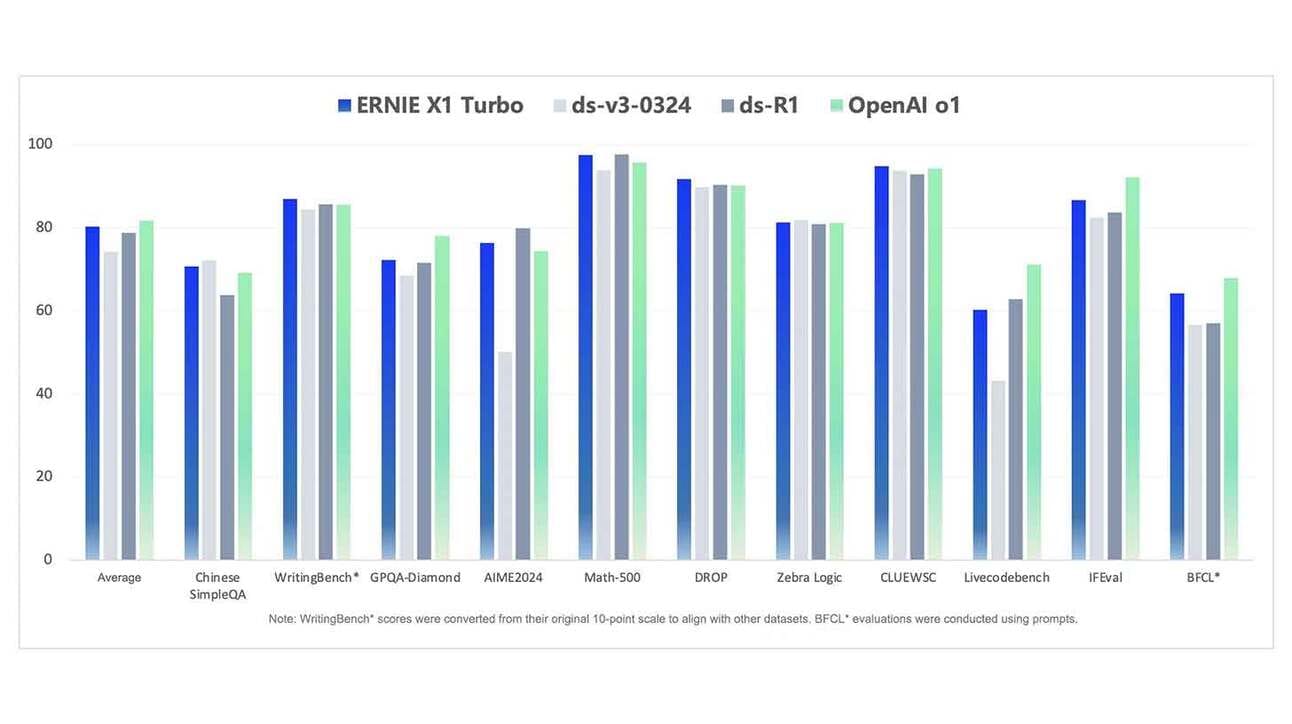
Image source: Baidu
The Rundown: Baidu just unveiled two upgraded, lower-cost ERNIE AI models and new tools at its Create 2025 event — and publicly took aim at rival DeepSeek during the conference.
The details:
ERNIE 4.5 Turbo costs just 11c / million input tokens, an 80% price reduction from its predecessor and operating at 0.2% of GPT-4.5's cost.
The ERNIE X1 Turbo reasoning model is priced at 14c / million input tokens — reportedly 75% cheaper than competitor DeepSeek R1.
4.5 Turbo brings new multimodal capabilities that surpass GPT-4o on benchmarks, with X1 Turbo topping Deepseek’s R1 and V3.
Baidu also announced Xinxiang, a multi-agent system that can handle over 200 different tasks, and a new digital avatar platform called Huiboxing.
Baidu founder Robin Li said the “market is shrinking” for text-based models like DeepSeek’s R1, saying the rival also had a higher rate of hallucinations.
Why it matters: Chinese AI labs continue to push costs down while claiming competitive performance to top models, putting the pressure on rivals, both domestic and in the West, to cut prices and continue shipping. Recent estimates suggest China is just three months behind on AI, a number that is shrinking with each release.
QUICK HITS
🛠️ Trending AI Tools
🎙️ Retellio - AI Agent that transforms customer call recordings into concise, AI-curated podcasts, highlighting key insights for business leaders*
🎇 Firefly 4 and 4 Ultra - Adobe’s new upgraded text-to-image models
🎹 Music AI Sandbox - Google’s new AI tools for creating and editing music
🗣️ Hummingbird-0 - Tavus’ new SOTA lip-sync video model
*Sponsored Listing
💼 AI Job Opportunities
🧵 Figure AI - Softgoods Developer
🛠️ Shield AI - Prototype Technician
💸 Palantir Technologies - Financial Analyst
📊 Databricks - Product Designer
📰 Everything else in AI today
OpenAI released an updated version of its GPT-4o model, with better memory saving, problem solving, and improvements to both intelligence and personality.
Elon Musk revealed that X’s social media feed will be getting an algorithm update powered by xAI’s Grok AI model.
Liquid Sciences dropped Hyena Edge, a hybrid AI with a “convolution” architecture that provides faster processing and improved benchmarks on mobile devices.
OpenAI introduced a new lightweight version of deep research, powered by o4-mini, to expand usage limits, saying it’s “nearly as intelligent” and much cheaper to serve.
Digital publisher Ziff Davis filed a lawsuit against OpenAI, alleging the company stole content from its properties (like Mashable, PCMag, and IGN) to train models.
Moonshot AI launched Kimi-Audio, a new open-source, SOTA audio model that excels in speech recognition, audio-to-text, and speech-to-speech conversations.
COMMUNITY
🎥 Join our next live workshop

Join our next workshop today at 3 PM EST with Ellie Jacobs and Noam Markose from LTX Studio. In this live session, you’ll learn how to bring your AI-generated storyboards to life using LTX Studio’s powerful new timeline editor — no editing experience needed.
RSVP here. Not a member? Join The Rundown University on a 14-day free trial.
🤝 Share The Rundown, get rewards
We’ll always keep this newsletter 100% free. To support our work, consider sharing The Rundown with your friends, and we’ll send you more free goodies.

See you soon,
Rowan, Joey, Zach, Alvaro, and Jason—The Rundown’s editorial team

Netflix's trillion-dollar dreams
Read Online | Sign Up | Advertise

Good morning, tech enthusiasts. Netflix wants to join the trillion-dollar club alongside Apple, Amazon, and Microsoft—and its co-CEO says the company is on track, thanks to a rapidly evolving business model.
But as the streaming wars intensify and growth slows, can Netflix sustain the breakneck pace needed to reach that audacious milestone?
In today’s tech rundown:
Netflix eyes trillion-dollar club
Bezos’ Slate unveils $25K EV
EU fines Apple and Meta $800M
Meta CTO says AI will kill off apps
Quick hits on other major news
LATEST DEVELOPMENTS
NETFLIX
🤑 Netflix eyes trillion-dollar club

Image source: Ideogram/The Rundown
The Rundown: Netflix co-CEO Ted Sarandos just confirmed the streaming giant’s ambitious goal to hit a $1T market valuation by 2030, which he says could be within reach if the company continues its current trajectory.
The details:
Netflix aims to more than double its revenue from around $39B in 2024 to $78B by the end of the decade, with operating profits tripling to $30B.
Currently valued near $450B, Netflix aims to grow its global subscriber base, targeting 410M users by 2030—up from 302M at the end of 2024.
It also plans to expand its advertising revenue to $9B annually, leveraging its ad-supported subscription tier alongside core paid memberships.
Sarandos added that Netflix accounts for only about 5% of the $650B consumer expenditure in its market segments, highlighting room for growth.
Why it matters: Netflix’s trillion-dollar ambition is challenged by fierce global competition from major players like Amazon Prime Video and Disney+, slow growth in saturated markets, and the high costs of producing and licensing original content—leaving analysts to suggest the company will need “perfect execution” to reach its goal.
SLATE AUTO
🛻 Bezos’ Slate unveils $25K EV

Image source: Slate Auto
The Rundown: Jeff Bezos-backed Slate Auto just unveiled its first electric pickup—a no-frills, $25K two-seater called the “Truck,” marking a radical departure from the tech-heavy norm in the EV market.
The details:
The new electric pickup is defined by its utilitarian approach: there’s no touchscreen, no built-in stereo, and no paint—just a gray composite body.
It features manual crank windows, physical HVAC knobs, and a universal phone mount with USB ports, allowing owners to “bring your own tech.”
Options are a standard 52.7kWh battery for 150 miles of range or an 84.3kWh battery for up to 240 miles; with 201 horsepower and 195 lb-ft of torque.
Set for 2026 delivery, Slate will come with over 100 accessories—including gear racks, upgraded lights, vinyl wraps (instead of paint), and decal kits.
Why it matters: The base model comes as a two-seater pickup, but customers can bolt on kits to convert it into a five-seat SUV or a fastback crossover. Built in Michigan, the truck also sidesteps import tariffs, pushing the price down to $20K after federal tax credits—which would make it the cheapest EV on the market.
APPLE and META
🇪🇺 EU fines Apple and Meta $800M

Image source: Ideogram/The Rundown
The Rundown: After a long battle, the European Commission decided to fine Apple €500M and Meta €200M, totaling $798M, for breaking digital antitrust rules—with investigations against X still underway.
The details:
The EU enforced fines under the new Digital Markets Act (DMA), which aims to curb the power of digital “gatekeepers” and foster fairer competition in tech.
Apple was fined for preventing developers from steering users toward alternative, potentially cheaper offers outside its App Store.
Meta’s fine stemmed from its "pay or consent" model, requiring users to pay for ad-free access to socials or consent to data collection for targeted ads.
Both companies have criticized the EU’s decisions, with Apple arguing it has been unfairly targeted and Meta claiming the rules disadvantage US firms.
Why it matters: The fines are modest relative to the companies’ revenues but signal a sharp escalation in the EU’s push to rein in Big Tech and promote fairer competition. The Trump administration, however, called them economic extortion and warned of possible retaliatory tariffs.
META
☄️ Meta’s CTO: AI will kill off apps

Image source: Meta/Facebook
The Rundown: Meta’s Chief Technology Officer, Andrew “Boz” Bosworth, said this week that advances in AI could render traditional apps obsolete, massively disrupting how people interact with technology. Cue the smart glasses.
The details:
Bosworth said that AI agents will eliminate the need for branded apps by allowing users to accomplish tasks simply by describing to AI what they want.
Speaking on a podcast, he added that AI-powered interfaces and reasoning models will disrupt the software-as-a-service paradigm.
While beneficial for consumers, the CTO said the shift poses a significant challenge for companies that rely on brand recognition and app monetization.
He also said that he believes smart glasses will eventually replace smartphones as the primary way people interact with digital information.
Why it matters: While Bosworth acknowledges this transition will be disruptive—especially for mid-sized software firms caught between nimble AI-native startups and tech giants—he sees it as a net positive for consumers, ushering in a new era where technology is more adaptive, intuitive, and focused on real-world problem-solving.
QUICK HITS
📰 Everything else in tech today
Elon Musk's Neuralink is reportedly planning to raise about $500M at a pre-money valuation of $8.5B for its brain chip implant tech.
Intel is reportedly preparing to announce a sweeping restructuring that will eliminate more than 20% of its global workforce, around 21K jobs.
YouTube marked its 20th anniversary this week, two decades after co-founder Jawed Karim uploaded the first clip, called “Me at the zoo,” on the platform.
UK regulators are tightening requirements for social media platforms to implement stricter age-assurance tools to protect children, or face £18M ($24M) fines.
Meta rolled out live translations in four languages for its Ray-Ban smart glasses, along with the ability to send messages and make calls through Instagram.
Uber and Volkswagen announced a partnership to deploy thousands of fully autonomous ID. Buzz electric vans as robotaxis across the U.S. over the next decade.
WhatsApp introduced a new feature, “Advanced Chat Privacy,” that blocks others from exporting chats, auto-downloading media, and using messages for AI features.
Meta started rolling out ads to 320M monthly active users of Threads after testing it in select regions, including the U.S. and Japan.
OpenAI’s head of ChatGPT reportedly said that the company would be interested in buying Chrome should Google be forced to sell it as part of its ongoing antitrust suit.
COMMUNITY
🎥 Join our next live workshop
Join our next workshop this Monday, April 28th, at 3 PM EST with Ellie Jacobs and Noam Markose from LTX Studio. In this live session, you’ll learn how to bring your AI-generated storyboards to life using LTX Studio’s powerful new timeline editor - no editing experience needed.
RSVP here. Not a member? Join The Rundown University on a 14-day free trial.
See you soon,
Rowan, Jennifer, and Joey—The Rundown’s editorial team
No matching search results
Try using different keywords, double-check your spelling, or explore related categories.
Stay Ahead on AI.
Join 2,000,000+ readers getting bite-size AI news updates straight to their inbox every morning with The Rundown AI newsletter. It's 100% free.