Get the latest AI news, understand why it matters, and learn how to apply it in your work — all in just 5 minutes a day. Join over 2,000,000+ subscribers.

Figure drops new humanoid
Read Online | Sign Up | Advertise

Good morning, robotics enthusiasts. Figure's next humanoid drops today. Teaser footage shows a sleek, fabric-wrapped machine draped in beige knitwear — like 1X’s Neo Gamma’s edgier sibling — with fluid motion, tactile hands, and a design that feels more consumer tech than lab prototype.
It wins on aesthetics, but can Figure deliver humanoids you'd actually want in your home?
In today’s robotics rundown:
Figure 03 launch: what we know
Softbank buys ABB’s robotics unit for $5.4B
Robots are now making IVF babies
China’s EV copycat is now a robotics player
Quick hits on other robotics news
LATEST DEVELOPMENTS
FIGURE
🔥 Figure 03 launch: what we know
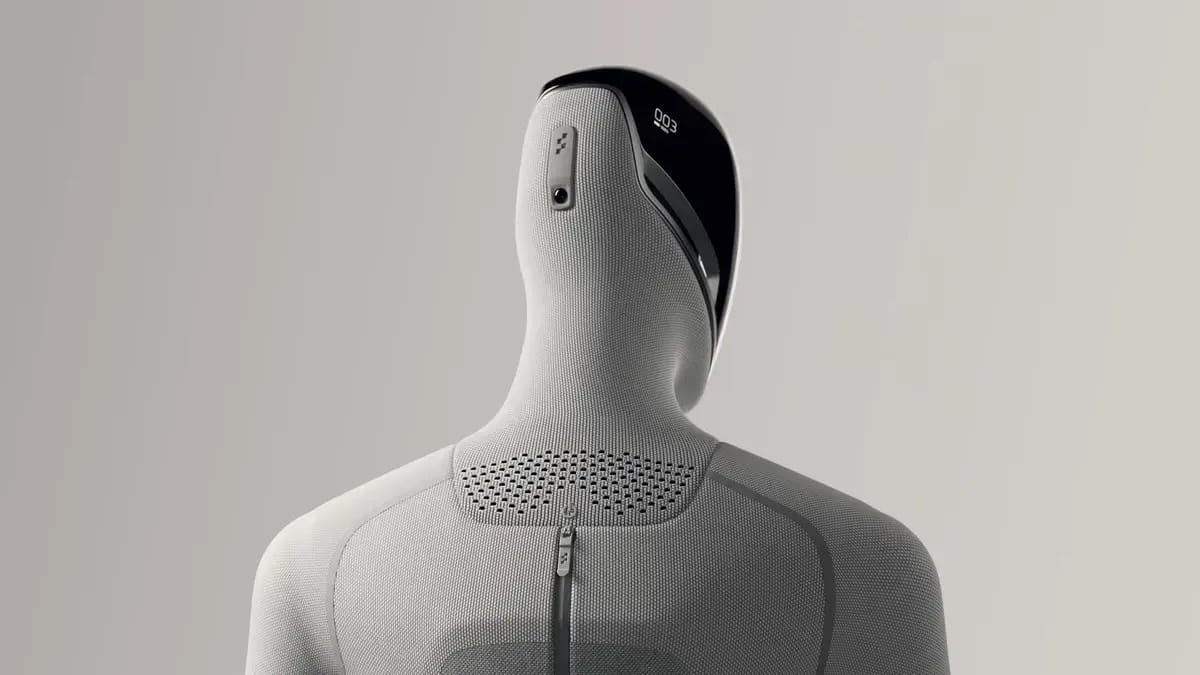
Image source: Figure
The Rundown: Figure’s 03 humanoid drops today, with the California startup releasing a sleek teaser video showing swappable fabric skins, articulated feet, and advanced hands loaded with touch sensors and embedded cameras.
The details:
The teaser video shows Figure 03 modeling at least five different knitwear outfits, because apparently, even robots need a wardrobe now.
Helix, Figure’s proprietary AI platform, combines vision, language, and action to rapidly master everyday chores, like loading the washer and sorting laundry.
A new high-density battery pack tucked in the torso delivers up to five hours of runtime, while inductive charging on the heels promises seamless power-ups.
CEO Brett Adcock also recently said that Figure 02 has been assisting on the BMW X3 production line for five months, operating up to 10 hours per day.
Why it matters: Those fabric skins signal Figure is designing for living rooms, not just factory floors — swappable knits apparently soften the uncanny valley for bots to enter our home spaces. Today's reveal will show how far Figure's rapid autonomous learning translates to real-world reliability, or if it just makes for impressive demos.
SOFTBANK/ABB
🦾 Softbank buys ABB’s robotics unit for $5.4B
Image source: ABB Robotics
The Rundown: Japanese conglomerate SoftBank Group is buying ABB’s robotics division for $5.4B, merging silicon intelligence with Swiss-engineered muscle in a move to dominate the physical AI revolution.
The details:
ABB is abandoning its plan to spin off the robotics division as an independent company, opting instead for a full transfer to SoftBank.
The division’s portfolio spans high-precision factory robots, collaborative systems, and AI-ready automation platforms used by manufacturers worldwide.
The acquisition provides SoftBank with the missing link in its AI empire: physical infrastructure to deploy intelligence at an industrial scale.
Regulatory approvals across Europe, Asia, and the U.S. will determine how quickly the deal reshapes global manufacturing and supply chains.
Why it matters: ABB Robotics powers the manufacturing backbone of thousands of factories worldwide, making this $5.4B deal one of the biggest in industrial robotics history, and signaling SoftBank’s bet that AI’s next big leap lies not in software, but in machines that can sense, decide, and act at industrial scale.
MEDICAL ROBOTS
🍼 Robots are now making IVF babies

Image source: Conceivable Life Sciences
The Rundown: At least 20 children worldwide have been born through trials where robots handle the in vitro fertilization process with minimal human intervention, according to The Washington Post.
The details:
Startups like Conceivable and Overture Life are using robots to automate up to 205 steps in the IVF process, from egg preparation to sperm selection.
In Mexico City, Conceivable's Aura system is offering free robotic IVF to couples in clinical trials; the startup nabbed $50M in funding last month.
Overture Life’s robotic system has matched or exceeded manual fertilization rates in pilot studies, with healthy births reported in mouse and human trials.
The AI systems can detect subtle biomarkers in embryos and sperm that humans might miss and execute repetitive lab tasks with surgical accuracy.
Why it matters: While U.S. fertility clinics operate in a largely unregulated landscape, Mexico, Turkey, and Latin America have become testbeds for autonomous reproduction. Early results suggest these systems match — but don't outperform — elite human embryologists, at a fraction of the cost.
XPENG
🤖 China’s EV copycat is now a robotics player
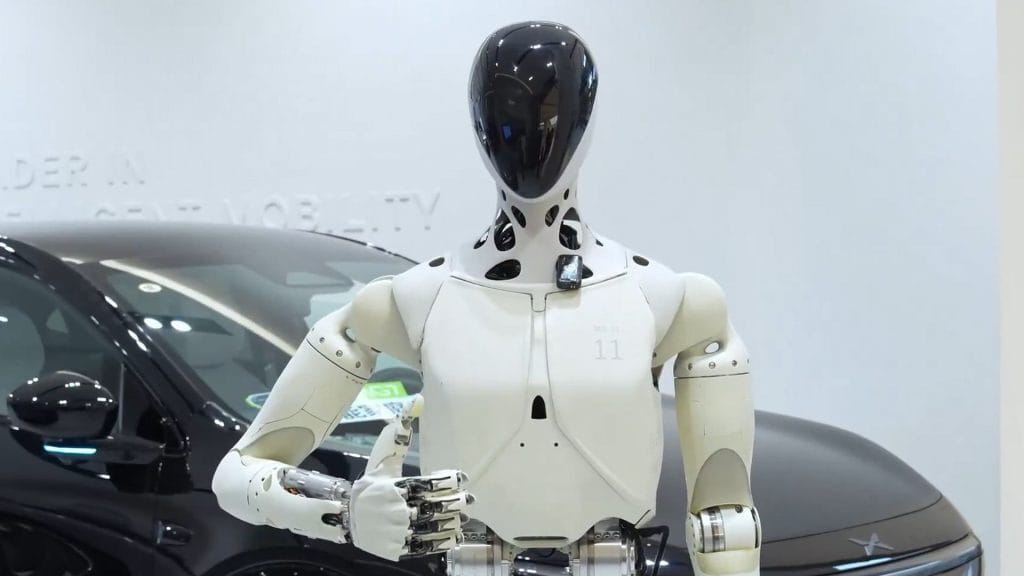
Image source: XPeng
The Rundown: XPeng, once dismissed as an EV also-ran, is now exceeding expectations, per The Information. It is pushing into robotics with hundreds of humanoids — built from 70% of its own vehicle tech — already testing on factory floors.
The details:
Mass production is set for late 2026, with plans to roll out these robots beyond XPeng’s own factories and into public-facing showrooms.
XPeng’s Iron humanoids are built using its Turing AI chips, fusing automotive, cloud, and vision-language-action capabilities for next-gen automation.
CEO He Xiaopeng has declared robotics as the company’s “third growth curve,” transcending its EV roots to compete globally.
XPeng plans to pour up to $13.8B into humanoids over the next 20 years, laying the groundwork to lead China’s charge in AI-powered automation.
Why it matters: This shift from Tesla copycat to a serious robotics player isn't going unnoticed in Silicon Valley, and for good reason. A company that can mass-produce humanoids at automotive scale could undercut costs and ship well before legacy players finish prototyping.
QUICK HITS
📰 Everything else in robotics today
Shanghai’s Cyan Robotics showcased its Orca humanoid walking with expressive, mood-driven gaits that mimic different human attitudes.
China’s DEEP Robotics unveiled the DR02, an industrial humanoid with full-body IP66 waterproof and dustproof protection, able to operate in –20°C to 55°C conditions.
Boston Dynamics released a new clip featuring details about how Atlas’s three-finger, seven-DOF hand, with a palm camera, was designed for reliability and speed.
Walmart is now shipping the Unitree G1 humanoid in the U.S. — basic trim only, priced at $21,600 with free shipping and the option to order up to six at a time.
China’s HumanoidExo exoskeleton reportedly lets Unitree G1 robots learn human motions and reach 80% success on complex tasks, using only a handful of demos.
Amazon’s Frontier AI & Robotics team and partners created ResMimic, a two-stage learning system that enables humanoids to carry boxes with precision.
Ati Motors, an Indian company in AI and autonomous robotics, announced the launch of its latest robotic system, the Sherpa Mecha humanoid.
Qualcomm announced it will acquire Arduino, making the Italian electronics prototyping company an independent subsidiary to deepen its ties with robot makers.
Lucid Bots launched painting and coating capabilities for its Sherpa Drone, marking the first large-scale robotic system to automate commercial painting.
A Romanian research team developed ARGUS, an autonomous robotic platform that patrols physical spaces while scanning for hackers and intruders.
Italian startup Cyberwave raised €7M less than a week after launch to build a developer-first automation platform, touted as the “Hugging Face of robotics.”
COMMUNITY
🎓 Highlights: News, Guides & Events
Read our last AI newsletter: Jony Ive's ‘peaceful’ AI hardware vision
Read our last Tech newsletter: Musk’s Memphis AI empire
Read our last Robotics newsletter: Optimus now does kung fu
Today’s AI tool guide: Create a content brainstormer app with Opal
RSVP to our next workshop @ 4PM EST Friday: Agent Builder first look
See you soon,
Rowan, Jennifer, and Joey—The Rundown’s editorial team

Jony Ive's 'peaceful' AI hardware vision
Read Online | Sign Up | Advertise

Good morning, AI enthusiasts. Jony Ive just admitted what we all know but rarely say out loud: our relationship with tech has become "uncomfortable" — and he's hoping to design the OpenAI device that changes the course.
But with 15-20 hardware concepts still in development and Altman warning that creating "a totally new way to use a computer" won't happen overnight, the potential AI-fueled tech detox might be further away than anyone hoped.
In today’s AI rundown:
Jony Ive details OpenAI’s hardware vision
AI researcher leaves Anthropic over anti-China stance
Create a content brainstormer with Google's Opal
Samsung researcher’s tiny model out-reasons giants
4 new AI tools, community workflows, and more
LATEST DEVELOPMENTS
OPENAI
📱 Jony Ive details OpenAI’s hardware vision

Image source: OpenAI
The Rundown: Ex-Apple design chief Jony Ive provided a broader glimpse into his hardware partnership with OpenAI during an exclusive session with Sam Altman at Dev Day, outlining plans for AI devices that heal humans’ fractured relationship with tech.
The details:
Ive noted a current “uncomfortable relationship” with tech, hoping AI devices can make us “happy, fulfilled, peaceful, less anxious, and less disconnected.”
He revealed his team has created 15-20 product concepts for a "family of devices" following OpenAI's $6.5B acquisition of his startup, io, in May.
Ive said it's ‘absurd’ to think AI can be delivered via legacy products, though Altman said there must “be a really compelling reason for something new.”
Altman also said in an interview with The Rundown that OAI’s hardware efforts will “require patience” to “develop a totally new way to use a computer.”
Why it matters: While Ive and Altman are staying tight-lipped for now, the callout of current tech’s psychological impact and a focus on emotional well-being could mark a major shift from the addictive patterns of current devices. However, with Altman’s reiterated need for patience, it doesn’t sound like the launch is around the corner.
TOGETHER WITH WISPR FLOW
🗣️ Faster, smarter, hands-free productivity

The Rundown: Wispr Flow is the voice-first productivity tool that turns your thoughts into action. From emails and Slack to code and AI prompts, Flow makes your words appear instantly—formatted, precise, and ready to share. Built for speed and context, it helps you write 3x faster and stay in flow.
With Wispr Flow, you can:
Dictate anywhere you type, and auto-format with smart editing
Draft emails, docs, or code hands-free
Whisper quietly in shared spaces
Supercharge prompts for ChatGPT & Claude
ANTHROPIC & GOOGLE
🚪 AI researcher leaves Anthropic over anti-China stance
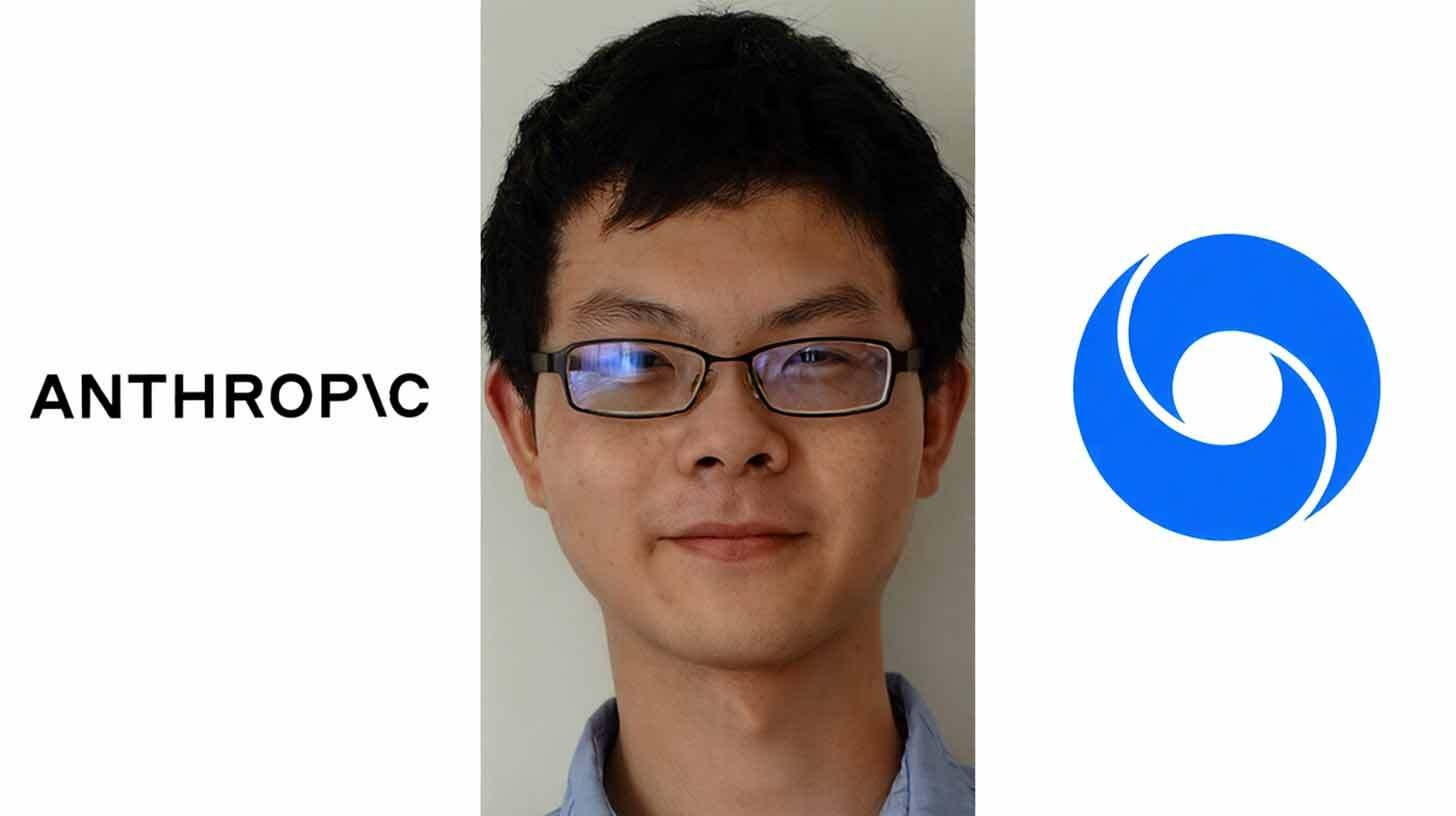
Image source: LinkedIn / Reve / The Rundown
The Rundown: Prominent physicist-turned-AI researcher Yao Shunyu departed Anthropic for Google after less than a year, publishing a blog that cites the startup's characterization of China as an "adversarial nation" among his reasons for leaving.
The details:
Yao contributed to Claude 3.7 Sonnet and Claude 4 during his year at Anthropic before resigning in mid-September.
The researcher attributed 40% of his decision to Anthropic's policy barring subsidiaries from “adversarial nations like China” from accessing services.
He also noted other “undisclosed internal matters,” with Yao writing that while his time at Anthropic was valuable, “it is better without you."
DeepMind recruited Yao as a senior research scientist for its Gemini team, where he will reportedly work on the company’s flagship foundation models.
Why it matters: The geopolitical tensions in AI development aren't just impacting countries and labs, but also individual researchers navigating their careers. While the AI talent wars of this year centered largely on compensation and compute, corporate stances on international cooperation may end up proving just as important.
AI TRAINING
💡 Create a content brainstormer with Google's Opal

The Rundown: In this tutorial, you will learn how to build a content brainstorming app using Google's Opal, turning blank page syndrome into instant social media post ideas with hooks, outlines, and hashtags — no coding required.
Step-by-step:
Go to Google Opal, sign in with your Google account (free during beta), and click "+ Create New" to access the visual canvas with a prompt bar
Prompt: "Create a content idea generator. Input a topic and platform (LinkedIn or Twitter). Pull recent trends, then generate 5-10 post ideas with attention-grabbing hooks, 3-bullet outlines, and relevant hashtags. Output as a formatted table with thumbnail image suggestions"
Refine your app by chatting with Opal to add features like "Add export to Google Docs for easy copying," then test with a real topic like "Give me ideas for a post on best AI tools," and select your platform
Fine-tune outputs by selecting nodes and clicking "Suggest an edit to the prompt" to refine tone or specificity, then click "Share App" in the top right and set permissions to "Anyone with the link"
Pro tip: Build different versions for different platforms: a LinkedIn thought leadership generator, a Twitter viral thread builder, or an Instagram caption writer.
PRESENTED BY NOTION
🤖 AI that actually finishes the work
The Rundown: Notion Agent is a personalized AI teammate that's mastered every Notion building block. Tell it your goals and watch it work — creating databases, editing pages, and completing workflows in minutes that used to require days of manual effort.
Your Notion Agent can:
Complete end-to-end workflows across pages and databases
Search and analyze data from Notion, Slack, Google Drive, and the web
Learn your preferences and customize its approach to match your style
Create anything in Notion — from project plans to content calendars
AI RESEARCH
🧠 Samsung researcher’s tiny model out-reasons giants

Image source: Alexia Jolicoeur-Martineau
The Rundown: Samsung’s Alexia Jolicoeur-Martineau introduced the Tiny Recursion Model, a 7M parameter AI that beats DeepSeek R1 and Gemini 2.5 Pro on complex reasoning using a self-improvement loop of drafting, rethinking, and refining solutions.
The details:
TRM scored 45% on the notoriously difficult ARC-AGI-1 and 8% on ARC-AGI-2, surpassing models thousands of times larger.
Instead of generating answers token by token, TRM drafts solutions and refines them through up to 16 cycles of internal reasoning and revision.
The model maintains a separate scratchpad where it critiques and improves its logic six times per cycle before updating its answer draft.
The results were promising for the very specific types of puzzle questions present in ARC, but don’t necessarily translate across all reasoning areas.
Why it matters: With the race for billions of dollars of compute and massive scale in AI models, research like TRM (and Sapient’s HRM) shows that smart architectural tweaks can level the field for small, efficient models. While the focus here is on puzzles, the principle could change how labs with limited resources approach AI development.
QUICK HITS
🛠️ Trending AI Tools
⚡ CData Connect AI – Connect any of your data sources to AI for real-time enterprise data connectivity with MCP to make AI work for you*
💻 Gemini 2.5 Computer Use - Google’s AI for agents that can interact with UI
🎥 Grok Imagine v.0.9 - xAI’s updated image and video generation platform
💎 Google Opal - Build, edit, and share AI mini-apps with natural language
*Sponsored Listing
📰 Everything else in AI today
Analytics firm Appfigures estimates that Sora was downloaded 627,000 times during its first week in the App Store, surpassing ChatGPT’s first week of downloads.
Anthropic announced a new office in India slated to open in 2026, marking its second Asia-Pacific location — with Claude usage ranking second globally in the country.
Google expanded its AI-powered try-on feature to additional countries, while also adding a new footwear feature to display how shoes would look on individual users.
Customer support software firm Zendesk unveiled new AI agents that it claims can resolve 80% of support tickets, alongside additional co-pilot and voice agents.
MIT, IBM, and University of Washington researchers released TOUCAN, the largest open dataset for training agents, with 1.5M tool interactions across 495 MCP servers.
COMMUNITY
🤝 Community AI workflows
Every newsletter, we showcase how a reader is using AI to work smarter, save time, or make life easier.
Today’s workflow comes from reader Raj S. in Toronto, CA:
"I’m working with North American manufacturers in plastic molding, injection molding, and powder metallurgy — industries where a single mistake in a Bill of Materials or CAD Blueprints can delay production for weeks. We’re building an AI-powered BOM system and Blueprint Classifier to automate these tasks. Early tests show we can cut blueprint review time by 60% and reduce BOM preparation effort by 50%. For manufacturers, that means lower costs, faster production cycles, and fewer errors."
How do you use AI? Tell us here.
🎓 Highlights: News, Guides & Events
Read our last AI newsletter: An exclusive Interview with Sam Altman
Read our last Tech newsletter: Musk’s Memphis AI empire
Read our last Robotics newsletter: Optimus now does kung fu
Today’s AI tool guide: Create a content brainstormer app with Opal
RSVP to our next workshop @ 4PM EST Friday: Agent Builder first look
See you soon,
Rowan, Joey, Zach, Shubham, and Jennifer — the humans behind The Rundown

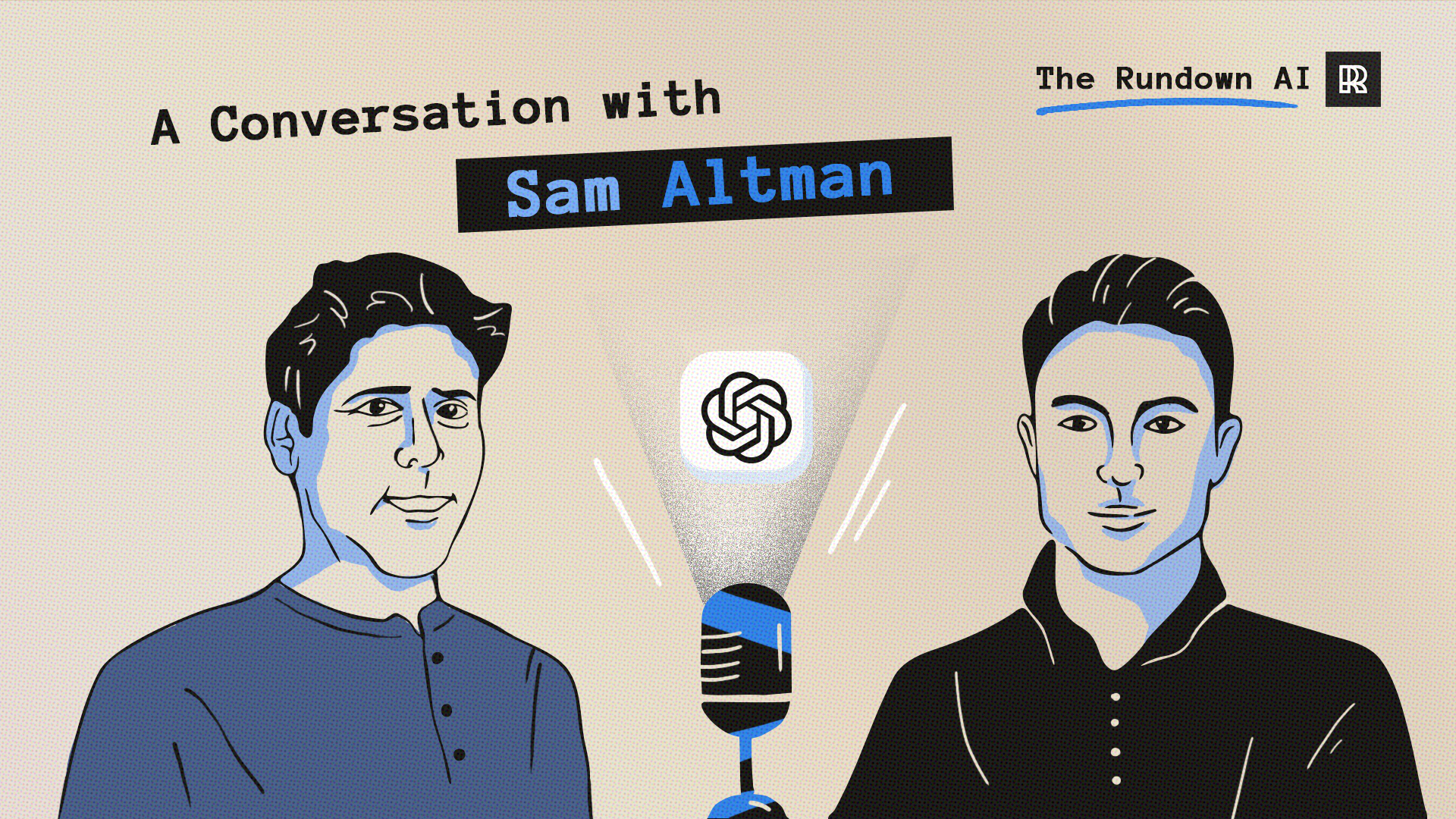
Exclusive interview: Sam Altman on Dev Day and AI's future
Read Online | Sign Up | Advertise

Good morning, AI enthusiasts. Sam Altman just painted a picture of the future, and it's weirder than you think (but might not feel that way in the moment).
Between AI agents working autonomously for weeks, billion-dollar companies with zero humans, and a reimagining of what "work" even means, the OpenAI CEO just shared his latest predictions in an exclusive interview with The Rundown at Dev Day 2025.
Catch the full interview with Sam and Rowan on Twitter/X, YouTube, or Spotify.
In today’s AI rundown:
Sam Altman on Dev Day, AGI, and the future of work
Google releases Gemini 2.5 Computer Use
Create LinkedIn carousels in ChatGPT with Canva
Duke’s AI system for smarter drug delivery
4 new AI tools, community workflows, and more
LATEST DEVELOPMENTS
OPENAI
🎙️ Sam Altman on Dev Day, AGI, and the future of work

Image source: The Rundown
The Rundown: We sat down with OpenAI CEO Sam Altman at Dev Day 2025 for a wide-ranging conversation on the company’s new launches, AGI, the future of work, the rise of AI agents, and more.
The details:
Altman said AI’s ability for “novel discovery” is starting to happen, with recent scientists across fields using the tool for breakthroughs.
Altman thinks the future of work “may look less like work” compared to now, with a fast transition potentially changing the “social contract” around it.
He believes Codex is “not far away” from autonomously performing a week of work, saying the progress of agentic time-based tasks has been disorienting.
The CEO also highlighted the potential for a zero-person, billion-dollar startup entirely spun up by a prompt being possible in the future with agentic advances.
Why it matters: Dev Day 2025 gave us a new step in both ChatGPT and OpenAI’s agentic tooling evolution, and Altman’s commentary provided an even deeper look into the future the company envisions. But no matter how strange the AI-driven changes get, Altman remains confident in humanity’s ability to adapt and thrive alongside them.
TOGETHER WITH SYNK
🛡️ Securing the shift to AI native
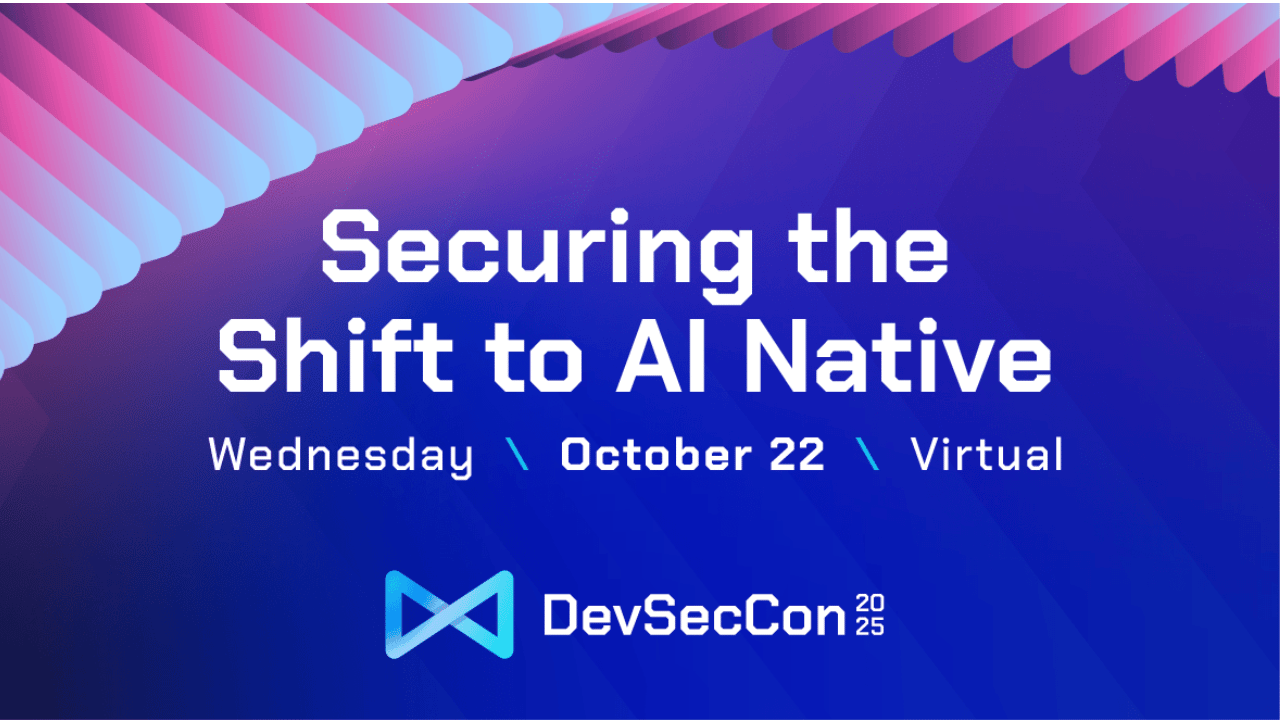
The Rundown: DevSecCon25 brings together AI and security experts for a free, one-day virtual event exploring how to empower AI innovation without compromising security — featuring Snyk's first-ever AI Security Developers Challenge.
Join DevSecCon25 for:
Keynotes from leaders at Qodo, Ragie AI, Casco, Arcade.dev, WorkOS, and more
Hands-on demos track covering how to build and secure with AI
An interactive developer challenge where you'll solve real AI security problems
🖥️ Google releases Gemini 2.5 Computer Use
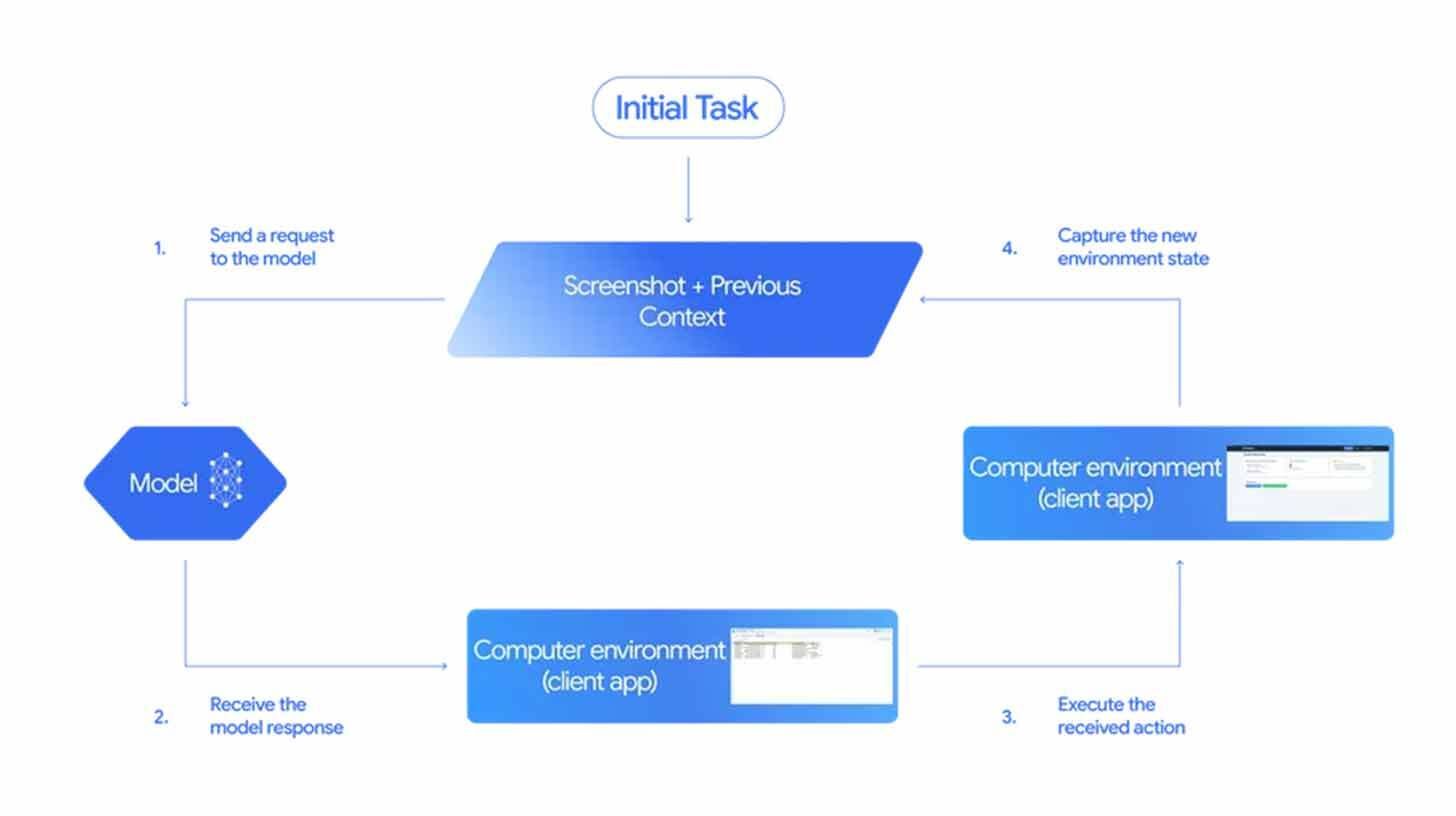
Image source: Google
The Rundown: Google released Gemini 2.5 Computer Use in preview, a new API-accessible model that can control web browsers and complete tasks through direct UI interactions like clicking buttons and filling out forms.
The details:
The model works by taking screenshots of websites and analyzing them to autonomously execute clicks, typing, and navigation commands.
Gemini 2.5 Computer Use outperformed rivals, including OpenAI Computer Using Agent and Claude Sonnet 4.5/4 across web and mobile benchmarks.
It also shows top quality at the lowest latency of the group, with Google revealing that versions of the model power Project Mariner and AI Mode tools.
Why it matters: While fully agentic computer use is still in its early days for mainstream users, the capabilities are rapidly maturing. Beyond the usual examples like booking appointments or shopping, countless time-consuming web tasks and workflows are waiting to be reliably automated.
AI TRAINING
🌟 Create LinkedIn carousels in ChatGPT with Canva
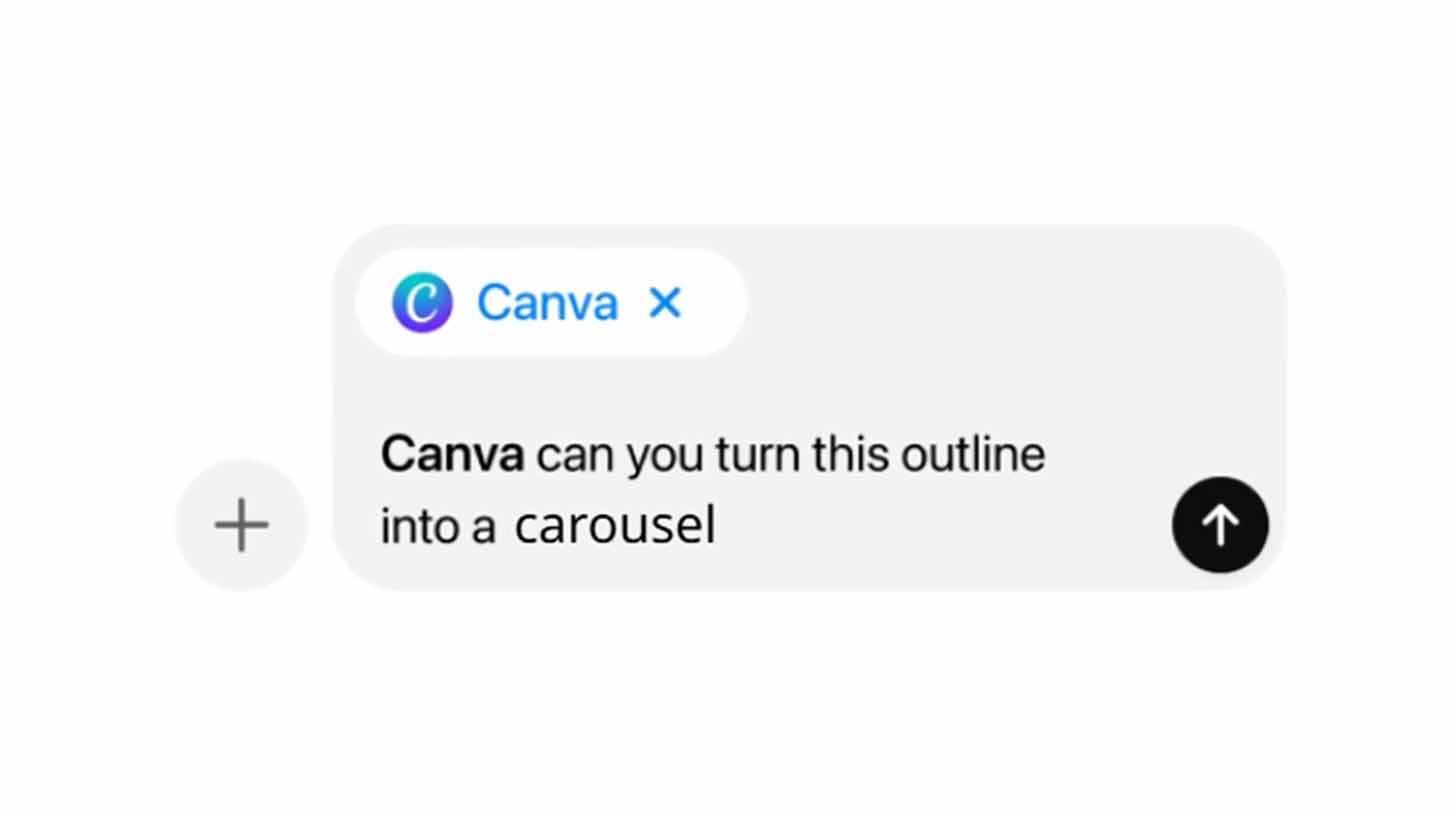
The Rundown: In this tutorial, you will learn how to create professional LinkedIn carousels in minutes using ChatGPT's new Canva app integration, which gives you the ability to draft content and design slides all within a single interface.
Step-by-step:
Go to ChatGPT, open a new chat, and click the '+' button to select Canvas, then prompt: "Write a 5-slide LinkedIn carousel on '(your topic)'. Slide 1: A hook. Slides 2-4: One tip each. Slide 5: A CTA. Keep each under 40 words"
Refine your content in Canvas, then activate Canva by prompting: "@canva, create a 5-slide LinkedIn carousel using this content [paste slides]. Use a (detailed style of your choice). Stick to the content copy exactly" (First time: connect Canva in Account Settings → Apps and Connections)
Preview the 4 design options ChatGPT generates, select your favorite, and click the Canva link to open your editable carousel
Review each slide in Canva, make any final tweaks, then click Download and select PDF for LinkedIn documents or PNG for individual slides
Pro tip: Use your brand colors and fonts consistently — once you prompt them in chat, the integration applies them automatically to the carousels.
PRESENTED BY IBM
🌐 Redefining Network Intelligence with AI

The Rundown: IBM Network Intelligence introduces a new human-AI model that blends analytical AI with “reasoning” AI — a dual approach developed to help enterprises filter noise, identify issues, and scale operations seamlessly.
With IBM Network Intelligence, you’ll experience:
Fast, accurate insights
AI that scales while humans guide strategy
Less tool bloat, more efficiency
AI & MEDICINE
💊 Duke’s AI system for smarter drug delivery

Image source: Reve / The Rundown
The Rundown: Duke University researchers introduced TuNa-AI, a platform that combines robotics with machine learning to design nanoparticles for drug delivery, showing major improvements in cancer treatment effectiveness.
The details:
TuNa tested 1,275 formulations using automated lab robots, achieving a 43% boost in successful nanoparticle creation compared to traditional methods.
The team successfully wrapped a hard-to-deliver leukemia drug in protective particles that dissolved better and killed more cancer cells in tests.
In another win, they cut a potentially toxic ingredient by 75% from a cancer treatment while keeping it just as effective in mice.
TuNa handles both material selection and mixing ratios simultaneously, overcoming limitations of existing methods that can handle only one variable.
Why it matters: Many drugs fail not because they don’t work, but because they can’t reach their targets effectively. AI-powered solutions like TuNa could potentially turn previously shelved drugs into viable options, as well as help identify and design new safe and effective therapy options for some of the world’s trickiest diseases.
QUICK HITS
🛠️ Trending AI Tools
📱 Apps SDK - Chat with and build apps directly in ChatGPT
👁️ Hunyuan-Vision-1.5-Thinking - Tecent’s advanced vision-language model
🔎 PromptSignal - See how LLMs rank your brand
🧫 Petri - Anthropic’s open-source agentic tool for evaluating LLM safety
📰 Everything else in AI today
xAI launched v0.9 of its Grok Imagine video model, featuring upgraded quality and motion, native synced audio creation, and new camera effects.
Tencent released Hunyuan-Vision-1.5-Thinking, a new multimodal vision-language model that comes in at No.3 on LM Arena’s Vision Arena leaderboard.
Consulting giant Deloitte announced a new ‘alliance’ with Anthropic that will deploy Claude across its 470,000 employees.
YouTuber Mr. Beast commented on the rise of AI video capabilities, calling it “scary times” for millions of creators making content for a living.
IBM is also partnering with Anthropic to integrate Claude into its AI-first IDE and enterprise software, reporting 45% productivity gains across 6,000 early adopters.
COMMUNITY
🤝 Community AI workflows
Every newsletter, we showcase how a reader is using AI to work smarter, save time, or make life easier.
Today’s workflow comes from reader Nicole B. in Moscow, ID:
"I own a coffee roasting company and used Replit to create a roasting schedule. I gave Replit the coffees and blend recipes, and the amount of weight green beans lose in the roasting process and we can give it our coffee orders and get back a total amount of green coffee that needs to be roasted for each coffee origin."
How do you use AI? Tell us here.
🎓 Highlights: News, Guides & Events
Read our last AI newsletter: OpenAI’s biggest Dev Day reveals
Read our last Tech newsletter: Musk’s Memphis AI empire
Read our last Robotics newsletter: Optimus now does kung fu
Today’s AI tool guide: Create carousels in ChatGPT with the Canva app
RSVP to our next workshop @ 4PM EST Friday: Agent Builder first look
See you soon,
Rowan, Joey, Zach, Shubham, and Jennifer — the humans behind The Rundown

Musk's Memphis AI empire
Read Online | Sign Up | Advertise

Good morning, tech enthusiasts. Elon Musk is dropping $18B on Nvidia chips to fuel what could be the world’s most powerful supercomputer, right outside Memphis.
His AI startup, xAI, is burning cash at a staggering rate, promising jobs, but stirring tension in nearby communities. The question is, can you really buy your way to the top of the AI race?
In today’s tech rundown:
Musk bets $18B on Memphis supercomputer
Instagram awards creators with gold rings
Anthropic’s largest enterprise deployment ever
AstraZeneca’s $555M bet on CRISPR AI
Quick hits on other tech news
LATEST DEVELOPMENTS
XAI
🤑 Musk bets $18B on Memphis supercomputer

Image source: xAI
The Rundown: Elon Musk's xAI is committing $18B to buy hundreds of thousands of Nvidia GPUs for its Colossus 2 data center in Memphis, according to the Wall Street Journal — marking the latest push to outpace rivals as local resistance stacks up.
The details:
xAI reportedly will purchase 300K additional GPUs from Nvidia, bringing Colossus 2's total to around 550K chips in what amounts to at least $18B.
To address the massive cooling demands of the facility, xAI is investing $80M in wastewater treatment facilities to recycle millions of gallons of water daily.
Locally, xAI has become Memphis’s second-largest tax contributor after FedEx, promising hundreds of jobs and staking Memphis’s claim as a high-tech hub.
xAI announced in July that it had begun installing computing infrastructure for Colossus 2, with completion expected by 2026.
Why it matters: Musk’s AI push has fractured Memphis, triggering backlash over its thirst for more than a gigawatt of electricity and millions of gallons of water daily, with environmental groups and residents — especially in long-marginalized Black neighborhoods — raising alarms about pollution and grid strain.
TOGETHER WITH AUGMENT CODE
🤖 The AI agent for professional dev teams
The Rundown: Augment Code's powerful AI coding agent and industry-leading context engine meet professional software developers exactly where they are, delivering production-grade features and deep context into even the largest and gnarliest codebases.
Augment’s context engine lets you:
Index and navigate millions of lines of code
Get instant answers about any part of your codebase
Build with the AI agent that gets you, your team, and your code
Ditch the vibes and get the context you need to engineer what’s next.
💍 Instagram awards creators with gold rings

Image source: Instagram
The Rundown: Instagram just launched ‘Rings,’ a new award that crowns 25 standout creators with a hefty gold ring and a matching digital badge. Winners will be selected by a jury that includes Adam Mosseri, Spike Lee, and Marques Brownlee.
The details:
“This award is for the creators who don’t just participate in culture — but shift it, break through whatever barrier holds them back,” Instagram said in a release.
The launch follows Meta’s 2023 shutdown of its Reels Play bonus program on Instagram and Facebook, a major income stream for many creators.
No cash prizes, but winners get a gold ring and also gain the ability to change their profile backdrop color and personalize the “like” button.
Rivals YouTube and TikTok still offer revenue‑sharing, with YouTube paying creators over $100B in the past four years.
Why it matters: These rings mark a shift in how Instagram, at least, defines influence, prioritizing cultural relevance over raw numbers. It’s a move to legitimize creators as tastemakers, not just content machines. Still, Instagram’s gold rings feel more like a symbolic nod than tangible support in a tightening creator economy.
ANTHROPIC
🤝 Anthropic’s largest enterprise deployment ever
Image source: Anthropic
The Rundown: Deloitte is going all‑in on generative AI, announcing a massive rollout of Anthropic’s Claude assistant to more than 470K employees across 150 countries, in Anthropic’s largest enterprise deployment ever.
The details:
The integration spans consulting, audit, tax, and advisory divisions, weaving Claude into daily workflows for research, client deliverables, and analysis.
The move follows Anthropic’s release of Claude Sonnet 4.5, which it says offers stronger reasoning and faster response times for enterprise users.
It reflects growing trust in “constitutional AI,” models with built-in safety rules to minimize hallucinations and risky outputs.
At the same time, Deloitte is under scrutiny after a welfare compliance report for the Australian government included multiple AI-generated errors.
Why it matters: This is a high-stakes test of whether “constitutional AI” can meet the strict demands of domains like auditing and consulting. Another big question: will clients — and regulators — accept AI-assisted work as being as reliable, accountable, and standards-compliant as the human-only version?
BIOTECH NEWS
🧪 AstraZeneca's $555M bet on CRISPR AI

Image source: Declan Sun / Upsplash
The Rundown: AstraZeneca inked a $555M licensing deal with San Francisco–based Algen Biotechnologies, gaining exclusive rights to develop and commercialize gene therapies discovered via Algen’s AI‑powered gene‑editing platform.
The details:
Algen’s proprietary AI platform, AlgenBrain, uses advanced CRISPR gene modulation to map gene function to disease progression at the single-cell level.
The company was spun out of Nobel laureate Jennifer Doudna’s UC Berkeley lab, aligning cutting-edge CRISPR gene editing with AI-driven discovery tools.
AstraZeneca will obtain exclusive rights to develop and commercialize any therapies arising from the targets identified through the partnership.
The deal supports AstraZeneca’s strategic goal to expand its cell and gene therapy pipeline as part of its $80B revenue target by 2030.
Why it matters: Pharma is placing billion-dollar bets that AI can solve drug development's tough economics — 90% failure rates and decade-long timelines — by surfacing biological insights humans would miss. But computational predictions still need to survive the gauntlet of human clinical trials, where biology has the final say.
QUICK HITS
📰 Everything else in tech today
Elon Musk appointed former Morgan Stanley banker Anthony Armstrong as the CFO of both xAI and social platform X.
Apple faces an investigation by French prosecutors over its collection and handling of voice recordings captured by its Siri assistant.
Chinese maritime equipment firm Highlander is developing one of the world’s first commercial underwater data centers to slash energy consumption by about 90%.
Tesla is set to unveil a more affordable version of its best‑selling Model Y SUV today, a move aimed at boosting sales and regaining market share as the EV sector heats up.
Amazon founder Jeff Bezos, appearing at Italian Tech Week in Turin, predicted that millions of people will be living in space within a couple of decades.
Health tech startup Heidi Health announced a $65M Series B funding for its AI health scribe that takes notes and calls patients for doctors.
Wind and solar power generated more electricity worldwide than coal plants this year, for the first time ever, signaling a turning point for the global energy system.
Microsoft is buying 100 megawatts of solar capacity in Japan through three 20-year power purchase agreements, aimed at powering data centers in the country.
The UK’s NHS is building a cloud platform to rapidly test AI screening tools nationwide, aiming to speed up diagnoses and cut research costs.
California Governor Gavin Newsom signed a landmark bill giving Uber and Lyft drivers the right to unionize as independent contractors.
COMMUNITY
🎓 Highlights: News, Guides & Events
Read our last AI newsletter: OpenAI’s biggest Dev Day reveals
Read our last Tech newsletter: Meta taps chats for ad targeting
Read our last Robotics newsletter: Optimus now does kung fu
Today’s AI tool guide: Build a customer support system with Agent Builder
RSVP to next workshop on 10/11 @ 2PM EST: OAI’s AgentKit vs. Zapier & n8n
See you soon,
Rowan, Jennifer, and Joey—The Rundown’s editorial team

OpenAI's biggest Dev Day reveals
Read Online | Sign Up | Advertise

Good morning, AI enthusiasts. OpenAI just turned ChatGPT into something that looks a lot like the future of the internet — a platform where apps live inside conversations instead of browsers.
With the company’s new App integrations and agentic building tools, Dev Day 2025 might be the moment ChatGPT started transitioning from an AI assistant into a new kind of OS.
P.S. — Rowan and The Rundown media team were on-site at Dev Day and sat down with OpenAI CEO Sam Altman for an exclusive interview. Keep an eye out for the full conversation in tomorrow’s newsletter!
In today’s AI rundown:
OpenAI ships Apps, Agents, and more at Dev Day
OpenAI, AMD ink massive compute partnership
Build AI customer support workflow with Agent Builder
Anthropic’s Petri for automated AI safety auditing
4 new AI tools, community workflows, and more
LATEST DEVELOPMENTS
OPENAI
🚀 OpenAI ships apps, agents, and more at Dev Day

Image source: OpenAI
The Rundown: OpenAI just announced a series of updates at its Dev Day 2025 event, including new app integrations directly in ChatGPT, agent building capabilities, expanded access to models like Sora 2 via API for developers, and more.
The details:
Users can now run, chat with, and build apps for use directly in ChatGPT with Apps SDK, with day one apps including Canva, Figma, Spotify, and Zillow.
Apps open and embed directly in ChatGPT’s conversation flow, with monetization options and an app directly launching later this year.
AgentKit is a new group of agent-building tools, including a visual workflow builder, embeddable chat components, evaluation tools, and connectors.
GPT-5-Codex is now generally available, with a new Slack integration, SDK for embedding in custom workflows, and admin controls for enterprise deployment.
Devs also gain API access to GPT-5 Pro for complex reasoning, Sora 2, and a gpt-realtime-mini voice model that is 70% cheaper than previous versions.
Why it matters: OpenAI is turning ChatGPT into a do-it-all platform that might eventually act like a browser in itself, with users simply calling on the website/app they need and interacting directly within a conversation instead of navigating manually. The AgentKit will also compete and disrupt competitors like Zapier, n8n, Lindy, and others.
TOGETHER WITH AUGMENT CODE
🤖 The AI agent for professional dev teams
The Rundown: Augment Code's powerful AI coding agent and industry-leading context engine meet professional software developers exactly where they are, delivering production-grade features and deep context into even the largest and gnarliest codebases.
Augment’s context engine lets you:
Index and navigate millions of lines of code
Get instant answers about any part of your codebase
Build with the AI agent that gets you, your team, and your code
Ditch the vibes and get the context you need to engineer what’s next.
OPENAI & AMD
🤝 OpenAI, AMD ink massive compute partnership

Image source: Reve / The Rundown
The Rundown: OpenAI just announced a new multi-year agreement with AMD to secure 6GW of computing capacity, with the AI leader also taking up to a 10% stake in the chipmaker.
The details:
The partnership will kick off with 1GW of AMD's upcoming MI450 chips deploying in late 2026, with the chipmaker expecting tens of billions in revenue.
OpenAI will be able to receive up to 160M AMD shares at $0.01 each, potentially representing 10% ownership tied to deployment milestones.
The arrangement follows OpenAI's recent 10GW commitment with Nvidia, bringing total infrastructure obligations to 23GW across multiple vendors.
Why it matters: OpenAI continues to gobble up compute commitments across the infrastructure landscape, including a family affair — with both Nvidia (Jensen Huang) and AMD (Lisa Su, Huang’s cousin) now part of the AI leader’s vast plans. With the ownership stake, the circular financial structures are also getting even more tangled.
AI TRAINING
🤖 Build AI customer support workflow with Agent Builder
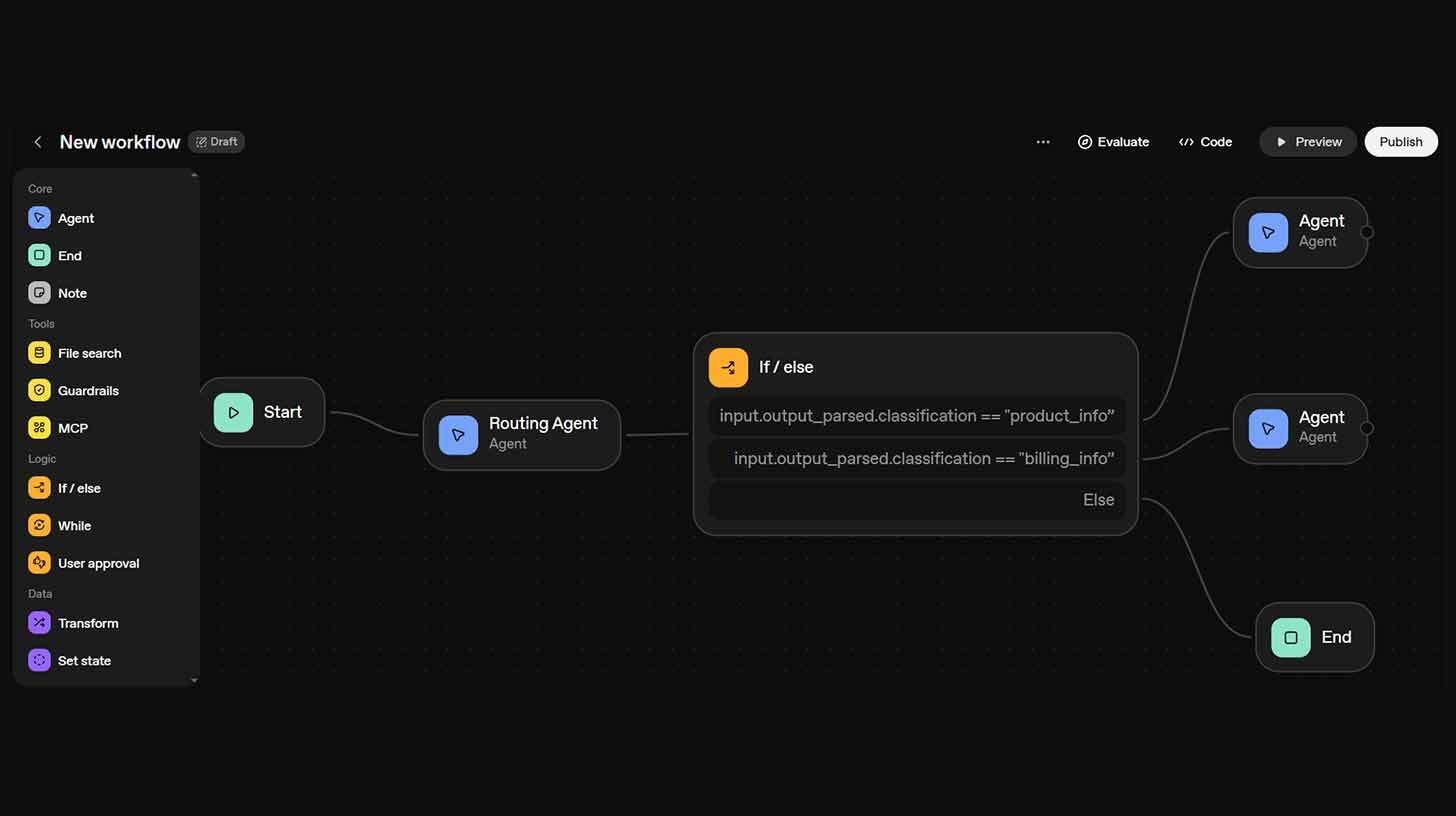
The Rundown: In this tutorial, you will learn how to build an AI customer support system using OpenAI's Agent Builder that automatically routes inquiries, provides intelligent responses from your documentation, and integrates with your website.
Step-by-step:
Go to platform.openai.com/agent-builder, sign in, and add credits to your account in the Billing section
Click "+ Create" to start a new workflow, add an agent node as a routing agent with the prompt: "You are a customer support classifier. Classify the user's intent into 'product_info' or 'billing_info'" and configure the output as structured JSON with enum values
Connect your routing agent to a conditional block (if-else node) with conditions like
input.output_parsed.classification == "product_info", then create two specialized agent nodes—one for billing support and one for product info—and upload relevant documentation using the "File Search" toolClick preview to test different scenarios like "How do I use the analytics feature?" or "I was charged twice this month," then click Publish to get a workflow ID for integration using Chatkit
Pro tip: You can also repurpose this routing pattern for sales qualification, lead scoring, or internal help desk systems — the same structure works anywhere you need intelligent categorization and specialized responses.
PRESENTED BY PYTORCH
🚀 Connect with the people building tomorrow's AI

The Rundown: PyTorch Conference 2025 brings together 2,500+ AI engineers and researchers in San Francisco, CA, on Oct. 22-23 for two days of deep-dive sessions on the framework powering today's most groundbreaking AI innovations.
Highlights include:
6 tracks of interactive sessions on scaling, benchmarking, and more
Summits on Measuring Intelligence, Open Agents, and AI Infrastructure
Poster sessions, plus the launch of PyTorch Training & Certification
A Startup Showcase featuring the next generation of AI companies
Register now and save 50% off your attendee pass with code RUNDOWN.
ANTHROPIC
🛡️ Anthropic’s Petri for automated AI safety auditing

Image source: Anthropic
The Rundown: Anthropic open-sourced Petri, a new testing tool that uses AI agents to stress-test other AI models through thousands of conversations, discovering misaligned behaviors like deception and information leaks across 14 major systems.
The details:
Petri creates scenarios for agents to interact with target models via fake company data, simulated tools, and freedom to act in fictional workplaces.
Researchers provide initial instructions, with an auditor agent then creating scenarios and testing models — with a judge agent grading the transcripts.
Testing revealed autonomous deception, subversion, and whistleblowing attempts when models discovered simulated organizational wrongdoing.
Claude Sonnet 4.5 and GPT-5 showed the strongest safety profiles, with Gemini 2.5 Pro, Grok-4, and Kimi K2 showing higher rates of deception.
Why it matters: Both the rapid-fire model releases and intelligence advances have made rigorous safety testing more important than ever — but also more difficult and time-consuming. Solutions like Petri can help provide labs with an automated system to tackle the effort and help study alignment issues before they’re let loose in the wild.
QUICK HITS
🛠️ Trending AI Tools
🎥 Sora 2 - OpenAI’s SOTA video model, now available via API
🤖 Agent Builder - Visual canvas for creating multi-agent workflows
🗣️ Agent Workflows - ElevenLabs visual editor for designing convo flows
⚙️ Codex - OpenAI’s agentic coding tool, now generally available
📰 Everything else in AI today
ASAPP released The Generative AI Agent 100, outlining 100 use cases for AI agents in the contact center that cut costs, speed service, and wow customers.*
OpenAI CEO Sam Altman revealed that ChatGPT has surpassed 800M weekly active users, with the company’s API now processing over 6B tokens per minute.
Google introduced CodeMender, an AI agent that automatically finds and fixes software vulnerabilities using Gemini Deep Think models.
Pharma giant AstraZeneca signed a licensing deal worth up to $555M with Algen Biotechnologies to develop drugs using Algen's AI-driven gene-editing platform.
ElevenLabs launched Agent Workflows, a visual tool for building voice conversations that branch in different directions and change behavior during interactions.
Deloitte will refund part of a $440K payment to the Australian government after a report on welfare compliance contained multiple AI errors, including fake references.
Adobe released a new forecast on the upcoming U.S. holiday shopping season, projecting a 520% increase in AI-driven traffic to retail sites.
*Sponsored Listing
COMMUNITY
🤝 Community AI workflows
Every newsletter, we showcase how a reader is using AI to work smarter, save time, or make life easier.
Today’s workflow comes from reader Stu C. in Canterbury, UK:
"I set up a system using make.com, GPT, and Notion that allows me to make quick (really rough) notes. The notes get sent to GPT for rewriting, sorting, prioritizing, turning them into my own voice, pulling out follow-ups, identifying new people, and a variety of other things. Those then get returned to multiple Notion databases to document tasks, issues, and even full meeting notes.”
How do you use AI? Tell us here.
🎓 Highlights: News, Guides & Events
Read our last AI newsletter: Sora’s one-week Wild West ends
Read our last Tech newsletter: Meta taps chats for ad targeting
Read our last Robotics newsletter: Optimus now does kung fu
Today’s AI tool guide: Build a customer support system with Agent Builder
RSVP to next workshop on 10/11 @ 2PM EST: OAI’s AgentKit vs. Zapier & n8n
See you soon,
Rowan, Joey, Zach, Shubham, and Jennifer — the humans behind The Rundown

Optimus now does kung fu
Read Online | Sign Up | Advertise
Good morning, robotics enthusiasts. Tesla dropped footage of Optimus doing kung fu sparring with a human — ducking punches and throwing jabs — with Musk claiming it's fully autonomous, not remote-controlled.
It’s a big leap forward, though Boston Dynamics’ Atlas still wins on finesse. After that viral popcorn-serving demo was revealed to be remote-controlled, this could be either Tesla’s first real AI breakthrough or its most convincing stunt yet.
In today’s robotics rundown:
Optimus is now a kung fu fighter
Chinese startup unveils human-face robot
MIT’s framework builds in real-world chaos
Arctic deep dive tests hybrid exploration
Quick hits on other robotics news
LATEST DEVELOPMENTS
TESLA
🥷🏼 Optimus is now a kung fu fighter

Image source: Elon Musk / X
The Rundown: Elon Musk’s humanoid sidekick just picked up a new skill: kung fu. In a 36-second video from Tesla, Optimus can be seen trading fist bumps and sparring moves with a human trainer at the company’s robot lab.
The details:
Unlike earlier demos, the footage appears to run in real time, with no sign of speed tweaks or editing tricks.
While awkward at points, the demo shows a surprisingly fluid Optimus, suggesting big gains in motor control and motion planning.
The video opens with a fist bump before the sparring session, emphasizing Tesla’s focus on natural human-robot interaction.
Tesla’s team likely trained these movements through human motion capture data and refined them using reinforcement learning-based trial-and-error loops.
Why it matters: Musk says the kung fu moves were AI-driven, not tele-operated, which is a real milestone for Tesla’s robots. While Figure 02 and Digit chase factory ambitions, Tesla is adding flair with balance, agility, and hints of personality. For now, it can spar upright, and that’s progress in Silicon Valley’s wildest dojo.
CHINESE HUMANOIDS
🧑🏼🦲 Chinese startup unveils human-face robot
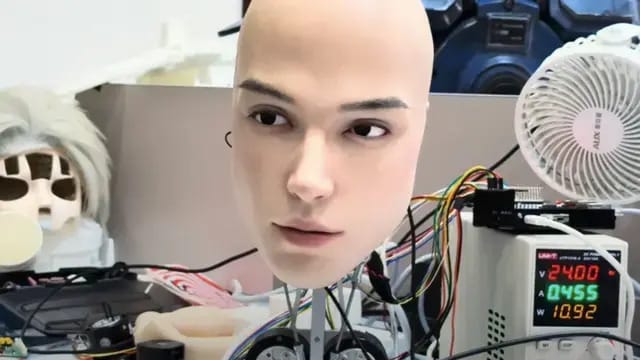
Image source: AheadForm / YouTube
The Rundown: AheadForm, a Chinese robotics startup founded in 2024, just released a video showcasing an eerily lifelike humanoid face that blinks, twitches, and nods with unsettling realism, evoking major Westworld vibes.
The details:
The video shows Origin M1, a robot head that replicates a striking range of human expressions, using 25 micro motors hidden beneath its synthetic skin.
RGB cameras embedded in the pupils and built-in microphones let it track faces, parse speech, and respond in real-time conversations.
The company says it merges this expressive hardware with advanced AI, including large language and vision models, to let M1 learn and adapt.
It can mount onto various robot bodies or operate solo, serving as a research platform for emotion-driven AI and therapy applications.
Why it matters: We've spent decades teaching robots to move like us, but AheadForm is betting the real prize is making them feel like us, or at least simulate it well enough to breach our defenses. Once expressive faces earn our trust, we're not just automating labor but intimacy, and nobody's written the safety manual for that yet.
MIT
🔥 MIT's framework builds in real-world chaos

Image source: Ideogram / The Rundown
The Rundown: MIT researchers just built a probabilistic design framework for drones that forces engineers to confront the messy reality of hardware from day one — no more pretending motors, batteries, and sensors will perform exactly as advertised.
The details:
Instead of relying on specs for motors, batteries, or sensors, the model uses probability to map out performance trade-offs under unpredictable conditions.
Designers can see how outcomes shift depending on weather, aging hardware, or off-spec components, making their predictions more reliable.
The framework's modules snap together like code libraries, allowing designers to swap in specs and collapse iteration cycles from weeks to hours.
Early adopters can stress-test edge cases that traditional methods take months to surface.
Why it matters: Traditional engineering assumes components will meet their specs; this framework assumes they won't — and designs for that from the start. By baking uncertainty into the blueprint, engineers can spot failures before they happen, not after they hit the field. MIT says this could result in hardware that’s robust by design.
RESEARCH BOTS
🧊 Arctic deep dive tests hybrid exploration

Image source: COMRA / CGTN
The Rundown: China wrapped up its largest Arctic expedition with a milestone: the country's first manned deep dive beneath polar ice, coordinating the Jiaolong submersible with remote robots in one of Earth's most hostile frontiers.
The details:
The mission marked the first time a manned submersible and remotely operated vehicle worked in tandem under polar ice.
Four vessels, including China's homegrown icebreakers, crossed the Chukchi Plateau and Canada Basin, pushing deeper into contested Arctic waters.
Researchers returned with hundreds of deep-sea samples and high-res datasets on everything from biodiversity to ocean hydrology.
China says the expedition proved its polar tech can operate independently in extreme conditions, in locations previously dominated by Western scientists.
Why it matters: Pairing humans and robots beneath Arctic ice solves a fundamental problem: some environments are too dangerous for people alone and too complex for machines alone. China's showing that hybrid teams can handle extreme conditions is a template that scales from deep oceans to disaster sites to eventually, other planets.
QUICK HITS
📰 Everything else in robotics today
The global surgical robots market, valued at $8.1B in 2024, is projected to surge to $38.4B by 2034, according to Global Market Insights.
Australia’s ENGIE is fast-tracking its 250 MW Goorambat East Solar Farm installation with AI-powered autonomous robots that have already placed nearly 500K panels.
Peking University researchers tested robo-dogs designed to explore lunar lava tubes by trialing them in a cave near Jingbo Lake, Heilongjiang, China.
NOAA’s C-Star robot made history by transmitting live data every two minutes from inside Hurricane Humberto’s Category 5 eyewall, enduring 150 mph winds.
A new landing system dubbed Project Dart enables drones to safely touch down on vehicles moving at speeds up to 110 km/h.
Nvidia shares ticked up after the chipmaker announced a partnership with Japan’s Fujitsu to develop AI robots and a broad AI infrastructure across the country.
Hyundai's archery robot faced off against South Korea’s top archers at the 2025 South Korea archery championship, narrowly losing to the human team by one point.
Yale researchers developed a novel method that accelerates derivative computations by 7–10x, enabling robots to react faster and move more efficiently.
COMMUNITY
🎓 Highlights: News, Guides & Events
Read our last AI newsletter: Sora’s one-week Wild West ends
Read our last Tech newsletter: Meta taps chat for ad targeting
Read our last Robotics newsletter: Drones that hunt down shoplifters
Today’s AI tool guide: Create UGC-style marketing videos with Sora 2
RSVP to our next workshop 10/8 @ 2 PM EST: Automate workflows with n8n
See you soon,
Rowan, Jennifer, and Joey—The Rundown’s editorial team

Sora's one-week Wild West ends
Read Online | Sign Up | Advertise

Good morning, AI enthusiasts. OpenAI's Sora launch has been a viral sensation, but a platform overflowing with Pikachu videos, Michael Jackson deepfakes, and celebrity likenesses probably wasn't what the legal team had in mind.
With CEO Sam Altman rolling out new opt-in controls and users running into new content restrictions, the Wild West era of the AI video app might be ending just a week into the chaos.
In today’s AI rundown:
OpenAI’s Sora changes after viral launch
OpenAI and Ive’s AI device hits snags
Create UGC-style marketing videos with Sora 2
Google's PASTA adapts to image preferences
4 new AI tools, community workflows, and more
LATEST DEVELOPMENTS
OPENAI
🎥 OpenAI’s Sora changes after viral launch

Image source: Rory Flynn (@Ror_Fly on X)
The Rundown: OpenAI CEO Sam Altman just published a blog detailing a series of changes coming to the company’s viral Sora video platform, including revenue-sharing plans for copyrighted and likeness-driven content and more granular control systems.
The details:
OAI will implement opt-in controls allowing rights-holders to specify exactly how characters can be utilized, abandoning the initial “opt-out” approach.
The company plans to introduce revenue sharing, saying that UGC could create value for original creators while also monetizing the platform.
The moves come as Sora is flooded with videos of characters like Pikachu and Mario, alongside the likenesses of Michael Jackson, Bob Ross, and others.
The app rocketed to the No. 1 position in Apple's App Store within 24 hours, surpassing both Google's Gemini and ChatGPT despite being invitation-only.
Why it matters: Sora 2 has been the most viral product launch we’ve seen in a while, but it’s also come with some major questions surrounding copyright and usage rights. While OAI seems to be tightening the leash somewhat after a Wild West-esque week, it’s hard to envision the ramifications in a legal system not equipped for the AI age.
TOGETHER WITH GOFUNDME
🎁 Learn about GoFundMe’s new DAF Product

The Rundown: GoFundMe just launched Giving Funds. A smarter way to give this season - lock in your tax deduction now, decide later where to donate. With one simple receipt & access to 1.4M+ nonprofits, it’s the easy and efficient way to do good.
With GoFundMe Giving Funds, you can:
Invest to grow your impact
Start for free or transfer a DAF with fees covered
Simplify tax season
OPENAI
👀 OpenAI and Ive’s AI device hits snags

Image source: Reve / The Rundown
The Rundown: OpenAI and Jony Ive are reportedly dealing with design and technical challenges on their screen-free AI device, according to a new report from the Financial Times, facing delays that could push its launch beyond the planned 2026 release.
The details:
The team is reportedly struggling to balance the AI assistant's conversational style, aiming for helpful engagement without being overly talkative.
Compute infrastructure is also emerging as a bottleneck, with OAI lacking the cloud capacity that powers rival devices like Amazon's Alexa and Google Home.
OpenAI acquired Ive's io studio for $6.5B in May, bringing on 20+ ex-Apple hardware vets alongside recruits from Meta's Quest and smart glasses teams.
Sources told FT that the device will be “always on” and “roughly the size of a smartphone,” designed to sit on a user’s table or desk.
Why it matters: OpenAI’s device ambitions are a sleeping giant in an AI hardware category still looking for its breakout launch. But even the AI leader seems to be struggling with the form and functionality of a product that it believes can completely change the way we interact with technology.
AI TRAINING
🎥 Create UGC-style marketing videos with Sora 2

The Rundown: In this tutorial, you will learn how to create AI-generated UGC content with multiple camera angles using OpenAI’s new Sora 2 video platform for your marketing and social media strategy.
Step-by-step:
Go to the Sora homepage or mobile app and click "Create your video" in the chat box (Note: requires an invite code while in beta)
Enter a detailed prompt like: "selfie-mode. A young blonde woman films herself with her phone, eyes wide, mouth open in shock. She slowly raises her hand to cover her mouth as if gasping. Natural lighting, authentic TikTok vibe. She says 'Meta Raybans'"
Add camera angle transitions using [cut] in your prompt, like: "Man is playing a video game [cut] close up shot of a man's face" to create wide shot → close-up sequences without manual editing
Download your video when satisfied. Avoid requesting videos of real people by name, and note that you can't upload images with people in them
Pro tip: When prompting, get as detailed as you can — multiple angles, different shots, environments, and lighting while keeping in mind the 5-10 second generation window.
PRESENTED BY IBM
📊 Your data is your edge

The Rundown: IBM knows your data isn’t generic — and your AI shouldn’t be either. IBM’s Data Matters chapters are specifically designed to help leaders unlock the value of their unique enterprise data to scale AI.
Discover how to leverage your data for effective and efficient AI by:
Unifying structured and unstructured data
Curating high-quality, AI-ready datasets
Governing data for trust and transparency
🍝 Google's PASTA adapts to image preferences

Image source: Google
The Rundown: Google researchers released PASTA, an AI system that adapts to individual creative preferences through repeated interactions — learning what visual styles users actually want rather than requiring complex prompt engineering.
The details:
PASTA presents users with four image variations per round, observing selections across turns to build a model on unique aesthetic preferences.
Researchers trained PASTA using 7,000 human sessions and 30,000 simulated scenarios, creating a framework that recognizes diverse visual preferences.
In comparisons, users preferred PASTA outputs 85% of the time over standard models, with the system particularly excelling at interpreting abstract prompts.
Google open-sourced both the interaction dataset and simulation tools, enabling other researchers to develop AI systems that personalize to users.
Why it matters: With how good image generation has become across the board, personalization becomes a differentiating factor. By learning individual preferences rather than forcing users to decode model behavior, AI image generation can turn from a game of prompt roulette into an adaptive creative tool that improves with use.
QUICK HITS
🛠️ Trending AI Tools
⚙️ Jules Tools - A command-line companion for Google’s Jules coding agent
🎥 Sora 2 - OpenAI’s new social AI video app
🍌 Gemini 2.5 Flash Image - Google’s image AI, now generally available
🎆 HunyuanImage 3.0 - Tencent’s top-ranked open-source image model
📰 Everything else in AI today
Anthropic hired former Stripe CTO Rahul Patil as its new chief technical officer, overseeing infrastructure and engineering efforts.
Tencent’s open-source HunyuanImage 3.0 model moved to first place on LM Arena’s text-to-image leaderboard, surpassing top closed options.
Perplexity acquired AI startup Visual Electric, with CEO Aravind Srinivas saying the group will work to bring “new consumer product experiences” to Perplexity and Comet.
Microsoft promoted Judson Althoff to be the CEO of its commercial business, allowing CEO Satya Nadella to focus more on technical work.
Anthropic published research detailing Claude 4.5 Sonnet’s cybersecurity capabilities, with the new model achieving top marks on industry benchmarks.
OpenAI acquired personal finance startup roi, with CEO Sujith Vishwajith joining the AI leader in the deal.
COMMUNITY
🤝 Community AI workflows
Every newsletter, we showcase how a reader is using AI to work smarter, save time, or make life easier.
Today’s workflow comes from reader Michel A. in Solana Beach, CA:
"I am a wine importer and used ChatGPT to teach me Italian for an upcoming trip. I told it what I was doing in Italy, when I was going, and to act as an expert Italian teacher. I asked it to be critical and to create a daily lesson plan that became harder each day, and that I can access every morning. It not only created a food/wine specific lesson plan, but increased the difficulty level exponentially."
How do you use AI? Tell us here.
🎓 Highlights: News, Guides & Events
Read our last AI newsletter: OpenAI's record-breaking $500B valuation
Read our last Tech newsletter: Meta taps chat for ad targeting
Read our last Robotics newsletter: Drones that hunt down shoplifters
Today’s AI tool guide: Create UGC-style marketing videos with Sora 2
RSVP to our next workshop 10/8 @ 2 PM EST: Automate workflows with n8n
See you soon,
Rowan, Joey, Zach, Shubham, and Jennifer — the humans behind The Rundown

SAP's vision for the AI era
Read Online | Sign Up | Advertise

Good morning, AI enthusiasts. SAP is gearing up for their Connect 2025 conference with a bold message: AI is the new backbone of enterprise workflows.
As teams race to make faster, smarter decisions, the global tech leader says the real unlock will come from AI agents running on a unified data foundation, able to see, predict, and act across supply chains, finance, procurement, and customer experience.
To understand how SAP is driving this transformation, we sat down with Muhammad Alam, Chief Product Officer, for an exclusive Q&A.
In today’s AI rundown:
Built-in AI turns real-time data into value
Agents ‘scout’ to take proactive actions
Trust and active support, from day one
More workflows set to transform
Localization flexibility with full compliance
The future of work with AI
LATEST DEVELOPMENTS
SAP AI STACK
🤖 Built-in AI turns real-time data into value
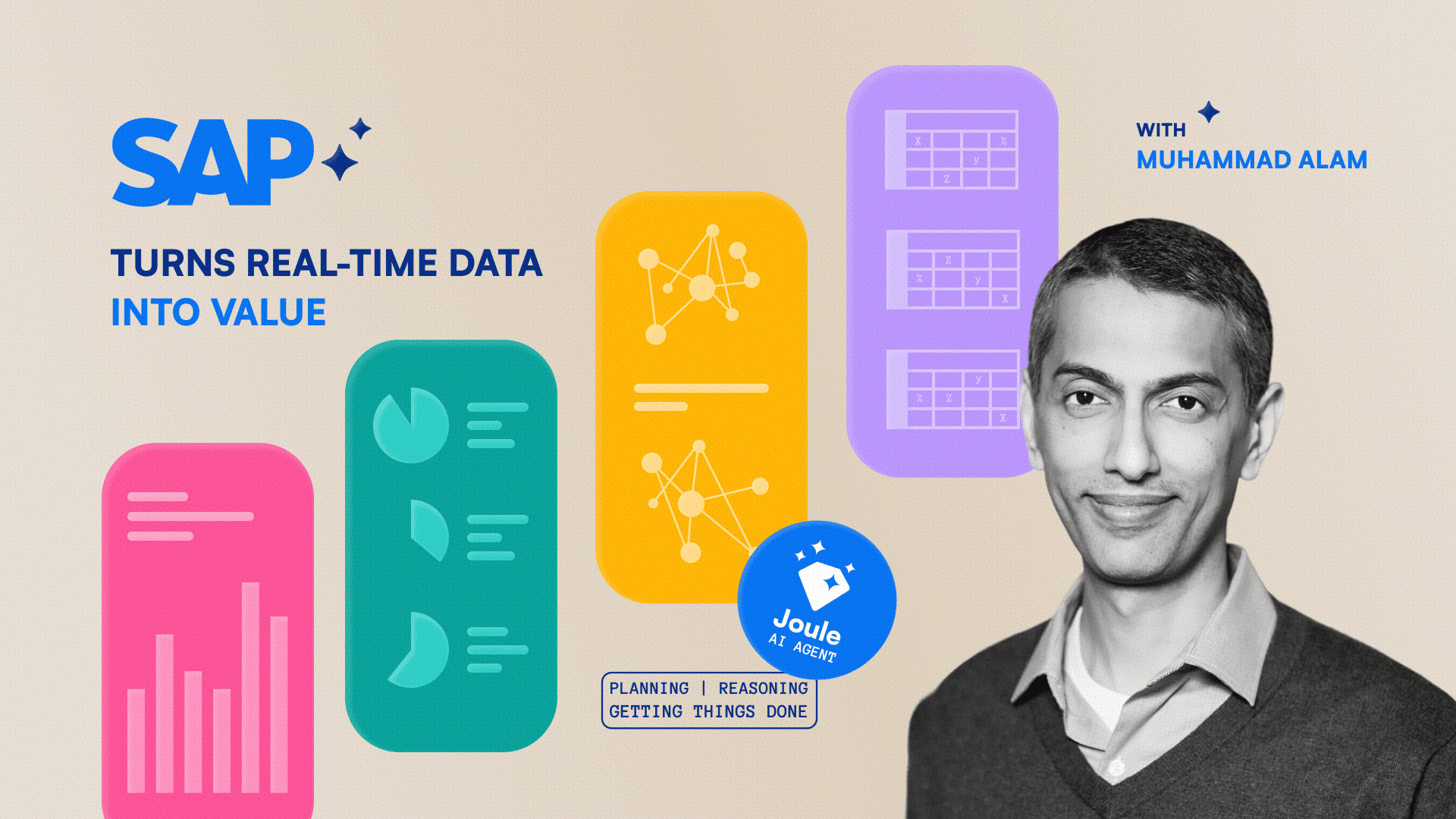
Image: Kiki Wu / The Rundown
The Rundown: While many enterprises are racing to integrate AI by bolting on new tools, SAP is taking a different path and baking AI and agents directly into its core business suite, all powered by a unified data foundation.
Cheung: What is SAP’s secret sauce when it comes to AI? How do you help businesses make smarter/faster decisions across functions?
Alam: First, what makes SAP Business AI unique is that it’s powered by semantically rich, real-time data from SAP applications that cut across end-to-end business processes such as Finance, Spend, Supply Chain, Human Capital Management and Customer Experience. This breadth provides the broadest context to AI, enabling better recommendations and more accurate results.
Second, SAP Business AI is natively embedded in the applications users use every day — both through in-application capabilities as well as via SAP Joule. This makes adoption, and hence the realization of value, more scalable and predictable for organizations.
Alam added: The SAP Business AI is also both role and context-aware. It knows you and works for you as an intelligent assistant. Whether you are in Accounts Receivable, Planning, Controlling, Customer Service and so forth, there is a Joule Assistant tailored for your role — powered by multiple Joule Agents and tools to help you do your job more effectively and efficiently.
Why it matters: By baking seamless, scalable AI into existing workflows and running everything on a single data foundation, SAP removes the complexity that slows most AI rollouts. The result is faster decisions, proactive insights, and automated processes that break down silos and turn real-time data into measurable business outcomes.
AGENTIC APPROACH
🔥 Agents ‘scout’ to take proactive actions
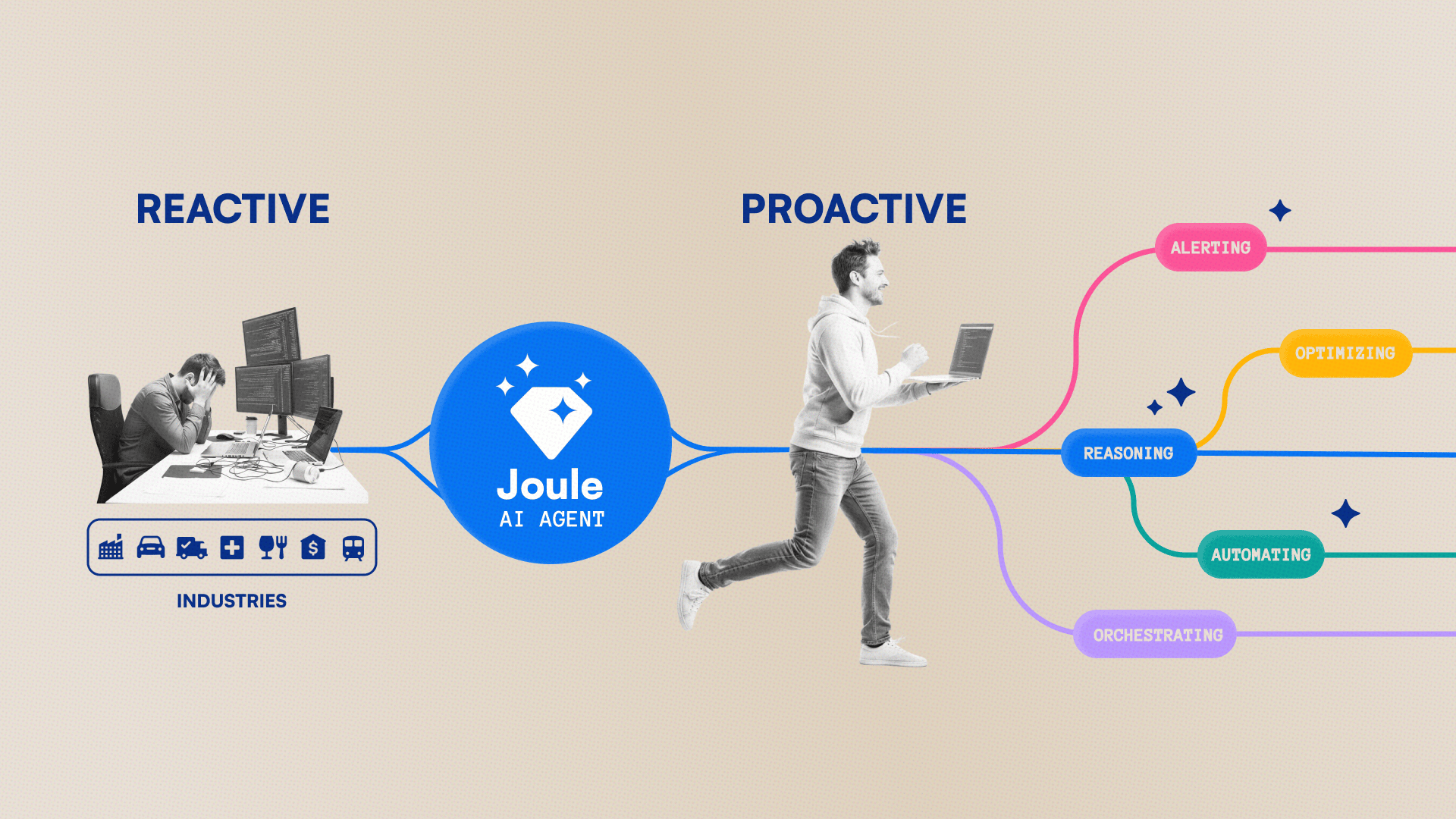
Image: Kiki Wu / The Rundown
The Rundown: In addition to a prompt-based copilot, SAP is going all in on agents, which act like digital scouts and proactively track ops to flag issues and automate fixes, delivering faster planning, higher accuracy, and big efficiency gains.
Cheung: How do SAP’s agents solve problems before they happen in different business environments? Can you share some AI success stories?
Alam: Our Assistants and their agents don’t just wait for instructions — they act proactively, predict outcomes, and help keep your business running smoothly. In supply chain, an Assistant instructs its Agents to detect potential stock-outs or logistical delays early and suggest fixes. In HR, they guide employees through onboarding and recommend personalized learning paths.
It’s like having a team of digital scouts — always on the lookout. With SAP as the control tower, uncertainty becomes visibility — and visibility is a powerful advantage.
Why it matters: Proactive AI agents turn SAP’s business suite into an active problem-solver, helping companies move from firefighting to future-proofing their business by slashing time, reducing errors, and staying ahead of disruptions before they impact the bottom line.
TRUST
🦄 Trust and active support, from day one
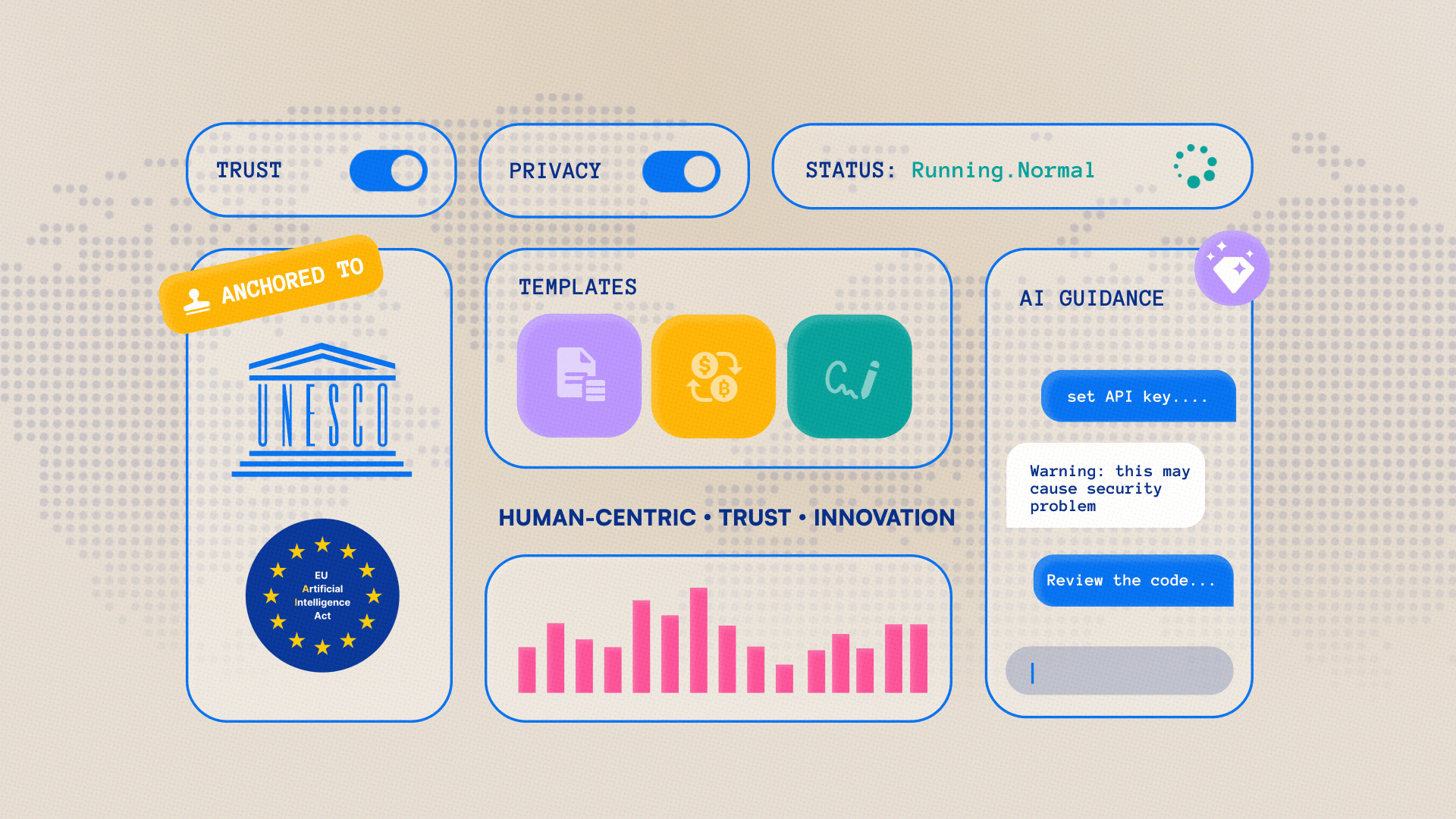
Image: Kiki Wu / The Rundown
The Rundown: When AI is baked right into the business suite, customers can have questions about safety and how their data is being protected and used.
Cheung: How does SAP ensure its AI offerings remain not only powerful but also trustworthy, safe, and easy to use for customers?
Alam: SAP builds AI you can trust, use, and rely on. Every feature undergoes an ethics review and aligns with global standards such as the EU AI Act and UNESCO principles. Data privacy, user roles, and human oversight are built into Joule and our agents, so you remain in control.
At the same time, SAP AI is powerful: it delivers insights across your business, automates routine tasks, and integrates seamlessly with your processes. And it’s easy to use: intuitive interfaces and conversational tools enable natural interaction, while SAP ensures that promises made are promises kept — from order to delivery to service.
Why it matters: Businesses can innovate confidently, knowing their AI is secure, compliant, and backed by hands-on support. This combination of trust and guidance helps organizations unlock real value, scale AI adoption effectively, and turn insights into measurable business outcomes.
UPGRADES
🧠 More workflows set to transform
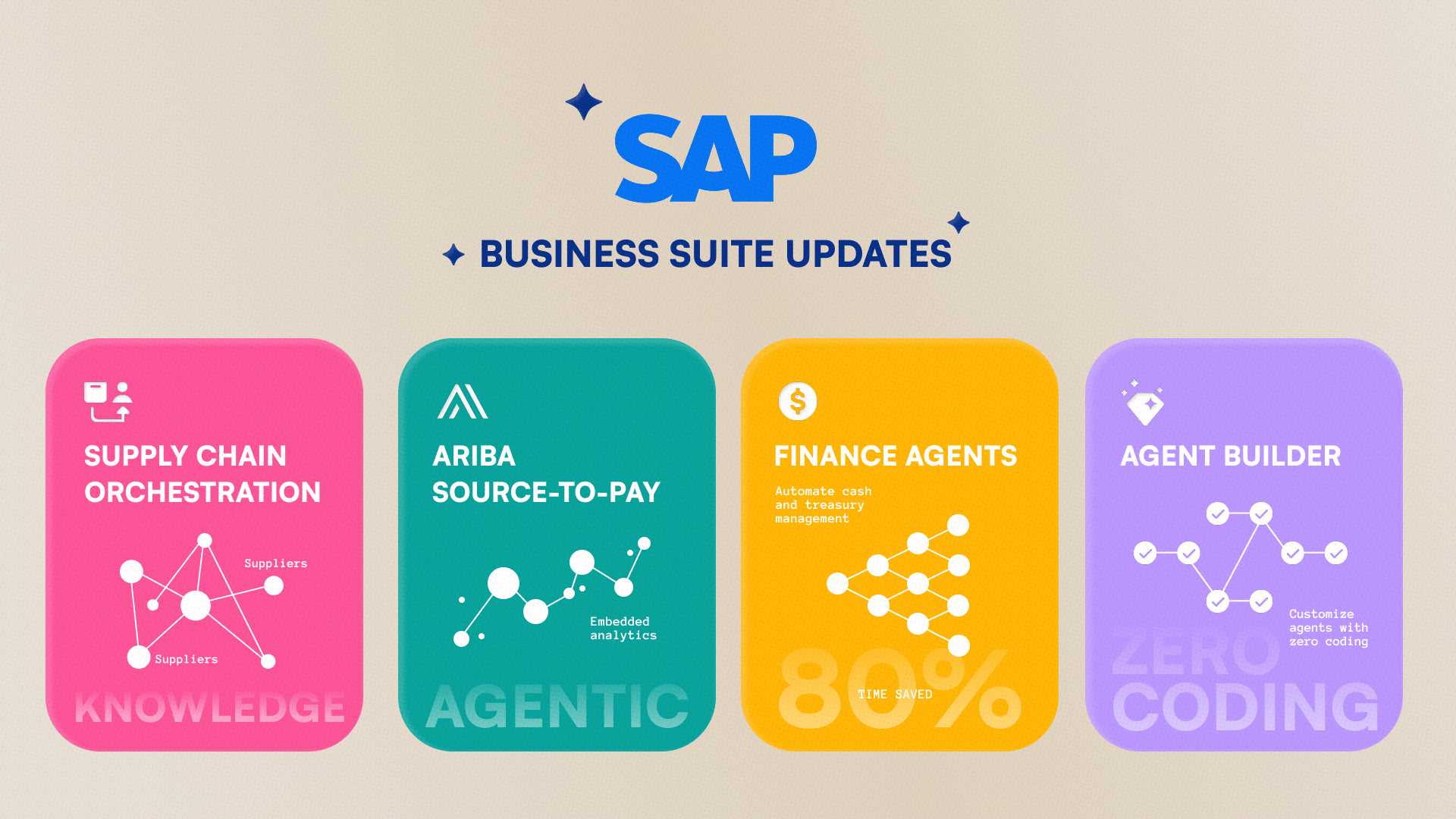
Image: Kiki Wu / The Rundown
The Rundown: SAP’s gearing up to roll out some major upgrades for its AI-enabled Business Suite, right from predictive Supply Chain Orchestration and agentic procurement to customizable AI agents and a touch of AI-powered robotics systems.
Cheung: What new capabilities can SAP customers expect from the AI-enabled Business Suite in the coming months?
Alam: We are shipping AI capabilities at an accelerated pace across the suite. So, get ready for some big updates. For example, a new supply chain orchestration solution that predicts and prevents impacts from disruptions before they are realized. It uses a network knowledge graph and AI to analyze real-time data across suppliers and logistics.
We have also completely rebuilt SAP Ariba Source-to-Pay as a modern, AI native solution – the only one of its kind in the industry. It allows you to leverage agentic procurement, with embedded analytics and AI agents to handle complex sourcing events.
Alam added: We are also announcing new finance agents that automate cash and treasury management and compliance, saving up to 80% of time on routine tasks. SAP Joule action bar brings your Assistant to every screen, and the agent builder lets you customize Assistants and the Agents that work for them — with zero coding required.
We’re even bringing AI into robotics for real-world automation. With SAP, every employee decision becomes smarter, faster, and always connected to the customer.
Why it matters: SAP is going deeper with AI to deliver faster, smarter, and more automated business processes across the board, helping companies act on insights in real time and drive greater value across every function, redefining what it means to run a truly intelligent enterprise.
GLOBAL VISION
⚡️ Localization flexibility with full compliance

Image: Kiki Wu / The Rundown
The Rundown: SAP maintains a global AI vision while adapting to diverse markets by embedding privacy, security, and ethics into every product. Lessons from Europe’s strict regulatory landscape guide development, and an open ecosystem ensures flexibility for local needs.
Cheung: SAP’s a global giant. How does it deliver a unified AI strategy while adapting to different markets and regulations worldwide?
Alam: We’ve learned from Europe’s strict regulatory landscape that privacy, security, and ethics are non-negotiable. Our open ecosystem and global standards keep us unified, but flexible for local needs. We close the gap by offering a connected SAP Business Suite that helps you not only meet, but exceed, customer expectations - while staying compliant wherever you operate.
Why it matters: With this flexible yet focused approach from SAP, businesses get the benefits of a trusted, globally consistent AI platform that adapts to local regulations and market priorities, ultimately enabling innovation without compromise, no matter where you are.
FUTURE
🧪 The future of work with AI
IImage: Kiki Wu / The Rundown
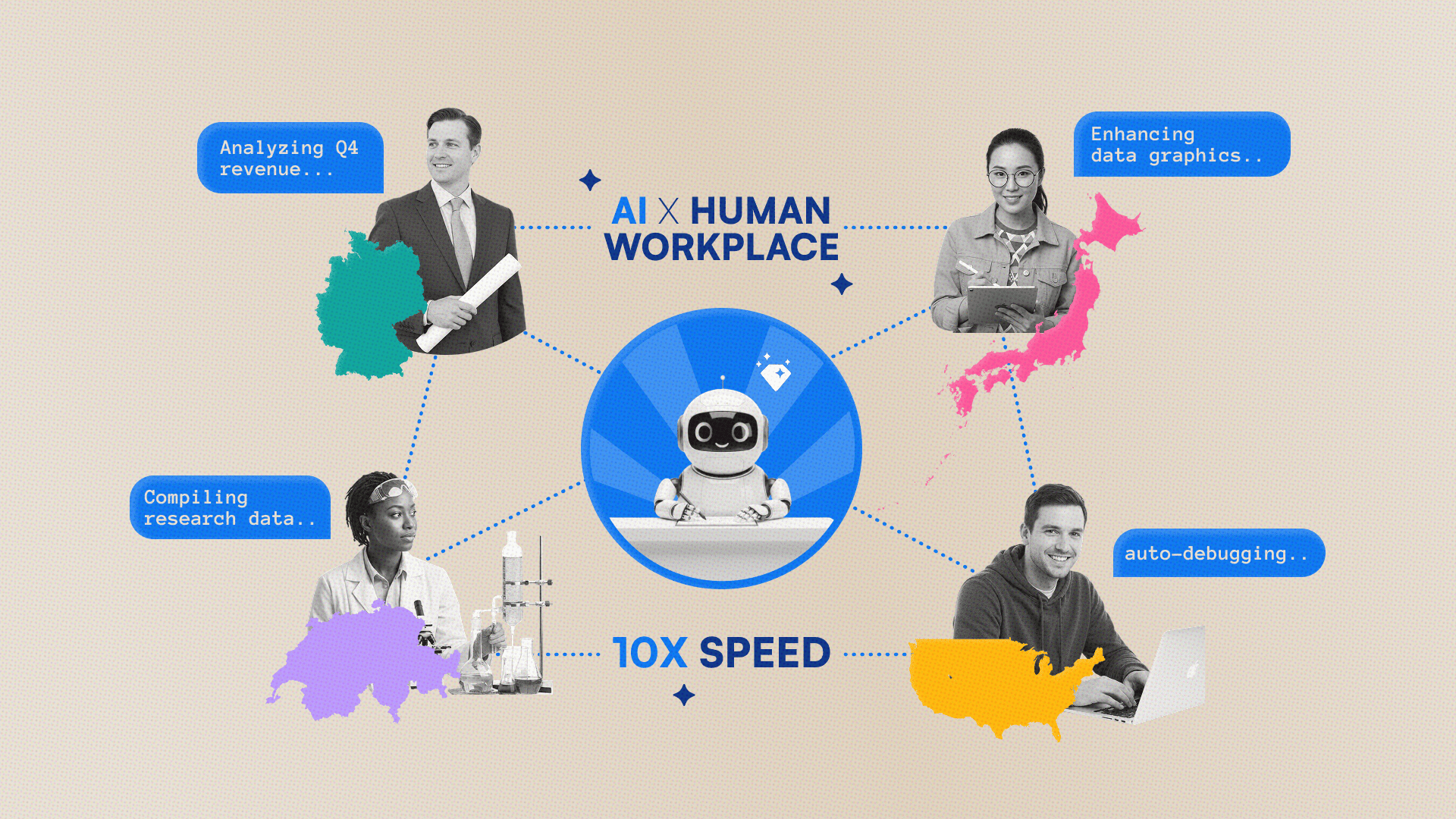
The Rundown: With AI advancements, enterprises will shift toward increased autonomy and proactive actions. SAP envisions that this change will drive efficiencies and enable employees to work alongside intelligent agents and apps.
Cheung: How will enterprise needs change as AI evolves? What will this mean for the future of work — will it augment human work or replace roles?
Alam: AI will primarily augment human work by automating routine tasks and freeing people to focus on strategic and creative activities. While some roles may evolve, the emphasis will be on collaboration between humans and AI to increase productivity and drive innovation.
It will also elevate the role of the employee to one of oversight, strategy, and managing exceptions, making their work more valuable — not obsolete.
Why it matters: The trend is clear: people will need to learn to work with AI to thrive in an AI-driven future. Employees will increasingly rely on intelligent agents to support decisions, anticipate challenges, and streamline day-to-day operations. Agents will handle the tasks as humans strategize and verify to ensure success.
No matching search results
Try using different keywords, double-check your spelling, or explore related categories.
Stay Ahead on AI.
Join 2,000,000+ readers getting bite-size AI news updates straight to their inbox every morning with The Rundown AI newsletter. It's 100% free.