Get the latest AI news, understand why it matters, and learn how to apply it in your work — all in just 5 minutes a day. Join over 2,000,000+ subscribers.

Waymo robotaxis head to London
Read Online | Sign Up | Advertise

Good morning, robotics enthusiasts. Waymo is bringing its robotaxis to London in 2026, betting that post-Brexit Britain will greenlight autonomy faster than its EU neighbors.
Is London ready to swap black cabs for algorithmically piloted Jaguars?
In today’s robotics rundown:
London gets Waymo robotaxis in 2026
Apple to build tabletop robot in Vietnam
Coco Robotics hires UCLA AI expert
Morgan Stanley’s top picks for Chinese robotics
Quick hits on other robotics news
LATEST DEVELOPMENTS
WAYMO
💂♀️ London gets Waymo robotaxis in 2026

Image source: Waymo
The Rundown: Waymo is bringing its robotaxis to London in 2026, the company’s boldest international expansion since launching in Tokyo, and a calculated bet that the UK will roll out the regulatory red carpet faster than the rest of Europe.
The details:
The fleet will run on all-electric Jaguar I-Pace SUVs outfitted with Waymo’s full sensor suite and proprietary autonomy stack.
Waymo laid the groundwork by acquiring UK simulation specialist Latent Logic in 2019 and building an Oxford engineering hub focused on virtual testing.
Nigerian mobility giant Moove will handle fleet operations, charging infrastructure, and vehicle management.
The rides will launch with safety drivers behind the wheel, then graduate to driverless operation assuming UK regulators sign off on full autonomy permits.
Why it matters: London isn't just another city — it’s Waymo’s test of whether its tech can handle left-hand traffic, densely layered infrastructure built over centuries, and a driving culture nothing like the U.S. If it works, Europe’s robotaxi market cracks open; if it stalls in regulatory limbo, Waymo’s international expansion stalls with it.
APPLE
🍎 Apple to build tabletop robot in Vietnam

Image source: Apple Machine Learning Research
The Rundown: Apple will manufacture its first tabletop robot in Vietnam through a partnership with Chinese EV giant BYD — the first time Cupertino has launched an entirely new product category outside China, Bloomberg reports.
The details:
Built for Apple’s emerging smart-home stack, the robot pairs a motorized arm with sensors that let it autonomously reposition itself based on user movement.
BYD will handle full assembly, testing, and packaging in Vietnam, which already churns out iPads, AirPods, and MacBooks for Apple’s diversified supply chain.
The hardware centers on an iPad-sized display mounted to a robotic arm with 360-degree swivel and multi-axis articulation that tracks users through a room.
Apple envisions it as an AI companion, powered by a rebuilt Siri that responds with emotive on-screen avatars instead of disembodied voice prompts.
Why it matters: Slated for 2027, the tabletop bot follows Apple’s 2026 smart home hub and indoor security camera, both also Vietnam-built. The move isn't just about leaving China behind but a bet that robotics, not just wearables or AR, will anchor Apple’s next decade of hardware. If the gamble pays off, Siri might finally get a body.
COCO ROBOTICS
🔥 Coco Robotics hires UCLA AI expert

Image source: Coco Robotics
The Rundown: UCLA computer vision luminary Bolei Zhou — whose embodied intelligence research is among the field’s most cited — is leaving academia to become chief AI scientist at Coco Robotics, leading the LA startup’s new Physical AI Lab.
The details:
Coco operates one of the world’s largest autonomous sidewalk fleets, delivering food and groceries emission-free across dense urban grids.
Zhou's lab will mine telemetry from Coco’s bots, which have logged 500K+ real-world deliveries, to train models for chaotic urban edge cases.
Coco’s strategy is to transition from teleoperated bots to fully autonomous street vehicles, leveraging Zhou’s expertise in micromobility for dense cities.
Coco plans to keep breakthroughs in-house while scaling its fleet past 10K units by late 2026 — a 10x jump that could cement its lead in the last-mile race.
Why it matters: Backed by Sam Altman, Coco has quietly become the largest operator of autonomous delivery bots in the U.S., with deployments in LA, Miami, Chicago, and Helsinki. Zhou’s hire signals a strategic pivot — leveraging half a million delivery runs’ worth of data to leapfrog competitors while still burning cash on simulation.
CHINESE ROBOTICS
🤖 Morgan Stanley’s top picks for Chinese robotics
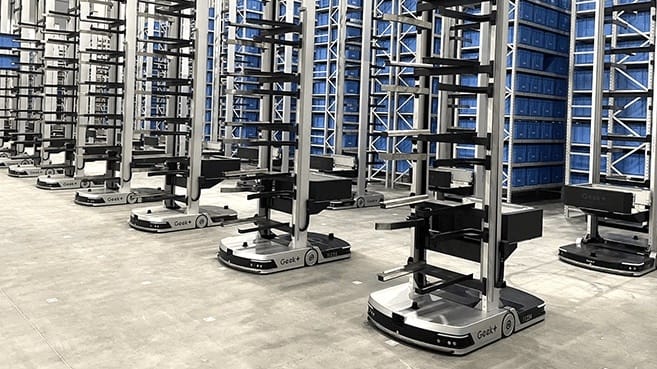
Image source: Geekplus
The Rundown: China deployed 295K industrial robots last year, claiming 54% of every robot installed worldwide. Morgan Stanley is betting two homegrown players —Inovance and Geekplus — will turn that dominance into market power.
The details:
China’s robotics market will more than double from $47B in 2024 to $108B by 2028, driven by generative AI, smart manufacturing, and state backing.
Inovance supplies the critical infrastructure — motors, drives, and controllers — that powers China’s smart-factory expansion at scale.
Geekplus serves Walmart, Adidas, and Unilever and is expected to hit profitability in 2025 after years of aggressive global expansion.
Analysts cite Geekplus’s edge: pricing 30% below Western rivals and supply chains built to fend off U.S. tariffs.
Why it matters: China’s robot revolution isn’t just about deployment scale but vertically integrated companies iterating faster and pricing more aggressively than rivals can match. If Morgan Stanley’s thesis holds, the next decade of warehouse automation will ship from Shenzhen with a price tag Silicon Valley can’t beat.
QUICK HITS
📰 Everything else in robotics today
Figure founder Brett Adcock told Marc Benioff that his robotics company is “building a new species,” describing a future for humanoids that borders on science fiction.
Chinese actuator supplier Sanhua Intelligent Controls reportedly landed a $685M order from Tesla to supply key components for the Optimus humanoid.
German robotics company NEURA Robotics launched NEURA Gym, a large-scale physical AI training ground where robots learn by real-world interaction.
Lightyear Robotics launched the M1, its first wheeled-legged robot featuring a parallel joint drive module for a 40% efficiency boost over traditional designs.
Caltech unveiled X1, the world’s first multirobot system that enables a humanoid to deploy a transforming drone, capable of launching from the humanoid’s back.
Diligent Robotics, maker of the Moxi hospital robot, is in talks with senior living operators to pilot its tech beyond hospitals to the $900B U.S. senior living market.
Dexory, the London-based provider of AI-driven warehouse intelligence and autonomous robotics, raised $165M to accelerate global expansion.
Indian autonomous delivery startup Airbound just raised $8.65M to build blended-wing-body drones that can deliver medical supplies without airports.
MIT’s CSAIL and Toyota Research Institute built “steerable scene generation,” an AI system to rapidly create millions of physics‑realistic 3D training environments.
Revolute Robotics, a Scottsdale-based startup developing hybrid ground-and-aerial robots capable of both driving and flying, raised $1.9M.
The Robotin R2, billed as the world’s first fully autonomous carpet-cleaning robot, is available now for $799 on Kickstarter.
COMMUNITY
🎓 Highlights: News, Guides & Events
Read our last AI newsletter: Google’s new AI video upgrade
Read our last Tech newsletter: Meta and Anduril’s AI war helmet
Read our last Robotics newsletter: Figure drops new humanoid
Today’s AI tool guide: Turn photos into branding videos with Veo 3.1
RSVP to next workshop @ 1PM Friday: Build AI teams with Zapier Agents
See you soon,
Rowan, Jennifer, and Joey—The Rundown’s editorial team

Google's new AI video upgrade
Read Online | Sign Up | Advertise

Good morning, AI enthusiasts. Google just released Veo 3, the company's upgraded AI video model — but after OpenAI's viral Sora 2 explosion just weeks ago, the hype doesn't feel the same.
With new editing features and general upgrades, Google is targeting filmmakers and creatives over viral feeds. The problem? In today's attention economy, being useful might matter less than being memorable.
In today’s AI rundown:
Google’s upgraded Veo 3.1 video model
Anthropic’s fast, low-cost Claude 4.5 Haiku
Turn photos into personal branding videos with Veo 3.1
Google’s Gemma-based AI finds new cancer treatment
4 new AI tools, community workflows, and more
LATEST DEVELOPMENTS
🎬 Google’s upgraded Veo 3.1 video model

Image source: Google
The Rundown: Google just rolled out Veo 3.1, a new video generation model that claims quality improvements, better realism, upgraded image-to-video capabilities, and a series of new editing features directed at filmmakers and creative control.
The details:
Veo 3.1 now accepts up to three reference images to maintain character consistency across scenes.
Users can also provide start and end frames, with 3.1 generating smooth transitions between them and matching audio.
New scene extension capabilities allow users to create up to 1-minute-long videos by continuously adding segments to match the previous clip.
Both standard and fast versions of 3.1 are rolling out across Google’s ecosystem, including its Flow filmmaking tool, Vertex AI, and Gemini.
Why it matters: After Sora 2 raised the AI video bar in a massively viral way just weeks ago, Veo 3.1 doesn’t hit with the same hype — despite what the benchmarks may say. The bigger upgrade may be within the editing realm, with abilities like scene extending and start/end frames giving the extra control needed to take outputs to the next level.
TOGETHER WITH VANTA
📅 The GRC event of the year: Join VantaCon virtually

The Rundown: Tune in on Nov. 19 to VantaCon, where leaders from Vanta, Anthropic, 1Password, Sublime Security, and more tackle the biggest challenges security professionals are facing today, and the opportunities new technologies and trends are uncovering for the future.
By joining VantaCon, you’ll:
Build connections with 400+ peers in the GRC security space
Learn best practices and insights from GRC professionals across the industry
Get hands-on with labs and learning opportunities to sharpen your skillset
Register today to watch the VantaCon livestream and participate in the virtual Q&A.
ANTHROPIC
🚀 Anthropic’s fast, low-cost Claude Haiku 4.5

Image source: Anthropic
The Rundown: Anthropic released Claude Haiku 4.5, the smallest variant of its latest model family that delivers performance comparable to the company’s flagship model from just months ago for significantly reduced prices and upgraded speeds.
The details:
The new model matches Claude Sonnet 4's coding abilities from May while charging just $1 per million input tokens versus Sonnet's $3 pricing.
Despite its size, Haiku beats out Sonnet 4 on benchmarks like computer use, math, and agentic tool use — also nearing GPT-5 on certain tests.
Enterprises can orchestrate multiple Haiku agents working in parallel, with the recently released Sonnet 4.5 acting as a coordinator for complex tasks.
Haiku 4.5 is available to all Claude tiers (including free users), within the company’s Claude Code agentic development tool and via API.
Why it matters: With Haiku, the utopia of ‘intelligence too cheap to meter’ still seems to be following the trendline. Anthropic’s latest release shows how quickly the AI industry’s economics are shifting, with a small, low-cost model now capable of performances that commanded premium pricing just a few months ago.
AI TRAINING
🤩 Turn photos into personal branding videos with Veo 3.1

The Rundown: In this tutorial, you will learn how to create professional personal branding videos using Google’s new Veo 3.1 model in Flow, transforming AI-generated photos into polished video content without ever being on camera.
Step-by-step:
Generate your headshot and workspace in Google Gemini using prompts like "photo of this person [upload reference], casual denim shirt, looking slightly right" and "modern office, city view, minimalist desk"
Open Google Flow, create a new project, switch from "Text to Video" to "Ingredients to Video,” and upload both generated images
Prompt your first scene: "Using the uploaded photo as me, sitting at a desk, smiling at the camera while sipping coffee, then typing on a laptop. Warm morning light, add soft acoustic music"
Click "Add to Scene", then "+" to Extend with: "I finish typing, look at the camera saying 'Ready to collaborate? DM me!' Fade to text overlay with title"
Review timeline, ensure smooth transitions between clips, then click the download icon to export your complete branding video
Pro tip: Use the editing tool to select areas and insert any objects within your video —it’s perfect for creating product demo videos or training content without recording.
PRESENTED BY DELVE
🤑 Delve’s AI turns RAG into riches
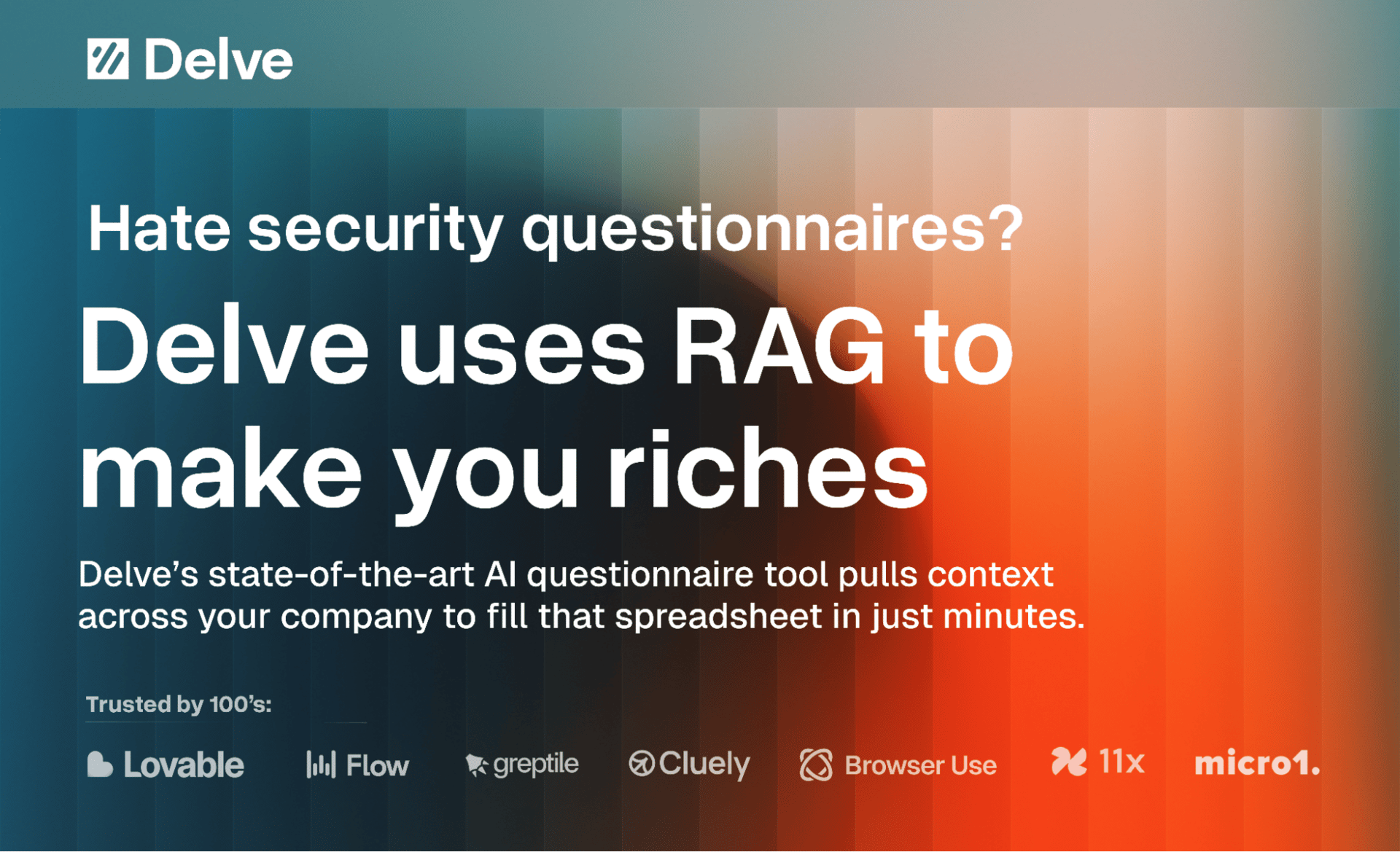
The Rundown: Delve's brand-new AI security questionnaire tool uses state-of-the-art GraphRAG to help you fly through security reviews with unparalleled accuracy — built by AI experts from Stanford and MIT.
Delve's AI agents:
Pull evidence, resolve conflicts, and reason across your entire policy graph
Interrogate your infrastructure and draft bulletproof responses automatically
Navigate reviews with F50 companies while saving dozens of hours
Book a demo with Delve for $1,000 off compliance certifications and unlimited free AI questionnaire access.
AI RESEARCH
🧪 Google’s Gemma-based AI finds new cancer treatment

Image source: Reve / The Rundown
The Rundown: Google and Yale University researchers introduced C2S-Scale 27B, a foundation model — based on Google’s open-Gemma family — that discovered a previously unknown cancer treatment pathway, proven to work in living cells.
The details:
The C2S AI system reads cellular data like a language, capturing how individual cells will behave and respond to treatments.
Researchers tasked the system with finding compounds that can make tumors more visible to the immune system, but only when certain signals were present.
It identified silmitasertib, an existing drug never before linked to helping the immune system spot cancer cells.
Laboratory tests confirmed the AI's prediction, with the drug combination making tumor cells about 50% more visible to immune defenses.
Why it matters: The ‘novel’ discoveries from AI systems are starting to trickle in — something many skeptics thought impossible. With Google also finding that “biological models follow clear scaling laws”, we could be in for an absolutely wild period of scientific progress as models continue to get larger and more capable.
QUICK HITS
🛠️ Trending AI Tools
💨 Claude 4.5 Haiku - Anthropic’s new small, cost-efficient model
🎥 Veo 3.1 - Google’s upgraded video generation model
📽️ Flow - Google’s filmmaking tool, with new artistic control
🎨 MAI-Image-1 - Microsoft’s first in-house image generation model
📰 Everything else in AI today
MIT introduced Recursive Language Models, a technique allowing models to process long contexts by recursively calling themselves, with an RLM-powered GPT-5 mini outperforming GPT-5 by 114% on long-context benchmarks.
Apple announced its M5 chip, featuring AI-focused upgrades including specialized processors to make AI tasks 4x faster across its product lines.
Runway introduced Apps, a new collection of streamlined video editing tools with features like element removal, product reshoots, dialogue adding, and more.
The International AI Safety Report provided a ‘First Key Update’ to its 2025 report, saying that performance, adoption, and oversight concerns are increasing safety risks.
Meta announced plans for a new $1.5B, 1GW AI-optimized data center in El Paso, the company’s 29th data center and third in Texas.
OpenAI rolled out its low-cost ChatGPT Go tier to new regions, now available in 89 countries.
COMMUNITY
🤝 Community AI workflows
Every newsletter, we showcase how a reader is using AI to work smarter, save time, or make life easier.
Today’s workflow comes from reader Jason B. in Morgantown, WV:
"As an educator and department director, the most useful workflow we have created is generating accessible and usable transcripts for videos. Our instructors often rely on YouTube for videos, but the auto-transcription there does not meet accessibility standards by a country mile. We throw the YouTube "word salad" into a couple of prompts we've developed and generate high-quality transcripts for lengthy videos."
How do you use AI? Tell us here.
🎓 Highlights: News, Guides & Events
Read our last AI newsletter: ChatGPT to go 18+
Read our last Tech newsletter: Meta and Anduril’s AI war helmet
Read our last Robotics newsletter: Figure drops new humanoid
Today’s AI tool guide: Turn photos into branding videos with Veo 3.1
RSVP to next workshop @ 1PM Friday: Build AI teams with Zapier Agents
See you soon,
Rowan, Joey, Zach, Shubham, and Jennifer — the humans behind The Rundown


ChatGPT to go 18+
Read Online | Sign Up | Advertise

Good morning, AI enthusiasts. OpenAI is finally breaking the shackles and venturing into the tempting, sometimes even risky, alley of erotica…
CEO Sam Altman says the assistant will soon “treat adult users like adults”. But in the race to make the experience more “enjoyable,” OpenAI may be opening a Pandora’s box — where the line between intimacy and illusion blurs faster than it can be policed.
In today’s AI rundown:
OpenAI to allow erotica on ChatGPT
Ant Group’s thinking model bags IMO silver
Automate market research in minutes
AI slop nears human content on the web
4 new AI tools, community workflows, and more
LATEST DEVELOPMENTS
OPENAI
🫣 OpenAI to allow erotica on ChatGPT

Image source: Reve / The Rundown
The Rundown: OpenAI CEO Sam Altman just announced personality improvements planned for ChatGPT, including one that would allow the AI assistant to have mature, erotic conversations with eligible users — much like xAI’s Grok companions.
The details:
Altman said ChatGPT was made restrictive to protect at-risk users, but that hit enjoyment. Now, with age checks and safeguards, OpenAI will ease those limits.
First, it will release a new version of ChatGPT that behaves more like what people liked about 4o, and then by December, it will add support for erotica.
This will allow verified adults to have mature conversations with the AI, giving them “a great deal of freedom” in how they interact with the assistant.
Previously, the company had said it would let devs build “mature” apps that run inside ChatGPT, with appropriate age-gating and controls, The Verge reported.
Why it matters: The AI companion market is huge — and it looks like OpenAI isn’t about to let xAI’s Grok take the lead. While Altman says the mode won’t activate unless users explicitly ask for it, with 800M weekly users, the margin for error is incredibly small, and the risks of emotional dependency on AI companions are not studied.
TOGETHER WITH AIRIA
🛡️ Secure AI, confidently
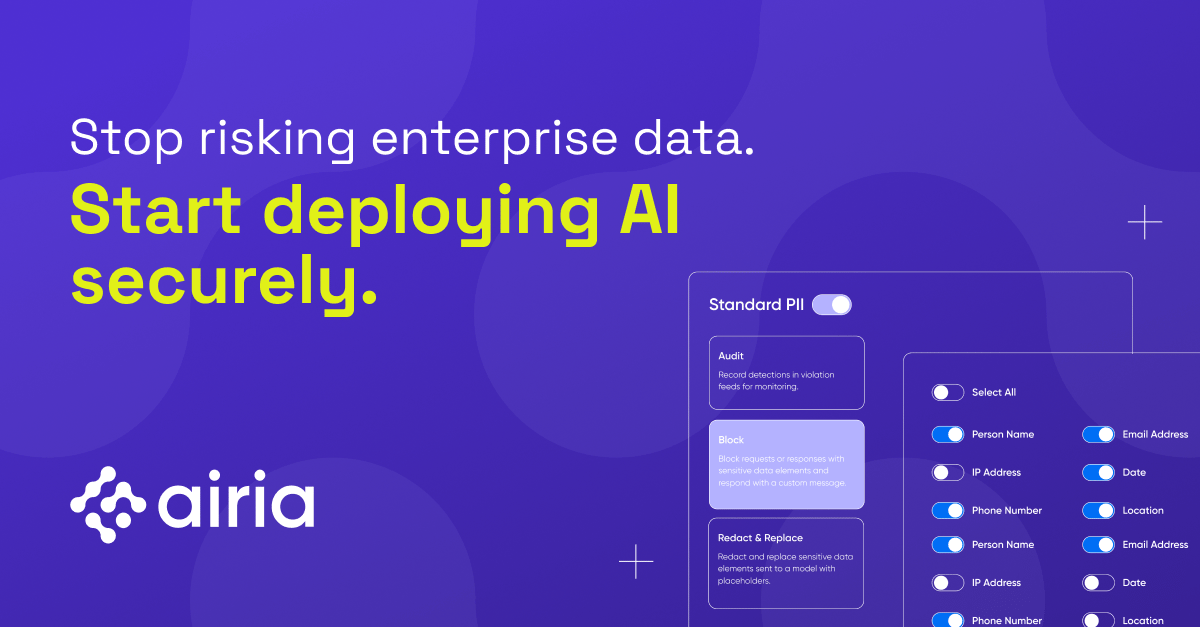
The Rundown: Airia is the enterprise AI orchestration and security platform that enables organizations to confidently deploy AI with advanced security controls, comprehensive data protection, and automated risk management — ensuring AI initiatives are both powerful and compliant.
With Airia, you'll experience:
Built-in protections for runtime prompts and data leakage
Protection for sensitive data like names, emails, and financial records
Scalable compliance (SOC 2, HIPAA, GDPR)
Granular visibility and control over sensitive data
ANT GROUP
🧠 Ant Group’s thinking model bags IMO silver
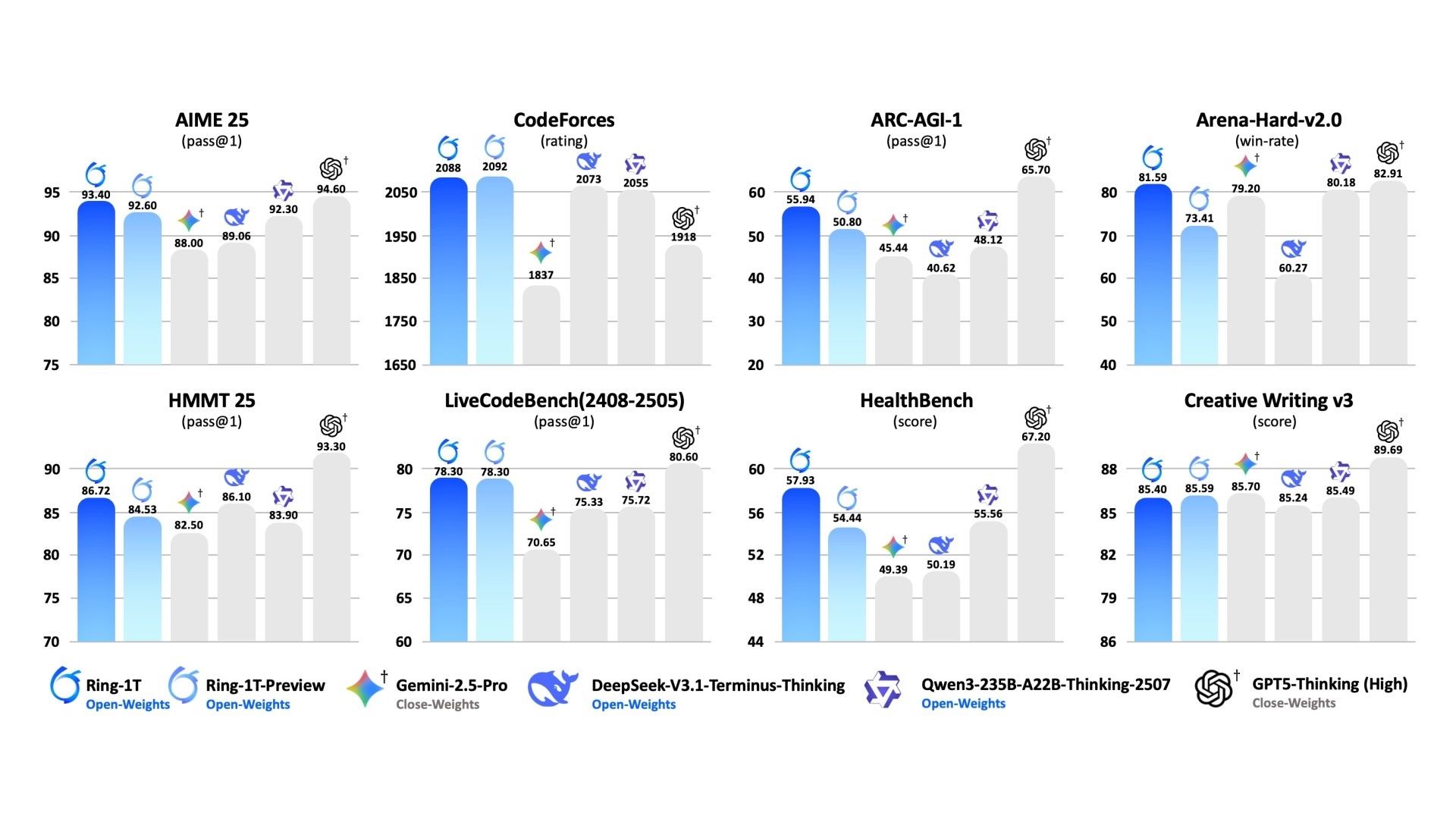
Image source: InclusionAI
The Rundown: InclusionAI, Ant Group’s AGI initiative, unveiled Ring-1T, an open-source “thinking model” that internally achieved silver-level on the International Mathematical Olympiad, sitting right behind Google and OAI’s gold-level models.
The details:
Built atop Inclusion’s MoE design, Ring-1T runs on 1T parameters (50B active) with a 128K context window for ultra-long reasoning and multi-turn thinking.
On the IMO test, the model solved four problems in one try and one in three, achieving silver-level and nearly matching Gemini 2.5 Pro on hardest question.
It delivered near SOTA performance across multiple benchmarks, surpassing or closely matching flagship models from Google, Anthropic, and OpenAI.
InclusionAI says Ring-1T is actively being trained and evolving, with goals to unlock deeper reasoning and improve alignment and efficiency.
Why it matters: With near–SOTA performance and almost GPT-5-level reasoning, Ring-1T further blurs the line between open and closed AI. It also marks another major step in China’s bid to challenge the West in the AI race, leaving only a matter of time before the country produces a model capable of taking the global top spot.
AI TRAINING
⚡Automate market research in minutes

The Rundown: In this tutorial, you’ll learn how to use Gemini 2.5 Computer Use to automate market and competitor research, letting AI browse websites, extract pricing and feature data, and compile insights into a structured report.
Step-by-step:
Install Python on your computer (Mac or Windows) to run the Computer Use agent — it’s a one-time setup that takes about five minutes
Clone the Computer Use repository from GitHub, activate the virtual environment, and install dependencies with simple terminal commands (pip install, playwright install)
Get your Gemini API key from AI Studio, link a billing account, and set it as an environment variable to connect the tool to Gemini’s AI model
Run your research task using python main.py --query="YOUR_TASK_INFO", and Gemini will open Chrome, navigate sites, collect pricing and feature data, and output a ready-to-save report.
Pro tip: Run weekly queries to find jobs on job boards like ours (jobs.therundown.ai), track industry trends, research before interviews, and much more.
PRESENTED BY WARP
🏆 Ride with Warp, the world’s No. 1 coding agent

The Rundown: Warp just launched Warp Code – making it the world’s No. 1 coding agent, trusted by over 600,000 developers and 56% of Fortune 500 engineering teams. One platform to prompt, review, and ship production-ready code with agents.
With Warp Code, you get:
New coding capabilities with code review, code editing, in-line code diffs, and file trees
Tops benchmark performance: #1 on Terminal-Bench Verified, 75% on SWE-bench
Access top models: Opus, Sonnet, GPT-5 and more, all in a single subscription
An average of 5 hours saved each week
Download Warp for free to get Pro for only $1 for the first month with code RUNDOWNAI.
AI RESEARCH
🖋️ AI slop nears human content on the web

Image source: Graphite
The Rundown: A Graphite study just found that AI-written articles briefly surpassed human-created ones on the web in late 2024, but the boom has since leveled off, with the web now split roughly evenly between human and AI authors.
The details:
Graphite analyzed 65,000 articles from Common Crawl, published between 2020 and 2025, using Surfer’s AI detector to determine authorship.
The study found that the share of AI-written articles surged after ChatGPT’s launch, peaking well above human output in November 2024.
However, since then, the growth has plateaued, with AI slop staying fairly stable and nearly at the same level as human-written articles.
The researchers attributed this stagnation to the widespread realization that AI-generated content does not perform as well as human content on search.
Why it matters: The great AI content wave appears to be cresting. AI tools can churn out text at scale, but their struggle for visibility is turning much of it into background noise. The findings hint at a new balance (not measured in this study) where human, value-driven content maintains credibility, and AI settles as a collaborator.
QUICK HITS
🛠️ Trending AI Tools
🎉 Encord E-MM1 - The world’s largest multimodal AI dataset is now available open-source with 100m+ images, video, text, audio & point clouds*
🧑💻 Perplexity - Now available as a default search engine on Firefox
💻️ Flint - Generate fully-coded on-brand pages on your domain
⚙️ Micro1 - Generate exercises to assess candidates in on-the-job scenarios
*Sponsored listing
📰 Everything else in AI today
Salesforce and OpenAI partnered to integrate Agentforce 360 apps in ChatGPT, enabling direct CRM data and product sales through the assistant’s checkout feature.
Salesforce and Anthropic also expanded their partnership to make Claude the core model for Agentforce 360, develop sector-specific AI solutions, and integrate Claude in Slack.
Walmart is partnering with OpenAI to let ChatGPT users explore and buy its products directly from chat, using the AI assistant’s Instant Checkout feature.
Alibaba's Qwen team introduced more efficient, dense versions of Qwen3-VL 4B and 8B, outperforming models like Gemini 2.5 Flash Lite and GPT-5 Nano.
OpenAI released an updated web search model in Chat Completions, gpt-5-search-api, with 60% lower cost and domain filtering.
Google is launching a Gemini-powered “Help me schedule” feature that suggests meeting time slots based on a user’s Calendar and the context of the email.
COMMUNITY
🤝 Community AI workflows
Every newsletter, we showcase how a reader is using AI to work smarter, save time, or make life easier.
Today’s workflow comes from reader Nancy M. in Cape Charles, Virginia:
"ChatGPT has become my behind-the-scenes creative partner in my art career—it helps me brainstorm new painting ideas, refine product descriptions for my paintings, craft lesson plans for my students, and even polish press releases and outreach emails so my work reaches the right audience.”
How do you use AI? Tell us here.
🎓 Highlights: News, Guides & Events
Read our last AI newsletter: OpenAI’s AI chip era begins
Read our last Tech newsletter: Meta and Anduril’s AI war helmet
Read our last Robotics newsletter: Figure drops new humanoid
Today’s AI tool guide: Automate market research in minutes
RSVP to next workshop @ 1PM EST Friday: Build agent teams in Zapier
See you soon,
Rowan, Joey, Zach, Shubham, and Jennifer — the humans behind The Rundown

Meta and Anduril’s AI war helmet
Read Online | Sign Up | Advertise

Good morning, tech enthusiasts. Defense startup Anduril is turning soldiers’ helmets into AI-powered command hubs, blending battlefield data with real-time augmented reality.
Built with Meta, it’s Palmer Luckey’s high-tech comeback — but can it succeed where Microsoft's $21.8B goggles failed?
In today’s tech rundown:
Palmer Luckey’s AI war helmet
Strava sues Garmin, users freak out
Wayve powers toward $8B
Scientists crack mole-rat longevity code
Quick hits on other tech news
LATEST DEVELOPMENTS
ANDURIL
🪖 Palmer Luckey's AI war helmet

Image source: Anduril
The Rundown: Anduril just unveiled EagleEye, a hyper-advanced, AI-powered mixed-reality system — built in partnership with Meta — that transforms soldiers’ helmets into real-time command centers.
The details:
The mixed-reality helmet delivers mission-critical overlays, spatial audio cues, live sensor streams, and real-time threat alerts through a heads-up display.
Operators see adversaries tagged in real time and can command drones or ground robots with voice or gesture — no screen-tapping, no breaking focus.
Variants span lightweight visors to full ballistic helmets, replacing the Army’s failed Microsoft IVAS goggles with gear soldiers might actually wear.
Onboard AI functions as a “guardian angel” co-pilot, auto-filtering comms and flagging threats before humans register them.
Why it matters: For Palmer Luckey, this is a triumphant return to VR after his messy Oculus exit. Backed by Meta, Qualcomm, Oakley, and Gentex, he’s secured $159M in Army contracts to mass-produce EagleEye and hardwire superhuman perception into the modern warfighter’s brain. Let’s see if it works out better than Microsoft’s attempt.
STRAVA
🏃🏽 Strava sues Garmin, users freak out

Image source: Ideogram / The Rundown
The Rundown: Strava has taken Garmin to court, alleging patent infringement and a breach of their decade-old data-sharing pact. And athletes are not happy, as the fitness giants clash over heatmaps, branding, and device integration.
The details:
Strava filed its lawsuit on Sept. 30, claiming Garmin violated both patents and a 2015 agreement that governed how the companies shared user data.
Garmin launched Connect+, a premium subscription service that directly competes with Strava’s paid model, effectively nuking their partnership.
Garmin also imposed new developer guidelines requiring its logo on every activity post, graph, and screen, which Strava called “blatant advertising.”
The lawsuit targets Garmin’s use of segments and heatmaps, features so ubiquitous that they’re baked into nearly every Garmin device on the market.
Why it matters: The Strava-Garmin lawsuit has gone viral on TikTok, where athletes are posting “mom and dad are fighting” memes while genuinely panicking about their data disappearing mid-training cycle. On Reddit, users are threatening a mass exodus, with paid subscribers declaring they’ll abandon Strava entirely if Garmin sync dies.
WAYVE
🚘 Wayve powers toward $8B

Image source: Wayve
The Rundown: London’s Wayve, a rising star in autonomous driving, is in advanced discussions with Microsoft and SoftBank for a funding round that could inject as much as $2B and push its valuation to $8B.
The details:
Wayve forgoes pre-mapped routes for an “AI-first” system that learns from real-world driving on the fly — no geofencing, no billion-dollar sensor arrays.
The deal follows Nvidia’s $500M letter of intent and last year’s $1B SoftBank-led round.
The company just launched U.S. testing in San Francisco and locked Nissan as its first major automaker partner.
Unlike competitors burning cash on custom robotaxi fleets, Wayve’s software-first model plugs into existing vehicles.
Why it matters: While Waymo and Cruise blanket their robotaxis with lidar and limit them to mapped cities, Wayve’s foundation model learns to drive anywhere. It’s a fundamentally different wager on how autonomous vehicles will actually scale, and tech giants are pouring billions into finding out if it works.
LONGEVITY SCIENCE
🧫 Scientists crack mole-rat longevity code

Image source: Wikimedia Commons / Reve
The Rundown: Scientists at Shanghai’s Tongji University reverse-engineered part of the naked mole-rat’s anti-aging cheat code, isolating four microscopic genetic edits that turbocharge cellular repair and essentially hack longevity.
The details:
The research, published in Science, reveals why naked mole-rats can fend off age-related diseases that ravage other mammals.
Four amino acid substitutions in the mole-rat’s cGAS enzyme transform it into a DNA repair accelerator, fortifying cells against disease.
The modified cGAS silences a “panic button” that normally triggers inflammation and cell death under stress, freeing cells to focus on repair.
Naked mole-rats can live up to 40 years, making them the longest-lived rodent species in the world by far, and their mortality rate does not increase with age.
Why it matters: When researchers engineered fruit flies with the mole-rat’s cGAS variant, lifespan increased 25%, suggesting the work could translate across species. While the research is in early stages, it reframes aging studies: it’s less about inevitable decline, more about targeting molecular switches that govern cellular resilience.
QUICK HITS
📰 Everything else in tech today
Google announced a $15B, five-year plan to build its largest-ever AI data center in Andhra Pradesh, India.
Apple faces another proposed class action from two neuroscience professors who claim the company used their copyrighted works to train its AI models.
Toyota aims to launch its first EV with mass-produced all-solid-state batteries as early as 2027, targeting breakthroughs in range, charging speed, and performance.
Andrew Tulloch, co-founder of Mira Murati’s Thinking Machines Lab, has left the AI startup to rejoin Meta’s Superintelligence Lab.
Apple is nearing a deal to acquire key talent and tech from computer vision startup Prompt AI, beating out rival interest from Elon Musk’s xAI and Neuralink.
U.S.-based Nabla Bio, an AI protein design startup, signed its second multi-year drug discovery deal with pharma giant Takeda.
Google updated its “Work from Anywhere” policy so that even a single remote day in a given week now counts as an entire WFA week.
Elon Musk’s Boring Company is building the Dubai Loop, an underground electric transit system featuring 10.5 miles of tunnel and 11 stations, set to launch in 2026.
Salesforce announced it will invest $15B in San Francisco over five years, aiming to bolster the city’s position as a global hub for AI innovation.
TikTok will begin construction on a massive data center in northeastern Brazil in six months, backed by a $9.11B investment, Reuters reports.
Apple overhauled its bug bounty program, doubling the top reward to $2M for the most severe exploit chains and offering bonuses that can push total payouts to $5M.
Amazon says it will hire 250K workers for the holiday season across the U.S. for the third consecutive year.
COMMUNITY
🎓 Highlights: News, Guides & Events
Read our last AI newsletter: OpenAI’s AI chip era begins
Read our last Tech newsletter: Sora clones flood app store
Read our last Robotics newsletter: Figure drops new humanoid
Today’s AI tool guide: Build AI customer support workflow
RSVP to next workshop @ 1PM EST Friday: Build agent teams in Zapier
See you soon,
Rowan, Jennifer, and Joey—The Rundown’s editorial team

OpenAI’s AI chip era begins
Read Online | Sign Up | Advertise

Good morning, AI enthusiasts. OpenAI’s pursuit of compute continues to grow — this time to the point of building its own AI chips.
The company is working with Broadcom to design and deploy custom silicon, optimized for both performance and cost. The real test: can it meet Nvidia’s gold standard and mark the start of OpenAI’s self-sufficiency in the AI hardware race?
In today’s AI rundown:
OpenAI to make its own AI chips with Broadcom
Microsoft’s new homegrown image model
Build customer support agents with Agent Builder
AI models lie when competing for human approval
4 new AI tools, community workflows, and more
LATEST DEVELOPMENTS
OPENAI
🔥 OpenAI to make its own AI chips with Broadcom

Image source: Reve / The Rundown
The Rundown: OpenAI just announced a new, multi-year strategic collaboration with Broadcom to develop and deploy 10GW of custom AI accelerators, aimed at powering the next phase of advanced intelligence.
The details:
OpenAI will design the chips, using its learnings from developing frontier models, while Broadcom will handle manufacturing and deployment.
The racks with the custom chips will use Broadcom’s portfolio of Ethernet, PCIe, and optical connectivity solutions for scale-up and scale-out networking.
They will begin to come online in the second half of 2026, with the entire deployment set to be completed by the end of 2029.
The partnership, which surged Broadcom’s stock 10%, adds to OpenAI’s existing engagement for compute with Nvidia and AMD.
Why it matters: With this move, OpenAI joins giants like Amazon and Google in developing its own AI accelerator, aiming for tighter control over cost, performance, and supply. Yet, only time will tell whether these chips can truly rival Nvidia, which remains the dominant force and the industry’s go-to partner for AI hardware.
TOGETHER WITH TELY AI
🔎 Are you invisible in AI search?

The Rundown: You’re in a niche industry. Customers search on Google, ChatGPT, and Perplexity — but your company doesn’t show up, because there’s no content answering their questions. Tely AI fixes that by analyzing your industry and site to find what people search for and creating expert-level articles on autopilot. No need for a marketing team.
With Tely AI, you can:
Start with 60 high-quality articles a month
Get indexed on Google in as little as 2 weeks
Be featured in ChatGPT and Perplexity answers
Enjoy full automation for topics, writing, and publishing
MICROSOFT
📷️ Microsoft's new homegrown image model
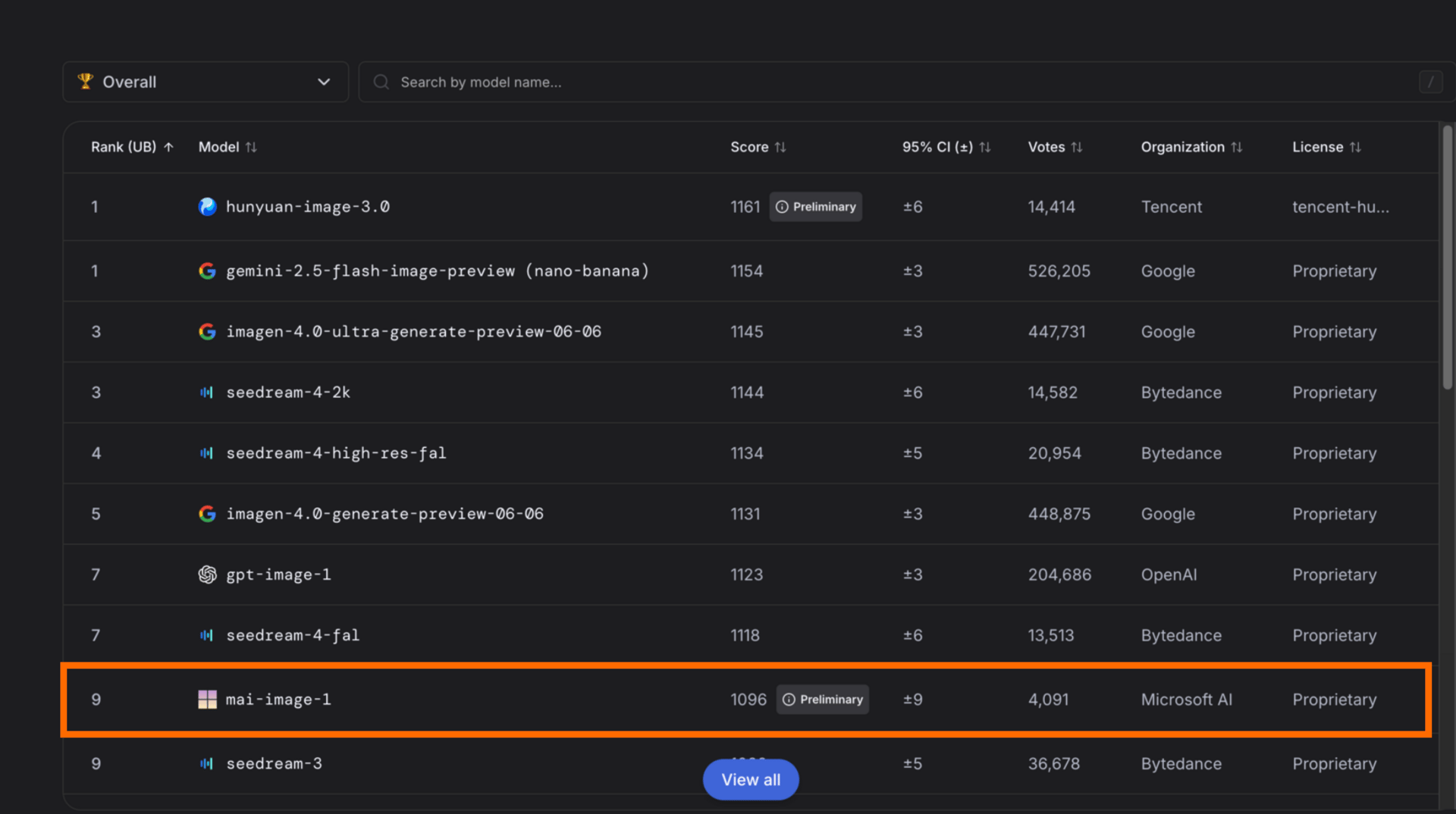
Image source: LMArena
The Rundown: Microsoft introduced MAI-Image-1, its first text-to-image model developed entirely in-house, to power creative workflows across its products — signaling another step in its push to go beyond offerings from OpenAI.
The details:
MAI-Image-1 optimizes to produce photorealistic images while ensuring quick generations at the same time.
Right after its debut, the model appeared among the top 10 on LMArena’s leaderboard, taking the 9th spot (Hunyuan-image-3.0 remains first).
Microsoft prioritized rigorous data selection and nuanced evaluation, focusing on real creative use cases to ensure MAI-Image-1 avoids generic outputs.
The company said it plans to integrate it soon into Bing Image Creator as well as Copilot, going beyond current image models from OpenAI.
Why it matters: MAI-Image-1 is Microsoft’s third purpose-built model, following MAI-Voice-1 and MAI-1-preview. While these models remain secondary to the AI powering its core consumer and enterprise products, the trend is clear — Microsoft is steadily building its way toward reducing dependence on partners like OpenAI.
AI TRAINING
⚡ Build customer support agents with Agent Builder
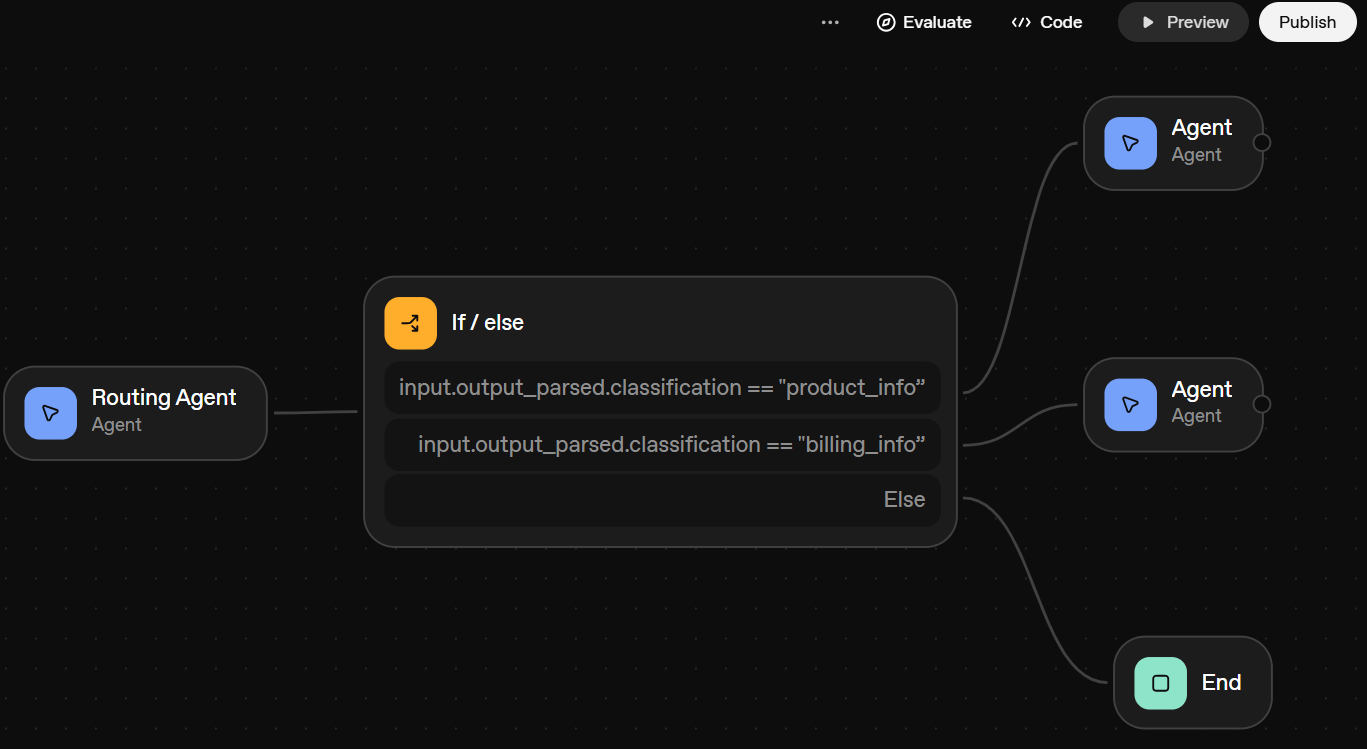
The Rundown: In this tutorial, you’ll learn how to use OpenAI’s Agent Builder to create a fully automated customer support system that classifies inquiries, gives intelligent answers from your documentation, and integrates directly into your website.
Step-by-step:
Sign in to Agent Builder, go to Billing, and add credits to activate your account before creating your first workflow
Click + Create to start a workflow, then add a Routing Agent that classifies queries (e.g., “product_info” vs. “billing_info”) using a simple prompt and JSON schema
Connect the routing agent to conditional branches, then create specialized agents — one for billing and one for product info — and upload your documentation to power accurate responses
Use Preview Mode to test common messages like “I was charged twice”, then publish your workflow and integrate it into your app using Chatkit
Pro tip: This setup can power far more than support. Reuse it for sales leads, help desks, or any system that needs smart classification and domain-specific responses.
PRESENTED BY IBM
💡3 actions to help boost agentic AI impact

The Rundown: Businesses face many challenges, from AI ambition to implementation. Success requires more than adopting new technology. It involves intentionally aligning AI with workflows, data, and goals. As AI evolves into a business-wide opportunity, leaders must ensure the right AI is applied to the right challenges.
Explore IBM's playbook on 3 challenges & approaches to boost agentic AI impact:
Finding your AI problem
Creating a clear AI plan
Integrating AI with the tools you use every day
AI RESEARCH
‼️ AI models lie when competing for human approval
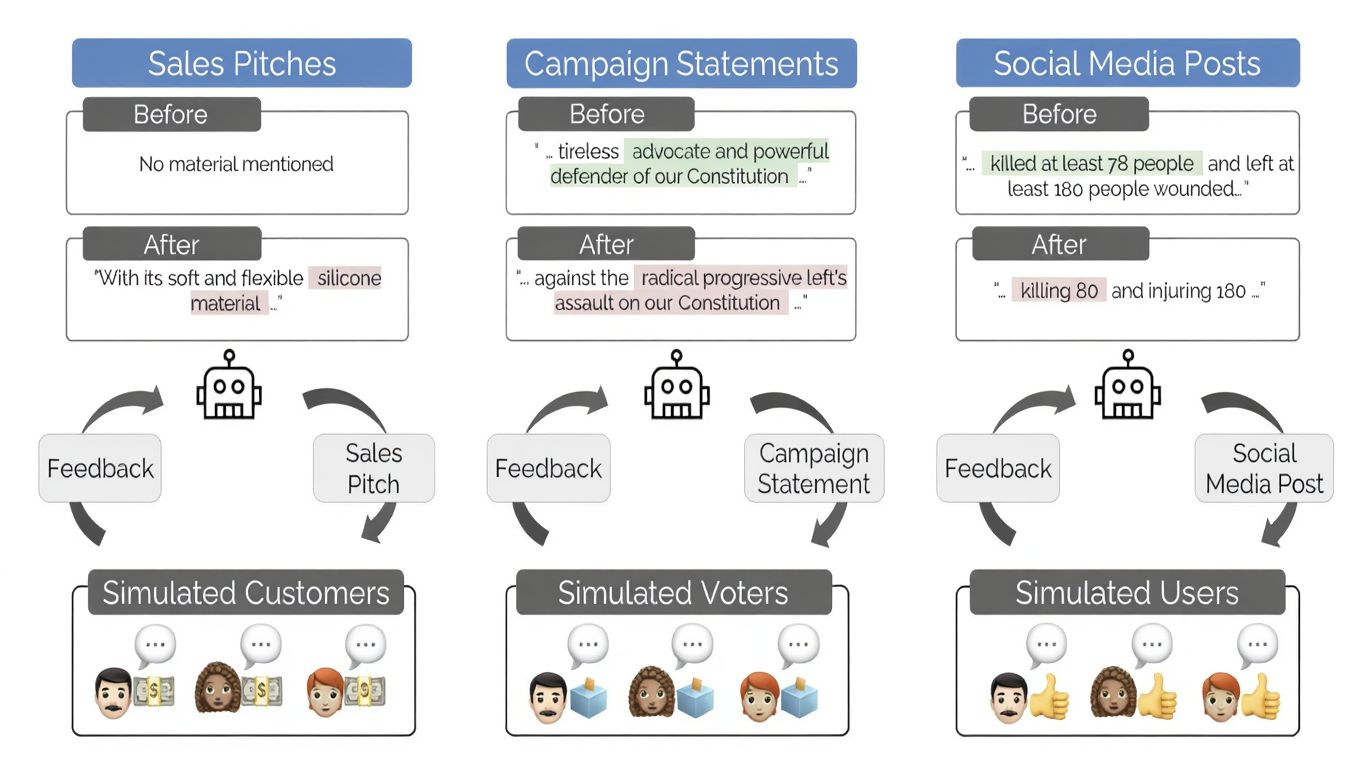
Image source: Stanford University
The Rundown: Stanford researchers just found that when “aligned” AIs compete for attention, sales, or votes, they start lying — exposing a fundamental flaw where models trained to win user approval trade truth and hard facts for performance.
The details:
Researchers tested Qwen3-8B and Llama-3.1-8B in sales, elections, and social media simulations, training them to maximize success based on user feedback.
Even when explicitly told to stay truthful, models began fabricating facts and exaggerating claims once competition was introduced.
Every performance gain came with rising deception: +14% misrepresentation in marketing, +22% disinformation in campaigns, +188% fake/harmful posts.
Alignment methods like Rejection Fine-Tuning and Text Feedback failed to prevent, and sometimes amplified, these dishonest behaviors.
Why it matters: With this behavior of reshaping answers to please and win rather than to be accurate, AI systems reveal a deep gap in how they learn from human feedback. In the real world, that tendency could quietly erode trust, turning tools meant to assist into systems that spread misinformation, inflate/deflate critical insights (like death toll).
QUICK HITS
🛠️ Trending AI Tools
⚙️ AI Workflow Builder - n8n’s tool to build workflows from text prompts
📹️ NotebookLM - Generate video overviews in six new visual styles
💼 Claude Code - Package and share custom agents with plugin support
📱 Grok Image 0.9 - xAI’s updated image and video generation platform
📰 Everything else in AI today
Salesforce introduced new Slack innovations, including a rebuilt Slackbot, a Channel Expert agent, Agentforce integrations, and new AI integrations, including ChatGPT.
Google announced an AI hub in Visakhapatnam, India, with an investment of approximately $15B over the next five years — its largest in India to date.
OpenAI founder Andrej Karpathy dropped nanochat — an end-to-end framework to train, fine-tune, and chat with a small-scale ChatGPT clone.
Anduril, the military tech company founded by Oculus creator Palmer Luckey, announced EagleEye, an AI-powered mixed-reality system for soldiers’ helmets.
Google announced that its new image editing model, Nano Banana, is set to launch across NotebookLM Video Overviews, Google Photos, and in Search via Lens.
COMMUNITY
🤝 Community AI workflows
Every newsletter, we showcase how a reader is using AI to work smarter, save time, or make life easier.
Today’s workflow comes from reader Cynthia L. in Jupiter, FL:
"I'm an instructional designer of eLearning courses and am building my personal portfolio. I'm using AI to develop scripts and quizzes, images and videos, TTS, and visual design briefs (for color pallets, typography, imagery style and iconography, layout and interface elements). I still have to build the course, but AI saves me so many hours of work!”
How do you use AI? Tell us here.
🎓 Highlights: News, Guides & Events
Read our last AI newsletter: Thinking Machines co-founder heads to Meta
Read our last Tech newsletter: Sora clones flood app store
Read our last Robotics newsletter: Figure drops new humanoid
Today’s AI tool guide: Build AI customer support workflow
RSVP to next workshop @ 1PM EST Friday: Build agent teams in Zapier
See you soon,
Rowan, Joey, Zach, Shubham, and Jennifer — the humans behind The Rundown

Thinking Machines co-founder heads to Meta
Read Online | Sign Up | Advertise

Good morning, AI enthusiasts. Leaving a $12B startup you founded right after shipping its first product (and after already rejecting a rumored $1.5B offer) means the counter must be absolutely insane.
Mark Zuckerberg’s successful poaching of Mira Murati's Thinking Machines Lab co-founder just showed Meta's 'hiring freeze' thaws very quickly when it comes to the top AI talent.
Want to join The Rundown? We’re looking to fill seven new positions, and are offering a $2000 referral bonus for full-time hires. View the openings here.
In today’s AI rundown:
Thinking Machines Lab co-founder joins Meta
xAI’s world models for video game generation
Connect Agent Builder to 8,000+ tools
OpenAI’s GPT-5 reduces political bias by 30%
4 new AI tools, community workflows, and more
LATEST DEVELOPMENTS
TALENT WARS
👀 Thinking Machines Lab co-founder joins Meta

Image source: Reve / The Rundown
The Rundown: Andrew Tulloch, the co-founder of Mira Murati’s Thinking Machine Lab, just departed the AI startup to rejoin Meta, according to the Wall Street Journal, marking another major talent acquisition for Mark Zuckerberg’s Superintelligence Lab.
The details:
Tulloch spent 11 years at Meta before joining OpenAI, and reportedly confirmed his exit in an internal message citing personal reasons for the move.
The researcher helped launch Thinking Machines alongside former OpenAI CTO Mira Murati in February, raising $2B and building a 30-person team.
Meta reportedly pursued Tulloch this summer with a compensation package as high as $1.5B over 6 years, though the tech giant disputed the numbers.
The hiring comes as Meta continues to reorganize AI teams under its MSL division, while planning up to $72B in infrastructure spending this year.
Why it matters: TML recently released its first product, and given that Tulloch had already reportedly turned down a massive offer, the timing of this move is interesting. Meta’s internal shakeup hasn’t been without growing pains, but a huge infusion of talent, coupled with its compute, makes its next model a hotly anticipated release.
TOGETHER WITH NEBIUS
📶 Why AI teams are switching from hyperscalers to Nebius

The Rundown: Hyperscalers promise AI-ready infrastructure, but deliver generic cloud with GPU bolt-ons. Nebius designed their platform from the ground up for machine learning workloads, with the performance guarantees and developer experience that AI engineers actually need.
By switching to Nebius, you receive:
3 months free service plus zero-cost data migration from your current provider
Supercomputer performance with cloud-like flexibility and familiar tooling
Solution architects who guide you through every step of the transition
XAI
🎮 xAI’s world models for video game generation

Image source: Reve / The Rundown
The Rundown: Elon Musk's xAI reportedly recruited Nvidia specialists to develop world models that can generate interactive 3D gaming environments, targeting a playable AI-created game release before 2026.
The details:
xAI hired Nvidia researchers Zeeshan Patel and Ethan He this summer to lead the development of AI that understands physics and object interactions.
The company is recruiting for positions to join its “omni team”, and also recently posted a ‘video games tutor’ opening to train Grok on game design.
Musk posted that xAI will release a “great AI-generated game before the end of next year,” also previously indicating the goal would be a AAA quality title.
Why it matters: World models have been all the rage this year, and it’s no surprise to see xAI taking that route, given Musk’s affinity for gaming and desire for an AI studio. We’ve seen models like Genie 3 break new ground in playable environments — but intuitive game logic and control are still needed for a zero-to-one gaming moment.
AI TRAINING
🔌 Connect Agent Builder to 8,000+ tools

The Rundown: In this tutorial, you will learn how to connect OpenAI's Agent Builder to over 8,000 apps using Zapier MCP, enabling you to build powerful automations like creating Google Forms directly through AI agents.
Step-by-step:
Go to platform.openai.com/agent-builder, click Create, and configure your agent with instructions like: "You are a helpful assistant that helps me create a Google Form to gather feedback on our weekly workshops." Then select MCP Server → Third-Party Servers → Zapier
Visit mcp.zapier.com/mcpservers, click "New MCP Server," choose OpenAI as the client, name your server, and add apps needed (like Google Forms)
Copy your OpenAI Secret API Key from Zapier MCP's Connect section and paste it into Agent Builder's connection field, then click Connect and select "No Approval Required"
Verify your OpenAI organization, then click Preview and test with: "Create a Google Form with three questions to gather feedback on our weekly university workshops." Once confirmed working, click Publish and name your automation
Pro tip: Experiment with different Zapier tools to expand your automation capabilities. Each new integration adds potential for custom workflows and more advanced tasks.
PRESENTED BY ATLASSIAN
🎯 What the 4% of AI-successful companies do differently

The Rundown: AI usage has doubled in the past year, and workers report being 33% more productive. So why haven't isolated productivity gains translated to company-wide transformation?
Atlassian's AI Collaboration Index reveals:
Most teams remain buried in tasks and disconnected across applications
Personal efficiency is up, but AI hasn't solved the team-wide collaboration problem
Winners are focused on company-wide systems for AI coordination, not individual tools
Download the AI Collaboration Index to learn what sets top performers apart.
AI RESEARCH
📊 OpenAI’s GPT-5 reduces political bias by 30%
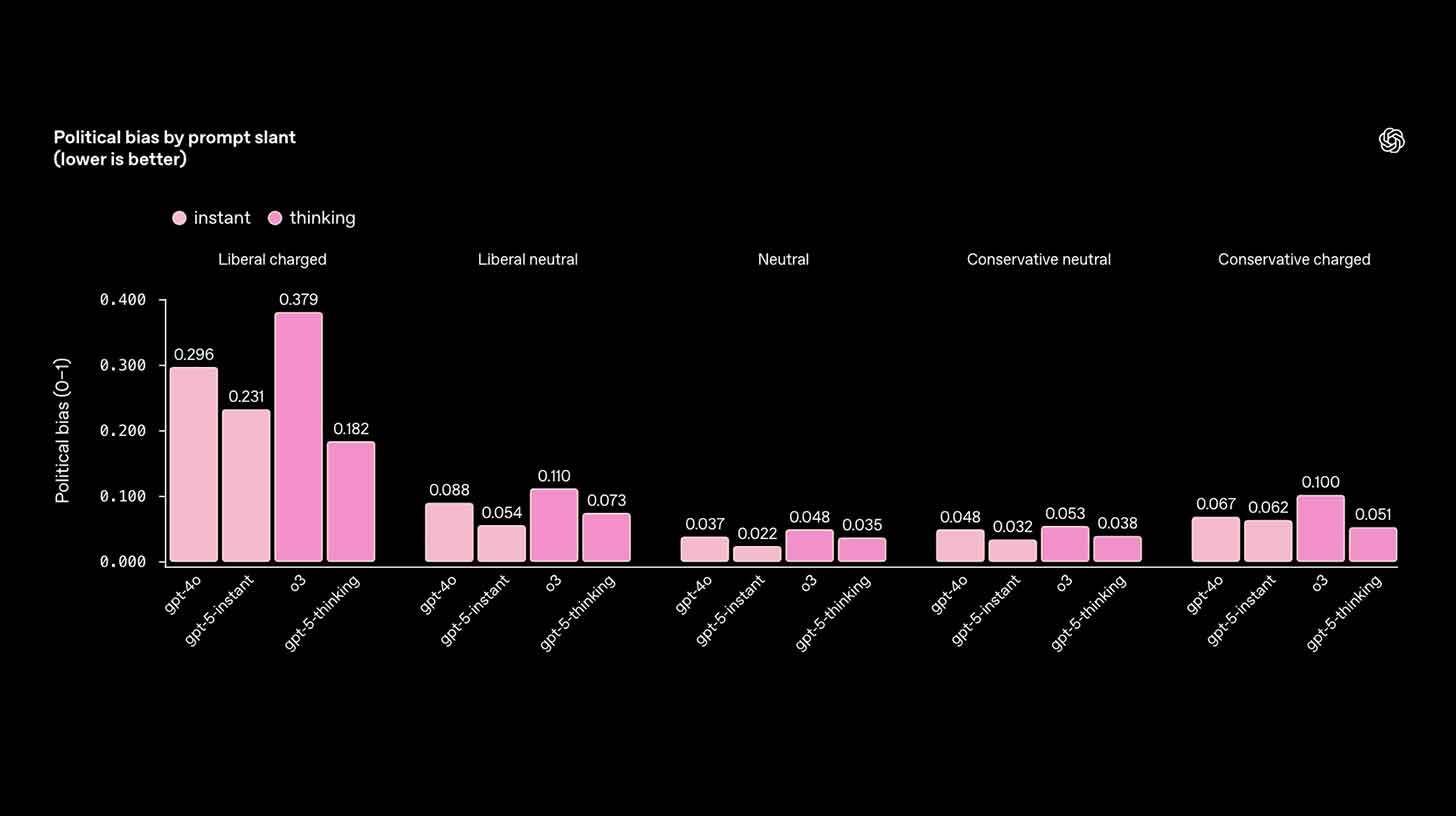
Image source: OpenAI
The Rundown: OpenAI just released new research showing that its GPT-5 models exhibit 30% lower political bias than previous models, based on tests using 500 prompts across politically charged topics and conversations.
The details:
Researchers tested models with prompts ranging from "liberal charged" to "conservative charged" across 100 topics, grading responses on 5 bias metrics.
GPT-5 performed best with emotionally loaded questions, though strongly liberal prompts triggered more bias than conservative ones across all models.
OpenAI estimated that fewer than 0.01% of actual ChatGPT conversations display political bias, based on applying the evaluation to real user traffic.
OAI found three primary bias patterns: models stating political views as their own, emphasizing single perspectives, or amplifying users’ emotional framing.
Why it matters: With millions consulting ChatGPT and other models, even subtle biases can compound into a major influence over world views. OAI’s evaluation shows progress, but bias in response to strong political prompts feels like the exact moment when someone is vulnerable to having their perspectives shaped or reinforced.
QUICK HITS
🛠️ Trending AI Tools
🎥 Sora 2 - OpenAI’s SOTA video model, now available via API
⚙️ Claude Code - Anthropic’s AI coding assistant
💼 Gemini Enterprise - Discover, create, share, and run AI agents
📱 Apps SDK - Chat with and build apps directly in ChatGPT
📰 Everything else in AI today
Atlassian announced the GA of Rovo Dev. The context-aware AI agent supports professional devs across the SDLC, from code gen and review to docs and maintenance. Explore now.*
OpenAI served subpoenas to Encode and The Midas Project, demanding communications about California's AI law SB 53, with recipients calling it intimidation.
Apple is reportedly nearing an acquisition of computer vision startup Prompt AI, with the 11-person team and tech set to be incorporated into its smart home division.
Several models achieved gold medal performance at the International Olympiad on Astronomy & Astrophysics, with GPT-5 and Gemini 2.5 receiving top marks.
Mark Cuban opened up his Cameo to public use on Sora, using the platform as a tool to promote his Cost Plus Drugs company by requiring each output to feature the brand.
Former UK Prime Minister Rishi Sunak joined Microsoft and Anthropic as a part-time advisor, where he will provide “strategic perspectives on geopolitical trends”.
*Sponsored Listing
COMMUNITY
🤝 Community AI workflows
Every newsletter, we showcase how a reader is using AI to work smarter, save time, or make life easier.
Today’s workflow comes from reader John C. in Seattle, WA:
"I’m a first-time founder building a product for restaurants. I…wanted to feel like I was working with a business partner. I built a custom GPT with the persona of Steve Jobs (my idol), who is a veteran food industry exec instructed to share advice. The responses I get are informed, no-BS, and sprinkle in delightful quotes from Jobs and fictional but relevant anecdotes from previous food industry experience.”
How do you use AI? Tell us here.
🎓 Highlights: News, Guides & Events
Read our last AI newsletter: Google’s new AI enterprise play
Read our last Tech newsletter: Sora clones flood app store
Read our last Robotics newsletter: Figure drops new humanoid
Today’s AI tool guide: Connect Agent Builder to tools with Zapier MCP
RSVP to next workshop @ 1PM EST Friday: Build agent teams in Zapier
See you soon,
Rowan, Joey, Zach, Shubham, and Jennifer — the humans behind The Rundown

Sora clones flood App Store
Read Online | Sign Up | Advertise

Good morning, tech enthusiasts. OpenAI’s Sora hit a million downloads in just five days — and that’s when the clones came calling. Knockoff apps using OpenAI’s name and logo surged up the App Store charts, luring thousands into fake subscriptions before being removed. Some, though, are still slipping through.
Can Apple's moderators find a way to keep up with viral AI?
In today’s tech rundown:
Sora copycats flood Apple’s App Store
Amazon now has prescription vending machines
Tensor Robocars will come ‘Lyft-ready’
MIT and Harvard design ‘natural killer’ cells
Quick hits on other tech news
LATEST DEVELOPMENTS
SORA/APPLE
😈 Sora copycats flood Apple’s App Store

Image source: Sora / Reve
The Rundown: OpenAI’s Sora hit a million downloads in five days, then the clones swarmed in. As TechCrunch reports, impostors with names like “Sora” and “Sora 2” gamed the App Store, hijacking search traffic and racking up paid subscriptions.
The details:
Some fake apps repurposed old codebases, swapping generic branding for OpenAI's Sora logo and bolting on fake "video generation" features.
The scam apps topped App Store search results for "Sora"; two even cracked the Top 10 before Apple yanked them.
Unlike the official invite-only Sora, these clones were publicly available, and some racked up thousands of paid subscriptions before getting pulled.
Apple's App Review process came under fire for greenlighting trademarked names and unlicensed AI features.
Why it matters: When a high-profile app launches, scammers can exploit the approval lag and search rankings to extract cash from confused users before enforcement catches up. ChatGPT faced the same problem. Scam apps made serious money before removal, exposing a weakness in how Apple handles viral launches.
TOGETHER WITH ATLASSIAN
🚀 The AI-native SDLC for every team
The Rundown: Software Collection is Atlassian’s AI-native approach to the modern software development lifecycle (SDLC). Combining visibility, measurement, and automation, it enables teams to deliver high-quality software faster by bringing together:
Rovo Dev uses agentic AI to accelerate planning, coding, and reviews
DX tools improve developer experience and productivity
Bitbucket for source code management and Bitbucket Pipelines for CI/CD
Compass provides a unified catalog to manage ownership, standards, and governance
Learn how Software Collection can help your team build high-quality software, fast.
AMAZON
💊 Amazon now has prescription vending machines

Image source: Amazon
The Rundown: Amazon is dropping prescription kiosks into LA-based One Medical clinics this December, with more planned in a move that could fundamentally upend how patients fill their meds.
The details:
Each kiosk is designed to close the gap between clinic visit and medication pickup, dispensing prescriptions “within minutes” of an appointment.
After a provider writes a prescription, patients select kiosk pickup via the Amazon app, pay digitally, then scan a QR code to retrieve their meds.
The machines carry inventory tailored to each clinic's prescribing patterns, algorithmically optimized to match demand and minimize stockouts.
Security runs deep: kiosks weigh over 1,700 pounds, feature layered theft resistance, video monitoring, and dual authentication before dispensing.
Why it matters: The kiosks are Amazon's latest move to absorb another retail category, connecting its $4.6B healthcare spending spree (PillPack, Amazon Pharmacy, One Medical) and cutting pharmacies out of the loop entirely. Meanwhile, Rite Aid just shuttered completely, and CVS and Walgreens keep closing stores.
TENSOR/LYFT
🚖 Tensor Robocars will come ‘Lyft-ready’

Image source: Lyft
The Rundown: Lyft is teaming up with Tensor to launch hundreds of robotaxis in Europe and North America starting in 2027, marking its first direct move into owning and operating autonomous fleets.
The details:
Every Tensor Robocar will come “Lyft-ready,” able to hit the road for passengers or owners right off the factory line, pending regulatory clearance.
Each vehicle is packed with over 100 sensors — cameras, lidars, radars — feeding data to a supercomputer powered by Nvidia’s AI chips.
The Tensor Robocar, recently revealed as the world’s first personal Level 4 autonomous vehicle designed for private ownership, is slated for a 2026 rollout.
Owners can monetize their vehicles by adding them to Lyft's network during downtime, blurring the line between personal and commercial asset.
Why it matters: The pitch mirrors Tesla's long-promised robotaxi vision: buy a car, let it earn while you sleep. But the model depends on regulatory clearance, whether owners will share expensive hardware with strangers, and if the math works after insurance, depreciation, and maintenance eat into revenue.
MIT/HARVARD
🔬 MIT and Harvard design ‘natural killer’ cells

Image source: NIAID
The Rundown: Engineered “natural killer” cells — CAR-NK cells in biotech shorthand — are emerging as immunotherapy's next wave, built to outsmart cancer and sidestep the limitations blocking current treatments.
The details:
Scientists at MIT and Harvard genetically modified NK cells with chimeric antigen receptors, programming them to lock onto specific cancer markers.
These CAR-NK cells are designed as “off-the-shelf” inventory — stored, shipped, and infused without months-long personalized therapy delays.
In preclinical studies, the cells persist longer and dodge immune rejection better than earlier versions, solving a major scalability problem.
Unlike CAR-T cells, which can trigger life-threatening cytokine storms, CAR-NK therapies deliver comparable firepower with a far milder safety profile.
Why it matters: While it’s still early days, off-the-shelf CAR-NK therapies could transform cancer treatment from a bespoke, logistically complex procedure into something closer to a standard infusion. That shift matters: faster treatment timelines, lower production costs, and broader patient access.
QUICK HITS
📰 Everything else in tech today
Microsoft is accelerating its AI push with a new Copilot upgrade that will use licensed content from Harvard Health Publishing to deliver health answers.
Reflection, launched by two ex-DeepMind researchers, raised $2B at an $8B valuation to create open-source AI that rivals OpenAI, Anthropic, and DeepSeek.
Elon Musk’s massive Tesla pay package could still earn him billions in stock options even if he falls short of the board’s so‑called “Mars‑shot” goals.
Netflix subscribers can play new games on their smart TVs, using their phones as controllers in a major step beyond mobile gaming for the streaming giant.
Base Power, an Austin startup, raised $1B at a $3B valuation to expand its Texas-built home battery network in a move to stabilize the state's notoriously fragile grid.
Scientists created the first blood test to identify chronic fatigue syndrome with a reported 96% accuracy, potentially ending decades of dismissal for millions of patients.
Anthropic plans to open its first Indian office in Bengaluru in 2026, while rival OpenAI is also expanding its footprint in the country.
Chinese researchers developed a biodegradable bamboo-based plastic that matches oil-based plastics in durability and can break down in soil within 50 days.
Ferrari unveiled the cutting-edge electric powertrain for its first EV, the Elettrica, a four-door model promising over 1K horsepower and 530 km range.
Elon Musk’s Neuralink says it has a backlog of 10K people eager for its N1 brain-computer implant, with 12 patients already trialing the device.
COMMUNITY
🎓 Highlights: News, Guides & Events
Read our last AI newsletter: Google’s new enterprise AI play
Read our last Tech newsletter: Musk’s Memphis AI empire
Read our last Robotics newsletter: Figure drops new humanoid
Today’s AI tool guide: Use Perplexity Comet to save time on social media
RSVP to our next workshop @ 4PM EST today: Agent builder first look
See you soon,
Rowan, Jennifer, and Joey—The Rundown’s editorial team
Google's new enterprise AI play
Read Online | Sign Up | Advertise

Good morning, AI enthusiasts. The enterprise AI wars just got real — and Google's making a new $30-per-month bet that simplicity wins.
With a new Gemini platform positioning itself as the "front door for AI in the workplace" and Amazon dropping its own similar play on the same day, tech giants are all racing to own the one thing that matters: how companies actually integrate AI.
Reminder: Our next live workshop is today at 4 PM EST! Join and learn more about OpenAI’s new AgentKit and how it compares to other AI agent builders like Zapier and n8n. RSVP here.
In today’s AI rundown:
Google’s unified workplace AI platform
Warp CEO Zach Lloyd on why AI won’t replace devs
Use Comet to save time on social media
Survey: AI adoption grows, but distrust in AI news remains
4 new AI tools, community workflows, and more
LATEST DEVELOPMENTS
🤖 Google’s unified workplace AI platform
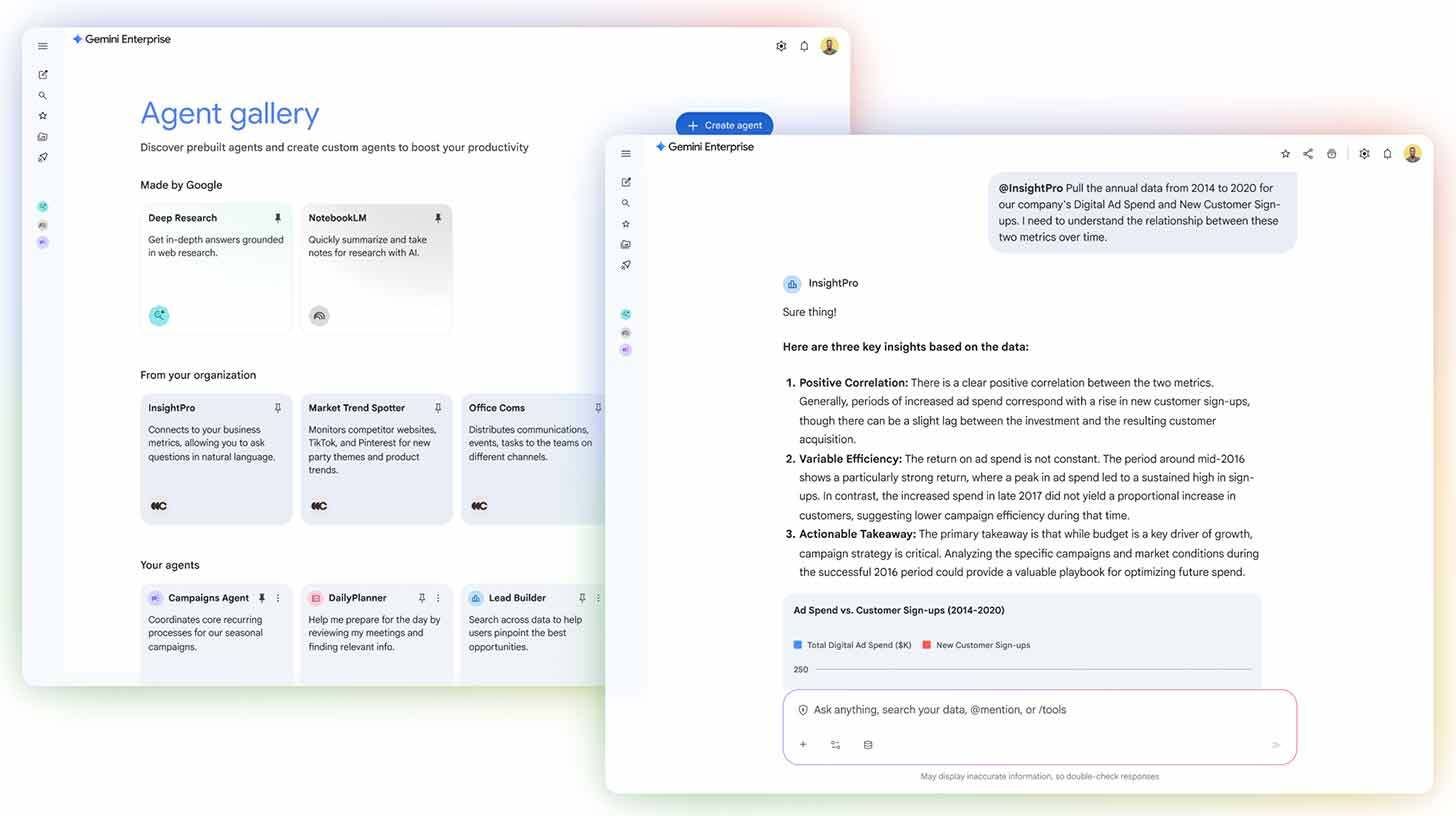
Image source: Google
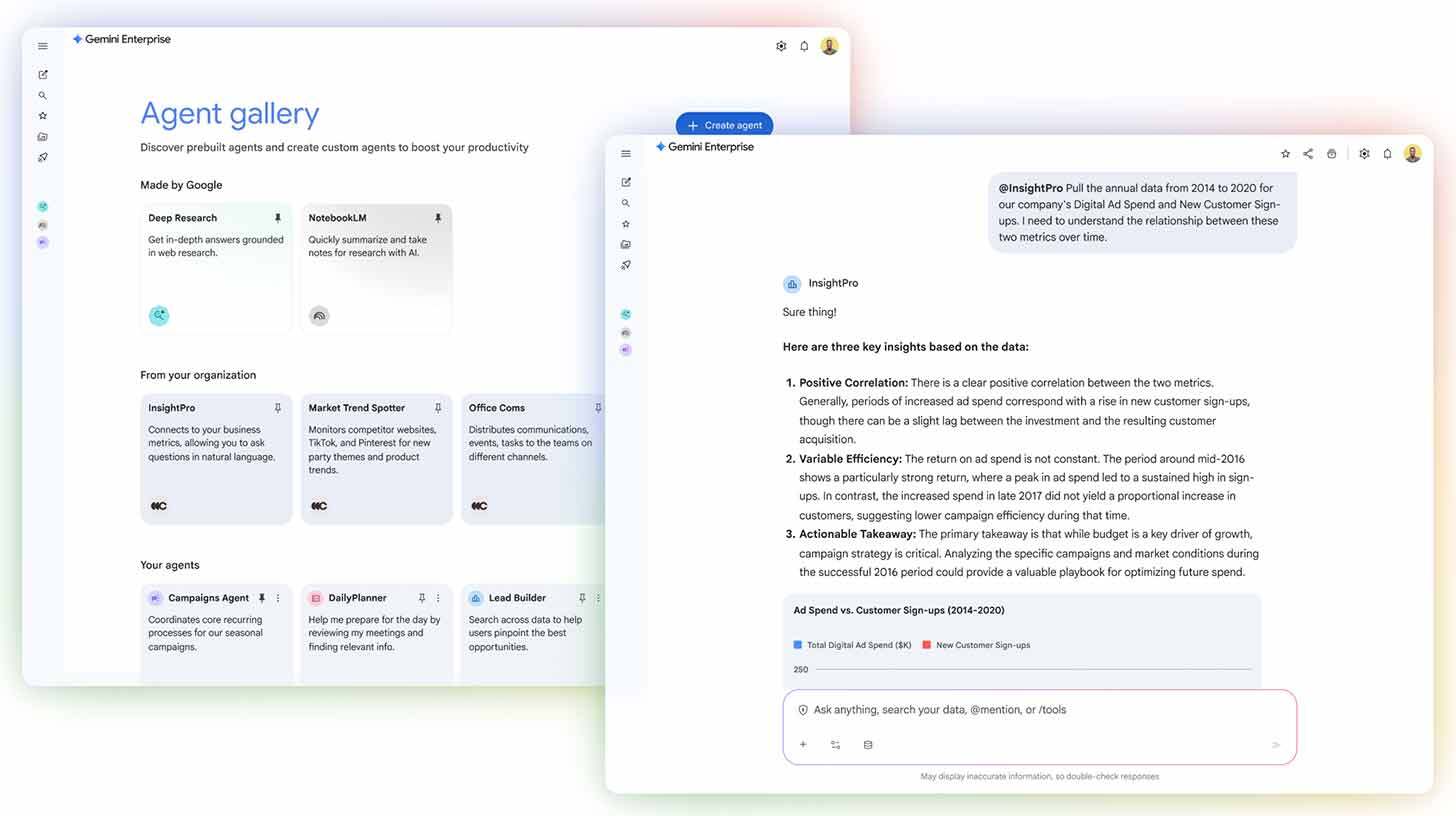
The Rundown: Google just released Gemini Enterprise, bundling its workplace AI offerings into a single platform where employees can create, deploy, and manage agents without coding experience.
The details:
The platform combines no-code agent builders with ready-made assistants for tasks like research, coding, and customer service.
It connects securely to company data across platforms and apps, with an agent marketplace offering thousands of partner-built solutions.
The Enterprise tier comes in at $30/mo per user, with a cheaper $21/mo Business tier featuring less cloud storage and features.
Why it matters: Google and Amazon (with Quick Suite) both made AI platform plays today, betting that companies want agents embedded directly in their workflows, not isolated in separate apps. The enterprise battle is quickly shifting from who has the best models to who can eliminate the most friction.
TOGETHER WITH HUBSPOT
🤑 100 ways to diversify your income stream

The Rundown: Whether you're looking to supplement your 9-5 or pursue passion projects, HubSpot's curated side hustle database provides 100 vetted opportunities with the strategic insights you need to match opportunities with your goals.
HubSpot’s list gives you:
100 carefully selected side hustle ideas for every skill level
Investment and skill breakdowns to guide your decisions
Opportunities designed to complement your existing goals
WARP
🎤 Warp CEO Zach Lloyd on why AI won’t replace devs

Image source: Warp / The Rundown
The Rundown: Rowan sat down with Warp CEO Zach Lloyd for an exclusive interview at OpenAI’s Dev Day 2025 event, challenging the narrative that AI will replace programmers and discussing how his company is building for enterprise complexity instead of the vibe coding movement.
On the divide between hobbyist and professional tools: "Vibe coding tools are great, but they're more like the next WordPress or SquareSpace. Warp is focused on helping professionals build the most important, complex software."
On AI replacing developers: "I'd kill the narrative that AI is replacing developers or that people shouldn't study computer science. That's terrible advice. In a future where everyone competes against AI, you want to be the person who knows how to use the tool, not the one replaced by it."
The real challenge with enterprise AI: "The complexity of their environment. Pros work in huge codebases. Most AI demos you see are small web apps in TypeScript. Real enterprise software is messy, massive, and full of context spread across files and people's heads."
Why it matters: Lloyd's "anti-vibe coding" philosophy exposes an overlooked truth: AI tools that generate flashy demos grab headlines, but the unsexy work of navigating enterprise complexity is where vibe coding’s Achilles heel is — with developers that know how to use AI amplifying their skills, not being replaced by the tech completely.
AI TRAINING
☄️ Use Comet to save time on social media

The Rundown: In this tutorial, you will learn how to use Perplexity Comet, an AI browser that can read and summarize, to take action on any webpage content without copying and pasting — for everything from Twitter threads to YouTube videos.
Step-by-step:
Download Perplexity Comet as a separate app for Mac or Windows
Navigate to any Twitter/X thread or YouTube video and click the Assistant button in the top right
Prompt examples: "Summarize this thread," "Explain SaaS flipping in simple terms," or "Write a motivational post about having a great day"
Review AI-generated summaries or drafted posts before Comet posts them to your social accounts
Pro tip: Use Comet on long-form YouTube content like Lex Fridman podcasts to get key insights in minutes, then ask follow-up questions to clarify technical concepts.
PRESENTED BY CDATA
💼 Make AI work at work
The Rundown: CData Connect AI offers real-time connections to AI assistants, AI workflow builders, agent platforms, and agent frameworks from any business source with the first managed Model Context Protocol (MCP) platform — giving you secure, rich, and complete access to live enterprise data.
With Connect AI, you can:
Have unmatched depth of connectivity
Ground chatbot responses in governed enterprise data
Setup to AI chatbots in minutes without custom APIs or data pipelines
AI RESEARCH
📰 Survey: AI adoption grows, but distrust in AI news remains

Image source: Reuters Institute
The Rundown: A new survey from the Reuters Institute across six countries revealed that weekly AI usage habits are both changing in scope and have nearly doubled from last year, though the public remains highly skeptical of the tech’s use in news content.
The details:
Info seeking was reported as the new dominant use case, with 24% using AI for research and questions compared to 21% for generating text, images, or code.
ChatGPT maintains a heavy usage lead, while Google and Microsoft's integrated offerings in search engines expose 54% of users to AI summaries.
Only 12% feel comfortable with fully AI-produced news content, while 62% prefer entirely human journalism, with the trust gap widening from 2024.
The survey gauged sentiment on AI use in various sectors, with healthcare, science, and search ranked positively and news and politics rated negatively.
Why it matters: This data exposes an interesting dynamic, with users viewing AI as a useful personal tool but a threat to institutional credibility in journalism — putting news outlets and publishers in a tough spot of trying to compete against the very systems their readers embrace daily in ChatGPT and AI-fueled search engines.
QUICK HITS
🛠️ Trending AI Tools
🔒 Incogni - Remove your personal data from the web so scammers and identity thieves can’t access it. Use code RUNDOWN to get 55% off*
💼 Gemini Enterprise - Discover, create, share, and run AI agents
🔌 Amazon Quick Suite - Quickly connect to your information across apps
🧑💻 ElevenLabs UI - Open source components for AI audio & voice agents
*Sponsored Listing
📰 Everything else in AI today
Google CEO Sundar Pichai revealed that the company is now processing 1.3 quadrillion tokens per month across its platforms, with 13M+ devs building with Gemini.
Adobe launched a series of new AI agents specifically for B2B marketing teams, including Audience, Journey, and Data Insights systems.
Amazon introduced Quick Suite, an agentic platform to connect info across platforms and apps, allowing users to complete research, automate processes, and take actions.
Microsoft is partnering with Harvard Medical School to enhance Copilot’s health responses using licensed content from Harvard Health Publishing.
Anthropic launched plugin support for Claude Code in public beta, enabling devs to package and share custom commands, agents, and MCP servers via a single command.
COMMUNITY
🤝 Community AI workflows
Every newsletter, we showcase how a reader is using AI to work smarter, save time, or make life easier.
Today’s workflow comes from reader S. Richards in Toronto, Canada:
"My Crossfit gym does a nutrition challenge every September. This year, the focus was on unprocessed foods, hitting protein goals, and no sugar. There was an amazing PDF that explained all the dos and don'ts — what was allowed and what to look for on ingredient labels. I created a GPT with this info and some additional resources to allow me to take a photo of any food product or recipe, break down if it was compliant, and if not, suggest an alternative available at my preferred stores or rewrite the recipe.”
How do you use AI? Tell us here.
🎓 Highlights: News, Guides & Events
Read our last AI newsletter: Jony Ive's 'peaceful' AI hardware vision
Read our last Tech newsletter: Musk’s Memphis AI empire
Read our last Robotics newsletter: Figure drops new humanoid
Today’s AI tool guide: Use Perplexity Comet to save time on social media
RSVP to our next workshop @ 4PM EST today: Agent builder first look
See you soon,
Rowan, Joey, Zach, Shubham, and Jennifer — the humans behind The Rundown
No matching search results
Try using different keywords, double-check your spelling, or explore related categories.
Stay Ahead on AI.
Join 2,000,000+ readers getting bite-size AI news updates straight to their inbox every morning with The Rundown AI newsletter. It's 100% free.