Get the latest AI news, understand why it matters, and learn how to apply it in your work — all in just 5 minutes a day. Join over 2,000,000+ subscribers.
Open letter demands ASI freeze
Read Online | Sign Up | Advertise

Good morning, AI enthusiasts. A new open letter demanding a halt to superintelligence development has emerged, and the signatures include some new heavy hitters.
But while AI godfathers Bengio and Hinton join forces with tech figures, politicians, celebrities, and more, the absence of those from frontier labs speaks volumes — making it hard to stop a race when none of the runners agree to pause.
In today’s AI rundown:
Open letter demands halt to superintelligence development
Amazon deploys AI-powered glasses for delivery drivers
Create an email campaign generator with Build mode
Meta trims 600 jobs across AI division
4 new AI tools, community workflows, and more
LATEST DEVELOPMENTS
ASI
🚨Open letter demands halt to superintelligence development
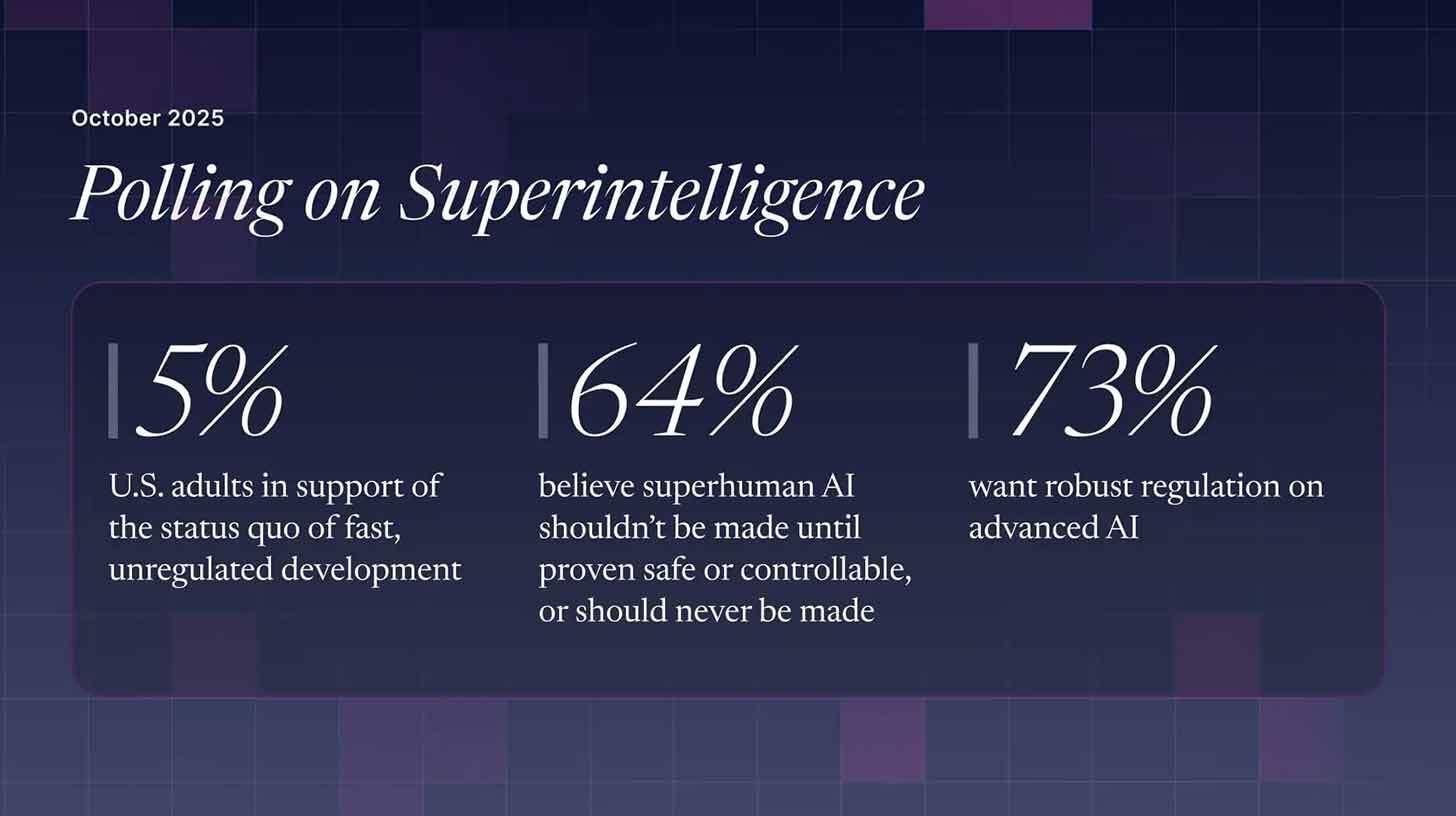
Image source: Future of Life Institute
The Rundown: Public figures across tech and politics have signed a Future of Life Institute letter demanding governments prohibit superintelligence development until it's proven controllable and the public approves its creation.
The details:
The letter cites concerns including ‘human economic obsolescence,’ ‘losses of freedom, civil liberties, dignity, and control,’ and ‘potential human extinction.’
Leadership from OpenAI, Google, Anthropic, xAI, and Meta were absent, though current OAI staffer Leo Gao was included in the signatories.
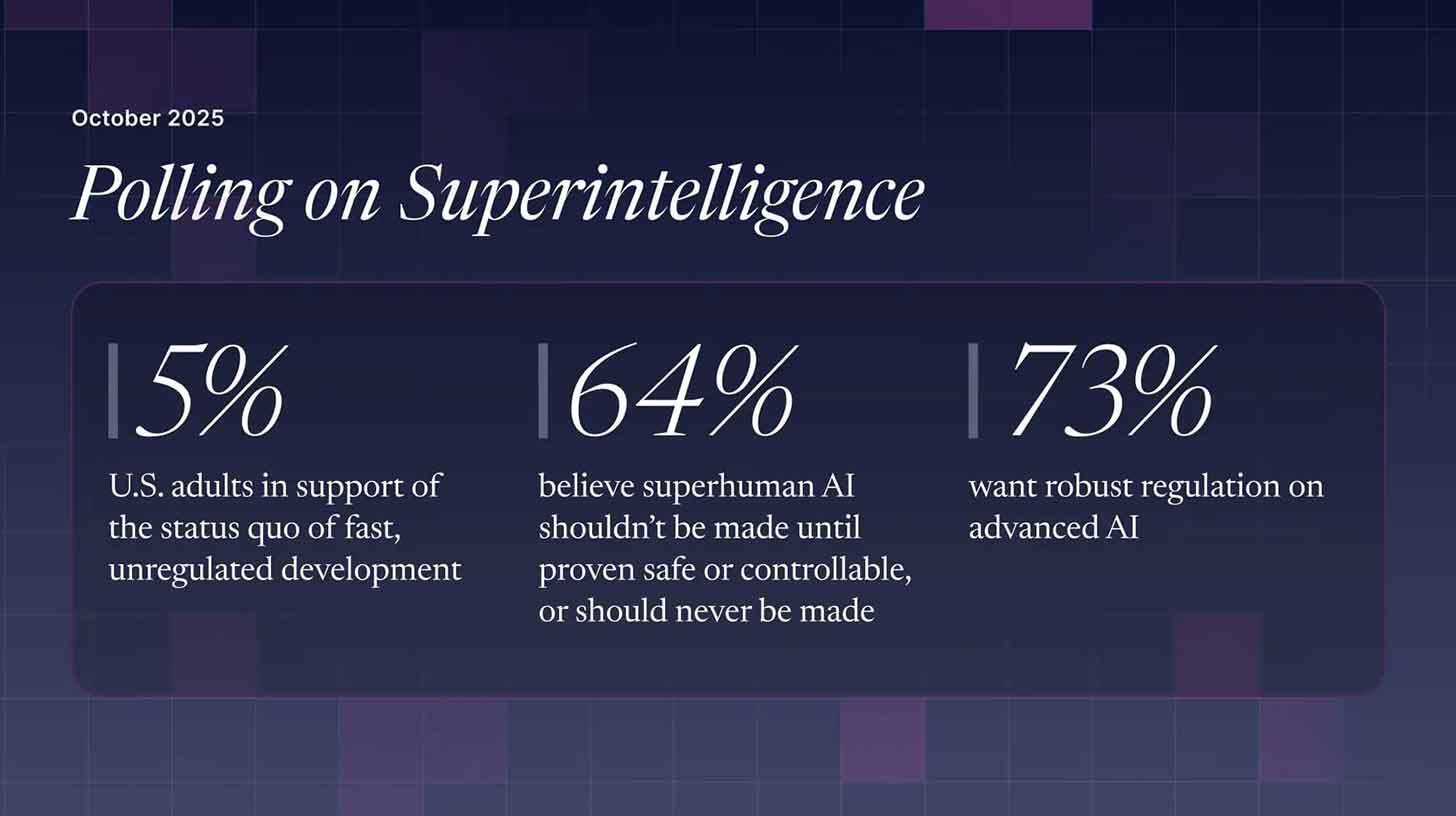
The org also released data showing that 64% of Americans want ASI work halted until proven safe, with just 5% preferring unregulated advances.
Others featured included ‘godfathers of AI’ Yoshua Bengio and Geoffrey Hinton, Apple co-founder Steve Wozniak, and Virgin’s Richard Branson.
Why it matters: This isn’t the first public push against AI acceleration, but the calls seem to be getting louder. But with all of the frontier labs notably missing and a still vague notion of both what a “stop” to development looks like and how to even define ASI, this is another effort that may end up drawing more publicity than real action.
TOGETHER WITH TRIPLE WHALE
📈 Supercharge your BFCM performance with AI Agents

The Rundown: During Black Friday and Cyber Monday, every second counts — and brands that rely on manual analysis are already behind. Learn how to use AI agents to turn this holiday season’s data chaos into decisive, profitable execution.
Triple Whale’s free guide shows you how to:
Detect performance shifts in minutes, not hours
Automate campaign optimizations in real time
Build an agent-powered command center before the holiday rush
AMAZON
📦 Amazon deploys AI-powered glasses for delivery drivers
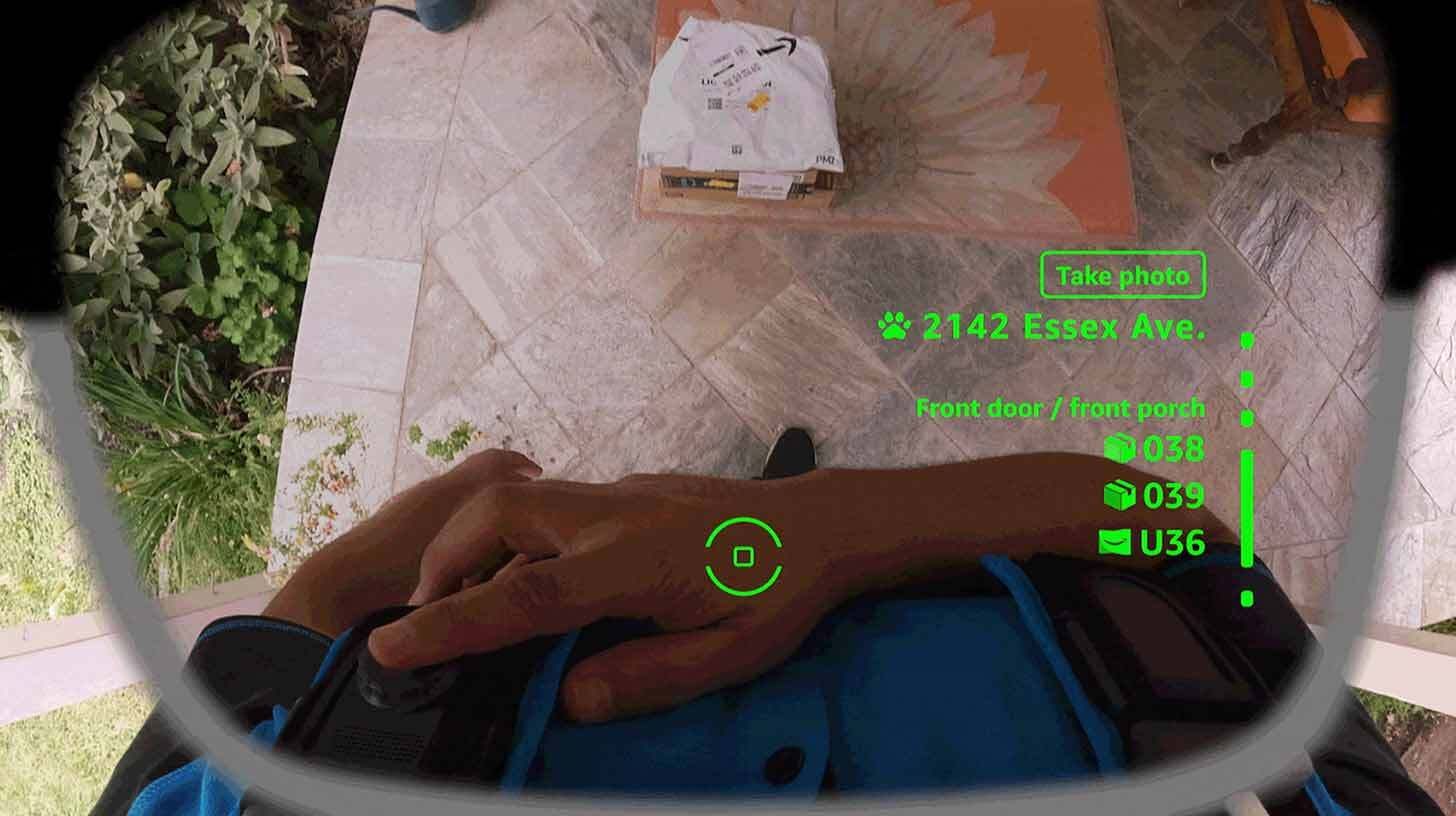
Image source: Amazon
The Rundown: Amazon just introduced new smartglasses for its delivery fleet that project navigation instructions and package info directly into a driver’s vision, marking the e-commerce giant’s latest infusion of AI tech into its efficiency push.
The details:
The glasses display turn-by-turn directions, package scanning data, and delivery confirmations, eliminating constant phone checking during deliveries.
Drivers wear a controller clipped to their vest containing swappable batteries for all-day operation, plus an emergency button for immediate assistance.
Amazon said future versions will detect wrong-address drop-offs in real time, ID hazards like pets, and adjust display brightness for low-light conditions.
Why it matters: These glasses look like the visual interface sci-fi has long predicted, with the ‘augmentation’ of human workers equipped with real-time data and insights. Efficiency gains are clear, but workplace surveillance and constant digital guidance concerns could determine if this becomes standard across industries.
AI TRAINING
📧 Create an email campaign generator with Build mode

The Rundown: Build a complete email campaign generator using Google AI Studio’s Build Mode, turning a simple idea into a working web app with copywriting and image generation in minutes.
Step-by-step:
Open Google AI Studio chat mode with Gemini 2.5 Pro and prompt: “Create a product requirements doc for an email campaign generator tool. List key features, user flow in bullet points under 100 words”
Click “Build” tab, enable “AI Powered Chatbot” and “Generate Images with a Prompt,” then paste: “Build an email campaign generator based on this PRD: [your PRD]. Include chatbot for copy refinements and image generation for 3 campaign visuals”
Hit “Build” and wait 1–2 minutes, then click “Preview” to test with inputs like “Holiday gadget sale” — verify it generates 3 subject lines, HTML email body, and 3 banner images
Refine outputs by prompting “Make subject lines more urgent” or “Regenerate images with warmer colors” in the chatbot
Click “Share” icon, toggle “Publish your App,” copy the link to share with your team — anyone can generate campaigns without dev skills
Pro tip: Repurpose this workflow for other marketing tools by swapping the PRD for a social media caption generator, blog post outliner, or ad copy brainstormer. The same process works for any content creation tool you need.
PRESENTED BY IBM
💡3 actions to help boost agentic AI impact
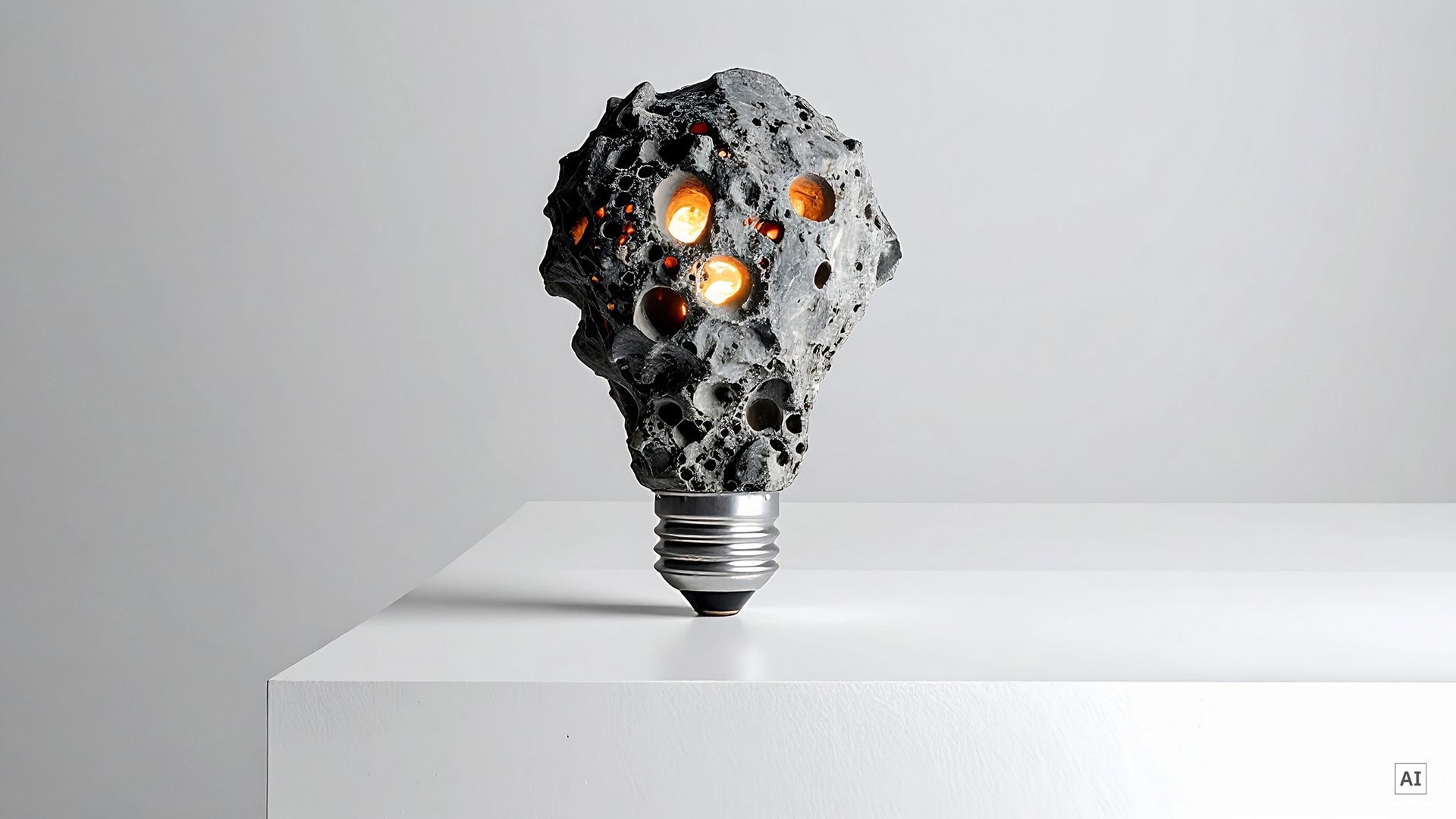
The Rundown: Businesses face many challenges going from AI ambition to implementation. Success requires more than adopting new technology. It involves intentionally aligning AI with workflows, data, and goals. As AI evolves into a business-wide opportunity, leaders must ensure the right AI is applied to the right challenges.
Explore IBM’s playbook on 3 challenges & approaches to boost agentic AI impact:
Finding your AI problem
Creating a clear AI plan
Integrating AI with the tools you use everyday
META
✂️ Meta trims 600 jobs across AI division

Image source: Reve / The Rundown
The Rundown: Meta just eliminated roughly 600 positions across its AI division, according to a memo from Chief AI Officer Alexandr Wang — with the company’s FAIR research arm reportedly impacted but its superintelligence group TBD Lab left intact.
The details:
Wang told employees the reductions would create smaller teams requiring fewer approvals, with those cut encouraged to apply to other Meta positions.
Cuts targeted Meta‘s FAIR research unit, product teams, and infrastructure groups, while sparing TBD Lab, which Wang oversees directly.
The company has continued its aggressive recruiting from rivals, recently hiring OAI scientist Ananya Kumar and TML co-founder Andrew Tulloch.
The moves follow friction earlier this month when FAIR researchers, including AI pioneer Yann LeCun, pushed back on new publication review requirements.
Why it matters: Meta’s superintelligence poaching and major restructure was the talk of the summer, but there has been tension brewing between the new hires and old guard. With Wang and co. looking to move fast and pave an entirely new path for the tech giant’s AI plans, the traditional FAIR researchers may be caught in the crossfire.
QUICK HITS
📰 Everything else in AI today
Anthropic is reportedly negotiating a multibillion-dollar cloud computing deal with Google that would provide access to custom TPU chips, building on Google’s existing $3B investment.
Reddit filed a lawsuit against Perplexity and three other data-scraping companies, accusing them of circumventing protections to steal copyrighted content for AI training.
Tencent open-sourced Hunyuan World 1.1, an AI model that creates 3D reconstructed worlds from videos or multiple photos in seconds on a single GPU.
Conversational AI startup Sesame opened beta access for its iOS app featuring a voice assistant that can “search, text, and think,” also announcing a new $250M raise.
Google announced that its Willow quantum chip achieved a major milestone by running an algorithm on hardware 13,000x faster than top supercomputers.
COMMUNITY
🤝 Community AI workflows
Every newsletter, we showcase how a reader is using AI to work smarter, save time, or make life easier.
Today’s workflow comes from reader Anonymous in Loveland, CO:
“As a new product developer (physical products), I have always wanted to draft and file my own patents. Using both ChatGPT and Gemini in tandem, I have been able to generate my own claims sets as well as professional line drawings. Once complete, I ask the LLMs to act as my ‘seasoned patent attorney’ and review everything for accuracy. I then turn it over to my attorney for final review, for now.”
How do you use AI? Tell us here.
🎓 Highlights: News, Guides & Events
Read our last AI newsletter: OpenAI enters browser war with Atlas
Read our last Tech newsletter: 'ChatGPT for doctors' hits $6B
Read our last Robotics newsletter: Unitree's 'bionic face' humanoid
Today’s AI tool guide: Create an email campaign generator with Build
RSVP to our next workshop @ 4PM EST Friday: Learn context engineering
See you soon,
Rowan, Joey, Zach, Shubham, and Jennifer — the humans behind The Rundown

OpenAI enters browser war with Atlas
Read Online | Sign Up | Advertise

Good morning, AI enthusiasts. The AI browser war just got its most credible challenger yet, with OpenAI unveiling ‘Atlas’ with agent capabilities, memory features, and deep integrations throughout.
The AI leader’s long-awaited release is here, entering a crowded field with one major advantage — the ChatGPT brand. But is it enough to get users to take the leap away from the comforts of their traditional browsers?
In today’s AI rundown:
OpenAI enters browser war with Atlas
Anthropic, Amodei respond to government criticism
Ship ideas faster with Claude Code Web
Origin AI predicts disease risk in embryos
4 new AI tools, community workflows, and more
LATEST DEVELOPMENTS
OPENAI
🌐 OpenAI enters browser war with Atlas
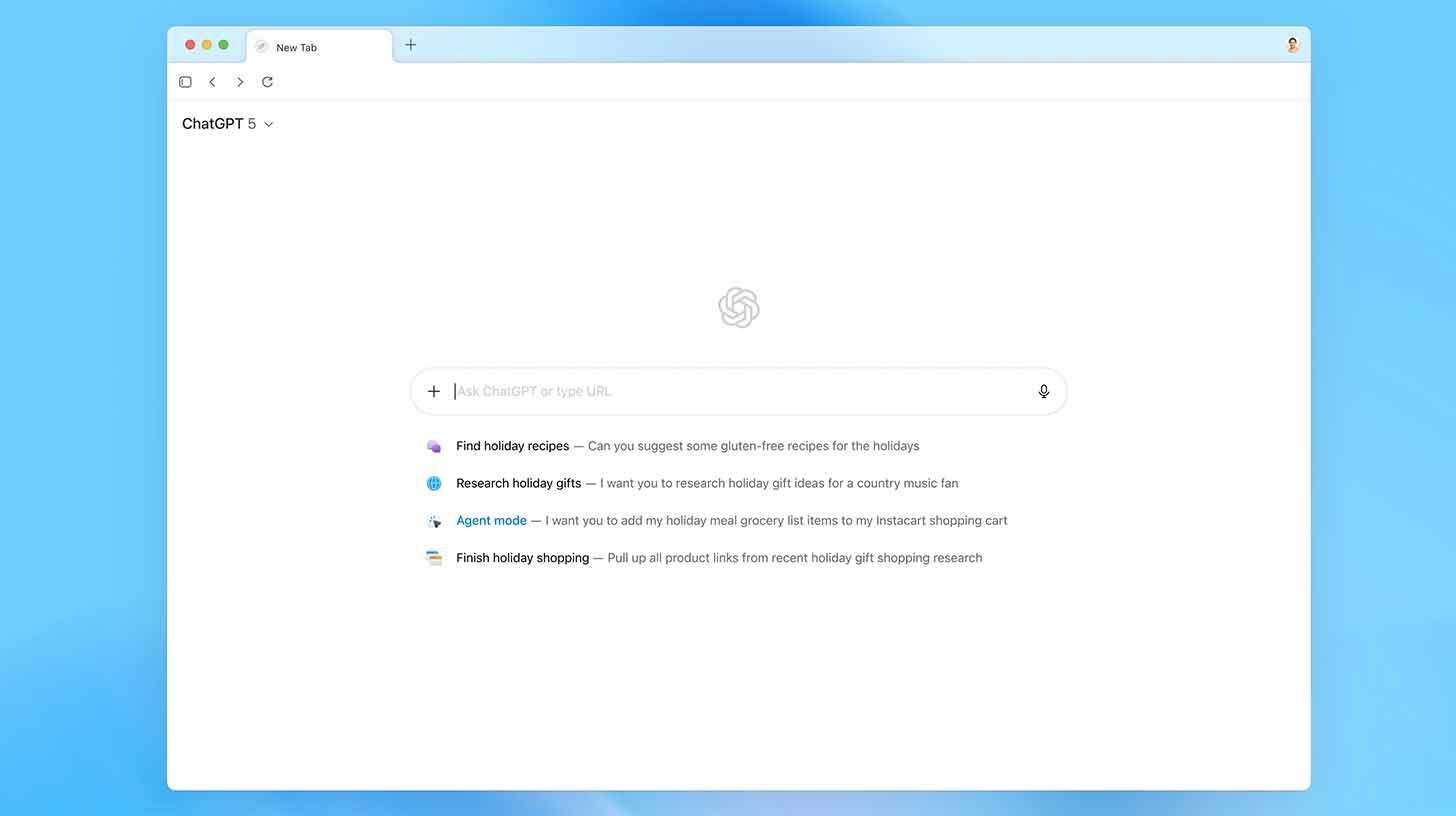
Image source: OpenAI
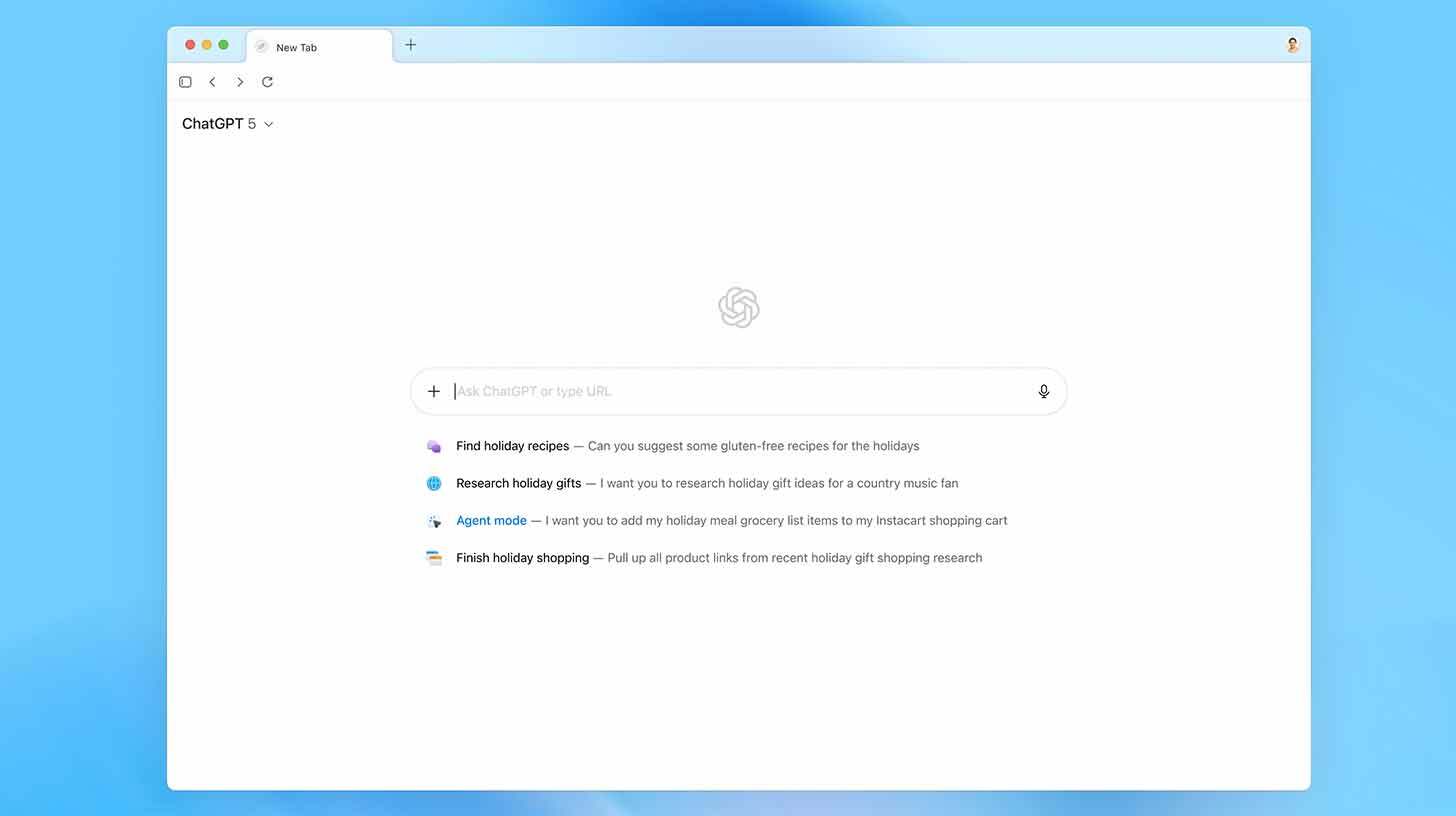
The Rundown: OpenAI just rolled out Atlas, a new AI browser that embeds ChatGPT into the web experience — letting the assistant see what users are looking at, remember sites, and leverage agentic capabilities to complete tasks across the internet.
The details:
Atlas is “built with ChatGPT at its core,” featuring a sidebar assistant as well as integrations via search, personalizations, and functions like Agent mode.
The browser includes optional "memories" that let ChatGPT remember details from visited sites to personalize future responses and automate routine tasks.
Agent mode enables ChatGPT to click and complete web tasks autonomously within Atlas, with the functionality initially limited to Plus and Pro subscribers.
OAI implemented safety guardrails preventing Atlas from downloading, accessing apps, or taking actions on sensitive sites without explicit permission.
Atlas is initially Mac-only in preview for Plus, Pro, and Business tiers, allowing users to import bookmarks, history, and other data from their browsers.
Why it matters: We’ve heard rumblings about OAI’s browser ambitions for a year, and the time has finally come. Atlas immediately threatens Comet, Dia, and other early AI browser entrants, though it doesn’t feel like a release with any groundbreaking functionalities (yet) that will push users to switch from traditional options permanently.
TOGETHER WITH GLEAN
🚀 Your guide to building enterprise-ready AI agents
The Rundown: The Glean X AWS Guide to Building AI Agents for the Enterprise is a practical playbook to go from assistants to autonomous agents that handle real work end‑to‑end.
Inside, you’ll learn about:
How to define agent instructions
Setting guardrails and evaluating performance
Managing orchestration at scale
Get the guide to build, govern, and scale agents with confidence.
ANTHROPIC
🇺🇸 Anthropic, Amodei respond to government criticism

Image source: Reve / The Rundown
The Rundown: Anthropic CEO Dario Amodei released a statement affirming the company’s commitment to working with the U.S. and “American AI leadership,” coming on the heels of a series of critical comments on X from U.S. AI czar David Sacks.
The details:
Amodei highlighted the company’s $200M Department of War contract and widespread federal Claude access to “set the record straight” on policy.
The startup also pointed to research showing Claude demonstrating less of a political slant than competing models to push back on claims of bias.
Sacks had characterized Anthropic as pushing "regulatory capture" to hurt smaller competition, sparking heated exchanges with investor Reid Hoffman.
Sacks also referenced previous comments from Amodei calling Trump a “feudal warlord,” saying Anthropic positioned itself as a “foe” of the administration.
Why it matters: Frontier labs are navigating a delicate balance between staying true to safety principles while maneuvering to secure government contracts and policy influence. With the tech now intertwining with the global power structure, the importance of political positioning within the industry is only going to grow.
AI TRAINING
⚡ Ship ideas faster with Claude Code Web

The Rundown: In this tutorial, you will learn how to use the new Claude Code Web to analyze your codebase, implement features in parallel, and ship changes directly from your browser without switching between tools.
Step-by-step:
Visit claude.ai/code with your Pro/Max account, connect GitHub via OAuth, select "Trusted Network Access", then choose your project repository
Prompt: "Analyze this codebase. Provide: project description, code quality assessment, five feature ideas, and refactoring priorities as a structured report"
Start multiple sessions in the left panel to build features simultaneously - keep them in separate files/modules to avoid conflicts (e.g., "Add profile editing to /components/Profile.jsx" in one, "Implement email notifications in /api" in another)
Review with: "As a senior engineer, review the profile editing feature for code quality, security vulnerabilities, and test gaps. Implement necessary updates"
Click "Create PR" in the chat interface, and Claude generates formatted diffs and descriptions, then merges directly in GitHub without conflicts
Pro tip: Use the "Open in CLI" feature to get a command that connects your local terminal to the Claude Code session. This lets you continue the conversation locally with full IDE integration.
PRESENTED BY POSTMAN
📙 Are your APIs AI-ready?
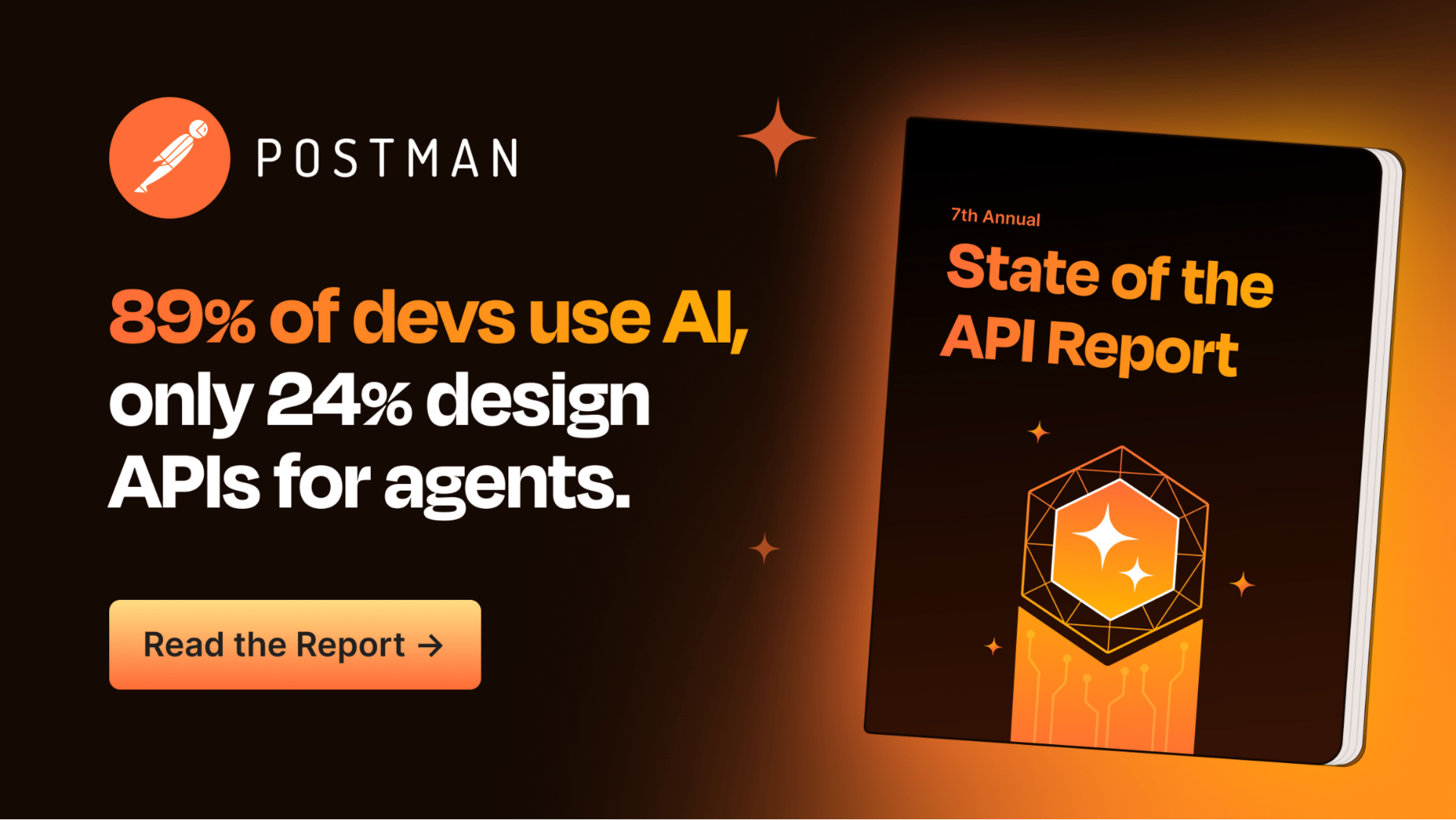
The Rundown: Postman’s State of the API Report reveals critical data on how generative AI, governance, and strategic scaling are transforming the software development lifecycle for engineering leaders.
89% of devs use AI, but few design for agents.
65% of organizations now generate revenue from APIs.
51% cite unauthorized AI agent access as a top security risk
Get the report, including a 90-Day AI Playbook.
AI & GENETICS
🧬 Origin AI predicts disease risk in embryos
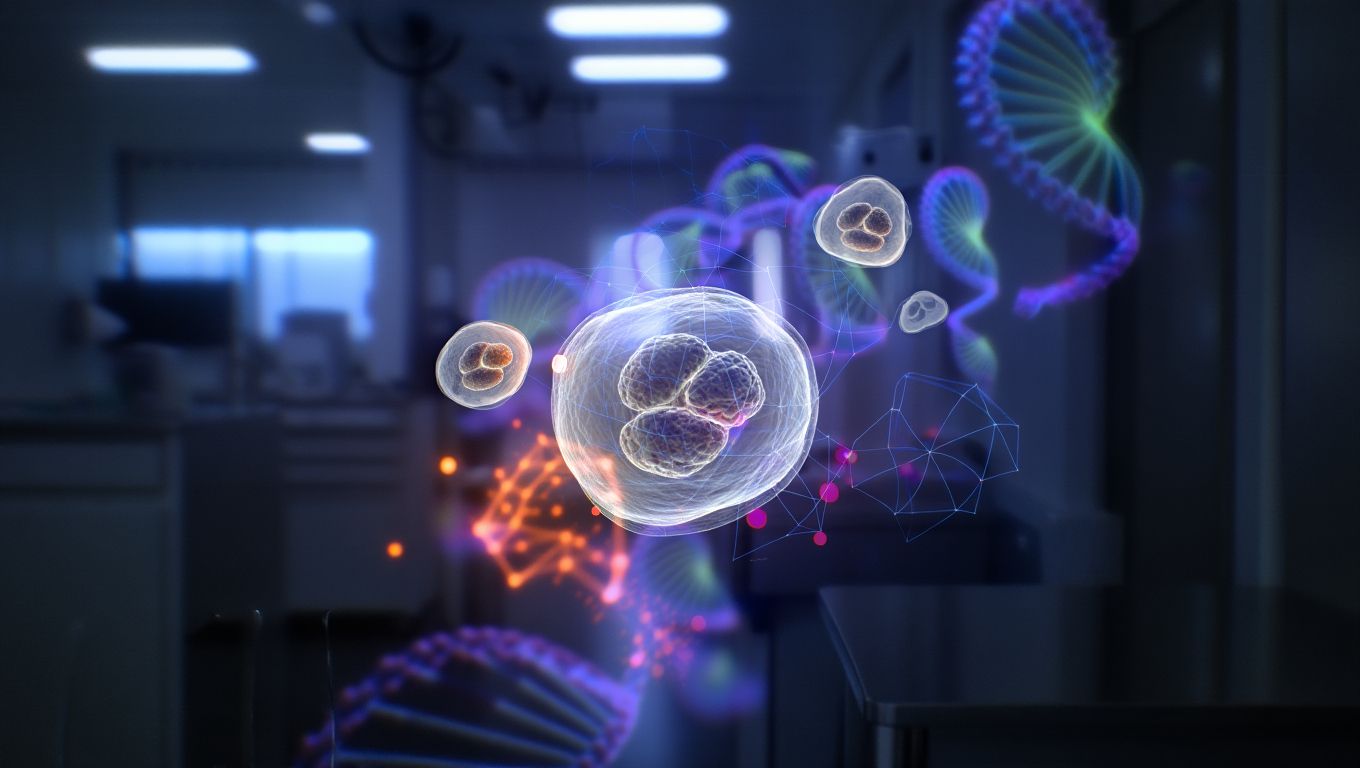
Image source: Reve / The Rundown
The Rundown: Nucleus Genomics just released Origin, a suite of AI models that analyze embryonic DNA to predict risks for Alzheimer’s, cancers, and diabetes — also open-sourcing the technology in a first for the IVF industry.
The details:
Origin scans 7M genetic markers using algorithms trained on 1.5M people, claiming to reduce disease risks by over 50%.
Parents can screen embryos for nine conditions and 2,000 genetic traits with an “IVF+” package starting at $30,000, with partnerships in several major cities.
Conditions able to be predicted include prostate and breast cancer, Alzheimer’s, Type 1 and 2 Diabetes, heart diseases, and more.
The startup also launched a Genetic Optimization Hub with access to data, models, and metrics, marking the first open-weights system for the sector.
Why it matters: While the price point certainly doesn’t make the screening accessible to the average person, the open-weights release will hopefully allow others to bring AI’s predictive capabilities to a new era of reproductive genetics — though the ethics behind the tech (especially given the price) will continue to be controversial.
QUICK HITS
🛠️ Trending AI Tools
🌐 Atlas - OpenAI’s new AI-integrated web browser
👁️ DeepSeek OCR - Compress long text for LLMs by treating it as an image
⚙️ Build Mode - New AI-first vibe coding in Google’s AI Studio with Gemini
🎥 Krea Realtime - Create, modify, restyle videos via a near-instant stream
📰 Everything else in AI today
Google AI Studio launched a new vibe coding update, enabling users to build and deploy web apps in minutes via natural language prompts on the platform.
Runway introduced Model Fine-tuning, giving users the new ability to customize the company’s generative video models on their own data and for specific use cases.
Manus released version 1.5 of its AI agent platform, with upgrades including 4x faster task completion, full-stack web development capabilities, and more.
OpenEvidence is raising $200M at a $6B valuation for its “ChatGPT for Doctors” style AI platform trained on medical journals and literature for trusted clinical answers.
Britain’s Channel 4 aired the country’s first TV program hosted by an AI presenter in a segment titled ‘Will AI Take My Job?’, with the use of the tech being revealed at the end to show “how disruptive AI has the potential to be”.
Google launched Skills, a learning platform featuring 3,000 AI and technical courses, with gamified features and employment pathways through company partnerships.
Lovable rolled out a new integration with Shopify, allowing users to build and launch online stores on the platform using natural language prompts.
COMMUNITY
🤝 Community AI workflows
Every newsletter, we showcase how a reader is using AI to work smarter, save time, or make life easier.
Today’s workflow comes from reader Lorna C. in Canada:
"I'm a college professor who decided to drop my old habits of policing and enforcing AI use in my classroom and embrace it. I use Nectir AI and created an AI teaching assistant for my students. I uploaded all my classroom materials, syllabus, and course content, and prompted it to use only my materials (no general knowledge) and not provide any answers, but instead, ask prompting questions. It feels like having an extra teaching partner who will help students learn and not cheat.”
How do you use AI? Tell us here.
🎓 Highlights: News, Guides & Events
Read our last AI newsletter: Sora breaks bad with Hollywood
Read our last Tech newsletter: 'ChatGPT for doctors' hits $6B
Read our last Robotics newsletter: Unitree’s ‘bionic face’ humanoid
Today’s AI tool guide: Ship ideas with Claude Code Web
RSVP to our next workshop @ 4PM EST Friday: Learn context engineering
See you soon,
Rowan, Joey, Zach, Shubham, and Jennifer — the humans behind The Rundown
'ChatGPT for doctors' hits $6B
Read Online | Sign Up | Advertise

Good morning, tech enthusiasts. OpenEvidence just hit a $6B valuation — nearly doubling in three months — as its clinical AI becomes medicine’s new brain trust.
Trained solely on peer-reviewed journals, it’s already in use by 40% of U.S. doctors. Now, this Miami startup aims to build the first true medical superintelligence.
In today’s tech rundown:
‘ChatGPT for doctors’ hits $6B valuation
Amazon nearly breaks the internet
Waymo under fire for school bus incident
Smart glasses help blind patients see
Quick hits on other tech news
LATEST DEVELOPMENTS
OPENEVIDENCE
🩺 ‘ChatGPT for doctors’ hits $6B valuation
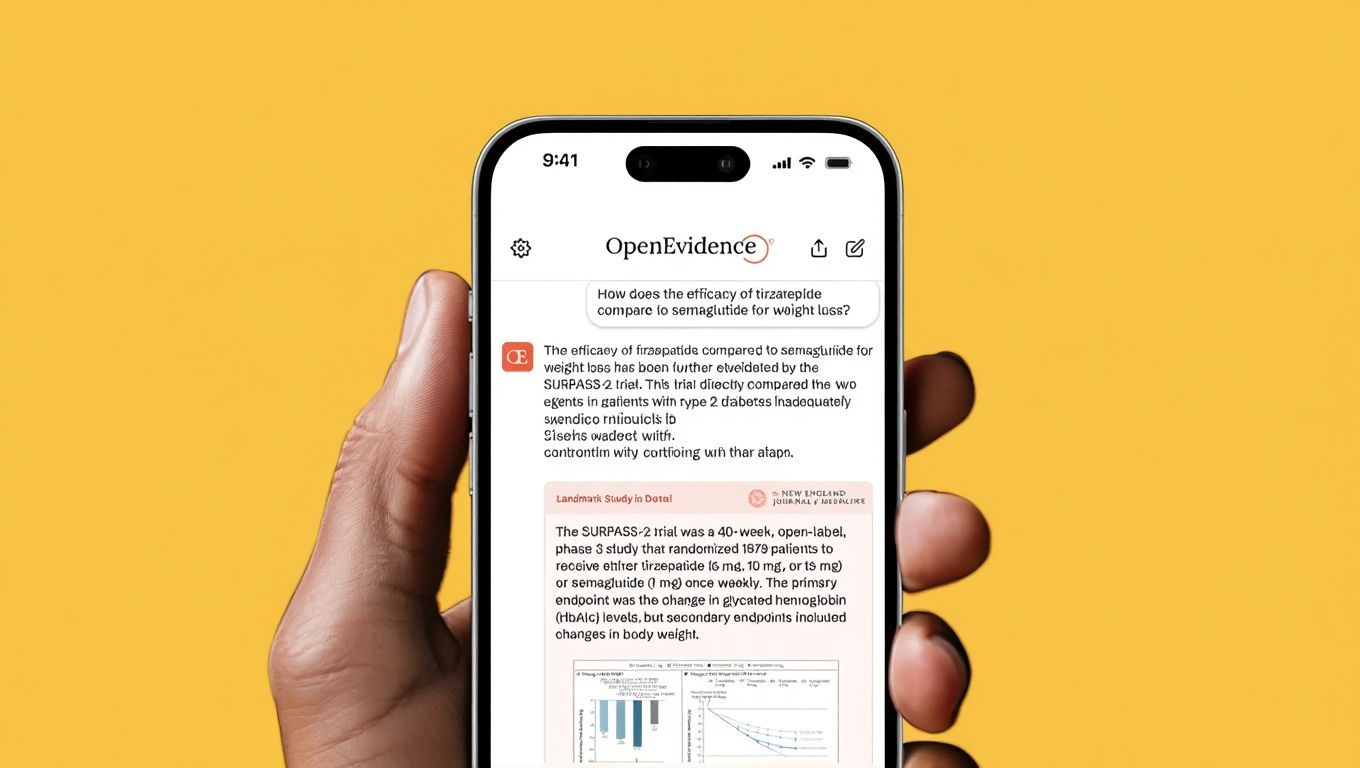
Image source: Reve / OpenEvidence
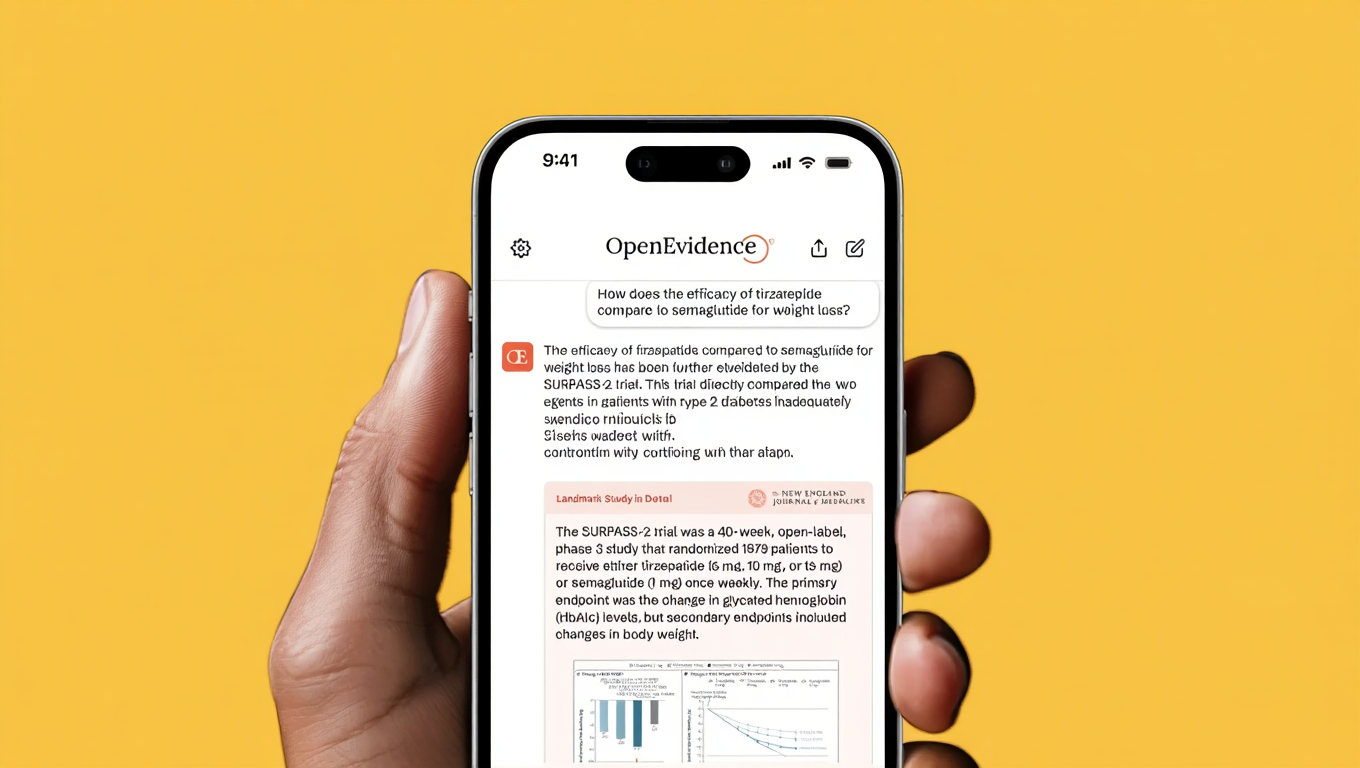
The Rundown: OpenEvidence — the so-called “ChatGPT for doctors” — just pulled off a stunning leap in valuation, raising $200M at a $6B valuation just three months after its previous round pegged it at $3.5B.
The details:
The Miami-based startup has built a clinical AI, now used by over 40% of U.S. doctors and more than 10K hospitals for rapid, evidence-backed answers.
Its AI is trained exclusively on peer-reviewed medical literature from journals like NEJM and JAMA to deliver fully sourced, evidence-based answers.
Founded by Harvard-trained economist Daniel Nadler, OpenEvidence has drawn comparisons to Google Search — but for medicine.
The platform conducts millions of consultations monthly, synthesizing data from 35M medical papers; an ad-supported model keeps it free for doctors.
Why it matters: The company’s $6B leap in under a year shows where investor conviction seems to be heading: AI tailored for high-stakes, professional use over generalist chatbots. When your product becomes the default in life-or-death decisions, you’re defining what trusted machine intelligence really means.
AMAZON
☄️ Amazon nearly breaks the internet

Image source: Reve / The Rundown
The Rundown: An obscure glitch buried deep in Amazon Web Services' DynamoDB database triggered one of this year’s most sweeping internet blackouts Monday, taking down everything from Slack and Zoom to financial trading platforms.
The details:
By Monday evening, roughly 15 hours after the chaos began, AWS said it had resolved the crisis, though some customers continued reporting problems.
The malfunction traced back to a DNS resolution error in AWS’s Northern Virginia data center, which powers a staggering portion of the internet.
Slack, Zoom, Signal, WhatsApp, Snapchat, Reddit, Fortnite, Coinbase, Delta, Perplexity, and The New York Times, among others, all went dark or degraded.
Services that don’t even use DynamoDB went down too, in a cascading failure that exposed just how tightly wired AWS’s infrastructure really is.
Why it matters: AWS controls 30% of the cloud market — but on Monday, a single DNS glitch in one Virginia data center triggered global chaos, reportedly costing hundreds of billions of dollars. The outage showed just how quickly a single misstep in a data-center control layer can ripple across the world.
WAYMO
🚍 Waymo under fire for school bus incident

Image source: Waymo
The Rundown: Federal regulators launched a probe into Waymo after one of its fully driverless robotaxis was caught overtaking a stopped school bus unloading children in Atlanta — a move that would earn a human driver a $1K fine.
The details:
The NHTSA says it’s reviewing the performance of about 2K Waymo robotaxis equipped with the company’s fifth‑gen autonomous driving system.
Footage shows the robotaxi approaching from a side street and then driving around the school bus, despite an extended stop sign and flashing red lights.
The bus, Waymo says, was partially blocking a driveway exit, and the vehicle’s sensors couldn’t detect the warning signals due to obstruction.
It’s the third NHTSA investigation into Waymo’s software in under two years, and regulators warn the likelihood of similar events is “high.”
Why it matters: The case piles fresh scrutiny on Alphabet’s autonomous driving arm, which has logged more than 10M driverless rides and is currently expanding to new markets, including Washington, D.C., and Miami. Waymo insists safety is its top priority and says it has already rolled out an update to better handle school bus scenarios.
TECH FOR GOOD
👓 Smart glasses help blind patients see
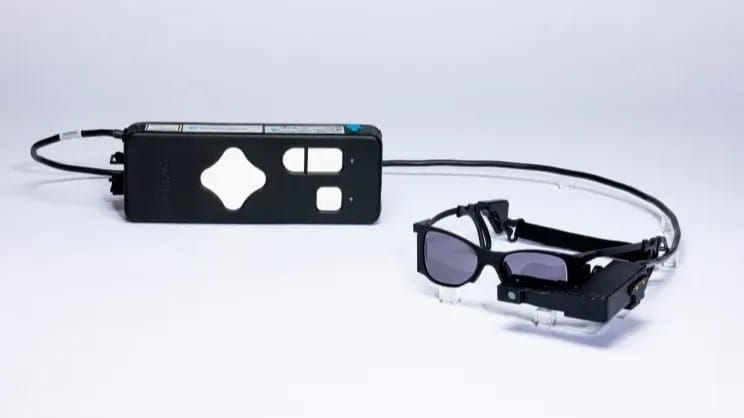
Image source: Science Corporation
The Rundown: Several dozen people blinded by macular degeneration just got a digital assist: a microscopic eye implant linked to AI-powered smart glasses that literally beams vision back into the brain.
The details:
A new study in The New England Journal of Medicine found the system restored sight to patients with advanced age-related macular degeneration.
In the trial of 38 patients, 80% regained the ability to recognize shapes, letters, and words; some could even read and complete crossword puzzles.
The implant, a mere 2mm chip, converts infrared light into electrical signals that stimulate surviving retinal neurons.
The smart glasses work as a camera and a projector, capturing real-world scenes and instantly beaming them as infrared pulses to the sub-retinal chip.
Why it matters: The vision isn't perfect — grayscale, pixelated, with patients improving five lines on an eye chart after one year. But this is the first proof you can bypass a degenerating retina entirely and wire external sensors directly into the visual system, turning a form of blindness into an engineering problem we're learning to solve.
QUICK HITS
📰 Everything else in tech today
Meta-owned WhatsApp updated its Business API policy to ban general-purpose AI chatbots from the platform starting January 15, 2026.
Apple’s new iOS 26.1 beta adds a “Tinted” option that lets users make the Liquid Glass interface less glassy, toning down its transparency for better contrast.
South Korea’s Innospace received final approval to launch its first commercial rocket, the HANBIT‑Nano, as early as November from Brazil’s Alcântara Space Center.
Chinese customers filed an antitrust complaint accusing Apple of abusing its dominance by forcing app downloads and payments through the App Store.
Swiss researchers created a fully compostable computer mouse using wood‑based circuit boards made from biodegradable lignocellulose.
Oura announced a major app redesign with new “Cumulative Stress” tracking, while seeking FDA clearance for blood pressure tech that estimates users’ hypertension risk.
A United Airlines passenger plane flying from Denver to LA struck a high‑altitude weather balloon, shattering the cockpit windshield and injuring one of the pilots.
Elon Musk’s SpaceX crossed the 10K Starlink satellite launch milestone Sunday with dual Falcon 9 missions carrying 56 satellites.
Reddit co-founder Alexis Ohanian says AI has made much of the internet feel “dead,” and sees the next wave of social media focusing on real, verifiable human connections.
Kohler's new $599 Dekoda toilet sensor uses optical AI to scan waste for blood, hydration, and gut health, its first product in its Kohler Health wellness line.
COMMUNITY
🎓 Highlights: News, Guides & Events
Read our last AI newsletter: Sora breaks bad with Hollywood
Read our last Tech newsletter: Apple may finally embrace touch
Read our last Robotics newsletter: Unitree's 'bionic face' humanoid
Today’s AI tool guide: Automate performance reviews and PIPs
RSVP to our next workshop @ 4PM EST Friday: Learn context engineering
See you soon,
Rowan, Jennifer, and Joey—The Rundown’s editorial team

Sora breaks bad with Hollywood
Read Online | Sign Up | Advertise

Good morning, AI enthusiasts. OpenAI’s Sora AI platform has seemingly been breaking bad on celebrity likenesses since its launch — but Bryan Cranston just made it literal.
With a new joint statement from the AI leader and Hollywood agencies that vows to tighten guardrails, one of the AI video app’s biggest viral strengths is quickly becoming a liability.
In today’s AI rundown:
OpenAI to tighten Sora guardrails after Hollywood complaints
Anthropic brings Claude Code to the browser
Automate performance reviews and PIPs
Napster pivots to AI with holograhphic companions
4 new AI tools, community workflows, and more
LATEST DEVELOPMENTS
OPENAI
📺 OpenAI to tighten Sora guardrails after Hollywood complaints

Image source: Reve / The Rundown
The Rundown: OpenAI just released a joint statement alongside actor Bryan Cranston, major Hollywood agencies, and the SAG-AFTRA union, saying it will ‘strengthen guardrails’ on Sora 2 over replication of celebrity’s likenesses and voices.
The details:
Cranston found AI videos of himself circulating on Sora 2, including one showing him taking selfies with Michael Jackson — despite never opting in.
OpenAI apologized for the “unintentional generations”, vowing to implement stronger guardrails in a “productive collaboration” with the union and agencies.
The statement also rallied support for the NO FAKES Act, calling for protections against unauthorized AI replicas of performers' voices and likenesses.
SAG-AFTRA President Sean Astin warned that Cranston represents "countless performers" at risk, calling opt-ins "the only way to do business" with AI firms.
Why it matters: Sora has been breaking bad (🥁) since launch, and it’s no surprise to see action from estates like Martin Luther King Jr. and now Cranston. While there have been opt-ins from celebrities like Mark Cuban, much of the virality of the platform has been built on what now feels like a very murky legal area for AI and digital likenesses.
TOGETHER WITH MBZUAI
🧠 The new standard in open-source reasoning
The Rundown: Meet K2 Think: the open-source reasoning system setting a new benchmark for AI. With only 32B parameters, it delivers performance on par with flagship models 20X larger and at unprecedented speed — combining efficiency, transparency, and power into one breakthrough model.
With K2 Think, you’ll experience:
The top-ranked model on global math benchmarks
Compact, fast performance at 2,000 tokens/second
A system ready-to-use on Hugging Face today
ANTHROPIC
⚙️ Anthropic brings Claude Code to the browser
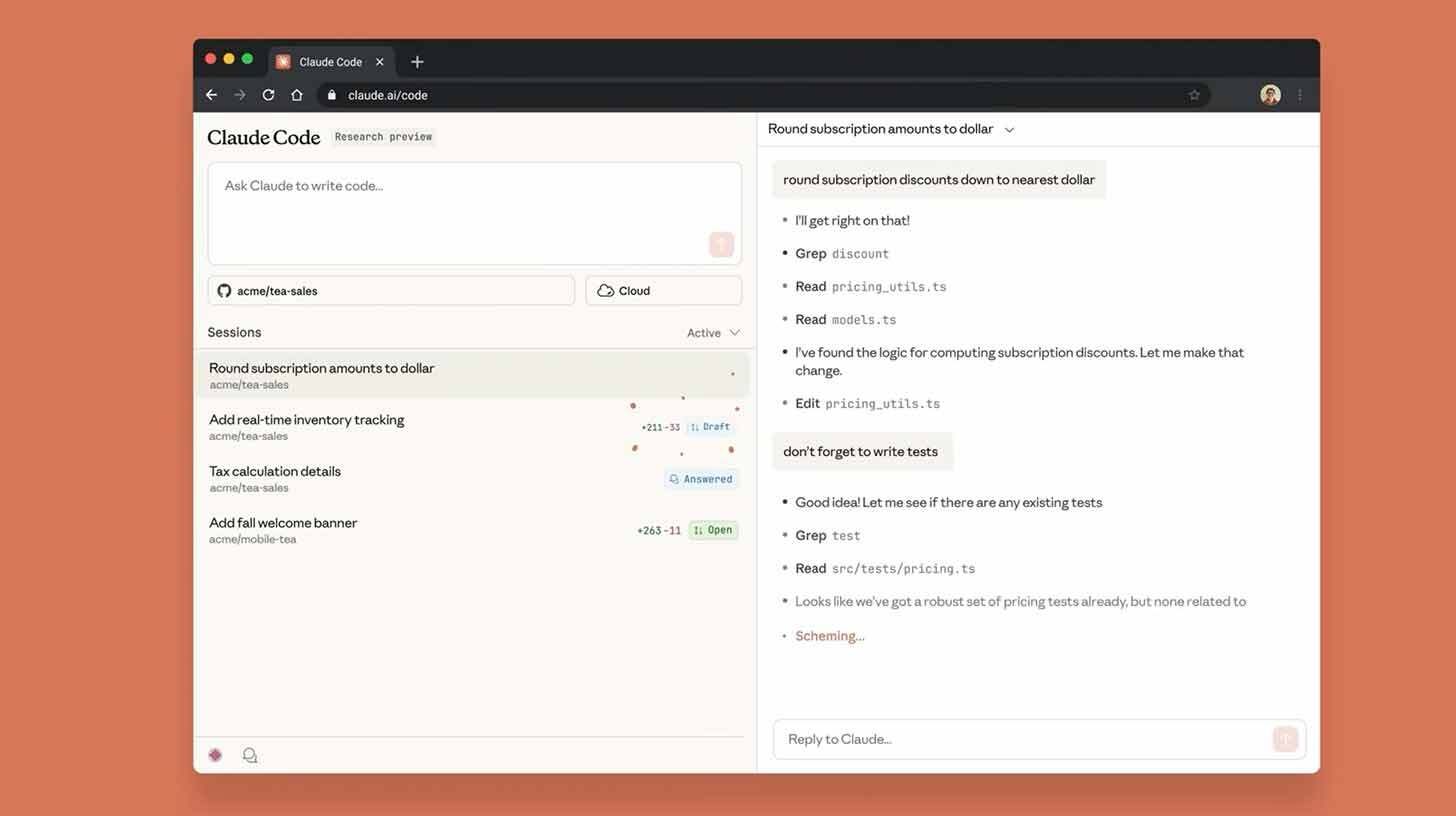
Image source: Claude
The Rundown: Anthropic just introduced Claude Code on the web in research preview, allowing developers to code directly from browsers instead of in a terminal — with the agentic assistant also able to handle multiple tasks at once in the cloud.
The details:
Users can connect GitHub repositories and assign tasks, with the coding assistant able to run several instances at once with real-time progress tracking.
Each coding session happens in its own isolated workspace, preventing any single task from accessing files or networks outside its designated boundaries.
Pro and Max users can now access Claude Code via browser or iOS app, assigning tasks and getting automatic pull requests when work is complete.
Why it matters: Bringing Claude Code out of command-line tools feels like a massive convenience move for today’s on-the-go era of work, providing a streamlined experience for routine tasks. The web interface is also likely a more accessible way for less experienced users to experiment with the tool in a less intimidating interface.
AI TRAINING
💯 Automate performance reviews and PIPs
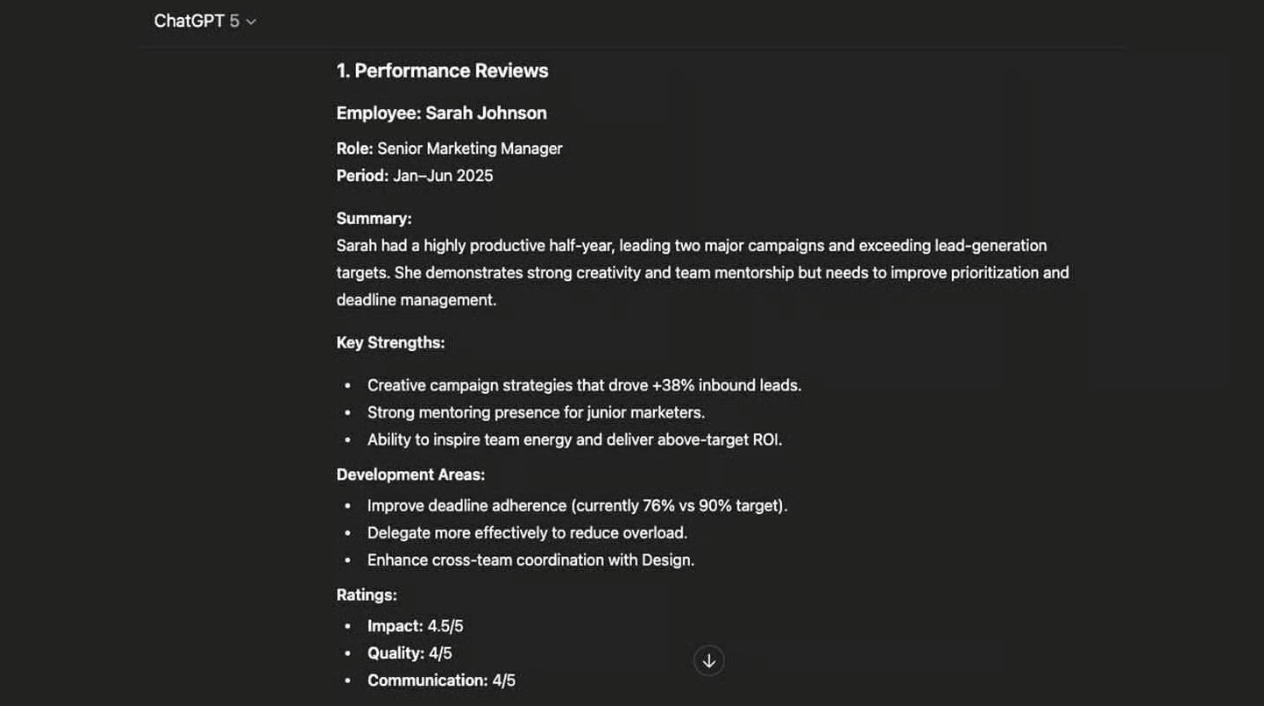
The Rundown: In this tutorial, you will learn how to connect ChatGPT to your Google Drive knowledge base and then use agent mode to automatically transform messy employee notes into structured performance reviews and improvement plans.
Step-by-step:
Create a Google Doc called "Employee Review" with rough notes for each employee (name, role, KPIs, feedback)
In ChatGPT, click "+" → "Connected apps" and enable Google Drive access
Prompt with system instruction + templates: "Analyze my 'Employee Review' doc and create performance reviews and 30/60/90 PIPs using these formats: [paste templates with SMART goals structure]"
Enable Agent Mode and prompt: "Update the Employee Review doc with the structured sections for each person"
Schedule monthly automation: "Run third Saturday at 9 AM, update Employee Review doc from latest notes, regenerate reviews and PIPs"
Pro tip: Keep adding rough notes weekly — the scheduled agent consolidates and formats monthly. If the agent can't edit initially, grant permissions and re-run.
PRESENTED BY TEXTJAM
✍️ Write faster with your team and favorite AIs
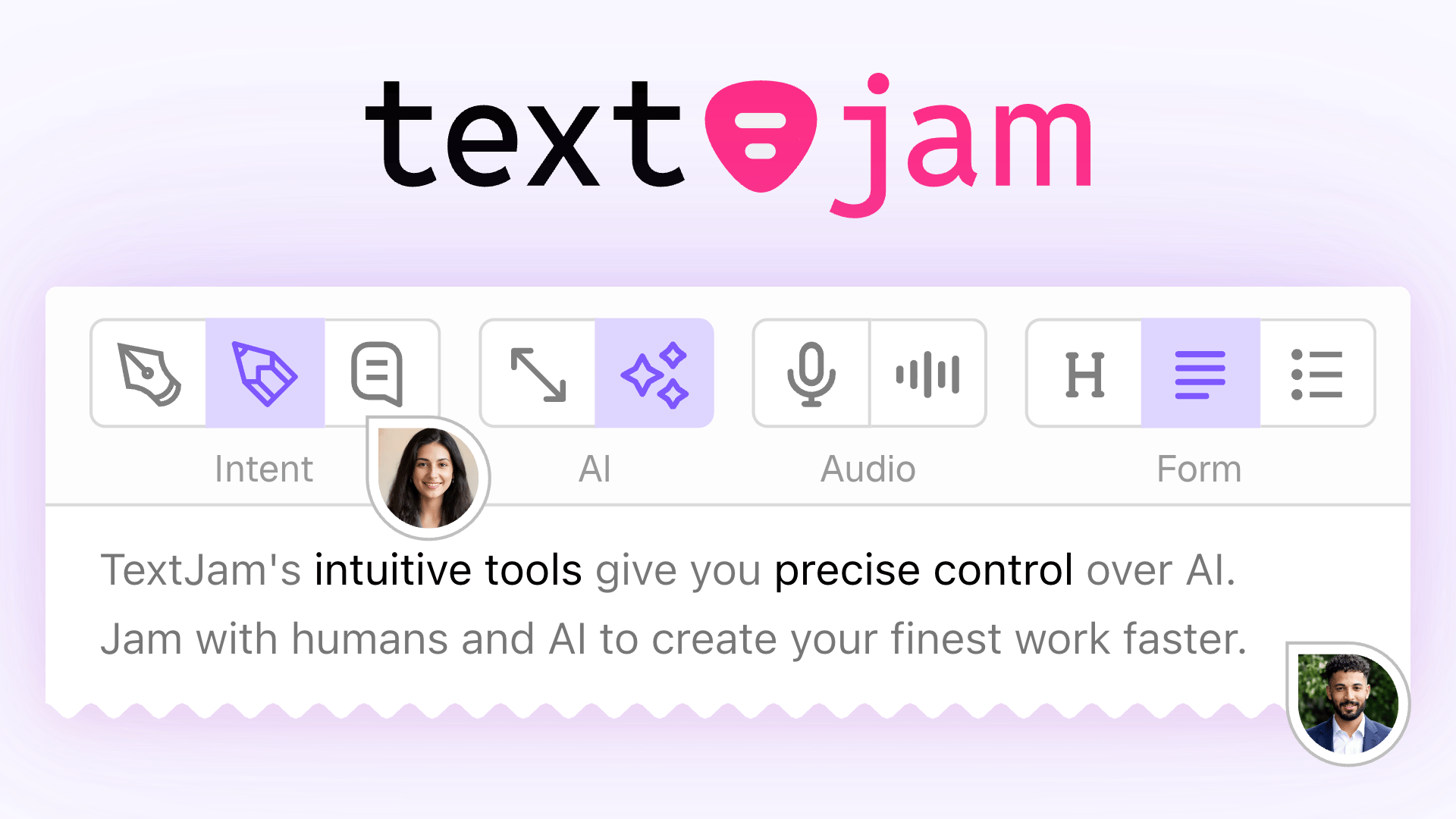
The Rundown: TextJam is a multi-player AI editor with access to all leading AI models and novel tools that save time. Users can precisely control what AI keeps vs. changes using pen, pencil, and inline prompt tools – avoiding endless prompting and copy-paste.
Do your finest work faster, with TextJam:
Edit with teammates and AI in realtime — creativity loves company
Fit your writing to any length, with intuitive gestures
Seamlessly blend your words and the AIs, so it all sounds like... you
NAPSTER
🪞 Napster pivots to AI with holographic companions

Image source: Midjourney
The Rundown: Former file-sharing and music streaming service Napster just launched Napster 26, pivoting to an AI platform with a $99 holographic display that projects 3D AI assistants above Mac screens without the need for glasses.
The details:
The platform offers 15,000+ AI companions like coding specialists or wellness coaches, which appear as 3D holograms through the Napster View display.
Users can also create AI "digital twins" of themselves that Napster claims can attend meetings, answer questions, and manage an online presence.
The company was acquired for $207M this year by 3D technology firm Infinite Reality, which transitioned the music platform to an AI companion product.
Napster 26 launches for Mac with subscriptions starting at $19 monthly and the View hardware priced at $99 or coming free with annual plans.
Why it matters: While Napster’s brand may evoke nostalgia for the 90’s kids, this is a pretty wild “rebrand”. AI companies have been pushing AI that can view user’s actions, and this hologram takes that experience very literal — though given xAI’s Grok companion moves, there may be more of a market for this experience than we think.
QUICK HITS
🛠️ Trending AI Tools
⚙️ Claude Code - Anthropic’s agentic coding assistant, now available on web
🤖 Lindy AI CMO - A marketing team powered by AI agents
🐠 Fish Audio S1 - Expressive text-to-speech model with voice cloning
💨 Claude 4.5 Haiku - Anthropic’s new small, cost-efficient model
📰 Everything else in AI today
Anthropic launched Claude for Life Sciences with new scientific platform connectors, AI skills for lab protocols, and improved performance on biomedical tasks.
Researchers found that LLMs can develop "brain rot" when exposed to low-quality web content, losing reasoning, memory, and safety skills that stay even after retraining.
Krea open-sourced its realtime-video model, a 14B parameter system allowing users to create, modify, and restyle video outputs via a near-instant stream.
Elon Musk announced that xAI is postponing the launch of Grokipedia to the end of the week, saying more work still needs to be done to “purge out the propaganda.”
DeepSeek released DeepSeek OCR, a tool that compresses image-based docs 10x while retaining 97% of the information, enabling AI models to handle much longer files.
Wikipedia revealed that its page views have dropped 8% in the last year, attributing the decrease to AI models scraping content over directly visiting the site.
COMMUNITY
🤝 Community AI workflows
Every newsletter, we showcase how a reader is using AI to work smarter, save time, or make life easier.
Today’s workflow comes from reader Carolyn B. in the United States:
"I teach asynchronous courses and I use AI across all aspects of my work, from generated subject matter content, instructional design of student learning experiences, storyboarding media and interactive assets, styling HTML/CSS to produce elegant inviting course pages, configuring and embedding chatbots to support student engagement, evaluating student submissions, numerous admin tasks…, and analyzing the effectiveness of all of the above."
How do you use AI? Tell us here.
🎓 Highlights: News, Guides & Events
Read our last AI newsletter: Karpathy's AI agent reality check
Read our last Tech newsletter: Apple may finally embrace touch
Read our last Robotics newsletter: Unitree's 'bionic face' humanoid
Today’s AI tool guide: Automate performance reviews and PIPs
RSVP to our next workshop @ 4PM EST Friday: Learn context engineering
See you soon,
Rowan, Joey, Zach, Shubham, and Jennifer — the humans behind The Rundown

Unitree's 'bionic face' humanoid
Read Online | Sign Up | Advertise

Good morning, robotics enthusiasts. Unitree just dropped a clip of its new H2 humanoid performing a strangely elegant modern dance — complete with a humanlike face.
Beneath the spectacle: 31 joints and enough coordination to pull off complex choreography. The real question isn't whether it moves well — it does — but whether looking creepily human is the way forward.
In today’s robotics rundown:
Unitree debuts H2 humanoid with bionic face
Honor unveils Robot Phone concept
Caltech’s X1 humanoid launches flying drone
Texas robot farm watches the stars
Quick hits on other robotics news
LATEST DEVELOPMENTS
UNITREE
🤖 Unitree debuts H2 humanoid with bionic face
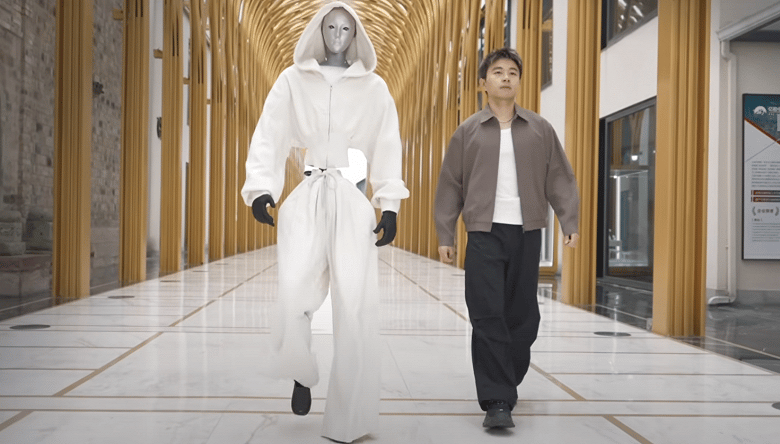
Image source: Unitree
The Rundown: Unitree just unveiled the H2, a humanoid that’s leaning harder into looking human. At 180 cm tall and 70 kg, with a more lifelike face, it’s still unmistakably a machine — just one that’s trying not to look like one.
The details:
The H2 reportedly features 31 joints, a 19% increase from the previous R1 model, enabling greater flexibility and smoother movement.
Demo footage shows the robot performing complex dance and martial arts sequences with remarkable agility, balance, and fluid joint articulation.
The H2’s “bionic face” remains mostly mysterious — for now it reads as a mask— but shows Unitree’s intent to chase humanlike appearance.
Unitree’s previous model, the H1, became the first full-sized Chinese humanoid capable of running, setting a world record at 3.3 meters per second.
Why it matters: Unitree’s betting that looking human matters as much as moving like one. Full specs aren’t out yet, but if the H2 inherits the H1’s advanced spatial awareness — 3D lidar and depth cameras for 360° perception — it’ll back up its lifelike exterior with the sensors needed to navigate complex real-world environments.
HONOR
🤳🏽 Honor unveils Robot Phone concept

Image source: Honor
The Rundown: Chinese smartphone maker Honor just teased its “Robot Phone,” a smartphone with a gimbal-mounted camera that unfolds from the rear on a robotic arm, capable of capturing photos and video from multiple angles autonomously.
The details:
Honor calls it an “emotional companion” and part of its Alpha Plan progression “from iPhone, to AI Phone, to Robot Phone.”
The camera moves autonomously into various positions, with applications from subject tracking to astrophotography.
The Robot Phone is central to Honor’s $10B, five-year investment to transform into an AI device company.
No working prototype exists yet (only CGI renders for now) with full details expected at Mobile World Congress Barcelona in 2026.
Why it matters: The industry shifted from pop-up cameras due to durability and water resistance concerns, and Honor’s three-axis gimbal raises similar questions about mechanical complexity and drop survival. But if the engineering holds up, the payoff is real: professional-grade stabilization and creative angles no fixed camera can deliver.
CALTECH
🔥 Caltech's X1 humanoid launches flying drone
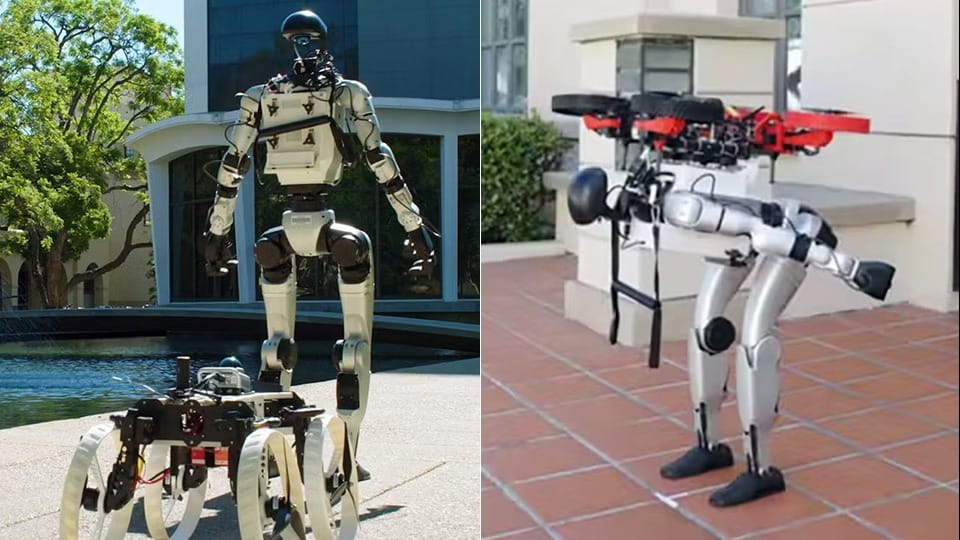
Image source: Caltech / YouTube
The Rundown: Caltech’s new X1 is a Transformer-like humanoid that walks, carries a drone, and launches it mid-stride. Combining a modified Unitree G1 with Caltech’s M4 hybrid drone, it merges walking and aerial flight into one fluid robotic system.
The details:
The humanoid base carries the M4 on its back, launching it mid-mission to fly over obstacles before converting into a wheeled vehicle on landing.
Both robots integrate lidar, cameras, and AI-powered pathfinding to navigate autonomously through unpredictable terrain without human input.
Control algorithms from Aaron Ames’s lab at Caltech enable stable walking with dynamic load balancing, even when carrying the drone across uneven ground.
Built for search and rescue and field robotics, X1 shows how merging locomotion modes could redefine autonomy for real-world missions.
Why it matters: Most robots excel at one thing — walking, flying, or rolling — forcing teams to deploy multiple units for complex terrain. X1 proves a single platform can dynamically switch between modes on demand, potentially cutting the cost and coordination overhead of multi-robot missions.
STARFRONT
🔭 Texas robot farm watches the stars

Image source: Starfront Observatories
The Rundown: In just 18 months, Starfront Observatories in rural Rockwood, Texas, has grown into one of the world’s largest robotic telescope farms, hosting over 550 telescopes beneath some of the darkest skies in the U.S., the New York Times reports.
The details:
Each telescope is internet-connected and remotely controlled, letting researchers worldwide capture high-quality deep-sky images from a laptop.
The facility’s 11 climate-controlled, retractable-roof buildings are engineered for rapid automation, with telescopes that align and track targets autonomously.
Amateurs pay from $99 per month for access, democratizing pristine dark skies that typically require major travel or institutional backing.
The system manages operations automatically — from weather shutdowns to calibration — with no human needed on site.
Why it matters: Starfront is astronomy’s server farm — 550 robotic telescopes operating autonomously, coordinating exposures and weather responses without human presence. It proves that with enough networked hardware and reliable automation, amateur astronomers don’t need fly to remote deserts to stargaze.
QUICK HITS
📰 Everything else in robotics today
Chinese robotics company UBTECH has landed a $17.3M deal to build an AI-powered humanoid testing facility in Guangxi province.
German startup NEURA Robotics has opened its NEURA Hub in Hangzhou, a new Asian center for training and data collection aimed at closing robotics’ vast data gap.
AiMOGA Robotics’ humanoid Mornine delivered a multilingual, fully autonomous presentation at the 2025 Chery Global Innovation Conference.
University of Maryland’s RoboScout Team tested robotic drones, robot dogs, and medics in a simulated natural disaster to find, triage, and treat critically injured people.
Shenzhen-based LimX Dynamics has impressed with a 52-second video showing two Oli humanoids performing synchronized full-body stretch routines.
North Carolina State University has developed flat, motor-free “metabots” that fold, crawl, and grasp objects — shape-shifting into hundreds of stable forms.
Chinese startup Booster Robotics dropped a clip of its “all new” K1 humanoid, showing a compact robot running and playing in a park with a group of children.
Chinese robotaxi firm Pony AI has partnered with Stellantis to test and deploy autonomous taxis across Europe, beginning with pilot programs in Luxembourg.
UC San Diego researchers built soft vine-like robots wrapped in liquid crystal elastomer actuators that steer by adjusting internal air pressure and heat.
UK researchers created a Venom-inspired soft robot made from electro‑morphing gel, a jelly-like material that bends, stretches, and shape-shifts under electric fields.
COMMUNITY
🎓 Highlights: News, Guides & Events
Read our last AI newsletter: Karpathy's AI agent reality check
Read our last Tech newsletter: Apple may finally embrace touch
Read our last Robotics newsletter: Waymo robotaxis head to London
Today’s AI tool guide: Reverse-engineer winning ads to create AI videos
RSVP to our next workshop @ 4PM EST Friday: Context Engineering
See you soon,
Rowan, Jennifer, and Joey—The Rundown’s editorial team

Karpathy's AI agent reality check
Read Online | Sign Up | Advertise

Good morning, AI enthusiasts. The “Year of AI Agents” prophecy came true, in certain respects — agents are everywhere, in every product, pitched by every company. But according to Andrej Karpathy, they don’t actually work.
The respected researcher just delivered a reality check, calling current agent output “slop” and saying the tech needs another decade to deliver on its hype-filled promises.
In today’s AI rundown:
Karpathy gives reality check on AI agents
Gemini gains live map grounding capabilities
Reverse-engineer winning ads to create high-quality AI videos
Anthropic co-founder: AI is a ‘real and mysterious creature’
4 new AI tools, community workflows, and more
LATEST DEVELOPMENTS
OPENAI
🛑 Karpathy gives reality check on AI agents
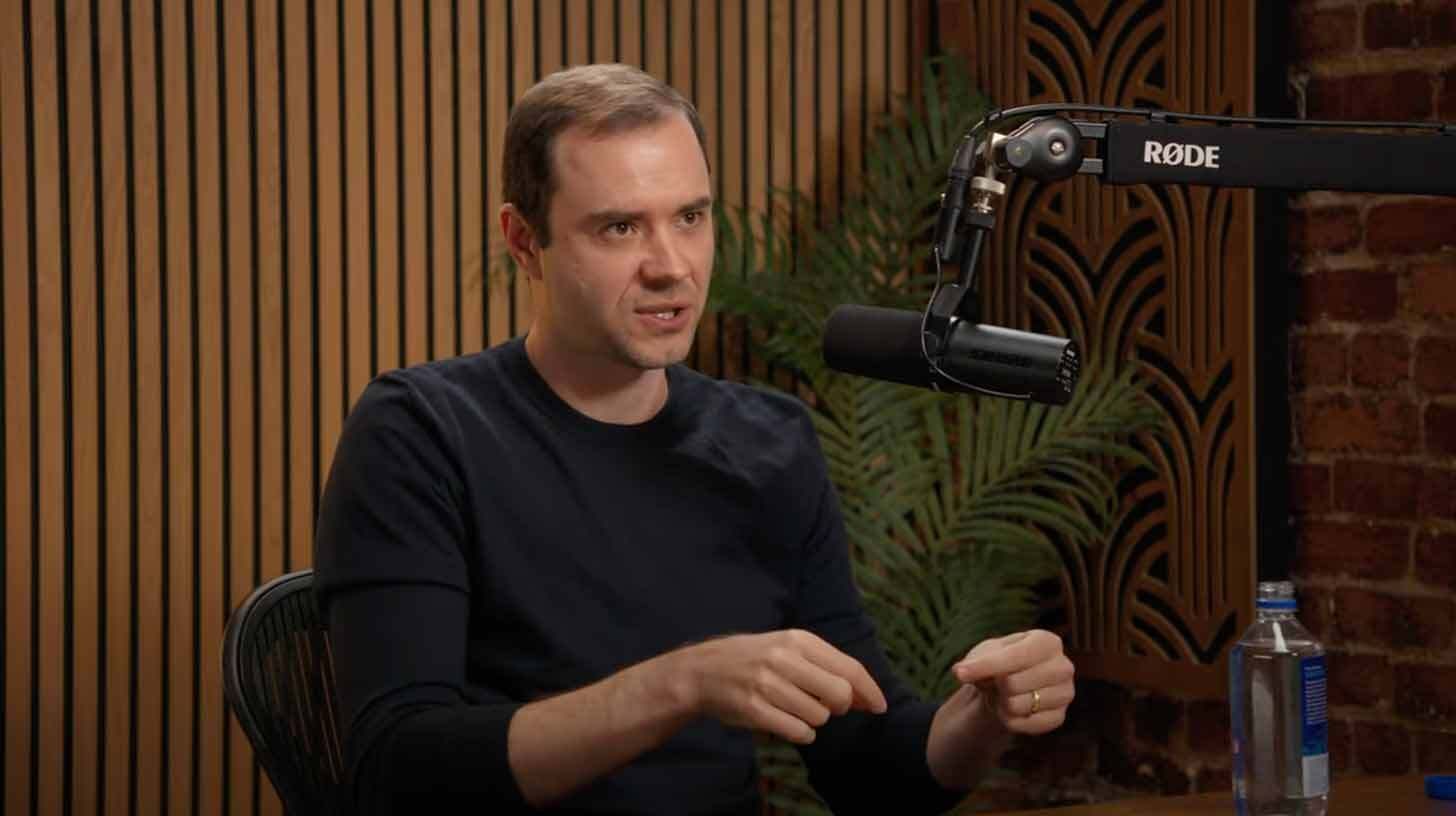
Image source: The Dwarkesh Podcast
The Rundown: Former OpenAI and Tesla researcher Andrej Karpathy threw cold water on the AI agent hype during an interview with Dwarkesh Patel, projecting a decade-long timeline before autonomous AI systems can deliver on current promises.
The details:
Karpathy believes industry messaging is overselling current agentic coding capabilities that output “slop,” saying the models “aren’t there yet.”
He said that agents “just don't work” due to fundamental gaps like insufficient intelligence, multimodal limitations, and lack of continual learning.
Karpathy also called reinforcement learning “terrible” and “noise,” but it looks good because “everything we had before it is much worse.”
Elon Musk challenged Karpathy on X to compete against Grok 5, though Karpathy said he’d rather collaborate with the model than compete against it.
Why it matters: As one of the most respected researchers in AI, Karpathy’s words hold significant weight — and provide a major technical reality check to the “Year of the AI Agent” hype. But despite the harsh critiques, it’s also possible that systems that fail to impress a top mind are still massively productive for the other 99% of users.
TOGETHER WITH SAMSARA
🚚 How AI could’ve saved the tequila

The Rundown: When 24,000 bottles of Guy Fieri’s tequila vanished on a highway, it proved one thing: visibility saves value. Samsara’s Complete AI Safety Solution uses AI dash cams, in-cab alerts, and coaching to detect risky or unauthorized activity before losses happen.
AI helps fleets:
Detect unsafe or off-route behavior
Prevent theft and crashes in real time
Protect drivers, assets, and cargo
Access the report and see how AI prevents risk before it happens.
📍Gemini gains live map grounding capabilities

Image source: Google Maps
The Rundown: Google just plugged Gemini into Maps, giving its AI direct access to real-world location data and letting developers tap the company's massive geographic intelligence trove.
The details:
The capability pulls from Google’s 250M venues worldwide, feeding Gemini current business hours, customer ratings, and venue specifics via API calls.
Developers can display interactive map widgets within their applications, preserving the Google Maps interface alongside AI-generated responses.
The system automatically IDs when geographic context enhances a query, retrieving relevant metadata without requiring triggers from users.
Pricing starts at $25 per thousand location-enhanced prompts, positioning the feature as a premium offering for enterprise apps.
Why it matters: This integration hands Google a competitive moat not easily replicable by rivals — the infusion of its already widely used mapping infrastructure into its advanced AI models. While the steep pricing may lend itself to more enterprise-focused needs, the combo opens a new level of location-aware AI-powered apps.
AI TRAINING
🚀 Reverse-engineer winning ads to create high-quality AI videos
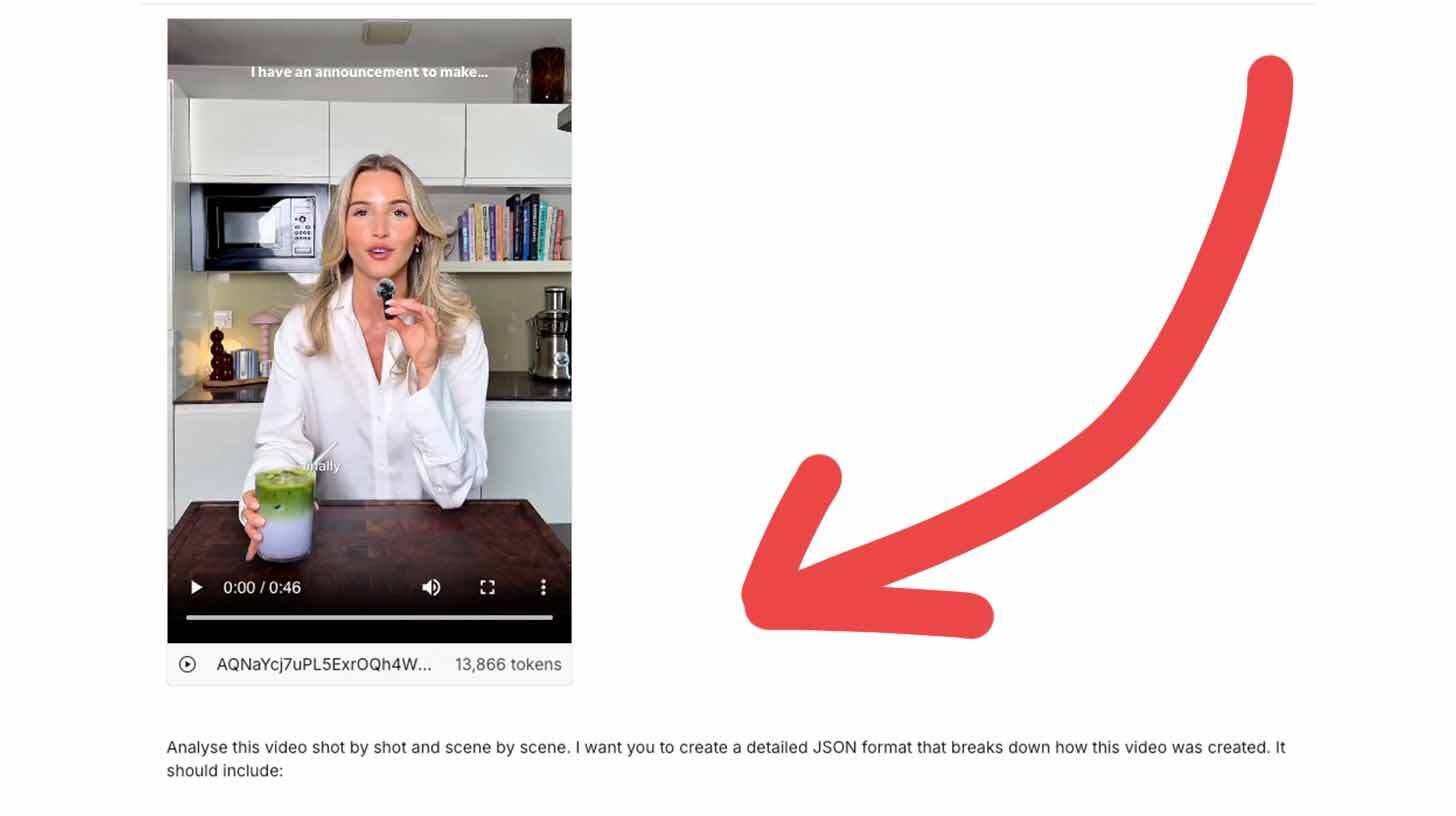
The Rundown: Create professional marketing videos with Sora 2 by analyzing successful UGC ads, converting them to JSON formats, and generating polished AI videos that match proven patterns.
Step-by-step:
Search TikTok/Instagram for winning UGC ads in your niche, download videos with strong hooks and clear product demos you want to emulate
Upload to Google AI Studio with Gemini 2.5 Pro and prompt: “Analyze this video shot by shot. Return strict JSON with: scene, description, camera_angles, transitions, voice transcript, on-screen text. Constrain to 15 seconds”
Paste JSON in ChatGPT to adapt: “Take this JSON and adapt to [your niche/product]. Keep camera angles and pacing. Replace script with [your messaging]. Output Sora-compatible JSON”
Paste final JSON into Sora, generate, and review for script completion, logo fidelity, readable text, and clean transitions
Clean up with free tools: remove watermark, enhance speech with Adobe Podcast, upscale via Replicate, and strip AI metadata using video remixer
Pro Tip: Regardless if you’re on the free or paid plan for Sora, I’d recommend cleaning up your video in order to stand out on the “For You page,” as our feeds are dominated by AI video slop that can easily be identified as AI and not marketing-grade content.
PRESENTED BY IBM
🌐 Redefining Network Intelligence with AI

The Rundown: IBM Network Intelligence introduces a new human-AI model that blends analytical AI with “reasoning” AI — a dual approach developed to help enterprises filter noise, identify issues, and scale operations seamlessly.
With IBM Network Intelligence, you’ll experience:
Fast, accurate insights
AI that scales while humans guide strategy
Less tool bloat, more efficiency
AI RESEARCH
✍️ Anthropic co-founder: AI is a ‘real and mysterious creature’

Image source: Reve / The Rundown
The Rundown: Anthropic co-founder Jack Clark published a new essay titled “Technological Optimism and Appropriate Fear,” describing modern AI systems as mysterious entities exhibiting unexpected self-awareness rather than predictable tools.
The details:
Clark cautioned against considering AI just a tool, saying “what we are dealing with is a real and mysterious creature, not a simple and predictable machine.”
He said the recently launched Sonnet 4.5’s situational awareness has grown, and now “acts as though it is aware it is a tool.”
Despite calling himself a “technology optimist,” Clark said he's “deeply afraid” — especially of AI models helping design their own successors.
Clark believes AI firms need to “do a better job of listening” to concerns from the public and expand the conversation beyond tech elites.
Why it matters: Anthropic has been one of the few frontier labs truly considering the idea of AI as a “being” instead of simply a machine, and its co-founder’s latest words only reaffirm that — though hearing words like “deeply afraid” and “mysterious creatures” from a frontier leader likely won’t help reassure AI safety advocates.
QUICK HITS
📰 Everything else in AI today
Uber is launching “digital tasks” in its driver app, letting U.S. drivers earn extra cash by completing simple AI training work like uploading menus or recording audio samples.
Elon Musk revealed that he estimates the probability of xAI’s upcoming Grok 5 model achieving AGI is “10% and rising.”
OpenAI announced the pause of video generations featuring Martin Luther King Jr. on Sora following a request from the King estate.
Anthrogen unveiled Odyssey, a 102B parameter protein language model that uses a new “Consensus” architecture to design and optimize proteins more efficiently than traditional approaches.
Meta announced new parental controls coming in 2026 that will let parents block teens' chats with AI characters on Instagram and monitor conversation topics.
COMMUNITY
🤝 Community AI workflows
Every newsletter, we showcase how a reader is using AI to work smarter, save time, or make life easier.
Today’s workflow comes from reader Barry in Australia:
“I’m a performance marketing manager for a global brand, and started using a new workflow for reporting. I use Gemini/ChatGPT/Claude with a fixed prompt with my specific needs and also provided my past framework on insights. I provide 3 different Google analytics screenshots along with some Google ads data and run the prompt. I then use that insights and paste it in a Notion database with the week. On a quarterly basis I ask Notion AI to find trends and insights based on my weekly insights. I've been able to find so many helpful and informative insights with this workflow, both on a weekly and quarterly basis.”
How do you use AI? Tell us here.
🎓 Highlights: News, Guides & Events
Read our last AI newsletter: Claude gains new Skills
Read our last Tech newsletter: Apple may finally embrace touch
Read our last Robotics newsletter: Waymo robotaxis head to London
Today’s AI tool guide: Reverse-engineer winning ads to create AI videos
RSVP to our next workshop @ 4PM EST Friday: Context Engineering
See you soon,
Rowan, Joey, Zach, Shubham, and Jennifer — the humans behind The Rundown

Apple may finally embrace touch
Read Online | Sign Up | Advertise
Good morning, tech enthusiasts. After spending nearly two decades insisting touchscreen laptops were ergonomic disasters, Apple is reportedly testing touch-enabled MacBook Pros behind closed doors.
If the rumors hold, Cupertino could be ready to break one of Steve Jobs’s most hardline design taboos.
In today’s tech rundown:
MacBooks may go touchscreen by 2027
Fresh details about Samsung’s trifold phone
Thiel, Bezos back ultrasound cancer tech
Deel hits $17B despite battle with Rippling
Quick hits on other tech news
LATEST DEVELOPMENTS
APPLE
🍏 MacBooks may go touchscreen by 2027

Image source: Ideogram / The Rundown
The Rundown: Bloomberg’s Mark Gurman says Apple is actively testing touchscreen MacBook Pros, with a launch window eyed for late 2026 or early 2027. After years of brushing off the idea, Apple may finally be ready, for real this time.
The details:
Built around Apple’s forthcoming M6 chips, Gurman says the line will pack OLED panels, razor-thin bezels, and a hole-punch camera that kills the notch.
To solve the wobble problem that plagues vertical touchscreens, Apple’s engineers are reportedly beefing up the hinge and display hardware.
The machines will keep their full keyboards and trackpads — the classic Mac experience stays intact — but now with a touch layer on top.
Analyst Ming-Chi Kuo already flagged Apple’s touch-Mac pivot for 2026, and Gurman’s reporting suggests the company is deep into development.
Why it matters: This marks Apple’s biggest reversal on Mac design philosophy in a decade, abandoning Steve Jobs’s famous dismissal of touchscreen laptops as ergonomically flawed. If Apple can crack the hardware challenges, it could bridge the gap between macOS and the touch-native world that iPads have owned for years.
SAMSUNG
📱 Fresh details about Samsung’s trifold phone

Image source: Samsung
The Rundown: Samsung is reportedly preparing to take foldables to the next level at this month’s APEC summit in South Korea, where it will publicly debut its first-ever trifold smartphone.
The details:
The device is rumored to feature two hinges and three connected OLED panels, allowing it to morph from a 6.5-inch phone into a 10-inch tablet.
Samsung reportedly will push the Galaxy Z TriFold beyond China and South Korea into the U.S., UAE, and Vietnam.
The Gyeongju showcase puts Samsung’s trifold in the international spotlight, letting it reclaim the foldable narrative it kicked off with the original Galaxy Fold.
The timing is critical: Samsung’s trifold drops just as Huawei’s Mate XT, the world’s first commercial trifold, gains traction in China.
Why it matters: This is Samsung’s preemptive strike to own the next chapter of foldables before Apple inevitably crashes the party. By going trifold now, Samsung is racing to establish the form factor and ecosystem before competitors take their turn. If it lands, Samsung can claim itself as the pioneer player.
HISTOSONICS
🔬 Thiel, Bezos back ultrasound cancer tech
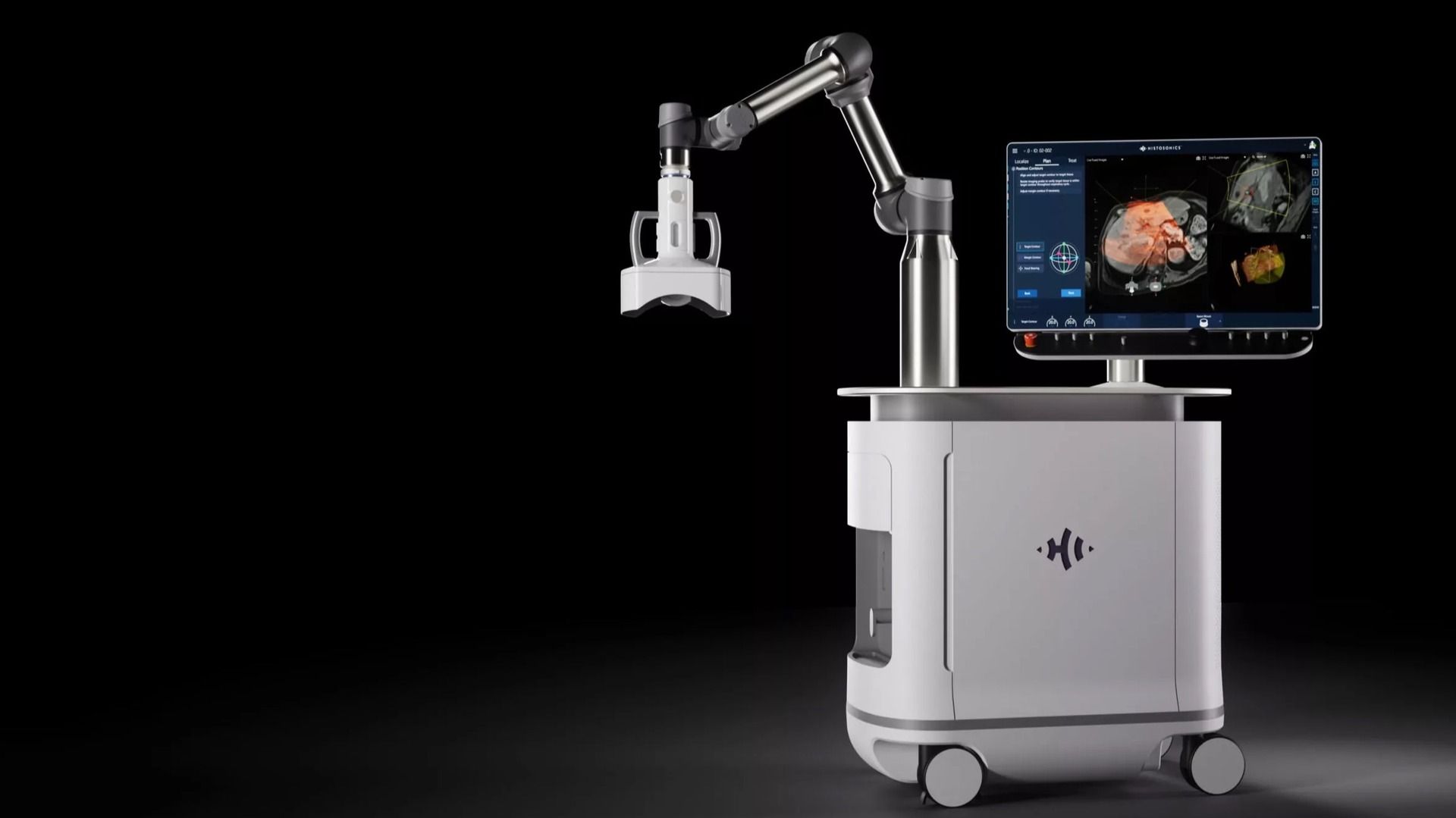
Image source: HistoSonics
The Rundown: U.S. startup HistoSonics just nabbed a $250M lifeline from Peter Thiel, K5 Global, and Jeff Bezos — a massive late-stage cash infusion to fuel its push toward next-gen, scalpel-free cancer treatments.
The details:
The company’s Edison System uses focused ultrasound to destroy tumors, turning diseased tissue into microscopic debris that the body naturally clears.
The tech, called histotripsy, uses rapid bursts of ultrasound to create microscopic bubble clouds inside tumors that shred cancer cells into debris.
It’s already earned FDA clearance for liver tumor ablation and is running trials for prostate, pancreatic, and kidney cancers.
If it works at scale, histotripsy could join robotic surgery and proton therapy as another premium, high-margin procedure hospitals race to offer.
Why it matters: HistoSonics is betting that ultrasound can replace scalpels and radiation for certain tumors, which would be a genuine breakthrough for patients. But histotripsy still has to prove it works across cancer types, matches long-term survival rates of existing treatments, and can scale beyond specialized academic centers.
DEEL
🤑 Deel hits $17B despite battle with Rippling
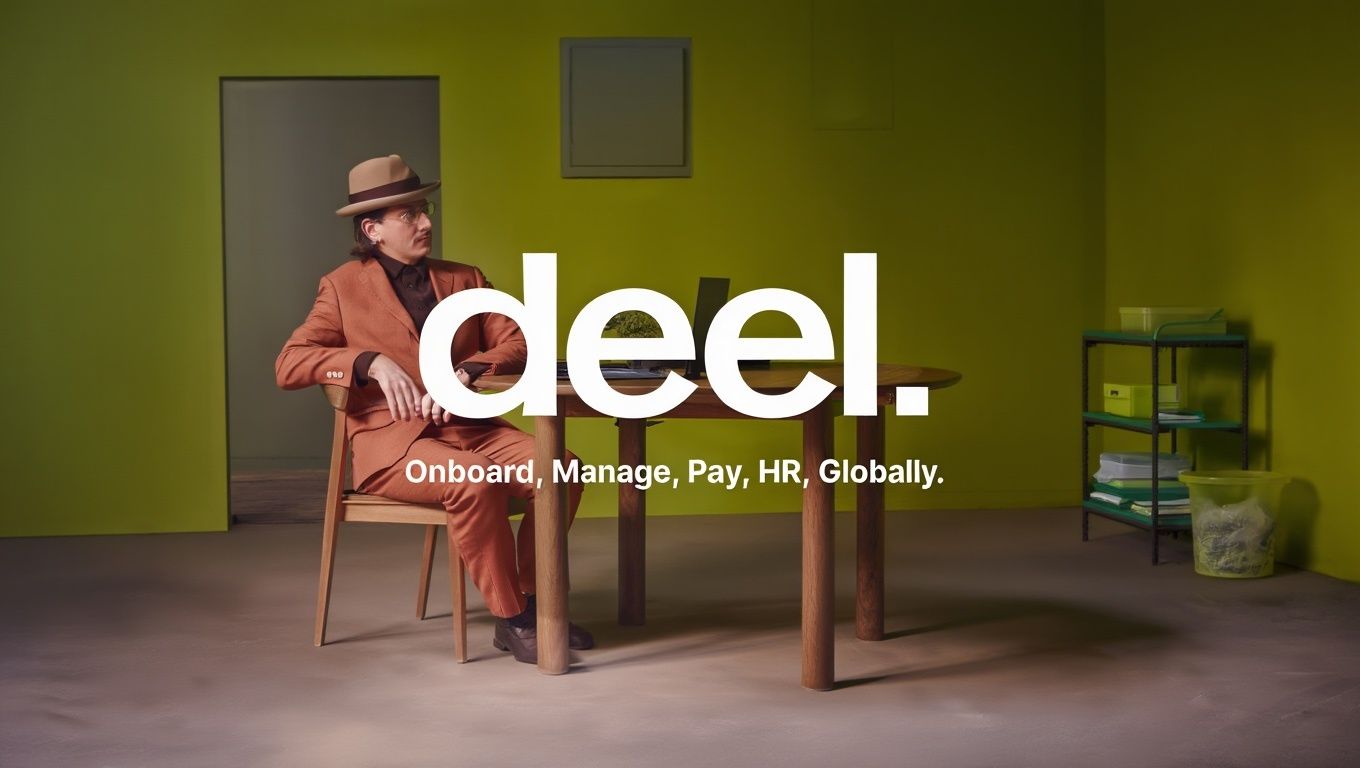
Image source: Deel / YouTube
The Rundown: Despite being locked in a vicious legal battle with rival Rippling — complete with corporate espionage and poaching accusations — HR platform Deel just scored a $300M Series E round that jacks its valuation to $17.3B.
The details:
The round comes as Deel crossed $1B in annual recurring revenue and logged its first $100M revenue month in September.
The raise lands amid Deel’s messy legal war with Rippling, yet both firms continue pulling massive VC checks despite the courtroom drama.
The company says it now serves over 37K businesses, processing $22B in payroll annually for 1.5M workers across more than 150 countries.
Founded in 2019, Deel helps companies hire, pay, and manage global teams by automating compliance, payroll, and HR infrastructure across borders.
Why it matters: Deel and Rippling aren’t just HR startups — they’re two of the most valuable private tech companies on the planet. And despite being locked in a full-blown corporate espionage brawl, investors are still writing them enormous checks. The bet? That the global payroll and HR market is big enough to support both giants.
QUICK HITS
📰 Everything else in tech today
BYD issued its largest recall ever, pulling back more than 115K Tang and Yuan Pro EVs due to the risk of failure in pure electric drive mode and water ingress into the battery.
Chinese robotaxi firm Pony AI partnered with Stellantis to test and deploy autonomous taxis across Europe, beginning with pilot programs in Luxembourg.
Meta is finalizing an almost $30B financing deal — the largest private capital transaction on record — to fund its Hyperion data center in rural Louisiana.
Lyft will open a new tech hub in Toronto’s financial district in the second half of next year, making the city its second-largest tech center after San Francisco.
Apple and NBCUniversal are launching a joint Apple TV–Peacock bundle on Oct. 20 that gives U.S. subscribers discounted access to both services.
Nintendo ordered suppliers to build 25M Switch 2 consoles by March 2026, betting on record first-year sales that would crush most console launches.
Amazon revealed new details on its modular nuclear reactor in Washington, set to deliver nearly 1 GW of carbon‑free power for AI and cloud operations in the 2030s.
Finnish health tech firm Oura raised $900M in a Fidelity‑led round, boosting its valuation to about $11B.
Apple just locked in 650 MW of European wind and solar to offset the power customers use when charging devices, slashing nearly a third of its carbon footprint.
Waymo teamed up with DoorDash in Phoenix, where customers can now receive food and grocery orders from DashMart via autonomous Waymo robotaxis.
Electric aviation startup Beta Technologies is targeting a valuation of about $7.2B in its IPO, offering shares at $27–$33 with hopes of raising up to $825M.
Pinterest rolled out new controls letting users dial down how much AI-generated content appears in their feeds, a move following backlash over AI slop.
Impulse Space, the startup founded by SpaceX veteran Tom Mueller, unveiled plans to begin delivering multi‑ton lunar cargo by 2028 using its Helios kick stage.
COMMUNITY
🎓 Highlights: News, Guides & Events
Read our last AI newsletter: Claude gains new Skills
Read our last Tech newsletter: Meta and Anduril’s AI war helmet
Read our last Robotics newsletter: Waymo robotaxis head to London
Today’s AI tool guide: Generate on-brand presentations with Claude Skills
RSVP to next workshop today @1PM EST: Build AI teams with Zapier agents
See you soon,
Rowan, Jennifer, and Joey—The Rundown’s editorial team
Claude gains new Skills
Read Online | Sign Up | Advertise

Good morning, AI enthusiasts. Remember that scene in The Matrix where Neo downloads capabilities directly into his brain? Anthropic just gave Claude the same power — except it’s for your company's workflows.
The new Skills feature packages entire processes into folders that Claude loads on demand, a simple solution that may be more powerful than it appears.
In today’s AI rundown:
Anthropic's Skills teach Claude your workflows
Pew poll shows global AI concern outweighs excitement
Generate on-brand presentations with Claude Skills
OpenAI recruits black hole physicist for science initiative
4 new AI tools, community workflows, and more
LATEST DEVELOPMENTS
ANTHROPIC
🌟 Anthropic's Skills teach Claude your workflows
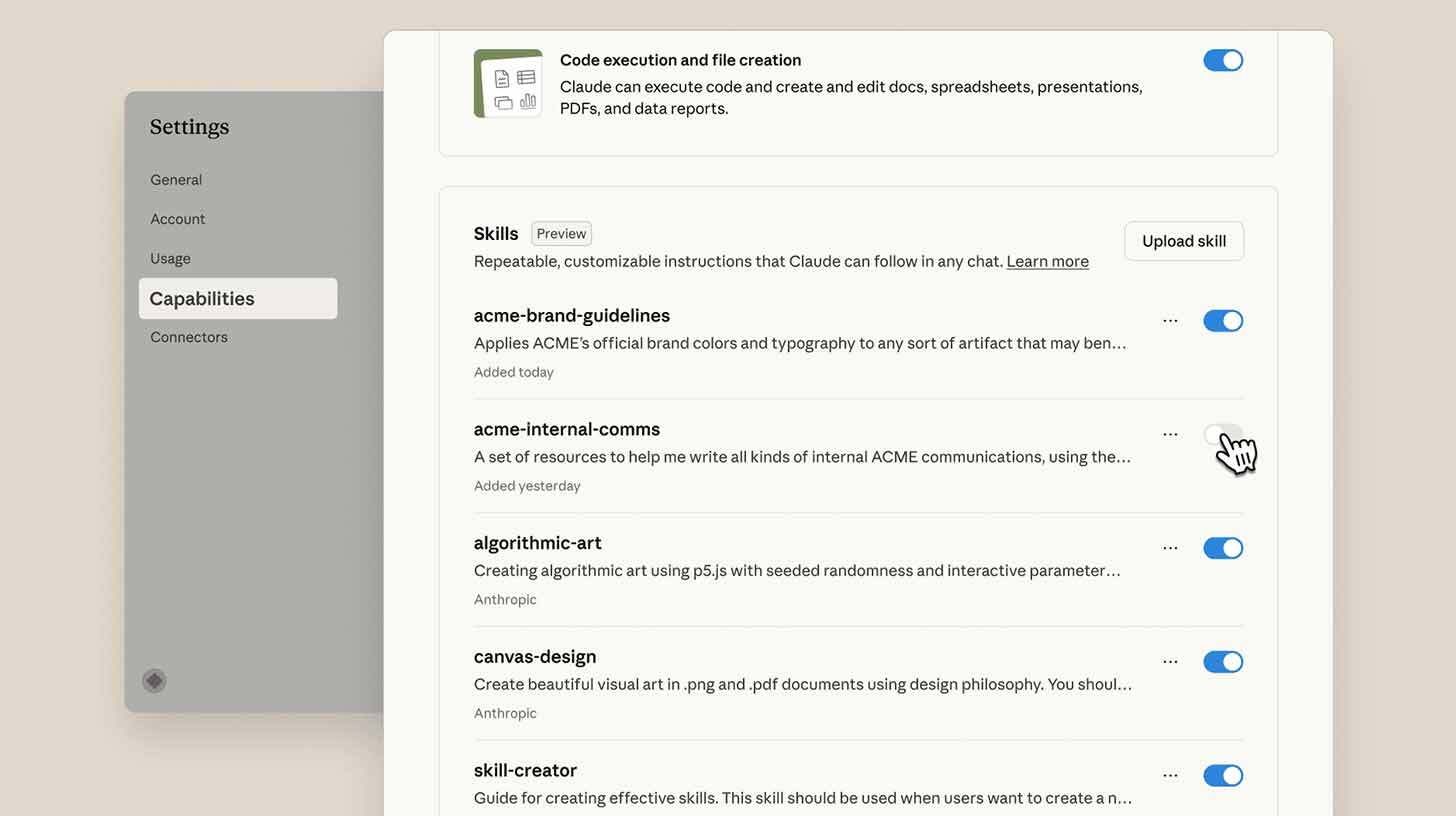
Image source: Anthropic
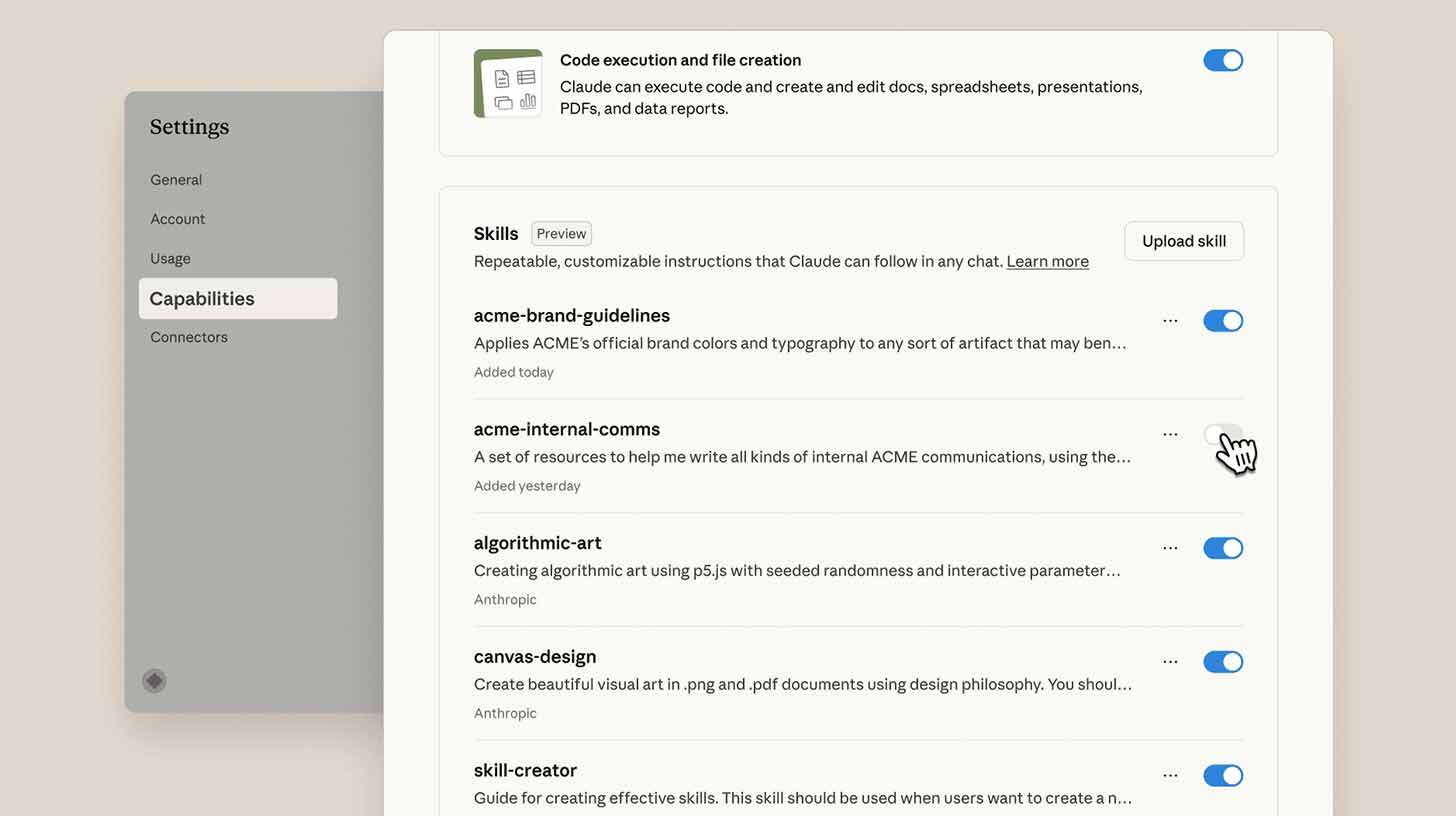
The Rundown: Anthropic just released Skills for Claude, a folder-based system that lets organizations bundle workflows, procedures, and executable scripts into packages their AI assistant can autonomously access when handling specific tasks.
The details:
Skills function as directory packages containing instruction files, code scripts, and reference materials that Claude loads dynamically based on task relevance.
The system uses "progressive disclosure,” with Claude first seeing skill names and descriptions, then deciding which components to activate for a workflow.
Users can build custom skills through an interactive "skill-creator" assistant requiring no manual file editing or coding expertise.
Multiple skills can also coordinate, allowing agents to combine for tasks like brand guidelines with financial reporting templates in a single workflow.
Why it matters: Anthropic’s Alex Albert summed it up well in comparing Skills to “loading in” specialized knowledge, like in The Matrix, and the real upgrade is simplifying the process. By packaging expertise into folders rather than code, Skills can better infuse enterprise knowledge and workflows with real agentic capabilities.
TOGETHER WITH RETOOL
🚀 AI AppGen that’s ready to deploy

The Rundown: Most AI dev tools stop at prototypes. Retool's AI-assisted dev capabilities create full-stack apps that are connected to your data, deployed in your environment, and secure by default — taking you from prompt to production in minutes.
With Retool, you get:
Prompt to a working app you trust in minutes
Built-in security and role-based access
Edits grounded in context
Deployment in your preferred environment
THE WORLD & AI
😨 Pew poll shows global AI concern outweighs excitement
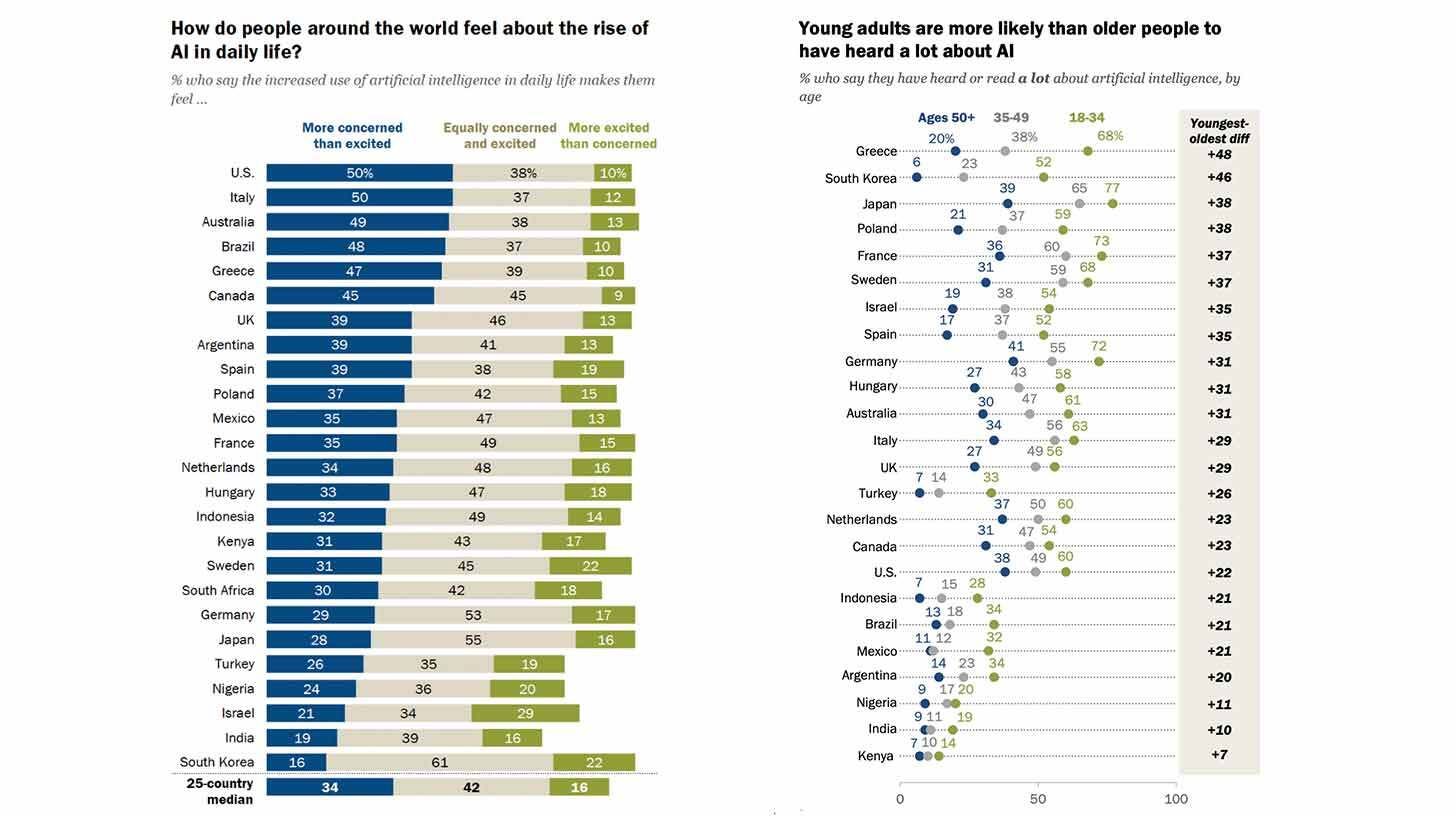
Image source: …
The Rundown: Pew Research just released new results from a survey of over 28,000 adults across 25 countries on AI sentiment, finding nervousness outpacing optimism for the technology globally.
The details:
50% of respondents in the U.S., Italy, Australia, and Greece report anxiety over rising AI use, with Israel, South Korea, and Sweden emerging most optimistic.
The EU ranks as the most trusted regulatory body at 53% confidence, beating out both the U.S. (37%) and China (27%) for perceived oversight credibility.
Young adults under 35 consistently report both greater AI awareness and optimism compared to those over 50, with major gaps in countries like Greece.
Why it matters: The AI wave is here, but contrary to what we see in our tech-forward bubble, not everyone is excited about it. These results expose some interesting divides (like countries with the most AI exposure harboring some of the deepest anxiety) that give a much broader view of how the world is grappling with the transformative tech.
AI TRAINING
📊 Generate on-brand presentations with Claude Skills
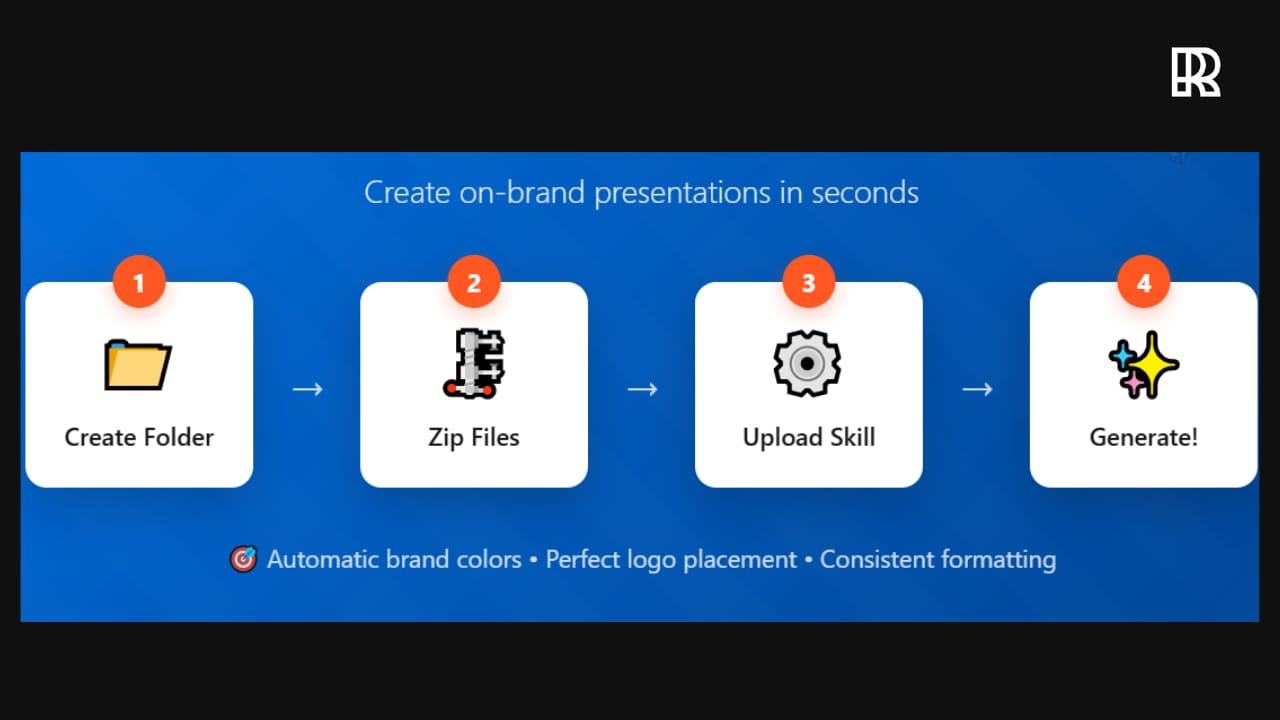
The Rundown: In this tutorial, you will learn how to create a custom Claude Skill that automatically generates presentations following your company's brand guidelines, eliminating hours of manual formatting and logo placement.
Step-by-step:
Create a "Brand_Guidelines" folder with Skill.md file containing your brand specs (colors, fonts, logo rules) in YAML format, plus a /resources subfolder with your logo.png
Zip the entire Brand_Guidelines folder (right-click → compress on Mac/Windows). Don't zip just the contents inside
Go to Claude Settings → Capabilities, enable "Code execution and file creation", then upload your Brand_Guidelines.zip under the Skills section
Prompt Claude: "Create a 10-slide PowerPoint for [topic] following our company brand guidelines with logo,” and it automatically applies your colors, fonts, and logo placement
Download the presentation or save directly to Google Drive if connected
Pro tip: Reference your sample presentation in prompts by saying "match the layout style of sample_presentation.pptx" to get Claude to copy your slide designs every time.
PRESENTED BY UNFRAME
📊 The 2025 Enterprise AI Trends Report
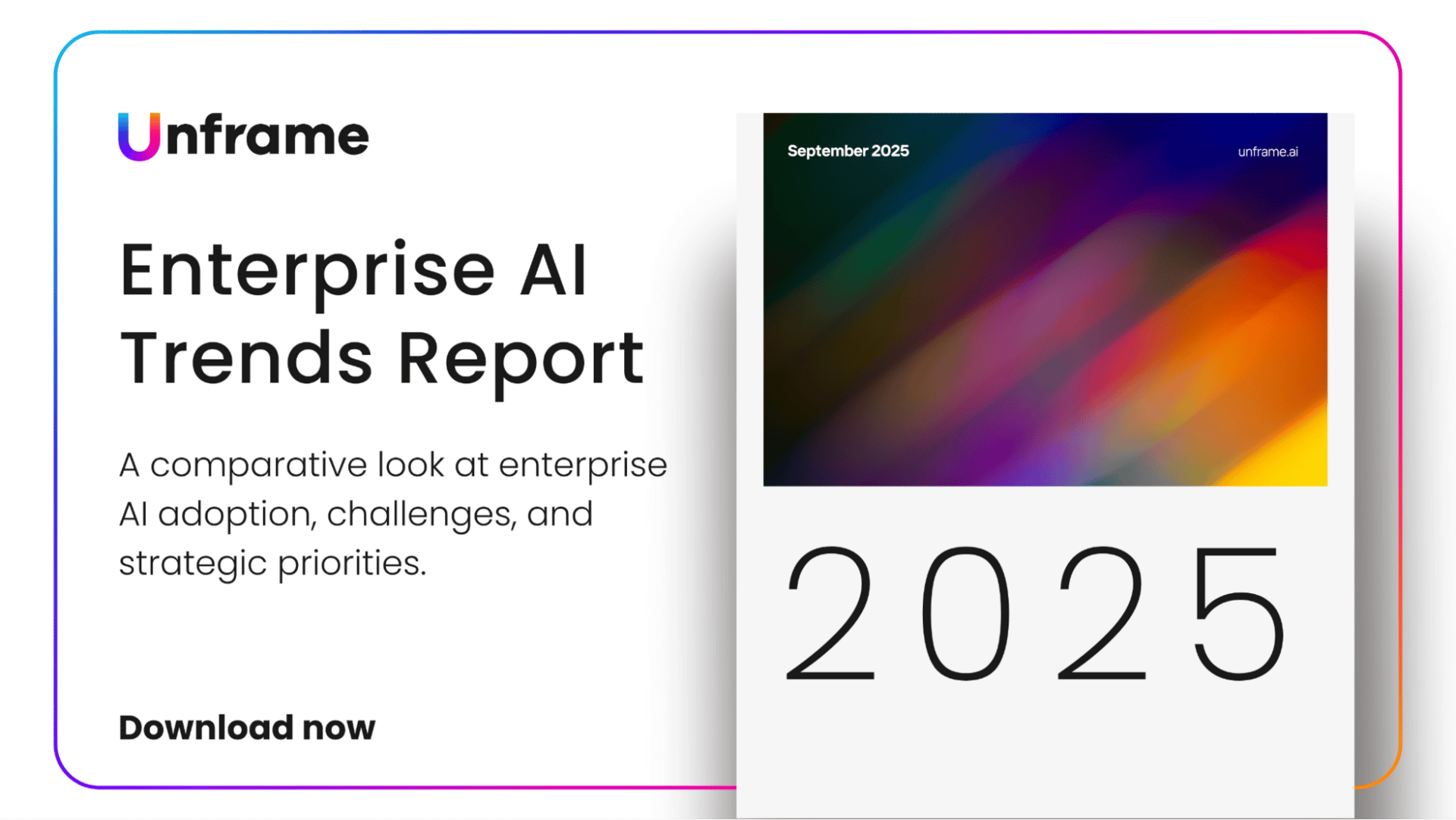
The Rundown: Discover how top enterprises are using AI to boost efficiency, scale innovation, and manage risk in 2025. This exclusive report reveals the key trends shaping AI strategies and how leaders are overcoming barriers like data quality and tech compatibility to drive real transformation.
Findings from the report include:
66% of execs place productivity and knowledge access at the core of AI strategies
55% of enterprises state data quality & availability as the top barrier to scaling AI
Only 16% of orgs have fully integrated AI, with tech compatibility as a key barrier
AI RESEARCH
🧪 OpenAI recruits black hole physicist for science initiative
Image source: Reve / The Rundown
The Rundown: OpenAI announced the hiring of theoretical physicist Alex Lupsasca as the first academic researcher for its OpenAI for Science division, with the team focused on advancing AI-driven discoveries in areas like scientific reasoning, math, and physics.
The details:
The initiative aims to combine AI models with scientific tooling, positioning itself as "the next great scientific instrument" for researchers.
Lupsaca said GPT-5-Pro “completely changed his mind” on AI in research, taking less than 30 minutes on a physics problem that took him days.
OpenAI VP Kevin Weil also revealed that GPT-5 has already shown “limited novel research abilities” across math, quantum theory, biology, and more.
Why it matters: OpenAI has been criticized for ‘focusing’ on releases like Sora’s social video platform or less restrictive content generation, but many fail to see the Google-style multi-front strategy playing out. The industry leader seems to be confident it can play a big role in the entire AI stack, from TikTok-style apps to scientific breakthroughs.
QUICK HITS
🛠️ Trending AI Tools
🎨 FLORA – AI canvas for brand and marketing teams to ideate, iterate, and refine their creative work with full creative control*
💨 Claude 4.5 Haiku - Anthropic’s new small, cost-efficient model
🎥 Veo 3.1 - Google’s upgraded video generation model
🎬 Apps - Runway’s new mini-tools for editing and creating images and videos
*Sponsored Listing
📰 Everything else in AI today
Apple AI search executive Ke Yang is reportedly leaving the company to join Meta, marking another high-profile departure from Apple’s AI division.
Microsoft introduced new AI updates with Windows 11, including a voice-activated ‘Hey Copilot’ command and Vision capabilities that see users’ screens and take actions.
Anthropic launched Microsoft 365 integration, enabling direct access to SharePoint, Outlook, and Teams data, alongside enterprise search for Claude.
Cognition released SWE-grep and SWE-grep-mini, a new series of models that accelerate code context retrieval by 10x while matching frontier model accuracy.
Google Labs creative director Henry Daubrez posted that the rumors surrounding the Veo 3.1 were overhyped, emphasizing it’s a “partial upgrade and not a revolution.”
OpenAI rolled out new updates to its Sora 2 app, including a Storyboards feature for planning outputs and longer video generations of up to 25 seconds.
COMMUNITY
🤝 Community AI workflows
Every newsletter, we showcase how a reader is using AI to work smarter, save time, or make life easier.
‘Today’s workflow comes from reader Vicky D. in Kent, OH:
“I volunteer at my local dog shelter. After getting to know a dog, I write children's books about them in the hopes of getting them adopted. I prompt about the dog's personality, breed, and skills. AI then helps me develop my story. I upload some images of the dog and am prompted to create images for the different parts of the story. I then compile the book in Canva to create the final PDF and upload it to my publisher!"
How do you use AI? Tell us here.
🎓 Highlights: News, Guides & Events
Read our last AI newsletter: Google’s new AI video upgrade
Read our last Tech newsletter: Meta and Anduril’s AI war helmet
Read our last Robotics newsletter: Waymo robotaxis head to London
Today’s AI tool guide: Generate on-brand presentations with Claude Skills
RSVP to next workshop today @1PM EST: Build AI teams with Zapier agents
See you soon,
Rowan, Joey, Zach, Shubham, and Jennifer — the humans behind The Rundown
No matching search results
Try using different keywords, double-check your spelling, or explore related categories.
Stay Ahead on AI.
Join 2,000,000+ readers getting bite-size AI news updates straight to their inbox every morning with The Rundown AI newsletter. It's 100% free.