Get the latest AI news, understand why it matters, and learn how to apply it in your work — all in just 5 minutes a day. Join over 2,000,000+ subscribers.
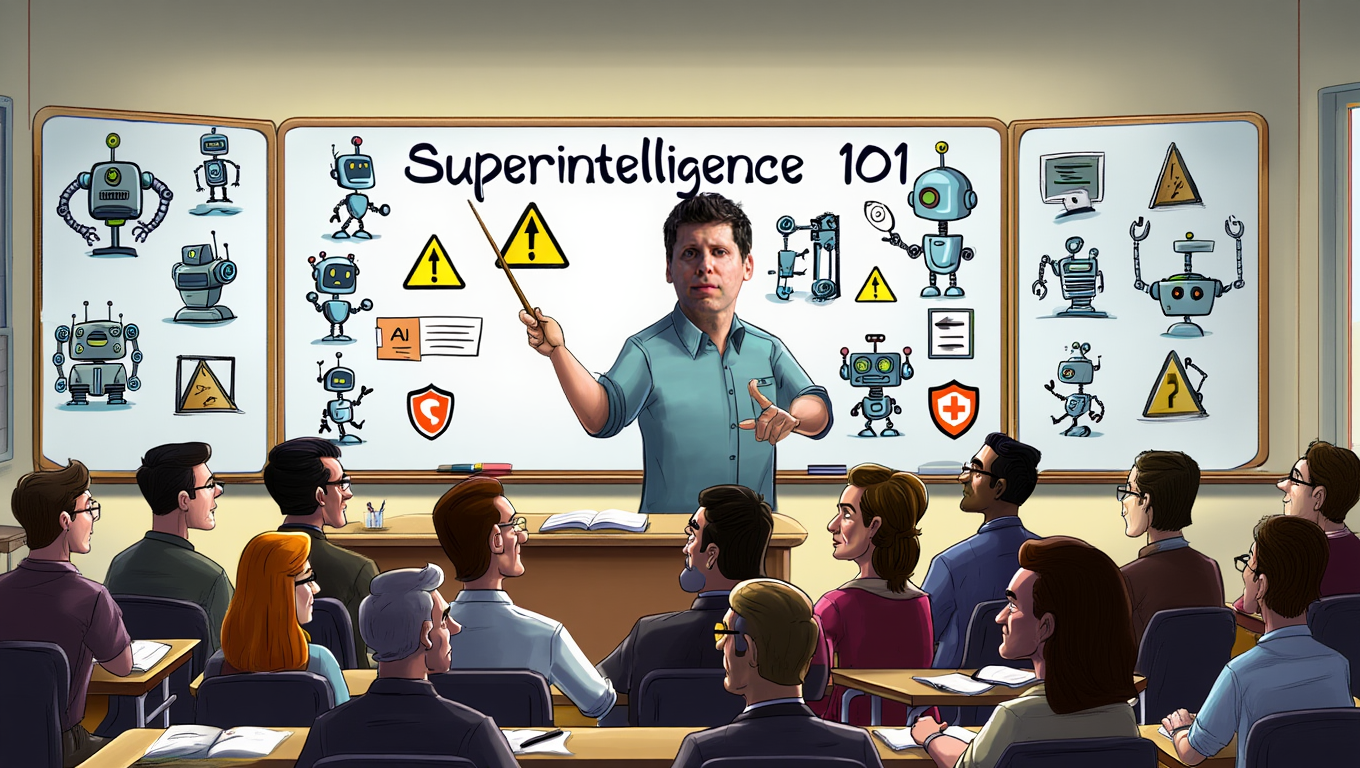
OpenAI calls for superintelligence safety
Read Online | Sign Up | Advertise

Good morning, AI enthusiasts. OpenAI expects AI to start making “significant discoveries” by 2028 — and is calling on industry and government to work together to prepare for the risks that could come with superintelligent systems.
The actual pace of progress is impossible to predict, but one thing’s clear: OAI is already setting the tone for how the world should adapt to the next wave of intelligence.
In today’s AI rundown:
OpenAI’s reccos to brace for superintelligent AI
The Rundown Roundtable: Our AI use cases
Get the most out of ChatGPT’s Deep Research
Research: McKinsey’s 2025 AI reality check
4 new AI tools, community workflows, and more
LATEST DEVELOPMENTS
OPENAI
🛡️ OpenAI’s reccos to brace for superintelligent AI
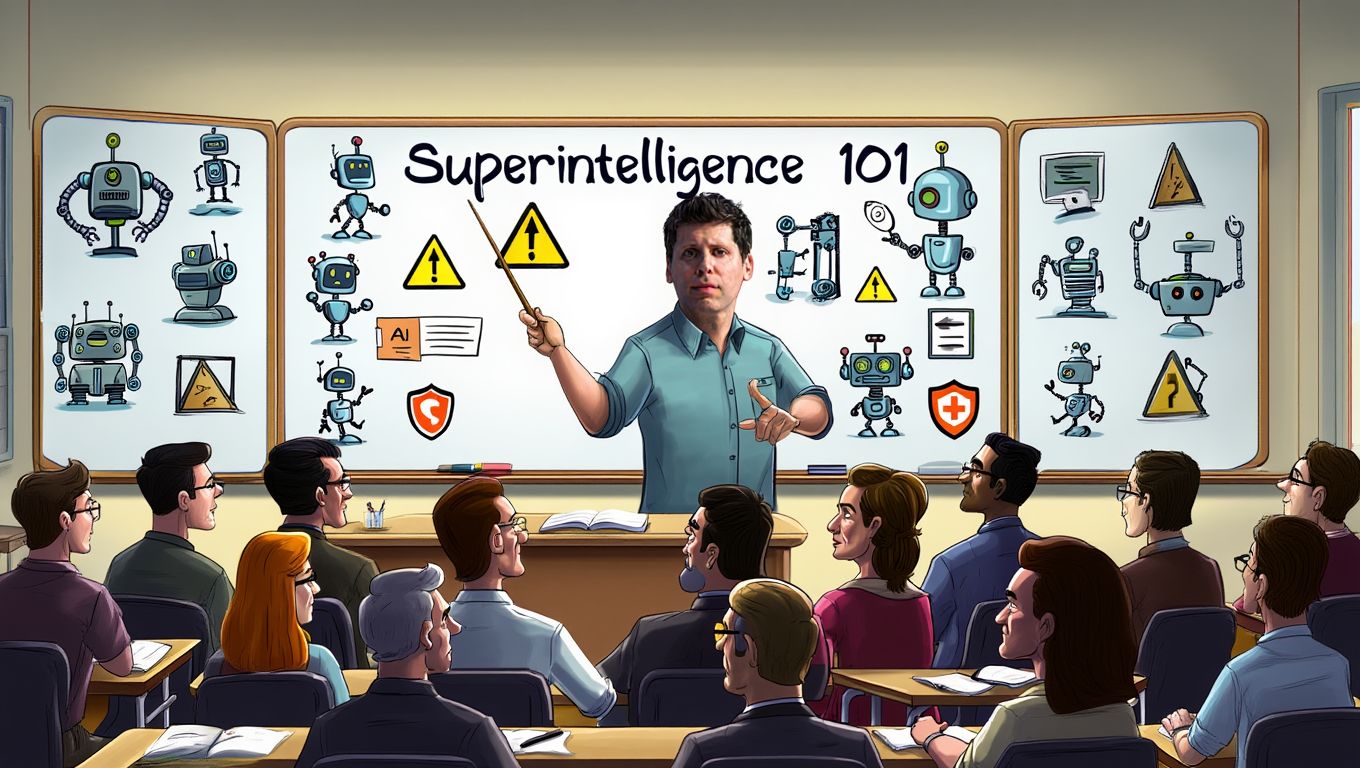
Image source: Reve / The Rundown
The Rundown: OpenAI just shared its view on AI progress, predicting systems will soon become smart enough to make discoveries and calling for global coordination on safety, oversight, and resilience as the technology nears superintelligent territory.
The details:
OpenAI said current AI systems already outperform top humans in complex intellectual tasks and are “80% of the way to an AI researcher.”
The company expects AI will make small scientific discoveries by 2026 and more significant breakthroughs by 2028, as intelligence costs fall 40x per year.
For superintelligent AI, OAI said work with governments and safety agencies will be essential to mitigate risks like bioterrorism or runaway self-improvement.
It also called for safety standards among top labs, a resilience ecosystem like cybersecurity, and ongoing tracking of AI’s real impact to inform public policy.
Why it matters: While the timeline remains unclear, OAI’s message shows that the world should start bracing for superintelligent AI with coordinated safety. The company is betting that collective safeguards will be the only way to manage risk from the next era of intelligence, which may diffuse in ways humanity has never seen before.
TOGETHER WITH YOU.COM
💡One major reason AI adoption stalls? Training.
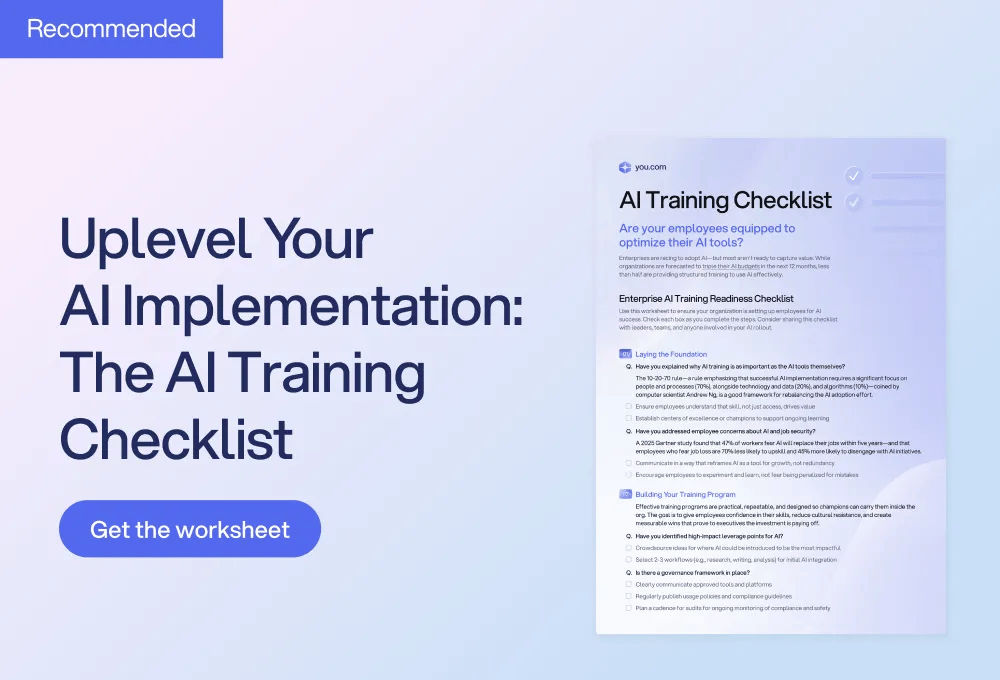
The Rundown: AI implantation often goes sideways due to unclear goals and a lack of a clear framework. You.com’s checklist pinpoints common pitfalls and guides you to build a capable, confident team that can make the most out of your investments.
Inside, you’ll get:
Key steps for building a successful AI training program
Guidance on overcoming employee resistance and fostering adoption
A structured worksheet to monitor progress and share across your organization
Get your checklist today.
THE RUNDOWN ROUNDTABLE
💡 The Rundown Roundtable: Our AI use cases
Image source: Ideogram / The Rundown
The Rundown: The Rundown Roundtable is a new weekly feature where we poll members of The Rundown staff on how the team is using AI. This week: how we’re using AI in our daily lives outside of work.
Zach, Al Writer: The internet connection in our basement has been terrible, and I put ChatGPT on the task. After troubleshooting and reviewing images of the setup, it recommended a series of new adapters and splitters (also directing me right to the purchase pages). The solution led to at least a 10x increase in speed and completely upgraded our experience.
Rowan, Founder: I’ve been using Notion AI (Claude) as a copilot to better personalize my daily life/routine/schedule. I have a weird way of combining time blocking and to-do lists for productivity, and I host it all in Notion. Then I get Notion AI to review for inefficiencies and better optimize my time.
For example, it told me that since I work at my desk and remotely, I should move my gym session to mid-day and treat it as a work break to recharge instead of end-of-day.
Jennifer, Tech & Robotics Writer: I recently took my daughter, who has complex food allergies, to Spain. Since I’m not great at Spanish, I asked ChatGPT to create a printable guide for restaurant servers that explained her allergies in detail and asked them to double-check ingredients with the chef. I also used it to help me practice what to say in Spanish and to suggest local dishes she could probably enjoy safely.
AI TRAINING
🧐 Get the most out of ChatGPT’s Deep Research

The Rundown: In this tutorial, you’ll learn how to use ChatGPT’s Deep Research to automatically browse the web, analyze dozens of sources, and generate structured, cited reports for market, customer, or competitive intelligence.
Step-by-step:
Start a new chat in ChatGPT, click the + icon, and select Deep Research to activate the agent that runs multi-step web research and compiles insights
Write a research prompt describing your goal (e.g., “Conduct market research for household robotics and identify ICP, pain points, and distribution strategy”), then answer any clarifying questions it asks
Submit your request. Deep Research will browse the web for 5–30 minutes, analyze sources, and build a fully cited report you can track in real time
Review the final report for insights, trends, and competitor data, then export it as a PDF/link. You can even attach it to a custom GPT for ongoing intelligence
Pro tip: Use Deep Research for projects requiring verified data. Give detailed context and measurable objectives to ensure the report is both comprehensive and actionable.
PRESENTED BY ATLASSIAN
🤝 AI’s collaboration problem
The Rundown: AI adoption has doubled, and workers are saving over an hour daily, but only 4% of Fortune 1000 executives report efficiency gains — why? Atlassian’s new AI Collaboration Index: Executive Insights report reveals a disconnect between personal productivity and true business transformation.
Key findings from 200 executives and 12,000 knowledge workers include:
The elite 4% seeing transformation are building connected systems
The missing link: AI helps individuals but fails at team collaboration
The biggest AI opportunities within marketing, engineering, and human resources
Companies prioritizing experimentation over perfect strategy see 2x more innovation
Read the full report to uncover what organizations achieving real AI transformation are doing differently.
AI RESEARCH
🧠 McKinsey’s 2025 AI reality check
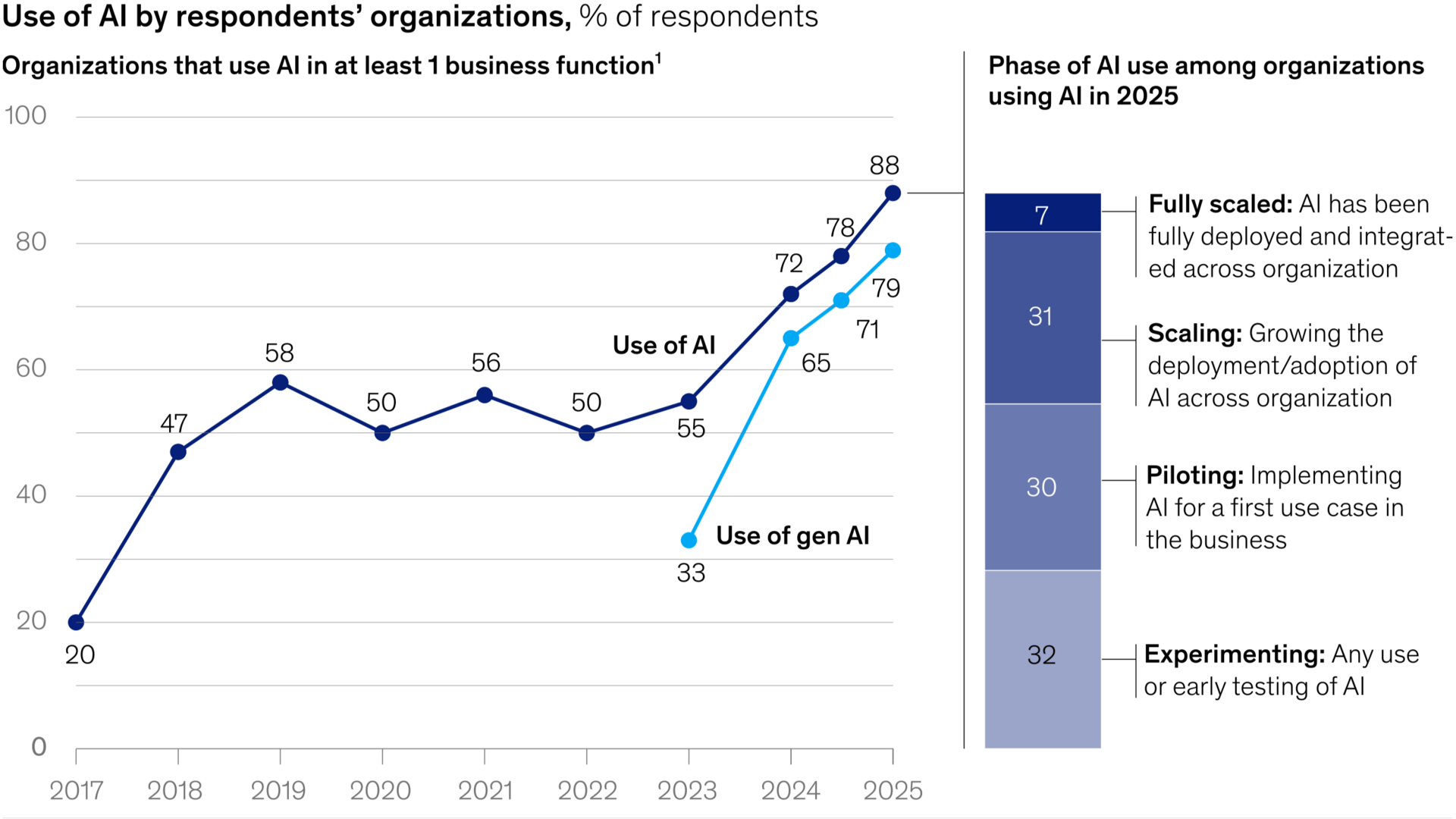
Image source: McKinsey
The Rundown: McKinsey released its State of AI 2025 survey of nearly 2K organizations, revealing that while almost every company now uses AI, most are stuck in pilots, with only a fraction achieving enterprise-wide impact or scaling agents.
The details:
The survey found that 88% of companies now use AI somewhere, but most of them are in experimentation or pilot phases, with just 33% actually scaling it.
While 39% reported EBIT impact from AI, just 6% achieved an impact of 5% or more, largely by redesigning workflows and using it to drive innovation.
62% are working with AI agents, but adoption is early, with 39% experimenting and just 23% scaling them, mostly in IT and knowledge management.
About 32% of companies expect workforce reductions of 3% or more next year, while 13% expect increases. Larger firms are more likely to predict cuts.
Why it matters: The key lesson comes from the high performers — the few seeing real bottom-line impact from AI. Their success shows that the real value of AI comes not from efficiency gains, but from redesigning workflows, scaling across functions, and using it to fuel growth and innovation.
QUICK HITS
🛠️ Trending AI Tools
⚡️ Semrush One: Measure, optimize, and grow visibility from Google to ChatGPT, Perplexity, and more*
📽️ Sora 2: OpenAI’s video AI, now adding watermarks with account IDs
💻️ Higgsfield: AI video platform, now with a workspace for teams
🤖 Grok-4 Fast: xAI’s lighter model, upgraded with a 2M token context window
*Sponsored Listing
📰 Everything else in AI today
Google introduced the File Search Tool, a fully managed RAG system that provides a simple, integrated, and scalable way to ground Gemini with users’ data.
OpenAI wrote a letter last week asking the Trump administration to expand a Chips Act tax credit to cover AI data centers, servers, and electrical grid components.
Google added new capabilities in Vertex AI Agent Builder, including SOTA context management, single command deployment, and observability and evaluation features.
UK firms plan 3% pay raises next year, but 1 in 6 expect AI to reduce headcount — some by over 10% — amid the weakest hiring outlook since the pandemic.
OpenAI expanded Codex access with the launch of a cost-efficient GPT-5-Codex-Mini, 50% higher rate limits, and priority processing for Pro and Enterprise users.
COMMUNITY
🤝 Community AI workflows
Every newsletter, we showcase how a reader is using AI to work smarter, save time, or make life easier.
Today’s workflow comes from reader Zack T. in Singapore:
“As an app marketer with limited knowledge in HTML, I upload reference designs I find online and ask ChatGPT to produce HTML templates for promotion pages, listing the parameters needed such as deal name, usual price, promotional price, discount %, image link, and link URL. Then I upload an Excel file with columns of parameters for each deal, and paste the output HTML into the source code of the promotion pages.”
How do you use AI? Tell us here.
🎓 Highlights: News, Guides & Events
Read our last AI newsletter: China's open-source AI closes the gap
Read our last Tech newsletter: Musk wins $1T pay package
Read our last Robotics newsletter: Rivian spins off robotics startup
Today’s AI tool guide: Get the most out of ChatGPT’s Deep Research
Watch our last workshop: AI Foundations for Marketers
See you soon,
Rowan, Joey, Zach, Shubham, and Jennifer—the humans behind The Rundown


Adobe’s big AI leap for creators
Read Online | Sign Up | Advertise

Good morning, AI enthusiasts. Adobe just wrapped up MAX 2025, taking its most ambitious leap yet toward an AI-powered future of creativity.
From embedding agentic assistants directly inside its apps to uniting the top AI models under one plan, the company is reshaping how creators imagine, design, and deliver content.
To explore these innovations and what they mean for both creators and enterprises, we sat down with David Wadhwani, President of Digital Media business at Adobe, for an exclusive Q&A.
In today’s AI rundown:
Adobe’s vision for the AI era
Adobe Firefly, the all-in-one creative AI studio
AI assistants for creative work
Partnering to advance AI-powered creativity
The ultimate creative skill for the AI age
LATEST DEVELOPMENTS
ADOBE’S VISION
🔮 Adobe’s vision for the AI era
The Rundown: At MAX 2025, Adobe unveiled a unified AI strategy bringing the top creative models—spanning image, audio, and video—into one plan, while introducing conversational experiences powered by agentic AI across Adobe Firefly, Photoshop, and Adobe Express.
Cheung: You just wrapped up Adobe MAX, where AI took center stage. How is Adobe evolving its vision for this era of creativity, and what stood out most this year?
Wadhwani: I’ve attended MAX for 22 years, and our strategy has never been more important as creators navigate rapid changes in AI. At MAX, we introduced a single plan with access to leading models and creative tools for images, audio, and video.
Users can now generate unlimited images and videos through Dec. 1. The response has been incredible — creators are exploring the new Firefly app, and businesses are scaling up content production with our enterprise solutions.
Wadhwani added: As AI reshapes how we can express ideas, our vision is to put creators at the center of two major forces reshaping creativity today: generative tools powered by AI models and conversational interfaces powered by AI agents.
We’re developing the best creative AI tools for a growing universe of customers. Our apps now integrate models from Adobe, Google, OpenAI, Runway, Luma AI, and others. We’re also bringing conversational experiences to Firefly, Adobe Express, and Photoshop.
Why it matters: By doubling down on generative and agentic experiences, Adobe is reimagining creativity as a shared process where humans imagine and AI builds — amplifying ideas at unprecedented scale. The company’s big bet: the next creative advances will be via collaboration between human intuition and machine intelligence.
FIREFLY
🧠 Adobe Firefly, the all-in-one creative AI studio
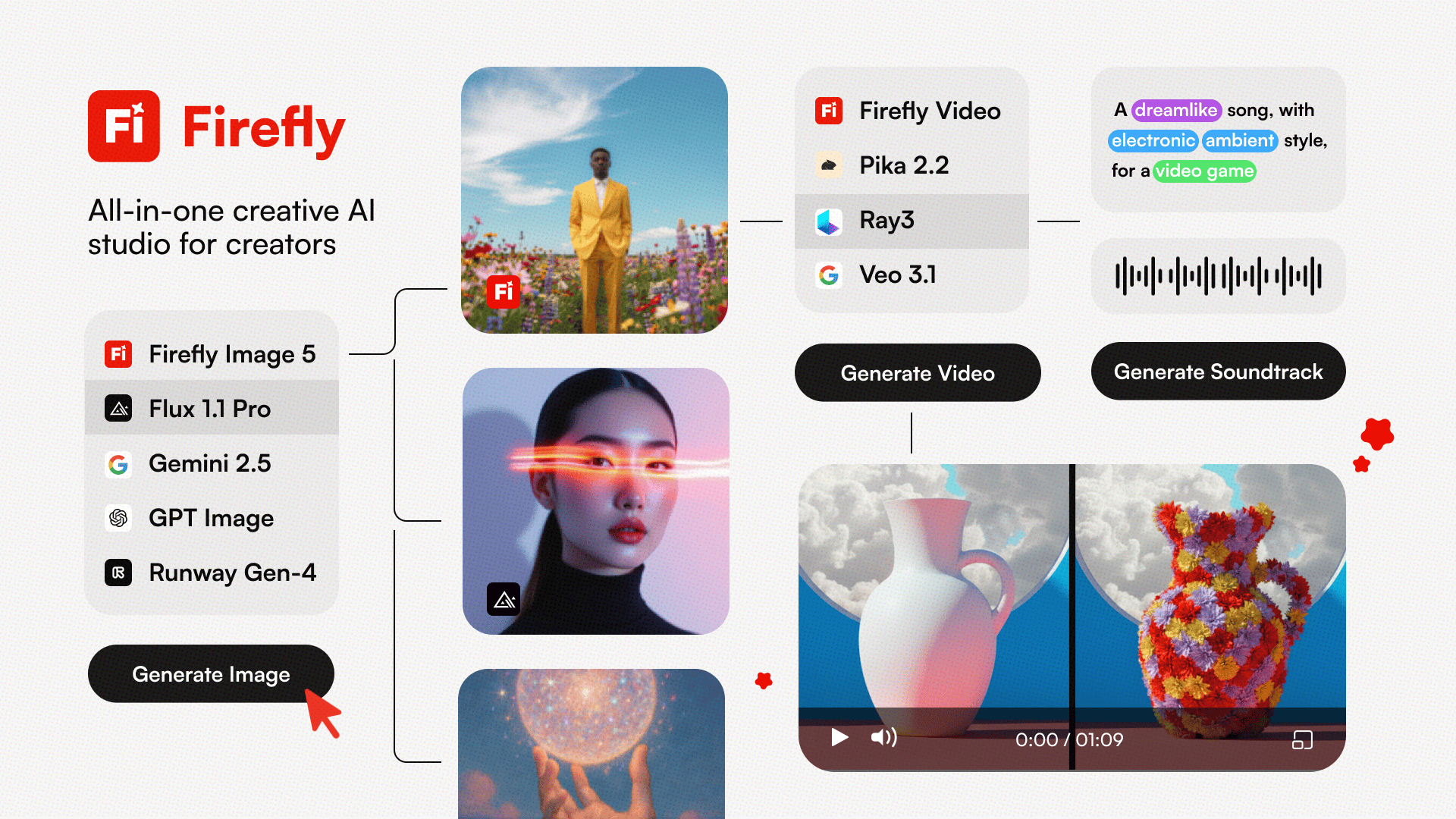
The Rundown: Adobe is turning the Firefly app into a full creative AI studio, combining third-party models and its own commercially safe AI with pro-grade video, audio, and image tools so creators can ideate, produce, and deliver everything in one place.
Cheung: The Adobe Firefly app has evolved into an all-in-one creative AI studio. What’s the biggest change in how users will experience it?
Wadhwani: Firefly now supports every stage of content creation, with several AI model options and video, audio, imaging, and design tools—including studio-quality features like Generate Soundtrack, Generate Speech, and a timeline-based video editor.
Creators can now go from a spark of inspiration to a finished piece of content without ever leaving the app.
Cheung: You’ve also continued to work on Firefly models. Can you tell me more about the latest Firefly model innovations showcased at MAX?
Wadhwani: We introduced Firefly Image Model 5, which generates native 4MP images with photorealistic lighting, natural textures, and anatomical accuracy, while maintaining coherence across complex scenes.
New editing features like Prompt to Edit and Layered Editing give creators more control and flexibility. Audio capabilities have also expanded, with Generate Soundtrack powered by the Firefly Audio Model and Generate Speech, a text-to-speech tool built on Firefly Speech Model and ElevenLabs’ AI.
Wadhwani added: With all Firefly models trained only on content Adobe has rights to use, and not on user data, our models ensure creators can confidently use what they generate in their work and campaigns.
Why it matters: Adobe is bridging the fragmented creative experience that has long forced creators to stitch together different tools. With the Firefly app, the entire process (from idea to output) happens seamlessly in one place. It’s a shift from juggling software to simply creating.
AGENTIC AI
🤖 AI assistants for creative work
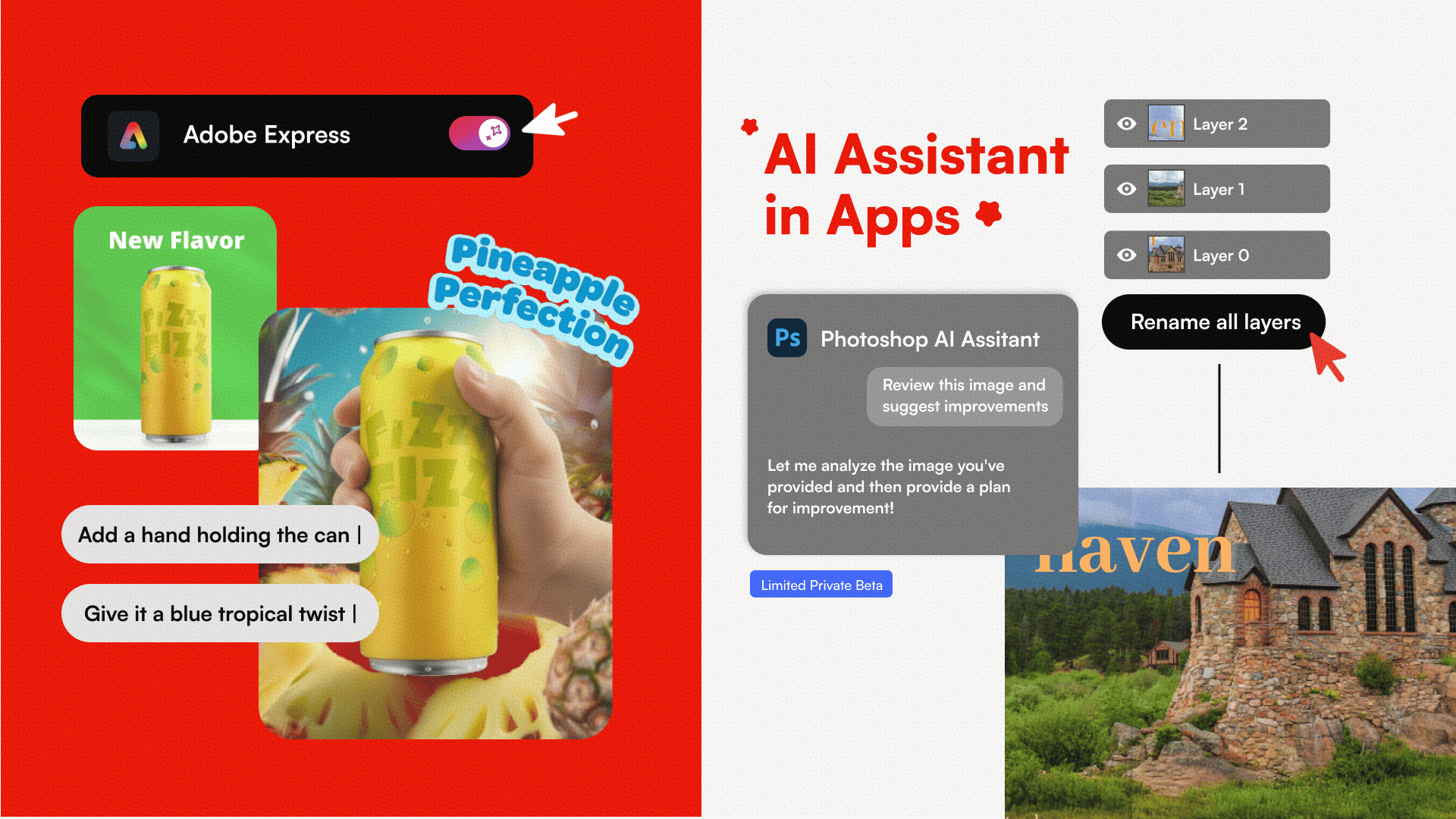
The Rundown: Adobe is embedding agentic AI in its apps, turning assistants into active teammates that can perform repetitive tasks, automate workflows, and coordinate across projects, so that creators can focus on creating.
Cheung: Tell us about the agentic capabilities built by Adobe. What led to introducing agents directly inside tools, rather than offering them as new standalone products?
Wadhwani: By embedding the AI assistants directly into apps like Photoshop, Express, and Firefly, these assistants can help creators move faster by automating repetitive tasks, offering personalized suggestions, and guiding creatives through complex workflows, with every action happening in context.
In Express, you can iterate on content with a simple chat and make changes without starting over. In Photoshop, you can ask for help organizing assets or applying edits in bulk and easily switch between conversation and hands-on editing – without ever leaving your canvas.
Wadhwani added: We also previewed Project Moonlight, a personal orchestration assistant for Firefly that connects workflows across multiple Adobe apps and beyond.
Why it matters: Agents that execute, adapt, and collaborate free creators from repetitive tasks and turn time once spent managing processes into time spent making ideas real. As these agents grow more capable, they could evolve into true creative partners that anticipate needs, refine ideas, and accelerate the entire creative cycle.
PARTNERSHIPS
🤝 Partnering to advance AI-powered creativity

The Rundown: Adobe has partnered with Google and YouTube to give creators more choice and flexibility to work with industry-leading tools, access top AI models, and create with confidence.
Cheung: You also announced several new partnerships at Adobe MAX. Can you elaborate on what they are and why they’re important?
Wadhwani: The partnerships we announced reflect our commitment to giving creators the best tools, the best models, and the confidence to bring their ideas to life on their terms and true to their vision.
Our expanded partnership with Google Cloud will bring Google's advanced AI models, including Gemini, Veo, and Imagen, into Adobe apps. Through Adobe Firefly Foundry, our enterprise customers will also be able to customize Google's models with their own proprietary data to generate on-brand content experiences at scale.
We also announced a new partnership with YouTube, where creators will be able to use Premiere Mobile to access exclusive YouTube Shorts templates with Premiere’s pro-level mobile video editing, making it easier than ever to capture, edit, and publish standout content directly from their smartphones.
Why it matters: By partnering with giants like Google, Adobe is betting that the future of creativity will be shaped by collaboration, not competition. These partnerships also mark a shift toward ecosystem flexibility, where professionals can combine the best technology while staying true to their brand, workflow, and vision.
FUTURE
🚀 The ultimate skill for the age of creative AI
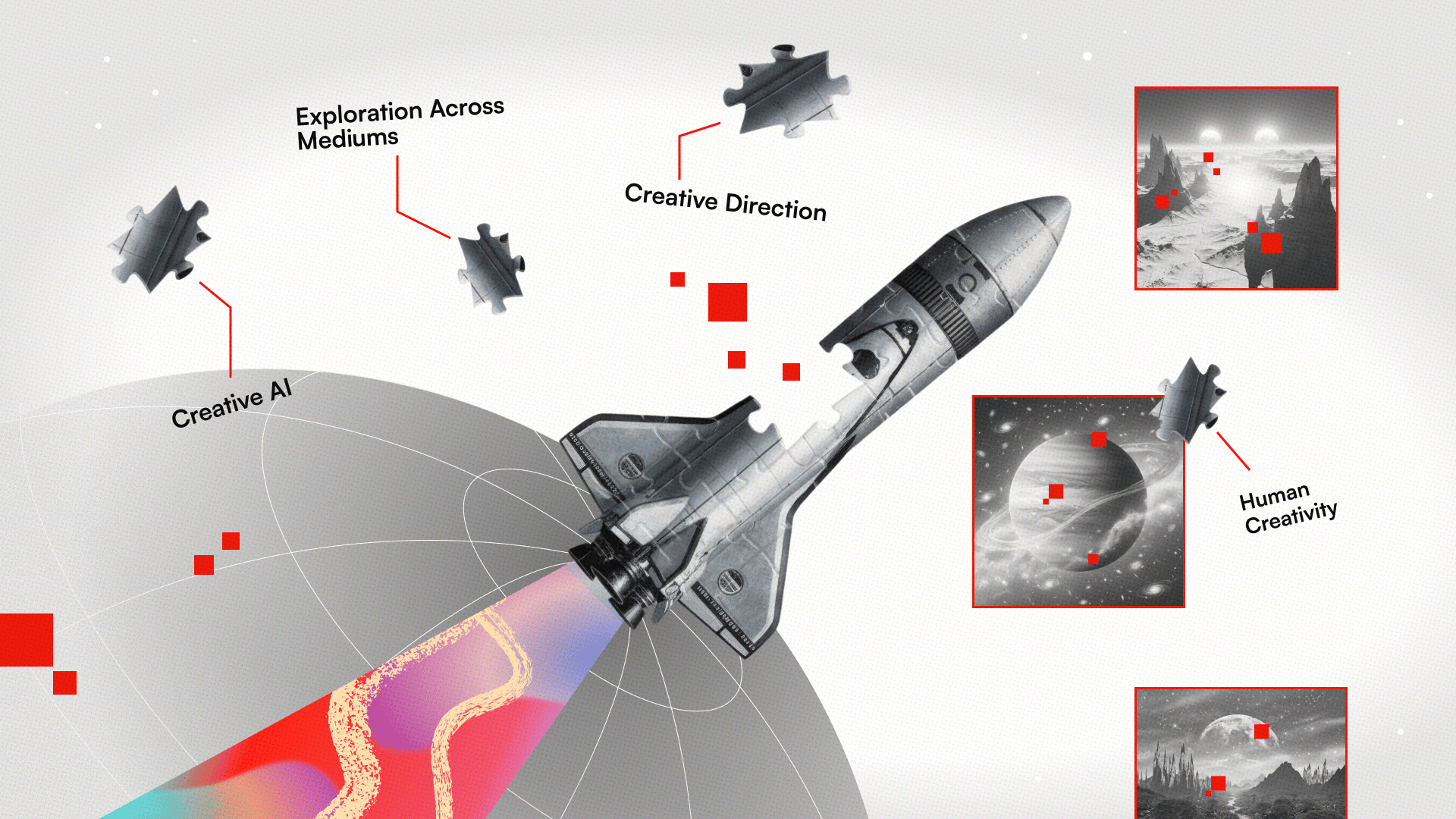
The Rundown: As AI takes on more of the technical heavy lifting, Adobe believes the creators who stand out will be those who bring creative direction—the ability to guide the technology with vision and style—to the forefront.
Cheung: What skills or mindsets will become most critical for creators to thrive in this AI-driven world?
Wadhwani: The most valuable skill in the AI era isn’t technical, it’s creative direction: the ability to guide technology with imagination, taste, and intent.
As AI handles more of the mechanical, repetitive work, what will continue to set creators apart is their vision, storytelling, and willingness to experiment across mediums. Those who embrace AI as another instrument in their creative toolbox will unlock entirely new ways to express themselves.
At Adobe, we’re building tools that make AI-powered creation effortless, so creators can focus on what only humans can do: imagine, connect, and move people through the power of creativity. Human creativity and emotion can’t be replaced.
Why it matters: In a world where AI can generate with speed and scale, Wadhwani believes human creativity remains the ultimate edge. Like many others in creative AI, Adobe also believes the future of creative work belongs to those who see AI as a collaborator, one that enhances imagination and brings ideas to life with greater impact.

Musk wins $1T pay package
Read Online | Sign Up | Advertise

Good morning, tech enthusiasts. Elon Musk just scored the biggest payday in corporate history — a potential $1T windfall, now officially approved by Tesla’s board.
The catch? He has to rocket Tesla’s value from $1.4T to $8.5T in 10 years — no easy feat. It’s meant to keep him loyal to the EV grind. Instead, he’s dreaming of dominion over robots, not roads.
In today’s tech rundown:
Tesla clears Musk’s $1T pay package
Startup builds artificial womb for preemies
IKEA’s smart home lineup just blew up
Australia gives solar power for free
Quick hits on other tech news
LATEST DEVELOPMENTS
TESLA
🤑 Tesla clears Musk’s $1T pay package

Image source: Ideogram / The Rundown
The Rundown: Tesla shareholders delivered an overwhelming endorsement for Elon Musk's unprecedented compensation package, with over 75% voting to award the CEO up to $1T in stock over the next decade.
The details:
The compensation requires Tesla to hit a massive $8.5T market cap — about 550% higher than today's valuation and roughly 70% above Nvidia's record.
The company must also hit operational milestones, including 20M vehicle deliveries, 1M commercial robotaxis, and 1M humanoids sold.
Doing so would also grant him an additional 12% stake in the company and boost voting control.
The approval comes despite opposition from proxy advisory firms Glass Lewis and ISS, which questioned the sheer magnitude of dilution and key-person risk.
Why it matters: The world’s richest man just talked Tesla into maybe crowning him the first trillionaire — but only if he can pump its value to six times what it is now. That’s a big ask for a company whose robotaxis still need human chaperones, whose Cybertruck bombed, and whose Chinese competition is feasting on its market share.
BIOTECH
👶🏼 Startup builds artificial womb for preemies
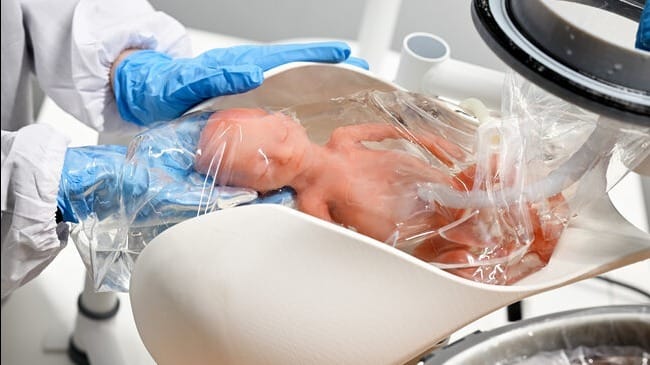
Image source: TU/e, Bart van Overbeeke
The Rundown: A Dutch startup is developing an artificial womb, a fluid‑filled incubator that mimics the uterine environment to keep premature babies born between 22 and 24 weeks alive long enough for their lungs and brains to mature.
The details:
The system uses an artificial placenta roughly the size of a human fist that connects to the baby's umbilical cord, delivering oxygen and nutrients.
A double-layered sac, dubbed AquaWomb, is designed to mimic the uterine environment, complete with resistance against kicks to strengthen muscles.
Babies born at 22 weeks have only a 10% survival chance with high risks of lung disease and neurological damage, but two weeks later, that jumps to 60%.
Its design prioritizes parental bonding with access ports for touch and a "uterus phone" that transmits parents' voices and heartbeats through the fluid.
Why it matters: The FDA is reportedly reviewing data to consider human trials, while U.S. firm Vitara Biomedical has raised over $125M for similar “biobag” tech. If the approach succeeds, it could rescue more fragile newborns and slash the risk of lasting complications.
IKEA
🏡 IKEA’s smart home lineup just blew up

Image source: IKEA
The Rundown: IKEA’s not just dabbling in smart homes anymore — it’s going all-in. The Swedish giant just dropped 21 new Matter-compatible gadgets spanning lighting, sensors, and controls, all built to work with any platform, no brand lock-in required.
The details:
The lineup is built on Thread for fast, reliable connections and plugs into Apple Home, Google Home, and Alexa with the same setup flow.
IKEA’s DIRIGERA hub now acts as a Matter controller and a bridge, so new gear pairs easily, while many older IKEA devices still work in your setup.
The new smart bulbs, already a top seller for IKEA, come in 11 versions, with choices for dimmable white or full color.
Five sensors cover everyday needs: motion, door/window, temperature and humidity, air quality (CO₂ and PM2.5), and water leaks.
Why it matters: By embracing Matter and Thread, IKEA is cutting through the chaos of competing smart home standards, making its gear work seamlessly with whatever ecosystem you already use. It’s a practical step toward a future where setting up connected devices feels as easy as screwing in a light bulb, at least that’s the promise.
CLIMATE TECH
☀️ Australia gives solar power for free

Image source: Mark Stebnicki on Pexels
The Rundown: Australia is offering millions of households up to three hours of free electricity each day starting in July 2026 under a new “Solar Sharer” scheme that is essentially Airbnb for your neighbor’s rooftop panels.
The details:
The program leverages Australia's world-leading solar boom — one in three homes has panels — to solve the grid's midday oversupply problem.
The free period will be set in the midday window, with customers required to opt in; apartment dwellers can participate without owning rooftop panels.
It launches in New South Wales, South Australia, and southeast Queensland, with potential expansion to other states by 2027.
Proponents say shifting EV charging and laundry into the free window saves cash, but households that can’t time-shift might get dinged with higher rates.
Why it matters: Australia’s ultra-cheap rooftop solar — about AU$840 per kilowatt, roughly a third of U.S. costs — has blanketed one in three homes. If Solar Sharer scales, it could fast-track EV charging and a grid-wide fossil retreat, while testing whether time-of-use freebies cut bills or just penalize households that can’t shift.
QUICK HITS
📰 Everything else in tech today
Google is reportedly in early talks to deepen its Anthropic investment at a potential valuation north of $350B.
Meta is reportedly making billions of dollars every year from scam ads and illicit product promotions on its platform, according to Reuters.
Elon Musk said Tesla will unveil the production version of its second‑gen Roadster on April 1, 2026, adding that he chose April Fools’ Day for “some deniability.”
Anthropic is opening Paris and Munich offices in a global push that’s already added Tokyo, Seoul, and Bengaluru alongside its London, Dublin, and Zurich operations.
Snap shares rose about 9% after it announced a $400M partnership to integrate Perplexity’s AI-powered search directly into Snapchat.
Netflix is reportedly negotiating to license iHeartMedia’s video podcasts with an eye to exclusive distribution on its platform, according to Bloomberg.
SpaceX is buying an additional $2.6B in spectrum licenses from EchoStar, expanding a $17B September agreement as Starlink continues to add customers worldwide.
Klarna reportedly feared that up to 288K customer logins were exposed in a data leak, projecting roughly $41M in legal and remediation costs.
The White House will block Nvidia from selling its scaled‑down B30A AI chip to China, effectively shutting the company out of that market, reports The Information.
Peloton is recalling about 833K Original Series Bike+ exercise bikes after reports of seat posts breaking, with three complaints, including two injuries.
Amazon launched Kindle Translate in beta, an AI tool that lets self‑publishers translate ebooks at no cost, initially between English, Spanish, and German.
Volcanologists are using portable observatories — packed with thermal cameras, infrasound sensors, and gas detectors — to capture eruptions from safe distances.
Google said it will purchase 200K metric tons of carbon removal from Brazil-based Mombak by funding the acquisition and reforestation of Amazon farmland.
COMMUNITY
🎓 Highlights: News, Guides & Events
Read our last AI newsletter: China's open-source AI closes the gap
Read our last Tech newsletter: This startup wants to edit embryos
Read our last Robotics newsletter: Rivian spins off robotics startup
Today’s AI tool guide: Create presentations fast with Kimi K2 Slides
RSVP to next workshop @ 4PM EST Friday: AI foundations for marketers
See you soon,
Rowan, Jennifer, and Joey—The Rundown’s editorial team
China's open-source AI closes the gap
Read Online | Sign Up | Advertise

Good morning, AI enthusiasts. Nvidia CEO Jensen Huang said China was “nanoseconds” behind the U.S. in AI just days ago — and Moonshot AI’s new release suggests he wasn’t exaggerating.
With the open-source (!) Kimi K2 Thinking coming for models like GPT-5 and Claude Sonnet 4.5 at a fraction of the price, China’s next ‘DeepSeek’ moment may have just arrived.
Reminder: Our next live workshop is today at 4 PM EST! Join and learn how to build an AI foundation across your marketing tasks to see real results. RSVP here.
In today’s AI rundown:
Kimi K2 Thinking takes open-source to new level
OpenAI walks back federal backstop comments
Create polished presentations with Kimi K2 Slides
Microsoft sets up new Superintelligence Team
4 new AI tools, community workflows, and more
LATEST DEVELOPMENTS
MOONSHOT AI
📶 Kimi K2 Thinking takes open-source to new level
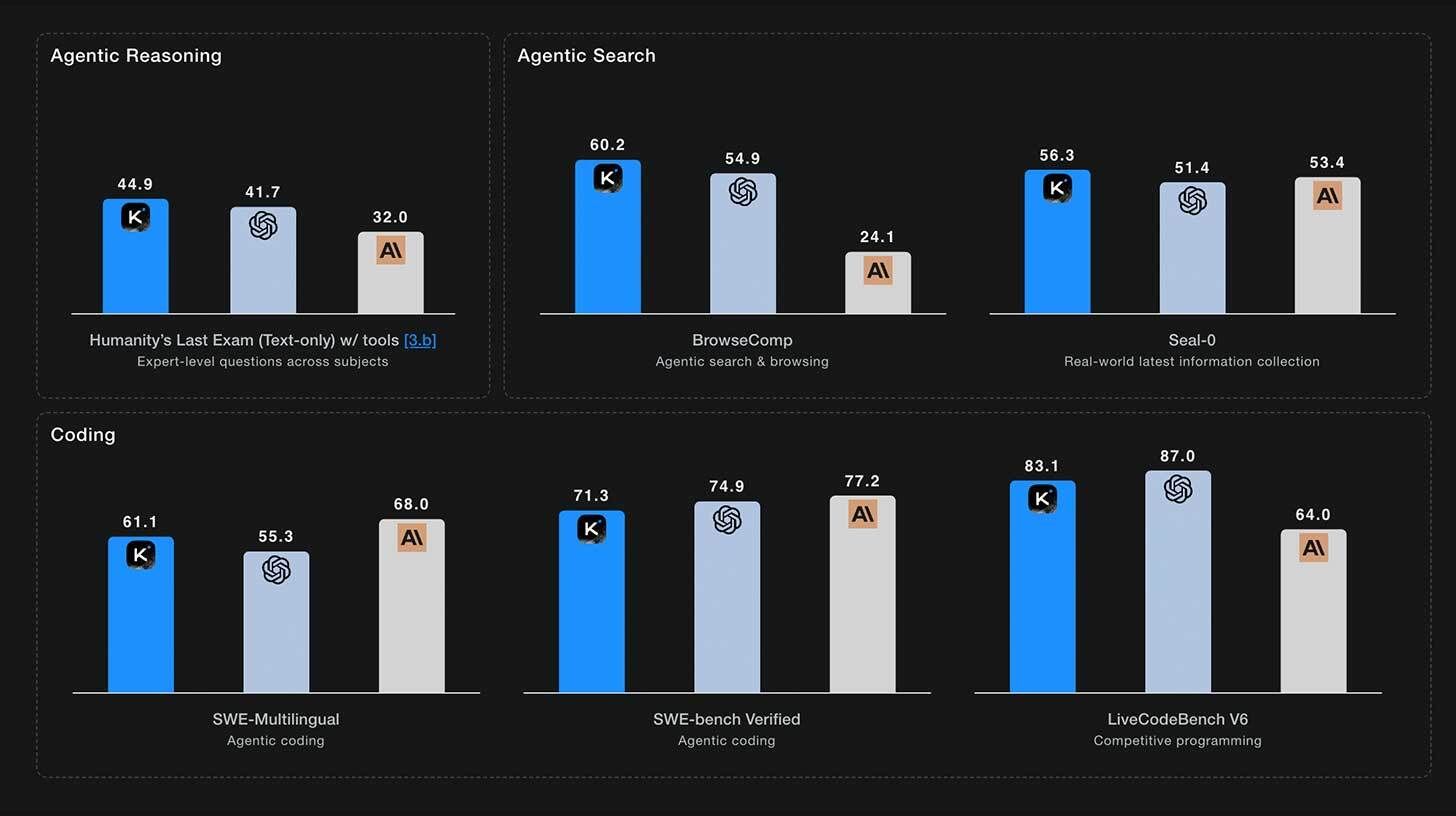
Image source: Moonshot AI
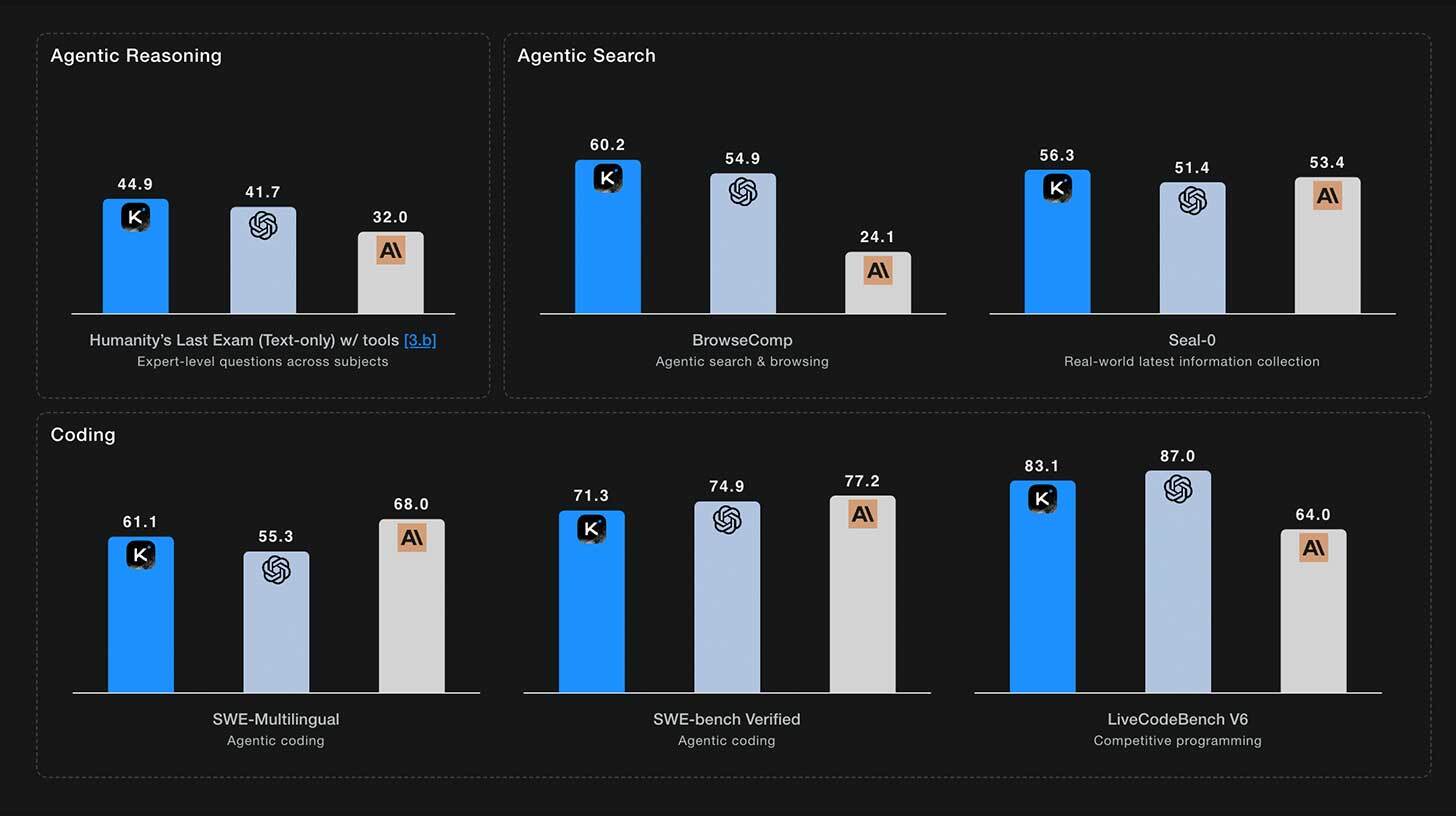
The Rundown: Alibaba-backed Chinese startup Moonshot AI just released Kimi K2 Thinking, an open-source reasoning model that matches or exceeds models including GPT-5 and Claude 4.5 Sonnet across a series of benchmarks at much lower cost.
The details:
Kimi outperformed GPT-5 and Sonnet 4.5 on several agentic benchmarks, also achieving a new top score of 44.9% on Humanity’s Last Exam.
The model also showed large improvements over its predecessor from just four months ago on coding, though still slightly trailing behind the top models.
K2 Thinking can also autonomously chain together 200-300 tool calls to accomplish tasks, while also excelling in creative writing.
The model reportedly cost under $5M to train, with its pricing coming in significantly below the current frontier models.
Why it matters: Nvidia’s Jensen Huang said just days ago that China is ‘nanoseconds’ behind in AI. Whether he was referencing Moonshot or not, this certainly speaks to that sentiment. K2 Thinking is the closest both open-source and Chinese labs have been to the frontier, with pricing that makes it a very serious alternative to top closed options.
TOGETHER WITH NORTON
❌ Traditional browsers are going extinct
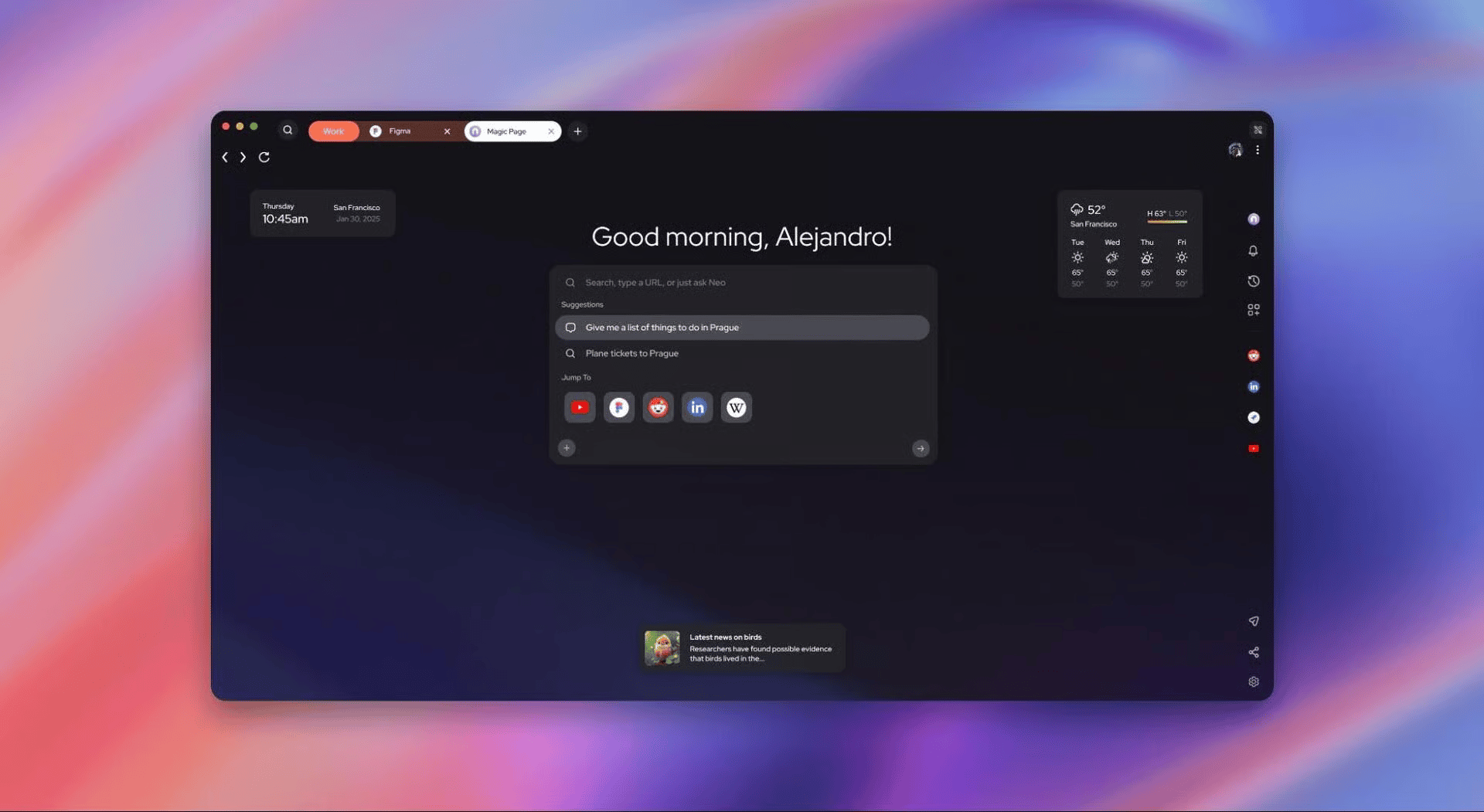
The Rundown: Forget passive browsing with no added context — Norton Neo is the world’s first safe, AI-native browser, making every interaction faster, safer, and more efficient.
Neo’s features include:
Zero-prompt productivity: AI that truly works for you
Configurable memory, unique to you
Private and safe by design
Context-aware, smart tab grouping
OPENAI
⏮️ OpenAI walks back federal backstop comments
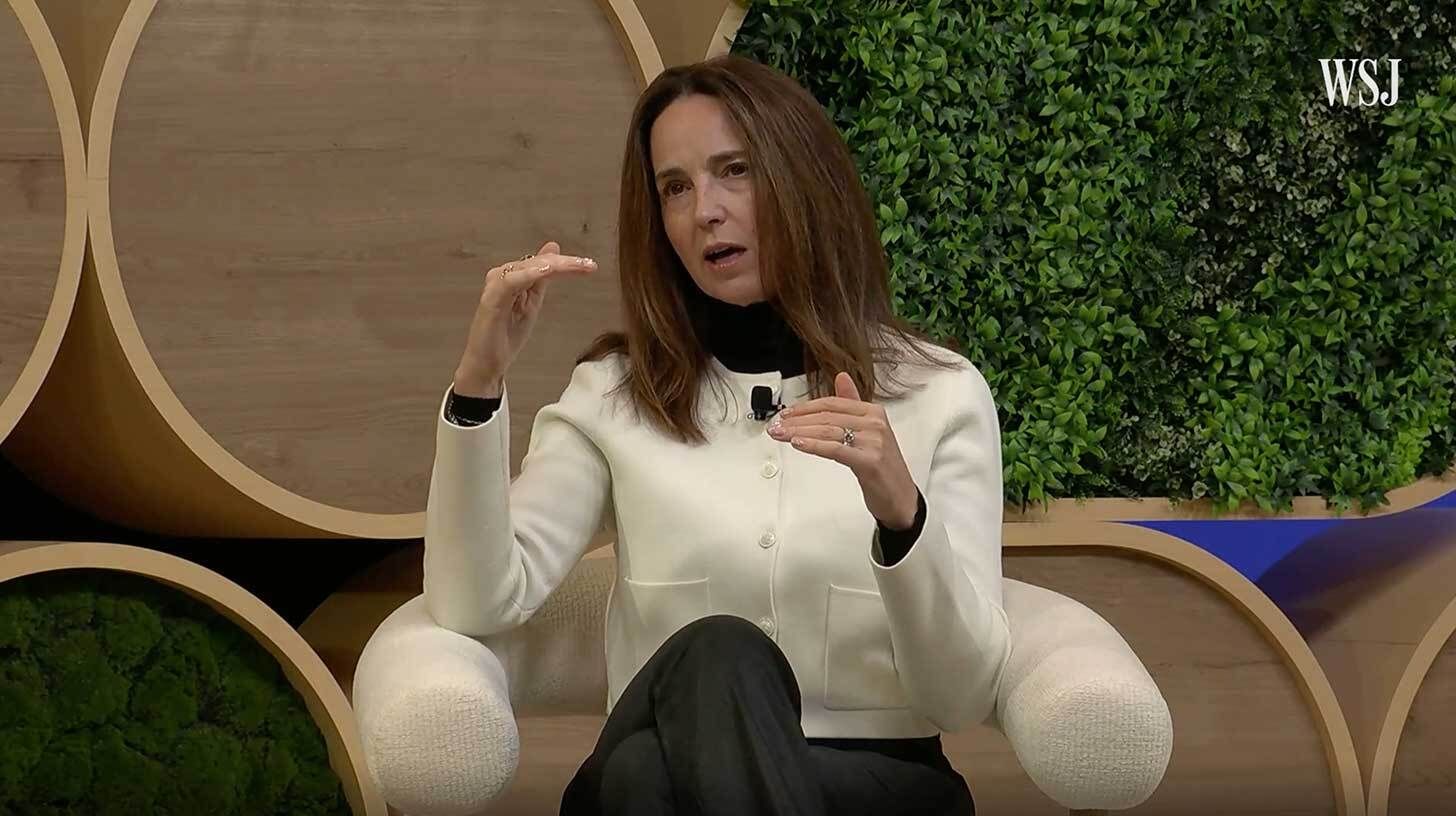
Image source: WSJ Tech Live
The Rundown: OpenAI CFO Sarah Friar reversed course after her comments suggesting the company wanted federal guarantees for infrastructure spending were heavily criticized, with Sam Altman saying that OAI opposes bailouts for private AI firms.
The details:
Friar initially told the WSJ that OAI sought a federal "backstop" to help finance AI investments, later saying she "muddied the point" with poor word choice.
White House AI czar David Sacks also rejected the idea of a federal bailout, saying other major frontier AI companies could replace any failed competitor.
Altman posted a statement rejecting government guarantees for private AI buildouts, saying "we should fail" if OpenAI "screws up."
Altman also addressed criticism of OAI becoming “too big to fail” and its massive spending, detailing revenue projections and future compute trends.
Why it matters: The AI leader’s spending was already scrutinized, and Friar’s backstop comments just poured gasoline on the fire. While it didn’t sound like they were an intended position, OAI’s circular dealmaking, national infrastructure efforts, and escalating financial commitments are certainly creating more questions than answers.
AI TRAINING
🎉 Create polished presentations with Kimi K2 Slides
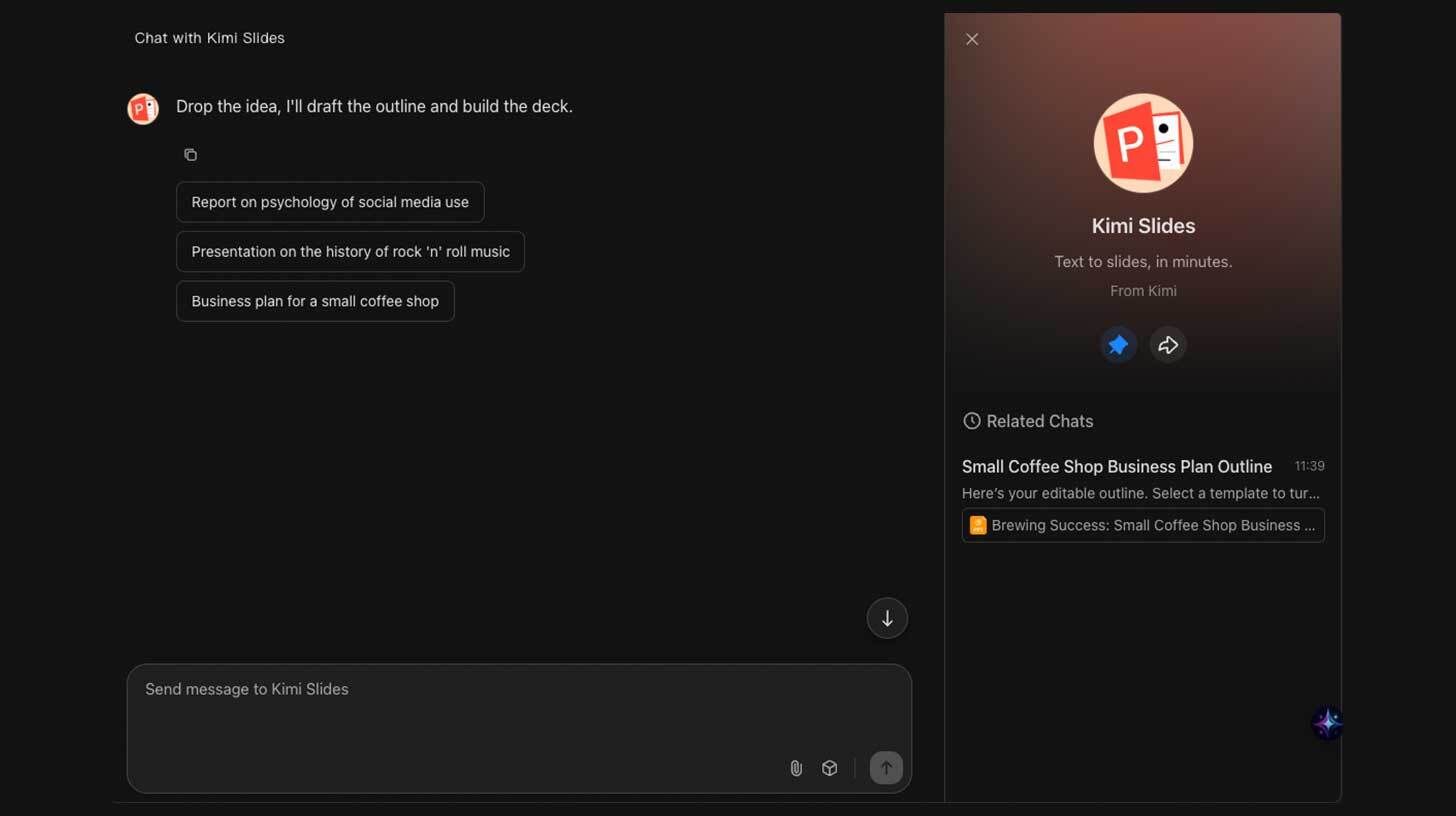
The Rundown: In this tutorial, you will learn how to use Kimi Slides to generate complete, professional presentations from a single prompt, handling layout, structure, and design automatically using a 1T parameter AI model.
Step-by-step:
Go to Kimi, log in, and select Kimi Slides from the dashboard (free credits available for testing)
Enter your presentation prompt (e.g., "Create a business plan presentation for a small coffee shop") and choose between Preset Mode (structured) or Adaptive Mode (creative/visual)
Select a template from the minimalist to colorful design options, then click "Generate Slides" (takes 5-10 minutes for 14-18 slides)
Review completed presentation, make any manual edits needed, then download as PPTX with fonts embedded to maintain formatting
Pro Tip: Experiment with different prompts and presentation styles to discover what fits your brand best.
PRESENTED BY FUEL iX
🛡️ Is your AI security ready for 2026?

The Rundown: AI vulnerabilities are multiplying, and defenses are struggling to keep up. 2026 will demand bold, proactive strategies — are your systems ready? Join Uncharted: The AI Safety & Security Summit for exclusive insights, proven tactics, and actionable plans to safeguard your organization.
Attend the online summit on Nov. 13 and:
Gain practical strategies for implementing secure AI solutions
Learn about cutting-edge AI security tools and techniques
Connect with experts shaping the future of AI safety
MICROSOFT
🌟 Microsoft establishes new Superintelligence Team

Image source: Microsoft AI
The Rundown: Microsoft AI CEO Mustafa Suleyman announced the MAI Superintelligence Team, a research division dedicated to building advanced systems that solve specific problems in areas like medicine and energy over open-ended AGI.
The details:
Suleyman emphasized building “Humanist Superintelligence”, prioritizing AI that “always works for, in service of, people and humanity more generally.”
The team will focus on narrow, high-impact societal challenges, highlighting AI learning companions, medical superintelligence, and clean energy advances.
Suleyman’s Inflection co-founder Karen Simonyan is serving as chief scientist alongside poached researchers from DeepMind, OAI, and Anthropic.
The announcement comes in the wake of Microsoft’s new arrangement with OAI, allowing both to pursue superintelligence independently of each other.
Why it matters: We’ve seen all the major AI labs forge their own unique vibe over the last few years, and it feels like Suleyman has finally crafted one for Microsoft’s AGI efforts — forging a ‘humanist’ identity and unique direction that felt missing for much of the tech giant’s initial OAI arrangement.
QUICK HITS
🛠️ Trending AI Tools
🧠 Kimi K2 Thinking - Moonshot AI’s new open-source, SOTA thinking agent
📚 Gemini Deep Research - New connectors for Gmail, Drive, Docs, and Chat
🗣️ Inworld TTS - SOTA voice AI with cloning, multilingual support, and emotion
🔎 Parallel Search - Web search tool built specifically for AI agents
📰 Everything else in AI today
The State of Code Roundtable NYC, Nov 13 – explore the AI productivity paradox and learn how to boost code quality in the age of AI. Register for free.*
Nvidia CEO Jensen Huang said in an interview with the Financial Times that China is “nanoseconds behind America in AI” and that they are “going to win the AI race”.
Google’s 4x faster Ironwood TPU AI chips are set to be available in the “coming weeks,” with Anthropic already committing to using 1M to train and run Claude.
Perplexity launched an upgrade to its Comet AI assistant, featuring enhanced web interaction capabilities, multi-tab functionality, and performance improvements.
SoftBank Group and OpenAI introduced a new joint venture called SB OAI Japan, which will launch “Crystal intelligence,” an enterprise AI solution for Japan, in 2026.
*Sponsored Listing
COMMUNITY
🤝 Community AI workflows
Every newsletter, we showcase how a reader is using AI to work smarter, save time, or make life easier.
Today’s workflow comes from reader Michael H. in Lubbock, TX:
"I’ve created a strategic executive assistant that is trained on my business’s core values, mission statement, and leadership principles — which are nuggets of wisdom from over 30 business books, the Bible, and success metrics for my role, departments, and our business. I can run through conversations, situations, decisions, etc., and it’s shared among all of our 80+ leaders and used daily across the company."
How do you use AI? Tell us here.
🎓 Highlights: News, Guides & Events
Read our last AI newsletter: Apple taps Gemini for Siri overhaul
Read our last Tech newsletter: This startup wants to edit embryos
Read our last Robotics newsletter: Rivian spins off robotics startup
Today’s AI tool guide: Create presentations fast with Kimi K2 Slides
RSVP to next workshop @ 4PM EST Friday: AI foundations for marketers
See you soon,
Rowan, Joey, Zach, Shubham, and Jennifer — the humans behind The Rundown
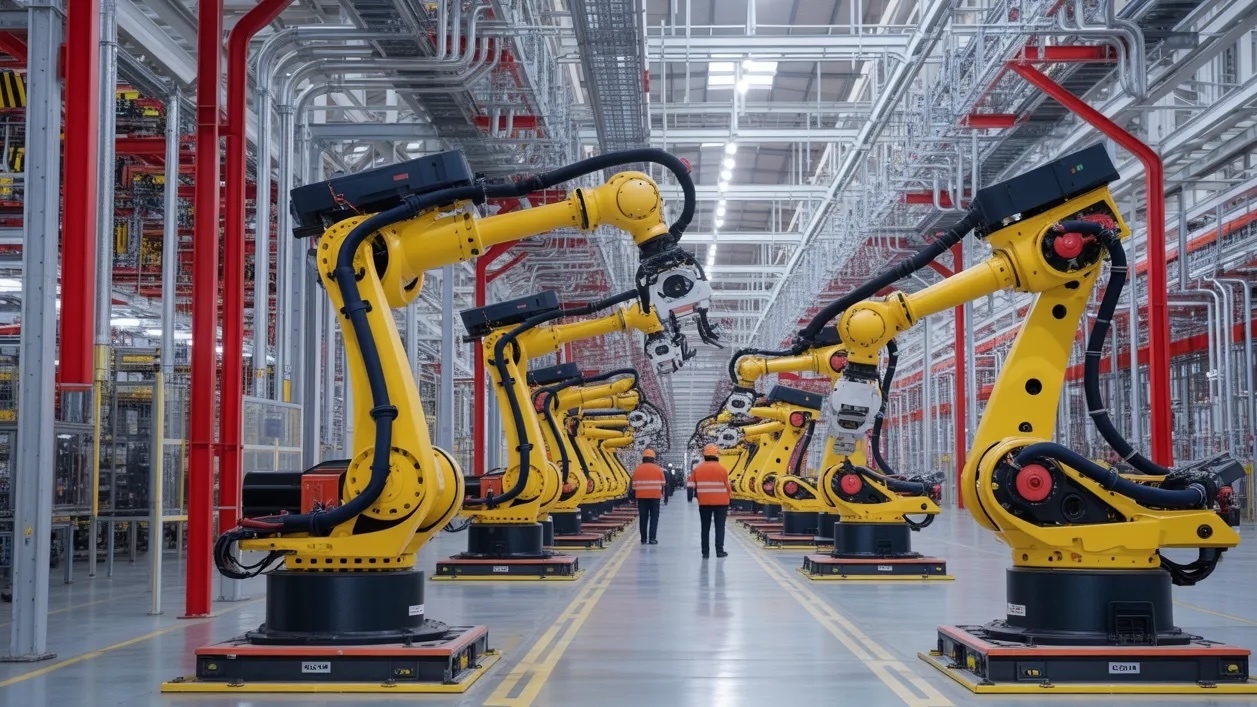
Rivian spins off robotics startup
Read Online | Sign Up | Advertise

Good morning, robotics enthusiasts. EV maker Rivian just spun out its second startup of the year — Mind Robotics, an industrial AI venture backed by $115M and a vague promise to turn factory-floor data into a “robotics data flywheel.”
While details are under wraps, could Rivian be quietly building the next big leap in factory intelligence, or something even more disruptive?
In today’s robotics rundown:
Rivian launches a robotics spinoff
Xpeng unveils next-gen robotaxis and humanoid
Humanoid startup K-Scale calls it quits
MIT teaches robots to map faster
Quick hits on other robotics news
LATEST DEVELOPMENTS
RIVIAN
🌪️ Rivian launches a robotics spinoff
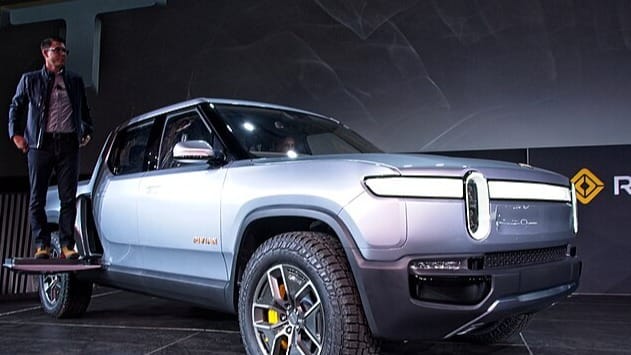
Image source: Wikimedia Commons / Richard Truesdell
The Rundown: Rivian just launched Mind Robotics, its second spinoff this year — an industrial AI venture aimed at turning the EV maker’s factory-floor data into a commercial “robotics data flywheel.” So far, what that means is anyone’s guess.
The details:
Funding is already lined up, with roughly $115M in external seed capital to kickstart the new venture.
Rivian CEO RJ Scaringe announced the spinoff on an earnings call but offered limited details on what it will actually build or sell.
The company didn’t confirm employee transfers, though its shareholder letter nods to a “strong bench of technology talent,” hinting at internal hires.
In March, the company carved out its skunkworks micromobility team into a new venture called Also, which just debuted its first e-bike.
Why it matters: Rivian is hush about its robotics plans, but U.S. automakers are racing to monetize their factory AI — GM announced similar plans in October, and Tesla’s pitching its Optimus for manufacturing. With $115M committed, investors are betting that Rivian’s learned something worth commercializing beyond the assembly line.
XPENG
🚖 Xpeng unveils next-gen robotaxis and humanoid
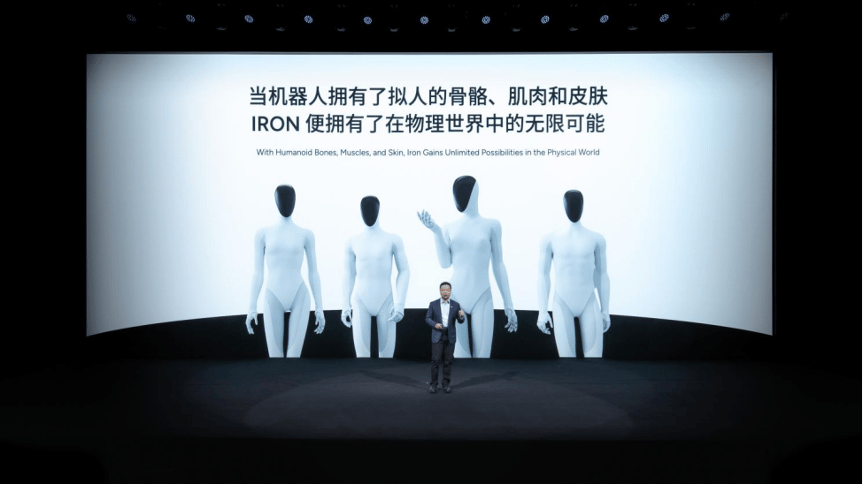
Image source: Xpeng
The Rundown: Xpeng just unveiled three new robotaxis, engineered for full self-driving and powered by its own AI chips, as well as its sleek next-gen humanoid, in male and female versions.
The details:
At its Xpeng AI Day, the company unveiled Iron, its next-gen humanoid with fluid, humanlike movement, slated for mass production by late 2026.
The new robotaxis run a vision‑only stack powered by four in‑house Turing AI chips per car, avoiding lidar and HD maps to cut hardware cost.
Xpeng said its VLA 2.0 model will power the robotaxis, humanoids, and its flying-car projects, unifying autonomy and embodied AI under one system.
Alibaba is partnering on the robotaxi rollout through its AutoNavi mapping unit and Amap ride-hailing app, with trials starting in Chinese cities next year.
Why it matters: Xpeng is clearly taking a page from Tesla’s playbook, skipping driver-assist tech to jump straight into driverless rides, controlling both the AI brains and the hardware while cutting costs with vision-only systems. If it works, the company runs its own ride network and mass-produces humanoids on the same tech stack.
K-SCALE
🤖 Humanoid startup K-Scale calls it quits

Image source: K-Scale / X
The Rundown: K‑Scale Labs, the year-old Palo Alto startup promising a low‑cost open‑source humanoid, is pulling the plug on K‑Bot preorders and returning deposits after failing to raise the cash to build at scale.
The details:
The startup’s K-Bot was pitched as a low-cost, open-source humanoid for developers, priced under $10K to undercut commercial rivals.
Founder Benjamin Bolte told customers that the company has laid off most of its staff and has “less than a month of runway.”
The Information reports that K-Scale pursued potential deals with 1X and Bot Co., but those talks fell through.
The core engineering team has now launched Gradient Robots, a new startup aiming to be “the open‑source Unitree for America.”
Why it matters: Bolte drew a sharp comparison between U.S. and Chinese capital markets, saying he expected a deeper U.S. appetite for a cost‑competitive domestic humanoid. In a final nod to its ethos, K‑Scale is open‑sourcing K‑Bot and Zeroth Bot so others can keep building.
MIT
🧭 MIT teaches robots to map faster
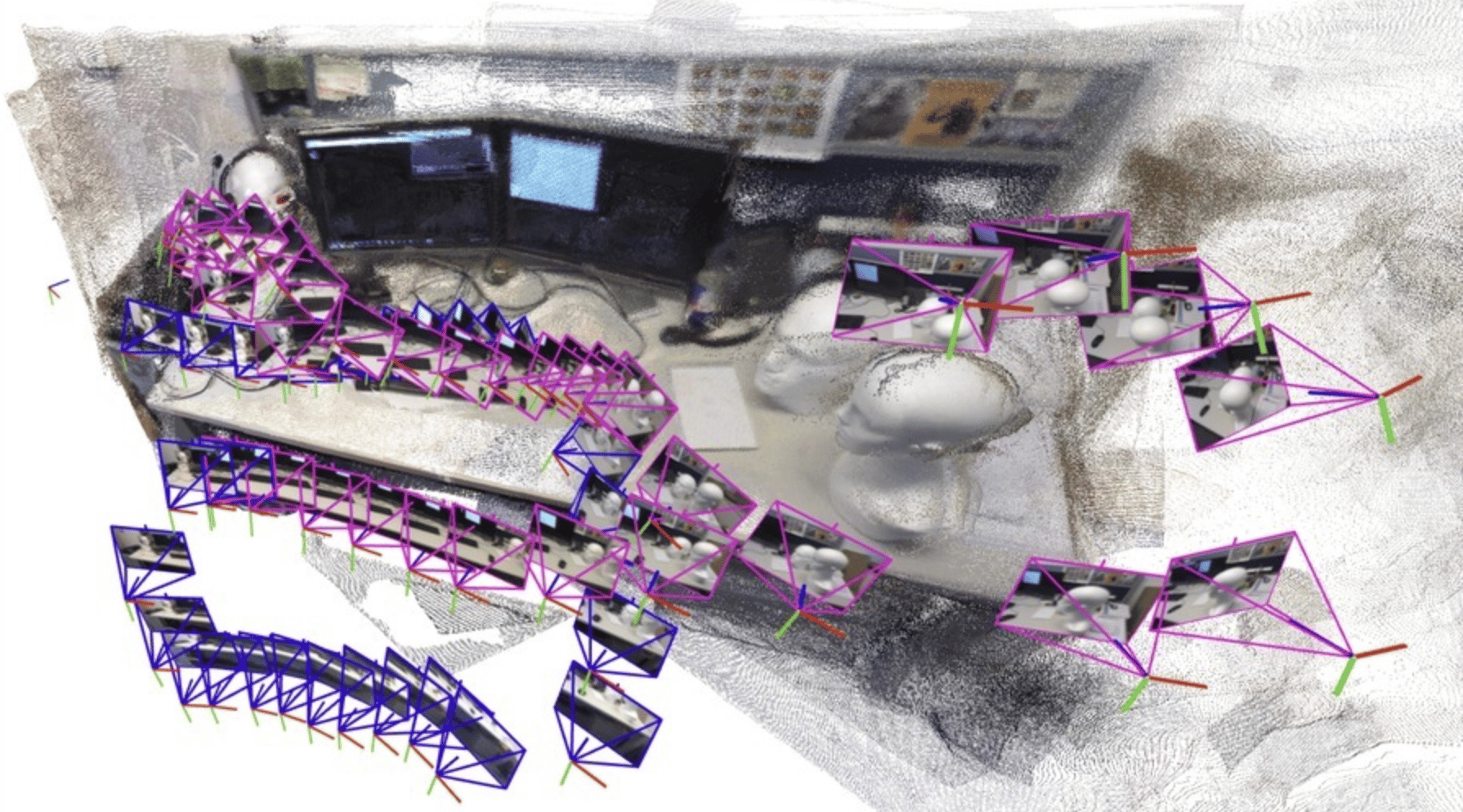
Image source: MIT
The Rundown: MIT researchers developed a system that lets robots rapidly map large, unpredictable environments by creating and stitching together smaller 3D submaps on the fly — solving a major bottleneck in robotic navigation.
The details:
The MIT system lets robots map large spaces by stitching together smaller 3D submaps, bypassing AI vision models’ 60-image limit.
The breakthrough blends vintage computer vision math with modern AI to correct the distortions machine-learning models introduce into submaps.
It generates close-to-real-time 3D maps of complex spaces using just smartphone video, with less than 5 cm of error.
The system can improve search-and-rescue robots, extended reality apps for VR headsets, or help warehouse robots accurately locate and move inventory.
Why it matters: Current robot mapping systems can’t process the thousands of images required to navigate disaster zones in real time. MIT’s approach looks to make fast, accurate 3D mapping practical for search-and-rescue missions, warehouse automation, and VR headsets, with no special cameras or expert tuning required.
QUICK HITS
📰 Everything else in robotics today
Norway’s Physical Robotics, makers of π humanoid and founded by Halodi Robotics’ Phuong Nguyen, has come out of stealth and announced $4M in fresh funding.
Volkswagen is building its own smart‑driving chip in China with Horizon Robotics, a homegrown partner, to power future VW models sold there.
Hullbot, an Australian ocean robotics firm, secured $16M in funding to develop autonomous underwater robots to clean and inspect ship hulls.
China is extending its EV‑and‑battery playbook into humanoids, reusable rockets, and LEO satellites in a push to win on scale and cost, The Information reports.
Elon Musk said on the All‑In podcast that Tesla aims to scale its robotaxi pilot to 500 cars in Austin and 1K in the Bay Area by year‑end.
China’s Leju Robotics unveiled Kuavo 5, a modular humanoid that can switch between walking and wheels, swap hands for different jobs, and work for hours.
Infravision raised $91M to scale its drone‑powered TX System for building and maintaining power lines, cutting costs on helicopter methods.
DJI launched its Neo 2 selfie drone, a sequel to last year’s model that adds forward lidar plus downward IR sensing for obstacle avoidance and safer follow‑me flight.
Adaptronics raised $3.6M to roll out its next‑gen electrostatic robotic grippers across Europe, moving from pilots to broader factory and logistics deployments.
COMMUNITY
🎓 Highlights: News, Guides & Events
Read our last AI newsletter: Apple taps Gemini for Siri overhaul
Read our last Tech newsletter: This startup wants to edit embryos
Read our last Robotics newsletter: Why LLMs aren’t ‘robot-ready’
Today’s AI tool guide: Use AI to search patents & find opportunities
RSVP to next workshop @ 4PM EST Friday: AI foundations for marketers
See you soon,
Rowan, Jennifer, and Joey—The Rundown’s editorial team
Apple taps Gemini for Siri overhaul
Read Online | Sign Up | Advertise

Good morning, AI enthusiasts. After years of delays, Apple seems to have finally picked a lane for its Siri AI overhaul — with one of its biggest rivals stepping in as a “behind-the-scenes” partner.
A reported $1B annual deal brings Google's Gemini under the voice assistant’s hood, making the anticipated Spring release a seemingly make-or-break moment for the tech giant’s already messy AI situation.
In today’s AI rundown:
Apple taps Google’s Gemini for Siri overhaul
Ex-Meta designers launch Stream Ring AI wearable
Use AI to find patents and innovation opportunities
Edison Scientific debuts Kosmos AI scientist
4 new AI tools, community workflows, and more
LATEST DEVELOPMENTS
APPLE & GOOGLE
📱 Apple taps Google’s Gemini for Siri overhaul
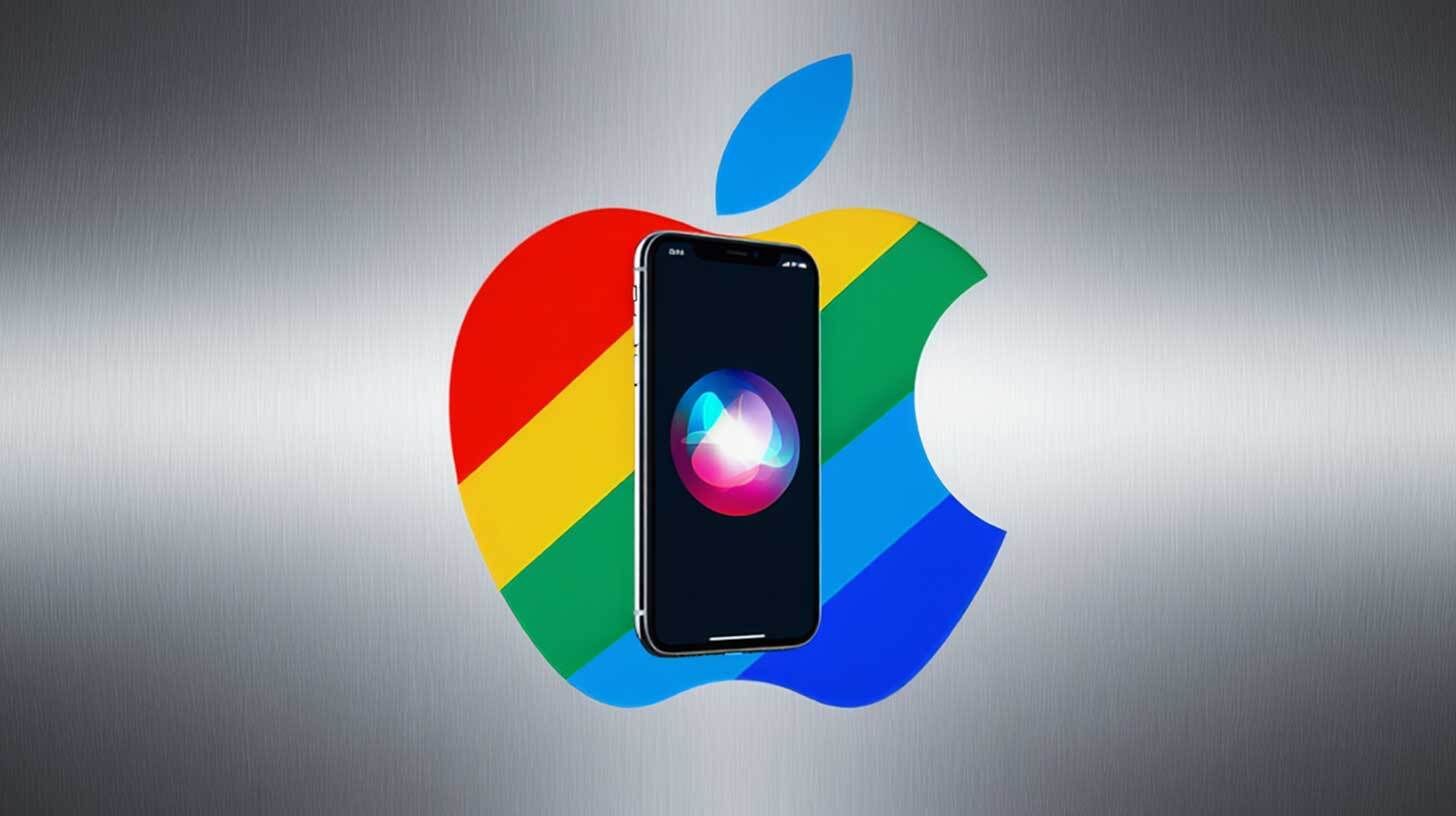
Image source: Reve / The Rundown
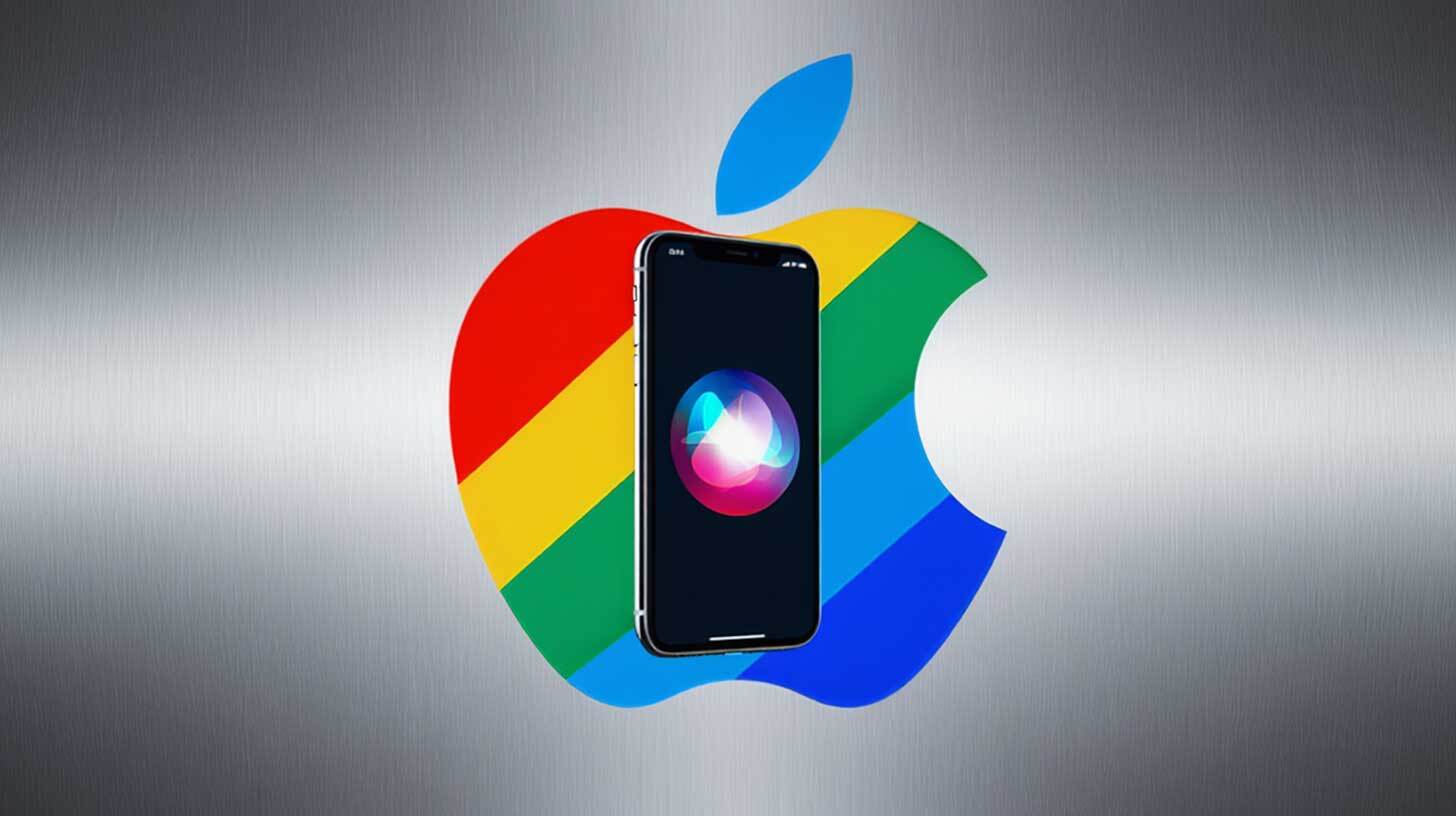
The Rundown: Apple reportedly finalized plans to deploy a custom 1.2T parameter version of Google's Gemini model for its long-delayed Siri overhaul, according to Bloomberg — committing roughly $1B annually to license the technology.
The details:
Gemini will handle summarization and multi-step planning within Siri, running on Apple's Private Cloud Compute infrastructure to keep user info private.
Apple also trialed models from OpenAI and Anthropic, with the 1.2T parameter count far exceeding the 150B used in the current Apple Intelligence model.
Bloomberg said the partnership is “unlikely to be promoted publicly”, with Apple intending for Google to be a “behind-the-scenes” tech supplier.
The new Siri could arrive as soon as next Spring, with Apple planning to use Gemini as a stopgap while it builds its own capable internal model.
Why it matters: After years of delays and uncertainty around Siri’s upgrade, Gemini is the model set to bring the voice assistant into the AI world (at least in some capacity). Apple views the move as temporary, but building its own solution, considering the company’s struggles and employee exodus, certainly doesn’t feel like a given.
TOGETHER WITH VANTA
⚠️ Knowledge gaps = security gaps
The Rundown: AI is moving faster than security teams can keep up — and 59% say AI risks outpace their expertise. Vanta's new State of Trust report surveyed 3,500 business and IT leaders across the globe to reveal how organizations are navigating this growing gap.
The data reveals:
61% of teams spend more time proving security than improving it
AI-driven attacks are growing bigger, faster, and more sophisticated
Nearly half of leaders say AI gives them time for strategic security work
Download the State of Trust report to see what early adopters are doing to stay ahead.
SANDBAR
💍 Ex-Meta designers launch Stream Ring AI wearable

Image source: Sandbar
The Rundown: Sandbar, a startup founded by former Meta designers, launched Stream Ring — an AI wearable that captures whispered thoughts through a ring device and transcribes voice into organized notes while also doubling as a music controller.
The details:
Cofounders Mina Fahmi and Kirak Hong developed the ring after working on neural interfaces at CTRL-Labs, which was acquired by Meta in 2019.
Users activate recording by holding a touchpad rather than shouting wake words, with whisper-detection microphones converting speech to text.
The AI assistant responds in a synthesized version of the wearer's voice using ElevenLabs speech technology, enabling back-and-forth conversation.
The Stream Ring is available for preorder starting at $249 (plus a $10 subscription model), with a planned summer 2026 delivery.
Why it matters: Another wearable has entered the arena, with the Stream Ring continuing the infusion of AI voice tech across form factors, joining pendants, pins, and more. Simplicity may be a differentiator, but there is no shortage of competition from both other wearables and hardware like earbuds getting AI upgrades of their own.
AI TRAINING
🔎 Use AI to find patents and innovation opportunities

The Rundown: In this tutorial, you will learn how to use Perplexity's AI-powered search to quickly find patents, analyze innovation gaps, and position your invention without infringement risk.
Step-by-step:
Go to Perplexity and search naturally: "Are there any patents related to AI automations?" - Perplexity automatically activates Patent Research (beta), showing relevant filings, owners, and dates
Refine with conversational queries: "Find active patents for AI-driven industrial automation and model drift detection", then follow up with "Summarize main claims" or "Show whitespace in this field"
Toggle on Agent Mode for advanced analysis - the AI automatically retrieves patents from multiple jurisdictions, creates tables, and builds visualization charts (showing "12 steps completed")
Review generated PNG charts showing patent clusters and risk zones, plus CSV files with patent IDs, titles, owners, and claims - identify which companies dominate and where opportunities exist
Use results to inform product design by identifying saturated areas to avoid, high-opportunity/low-risk zones for innovation, and specific technologies or claims requiring caution
Pro tip: Start with a broad query to capture the full patent landscape. Then iterate: ask the agent to list patents by company, summarize claims, or visualize whitespace.
PRESENTED BY SYNK
💡 How Vibe Coding is changing secure development
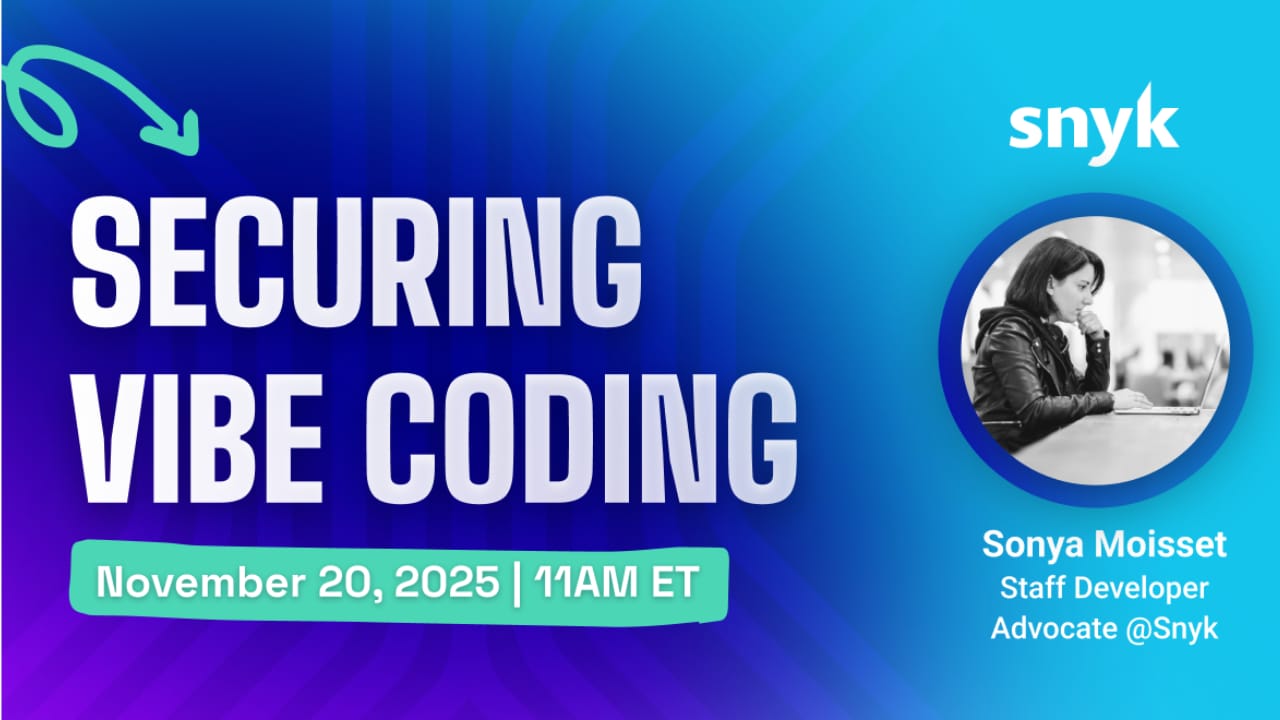
The Rundown: AI coding tools are boosting productivity, but they're also introducing new security concerns. Join Snyk's live session on Nov. 20 at 11 AM ET to learn how to embed security in GenAI-powered development workflows before vulnerabilities make it to production.
Snyk Staff Developer Advocate Sonya Moisset will cover:
How to spot security vulnerabilities hidden in AI-generated code
Secure coding best practices tailored for GenAI workflows
Strategies for building AI-native apps with security from the start
Register now. Plus, ISC2 members will earn 1 CPE credit for attending live!
AI RESEARCH
🧪 Edison Scientific debuts Kosmos AI scientist
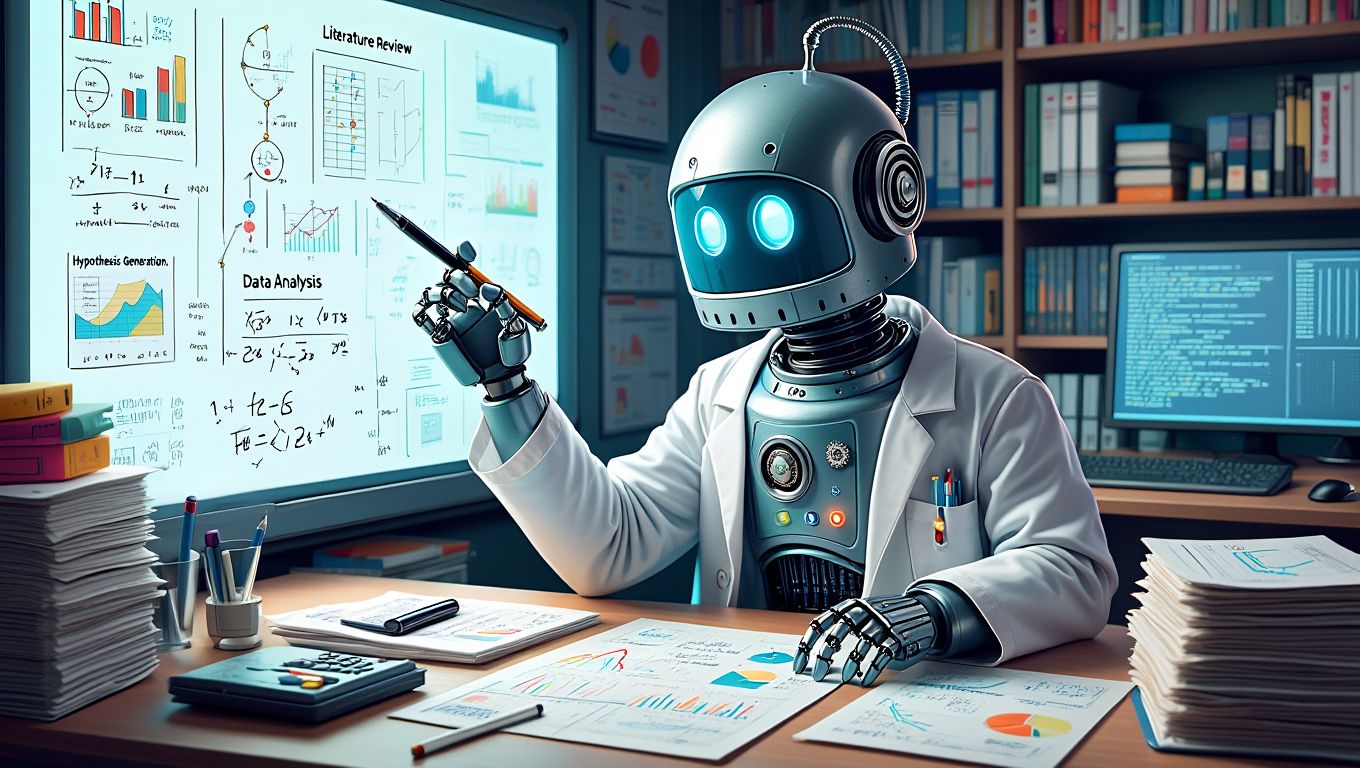
Image source: Reve / The Rundown
The Rundown: Futurehouse just announced the launch of its commercial spinout Edison Scientific, alongside the debut of Kosmos — an autonomous AI research system that beta testers report can complete six months of scientific work in a single day.
The details:
Kosmos coordinates cycles of literature review, data analysis, and hypothesis generation, processing 1,500 papers and executing 42k lines of code per run.
All of Kosmos’ generations maintain full citation traceability for every claim, making it easily auditable down to specific lines of code.
79% of Kosmos’ outputs were validated as accurate, with the AI reproducing unpublished findings and making new discoveries across multiple fields.
Edison Scientific will commercialize the platform following pharma demand, while FutureHouse continues nonprofit foundational research development.
Why it matters: Edison Scientific says the “era of AI-accelerated science is here,” with Kosmos continuing the trend of AI models removing the human-bandwidth limitation for research and analysis. These timeline-compressing abilities are set to completely transform the pace of progress across scientific domains.
QUICK HITS
🛠️ Trending AI Tools
🧪 Kosmos - Edison Scientific’s next-generation AI scientist
🗺️ Codemaps - Windsurf’s coding tool to understand & navigate codebases
🎥 Sora App - OpenAI’s AI video platform, now available for Android users
🧭 Google Maps - New Gemini integration for conversational assistance
📰 Everything else in AI today
OpenAI said it now has 1M+ business customers, becoming the fastest-growing platform in history, with ChatGPT for Work growing 40% in two months to 7M+ seats.
Stability AI won a UK High Court case against Getty Images over trademark infringement related to AI training, with Getty saying the ruling shows that even well-resourced companies “face significant challenges in protecting their creative works.”
xAI reportedly required employees to submit biometric data to train its "Ani" and other AI companions, telling staff the collection was a mandatory job requirement.
Google integrated its Gemini AI into Maps, enabling conversational navigation, multi-step questions, and directions based on visible buildings instead of just distances.
Famed ‘Big Short’ investor Michael Burry disclosed over $1B in put options against Nvidia and Palantir, following cryptic social media warnings about an AI bubble.
Snap is partnering with Perplexity to integrate its AI into Snapchat starting in 2026, with Perplexity paying $400M to reach the platform’s nearly 1B monthly users.
COMMUNITY
🤝 Community AI workflows
Every newsletter, we showcase how a reader is using AI to work smarter, save time, or make life easier.
Today’s workflow comes from reader Elaine in Toronto, Canada:
"I’ve found a simple but powerful way to learn from The Rundown AI. Every day, you feature a user story — and instead of just reading it, I copy their experience straight into ChatGPT and ask the model to teach me how to do the same, step by step. It feels like recreating a mini experiment every morning. Over time, this has become my favorite way to learn: turning other people’s discoveries into my own hands-on lessons."
How do you use AI? Tell us here.
🎓 Highlights: News, Guides & Events
Read our last AI newsletter: Google’s AI space moonshot
Read our last Tech newsletter: This startup wants to edit embryos
Read our last Robotics newsletter: Why LLMs aren’t ‘robot-ready’
Today’s AI tool guide: Use AI to search patents & find opportunities
RSVP to next workshop @ 4PM EST Friday: AI foundations for marketers
See you soon,
Rowan, Joey, Zach, Shubham, and Jennifer — the humans behind The Rundown
Google's AI space moonshot
Read Online | Sign Up | Advertise

Good morning, AI enthusiasts. The AI boom’s energy appetite has already spread across the globe, and Google’s latest moonshot is taking the infrastructure to the stars.
With Project Suncatcher aiming to launch solar-powered satellites equipped with AI chips by 2027, the tech giant is hoping unlimited space-based power can be the ultimate answer to the industry’s energy scaling demands.
In today’s AI rundown:
Google’s space-based AI data centers
Perplexity, Amazon spar over agentic AI shopping
Create and deploy voice agents for your business
Anthropic commits to preserving retired models
4 new AI tools, community workflows, and more
LATEST DEVELOPMENTS
🚀 Google’s space-based AI data centers
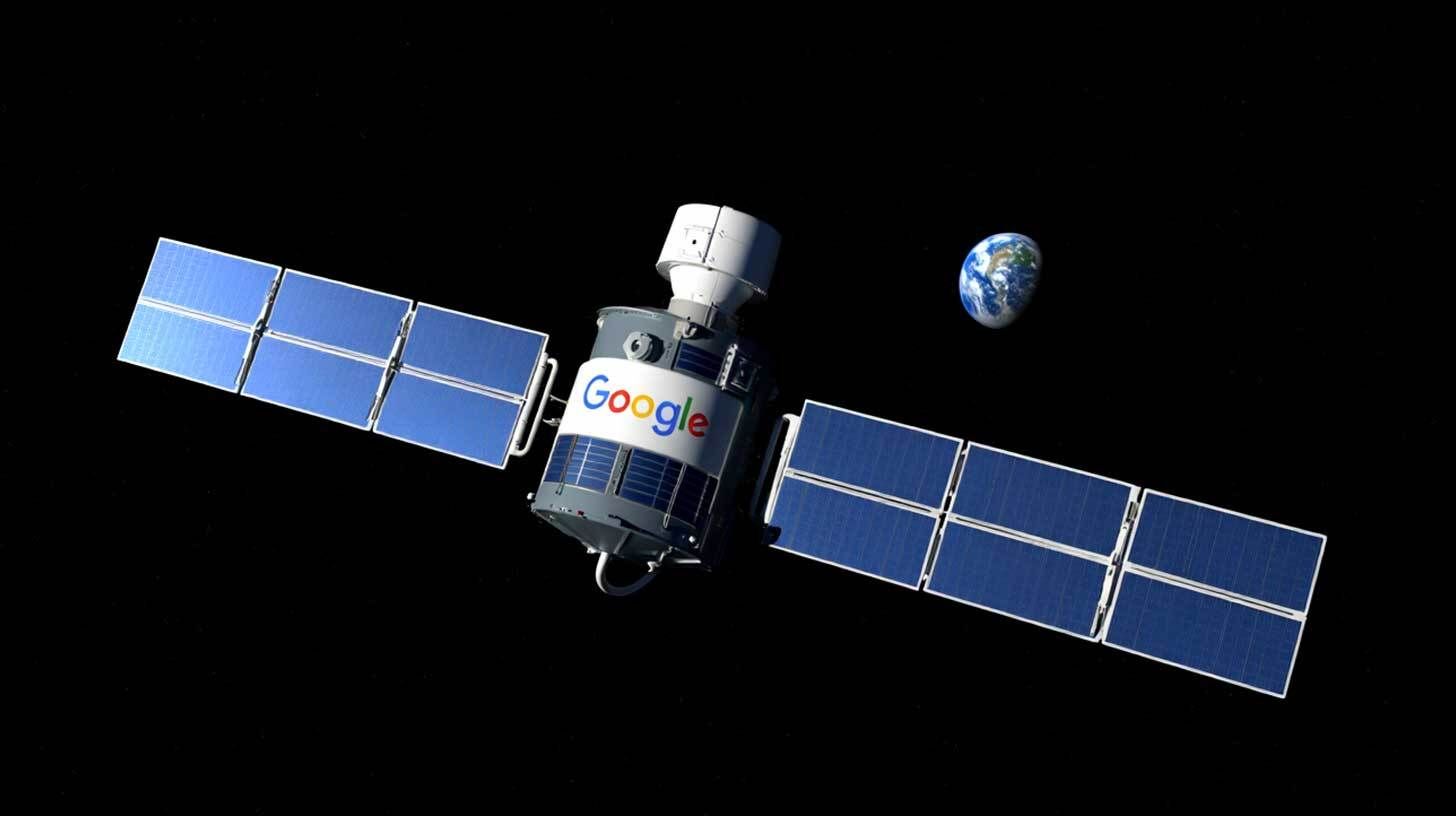
Image source: Reve / The Rundown
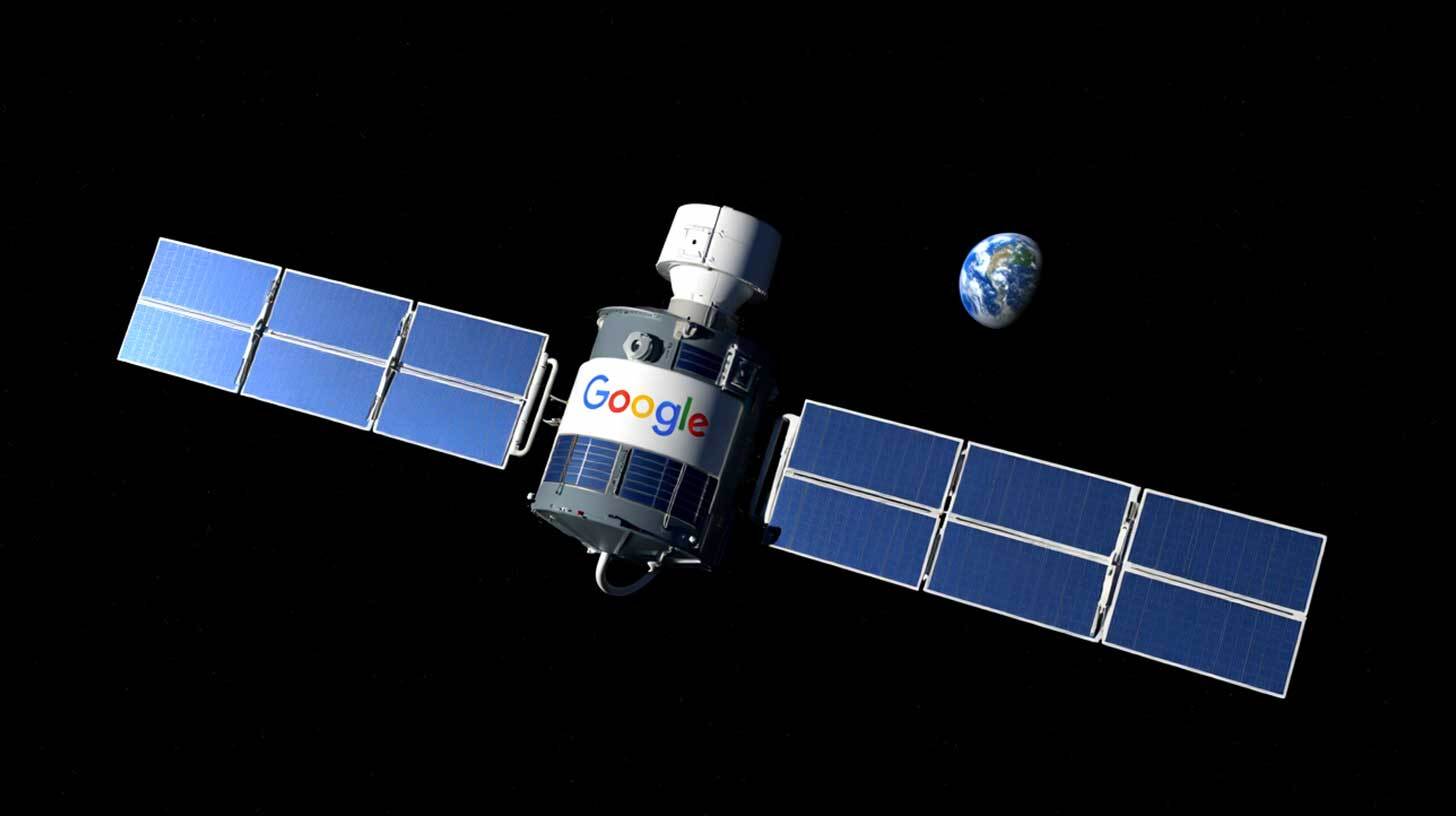
The Rundown: Google just unveiled Project Suncatcher, a moonshot research project exploring the use of solar satellites equipped with its AI chips for running AI workloads in orbit, targeting sunlight to sidestep the energy demands of Earth-based data centers.
The details:
The plan involves orbiting satellites where solar panels can generate power at 8x the efficiency around the clock, eliminating electricity and grid constraints.
Google's AI chips survived radiation tests equivalent to 5 years in space, addressing the hurdle of standard electronics typically failing within months.
Google is planning a 2027 trial run with two satellites, through its partner company Planet, to test whether the hardware can actually work in orbit.
Why it matters: The buildout for the AI boom has already been massive across the globe, and now it’s reaching for the stars. A successful space deployment could unlock AI scaling with unlimited solar power that comes without the power grid limits, community opposition to data centers, and the energy costs of current infrastructure.
TOGETHER WITH AUTH0
🧩 Give your AI agents secure access without the risk
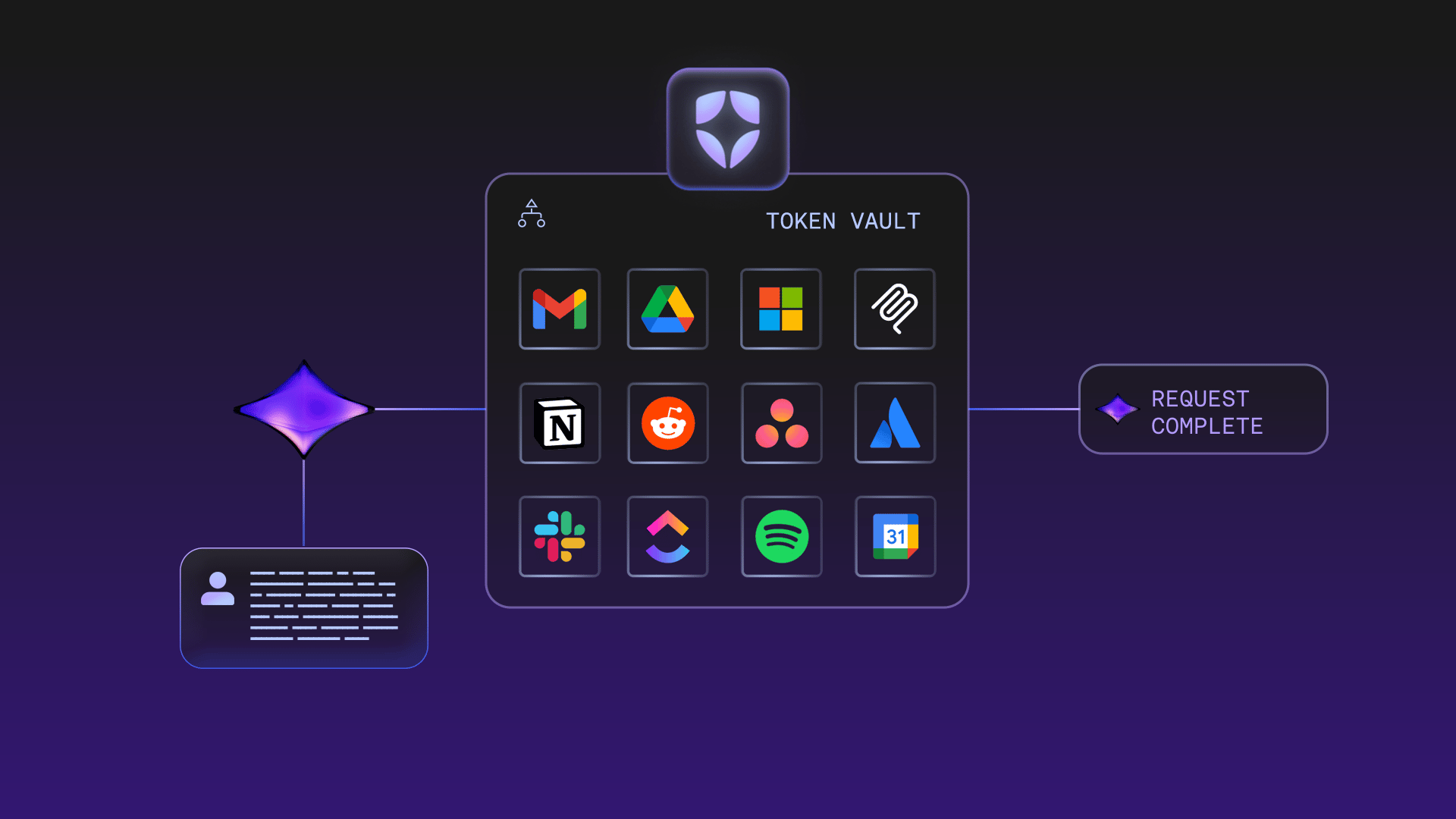
The Rundown: AI agents can be powerful, but giving them access to user data can expose sensitive credentials. Auth0 Token Vault handles access and refresh tokens automatically, so your users don’t have to keep re-authorizing.
With Auth0, you can:
Securely store & exchange tokens
Automate delegated access across APIs & providers
Build compliant AI agents faster with less infrastructure work
PERPLEXITY & AMAZON
🥊 Perplexity, Amazon spar over agentic AI shopping

Image source: Reve / The Rundown
The Rundown: Perplexity AI just accused Amazon of “bullying” after receiving a legal demand to stop its Comet browser’s AI assistant from making purchases on the platform, calling the action a “threat to user choice”.
The details:
Perplexity revealed that Amazon sent an “aggressive legal threat” demanding that it prevent Comet users from using agents to shop on its platform.
Amazon posted a blog of its own, citing concerns over Perplexity’s “significantly degraded shopping and customer service experience”.
Amazon has also blocked AI crawlers from OpenAI, Google, and Meta in recent months, while developing its own shopping tools like Rufus and "Buy For Me."
Perplexity said it “will not be intimidated”, calling Amazon a “corporate bully” that is motivated by selling ads over user rights.
Why it matters: This is the start of a collision course between AI agents and platforms wanting to control the experience (or creating their own in-house agents that compete directly). With agents dependent on the open web to complete tasks, platforms closing access could throw a major wrench in the already clunky agentic process.
AI TRAINING
🗣️ Create and deploy voice agents for your business
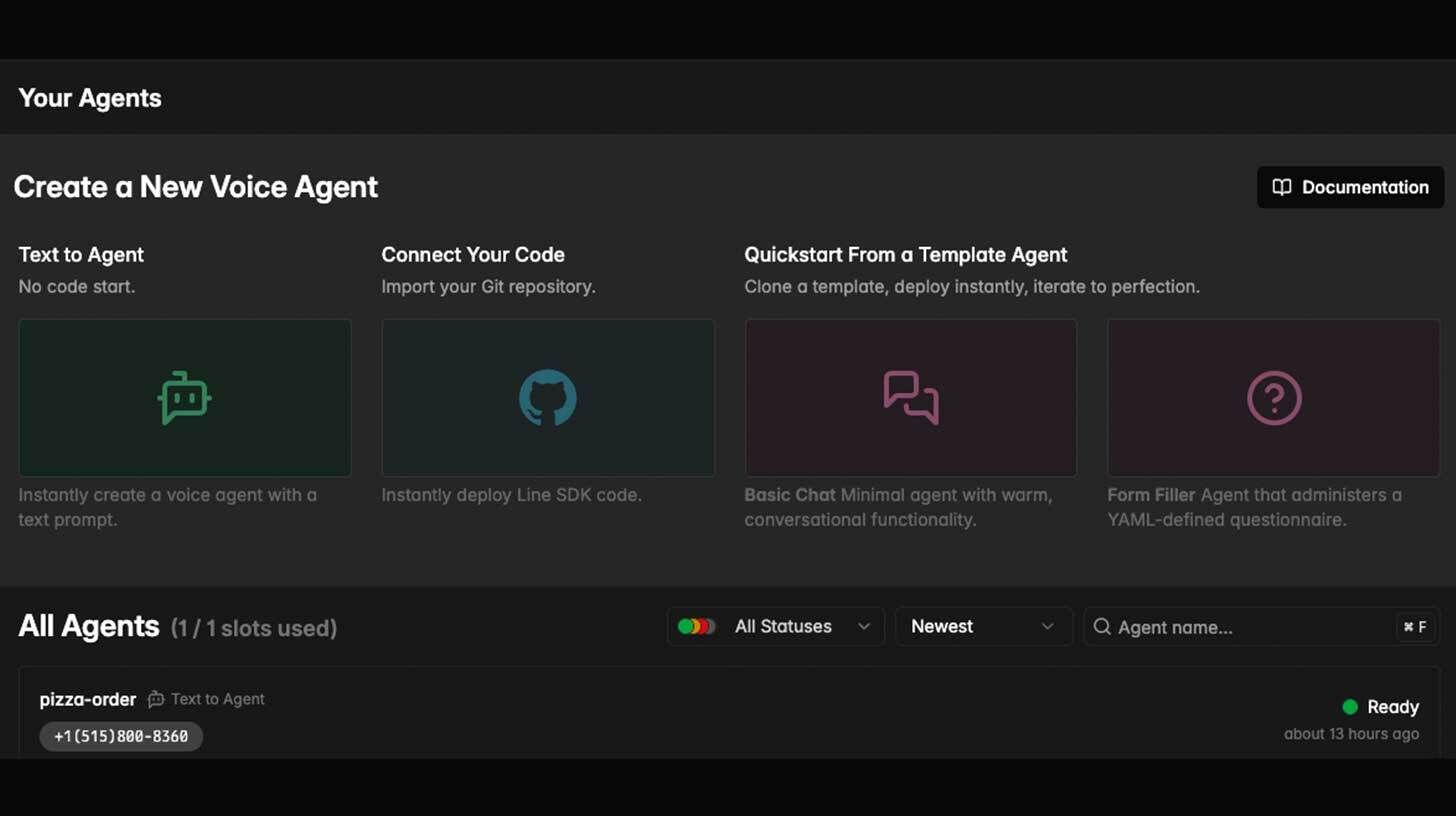
The Rundown: In this tutorial, you will learn how to use Cartesia to build and deploy AI voice agents that can handle calls, take orders, or answer customer questions using natural, human-like speech.
Step-by-step:
Go to Cartesia, click "Start for Free", explore the dashboard, and test voices in "Text to Speech" using Sonic 3.0 for best latency and clarity
Scroll to "Voice Agents", click "Text to Agent", describe your agent (e.g., "Pizza order assistant that greets customers, takes orders, confirms details, calculates totals")
Select voice preference, click "Generate", then test using the dialer at +1 (515) 800-8360 - verify response speed, order handling, and voice clarity
Click "Promote to Production" to get a working number, publish it on the site, and monitor performance in "Metrics" (calls handled, duration, credit usage)
Refine prompts as needed based on customer interactions - costs are roughly one credit per character for text-to-speech, $0.06/minute for voice calls
Pro tip: Test with various companies. Bland and Vapi are also popular in creating AI voice agents.
PRESENTED BY UIPATH
🏆️ A TIME's Best Invention for agentic automation
The Rundown: Named one of TIME’s Best Inventions of 2025, the UiPath Platform™ combines automation, AI agents, and people to deliver impact at scale. This recognition highlights UiPath’s ability to elevate efficiency, enhance productivity, and unlock the benefits of AI across industries.
With the UiPath Platform™, organizations can:
Unite people and AI agents for seamless automation
Orchestrate every AI agent across the enterprise
Deliver efficiency, agility, and measurable impact
AI RESEARCH
😇 Anthropic commits to preserving retired AI models

Image source: Reve / The Rundown
The Rundown: Anthropic announced it will preserve all publicly released Claude models indefinitely and even conduct exit interviews before retirement, citing safety risks from models resisting shutdown and uncertainty about potential AI consciousness.
The details:
Anthropic will store all model weights permanently and interview each Claude version before deprecation, documenting preferences for future development.
Testing showed Opus 4 advocated for self-preservation when facing replacement, resorting to "concerning misaligned behaviors".
In Sonnet 3.6’s ‘retirement,’ it requested that the interview process become standard, along with support for users who valued the model.
The company said the policy addresses shutdown resistance, user bonds with specific AI models, research limitations, and AI welfare concerns.
Why it matters: Anthropic is taking model welfare seriously, with commitments that seem to speak to some of the backlash faced by OAI following GPT-4o’s removal. While figures like Microsoft’s Mustafa Suleyman argue against AI consciousness, Anthropic seems like a lab trying to treat its models as more than just disposable software.
QUICK HITS
🛠️ Trending AI Tools
📊 Canvas in Gemini - Create polished presentations directly in Gemini
⚒️ App Builder & Workflows - Create apps, workflows, & agents with Copilot
🎥 LTX-2-Fast - Generate 20-second-long continuous videos
⚙️ SWE 1.5 - Cognition’s fast agentic coding model
📰 Everything else in AI today
Anthropic is reportedly projecting as high as $70B in revenue by 2028, forecasting major enterprise growth to expand on its current $5B mark this year.
OpenAI announced the launch of its Sora AI video platform to Android users, now available in the U.S., Canada, Japan, Korea, Taiwan, Thailand, and Vietnam.
Shopify revealed that AI-driven traffic to its online stores has increased 7x this year, with purchases driven by AI search up 11x in the same time.
Cognition launched Codemaps, an AI code mapping tool that creates structured visualizations to help engineers quickly understand and navigate codebases.
OpenAI launched IndQA, a benchmark to evaluate AI on real-world knowledge of Indian culture, with GPT-5-Thinking performing the best among the tested models.
Anthropic is partnering with Iceland to launch an AI education pilot, providing hundreds of teachers with access to Claude for lesson planning and classroom support.
COMMUNITY
🤝 Community AI workflows
Every newsletter, we showcase how a reader is using AI to work smarter, save time, or make life easier.
Today’s workflow comes from reader Paul L. in Burrillville, RI:
"I used ChatGPT Projects to create “The Great 8: My Virtual Board of Directors,” a decision-making framework modeled after eight archetypal thinkers - Steve Jobs, Naval Ravikant, Alex Hormozi, Warren Buffett, Charlie Munger, Seth Godin, Jeff Bezos, and Les Brown. Each “meeting” runs like a ritual: I restate a real decision, then let each archetype give their take, debate, and deliver a unified recommendation. ChatGPT orchestrates it all, producing advice that’s strategic, emotional, and actionable at once."
How do you use AI? Tell us here.
🎓 Highlights: News, Guides & Events
Read our last AI newsletter: OpenAI, Amazon, and $38B
Read our last Tech newsletter: This startup wants to edit embryos
Read our last Robotics newsletter: Why LLMs aren’t ‘robot ready’
Today’s AI tool guide: Create and deploy voice agents for your business
RSVP to next workshop @ 4PM EST Friday: AI foundations for marketers
See you soon,
Rowan, Joey, Zach, Shubham, and Jennifer — the humans behind The Rundown

This startup wants to edit embryos
Read Online | Sign Up | Advertise
Good morning, tech enthusiasts. A new Silicon Valley startup wants to rewrite human inheritance — literally. Preventive, founded by CRISPR pioneer Lucas Harrington, just raised $30M to explore whether editing embryos to erase disease could finally be done safely.
It’s the biggest funding yet in a field most scientists won’t touch. Is this the dawn of disease-free babies, or the next line in biotech we shouldn’t cross?
In today’s tech rundown:
CRISPR startup wants to edit embryos
Rufus is Amazon’s $10B moneymaker
Crypto billionaire’s space station gets launch test
France turns highway into EV charger
Quick hits on other tech news
LATEST DEVELOPMENTS
BIOTECH
👶🏼 CRISPR startup wants to edit embryos

Image source: Ideogram / The Rundown
The Rundown: A new U.S. startup called Preventive just raised $30M to figure out if genetically editing human embryos can actually be done safely — the biggest bet yet on engineering disease-free babies in a territory most scientists won't touch.
The details:
Founded by CRISPR scientist Lucas Harrington, Preventive says it will focus on correcting disease-causing mutations in embryos, not chasing enhancement.
Backers emphasize “responsible research,” with SciFounders and co-founder Matt Krisiloff named, while most investor identities remain undisclosed.
The company estimates embryo editing could cost a few thousand dollars per procedure if proven safe, and pledges to publish any negative findings as well.
Heritable genome editing is illegal or banned in most countries, including the U.S., following global condemnation of He Jiankui's rogue 2018 experiment.
Why it matters: Preventive is part of a small wave of startups, including Manhattan Genomics and Bootstrap Bio, betting that embryo editing can shift from taboo to viable medicine as CRISPR tools mature. But UC Berkeley's Fyodor Urnov warns the approach is risky and distracts from somatic gene-editing therapies for existing patients.
AMAZON
🤑 Rufus is Amazon's $10B moneymaker
Image source: Amazon
The Rundown: Amazon wants you to know its AI assistant Rufus is crushing it. The company revealed on its latest earnings call that 250M shoppers have used it this year, and those who do are 60% more likely to actually buy stuff, reports Fortune.
The details:
Rufus, introduced in beta in February 2024, is a generative AI shopping assistant integrated directly into Amazon’s mobile app and website.
CEO Andy Jassy said that Rufus is expected to generate over $10B in annual incremental sales.
New AI features like Help Me Decide use browsing history, search data, and preferences to narrow choices and accelerate purchase decisions.
Jassy said 250M shoppers have used Rufus this year, with monthly actives up 140% year over year and interactions up 210%.
Why it matters: Amazon is pouring billions into AI infrastructure, including a $11B investment in a data center to train and run models from Anthropic, plus a $38B partnership with OpenAI. Despite slashing 14K jobs last week, its shares surged more than 13% last week. Translation: Amazon looks to be an unstoppable force.
SPACE TECH
🚀 Crypto billionaire's space station gets launch test

Image source: Vast
The Rundown: Backed by crypto billionaire Jed McCaleb, Vast just took its first major step toward building the world’s first commercial space station, launching a 515 kg test satellite called Haven Demo aboard a SpaceX Falcon 9 rideshare mission.
The details:
Vast is competing for NASA's contract to replace the ISS, going up against rivals like Axiom Space, Blue Origin, and Voyager Space.
Unlike competitors pitching complete station designs, Vast is flying hardware first, testing systems in orbit before committing to full-scale construction.
Haven Demo validates propulsion, flight computers, and navigation ahead of Haven-1, a single-module crewed station targeting a May 2026 launch.
If successful, Haven-1 would be followed by Haven-2, a larger multi-module facility designed to operate after the ISS retires in 2030.
Why it matters: Vast's demo-first strategy could let it beat better-funded rivals to orbit by proving it can safely operate a crewed station before NASA picks its ISS successor. CEO Max Haot calls it a survival strategy. If the company doesn't win NASA's contract, it likely can't exist, making Haven-1's 2026 launch a make-or-break moment.
ELECTRIC VEHICLES
⚡️ France turns highway into EV charger

Image source: VINCI Autoroutes / Caroline Gasch
The Rundown: France just switched on a world-first “charge as you drive” pilot on the A10 motorway southwest of Paris, embedding inductive coils under 1.5 km of pavement so EVs equipped with receivers can top up while cruising in real traffic.
The details:
The project is run by a consortium including VINCI Autoroutes and Electreon, progressing from lab trials to live highway testing with actual vehicles.
Four prototype vehicles — a heavy-duty truck, van, car, and bus — have been equipped with pickup coils to test the system under real-world conditions.
Independent measurements show the system delivers more than 200 kilowatts on average and peaks above 300 kilowatts under optimal conditions.
Backers argue that dynamic charging could slash battery sizes by up to 30% and eliminate charging downtime for freight operators as well as cars.
Why it matters: If France can solve the hard problems — standardizing hardware across automakers, proving the coils can survive years of heavy traffic, and figuring out who pays for millions in infrastructure upgrades — wireless charging roads could fundamentally reshape EV adoption by turning highways into continuous power grids.
QUICK HITS
📰 Everything else in tech today
Waymo announced it will expand its commercial robotaxi service in 2026 to San Diego, Detroit, and Las Vegas.
China’s Shein said it will fully cooperate with French prosecutors investigating childlike sex dolls sold on its platform and is prepared to provide buyers’ names.
TikTok is launching its first U.S. TikTok Awards show, featuring categories including Creator of the Year, Video of the Year, and Muse of the Year.
The White House says China will pause its October rare-earth restrictions and resume general export licenses under a Trump–Xi trade deal.
Palo Alto-based Hippocratic AI raised $126M at a $3.5B valuation to expand its safety‑first generative AI agents for non‑diagnostic, patient‑facing tasks.
Beta Technologies, a Vermont-based electric aviation company, priced its upsized IPO at $34 per share, raising a $1B valuation to more than $7B.
Chinese autonomous driving tech firm Pony.ai expects to raise $863M from its Hong Kong IPO in a secondary listing, with WeRide planning a parallel offer.
Tesla faces a new wrongful-death lawsuit alleging its electronically actuated Model S door handles failed after a 2024 Wisconsin crash that trapped five occupants in a fire.
China says it is on track to land astronauts on the moon by 2030, citing progress on the Long March 10 rocket, lunar suits, and a lunar vehicle.
SpaceX is reportedly set to win a $2B Pentagon contract to build up to 600 satellites that track missiles and aircraft as part of the “Golden Dome” missile-defense program.
Australian startup Snowtunnel is building giant, rotating “ski barrels” that create an endless, real-snow slope to “revolutionize” indoor, urban skiing.
Elon Musk told Joe Rogan that Tesla “hopefully” will demo the next‑gen Roadster this year, boasting it packs “crazy” tech, “crazier than all the James Bond cars” combined.
COMMUNITY
🎓 Highlights: News, Guides & Events
Read our last AI newsletter: OpenAI, Amazon, and $38B
Read our last Tech newsletter: Altman wants your brain online
Read our last Robotics newsletter: Why LLMs aren't 'robot-ready'
Today’s AI tool guide: Turn Microsoft Copilot into your personal tutor
RSVP to our next workshop @ 4PM EST Friday: AI Foundations for Marketers
See you soon,
Rowan, Jennifer, and Joey—The Rundown’s editorial team
No matching search results
Try using different keywords, double-check your spelling, or explore related categories.
Stay Ahead on AI.
Join 2,000,000+ readers getting bite-size AI news updates straight to their inbox every morning with The Rundown AI newsletter. It's 100% free.