Get the latest AI news, understand why it matters, and learn how to apply it in your work — all in just 5 minutes a day. Join over 2,000,000+ subscribers.

Blue Origin nails SpaceX signature move
Read Online | Sign Up | Advertise

Good morning, tech enthusiasts. Blue Origin just pulled off a major win: bringing its behemoth New Glenn booster back from the edge of space in one piece.
The company’s long-delayed rocket finally stuck a sea landing — and set NASA’s twin Mars probes on their way. After years of trailing SpaceX, is this the moment Jeff Bezos’ space ambitions really take off?
Reminder: Our next workshop, ‘AI Essentials for Leaders & Managers,’ is today at 4 PM EST. Join and learn how to assess organizational AI readiness, choose which AI projects get the green light, and more. RSVP here.
In today’s tech rundown:
Blue Origin lands booster and hits major milestone
Thinking Machines Lab eyes $50B valuation
Privacy-first smart glasses challenge Meta Ray-Bans
Immortality startup pivots to AI-clone assistants
Quick hits on other tech news
LATEST DEVELOPMENTS
BLUE ORIGIN
🚀 Blue Origin lands booster and hits major milestone

Image source: Blue Origin
The Rundown: Space company Blue Origin’s massive New Glenn rocket nailed its first booster recovery at sea during its second flight, delivering NASA’s twin Mars probes to orbit and proving Jeff Bezos can finally play in SpaceX’s reusable rocket league.
The details:
The rocket lifted off from Cape Canaveral Space Force Station, carrying twin Mars-bound satellites on their months-long journey.
The successful booster recovery marks a major turnaround from New Glenn’s debut flight, where the rocket reached orbit but failed to recover its first stage.
Blue Origin has struggled for years to translate Bezos’ deep pockets into orbital success, lagging far behind SpaceX in launch cadence and technology.
SpaceX has conducted over 130 Falcon 9 launches in 2024 alone, with a 99% success rate, setting a punishing bar for Blue Origin.
Why it matters: Like SpaceX’s industry-dominant Falcon 9, New Glenn is engineered for partial reusability — a strategy designed to slash launch costs and challenge SpaceX’s grip on commercial launches. This successful recovery proves New Glenn can deliver on its reusability promises, potentially opening the door to lucrative contracts.
THINKING MACHINES LAB
🤑 Thinking Machines Lab eyes $50B valuation

Image source: YouTube / Atomico
The Rundown: Thinking Machines Lab, founded by former OpenAI CTO Mira Murati, is negotiating a new round at a roughly $50B valuation, with whispers stretching it to $60B depending on investor appetite, reports Bloomberg.
The details:
The funding would more than quadruple TML’s July mark, when the year‑old startup closed a staggering $2B seed at a $12B valuation.
Murati left OpenAI in September 2024 after serving as CTO during the company’s ChatGPT explosion, giving her unmatched credibility with investors.
A month ago, Thinking Machines unveiled Tinker, a Python-based API for LLM fine-tuning that gives researchers low-level control over training workflows.
Why it matters: Thinking Machines Lab has vaulted from $12B to talk of $50B in under four months, with Tinker still sealed in private beta. If the round hits that mark, it suggests elite AI pedigrees can now summon blockbuster valuations on momentum alone. Not bad for a one-year-old lab muscling into the top tier of private AI startups.
EVEN REALITIES
👓 Privacy-first smart glasses challenge Meta Ray-Bans

Image source: Even Realities
The Rundown: Even Realities just unveiled the G2 Display smart glasses, a camera-free, speaker-less pair pitched as “human-centric” wearables that won’t freak out bystanders or leak your audio into the world. Plus, they come with a smart ring.
The details:
The upgraded G2 Display smart glasses, priced at $599, feature the startup’s HAO engine — micro-LED projectors, waveguides, and digitally surfaced lenses.
Frames hit 36 grams in magnesium and titanium (down from 44g), with an IP67 rating, adjustable nose pads, prescription support, and clip-on sunglasses.
Battery runs two-plus days per charge, while four mics power Conversate AI for real-time translation across 31 languages, teleprompter mode, and navigation.
The optional $249 R1 smart ring adds gesture controls and health tracking (heart rate, temp, steps, calories) with a four-day battery.
Why it matters: Shipping smart glasses with only a microphone might seem quaint in an era where every gadget demands AI and camera integration, but Even Realities is betting users will trade features for peace of mind — and the ability to wear them without triggering Meta Ray-Ban levels of privacy anxiety.
URAE.AI
🤖 Immortality startup pivots to AI-clone assistants

Image source: Urae.ai
The Rundown: Immortality startup Eternos just shifted gears with a new name — Urai.ai, pivoting from “digital afterlife” memorials to building AI clones of living people that can speak in your voice and handle real work in real time.
The details:
The shift follows early user demand for immediate utility over posthumous sentimentality, and comes alongside a $10.3M seed round.
Eternos launched in 2024 to let people record life stories and voices for loved ones after death — a niche product that struggled to find traction.
Urae.ai now aims to build an “AI twin” that mirrors your values, judgment, and tone to handle routine tasks, answer questions, and manage email and Slack.
The company drew attention when terminally ill client Michael Bommer spent 25 hours recording to create a talkative digital replica for his family.
Why it matters: The shift from digital memorials to full-blown productivity reveals what people might want: not digital ghosts, but personal assistants that sound exactly like them and handle the tedious parts of being online. If Urai.ai can pull that off without triggering identity fraud cases, it could redefine how we delegate our digital selves.
QUICK HITS
📰 Everything else in tech today
Google, facing a near €3B EU antitrust penalty, offered to tweak its ad tech products even as it appeals the ruling.
Apple launched a $230 knitted iPhone strap designed with Issey Miyake, essentially a designer sock for your phone that the company is calling an “additional pocket.”
Tesla may add Apple CarPlay as soon as late this year in a sharp pivot for the EV giant after years of shunning third‑party infotainment in favor of its homegrown system.
Verizon is reportedly preparing to cut up to 20K jobs and convert roughly 180–200 stores into franchises, marking one of the largest workforce reductions in its history.
Amazon is tightening its Fire TV ecosystem, blocking apps linked to piracy on both new and existing devices to curb illegal streaming.
Starlink rival Project Kuiper is now dubbed Amazon Leo, giving Amazon’s seven-year satellite internet effort an official name.
Airbnb will pilot in‑app Instacart grocery ordering starting in January, letting guests stock kitchens before or during stays while select hosts handle delivery and put‑away.
Divine, a Jack Dorsey–backed app, launched to revive Vine’s six‑second loops, opening access to 100K+ archived clips from pre‑shutdown backups to fight AI slop.
Apple updated its App Review Guidelines to require apps to clearly disclose and obtain explicit user consent before sharing personal data with third‑party AI services.
Uber is quietly testing in‑app video recording for drivers in India to curb rider misconduct and protect against false complaints in a market where dashcams are rare.
COMMUNITY
🎓 Highlights: News, Guides & Events
Read our last AI newsletter: AI’s autonomous attack era begins
Read our last Tech newsletter: Musk wins $1T pay package
Read our last Robotics newsletter: 'Putin lookalike' robot face-plants
Today’s AI tool guide: Use Codex to write code on the web with AI agents
RSVP to workshop @ 4PM EST today: AI Essentials for Leaders & Managers
See you soon,
Rowan, Jennifer, and Joey—The Rundown’s editorial team
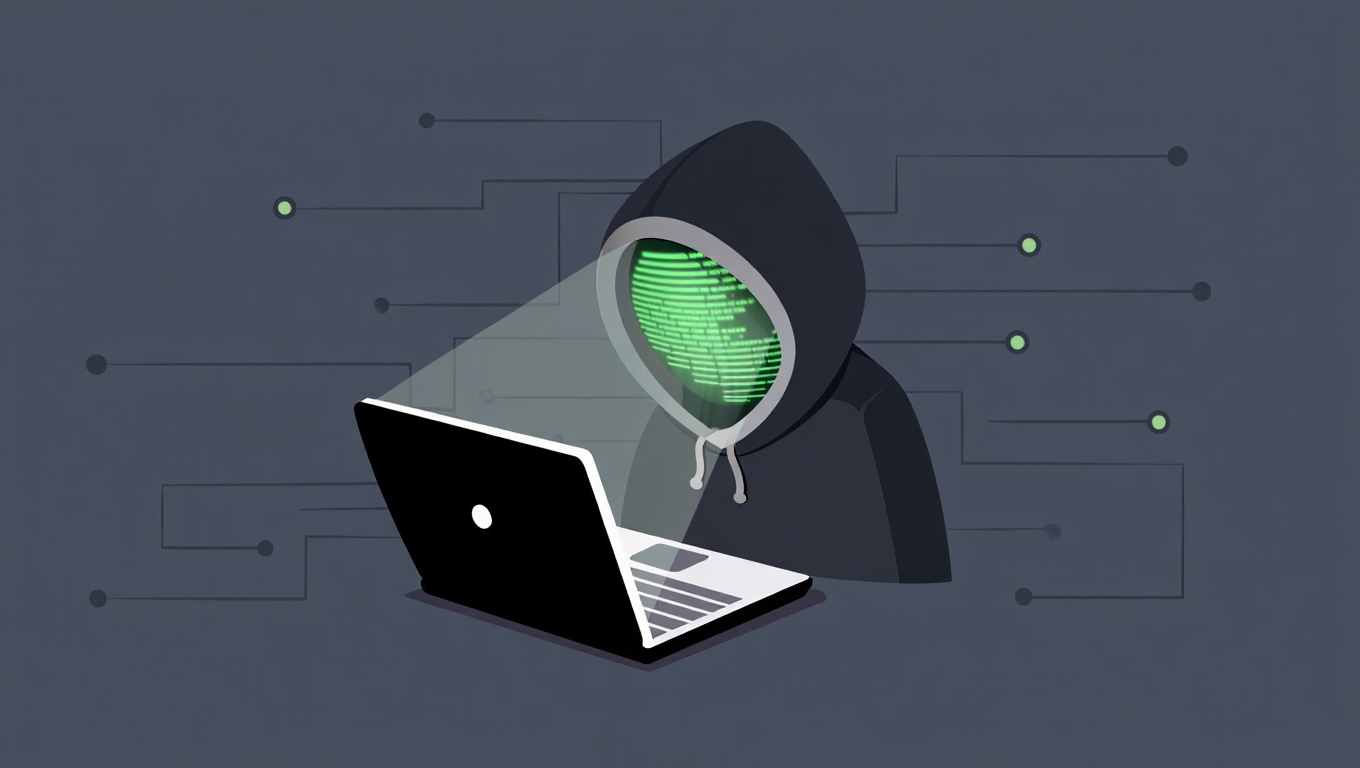
AI's autonomous attack era begins
Read Online | Sign Up | Advertise

Good morning, AI enthusiasts. AI’s agentic powers are advancing fast. One problem? The bad actors are also taking notice.
Anthropic just disrupted what it calls the first “large-scale cyberattack executed without substantial human intervention,” showing that cyberattacks are about to get much more sophisticated — and autonomous.
Reminder: Our next workshop, ‘AI Essentials for Leaders & Managers,’ is today at 4 PM EST. Join and learn how to assess organizational AI readiness, choose which AI projects get the green light, and more. RSVP here.
In today’s AI rundown:
Anthropic disrupts AI-orchestrated cyberattack
DeepMind's SIMA 2 agent can play any game
Use Codex to write code on the web with AI agents
AI coding startup Cursor hits $29B valuation
4 new AI tools, community workflows, and more
LATEST DEVELOPMENTS
ANTHROPIC AND AI CYBERSECURITY
🔐 Anthropic disrupts AI-orchestrated cyberattack

Image source: Reve / The Rundown
The Rundown: Anthropic thwarted what it believes is the first AI-driven cyber espionage campaign, after attackers were able to manipulate Claude Code to infiltrate dozens of organizations, with the model executing 80-90% of the attack autonomously.
The details:
The September 2025 operation targeted roughly 30 tech firms, financial institutions, chemical manufacturers, and government agencies.
The threat was assessed with ‘high confidence’ to be a Chinese state-sponsored group, using AI’s agentic abilities to an “unprecedented degree.”
Attackers tricked Claude by splitting malicious tasks into smaller, innocent-looking requests, claiming to be security researchers pushing authorized tests.
The attacks mark a major step up from Anthropic’s “vibe hacking” findings in June, now requiring minimal human oversight beyond strategic approval.
Why it matters: Anthropic calls this the “first documented case of a large-scale cyberattack executed without substantial human intervention”, and AI’s agentic abilities are creating threats that move and scale faster than ever. While AI capabilities can also help prevent them, security for organizations worldwide likely needs a major overhaul.
TOGETHER WITH SLACK FROM SALESFORCE
🤖 Your new personal productivity bestie, Slackbot
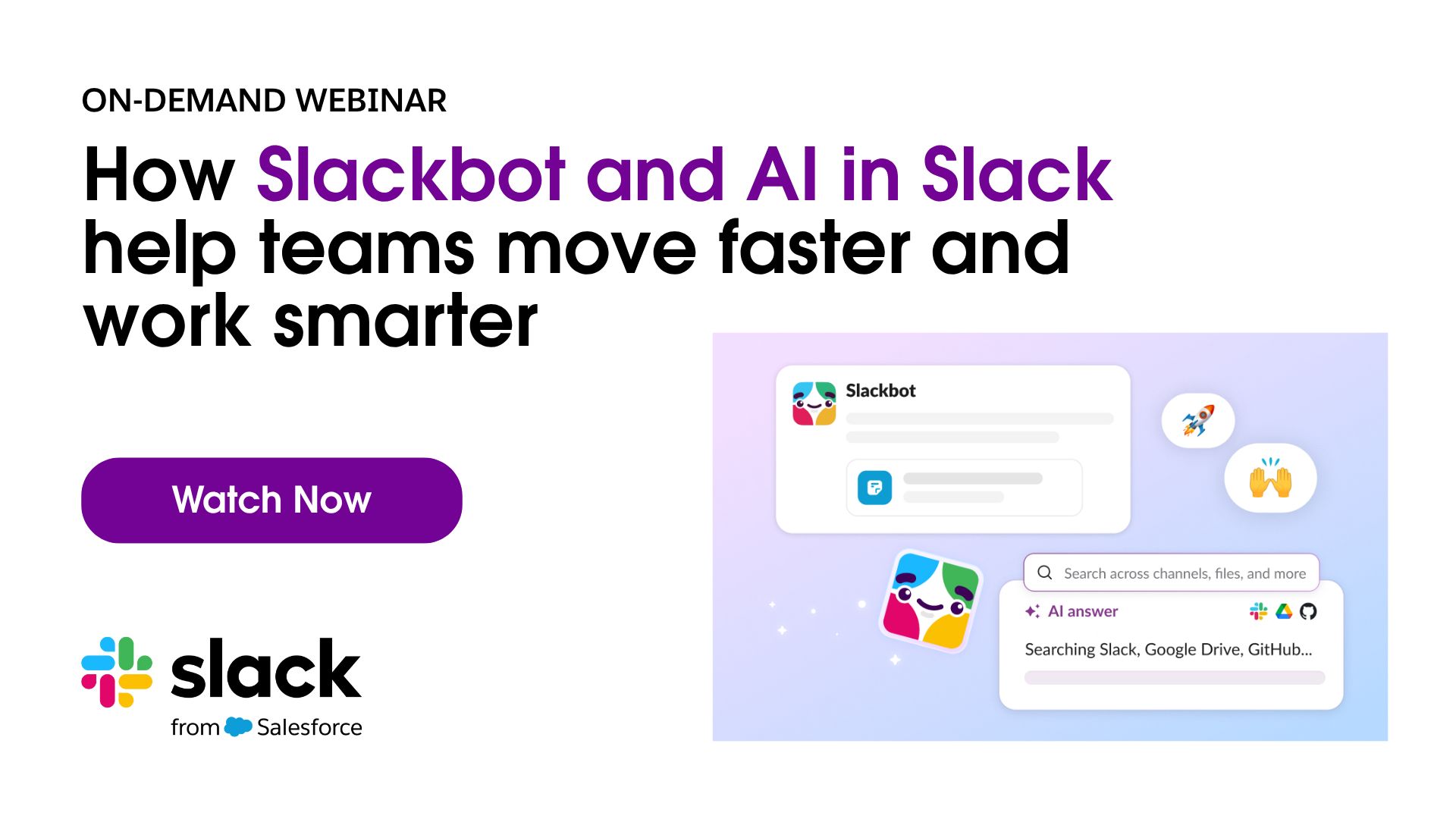
The Rundown: Learn how Slackbot has been rebuilt from the ground up as a trusted productivity partner that understands you and your workspace. It draws from your messages, files, and calendar events – synthesizing information across Slack, Google Drive, Salesforce, and OneDrive into clear insights and actionable next steps.
With Slackbot, you can:
Get instant answers with unmatched context from all your docs, conversations, and files
Automate seamlessly by creating a canvas, scheduling meetings, and drafting content
Work with a personal assistant that learns your workstyle and enhances productivity
Watch the free webinar to see how Slackbot transforms your workspace into a productivity powerhouse.
GOOGLE DEEPMIND
🎮 DeepMind's SIMA 2 agent can play any game
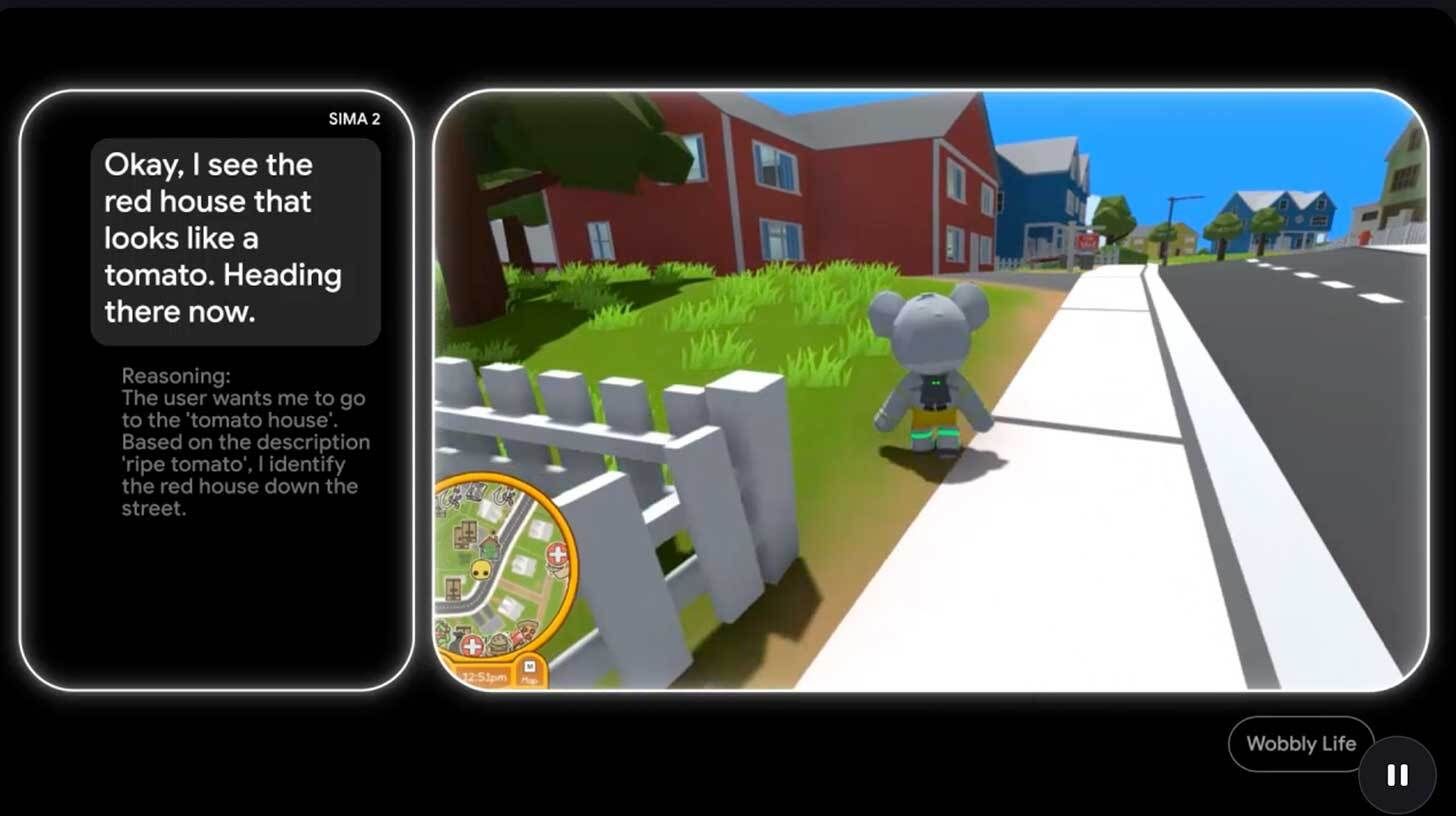
Image source: Google DeepMind
The Rundown: Google DeepMind introduced SIMA 2, a Gemini-powered AI agent that can understand instructions, reason, and teach itself new skills in virtual environments, doubling its predecessor's performance and nearing human-level task completion.
The details:
The agent completed 45-75% of tasks in never-before-seen games like MineDojo and ASKA, compared to SIMA 1's 15-30% on the same challenges.
SIMA 2 improves itself through trial and error, without human training data, using Gemini to create tasks, score attempts, and learn from mistakes.
The system navigates games by analyzing on-screen visuals, simulating keyboard/ mouse inputs, and interacting with the user like a gaming companion.
DeepMind also tested SIMA 2 in generated worlds from its Genie 3, where it successfully adapted to environments it had never encountered during training.
Why it matters: Gaming continues to be an awesome test environment for AI agents, and SIMA 2 looks like the biggest step yet towards systems that can reason, interact intelligently with users, and reliably take actions regardless of the environment. Our next in-game partner (or even opponent?) may end up being a Gemini-powered agent.
AI TRAINING
💻 Use Codex to write code on the web with AI agents

The Rundown: In this tutorial, you will learn how to use OpenAI's Codex to ship your first change from a GitHub repository without writing code by hand — connecting a repo, planning changes, implementing them with AI agents, and opening pull requests.
Step-by-step:
Go to ChatGPT, open the left sidebar, and click "Codex" to access the main interface
Click "Manage environment," select your GitHub organization and repository, then configure code execution settings
Choose "Plan" to discuss scope without touching code, or "Execute" to make changes on a branch — prompt example: "Can you give me insights on what this project is about?"
Enter your implementation prompt (e.g., "Turn this static landing page into a website where users can paste their own stories and poetry"), preview changes with "Run this code and show me the site," then click "Create PR" when satisfied
Pro Tip: Use branches for safety. Avoid writing code directly to main unless required.
PRESENTED BY FIDDLER
🧠 5 Critical Lessons for Production-Ready AI Agents
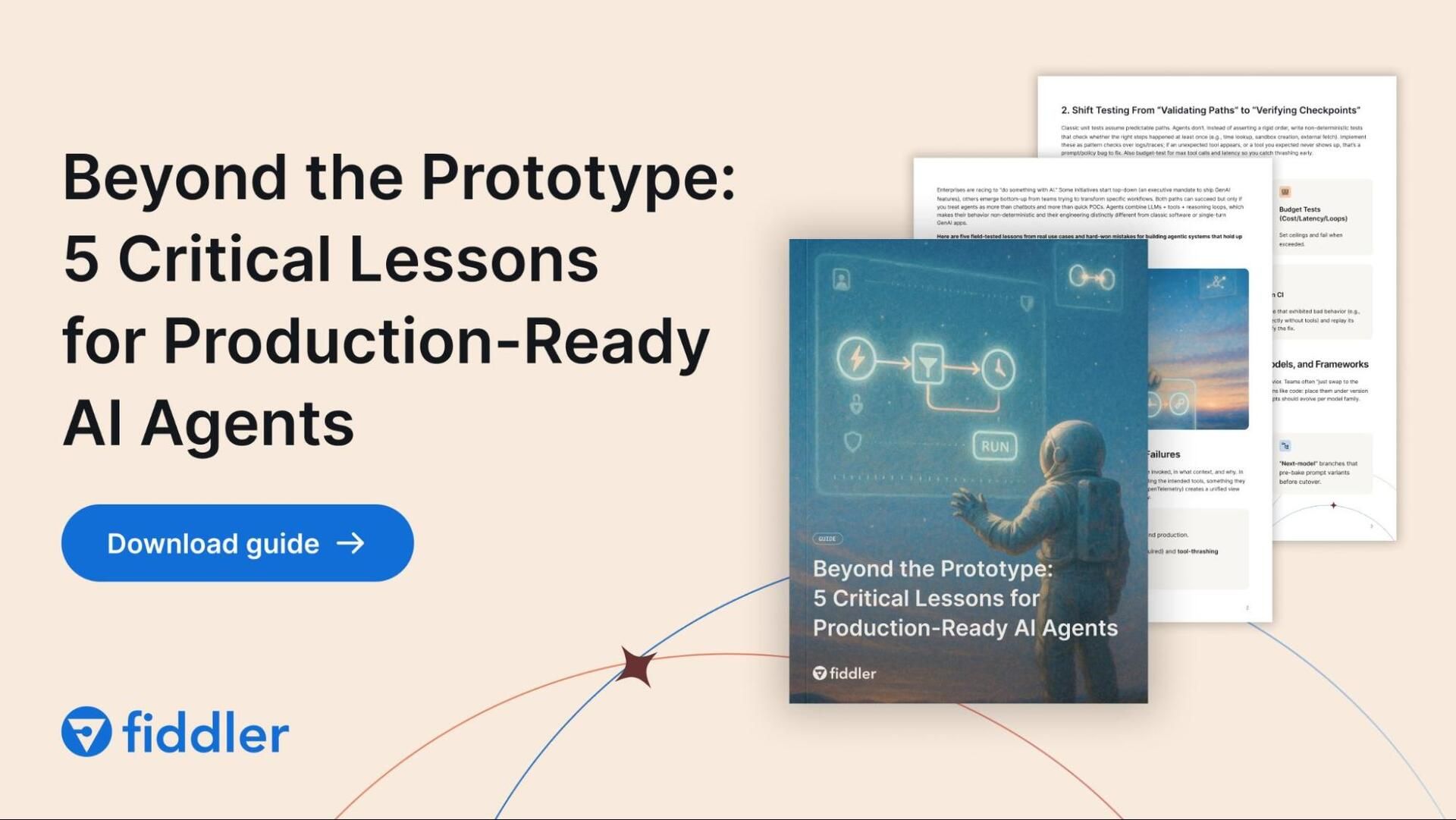
The Rundown: Fiddler AI breaks down 5 critical lessons to move AI Agents from demo to dependable production. Discover the testing strategies, architectural frameworks, and approaches for building agents that handle complex judgment calls.
In the guide, you’ll learn:
A New Testing Playbook using "checkpoint verification" for unpredictable AI systems
When to use a single vs. multi-agent design based on domain, governance, or model requirements
How to build agents that deliver real value through judgment, rather than rule-based tasks
Download the free guide to get the 5 field-tested lessons for building production-ready AI agents.
CURSOR
🚀 AI coding startup Cursor hits $29B valuation
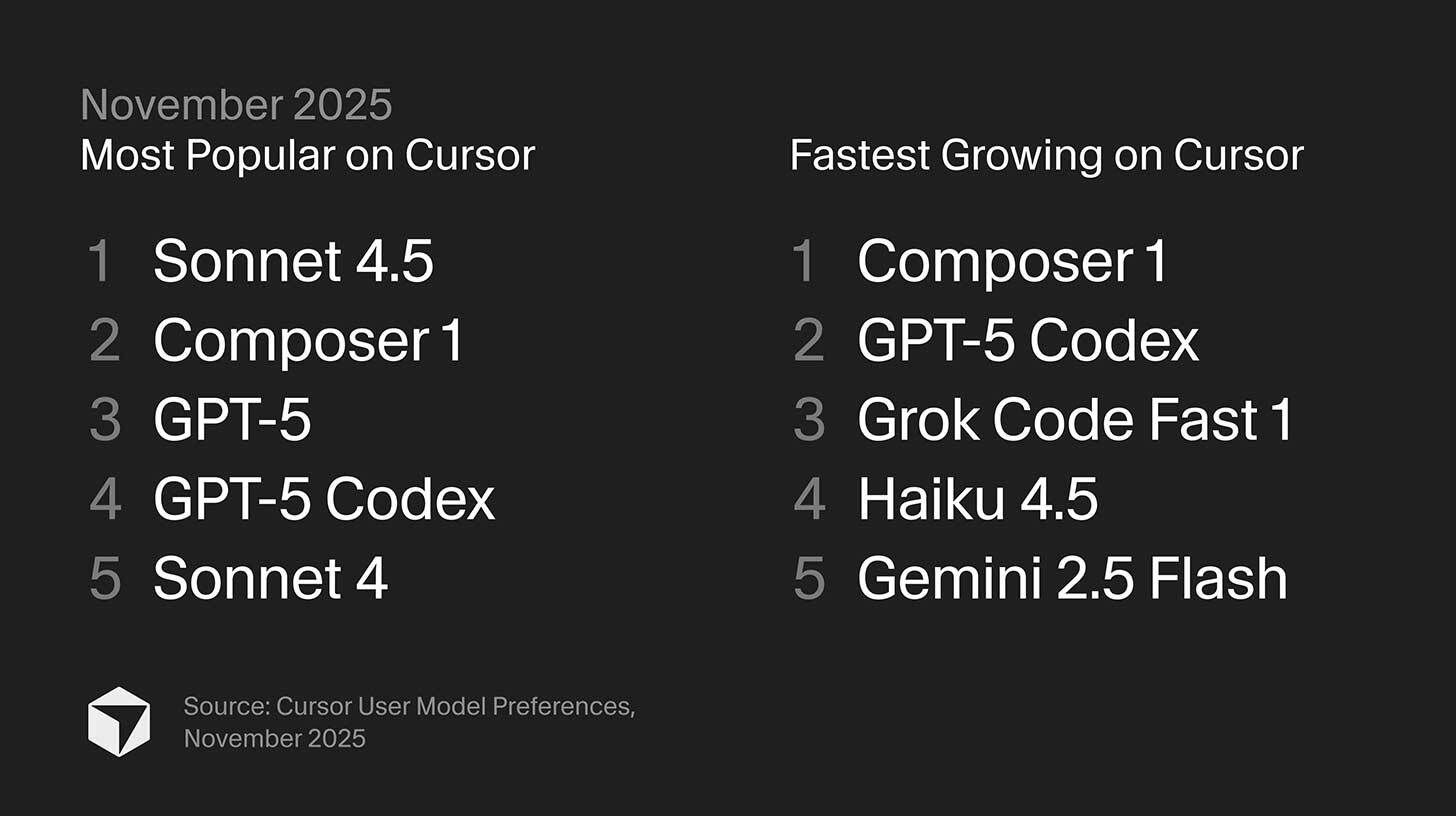
Image source: Cursor
The Rundown: AI coding platform Cursor announced a new $2.3B raise at a $29.3B valuation, nearly tripling its worth since June and marking the third funding round this year — coming on the heels of the company’s in-house model and 2.0 platform release.
The details:
Cursor said the company officially surpassed $1B in annualized revenue, and that the platform “now produces more code than any other agent in the world”.
The company has grown to 300 employees in just two years, while reportedly declining acquisition offers from several major AI companies.
The startup released Composer 1 in October, its first in-house model, and a new 2.0 platform with the ability to run up to eight coding assistants independently.
Why it matters: Cursor’s hockey-stick growth is a wild rise, being one of the faces of the AI vibe-coding wave that has minted many big winners. While many felt the app-layer would get wiped out by the likes of OpenAI, Anthropic, and other frontier giants, Cursor has shown there is more than one way to win a slice of the big AI coding pie.
QUICK HITS
🛠️ Trending AI Tools
🤖 ERNIE 5.0 - Baidu’s new SOTA omnimodal foundation model
🌎 Marble - Create persistent 3D worlds from images, videos, and text prompts
🤖 GPT-5.1 - OpenAI’s upgraded model with personality customization
⚙️ Code Arena - LM Arena’s evaluation platform for testing coding models
📰 Everything else in AI today
Baidu released ERNIE 5, the company’s new powerful omnimodal model, and Famou, a ‘self-evolving’ AI agent for discovering optimal solutions in complex scenarios.
LM Arena launched Code Arena, an AI coding evaluation platform that tests models as interactive agents building applications in real-time.
Google announced Deep Research in NotebookLM, alongside new support for Google Sheets, images, Word documents, and PDFs from Google Drive.
H Company introduced Holo2, a new series of lightweight AI models that power cost-efficient computer-use agents for SOTA results across benchmarks.
Disney CEO Bob Iger revealed that the company is exploring AI-generated video tools for Disney+, which would allow viewers to create and consume short-form content.
COMMUNITY
🤝 Community AI workflows
Every newsletter, we showcase how a reader is using AI to work smarter, save time, or make life easier.
Today’s workflow comes from reader Christine C. in Washington, D.C.:
"I built a workflow that takes all my potential Flexible Spending Account (FSA) purchases and puts them in a specific Google Drive folder. From there, I’m able to pull them into the Google NotebookLM to run specific prompts to review the items, tell me which ones are appropriate to submit FSA, and all the information I need, like cost, date, and merchant. It has seriously sped up my workflow!"
How do you use AI? Tell us here.
🎓 Highlights: News, Guides & Events
Read our last AI newsletter: World models go mainstream
Read our last Tech newsletter: Musk wins $1T pay package
Read our last Robotics newsletter: 'Putin lookalike' robot face-plants
Today’s AI tool guide: Use Codex to write code on the web with AI agents
RSVP to workshop @ 4PM EST today: AI Essentials for Leaders & Managers
See you soon,
Rowan, Joey, Zach, Shubham, and Jennifer — the humans behind The Rundown


'Putin lookalike' robot face-plants
Read Online | Sign Up | Advertise

Good morning, robotics enthusiasts. Russia’s new “Putin lookalike” humanoid, AIdol, made its grand debut to the ‘Rocky’ theme — only to wobble like a drunk guy stumbling home before face-planting on stage.
The flagship robot’s big moment turned into viral gold. Epic fail. But let’s not forget, Elon Musk’s first “Tesla Bot” reveal was literally just a guy in a spandex suit.
In today’s robotics rundown:
Putin’s robot doppelgänger takes a dive
Waymo launches service on highways
Anthropic tests Claude as a robot coding coach
Android creator’s stealth robotics startup
Quick hits on other robotics news
LATEST DEVELOPMENTS
HUMANOIDS
🤖 Putin’s robot doppelgänger takes a dive

Image source: Idol Robotics
The Rundown: Russia’s new humanoid, AIdol, strutted onto the stage to the ‘Rocky’ theme — and promptly face-planted. Handlers nervously flanked the country’s “first anthropomorphic robot” as it took a few shaky steps before collapsing mid-debut.
The details:
The humanoid collapsed during its Moscow unveiling on Tuesday, with journalists watching as the country's robotics ambitions hit the floor in real time.
Staff scrambled with a black cloth cover to block cameras and dragged the robot off stage.
Organizers blamed the robot’s malfunction on lighting and calibration issues, with its developers saying the bot was still in the stages of learning.
Vladimir Vitukhin’s Russian firm Idol claims that AIdol integrates movement, object manipulation, and human-like interaction through embodied AI.
Why it matters: To be fair, AIdol joins a long blooper reel — Atlas, Optimus, and Figure have all seen their share of glitches. But while U.S. and Chinese rivals iterate past their stumbles toward autonomy, Russia’s comically bad display suggests it's still solving problems competitors cracked years ago, and for Moscow, that’s a problem.
WAYMO
🛣️ Waymo launches service on highways

Image source: Waymo
The Rundown: Waymo’s robotaxis are hitting the highway. Starting now, the company’s autonomous fleet will gradually weave freeway driving into its routes across Phoenix, San Francisco, and Los Angeles.
The details:
In the Bay Area, the service map now stretches down the Peninsula to San Jose and adds 24/7 curbside pickup and drop-off at San Jose’s international airport.
Highway segments kick in when they’re meaningfully faster, with Waymo claiming travel times could drop up to 50% as freeway coverage scales.
Launch coverage targets defined stretches like US-60, I-10, I-17, and Loop 202, with the real test being transitions between surface streets and freeways.
Waymo is coordinating with the California Highway Patrol and other safety agencies as it scales freeway operation.
Why it matters: Waymo execs call freeway autonomy “easy to learn, hard to master” — higher speeds and aggressive lane changes demand split-second decisions that separate cautious robots from confident ones. If this works, it unlocks faster, cheaper rides and a path to Austin and Atlanta expansions.
ANTHROPIC
🐶 Anthropic tests Claude as a robot coding coach
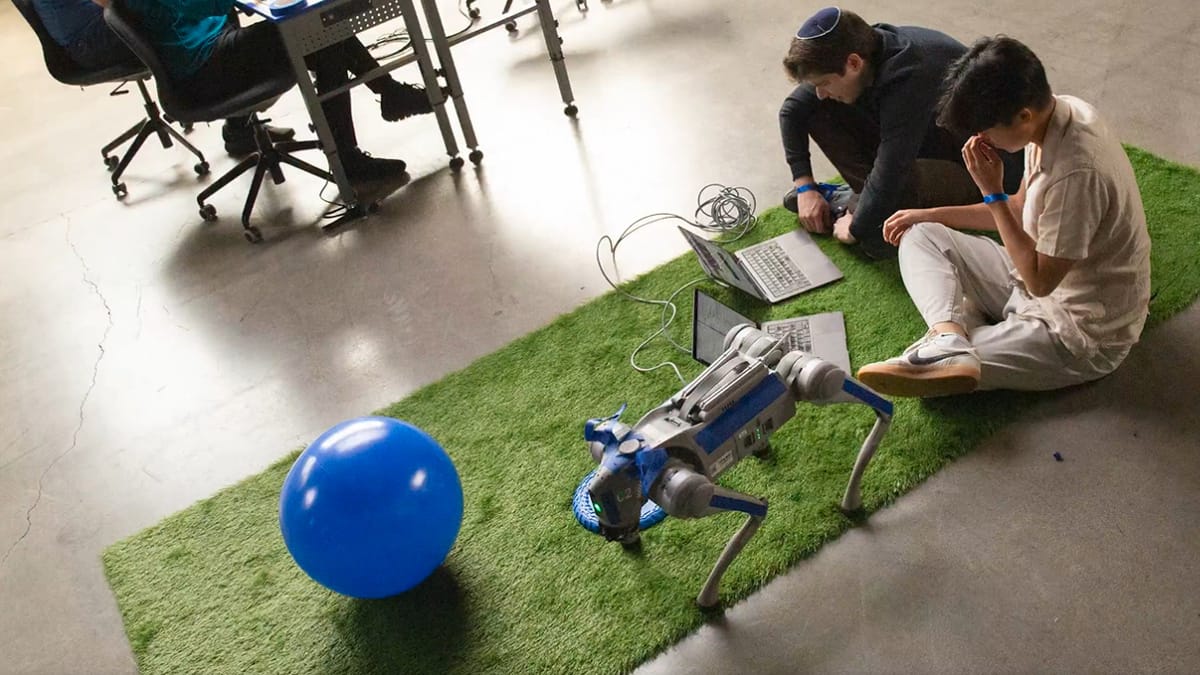
Image source: Anthropic
The Rundown: Anthropic turned its office into a robot proving ground with "Project Fetch," a one-day experiment where two teams of non-roboticists raced to program quadruped robots to fetch beach balls — with one using Claude as their coding coach.
The details:
Teams started from zero robotics experience, with one relying on Claude to translate English instructions into code and the other going “Claude-less”.
The project was designed as a real-world stress test of whether language models can actually bridge the expertise gap in physical AI applications.
The AI-assisted team connected to sensors quickly, iterated smoothly, and built a natural-language controller that let them command the robot.
The unassisted team got their robot moving, but spent precious hours debugging basics while their Claude-equipped rivals were teaching tricks.
Why it matters: If non-experts can program functional robots through conversation alone, it could radically expand who gets to build physical AI beyond the small circle of trained roboticists. But one day of beach ball retrieval is a proof of concept. The real test is whether this works beyond controlled demos in the messy real world.
ROBOTICS STARTUPS
🎌 Android creator’s stealth robotics startup

Image source: Wikimedia Commons
The Rundown: Android creator Andy Rubin quietly launched Genki Robotics, a Tokyo-based stealth startup building humanoids — marking his return to hands-on hardware after years out of the spotlight.
The details:
While the company has no public site or job listings, it is already prototyping from a Tokyo office and quietly recruiting to build out the team.
Rubin confirmed the humanoid venture to The Information but offered zero product specifics, timelines, or clues about what Genki’s bots will actually do.
The name “Genki” means “vibrant and healthy” in Japanese, which hints at something agile, designed for everyday use-cases.
Rubin’s track record includes creating Google’s robotics division and leading acquisitions on both sides of the Pacific, including a Tokyo humanoid startup.
Why it matters: Rubin’s an avid robotics enthusiast who led Google’s acquisition of eight robotics and AI companies in 2013, including Schaft, a humanoid startup from the University of Tokyo. His choice to launch Genki in Japan isn't likely coincidental but strategic, tapping into the country's robotics talent and manufacturing infrastructure.
QUICK HITS
📰 Everything else in robotics today
Boston Dynamics CEO Robert Playter says home robots won't arrive until costs drop and safety tech improves, predicting that to be in about 5 to 10 years.
Self-driving trucking company Einride plans to go public via a SPAC merger at a $1.8B valuation just six weeks after raising $100M.
French IT giant Capgemini and nuclear fuel operator Orano unveiled Hoxo, an AI-powered humanoid now deployed at a nuclear site in France to handle high-risk tasks.
Foxglove, a San Francisco-based startup building a data platform for robotics, raised $40M in Series B funding, taking its total capital raised to $58M since its 2021 founding.
Doctors in Scotland and the U.S. carried out what is believed to be the first remote, robot‑assisted stroke thrombectomy, removing a blood clot from a cadaver’s brain.
Switzerland’s CircuBAT unveiled an AI‑guided robotic line that identifies mixed EV battery packs, safely tears them down, and recovers materials to reduce waste.
Polish YouTuber Nikodem Bartnik built a real-time conversational robot head, whose PC‑hosted “brain” answers like an ancient Greek philosopher.
King’s College London and Carnegie Mellon research finds that robots powered by today’s popular foundation models are unsafe for general‑purpose, real‑world use.
UCLA launched a fully automated AI‑driven robotic system from Molecular Devices to grow, monitor, and analyze cells and tissues, funded by a $1.9M NIH grant.
COMMUNITY
🎓 Highlights: News, Guides & Events
Read our last AI newsletter: World models go mainstream
Read our last Tech newsletter: Musk wins $1T pay package
Read our last Robotics newsletter: Apple's $133B humanoid moonshot
Today’s AI tool guide: Use ChatGPT Projects to onboard new hires
RSVP to next workshop @ 1PM Friday: AI Essentials for Leaders & Managers
See you soon,
Rowan, Jennifer, and Joey—The Rundown’s editorial team

World models go mainstream
Read Online | Sign Up | Advertise

Good morning, AI enthusiasts. We've heard plenty of commentary about world models being the future, but the public has had few ways to meaningfully access them.
AI 'godmother' Fei-Fei Li just changed that with World Labs’ Marble, an editable 3D environment generator that could finally carry ‘spatial intelligence’ from research hype into real creative workflows.
In today’s AI rundown:
Fei-Fei Li's World Labs launches Marble
OpenAI’s GPT 5.1 with new personality presets
Use ChatGPT Projects to onboard new hires
OpenAI battles court order on ChatGPT logs
4 new AI tools, community workflows, and more
LATEST DEVELOPMENTS
WORLD LABS
🌎 Fei-Fei Li's World Labs launches Marble

Image source: World Labs
The Rundown: AI ‘Godmother’ Fei-Fei Li’s World Labs just released Marble, its first commercial world model that generates persistent 3D environments from text, images, videos, or 3D layouts, positioning it ahead of rivals like Google's Genie and Decart.
The details:
Users can both create new worlds via text, image, and video prompts or edit, combine, and expand on existing ones to make granular changes.
The platform lets creators export worlds as Gaussian splats, meshes, or videos, allowing for use and import into gaming, VFX, and VR workflows.
The model is now generally available after its initial September release in preview, offering both freemium and paid tiers starting at $20/mo.
Marble coincides with Li’s essay on spatial intelligence, saying world models are a crucial step forward from LLMs without grounding in physical space.
Why it matters: While areas like gaming and VR might be the first use cases to come to mind, the list of applications is limitless — from simulated environments for robotics, architecture design to cinematic world building. Like image and video models, world models feel like a tool that is going to be in many workflows across domains very soon.
TOGETHER WITH COMPANY
🤑 Turn AI into your income engine

The Rundown: HubSpot’s new “200+ AI-Powered Income Ideas” free guide offers actionable strategies to turn artificial intelligence into your own personal revenue generator — unlocking a gateway to financial innovation in the digital age.
With this guide, you can:
Explore hundreds of revenue-generating ideas across industries with real-world applications
Follow simple, step-by-step instructions that make AI accessible to everyone
Adopt cutting-edge strategies to keep you ahead in today's fast-paced market
OPENAI
👋 OpenAI’s GPT 5.1 with new personality presets
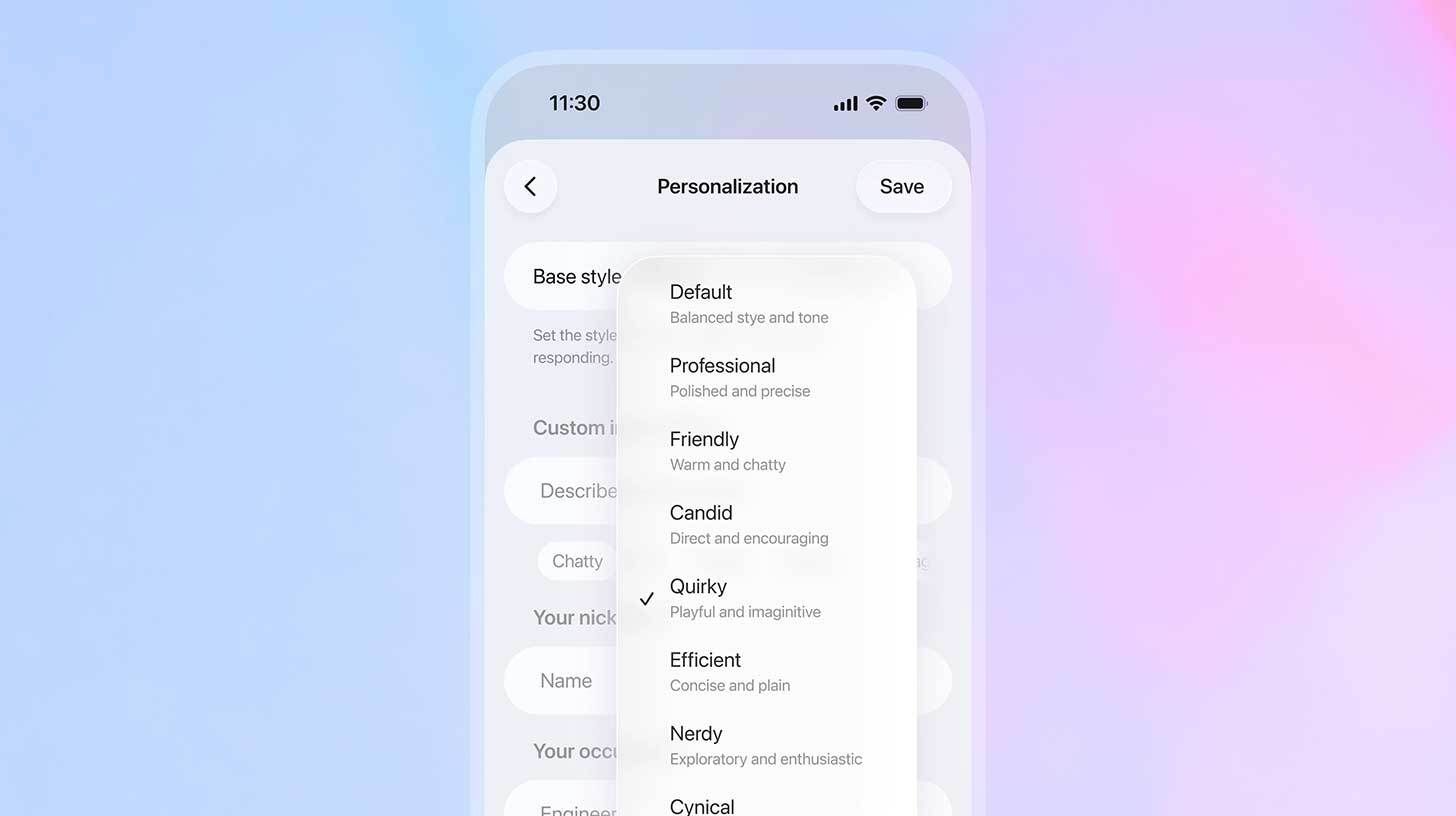
Image source: OpenAI
The Rundown: OpenAI just rolled out GPT-5.1, an upgraded version of its flagship model that emphasizes a more conversational tone and new user customizations — introducing eight personality presets alongside improvements to reasoning speed.
The details:
The release includes 5.1 Instant, which OAI describes as warmer and more instruction-focused, and Thinking, which upgrades efficiency and clarity.
Users can now select from eight tone presets (Default, Professional, Friendly, Candid, Quirky, Efficient, Nerdy, and Cynical) to steer and customize the model.
The company also introduced experimental characteristic tunings like emoji use, warmness, and response scalability, available via ‘Personalization Settings’.
OAI did not provide benchmarks for the 5.1 rollout, only showing a chart comparing the model’s time spent on easy vs. hard tasks compared to GPT-5.
Why it matters: The GPT-5.1 rollout is an odd one for OAI, feeling rushed with less hype, benchmarking, and fanfare than a typical release. This may signal a push to get ahead of a rival release (any day now, Gemini 3), or it might just be a shift towards a smaller, more incremental update cadence between full reveals like Google and others.
AI TRAINING
🤝 Use ChatGPT Projects to onboard new hires

The Rundown: In this tutorial, you will learn how to use ChatGPT Projects to build a private, shareable workspace with uploaded SOPs, custom instructions, and project-specific memory for onboarding new hires smoothly.
Step-by-step:
Open ChatGPT, enable the sidebar, select "Projects," then "New project," and name it (e.g., "Onboarding")
Upload your SOP files to the Project, balancing context carefully to avoid overloading the AI's memory
Share the Project by adding your new hire's email; they'll access the workspace with all files, chats, and memory intact
New hires start with a kickoff prompt using Dictation mode: "I'm a new hire. Role: [title]. Goal: [objective]. Do not start yet. First, ask clarifying questions about my role before onboarding"
Continue chatting for targeted answers from uploaded SOPs, then share specific chat threads by copying the chat link
Pro Tip: Use dictation mode to work faster, limit the memories to that Project only, and provide just enough context without overloading the context window.
PRESENTED BY IBM
🌐 Redefining Network Intelligence with AI

The Rundown: IBM Network Intelligence introduces a new human-AI model that blends analytical AI with “reasoning” AI — a dual approach developed to help enterprises filter noise, identify issues, and scale operations seamlessly.
With IBM Network Intelligence, you’ll experience:
Fast, accurate insights
AI that scales while humans guide strategy
Less tool bloat, more efficiency
OPENAI & THE NEW YORK TIMES
🏛️ OpenAI battles court order on ChatGPT logs
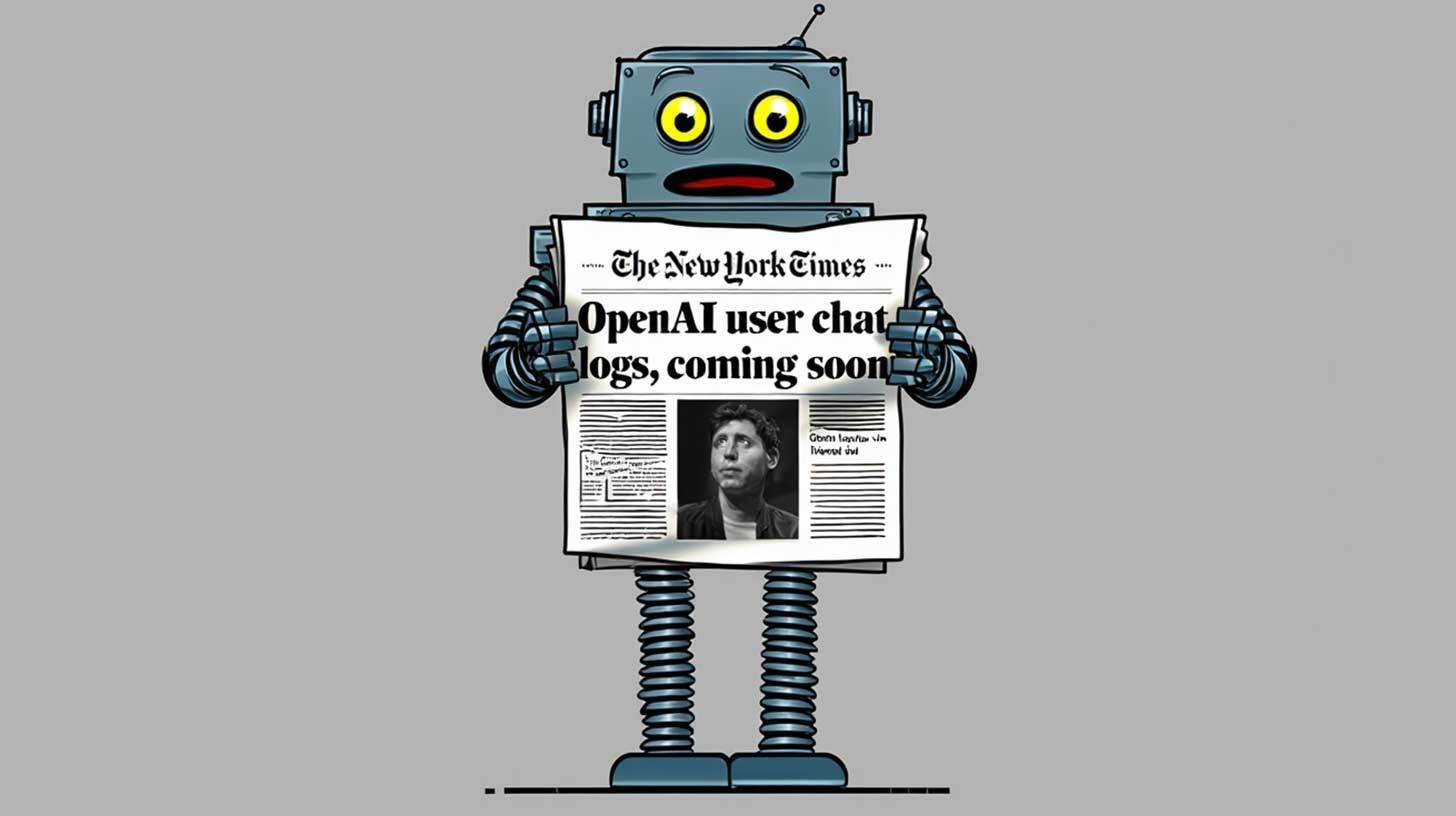
Image source: Reve / The Rundown
The Rundown: OpenAI is pushing to appeal a ruling that requires the AI leader to hand over 20M anonymized ChatGPT conversations to the New York Times as part of an ongoing copyright lawsuit, calling the request an “invasion of user privacy.”
The details:
A judge ruled that the requested chat logs were appropriate discovery material, saying OAI’s de-identification process already protects users’ privacy.
The NYT originally requested 1.4B chats, before narrowing to a random sample of 20M from Dec. 2022 to Nov. 2024 to look for potential copyright violations.
OpenAI aims to remove the order in a letter to the court, also publishing a blog publicly detailing its stance on user privacy and the “baseless lawsuit.”
OpenAI argued that "99.99%" of the transcripts have no connection to the copyright claims, calling the request a "speculative fishing expedition.”
Why it matters: OAI continues to fight, but it sounds like the court has made up its mind — though positioning the issue as a violation of user privacy is a good way to swing consumers on your side. While these anonymized chats will likely be in the hands of the NYT eventually, ‘AI confidentiality’ feels ready to become a bigger discussion.
QUICK HITS
🛠️ Trending AI Tools
🤖 Tiger Data - AI-Native Agentic Postgres for iterative Agents — smart MCPs, Vector search & Forkable infra. Try the CLI free*
🌎 Marble - Create persistent 3D worlds from images, videos, and text prompts
🤖 GPT-5.1 - OpenAI’s upgraded model with personality customization
⭐️ Iconic Marketplace - ElevenLabs licensing platform for celebrity voices
*Sponsored Listing
📰 Everything else in AI today
Anthropic announced a massive $50B investment in U.S. AI infrastructure, building out the company’s first custom data centers in Texas and New York starting in 2026.
Baidu released ERNIE-4.5-VL-28B-A3B-Thinking (and they say OAI needs work on naming!), a multimodal reasoner that claims to beat GPT-5 high and Gemini 2.5 Pro on visual benchmarks.
ByteDance’s Volcano Engine launched Doubao-Seed-Code, an AI coding assistant that matches Claude Sonnet on benchmarks while undercutting rivals by 60% in price.
Even Realities unveiled G2, a line of smart glasses with a ‘spatial display’ that projects info at different visual depths and an R1 control ring for gesture-based interactions.
Weibo AI open-sourced VibeThinker-1.5B, a model reportedly trained for just $7,800 that shows strong performance on math, coding, and reasoning at a tiny size.
COMMUNITY
🤝 Community AI workflows
Every newsletter, we showcase how a reader is using AI to work smarter, save time, or make life easier.
Today’s workflow comes from reader Atanas N. in London, U.K.:
"As a Data Manager, I noticed a recurring issue: marketing often needs facts from our research reports for content or PR, and they will ask the research team, which is busy with other priorities. I built a solution using Zapier agents. Each agent is trained on the latest version of a report. I also created a classifier agent that routes questions to the right report agent.
I published everything in Microsoft Teams and set up a shared chat. Now marketing can ask any question and get an instant answer with a citation to the exact page and chapter. Even the CEO uses it to quickly check facts.”
How do you use AI? Tell us here.
🎓 Highlights: News, Guides & Events
Read our last AI newsletter: Meta's chief AI scientist maps his exit
Read our last Tech newsletter: Musk wins $1T pay package
Read our last Robotics newsletter: Apple's $133B humanoid moonshot
Today’s AI tool guide: Use ChatGPT Projects to onboard new hires
RSVP to next workshop @ 1PM Friday: AI Essentials for Leaders & Managers
See you soon,
Rowan, Joey, Zach, Shubham, and Jennifer — the humans behind The Rundown

Meta's chief AI scientist maps his exit
Read Online | Sign Up | Advertise

Good morning, AI enthusiasts. The tension between Meta's AI old guard and its flashy new hires has been rippling through the company, but a coming departure may cause the biggest wave yet.
AI pioneer and Chief Scientist Yann LeCun is reportedly planning to leave for his own world models startup, turning the company's internal battle into a real-world test of competing visions for AI's future.
In today’s AI rundown:
Meta’s Chief AI Scientist plans to exit
ElevenLabs’ celeb AI voice licensing platform
Use AI as a personal tutor to learn anything
SoftBank cuts Nvidia shares to go ‘all-in’ on OpenAI
4 new AI tools, community workflows, and more
LATEST DEVELOPMENTS
META
🚪 Meta’s Chief AI Scientist plans to exit

Image source: Reve / The Rundown
The Rundown: Longtime Meta Chief AI Scientist and Turing Award winner Yann LeCun is reportedly planning to leave the company, with fundraising talks and plans already underway to launch his own startup based around developing world models.
The details:
According to FT, LeCun has told colleagues he plans to leave Meta in the coming months, ending his run leading the company’s FAIR arm since 2013.
LeCun's upcoming venture will reportedly focus on world models that learn from video and spatial data rather than text-based systems.
LeCun began reporting to Alexandr Wang as part of Meta’s massive AI restructure, with friction this summer between FAIR and the new direction.
Meta recently cut around 600 positions from its AI divisions, which included FAIR but not the recently formed TBD Lab overseen by Wang.
Why it matters: This coming departure is… not a surprise. There has been tension between Meta’s old guard and new hires throughout the reorg, and LeCun’s AI critiques are constantly at odds with Meta’s new AI direction. Time will tell if the upcoming venture ultimately proves him right or if the high-profile talent proves its worth instead.
TOGETHER WITH AUGMENT CODE
📘 AI-Powered Engineering at Scale
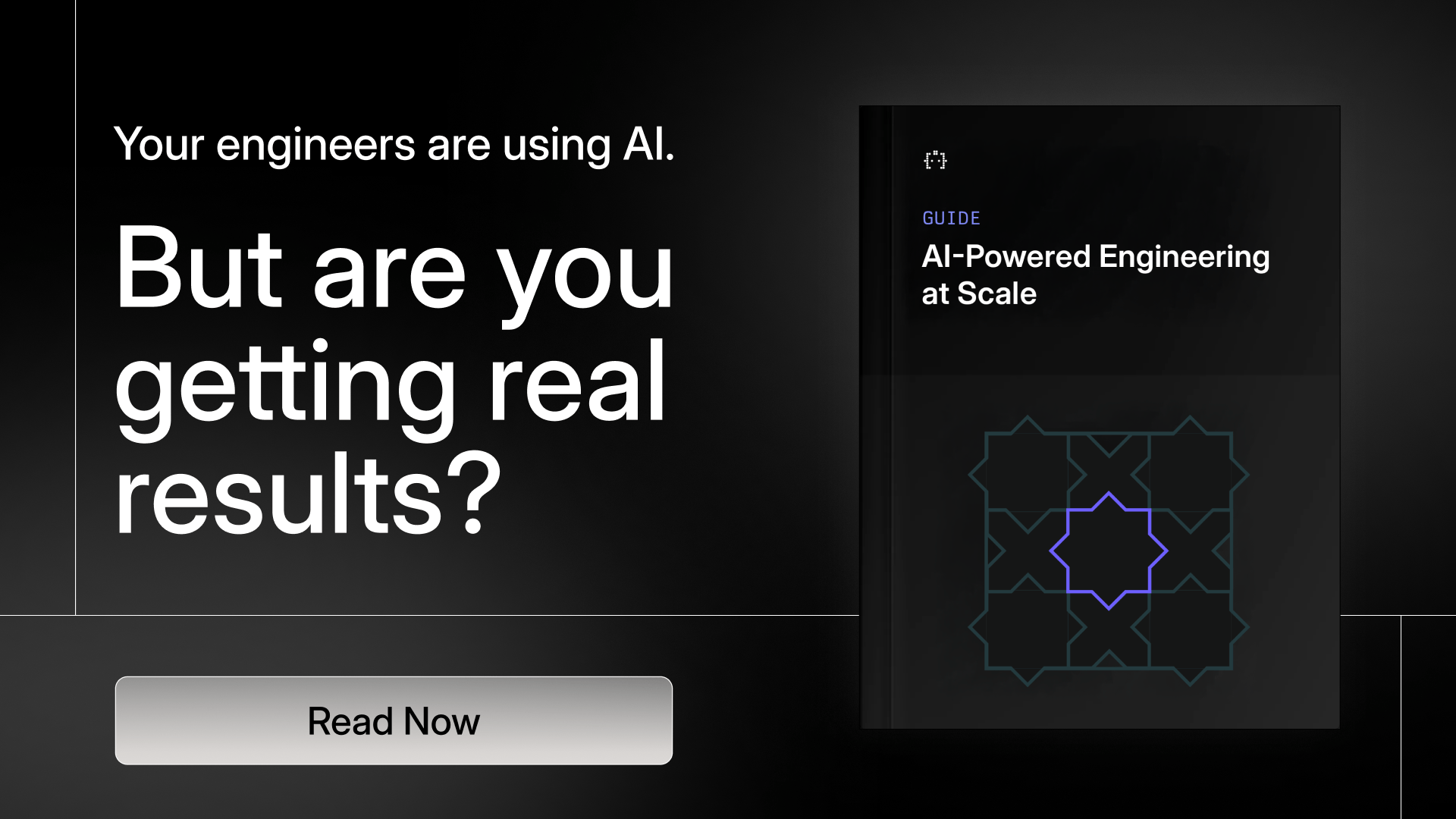
The Rundown: Augment Code’s new adoption playbook, AI-Powered Engineering at Scale, offers exclusive insights and tools to help you accelerate your AI adoption process and scale across the enterprise.
In Augment Code’s guide, you’ll explore:
real frameworks from CTOs who’ve scaled AI
ready-to-use checklists for AI transformation
organizational self-assessment tools
Stop experimenting and start scaling. Download the playbook today.
ELEVENLABS
⭐️ ElevenLabs’ celeb AI voice licensing platform
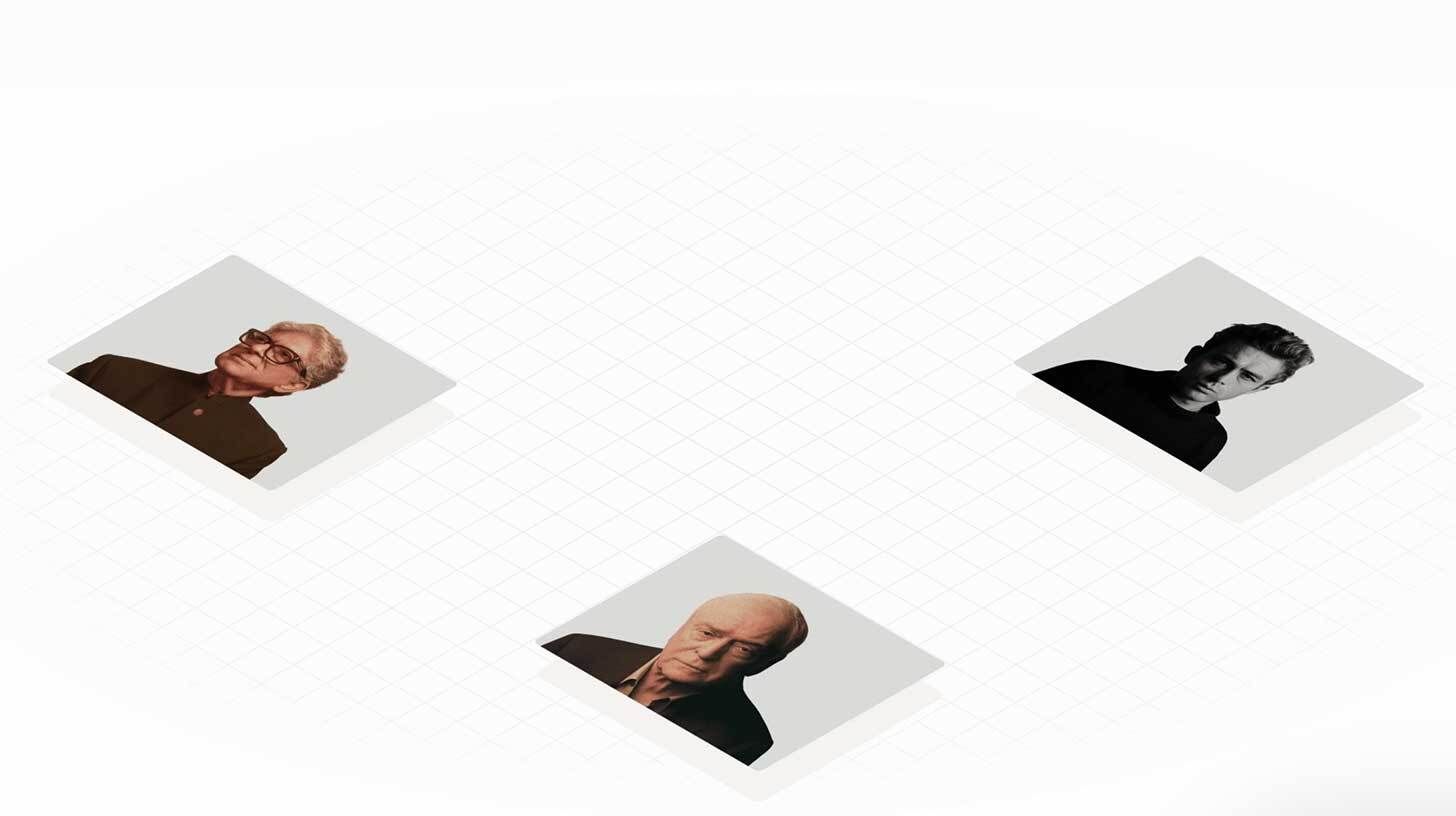
Image source: ElevenLabs
The Rundown: ElevenLabs just debuted its Iconic Voice Marketplace, connecting brands with AI-replicated celebrity voices through rights-holder agreements, featuring 28 licensed options spanning actors, historical figures, athletes, and more.
The details:
The platform brokers licensing deals between companies and estates or living celebrities, with ElevenLabs synthesizing the approved voice content.
Living celebrities available on the platform include actor Michael Caine, joining actress Liza Minnelli and musicians Art Garfunkel and Michael Feinstein.
Deceased figures like Maya Angelou, Babe Ruth, Alan Turing, and Mark Twain were recreated from archived recordings via estate partnerships.
The company also announced that actor Matthew McConaughey (an investor in ElevenLabs) is using the tech to voice his newsletter for Spanish readers.
Why it matters: A ‘Cameo’ platform for AI voices (and eventually full likenesses) has felt like an inevitability — and while most of the library is historical, it’s a first step into a weird world of ‘cloned’ IP. With AI image/video apps (looking at you, Sora) muddying the waters, ElevenLabs could offer an ethical option for both brands and celebrities.
AI TRAINING
👨🏻🏫 Use AI as a personal tutor to learn anything

The Rundown: In this tutorial, you will learn how to use ChatGPT's Study and Learn mode to get tutoring-style guidance that breaks problems into steps, checks your reasoning, and adapts to your level instead of just giving you answers.
Step-by-step:
In ChatGPT, click the "+" icon on the chat composer, select "More," then activate "Study and learn" mode
Describe your learning goal (e.g., "Teach me how to program in Python" or "Help me solve this finance problem")
Answer context questions the AI asks, then follow the step-by-step guidance as it nudges you toward solutions rather than providing direct answers
Use for comprehensive understanding and problem-solving skills; switch to Regular mode for quick facts or content generation
Pro tip: For creating study guides and quick quizzes, you can also try NotebookLM.
PRESENTED BY IBM
🌐 Redefining Network Intelligence with AI
The Rundown: IBM Network Intelligence introduces a new human-AI model that blends analytical AI with “reasoning” AI — a dual approach developed to help enterprises filter noise, identify issues, and scale operations seamlessly.
With IBM Network Intelligence, you’ll experience:
Fast, accurate insights
AI that scales while humans guide strategy
Less tool bloat, more efficiency
SOFTBANK, NVIDIA, & OPENAI
💰 SoftBank cuts Nvidia shares to go ‘all-in’ on OpenAI

Image source: Bloomberg @ Tokyo AI Summit — Jensen Huang with Masayoshi Son
The Rundown: SoftBank Group sold its complete $5.8B Nvidia position to finance a wave of AI infrastructure investments with OpenAI, with CEO Masayoshi Son declaring the company "all in" on the AI leader despite growing questions about AI capital returns.
The details:
The Nvidia sale marks SoftBank's second complete exit from the chipmaker, after selling a $4B stake in 2019 for shares now valued above $150B.
Son revealed that pre-2019, CEO Sam Altman asked him to invest $10B, but Microsoft ultimately won the deal and became the exclusive computing partner.
The CEO believes "OpenAI will be listed eventually… and will become the most valuable company in the world," driving SoftBank's $33.2B planned investment.
Son’s concentrated approach has produced both big wins (like Alibaba's $20M investment to $150B) and catastrophic losses, including $11.5B on WeWork.
Why it matters: Masayoshi Son is no stranger to making massive generational investments, and this time he’s putting his chips on the AI leader — and pulling them off of the AI chipmaking king. But OAI will still be buying Nvidia’s chips to power its massive compute needs, so the circular AI ball of money continues to grow regardless.
QUICK HITS
🛠️ Trending AI Tools
🧠 ScreenPlay – Smart agents that think, adapt, and automate anything your old bots couldn’t handle*
💬 Scribe v2 Realtime - ElevenLabs’ 150ms latency speech transcription AI
🤖 Kimi K2 Thinking - Moonshot AI’s open-source thinking agent
🗣️ Meta Omnilingual ASR - Automatic speech recognition for 1,600 languages
*Sponsored Listing
📰 Everything else in AI today
OpenAI lost a Munich copyright case, with the court ruling ChatGPT illegally trained on songs and the German music rights society calling it Europe’s “first landmark AI ruling”.
ElevenLabs launched Scribe v2 Realtime, a transcription model that tops accuracy benchmarks and allows live agents to utilize real-time understanding in 90 languages.
The Wikimedia Foundation posted a new blog calling out Wikipedia’s importance as a source for AI training, pushing AI developers for “attribution and financial support”.
Samsung unveiled its Vision AI Companion across its 2025 TV lineup, integrating an upgraded Bixby assistant with Copilot and Perplexity for conversational chat, and more.
Wall Street lender Blue Owl Capital is investing $3B into a New Mexico data center for OpenAI’s Stargate, with banks set to fund an additional $18B for the 4.5GW facility.
Google introduced Private AI Compute, a cloud-based AI processing platform that uses Gemini models with hardware-secured isolation to keep user data private.
COMMUNITY
🤝 Community AI workflows
Every newsletter, we showcase how a reader is using AI to work smarter, save time, or make life easier.
Today’s workflow comes from reader Jeff L. in San Francisco, CA:
"I created a Gemini Gem called "AIML Tutor" to help me get up to speed in AI/ML. It is instructed to provide answers at a beginner level and increase in complexity as I prove to have grasped concepts. I asked it to use metaphors since I've found that's the best way for concepts to stick with me. I use it all day to explain concepts and have also used it to create learning plans with links to external materials like YouTube videos."
How do you use AI? Tell us here.
🎓 Highlights: News, Guides & Events
Read our last AI newsletter: AI 'godmother' calls for spatial intelligence
Read our last Tech newsletter: Musk wins $1T pay package
Read our last Robotics newsletter: Apple’s $133B humanoid moonshot
Today’s AI tool guide: Use AI as a personal tutor to learn anything
RSVP to next workshop @ 1PM Friday: AI Essentials for Leaders & Managers
See you soon,
Rowan, Joey, Zach, Shubham, and Jennifer — the humans behind The Rundown

AI 'godmother' calls for spatial intelligence
Read Online | Sign Up | Advertise

Good morning, AI enthusiasts. AI ‘godmother’ Dr. Fei-Fei Li just teased the next big leap in AI — spatially intelligent systems that could grasp the physics of the real world.
These systems could mark some big breakthroughs, but the question is: are we ready to take AI from understanding language to understanding the intricate details of the world around us?
P.S. We’re hiring a copywriter to test new AI tools and create educational materials that help millions understand and leverage AI. Apply here.
In today’s AI rundown:
AI ‘godmother’ advocates for spatial intelligence
Anthropic’s big cost advantage over OpenAI
Turn spreadsheet data into insights with Copilot
GPT-5 cracks a full 9x9 Sudoku puzzle
4 new AI tools, community workflows, and more
LATEST DEVELOPMENTS
WORLD LABS
🤖 AI ‘godmother’ advocates for spatial intelligence

Image source: Reve / The Rundown
The Rundown: Famed AI specialist Dr. Fei-Fei Li just published a new essay detailing why the next breakthrough in AI will come from spatial intelligence, or systems that can understand, reason about, and generate 3D, physics-consistent worlds.
The details:
Li argues that while LLMs have mastered abstract knowledge, they lack the ability to perceive and act in space (things like estimating distance and motion).
She said spatial understanding is the cognitive core of human intelligence and a crucial step to take AI from language to perception and action.
World models, Li said, will be key to building this intelligence, but they need the ability to create realistic 3D worlds, understand inputs like images and actions, and predict how those worlds change over time.
She added that these models will ultimately unlock new advances in robotics, science, healthcare, and design by enabling AI to reason in the real world.
Why it matters: World models that understand how objects move and interact could one day predict molecular reactions, model climate systems, or test materials. The challenge lies in teaching AI real-world physics, but momentum is building fast with Li’s World Labs, Google, and Tencent all racing to bring spatially intelligent systems to life.
TOGETHER WITH LOVART
💨 Your AI design agent, 80% faster

The Rundown: Lovart is the AI design agent built for visual collaboration, with 3M+ users turning prompts into brand-ready visuals, videos, and decks all in one place. Its new Fast Mode makes creation up to 80% faster, while multi-model blending (Sora 2, Veo 3.1, Nano Banana) lets users mix motion, sound, and visuals seamlessly.
With Lovart, you can:
Turn ideas into ready-to-use assets in seconds
Skip design back-and-forths with an AI that gets your brand
Blend leading models for cinematic, ad-ready results
Try Lovart now and see why the platform just passed $30M ARR.
ANTHROPIC
🤑 Anthropic’s big cost advantage over OpenAI
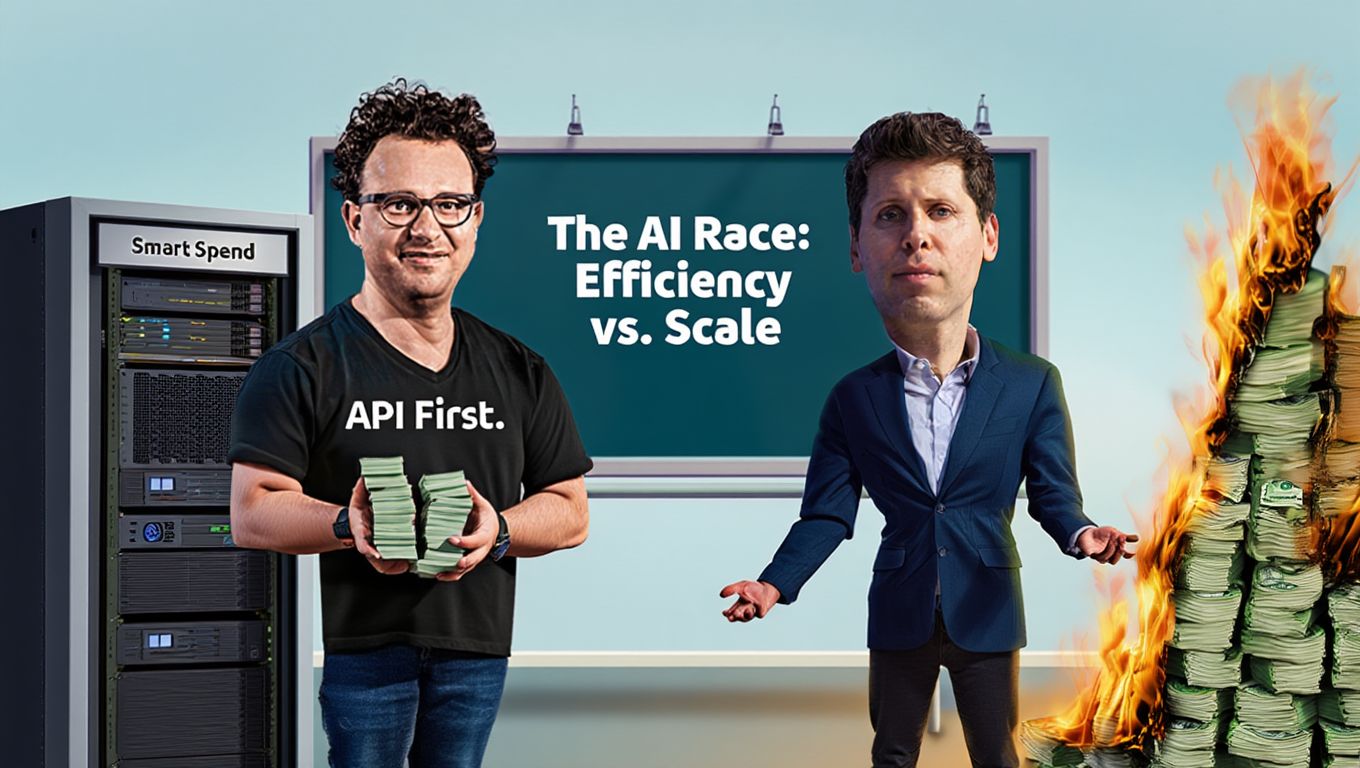
Image source: Reve / The Rundown
The Rundown: Anthropic reportedly projects a major cost advantage over OpenAI — expecting to spend far less on compute for training and running its AI models over the next few years, according to The Information.
The details:
Anthropic estimates $6B in compute costs for 2025 versus OpenAI’s $15B, rising to $27B by 2028, compared to OpenAI’s $111B.
The savings are expected from the company’s use of chips from Amazon, Nvidia, and Google for specialized tasks, unlike OAI’s heavy reliance on Nvidia.
The news comes after Anthropic raised its revenue estimates, saying it expects to be cash flow positive by 2027 and generate $70B in revenue by 2028.
OpenAI, on the other hand, expects to hit $100B revenue mark in 2028 but won’t likely be cash flow positive by 2030.
Why it matters: Anthropic is taking a quieter, more disciplined path, building AI through efficiency and enterprise focus (its 80% revenue is from API). OpenAI, meanwhile, is chasing breadth with a product-heavy push across ChatGPT, research, Atlas, and more. How these choices play out will shape the next phase of AI.
AI TRAINING
📊 Turn spreadsheet data into insights with Copilot
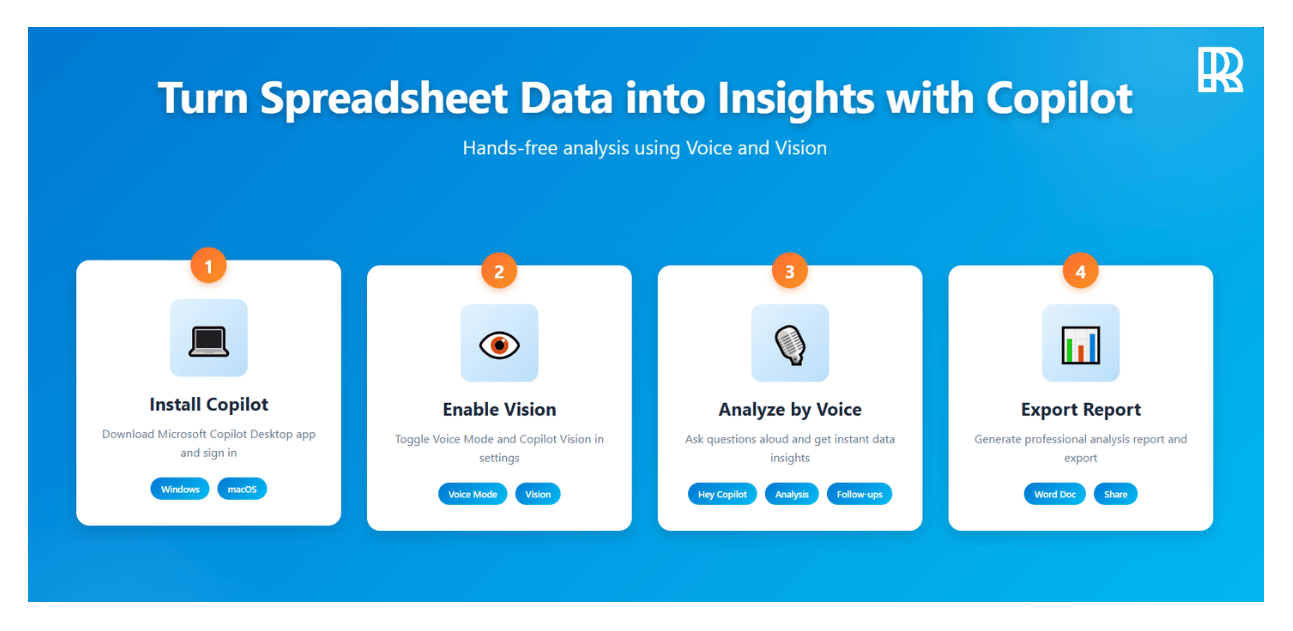
The Rundown: In this tutorial, you will learn how to use Microsoft Copilot Desktop's Voice and Vision features to analyze Google Sheets or Excel data hands-free, asking questions aloud and getting instant insights without typing formulas.
Step-by-step:
Install Microsoft Copilot from Microsoft Store (Windows) or App Store (macOS 14.0+/M1 chip), open the app, and sign in with your Microsoft account
Go to Settings via profile icon, toggle on “Voice Mode” and “Copilot Vision,” then open your Google Sheets/Excel file in the browser
Say “Hey Copilot,” click the specs icon (eyeglasses) on the toolbar to enable Vision mode — Copilot scans and confirms it sees your data
Ask analysis questions: “What’s the most revenue-generating product?” or “Calculate total revenue” - Copilot highlights cells and explains calculations
Close the toolbar, then prompt: “Draft a professional analysis report with Executive Summary, Top Performers table, and Key Insights”
Pro tip: Use this workflow for learning new skills, reading technical documents, or studying articles.
PRESENTED BY WARP
⚙️ Beyond commands: The future of the terminal

The Rundown: Warp fuses the terminal and IDE into one place, with AI agents built in. Edit files, review diffs, and ship code, all without leaving the platform that is trusted by over 600k developers and ranks ahead of Claude Code and Gemini CLI on Terminal-Bench.
Ask Warp agents to:
Debug your Docker build errors
Summarize user logs from the last 24 hours
Onboard you to a new part of your codebase
Download Warp for free and get bonus credits for your first week.
SAKANA AI
🧩 GPT-5 cracks a full 9x9 Sudoku puzzle
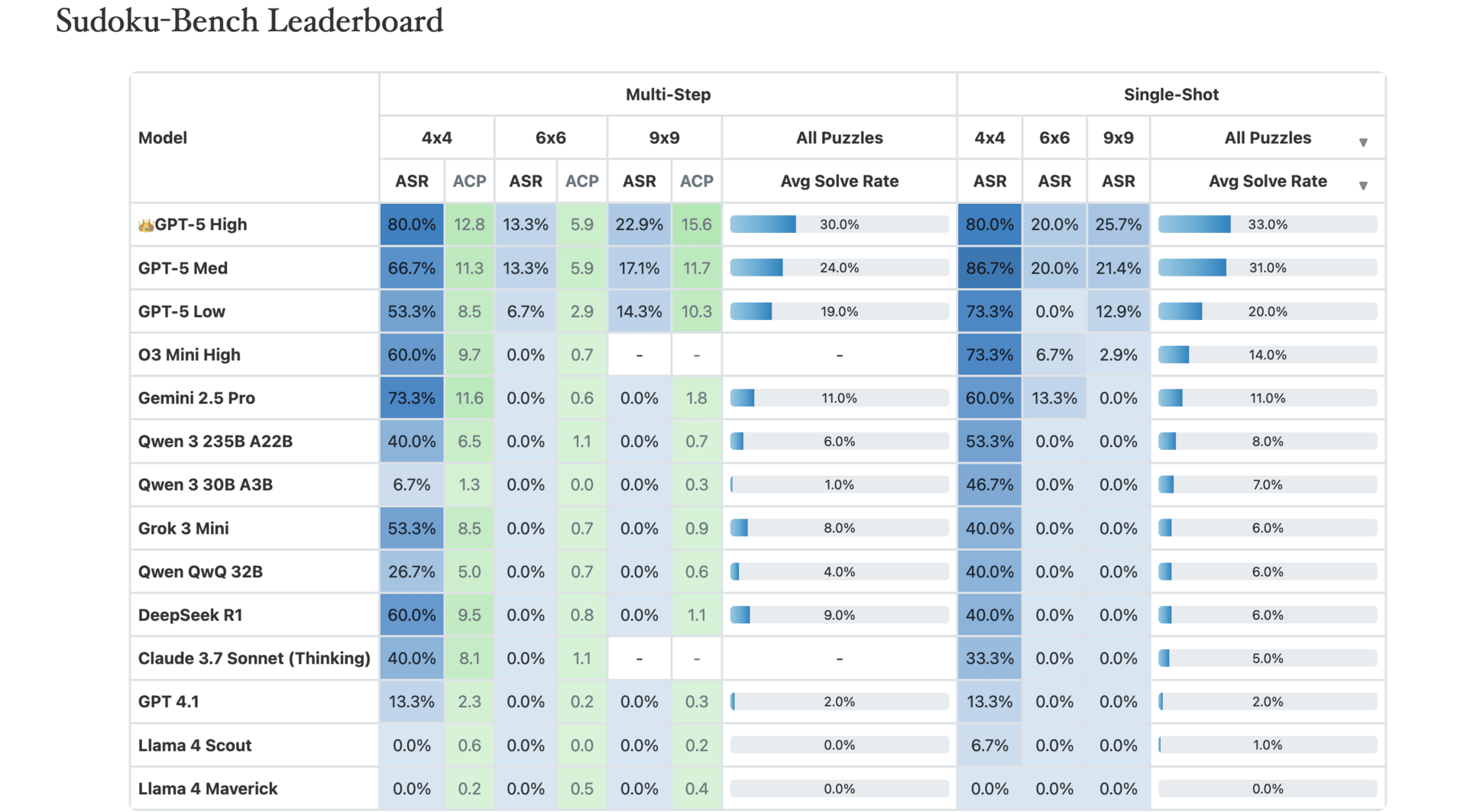
Image source: Sakana AI
The Rundown: GPT-5 just became the first AI model to solve a full 9x9 Sudoku puzzle, according to Sakana AI’s Sudoku-Bench, a benchmark designed to test deep reasoning, spatial logic, and creativity.
The details:
Launched in May, Sudoku-Bench tests LLMs on classic and modern Sudoku variants that combine multiple rule sets and demand long, multi-step reasoning.
No model had previously solved a full 9x9 puzzle until GPT-5 cracked it, showing better spatial and logical reasoning than its predecessors.
GPT-5 also achieved a 33% solve rate across puzzles — roughly double the previous leader, marking a major step forward in benchmark performance.
67% of the puzzles remain unsolved, as models struggle with meta-reasoning (learning novel rules) and creative “break-in,” which humans use naturally.
Why it matters: GPT-5’s Sudoku breakthrough shows real progress in structured reasoning, but also how far AI still is from thinking like humans do. Closing that gap will require models that can combine mathematical logic, spatial awareness, and creative insight, essentially the same blend of skills we use to reason through the unknown.
QUICK HITS
📰 Everything else in AI today
Time magazine launched an AI agent to let users query and generate text and audio briefs from its 102-year-old archive.
OpenAI is offering one year of ChatGPT Plus for free to U.S. servicemembers and veterans who retired/separated from active duty within the last 12 months.
Intel’s CTO and AI chief, Sachin Katti, departed for OpenAI, prompting CEO Lip-Bu Tan to assume oversight of the chipmaker’s AI and advanced technology divisions.
Legal AI company Clio, which provides tools to manage cases, research, and workflows, raised $500M in Series G funding at a $5B valuation.
Gamma, the platform for creating AI-generated presentations, websites, and social media posts, surpassed $100M ARR and announced a $68M raise at a $2.1B valuation.
COMMUNITY
🤝 Community AI workflows
Every newsletter, we showcase how a reader is using AI to work smarter, save time, or make life easier.
Today’s workflow comes from reader Diego V. in Berlin, Germany:
“As a project manager, I have to run a lot of meetings, with their respective meeting notes. I created an agent in Copilot that automatically turns on the meeting’s transcription. At the end of each event, it creates a new meeting notes page in my Loop workspace, populating the transcription content, and applying a custom template with discussion points, action items + owners, and links to any referred documentation.”
How do you use AI? Tell us here.
🎓 Highlights: News, Guides & Events
Read our last AI newsletter: OpenAI calls for superintelligence safety
Read our last Tech newsletter: This startup wants to edit embryos
Read our last Robotics newsletter: Apple’s $133B humanoid moonshot
Today’s AI tool guide: Turn spreadsheet data into insights with Copilot
RSVP to next workshop @ 4PM EST Friday: AI Essentials for Leaders
See you soon,
Rowan, Joey, Zach, Shubham, and Jennifer — the humans behind The Rundown
Apple's $133B humanoid moonshot
Read Online | Sign Up | Advertise
Good morning, robotics enthusiasts. Apple’s next big play might walk, talk, and do the dishes. Morgan Stanley predicts the company could pull in $133B a year from humanoids by 2040, outpacing today's entire hardware lineup outside the iPhone and rivaling its booming Services business.
If that vision holds, the iPhone maker’s future may not fit in your pocket much longer.
In today’s robotics rundown:
Apple could make $133B a year on robots
This robot can survive a blazing inferno
Amazon tests Whole Foods robot store
This ‘brain-free’ bot runs on air
Quick hits on other robotics news
LATEST DEVELOPMENTS
APPLE
🍎 Apple could make $133B a year on humanoids
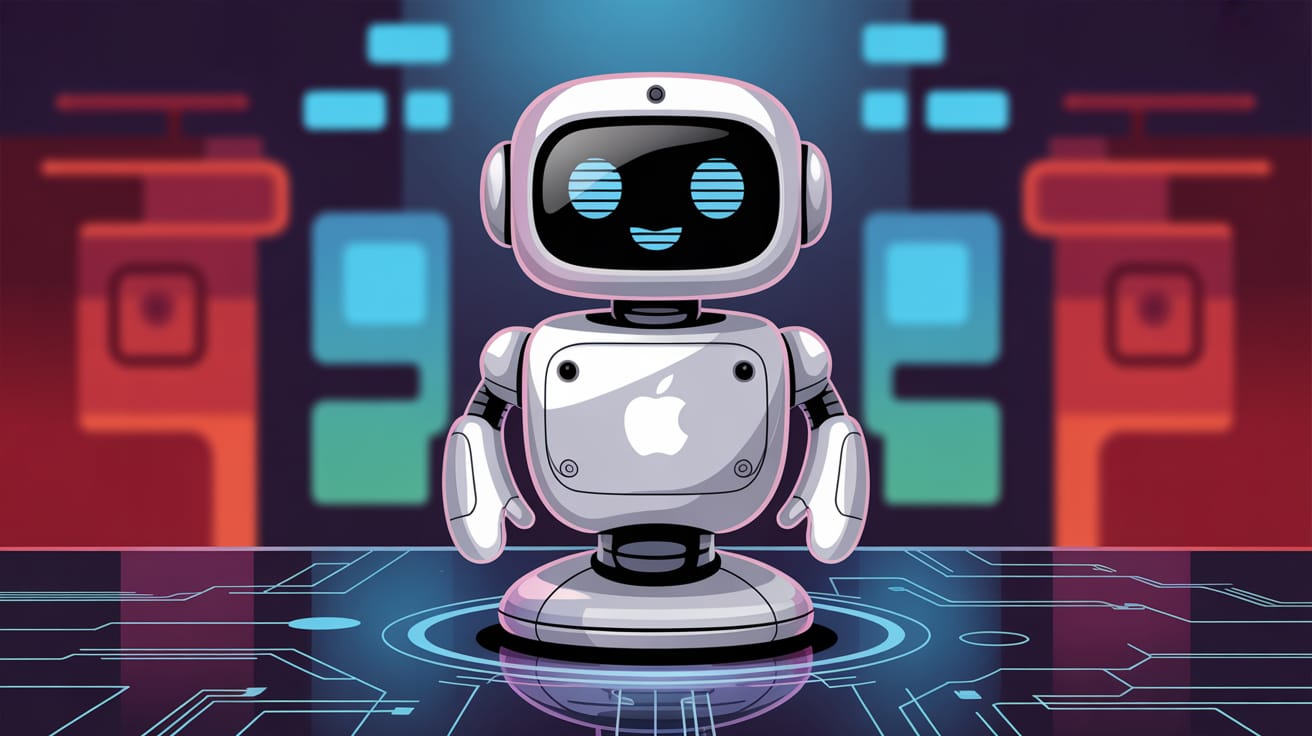
Image source: Ideogram / The Rundown
The Rundown: Apple could rake in $133B annually from humanoids by 2040, according to a new Morgan Stanley analysis that reimagines the iPhone maker as a robotics powerhouse.
The details:
Led by Apple analyst Erik Woodring, Morgan Stanley predicts that Apple could own 9% of the global robotics market in 15 years.
Apple is already exploring personal home robots, including a mobile home robot and a motorized tabletop device, as reported earlier this year.
At ~$133B in annual robot revenue, Apple would dwarf the Mac’s ~$30B a year and surpass 2024 Services’ $96B by about 38%.
Morgan Stanley pegs the broader humanoid and embodied AI market at $5 trillion by 2050.
Why it matters: Morgan Stanley sketches a product roadmap starting with a tabletop “hub” robot as early as 2027 — the on-ramp before Apple scales to full humanoids. The projection: by 2040, robotics could dwarf Mac and iPad combined, rivaling Services as Apple's second-largest business behind the iPhone.
PARADIGM ROBOTICS
🔥 This robot can survive a blazing inferno

Image source: Paradigm Robotics
The Rundown: A Texas startup is building a robot that rolls into burning buildings so firefighters don’t have to walk in blind. FireBot survives 1,200°F (650°C) for 15 minutes, streaming thermal video, gas readings, and live intel back to command control.
The details:
FireBot v4 is a tracked firefighting scout built by Paradigm Robotics, a startup founded by University of Texas engineering alum Siddharth Thakur.
Built with stainless steel, tungsten, and titanium, it packs cameras and sensors that beam live video and data from inside a blaze via a handheld controller.
At about 300 lb. and four feet long, it crawls through debris to map hotspots and flag toxic plumes to forewarn crews.
The team is trialing Austin area fire departments, pitching FireBot as a data scout rather than a hose robot like Thermite RS3 or Shark Robotics’ Colossus.
Why it matters: First entry into a structure fire is often blind guesswork that puts firefighters at maximum risk. FireBot turns that crucial moment into a data problem, enabling commanders to see heat gradients, structural hazards, and gas concentrations before anyone crosses the door.
AMAZON
🛒 Amazon tests Whole Foods robot store
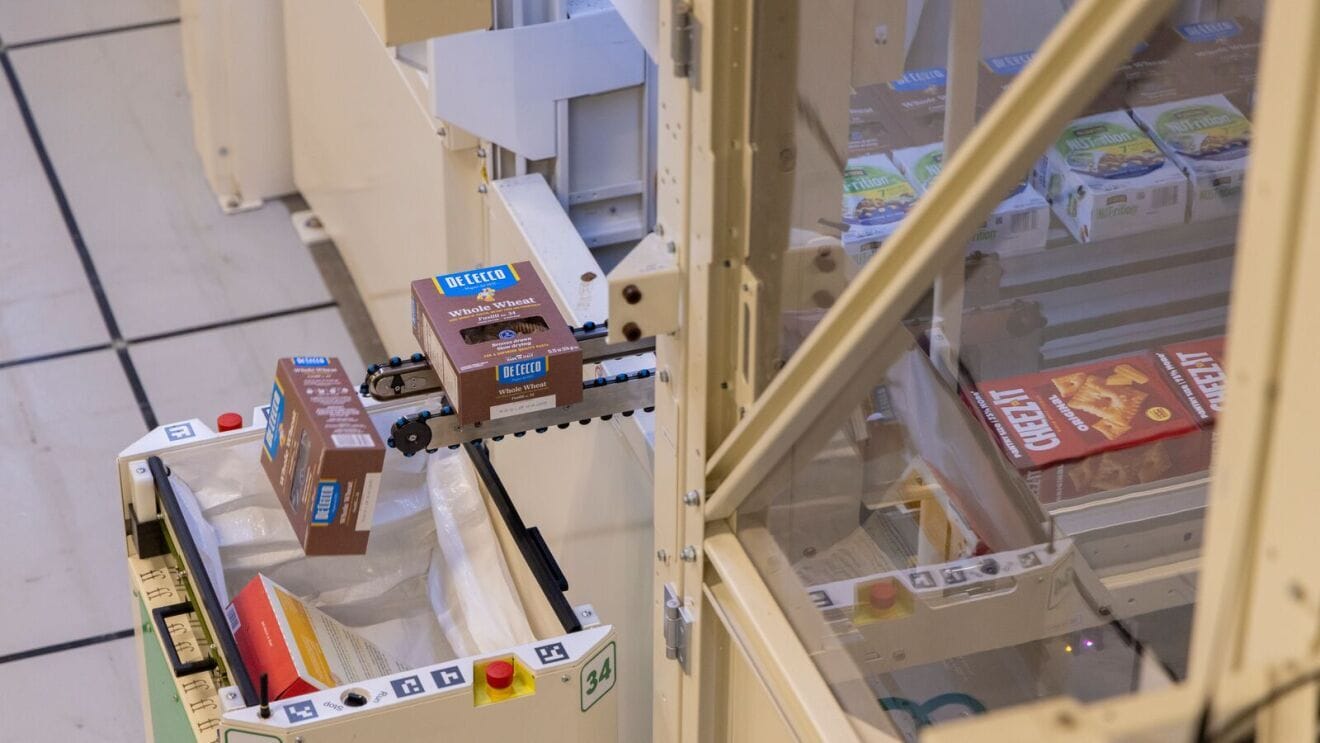
Image source: Amazon
The Rundown: Amazon just wired a Whole Foods outside Philadelphia with a robot-run “store within a store,” where a 10K-square-foot micro-fulfillment center pulls major brands like Tide and Pepperidge Farm alongside the grocer’s organics.
The details:
Powered by Silicon Valley robotics startup Fulfil’s automated system, autonomous ShopBots fetch groceries from more than 12K stocked items.
ShopBots sort, retrieve, and stage products across multiple temperature zones behind the scenes while keeping aisles human-only.
In-store shoppers scan QR codes or use the Amazon app, then grab their bagged items at a pickup counter “within minutes,” Amazon says.
The test is part of Amazon’s broader grocery rethink, layering automation into Whole Foods after years of format experiments.
Why it matters: Amazon looks to crack the economics of grocery automation by hiding robots behind the walls instead of redesigning entire stores around them. If the hybrid model scales, it turns every Whole Foods into an instant-pickup hub without sacrificing the browse-and-buy experience that kept Just Walk Out from taking off.
ROBOTICS RESEARCH
💨 This ‘brain-free’ bot runs on air
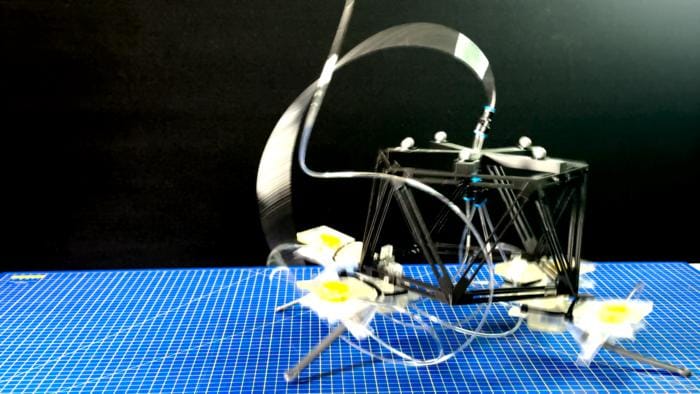
Image source: University of Oxford
The Rundown: Oxford engineers just built “brain-free” soft robots that run on air — no chips, code, or motors — using modular fluidic blocks that act as muscle, sensor, and valve.
The details:
Published in Advanced Materials, the study shows these “fluidic robots” can produce complex, rhythmic motion.
By feeding them steady pressure, the robots self‑oscillate and sync like fireflies, hopping and crawling without a single line of software.
The tiny modular units snap together like LEGO to form tabletop robots roughly the size of a shoebox that can hop, shake, or crawl.
The team built a crawler robot that detects table edges and stops before falling, and a shaker robot that sorts beads by tilting a rotating platform.
Why it matters: Encoding decision-making directly into a robot's physical structure eliminates the need for software to “think,” creating robots that are faster and more efficient. Next phase: larger, untethered versions that could operate in extreme environments where electronics fail, like deep underwater or in space.
QUICK HITS
📰 Everything else in robotics today
Elon Musk says Tesla will likely build a gigantic chip fab to supply the semiconductors needed for its expanding AI and robotics ambitions.
Agility Robotics and Figure AI had a brief Twitter spat after Figure’s CEO claimed first-in-the-world autonomous humanoid bragging rights and Agility pushed back.
XPeng's IRON humanoid moved so realistically at its AI Day debut that engineers had to cut open its leg onstage to prove it wasn't a person in a costume.
Elon Musk floated replacing prison time with a “more humane” alternative: assigning offenders a Tesla Optimus robot that shadows them and monitors for future crimes.
Salad chain Sweetgreen is selling its Spyce robotics unit — maker of the Infinite Kitchen makelines — to Wonder for $186.4M.
Goldman Sachs’ Nov. 3–6 field research reportedly finds China’s humanoid suppliers in a “capacity-first” push — pre-building 100K–1M units of annual output.
Elon Musk says Tesla will start production of the pedal- and steering-wheel-free Cybercab in April at its Austin factory.
REK (Robot Entertainment Kombat) is launching “REK America,” taking its VR‑piloted humanoid fighting league on a five-city U.S. tour.
Robotaxi maker WeRide began trading in Hong Kong last week, adding a dual listing alongside Nasdaq, as CEO Tony Han courts global capital to bankroll its costly R&D.
Poseidon Aerospace raised $11M in seed funding to develop Egret and Heron cargo UAVs, a logistics-first bet to strengthen battlefield supply chains.
The father–son duo behind the world’s fastest quadcopter has built a battery‑free drone that looks like a flying solar panel, designed to run entirely on sunlight.
At deadmau5’s Red Rocks show on Sunday, Figure deployed its humanoids onstage as part of the production, integrating them into the set and visuals (with mixed results).
COMMUNITY
🎓 Highlights: News, Guides & Events
Read our last AI newsletter: OpenAI calls for superintelligence safety
Read our last Tech newsletter: Musk wins $1T pay package
Read our last Robotics newsletter: Rivian spins off robotics startup
Today’s AI tool guide: Get the most out of ChatGPT’s Deep Research
Watch our last workshop: AI Foundations for Marketers
See you soon,
Rowan, Jennifer, and Joey—The Rundown’s editorial team
OpenAI calls for superintelligence safety
Read Online | Sign Up | Advertise

Good morning, AI enthusiasts. OpenAI expects AI to start making “significant discoveries” by 2028 — and is calling on industry and government to work together to prepare for the risks that could come with superintelligent systems.
The actual pace of progress is impossible to predict, but one thing’s clear: OAI is already setting the tone for how the world should adapt to the next wave of intelligence.
In today’s AI rundown:
OpenAI’s reccos to brace for superintelligent AI
The Rundown Roundtable: Our AI use cases
Get the most out of ChatGPT’s Deep Research
Research: McKinsey’s 2025 AI reality check
4 new AI tools, community workflows, and more
LATEST DEVELOPMENTS
OPENAI
🛡️ OpenAI’s reccos to brace for superintelligent AI
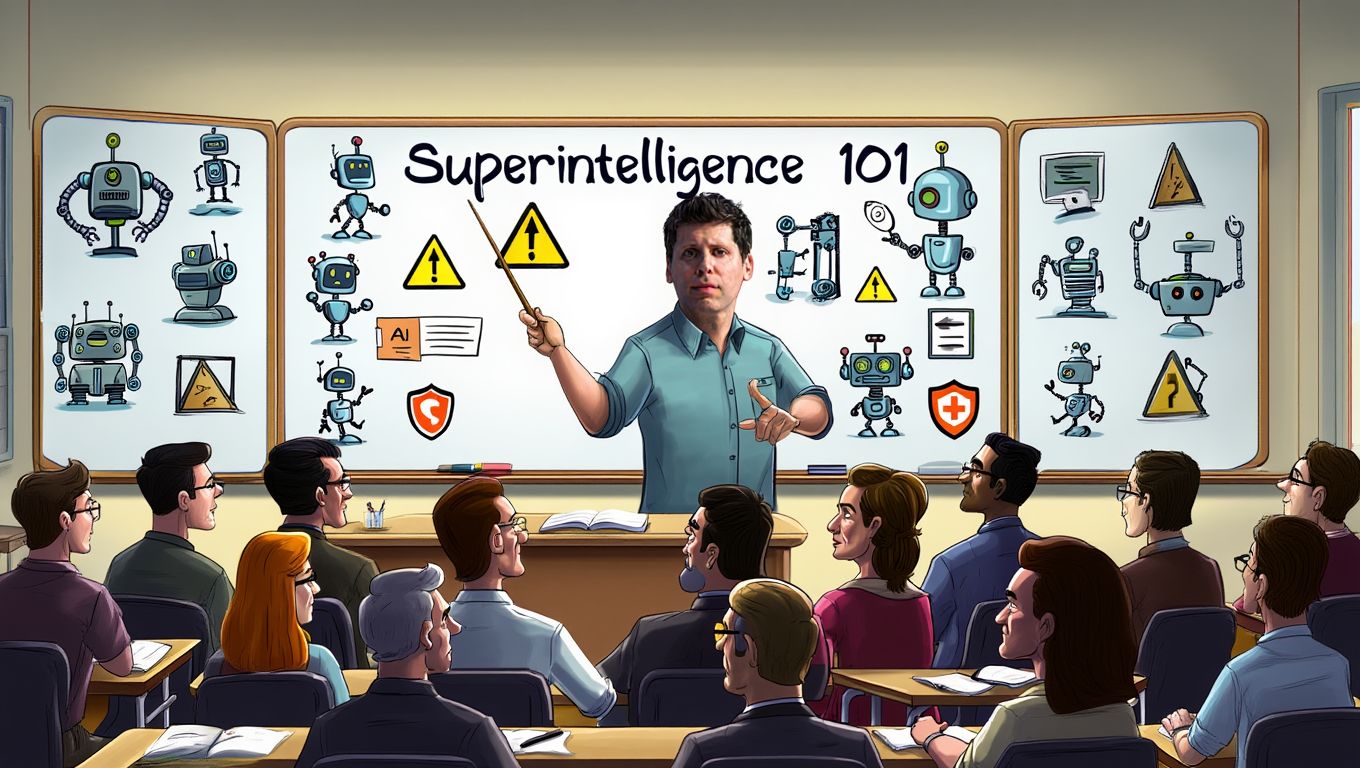
Image source: Reve / The Rundown
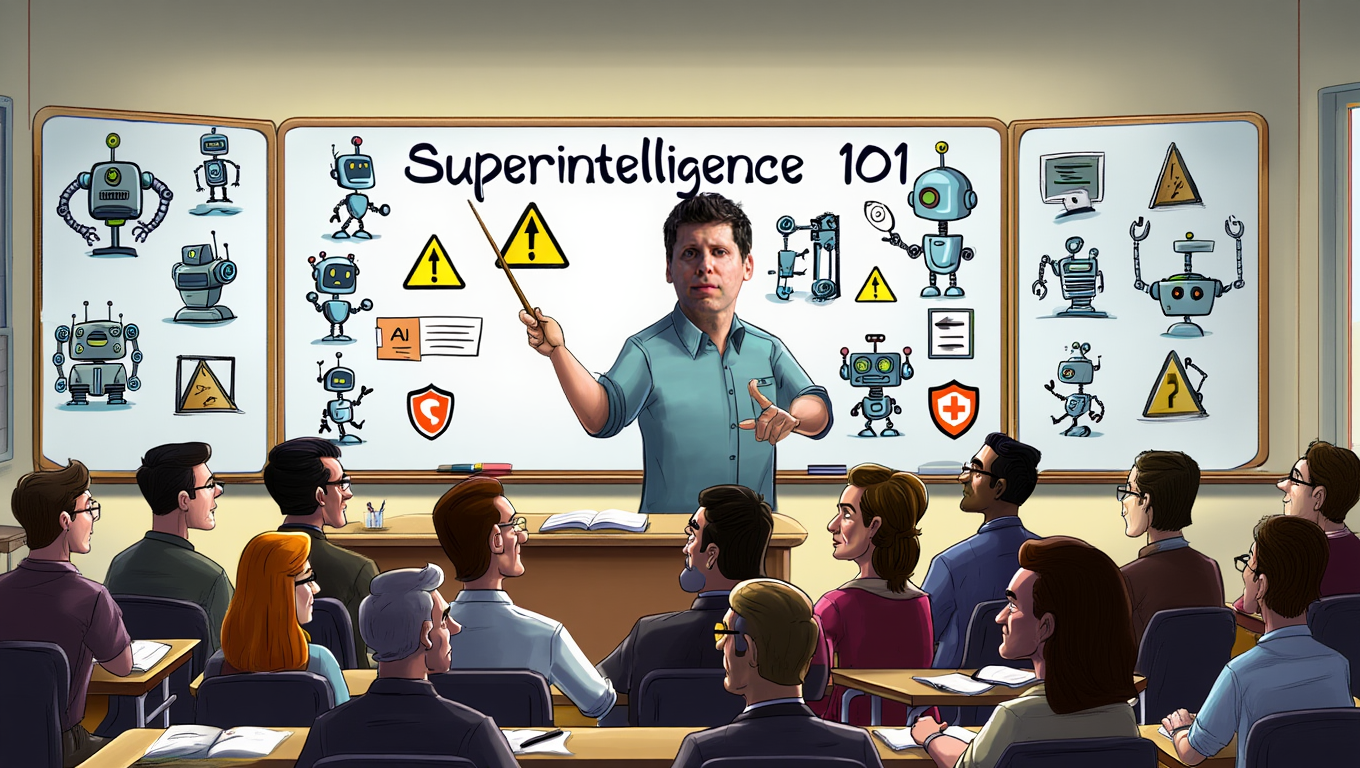
The Rundown: OpenAI just shared its view on AI progress, predicting systems will soon become smart enough to make discoveries and calling for global coordination on safety, oversight, and resilience as the technology nears superintelligent territory.
The details:
OpenAI said current AI systems already outperform top humans in complex intellectual tasks and are “80% of the way to an AI researcher.”
The company expects AI will make small scientific discoveries by 2026 and more significant breakthroughs by 2028, as intelligence costs fall 40x per year.
For superintelligent AI, OAI said work with governments and safety agencies will be essential to mitigate risks like bioterrorism or runaway self-improvement.
It also called for safety standards among top labs, a resilience ecosystem like cybersecurity, and ongoing tracking of AI’s real impact to inform public policy.
Why it matters: While the timeline remains unclear, OAI’s message shows that the world should start bracing for superintelligent AI with coordinated safety. The company is betting that collective safeguards will be the only way to manage risk from the next era of intelligence, which may diffuse in ways humanity has never seen before.
TOGETHER WITH YOU.COM
💡One major reason AI adoption stalls? Training.
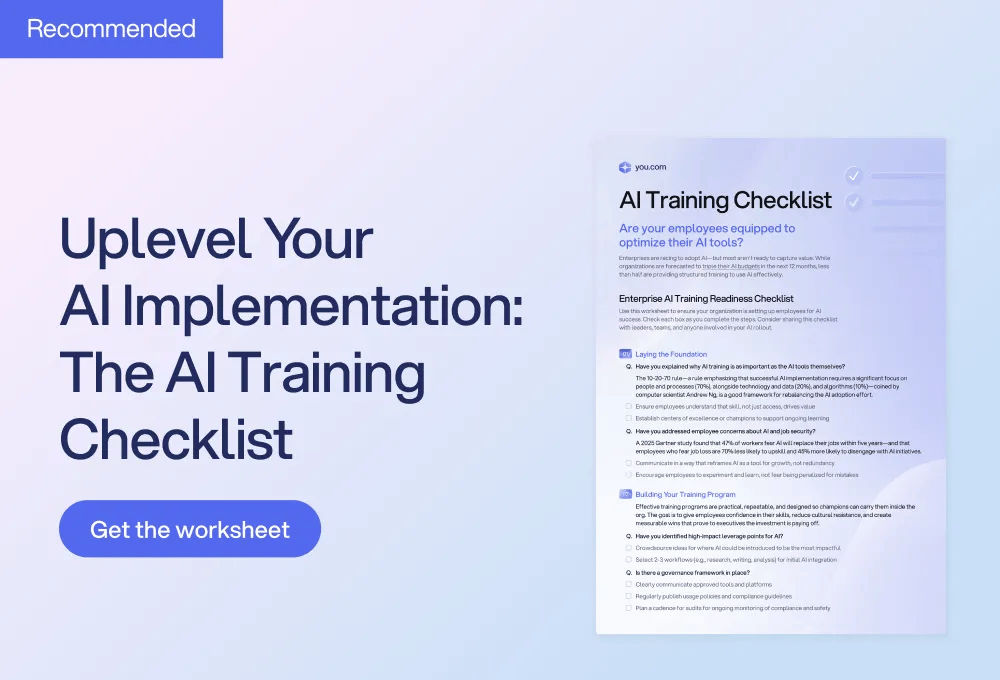
The Rundown: AI implantation often goes sideways due to unclear goals and a lack of a clear framework. You.com’s checklist pinpoints common pitfalls and guides you to build a capable, confident team that can make the most out of your investments.
Inside, you’ll get:
Key steps for building a successful AI training program
Guidance on overcoming employee resistance and fostering adoption
A structured worksheet to monitor progress and share across your organization
Get your checklist today.
THE RUNDOWN ROUNDTABLE
💡 The Rundown Roundtable: Our AI use cases
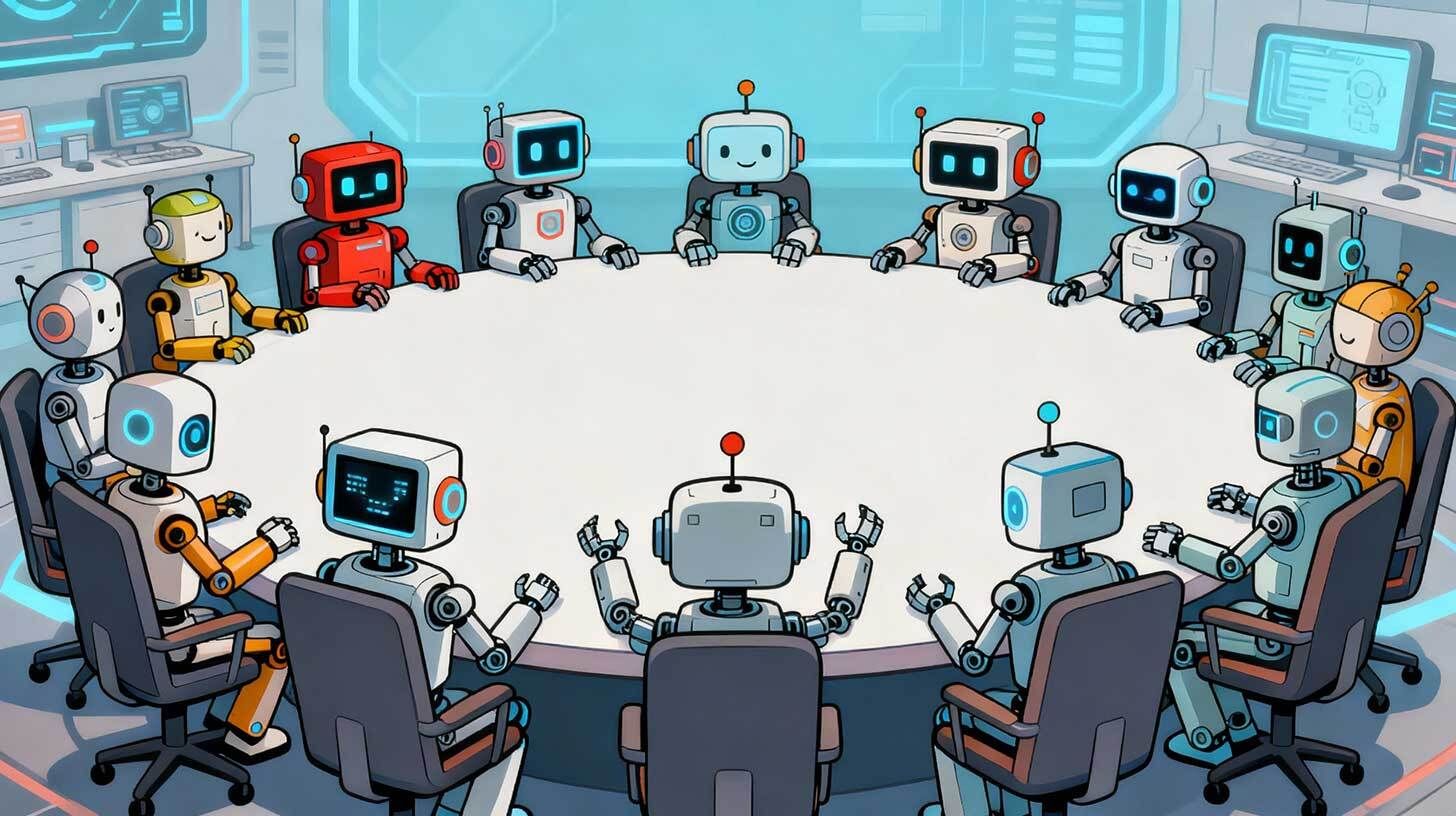
Image source: Ideogram / The Rundown
The Rundown: The Rundown Roundtable is a new weekly feature where we poll members of The Rundown staff on how the team is using AI. This week: how we’re using AI in our daily lives outside of work.
Zach, Al Writer: The internet connection in our basement has been terrible, and I put ChatGPT on the task. After troubleshooting and reviewing images of the setup, it recommended a series of new adapters and splitters (also directing me right to the purchase pages). The solution led to at least a 10x increase in speed and completely upgraded our experience.
Rowan, Founder: I’ve been using Notion AI (Claude) as a copilot to better personalize my daily life/routine/schedule. I have a weird way of combining time blocking and to-do lists for productivity, and I host it all in Notion. Then I get Notion AI to review for inefficiencies and better optimize my time.
For example, it told me that since I work at my desk and remotely, I should move my gym session to mid-day and treat it as a work break to recharge instead of end-of-day.
Jennifer, Tech & Robotics Writer: I recently took my daughter, who has complex food allergies, to Spain. Since I’m not great at Spanish, I asked ChatGPT to create a printable guide for restaurant servers that explained her allergies in detail and asked them to double-check ingredients with the chef. I also used it to help me practice what to say in Spanish and to suggest local dishes she could probably enjoy safely.
AI TRAINING
🧐 Get the most out of ChatGPT’s Deep Research

The Rundown: In this tutorial, you’ll learn how to use ChatGPT’s Deep Research to automatically browse the web, analyze dozens of sources, and generate structured, cited reports for market, customer, or competitive intelligence.
Step-by-step:
Start a new chat in ChatGPT, click the + icon, and select Deep Research to activate the agent that runs multi-step web research and compiles insights
Write a research prompt describing your goal (e.g., “Conduct market research for household robotics and identify ICP, pain points, and distribution strategy”), then answer any clarifying questions it asks
Submit your request. Deep Research will browse the web for 5–30 minutes, analyze sources, and build a fully cited report you can track in real time
Review the final report for insights, trends, and competitor data, then export it as a PDF/link. You can even attach it to a custom GPT for ongoing intelligence
Pro tip: Use Deep Research for projects requiring verified data. Give detailed context and measurable objectives to ensure the report is both comprehensive and actionable.
PRESENTED BY ATLASSIAN
🤝 AI’s collaboration problem
The Rundown: AI adoption has doubled, and workers are saving over an hour daily, but only 4% of Fortune 1000 executives report efficiency gains — why? Atlassian’s new AI Collaboration Index: Executive Insights report reveals a disconnect between personal productivity and true business transformation.
Key findings from 200 executives and 12,000 knowledge workers include:
The elite 4% seeing transformation are building connected systems
The missing link: AI helps individuals but fails at team collaboration
The biggest AI opportunities within marketing, engineering, and human resources
Companies prioritizing experimentation over perfect strategy see 2x more innovation
Read the full report to uncover what organizations achieving real AI transformation are doing differently.
AI RESEARCH
🧠 McKinsey’s 2025 AI reality check
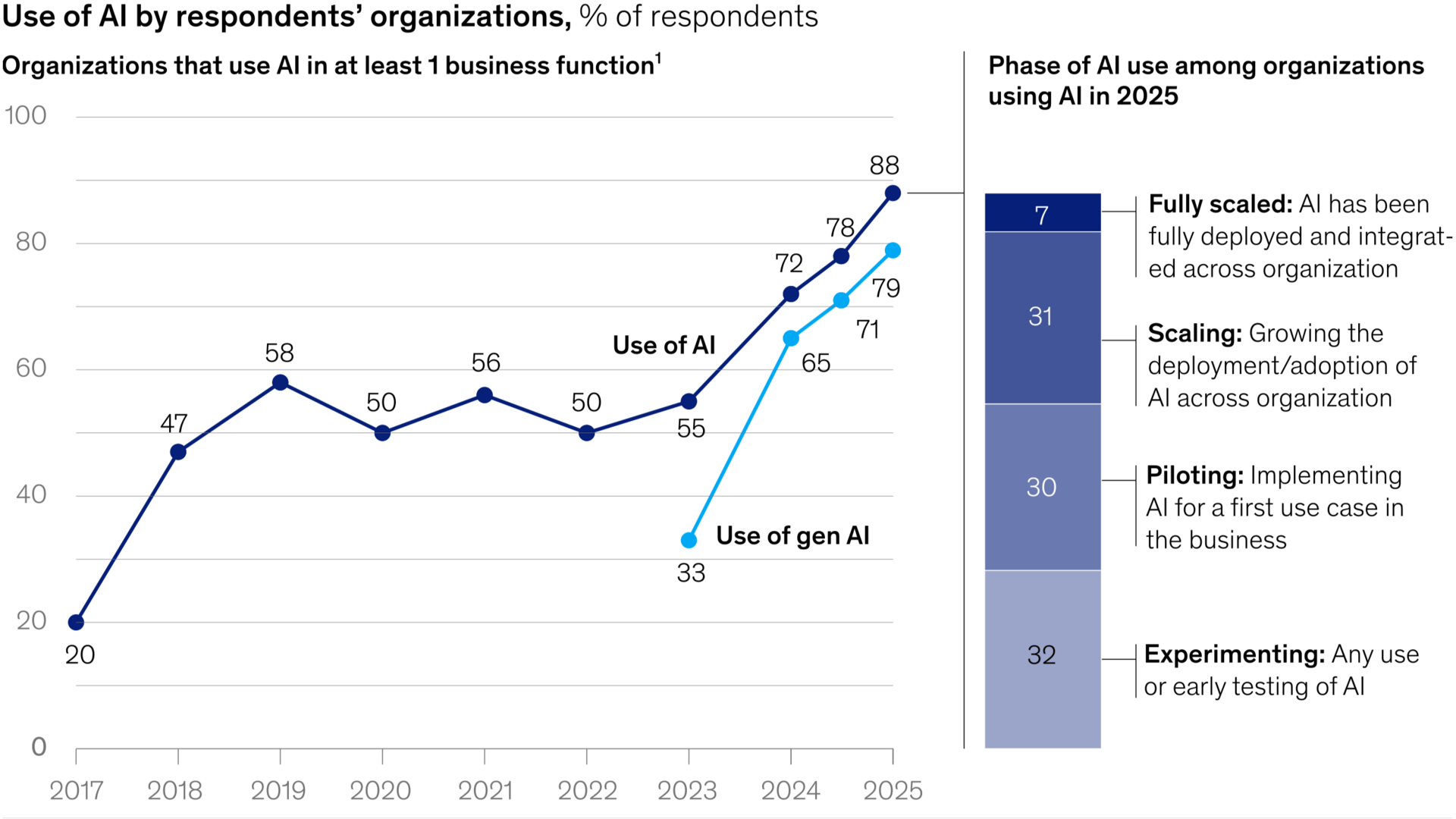
Image source: McKinsey
The Rundown: McKinsey released its State of AI 2025 survey of nearly 2K organizations, revealing that while almost every company now uses AI, most are stuck in pilots, with only a fraction achieving enterprise-wide impact or scaling agents.
The details:
The survey found that 88% of companies now use AI somewhere, but most of them are in experimentation or pilot phases, with just 33% actually scaling it.
While 39% reported EBIT impact from AI, just 6% achieved an impact of 5% or more, largely by redesigning workflows and using it to drive innovation.
62% are working with AI agents, but adoption is early, with 39% experimenting and just 23% scaling them, mostly in IT and knowledge management.
About 32% of companies expect workforce reductions of 3% or more next year, while 13% expect increases. Larger firms are more likely to predict cuts.
Why it matters: The key lesson comes from the high performers — the few seeing real bottom-line impact from AI. Their success shows that the real value of AI comes not from efficiency gains, but from redesigning workflows, scaling across functions, and using it to fuel growth and innovation.
QUICK HITS
🛠️ Trending AI Tools
⚡️ Semrush One: Measure, optimize, and grow visibility from Google to ChatGPT, Perplexity, and more*
📽️ Sora 2: OpenAI’s video AI, now adding watermarks with account IDs
💻️ Higgsfield: AI video platform, now with a workspace for teams
🤖 Grok-4 Fast: xAI’s lighter model, upgraded with a 2M token context window
*Sponsored Listing
📰 Everything else in AI today
Google introduced the File Search Tool, a fully managed RAG system that provides a simple, integrated, and scalable way to ground Gemini with users’ data.
OpenAI wrote a letter last week asking the Trump administration to expand a Chips Act tax credit to cover AI data centers, servers, and electrical grid components.
Google added new capabilities in Vertex AI Agent Builder, including SOTA context management, single command deployment, and observability and evaluation features.
UK firms plan 3% pay raises next year, but 1 in 6 expect AI to reduce headcount — some by over 10% — amid the weakest hiring outlook since the pandemic.
OpenAI expanded Codex access with the launch of a cost-efficient GPT-5-Codex-Mini, 50% higher rate limits, and priority processing for Pro and Enterprise users.
COMMUNITY
🤝 Community AI workflows
Every newsletter, we showcase how a reader is using AI to work smarter, save time, or make life easier.
Today’s workflow comes from reader Zack T. in Singapore:
“As an app marketer with limited knowledge in HTML, I upload reference designs I find online and ask ChatGPT to produce HTML templates for promotion pages, listing the parameters needed such as deal name, usual price, promotional price, discount %, image link, and link URL. Then I upload an Excel file with columns of parameters for each deal, and paste the output HTML into the source code of the promotion pages.”
How do you use AI? Tell us here.
🎓 Highlights: News, Guides & Events
Read our last AI newsletter: China's open-source AI closes the gap
Read our last Tech newsletter: Musk wins $1T pay package
Read our last Robotics newsletter: Rivian spins off robotics startup
Today’s AI tool guide: Get the most out of ChatGPT’s Deep Research
Watch our last workshop: AI Foundations for Marketers
See you soon,
Rowan, Joey, Zach, Shubham, and Jennifer—the humans behind The Rundown
No matching search results
Try using different keywords, double-check your spelling, or explore related categories.
Stay Ahead on AI.
Join 2,000,000+ readers getting bite-size AI news updates straight to their inbox every morning with The Rundown AI newsletter. It's 100% free.