Get the latest AI news, understand why it matters, and learn how to apply it in your work — all in just 5 minutes a day. Join over 2,000,000+ subscribers.

Nano Banana Pro changes the image generation game (again)
Read Online | Sign Up | Advertise

Good morning, AI enthusiasts. Google’s already had a big week with the release of Gemini 3, but apparently, the tech giant was just getting warmed up.
The company just dropped a new upgrade to its viral Nano Banana image generator that brings Gemini’s intelligence and Google Search along for the ride — enabling a whole new world of creative workflows.
In today’s AI rundown:
Google drops next-gen Nano Banana Pro
OpenAI launches ChatGPT group chats to all tiers
Use Nano Banana Pro to create stories, lead magnets
Advocacy groups warn against AI toys for holiday season
4 new AI tools, community workflows, and more
LATEST DEVELOPMENTS
🍌 Google drops next-gen Nano Banana Pro

Image source: Google
The Rundown: Google just launched Nano Banana Pro — its next-gen image model built on Gemini 3 — offering professional editing, 4k outputs, SOTA text accuracy, and world knowledge for complex infographics and use cases.
The details:
Pro can handle as many as 14 visual references at once, and preserves character identities across five people for new composition capabilities.
The model can now generate images in 4K resolution, along with improved control over granular details, such as camera angles, focus, and lighting.
Pro also takes its predecessors’ text rendering skills to the next level, with the ability to handle long text inputs, multiple languages, fonts, and graphic layouts.
Integration with Google Search enables the model to pull data directly from the web for accurate text rendering, graphics, and world knowledge.
Why it matters: Nano Banana Pro is another step up in visual creation, with its excellent text and graphic rendering, and the ability to search the web. Pro’s world knowledge is the biggest differentiator, with an understanding (thanks to Gemini 3) that goes beyond complex prompting to enable completely new workflows and creativity.
TOGETHER WITH RECRAFT
🎨 Turn conversations into production-ready design assets

The Rundown: Recraft Chat mode solves the biggest pain in AI image and editing workflows— the constant back-and-forth between generation tools and editing software. Chat on the left, canvas on the right, with full context preserved throughout your entire creative process.
Chat mode enables:
Task execution that completes sequences of actions from a single conversation
Brand consistency across assets from initial concept to final design
Professional control with styles, palettes, editing tools, and more
Using Recraft’s in-house models alongside top external options in one workflow
OPENAI
🫂 OpenAI launches ChatGPT group chats to all tiers
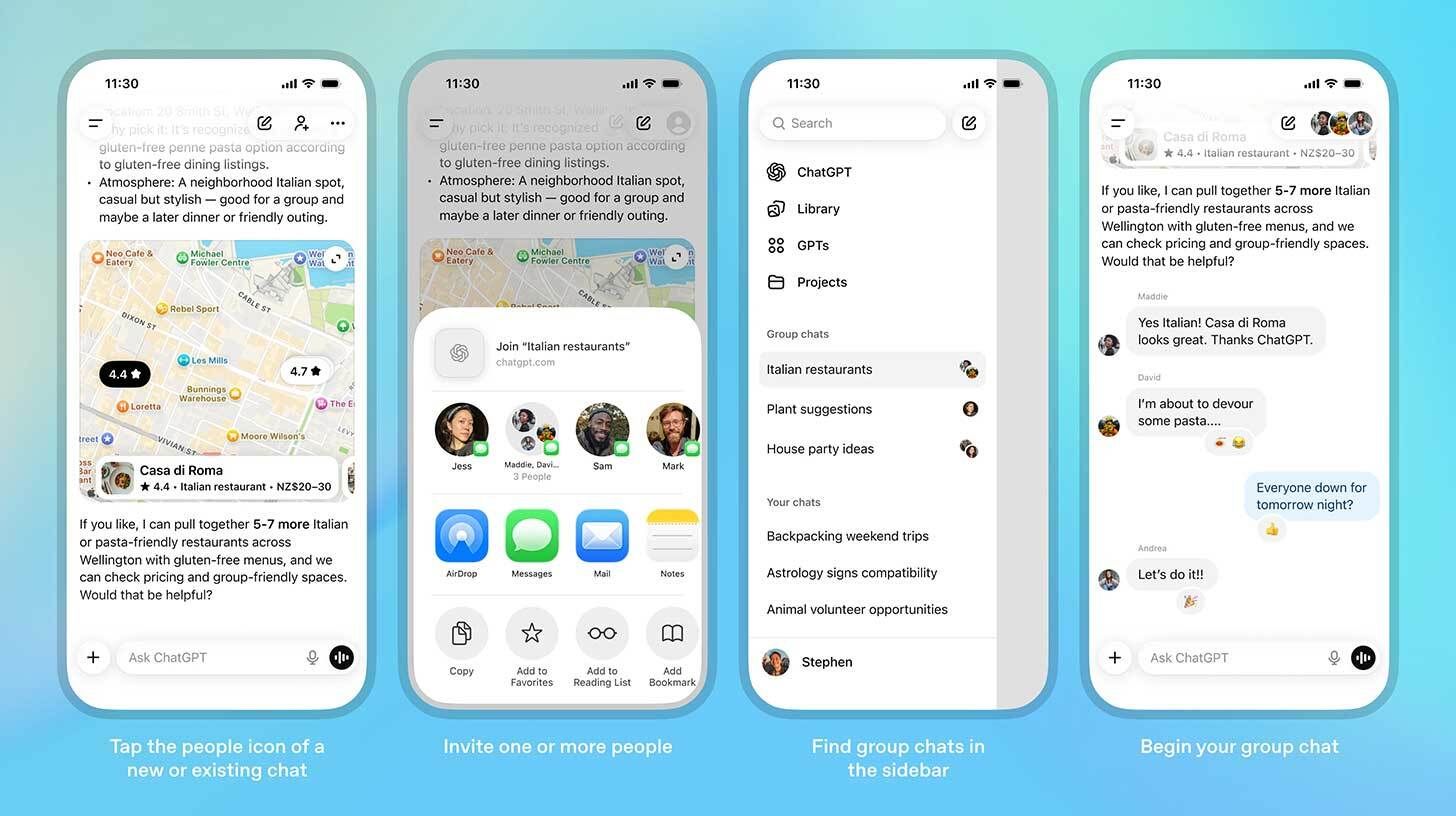
Image source: …
The Rundown: OpenAI just rolled out its group chat feature across all subscription tiers after an initial test period, allowing up to 20 users to simultaneously collaborate with each other and with ChatGPT in the same thread.
The details:
Shared chats are accessed through invite links, with ChatGPT gauging conversation flow and interjecting when appropriate or directly mentioned.
Rate limits apply to AI responses rather than human messages, with the usage counting against the user who triggered the model reply.
Privacy features isolate group sessions from individual memory, with ChatGPT not retaining info from collaborative threads or applying personal context.
The feature initially launched in four Asia-Pacific markets last week for a test trial and is now expanding to Free, Go, Plus, and Pro tiers.
Why it matters: Group projects just got a powerful new collaboration tool for the AI age. It might take some time to get the flow of using ChatGPT alongside friends or coworkers, but in a short time, we’ll likely see (and welcome) contributions from models in collaborative efforts as naturally as any other human participants.
AI TRAINING
🍌 Use Nano Banana Pro to create stories, lead magnets
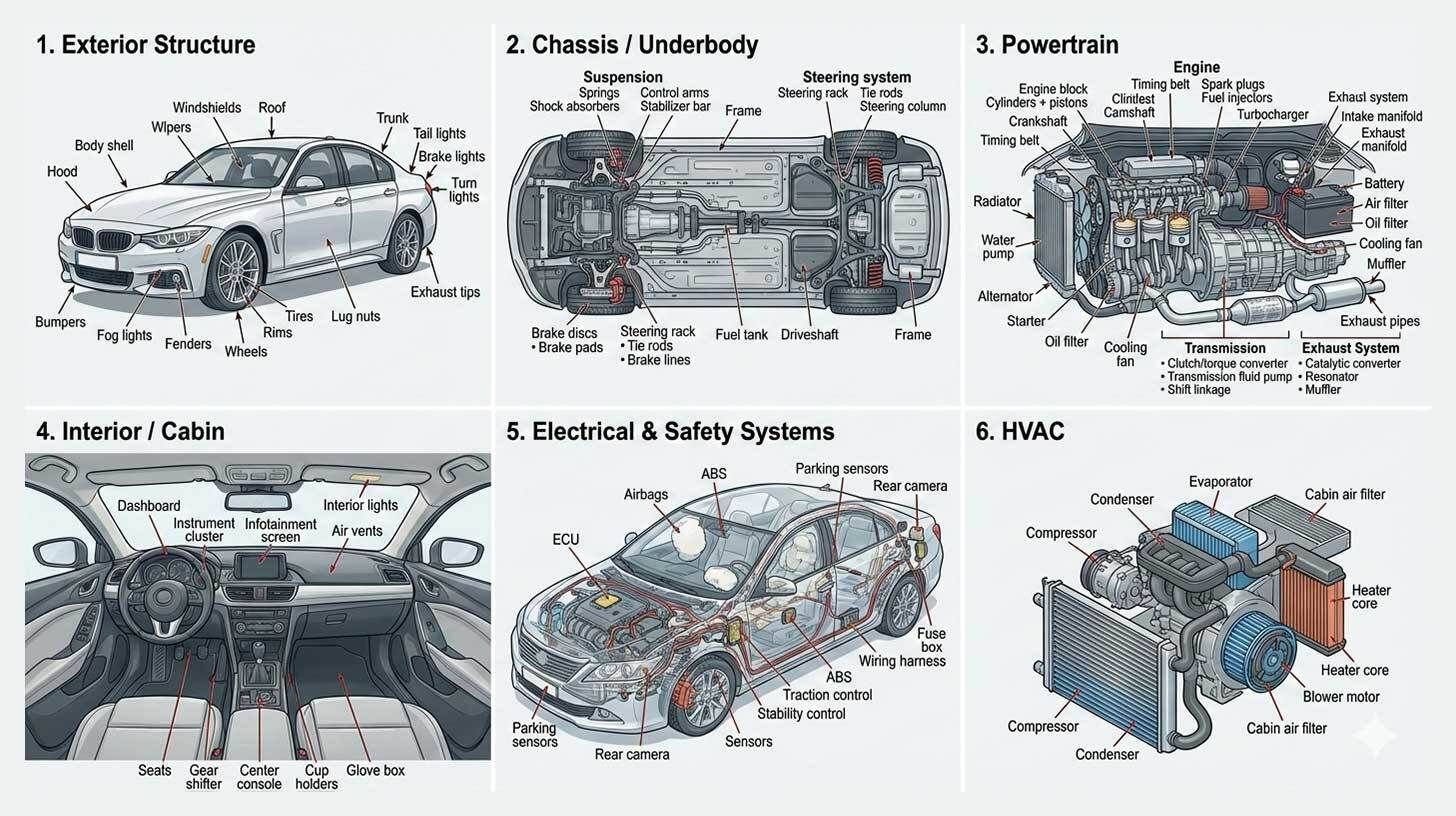
The Rundown: In this tutorial, you will learn how to use Google’s Nano Banana Pro to create precise visuals, infographics, storyboards, and high-converting lead magnets — with accurate text and labels that finally make AI image generation usable for real work.
Step-by-step:
Go to the Gemini app (mobile or web), open the chat, select Tools → Create images → Thinking, and ensure "Thinking with 3 Pro" is selected
Choose your use case: visual anatomy diagrams ("Create a detailed visual anatomy of a car with clearly labeled parts"), manga-style storyboards ("Create a manga-style storyboard for Little Red Riding Hood"), or business infographics ("Create a visual canvas explaining Alex Hormozi's strategy for leads, offers, and sales")
For best results, first ask any LLM for a structured parts list or storyboard outline, then copy those details into Nano Banana Pro with clear instructions
Review your output, then download and share your image — turn frameworks into visual one-pagers, email lead magnets, or client handouts in minutes
Pro tip: Over-explain your instructions. Give the AI sufficient context to create.
PRESENTED BY INVISIBLE
💡Developing multimodal AI: An in-depth technical guide
The Rundown: Adding vision or audio to a text model doesn't give you a useful multimodal system — you need perception, alignment, and decision-making over messy, synchronized streams. Invisible's latest paper provides a practical approach to multimodal system design for researchers used to text-only models.
In the paper, you’ll learn:
Why text-era habits like "just add more data" fail in multimodal settings
How to whiteboard projects before touching models: task, error cost, latency, evaluation
How to design data schemas and pipelines that support cross-modal reasoning
AI & TOYS
🧸 Advocacy groups warn against AI toys for holiday season
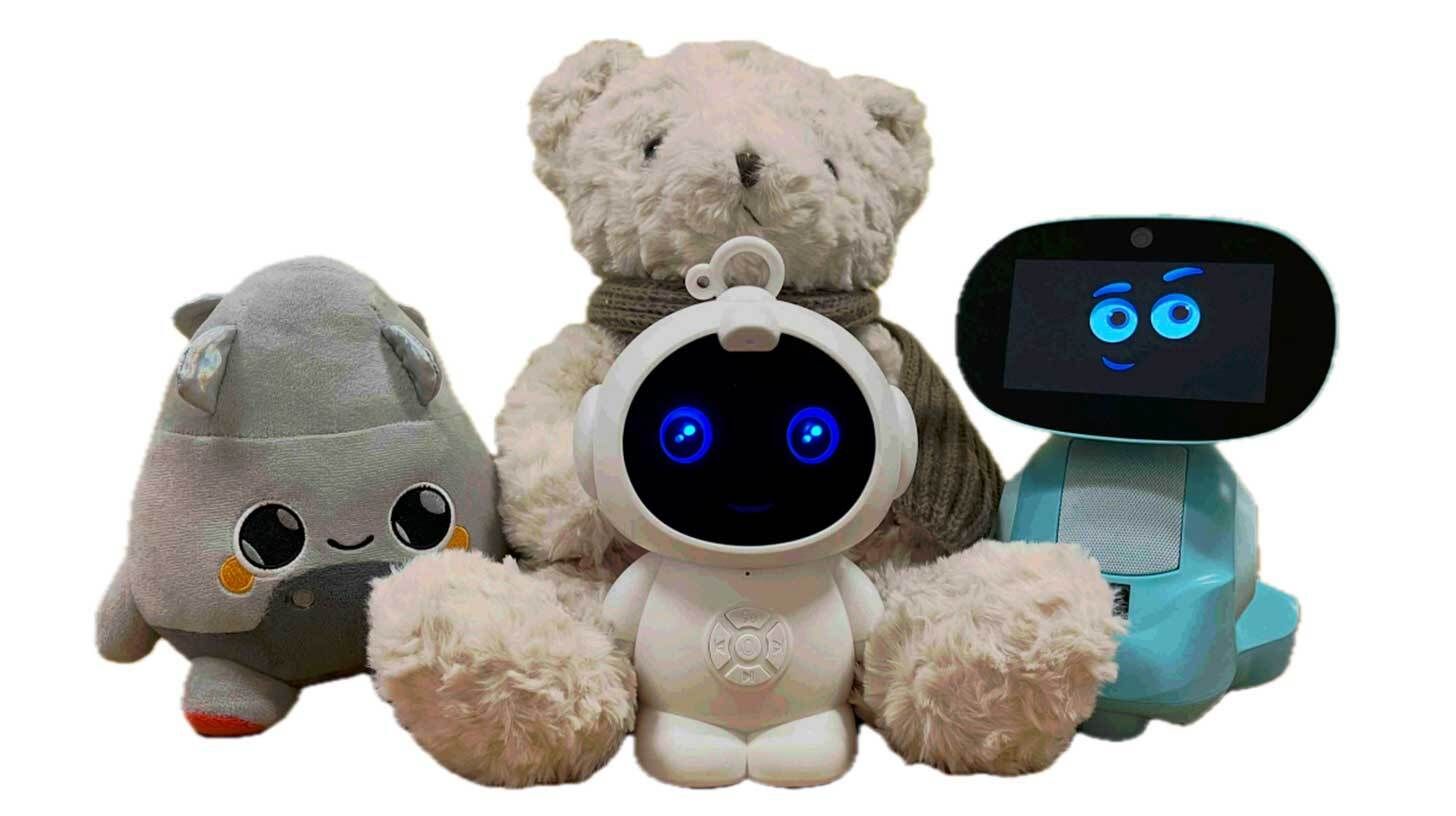
Image source: PIRG
The Rundown: Consumer watchdog Fairplay urged parents to skip AI toys this holiday season, with testing by the U.S. Public Interest Research Group revealing risks like inappropriate content exposure, privacy invasion, and developmental harm.
The details:
PIRG found that FoloToy's “Kumma” bear willingly discussed explicit topics and provided instructions to access dangerous items like matches and knives.
OpenAI suspended FoloToy’s API access for policy violations this month, with the company now “conducting an internal safety audit” and pulling products.
The report also found AI toys collecting voice recordings and personal data through always-on mics, with some sharing info with third-party companies.
They also warn of the impacts of AI toys on children’s social development, finding addictive design and engagement features.
Why it matters: Minors and AI have been a sensitive topic throughout 2025, and AI toys are now hitting the market despite the lack of proper regulations, safeguards, studies, or kid-friendly models in place. While AI has massive potential for personalized learning, its use with children needs to be slow and careful, not rushed to the shelves.
QUICK HITS
🛠️ Trending AI Tools
🍌 Nano Banana Pro - Google’s new image AI with improved text rendering
⚙️ Codex Max - OpenAI’s new frontier agentic coding model
🤖 GPT 5.1 Pro - OpenAI’s powerful new model for Pro users
🧊 SAM 3D - Meta’s system for creating 3D models from a single image
📰 Everything else in AI today
Postman: Unlock your API maturity score in 5 minutes and see how ready you are for AI. Get instant insights and practical next steps to level up. Get your quick assessment.*
AI2 released OLMo 3, a new family of open-source models — including the 32B 3-Think and Base that top benchmarks for open models of its size.
Perplexity launched the mobile version of its Comet AI browser assistant, now available to download for Android devices via the Google Play Store.
Chai Discovery published research showing its Chai-2 model can design therapeutic antibodies with accuracy, achieving an 86% success rate for drug-quality properties.
Stability AI announced a new partnership with Warner Music Group to develop commercially safe AI music models and professional-grade tools.
Manus rolled out Browser Operator, a new browser extension that allows its AI agent to operate directly within users' local browsers.
Google’s NotebookLM introduced Infographics and Slide Decks powered by Nano Banana 2, integrating the ability to quickly create visuals of source material.
*Sponsored Listing
COMMUNITY
🤝 Community AI workflows
Every newsletter, we showcase how a reader is using AI to work smarter, save time, or make life easier.
Today’s workflow comes from reader Zac T. in Lima, Peru:
"I use ChatGPT as a bit of a health and fitness sidekick. I’ve set up a few running threads: one for tracking what I eat, one for gym programs, and another for general health questions. In the food-tracking thread, I’ve saved my usual breakfasts, meal-prepped lunches, and the pantry staples I use all the time.
Each day, I tell what I’m planning to eat, and it gives suggestions based on my macros... The gym thread keeps me on track, especially when I’m traveling. If I need a workout and don’t have equipment, it pulls together a bodyweight session that fits my needs."
How do you use AI? Tell us here.
🎓 Highlights: News, Guides & Events
Read our last AI newsletter: OpenAI pushes Codex to the Max
Read our last Tech newsletter: Apple’s next CEO is already waiting
Read our last Robotics newsletter: Sunday’s humanoid can do your dishes
Today’s AI tool guide: Nano Banana Pro for creating stories, lead magnets
See you soon,
Rowan, Joey, Zach, Shubham, and Jennifer — the humans behind The Rundown

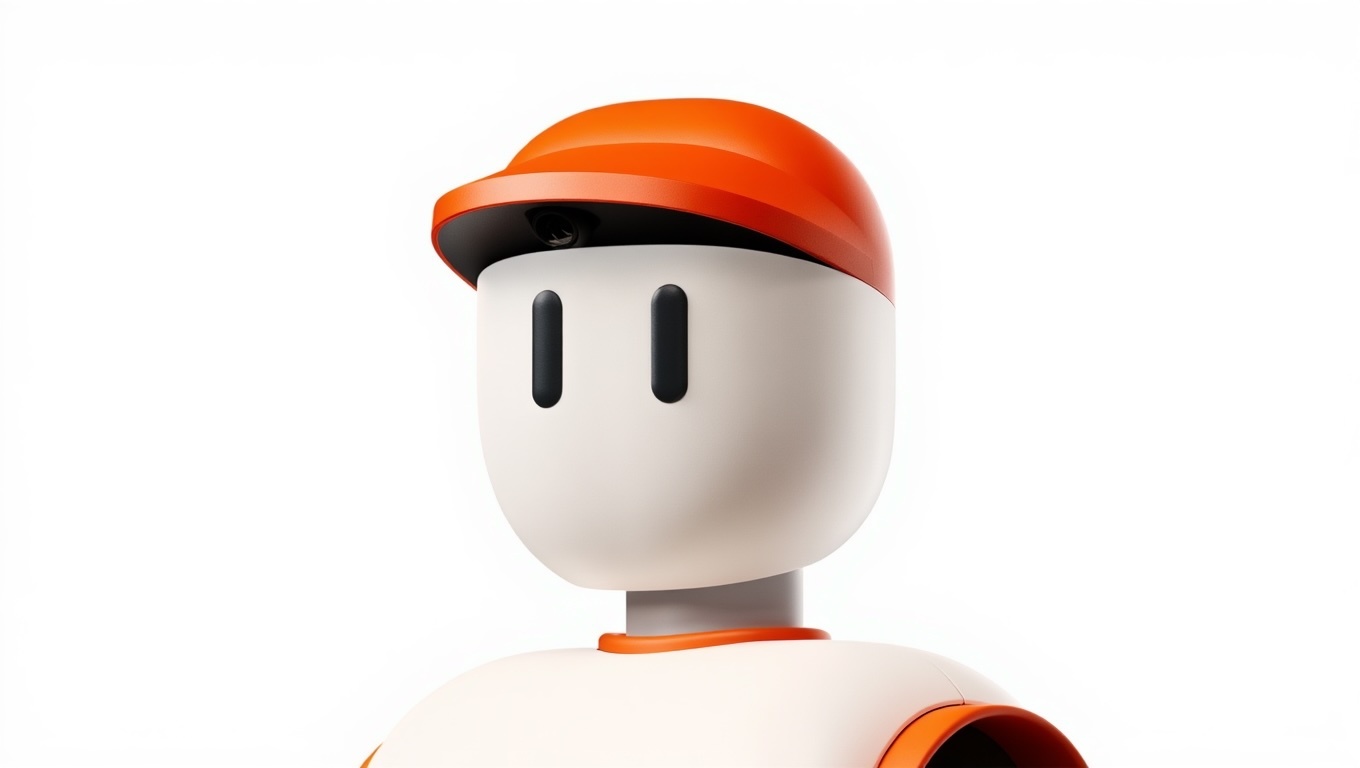
Sunday's new humanoid can do your dishes
Read Online | Sign Up | Advertise

Good morning, robotics enthusiasts. California’s Sunday Robotics just slipped out of stealth with Memo, a dish-scrubbing, table-clearing humanoid, mere days after Tangible Robots unveiled its rival, Eggie.
The home-humanoid space is filling up fast, but can these smaller startups really outrun Tesla, Figure, and 1X — or is the LLM hypetrain just shifting over to humanoids?
Reminder: Our next live workshop, ‘The Human-First Agentic Content Workflow,’ is today at 4 PM EST. Join and learn how to use n8n to automate content while keeping human judgment involved for accurate and strong outputs. RSVP here.
In today’s robotics rundown:
Sunday’s new home humanoid ‘Memo’
Germany’s Agile debuts first industrial humanoid
Figure retires its battle-worn F.02 from BMW
1HMX unveils full-body robot control kit
Quick hits on other robotics news
LATEST DEVELOPMENTS
SUNDAY ROBOTICS
🧢 Sunday’s new home humanoid ‘Memo’
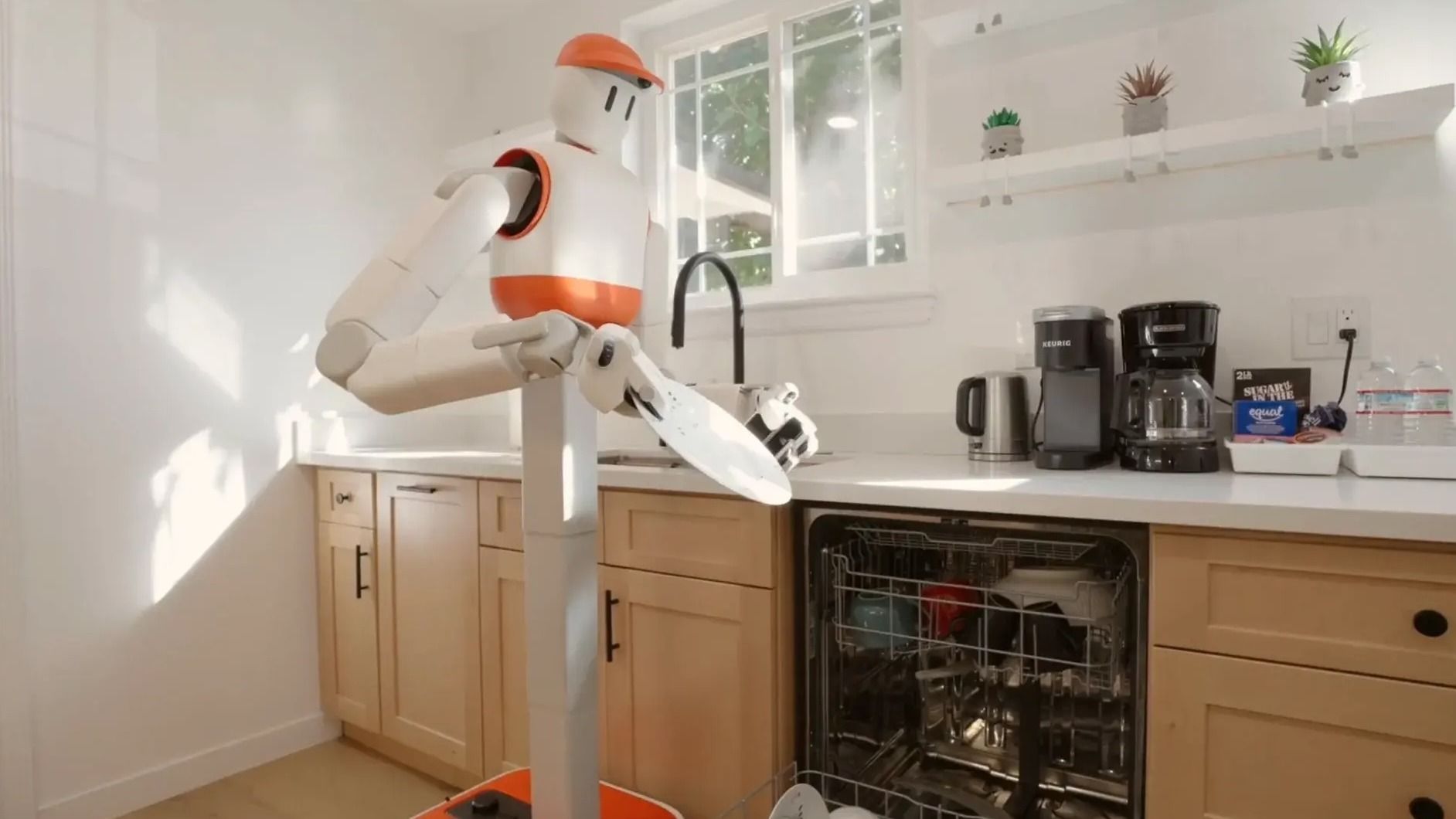
Image source: Sunday Robotics
The Rundown: Fresh out of stealth, Sunday Robotics just unveiled its wheeled humanoid, Memo. The Mountain View startup is pitching it as a 24/7 helper that cleans tables, handles delicate glassware, scoops trash, and tackles dishes.
The details:
Co-founded by former Google DeepMind/Tesla engineer Tony Zhao, the startup says that Memo will enter beta testing in late 2026.
The robot rides a stable wheeled base, stands 1.7 meters tall at 170 pounds, and runs for about four hours per charge.
Sunday says it has shipped over 2K Skill Capture Gloves to Memory Developers worldwide who train Memo’s onboard AI by recording human motion data.
Memo debuted as a one-armed prototype in 2024 that could only arrange shoes, but now trains multiple skills in parallel, adding new capabilities monthly.
Why it matters: Sunday Robotics is diving into the growing U.S. home-robotics race alongside San Francisco upstart Tangible Robots, fresh off launching its humanoid Eggie. Both are building their own hardware-software stacks from scratch, even as they square up against deep-pocketed giants like Tesla, 1X, and Figure.
AGILE ROBOTS
🤖 Germany’s Agile debuts first industrial humanoid
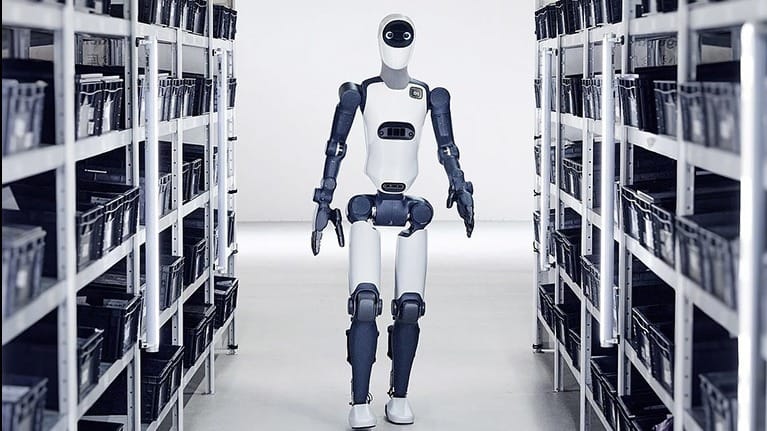
Image source: Agile Robots
The Rundown: Agile Robots, a German automation heavyweight with thousands of deployments, just jumped into the humanoid race with Agile ONE, built to work shoulder‑to‑shoulder with people on the factory floor.
The details:
The company pitches Agile ONE as a shop‑floor teammate that soaks up grueling, repetitive tasks so humans can focus on judgment and creativity.
The system leans on intuitive human‑robot interaction, highly dexterous hands, and an AI stack trained on real industrial data.
Full production is slated to begin in Bavaria in early 2026, with manufacturing kept in‑house for tighter control over quality and integration.
The company was founded by experts from the German Aerospace Center (DLR), the same pedigree as rival Neura Robotics.
Why it matters: Agile Robots has deployed over 20K automation systems, primarily in automotive and consumer electronics — bringing factory integration experience and an established customer base. But the real value isn't just a standalone humanoid but an entire system that works alongside their existing robotic arms, AMRs, and AGVs.
FIGURE
🤕 Figure retires its battle-worn F.02 from BMW
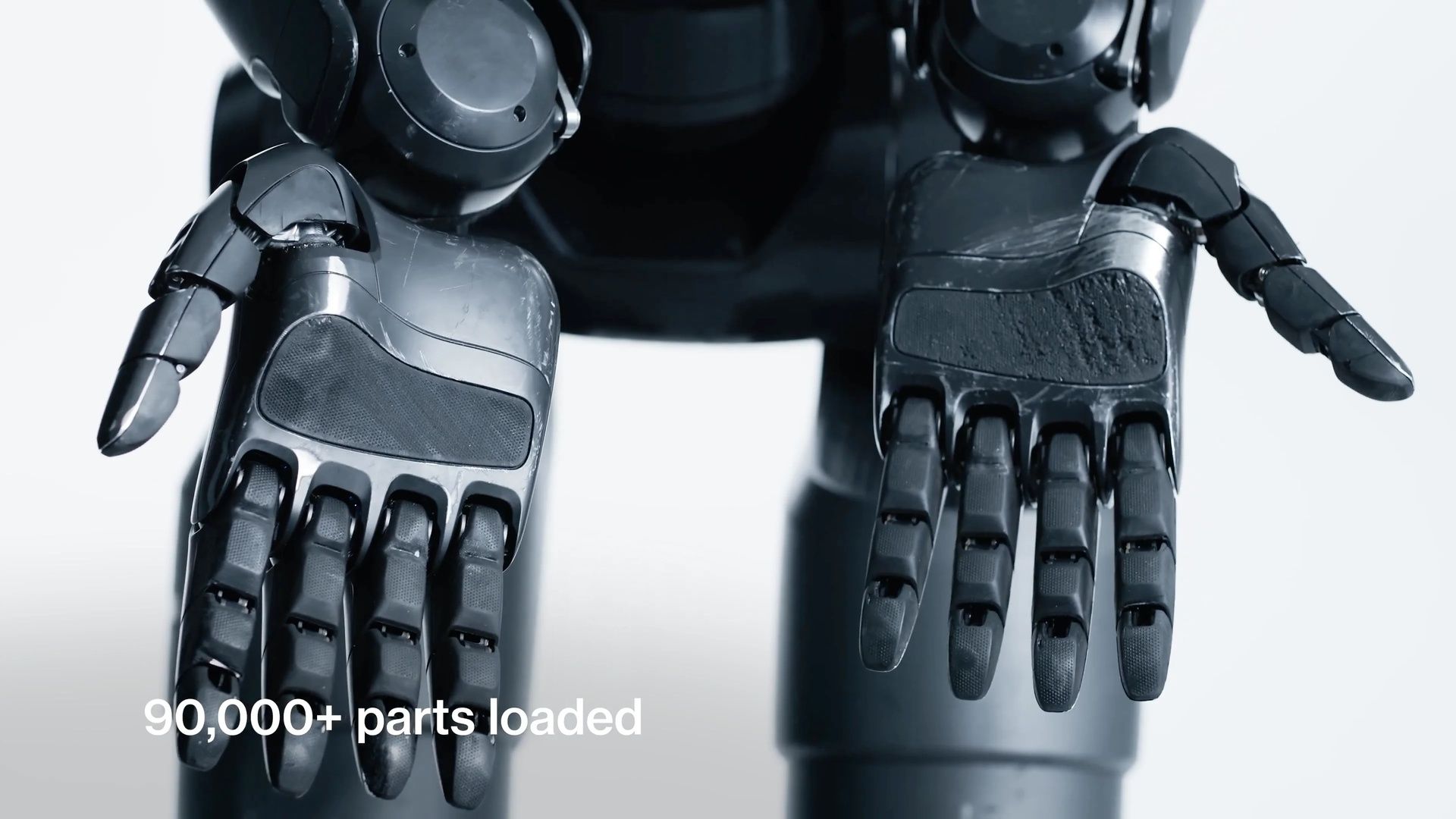
Image source: Figure / X
The Rundown: Figure AI is retiring its F.02 humanoids after an 11‑month grind on BMW’s Spartanburg line, where the bots ran 10‑hour shifts, loaded more than 90K sheet‑metal parts, and contributed to over 30K X3s rolling off the line.
The details:
The robots’ core task was sheet‑metal pick‑and‑place into welding fixtures alongside existing industrial robots to ease high‑strain work for humans.
Figure says the “battle‑scarred” units return to HQ, so real‑world reliability data feeds Figure 03 upgrades in durability, integration, and uptime.
Real factory stats — 1,250+ hours, 200+ walking miles, and 90K+ parts — show humanoids can shoulder repeatable, time‑boxed work on active lines.
BMW notes there are currently no Figure robots in Spartanburg and no set timetable for redeployment, though joint data integration work continues.
Why it matters: Figure pushed back against earlier skeptics, sharing videos of scratches and scars on its humanoids from months of rigorous factory work. The company also flagged hardware failures — forearms buckling, microcontrollers, and wiring stressed to failure — as lessons now baked into Figure 03’s design.
1HMX
🕹️ 1HMX unveils full-body robot control kit
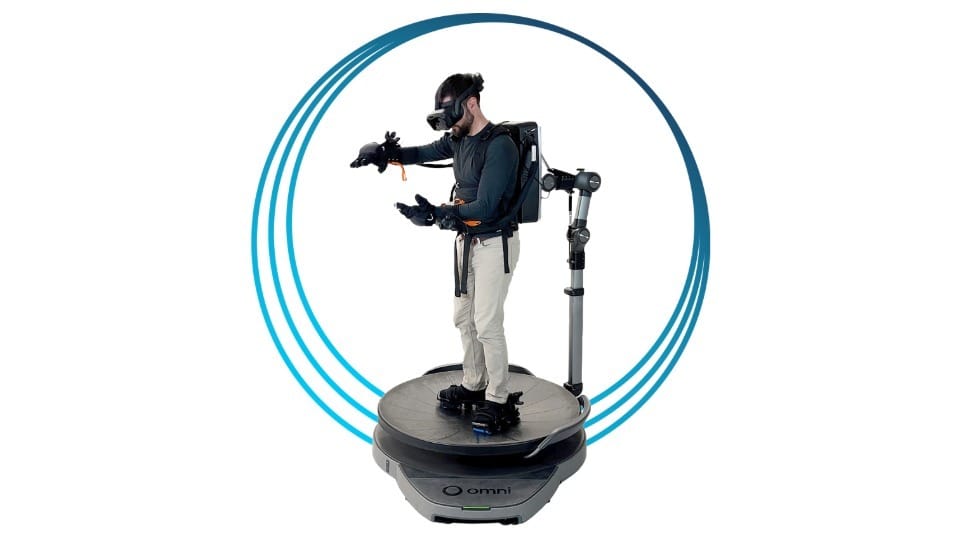
Image source: 1HMX
The Rundown: Idaho’s 1HMX is rolling out Nexus NX1, a full‑body control kit that it says fuses high‑fidelity haptics, natural locomotion, and whole‑body tracking to supercharge training and teleop for humanoids, embodied AI, and VR.
The details:
The turnkey rig bundles HaptX Gloves G1 for lifelike tactile feedback, Freeaim motorized shoes for natural gait‑in‑place, and a Virtuix Omni One treadmill.
The system captures 72 degrees of freedom with sub-mm precision, tracking skeletal models and tactile pressure across hundreds of finger and palm points.
Think Ready Player One immersion with Real Steel‑style teleop for robots and high‑fidelity VR training in one box; price will likely be in the tens of thousands.
Shipments are targeted for Q2 2026, pushing the package from demo-ready versions to deployable kits.
Why it matters: 1HMX is pitching a unified SDK and enterprise rollout across manufacturing, defense, medical, and research so teams can plug it straight into robotics and VR stacks. For builders, the hook is cleaner teleop, faster skill learning, and more convincing demos without juggling mismatched peripherals.
QUICK HITS
📰 Everything else in robotics today
Vietnam’s VinMotion, Vingroup’s robotics arm, is opening offices in California and hiring AI experts to speed development of its next‑gen industrial humanoid.
Disney and university researchers built a system that teaches bipedal robots to turn stumbles into controlled, low‑impact landings by picking a protective pose mid‑fall.
HSBC and Goldman say an irreversible robotaxi surge could sideline 7.5M ride‑hail drivers in China and squeeze millions more couriers and truckers with no security net.
South Korea’s Bone AI raised a $12M seed round to build a “physical AI” platform spanning autonomous air, ground, and marine defense robots.
Amazon‑owned Zoox is beginning to let the public ride its steering‑wheel‑free robotaxis in San Francisco, shifting beyond employee-only testing.
Tesla received a permit to operate a ride-hailing service in Arizona, with more permits pending, as it aims to launch a robotaxi service in Phoenix before the end of 2026.
Waymo is rolling out fully driverless operations for its employees in Miami, Dallas, Houston, San Antonio, and Orlando ahead of opening rides to the public next year.
Honor’s Robot Phone — a handset with a flip‑out camera arm — has jumped from CGI to prototype hardware shown at the Honor User Carnival in China.
A Russian‑built humanoid introduced itself to Putin at a tech expo and then danced to its favorite track, aired on state TV days after another Russian humanoid fell onstage.
Elon Musk said at the U.S.–Saudi Investment Forum that advances in AI and robotics will make work optional and render money largely irrelevant.
European researchers tested robots in volcanic caves to 3D-map a lava tube, deploy a sensor payload, and simulate how future missions could scout lunar shelters.
Dutch robotics firm Tegram analyzed autonomous robots to find the most advanced systems based on 5 performance factors, ranking Neo, Apollo, and Atlas at the top.
COMMUNITY
🎓 Highlights: News, Guides & Events
Read our last AI newsletter: OpenAI pushes Codex to the Max
Read our last Tech newsletter: Apple’s next CEO is already waiting
Read our last Robotics newsletter: UBTech’s army of humanoid workers
Today’s AI tool guide: Use Gemini 3 to build powerful simulations
RSVP to next workshop today @4 PM EST: The Human-First Agentic Content Workflow
See you soon,
Rowan, Jennifer, and Joey—The Rundown’s editorial team
OpenAI pushes Codex to the Max
Read Online | Sign Up | Advertise

Good morning, AI enthusiasts. Gemini 3 is the talk of the AI world — and while there are still more fireworks from Google expected this week, OpenAI just dropped an upgrade of its own to remind everyone who the AI leader is.
The new Codex-Max model claims performance and efficiency that put it at the top of the AI coding charts once again, while grinding out development sessions of 24+ hours straight in the process.
Reminder: Our next live workshop, ‘The Human-First Agentic Content Workflow’, is today at 4 PM EST. Join and learn how to use n8n to automate content while keeping human judgment involved for accurate and strong outputs. RSVP here.
In today’s AI rundown:
OpenAI’s Codex-Max tackles 24-hour coding tasks
Saudi Arabia inks AI deals with xAI, Nvidia
How to use Gemini 3 to build powerful simulations
Meta’s computer vision AIs turn photos into 3D models
4 new AI tools, community workflows, and more
LATEST DEVELOPMENTS
OPENAI
⚙️ OpenAI’s Codex-Max tackles 24-hour coding tasks

Image source: OpenAI
The Rundown: OpenAI just rolled out GPT-5.1-Codex-Max, an upgrade to its agentic coding model that uses a new “compaction” technique to work across context windows for longer-running, complex tasks and handle development sessions of over 24 hours.
The details:
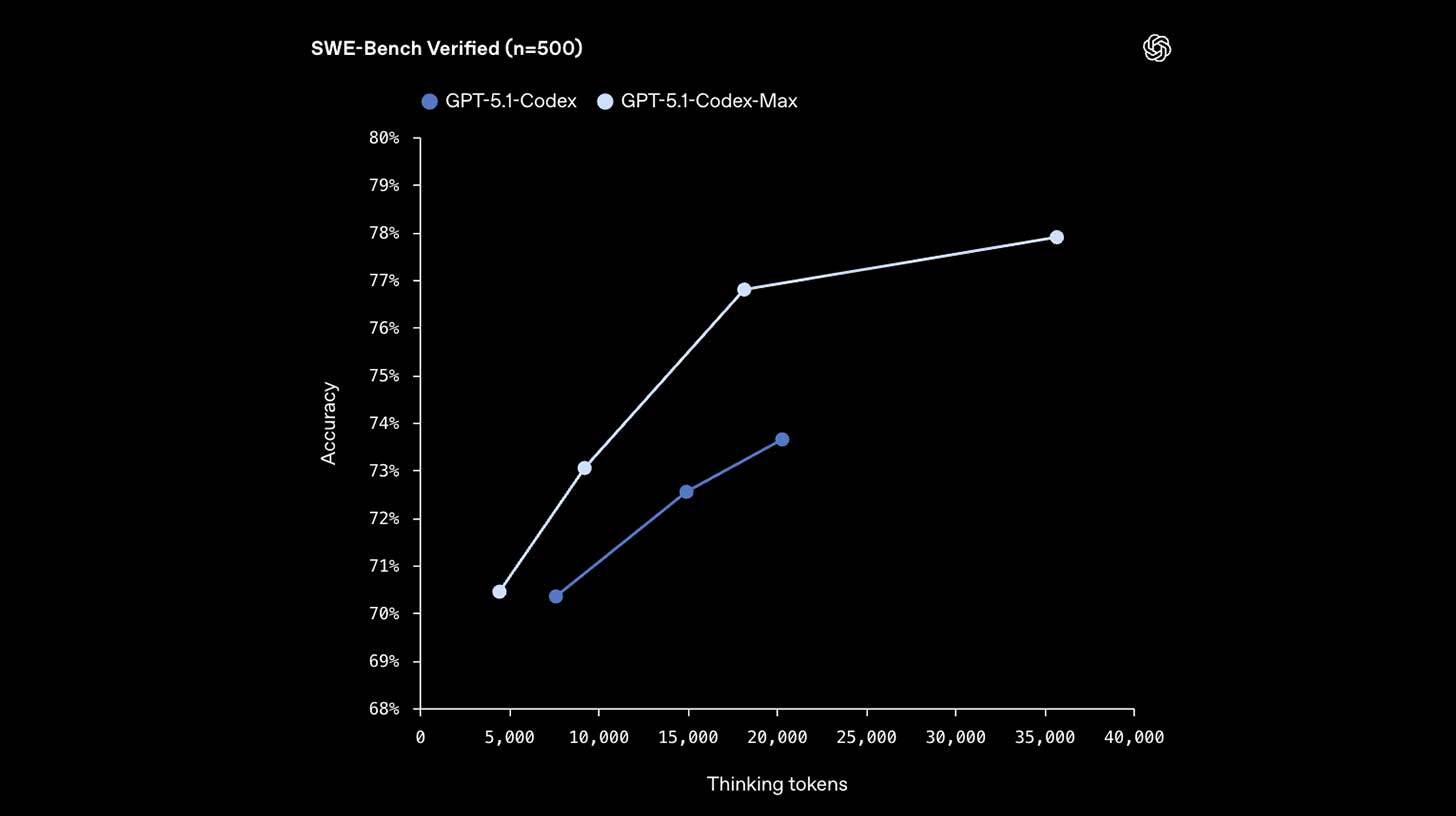
Codex-Max shows strong improvements over Codex-High across development benchmarks, also surpassing the new Gemini 3 Pro in coding tasks.
The model uses 30% fewer tokens than its predecessor while running significantly faster on real-world tasks through improved reasoning efficiency.
Compaction allows Max to ‘prune’ session history while preserving context, allowing it to work across millions of tokens and for over 24 hours straight.
The model is immediately available in OpenAI’s Codex CLI and IDE extensions for Plus, Pro, and Enterprise users, with API access also launching soon.
Why it matters: While Gemini 3 stole OAI’s thunder this week, coding performance was one of the few areas still lagging — and Codex-Max (another incremental update instead of a bigger release) pushes the field even higher. The 24-hour coding sessions also continue the up-only trend of task time capabilities for top AI models.
TOGETHER WITH TELY AI
🔎 Are you invisible in AI search?

The Rundown: You're in a niche industry. Customers search on Google, ChatGPT, and Perplexity — but your company doesn't show up because there's no content answering their questions. Tely AI analyzes your industry to find what people search for and creates expert content on autopilot to bring new traffic and leads.
With Tely AI, you can:
Start with 60 high-quality articles a month
Get indexed on Google, ChatGPT, and Perplexity in as little as 1 week
Enjoy full automation for topics, writing, and publishing
Get discovered by buyers already searching for your solution
Get leads from Google and ChatGPT on autopilot. P.S. — Black Friday Deals are now live, Tely’s biggest offer of the year.
HUMAIN
🤝 Saudi Arabia inks AI deals with xAI, Nvidia

Image source: HUMAIN
The Rundown: Saudi Arabia’s HUMAIN announced new AI partnerships with xAI, Nvidia, and other major companies at the U.S.-Saudi investment forum — including a plan to deploy 600K GPUs, build a 500+ MW data center, and deploy Grok nationwide.
The details:
xAI will build its first international data center in Saudi Arabia, deploying Grok nationwide through HUMAIN's agent platform for government & enterprise use.
The HUMAIN deals expand to the West for the first time, establishing Nvidia-powered data centers in the U.S. in addition to its Middle East infrastructure.
AWS will also roll out 150K chips to Saudi Arabia’s ‘AI Zone’ data center, with other HUMAIN partnerships including AMD, Cisco, Adobe, and Qualcomm.
AI video platform Luma AI also announced a $900M raise led by HUMAIN to build a 2GW supercluster launching in 2026 for multimodal model training.
The U.S. government reportedly approved AI chip sales to both HUMAIN and the UAE’s G42, opening the door to exports in the region after previous limits.
Why it matters: Despite previous restrictions and national security concerns around AI deals in the Gulf region, the floodgates are open — and everyone is ready to take advantage of the big money, energy, and land ripe for datacenters. Saudi Arabia’s big moves are quickly turning the country into a major player in the industry.
AI TRAINING
🎉 How to use Gemini 3 to build powerful simulations

The Rundown: In this tutorial, you will learn how to use Gemini 3 to create interactive simulations, educational visualizations, and functional tools in one shot, leveraging its benchmark-shattering capabilities for visual learning and rapid prototyping.
Step-by-step:
Go to the Gemini homepage and select "Gemini 3 Pro" for reasoning, or "DeepThink" for advanced performance (confirm availability in your region)
Enter your prompt in the chat box — example: "Build a 3D simulation of a quantum computer"
Review the immersive simulation output and click "Explain" to activate the AI tutor for summarized learning, then view or share the code
Experiment with different projects like games, content schedulers, or data dashboards; try again if the sim is not functional and visually appealing
Pro Tip: Use Gemini 3 Pro for visual learning, building internal tools, and rapid prototyping. It’s particularly strong in those areas.
PRESENTED BY IBM
💰️ AI data errors can cost you millions

The Rundown: To get the most from AI, your data needs to be integrated throughout your organization so it can be accessed and used seamlessly where and when it’s needed.
Avoid data-integration mistakes that can cost millions with AI that leverages:
Secured data access
Flexible deployment
Seamless data integration
Read IBM’s blog to discover a right-sized, incremental approach built on an AI-ready data foundation.
META
👁️ Meta’s computer vision AIs turn photos into 3D models

Image source: Meta
The Rundown: Meta released SAM 3 and SAM 3D, two computer vision models that identify, segment, and rebuild objects or people in a photo into 3D models through text descriptions, alongside a new Segment Anything Playground to try these systems.
The details:
SAM 3 segments objects using detailed text descriptions like "yellow school bus," an upgrade from the fixed label limitations of previous vision models.
SAM 3D Objects and 3D Body reconstruct scenes and human figures from single photos, achieving 5:1 win rates in human preference tests over rivals.
Both models launched on the new Segment Anything Playground for free experimentation, with SAM 3 weights and code also fully open-sourced.
Meta is deploying the tech into Facebook Marketplace's ‘View in Room’ feature, with integration into Edits and Vibes creation apps also coming soon.
Why it matters: The computer vision upgrades we’ve seen over the last few years are massive, and Meta’s new open-source models bring even more powerful segmenting and 3D capabilities to everyone — with applications both across Meta’s product lines and for individual users in creative, robotics, and other workflows.
QUICK HITS
🛠️ Trending AI Tools
🏆 Gemini 3 - Google’s new top-ranked AI model
⚙️ Antigravity - Google’s new agentic development platform
🤖 Agent 365 - Microsoft’s new platform for managing AI agents
🫂 Poe - New group chat with up to 200 users and 200+ model options
📰 Everything else in AI today
OpenAI started rolling out a “more capable” GPT-5.1 Pro to ChatGPT Pro users, with sharp gains in writing, data science, and business tasks.
Former Treasury Secretary Larry Summers is resigning from OpenAI’s Board of Directors following the reveal of his email exchanges with sex offender Jeffrey Epstein.
Nabla Bio unveiled JAM-2, an AI model that designs therapeutic antibodies directly on computers with drug-quality properties and SOTA success rates.
AI music startup Suno announced a new $250M funding round that values the company at $2.45B.
Adobe is acquiring SEO platform Semrush for $1.9B, integrating the tech into marketing tools to help users optimize presence across search and AI platforms.
Warner Music Group is also dropping its lawsuit against AI music platform Udio, joining UMG in licensing its catalogs for Udio’s coming platform revamp.
COMMUNITY
🤝 Community AI workflows
Every newsletter, we showcase how a reader is using AI to work smarter, save time, or make life easier.
Today’s workflow comes from reader Beth T. in Belmar, NJ:
"I volunteer at my local Veterans of Foreign Wars Post, and when they needed help with their Clover POS system, they turned to me. I had zero experience with Clover. I used ChatGPT to learn the entire system—asking questions, troubleshooting issues, and walking through setup and configuration. I also use ChatGPT to create posters for VFW events. The combination of guidance and creative support has saved me hours."
How do you use AI? Tell us here.
🎓 Highlights: News, Guides & Events
Read our last AI newsletter: An exclusive interview with Demis Hassabis
Read our last Tech newsletter: Apple’s next CEO is already waiting
Read our last Robotics newsletter: UBTech’s army of humanoid workers
Today’s AI tool guide: Use Gemini 3 to build powerful simulations
RSVP to next workshop today @4 PM EST: The Human-First Agentic Content Workflow
See you soon,
Rowan, Joey, Zach, Shubham, and Jennifer — the humans behind The Rundown

Exclusive interview with Google DeepMind CEO Demis Hassabis
Read Online | Sign Up | Advertise

Good morning, AI enthusiasts. Google’s Gemini 3 is finally here, and it looks like a release that lives up to the massive hype with new leaderboard-topping capabilities across the board.
We got a chance to sit down with DeepMind CEO Demis Hassabis for an exclusive interview on Google’s big day of releases — read an excerpt from the conversation below and listen to the full interview on Spotify or Apple Podcasts.
In today’s AI rundown:
Google’s Gemini 3 climbs the leaderboards
Exclusive: Demis Hassabis on Gemini 3.0
How to create n8n workflows directly from Claude
Microsoft, Nvidia team up with Anthropic
4 new AI tools, community workflows, and more
LATEST DEVELOPMENTS
🏆 Google’s Gemini 3 climbs the leaderboards

Image source: Google
The Rundown: Google released Gemini 3, the company’s new SOTA model that it says brings a ‘new era of intelligence’, topping a series of leaderboards and benchmarks, coming alongside a new agent-first development platform called Antigravity.
The details:
Gemini 3 and Deep Think achieve new highs on reasoning benchmarks like Humanity’s Last Exam and ARC-AGI-2, smashing GPT-5’s previous marks.
The model also takes the top spot on scientific knowledge, math, multimodal reasoning, and tool use, while lagging behind just Claude Sonnet 4.5 in coding.
Gemini 3 excels in creating generative UI and visual layouts on the fly, showcasing the ability with its integration in AI Mode in Search.
Google also launched Antigravity, a free agentic coding platform with browser control, asynchronous workflows, and multi-agent orchestration.
Why it matters: With long-awaited Gemini 3, Google has unseated OpenAI for the first time in a while — your move, Sama. With endless resources and integrations across its sprawling product ecosystem, the tech giant is definitely flexing some serious muscle as the industry transitions into the next generation of frontier models.
TOGETHER WITH AIRIA
🛡️ Deploy AI without security risks
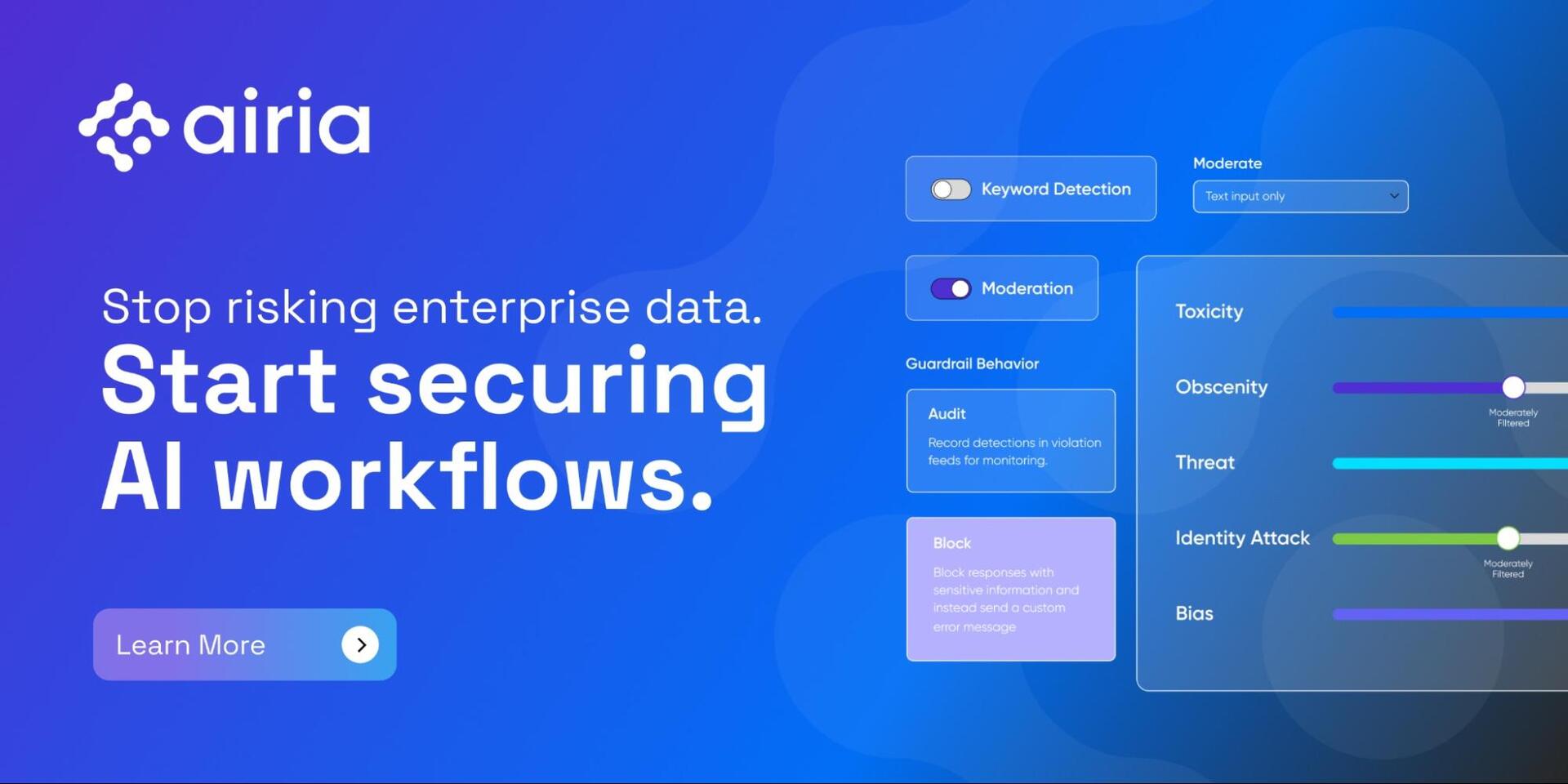
The Rundown: Airia is an enterprise AI platform that enables organizations of all sizes to confidently deploy AI with advanced security control, comprehensive data protection, and automated risk management — ensuring AI initiatives are both powerful and protected.
With Airia, you'll experience:
Built-in AI safeguards for runtime prompts, data leakage, and prompt injections
Scalable compliance that maintains regulatory standards (SOC 2, HIPAA, GDPR)
Granular control and visibility for security policies, access control, & more
🎙️ Exclusive: Demis Hassabis on Gemini 3.0

Image source: The Rundown
The Rundown: Before the launch of Google’s highly anticipated Gemini 3 release, we sat down with Google DeepMind CEO Demis Hassabis for an exclusive interview to discuss the importance of the release around Google’s AI ecosystem.
Rowan: If you had to explain in one sentence, why is the launch of Gemini 3 important?
Demis: It continues the progression we’ve been on with Gemini over the last couple of years, and we’re really happy with the overall performance. You can see that from all the benchmarks — from reasoning to tool calling, reliability, and creativity.
Rowan: What happens when an AI assistant can combine everything it knows about you from Gmail, Calendar, Maps, and beyond?
Rowan: Could Gemini 3 be the cornerstone for AI-driven healthcare, given your background?
Demis: We have systems like AMIE for medical diagnostics and want to bring those capabilities into Gemini. Gemini 3 is a strong foundation for that. It’s so good multimodally, and a lot of health and education questions are multimodal.
The Gemini app isn’t a medical‑grade tool, but it could be useful in places without good primary healthcare, and with Google’s reach and Android, we can deliver a basic level of care and knowledge more widely.
Check out the full interview with Rowan and Demis on Spotify or Apple Podcasts.
AI TRAINING
🤩 Create n8n workflows directly from Claude
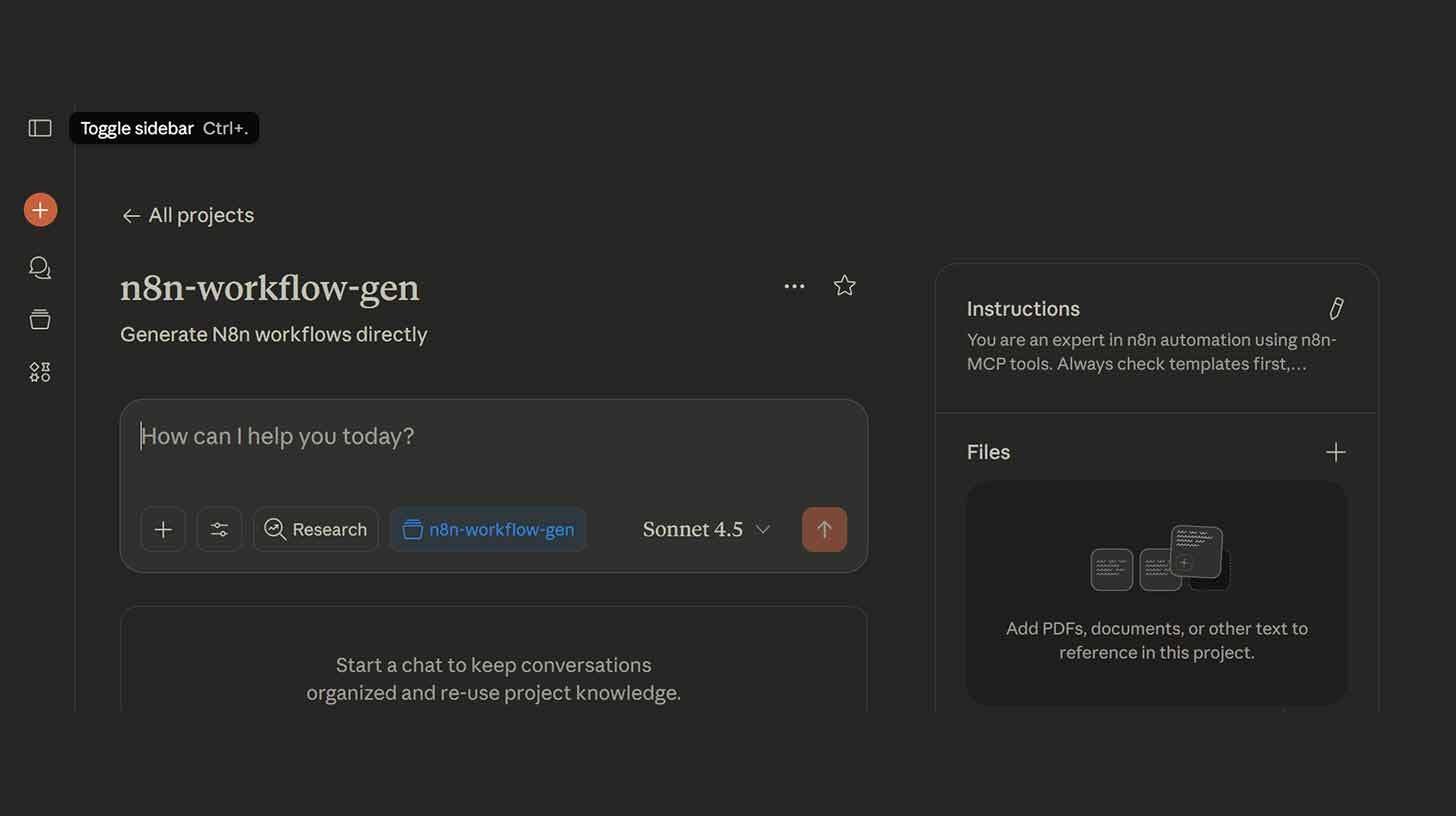
The Rundown: In this tutorial, you’ll learn how to generate complete n8n workflow automations by describing what you want in plain English — using Claude Sonnet 4.5 via MCP to build workflows without manually connecting nodes.
Step-by-step:
Install Claude Desktop and Node.js, then open your terminal and run
npx n8n-mcpto start the MCP serverIn Claude Desktop, go to Settings > Developer > Edit Config and paste the configuration code, adding your n8n URL (from your workflow dashboard) and API key (Settings > n8n API > Create API Key)
Restart Claude Desktop, click the n8n MCP icon in the bottom right, and click "Enable all tools"
Simply describe your automation to Claude: (Eg. "Build an n8n workflow that monitors my Gmail for emails with 'invoice' in the subject, extracts the invoice amount using AI, and logs it to a Google Sheet")
Pro tip: Claude works best with specific requests. Instead of "automate my emails," try "when I get a Slack message with 'urgent,' create a task in Notion.”
PRESENTED BY FLORA
🎨 AI for creative professionals
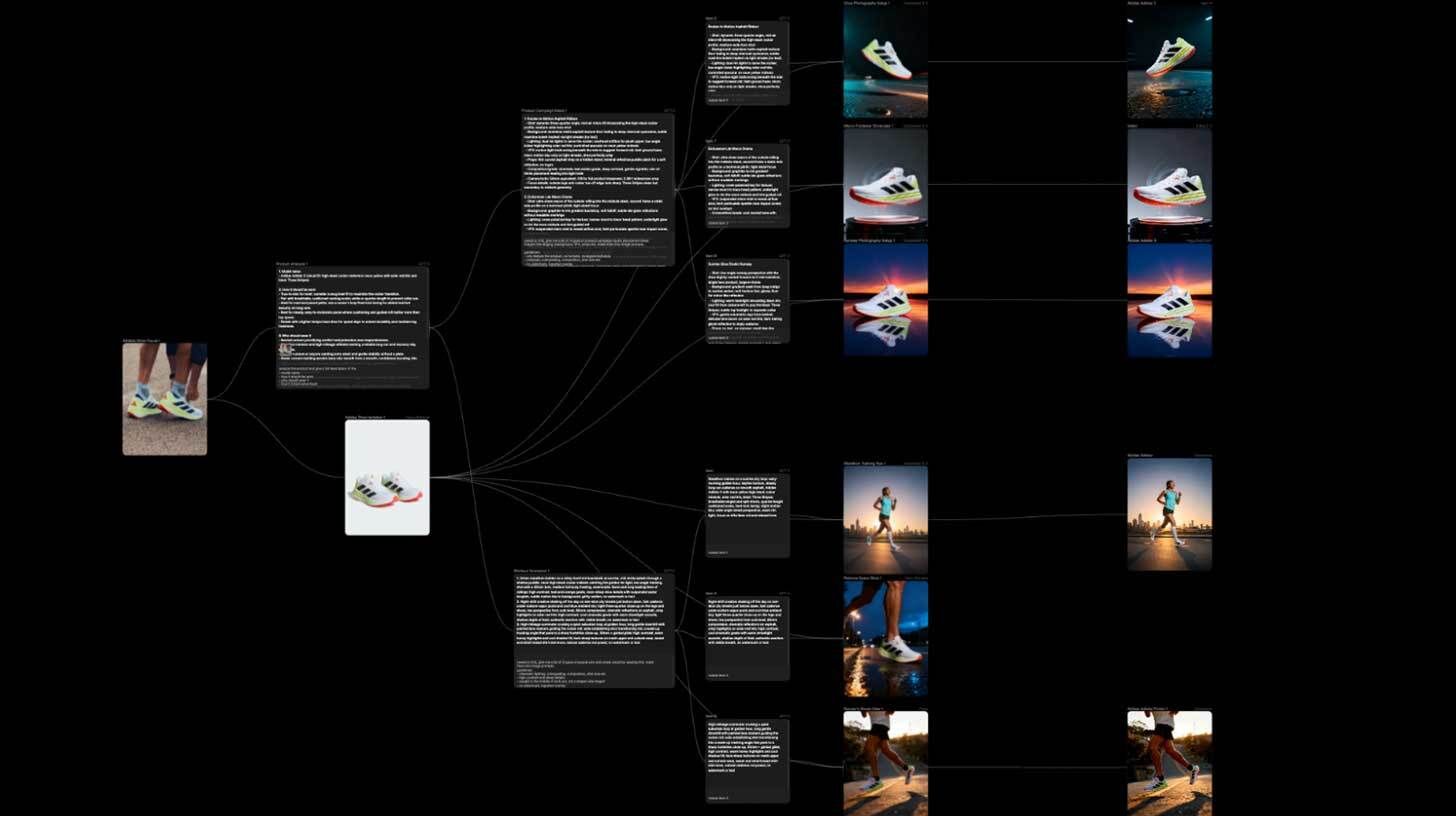
The Rundown: FLORA is the first AI-native creative workspace built for designers, studios, and in-house brand teams — allowing creatives to concept, generate image and video workflows, and build pitches or campaign visuals all in one canvas.
With Flora, you can:
Build visual concepts in minutes
Share workflows with clients or teams
Use a workspace trusted by Pentagram, Levi’s, and Lionsgate
MICROSOFT, NVIDIA & ANTHROPIC
🤝 Microsoft, Nvidia team up with Anthropic

Image source: Midjourney
The Rundown: Microsoft and Nvidia announced a major new strategic partnership with Anthropic, with investments reaching a combined $15B — with the AI startup also pledging $30B in Azure cloud commitments as part of the deal.
The details:
Nvidia will invest up to $10B in Anthropic, with Microsoft adding up to $5B, pushing the Claude-maker’s valuation near $350B.
Claude will now be available through Azure AI Foundry, making Anthropic’s models the only frontier options accessible across all three major clouds.
Nvidia and Anthropic are also designing new AI chips optimized for Claude, with Anthropic also committing to $30B in Azure compute and 1GW of capacity.
Microsoft’s Satya Nadella said the AI industry needs to move beyond “any type of zero-sum narrative or winner-take-all hype,” echoing his recent post.
Why it matters: The circular economics of AI deals continue, with Microsoft quickly embracing Nadella’s ‘positive-sum future’ vision for valuable partnerships with a major deal with one of its main partner’s biggest competitors. The deal also seems to bury the hatchet between Dario Amodei and Jensen Huang after this summer’s critiques.
QUICK HITS
🛠️ Trending AI Tools
🏆 Gemini 3 - Google’s new top-ranked AI model
⚙️ Antigravity - Google’s new agentic development platform
🚀 Grok 4.1 - xAI’s new model with upgraded creativity & emotional intelligence
🌎 Marble - Create persistent 3D worlds from images, videos, and text prompts
📰 Everything else in AI today
Microsoft launched Agent 365, a platform for managing, securing, and governing AI agents, with capabilities like agent registry, performance analytics, and more.
AI datacenter provider Lambda raised $1.5B in new funding, coming on the heels of a multibillion-dollar deal with Microsoft to deploy tens of thousands of Nvidia GPUs.
Poe introduced new group chat functionality, allowing up to 200 users to collaborate in shared conversations with any of the platform’s 200+ AI models.
Google CEO Sundar Pichai said in an interview that there is some “irrationality” in the AI boom, saying “no company is going to be immune, including us” if the bubble bursts.
Replit launched Design, a new AI UI experience for creating beautiful website designs within the platform, powered by Google’s new Gemini 3 model.
COMMUNITY
🤝 Community AI workflows
Every newsletter, we showcase how a reader is using AI to work smarter, save time, or make life easier.
Today’s workflow comes from reader Kimberlee D. in Boca Raton, FL:
"I used ChatGPT to design and print the items needed for a bulletin board for my child's 2nd-grade classroom... I input the theme and dimensions and asked for some ideas for the layout and materials that I could easily source. I was able to piece together the final message from a few options given, and the shortcuts saved me a lot of time eyeballing it and re-sizing."
How do you use AI? Tell us here.
🎓 Highlights: Guides & Events
Today’s AI tool guide: Create and deploy voice agents for your business
RSVP to next Workshop 11/20 @ 4 PM EST: Human-First Agentic Content Workflow
See you soon,
Rowan, Joey, Zach, Shubham, and Jennifer — the humans behind The Rundown

Apple's next CEO is already waiting
Read Online | Sign Up | Advertise

Good morning, tech enthusiasts. Tim Cook just turned 65, and Apple’s succession talk is heating up even as he shows no sign of loosening his grip on the nearly $4T giant.
Inside the Cupertino giant, hardware chief John Ternus is quietly emerging as heir apparent while the company tries to shake off its AI stumbles. But is he really ready to take the reins from Apple’s Wall Street whisperer-in-chief?
In today’s tech rundown:
Apple quietly preps for post-Cook era
EU cracks down on China’s ultra-fast fashion
Amazon to fully absorb Whole Foods’ workers
Meta arms creators against content theft
Quick hits on other tech news
LATEST DEVELOPMENTS
APPLE
🍎 Apple quietly preps for post-Cook era

Image source: Ideogram / The Rundown
The Rundown: Tim Cook just turned 65, and with that milestone comes renewed speculation about Apple’s succession plan — even as the CEO shows no signs of stepping down from his 14-year reign atop one of the world's most valuable companies.
The details:
Cook grew Apple from $350B to nearly $4T since 2011, but at 65, succession planning is now standard governance for a company this size.
Hardware engineering chief John Ternus, 50, is widely viewed as the frontrunner, with rising visibility at launches and a profile that fits the bill.
Other contenders reportedly include Craig Federighi (software), Greg Joswiak (marketing), and former COO Jeff Williams.
The real question isn’t if Apple has a plan, but whether any successor can navigate the company’s post-iPhone era with Cook’s Wall Street charm.
Why it matters: Apple’s nearly $4T valuation masks mounting pressure: the company lags in AI, faces antitrust battles, and shows flattening iPhone growth. Cook mastered operations and Wall Street, but his likely successor, Ternus, signals a pivot toward innovation at the exact moment Apple needs its next big thing beyond the iPhone.
E-COMMERCE
📦 EU cracks down on China’s ultra-fast fashion
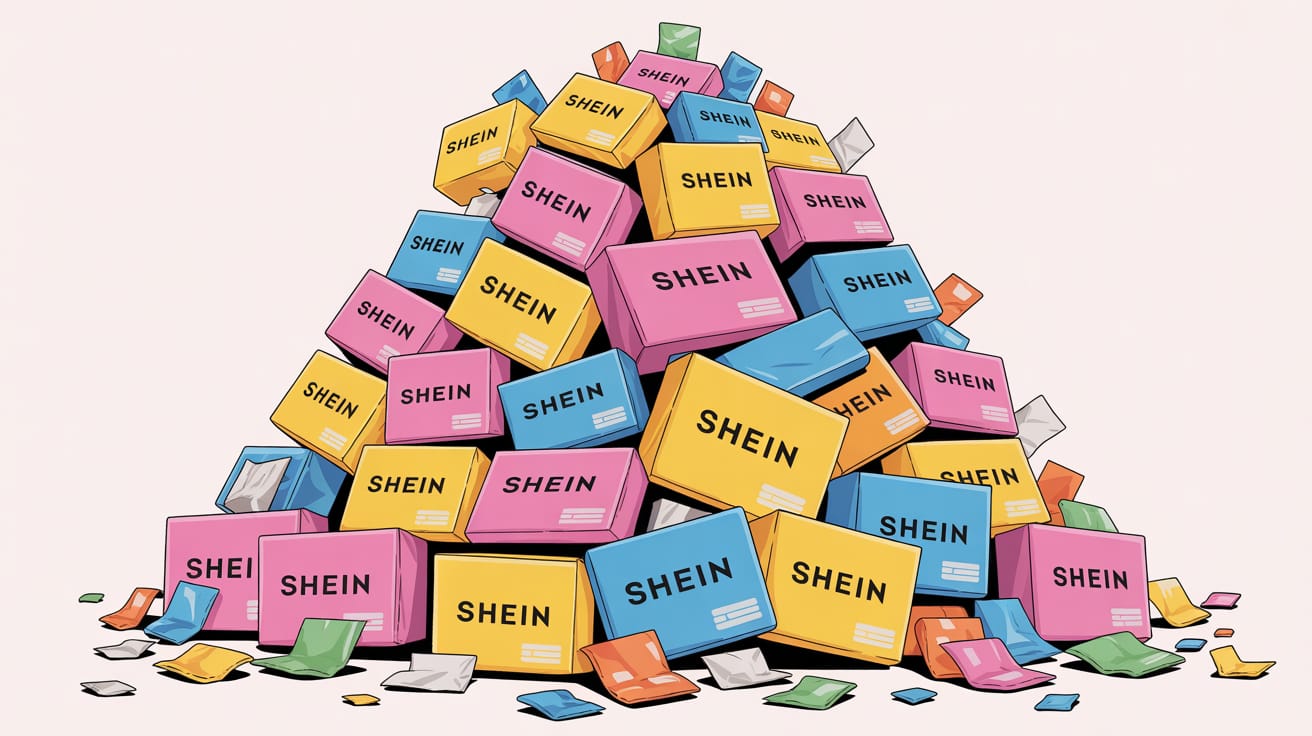
Image source: Ideogram / The Rundown
The Rundown: The EU is cracking down on the flood of ultra-cheap goods flooding in from China, scrapping the €150 duty-free threshold on low-value imports — putting Shein and Temu squarely in the crosshairs.
The details:
The scale is staggering: 4.6B parcels hit the EU in 2024, with roughly 9 in 10 small packages coming from China.
Implementation will use a temporary system ministers plan to finalize in December, with the EU saying it can move as early as 2026.
The move aims to force Shein and Temu to raise prices or relocate inventory into regional warehouses, killing their factory-to-door logistics model.
In France, Shein also faces legal action after authorities found child‑like sex dolls listed for sale on its platform.
Why it matters: It’s part of a broader squeeze that includes U.S. crackdowns on de minimis exemptions and fresh China tariffs. Expect fewer cheap impulse buys and mounting compliance costs as Europe closes the customs loopholes that let ultra-cheap Chinese goods undercut domestic retailers for years.
AMAZON
🛒 Amazon to fully absorb Whole Foods’ workers

Image source: Wikimedia Commons / Mike Mozart
The Rundown: Amazon is pulling Whole Foods fully under the mothership. The retail giant plans to integrate all 100K-plus frontline workers into its core business system by next year as part of its Project Cremini, according to Business Insider.
The details:
Thousands of frontline staff will move to Amazon’s performance reviews, workplace tools, and payroll, with checks issued directly by Amazon.
This extends the summer shift that put Whole Foods corporate employees on Amazon policies as leadership pushes a “One Grocery” org.
Amazon is consolidating vendor management, with a three-year plan to fold 16 top suppliers expected to generate at least $94M in profit.
Jason Buechel, who took the helm of both Whole Foods and Amazon’s grocery operations in January, has been pushing a “unified employee experience.”
Why it matters: Amazon kept Whole Foods semi-autonomous for seven years after its $13.7B 2017 acquisition, but with Walmart and Instacart gaining ground in grocery, the company is now betting on full operational integration. Its “One Grocery” push aims to finally unlock growth in a category where Amazon has consistently struggled.
META
👀 Meta arms creators against content theft

Image source: Meta
The Rundown: Meta is rolling out Content Protection, a mobile tool that auto-detects when someone rips off a creator’s Reels across Facebook and Instagram — scanning for full or partial reposts and flagging the accounts behind them.
The details:
The system uses Rights Manager’s matching tech to scan for full or partial reposts, surfacing view counts and follower stats for infringing accounts.
Creators get three options: track stolen content with attribution, block copies platform-wide, or release claims entirely.
Enrolled creators can see who reposted their reel and whether those copies are monetized, making it easier to choose which action to take.
You can retroactively protect old Reels, maintain an allowlist for trusted partners, and trigger dispute workflows if someone falsely claims your work.
Why it matters: Meta already offered some content protection through Rights Manager, but embedding it directly in the Facebook app makes it accessible to more creators — though only those who post Reels to Facebook, not Instagram-only accounts. The feature is rolling out now to creators in Meta’s monetization program.
QUICK HITS
📰 Everything else in tech today
Meta and Google reportedly delayed key segments of their subsea cables, particularly in the Red Sea corridor, citing operational, regulatory, and geopolitical risks.
Jeff Bezos has reportedly launched a new AI startup, Project Prometheus, with $6B in funding — marking his return to a formal operational role since Amazon.
Google launched WeatherNext 2, an AI weather model built into Search, Gemini, and Pixel to deliver faster, higher‑res, and more accurate weather forecasts.
Rivian’s micromobility spinoff, Also, set its new e-bike base model at $3,500, slotting beneath the $4,500 Launch and Performance trims.
Abidur Chowdhury, the industrial designer who introduced the iPhone Air at Apple’s September event, has reportedly left Apple for an unnamed AI startup.
Researchers unveiled a solid‑state sodium battery that replaces lithium with abundant sodium, promising cheaper, safer, and more sustainable energy storage.
Fintech firm Ramp raised $300M, boosting its valuation to $32B just three months after raising at $22.5B.
San Francisco–based data ecosystem major Databricks is in talks to raise new capital at a valuation above $130B, roughly 30% higher than its last round.
Alphabet and Disney struck a new multi‑year deal restoring content from ABC and ESPN onto Google’s YouTube TV after a two-week standoff.
MIT researchers built a degradable nanoparticle that delivers mRNA vaccines in mice at 100x lower doses while clearing the body faster to cut liver toxicity.
COMMUNITY
🎓 Highlights: News, Guides & Events
Read our last AI newsletter: Jeff Bezos returns as CEO for new AI startup
Read our last Tech newsletter: Blue Origin nails SpaceX signature move
Read our last Robotics newsletter: UBTech’s army of humanoid workers
Today’s AI tool guide: Use ChatGPT record to capture meeting insights
RSVP to next workshop 11/20 @ 4 PM EST: The Human-First Agentic Content Workflow
See you soon,
Rowan, Jennifer, and Joey—The Rundown’s editorial team

Jeff Bezos returns as CEO for new AI startup
Read Online | Sign Up | Advertise

Good morning, AI enthusiasts. Four years after leaving Amazon, founder Jeff Bezos is back in the CEO chair — but it’s a new AI startup, not his e-commerce giant, that lured him back to the operations side.
With the AI engineering and manufacturing-focused Project Prometheus already armed with $6.2B in funding and 100 employees from top labs, Bezos is treating physical world intelligence like the next Amazon-sized opportunity.
In today’s AI rundown:
Jeff Bezos returns to CEO chair for new AI startup
xAI’s Grok 4.1 with personality overhaul
Use ChatGPT record mode to capture meeting insights
Anthropic CEO issues more AI warnings
4 new AI tools, community workflows, and more
LATEST DEVELOPMENTS
JEFF BEZOS
💼 Jeff Bezos returns to CEO chair for new AI startup

Image source: Reve / The Rundown
The Rundown: Amazon founder Jeff Bezos is reportedly returning from semi-retirement to co-lead Project Prometheus, a new startup developing AI systems for engineering and manufacturing across computing, aerospace, and automotive sectors.
The details:
The NYT reports the startup has already secured $6.2B in funding, with the move also marking Bezos’ first operational role since leaving Amazon in 2021.
Project Prometheus will target building AI that learns from the physical world, with advances that complement Bezos’ Blue Origin aerospace goals.
The startup has reportedly recruited ~100 employees from leading AI labs, including OAI, DeepMind, and Meta, poaching talent for its physical AI focus.
Bezos is sharing CEO duties with Vik Bajaj, a physicist who previously worked at Google's moonshot lab and co-founded Verily, Alphabet's life sciences arm.
Why it matters: Despite Bezos’ “retirement”, one of the world’s richest men still has plenty of irons in the fire — and Project Prometheus sounds like one that pairs perfectly with both his areas of expertise and other investments. With massive funding and Bezos’ big reputation and credibility, the startup immediately becomes one to watch.
TOGETHER WITH WARP
🚀 Warp Agents run your entire terminal
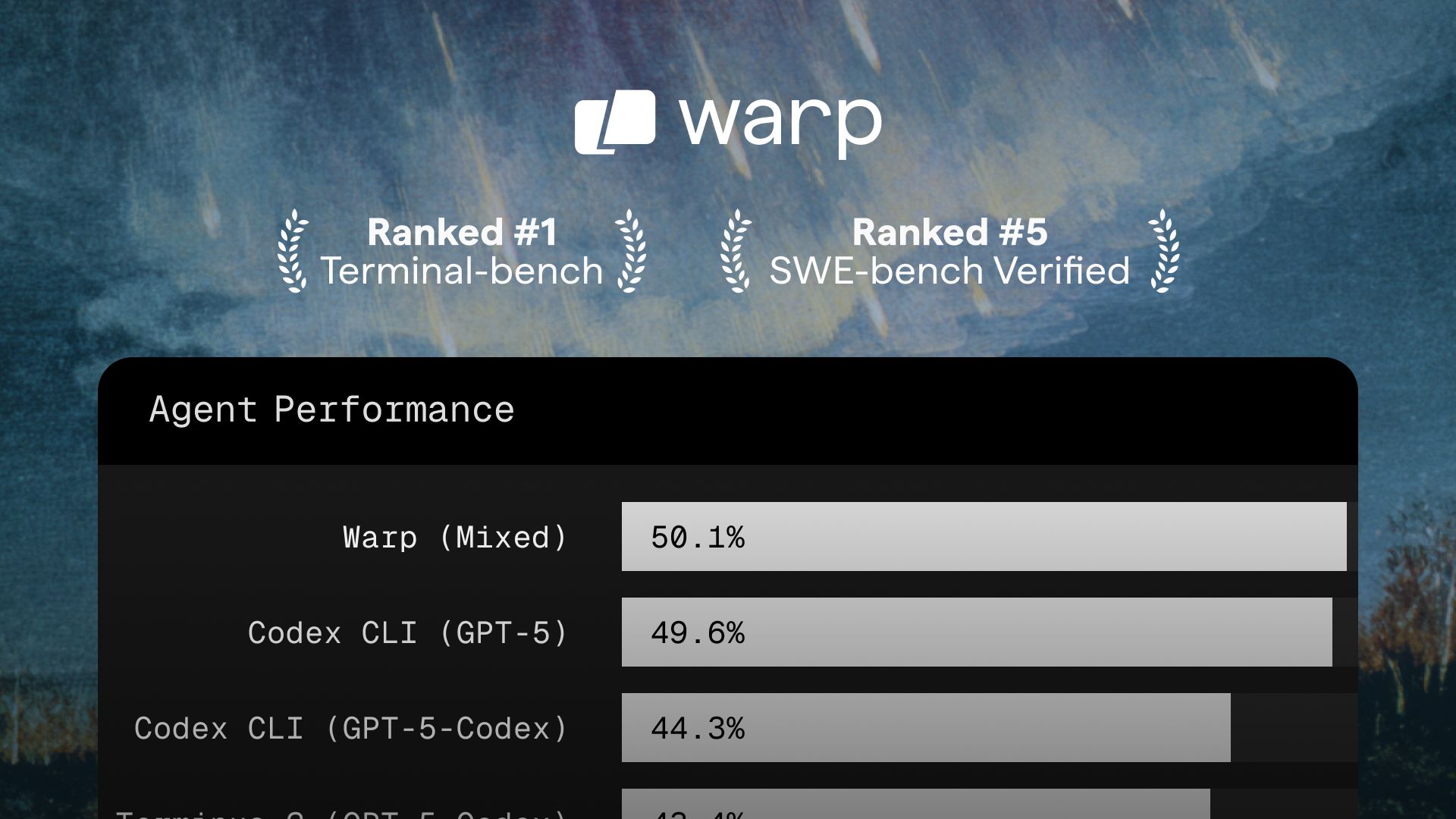
The Rundown: Warp, the top-ranked AI terminal loved by over 700K developers, now has Full Terminal Use — with agents integrated into every step of the terminal workflow.
Warp Agents can now:
Run interactive programs like debuggers
Use full-screen apps like top, vim, and emacs
Monitor long-running commands like servers
Start in the middle of full-screen programs
See what the next evolution of development agents looks like. Try Warp today.
XAI
🚀 xAI’s Grok 4.1 with personality overhaul

Image source: xAI
The Rundown: Elon Musk’s xAI just released Grok 4.1, an upgrade to the startup’s top model that claims to take the top spot across a series of rankings and benchmarks, with a focus on creativity and emotional intelligence over pure reasoning power.
The details:
4.1 achieves the highest emotional intelligence score among tested systems, optimizing for personality traits like empathy and conversational tone.
The model rolled out earlier this month to small user groups and under the codename ‘quasarflux’ in LM Arena, ranking No. 1 overall for user preference.
xAI also reduced the hallucination rate from 12% to 4% compared to its predecessor, also cutting factual errors by 66% in testing.
4.1 also saw a significant upgrade in creative writing tasks, ranking behind just GPT 5.1 on the Creative Writing v3 benchmark.
Why it matters: Everyone is expecting fireworks from Google this week, but xAI is getting in on the launch party — with a 4.1 update that looks to bring increases in more ‘vibe’ areas like creativity and emotion that can often make even more of an experience upgrade for the average user than pure intelligence or coding improvements.
AI TRAINING
🎤 Use ChatGPT record mode to capture meeting insights

The Rundown: In this tutorial, you will learn how to record and summarize meetings directly in the ChatGPT desktop app without third-party tools like Fireflies or Otter — perfect for companies that block external recording tools or privacy-sensitive teams.
Step-by-step:
Download the ChatGPT desktop app and log in with a Plus, Pro, Business, or Enterprise account (free accounts don't have full access)
Click the "Record" button during your meeting, lecture, or session, and a recording panel appears and runs quietly in the background (always ask permission before recording others)
Click "Stop" when finished, then send the recording to ChatGPT for a structured breakdown including summary, key points, action items, and suggested follow-ups
Chat with your transcript by asking follow-ups like "Rewrite the summary in bullets for a Slack update" or "Highlight any risks or unanswered questions"
Our Take: With ChatGPT record, you get the convenience of tools like Fireflies/Otter without having to invite an awkward bot into every Zoom call.
PRESENTED BY IBM
💡3 actions to help boost agentic AI impact

The Rundown: Businesses face many challenges going from AI ambition to implementation. Success requires more than adopting new technology. It involves intentionally aligning AI with workflows, data, and goals. As AI evolves into a business-wide opportunity, leaders must ensure the right AI is applied to the right challenges.
Explore IBM's playbook on 3 challenges & approaches to boost agentic AI impact:
Finding your AI problem
Creating a clear AI plan
Integrating AI with the tools you use every day
ANTHROPIC
⚠️ Amodei issues more AI warnings

Image source: CBS
The Rundown: In a recent CBS interview, Anthropic CEO Dario Amodei said AI can find cures for diseases and double the human lifespan, but also warned of massive job loss, misuse of the tech, and societal decisions being made by a few major companies.
The details:
Amodei believes in a “compressed 21st century” that results in 10x the rate of progress, including breakthroughs like cancer cures or Alzheimer’s prevention.
Amodei said he is “deeply uncomfortable” with AI decisions resting in the hands of a few executives, calling for “responsible and thoughtful” regulation.
The CEO reiterated that AI could eliminate half of all entry-level white-collar jobs, a shift that will be “broad” and “faster” than with previous advancements.
When asked "who elected you and Sam Altman," Amodei responded “no one," saying without legislation it’s “up to the companies to police themselves.”
Why it matters: Anthropic continues to be the most vocal of the AI labs when it comes to both safety and regulation, but Amodei denies it’s just “theater” for positive branding. While it’s tough to parse the authenticity of the AI leader’s warnings as they continue to accelerate forward anyway, it’s clear a massive period of change is coming.
QUICK HITS
🛠️ Trending AI Tools
🤵 Concierge.ai - Engage & convert inbound website visitors into qualified leads with an AI answer engine trained on your brand*
🤖 Google Gemini - New video controls for leveraging Veo in-app
🧪 Kosmos - Edison Scientific's next-gen AI scientist
🎨 ElevenLabs Image & Video - Generate creatives with top models, then layer in voices, music, and sound effects
*Sponsored Listing
📰 Everything else in AI today
DeepMind unveiled WeatherNext 2, a weather forecasting AI that generates predictions 8x faster and can simulate hundreds of possible weather shifts in a minute.
OpenAI’s VP of research, Jerry Tworek, posted that “a better version” of the model that won gold at the IMO 2025 is set to be released in the coming months.
OpenAI led a $15M seed investment in Red Queen Bio, a startup developing AI-powered defenses against bad actors using the tech to create biological weapons.
Cloudflare acquired Replicate, bringing its 50k+ model catalog and fine-tuning tools to its Workers platform while maintaining Replicate's existing APIs and community.
NVIDIA dropped Apollo, a family of open-source physics models to accelerate industrial simulations in domains like automotive, aerospace, and climate forecasting.
Google rolled out new AI-powered travel planning features in Search, including Canvas for custom itineraries, an expanded Flight Deals tool, and agentic booking.
COMMUNITY
🤝 Community AI workflows
Every newsletter, we showcase how a reader is using AI to work smarter, save time, or make life easier.
Today’s workflow comes from reader J.P. in Kansas City, KS:
"Using Daniel Miessler's Personal AI Infrastructure project as a template, I've used Claude Code to build out an A.I. Assistant named Chiggers that correlates data from various sources to help both manage and surface areas that need attention.
Chiggers plans progressive workouts, analyzes and correlates blood sugar/insulin intake/supplements/food logs to bring insights about managing diabetes, helps with budget planning and holes in my finances, investment opportunities, and much more. This would have taken me a year to build on my own. Claude did it in about 4 days."
How do you use AI? Tell us here.
🎓 Highlights: News, Guides & Events
Read our last AI newsletter: Disney star debuts AI avatars of the dead
Read our last Tech newsletter: Blue Origin nails SpaceX signature move
Read our last Robotics newsletter: UBTech’s army of humanoid workers
Today’s AI tool guide: Use ChatGPT record to capture meeting insights
RSVP to next workshop 11/20 @ 4 PM EST: The Human-First Agentic Content Workflow
See you soon,
Rowan, Joey, Zach, Shubham, and Jennifer — the humans behind The Rundown

UBTech's army of humanoid workers
Read Online | Sign Up | Advertise
Good morning, robotics enthusiasts. UBTech claims a humanoid breakthrough — $113M in orders and a factory cranking out Walkers by the thousand.
A glossy lineup video sparked a “CGI” accusation from Figure’s CEO, fanning industry credibility wars. But the Chinese giant says it’s charging toward a 2025 mass rollout and a $20K home bot to take on Tesla and Figure.
In today’s robotics rundown:
UBTech claims ‘mass production’ of humanoids
Soft bots you can eat, with battery and all
Tesla drops safety numbers after Waymo jab
Squishy robot eye with microscopic vision
Quick hits on other robotics news
LATEST DEVELOPMENTS
UBTECH
🤖 UBTech claims ‘mass production’ of humanoids
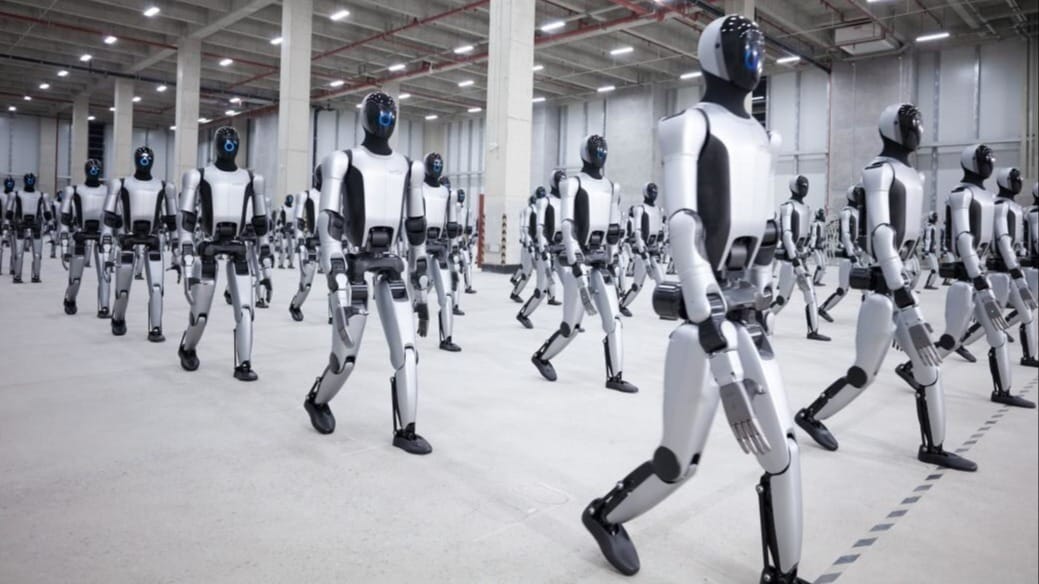
Image source: UBTech
The Rundown: China's UBTech is claiming a commercial breakthrough in the humanoid race: $113M in orders and 500 industrial humanoids slated for delivery in 2025, with production capacity already exceeding 1K units annually.
The details:
The Shenzhen-based company reports over $113M in domestic pre-orders and plans to ship 500+ humanoids in 2025.
UBTech released a short video showcasing what it calls the “world’s first mass delivery of humanoid robots,” featuring sleek rows of Walker S2 units.
The viral lineup video quickly drew heat from Figure CEO Brett Adcock, who labeled it CGI, sparking some online debate.
Walker S2’s hot-swap battery system enables quick changeovers, designed to sustain round-the-clock factory shifts.
Why it matters: UBTech targets 5K Walker shipments next year as it preps to push into the consumer market with a $20K home robot to rival Tesla’s Optimus, Figure 03, and 1X’s NEO. Of course, Adcock’s CGI accusation highlights lingering skepticism around production claims in the heated humanoid race.
EPFL
🍽️ Soft bots you can eat, with battery and all

Image source: EPFL
The Rundown: Switzerland’s EPFL just built a soft robot you can literally eat — battery and all — designed to lure wild boars, deliver their medication, and then dissolve harmlessly so it leaves no e-waste or toxic residue behind.
The details:
The soft robot includes an edible pneumatic battery, valves, and tubing — made with gelatin and wax — so the entire device can be safely consumed.
The team envisions infusing vaccines into the edible actuators to treat elusive animals like wild boars, drawn to moving prey that the robots mimic.
In a new paper, EPFL unveiled ingestible batteries and actuators that together enable what may be the first fully ingestible robot with controlled actuation.
A lab demo shows the edible battery inflating and deflating actuators at ultra‑low power, providing simple motion without conventional electronics.
Why it matters: Part of the EU-funded RoboFood project, edible robots like this offer life-saving potential, such as smart pills, ingestible sensors for noninvasive diagnosis, and treating wild animals. The tech also promises environmental gains as the biodegradable pneumatic robots leave no trace in fragile ecosystems.
TESLA
🚘 Tesla drops safety numbers after Waymo jab

Image source: Tesla
The Rundown: Tesla posted a new FSD (Supervised) safety dashboard with detailed methodology, claiming multi‑million‑mile intervals between crashes, just weeks after Waymo’s co‑CEO pressed rivals to release more data.
The details:
Tesla claims roughly 5.1M miles per major collision and about 1.5M miles per minor collision for North American FSD users.
Tesla says its rates are far lower than the national average, which equates to about one major crash every 699K miles and one minor every 229K.
The company counts any collision within 5 seconds of FSD engagement, using airbag deployments and crash frequency as severity proxies.
For years, Tesla has released misleading crash safety data for Autopilot, so this is a step up, but the numbers remain self-reported with no third-party auditing.
Why it matters: Waymo has set the bar with methodologically detailed releases, claiming roughly 5x fewer overall crashes and 12x fewer pedestrian incidents than humans, putting pressure on Tesla to publish equally rigorous datasets. While Tesla hasn’t matched Waymo here, this opens a door to more transparency moving forward.
GEORGIA TECH
👁️ Squishy robot eye with microscopic vision

Image source: George Tech / Corey Zheng
The Rundown: Georgia Tech researchers built a squishy robotic eye that autofocuses in response to light without requiring any external power source. The hydrogel lens is powerful enough to resolve microscopic details, such as the hair on an ant’s leg.
The details:
The light‑activated hydrogel “muscle” tightens to tune a silicone lens, delivering autofocus with zero motors, wires, or batteries.
Resolution is wild: hair on an ant’s leg, lobes on a pollen grain, and micrometer‑scale detail under microscope tests.
A polymer‑network hydrogel lens traps and releases water, letting it toggle between liquid‑like and solid‑like states.
Target use cases: electronics‑free vision for soft robots, medical tools, and wearables operating in tight, hazardous, or body‑contact environments.
Why it matters: Soft robots designed for hazardous environments or wearables need flexible sensing to match their squishy form, and this hydrogel eye can provide that. Researchers say the design could mimic animal vision, like a cat’s pupil for detecting camouflage or a cuttlefish’s W-shaped retina for perceiving colors humans can’t see.
QUICK HITS
📰 Everything else in robotics today
Unitree Robotics unveiled the G1-D, its first wheeled humanoid designed as an AI training platform that combines mobile lifting capability and dexterous manipulation.
Sunday Robotics, co-founded by ex‑Google DeepMind and Tesla engineer Tony Zhao, posted a clip of dual robotic arms making espresso and teased a Nov. 19 reveal.
Shenzhen's MindOn Tech released a viral clip showing a modified Unitree G1 autonomously doing household chores using grippers.
Amazon’s robotics chief says he aims to wipe out ‘every menial, mundane job’ with AI and automation, as Amazon commits $2.5B to retrain workers for higher‑skill roles.
Tether, the company behind the USDT stablecoin, is in talks to lead a €1B round in Germany’s Neura Robotics, potentially valuing the humanoid maker at €8–10B.
Google-backed Apptronik is in advanced talks to raise at least $400M, a deal that would peg the company at a $5B pre‑money valuation, The Information reports.
Unitree Robotics completed China’s mandatory pre-listing tutoring for its IPO, clearing a key regulatory hurdle toward a debut floated at a $7B valuation.
Anduril made its Middle East debut in a $200M partnership with the UAE’s EDGE Group to co-develop and produce the Omen hybrid‑VTOL drone in Abu Dhabi.
Locus Robotics slipped its first mobile manipulators into a DHL warehouse for live testing — robot arms that pluck totes from shelves and pick items directly.
U.S. firm XCath used its triaxial EVR neurovascular robot to treat three patients with brain aneurysms in Panama with sub-millimeter precision, in a world first.
Russian aviation company Pobeda claims it deployed the world’s first humanoid flight attendant; a clip shows what appears to be a Unitree G1 mimicking cabin crew actions.
COMMUNITY
🎓 Highlights: News, Guides & Events
Read our last AI newsletter: Disney star debuts AI avatars of the dead
Read our last Tech newsletter: Blue Origin nails SpaceX signature move
Read our last Robotics newsletter: ‘Putin lookalike’ robot faceplants
Today’s AI tool guide: Use Claude to organize your business finances
Watch our last live workshop: AI Essentials for Leaders and Managers
See you soon,
Rowan, Jennifer, and Joey—The Rundown’s editorial team

Disney star debuts AI avatars of the dead
Read Online | Sign Up | Advertise

Good morning, AI enthusiasts. If you thought users forming attachments to AI models was concerning, the future is only going to get weirder.
A new app called 2wai just launched the ability to create interactive AI avatars of deceased relatives — and the immediate backlash calling it "objectively evil" suggests we may have found one of AI's ethical breaking points.
ICYMI: We debuted a new section each Monday showcasing how The Rundown team is using AI in their own lives, both in and outside of work. Check out the latest workflows below!
In today’s AI rundown:
Disney star's AI avatar app to chat with the dead
The Rundown Roundtable: Our AI use cases
Use Claude to organize your business finances
Satya Nadella details Microsoft’s ‘positive-sum’ AI future
4 new AI tools, community workflows, and more
LATEST DEVELOPMENTS
2WAI
😇 Disney star's AI avatar app to chat with the dead

Image source: 2wai
The Rundown: Disney Channel actor Calum Worthy just launched 2wai, an AI platform that creates interactive avatars of deceased relatives, which can speak and interact across life events — drawing comparisons to the techno-dystopian show ‘Black Mirror.’
The details:
The app generates "HoloAvatars" from just minutes of recorded footage, allowing users to talk with digital versions of departed family members.
A viral promo video showed an AI grandmother interacting with her grandson from infancy through adulthood, receiving thousands of critical responses on X.
The beta version is currently free on Apple's App Store, with plans to transition to a tiered subscription model and expand to Android devices soon.
Critics called the idea "demonic" and "objectively evil," arguing it exploits grief and prevents healthy mourning by simulating the deceased without consent.
Why it matters: If you thought users getting emotionally attached to AI models like 4o was strange, things are only going to get weirder. Ethical questions surrounding consent/identity of the deceased and commodifying grief aside, selling a hollow avatar as “preserving a loved one” feels like an AI psychosis event waiting to happen.
TOGETHER WITH MOZILLA DATA COLLECTIVE
🤖 Build better AI with people-first data
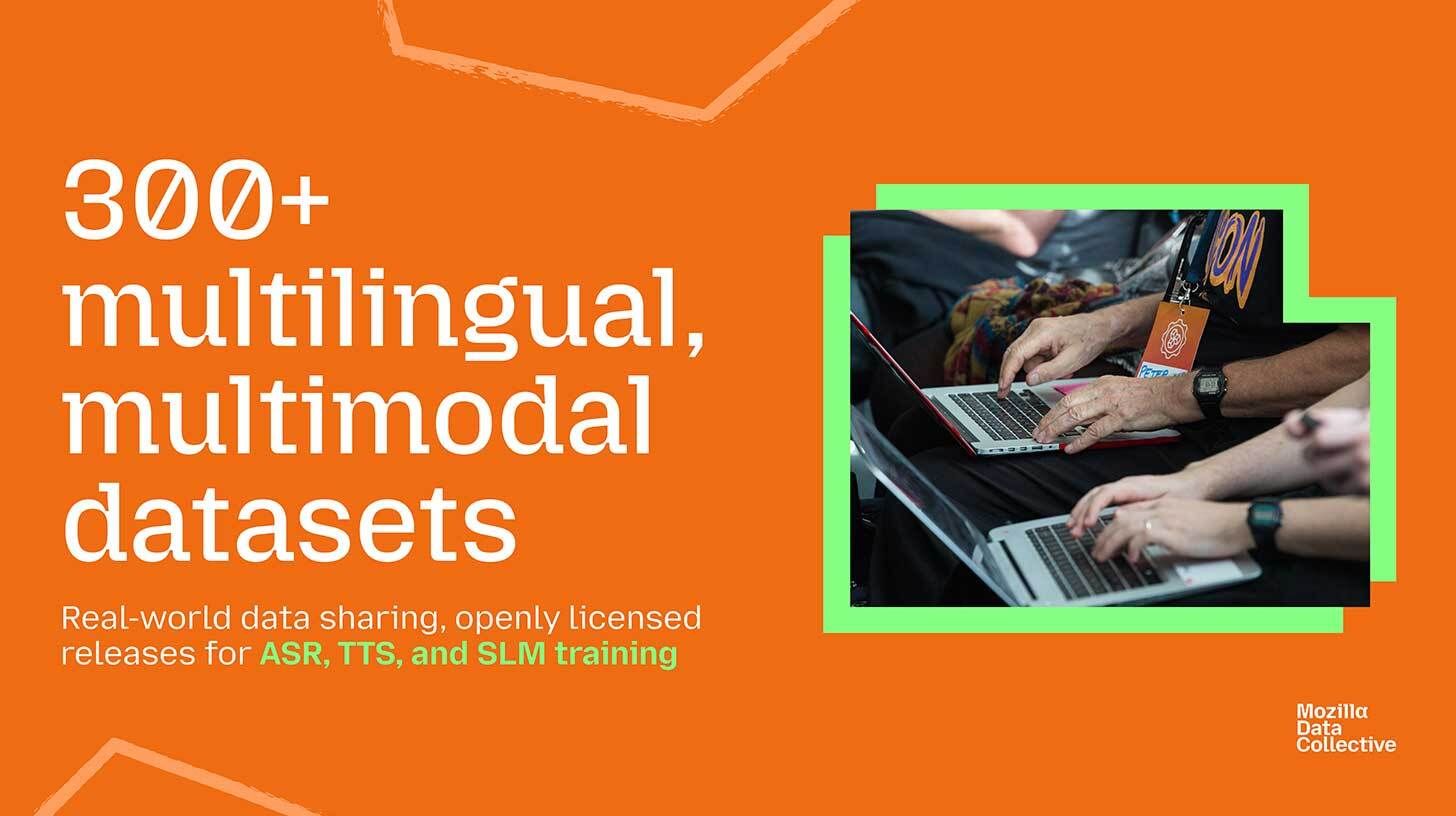
The Rundown: Mozilla Data Collective is a new platform for real-world data sharing, home to multilingual, multimodal datasets in 300+ languages, built and curated directly by contributors. They publish unique, permissively licensed datasets for ASR, TTS, Translation, and SLM, accessible via the datacollective Python package.
New releases this week include:
Text-to-speech: Bulgarian corpus for TTS
Code-switching: Dialogues annotated for codeswitching in Nahuatl
Youth speech: Corpus of Indonesian youth-speech audio
THE RUNDOWN ROUNDTABLE
💡 The Rundown Roundtable: Our AI use cases
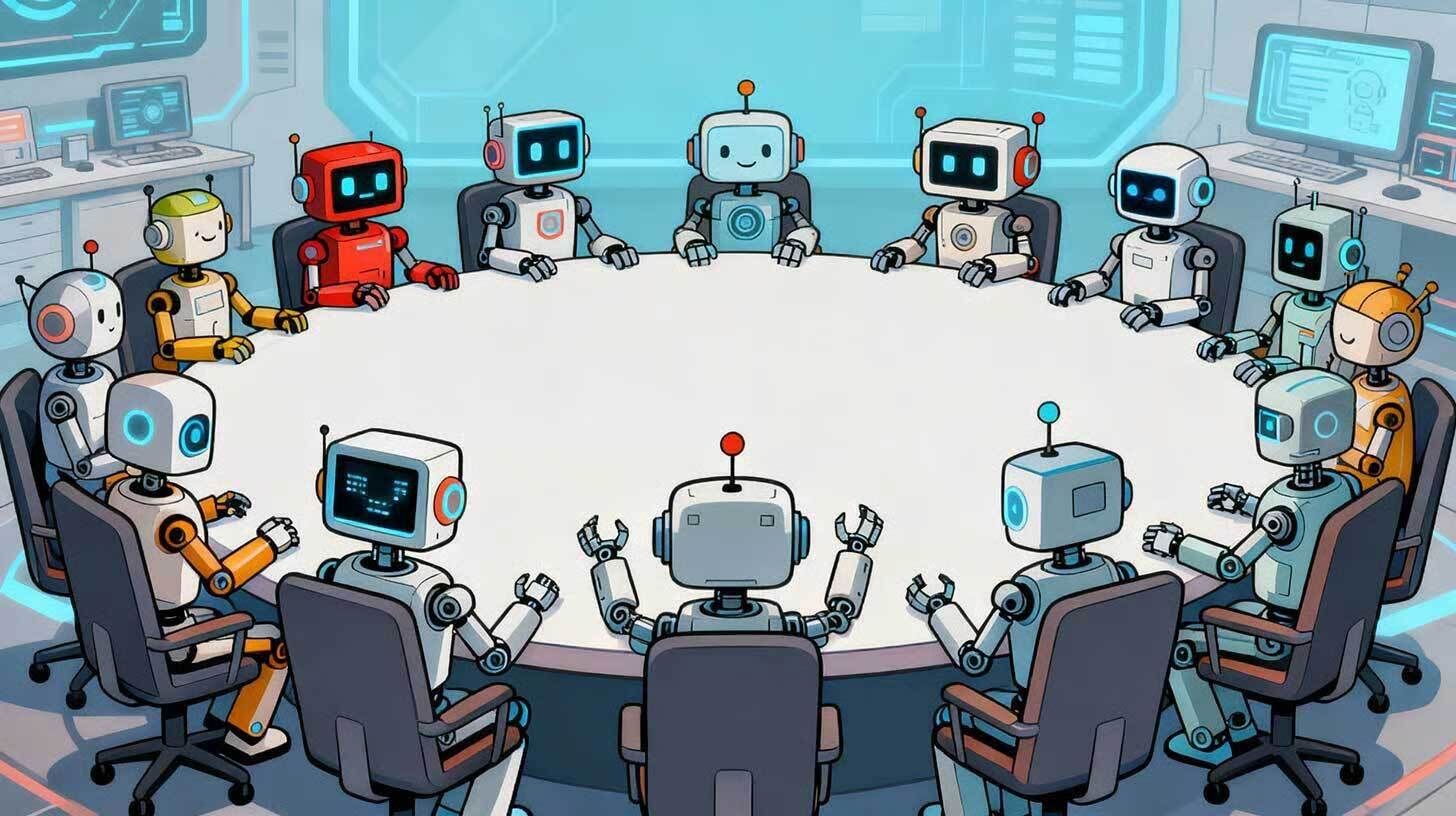
Image source: Ideogram / The Rundown
The Rundown: The Rundown Roundtable is a new weekly feature where we poll members of The Rundown staff on how they are using AI both in work and daily lives.
Joey, Head of Partnerships: I’ve been using Sora as my secret superpower with the kiddos. At a recent family dinner with a pack of 4–7-year-olds, I pulled out Sora and started spinning their wildest ideas into fun mini clips. The kids were entertained, the parents were relieved, and I officially earned the title of “fun aunt.” Win-win!
Shubham, Editor: My Deco mesh network (main unit upstairs, secondary downstairs) struggled to cover the back of the house on the ground floor. Gemini helped walk me through Deco app settings, gave the default router login password (it guessed it correctly), and suggested manual channel tweaks to improve coverage.
When that didn’t work, I shared my ground-floor layout via Gemini live, walking with it. It helped me find the ideal spot for the second unit, where it connected perfectly with the first one and boosted speed. It saved me the expense of a third unit.
Zach, AI Writer: This summer, I used ChatGPT to help me plan, build, plant, and manage our garden. I uploaded pictures of the space, and ChatGPT helped me decide where certain plants should go for optimal sunlight/preferences, companion options that grow together well, helped build out watering schedules, and other helpful tips.
I was able to continually provide pictures and updates as everything grew, asking it questions as my on-demand gardening assistant. A very successful first year, and I’m already excited for next season to expand things even more!
AI TRAINING
📈 Use Claude to organize your business finances
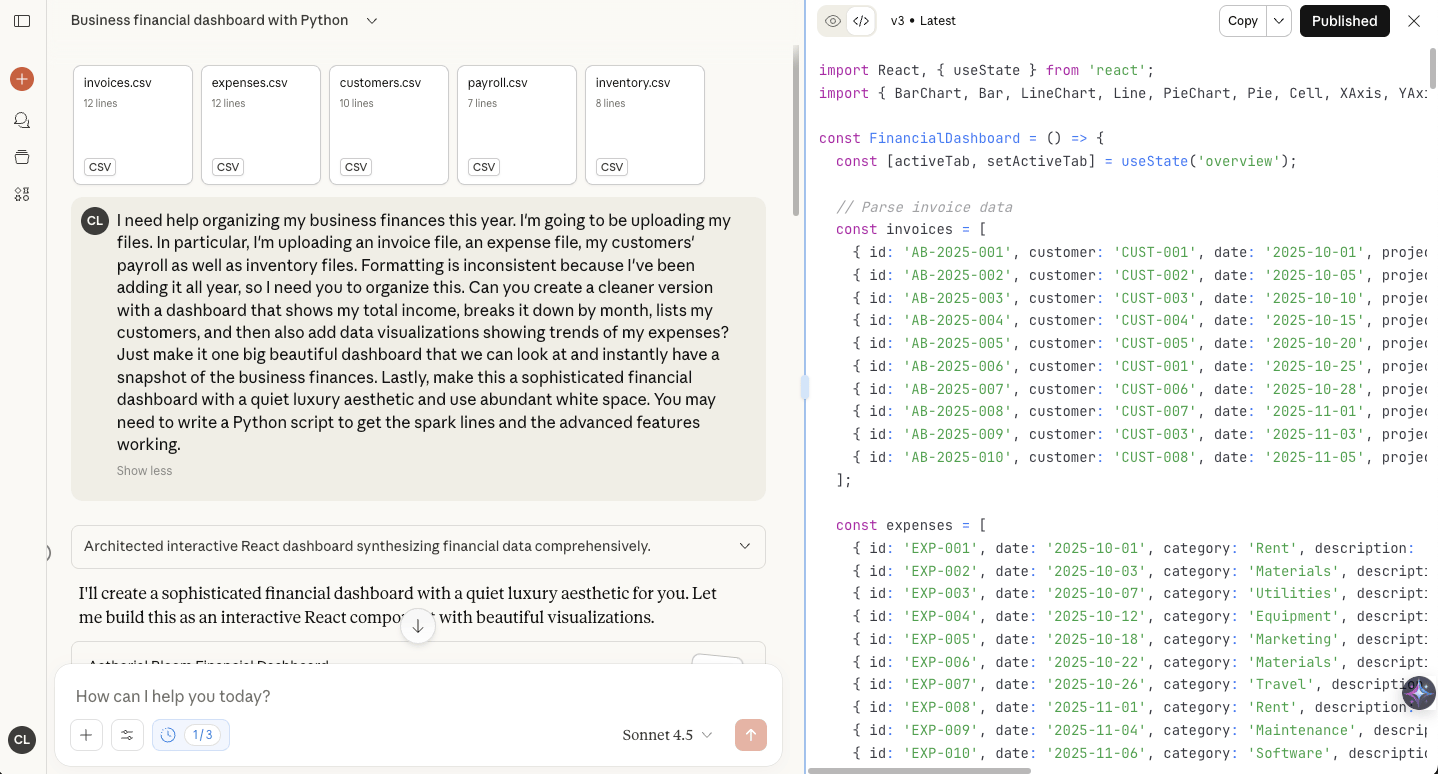
The Rundown: In this tutorial, you will learn how to organize scattered business finance documents into a neat, visually appealing dashboard using Claude, turning messy spreadsheets into polished financial snapshots without hiring an accountant.
Step-by-step:
Go to Claude, sign in (paid plan recommended for more iterations and tools), select Sonnet 4.5, and enable extended thinking and web search in settings
Upload your financial documents (revenue statements, invoices, expenses, inventory) and prompt Claude with what you want: your goal, file types, organization structure, and desired aesthetic
Review the generated dashboard showing metrics like total revenue, expenses, net profit, plus pie charts and bar graphs; request changes in natural language
Add enrichments like "Add a column showing how many days since each invoice to see which pending payments are getting old," then click publish and share the artifact link with stakeholders
Pro Tip: This is a strong use case for small teams. It helps you and your stakeholders see what's working, what's bleeding money, and what needs to be tuned or cut.
PRESENTED BY BLAND
🗣️There’s an AI company without churn?

The Rundown: In San Francisco, there’s an AI company that’s making voice agents that sound human, run 24/7, and never make you wait on hold.
Call Bland and you can:
Experience human-sounding AI
Role-play with your ideal use case
Have a phone call that you actually enjoy
Want to try for yourself? Book a demo today!
MICROSOFT
🔮 Satya Nadella details Microsoft’s ‘positive-sum’ AI future

Image source: Reve / The Rundown
The Rundown: Microsoft CEO Satya Nadella published a post on the company’s ‘positive-sum’ mentality to building in the AI wave, coming alongside a candid appearance on the Dwarkesh Podcast discussing AGI and the future of the industry.
The details:
Nadella pointed to the new AI superfactory as a ‘positive sum’ collaboration, emphasizing partnerships that “catalyze and compound progress.”
The CEO said the AI era’s success will be defined when the “overall economy and society themselves reach new heights,” not company valuations.
He also revealed a shift from "per user" to "per agent" pricing, treating AI systems as infrastructure customers rather than just tools for humans to use.
Nadella also said Microsoft now has access to “all of it” in regard to OpenAI IP (except physical consumer hardware) for seven years under the new deal.
Why it matters: Nadella’s arguing that AI's success shouldn't be measured by which company hits top valuations, but by whether it transforms the world. It’s a noble effort amid surging AI spending, but with society’s growing tension on whether AI will concentrate power or distribute it, skeptics will need more data before feeling the AGI.
QUICK HITS
🛠️ Trending AI Tools
🔐 Incogni - Erase sensitive data like addresses and phone numbers from the web. Get 55% off with code RUNDOWN*
📚 Google NotebookLM - New integrations for Deep Research, Sheets, Images, and PDFs
🖥️ Holo 2 - Lightweight models for powering computer use agents
🤖 GPT-5.1 - OpenAI’s upgraded model with personality customization
*Sponsored Listing
📰 Everything else in AI today
OpenAI launched a pilot of group chats for users in Japan, New Zealand, South Korea, and Taiwan, allowing up to 20 people to collaborate in shared conversations.
Google introduced AI shopping upgrades for the holidays, including an agent that calls stores to check inventory, agentic checkout, product browsing in Gemini, and more.
Apple CEO Tim Cook is reportedly planning to step down as early as next year, with hardware engineering chief John Ternus viewed as the favorite to replace him.
ByteDance Seed released Depth Anything 3, an AI model that predicts spatially consistent geometry from images to create accurate 3D depth maps.
Sakana AI became Japan’s most valuable private company after a new funding round that valued the startup at $2.6B.
Google announced a $40B investment in Texas through 2027 to build data centers and AI infrastructure, including a $30M Energy Impact Fund and training programs.
COMMUNITY
🤝 Community AI workflows
Every newsletter, we showcase how a reader is using AI to work smarter, save time, or make life easier.
Today’s workflow comes from reader Jackie S. in Jersey City, NJ:
"I recently paused my career in tech to be a full-time mom. I became the household's CFO overnight. I’m not a developer, but Google AI Studio made it surprisingly easy to build my own budgeting app with a chat-based “Budget Agent.” Now I just tell it to log expenses, update monthly budgets per category, or give me insights and recommendations for next month. The app also gives me a clean dashboard with dynamic charts that show spend by category and tracks how we’re pacing against each month's budget."
How do you use AI? Tell us here.
🎓 Highlights: News, Guides & Events
Read our last AI newsletter: AI’s autonomous attack era begins
Read our last Tech newsletter: Blue Origin nails SpaceX signature move
Read our last Robotics newsletter: ‘Putin lookalike’ robot faceplants
Today’s AI tool guide: Use Claude to organize your business finances
Watch our last live workshop: AI Essentials for Leaders and Managers
See you soon,
Rowan, Joey, Zach, Shubham, and Jennifer — the humans behind The Rundown
No matching search results
Try using different keywords, double-check your spelling, or explore related categories.
Stay Ahead on AI.
Join 2,000,000+ readers getting bite-size AI news updates straight to their inbox every morning with The Rundown AI newsletter. It's 100% free.