Meet Unitree's giant new mech
PLUS: Waymo has a flood problem

Jennifer Mossalgue
May 14, 2026
Read Online | Sign Up | Advertise

Good morning, robotics enthusiasts. Unitree Robotics just unveiled the GD01, a nearly nine-foot-tall commercial-grade mech that switches between bipedal and quadrupedal modes.
A demo clip shows Unitree founder Wang Xingxing in the pilot seat, and the bot autonomously smashing through brick walls. It’s being marketed as a civilian transport platform — and can be yours for just $650K.
In today’s robotics rundown:
Unitree’s $650K mech you can actually ride
Waymo recalls robotaxis after flood incident
Rivian CEO’s robotics startup hits $1B
Two labs crack the robot muscle problem
Quick hits on other robotics news
LATEST DEVELOPMENTS
UNITREE
🤖 Unitree’s $650K mech you can actually ride
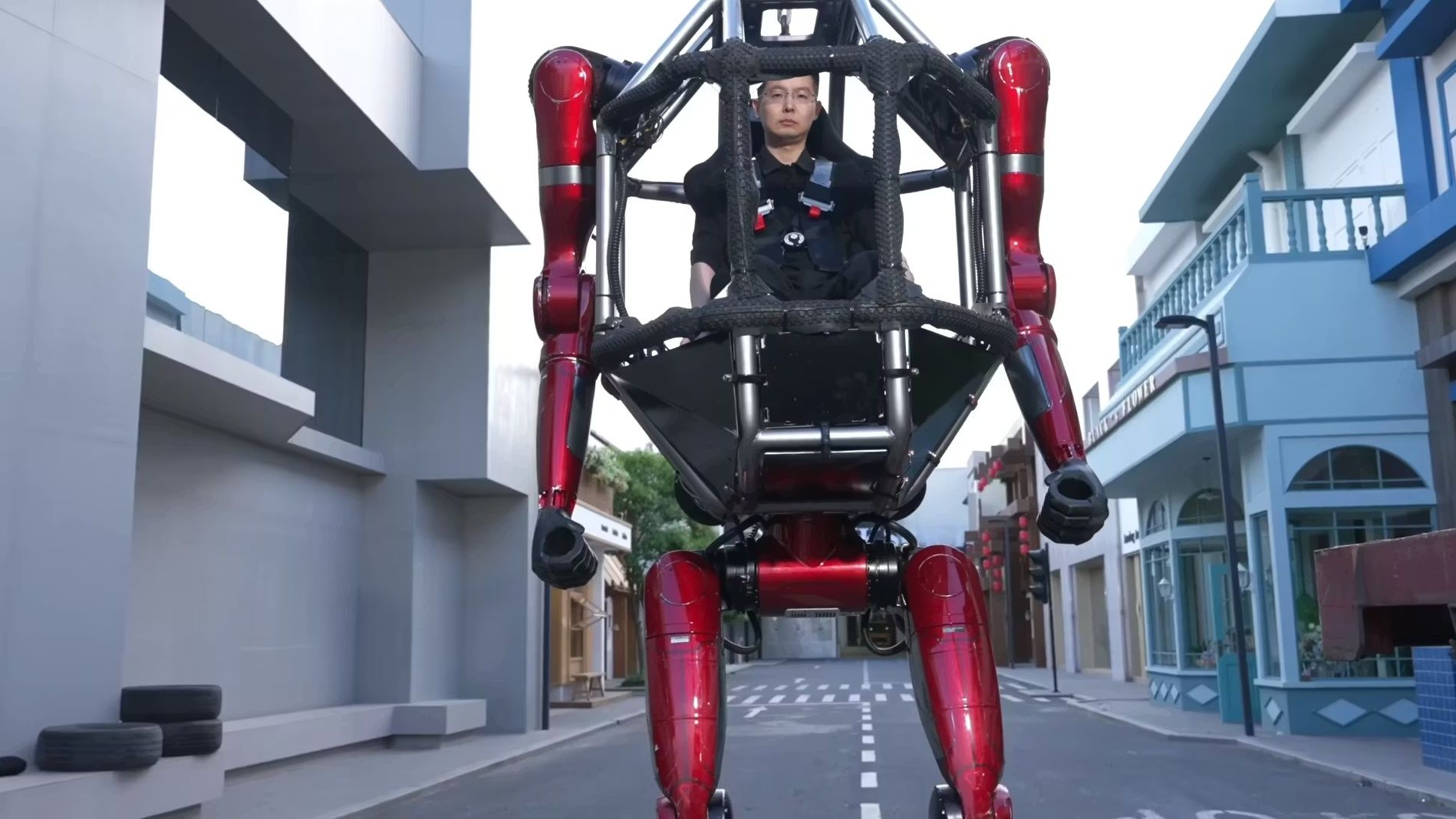
Image source: Unitree / YouTube
The Rundown: Chinese robotics company Unitree just unveiled the GD01, a piloted, transformable mech standing 8.9 feet (2.7 m) that switches between bipedal and quadruped modes and starts at $650K.
The details:
The GD01 is billed as the world’s first mass‑produced transformable mech, shifting between bipedal and quadruped modes in seconds.
Weighing ~500 kg with a pilot, the demo shows it walking, knocking down a brick wall with a mechanical arm, then reconfiguring into a four-legged crawler.
Unitree CEO Wang Xingxing climbed into the cockpit in the debut video, and the company is positioning it as a civilian transport platform.
Chinese companies now account for nearly 90% of global humanoid sales, with Unitree saying it shipped more than 5,500 humanoids last year.
Why it matters: Unitree launched the GD01 to a pounding rock-guitar soundtrack and a safety notice asking buyers to please use their $650K mech “in a Friendly and Safe manner.” What’s wild is that a piloted, transforming wall-demolishing robot has gotten mundane enough to need something that reads like a terms-of-service warning.
WAYMO
⛈️ Waymo recalls robotaxis after flood incident

Image source: Images 2.0 / The Rundown
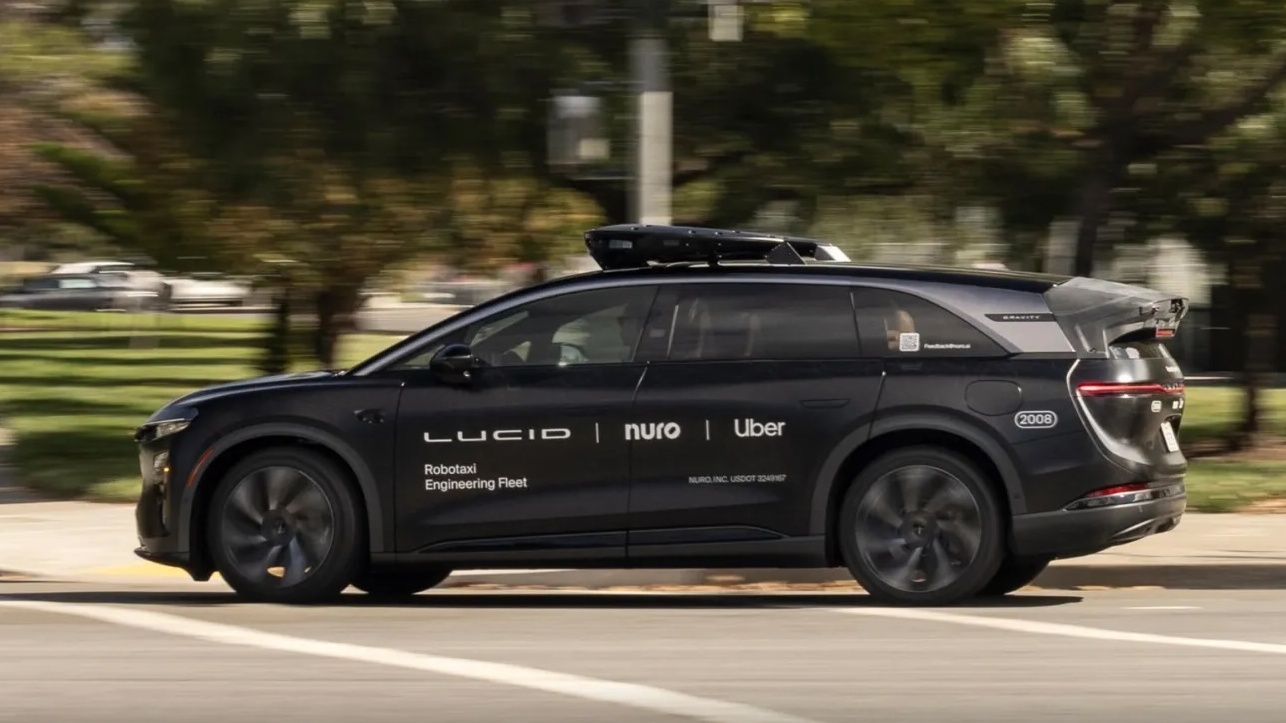
The Rundown: Waymo is recalling nearly 3,800 U.S. robotaxis for a software fix after an empty robotaxi in San Antonio, Texas, drove into deep floodwater and was swept into a creek during April storms, forcing the company to suspend services in the city.
The details:
The voluntary recall, filed with U.S. regulators, targets vehicles running Waymo’s fifth- and sixth‑generation self‑driving systems.
An incident on April 20 saw an unoccupied Waymo vehicle in San Antonio drive into deep floodwater on a 40 mph road and get swept away.
Footage from Austin and other cities shows Waymo cars steering onto flooded roads or simply freezing in traffic as heavy rain pounds their sensors.
Waymo has already pushed an over-the-air update and says it is developing additional software safeguards to limit operations during extreme weather.
Why it matters: Floodwater is exactly the kind of chaotic hazard that autonomous vehicles are supposed to navigate better than humans, so watching robotaxis float away undercuts the safety case at the industry’s core. This could boost regulatory scrutiny and raise the bar for what “safe” means in climate-stressed conditions.
MIND ROBOTICS
🦄 Rivian CEO’s robotics startup hits $1B

Image source: Images 2.0 / The Rundown
The Rundown: Mind Robotics, the industrial AI spinoff founded by Rivian CEO RJ Scaringe, closed a $400M round led by Kleiner Perkins — crossing $1B in total funding less than a year after launch.
The details:
The raise is Mind’s third since launching in late 2025, following a $115M seed and a $500M Series A in March, and values the company at $3.4B.
Mind Robotics was founded and is led by Scaringe, who spun the company out of the EV maker in late 2025 to focus on AI‑driven industrial robots.
The startup is building a vertically integrated stack of AI models, custom hardware, and orchestration software designed to learn from real factory data.
Scaringe also co‑founded and spun out a micromobility startup called Also, which has already pulled in more than $300M in funding.
Why it matters: Scaringe is betting industrial robotics will produce far more morphological variety than the humanoid wave dominating investment at Tesla and Chinese rivals — a contrarian wager that, if right, could reshape factory floors through task-specific machines long before general-purpose robot workers arrive.
ROBOTICS RESEARCH
🦾 Two labs crack the robot muscle problem
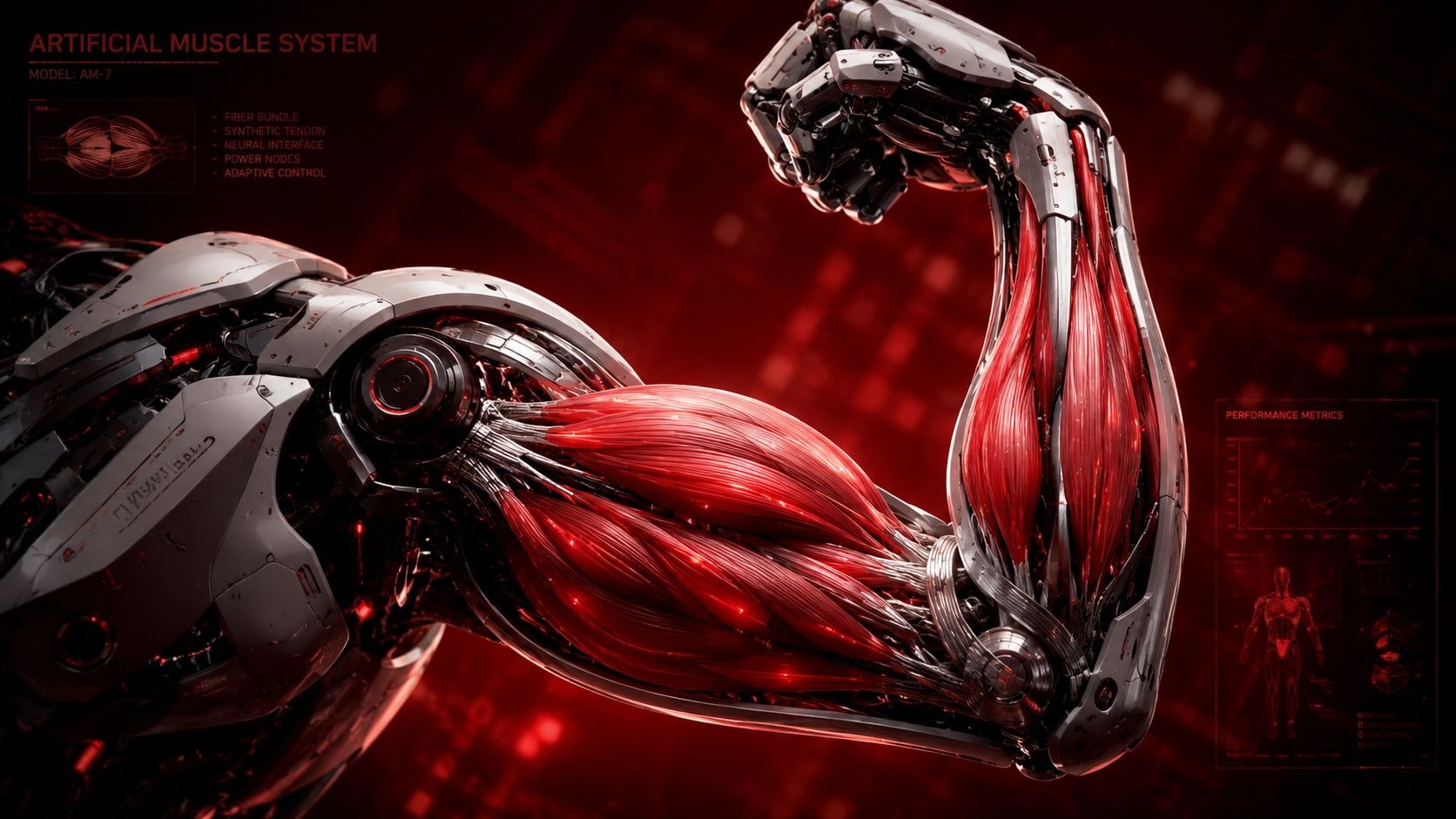
Image source: Images 2.0 / The Rundown
The Rundown: In two new studies, roboticists are reinventing “muscle” itself, potentially giving humanoids elastic, sensor‑packed actuators that flex like real flesh, lift like machines, and can understand how hard they’re pulling.
The details:
Researchers at Arizona State University unveiled HARP actuators — air-powered artificial muscles that can lift up to 100x their own weight.
The coiled, pasta-like tubes inflate with a small burst of compressed air to expand and contract, achieving contraction ratios up to 75%.
Seoul National University developed liquid-crystal-elastomer artificial muscles with embedded liquid-metal channels that both actuate and sense force/length.
The system pairs antagonistic actuators to achieve closed-loop control, already demoed in a robotic finger and gripper.
Why it matters: Robotic actuators have always forced a choice: strength or sensitivity, power or mobility. These two papers attack both sides at once — one solving the mechanics, the other the nervous system. While it’s still early, together they sketch what a genuine muscle analog for humanoids and soft robots could look like.
QUICK HITS
📰 Everything else in robotics today
Figure live‑streamed its Helix‑02–powered humanoids running 8-hour warehouse shifts, autonomously moving packages at nearly human performance levels.
A Tokyo university opened a world-first unmanned medicine lab where humanoids automate experiments, with 2K research robots planned by 2040.
Tesla’s new robotaxi service in Dallas and Houston is drawing complaints of long waits, raising questions about how ready it is to scale beyond Texas, Reuters reported.
A South Korean startup is strapping cameras on staff at a five-star hotel to capture napkin-folding and other hospitality skills as training data for humanoids.
Persona AI launched an early-stage R&D partnership with Under Armour to test advanced performance textiles as external layers for industrial humanoids.
Fanuc’s shares surged to a record high after the Japanese industrial robotics giant announced a deal with Google to develop an AI-powered agent system for its robots.
An AI-powered underwater robot homes in on fish sounds to pinpoint and map coral reef biodiversity hotspots for conservation.
Researchers showed that advances in noninvasive brain-computer interfaces are making assistive robotic arms more practical for use by people with motor impairments.
Bee-inspired Bee-Nav lets tiny drones learn a route with brief flights, then autonomously fly out and return using only a few kilobytes of onboard neural memory.
COMMUNITY
🎓 Highlights: News, Guides & Events
Read our last AI newsletter: The enterprise shift OpenAI saw coming
Read our last Tech newsletter: Venmo finally kills its most criticized feature
Read our last Robotics newsletter: Figure’s robots make a bed together
Today’s AI tool guide: Create content with Claude Code and Higgsfield
RSVP to our next workshop @ 2 PM EST today: Getting AI to do real work
See you soon,
Rowan, Joey, Zach, Shubham, and Jennifer — The Rundown’s editorial team
Stay Ahead on AI.
Join 2,000,000+ readers getting bite-size AI news updates straight to their inbox every morning with The Rundown AI newsletter. It's 100% free.