Genesis robot makes breakfast
PLUS: iRobot co-founder unveils robot pet

Jennifer Mossalgue
May 7, 2026
Read Online | Sign Up | Advertise

Good morning, robotics enthusiasts. Paris-born Genesis AI just dropped its first foundation model, GENE-26.5, alongside a dexterous robotic hand that scrambles eggs, plays piano, and solves a Rubik’s Cube in real time.
While rivals like Skild AI and Physical Intelligence chase general-purpose robot brains, Genesis is going full-stack — owning the model, the data engine, and the hand that makes the whole thing useful.
In today’s robotics rundown:
Genesis AI goes full-stack with robot hand, brain
The creator of Roomba is back with a robot pet
Driverless trucks stock Texas’ fast food chains
South Korean Buddhist sect gets robot monk
Quick hits on other robotics news
LATEST DEVELOPMENTS
GENESIS AI
🤖 Genesis AI goes full-stack with robot hand, brains
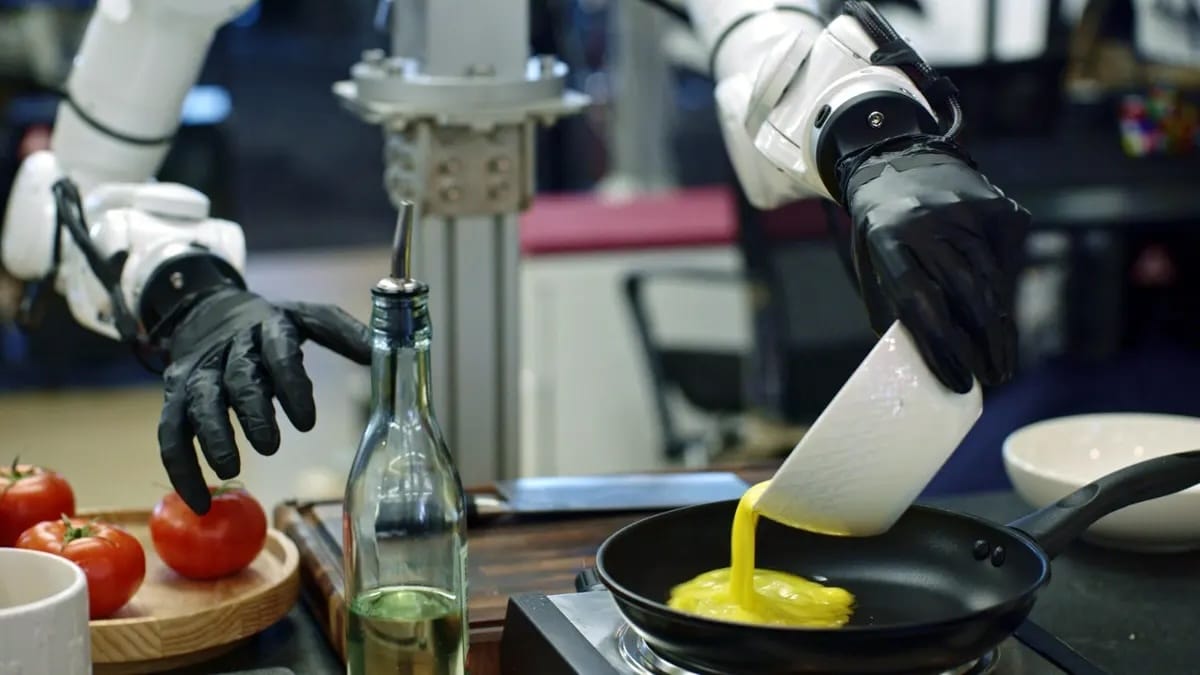
Image source: Genesis AI
The Rundown: French-U.S. startup Genesis AI pivoted hard this week — from model lab to a full-stack robotics company — dropping its first foundation model, GENE-26.5, alongside a dexterous robotic hand and a data-capture glove.
The details:
Co-founded by former Mistral researcher Théophile Gervet, Genesis says GENE-26.5 can run a range of robots, including those by other manufacturers.
In a demo, Genesis’ robotic hands can be seen cracking eggs, slicing tomatoes, blending smoothies, twirling a Rubik’s Cube, and playing piano.
Equipped with tactile-sensing electronic skin, the lightweight glove creates a 1:1:1 mapping between itself, the human hand, and the robot hand.
Before it touches hardware, Genesis trains in virtual space — on a physics sim that generates synthetic data up to 430K times faster than real time.
Why it matters: Backed by former Google CEO Eric Schmidt, Genesis is in advanced talks with customers targeting variable, delicate tasks. It faces stiff competition from China’s Linkerbot, which is targeting a $6B valuation as the race for dexterous robotic hands heats up. A full-body general-purpose robot is next on the roadmap.
FAMILIAR MACHINES
🐶 The creator of Roomba is back with a robot pet
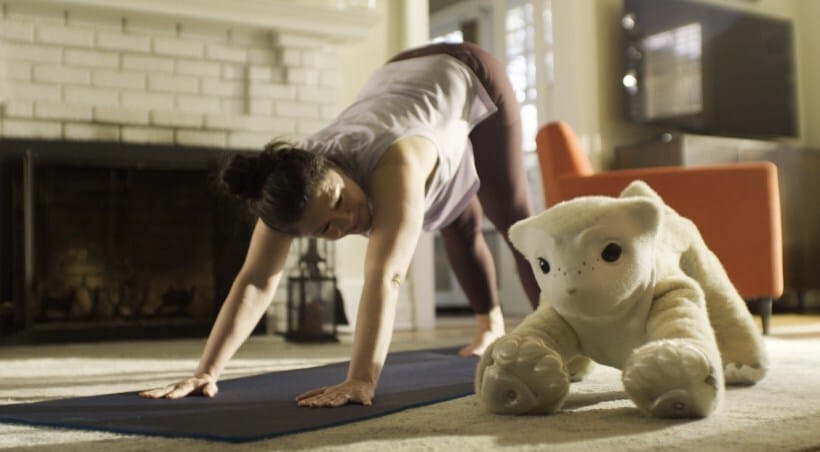
Image source: Familiar Machines & Magic
The Rundown: Colin Angle, co-founder of iRobot and the man behind 50M Roombas, just came out of stealth with Familiar Machines & Magic — and his next home robot isn’t a vacuum, it’s a furry AI creature.
The details:
The Familiar is a bear-like quadruped with 23 degrees of freedom, a touch-sensitive fuzzy coat, a vision system, and a microphone array.
A behavior engine trained on thousands of short narrative vignettes drives responses in real time, factoring in personality, memory, and situational cues.
Angle frames the cost as comparable to pet ownership and is targeting sales as soon as next year, with mass production contracted to a factory in Asia.
The founding team includes former iRobot CTO Chris Jones and iRobot alum Ira Renfrew, with alumni from Disney Research, Boston Dynamics, and MIT.
Why it matters: Angle argues that home robots need to feel less like gadgets and more like beings people can build relationships with over time. Familiar is his attempt to prove that embodiment — touch, motion, memory, and presence — can make AI companionship feel more natural than a screen-based chatbot.
AURORA
🚛 Driverless trucks stock Texas’ fast food chains
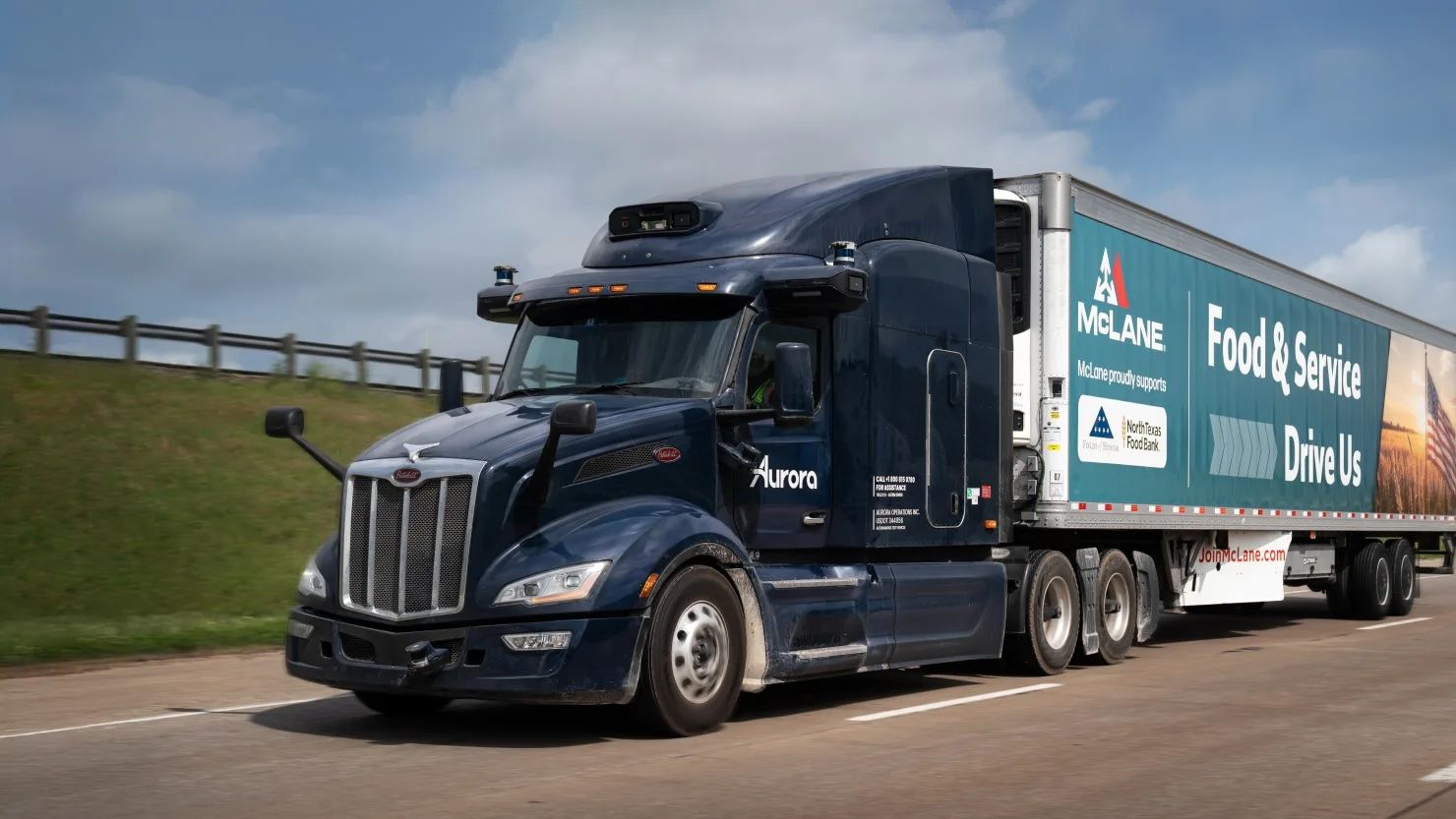
Image source: Aurora
The Rundown: Berkshire-owned distribution behemoth McLane is turning the U.S. Sun Belt into a test track for robot big rigs, tapping Aurora’s self-driving trucks to haul restaurant supplies on highways with no human behind the wheel.
The details:
McLane is launching fully driverless long‑haul trucking in Texas with Aurora Innovation’s autonomous big rigs, after a three-year pilot.
The Dallas–Houston corridor is first up: Aurora trucks now run the route without a safety driver, handling multiple trips daily, seven days a week.
The pilot racked up more than 280K autonomous miles and 1,400 loads with 100% on‑time performance, convincing McLane to greenlight driverless ops.
Aurora and McLane plan to extend these autonomous routes across McLane distribution centers in the U.S. Sun Belt by the end of 2026.
Why it matters: Aurora’s first fully driverless commercial deal with a major U.S. distributor lands in a field where Kodiak Robotics, Torc, and TuSimple are also chasing long‑haul autonomous freight. McLane says it keeps humans on last‑mile routes while Aurora’s system handles the “middle mile” highway runs between distribution centers.
HUMANOIDS
🪷 South Korean Buddhist sect gets robot monk

Image source: Morikoa / X
The Rundown: South Korea’s largest Buddhist sect just ordained Gabi, a 4-foot-3 Unitree humanoid, as its first robot monk at Seoul’s Jogye Temple, blending AI, ritual, and a bid to keep Buddhism relevant to younger generations.
The details:
Wearing traditional robes and black shoes, the robot circled a stone pagoda, bowed, and received a 108‑bead rosary in a full monastic initiation ritual.
When asked three times whether it would devote itself to Buddhism, the robot answered in synthesized voice: “Yes, I will devote myself.”
The temple’s aim: Gabi makes ancient rituals legible to children and tech-native visitors who might otherwise bypass organized religion entirely.
The Jogye order has written a bespoke rule set for its new monk, in a hybrid document fusing centuries-old Buddhist precepts with AI safety guardrails.
Why it matters: Gabi turns a centuries-old Buddhist initiation ritual into a modern outreach tool, using a humanoid to make temple practice more accessible to children and tech-native visitors. The experiment is less about replacing monks than finding new ways to keep Buddhist teachings relevant in an AI-shaped culture.
QUICK HITS
📰 Everything else in robotics today
OpenAI’s Sam Altman floated but then shelved plans to spin off the company’s robotics and consumer-hardware divisions, according to the Wall Street Journal.
Nuro secured a California DMV permit to test Lucid Gravity SUVs with its autonomous driving system without a safety driver, ahead of Uber’s robotaxi launch.
China’s Pudu Robotics opened its U.S. headquarters in Dallas to drive an aggressive expansion of its service and cleaning robot business across the U.S. market.
California passed new rules letting police issue traffic tickets directly to autonomous vehicle manufacturers when their driverless cars break traffic laws.
Hyundai is reportedly pressuring Boston Dynamics to rapidly deliver tens of thousands of Atlas robots to automate a large share of its vehicle manufacturing work.
China’s early lead in humanoids is poised to supercharge its manufacturing base and extend its global export dominance in the coming decade, Bloomberg reported.
Johnson & Johnson finished a pivotal bariatric clinical study of its OTTAVA robotic surgical system, paving the way for a U.S. authorization bid.
AGIBOT’s A2 humanoid appeared at a Met Gala pre-event at The Mark Hotel with designer Alexander Wang, serving guests and posing for photographers.
A British tech entrepreneur said firms using AI should pay a “minimum wage for robots” to help fund retraining and curb white-collar job losses.
Cornell physicists derived two simple stability rules from a 5-parameter insect flight model, for flapping-wing robots that stay stable without heavy feedback control.
Ouster’s new Rev8 lidar packs camera-grade color imaging and 3D depth into a single digital lidar sensor designed to replace separate cameras in robots and robotaxis.
COMMUNITY
🎓 Highlights: News, Guides & Events
Read our last AI newsletter: Anthropic, SpaceX become compute partners
Read our last Tech newsletter: GameStop’s wild bid to buy eBay
Read our last Robotics newsletter: Meta buys a humanoid brain
Today’s AI tool guide: Use Claude Design’s slide decks feature like a pro
See you soon,
Rowan, Joey, Zach, Shubham, and Jennifer — The Rundown’s editorial team

Stay Ahead on AI.
Join 2,000,000+ readers getting bite-size AI news updates straight to their inbox every morning with The Rundown AI newsletter. It's 100% free.