Figure's robots make a bed together
PLUS: South Korea's military wants to enlist Spot

Jennifer Mossalgue
May 11, 2026
Read Online | Sign Up | Advertise

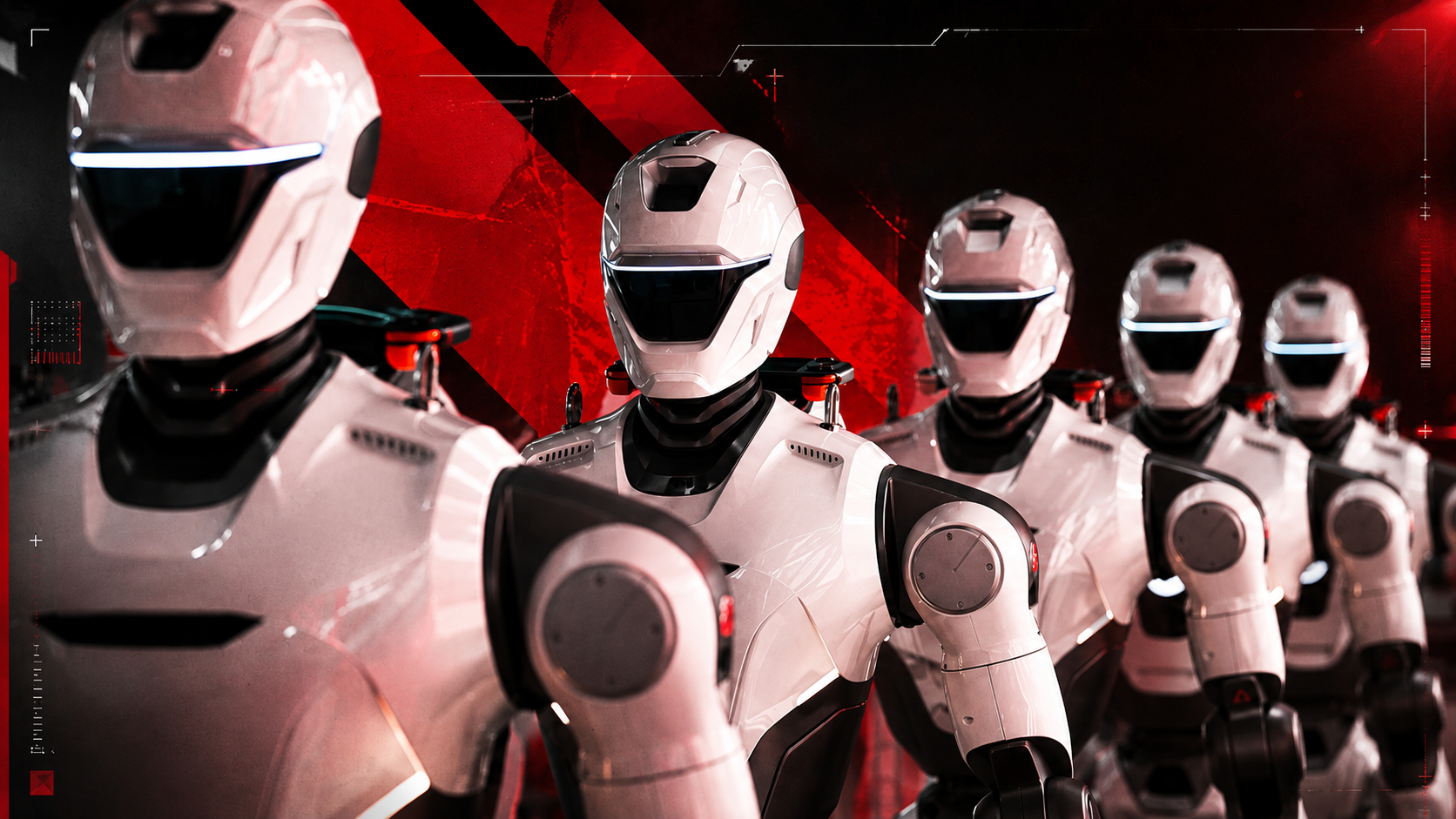
Good morning, robotics enthusiasts. Figure just dropped a two-minute demo of its F.03 humanoids tag-teaming a full bedroom reset — opening doors, hanging clothes, and making a neatly smoothed bed.
The twist is that the robots share a single learned neural network, coordinating through visual cues alone, no explicit communication or central planner. Everyone is racing to build better robot brains; Figure just showed what happens when two bodies share one.
In today’s robotics rundown:
Figure’s humanoids make a bed together
South Korea’s army turns to Boston Dynamics
Uber’s robotaxi partner has a crash problem
Rocket Lab buys robot arm that went to Mars
Quick hits on other robotics news
LATEST DEVELOPMENTS
FIGURE AI
🛏️ Figure’s humanoids make a bed together

Image source: Figure AI
The Rundown: Figure AI just dropped a two‑minute demo of its Helix‑02–powered humanoids tag‑teaming a full bedroom reset — opening doors, hanging clothes, and making a neatly smoothed bed “better than most humans,” says CEO Brett Adock.
The details:
Figure calls it the first demo of a single learned neural network driving multi-humanoid collaborative locomanipulation, directly from pixels to actions.
The F.03 robots coordinate purely through a shared AI policy and visual cues, with no explicit communication or central planner directing their moves.
In the video, they open doors, hang clothes, clear surfaces, and then team up to lift, spread, and smooth a comforter to hotel‑room neatness.
The F.03’s wireless foot-charging dock lets it step onto a pad and recharge at 2 kW, no outlet-hunting or human intervention required.
Why it matters: While many multi-robot systems depend on explicit communication or a centralized planner, Figure shows emergent coordination — a significant architectural bet on scalability. If it holds outside staged demos, it’s the kind of foundation that makes a capable robot a deployable one.
HYUNDAI
🪖 South Korea’s army turns to Boston Dynamics

Image source: Images 2.0 / The Rundown
The Rundown: South Korea is reportedly looking to deploy Hyundai's robotics arsenal — including Boston Dynamics’ Spot — to shore up military ranks as plummeting birthrates drain the conscription pool.
The details:
South Korea’s military is in talks with Hyundai to deploy robots across surveillance, reconnaissance, and logistics as troop numbers decline.
Potential systems include the Spot robot dog, the wheeled MobED platform, and X-ble Shoulder exoskeletons for load-bearing and mobility assistance.
Active-duty troop numbers have dropped from 650K in 2020 to 450K today, and the country has one of the world’s lowest birthrates.
Military planners are shifting toward unmanned systems to handle tasks from perimeter patrols to supply runs, fundamentally reshaping front-line operations.
Why it matters: South Korea's troop shortage is already here, and robots are looking like one of the most viable stopgaps on the table. But deploying unproven systems near the DMZ, where a sensor failure doesn’t just stop a factory line, certainly raises questions about how far militaries should go in automating their military ops.
AVRIDE
🚖 Uber’s robotaxi partner has a crash problem
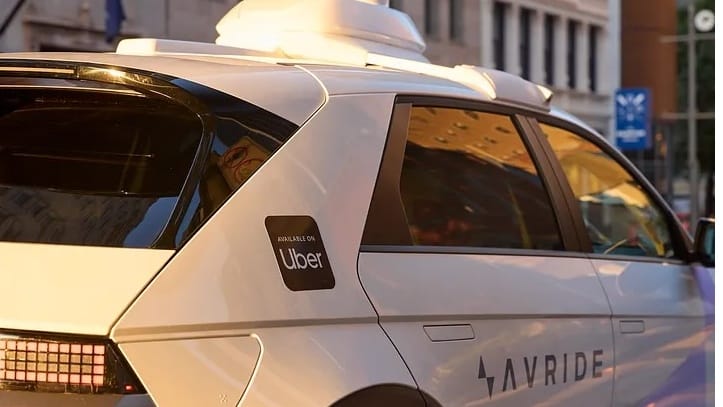
Image source: Avride
The Rundown: U.S. auto safety regulators have opened a formal investigation into Uber partner Avride after 16 crashes involving its self-driving robotaxis occurred in Dallas over the past four months.
The details:
U.S. auto safety regulators have opened a formal probe into Avride, a self-driving startup that operates robotaxis for Uber in Dallas.
The investigation was triggered by 16 crashes in which Avride vehicles were in autonomous mode with a human safety driver behind the wheel.
Reported incidents include vehicles changing lanes into moving traffic, hitting stationary objects, and failing to respond appropriately to cars ahead.
Regulators are scrutinizing whether Avride’s software is overly aggressive and whether its safety practices are adequate for operating on public roads.
Why it matters: The probe cuts to the core of Uber’s strategy: outsourcing autonomy to startups rather than building it in-house. If regulators find systemic flaws in Avride’s software or safety culture, expect a broader chill on robotaxi deployments, and fresh ammunition for skeptics who say AI drivers still aren’t ready for real streets.
ROCKET LAB
🚀 Rocket Lab buys robot arm that went to Mars

Image source: Rocket Lab
The Rundown: Rocket Lab just signed its largest launch contract to date — and revealed that it’s acquiring Motiv Space Systems, a Pasadena robotics firm whose hardware operated on the Perseverance Mars rover and NASA’s CADRE lunar rovers.
The details:
Motiv’s portfolio covers multi-degree-of-freedom robotic arms, actuators, and drive electronics purpose-built for deep-space conditions.
Rocket Lab will fold Motiv into a new division called Rocket Lab Robotics, absorbing its 50-person engineering team and Pasadena manufacturing facility.
The deal targets a specific pain point: solar array drive assemblies and other precision mechanisms that are expensive and hard to source.
Rocket Lab says the capability will extend into on-orbit and surface operations, positioning it for commercial Mars Sample Return and national security work.
Why it matters: Most space companies source their robotics from contractors and live with the bottlenecks. Rocket Lab is closing that gap, fusing launch, satellites, and robotics into a single in-house stack. By buying Motiv’s robots, it’s betting that owning the manipulators for on-orbit work matters as much as the rockets that get them there.
QUICK HITS
📰 Everything else in robotics today
Hyundai’s Boston Dynamics unit released a video of its production-ready Atlas humanoid performing complex gymnastics.
Drone startup Helsing is reportedly lining up a new $1.2B funding round that would lift its valuation to about $18B, as investors pour money into defense tech companies.
South Korean robotics startup RLWRLD, backed by LG Electronics, reportedly released RLDX-1, a foundation AI model designed for five-finger robotic hands.
Austin-based Allen Control Systems, an anti-drone AI startup that makes autonomous weapons stations, is in talks to raise $200M at a $2B valuation.
Bloomberg’s Oleg Matsnev argues that today’s viral humanoids are still clunky, limited machines that fall far short of their AI-hype billing.
Self-driving truck startup Kodiak AI reportedly raised $100M by selling shares at a steep 29% discount, causing its stock to plummet 37% in after-hours trading.
Croatian startup Verne launched what it says is Europe’s first commercial robotaxi service in Zagreb in partnership with Uber, charging a flat fee of €1.99.
Nanoleaf, the smart lighting company, is pivoting to a new product lineup focused on robots, AI, and red-light therapy wellness devices, The Verge reports.
China unveiled a 220 lb., four-wheeled robot with dual robotic arms for its upcoming Chang’e-8 lunar mission, designed to function as a “Moon mechanic.”
Hugging Face launched an agentic toolkit for Reachy Mini that lets users without coding skills create custom robot apps by describing tasks in natural language.
COMMUNITY
🎓 Highlights: News, Guides & Events
Read our last AI newsletter: DeepMind’s powerful AI co-mathematician
Read our last Tech newsletter: ‘RAMageddon’ is coming for your laptop
Read our last Robotics newsletter: Genesis robot makes breakfast
Today’s AI tool guide: Automate any manual task with Codex
See you soon,
Rowan, Joey, Zach, Shubham, and Jennifer — The Rundown’s editorial team
Stay Ahead on AI.
Join 2,000,000+ readers getting bite-size AI news updates straight to their inbox every morning with The Rundown AI newsletter. It's 100% free.