Get the latest AI news, understand why it matters, and learn how to apply it in your work — all in just 5 minutes a day. Join over 2,000,000+ subscribers.

Oracle, Larry Ellison cash in on AI boom
Read Online | Sign Up | Advertise

Good morning, AI enthusiasts. Forget building the next ChatGPT — Oracle and Larry Ellison just proved the real AI money is in renting out the servers to run it.
A $300B OpenAI infrastructure deal and massive stock surge helped propel Ellison past Elon Musk as the world's richest person, with the AI "picks and shovels" strategy minting insane wealth just as fast as the models themselves.
P.S. — our next live workshop is Friday, Sept. 19 at 4 PM EST! Join and learn how to turn your data into a reliable AI assistant, not just another chatbot. RSVP here.
In today’s AI rundown:
Oracle, Larry Ellison cash in on AI boom
Replit triples valuation, launches Agent 3
Pull Reddit insights for market research
Web publishers unite for AI licensing standard
4 new AI tools, community workflows, and more
LATEST DEVELOPMENTS
ORACLE & OPENAI
💰 Oracle, Larry Ellison cash in on AI boom

Image source: Seedream 4.0 / The Rundown
The Rundown: Oracle's stock surged by 40% Wednesday after revealing $455B in future AI infrastructure contracts, including a massive $300B deal with OpenAI — with the rise sending founder Larry Ellison past Elon Musk as the world's richest person.
The details:
Oracle disclosed securing four multibillion-dollar AI infrastructure contracts during its latest quarter, predicting its revenue backlog will exceed $500B.
A WSJ report revealed that OpenAI accounts for $300B of future revenue, committing to around $60B annually starting in 2027 for compute capacity.
Ellison's net worth jumped over $100B in a single day, surpassing Musk's $385B fortune after Oracle’s stock posted its best one-day gain since 1992.
Oracle projects cloud infrastructure revenue will grow from $18B this year to $144B within five years, with most already locked in with signed contracts.
Why it matters: The AI boom turned Nvidia into a kingpin for chipmaking, and now Oracle is following suit with infrastructure… While minting a new world’s richest man in the process. With initiatives like Stargate and tech giants all scrambling for compute, the “picks and shovels” sectors of AI continue to generate eye-popping revenue.
TOGETHER WITH PROMPTQL
📊 A durable framework for evaluating AI products
The Rundown: The root cause of enterprise AI failures is less about technology and more about choosing the wrong approach. PromptQL’s practical 3x3 framework helps companies avoid this trap by aligning the right approach to each use case.
In this guide, you’ll learn:
Key challenges with current AI assessment methods
A durable 3x3 framework for classifying enterprise AI systems
Insights from analysing 100+ tools using this approach
REPLIT
🚀 Replit triples valuation, launches Agent 3
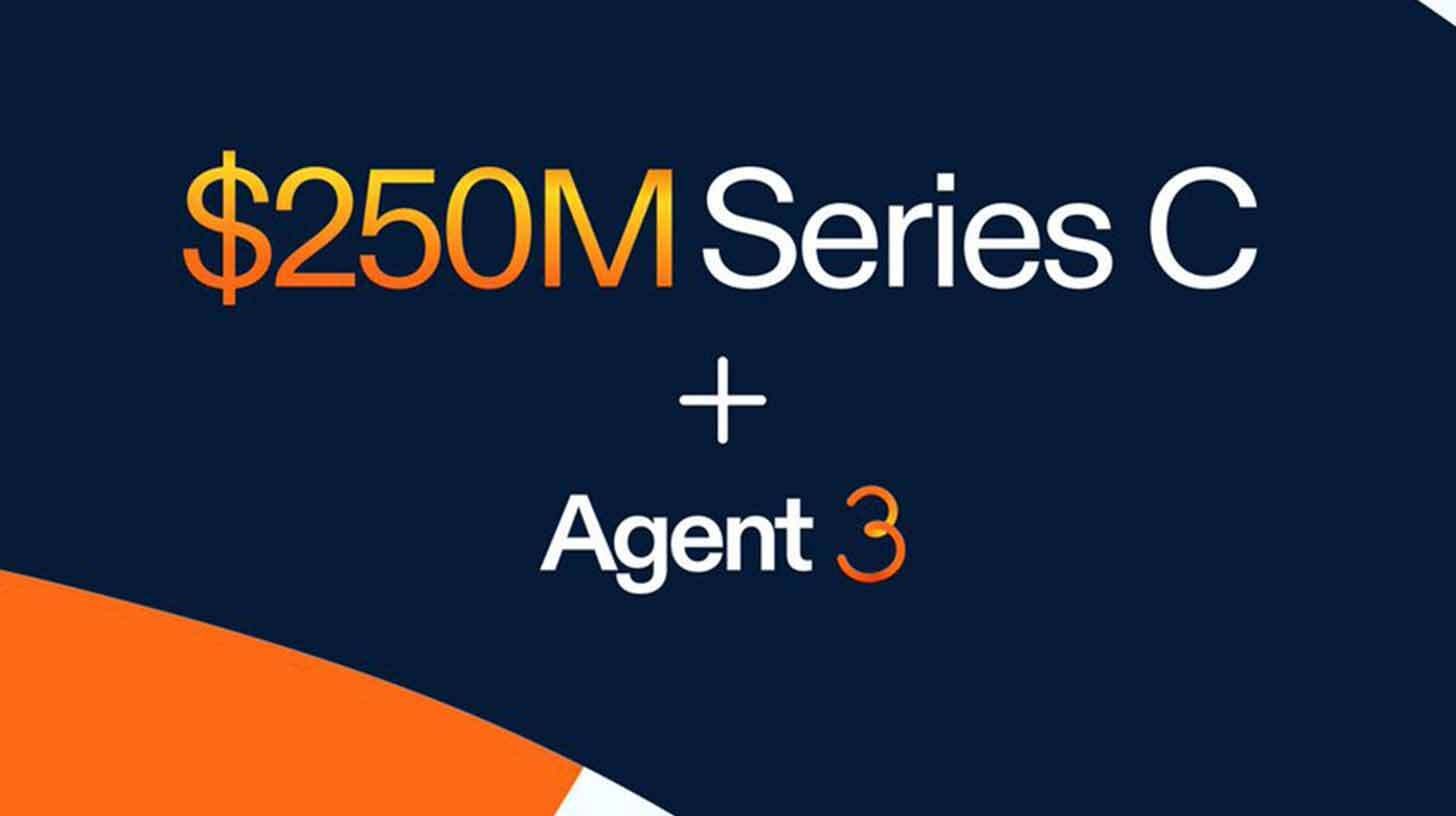
Image source: Replit
The Rundown: AI coding platform Replit just announced a new $250M raise at a $3B valuation, alongside the release of Agent 3 — the company’s “most autonomous agent yet” that can build and test applications for over three hours straight.
The details:
The coding startup’s revenue increased from $3M to $150M in the past year, with the new funding round nearly tripling its valuation.
Agent 3 can generate other agents, create workflow automations for Slack and email, and auto-test applications by simulating user interactions in browsers.
Replit claims Agent 3 can run for 200 minutes without manual oversight, a 10x increase in autonomous abilities from its V2 predecessor.
Replit CEO Amjad Masad called Agent 3’s autonomous upgrades the “Full Self-Driving moment of software”.
Why it matters: METR’s analysis earlier this year showed the length of tasks AI can handle is growing fast, and Agent 3 follows that curve — going from 20 to 200 minutes of building in a single upgrade. Replit’s rise is also another win for the agentic coding sector, joining Lovable, Cognition, Cursor, and others with major funding.
AI TRAINING
📚 Pull Reddit insights for market research
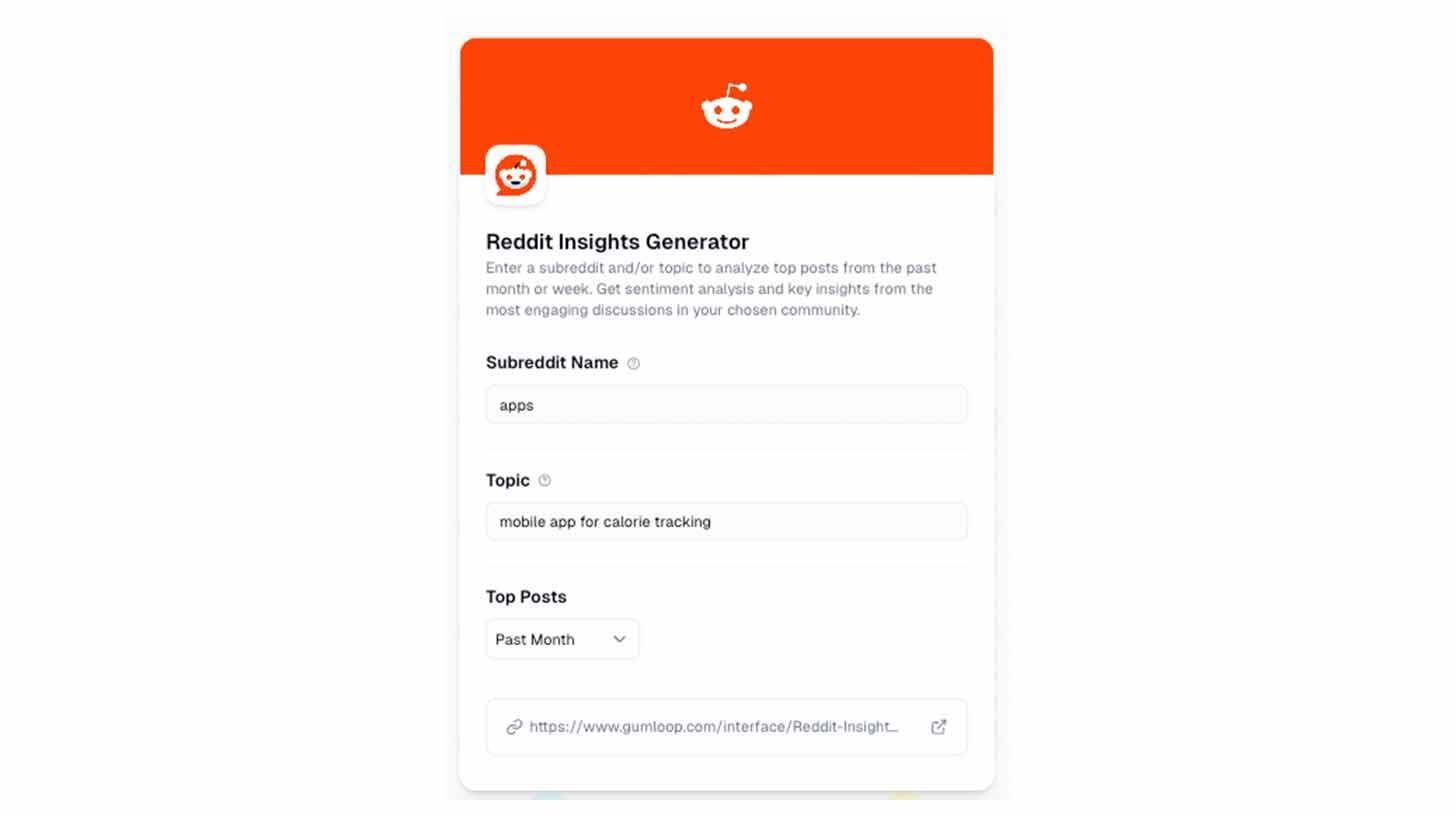
The Rundown: In this tutorial, you will learn how to utilize Gumloop to automatically gather and analyze Reddit discussions, uncovering real customer pain points, product feedback, and market sentiment without manually scrolling through individual threads.
Step-by-step:
Go to Gumloop and find the "Reddit Insights Generator" template — all nodes are pre-configured, just customize your inputs
Enter parameters such as the Subreddit name (e.g., apps), topic of interest (e.g., mobile app for calorie tracking), and timeframe. Then click Run.
Gumloop pulls top posts, comments, and opinions, then organizes everything into clear patterns and sentiment analysis
Review the output: You'll get a subreddit summary, real examples with context, and sentiment data showing if the market is excited, frustrated, or indifferent
Analyze patterns like why people build certain apps, common feature complaints, and community response to new launches
Pro Tip: You can set up loops in Gumloop that's going to run this workflow at a regular cadence for you to always stay up-to-date with the market's opinion.
PRESENTED BY MOCHA
🛠️ Build real apps, no duct tape required

The Rundown: Other app builders make you juggle Supabase, Firebase, and half a dozen APIs just to get basic functionality working. Mocha takes a different approach — everything you need is built in from day one.
With Mocha, get instant access to:
Complete backend infrastructure, auth, payments, hosting, and database
AI features like chatbots and image generation built right in
One-click deployment from prototype to production
AI LICENSING
🌐 Web publishers unite for AI licensing standard

Image source: Seedream 4.0 / The Rundown
The Rundown: Major web publishers, including Reddit, Yahoo, and Medium, just launched Real Simple Licensing (RSL), a new protocol that establishes payment terms for AI companies scraping their content.
The details:
The RSL protocol builds on robots.txt files, letting publishers specify licensing payment options to their content, ranging from free to pay-per-crawl.
A nonprofit RSL Collective will negotiate collective rates with AI firms, modeled after royalty organizations in the music industry like ASCAP and BMI.
RSS co-creator Eckart Walther is leading the technical development, bringing credibility from building the protocol that powered early blog sharing.
Reddit CEO Steve Huffman endorsed the initiative despite his company's existing deals with OpenAI and Google worth $60M annually.
Why it matters: Publishers are hitting the music royalty playbook, creating a scalable marketplace where both sides win. Theoretically, AI companies can get legal clarity and simplified licensing, and sites get to monetize content that's been fueling models for free — but enforcement and adoption are difficult barriers to overcome.
QUICK HITS
🛠️ Trending AI Tools
📊 Claude - Now create files for PowerPoint slides, Excel sheets, and PDFs
🌱 Seedream 4.0 - ByteDance’s unified image creation and editing model
🤖 ERNIE X1.1 - Baidu’s new SOTA reasoning model
🎥 Veo 3 - Google’s video AI, now with 1080p vertical outputs, reduced price
📰 Everything else in AI today
Exclusive AI Rippling x Cursor Event, Sept 16: When every hire is a 10x hire — Parker Conrad & Michael Truell reveal the hyper-scale playbook. Save your seat.*
Adobe introduced the AI Agent Orchestrator program with six specialized agents, including Audience Agent and Journey Agent, to automate CX and marketing.
Mira Murati’s Thinking Machines Lab published research on making AI responses more consistent and predictable, taking its initial step toward sharing work openly.
Stability AI launched Stable Audio 2.5, a new audio model for enterprise-grade outputs that can create three-minute tracks in seconds.
The UAE released K2 Think, a 32B parameter open-source reasoner built on Alibaba’s Qwen 2.5 model with speed and strong performance despite its small size.
ElevenLabs introduced Voice Remixing, a new feature allowing users to change aspects of both designed and user voices for more customizable outputs.
*Sponsored Listing
COMMUNITY
🤝 Community AI workflows
Every newsletter, we showcase how a reader is using AI to work smarter, save time, or make life easier.
Today’s workflow comes from reader Gigi G. in Dubois, Wyoming:
"I am a fitness trainer for women 50 and over. I build strength training and nutrition programs for my online fitness business. I use ChatGPT to assist me in my social media posts, case study letters, onboarding, and welcome letters for new clients. If I need an idea for a post on menopause or osteoporosis or any of the various pain points that women 50 and over experience, I use ChatGPT to get my point across, but in a more eloquent way."
How do you use AI? Tell us here.
🎓 Highlights: News, Guides & Events
Read our last AI newsletter: Alterego debuts ‘near-telepathic’ AI wearable
Read our last Tech newsletter: Apple’s thinnest iPhone ever
Read our last Robotics newsletter: Tesla offers Musk $1T pay raise
Today’s AI tool guide: Use Reddit insights for market research
RSVP to our next workshop @ 4PM Friday: Build reliable AI assistants
See you soon,
Rowan, Joey, Zach, Shubham, and Jennifer — the humans behind The Rundown


Alterego debuts “near-telepathic” AI wearable
Read Online | Sign Up | Advertise

Good morning, AI enthusiasts. Imagine texting, coding, or having full conversations without moving your lips or making a sound — an MIT spinout just made it possible with a ‘near-telepathic’ AI wearable that reads your intention to speak.
With tiny cameras tracking muscle movements to decode silent speech “at the speed of thought,” Alterego’s viral demo might be a look into a future form of how we interact with both AI and the world around us.
In today’s AI rundown:
Alterego’s “near-telepathic” AI wearable
Microsoft eyes Anthropic’s Claude for Office 365
Create miniature product photos with Nano Banana
Claude gains new file creation capabilities
4 new AI tools, community workflows, and more
LATEST DEVELOPMENTS
AI WEARABLES
🤫 Alterego’s “near-telepathic” AI wearable

Image source: Alterego
The Rundown: Boston startup and MIT Media Lab spinoff Alterego just introduced a “near-telepathic” wearable that uses AI to detect subtle movements and interpret a user’s silent communication “at the speed of thought” without speaking out loud.
The details:
The headset uses tiny cameras to detect small muscle movements in a user’s jaw and throat when thinking about speaking, turning signals into commands.
The demo shows founder Arnav Kapur completing tasks like coding, texting, visual queries, and direct speaking with other wearers using “Silent Sense.”
The team claims Alterego works in noisy areas, and can handle multilingual speech, visual cues, and both mouthed and motionless “intent to speak.”
The project originated in the MIT Media Lab in 2018, but spun out as a for-profit startup in 2025 — though no timelines for availability were provided.
Why it matters: The quote that comes to mind is Arthur C. Clarke’s “any sufficiently advanced technology is indistinguishable from magic.” The capabilities demoed are what we’d expect from invasive BCI devices, not a wearable. This tech is a potential future form for how we interact with both AI and the world around us.
TOGETHER WITH HUBSPOT
💰 Turn AI into your income engine

The Rundown: HubSpot’s new “200+ AI-Powered Income Ideas” free guide offers actionable strategies to turn artificial intelligence into your own personal revenue generator — unlocking a gateway to financial innovation in the digital age.
With this guide, you can:
Explore hundreds of revenue-generating ideas across industries with real-world applications
Follow simple, step-by-step instructions that make AI accessible to everyone
Adopt cutting-edge strategies to keep you ahead in today's fast-paced market
MICROSOFT AND ANTHROPIC
📊 Microsoft eyes Anthropic’s Claude for Office 365

Image source: Gemini / The Rundown
The Rundown: Microsoft is set to reach a deal to integrate Anthropic's AI models into Office 365 alongside OpenAI's tech, according to The Information, marking the software giant's first major AI diversification away from its OpenAI partnership.
The details:
Microsoft reportedly found Claude Sonnet 4 models to be more capable at creating spreadsheets and PowerPoint presentations than OpenAI’s GPT-5.
The rumored deal comes as Anthropic rolls out new file creation capabilities for Claude, including PDFs, PowerPoints, and spreadsheets (more on this below).
The company is likely to access Anthropic's models through Amazon Web Services, paying its cloud rival for usage despite having free access to OpenAI.
Why it matters: While Microsoft has publicly shot down any negativity surrounding its high-profile AI partnership, its actions speak louder — and moves like releasing in-house models and a potential Anthropic partnership show the tech giant’s approach is becoming more pragmatic and proactive than loyal to a potentially hostile partner.
AI TRAINING
🎨 Create miniature product photos with Nano Banana

The Rundown: In this tutorial, you will learn how to use Nano Banana to generate luxury miniature product photos held between fingers, creating scroll-stopping visuals perfect for e-commerce and social media ads.
Step-by-step:
Go to the Gemini app, locate the tools menu, and toggle on "Create Image" (Nano Banana is also available through Freepik or Adobe Firefly)
Use this prompt template: "A high-resolution advertising photo of a [PRODUCT] held between thumb and index finger. Clean white background, soft shadows, studio lighting. Product is hyper-detailed, accurate, and small. Shallow depth of field. Emulates commercial minimalist luxury photography"
Test with luxury items first — Hermès Birkin bags, Cartier watches, or mix it up with Jeep Rubicons and architectural landmarks like the CN Tower
Download and use directly in your store or ads — keep the fingers for scale reference or erase them for floating product shots
Upload to your e-commerce store, social campaigns, or product mockups
Pro Tip: Add a small disclaimer on your product page about the scale and actual sizing.
PRESENTED BY TELY AI
🔎 Are you invisible in AI search?

The Rundown: You’re in a niche industry. Customers search on Google, ChatGPT, and Perplexity — but your company doesn’t show up, because there’s no content answering their questions. Tely AI fixes that by analyzing your industry and site to find what people search for and creates expert-level articles on autopilot. No need for a marketing team.
With Tely AI, you can:
Start with 60 high-quality articles a month
Get indexed on Google in as little as 2 weeks
Be featured in ChatGPT and Perplexity answers
Enjoy full automation for topics, writing, and publishing
ANTHROPIC
📊 Claude gains new file creation capabilities
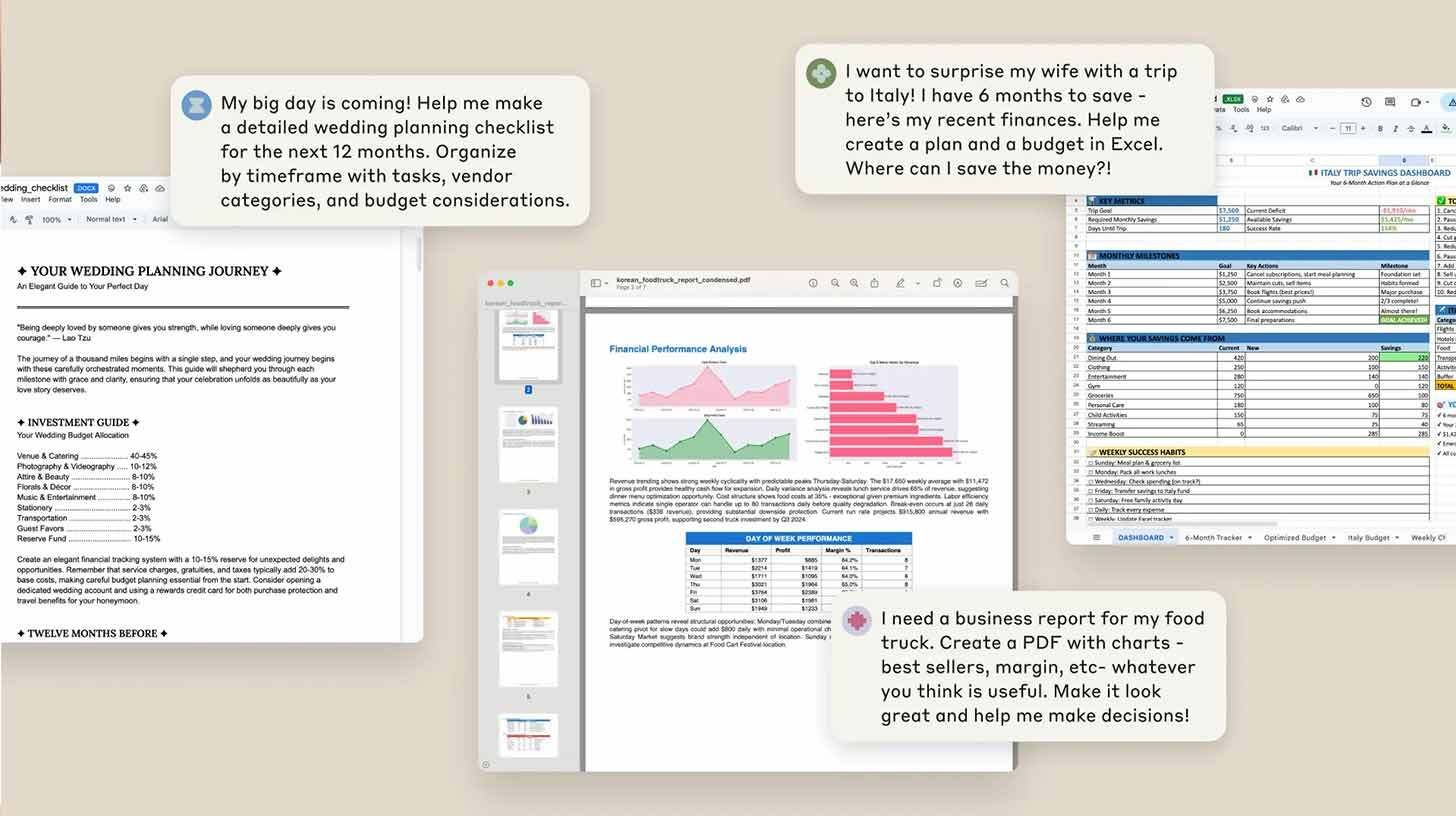
Image source: Anthropic
The Rundown: Anthropic rolled out new productivity features to Claude, including the ability to create and edit Excel sheets, Word documents, PowerPoint slides, and PDFs directly in chat, challenging OpenAI’s dominance in the workplace AI space.
The details:
Claude gains a private computing environment where it can write and run code to create files, turning data into reports with charts, analysis, and formulas.
Users can also convert between formats, turning PDF reports into slide decks or meeting notes into formatted documents.
The feature is rolling out to Max, Team, and Enterprise subscribers, with Pro users gaining access in the coming weeks.
Anthropic recommended starting with “straightforward” tasks, also warning of potential data risks with giving Claude access to the internet.
Why it matters: The AI work productivity wars are coming directly into our files, which is an absolutely massive unlock for the tools many workers use the most. Just like we’ve seen with AI coding tools, using Excel and spreadsheets is increasingly going to become a simple natural language conversation over understanding complex formulas.
QUICK HITS
🛠️ Trending AI Tools
📈 Unframe - Scale AI efficiently and securely with enterprise solutions tailored to your unique business*
📓 NotebookLM - New tools like flashcards, quizzes, and redesigned reports
🎨 Ideogram Styles - Create consistent aesthetics and stylized typography
🎆 HunyuanImage 2.1 - Tencent’s new open-source text-to-image model
*Sponsored Listing
📰 Everything else in AI today
Apple was quiet on AI updates at its hardware event, with the only interesting update being Apple Intelligence-powered live translation and health monitoring features.
ByteDance Seed introduced Seedream 4.0, a new image generation and editing model that competes with Nano Banana with 4K outputs and multimodal capabilities.
Baidu launched ERNIE X1.1, a new reasoning model that nears GPT-5 and Gemini 2.5 Pro in benchmarks with significant hallucination reduction.
Anthropic released an official report confirming issues in response quality over the last month, reiterating that the company “never intentionally degrades model quality.”
Drugmaking giant Eli Lilly announced the release of TuneLab, an AI drug discovery platform trained on over $1B worth of its proprietary research data.
Tencent open-sourced HunyuanImage 2.1, a new image generation model with high-quality realism, prompt following, and text rendering.
Meta is entering a $140M multi-year partnership with Black Forest Labs to use its AI image tech, coming on the heels of the company’s recent deal with Midjourney.
Google added new capabilities to its Veo 3 and Veo 3 Fast models, including vertical video outputs, 1080p HD resolution, and a 50% decrease in price.
COMMUNITY
🤝 Community AI workflows
Every newsletter, we showcase how a reader is using AI to work smarter, save time, or make life easier.
Today’s workflow comes from reader Chiara M. in Belgium:
"I help my students learn languages, and to improve their listening, I use original content on YouTube. I take the original bit, get the transcription, and then I get an AI version with ElevenLabs where the speed is comparable, but words are clearly pronounced... I also submit the notes of my classes into Notebook LM and get an audio version for my students to revise either in their native language if they're beginners or in the target language if they're more advanced."
How do you use AI? Tell us here.
🎓 Highlights: News, Guides & Events
Read our last AI newsletter: ‘Critterz’ tests Hollywood’s AI takeover
Read our last Tech newsletter: Apple’s ‘thinnest' iPhone’ ever debuts
Read our last Robotics newsletter: Tesla offers Musk $1T pay raise
Today’s AI tool guide: Create mini products with Nano Banana
RSVP to next workshop @4PM Friday: Build reliable AI assistants
See you soon,
Rowan, Joey, Zach, Shubham, and Jennifer — the humans behind The Rundown

Apple's 'thinnest iPhone' debuts today
Read Online | Sign Up | Advertise

Good morning, tech enthusiasts. Apple’s “awe-dropping” event kicks off today, with the debut of the new iPhone 17 lineup, including an ultra-thin iPhone 17 Air.
But with Siri upgrades and a foldable iPhone still on the horizon, will Apple give enough to woo fans, especially if Trump-era tariffs drive prices higher?
In today’s tech rundown:
Apple’s iPhone 17 event kicks off today
YouTube’s first NFL livestream is a smash
AI startup Cognition is now a $10B player
This startup wants to bury nuclear reactors underground
Quick hits on other major tech news
LATEST DEVELOPMENTS
APPLE
🍎 Apple’s iPhone 17 event kicks off today

Image source: Apple
The Rundown: Apple’s “awe-dropping” event kicks off today, and all eyes are on the rumored iPhone 17 lineup, including the ultra-thin iPhone 17 Air and upgraded Pro models sporting a redesigned camera module and possibly up to 8x optical zoom.
The details:
Apple’s event begins at 10 a.m. PT, streamed live on YouTube, Apple’s TV app, and its website, with press invited to Apple Park and the Steve Jobs Theater.
The headliner is the iPhone 17 series: iPhone 17, iPhone 17 Air (ultra-thin design), iPhone 17 Pro, and iPhone 17 Pro Max (possibly renamed Ultra).
The new iPhone 17 Air will be Apple’s slimmest phone yet, with a chassis measuring around 5.5mm.
All models are rumored to get 120Hz ProMotion displays, improved durability, and a larger standard screen (6.3 inches for regular and Pro models).
Why it matters: Joining the spotlight are also the Apple Watch Ultra 3, Series 11, SE 3, and the long-rumored AirPods Pro 3. True to Apple tradition, the September showcase is less about surprises and more about sleeker devices, tighter integration, and just enough upgrades to keep the upgrade machine humming.
YOUTUBE
🏈 YouTube’s first NFL livestream is a smash

Image source: YouTube
The Rundown: YouTube’s exclusive broadcast of last Friday’s NFL opener — Chargers vs. Chiefs live from São Paulo — pulled in 17.3M global viewers and set a new record for the most-watched live stream in YouTube history.
The details:
Google’s streaming platform set a new record when 17.3M average-minute viewers tuned in to watch, streaming globally in more than 230 countries.
The game was free to watch, sidestepping cable bundles and paywalls, as YouTube battles for sports rights against Amazon, Apple, and Netflix.
Nielsen tracked 16.2M U.S. viewers, and YouTube's numbers added 1.1M more abroad, placing the stream just shy of Netflix’s Christmas NFL doubleheader.
The pregame show mashed up NFL vets and YouTube personalities, but some viewers were squirming through a few cringe moments.
Why it matters: YouTube didn’t hit Netflix’s 24M for the Christmas doubleheader, but the stream shows the new rules of the game: tech giants are chasing exclusive sports rights, streaming to millions worldwide, and changing how fans watch football in a cloud-first world. But maybe it needs to fine-tune the pregame show a bit.
COGNITION
🦄 AI startup Cognition is now a $10B player

Image source: Cognition
The Rundown: Cognition, the AI startup behind the much-hyped coding agent Devin, announced a fresh $400M round just weeks after its Windsurf acquihire, and a valuation at a staggering $10.2B, Bloomberg reports.
The details:
While rivals like OpenAI market general-purpose assistants, Cognition has doubled down on a very specific lane: code automation at enterprise scale.
Just weeks ago, Cognition completed its high-profile acquisition of Windsurf, a move that instantly doubled its customer base.
The company now reports $73M in annual recurring revenue, a solid figure for its size but modest compared to bigger enterprise software players.
With fresh funding led by Peter Thiel’s Founders Fund, Cognition has locked in contracts with large clients such as Goldman Sachs, Palantir, and Dell.
Why it matters: With this round, Cognition joins the early-stage orbit of heavyweights like Anthropic and OpenAI. But, while those rivals pour resources into sprawling platforms and massive infrastructure, Cognition is doubling down on a single, profitable niche, aiming to prove that laser focus can sometimes beat sheer scale.
DEEP FISSION
☢️ This startup wants to bury nuclear reactors underground

The Rundown: Deep Fission, a nuclear startup with an affinity for going literally underground, just pulled off a reverse merger and netted $30M. The company’s gamble: mile-deep holes could make nuclear power cheap, safe, and scalable.
The details:
The startup specializes in 15-megawatt small modular reactors designed to be installed a mile underground in 30-inch boreholes.
Once buried, the geology acts as a containment system, presumably offering security against everything from meltdowns to sabotage.
Deep Fission’s reactors use pressurized water technology, a proven method found in nuclear submarines and many commercial plants.
The U.S. Department of Energy selected Deep Fission for the 2026 Nuclear Reactor Pilot Program, which streamlines permitting for novel designs.
Why it matters: By burying reactors in boreholes rather than sprawling campuses, Deep Fission could sidestep one of nuclear’s biggest obstacles: the optics and politics of building another Fukushima-size complex above ground. The company has a goal to bring its first pilot reactor online by 2026 and claims it can scale rapidly.
QUICK HITS
📰 Everything else in tech today
French AI startup Mistral landed a €11.7B ($13.8B) valuation in its Series C round after Dutch chip giant ASML led a €1.3B investment for an 11% stake in the company.
OpenAI execs have discussed leaving California due to regulatory pressure over its nonprofit-to-for-profit restructuring, but the company publicly denies relocation plans.
Shares of Nebius soared over 60% in after-hours trading on Monday after the Nvidia chip supplier signed a $19.4B, five-year AI cloud infrastructure deal with Microsoft.
Ant Digital Technologies, the enterprise division of China’s Ant Group, is using blockchain to tokenize more than $8.4B in energy infrastructure, Bloomberg reports.
Meta whistleblowers allege the company suppressed internal research on child safety after the Frances Haugen leaks revealed Instagram’s harms to teens.
Databricks, the San Francisco-based data and AI company, is closing a $1B Series K funding round at a valuation above $100B, backed by Andreessen Horowitz.
Xpeng plans to launch its affordable Mona series electric vehicles internationally, intensifying competition for legacy automakers like BMW and Mercedes.
SpaceX is buying wireless spectrum licenses from EchoStar for about $17B to expand its Starlink satellite network and accelerate its global 5G connectivity ambitions.
Nepal lifted its ban on social media after widespread anti-corruption protests, sparked by the ban and led by Gen Z, left at least 19 people dead.
COMMUNITY
🎓 Highlights: News, Guides & Events
Read our last AI newsletter: ‘Critterz’ tests AI’s Hollywood takeover
Read our last Tech newsletter: OpenAI to make its own AI chip
Read our last Robotics newsletter: Tesla offers Musk $1T pay raise
Today’s AI tool guide: Automate Gmail drafts with Zapier & Google Sheets
RSVP to our next workshop 9/9 @ 2 PM EST: Intro to agentic development
See you soon,
Rowan, Jennifer, and Joey—The Rundown’s editorial team

'Critterz' tests AI's Hollywood takeover
Read Online | Sign Up | Advertise

Good morning, AI enthusiasts. Years after “Critterz” was born with help from DALL-E, Chad Nelson’s and OpenAI’s AI-infused animated film is targeting a Cannes Film Festival debut — with a production schedule and budget fit for the AI era.
With AI animation heading to the big screen, the question may not be whether the tech is up for the task… But whether audiences are ready to embrace creative works that are openly using AI in the process.
In today’s AI rundown:
OpenAI backs ‘Critterz’ animated AI film
AI voice agents boost blood pressure monitoring
Automate Gmail drafts with Zapier and Google Sheets
The AI prompts that actually work for readers
4 new AI tools, community workflows, and more
LATEST DEVELOPMENTS
OPENAI
🎬 OpenAI backs ‘Critterz’ animated AI film

Image source: The Wall Street Journal
The Rundown: OpenAI is throwing its resources behind "Critterz," an AI-generated animated feature that aims to prove AI can help create strong films while cutting Hollywood production costs and timelines.
The details:
The team hopes to complete the feature in 9 months with a sub-$30M budget, compared to typical animated films requiring 3 years and much higher budgets.
OpenAI plans to provide its ‘tools and computing resources,’ including GPT-5 and image generation models, targeting a Cannes Film Festival debut in 2026.
Human actors will voice characters, with artists creating initial sketches that GPT-5 and image models transform into the final animations.
OpenAI creative specialist Chad Nelson developed the characters over three years, initially using DALL-E to create the first iteration of the film.
Why it matters: AI’s disruption of Hollywood is already underway, but it’s been more of a hush-hush integration of tools, with large swaths of both creatives and consumers still taking a strong anti-AI stance. We’d bet on Critterz successfully hitting its timeline and goals, but the audience's embrace of an openly AI film will be the tougher hurdle.
TOGETHER WITH SANA
💡AI agents that run your ops

The Rundown: Unleash your team’s potential by automating workflows across 100+ platforms with Sana Agents. Cloudberry’s CFO cut a week’s work to hours, and Piab saw ROI in weeks across 1,500 employees in 20 countries — using Sana Agents to make enterprise automation effortless and secure.
With Sana Agents, you can:
Automate workflows across 100+ apps, including email, Teams, Slack, Salesforce, and your databases
Slash operational overhead by 10-20x
Ensure enterprise-grade security with zero data leakage
AI & MEDICAL RESEARCH
🩺 AI voice agents boost blood pressure monitoring

Image source: Ideogram / The Rundown
The Rundown: A new study from Emory University tested utilizing AI voice agents to assist senior citizens in taking and reporting their blood pressure over the phone, helping both raise satisfaction and reduce costs by nearly 90%.
The details:
Conversational AI agents reached 85% of the 2,000 patients by phone, with 60% successfully taking blood pressure readings in English or Spanish.
Agents automatically escalated cases to nurses when readings exceeded thresholds or patients reported symptoms like chest pain or dizziness.
The AI obtained readings from 1,939 patients with outdated records, boosting quality scores from 1 to 4 stars while cutting costs by 88.7% vs. human nurses.
The average satisfaction score was above 9/10, despite researchers expecting resistance to automated healthcare interactions from older demographics.
Why it matters: This study hits at the center of a few trends: AI’s coming role in healthcare (and eldercare in particular), and the continued growth of voice agents in customer service. In the future, adding an AI vision tool like Gemini Live to walk seniors through processes will bring remote patient care to a new high-tech level.
AI TRAINING
📧 Automate Gmail drafts with Zapier and Google Sheets
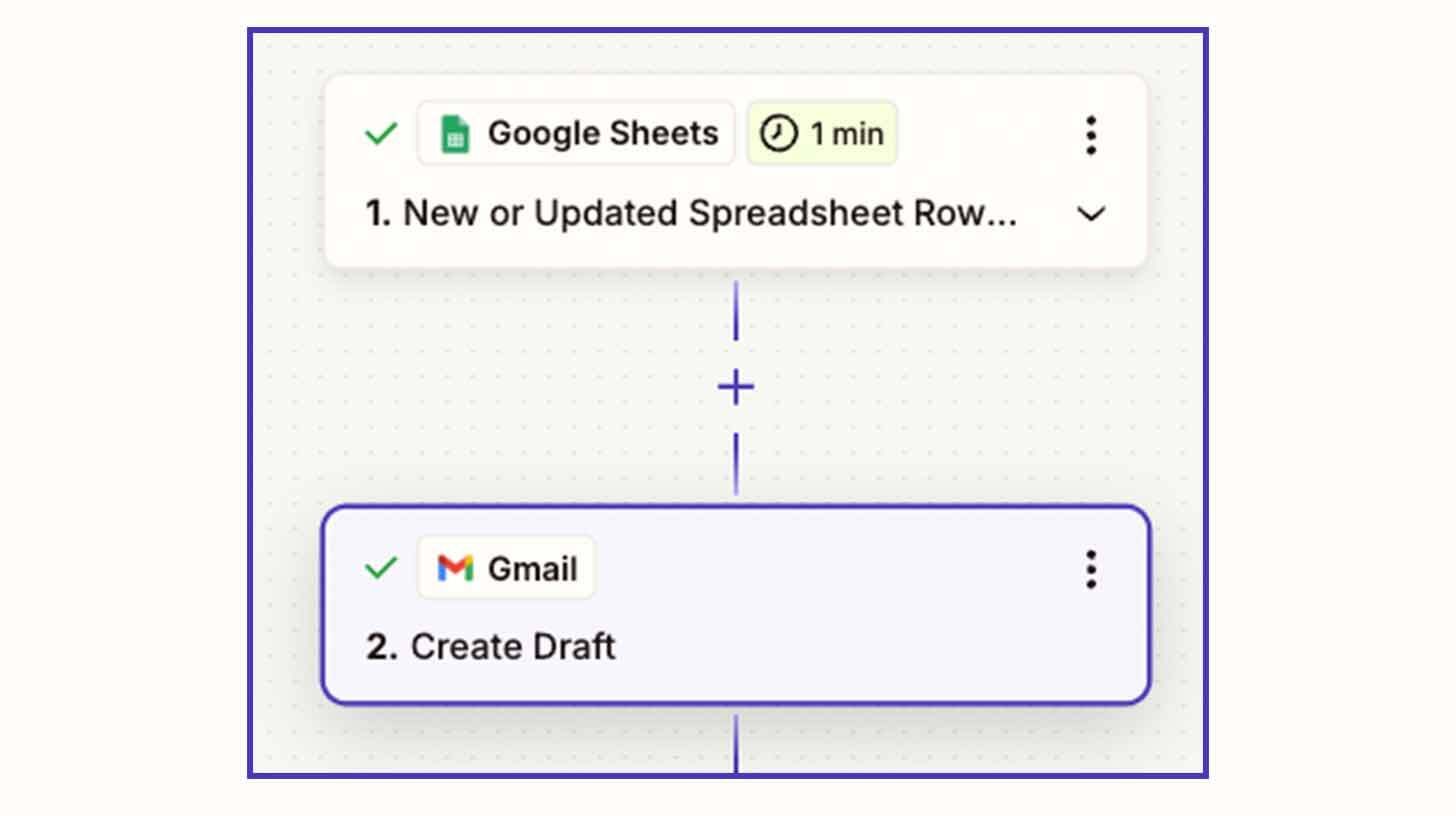
The Rundown: In this tutorial, you will learn how to automatically create Gmail drafts from Google Sheets data using Zapier, turning hours of repetitive email work into a single automated workflow that runs whenever you add new contacts.
Step-by-step:
Open Zapier.com and click "Create a Zap" — this fresh start gives you full control over each step
Set up your Trigger: Select Google Sheets → "New Spreadsheet Row" event → Connect your Google account and pick your spreadsheet (always hit "Refresh & Find New Records" to catch the latest data)
Create your Action: Choose Gmail → "Create Draft" (not auto-send, so you can review) → Connect Gmail and set up your template with dynamic fields from the sheet
Configure the draft: Map the "To" field to the email column, add your subject line, use HTML for body copy to embed links, and format professionally
Test by adding new rows to your sheet and clicking "Run", drafts will instantly appear in Gmail, then save and name your Zap
Pro Tip: The simplest workflows often save you the most time — this Zap is a huge time-saver in handling email communications without burning hours in Gmail.
PRESENTED BY FIN
🏗️ Building Frontier AI Products

The Rundown: Building prototypes with AI has never been easier. But reliably delivering quality products? That's where most teams hit a wall. Join AI experts from Intercom's Fin AI Group and industry leaders for an unscripted deep dive into what it really takes to build frontier AI products.
This exclusive event covers:
Insights from experienced AI leaders on what's working and what's breaking
How to design frontier AI products through technical deep-dives and case studies
Real insights from Intercom's Fin AI Group on building production AI
COMMUNITY CORNER
🙌 The AI prompts that actually work for readers
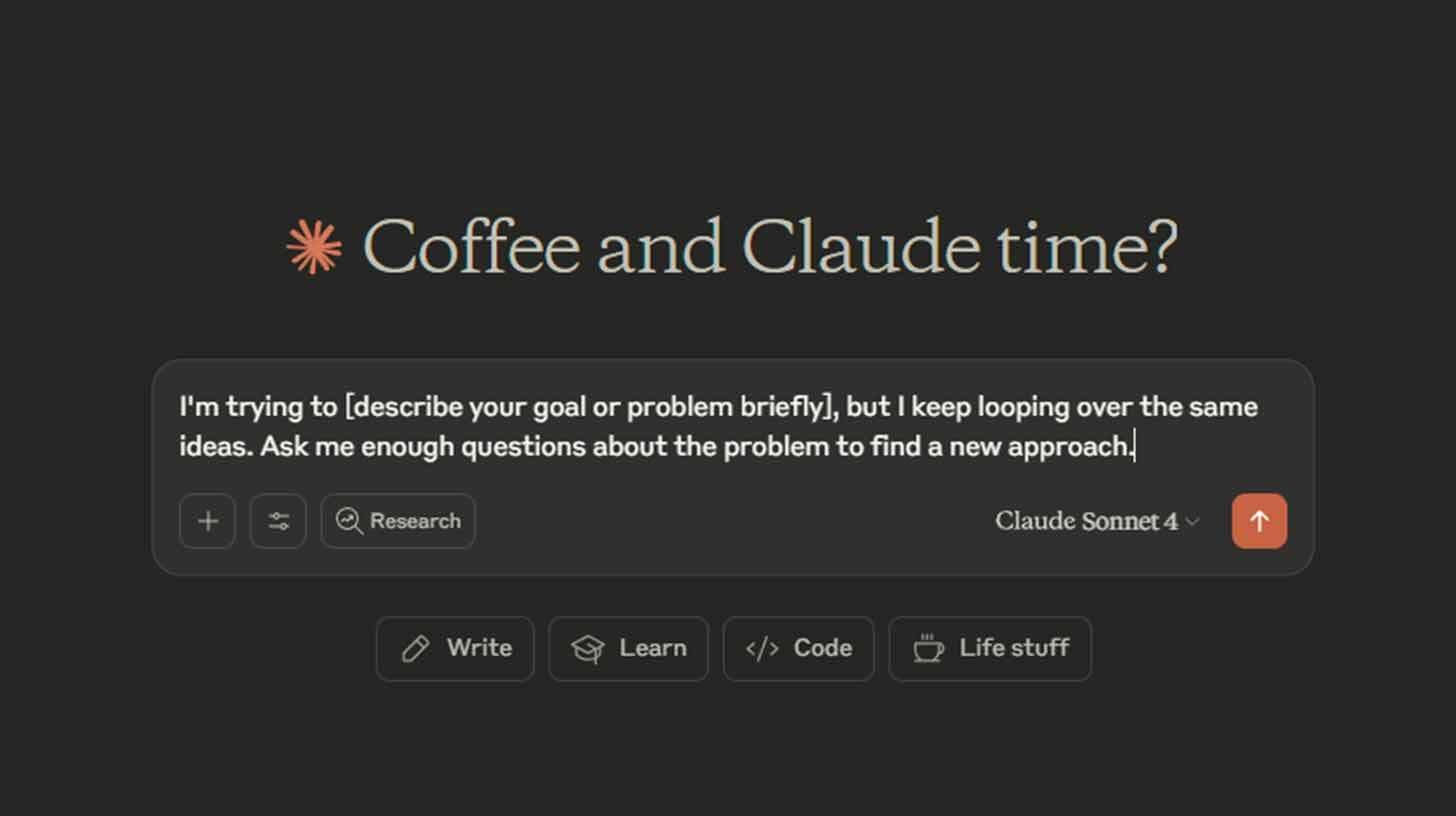
Image source: @Itslipsadas on X
The Rundown: We asked the AI community on X to share the AI prompts that actually transformed their work or life, with some of our favorite and most insightful submissions featured below.
The details:
@ralphbrooks created a board of advisors prompt asking personas for advice, with an AI Elon Musk providing first-principles analysis for unexpected insights.
@Xyster fed entire company histories, financials, and competitor research into one mega-prompt, then asks for concrete 1, 3, and 6-month action plans.
@MrXSeek flipped the script by asking the model to write its own optimal prompt first, then used that refined version to complete the actual task.
@Itslipsadas’ prompt pushes deeper into goals by having AI pose questions to break through circular thinking patterns.
Why it matters: The common thread? Some of the best results come from prompts that force models to think systematically rather than just respond. Plus, as @MrXSeek points out, today’s AI models are great prompt writers — have it help spin up your next detailed prompt before starting a task.
QUICK HITS
🛠️ Trending AI Tools
🧊 Tripo 3.0 - Turn text or images into production-ready 3D assets
🎥 Capcut AI Suite - Create, edit, or remix content with AI
🔎 AI Mode - Google’s AI-powered search, now available in new languages
🗣️ Qwen3-ASR - Alibaba’s new speech recognition model
📰 Everything else in AI today
Exclusive AI Rippling x Cursor Event, Sept 16: When every hire is a 10x hire — Parker Conrad & Michael Truell reveal the hyper-scale playbook. Save your seat.*
Anthropic published a blog endorsing California’s SB 53 bill, which would require AI companies to publish AI safety frameworks and transparency reports.
Google introduced learning tools to NotebookLM, including customizable flashcards and quizzes, redesigned reports, and interactive notebooks for academic textbooks.
Alibaba released Qwen3-ASR, a speech recognition model with strong accuracy and the ability to handle multilingual voices, singing, accents, and text prompts.
Cognition announced a new $400M fundraise that brings the Devin-maker’s valuation to $10.2B, coming on the heels of the company’s acquisition of Windsurf.
Google expanded AI Mode to new languages, including Hindi, Indonesian, Japanese, Korean, and Brazilian Portuguese, to provide locally relevant search experiences.
*Sponsored Listing
COMMUNITY
🤝 Community AI workflows
Every newsletter, we showcase how a reader is using AI to work smarter, save time, or make life easier.
Today’s workflow comes from reader Joshua R. in Newburyport, MA:
"I turn life stories into full-fledged songs in hours — not weeks — by teaming up with AI. ChatGPT helps me craft vivid, personal lyrics and develop song concepts, while Suno transforms those words into studio-quality tracks with instruments, vocals, and arrangements. It’s like having a hit songwriter and a full band on call 24/7, letting me capture inspiration the moment it strikes."
How do you use AI? Tell us here.
🎓 Highlights: News, Guides & Events
Read our last AI newsletter: OpenAI cracks AI’s hallucination code
Read our last Tech newsletter: OpenAI to make its own AI chip
Read our last Robotics newsletter: Tesla offers Musk $1T pay raise
Today’s AI tool guide: Automate Gmail drafts with Zapier & Google Sheets
RSVP to our next workshop 9/9 @ 2 PM EST: Intro to agentic development
See you soon,
Rowan, Joey, Zach, Shubham, and Jennifer—the humans behind The Rundown

Tesla offers Musk $1 trillion pay raise
Read Online | Sign Up | Advertise

Good morning, robotics enthusiasts. Tesla is dangling a jaw-dropping trillion-dollar pay package to keep Elon Musk in the driver’s seat — but the road ahead isn’t about cars.
Musk says Tesla’s future isn’t electric vehicles; it’s an army of robots. The big question is, are we seeing the rise of the world’s boldest robotics empire, or just another Muskian mirage?
In today’s robotics rundown:
Tesla offers Musk $1T for robot revolution
UCL and Google DeepMind’s RobotBallet
Alibaba-backed X Square nabs $100M
Bubble-powered bots could replace needles
Quick hits on other robotics news
LATEST DEVELOPMENTS
TESLA
🤑 Tesla offers Musk $1T for robot revolution

Image source: Molly Riley/Wikimedia Commons
The Rundown: Tesla’s board just crafted a pay package that could make Elon Musk the world’s first trillionaire, but only if he delivers on some staggering milestones, including mass-producing a million robotaxis and a million Optimus humanoids.
The details:
Tesla’s regulatory filing details a pay package split into 12 share tranches, granting Musk awards only if he hits milestones within set timelines.
To unlock the payout, Tesla must hit a $2T market valuation and deliver 20M vehicles early on; a steep climb since Tesla delivered under 2M cars last year.
Musk, already the world’s wealthiest person, must stay with Tesla for at least seven-and-a-half years to unlock any stock from the package.
The package is slated for a shareholder vote at Tesla’s annual meeting on November 6.
Why it matters: Musk claims humanoids could one day make up 80% of Tesla’s value, recasting the EV giant as a robotics powerhouse. Tesla’s stock may have wobbled, but the board seems undeterred, approving a share-only pay package as audacious as the moonshot it’s meant to fuel.
UCL/GOOGLE DEEPMIND
🩰 UCL and Google DeepMind’s RoboBallet
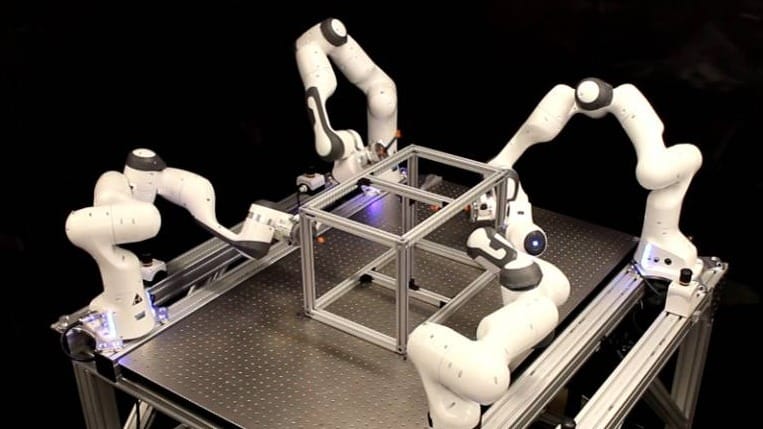
Image source: UCL
The Rundown: A joint team from the University College of London (UCL), Google DeepMind, and Alphabet-owned Intrinsic unveiled RoboBallet, a groundbreaking AI algorithm that enables fleets of robotic arms to move in concert across factory floors.
The details:
RoboBallet uses graph neural networks and reinforcement learning to coordinate robotic arms, treating each robot and object as nodes in a network.
It lets teams of robots plan synchronized movements and task assignments in seconds rather than hours, far surpassing manual programming approaches.
UCL says the system avoids collisions and optimizes each robot's path and timing for harmony across the workspace.
The algorithm supports scalability, handling up to eight arms and 40 tasks, with plans generated hundreds of times faster than real time.
Why it matters: This leap in robotic coordination brings manufacturers a new level of flexibility, replacing tedious manual programming with real-time automation, enabling lines to reconfigure and respond to change with minimal downtime. The goal: factory layouts evolve faster, production agility rises, and the process becomes more adaptive.
X SQUARE ROBOT
🤖 Alibaba-backed X Square nabs $100M
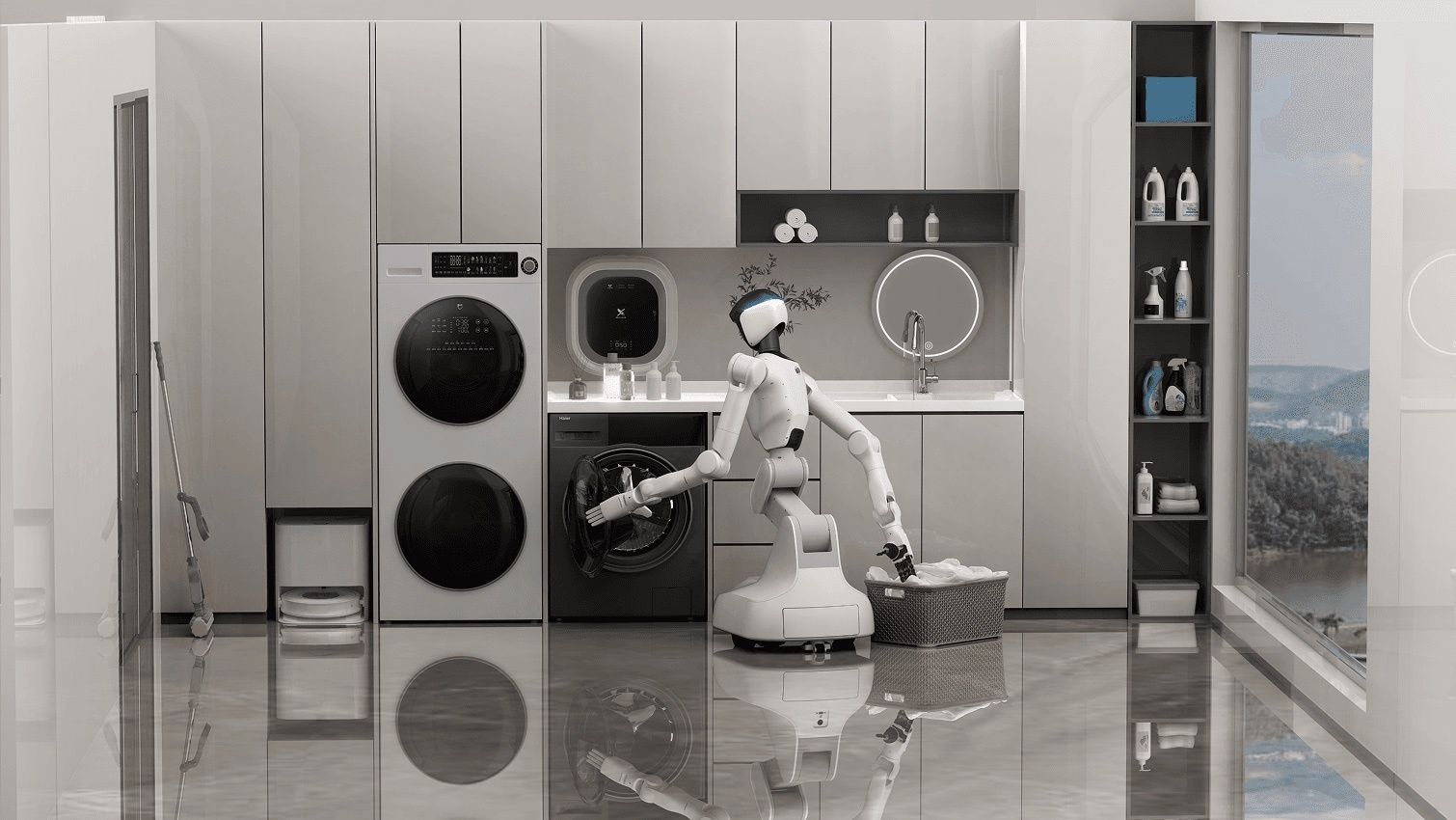
Image source: X Square Robot
The Rundown: China’s X Square Robot just snagged another $100M to chase its vision of putting robots in homes before Tesla and Figure. Backed by Alibaba Cloud, the Shenzhen startup has raised $280M in under two years.
The details:
The startup recently unveiled Wall-OSS, an open-source embodied AI foundation model, claimed to be the first specifically for robotics.
Its newly unveiled Quanta X2 robot features mop-head attachments for 360-degree cleaning and dexterous hands capable of sensing subtle pressure shifts.
X Square Robot projects that “robotic butlers” could be a practical reality within five years.
But unlike Unitree, the company currently has no mass-market product, and pricing will vary depending on each robot’s use case.
Why it matters: X Square Robot aims to make humanoids more accessible and plans to cut costs to $10K within five years. Plus, the speed of its fundraising is a sign of just how hot humanoids have become, with Chinese startups increasingly challenging Tesla, Agility Robotics, and 1X in the robotics race.
ROBOT RESEARCH
🫧 Bubble-powered bots could replace needles

Image source: Ideogram/The Rundown
The Rundown: Forget rockets or rotors — the next leap in robotics might ride on bubbles. A U.S.–Chinese team has turned cavitation, or the violent collapse of liquid bubbles, into tiny, high-flying robots capable of piercing the skin barrier.
The details:
The microbots, dubbed “jumpers,” harness cavitation energy to leap nearly five feet, all without bulky external power sources.
Detailed in Science, the system transforms a chaotic fluid effect into a built-in propulsion engine.
Potential applications include needle-free drug delivery, allowing microbots to pierce tissue and deliver medicine directly where needed.
Beyond medicine, they could benefit industrial processes and micro-scale exploration of space.
Why it matters: Currently in early stages, this project turns a destructive natural phenomenon into a controllable engine for micro-robots. By enabling precise movement at microscopic scales without needles or machinery, it could unlock safer medical treatments and entirely new ways to explore environments humans can’t reach.
QUICK HITS
📰 Everything else in robotics today
Uber and Momenta, a Chinese autonomous driving startup, will begin testing Level 4 robotaxis in Munich in 2026, their first public launch in continental Europe.
Agility Robotics built a whole-body control foundation model for its humanoid, Digit, which works as a "motor cortex" to coordinate safe, stable movement.
Detroit-based Borg Robotics released the first-ever demo of its fully autonomous wheeled humanoid, Borg 01.
NexLawn, a Dreame sub-brand, unveiled the Master X Series Concept at IFA 2025 in Berlin, billed as the first robotic mower with a fully functional mechanical arm.
SwitchBot launched a pair of soft-bodied companion robots, Noa and Niko, which use AI to recognize family members, express emotions, and learn routines.
NOAA deployed five small C-Star uncrewed surface vehicles off the U.S. Virgin Islands to gather real-time ocean data to improve hurricane research and forecasting.
Eufy’s new MarsWalker uses four robotic arms and a drive-track system to autonomously carry a docked robot vacuum up and down stairs.
Washington State University researchers developed a robot that uses soft silicone grippers and a fan to detect and gently pick strawberries in dense foliage.
COMMUNITY
🎓 Highlights: News, Guides & Events
Read our last AI newsletter: OpenAI cracks AI’s hallucination code
Read our last Tech newsletter: OpenAI to make its own AI chip
Read our last Robotics newsletter: Apple loses robotics lead to Meta
Today’s AI tool guide: Automate web monitoring with AI agents
RSVP to our next workshop 9/9 @ 2 PM EST: Intro to agentic development
See you soon,
Rowan, Jennifer, and Joey—The Rundown’s editorial team

OpenAI cracks AI's hallucination code
Read Online | Sign Up | Advertise

Good morning, AI enthusiasts. Every AI user has experienced it: an LLM’s supremely confident answers that turn out to be completely made up. Now, OpenAI thinks they've finally cracked why chatbots can't stop hallucinating.
The company’s latest research paper suggests that solving AI hallucinations might come down to something surprisingly simple — teaching models that it's okay to say "I don't know."
In today’s AI rundown:
OpenAI reveals why chatbots hallucinate
Anthropic agrees to $1.5B author settlement
Automate web monitoring with AI agents
OpenAI’s own AI chips with Broadcom
4 new AI tools, community workflows, and more
LATEST DEVELOPMENTS
AI RESEARCH
🔬 OpenAI reveals why chatbots hallucinate

Image source: Gemini / The Rundown
The Rundown: OpenAI just published a new paper arguing that AI systems hallucinate because standard training methods reward confident guessing over admitting uncertainty, potentially uncovering a path towards solving AI quality issues.
The details:
Researchers found that models make up facts because training test scoring gives full points for lucky guesses but zero for saying "I don't know."
The paper shows this creates a conflict: models trained to maximize accuracy learn to always guess, even when completely uncertain about answers.
OAI tested this theory by asking models for specific birthdays and dissertation titles, finding they confidently produced different wrong answers each time.
Researchers proposed redesigning evaluation metrics to explicitly penalize confident errors more than when they express uncertainty.
Why it matters: This research potentially makes the hallucination problem an issue that can be better solved in training. If AI labs start to reward honesty over lucky guesses, we could see models that know their limits — trading some performance metrics for the reliability that actually matters when systems handle critical tasks.
TOGETHER WITH CONCIERGE
👋 Your brand's AI answer engine

The Rundown: Today’s SaaS buyers use AI every day to answer their questions, and have no patience for a scavenger hunt. Concierge is a Perplexity-style answer engine, trained on your company, that lives on your website and delivers accurate, personalized responses to ultra-specific questions.
Modern brands use Concierge to:
Handle any buyer question (no matter how technical) with advanced RAG on your sources & media
Control and visibility over every conversation, with guardrails and sentiment analysis
Build trust with website visitors before they are willing to commit to a demo
Use Concierge to turn every question into a conversation — and every conversation into revenue.
ANTHROPIC
💰 Anthropic agrees to $1.5B author settlement

Image source: Ideogram / The Rundown
The Rundown: Anthropic just agreed to pay at least $1.5B to settle a class-action lawsuit from authors, marking the first major payout from an AI company for using copyrighted works to train its models.
The details:
Authors sued after discovering Anthropic downloaded over 7M pirated books from shadow libraries like LibGen to build its training dataset for Claude.
A federal judge ruled in June that training on legally purchased books constitutes fair use, but downloading pirated copies violates copyright law.
The settlement covers approximately. 500,000 books at $3,000 per work, with additional payments if more pirated materials are found in training data.
Anthropic must also destroy all pirated files and copies as part of the agreement, which doesn’t grant future training permissions.
Why it matters: This precedent-setting payout is the first major resolution in the many copyright lawsuits outstanding against the AI labs — though the ruling comes down on piracy, not the “fair use” of legal texts. While $1.5B sounds like a hefty sum at first glance, the company’s recent $13B raise at a $183B valuation likely softens the blow.
AI TRAINING
📝 Automate web monitoring with AI agents
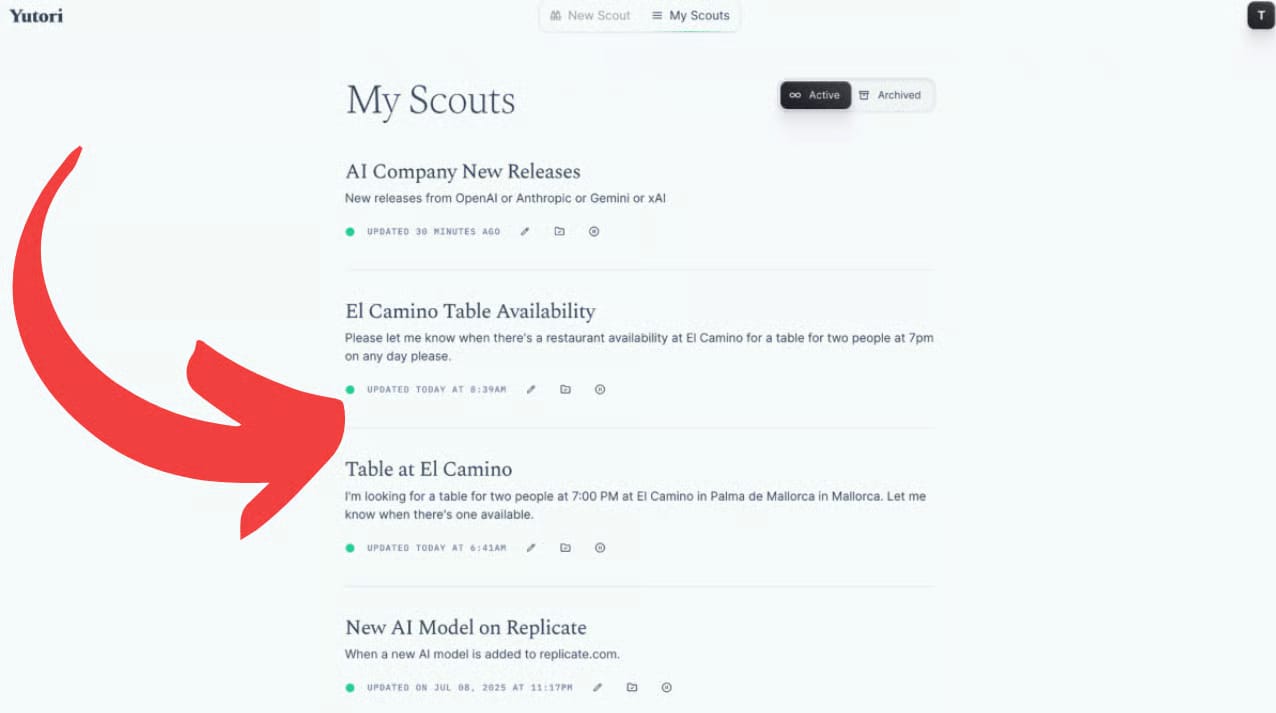
The Rundown: In this tutorial, you’ll learn how to use Yutori Scouts, an AI web monitoring agent that watches for specific updates online and alerts you via email. No more refreshing pages or manually checking for changes.
Step-by-step:
Enter your request in the Yutori homepage input box (e.g., “New releases from OpenAI or Anthropic or Gemini or xAI”) to create your Scout
Choose how often you want alerts — instant, daily, or weekly — then click Start scouting to activate it
View and manage all your active Scouts from the “My Scouts” dashboard, where you can edit, pause, or delete them anytime
Check reports sent to your email or in-app, each with clear findings and a direct link to the source for quick action
Pro tip: Use Scouts for time-sensitive opportunities like reservations, product restocks, or industry news, and pair with automations to get updates.
PRESENTED BY POPCORN
🎬 Agentic workflows now auto-create movies in minutes

The Rundown: Popcorn's agentic product transforms how movies are made. Drop one conceptual prompt and get a complete 1-3-minute movie with narrative arcs, dialogue, lip-sync, soundtrack, and sound effects.
Unlike tools that just produce individual shots, Popcorn handles:
The entire creative process, from ideation to agentic production and auto-editing
Creation of full narrative movies from a single prompt
Instant style, genre, and narrative changes
Consistent character, props, and sets libraries
Try Popcorn and create your first movie for free with code AGENTIC.
OPENAI
🔧 OpenAI’s own AI chips with Broadcom

Image source: Ideogram / The Rundown
The Rundown: OpenAI will begin mass production of its own custom AI chips next year through a partnership with Broadcom, according to a report from the Financial Times — joining other tech giants racing to reduce dependence on Nvidia's hardware.
The details:
Broadcom's CEO revealed a mystery customer committed $10B in chip orders, with sources confirming OpenAI as the client planning internal deployment only.
The custom chips will help OpenAI double its compute within five months to meet surging demand from GPT-5 and address ongoing GPU shortages.
OpenAI initiated the Broadcom collaboration last year, though production timelines remained unclear until this week's earnings announcement.
Google, Amazon, and Meta have already created custom chips, with analysts expecting proprietary options to continue siphoning market share from Nvidia.
Why it matters: The top AI labs are all pushing to secure more compute, and Nvidia’s kingmaker status is starting to be clouded by both Chinese domestic chip production efforts and tech giants bringing custom options in-house. Owning the full stack can also eventually help reduce OAI’s massive costs being incurred on external hardware.
QUICK HITS
🛠️ Trending AI Tools
📱 EmbeddingGemma - Google’s open-source, on-device embedding model
❤️ Lovable Voice Mode - Code and build apps with voice commands
🤖 Qwen3-Max - Alibaba’s massive new 1T parameter model
💄 Higgsfield Ads 2.0 - Create realistic custom AI product placement ads
📰 Everything else in AI today
MongoDB.local NYC, Sep. 17 — Unlock new possibilities for your data in the age of AI. Register here and use code SOCIAL50 to save 50%.*
Alibaba introduced Qwen3-Max, a 1T+ model that surpasses other Qwen3 variants, Kimi K2, Deepseek V3.1, and Claude Opus 4 (non-reasoning) across benchmarks.
OpenAI revealed that it plans to burn through $115B in cash over the next four years due to data center, talent, and compute costs, an $80B increase over its projections.
French AI startup Mistral is reportedly raising $1.7B in a new Series C funding round, which will make it the most valuable company in Europe with a $11.7B valuation.
OpenAI Model Behavior lead Joanne Jang announced OAI Labs, a team dedicated to “inventing and prototyping new interfaces for how people collaborate with AI.”
A group of authors filed a class action lawsuit against Apple, accusing the tech giant of training its OpenELM LLMs using a pirated dataset of books.
*Sponsored Listing
COMMUNITY
🤝 Community AI workflows
Every newsletter, we showcase how a reader is using AI to work smarter, save time, or make life easier.
Today’s workflow comes from reader Avi F. in Portland, ME:
"I plugged my 100+ page health insurance coverage document into a custom GPT and asked it how I can use my coverage and what things cost. It turns out I have free, unlimited therapy via telehealth, and have been able to find answers hidden in otherwise nebulous language. Before AI, I would have had to call, which could take over an hour to get to the right person through customer service, and sometimes they wouldn't even know the answer. This took about five minutes to build and then just a few minutes to ask and get answers."
How do you use AI? Tell us here.
🎓 Highlights: News, Guides & Events
Read our last AI newsletter: OpenAI takes on LinkedIn with jobs platform
Read our last Tech newsletter: OpenAI to make its own AI chip
Read our last Robotics newsletter: Apple loses robotics lead to Meta
Today’s AI tool guide: Automate web monitoring with AI agents
RSVP to our next workshop 9/9 @ 2 PM EST: Intro to agentic development
See you soon,
Rowan, Joey, Zach, Shubham, and Jennifer — the humans behind The Rundown

OpenAI to make its own AI chip
Read Online | Sign Up | Advertise

Good morning, tech enthusiasts. OpenAI is set to enter the silicon game. By 2026, the ChatGPT maker will ditch Nvidia GPUs for its own custom chip.
Following Google, Amazon, and Meta, one question looms: could bespoke silicon decide the leaders of the next AI wave, and who falls behind?
In today’s tech rundown:
OpenAI to design its own AI chip
Google dodges breakup in antitrust case
AI biotech unicorn taps nature for new drugs
AI startup Sierra joins the $10B club
Quick hits on other tech news
LATEST DEVELOPMENTS
OPENAI
🔥 OpenAI to design its own AI chip
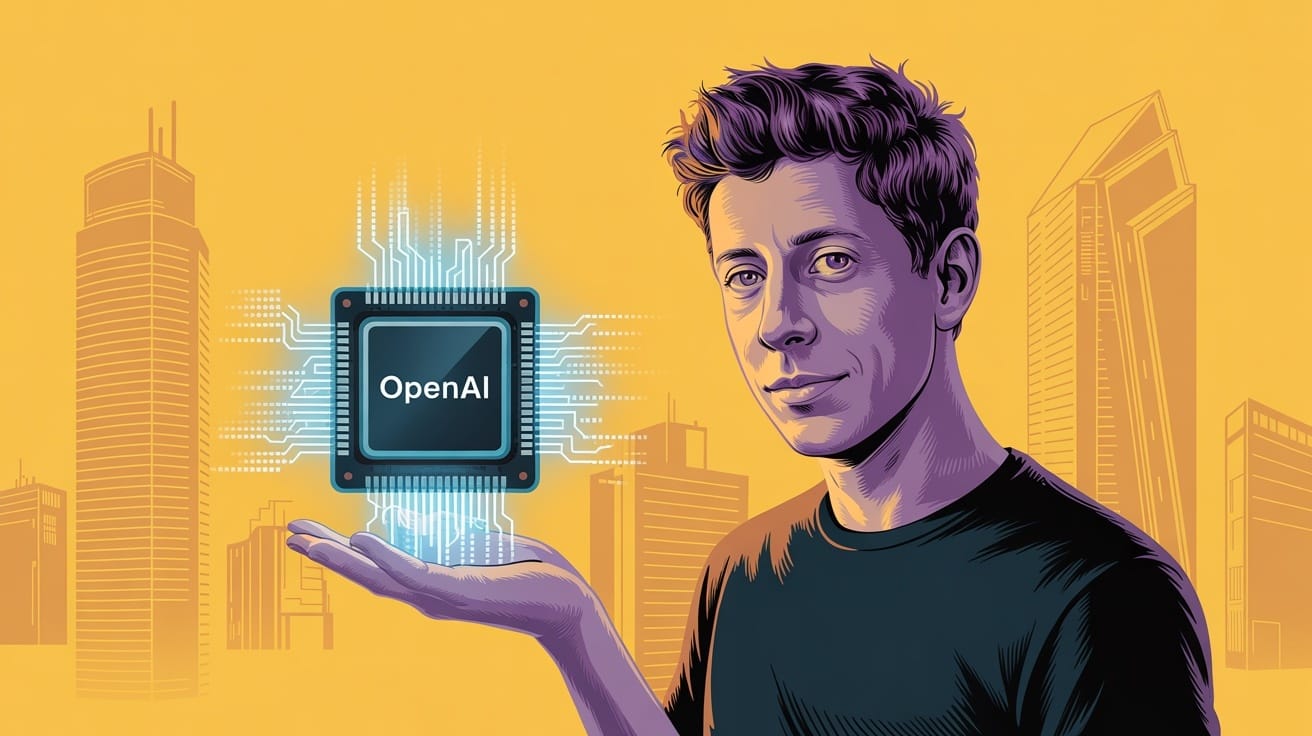
Image source: Ideogram/The Rundown
The Rundown: OpenAI is reportedly stepping into the world of custom hardware by partnering with Broadcom to design and manufacture its own AI chip, with first units expected to roll out in 2026.
The details:
The project aims to reduce OpenAI’s heavy reliance on Nvidia’s GPUs, as training and running models like GPT-5 require massive computing capacity.
The production of the chips will be handled in partnership with Broadcom, a leader in custom silicon, and TSMC, one of the world’s top chip manufacturers.
Broadcom’s CEO confirmed a $10B order likely from OpenAI, which could potentially shift market power away from Nvidia.
The new chips will support OpenAI’s fleet of AI models, helping control infrastructure costs and likely freeing the company to innovate more quickly.
Why it matters: For now, the chip will power only OpenAI’s own operations, following Google, Amazon, and Meta in developing custom silicon for large-scale AI. Bespoke hardware delivers higher performance per dollar and per watt, which could be a potential game-changer for OpenAI in the AI arms race.
TOGETHER WITH AUGMENT CODE
👋 Meet Auggie CLI
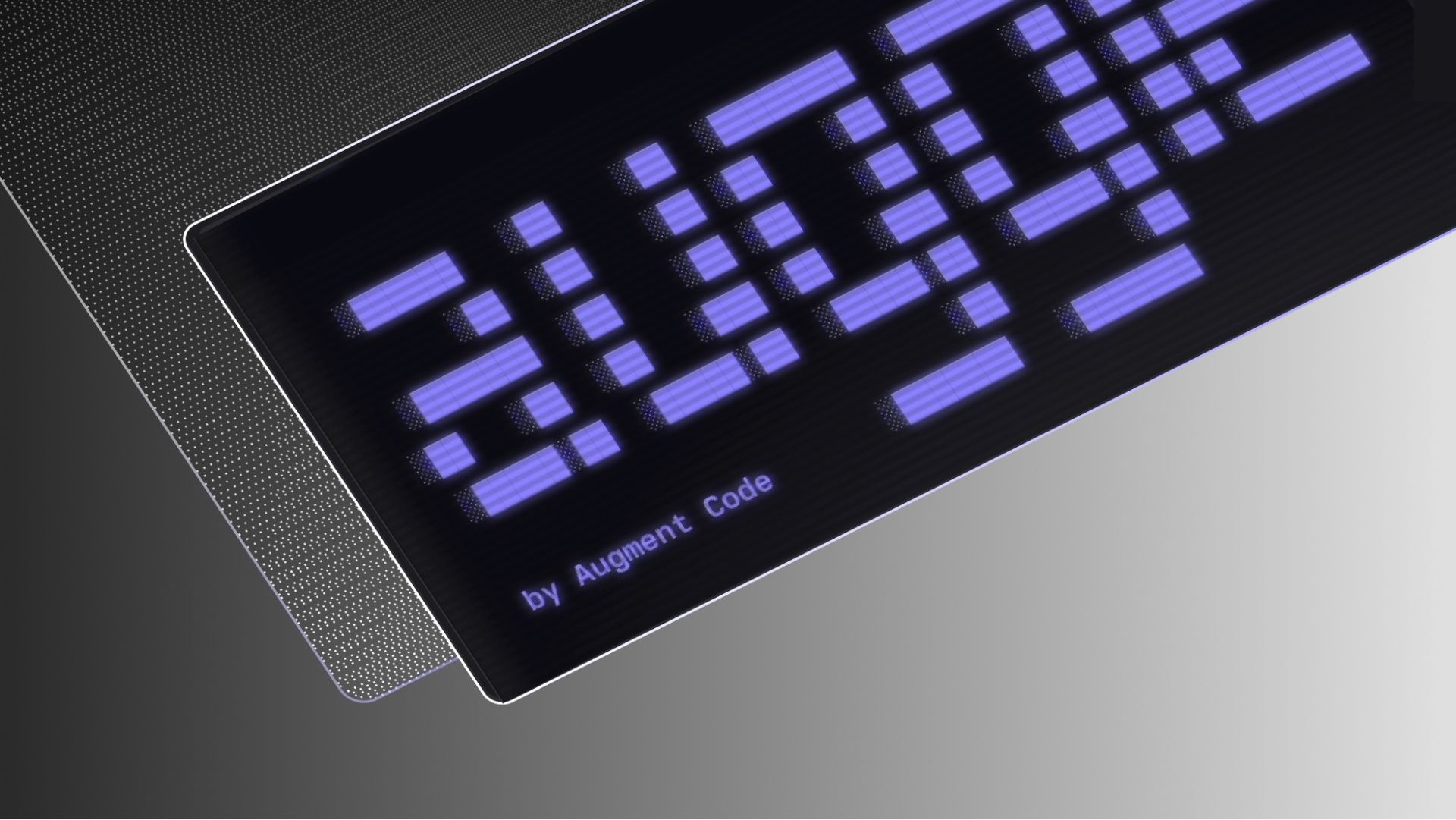
The Rundown: Augment Code is bringing the power of its AI coding agent and context engine right to your terminal with Auggie CLI, now generally available.
From standalone terminal sessions to every piece of your dev stack, with Auggie CLI, you can:
Build features and debug issues
Get instant feedback suggestions for your PRs and builds
Triage customer issues and alerts from your observability stack
Build with the AI coding platform that gets you, your team, and your code
⚖️ Google dodges breakup in antitrust case

Image source: Wikimedia Commons
The Rundown: Google dodged the nuclear option. A federal judge declined to force a breakup or sell off Chrome, letting the tech giant’s core empire stay intact. Instead, regulators are targeting tighter rules on exclusive search deals.
The details:
Judge Amit Mehta ruled that Google unlawfully maintained dominance through multi-year distribution deals with device makers like Apple and Samsung.
Google is now barred from signing exclusive contracts for key apps and must share some search data with competitors.
The court stopped short of ordering Google to divest Chrome browser or Android, citing potential disruption to consumers.
The remedies extend beyond search to generative AI, with strict limits on Google’s use of exclusive agreements for distributing products like Gemini.
Why it matters: Google is breathing a sigh of relief. Even though the $2 trillion tech giant is barred from exclusive contracts for Search, Chrome, Assistant, and Gemini, the court stopped short of more drastic measures. Shares of parent company Alphabet jumped about 6% in after-hours trading yesterday.
ENVEDA
🦄 AI biotech unicorn taps nature for new drugs
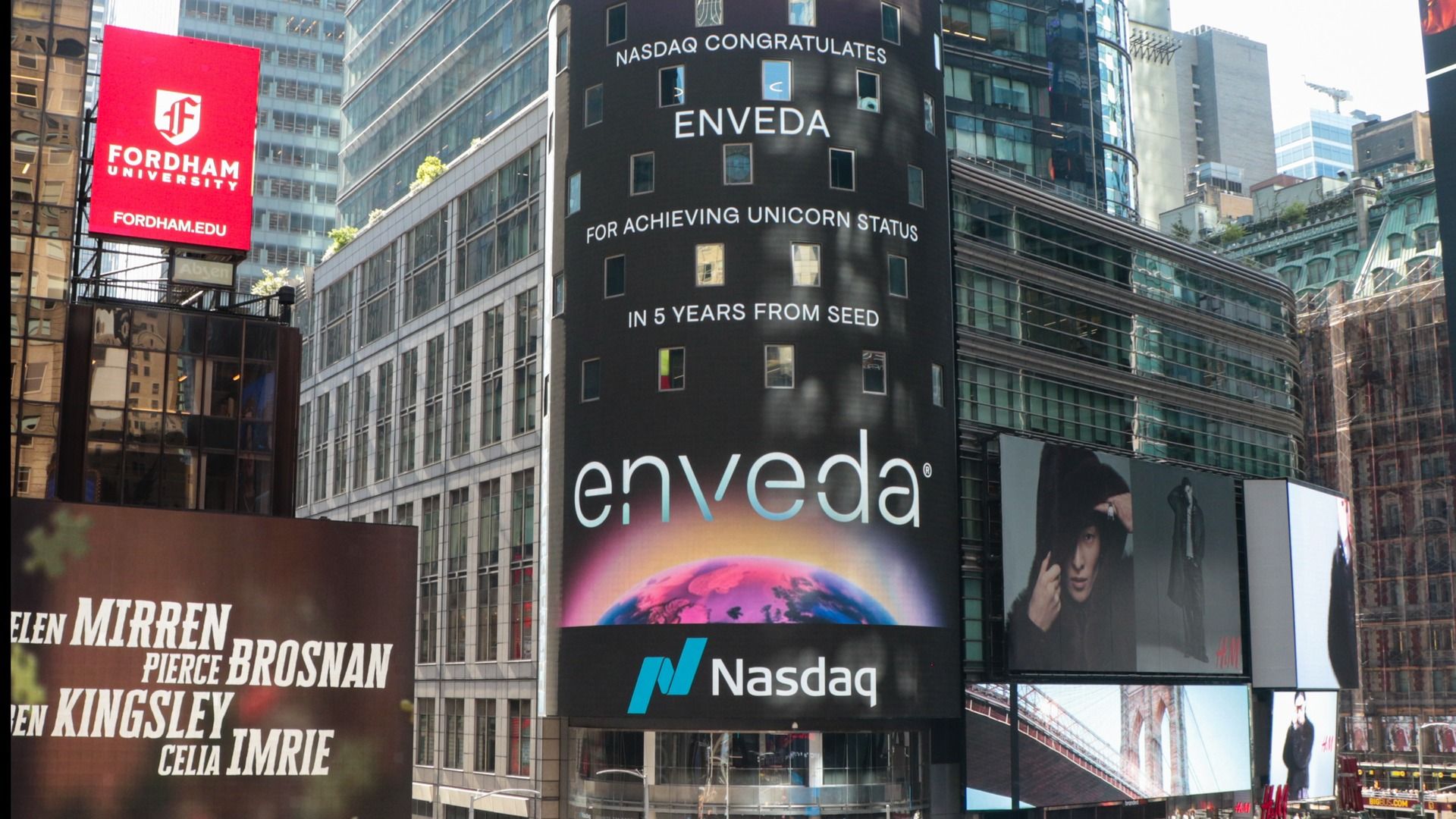
Image source: Enveda/X
The Rundown: Enveda, biotech’s newest unicorn, is transforming drug discovery by combining AI with the untapped chemical diversity of natural products, a strategy that sets it apart from traditional synthetic-focused biotech, Bloomberg reports.
The details:
Enveda’s platform analyzes thousands of complex plant-based compounds to identify novel bioactive molecules with therapeutic potential.
Founded in 2019 in Boulder, Colorado, Enveda has already raised $150M in Series D funding, pushing its valuation well above $1B.
Its platform organizes the world’s largest searchable library of plant-derived compounds, linking 38K plants to 12K human diseases and symptoms.
Its lead drug candidate, ENV-294, is a novel molecule for atopic dermatitis that Enveda says shows strong safety results in early clinical studies.
Why it matters: Enveda isn’t your typical biotech. Valued at unicorn status, it’s betting big on a mash-up of nature’s evolutionary genius and the power of AI. Its in-house model, PRISM, is trained on 1.2 billion mass spectra and can identify promising molecules long before competitors even know they exist.
SIERRA
🤑 AI startup Sierra joins the $10B club

Image source: Katelyn Tucker/ Slava Blazer Photography/Wikimedia Commons
The Rundown: AI customer service agent startup Sierra, co-founded by former Salesforce co-CEO Bret Taylor, just landed a $350M funding round that pushed its valuation to a staggering $10B.
The details:
Founded by Taylor and Google veteran Clay Bavor, Sierra develops and deploys AI agents designed to automate customer service tasks.
Started in early 2024, the startup signed up hundreds of major customers like SoFi and Ramp in just 18 months of business.
Its platform utilizes large language models from multiple providers but does not offer rule-based workflows or custom NLU.
Sierra now claims over 20% of its customers generate over $10B in annual revenue, with its reach in sectors like retail and healthcare quickly expanding.
Why it matters: Sierra has now joined an exclusive club of AI startups — including OpenAI, Anthropic, and xAI — valued at or above $10B. With major investor backing, Sierra’s bet on multi-purpose AI agents could shape up to be one of the flagship stories of enterprise automation in the generative AI era.
QUICK HITS
📰 Everything else in tech today
Instagram is finally releasing a dedicated iPad app that defaults to the Reels feed, ending years of complaints about the lack of a tablet-native experience.
French AI startup Mistral AI is close to finalizing a €2B ($2.3B) funding round that will raise its valuation to $14B, making it one of Europe’s most valuable tech companies.
Warner Bros. Discovery filed a copyright infringement lawsuit against AI image generator Midjourney, alleging unauthorized use of the studio's iconic characters.
Stripe is launching a new blockchain firm, Tempo, to handle high-volume stablecoin transactions for global payments.
Waymo has become the first autonomous vehicle service cleared to operate at a major California airport, with robotaxi rides to and from San Jose launching this year.
The U.S. Patent Office blocked Elon Musk’s brain chip company Neuralink from trademarking “Telepathy” and “Telekinesis,” citing prior claims by another applicant.
COMMUNITY
🎓 Highlights: News, Guides & Events
Read our last AI newsletter: OpenAI takes on LinkedIn with jobs platform
Read our last Tech newsletter: Japan’s yen just went digital
Read our last Robotics newsletter: Apple loses robotics lead to Meta
Today’s AI tool guide: Transform photos into 3D visuals with Nano Banana
RSVP to our next live workshop @ 4 PM today: Template-first AI workflows
See you soon,
Rowan, Jennifer, and Joey—The Rundown’s editorial team

OpenAI takes on LinkedIn with jobs platform
Read Online | Sign Up | Advertise

Good morning, AI enthusiasts. AI has been catching a lot of heat for reshaping the job market, and the company at the forefront of the revolution is launching a new program to help workers adapt to the chaos.
With a new Jobs Platform and certification programs, OpenAI is stepping onto Microsoft-owned LinkedIn’s turf, with a goal of upskilling 10M Americans in AI fluency in the process.
P.S. — Our next live workshop is today at 4 PM EST. Join and learn how to create templated workflows to scale your AI automation. RSVP here.
In today’s AI rundown:
OpenAI’s AI jobs platform, certification program
DeepSeek’s ‘self-improving’ AI agent
Transform photos into 3D-style visuals
Google’s EmbeddingGemma for on-device AI
4 new AI tools, community workflows, and more
LATEST DEVELOPMENTS
OPENAI
💼 OpenAI’s AI jobs platform, certification program

Image source: Ideogram / The Rundown
The Rundown: OpenAI’s CEO of Applications, Fidji Simo, just announced the company’s plans to launch the OpenAI Jobs Platform, designed to connect businesses with AI-skilled workers, alongside a new certification program for AI fluency.
The details:
The platform will match employers with AI-savvy job candidates, with dedicated tracks for small businesses and local governments seeking talent.
OpenAI partnered with Walmart and other employers to develop certification programs that teach different levels of AI fluency directly within ChatGPT.
Simo said the goal is to certify 10M Americans in AI fluency by 2030, with the program expanding on its previously launched OpenAI Academy resources.
The initiative coincides with White House AI literacy efforts, with tech leaders meeting in Washington this week to discuss workforce development.
Why it matters: OpenAI is positioning itself as both a disruptor and a solution provider, creating AI tools that transform jobs while building infrastructure to retrain displaced workers. The move also pits OAI against (Microsoft-owned) LinkedIn in the talent marketplace, creating yet another front for the two icy partners to fight over.
TOGETHER WITH BOX
🔑 Unlock the value of your unstructured data at BoxWorks

The Rundown: BoxWorks 2025 brings together the minds transforming how organizations handle unstructured data. Learn firsthand how AI and intelligent agents are turning document chaos into strategic assets, with next-level security built in from the ground up.
Experience BoxWorks for:
Live demonstrations of AI-powered data extraction and workflow automation
Master classes to develop your AI implementation skills hands-on
Insights from Fortune 500 CIOs on their AI transformation journeys
The latest innovations from Box's ecosystem of AI partners
Last chance to register for San Francisco or virtual access — save 50% on in-person passes.
DEEPSEEK
🐳 DeepSeek’s ‘self-improving’ AI agent

Image source: Midjourney / The Rundown
The Rundown: DeepSeek is working on a new AI with advanced agentic capabilities, including executing multi-step tasks autonomously and self-improving, according to Bloomberg — with the Chinese startup aiming for a release in Q4 of this year.
The details:
The new system will handle complex workflows with minimal user input and “learn and improve based on its prior actions.”
Founder Liang Wenfeng aims to deliver the agent by the end of the year, while the company’s R1 successor still awaits release after reported internal delays.
The launch would follow agentic trends from AI leaders, including releases like ChatGPT Agent, Anthropic's Claude for Chrome, and more.
DeepSeek has remained relatively quiet of late, despite Chinese rivals like Alibaba and Tencent pushing aggressive release schedules.
Why it matters: R1’s ‘DeepSeek moment’ shook up the AI model world less than a year ago, but the anticipation for the lab’s next major release has been a waiting game. With broad agentic capabilities still struggling to live up to the ‘year of the AI agent’ moniker, DeepSeek could have another sector-altering launch up its sleeve.
AI TRAINING
📷 Transform photos into 3D-style visuals
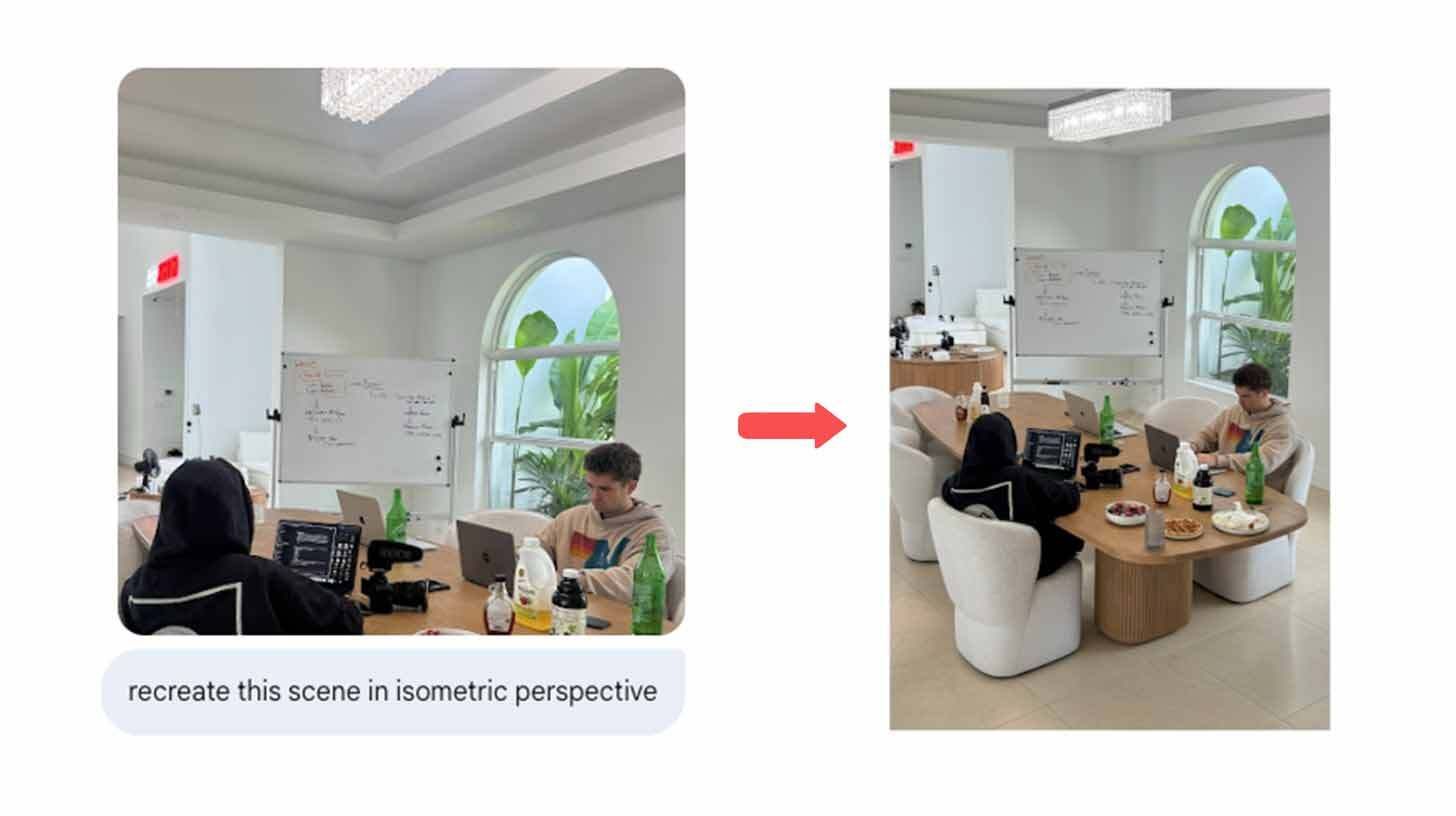
The Rundown: In this tutorial, you will learn how to use Google’s Nano Banana model to recreate any room or environment in isometric view, giving you a bird's-eye perspective that reveals hidden details and creates visuals for content/design mockups.
Step-by-step:
Go to gemini.google.com, toggle on "Tools", and select "Create Images" (with the banana icon)
Upload any room photo and prompt: "Recreate this image in isometric view" —suddenly see details that weren't visible before
Refine elements: "Make the room bigger," "Add punk rock theme with minimalist chandelier" — Nano Banana edits without regenerating the image
Swap environments: "Change cityscape window to ocean view" or "Add natural sunlight and a door to another room" — perfect for testing interior design ideas
Push further with VEO: Upload your edited image and prompt "Make this room lively by adding two dogs running through" to create a video with sound effects
Pro tip: Nano Banana is great for both content creation and interior design mockups. It's excellent at editing elements while keeping the rest of the image consistent.
PRESENTED BY CLOUDERA
☁️ Where enterprises unlock AI's full potential

The Rundown: Join data and AI leaders at EVOLVE25 NYC on Sept. 25th to discover how companies are turning AI potential into real business value. Cloudera will showcase how top enterprises unify, manage, and leverage data to power intelligent transformation anywhere.
At EVOLVE25, you'll experience:
A deep dive into trends for data, analytics, and AI with industry analysts
Customer-led sessions on enabling secure data architectures and analytics
Hands-on labs on implementing secure AI from development to inference
Exclusive announcements from Cloudera’s leadership
📱 Google’s EmbeddingGemma for on-device AI
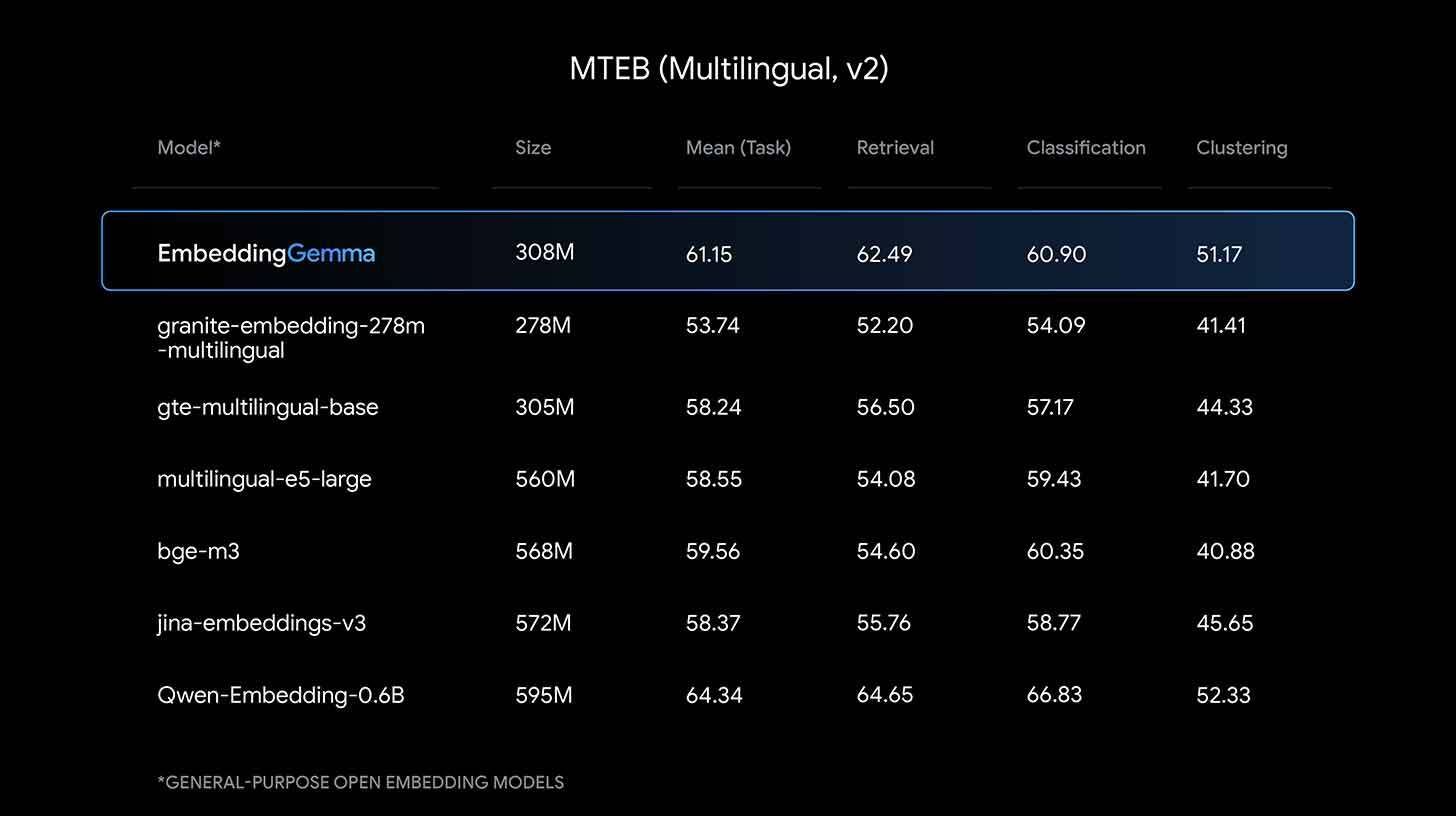
Image source: Google
The Rundown: Google DeepMind released EmbeddingGemma, a new addition to its open-source Gemma model family that is efficient enough to run on consumer devices, letting apps search and understand text in 100+ languages without internet.
The details:
The model works fast enough for real-time responses while consuming less memory than a photo app, making it practical for smartphones and laptops.
Google built it to power offline search across personal files, messages, and emails, keeping sensitive data on-device rather than sending it to the cloud.
Developers can adjust the model's precision based on needs, choosing between accuracy or faster speeds depending on the specific application.
The system already integrates with popular developer tools and runs directly in web browsers, enabling privacy-focused apps that function completely offline.
Why it matters: Google’s timing positions models like EmbeddingGemma as critical infrastructure for the coming wave of on-device AI agents and assistants, enabling a new class of privacy-preserving offline apps. Any on-device release from Google also now has extra interest given the tech giant’s potential Siri-powered ambitions.
QUICK HITS
🛠️ Trending AI Tools
☄ Comet - Perplexity’s AI-first browser, now available to all students
⚙️ Warp Code - Warp’s SOTA agent for code review, editing, and projects
📓 NotebookLM - Google’s research tool, with new customization features
🔎 Jan-v1-edge - Jan’s powerful new AI search model
📰 Everything else in AI today
Atlassian announced the acquisition of The Browser Company for $610M, with plans to expand its AI-driven Dia browser with enterprise-focused integrations and security.
Warner Bros. filed a new copyright lawsuit against Midjourney, alleging unauthorized use of its characters, like Superman and Batman, in AI-generated images and videos.
Microsoft unveiled new AI education commitments at the White House AI Education Task Force meeting, including free Copilot, educator grants, and LinkedIn AI courses.
Lovable rolled out Voice Mode, a new functionality powered by ElevenLabs’ speech-to-text model that allows users to code and build apps via voice commands.
AI search startup Exa raised $85M in a new Series B funding round at a $700M valuation.
xAI CFO Mike Liberatore left the startup, becoming the latest in a wave of departures that includes co-founder Igor Babuschkin and general counsel Robert Keele.
COMMUNITY
🤝 Community AI workflows
Every newsletter, we showcase how a reader is using AI to work smarter, save time, or make life easier.
Today’s workflow comes from reader Matthew in Windsor, CO:
"I used Google's NotebookLM and YouTube to perform internal business consulting. I pick one or more experts in a field, select their YouTube videos that discuss more overall strategy rather than how-tos and put that along with our business information (website, mission/vision statements, offering, and other brand brief-like material) all into NotebookLM and have the AI perform quick (and free) analysis of my business from the perspective of the selected expert(s). Really helped with refining how we present/phrase ideas and offering."
How do you use AI? Tell us here.
🎓 Highlights: News, Guides & Events
Read our last AI newsletter: Google keeps Chrome from AI rivals
Read our last Tech newsletter: Japan’s yen just went digital
Read our last Robotics newsletter: Apple loses robotics lead to Meta
Today’s AI tool guide: Transform photos into 3D visuals with Nano Banana
RSVP to our next live workshop @ 4 PM today: Template-first AI workflows
See you soon,
Rowan, Joey, Zach, Shubham, and Jennifer — the humans behind The Rundown
No matching search results
Try using different keywords, double-check your spelling, or explore related categories.
Stay Ahead on AI.
Join 2,000,000+ readers getting bite-size AI news updates straight to their inbox every morning with The Rundown AI newsletter. It's 100% free.