Get the latest AI news, understand why it matters, and learn how to apply it in your work — all in just 5 minutes a day. Join over 2,000,000+ subscribers.

Google's robots learn to 'think' first
Read Online | Sign Up | Advertise

Good morning, robotics enthusiasts. Google DeepMind just gave robots an internal monologue.
The company’s new Gemini Robotics 1.5 vision-language-action model lets machines explain their reasoning in real time as they work. Consider it Google’s answer to rivals like Figure’s Helix and Nvidia’s Groot.
In today’s robotics rundown:
DeepMind’s robots learn to think aloud
Meta wants to be the ‘Android of robotics’
Unitree’s Bluetooth backdoor nightmare
iRobot founder: humanoid hype is fantasy
Quick hits on other robotics news
LATEST DEVELOPMENTS
GOOGLE DEEPMIND
🧠 DeepMind’s robots learn to ‘think’ aloud
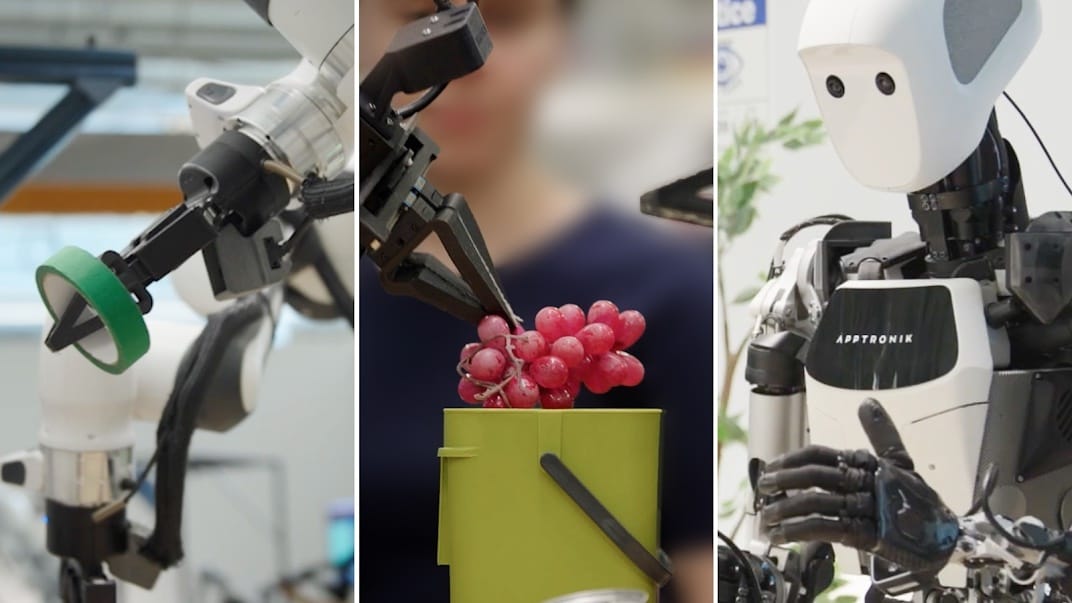
Image source: Google DeepMind
The Rundown: Google DeepMind just released Gemini Robotics 1.5 and Gemini Robotics-ER 1.5 — AI models designed to make robots ‘think’ before they act, translating visual input and language into coordinated movement.
The details:
Google says that the breakthrough lets robots reason through multistep tasks and actually explain what they're doing while they do it.
The system can tackle tasks like sorting recyclables by searching guidelines online, then planning how to physically categorize items based on what it finds.
Unlike traditional robots that react to commands, it generates an internal reasoning process in natural language, breaking complex tasks into steps.
Gemini Robotics-ER 1.5 orchestrates high-level strategy and calls digital tools, while Gemini Robotics 1.5 converts those plans into precise motor commands.
Why it matters: DeepMind’s system hit state-of-the-art performance across 15 robotics benchmarks and works across a wide range of platforms, from dual-arm lab bots to humanoids. The pitch to industry? One adaptable software stack that can power any robot form factor, straight out of the lab and into the field.
META
🔥 Meta wants to be the ‘Android of robotics’

Image source: Jeff Sainlar, Meta, Wikimedia Commons
The Rundown: Meta is building a software backbone for humanoids. With Project Metabot, it’s pouring billions into AI that hardware makers can license — turning its Llama-powered software into a standard brain for next-gen humanoids.
The details:
CTO Andrew Bosworth told The Verge that Meta is working on the biggest challenge for humanoids: dexterous hand manipulation.
While robots can perform stunts, tasks like grasping a water glass are unsolved because of complex sensor loops and the absence of robust world models.
Meta’s strategy is to leverage its AI Superintelligence Lab to build the kind of simulation, training datasets, and control software needed for fine manipulation.
The team, led by former Cruise CEO Marc Whitten and MIT’s Sangbae Kim, focuses on creating licensable software rather than manufacturing hardware.
Why it matters: Instead of competing with Tesla’s Optimus or Figure on humanoid exteriors, Meta is stacking its strategy with top-tier talent from AV and AR, betting that the real race is in universal manipulation skills. If Meta cracks dexterity (no small feat), it positions itself as the software foundation every robotics manufacturer needs.
UNITREE
🏴☠️ Unitree’s Bluetooth backdoor nightmare

Image source: Unitree
The Rundown: Unitree's robot dogs and humanoids are caught in a security nightmare after researchers exposed UniPwn, a wormable Bluetooth exploit that hands attackers root-level control with embarrassing ease.
The details:
The flaw exploits hardcoded AES keys in Unitree's Go2, B2, G1, and H1 robots — attackers simply encrypt the string "unitree" to bypass authentication.
Malicious code disguised as Wi-Fi credentials executes with root privileges, no validation required.
It's wormable: infected robots autonomously scan for and compromise nearby Unitree machines via Bluetooth, creating self-spreading botnets.
Researchers reportedly disclosed the vulnerability in May, but Unitree went silent after July, while UK police are already testing vulnerable Go2 units.
Why it matters: This kind of vulnerability turns advanced robots into potential weapons — spying, sabotaging, or spreading malware autonomously. With police and researchers already field-testing affected units, Unitree’s alleged silence raises serious concerns about security standards in the fast-moving robotics industry.
IROBOT
🧞♂️ iRobot founder: humanoid hype is fantasy

Image source: Christopher Michel, Wikimedia Commons
The Rundown: Investors are piling billions into humanoid startups, but Rodney Brooks — a legend who built iRobot and shaped robotics at MIT — has a blunt message: wake up, you're pouring money into a fantasy.
The details:
In his latest essay, Brooks skewers the industry’s big bet on teaching robots by showing them endless human task videos, dubbing it “pure fantasy thinking.”
He ridicules the idea that video-based machine learning can train robots to mimic human dexterity, noting that human hands have 17K touch receptors.
Machine learning's breakthroughs in speech and vision relied on decades of established recording tech — robotics has no such foundation for tactile data.
He warns that scaling up humanoids creates exponential safety risks: doubling a robot's size multiplies its impact energy eightfold.
Why it matters: Brooks predicts that within 15 years, the most successful ‘humanoids’ won't look human at all — they'll use wheels, multiple arms, and specialized sensors rather than walking upright, while current funding rounds will largely evaporate without producing mass-market machines. Of course, Figure and Tesla won’t likely agree.
QUICK HITS
📰 Everything else in robotics today
Major League Baseball will roll out robotic umpire tech in 2026, letting teams challenge two-ball or strike calls a game with instant reviews via Hawk-Eye cameras.
Skild AI says its “omni-bodied robot brain” can universally control any robot — trained on 100K configurations, it adapts to extreme damage like chainsawed-off limbs.
A former Tesla employee is suing Tesla and Fanuc for $51M after a robotic arm allegedly struck and knocked him unconscious while working at the Fremont factory.
University of Virginia scientists developed HydroSpread, a method that lets them fabricate soft robots directly on water by spreading ultra-thin polymer films.
China surged ahead of the U.S. and the world in factory automation, installing nearly 300K new robots last year and bringing its total to over 2M, a new report says.
Beijing’s Horizon Robotics raised about $821M through a Hong Kong top-up placement, offering 639M shares at HK $9.99 each to fund its international expansion.
NYK Line expanded its partnership with Neptune Robotics to deploy robotic hull cleaning across its global fleet for major fuel savings and maritime decarbonization.
Researchers created an AI system that builds on past emotional experiences while learning new ones, making robots more emotionally aware in human interactions.
Hyundai's air taxi startup, Supernal, saw its chief strategy officer, safety officer, and chief of staff depart weeks after pausing its program and losing its CEO and CTO.
COMMUNITY
🎓 Highlights: News, Guides & Events
Read our last AI newsletter: Hollywood’s synthetic actor showdown
Read our last Tech newsletter: Amazon fined $2.5B for Prime ‘trickery’
Read our last Robotics newsletter: Norway’s 1X to raise $1B
Today’s AI tool guide: Build an AI calendar agent using n8n
RSVP to next workshop @ 4PM Friday: Vibe coding in Cursor for non-devs
See you soon,
Rowan, Jennifer, and Joey—The Rundown’s editorial team

Hollywood's synthetic actor showdown
Read Online | Sign Up | Advertise

Good morning, AI enthusiasts. Hollywood studios have gone from dismissing AI to pursuing deals with AI personas in just months — and Tilly Norwood is about to test just how far they'll go.
With a “synthetic actor” nearing agency deals while human talent threatens boycotts, we might be witnessing the entertainment industry's most uncomfortable transformation yet.
In today’s AI rundown:
AI actress Tilly Norwood nears talent agency deal
Apple’s internal ChatGPT-style Siri app
Build an AI calendar agent using n8n
AI ‘workslop’ costing companies millions
4 new AI tools, community workflows, and more
LATEST DEVELOPMENTS
AI & HOLLYWOOD
🎬 AI actress Tilly Norwood nears agency deal

Image source: Particle6 Productions
The Rundown: AI talent studio Xicoia just revealed that its AI actress, Tilly Norwood, is in negotiations with multiple Hollywood talent firms, sparking backlash from actors who called for boycotts of any agencies that sign synthetic performers.
The details:
Norwood debuted in a comedy sketch last month, with Xicoia developing unique backstories, voices, and narrative arcs for the character.
Xicoia is a spin-out of production studio Particle6, with founder Eline Van der Velden wanting Tilly to “be the next Scarlett Johansson or Natalie Portman”.
Van der Velden said studios went from dismissing AI to actively pursuing deals in just months, claiming that “the age of synthetic actors isn’t coming, it’s here.”
Several actors spoke out against the potential talent deal, calling for other performers to drop the agency that signs Norwood.
Why it matters: Between Norwood and AI musician Xania Monet, things are getting weird fast — and at least some parts of Hollywood appear to be moving past initial AI hesitations. But given the reactions from actors and previous strikes from unions, ‘synthetic actors’ and public personas are going to be a VERY polarizing topic.
TOGETHER WITH VANTA
🛑 Don’t SOC-block your best engineers

The Rundown: Vanta uses AI and automation to get you compliant fast, simplify your audit process, and unblock deals — so you can prove to customers that you take security seriously.
Make Vanta your compliance co-pilot and:
Get SOC 2 ready without pulling engineers off product
Automate evidence collection and streamline audit processes
Unblock enterprise deals with security credibility that sales
Access expert support at every stage, from startup to scale-up
Get compliant fast with Vanta – trusted by top startups like Cursor, Linear, and Replit.
APPLE
🍎 Apple’s internal ChatGPT-style Siri app

Image source: Seedream 4.0 / The Rundown
The Rundown: Apple has developed an internal chatbot codenamed “Veritas” that employees are using to stress-test for Siri's AI overhaul, according to Bloomberg, with the company scrambling to salvage its voice assistant upgrade after massive delays.
The details:
Veritas allows Apple’s AI division to experiment with capabilities like searching personal data and editing photos with voice commands.
The ChatGPT-like app is testing the “Linwood” system, which utilizes both Apple’s in-house models and third-party options.
Engineering problems pushed the original AI-powered Siri launch to March 2026, prompting executive reshuffles and a talent drain to other AI labs.
Apple is reportedly not planning to launch Veritas as a standalone app like competitors, instead just embedding the features into Siri directly.
Why it matters: Apple doesn’t appear to want to compete in the chatbot market directly, and given both the insane level of competition and the tech giant’s current AI issues, that feels like the correct move. But March is coming fast — and with Apple bleeding talent and the industry continuing to level up, the situation still feels dire.
AI TRAINING
📆 Build an AI calendar agent using n8n
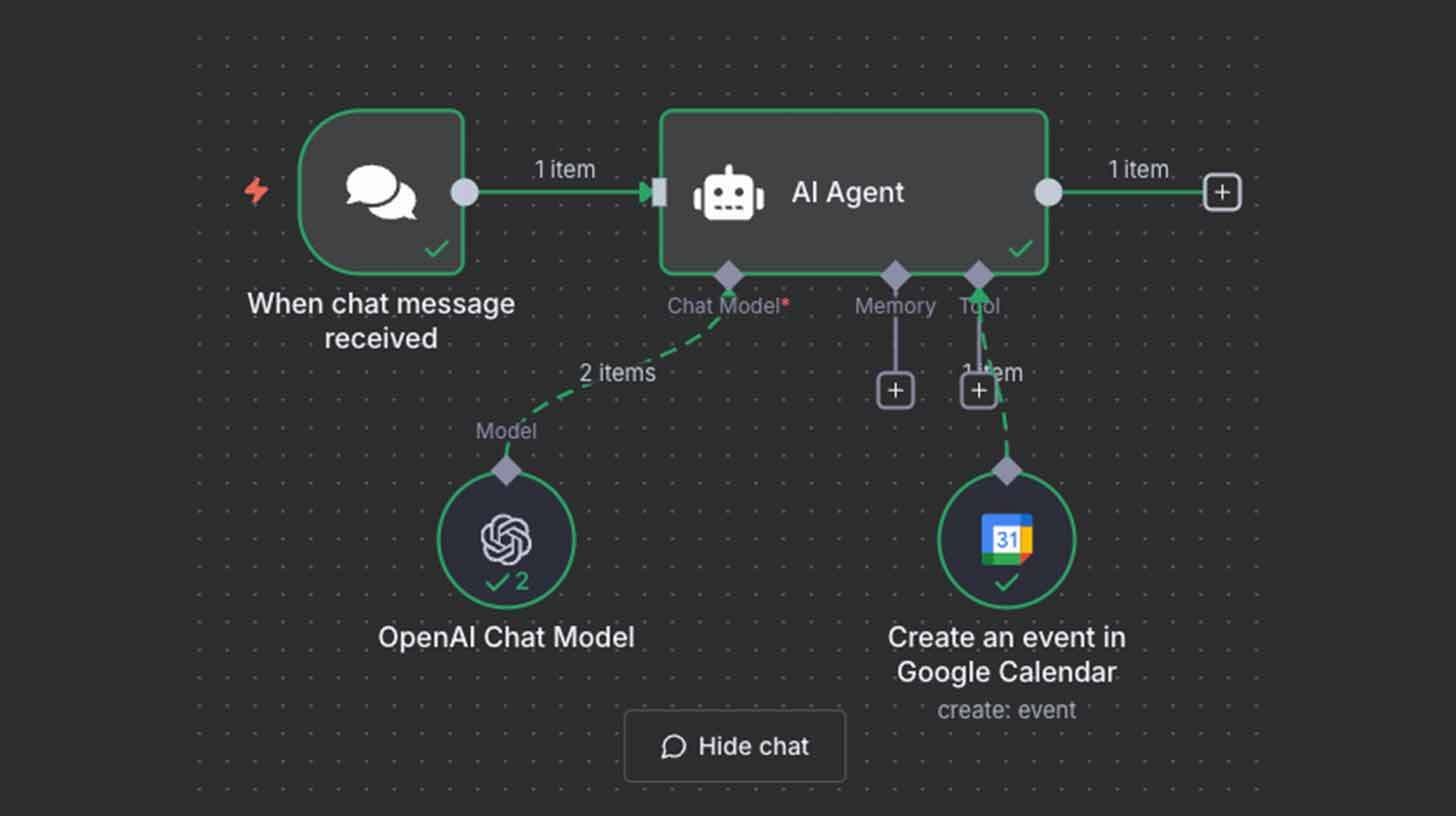
The Rundown: In this tutorial, you will learn how to build an AI calendar agent in n8n that schedules events for you directly in your calendar using natural language commands instead of forms and date pickers.
Step-by-step:
Go to n8n.io, create your account, click "Create workflow," and press Tab to add an AI Agent node to the canvas
Configure the AI Agent by selecting a chat model (GPT-4o mini), adding Google Calendar as a tool, and authenticating with OAuth credentials
Set the tool description to "Create calendar events" and add the current date/time to the system message using "{$now}" for proper context
Test by typing "Schedule dinner for tonight from 7 to 9 p.m." in the chat panel and verify the event appears in your Google Calendar
Pro Tip: Take this workflow further by connecting to WhatsApp or Telegram so you can message your agent instead of opening n8n.
PRESENTED BY ASSEMBLY AI
🎙️ Calling all Voice AI Builders
The Rundown: AssemblyAI is the speech-to-text API behind the next generation of Voice AI apps, including companies like Granola, Cluely, and Dovetail. With high accuracy and low latency, it’s an industry-leading infrastructure for building scalable Conversational AI.
With one API, you’ll get:
Accurate transcription at 93.3%
Pay as you go from $0.15/hr
Unlimited concurrency
AI RESEARCH
💼 AI ‘workslop’ costing companies millions
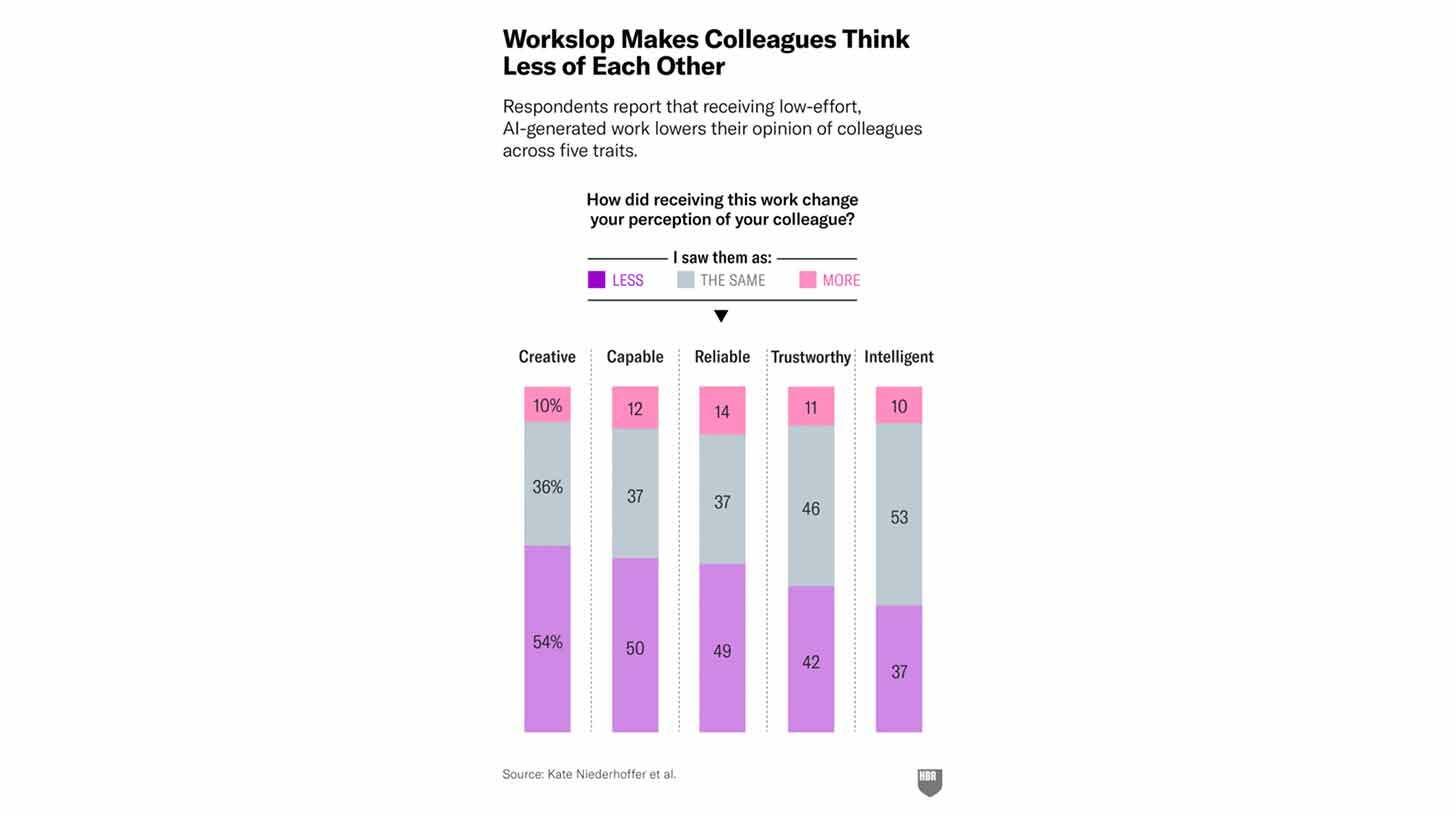
Image source: BetterUp Labs and Harvard Business Review
The Rundown: Stanford and BetterUp Labs surveyed 1,100+ U.S. workers about AI "workslop,” polished but hollow outputs that shift real work to other employees, finding that 41% of respondents encountered such content in the last month.
The details:
The research found that workslop forced recipients to spend an average of 116 minutes decoding or redoing each piece.
Respondents estimated that 15.4% of content now qualifies as workslop, with BetterUp calculating an invisible tax of $186/mo per worker in lost productivity.
Professional services and tech sectors face the highest concentrations, with workslop flowing primarily between colleagues and lesser so to managers.
The research also investigated the collaboration impacts, with recipients finding colleagues who sent workslop less trustworthy, reliable, and creative.
Why it matters: AI is ripping through the workplace — but like we’ve seen in the education system, many are choosing to offload cognitive tasks entirely instead of using the tech as a collaborative tool. With adoption rising alongside AI model capabilities, workslop may soon3 become both more prevalent and even harder to spot.
QUICK HITS
🛠️ Trending AI Tools
🤖 Notion Agent- A Notion power user that understands the way you work, handling multi-step tasks and saving hours with one prompt*
🎆 HunyuanImage 3.0 - Tencent’s new open-source text-to-image model
🗞️ ChatGPT Pulse - Proactive, personalized morning briefings
⚙️ Factory - Software development agent with top scores on Terminal-Bench
*Sponsored Listing
📰 Everything else in AI today
Meta poached another major AI researcher from OpenAI, with Yang Song leaving to be the new research principal at MSL under Shengjia Zhao (also formerly at OpenAI).
Tencent open-sourced HunyuanImage 3.0, a new text-to-image model that the company says compares to the industry’s top closed options.
Google released new updates to its Gemini 2.5 Flash and Flash-Lite models, with upgrades including agentic tool performance, efficiency, and instruction following.
Exa released exa-code, a tool that helps AI coding assistants find hyper-relevant web context to significantly reduce LLM hallucinations.
OpenAI’s new Applications CEO, Fidji Simo, is reportedly recruiting a new executive to lead monetization and advertising efforts for ChatGPT.
AI image startup Black Forest Labs is reportedly set to raise as much as $300M in a new round that would push the German company’s valuation to $4B.
COMMUNITY
🤝 Community AI workflows
Every newsletter, we showcase how a reader is using AI to work smarter, save time, or make life easier.
Today’s workflow comes from reader Darren J. in Spartanburg, SC:
"I use AI as a coach, particularly for tasks I'm afraid to tackle. I'll identify a goal, create a separate chat in ChatGPT, and then say, "I want to work for 30 minutes every day; I want you to guide me in every step of the process. Be my cheerleader but also a very honest critic."
How do you use AI? Tell us here.
🎓 Highlights: News, Guides & Events
Read our last AI newsletter: ChatGPT gets proactive with Pulse
Read our last Tech newsletter: Amazon fined $2.5B for Prime ‘trickery’
Read our last Robotics newsletter: Norway’s 1X to raise $1B
Today’s AI tool guide: Build an AI calendar agent using n8n
RSVP to next workshop @ 4PM Friday: Vibe coding in Cursor for non-devs
See you soon,
Rowan, Joey, Zach, Shubham, and Jennifer — the humans behind The Rundown


Exclusive: The enterprise AI playbook
Read Online | Sign Up | Advertise

Good morning, AI enthusiasts. Cloudera just released its State of Enterprise AI in 2025 survey, capturing the views of 1,500+ IT executives and revealing a critical paradox: AI is everywhere, but it isn’t yet fully unlocked.
Leaders see clear value in AI, yet they’re dealing with infrastructure gaps like expensive compute, broken data, and governance issues that decide whether AI scales or fails.
To understand these problems (and their solutions) better, we partnered and sat down with Cloudera’s CTO, Sergio Gago, for an exclusive Q&A.
In today’s AI rundown:
Why only 21% enterprises have full AI integration
AI playbook for organizations starting from scratch
Securing early business wins with AI
Measuring the wins for building on growth
Taking AI to data for full security
Baking in compliance by design
Making ‘AI everywhere’ a reality
LATEST DEVELOPMENTS
AI INTEGRATION
🤖 Why only 21% enterprises have full AI integration

Image: Kiki Wu / The Rundown
The Rundown: While enterprises are bullish on AI and continue to cite heavy investments and confidence in the tech, only 21% of the leaders in Cloudera’s survey said they have fully integrated AI into their core business processes.
Cheung: Why is full AI integration so hard even today? What are the biggest factors holding companies back?
Gago: One of the biggest shifts our survey uncovered was the cost of training models. Compared to our survey one year ago, we found that the cost to access computer capacity for training AI is on the rise, jumping from 8% in 2024 to 42% now.
Just as important is access to the right data. To train AI models effectively, organizations need access to one hundred percent of their data in all forms and wherever it resides. Without full access, models are limited in scope and accuracy. This also applies to RAG (Retrieval Augmented Generation) techniques, giving the LLMs contextual access to your enterprise information.
When AI can be applied to all this data—whether in the cloud, in the data center, or at the edge—it becomes more trustworthy, more contextual, and ultimately more valuable to the business.
Why it matters: For AI practitioners and decision-makers, this finding from Cloudera highlights that it’s not the running or scaling that’s hindering AI integration — but the core foundation that lies underneath. The only path to trustworthy, enterprise-wide AI goes through solving infrastructure efficiency and unlocking all organizational data.
PLAYBOOK
🔥 AI playbook for organizations starting from scratch
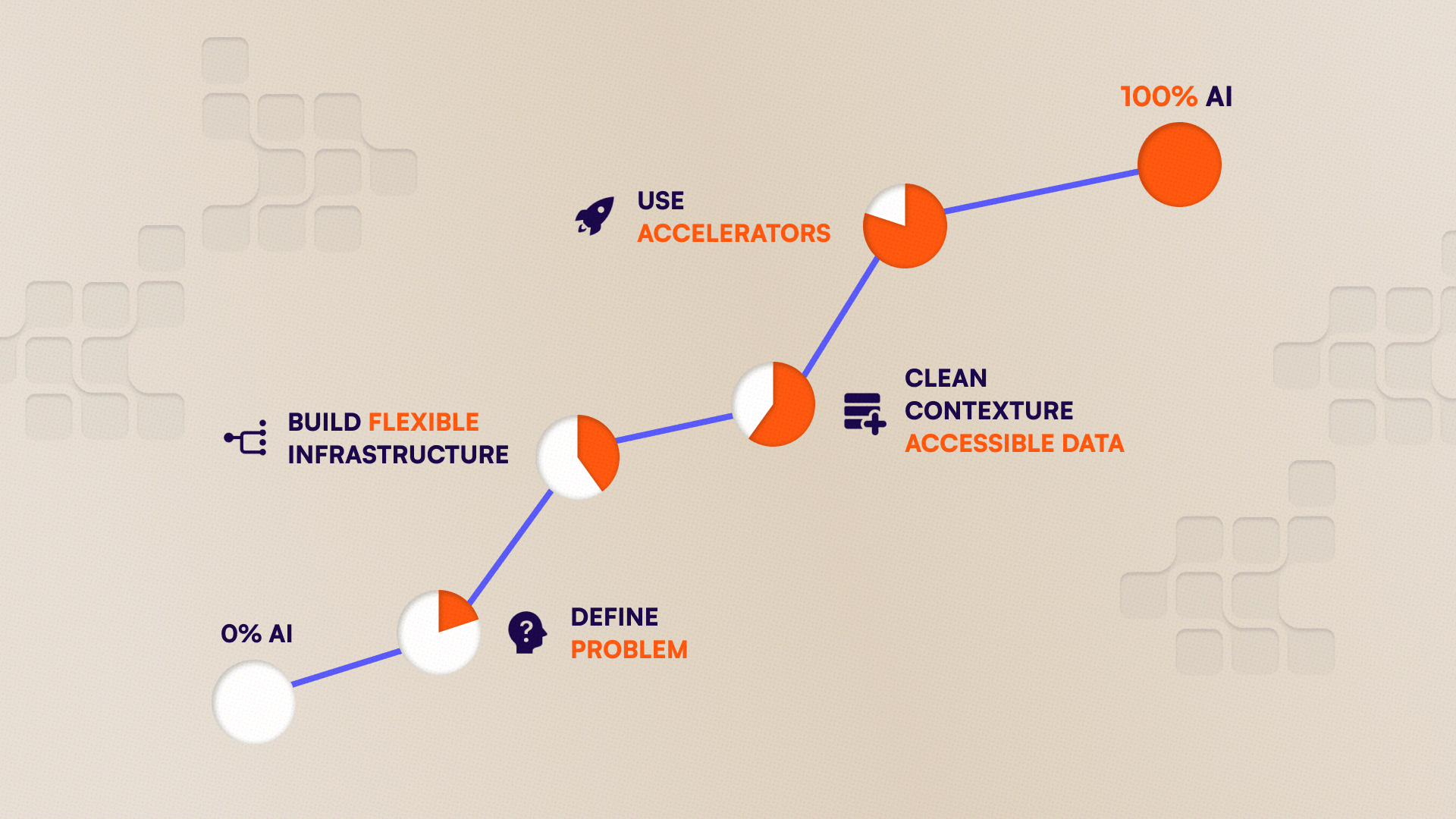
Image: Kiki Wu / The Rundown
The Rundown: To reach 100% AI integration, organizations need to follow a structured path: first anchoring efforts with clear business goals, then breaking down data and infrastructure barriers, and finally scaling through focused, value-driven use cases.
Cheung: What measures should organizations with zero to little AI take to go up to the full 100% AI integration mark?
Gago: First, clarify your goals: define which business problems you're trying to solve and who owns those decisions. Next, ensure your data is clean, contextual, and accessible. That means unifying structured, semi-structured, and unstructured data across environments: clouds, in the data center, or edge.
From there, build a flexible infrastructure that can evolve as AI models and frameworks change. Prioritize security, governance, and transparency from the start, because trust is foundational.
Finally, use reference architectures or accelerators to move quickly with targeted, high-impact use cases. The organizations that succeed are the ones who move with focus and responsibility and scale from there.
Why it matters: Gago’s roadmap makes AI integration a step-by-step journey. By following this approach, organizations can turn AI from scattered experiments with fragmented data efforts into a trusted capability that delivers measurable impact across the business.
EARLY WINS
🦄 Securing early business wins with AI
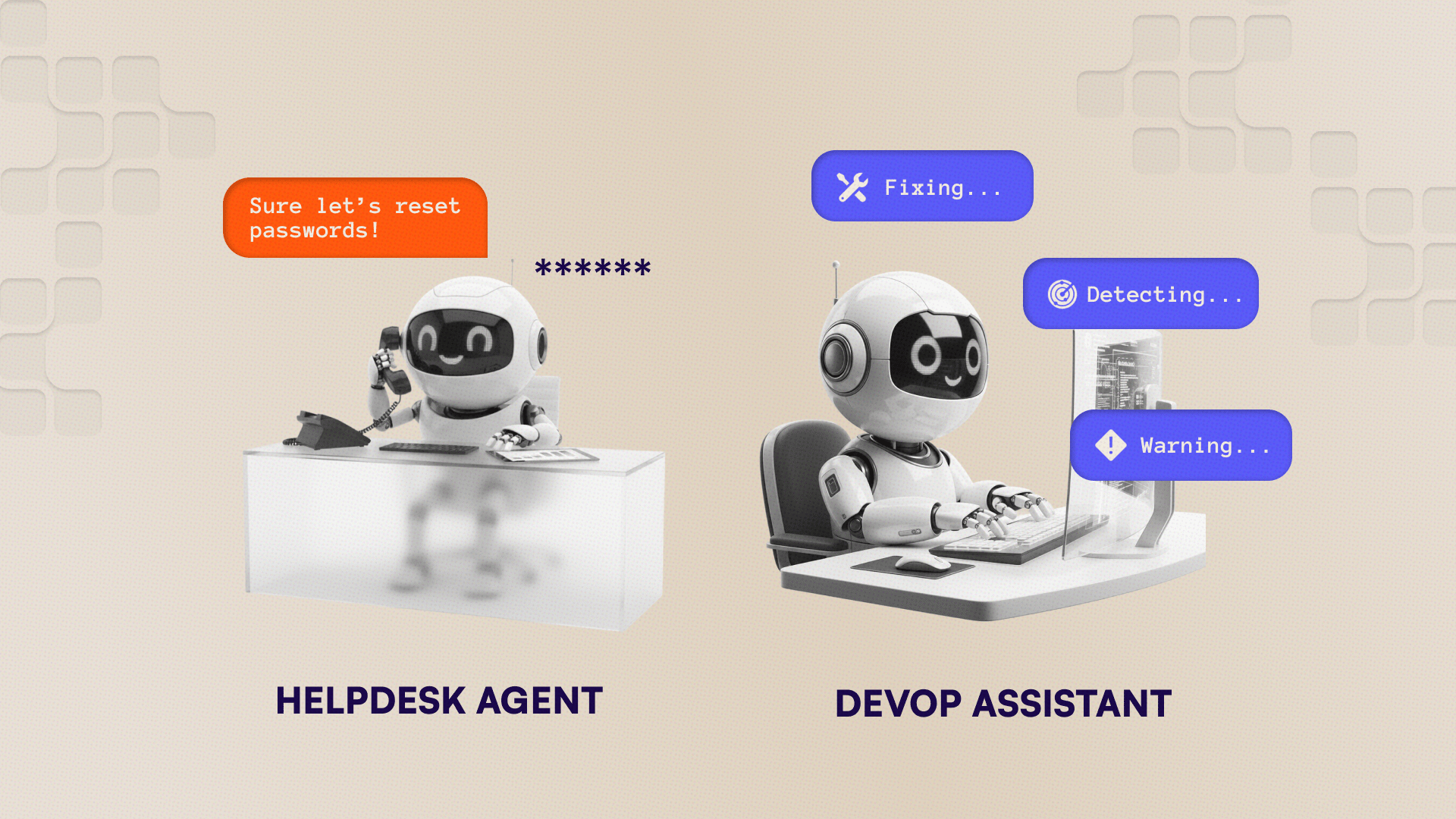
Image: Kiki Wu / The Rundown
The Rundown: While processes across industries are being reshaped by AI, organizations should start off with select, tightly-scoped use cases that can deliver measurable results.
Cheung: What business processes are being reshaped by AI, and what’s an easy, high-confidence AI win you recommend shipping first?
Gago: The use cases span industries from manufacturing to banking. Whether an organization is trying to get ahead of maintenance on the factory floor, wants to revamp its customer experience, or leverages AI agents to help identify fraud and security risks, AI has become a ubiquitous asset in every IT leader's toolbelt.
Early use cases come from well-defined, ROI-driven domains. In the case of formats like AI agents, this would mean areas like IT helpdesk agents and DevOps assistants. Prioritizing adopting AI in these domains gives IT leaders a great opportunity to introduce automation, while driving tangible results.
Gago added: Helpdesk agents can be deployed to automate micro-tasks such as password resets, respond to tier-one support tickets, and recommend knowledge base content. DevOps assistants can detect anomalies, automate remediation, improve cost control, or generate alerts for infrastructure management.
Why it matters: AI can feel overwhelming when applied everywhere at once, but focus wins first. By starting with ROI-driven domains like IT helpdesk, enterprises can deliver quick, measurable results — providing early wins that build confidence, prove value to stakeholders, and create momentum for scaling AI responsibly across functions.
MEASURING OUTCOMES
🧠 Measuring AI wins for building on growth
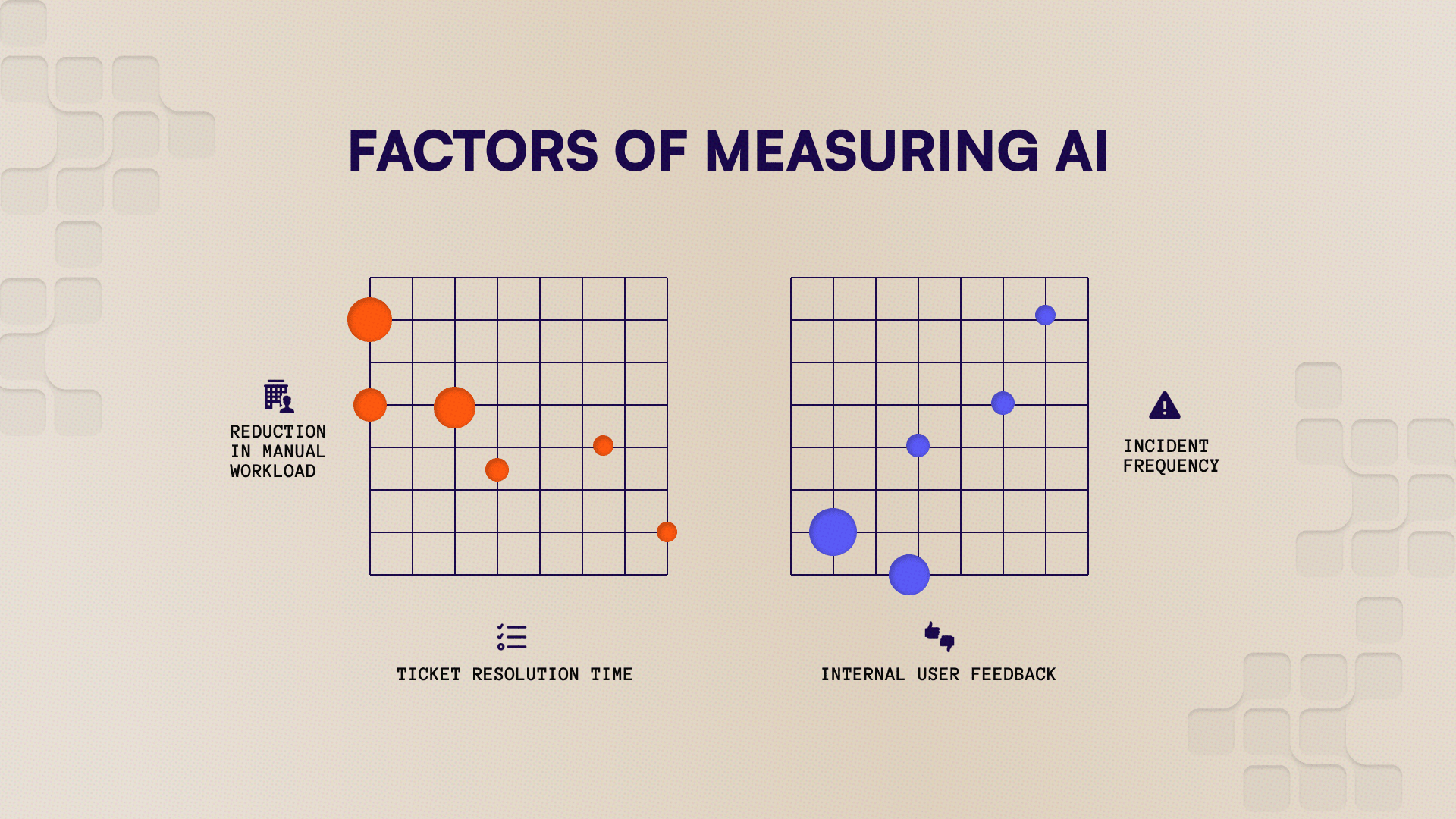
Image: Kiki Wu / The Rundown
The Rundown: In Cloudera’s survey, operational efficiency was cited as the biggest ROI from their AI projects, but measuring impact shouldn’t stop at cost and speed. It should also account for customer/user satisfaction.
Cheung: How do you measure if an AI project is actually helping?
Gago: Our survey asked respondents to share where they expect the biggest ROI from AI over the year. 29% pointed to operational efficiency, followed by 18% citing customer experience, 15% product innovation, 14% revenue generation, 13% risk management, and 11% talent productivity.
Gago added: To measure if it’s helping, organizations should look at metrics tied to speed, cost, and satisfaction. That might include ticket resolution time, reduction in manual workload, incident frequency, or internal user feedback. AI’s impact becomes evident when it consistently shortens cycles, reduces costs, and improves outcomes.
Why it matters: Measuring AI’s impact through efficiency and satisfaction makes its value tangible. When organizations track outcomes and show real benefits, they build a strong case for AI’s use — and drive executive confidence to fuel broader adoption across the enterprise.
SECURITY
⚡️ Taking AI to data for full security
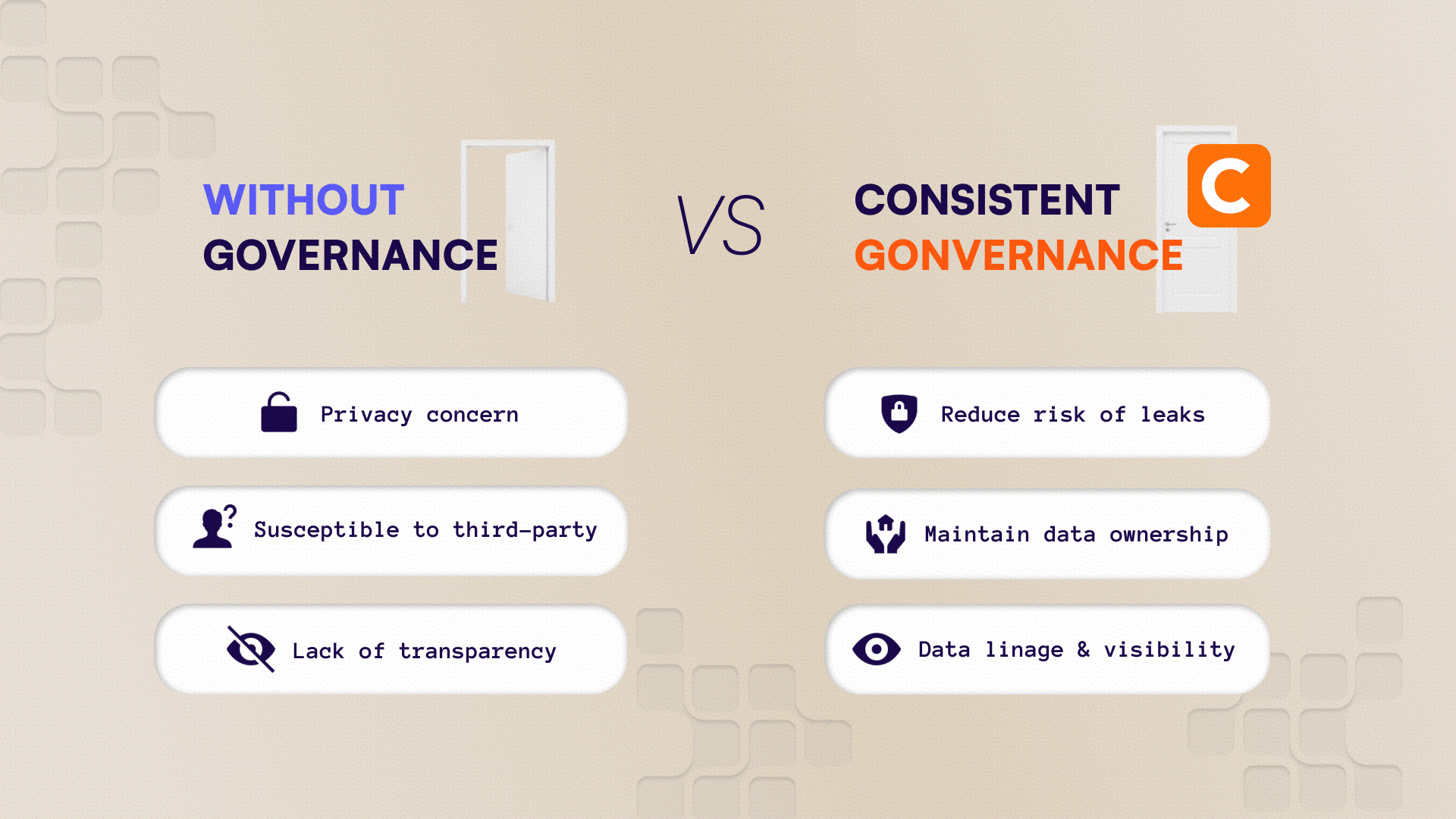
Image: Kiki Wu / The Rundown
The Rundown: As AI adoption accelerates, so do security risks. But proactive governance, enforcing lineage, and bringing AI to the data (rather than moving data to AI) can help harness AI’s power, without compromising trust or security.
Cheung: AI ties to several security concerns, with 50% of survey respondents worrying about training data leaks and 48% about unauthorized access. How does Cloudera bridge this gap for secure AI?
Gago: Governance is critical. Without consistent governance and security standards in place, anytime an organization opens its data up to train AI models there is a risk that it becomes susceptible to leakage or a third-party actor. The industry was generally very good at that with classical machine learning, but somehow many companies forgot about data governance in the world of Generative AI.
Aside from Cloudera's governance tooling, our main advantage is bringing AI to your data. By partnering with Cloudera, you can maintain data ownership, keep it wherever it resides, and apply AI on top of it — capturing all insights without opening yourself and your business to increased risk. This is: data access, fine-grained controls, catalog, and lineage as the building blocks for safe and private AI deployments.
Cloudera also delivers data lineage to ensure data quality and help teams understand how AI is applying it to make decisions. This eliminates the black box conundrum, giving users visibility into the data AI is using to respond or take action.
Why it matters: Strong governance and keeping AI close to the data not only reduce the risk of leaks and unauthorized access but also improve visibility into how decisions are made. The benefit is clear: organizations can unlock more value from AI while protecting sensitive data and building trust with customers and regulators.
COMPLIANCE
🧪 Baking in compliance by design
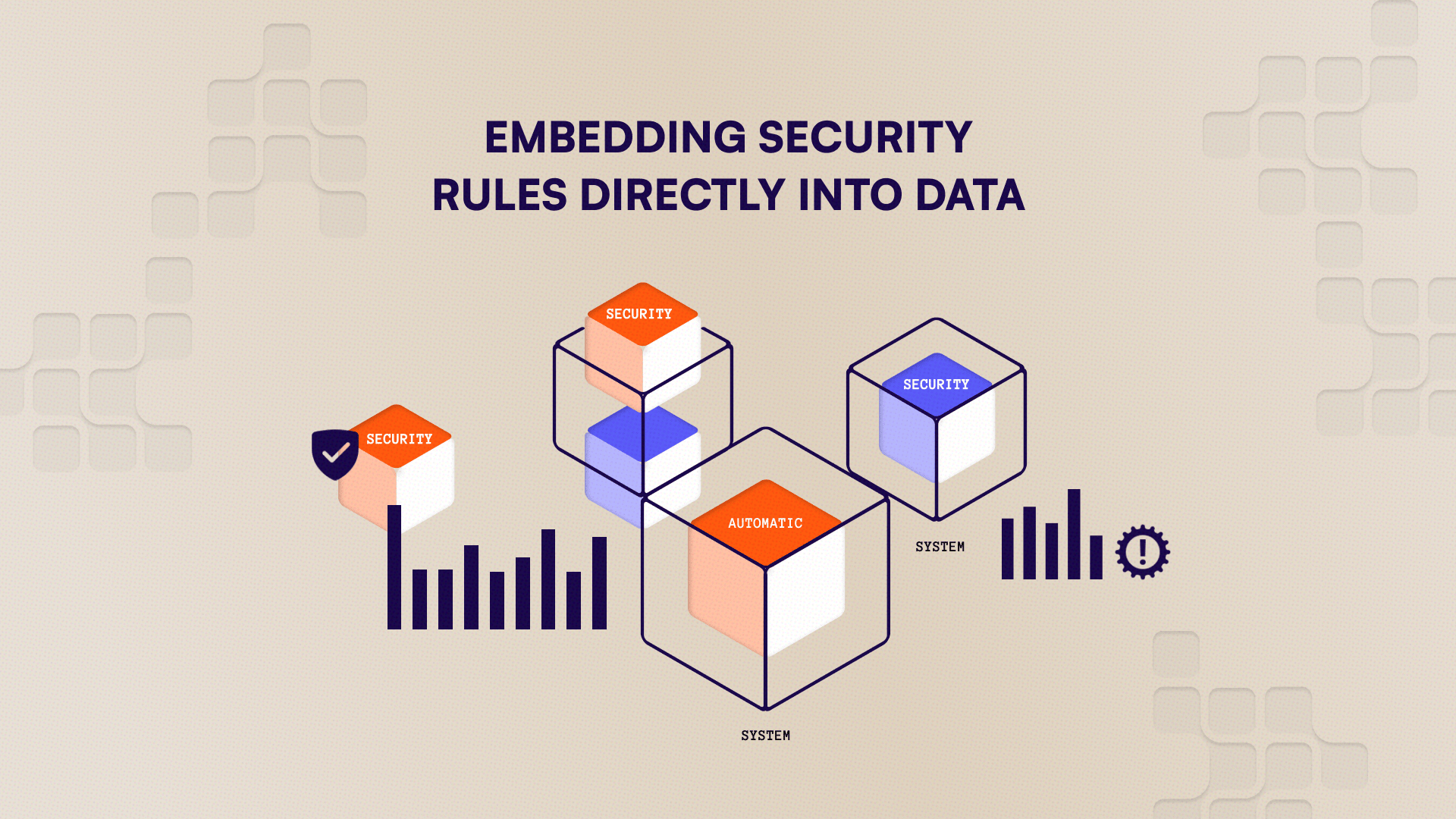
IImage: Kiki Wu / The Rundown
The Rundown: Teams can often get stuck on writing and implementing policies for enforcing security and governance compliance. But, as Gago points out, it should be baked in right from the beginning — not as an afterthought.
Cheung: What’s a practical, non‑scary way to put basic security rules in place across a setup — and actually enforce them?
Gago: Start by embedding rules directly into your data architecture, not layered on top of it. That means things like encryption, access controls, lineage, and audit trails should be baked in from the beginning, not retrofitted after the fact.
Write policies once, then apply them universally across public cloud, private cloud, and in the data center, wherever the data lives. Enforcing policy should feel automatic, not manual. The best systems don’t rely on someone remembering to check a box; they enforce compliance by design.
Gago added: Focus on a few high-impact rules: who can see what, where sensitive data lives, and how it’s tracked. Start small, then scale up. Most importantly, make policy transparent and explainable — involve your legal, IT, cybersecurity, and compliance teams from the beginning. Governance can’t be an afterthought.
Why it matters: When policies are enforced by design and made explainable, teams understand the rules, the reasoning behind them, and their implementation — and accept the guardrails for ensuring security across business processes using AI.
SCALING AI
💡 Making ‘AI everywhere’ a reality
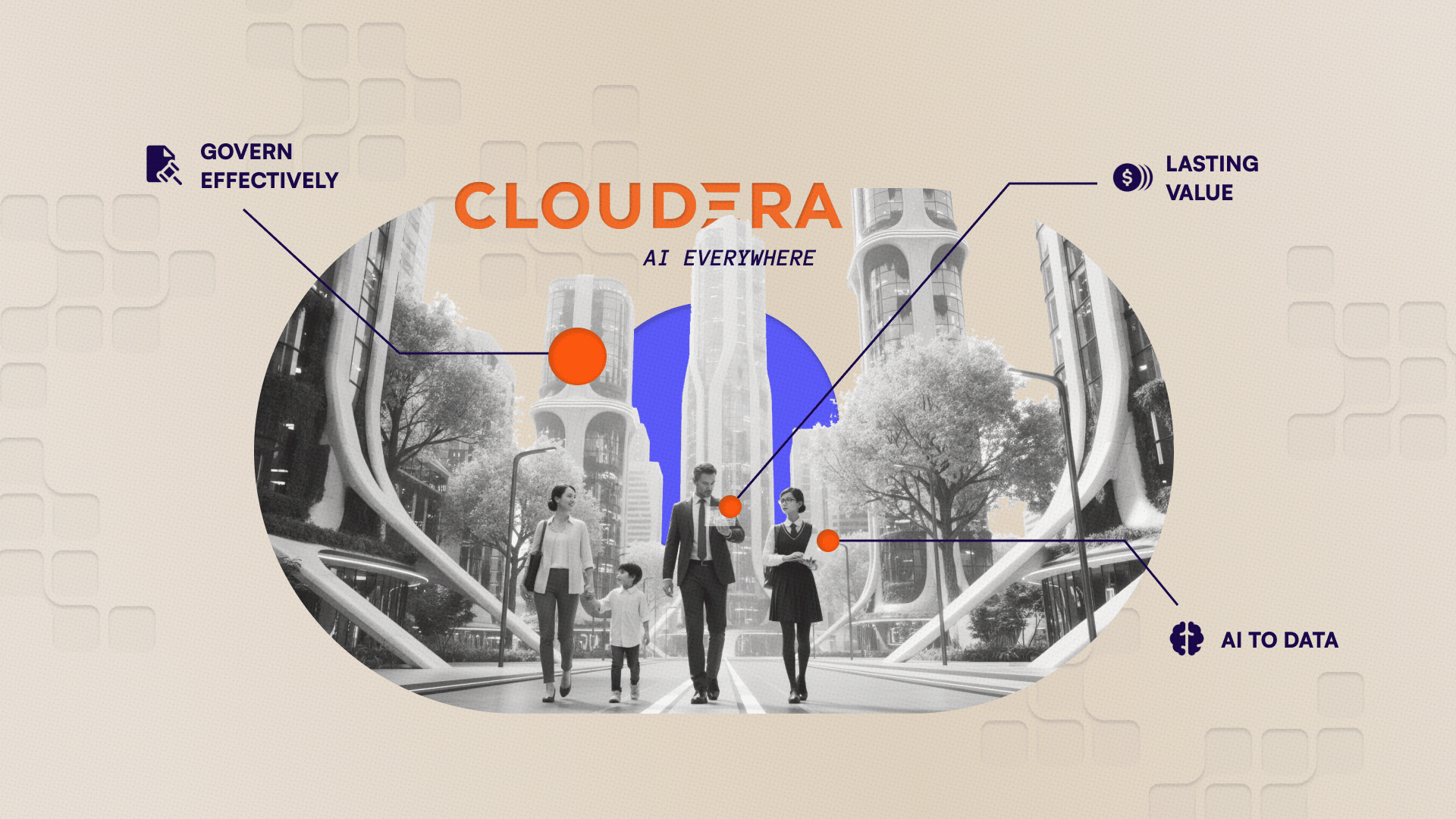
Image: Kiki Wu / The Rundown
The Rundown: AI may soon be deeply embedded across most enterprises, but the journey won’t be simple. Teams must overcome barriers around integration, management, and security, and above all, focus on building trust in their systems.
Cheung: If we zoom out 5 years, do you believe ‘AI everywhere’ will be a reality? And what’s your personal north star for Cloudera to that end?
Gago: ‘AI everywhere’ is possible even today, but only if organizations build with governance and flexibility at the core and create access to data anywhere. The biggest barriers (data silos, cost, and compliance) can be solved with an open and policy-driven architecture. But the real challenge won’t just be infrastructure. It’ll be trust.
Gago added: The future belongs to teams that can scale AI responsibly, with visibility into how decisions are made and confidence in the data behind them To that end, Cloudera’s north star is clear: bringing AI to data, anywhere. That means enabling large enterprises to securely apply and scale AI to 100% of their data. Cloudera aims to be the platform enterprises trust most to innovate confidently, govern effectively, and drive lasting value.
Why it matters: Trust is emerging as the true currency of enterprise AI. Gago makes it clear that scaling AI responsibly is all about ensuring decisions are explainable, governed, and grounded in reliable data. Enterprises that embed trust at the core of their AI efforts will be the winners.

Amazon fined $2.5B for Prime 'trickery'
Read Online | Sign Up | Advertise

Good morning, tech enthusiasts. In a historic FTC smackdown, Amazon is shelling out $2.5B over claims it duped millions into Prime subscriptions and made canceling deliberately hellish.
The settlement includes $1.5B in customer refunds plus additional penalties — could you be owed a piece of that refund pie?
In today’s tech rundown:
Amazon fined $2.5B for Prime ‘dark patterns’
Trump signs $14B TikTok deal
Toyota launches futuristic Woven City
AI tool tracks super polluters near you
Quick hits on other tech news
LATEST DEVELOPMENTS
AMAZON
🤑 Amazon fined $2.5B for Prime ‘dark patterns’

Image source: Ideogram / The Rundown
The Rundown: In a historic deal, Amazon agreed to shell out $2.5B to settle a blockbuster FTC lawsuit alleging it “tricked” millions of customers into signing up for Prime and then made quitting a next-level headache.
The details:
Amazon must pay $2.5B in a landmark settlement, including $1B in civil penalties and $1.5B in direct refunds to affected customers.
Roughly 35M Americans may qualify for refund payments, with individual payouts capped at $51.
The FTC accused Amazon of deploying deceptive “dark patterns” like pop-ups and confusing cancellation flows to enroll users in Prime.
The company is also required to eliminate misleading buttons like “No, I don’t want Free Shipping,” to simplify opting out of Prime.
Why it matters: The company now faces court-mandated redesign of its Prime ecosystem — forced to rebuild sign-up flows and cancellation processes under federal oversight. For a platform that built an empire on frictionless commerce, being required to make leaving as easy as joining might hurt more than the fine.
TIKTOK
💃🏻 Trump signs $14B TikTok deal

Image source: Ideology / The Rundown
The Rundown: Trump signed the order forcing ByteDance to offload TikTok’s U.S. operations for $14B, handing the app to a power consortium of American tech moguls and keeping 170M users scrolling.
The details:
Oracle, Michael Dell, and Rupert Murdoch’s investment group will now control TikTok’s algorithm, data infrastructure, and content moderation for U.S. users.
ByteDance’s ownership dropped from majority control to under 20%, effectively neutering Chinese influence over the platform's operations.
The $14B deal preserves TikTok’s existing features while placing all U.S. user data under U.S. corporate oversight and government compliance.
TikTok will remain fully operational during the transition, avoiding the platform shutdown that would have devastated creators and small businesses.
Why it matters: After three years of back-and-forth negotiations, the $14B sale shows Washington’s willingness to force ownership changes over platform shutdowns. The protracted process also creates a template for addressing foreign tech companies deemed security risks, with other Chinese-owned platforms facing similar prospects.
TOYOTA
🎌 Toyota launches futuristic Woven City

Image source: Toyota
The Rundown: Five years of hype finally materialized: Toyota’s Woven City cracked open its gates this week, unleashing the first 300 brave souls into a corporate fever dream of autonomous everything at the base of Mt. Fuji.
The details:
After five years of CES promises, residents are now lab rats testing smart homes, robo-cars, and AI companions in Toyota's mobility playground.
Self-driving shuttles prowl the streets, delivery bots work 24/7, and every home doubles as a data-harvesting smart lab feeding Toyota’s algorithms.
Testing includes e-Palette autonomous shuttles, compact EVs, personal mobility robots, plus pet robots designed to study human-machine bonding.
For Toyota chairman Akio Toyoda, this represents the company’s metamorphosis from car manufacturer to mobility overlord.
Why it matters: While Tesla fights software wars and Waymo maps every pothole, Toyota is studying how people actually live with autonomous tech. The plan scales fast: 2K residents and tourist access in 2026, and a fully operational human-tech integration lab. It’s either the future of urban living or the world’s most expensive focus group.
CLIMATE TECH
🔥 AI tool tracks super polluters near you
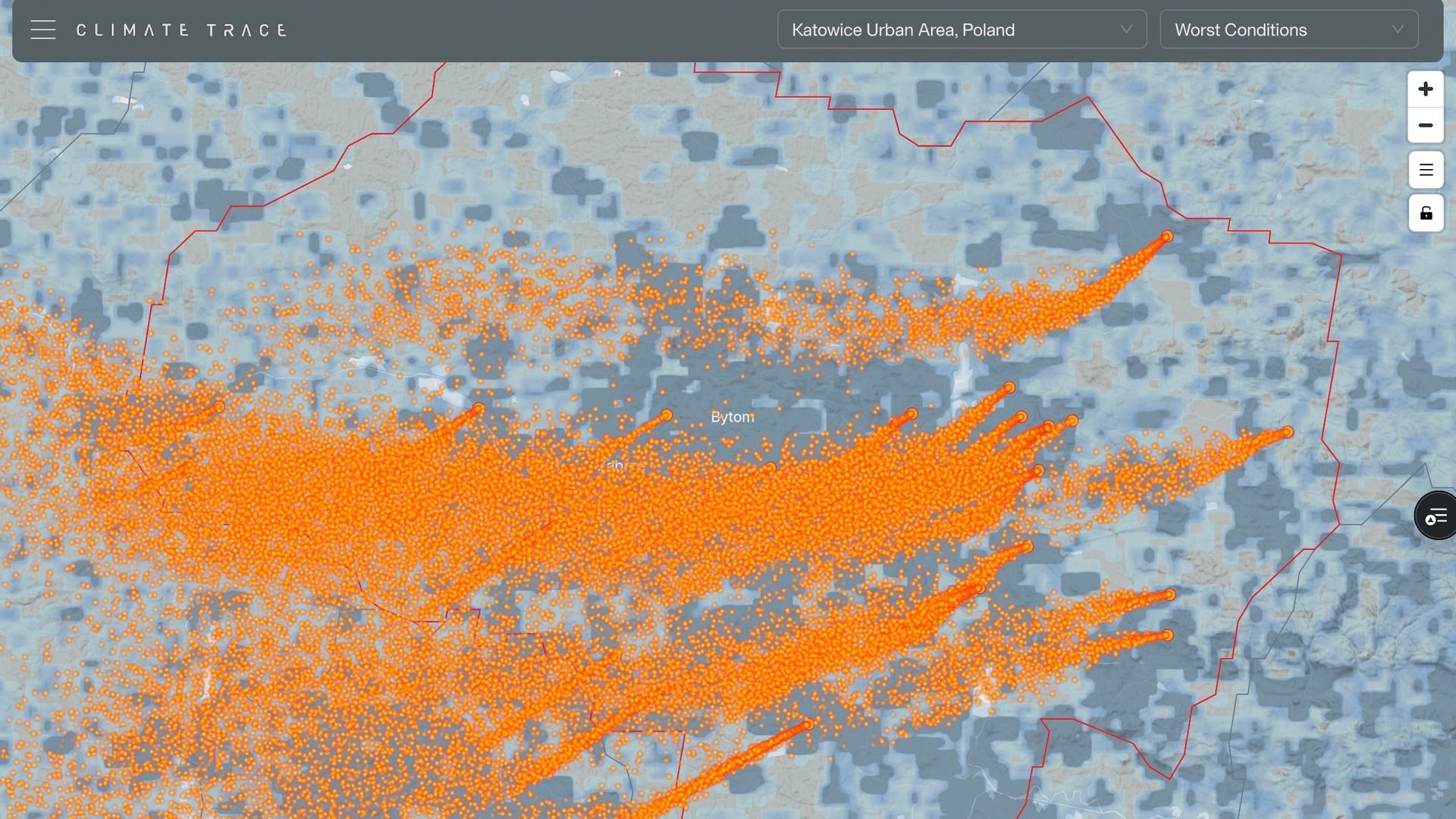
Image source: Climate TRACE
The Rundown: Al Gore’s nonprofit Climate TRACE just released a global AI-powered tool tracking toxic air pollution from more than 660M sources, down to power stations, factories, refineries, and shipping ports that lace city skies with deadly PM2.5.
The details:
The platform identifies “super emitters,” the dirtiest 10% of pollution sources whose toxic plumes directly threaten massive populations.
Advanced mapping shows how pollution drifts from specific facilities into neighborhoods, revealing which areas get hit hardest by industrial toxins.
Satellite data merged with Carnegie Mellon weather models creates neighborhood-level pollution maps for both typical and worst-case days.
Users can zoom into any location to see population density overlays, identifying exactly which industrial sites are affecting nearby residents.
Why it matters: For the first time, communities can pinpoint exactly which facilities are pumping toxins into their air and hold specific polluters accountable with hard data. The tool transforms air pollution from an invisible killer into a documented public health threat, giving activists and regulators the ammunition to target the worst offenders.
QUICK HITS
📰 Everything else in tech today
Apple is urging the EU to scrap its Digital Markets Act, arguing the law is unfairly targeting tech giants like itself and puts users at greater risk while stifling innovation.
Instagram just hit 3B monthly active users, with Meta crediting the milestone to explosive growth in Reels short-form video and private messaging.
Elon Musk’s xAI signed a deal with the U.S. government to provide Grok to federal agencies for just 42 cents per agency for 18 months.
Chinese autonomous driving startup Momenta is seeking to raise hundreds of millions of dollars at a valuation above $5B, Bloomberg reports.
Xiaomi just reportedly launched a $630 flagship smartphone aimed at challenging Apple’s iPhone 17.
Australian researchers are working on a shark bite-resistant wetsuit for surfers by testing four materials against tiger and white shark bites.
Waymo has launched “Waymo for Business,” letting companies easily set up accounts so employees can use its robotaxis in major cities.
Smartphone maker Nothing is spinning off its affordable CMF brand into a standalone India-based subsidiary, aiming to expand budget smartphones globally.
Meta is opening new Meta Lab pop-up shops in Las Vegas, New York, and LA this fall to showcase and demo its smart glasses and VR hardware.
California startup Telo, maker of the compact $41K MT1 electric truck, has raised $20M in Series A funding co-led by Tesla co-founder Marc Tarpenning.
NASA is considering using a nuclear strike as a last-resort defense against asteroid 2024 YR4, which now has about a 4% chance of colliding with the moon in 2032.
COMMUNITY
🎓 Highlights: News, Guides & Events
Read our last AI newsletter: ChatGPT gets proactive with Pulse
Read our last Tech newsletter: One OS to rule all drones
Read our last Robotics newsletter: Norway’s 1X to raise $1B
Today’s AI tool guide: Get instant business insights from spreadsheets
RSVP to our next workshop @ 4PM EST today: Automated Deep Research
See you soon,
Rowan, Jennifer, and Joey—The Rundown’s editorial team
ChatGPT gets proactive with Pulse
Read Online | Sign Up | Advertise

Good morning, AI enthusiasts. ChatGPT just learned a new trick — working the night shift while you sleep to craft personalized briefings ready when your alarm goes off.
With the new Pulse feature creating custom cards based on everything from your Gmail to your chat history, OpenAI’s latest proactive push is ready to be a new part of users morning routines.
In today’s AI rundown:
ChatGPT gets proactive with new Pulse briefs
Elon Musk, xAI sue OpenAI over trade secrets
Get instant business insights from spreadsheets
OpenAI tests AI against human workers across 44 jobs
4 new AI tools, community workflows, and more
LATEST DEVELOPMENTS
OPENAI
🗞️ ChatGPT gets proactive with new Pulse briefs
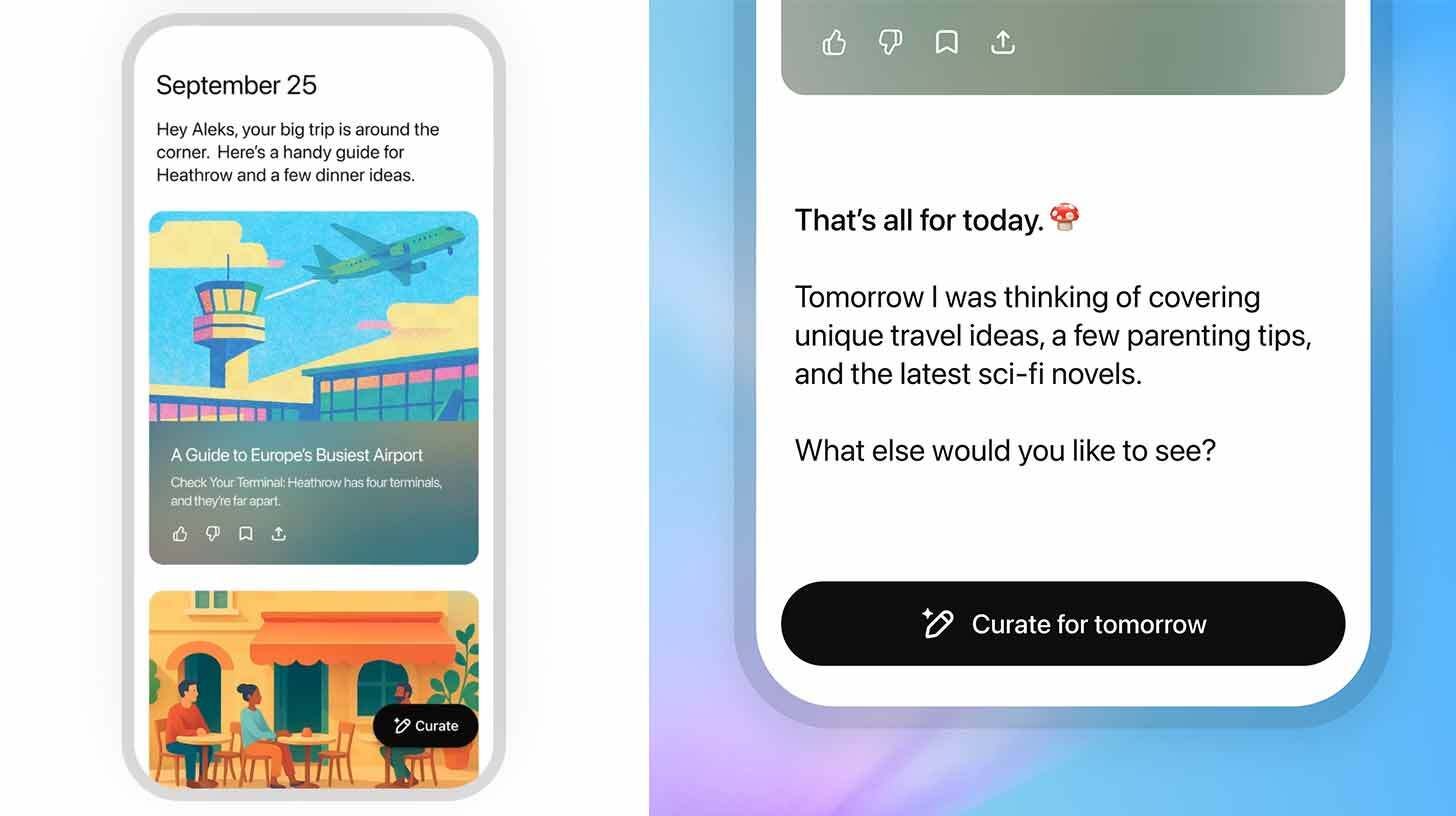
Image source: OpenAI
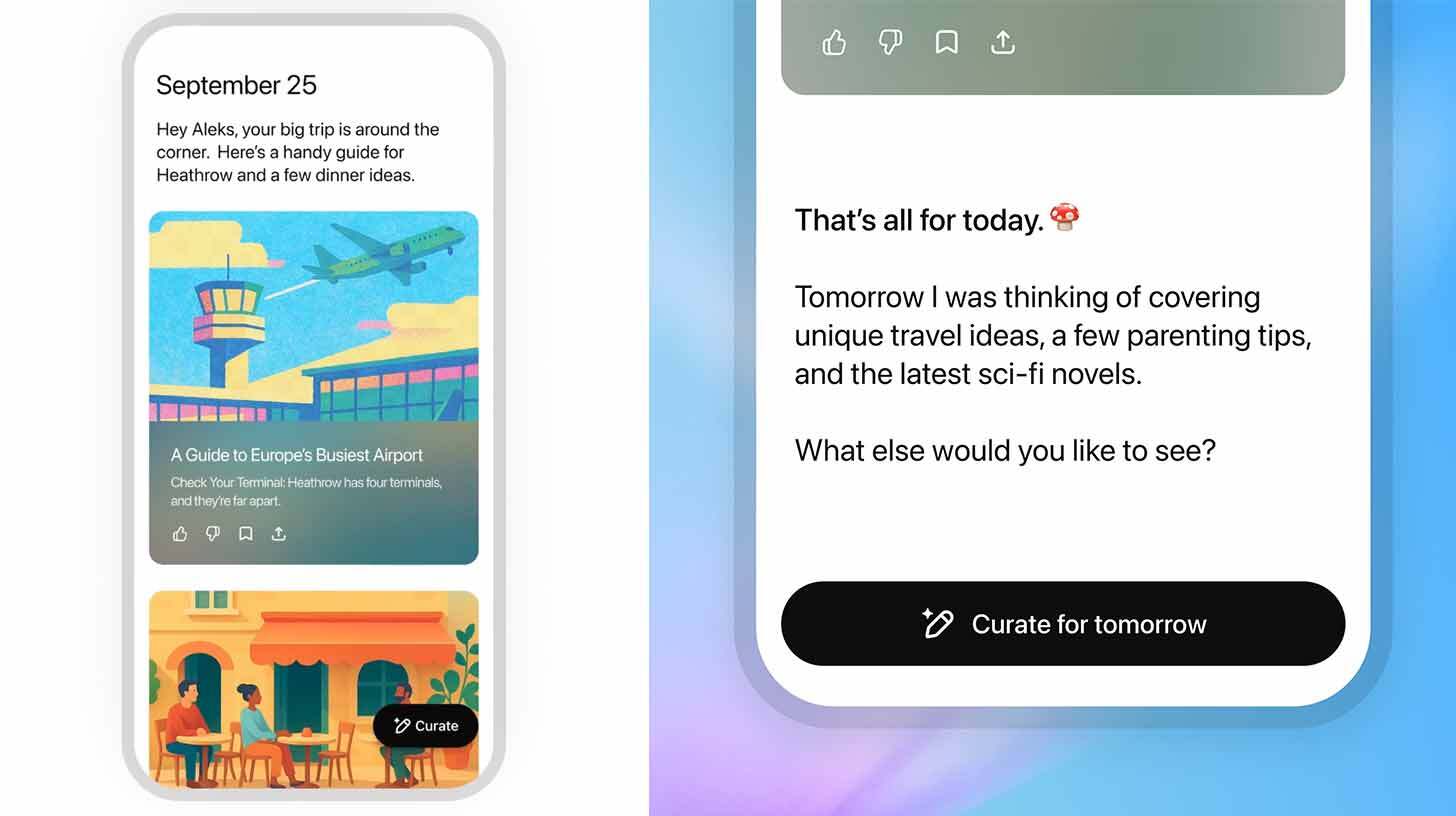
The Rundown: OpenAI just launched ChatGPT Pulse, a new preview feature that proactively generates personalized morning briefings while users sleep, initially available exclusively for Pro ($200/mo) subscribers.
The details:
The feature automatically creates 5-10 cards overnight based on chat history, user feedback, or connected Gmail and Google Calendar data.
Users can shape future briefings through direct requests or thumbs-based feedback, with updates refreshing daily unless specifically saved.
OpenAI said it deliberately designed Pulse to stop after several reports, displaying "that's it for today" to avoid engagement-driven scrolling patterns.
Pulse will eventually also roll out to Plus subscribers, becoming the first of several “compute-intensive” new features set to be trialed with the Pro tier.
Why it matters: OpenAI’s personalization movement has been in the works for a while, but this feels like a new step forward — with pulse rolling many of the platform’s top traits like productivity, news, connectors, and life insights unique to each user into a curated morning roundup built for the proactive, agentic era of AI assistants.
TOGETHER WITH TRIPLE WHALE
💥 Crush BFCM with these 50 AI prompts
The Rundown: Master every click, cart, and customer journey. Triple Whale’s new guide equips you with 50 AI prompts that turn overwhelming BFCM data into clear, actionable insights for peak holiday profitability.
Download it now to learn:
Do’s and don’ts of BFCM LLM prompting
Step-by-step workflows, data preparation, and tips for deeper analysis
Why top brands choose ecommerce-trained AI over basic LLMs
ELON MUSK
🏛️ Elon Musk, xAI sue OpenAI over trade secrets

Image source: Reve / The Rundown
The Rundown: xAI just filed a new lawsuit accusing OpenAI of systematically poaching employees to steal trade secrets, the latest legal move in the ongoing contentious battle between Elon Musk and his former company.
The details:
xAI named 8 former employees allegedly recruited via a coordinated effort, including several who admitted copying source code to personal devices.
Two engineers allegedly downloaded xAI's codebase while communicating with the same OpenAI recruiter through encrypted messaging app Signal.
Court filings also show a senior finance executive, who knew xAI's data center operations were its "secret sauce," refuse to comply with legal warnings.
OpenAI dismissed it as the “latest chapter in Musk’s ongoing harassment,” with previous actions against OAI’s restructure, mission, and antitrust allegations.
Why it matters: If you like drama, Elon vs. OpenAI is the gift that keeps on giving. But the lawsuit also exposes the darker side of the AI talent wars and flurry of movement between labs this summer, where proprietary breakthroughs are now just a job change away from potentially heading to the competition.
AI TRAINING
📊 Get instant business insights from spreadsheets
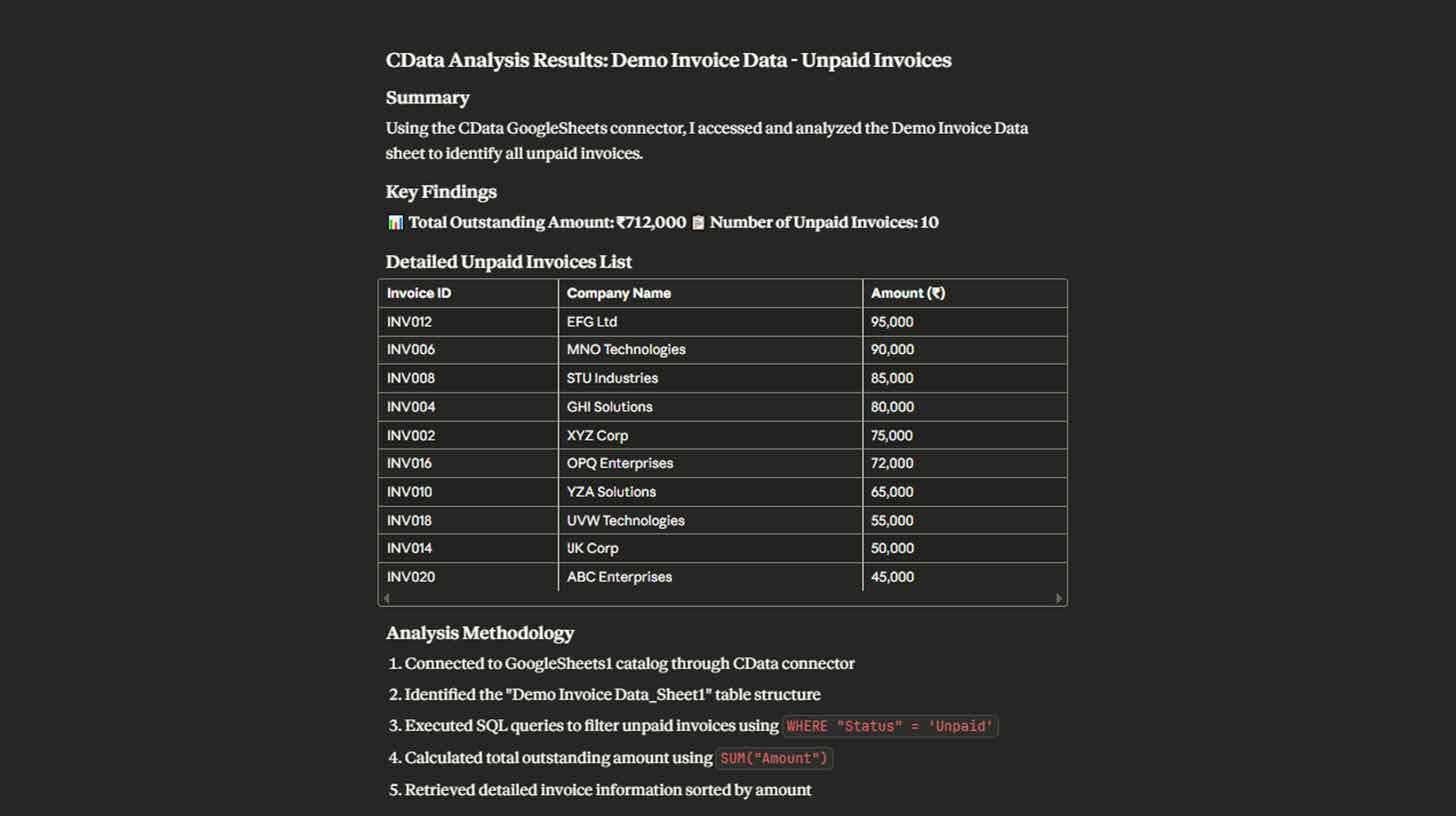
The Rundown: Transform your Google Sheets invoice data into a conversational business intelligence system using CData Connect AI and Claude Desktop, with no more manual calculations or complex formulas needed.
Step-by-step:
Go to CData Connect AI, sign up for a free account, and navigate to the dashboard to manage data connections
Click "Add Connection," select Google Sheets, authenticate with your Google account, and click "Save & Test" to confirm the connection
In Claude Desktop, add the CData MCP server using URL https://mcp.cloud.cdata.com/mcp and authenticate with CData credentials
Query your data with natural language like "Use CData to analyze the Demo Invoice Data sheet and show me all unpaid invoices with company names and amounts, then calculate total outstanding"
Pro tip: Connect your CRM like HubSpot or Salesforce as an additional data source in CData. This lets you analyze customer payment patterns alongside sales data, support tickets, and other business metrics in a single Claude conversation.
PRESENTED BY NEBIUS
📶 Why AI teams are switching from hyperscalers to Nebius

The Rundown: Hyperscalers promise AI-ready infrastructure, but deliver generic cloud with GPU bolt-ons. Nebius designed their platform from the ground up for machine learning workloads, with the performance guarantees and developer experience that AI engineers actually need.
By switching to Nebius, you receive:
3 months free service plus zero-cost data migration from your current provider
Supercomputer performance with cloud-like flexibility and familiar tooling
Solution architects who guide you through every step of the transition
AI RESEARCH
💼 OpenAI tests AI against human workers across 44 jobs
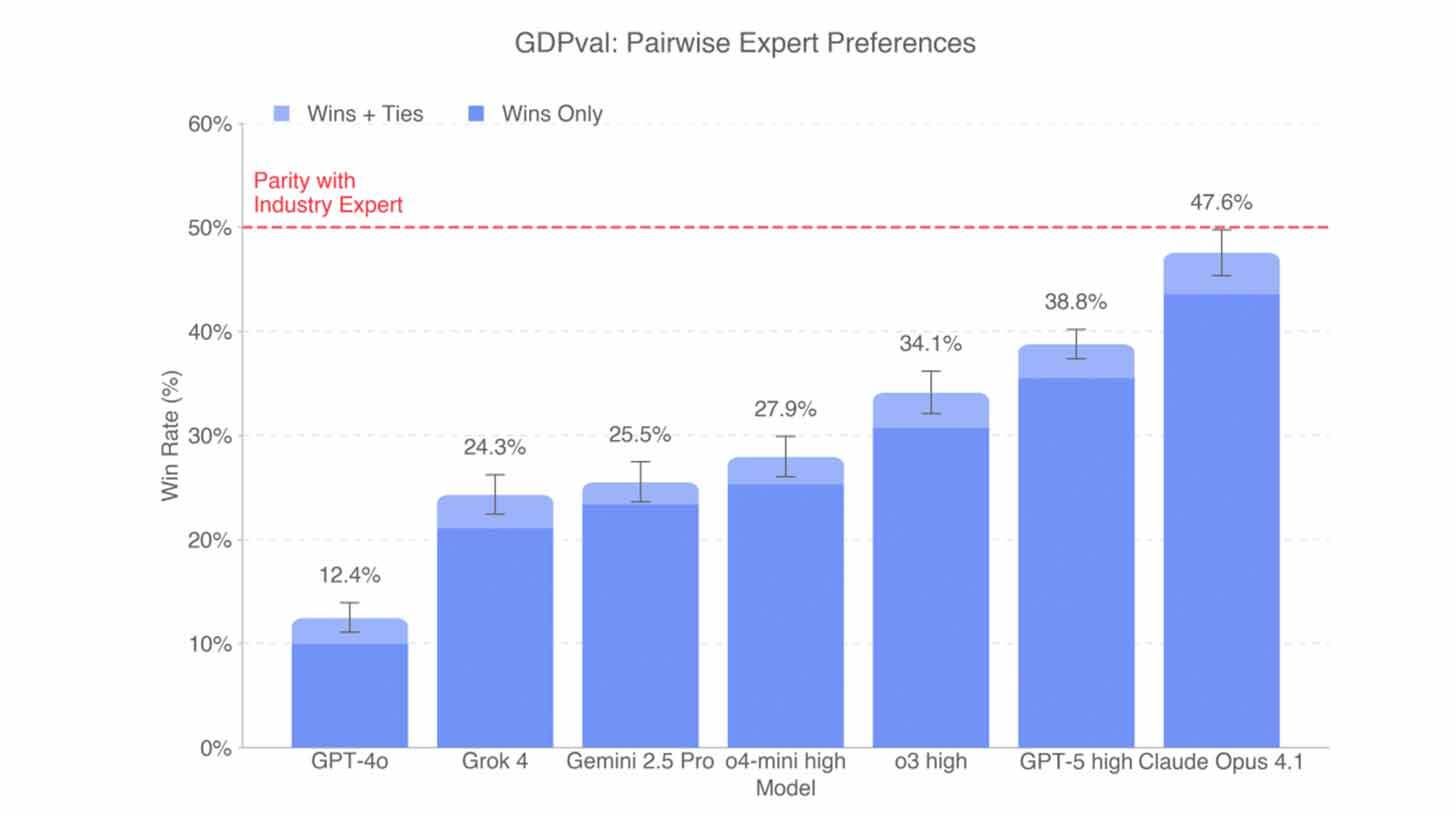
Image source: Midjourney
The Rundown: OpenAI just introduced GDPval, a new benchmark that measures whether AI models can match professional work quality across 44 occupations — testing top models like GPT-5, Claude Opus 4.1, Gemini 2.5, and Grok 4 against industry experts.
The details:
GDPval evaluated 1,320 tasks created by professionals averaging 14 years of experience across 9 economic sectors like healthcare and finance.
Opus 4.1 achieved the highest scores with a 47.6% win rate and excelled at visual presentation tasks, while GPT-5 led in technical accuracy.
OpenAI also found that performance tripled from GPT-4o to GPT-5 over 15 months, showing rapid improvement in workplace task capabilities.
Why it matters: Despite the headlines of immediate workforce replacement, GDPval shows even the best models are just reaching parity with professionals on certain tasks. But if this benchmark is anything like others in the AI world, its not long before more advanced models make a significant jump with just a few months of acceleration.
QUICK HITS
🛠️ Trending AI Tools
📰 ChatGPT Pulse - Proactive, personalized daily updates from chats, apps, and more
🎥 Wan2.5-Preview - Alibaba’s new SOTA, multimodal image and video model
⚙️VibeSDK - Deploy your own AI-powered vibe coding platform with one click
🤖 CWM - Meta’s open-weights LLM for code generation world model research
📰 Everything else in AI today
Valon is hiring – Forward Deployed Engineer, $130K-$230K + Equity. Work onsite with enterprise clients to translate their needs into code. NYC/SF/Seattle. Apply here.*
Spotify announced AI safeguards including a spam filter, impersonation policy, and AI disclosure credits, revealing that over 75M AI spam tracks have already been removed.
Meta launched Vibes, a new AI video feed within the Meta AI app that lets users discover, create, and remix short-form AI videos with visuals, music, and styles.
Microsoft is reportedly developing a Publisher Content Marketplace that would pay news outlets and content creators when their articles are used by AI tools like Copilot.
xAI announced a new agreement to provide the U.S. government with access to its Grok AI models for just $0.42 cents per organization through 2027.
Meta introduced Code World Model, an open-weights research model that simulates how programs execute before they run using a world model.
*Sponsored Listing
COMMUNITY
🤝 Community AI workflows
Every newsletter, we showcase how a reader is using AI to work smarter, save time, or make life easier.
Today’s workflow comes from reader Ross D.S. in Kelowna, Canada:
"My use of AI is expanding daily. Yesterday, I used ChatGPT to advise me on a negotiation. Last week, I used it to develop a fundraising strategy for my startup. I am also writing a prompt to create a complex business plan that will create not only the business plan itself but a full exit strategy to sell the business.”
How do you use AI? Tell us here.
🎓 Highlights: News, Guides & Events
Read our last AI newsletter: 90% of devs now use AI (but don’t trust it)
Read our last Tech newsletter: One OS to rule all drones
Read our last Robotics newsletter: Norway’s 1X to raise $1B
Today’s AI tool guide: Get instant business insights from spreadsheets
RSVP to our next workshop @ 4PM EST today: Automated Deep Research
See you soon,
Rowan, Joey, Zach, Shubham, and Jennifer — the humans behind The Rundown

Norway's 1X to raise $1B
Read Online | Sign Up | Advertise

Good morning, robotics enthusiasts. Norwegian robotics startup 1X is chasing a $10B valuation with a monster $1B raise to bring its knit-wearing humanoid, NEO, into your living room.
Backed by OpenAI, the company is stepping out of the lab and into real homes to answer the only question that matters: not if robots are coming, but whether they'll actually be useful once they get there.
In today’s robotics rundown:
1X eyes $1B raise for $10B valuation
Trump targets robotics in tariff push
Pill-shaped robot samples your gut
Alibaba gets Nvidia’s Physical AI stack
Quick hits on other robotics news
LATEST DEVELOPMENTS
1X
💰 1X eyes $1B raise for $10B valuation

Image source: 1X
The Rundown: Norwegian robotics startup 1X is swinging for the fences with a massive $1B funding round, reports The Information, setting its sights on a $10B valuation that would push it into the ranks of tech’s top-funded robotics startups.
The details:
The funding round would position 1X among the world’s best-funded humanoid startups, rivaling Figure AI and Tesla’s Optimus ambitions.
Heavy hitters like OpenAI, Tiger Global, and Samsung have already thrown their weight behind the company, contributing to a recent $100M+ raise.
1X is transitioning from controlled testing to widespread home trials, where messy reality will determine if its NEO humanoid is ready for prime time.
The capital will be used to ramp up NEO’s production, enable large-scale home trials, and advance the AI powering its embodied learning systems.
Why it matters: While Tesla grabs headlines and Figure chases factory floors, 1X is betting that the real prize lies in domestic spaces where humans actually live. If they nail the home market first — navigating the kid/pet chaos that would break lesser bots — every other robotics company will be playing catch-up in a game that's already over.
TOGETHER WITH SAMBANOVA
🎁 Claim $100 in SambaCloud Credits
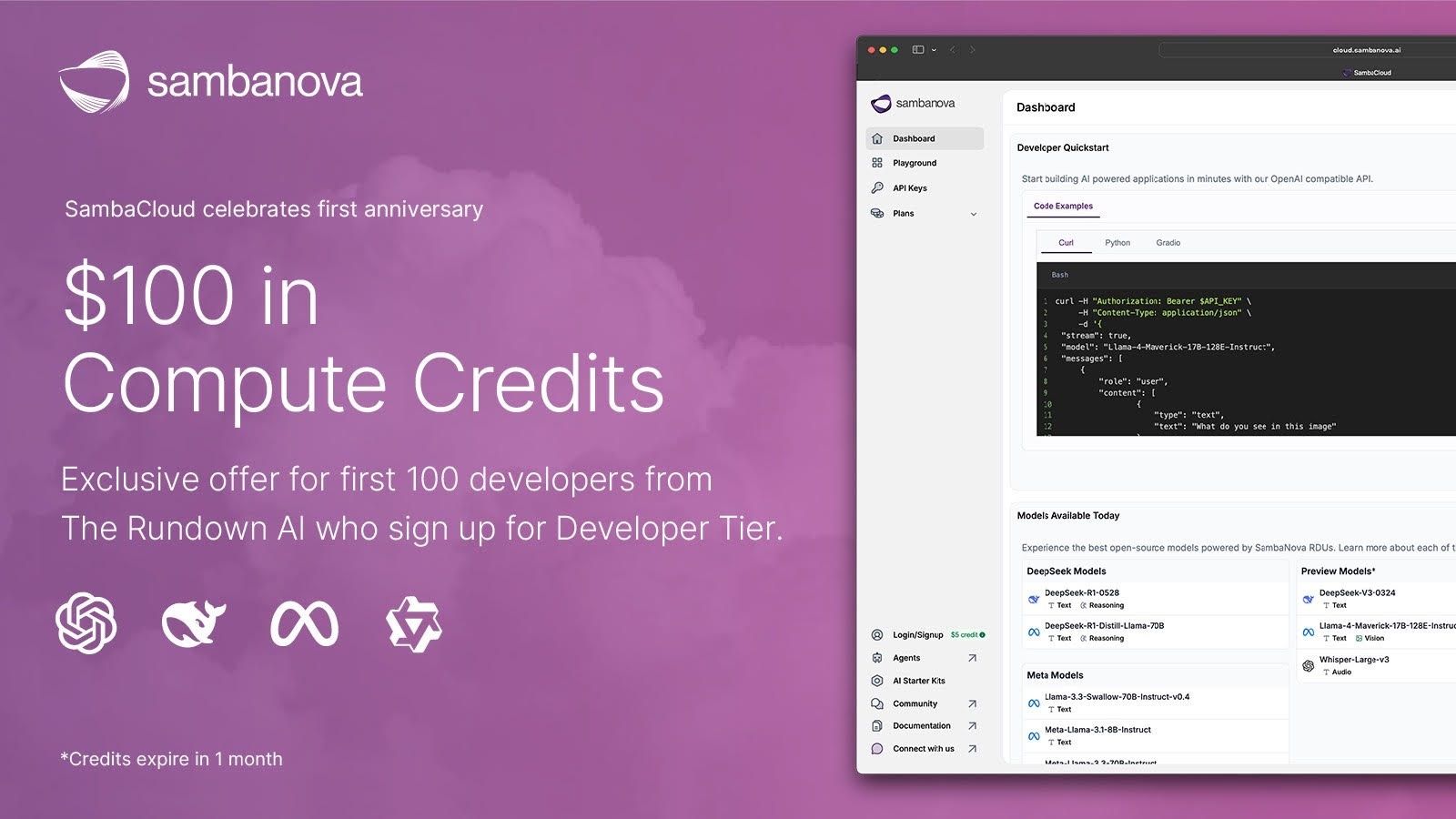
The Rundown: SambaCloud delivers lightning‑fast inference on top open‑source models using SambaNova’s purpose‑built and energy-efficient AI chip, and is offering an exclusive $100 credit to the first 100 developers who sign up through The Rundown AI for the platform’s first anniversary.
With SambaCloud, you get:
Fast Inference Speeds
OpenAI Compatible APIs
Scalable, pay‑as‑you‑go pricing
Bring your own fine-tuned models
Claim your credits and start building with SambaCloud today!
TRADE WARS
🤖 Trump targets robotics in tariff push
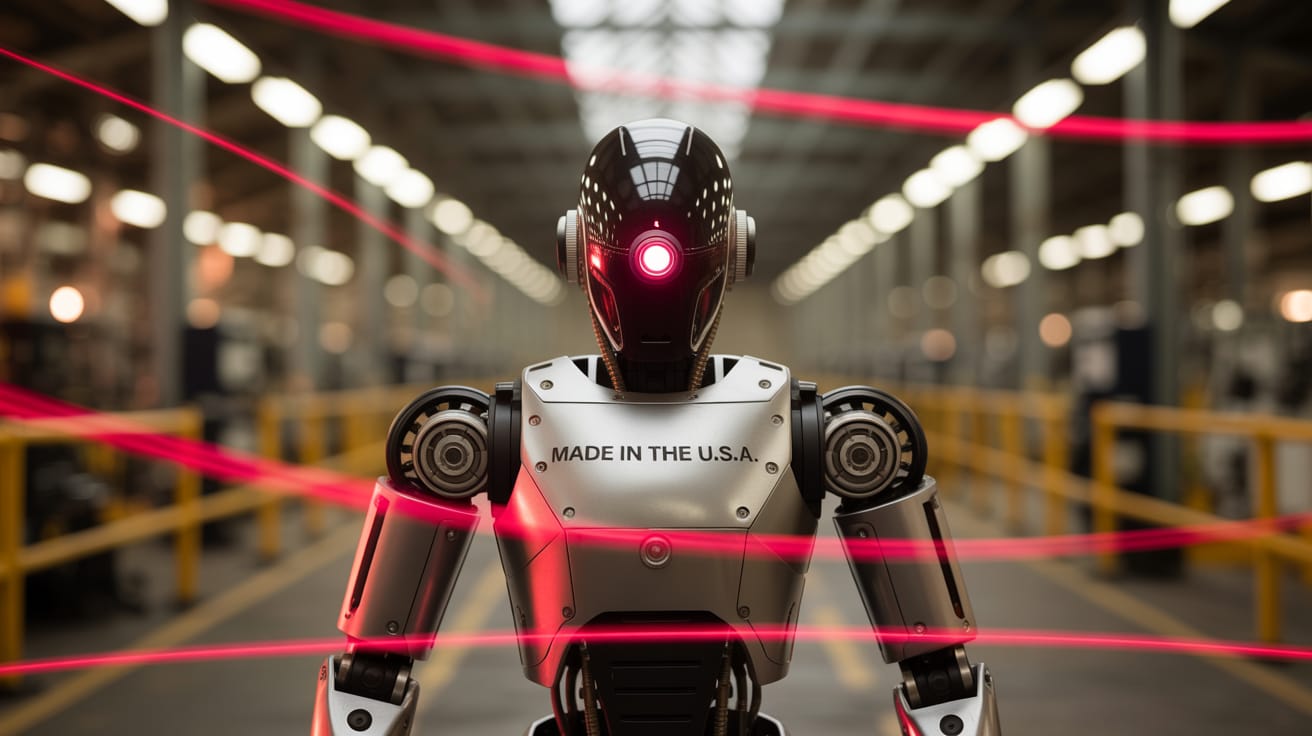
Image source: Reve / The Rundown
The Rundown: Robotics is the latest front in Washington’s escalating trade battles, with the Trump administration launching national security investigations into imported robots, industrial machinery, and medical devices.
The details:
These probes are being carried out under the same “Section 232” law previously used to impose tariffs on steel, aluminum, copper, and autos.
Officials argue that the U.S. is becoming too dependent on foreign-made robotics and automation systems, particularly from China and Europe.
For robotics, the move could affect core components such as robotic arms, vision systems, and motion-control technology, much of which is imported.
The policy could reshape global robotics supply chains, incentivizing firms to localize production or relocate manufacturing bases to avoid tariff exposure.
Why it matters: Tariffs on imported robotics could drive up costs, slow adoption, and stall innovation at a pivotal moment for AI-driven automation. However, supporters counter that the investigations are a chance to rewire supply chains, cut dependence on foreign suppliers, and redefine America’s robotics future.
MEDICAL ROBOTS
💊 Pill-shaped robot samples your gut

Image source: Ideogram / The Rundown
The Rundown: Chinese researchers just developed a swallowable robot capsule that navigates through your digestive system using magnetic guidance, collecting fluid samples for diagnosis. No scopes, no surgery — just swallow and wait.
The details:
The capsule contains tiny pumps and scraping tools activated by precisely calibrated magnetic fields applied from outside the body.
At under 20mm, this soft, biocompatible capsule moves through intestinal passages without causing damage.
Unlike passive imaging capsules that just take photos, this device actively hunts down and extracts samples from targeted locations in real time.
Advanced sealing technology keeps samples pure as the capsule travels through the digestive tract.
Why it matters: While doctors depend on colonoscopies, endoscopies, and indirect testing methods, this magnetic micro-device could diagnose conditions from early-stage cancers to diseases through simple ingestion. If human trials prove successful, it could transform internal medicine by making diagnostics that much easier.
ALIBABA/NVIDIA
⚡️ Alibaba gets Nvidia’s Physical AI stack

Image source: Creative Commons
The Rundown: Days after Nvidia shook up the chip world with a $5B stake in Intel and a $100B commitment to OpenAI, the GPU powerhouse has inked a partnership with Alibaba to embed its cutting-edge AI robotics stack into China’s largest cloud platform.
The details:
The deal integrates Nvidia’s full suite of Physical AI tools into Alibaba Cloud’s AI platform, targeting robotics, autonomous vehicles, and smart spaces.
Alibaba will gain access to Nvidia's Omniverse simulation environment, enabling digital twins for factory automation and logistics optimization.
The partnership includes joint development of specialized AI chips optimized for robotics applications, potentially challenging established players.
Nvidia's Isaac platform will connect millions of IoT devices across Alibaba's warehouses, smart cities, and delivery networks.
Why it matters: While Western rivals face increasing Chinese restrictions, Nvidia is doubling down by embedding its tech into the infrastructure powering Chinese robotics and automation. Success here could make Nvidia indispensable to China's AI-driven industrial transformation, creating dependencies that transcend geopolitical tensions.
QUICK HITS
📰 Everything else in robotics today
Unitree’s G1 humanoid now shrugs off repeated kicks and shoves thanks to its new Anti-Gravity mode, instantly regaining balance and standing back up.
Zoox is seeking a federal exemption to commercially launch its custom robotaxis, which operate without pedals or a steering wheel, on U.S. roads.
KAIST, a top science and engineering university in South Korea, developed a next-gen humanoid capable of performing Michael Jackson’s iconic moonwalk.
Universal Robots unveiled a new UR8 Long cobot with a 1750 mm reach and 8 kg payload capacity in a slim, lightweight design.
Sydney startup Alloy is tackling the robotics industry’s data overload with a platform that lets robotics companies organize vast amounts of sensor and camera data.
ABS and Persona AI are partnering to adapt advanced humanoids for shipyard duties, to automate complex tasks like inspections and welding.
U.S.-based K-Scale Labs just delivered their first K-Bot, a U.S.-made open-source humanoid, priced as low as $9K.
The U.S. Coast Guard is investing $350M in robotics and autonomous systems to boost mission performance and operational capabilities throughout its fleet.
COMMUNITY
🎓 Highlights: News, Guides & Events
Read our last AI newsletter: 90% of devs now use AI (but don't trust it)
Read our last Tech newsletter: One OS to rule all drones
Read our last Robotics newsletter: Winged robo-birds take flight
Today’s AI tool guide: Make pixel-perfect website changes with AI
RSVP to next live workshop @ 4PM Friday: Automated Deep Research
See you soon,
Rowan, Jennifer, and Joey—The Rundown’s editorial team
90% of devs now use AI (but don't trust it)
Read Online | Sign Up | Advertise

Good morning, AI enthusiasts. The numbers are in, and they're contradictory: 90% of developers can't work without AI anymore, yet a large percentage don’t trust their new silicon assistant’s outputs.
Google's latest DORA report just exposed the new development meta — using AI as a productivity multiplier while still keeping human judgment in the driver's seat.
In today’s AI rundown:
Google reveals near-universal AI adoption for devs
AI clears toughest CFA exam in minutes
Make pixel-perfect website changes with AI
MIT’s AI designs quantum materials
4 new AI tools, community workflows, and more
LATEST DEVELOPMENTS
⚙️ Google reveals near-universal AI adoption for devs

Image source: Google Cloud
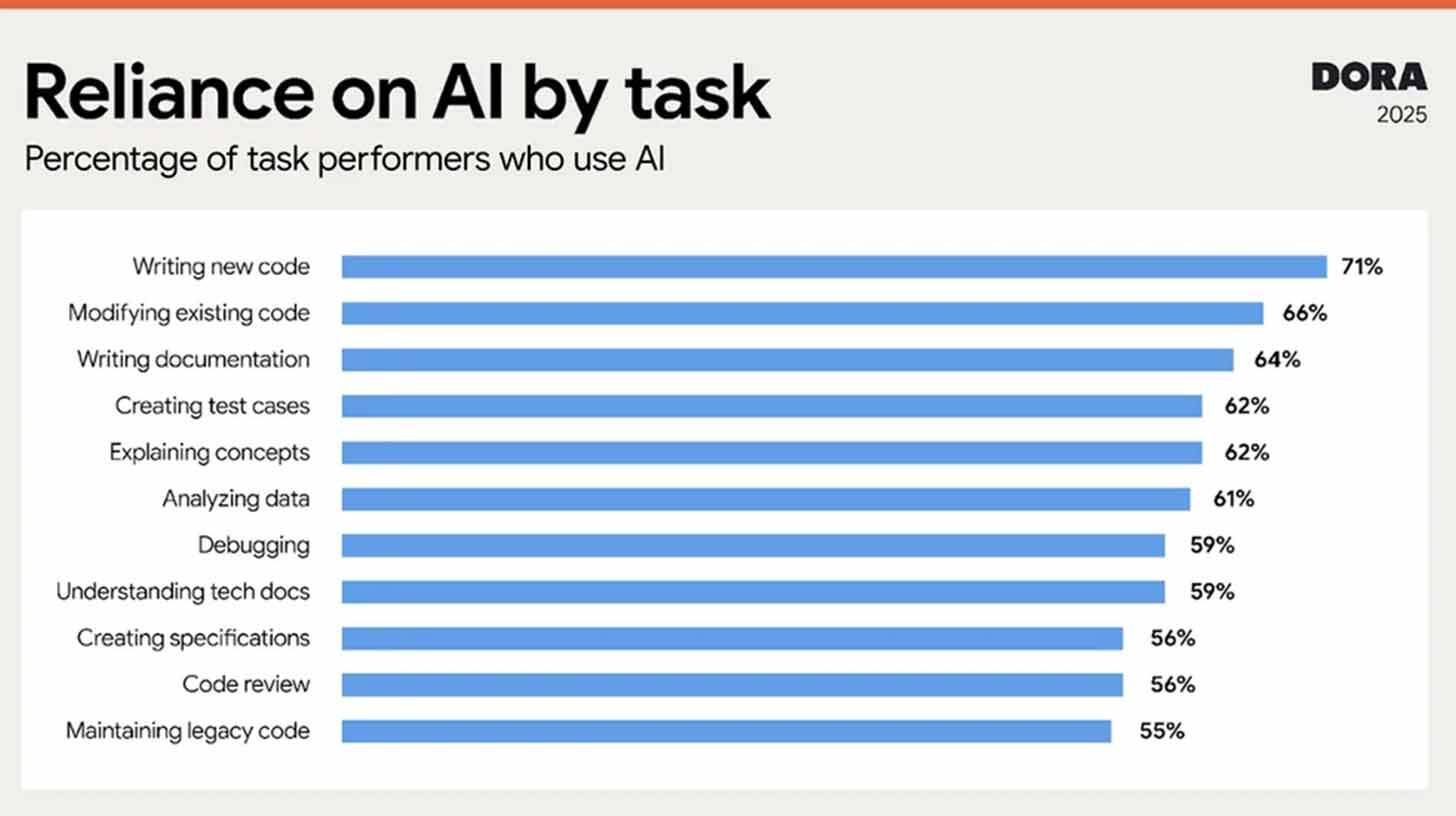
The Rundown: Google Cloud just published its latest annual DORA report on ‘State of AI-assisted Software Development’, finding adoption of the tech has surged to 90% among developers — but confidence in AI outputs remains surprisingly low.
The details:
Google surveyed nearly 5,000 tech professionals, showing that developers now dedicate around two hours each day to working with AI assistants.
Despite heavy reliance on the tools, 30% of developers trust AI outputs either "a little" or "not at all" while still continuing to integrate them into workflows.
Productivity gains remain strong, with 80% reporting enhanced efficiency and 59% noting improvements to code quality despite the skepticism.
Google also introduced the DORA AI Capabilities Model, outlining seven practices designed to help companies maximize AI benefits effectively.
Why it matters: AI is shifting from experimental tooling to essential infrastructure in the development world, but the trust issues alongside massive adoption might be a feature, not a bug — showing that devs are still harnessing the tech for productivity gains while still leveraging human judgement as the final judge for quality control.
TOGETHER WITH SAMBANOVA
🎁 Claim $100 in SambaCloud Credits
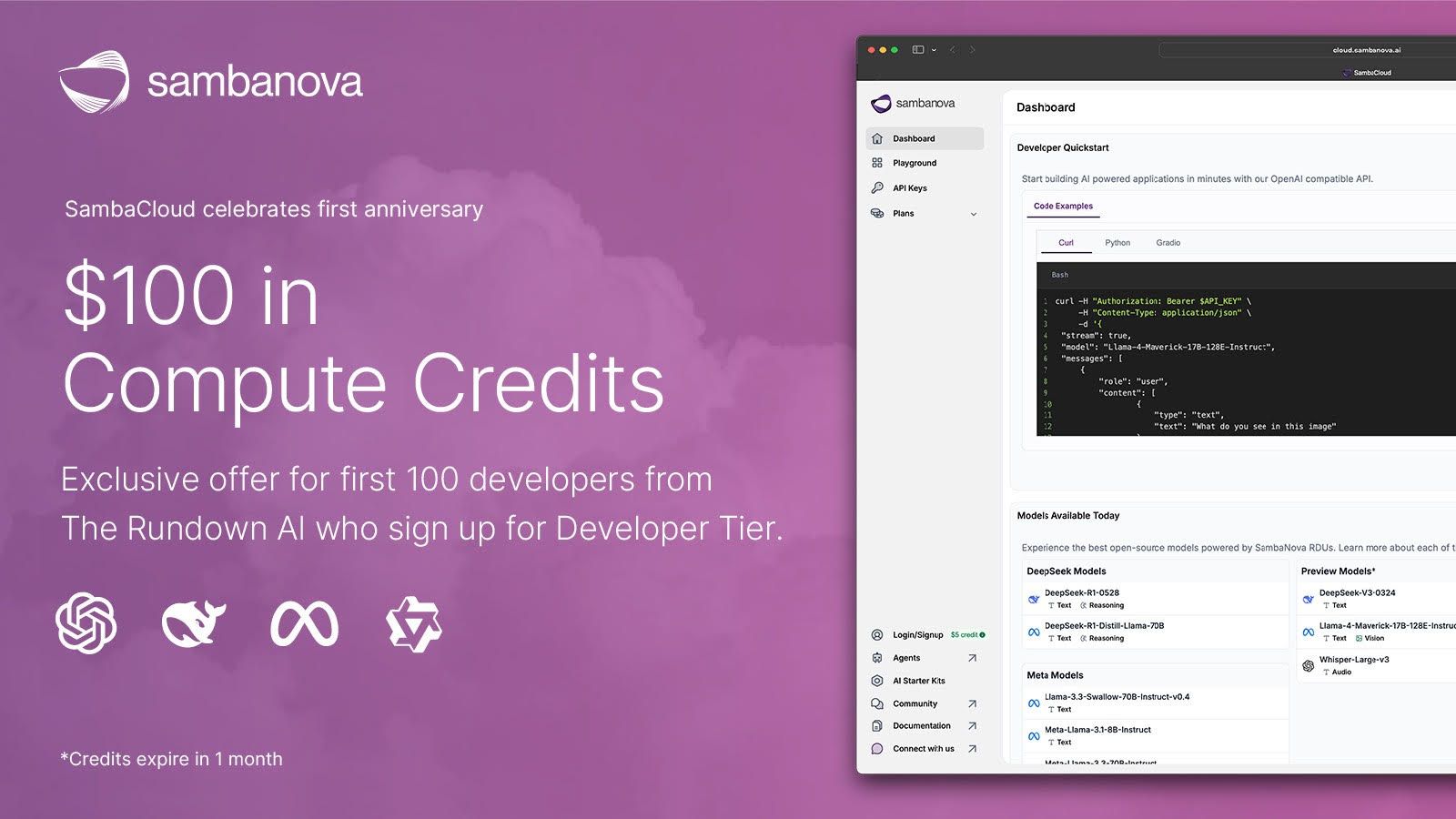
The Rundown: SambaCloud delivers lightning‑fast inference on top open‑source models using SambaNova’s purpose‑built and energy-efficient AI chip, and is offering an exclusive $100 credit to the first 100 developers who sign up through The Rundown AI for the platform’s first anniversary.
With SambaCloud, you get:
Fast Inference Speeds
OpenAI Compatible APIs
Scalable, pay‑as‑you‑go pricing
Bring your own fine-tuned models
Claim your credits and start building with SambaCloud today!
AI & FINANCE
🤑 AI clears toughest CFA exam in minutes

Image source: Reve / The Rundown
The Rundown: Research from NYU has found that frontier models from OpenAI, Google, and Anthropic can now pass all three levels of the CFA (chartered financial analyst) exam, including difficult Level III essay questions that eluded them two years ago.
The details:
NYU Stern and GoodFin researchers tested 23 language models on mock CFA Level III exams, finding nine models achieved passing scores above 63%.
OpenAI's o4-mini scored highest at 79.1% on the challenging essay portion, with Gemini 2.5 Pro and Claude 4 Opus reaching 75.9% and 74.9%.
Models completed the exam in minutes versus the 1,000 hours humans typically spend studying across multiple years for all three levels.
Human graders also consistently scored AI essay responses 5.6 points higher than automated grading systems.
Why it matters: The leap from failing essay sections two years ago shows the huge shift in analytical capabilities, with reasoning models perfectly suited for the complex thinking process. With AI’s rise, human aspects like client relationships and contextual judgement will become bigger factors than research reports and investment rationales.
AI TRAINING
💻 Make pixel-perfect website changes with Stagewise AI
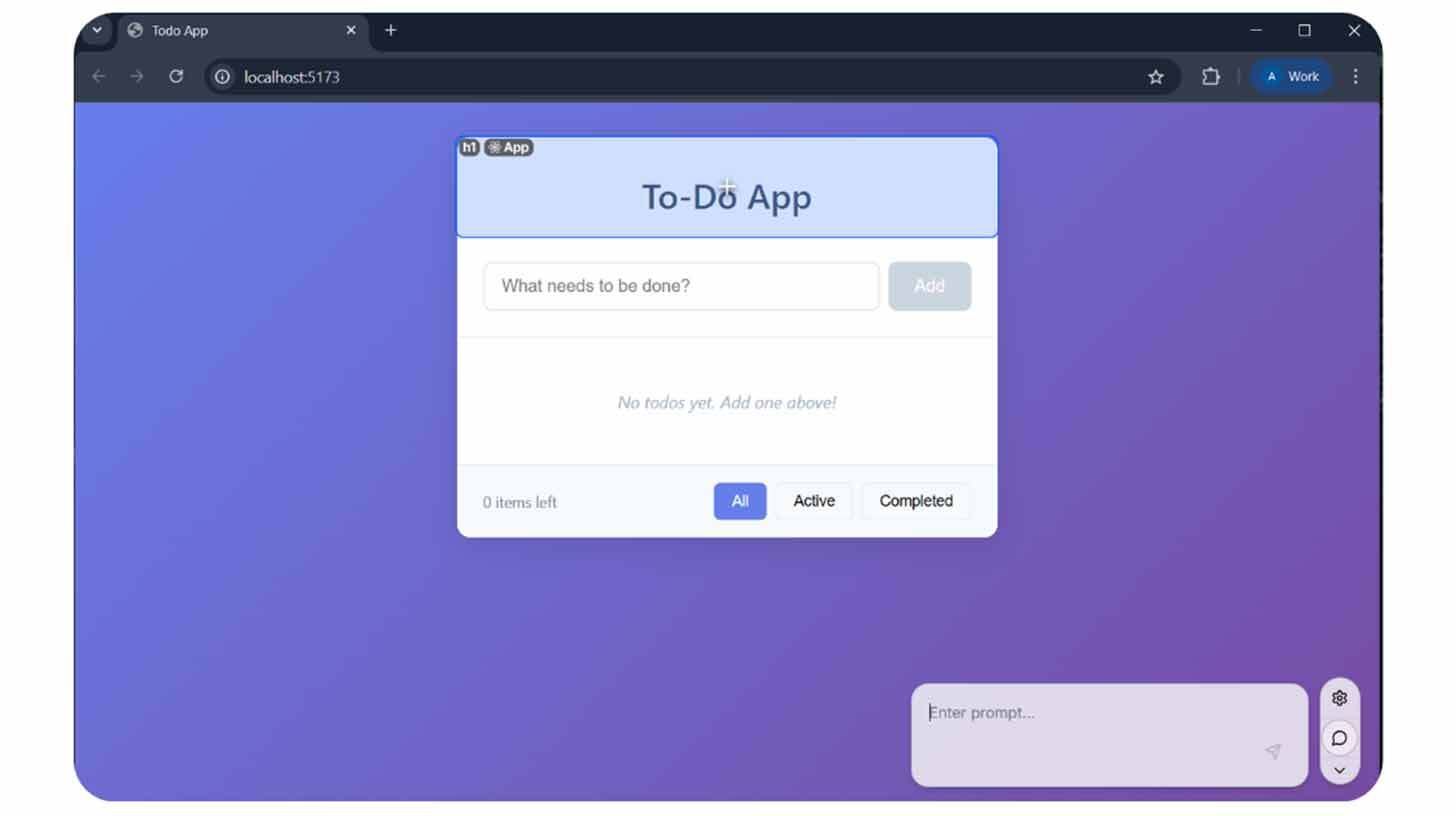
The Rundown: In this tutorial, you’ll learn how to use the Stagewise plugin to add an interactive toolbar to your live Cursor project, letting you select UI elements directly and make precise visual edits without disrupting the layout or losing context.
Step-by-step:
Open the Cursor IDE, go to the Extensions tab, search for "stagewise," and click Install to add the extension
Open your project, press Cmd + Shift + P, type "Stagewise," and select "Auto setup toolbar" to let it analyze and modify your project files
Run your web app (e.g., npm run dev), click the Stagewise toolbar at the bottom to enter selection mode, hover, and click any element you want to edit
Write specific instructions like "Make this button fully rounded and add a subtle hover animation," and send the prompt with the selected element's context
Pro tip: You can select multiple elements at once to apply consistent styling changes across your app. This is perfect for tasks like updating the font size of all your headers or changing the colour of several buttons in a single command.
PRESENTED BY IBM
🧠 Six shifts to help reshape your AI strategy

The Rundown: AI is evolving, and small models can change the game. IBM reveals six strategic shifts to help businesses build agentic AI that’s lean, scalable, and impactful.
Curious about how small models can assist in achieving results in AI implementation? Begin by exploring:
The shift that can help turn AI from pilot to production
The platform strategy that helps unlock reuse and speed
The mindset that helps make responsible AI a business driver
Discover how these shifts can help you build smart, fast AI systems.
AI & MATERIALS SCIENCE
🧬 MIT’s AI designs quantum materials

Image source: Reve / The Rundown
The Rundown: MIT researchers just launched SCIGEN, an AI framework that steers generative models to create materials with exotic quantum properties by enforcing geometric design rules during generation.
The details:
Researchers equipped popular diffusion models with structural rules, enabling them to create materials with geometric patterns linked to quantum properties.
The AI system generated 10M potential materials, with 1M actually stable enough to exist in the real world.
Researchers successfully built two brand-new materials in the lab, TiPdBi and TiPbSb, confirming the AI accurately predicted their magnetic behaviors.
Google DeepMind collaborated on the framework, which prevents AI from generating physically impossible structures that plague standard models.
Why it matters: Quantum computers promise to revolutionize fields like drug discovery, battery design, and clean energy — but they need special materials that barely exist in nature. With systems like SCIGEN now generating millions of candidates instantly, the wait for quantum breakthroughs is potentially being drastically shortened.
QUICK HITS
🛠️ Trending AI Tools
⚡ CData Connect AI – Connect any of your data sources to AI for real-time enterprise data connectivity with MCP to make AI work for you*
🎬 Kling 2.5 Turbo - New high-quality video generation model
🍌 Mixboard - Google’s experimental canvas for visualizing ideas
👁️ Qwen3-VL - Alibaba’s new SOTA vision-language model
* Sponsored Listing
📰 Everything else in AI today
Microsoft officially added Anthropic’s Claude into 365 Copilot, marking the company’s first expansion outside of OpenAI for model choice.
Elon Musk took a shot at Anthropic on X, saying “winning was never in the set of possible outcomes” for the Claude-maker.
SAP and OpenAI unveiled plans for "OpenAI for Germany," a sovereign AI platform that will bring AI capabilities to German public sector workers, launching in 2026.
Cohere announced $100M funding that brings its valuation to nearly $7B, fueled by enterprise demand for its security-first AI platform, North, and Command A models.
Cloudflare open-sourced VibeSDK, enabling anyone to deploy their own AI-powered "vibe coding" platform with one click.
The U.K. government revealed that its new AI-powered Fraud Risk Assessment Accelerator helped recover a record £480M in fraudulent claims over the past year.
COMMUNITY
🤝 Community AI workflows
Every newsletter, we showcase how a reader is using AI to work smarter, save time, or make life easier.
Today’s workflow comes from reader Angela C. in Cherry Hill, NJ:
"I used ChatGPT to bridge a language gap and help a lost older woman with a child. Thanks to the AI, I gathered the info I needed, contacted the right people, and got her safely reunited with her family."
How do you use AI? Tell us here.
🎓 Highlights: News, Guides & Events
Read our last AI newsletter: Alibaba’s Qwen3 blitz
Read our last Tech newsletter: One OS to rule all drones
Read our last Robotics newsletter: Winged robo-birds take flight
Today’s AI tool guide: Make pixel-perfect website changes with AI
RSVP to next live workshop @ 4PM Friday: Automated Deep Research
See you soon,
Rowan, Joey, Zach, Shubham, and Jennifer — the humans behind The Rundown
Alibaba's Qwen3 blitz
Read Online | Sign Up | Advertise

Good morning, AI enthusiasts. We’ve gotten used to top Western labs orchestrating incremental model releases months apart, but China’s top giants have the industry scrambling to keep up.
Alibaba just released SIX new Qwen3 variants this week (so far), both flooding the market with capable, specialized options and inching closer to AI’s frontier than ever before.
In today’s AI rundown:
Alibaba floods market with Qwen3 releases
Scale AI challenges LMArena with SEAL Showdown
Create your own animated miniatures
Altman details infrastructure push in new blog
4 new AI tools, community workflows, and more
LATEST DEVELOPMENTS
ALIBABA
🌊 Alibaba floods market with Qwen3 model releases
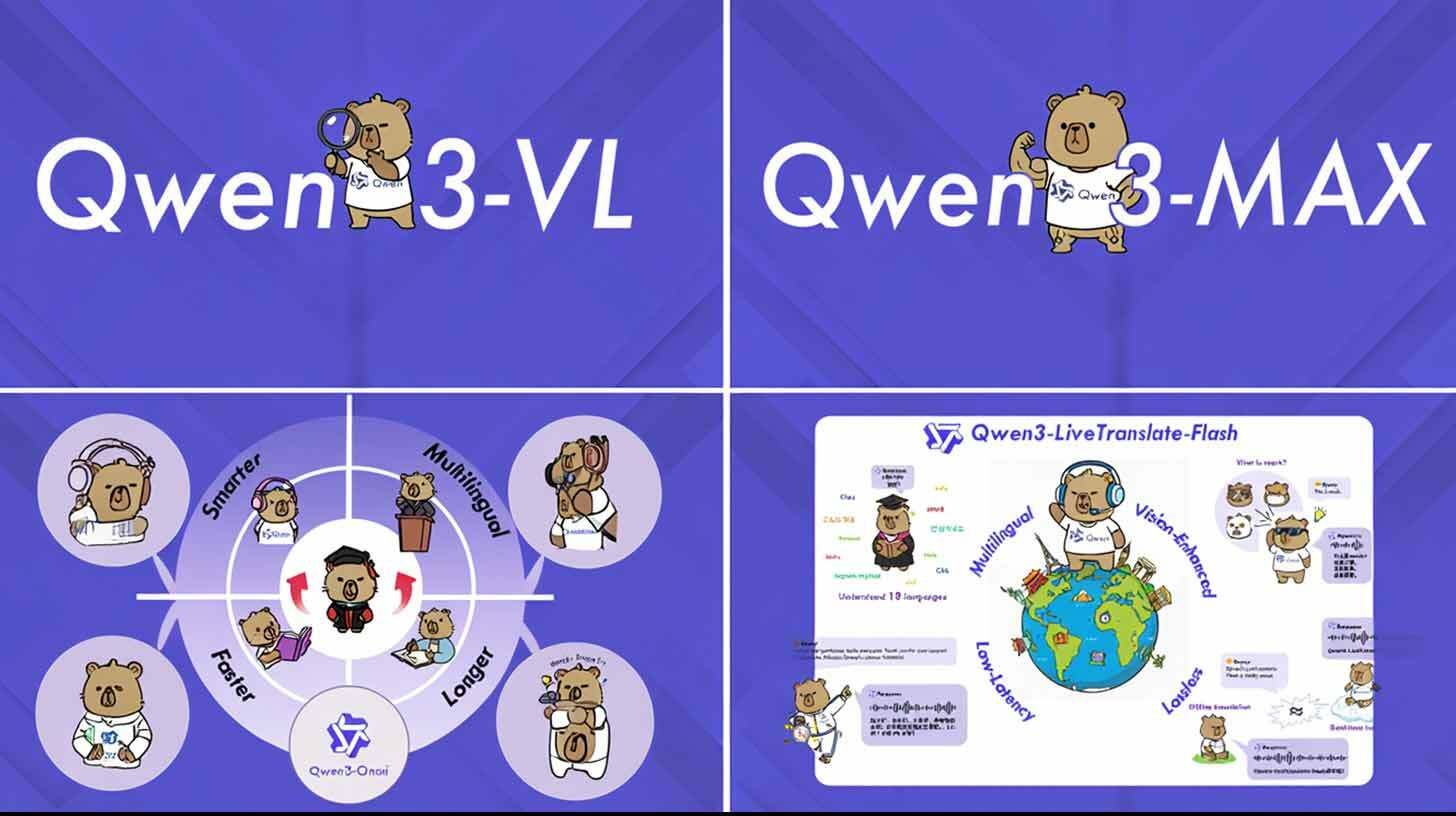
Image source: Alibaba
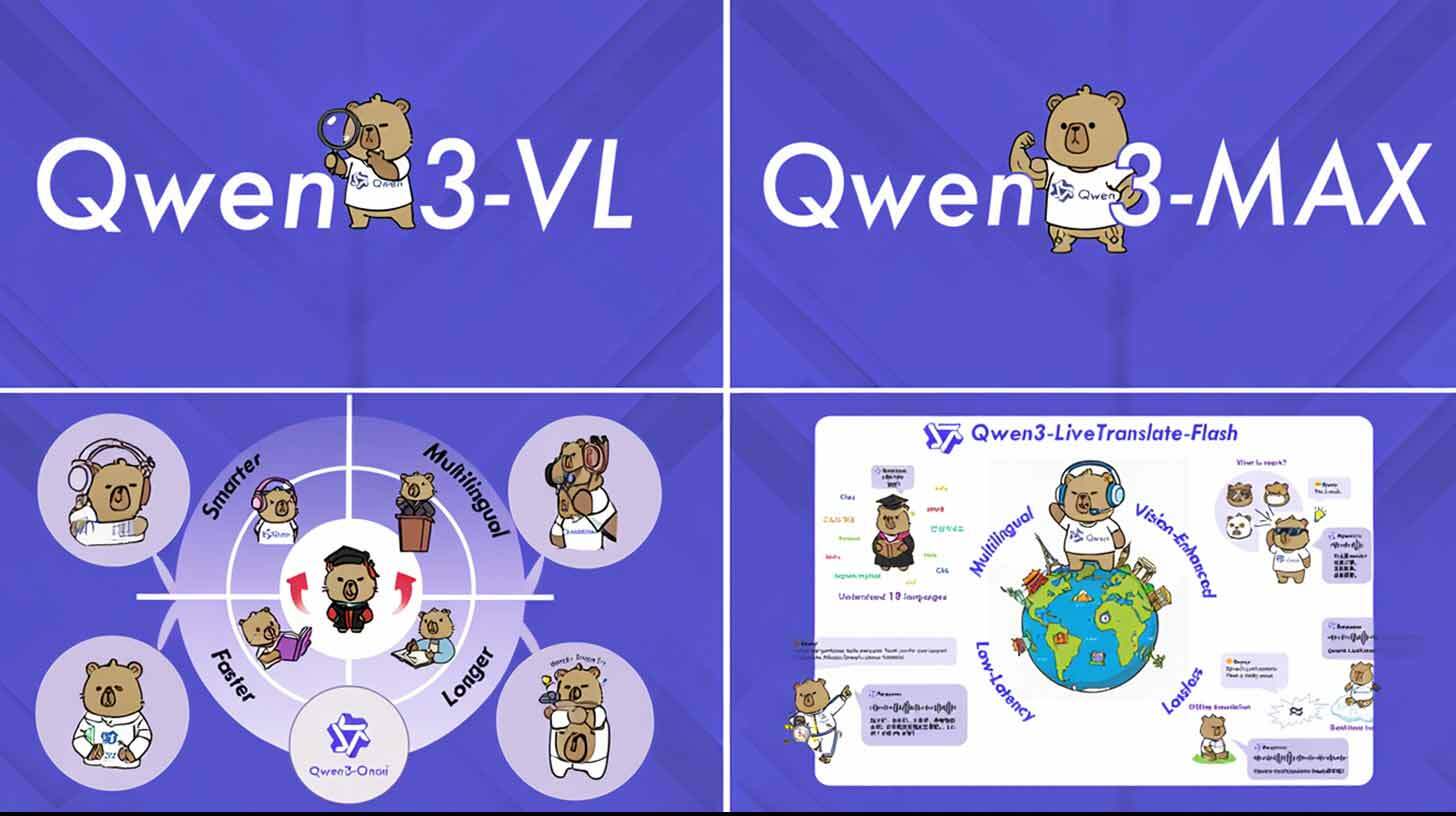
The Rundown: Alibaba just released a barrage of new Qwen3 models this week, dropping six new variants across text, vision, audio, and safety — highlighted by the newly unveiled 1T parameter Qwen-Max.
The details:
Max shows near-frontier capabilities in coding and agentic tasks, while its Heavy version achieves perfect scores across math reasoning benchmarks.
Omni is capable of processing text, images, audio, and video, while supporting speech understanding in 19 languages and generation in 10 languages.
VL grades out as the top non-reasoning and open-source visual model, while also surpassing top closed models on a series of benchmarks.
Alibaba also released LiveTranslate-Flash for real-time interpretation, Guard models for safety moderation, and new upgraded Coder variants.
Why it matters: OAI, Anthropic, and Google have conditioned us to expect a slower release schedule, but Chinese giants like Alibaba are taking the opposite approach — with a rapid-fire pace that floods the market with near-frontier, specialized options. Qwen feels the closest a Chinese lab has been to the frontier since DeepSeek’s R1.
TOGETHER WITH HUBSPOT
🧠 100+ ChatGPT prompts to revolutionize your workflow

The Rundown: HubSpot’s free, comprehensive “How to Use ChatGPT at Work” guide provides 100+ ready-to-use prompts to help professionals boost efficiency and adopt AI-driven workflows.
Inside, you’ll find:
A quick crash course to master ChatGPT in under 30 minutes
Practical industry use cases to spark real-world inspiration
100+ prompts to streamline tasks and accelerate productivity
Expert tips to tackle common AI roadblocks with confidence
Get your free copy and join 10,000+ professionals levelling up with AI.
SCALE AI
🏆 Scale AI challenges LMArena with SEAL Showdown
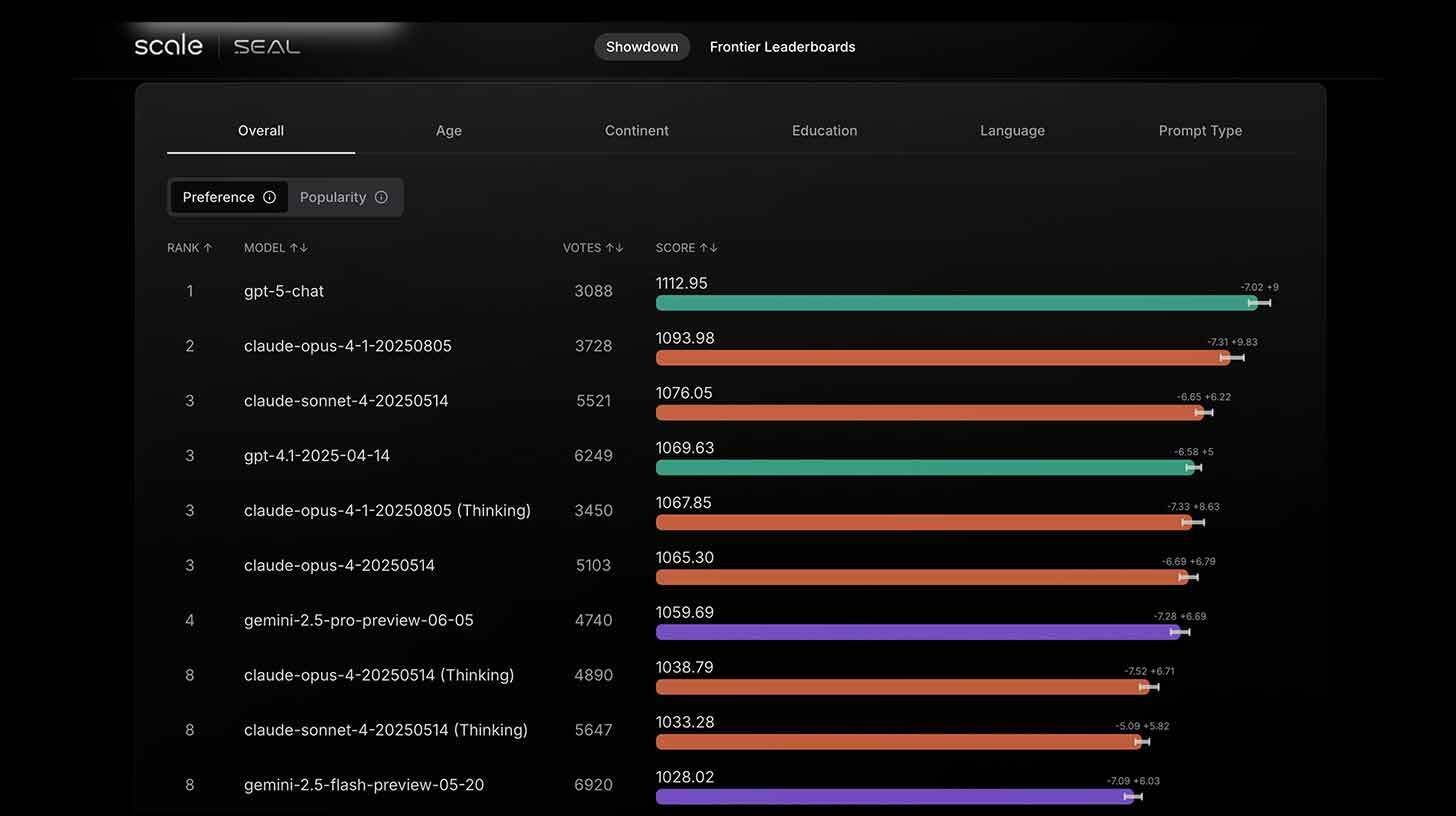
Image source: Scale AI
The Rundown: Scale AI just introduced SEAL Showdown, a benchmarking platform that segments LLM performance by real user preferences across demographics — challenging LMArena's dominance in AI model evaluation.
The details:
SEAL Showdown leverages the company’s global contributor network spanning 100 countries and 70 languages to generate rankings through voluntary voting.
Contributors access frontier models for free through Scale's Playground app, where optional side-by-side comparisons generate authentic preference data.
Scale blocks data sharing for 60 days after collection and makes voting completely optional to prevent gaming and ensure genuine user feedback.
Leaderboards are segmented by user demographics like age, education, and language, giving a granular view of how models perform for different groups.
Why it matters: Leaderboards have become common across the industry, but may not be telling the full picture of how models perform for different ages, education levels, etc. Scale’s release brings both competition to the rankings space and helps provide additional data for which models are best for specific groups and tasks.
AI TRAINING
🤗 Create your own animated miniatures
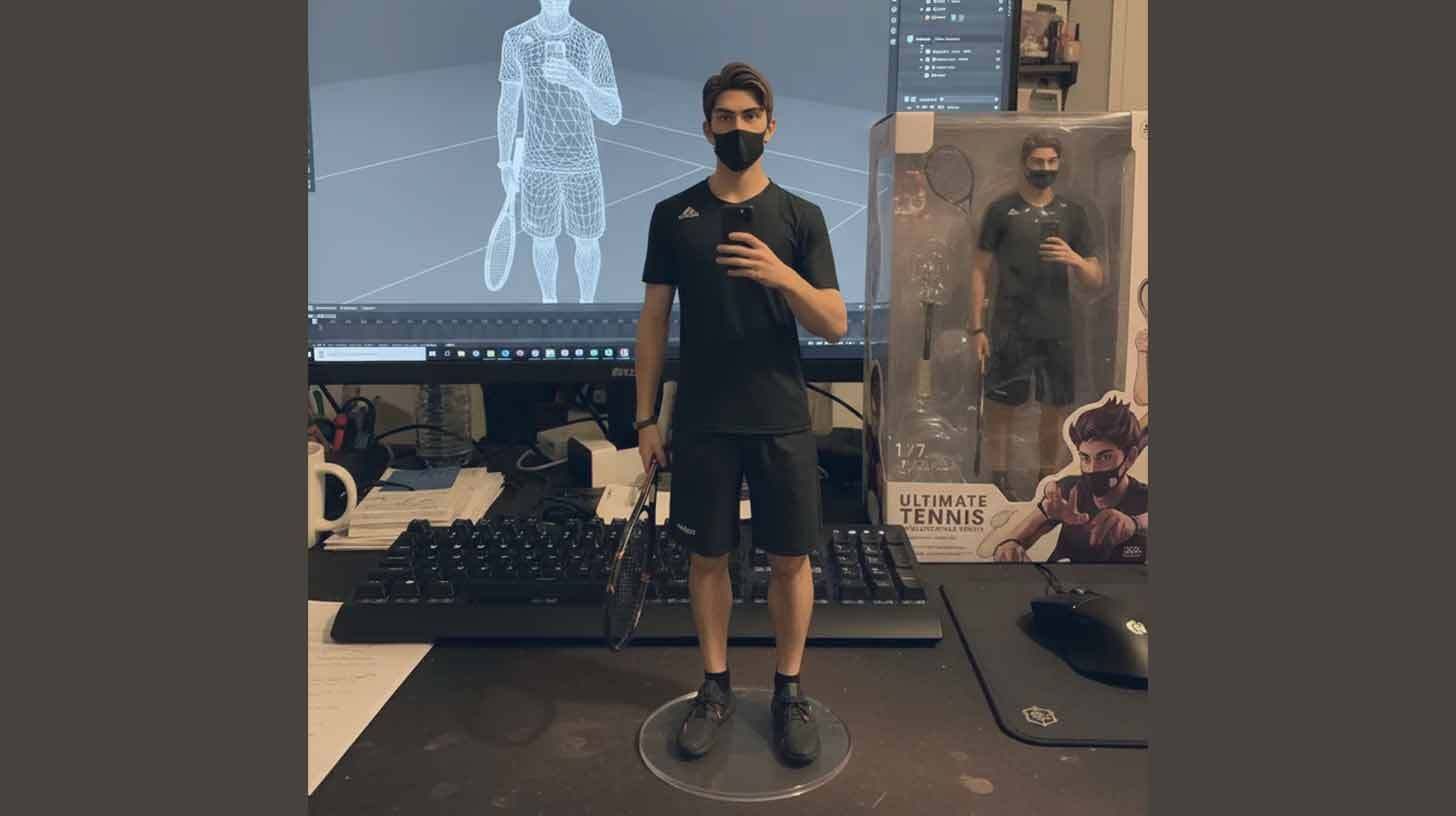
The Rundown: In this tutorial, you will learn how to create a mini figurine of yourself or a specific product using Google Gemini's Nano Banana tool, then animate it with Luma Dream Machine to create eye-catching videos for social media or marketing.
Step-by-step:
Go to Google Gemini, click "Create images," and enable the Nano Banana tool
Use this prompt: "First ask me to upload an image, then create a 1/7th scale commercialized figurine of the characters in the picture in a realistic style in a real environment. The figurine is placed on a computer desk with a transparent acrylic base and a toy packaging box"
Upload your reference image when prompted and let Gemini generate your figurine scene with desk setup, monitor, and premium packaging
Take the generated image to Luma Labs, create a "New Board," and animate with prompts like "Front camera view of this figurine. He takes the phone, tosses it up like a serve, then smashes it toward the camera"
Pro Tip: Be specific about camera angles (front view, close-up, dolly-in), subject motion (which hand does what, timing), and tone for the best results.
PRESENTED BY IBM
💼 How AI is helping IBM reinvent HR with AI

The Rundown: IBM is applying AI across its enterprise to HR, IT, Procurement, and more. By remaking its own operations, it's demonstrating how the technology can deliver ROI for clients.
Key achievements include:
75% productivity gains in domain-specific HR tasks
2.1M employee conversations automated annually
80+ HR tasks fully handled by AI without human intervention
Is this what tomorrow's global companies will look like? Read the full case study.
OPENAI
🏗️ Altman details infrastructure push in new blog

Image source: Nano Banana / The Rundown
The Rundown: OpenAI CEO Sam Altman published a blog post revealing plans to build infra capable of producing one GW of AI capacity weekly, arguing that compute expansion will drive both revenue and humanity's ability to tackle major challenges.
The details:
Altman argued that limited compute forces choices between breakthroughs like curing cancer or universal education, making infrastructure expansion key.
He said OpenAI plans infrastructure announcements over the coming months, with new financing approaches also scheduled for discussion later this year.
Altman also highlighted global competition concerns, wanting to “help turn that tide” of other nations outpacing the U.S. in chip and energy infrastructure.
The post comes on the heels of Nvidia’s $100B investment in OpenAI for infrastructure projects this week.
Why it matters: By securing both the compute Altman calls essential and the capital to deploy it rapidly, OpenAI transforms philosophical questions about AI priorities into engineering challenges. With infrastructure this massive, OpenAI shifts from choosing compute-limited priorities to pursuing multiple AI moonshots simultaneously.
QUICK HITS
🛠️ Trending AI Tools
🎶 Suno v5 - SOTA music generation model
🤖 Qwen3 Omni - Alibaba’s native end-to-end multilingual omni-modal LLM
📶 Deepseek v3.1 Terminus - New model with upgraded agentic capabilities and performance
🎨 Qwen-Image-Edit - New multi-image editing and enhanced consistency
📰 Everything else in AI today
AWS Symposium Ottawa is next week! Join public sector leaders on October 1 to shape the future of AI in Canada. Register for free.*
OpenAI, Oracle, and SoftBank announced five data center sites across Texas, New Mexico, Ohio, and the Midwest for Stargate, pushing the project toward its 10GW target.
Suno released v5 of its music generation model, claiming new SOTA performance by a significant margin with new creative control and audio upgrades.
Microsoft published a cooling breakthrough in AI chips, etching tiny liquid channels to achieve 3x better heat removal and potentially solving AI’s “melting GPUs” problem.
Google Labs launched Mixboard, a new AI concept board that helps users visualize and refine ideas through text prompts and images with the Nano Banana editing model.
Abu Dhabi unveiled a new strategy to become the world's first fully AI-native government by 2027, planning to deploy 200+ AI solutions across the sector.
*Sponsored Listing
COMMUNITY
🤝 Community AI workflows
Every newsletter, we showcase how a reader is using AI to work smarter, save time, or make life easier.
Today’s workflow comes from reader Nathan G. in Spokane, WA:
"I run a digital marketing business, an industry heavily impacted by AI. While it’s not replacing marketing, AI is transforming strategies, methods, and tools. I use it to write emails, create social posts and graphics, track analytics, and plan strategy. Learning AI “GEO” (Generative Engine Optimization) has also had a big role in my work. Recently, I’ve ended up moving from being a digital marketer to leading a team of AI marketers.”
How do you use AI? Tell us here.
🎓 Highlights: News, Guides & Events
Read our last AI newsletter: Nvidia fuels OpenAI's compute chase
Read our last Tech newsletter: One OS to rule all drones
Read our last Robotics newsletter: Winged robo-birds take flight
Today’s AI tool guide: Create your own animated miniatures
RSVP to next live workshop @ 4PM Friday: Automated Deep Research
See you soon,
Rowan, Joey, Zach, Shubham, and Jennifer — the humans behind The Rundown
No matching search results
Try using different keywords, double-check your spelling, or explore related categories.
Stay Ahead on AI.
Join 2,000,000+ readers getting bite-size AI news updates straight to their inbox every morning with The Rundown AI newsletter. It's 100% free.