Waymo has a big problem in Austin
PLUS: Neura gets a $1.1B bump from Tether

Jennifer Mossalgue
March 5, 2026
Read Online | Sign Up | Advertise

Good morning, robotics enthusiasts. Waymo has long been the gold standard of autonomous driving. But federal investigators are circling after a robotaxi rolled past a school bus of boarding children — and just this Sunday, another blocked an ambulance racing to an Austin mass shooting.
The code will be updated, but can the company update confidence, too?
In today’s robotics rundown:
Waymo has a school bus-sized problem
Tether-backed Neura chases billion-dollar raise
Noble exits stealth with a heavy-lifting humanoid
Scientists built a farm bot that rots into the soil
Quick hits on other robotics news
LATEST DEVELOPMENTS
WAYMO
🚌 Waymo has a school bus-sized problem

Image source: Ideogram / The Rundown
The Rundown: Waymo’s driverless taxis in Austin are under intense scrutiny after one failed to stop for a school bus and another blocked an ambulance rushing to a mass‑shooting scene, raising fresh questions about how these vehicles interpret risk.
The details:
In January, a robotaxi illegally passed a stopped school bus while children were boarding, after a remote human agent mistakenly cleared it to proceed.
Austin ISD cameras have caught roughly two dozen similar Waymo school-bus violations since September.
NHTSA and NTSB have both opened formal investigations, with the January incident now the centerpiece of an active federal probe.
In a separate episode, a driverless Waymo briefly blocked an ambulance, forcing a police officer to commandeer the vehicle and move it out of the way.
Why it matters: Waymo has filed a software recall, insists it is improving performance around school buses and emergency scenes, and has declined detailed public comment on the ambulance incident even as local officials and safety advocates question whether its “safety‑first” AV stack is ready for crowded urban chaos.
NEURA ROBOTICS
🤖 Tether-backed Neura chases billion-dollar raise
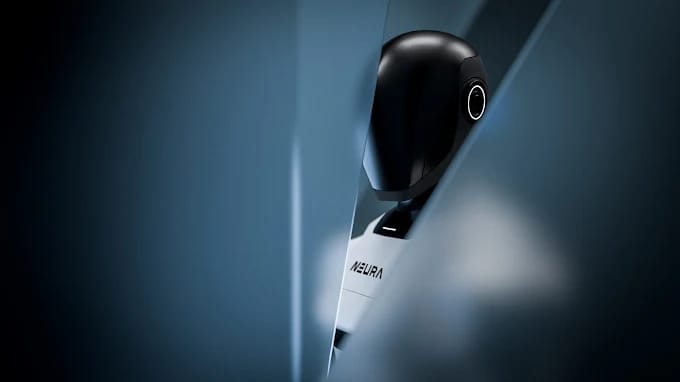
Image source: Neura Robotics
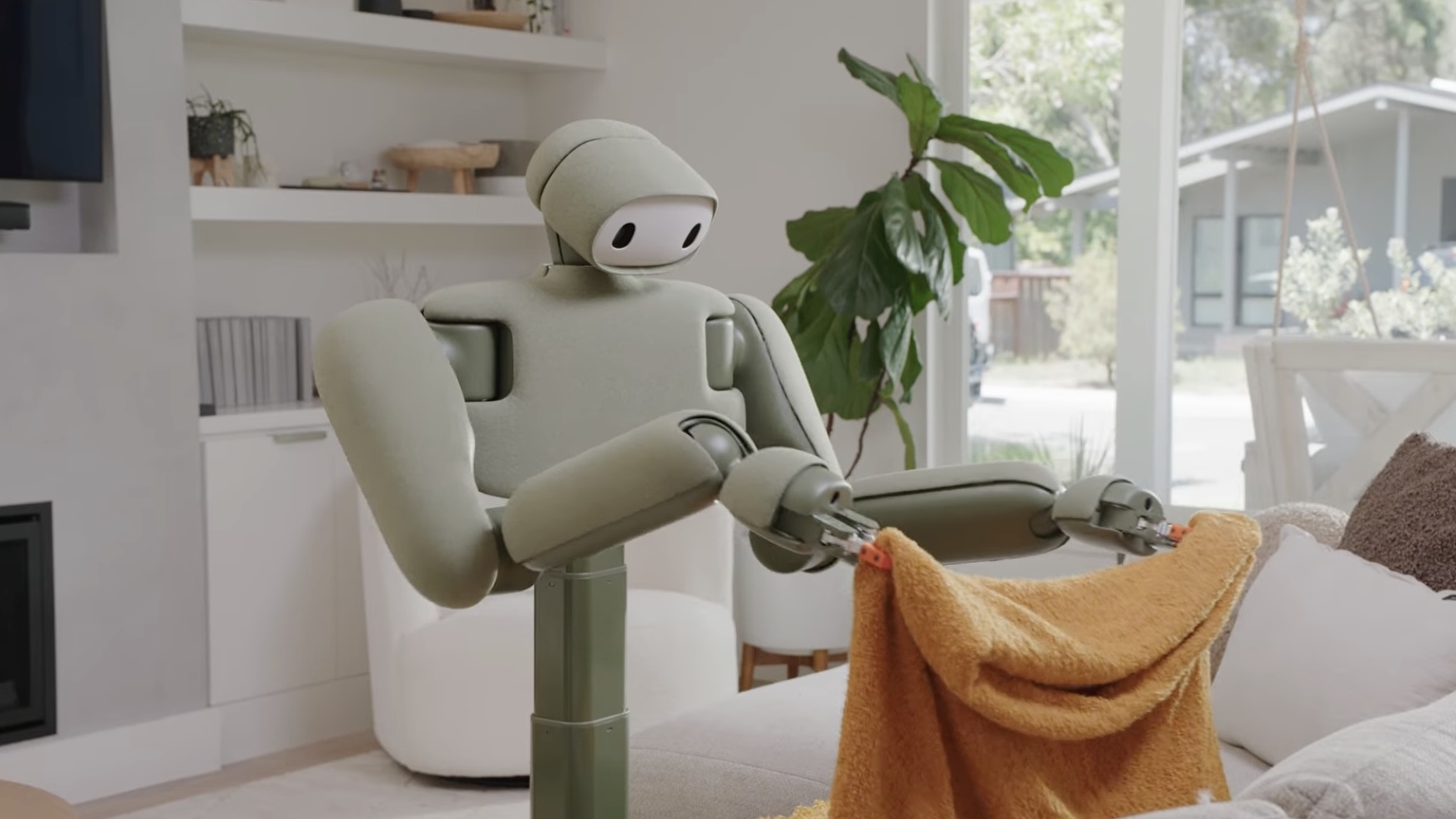
The Rundown: German humanoid startup Neura Robotics is reportedly closing in on one of Europe's largest-ever robotics financings — a €1B (~$1.1B) round backed by stablecoin giant Tether.
The details:
The deal would value the Metzingen-based company at roughly €4B ($4.3B), making it one of Europe’s highest valued robotics players.
Neura has already locked in an order book of around €1B from industrial customers for its transport robots, cobots, and robotic arms.
The company's edge: tight in-house integration of sensors, control electronics, and AI software into what it calls “cognitive robots.”
The raise follows a $130M Series B last year that pushed total funding past $200M and helped Neura double its headcount to over 300.
Why it matters: A Tether-led round would mark one of the crypto firm’s boldest moves outside digital assets, following earlier bets on Blackrock Neurotech and Italian humanoid startup Generative Bionics. For Neura, a 10-figure raise would put a European humanoid maker in the same fundraising weight class as top U.S. rivals.
NOBLE MACHINES
💪 Noble exits stealth with a heavy-lifting humanoid
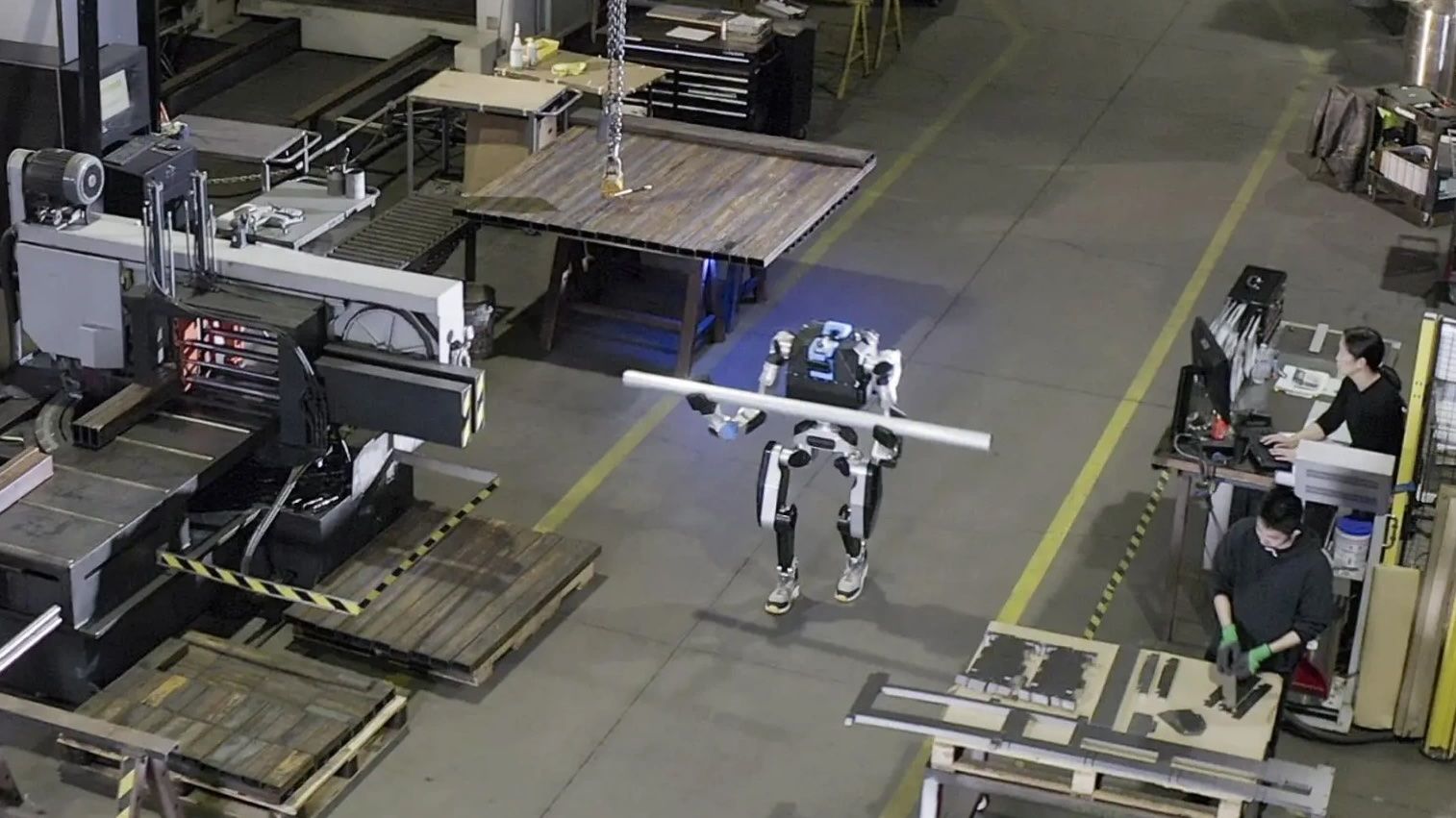
Image source: Noble Machines
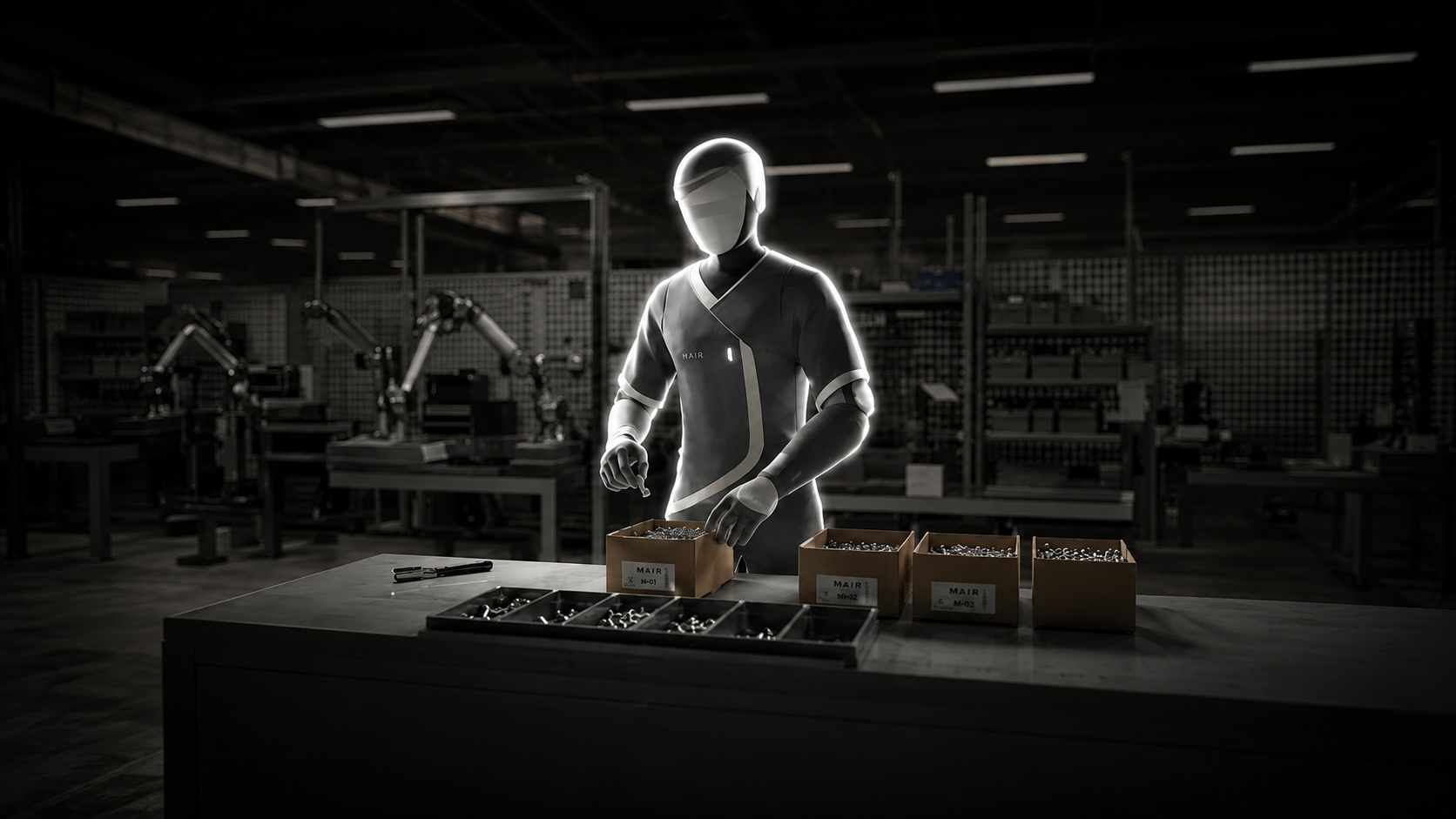
The Rundown: Ex‑SpaceX and Apple veterans’ startup Noble Machines emerged from stealth this week with its no‑frills, heavy‑lifting Moby humanoid already working real shifts on factory floors just 18 months after founding.
The details:
Noble Machines — formerly Under Control Robotics — says its robots are already deployed at an undisclosed Fortune Global 500 manufacturer.
Founded by engineers from SpaceX, Apple, NASA, and Caltech, the Sunnyvale-based startup is focused on real factory and construction environments.
Its Moby humanoid is built for hazardous, physically demanding work across manufacturing, construction, logistics, energy, and semiconductor plants.
Running end-to-end autonomy on a single NVIDIA Jetson Orin with an Isaac-based training loop, the robot uses whole-body control to learn new tasks.
Why it matters: Noble Machines says its Moby bot uses whole-body AI control and language-based learning to quickly pick up new jobs while hauling 60 lbs. across rough terrain, putting it in the same lifting league as Boston Dynamics’ Atlas and ahead of Agility’s Digit and Figure 3 — and a next-gen Moby is already on the way.
ROBOTICS RESEARCH
🌾 Scientists built a farm bot that rots into the soil
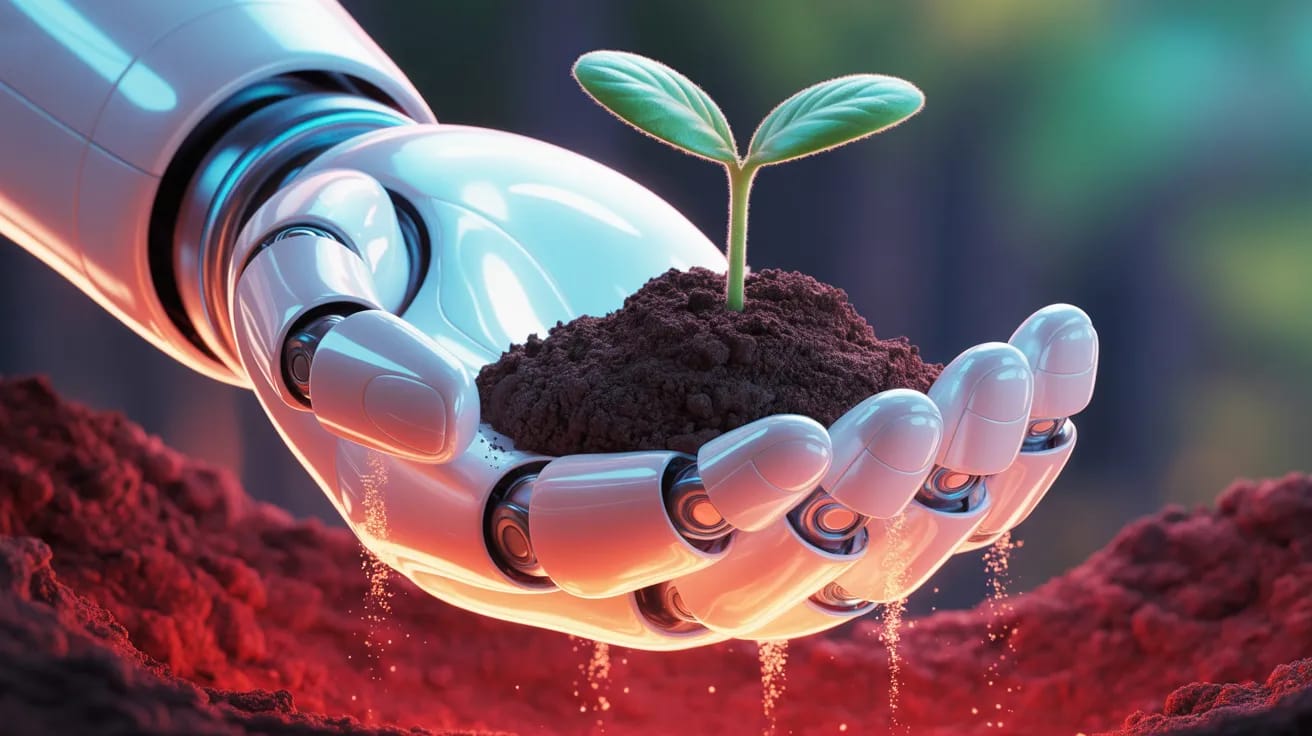
Image source: Ideogram / The Rundown
The Rundown: Scientists just built a fully compostable soft robot designed for real-world farm use — one that monitors crops for a full growing season, then quietly dissolves into the soil it just analyzed rather than becoming e-waste.
The details:
The system uses biodegradable electronics and soft materials that survive real farm conditions to monitor plant health and the environment.
Robotic fingers or soft grippers are designed for in-field plant monitoring tasks like tracking moisture, nutrients, or pollutants at high spatial resolution.
When its job is done, it breaks down into benign byproducts that can act as soil nutrients, turning the sensor itself into part of the system it was monitoring.
The work pushes soft robotics toward “ecoresorbable” designs, where robots are treated as temporary infrastructure rather than permanent hardware.
Why it matters: Digital agriculture has long faced a tradeoff: durable sensors create e-waste, biodegradable ones can’t hack real soil conditions. This bot looks to have cracked that problem. Fully compostable components are now field-ready, moving degradable soft robotics out of the lab and into actual dirt.
QUICK HITS
📰 Everything else in robotics today
Amazon cut at least 100 white-collar jobs in its robotics division, separate from the 16K corporate layoffs announced in January.
Hyundai unveiled a firefighting robot designed to navigate dangerous environments, withstand intense heat and smoke, and support human crews.
Chinese autonomous driving startup Momenta confidentially filed for a Hong Kong IPO, shifting its long-planned listing away from New York.
WeRide, Baidu’s Apollo Go, and Pony.ai paused robotaxi services in parts of the Middle East, pulling back from Dubai amid regional security tensions.
Next-gen Coco Robotics delivery bots are rolling out in LA, with larger, tougher, more autonomous robots designed to better handle the wear and tear of city streets.
Qualcomm CEO Cristiano Amon said robotics, driven by its new Dragonwing AI chips, will become a major business for the company within two years.
Singapore-based startup Asimov opened preorders for its open-source Asimov humanoid, a roughly 1.2-meter-tall, 25‑plus‑DOF Unitree G1 rival.
Pony.ai claimed its seventh‑generation robotaxi has reached per‑vehicle profitability in Shenzhen, its second Chinese tier‑one city after Guangzhou.
Google DeepMind launched its first accelerator in Europe, a three‑month, equity‑free program for early‑stage European robotics startups.
China built a massive high‑precision 3D face database plus an AI model to give humanoids more natural, expressive faces.
The UK Atomic Energy Authority and CERN built a mouse-sized robot, PipeINEER, to crawl through LHC pipes and use AI vision to spot faults quickly and safely.
China flight-tested an 8-foot-long experimental drone built largely from bamboo, aiming to create a cheap, lightweight, and quickly deployable platform.
COMMUNITY
🎓 Highlights: News, Guides & Events
Read our last AI newsletter: Amodei torches OpenAI in leaked memo
Read our last Tech newsletter: Apple’s budget iPhone goes AI-first
Read our last Robotics newsletter: Bio-robotic spy roaches
Today’s AI tool guide: Turn any CSV into an Excel dashboard
RSVP to our next workshop on March 12: AI coding bootcamp pt. 1
See you soon,
Rowan, Joey, Zach, Shubham, and Jennifer — The Rundown’s editorial team

Stay Ahead on AI.
Join 2,000,000+ readers getting bite-size AI news updates straight to their inbox every morning with The Rundown AI newsletter. It's 100% free.