OpenAI builds a $400 AI donut
PLUS: A SpaceX rocket crashes into the Moon

Jennifer Mossalgue
August 7, 2026
Read Online | Sign Up | Advertise

Good morning, tech enthusiasts. OpenAI’s first device will be a donut-shaped, screenless smart speaker…and it’s arriving in 2027, with cameras, mics, sensors, and a light that tells you when it’s listening.
Amazon lost money on Alexa for years to build that market; OpenAI wants the top of it, on a timeline Apple’s home hub and a live trade-secrets suit both get a vote in.
In today’s tech rundown:
OpenAI’s answer to Alexa is a $400 AI donut
A SpaceX rocket slams into the Moon
The first mRNA flu vaccine arrives
Meet Fathom, Ford’s sub-$30K electric pickup
Quick hits on other tech news
LATEST DEVELOPMENTS
OPENAI
🍩 OpenAI’s answer to Alexa is a $400 AI donut

Image source: Images 2.0 / The Rundown
The Rundown: OpenAI is developing a $300–$400, donut-shaped AI speaker that could bring ChatGPT into the home as a portable, screenless companion in 2027, Bloomberg’s Mark Gurman reported.
The details:
Gurman says the device is donut-shaped and will be built from "high-quality metal" for a premium look, with distinct moving parts.
Price lands somewhere between $300 and $400 per unit, against an Amazon smart speaker line that runs from $40 to $240.
It's roughly hockey-puck-sized, one-handed to carry around the house, with cameras, microphones, and sensors, plus a light to show when it's listening.
LoveFrom is designing it, release is pegged for sometime in 2027, and Apple's trade-secrets suit against OpenAI is still live. OpenAI denies any wrongdoing.
Why it matters: An always-on ChatGPT that sees, hears, remembers context, and acts on it is a much bigger deal than anything Alexa has attempted. Amazon shipped Alexa devices for years at a loss, and Apple's home hub lands with iOS 27, which leaves OAI defining a category on a 2027 timeline it doesn't fully control.
SPACEX
🚀 A SpaceX rocket slams into the Moon
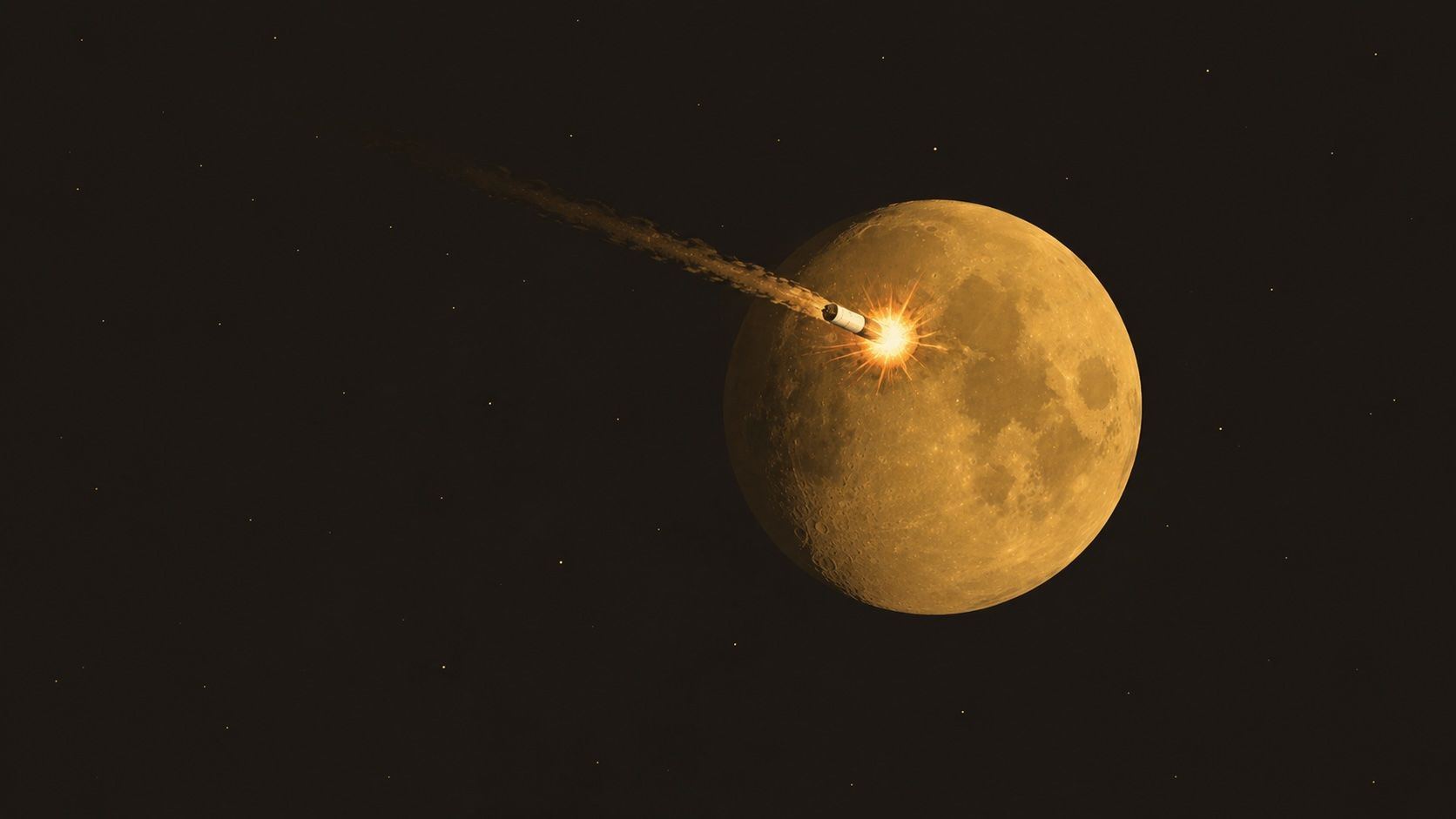
Image source: Images 2.0 / The Rundown
The Rundown: A SpaceX Falcon 9 upper stage that spent 18 months drifting off course hit the moon this week at 5,400 mph, leaving lunar orbiters to hunt for a fresh, human-made crater.
The details:
After delivering two commercial landers in January 2025, the burnt-out upper stage spent a year and a half wandering in an unstable orbit.
Impact came near Einstein Crater on the sunlit western limb, the hardest patch of the Moon to watch from Earth. No one filmed the collision.
ESO’s Very Large Telescope in Chile caught sodium and lithium spectral lines in a plume — sodium from lunar soil, lithium likely from the rocket.
NASA expects a 60 ft. wide and 12 ft. deep crater; South Korea's Danuri orbiter returned before-and-after frames, with further analysis currently underway.
Why it matters: Four tons of abandoned hardware hit the Moon, and the only reason anyone knew where to point a telescope was one independent astronomer running orbit fits on his own website. NASA’s take is that dumping spent upper stages on the lunar surface is technically safe, which could get trickier as lunar traffic grows.
BIOTECH
💉 The first mRNA flu vaccine arrives
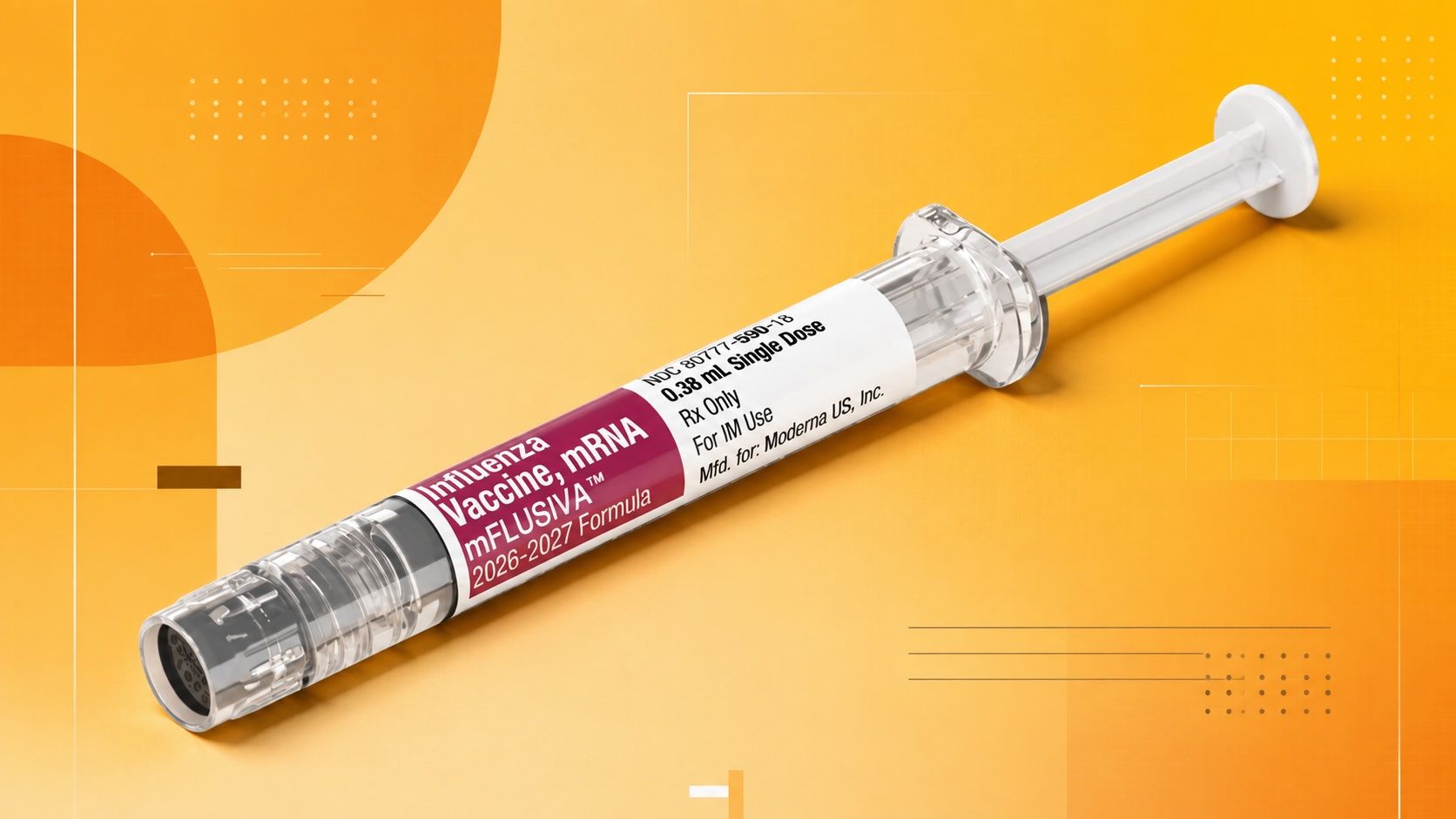
Image source: Moderna / Images 2.0
The Rundown: Moderna’s mFlusiva has become the first FDA-approved mRNA flu vaccine in the U.S., opening a new front for the technology that reshaped the COVID-19 vaccine market.
The details:
The shot is approved to prevent influenza A and B in adults 50 and older, with conventional approval for ages 50 to 64 and an accelerated nod for 65 and up.
Phase 3 study enrolled 40,805 adults across 11 countries and found mFlusiva reduced confirmed flu-like illness by 26.6% relative to a standard-dose vaccine.
Side effects ran heavier than the comparator — injection-site pain, fatigue, headache, muscle ache — mostly mild and gone in a day or two.
The FDA initially refused to review the application because Moderna used a standard-dose comparator, but then accepted a revised filing two weeks later.
Why it matters: mRNA has moved from pandemic technology into the annual flu business. The U.S. distributes well north of 100M flu doses a year, and mFlusiva’s efficacy data removes a major roadblock for Moderna’s COVID-flu combo. The next test is whether it can take share from the flu vaccines that many Americans already buy.
ELECTRIC VEHICLES
🛻 Meet Fathom, Ford’s sub-$30K electric pickup
Image source: Ford
The Rundown: Ford has named its long-promised affordable electric pickup the Fathom, setting a $28,350 starting price for the first vehicle built on a new platform meant to make EVs cheaper (and profitable) at scale.
The details:
The midsize Fathom is scheduled to reach customers in fall 2027, with preorders and a full vehicle reveal planned for early that year.
Base price is $28,350 — $29,945 with destination and delivery, landing just under the $30K mark Ford has been promising since 2025.
Fathom is the first vehicle on Ford’s Universal EV Platform, built at the Louisville Assembly Plant on a new modular process Ford calls unicasting.
Five seats, a large touchscreen, a digital key, and bidirectional power. Apple Maps is built into the OS, and CarPlay and Android Auto are also supported.
Why it matters: Slate already beat Ford to the sub-$30K electric truck, but Slate is a startup with one Indiana plant selling a pickup that ships totally stripped down. Fathom is the first serious attempt by a legacy automaker to build a cheap EV at volume, and Ford has said the platform underneath it has to carry Model e to break even by 2029.
QUICK HITS
📰 Everything else in tech today
Hadrian raised $1.37B at a ~$8B valuation, betting that robot factories can help rebuild the U.S.’s capacity to produce weapons and aerospace hardware at speed.
A New Mexico judge ordered Meta to pay $567M and impose stricter teen-safety measures on Facebook and Instagram after finding it failed to protect children.
BMW is facing backlash after pushing promotional banners for the movie Spider-Man: Brand New Day to the infotainment displays of newer cars worldwide.
TikTok reportedly will lay off 250 employees and close its Nashville office — home to some content-moderation staff — on October 5.
Tesla and SpaceX will invest an initial $16.8B to build Terafab, a planned 100M-square-foot advanced chip-manufacturing complex in Grimes County, Texas.
Trevor Noah will host Made by Google 2026 on August 12 at 6 p.m. ET in NY, fronting a celebrity-heavy lineup including Stephen Curry, Alex Cooper, and Shubman Gill.
Nothing could reportedly launch as many as six new smartphones in 2027, suggesting an unusually aggressive expansion of its handset lineup.
Google Wallet is letting U.S. parents load and supervise a spendable balance for children and teens without opening them a bank account.
Nikita Bier stepped down as X’s head of product after just over a year, saying he will continue as an adviser while taking a break from the 24/7 role.
Ocean-powered data-center startup Subsea Cloud is reportedly eyeing a $2B valuation as investors bet on underwater infrastructure for AI’s cooling demands.
COMMUNITY
🎓 Highlights: News, Guides & Events
Read our last AI newsletter: AI designs viruses never seen in nature
Read our last Tech newsletter: Biohackers head to Big Sky Country
Read our last Robotics newsletter: Musk's moon factories need robots
Today’s AI tool guide: Turn any idea into an AI-powered site with Lovable
RSVP to next workshop on Aug. 12: Catch up on AI fundamentals
See you soon,
Rowan, Zach, Shubham, Jennifer, and Nate — The Rundown’s editorial team




Stay Ahead on AI.
Join 2,000,000+ readers getting bite-size AI news updates straight to their inbox every morning with The Rundown AI newsletter. It's 100% free.