DARPA's big bet on a light-based quantum computer
PLUS: Neuralink patients drive wheelchairs by thought

Jennifer Mossalgue
July 24, 2026
Read Online | Sign Up | Advertise

Good morning, tech enthusiasts. DARPA wants to know if utility-scale quantum computers can be a reality…and it's going all in to find out.
The R&D arm of the U.S. Department of Defense just made a massive bet on PsiQuantum, a California-based startup taking an unconventional approach to quantum computing — building the computer out of light.
In today’s tech rundown:
DARPA bankrolls a light-based quantum computer
Neuralink patients drive wheelchairs by thought
An 18-in-1 EV you can build like LEGO
This startup built a trackpad for the tongue
Quick hits on other tech news
LATEST DEVELOPMENTS
QUANTUM COMPUTING
🤑 DARPA bankrolls a light-based quantum computer

Image source: Images 2.0 / The Rundown
The Rundown: The Pentagon's moonshot factory, DARPA, just awarded PsiQuantum $125M under its Quantum Benchmarking Initiative, aimed at testing whether the startup's light-based quantum computer can move from blueprint to utility-scale reality.
The details:
PsiQuantum is building fault-tolerant quantum computers that use individual photons as qubits — the units that store and process quantum information.
This approach lets the company make its chips in standard semiconductor fabs and cool its systems far less aggressively than superconducting rivals require.
With this award, it plans to invest in essential infrastructure at its Milpitas and Chicago facilities and fund testing across hardware, components, and software.
PsiQuantum is one of only two companies, alongside Microsoft, to reach the program's final phase, where DARPA scientists work inside the startup.
Why it matters: Quantum computers are often described as perpetually ten years away. But the U.S. is pushing hard to change that and ensure the machines that arrive are actually useful. When feasible quantum computers land remains unknown, but with dozens of startups in the U.S. alone and big tech piling in, the race is surely on.
NEURALINK
🧠 Neuralink patients drive wheelchairs by thought
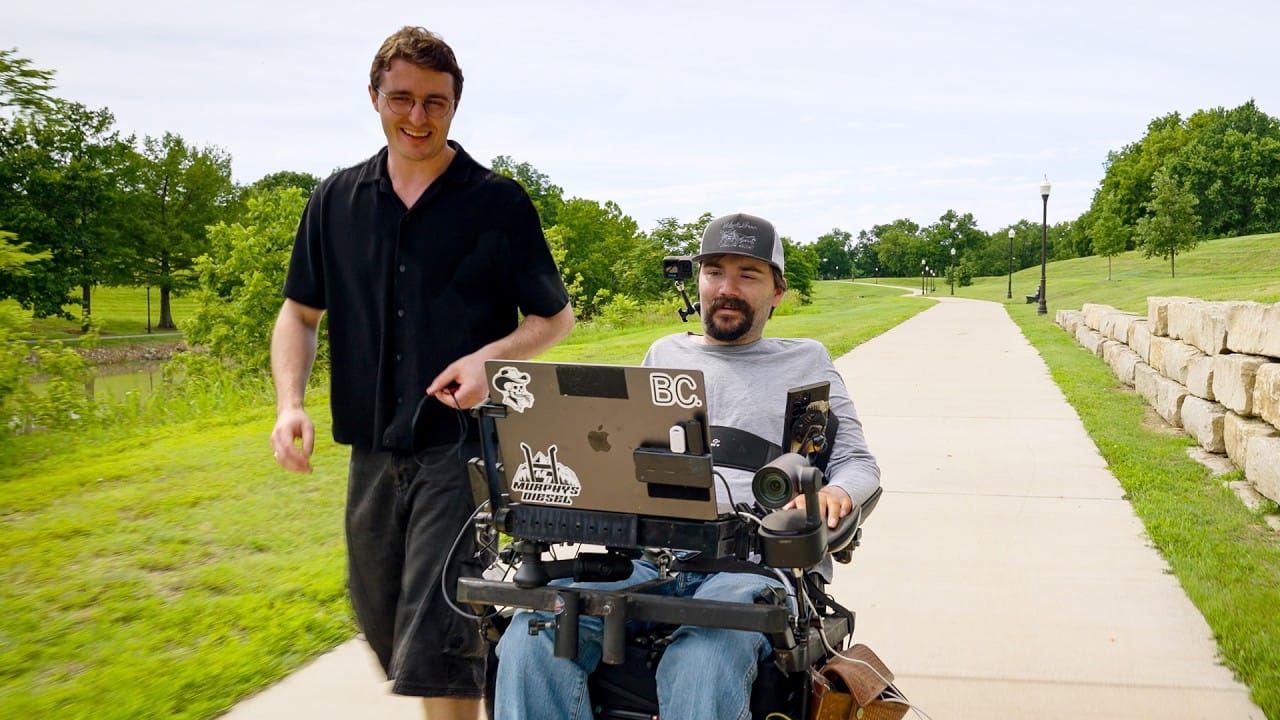
Image source: Neuralink
The Rundown: Elon Musk’s Neuralink shared a clip of its clinical trial participants with paralysis driving a brain-computer interface-powered wheelchair — steering, reversing, and adjusting their chairs using only their thoughts.
The details:
The 1,000+ electrodes in Neuralink’s brain implant record neurons firing in the motor cortex, just as a participant thinks about moving in a particular direction.
A decoding algorithm converts these brain signals into on-screen cursor movement, which appears in a custom app with a live feed of what’s ahead.
As the cursor moves, custom electronics convert its position into analog signals driving the chair — up for forward, down for reverse, left/right to steer.
Study participant Alex said driving became "second nature" in minutes with the BCI, and that it beats a joystick that forces his head into a hunched position.
Why it matters: Going from thought-to-cursor to actual hardware control is a step up for Neuralink, showing how its technology can help millions living with paralysis. But rivals like Synchron are chasing the same results without opening the skull, leaving open whether the richer signal from an implant is worth the operating table.
ELECTRIC VEHICLES
🚗 An 18-in-1 EV you can build like LEGO

Image source: Envo
The Rundown: Canadian EV maker Envo opened preorders for its Utility Personal Transporter, a modular electric platform the company says buyers can configure into as many as 18 vehicle types, including a golf cart, ATV, cargo hauler, and a commuter.
The details:
UPT is built on an aluminum T-slot frame that resizes in length and width, with suspension, motors, and modules bolted on without requiring any welding.
The vehicle can be collapsed for easy transport and scaled up as needed with add-ons like drivetrains, battery packs, wheels, seating, and cargo beds.
Buyers can configure a build on Envo’s site or start with a preconfigured one, with the option to buy components individually at a later stage.
Production is slated for late fall with first deliveries in early 2027, four years after Envo began developing the platform.
Why it matters: Most EV startups pick a category and defend it. Envo is going after multiple at once, from farm work and airport logistics to last-mile delivery. That spreads one platform's cost across markets too small to serve individually, but also brings a challenge, as each buyer comes with their own different definition of good enough.
TECH FOR GOOD
❤️ This startup built a trackpad for the tongue
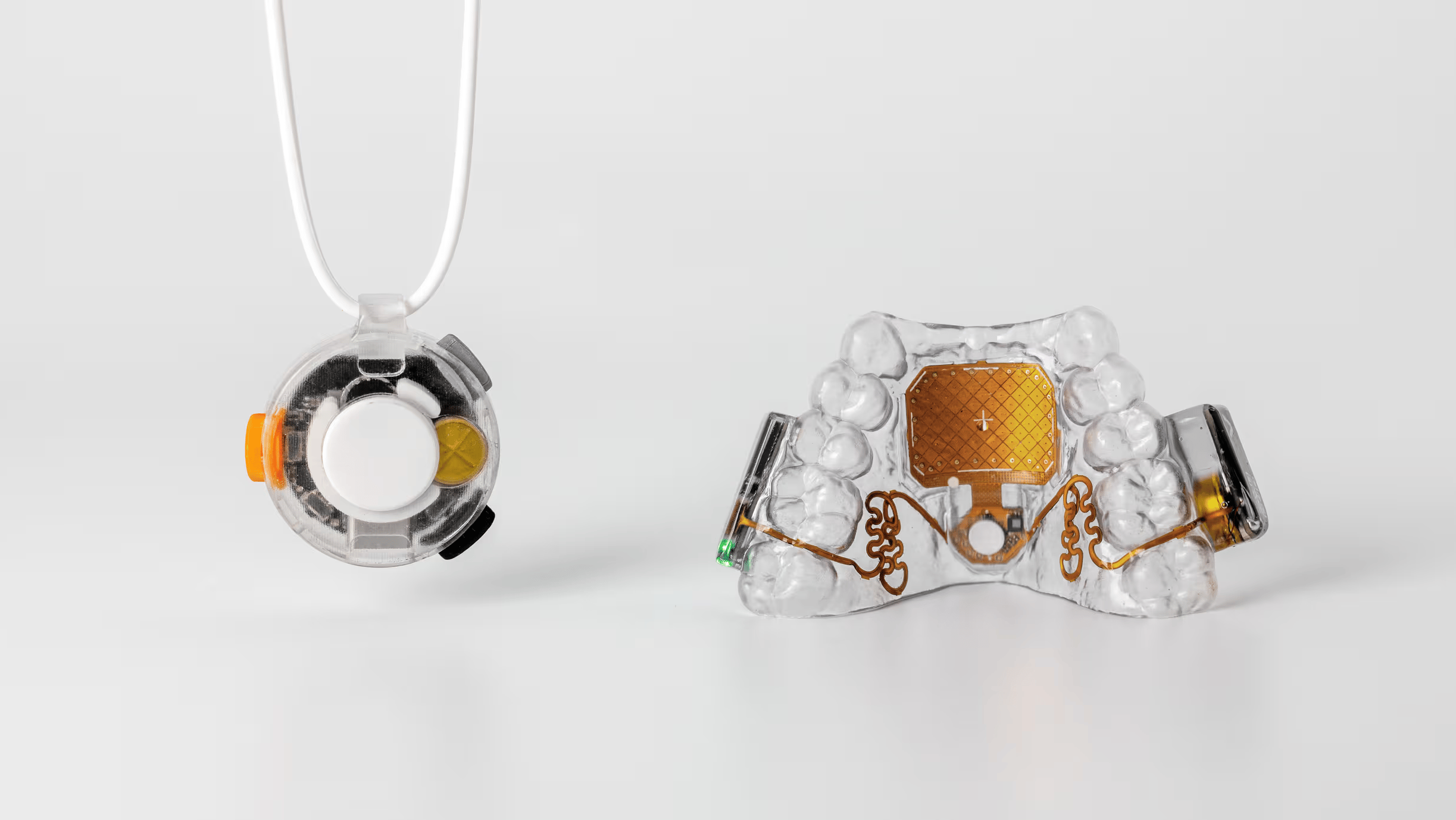
Image source: Augmental
The Rundown: MIT Media Lab spin-off Augmental opened the U.S. sales of MouthPad, a custom-fit retainer with a touchpad on the palate that turns tongue and head movements into cursor control for phones, tablets, and computers.
The details:
The 1mm-thick device, 3D-printed in dental resin from a scan of the user's mouth, pairs over Bluetooth as a mouse for desktop and mobile platforms.
Tongue presses and sip gestures handle clicks, and either the tongue or head can drive the cursor, all read by a pressure-sensitive pad and motion sensor.
The company is targeting the device at people with quadriplegia, ALS, or severe motor limitations, with 100+ already using it — some up to 16 hours daily.
Augmental also debuted VOX, a $200 stethoscope-like microphone that hears speech through the body so users can dictate at a whisper.
Why it matters: With these devices, Augmental is building a Skinware category aimed at giving people with disabilities computer control without invasive brain implants. The catch here is access — the device costs $1,400 with no insurance coverage, takes six months to build, and requires enough tongue dexterity and oral health to qualify.
QUICK HITS
📰 Everything else in tech today
Neurotech startup Science Corp. launched PRIMA in Europe, the first device to restore central vision in people with advanced age-related macular degeneration.
New York-based Light opened pre-orders for its $299 Light Flip, a 5G flip phone with no social media, browser, or touchscreen to help users escape doomscrolling.
Google introduced selfie video as a new account recovery option, letting users regain access with facial verification if they're locked out.
Uber laid off 10% of its customer service team, citing an effort to “simplify operations, strengthen in-person collaboration and continue to embrace AI,” Bloomberg reported.
Ford partnered with Apple to make Apple Maps the default navigation system in its next-generation EVs, with map data also powering BlueCruise hands-free driving.
The EU fined Google €890M ($1B) for illegally favoring its own services in Search and restricting app developers from directing users to cheaper payment options.
U.S. regulators plan new safety rules for flush electric car door handles popularized by Tesla after fatal crashes left occupants trapped inside vehicles.
Apple's iOS 27 beta hints its expected leasing program may include a "Restricted Mode" that locks down devices when customers miss payments, 9To5Mac reported.
Jack Dorsey launched Buzz, an open-source Slack alternative that combines team messaging, GitHub, and AI agents in a single workspace.
COMMUNITY
🎓 Highlights: News, Guides & Events
Read our last AI newsletter: Black Forest Labs trains video AI to run robots
Read our last Tech newsletter: China’s plan to knock an asteroid off course
Read our last Robotics newsletter: A $1.7B computer for the physical world
Today’s AI tool guide: Edit videos faster with AI (for non-editors)
RSVP to next workshop on July 30: ChatGPT Sites for beginners
See you soon,
Rowan, Zach, Shubham, and Jennifer — The Rundown’s editorial team




Stay Ahead on AI.
Join 2,000,000+ readers getting bite-size AI news updates straight to their inbox every morning with The Rundown AI newsletter. It's 100% free.